


Abstract
Clinical data were collected on injury occurrence to members of the University of Michigan Marching Band over the course of one season including a bowl game appearance. Band members were asked to fill out forms at the time of injury to gather pertinent information. The majority of the injuries were self-limiting. Included in this study was a total of 179 injuries, of which 153 (85.5%) involved the lower extremities. The authors provided a one-season injury survey of a collegiate marching band and made recommendations that may help to reduce and prevent future band-related injuries.
Participating in a collegiate marching band may not involve the contact found in other athletic activities; however, those injuries that do occur during a season can be varied and numerous. The need for band medical staffing is necessary and the challenge of injury prevention and treatment is demanding. This, of course, depends on an individual band’s style of marching and dancing, daily practice routine, and demands produced by its performance schedule.
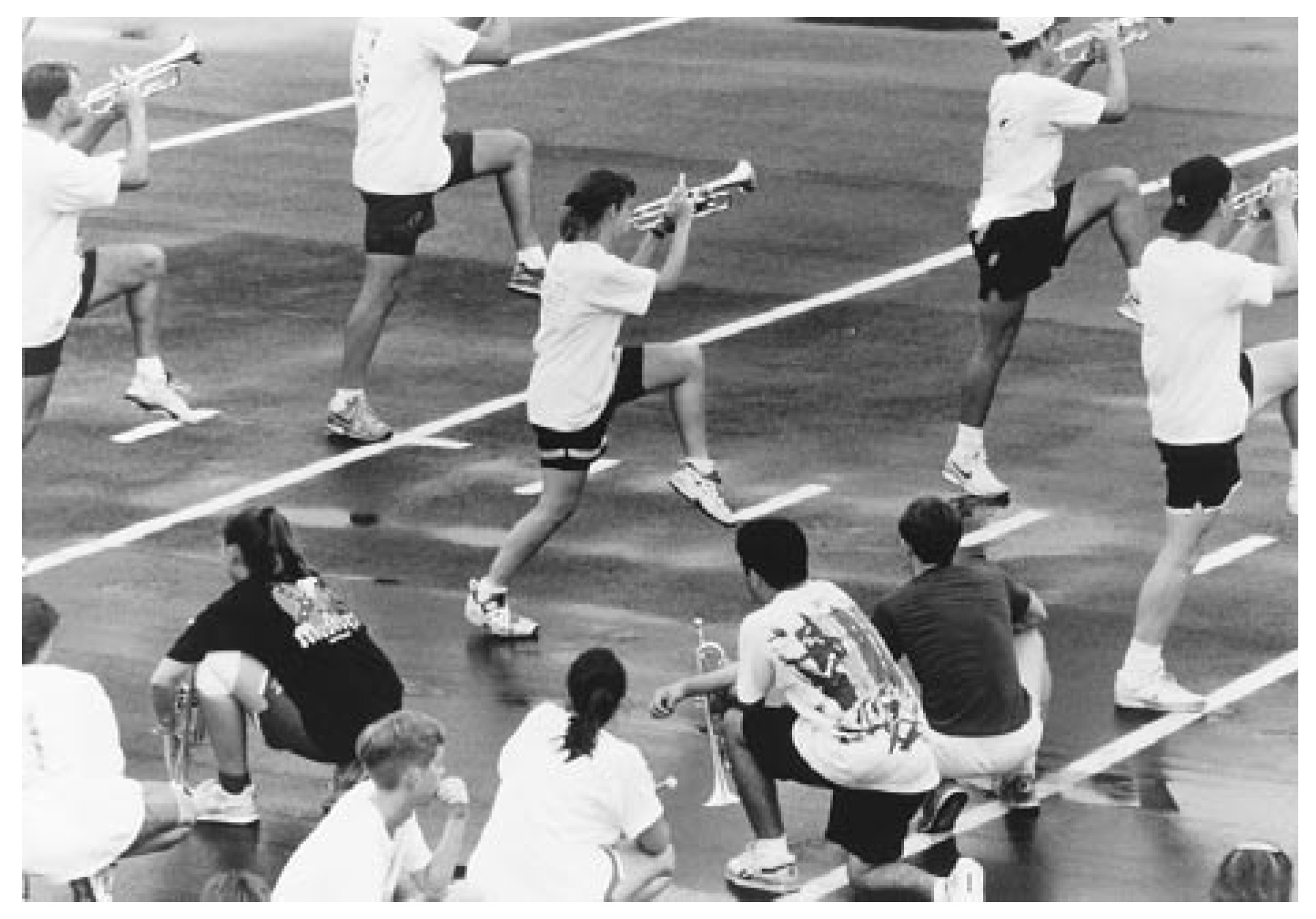
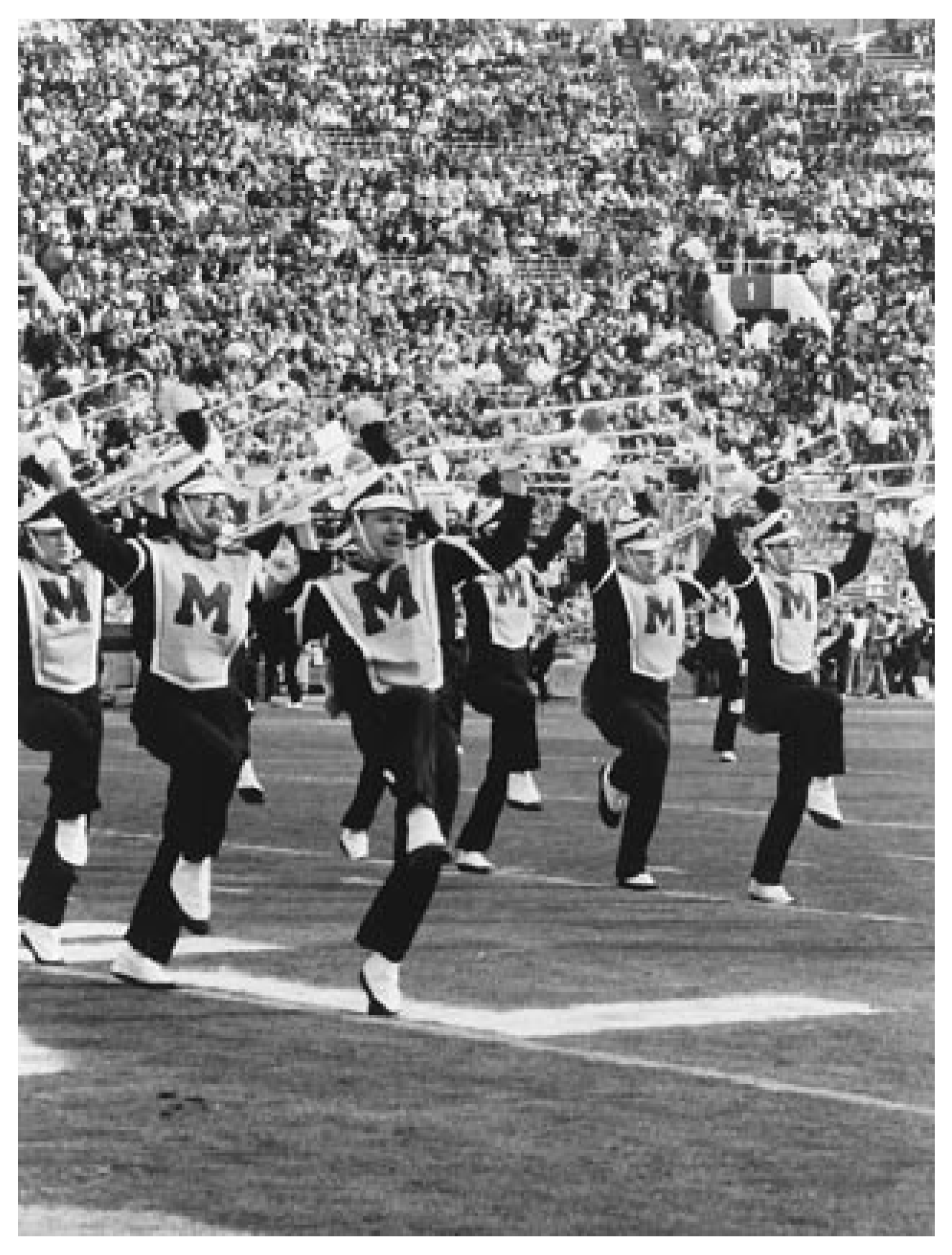
The University of Michigan Marching Band in Ann Arbor performs a physical, high-stepping marching technique that leaves its members prone to both acute and chronic injuries (Fig. 1). Therefore, it is understood that the results of injury data obtained from a season with this particular band may not be entirely applicable nor typical of all collegiate marching bands. However, the authors believe that the tabulated results may represent a potential trend or indication of the types of injuries that may occur in a marching band at the collegiate level.
Figure 1.
Band members performing high-step marching during rehearsal.
A literature search provided information regarding military marching injuries [1]. However, studies specifically pertaining to marching band injuries were not found. The literature does show a predominance for lower extremity injuries in military marching.[1]. The authors postulate that similar results will be found in the collegiate marching band population
Materials and Methods
The study was conducted using a Division I collegiate marching band throughout its entire practice and performance season (August 25, 1993, through January 1, 1994) including a post-season bowl appearance. The definition of injury for this study was a modification of that by Albert [2] and was defined as any malady for which a band member sought medical evaluation and potential treatment that may or may not have required time missed from practice or performance.
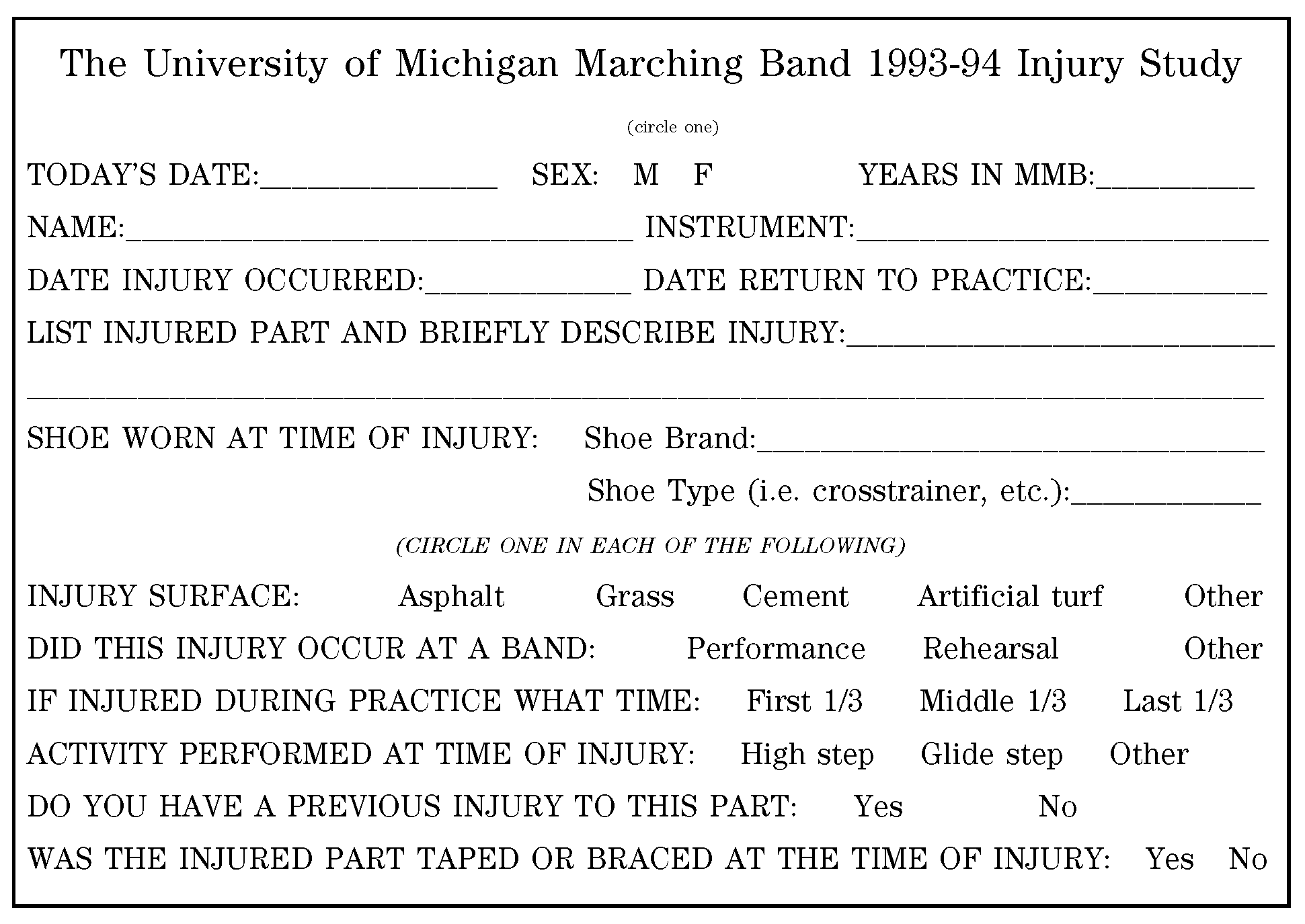
Forms were filled out by each injured band member at the time of injury. Included on the injury forms were the following items: name, date, sex, instrument, date injury occurred, date returned to practice, shoe brand and type, injury surface, whether injury occurred during practice or performance, approximate time the injury occurred in practice or performance, activity at the time of injury (eg, high step or glide step), and if the injured part was taped or braced at the time of injury. Other items included the number of years in the band, a brief description of the injury, and whether the part had been previously injured (Fig. 2).
Figure 2.
Band injury survey form filled out by student at time of injury.
A medical staff member was present at each practice session and performance to record injury data. The injury form was designed to obtain this information in a simple and expedient manner, so as to increase student compliance and not be disruptive to the band practice schedule.
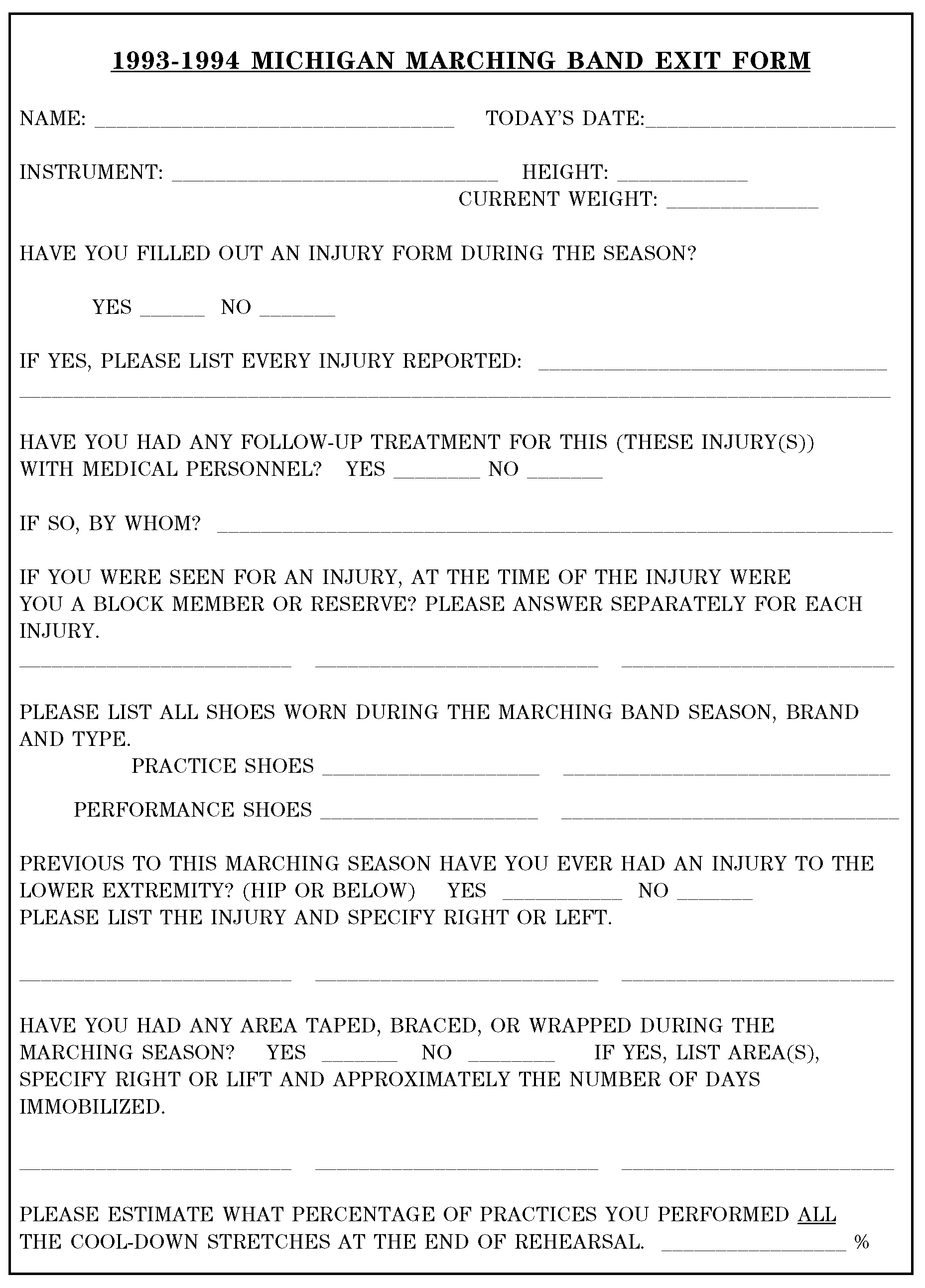
At the end of the marching band season, an exit form was completed by all band members that included the above-mentioned information and the following: height, weight, if the band member had completed an injury form, any follow-up treatment the injured band member obtained, and whether the student was a block band member (a performing member of the band) or a reserve (Fig. 3). Additional information was obtained by the marching band graduate assistants regarding the type of surface used daily for practice or performance, the type of practice or performance (ie, marching versus music only), and the amount of time spent each day in practice or performance.
Figure 3.
Exit form filled out by each marching band member at the end of the season.
At the end of the season, the data were reviewed and the following issues were addressed: percentage of injuries in male versus females; percentage of injuries that were aggravated previous injuries; injury prevalence in rookie versus veteran band members; injuries per month; and injuries per instrument section. Other areas evaluated include percentage and breakdown of injuries that were lower extremity in nature, injury prevalence comparing whether the band member was injured during practice or performance, the type of step performed at the time of injury, if strapping or bracing was used at the time of injury, and whether the band member was a reserve or block member at the time of injury.
Results
There was a total of 219 injury forms completed, of which 179 injuries were determined to be directly or indirectly related to a band practice or performance.
The number of practice injuries was 149 (83.3%) out of 179, and the number of performance injuries was 19 (10.6%) out of 179. The number of injuries that occurred in nonband-related activity but directly impacting the ability to practice, perform, or cause the band members to miss time away from practice or performance was 11 (6.1%) out of 179.
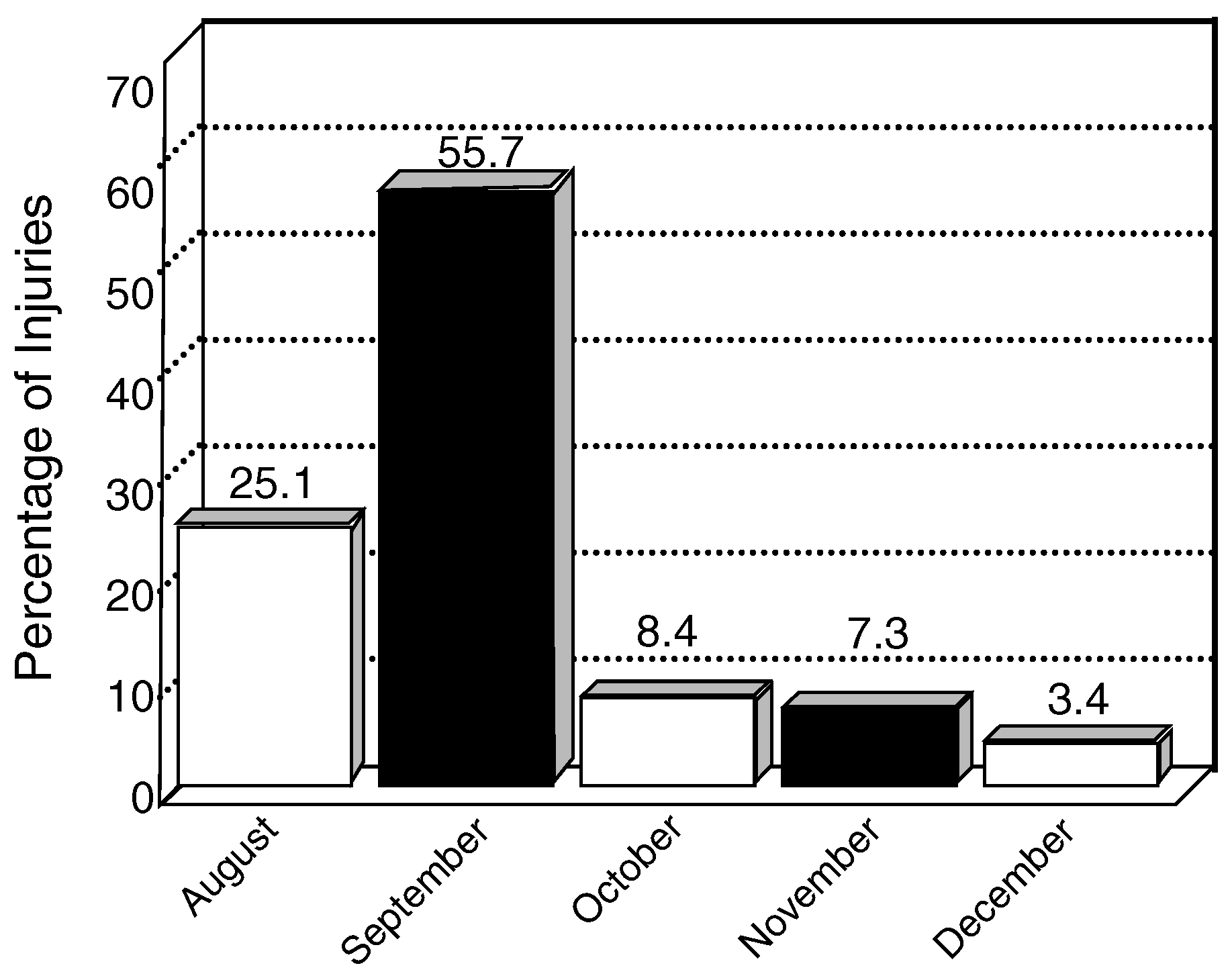
The total percentage of injuries occurring prior to the first performance at a game was 39.1% (70/179). The remaining injuries totaled 60.9% (109/179). Fortyfive injuries (25.1%) occurred in August in 34 hr of practice. One hundred injuries (55.9%) occurred in September in 102.2 hr of practice and performance. Fifteen injuries (8.4%) occurred in October in 43.1 hr of practice and performance. Thirteen injuries (7.3%) occurred in November in 33.5 hr of practice and performance. Lastly, six injuries (3.4%) occurred in December in 20.5 hr of practice and performance (Fig. 4).
Figure 4.
Percentage of injuries that occurred in each month.
The band was composed of 199 males (59.0%) and 138 females (41.0%). Males sustained 89 (49.7%) of the 179 injuries and females 90 (50.3%) of the 179 injuries. After eliminating multiple forms completed by the same individual so that each individual was represented only once, the results were virtually unchanged with males sustaining 50.8% (64/126) of the injuries and females 49.2% (62/126) of the injuries. The male-to-female preseason injury percentages were then analyzed. Males sustained 41.4% (29/70) and females 58.6% (41/70) of the preseason injuries. After eliminating multiple forms completed by the same individual, males totalled 44.4% (28/63) and females totalled 55.6% (35/63) of the preseason injuries.
The number of years a member participated in the band was also compared with the tendency to sustain an injury. Those in their first year of band constituted 33.1% of the band, but accounted for 40.9% of the injuries recorded. Those in their second year constituted 21.4% of the band and accounted for 21.8% of the injuries. Those in their third year constituted 21.7% of the band and accounted for 21.2% of the injuries. Those having completed 4 or more years in the band constituted 23.8% of the band, but accounted for only 16.2% of the injuries.
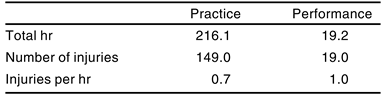
The number of hours of formal practice totaled 216.1 with 119.4 hr spent practicing marching and 96.7 hr spent practicing only music. The band spent 19.2 hr in performance with 4.2 of those involving marching. The injury rate for practice was 0.7 injuries per hr (149/216.1); the rate for performance time being 1.0 injury per hr (19/19.2) (Table 1). It is also important to note that the injury rate for marching performances was 3.6 injuries per hr (15/4.2).
Table 1.
Injury Rate Practice Versus Performance.
There was no significant correlation between the time elapsed during a practice session and the tendency to become injured as 42 injuries occurred during the first third of practice, 39 in the middle third, and 44 injuries occurred in the last third. Fifty-two band members could not correlate a specific time of injury.
The type of marching step performed was also examined in relation to the tendency to be injured. There were 121 injuries sustained by members while doing the high step (Fig. 5). Two individuals were injured doing the glide step and five injured while performing both the high step and glide step. Fiftyone members did not note the type of step performed at the time of injury.
Figure 5.
The band displays its high-stepping pregame entry.
The tendency to aggravate a previous injury was examined and 34% (61/179) stated that their injuries were preexisting. Twenty band members (11.2%) said their injured parts were taped or braced at the time of injury. One hundred fifty-four (86%) said that they were not wearing protective devices or tape at the time of injury. Five band members did not provide this information on the form.
The time missed from practice or performance for
each injury was totaled from data obtained from a follow-up telephone interview by the medical staff and from exit forms completed at the end of the season. One hundred fifty-five of the 179 injuries reported were self-limiting and less than one full practice or performance was missed (86.6%). Fourteen band members related missing 1 or 2 days of practice, six members missed 2 or 3 days, two members missed 3 or 4 days, and only two members related missing more than 4 days of practice.
The shoe type worn at the time of injury was also examined. Based on one of the authors’ knowledge of athletic shoes and experience with the demands of marching band activities, cross-trainer shoes were recommended for both practice and performance. The shoe brands available for performance were further limited because they needed to be black. The authors made these recommendations prior to the start of the season; however, there was no control over the shoe choice made by the band members. Oftentimes, a correct shoe type was chosen, but the shoe was in poor condition. The survey showed that 80 members wore running shoes at their time of injury, 57 members wore cross-trainers, eight wore tennis shoes, seven wore walking shoes, seven wore aerobic shoes, six wore basketball shoes, and one wore hiking boots. Eleven band members were not sure of the type of shoe worn at the time of injury.
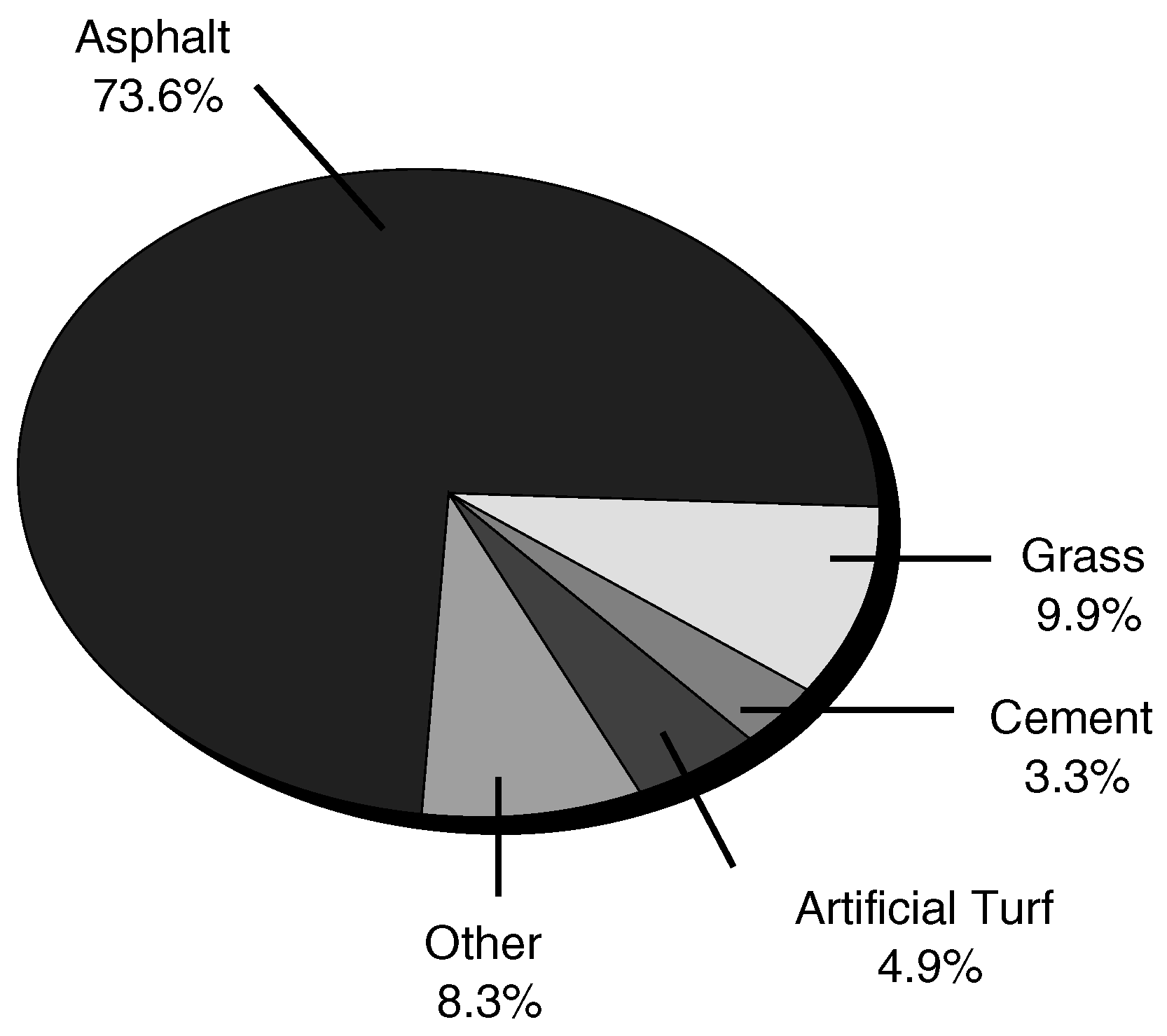
The surface at the time of injury was recorded with the following results: 133 injuries occurred on asphalt, 18 on grass, nine on artificial turf, six on concrete, and 15 on other surfaces (Fig. 6). The injury surface was recorded 181 times on 179 injury forms because two band members reported that their injuries occurred on two different surfaces. The primary practice field was asphalt, thus accounting for the disproportionately high number of injuries as compared with the other surface types.
Figure 6.
Injury surface by percentage.
The greatest number of injuries occurred in the preseason (August and September) when the temperature was generally warmer. However, no specific correlation between weather conditions and injuries was noted.
The authors further examined the number of injuries that occurred in each section of the band (Fig. 7). In all but three sections, the number of injuries per section correlated closely with each section’s total percentage of members in the band. These sections included the percussion section, which represented 10.8% of the total band by number, but only 2.2% of the total band injuries. Conversely, the tubas and piccolos had proportionately higher rates of injury. The tubas incurred 10.1% of the total injuries in the band, but represented only 5.7% of the band by number. The piccolos, while accounting for only 6.0% of the band, represented 13.4% of the total band injuries. The number of injuries per section member is listed in Figure 8. The twirlers and drum major were not listed as they reported no injuries included in the study (Fig. 9).
Figure 7.
Number of injuries in each section of the band.
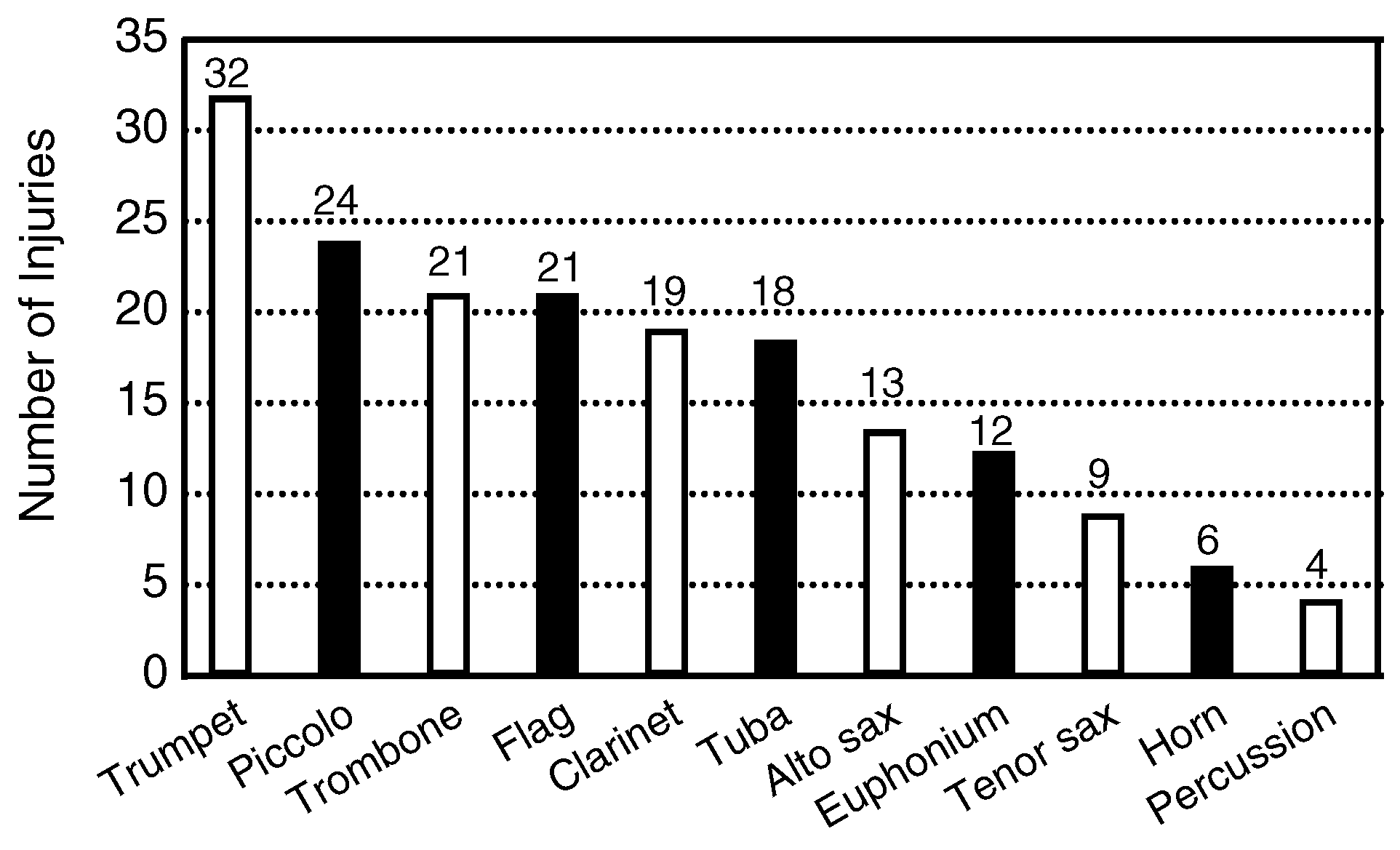
Figure 8.
Number of injuries per section member.
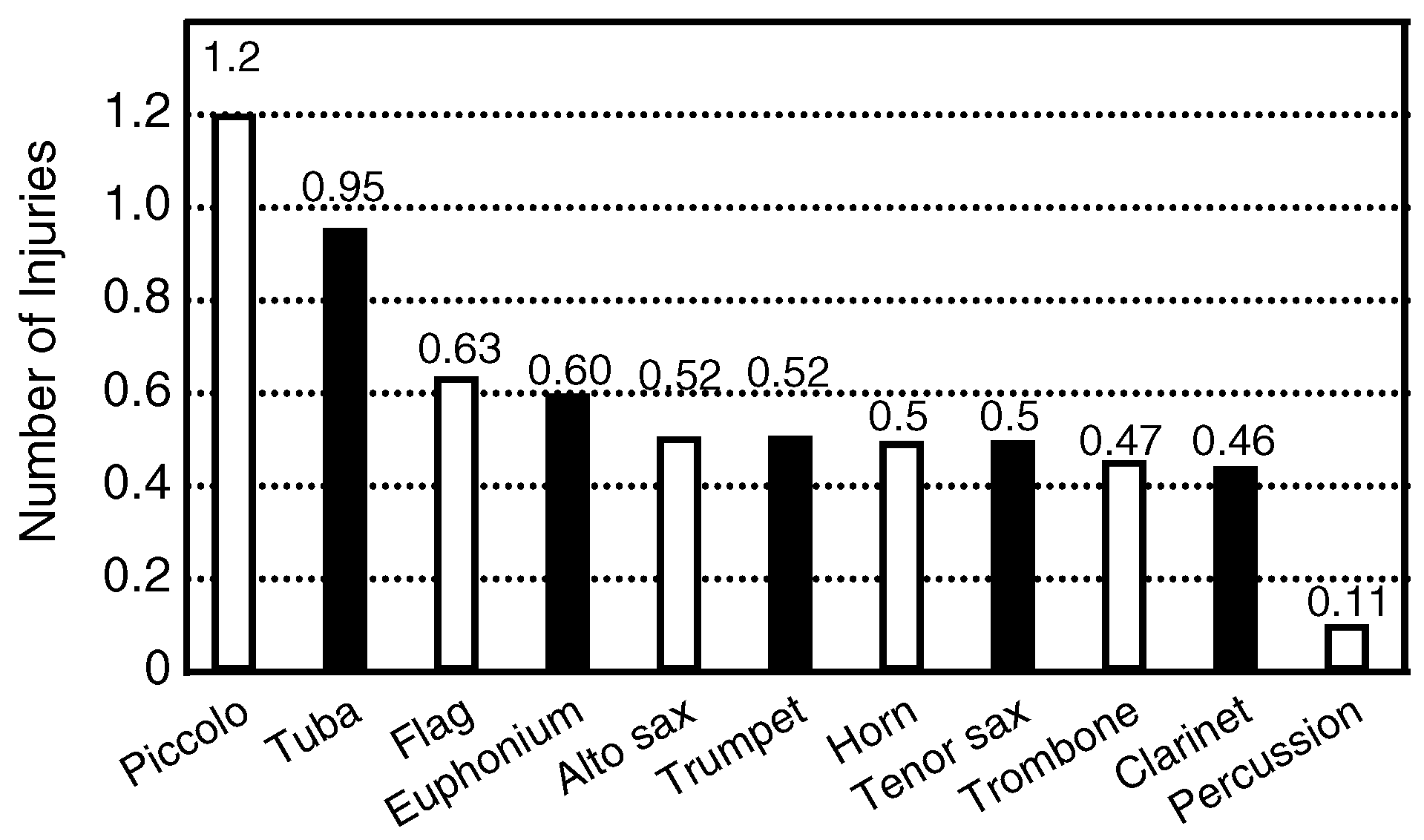
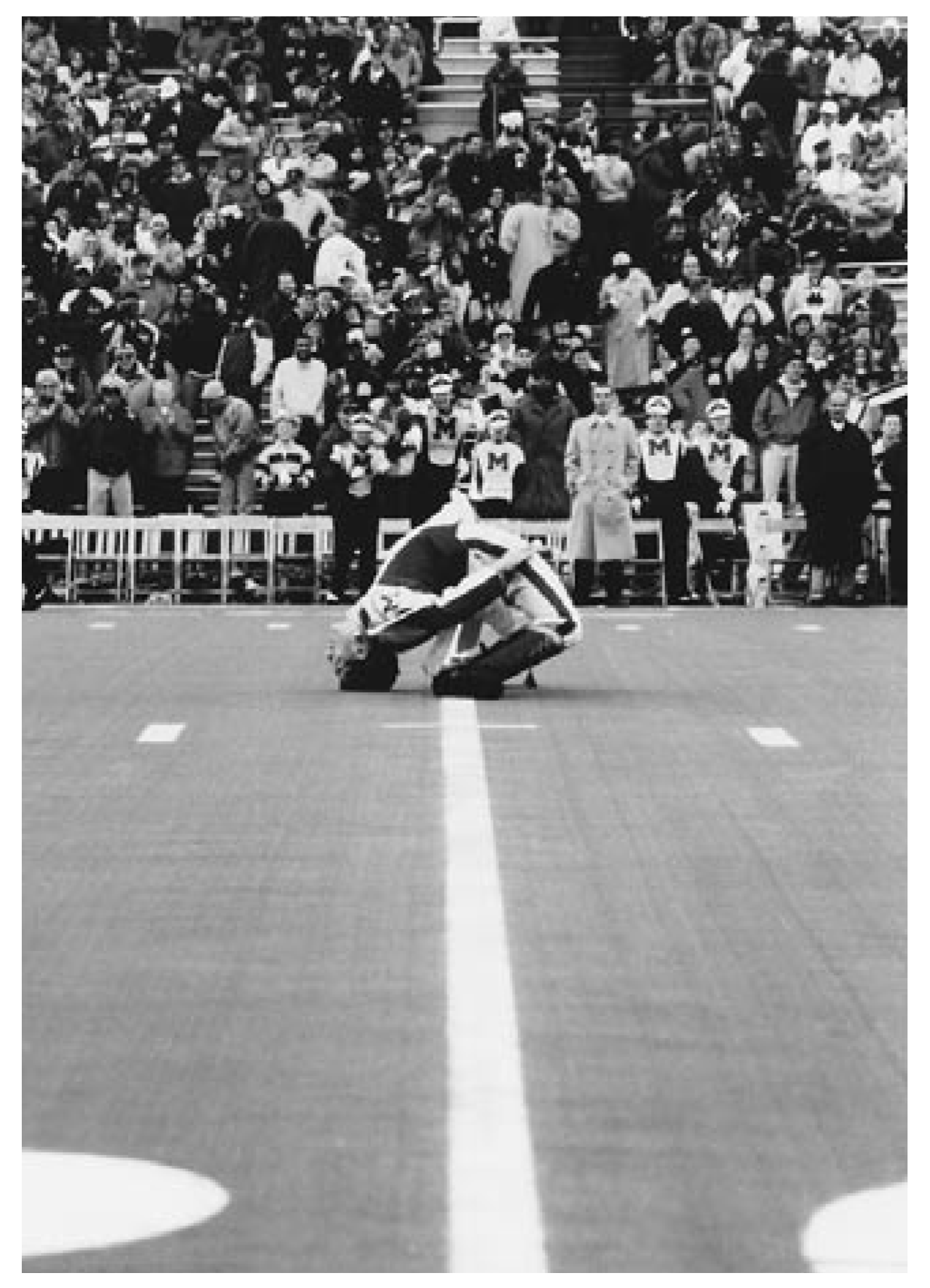
Figure 9.
Band drum major performing in the pregame show.
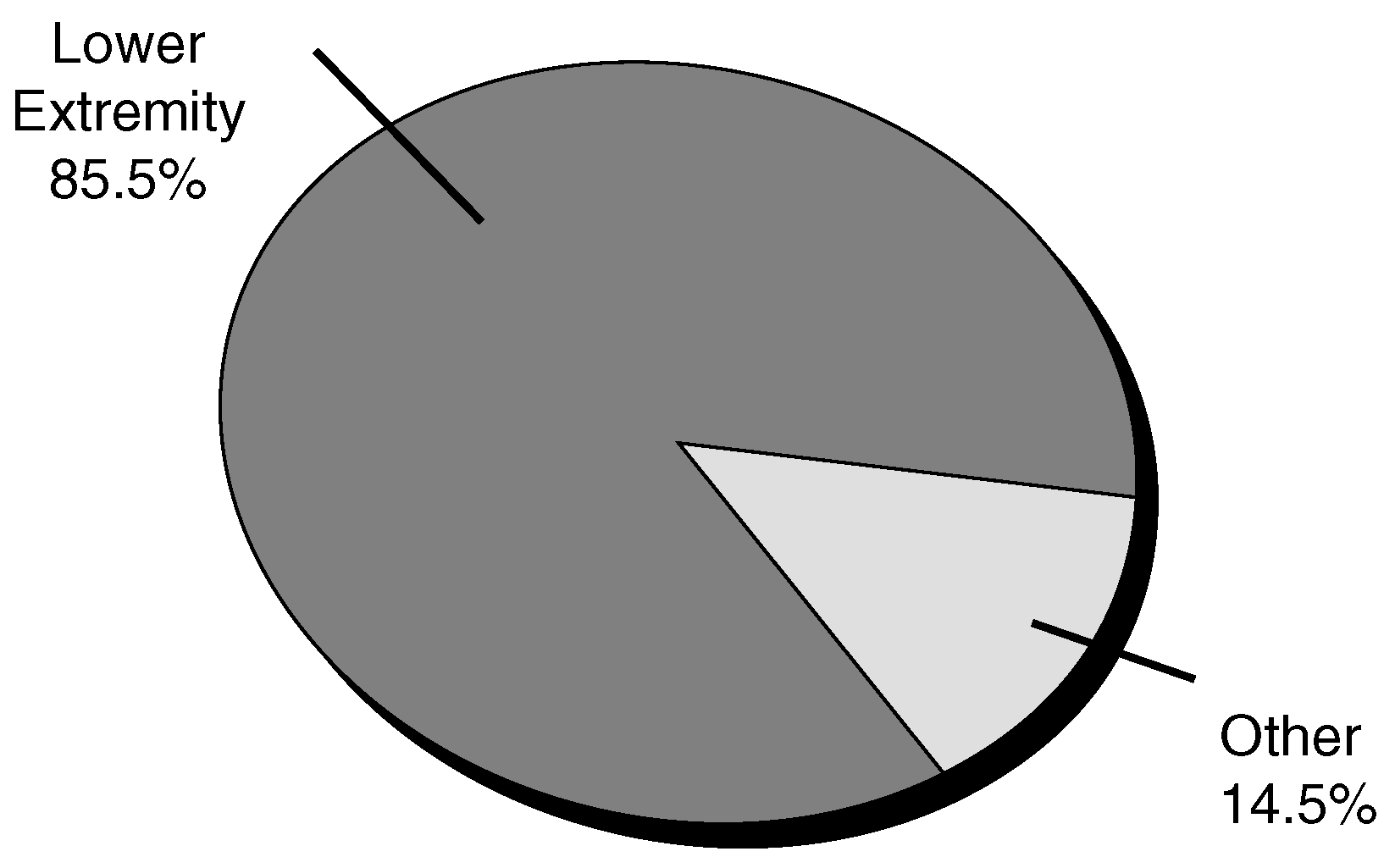
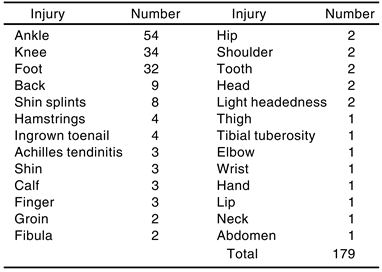
A total of 85.5% (153/179) of the injuries reported involved the lower extremities (Fig. 10). Ankle injuries represented 35.3% (54/153) of the total lower extremity injuries, surpassing the next highest injured area: the knee, 22.2% (34/153). Foot injuries represented 20.9% (32/153) of the lower extremity
Figure 10.
Percentage of lower extremity versus other injuries.
injuries; shin splints 5.2% (8/153); hamstring strains or pulls were 2.6% (4/153); ingrown toenails 2.6% (4/153); Achilles tendinitis, shin problems, and calf pain each represented 2.0% of the lower extremity injuries. Other injuries of the lower extremities represented 5.2% of the total injuries (Fig. 11). A complete injury summary is noted in Table 2.
Figure 11.
Number of injuries occurring in the lower extremity.
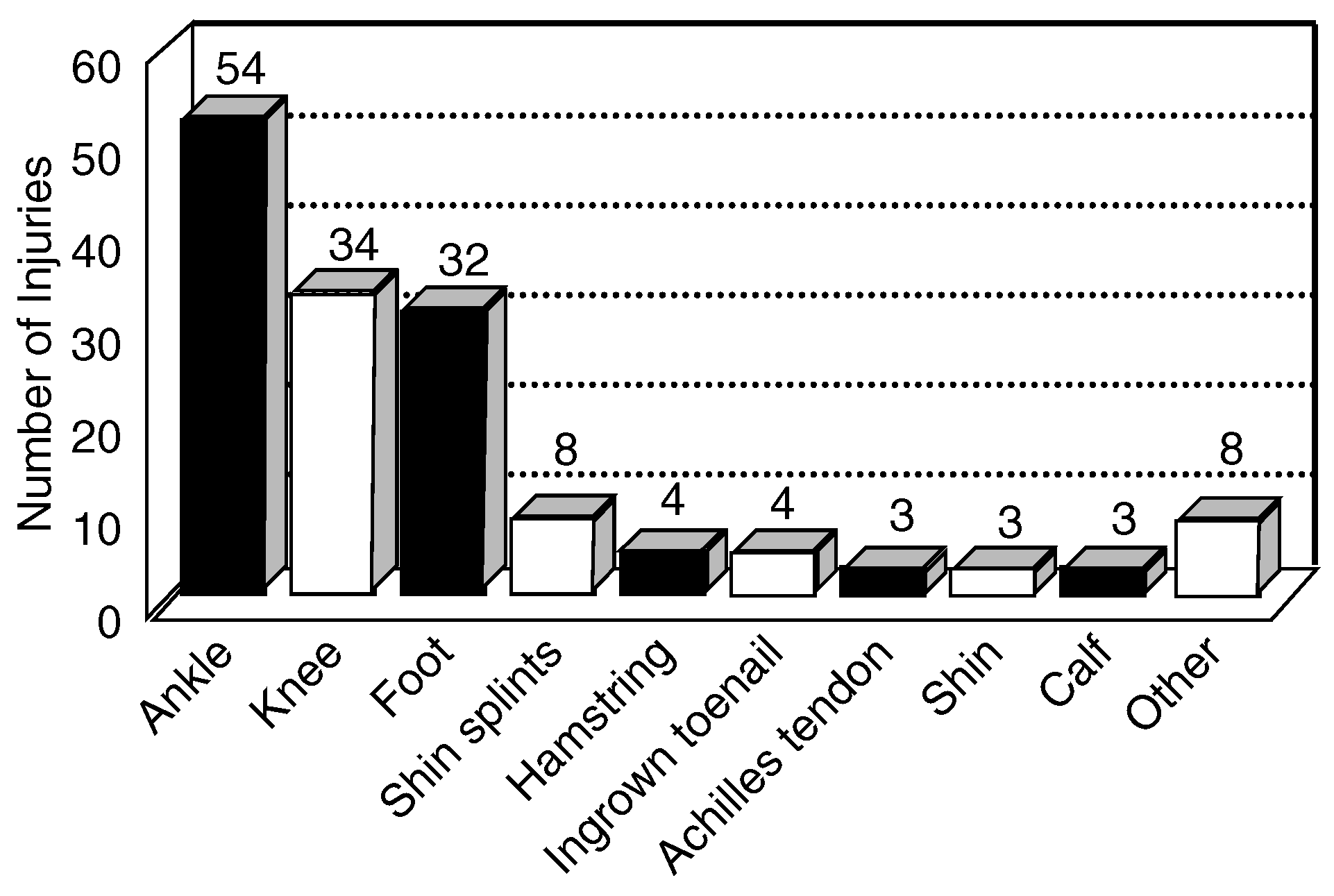
Table 2.
Total Injury Summary.
Thirty-one of the 179 total injuries occurred on September 7, 1993. This represents 17.3% of the total number of injuries recorded in this study and was clearly the highest number of recorded injuries on any single day. Ninety-four percent of these injuries involved the lower extremities.
Discussion
An analysis of month-by-month injury totals showed a pattern whereby injuries predominated in the preseason and decreased throughout the season. The total number of days spent in practice and performance was 83. Although the preseason accounted for only 8 of these days, 39.15% of the injuries were recorded during this time. Rudzki3 found similar results in Australian Army recruits involved in an 11-week training period in which the majority of injuries occurred in the first 3 weeks.
Although there were only 5 band-practice days in August, 25.1% of the injuries occurred during this time. Two possible explanations were long practice hours in the preseason and band members reporting to practice in poor condition. One hundred injuries were tallied in September, which was the highest number of injuries in 1 month (55.9%). A majority of these injuries were recorded before the first game and the day after the Labor Day weekend. The number of injuries decreased significantly in October, November, and December, as the practice hours decreased and the members’ general cardiovascular fitness and technical skills increased.
There was essentially no difference in the actual number of injuries between males (89) and females (90) in the band. However, 44.9% of the females sustained injuries compared with only 32.2% of the males. These findings were similar to those found by Jones [3] in military marching. This trend was even more striking in the preseason, with females accounting for an even greater percentage of injuries. However, these results do not account for other variables such as shoes, type of instrument played, amount of stretching performed, and any previous injury to a part.
General trends could also be observed when comparing experienced band members to first-year participants. There was a higher percentage of injuries for first-year band members, as compared with that of experienced members. Furthermore, there was a lower percentage of injuries for those members with 4 or more years of experience. Certain factors may have contributed to these findings. The first-year members may have been more prone to injury because of their unfamiliarity with the physical demands of the band’s marching style and an inadequate knowledge of appropriate preseason conditioning.
The band’s daily practice sessions took place on an unforgiving asphalt surface, accounting for the majority of the injuries. The authors believe that the total number of injuries per season would decrease if the practice field were a softer, more shock-absorbent surface such as natural grass or artificial turf. The second highest incidence of injury occurred on grass; however, this may be accounted for by the Michigan Stadium field which is actually a prescription turf that offered a poor marching surface. Large pieces of the sod were loosened during the course of football games, leaving holes and dirt mounds as potential hazards. Therefore, the prescription turf found in Michigan Stadium is not an ideal surface for marching bands, and should not be considered the same as a natural grass field. Clearly, controlled studies are needed to determine optimal marching band practice and performance surfaces.
There was a significantly higher rate of injury in the marching performances as compared with the practices. The band members may have marched with greater intensity in performances as compared with practices and may have suffered fatigue-related injuries as a result. The high degree of competition to make the block band, the high profile and prestige of performing with the band, and the stresses of performing in front of more that 100,000 spectators may also be contributing factors. Also, the shoes worn during performance were required to be black, thus limiting the shoe selection. The restrictiveness of their performance uniforms may have also been a factor.
Before the beginning of the marching season, a cross-trainer style shoe was recommend based on one author’s knowledge of athletic footwear. Inherent in the design of a cross-trainer shoe are the following: 1) a semirigid heel counter; 2) an accommodating toe box; 3) a tread with a pivot point, and; 4) a cushioned sole. Many have sock liners that can be removed to accommodate shoe inserts when needed.
Despite these considerations it should be noted, as Jones [4] has discussed, that there have been no controlled studies confirming that a particular shoe type is better than any other shoe type when considering athletic performance. However, Jones stated that adequate athletic footwear exhibits at least the following attributes: 1) shock absorption, 2) flexibility, 3) a rigid heel counter, and 4) a supportive insole. The cross-trainer shoe closely exemplifies these qualities. Controlled studies need to be carried out to confirm a superior shoe type for marching band activity.
Another area studied was the number of injuries that occurred while performing a high-step marching technique. This high-impact style of marching appears to increase the incidence of stress-related injuries. Sixty-seven percent of the injuries recorded occurred while performing this step.
Sixty-one (34%) of the injuries reported involved a previously injured body part. As Noyes [5] suggested, a previous lower extremity injury increases the likelihood of reinjury. Therefore, the authors suggest that the previously injured part of the body be protected during practice and performance to prevent further injury.
The lower extremity accounted for the majority of injuries reported (85.5%). The authors believe that the number of lower extremity injuries could be reduced by incorporating a less physically demanding marching style, providing an optimal marching surface, and requiring appropriate shoes.
When injuries in each section were analyzed, percussionists comprised 10.8% of the band, but only 2.2% of all band injuries. This may be a result of the percussionists not performing the high step because of instrument restrictions. Tubas and piccolos sustained disproportionately higher numbers of injuries. While the weight of the tuba may have contributed to its section’s high injury rate, the high incidence of piccolo injuries is more difficult to explain. A unique factor that may be considered is the mechanics of playing the piccolo, which requires both hands to be held to one side, increasing upper extremity torsion, whereby playing any of the other instruments requires the arms to be held near the midline. The combination of upper body torsion and a high-step marching style may be responsible for added biomechanical stresses.
The 155 injuries (86.6%), which required less than 1 day of missed participation, fell into one of two categories. They either caused no time to be missed or they required just enough time out to remedy the injury for an immediate return to active participation. Most of the 24 injuries (13.4%) requiring 1 or more full days missed were short term with only two (8.3%) injuries requiring more than 4 days to be missed. Knapik et al1 found similar results in a study of 335 soldiers involved in a strenuous march over a predominately paved road. Eighty soldiers sustained injuries with 55 requiring medical attention. However, only 12 soldiers could not continue the march. This seems to indicate that most marching injuries are self-limiting.
A surprisingly large number of injuries occurred on September 7, 1993. Thirty-one (17.3%) of the 179 injuries occurred on this day. This date was the Tuesday following Labor Day weekend, which was a 3-day vacation for the band. Upon returning on September 7, they resumed a rigorous practice schedule including 81/2 hr of rehearsal. Other than returning to a vigorous practice schedule following an unusually long hiatus, the authors can provide no other explanation for this high injury occurrence.
Conclusion
Marching band is a formidable sporting activity that puts its athletes at risk for injury. This study showed a predominance of injuries to the lower extremities of the marching band members. The authors hypothesized that this result was explained by factors such as an inappropriate marching surface, a ballistic style of high-step marching, inadequate shoes, and a rigorous training schedule. Further research is necessary in order to confirm these findings and to provide these athletes with improved practice and performance conditions, thereby reducing the risk of future injuries.
Acknowledgments. The University of Michigan Marching Band; H. Robert Reynolds; Gary J. Lewis; Maggie St. Clair; Kenneth Polsinelli; the band graduate assistants, including Dougald MacNaughton, for their cooperation; and Dick Gaskill and Hope Lash for photographs.
References
- KNAPIK J, REYNOLDS K, STAAB J, ET AL: Injuries associated with strenuous road marching. Mil Med 157: 64, 1992.
- ALBERT M: Descriptive three year data study of outdoor and indoor professional soccer injuries. Athletic Training FALL: 218, 1983.
- RUDZKI S: Weight-load marching as a method of conditioning Australian army recruits. Mil Med 154: 201, 1989.
- JONES B: Overuse injuries of the lower extremities associated with marching, jogging, and running: a review. Mil Med 148: 783, 1983.
- NOYES F: The medical aspects of soccer injury epidemiology. Presented at Sports Medicine Congress/Exposition, Indianapolis, 1985.
Additional References
- LEVINE R: Epidemic faintness and syncope in a school marching band. JAMA 238: 2373, 1977.
- SMITH L, BUNCH R: Athletic footwear. Clin Podiatr Med Surg 3: 637, 1986.
- STEIN M, SCHLAMKOVITCH M, FINESTONE A, ET AL: Marcher’s digitalgia paresthetica among recruits. Foot Ankle 9: 312, 1989.
- WICHMAN S: Athletic shoes: finding the right fit. Phys Sports Med 21: 204, 1993.
© 1996 American Podiatric Medical Association