


Abstract
Background: Diabetic foot ulcers are a leading cause of major limb amputations in diabetic patients. Timely intervention through early diagnosis of vascular insufficiency and aggressive ulcer management may mitigate these risks. This study evaluated the relationship between early and delayed referral pattern and major amputation and the impact of the coronavirus disease (COVID) 2019 pandemic on associated rates. Methods: This retrospective cohort study analyzed records from type 2 diabetic patients over 30 years old with lower-extremity ulcers treated at Western Michigan Health clinics between June 1, 2018, and December 31, 2021. The study period was divided into pre-COVID (59 patients) and intra-COVID (92 patients) phases. Patients were followed until diabetic foot ulcer resolution, death, amputation, or loss to follow-up. Early referral was defined as within 4 weeks after ulcer diagnosis. Referral rates to specialists and the use of noninvasive studies such as the ankle-brachial index were examined. Results: Overall, 151 patients met the inclusion criteria. A total of 11 underwent major amputations, with a trend toward increased rates during the intra-COVID period. There was no significant difference in major amputation rates between early and delayed referrals. Although many of the major amputations had early referrals, this was likely due to late presentation. The study highlighted significant underutilization of noninvasive imaging, with only 37% of patients undergoing ankle-brachial index testing. Wound documentation inconsistencies and variability undermined the reliability of findings and patient treatment. No protocol was identified in ulcer management. Conclusions: Delayed referrals did not significantly affect major amputation rates, suggesting that factors other than referral timing may influence outcomes. The COVID-19 pandemic led to an increase in amputation rates, possibly owing to pandemic-related lapses in care. Underutilization of noninvasive vascular studies and lack of consistent treatment protocols represent missed opportunities for early intervention. Enhanced provider training, protocol-driven care, and consistent use of noninvasive vascular studies may help prevent major amputations.
Lower-extremity complications as a result of diabetes mellitus are responsible for approximately 50% of all diabetes-related hospital admissions [1]. In 2020, a total of 130,000 nontraumatic lower-limb amputations were performed on diabetic adults in the United States. [1] The overwhelming majority of diabetes-related amputations stem from the development of diabetic foot ulcers (DFUs) [2,3]. According to a recent review, it is estimated that nearly 15% of all individuals with diabetes will eventually develop a DFU [4]. The development of an ulcer combined with poor vasculature or superimposed infection [5] usually results in a substantial risk of amputation.
Once a primary-care provider detects a DFU, early intervention is associated with better patient outcomes [6]. This often includes a referral to one of several specialist services (eg, vascular surgery, wound care center, podiatric medicine). It is not uncommon for there to be a delay in DFU detection and specialist referral [7,8]. Each day of delay increases the risk of major amputation by 3.5% [8]. These findings emphasize the urgent need for timely referrals to prevent severe consequences for DFU patients.
During the coronavirus disease 2019 (COVID-19) pandemic, there was a disruption in medical services. With the onset of the pandemic, many patients faced hurdles in accessing care owing to the strain on health-care systems [9,10,11,12]. This study was undertaken to identify the impact of COVID-19 on the management of DFUs. This study aimed to determine 1) whether delayed referral to a specialist results in an increased rate of major amputations and 2) whether the COVID-19 pandemic impacted the rate of major amputations.
Materials and Methods
The study design is a retrospective cohort study focusing on patients who initiated treatment for DFUs within specific pre- and intra-COVID periods. Institutional review board approval was obtained.
The pre-COVID period spanned the 18 months from June 1, 2018, to December 31, 2019, whereas the intra-COVID period spanned the 18 months from June 1, 2020, to December 31, 2021. Patient data were collected from Western Michigan University Homer Stryker MD School of Medicine (WMed) Health clinics within these defined time frames. The study followed the patients until their ulcers had healed or they had undergone a major or minor amputation or died or were lost to follow-up. In this study, major amputations were defined as surgical procedures resulting in removal of the lower limb above the ankle or below or above the knee. Conversely, minor amputations were categorized as those involving toes or transmetatarsal amputations.
The inclusion criteria for this study comprised individuals diagnosed with type 2 diabetes, those aged between 30 and 95 years, those evaluated at WMed Health clinics during the specified pre- and intra-COVID periods, and patients with a new diagnosis of DFU. The exclusion criteria comprised individuals with a history of lower-extremity ulcers in the previous 12 months, those presenting with a grade 0 (healed) ulcer, and those first presenting with an ulcer outside of a clinic setting (eg, in the emergency department).
Data extracted from the medical records included age, sex, wound diagnosis date, hypertension, hyperlipidemia, smoking status, renal insufficiency, congestive heart failure, peripheral artery disease, coronary artery disease, end-stage renal disease, referral to specialists (vascular surgery, orthopedic surgery, podiatric medicine, wound care), and referral dates. Patients who had noninvasive vascular studies using duplex Doppler ultrasonography were identified. Early referrals were defined as being made within 4 weeks of ulcer diagnosis. Data were collected regarding wound status, date of healing, time to healing, and date of amputation.
Statistical Analysis
Data were gathered via convenience sampling, which is a nonprobability sampling method; accordingly, a power analysis was not performed. The sample consisted of 151 patients as per the aforementioned inclusion criteria. Missing value management was performed at the variable (not case) level. Accordingly, missing variable data were excluded from analyses. Spurious measurements were considered for possible verifiable correction and inclusion; failing satisfactory resolution, erroneous data were excluded from statistical analyses. Descriptive tables were used to depict the proportions of patients who had major or minor amputations; major amputations included both below-the-knee and above-the-knee amputations.
Comparing the proportions of patients who had major or minor amputations with regard to those with early referrals versus delayed referrals was addressed using the Fisher exact test. When stratified by the five categories of referral providers, the proportions of patients who had major or minor amputations with early referrals compared with delayed referrals were analyzed five times using the Fisher exact test. This family of tests used a Bonferroni multiplicity adjustment; consequently, each had a significance level of α = 0.01 (0.05/5% significance). To determine if the proportions of patients with major or minor amputations differed between the pre- and intra-COVID time frames, the Fisher exact test was employed. The χ2 test was performed to determine if the proportions of major or minor amputations for delayed, early, or no referrals differed between the pre- and intra-COVID intervals. A Bonferroni multiplicity correction was applied for each of these tests; consequently, the significance level was adjusted to α = 0.017 (0.05/3% significance).
All inference testing employed a significance threshold of α = 0.05. Post hoc comparisons used a Bonferroni multiplicity adjustment. Data were cleaned, formatted, and analyzed using SAS 9.4 (SAS Institute Inc, Cary, North Carolina).
Results
Study Cohort
This study included 151 patients diagnosed with a DFU within the stipulated period. Demographic distribution is shown in Table 1. Comorbidities are listed in Table 2. The cohort was further subdivided into two temporal segments based on the COVID-19 pandemic (Table 3).

Table 1.
Demographic Distribution of the Study Cohort
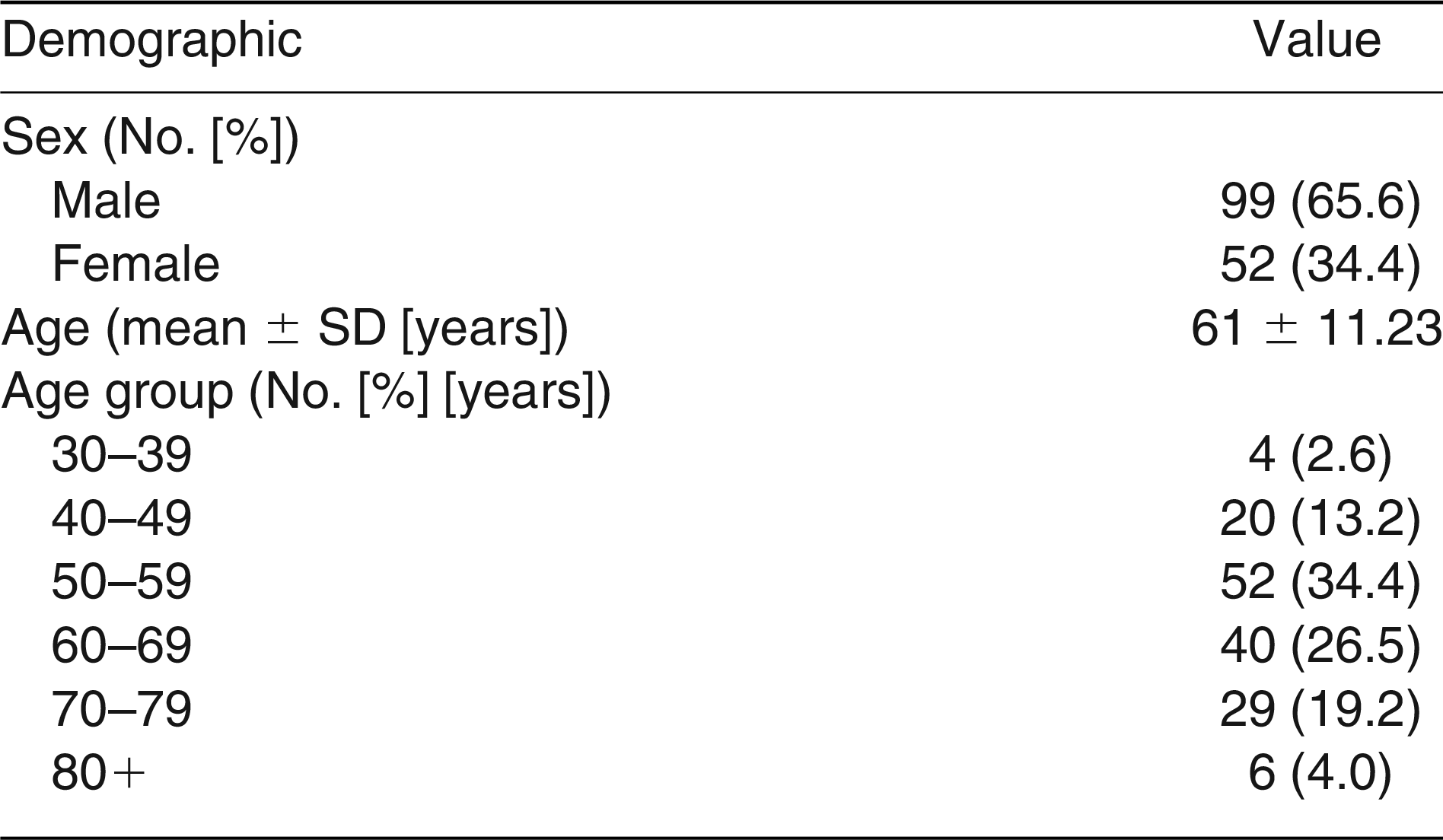
Table 2.
Comorbidities of the Study Cohort
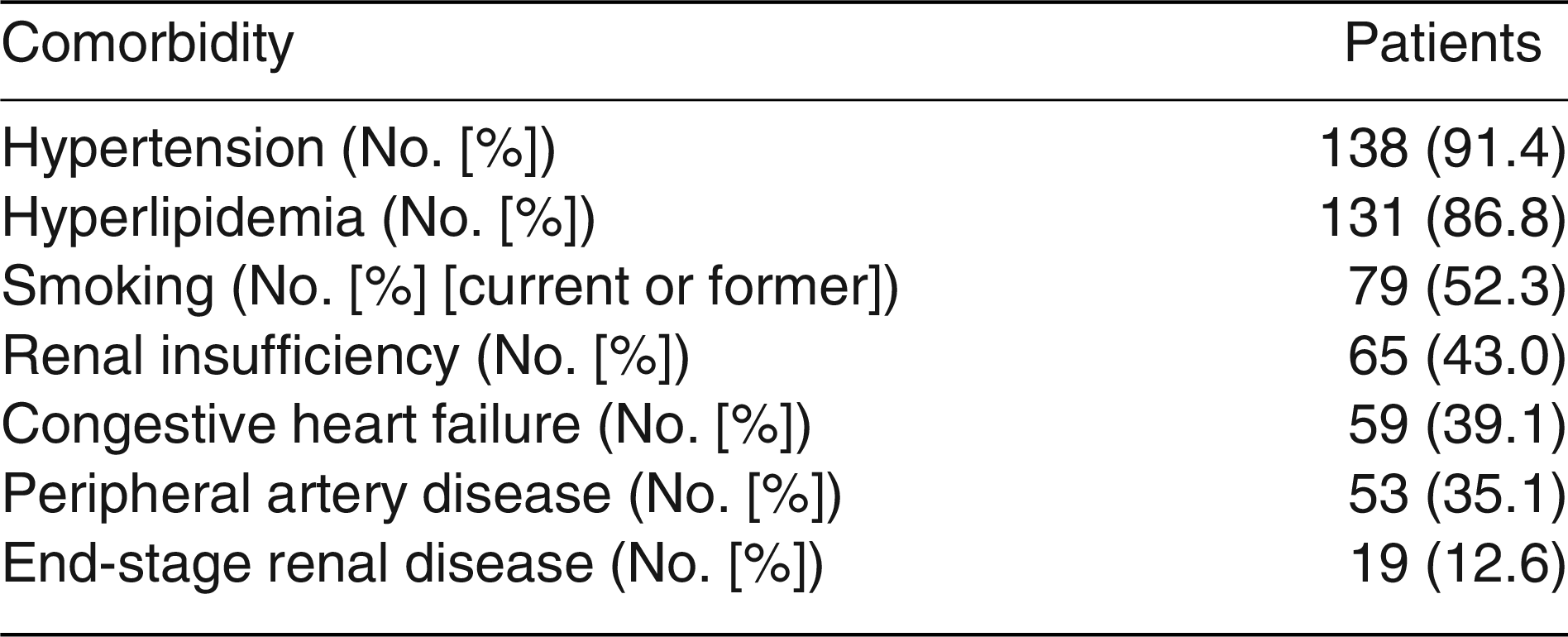
Table 3.
Comparative Analysis of Wound Outcomes Before and During the Coronavirus Disease 2019 Pandemic

Major Amputations
The age of patients undergoing major amputations was 56 ± 6.9 years (range, 44–67 years), which was younger than the overall group. Major amputations were performed in 11 patients. Three of these amputations occurred during the pre-COVID period among 59 patients (5%) and eight occurred during the intra-COVID period among 92 patients (9%). No statistically significant difference was observed between major amputations in the pre- and intra-COVID periods (Fisher exact test P = .529).
Minor Amputations
Minor amputations were notably more prevalent, observed as the outcome in 39 cases. The cohort presented with an age of 57 ± 11.3 years (range, 34–88 years). Disaggregated by the COVID-19 timeline, minor amputations were performed in 18 patients (46.2%) during the pre-COVID period and 21 patients (53.8%) during the intra-COVID period. The χ2 test revealed no statistically significant difference in the rate of minor amputations between the pre- and intra-COVID periods (P = .293).
No Amputation
Of the 151 patients in the study cohort, 101 (66.9%) experienced ulcer resolution or did not undergo any form of amputation. Among these, 38 patients (37.6%) were diagnosed with a DFU in the pre-COVID period, whereas 63 patients (62.4%) were diagnosed during the intra-COVID period. Examining the outcomes of these 101 patients, 96 (64%) had wounds that were documented as healed. By contrast, the most recent records showed that four had unhealed wounds. The healing status of one patient remains unknown as a result of being lost to follow-up.
Across both the pre- and intra-COVID periods, the time to wound healing was 27.9 ± 30.2 weeks. When these time frames were broken down further into pre- and intra-COVID periods, the pre-COVID phase had a slightly extended healing duration of 30.4 ± 29.9 weeks. By comparison, the intra-COVID period saw a marginally reduced healing time of 26.4 ± 30.4 weeks. Wound outcomes before and during the COVID-19 pandemic are shown in Table 3.
Referral Timing
Of the 151 patients in our cohort, 96 (63.6%) received early referrals, whereas 20 (13.2%) faced delayed referrals and 35 (23.1%) were not referred at all. In the pre-COVID interval, 38 patients had early referrals compared with seven who experienced delayed referrals and 14 who had no referrals. During the intra-COVID period, 58 patients were referred early compared with 13 who had delayed referrals and 21 who had no referrals. The COVID-19 pandemic did not show a statistically significant impact on referral timing (P > .99).
Major and Minor Amputations by Provider Type
Vascular Surgery.
Twenty-three referrals were made to vascular surgery. Eight of these were delayed, with one delayed case culminating in a major amputation. Among the early referrals, five resulted in major amputations. The Fisher exact test revealed a significant relationship between referral to vascular surgery, whether early or delayed, and major amputation (odds ratio [OR], 0.15; 95% confidence interval [CI], 0.03–0.65; P = .002). At Western Michigan University Homer Stryker MD School of Medicine, major amputations are carried out by vascular surgeons. Early referrals resulting in major amputations involved patients referred for amputations and not ulcer management. Furthermore, six patients referred to vascular surgery underwent minor amputations, although this outcome was not statistically significant.
Orthopedic Surgery.
Ten patients were referred to orthopedic surgery, two of whom experienced delayed referrals; both delayed referrals resulted in minor amputations. By contrast, minor amputations were observed in six of the eight early referrals. The Fisher exact test demonstrated no significant relationship between referrals to orthopedic surgery and amputations (P = .17). No major amputations were observed in this cohort. Of note, this group did have the most minor amputations (eight), although this was not a statistically significant finding.
Wound Care Center.
The wound care center received 79 referrals, of which 62 were early and 17 were delayed. In this group, minor amputations were observed in 14 early and four late referrals. Major amputations were less frequent, seen in four early and one delayed referral. Statistical analysis via the χ2 test revealed no significant relationship between a referral to wound care and either minor or major amputation (OR, 1.14; 95% CI, 0.29–4.36; P = .84).
Podiatric Medicine.
There were 36 referrals to podiatric medicine, with 26 being early and ten being delayed. Among the early referrals, nine resulted in minor amputations and a single case led to a major amputation. In the delayed group, two resulted in minor amputations, with no cases of major amputation. The Fisher exact test demonstrated no significant relationship between a referral to podiatric medicine and an amputation (OR, 3.9; 95% CI, 0.44–34.4; P = .25).
Other.
Eleven referrals were made to other specialties or services, including infectious disease, general surgery, and home health care. Eight of these were early referrals, whereas three were delayed. Three early referrals resulted in minor amputations and one delayed referral led to a minor amputation. No major amputations were observed in this subgroup. The Fisher exact test showed no significant relationship between a referral to this subgroup and amputation rate (P = .53).
Use of Noninvasive Testing
Of the 151 patients in the study, 56 (37%) underwent ankle-brachial index testing after diagnosis of a DFU. Of the patients who underwent ankle-brachial index testing, 60% received testing in the early time frame after diagnosis, whereas the remaining 40% received testing in the late time frame.
Discussion
The principal findings from this study are twofold. There was an almost twofold increase in major amputations between the pre- and intra-COVID periods (5% versus 9%). However, this observation is not statistically significant and is likely due to the sample size. There was no significant difference in major amputations between early referrals and late referrals, although the number of amputations was higher in the early referral group. These patients most likely presented to the primary-care clinic with advanced disease. It is also likely that patients waited too long at home during the intra-COVID period before seeking care.
Recent studies have delineated the adverse effects of the pandemic on various facets of health care [9,10,11,12,13]. Our study shows that in all probability patients needing major amputations waited too long before seeking care. Studies have shown that specialized interventions for conditions such as DFUs often decline during major public health crises [9,10,12]. Our study suggests that patients may not seek care in a timely manner.
The wound care center received the most referrals for an initial DFU diagnosis followed by podiatric medicine, vascular surgery, and orthopedic surgery. However, compared with the number of referrals placed, vascular surgery and orthopedic surgery were associated with a higher likelihood of amputation than wound care or podiatric medicine. These patterns may be due to orthopedic and vascular surgery services being consulted for more advanced cases of DFUs, which are more likely to require amputation. Clinical decision-making may prompt a referral to orthopedic surgery for a DFU if there is associated osteomyelitis, a condition associated with higher rates of amputation [14,15], hospitalization [14], and prolonged wound recovery [15]. Conversely, a diagnosis of peripheral artery disease can delay the healing of a DFU, increasing the risk of amputation [16]. The higher rate of amputation associated with these specialties likely reflects the severity and complexity of the cases they encounter rather than the quality of care provided. It is crucial to note that vascular and orthopedic surgeons are the specialists typically consulted to perform major amputations such as above-the-knee and below-the-knee amputations, which are outside the scope of podiatric medicine and wound care specialists.
This referral pattern underscores the critical role these specialists play in the continuum of care for DFU patients, often intervening when other treatments have faltered or when case complexity demands their expertise. Although previous studies have emphasized the importance of early multidisciplinary intervention in DFU management [17,18,19], our findings suggest that even with early intervention some cases may progress to require major surgical intervention because of an advanced disease state at presentation or other complicating factors. It is important to acknowledge a potential bias in our study, as cases perceived to be more severe were more likely to be referred to these specialized services.
In addition, there was no significant relationship between referral timing and wound outcome. Of the 11 patients who received major amputations, the majority received early referrals. This was an unexpected finding, as other literature has suggested that early evaluation and referral may be a critical element in amputation prevention [3]. It is likely that these patients presented at a very late stage in the disease, necessitating expedited major amputation. It is important to emphasize that our sample size may have limited our interpretation of referral trends and outcomes. In addition, it is worth noting that early referral with multidisciplinary support remains the best practice and is supported by other studies [18].
Noninvasive testing was performed in only 37% of cases. Newer techniques determining the oxygenation of tissue around the ulcer may be even more helpful in determining the optimal treatment algorithm [20]. It should be mandatory to assess the arterial circulation to the foot when the pulses are not felt. A DFU with underlying vascular insufficiency will not heal despite adequate local wound care. The toe and flow model advocated by Rogers et al [21] should be practiced to save limbs.
Initial wound documentation upon DFU diagnosis varied widely. On one end of the spectrum, only some primary-care providers uploaded photographs of the ulcer to the chart and included brief documentation of the wound in their note and only a few staged the wound. Published data emphasize the importance of wound classification in managing the wound, which has tremendous predictive value for the outcome of a DFU [22,23,24]. It is noteworthy that WMed Health clinics operate with two electronic medical record (EMR) systems, Cerner and Epic, based on their hospital affiliation. At our institution, Epic provides a direct and secure method for providers to capture clinical images using their cell phones, whereas Cerner lacks this feature. Such inconsistencies in wound documentation and EMR functionality can considerably undermine the reliability and reproducibility of findings [25].
The disparities in wound documentation reiterate the need for standardized protocols, ensuring a homogenized approach and reducing variability [25,26,27]. Although there may be difficulties in uploading pictures showing the ulcer at initial diagnosis, depending on user comfort and EMR capabilities [25], it is important to document size, depth, color, drainage, and grade of the wound [27]. Based on these observations, we would encourage the use of further objective measures, such as the Wagner scale [28], in addition to photographs to better define patient disease severity and subsequent treatment.
Recent studies have demonstrated that optimizing EMR systems for wound care can significantly improve patient outcomes. A study using Epic, the same EMR system used by Bronson, a WMed affiliate, found that implementing a comprehensive EMR protocol for venous ulcer patients led to improved wound healing rates (from 59.5% to 77.94%) over a 2-year period [29]. This protocol included standardized wound measurement, dressing documentation, and patient education materials. Additionally, the study reported improvements in addressing related health issues, with 29% of patients quitting smoking and 20% reducing smokeless tobacco use. These findings underscore the potential benefits of standardized wound documentation and EMR optimization in managing chronic wounds, including DFUs. By prioritizing accurate and standardized wound documentation in the electronic health record, health-care providers can significantly enhance the quality of care for patients with chronic wounds, potentially leading to improved outcomes and reduced health-care costs.
Our review shows the inconsistency in managing wounds. A multispecialty approach is critical to saving limbs. The wound, ischemia, and foot infection classification [24] is important in individualizing the treatment plan. Based on our review, it became obvious that there was inconsistency in managing DFUs even before the COVID-19 pandemic. Patients delayed seeking care, resulting in higher major amputation rates. The approach to documentation of the initial wound also varies greatly. There needs to be enhanced provider training [30] and increased use of technological advancements to establish a unified wound documentation system [25,26,27,31].
Only 36 patients were referred to podiatrists. These patients must be seen and followed by podiatrists to help heal the wound by using off-loading casts and other measures. Follow-up is critical for ensuring appropriate footwear and preventing ulcer formation. With our limited data, we could not determine if there was an increased amputation rate because of delayed referral. However, it became quite obvious that there is a lack of a multidisciplinary approach in managing DFUs.
Study Limitations
Our study does have several limitations. The study was retrospective in nature and was performed at a single center. The patient sample size was defined by the COVID-19 period. The data were extracted from two different EMR systems, with inherent limitations in each.
Conclusions
This study found considerable variability in the approach of primary-care providers to the management of DFUs. There needs to be better documentation at the time of diagnosis, and the care plan should be protocol-driven. Patients waited too long during the COVID-19 period to see their primary-care provider, resulting in a disproportionate number of major amputations despite early referral. Patients with diabetes should be taught about appropriate foot care.
Financial Disclosure: None reported.
Conflict of Interest: None reported.
References
- US Centers for Disease Control and Prevention: National diabetes statistics report. Available at: https://www.cdc.gov/diabetes/php/data-research/?CDC_AAref_Val=https://jwww.cdc.gov/diabetes/pdfs/data/statistics/national-diabetes-statistics-report.pdf. Accessed June 12, 2023.
- Reiber GE , Boyko EJ , Smith DG: “Lower extremity foot ulcers and amputations in diabetes,” in Diabetes in America, 2nd Ed, edited by MI Harris , C Cowie , MP Stern, p 409, National Diabetes Information Clearinghouse, Bethesda, MD, 1995 .
- Pecoraro RE , Reiber GE , Burgess EM : Pathways to diabetic limb amputation. Basis for prevention . Diabetes Care 13 : 513 , 1990 .
- Raja JM , Maturana MA , Kayali S , et al : Diabetic foot ulcer: a comprehensive review of pathophysiology and management modalities . World J Clin Cases 11 : 1684 , 2023 .
- Eneroth M , Apelqvist J , Stenström A : Clinical characteristics and outcome in 223 diabetic patients with deep foot infections . Foot Ankle Int 18 : 716 , 1997 .
- Manu C , Lacopi E , Bouillet B , et al : Delayed referral of patients with diabetic foot ulcers across Europe: patterns between primary care and specialised units . J Wound Care 27 : 186 , 2018 .
- Smith-Strøm H , Iversen MM , Igland J , et al : Severity and duration of diabetic foot ulcer (DFU) before seeking care as predictors of healing time: a retrospective cohort study . PLoS One 12 : e0177176 , 2017 .
- Spanos K , Saleptsis V , Athanasoulas A , et al : Factors associated with ulcer healing and quality of life in patients with diabetic foot ulcer . Angiology 68 : 242 , 2017 .
- Giorgi PD , Gallazzi E , Capitani P , et al : How we managed elective, urgent, and emergency orthopedic surgery during the COVID-19 pandemic: the Milan metropolitan area experience . Bone Jt Open 1 : 93 , 2020 .
- Mouawad NJ , Woo K , Malgor RD , et al : The impact of the COVID-19 pandemic on vascular surgery practice in the United States . J Vasc Surg 73 : 772 , 2021 .
- Coma E , Mora N , Méndez L , et al : Primary care in the time of COVID-19: monitoring the effect of the pandemic and the lockdown measures on 34 quality of care indicators calculated for 288 primary care practices covering about 6 million people in Catalonia . BMC Fam Pract 21 : 208 , 2020 .
- Rubin G , Feldman G , Dimri I , et al : Effects of the COVID‐19 pandemic on the outcome and mortality of patients with diabetic foot ulcer . Int Wound J 20 : 63 , 2023 .
- Sisó-Almirall A , Kostov B , Sánchez E , et al : Impact of the COVID-19 pandemic on primary health care disease incidence rates: 2017 to 2020 . Ann Fam Med 20 : 63 , 2022 .
- Lavery LA , Armstrong DG , Wunderlich RP , et al : Risk factors for foot infections in individuals with diabetes . Diabetes Care 29 : 1288 , 2006 .
- Mutluoglu M , Sivrioglu AK , Eroglu M , et al : The implications of the presence of osteomyelitis on outcomes of infected diabetic foot wounds . Scand J Infect Dis 45 : 497 , 2013 .
- Prompers L , Schaper N , Apelqvist J , et al : Prediction of outcome in individuals with diabetic foot ulcers: focus on the differences between individuals with and without peripheral arterial disease. The EURODIALE study . Diabetologia 51 : 747 , 2008 .
- Frykberg RG , Banks J : Management of diabetic foot ulcers: a review . Fed Pract 33 : 16 , 2016 .
- Musuuza J , Sutherland BL , Kurter S , et al : A systematic review of multidisciplinary teams to reduce major amputations for patients with diabetic foot ulcers . J Vasc Surg 71 : 1433 , 2020 .
- Reardon R , Simring D , Kim B , et al : The diabetic foot ulcer . Aust J Gen Pract 49 : 250 , 2020 .
- Neidrauer M , Zubkov L , Weingarten MS , et al : Near infrared wound monitor helps clinical assessment of diabetic foot ulcers . J Diabetes Sci Technol 4 : 792 , 2010 .
- Rogers LC , Andros G , Caporusso J , et al : Toe and flow: essential components and structure of the amputation prevention team . J Vasc Surg 52(suppl 3): 23S , 2010 .
- Apelqvist J , Castenfors J , Larsson J , et al : Wound classification is more important than site of ulceration in the outcome of diabetic foot ulcers . Diabet Med 6 : 526 , 1989 .
- Oyibo SO , Jude EB , Tarawneh I , et al : A comparison of two diabetic foot ulcer classification systems: the Wagner and the University of Texas wound classification systems . Diabetes Care 24 : 84 , 2001 .
- Zhan LX , Branco BC , Armstrong DG , et al : The Society for Vascular Surgery lower extremity threatened limb classification system based on wound, ischemia, and foot infection (WIfI) correlates with risk of major amputation and time to wound healing . J Vasc Surg 61 : 939 , 2015 .
- Jacob C , Sanchez-Vazquez A , Ivory C : Factors impacting clinicians’ adoption of a clinical photo documentation app and its implications for clinical workflows and quality of care: qualitative case study . JMIR Mhealth Uhealth 8 : e20203 , 2020 .
- Khalil H , Cullen M , Chambers H , et al : Implementation of a successful electronic wound documentation system in rural Victoria, Australia: a subject of collaboration and community engagement . Int Wound J 11 : 314 , 2014 .
- Russell L : The importance of wound documentation and classification . Br J Nurs 8 : 1342 , 1999 .
- Shah P , Inturi R , Anne D , et al : Wagner’s classification as a tool for treating diabetic foot ulcers: our observations at a suburban teaching hospital . Cureus 14 : e21501 , 2022 .
- Bitner J , Sachdev U , Hager ES , et al : Standardized care protocol and modifications to electronic medical records to facilitate venous ulcer healing . J Vasc Surg Venous Lymphat Disord 7 : 570 , 2019 .
- Robinson KE , Kersey JA : Novel electronic health record (EHR) education intervention in large healthcare organization improves quality, efficiency, time, and impact on burnout . Medicine (Baltimore) 97 : e12319 , 2018 .
- Bredfeldt CE , Awad EB , Joseph K , et al : Training providers: beyond the basics of electronic health records . BMC Health Serv Res 13 : 503 , 2013 .
© 2025 American Podiatric Medical Association