


Abstract
Background: There is a known correlation between coronavirus disease 2019 (COVID-19) infection and the creation of a prothrombotic state. However, there is a paucity of literature assessing the influence of COVID-19 on deep venous thrombosis following surgery. This study evaluated the incidence of and risk factors for deep venous thrombosis among COVID-19-positive patients undergoing foot and ankle surgery. Methods: A retrospective review was performed at a single institution to extract all patients who had a COVID-19-positive diagnosis and foot or ankle surgery. A total of 472 patients met the inclusion criteria. A total of 321 patients had a COVID-19-positive diagnosis within the established perioperative period and the remaining 151 comprised the no COVID-19 group. Results: Overall, there were ten cases of deep venous thrombosis in the COVID-19-positive population; this was not significantly increased compared with the no COVID-19 group (3.12% versus 1.99%; P = .463). No demographic or medical history variables, such as previous deep venous thrombosis, history of tobacco use, venous insufficiency, peripheral vascular disease, chronic kidney disease, coronary artery disease, diabetes, or clotting disorders, were found to have a statistically significant influence on the rate of deep venous thrombosis in COVID-19-positive patients following foot and ankle surgery. Furthermore, vaccination status, timing of COVID-19 diagnosis in relation to surgery, trauma, anatomical location of surgery, and use of chemical prophylaxis did not demonstrate any statistical significance. Conclusions: This study did not find COVID-19 to increase the risk of deep venous thrombosis following foot and ankle surgery, and no specific variables were found to influence this risk. This study stands as a preliminary investigation on deep venous thrombosis rates in COVID-19 patients who have undergone foot and ankle surgery. Larger population studies would be of great benefit in the future.
The coronavirus disease 2019 (COVID-19) pandemic caused by severe acute respiratory syndrome coronavirus 2 has had a profound impact on global health. Initially recognized as a respiratory illness, COVID-19 has now been found to have multisystem organ involvement. There is a known correlation between the virus and the creation of a hypercoagulable and prothrombotic state that increases the risk of thrombotic events [1]. Confirming this, Chang et al [2]. demonstrated a greater incidence of deep venous thrombosis in COVID-19 patients versus non-COVID-19 patients. Reviewing 1,157 COVID-19 patients in a meta-analysis, Di Minno et al [3]. found the weighted mean prevalence of deep venous thrombosis to be 19.8%.
The underlying mechanism linking COVID-19 to deep venous thrombosis is complex and multifactorial. The hallmark of COVID-19 is a cytokine storm that is characterized by high levels of inflammatory markers, which activate platelets and monocytes, cause endothelial inflammation, and activate the tissue factor VIIa pathway, leading to the formation of immunologically mediated thrombi [4,5]. D-dimer, a marker of high fibrin turnover and thrombotic states, has been shown to have a direct positive relationship with the COVID-19 disease process, with higher levels producing more severe disease and increased risk of death [5,6]. Additionally, the immobility associated with severe illness and hospitalization exacerbates the risk of deep venous thrombosis development.
There is limited research evaluating the incidence of deep venous thrombosis in patients undergoing operative intervention with a perioperative COVID-19 diagnosis. Specifically, foot and ankle surgery patients are at an increased risk of deep venous thrombosis because of anesthesia, tourniquet use and duration, anatomical insults during dissection, and periods of prolonged nonweightbearing. Factors such as a history of previous deep venous thrombosis, polytrauma, obesity, and malignancy also increase the risk of deep venous thrombosis [7].
Numerous studies have suggested that the deep venous thrombosis rate in foot and ankle surgery is relatively low in comparison with other larger orthopedic procedures. Griffiths et al [8]. reported a deep venous thrombosis rate of 0.42% following foot and ankle surgery. In a large multicenter study, Mizel et al [9]. reported a deep venous thrombosis rate of 0.22%. When assessing traumatic foot and ankle surgery, Shibuya et al [10]. reported a deep venous thrombosis rate of 0.28%. Solis and Saxby [11]. reported a noticeably higher rate of postoperative deep venous thrombosis (3.5%); however, routine venous duplex ultrasounds were performed at the first postoperative visit regardless of whether the patient was symptomatic or asymptomatic for deep venous thrombosis. Thus, this provides a truer rate of deep venous thrombosis, but it must be understood that this does not correlate with the number of cases of symptomatic deep venous thrombosis in postoperative patients.
To the best of our knowledge, there is no study investigating the incidence and risk factors surrounding deep venous thrombosis in COVID-19-positive patients following foot and ankle surgery. The purpose of this study was to provide a preliminary report of that information. Specifically, the timing of a COVID-19 diagnosis in relation to operative intervention, trauma, anatomical location of surgery, vaccination status, medical comorbidities, demographic variables, and use of postoperative chemical deep venous thrombosis prophylaxis were investigated to track any influence of COVID-19 on deep venous thrombosis rates. We hypothesized that patients who underwent foot and ankle surgical intervention would not be at an increased risk of symptomatic deep venous thrombosis based on recent, current, or postoperative COVID-19 diagnosis.
Materials and Methods
A retrospective chart review was performed, which included all OhioHealth hospitals. Prior to any data collection, institutional review board approval was obtained. Potential study participants were identified by a query of the institution’s electronic medical records database. This query pulled any patients who had had foot or ankle surgery from March 23, 2020, to July 31, 2022. The date of March 23, 2020, was used, as this date correlated with the stay-at-home order issued in our geographic region at the beginning of the COVID-19 pandemic. With the query, an attempt was made to obtain all patients with a positive COVID-19 diagnosis who also underwent foot and ankle surgery during the aforementioned time frame. This preliminary patient list was then reviewed and validated by the lead investigator and subinvestigators (N.J., A.B., M.R., and S.J.) to ensure an accurate data pull.
Data extraction was performed for patients who met the inclusion and exclusion criteria. Patients must have been 18 years of age or older at the time of surgical intervention and must have had foot or ankle surgery during the aforementioned time frame. Patients in the COVID-19-positive group must have had a positive diagnosis at some point during the perioperative period. The perioperative period was defined as recent (10–120 days before surgery), current (<10 days before surgery), and postoperative (<30 days after surgery). All other patients were classified as no COVID-19 for the perioperative period. Notably, the no COVID-19 group included those who had a positive COVID-19 test outside of the perioperative period as previously defined. Patients were excluded if they had surgery to any other anatomical location outside of the foot and ankle concomitantly or during the perioperative period.
Data were extracted from the electronic medical record (Epic CareConnect) and securely stored in REDCap, which is a secure web application for building and managing online surveys and databases. Patient demographics, medical history including comorbidities, surgery type and date, any positive deep venous thrombosis examinations, and other pertinent perioperative factors were recorded in REDCap.
Statistical Analysis
All data were analyzed using JASP 0.17.1 and jamovi 2.3.21.0. Descriptive statistics were calculated for all variables. Mean and SD were used to describe continuous variables and count and percentage were used to describe categorical variables. Comparisons between groups were made using independent samples t tests for continuous variables and χ2 tests for categorical variables. Statistical significance was set at P ≤ .050 a priori.
Results
The initial data pull included 524 patients. After review of the inclusion and exclusion criteria, 472 patients were included in the final data set. A total of 321 patients had a perioperative COVID-19-positive diagnosis and 151 patients fell in the no COVID-19 group.
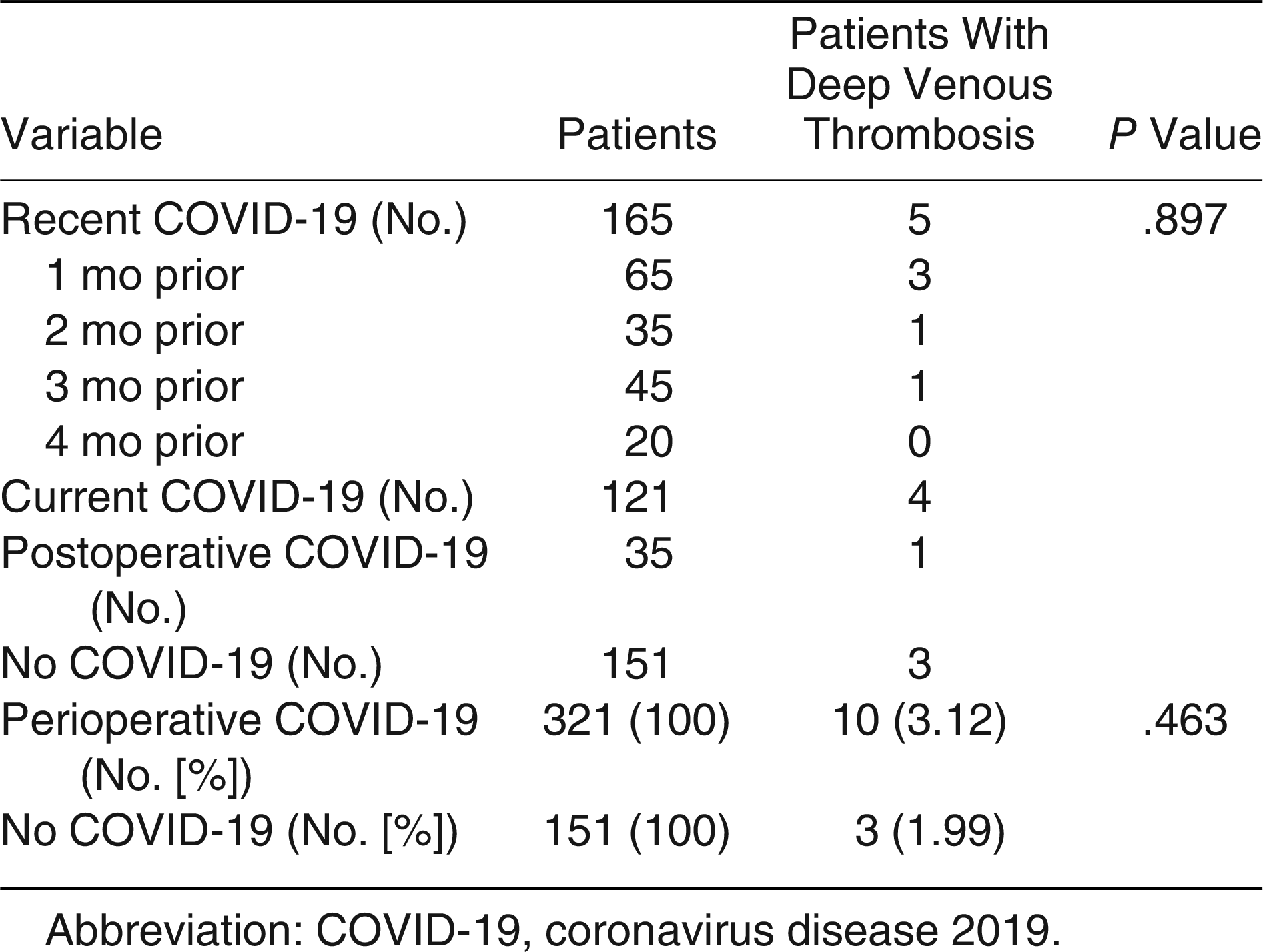
Overall, the rate of symptomatic deep venous thrombosis among the cohort of patients who had foot or ankle surgery and had an associated COVID-19 diagnosis within the perioperative period was 3.12% (ten of 321). The rate among the no COVID-19 group was 1.99% (three of 151). This difference was not statistically significant (P = .463).
When inspecting the timing of COVID-19 diagnosis in relation to surgery (recent, current, postoperative, no COVID-19), there was no statistically significant difference in deep venous thrombosis incidence. Similarly, there was no difference when patients with a recent COVID-19 diagnosis were subdivided into 1-month increments (Table 1).

Table 1.
Timing of Coronavirus Disease 2019 Diagnosis and Rate of Deep Venous Thrombosis Following Foot and Ankle Surgery
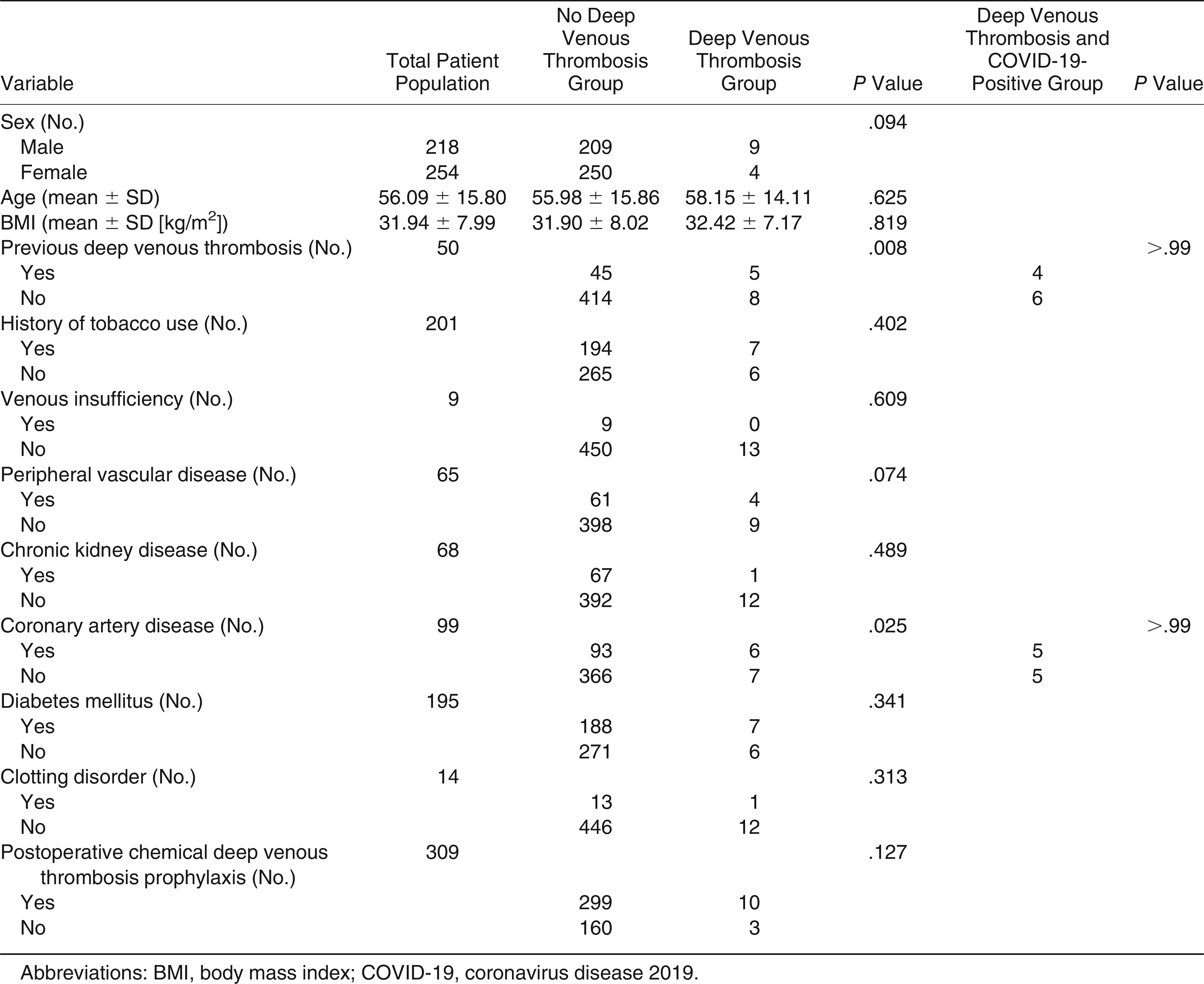
All patient demographic factors and medical history were assessed in two groups: a no deep venous thrombosis group and a positive deep venous thrombosis group. Previous deep venous thrombosis and coronary artery disease led to a significant increase in the rate of deep venous thrombosis among the total patient population. However, when these variables were considered in the setting of a positive COVID-19 diagnosis versus those in the no COVID-19 group, there was no statistically significant increase in the rate of deep venous thrombosis. Thus, the influence of COVID-19 did not lead to an increase in deep venous thrombosis among patients who had previous deep venous thrombosis or coronary artery disease. All other evaluated risk factors did not demonstrate a statistically significant influence on the rate of deep venous thrombosis (Table 2).
Table 2.
Influence of Demographic and Medical History on Deep Venous Thrombosis in Total and Coronavirus Disease 2019-Positive Patient Populations
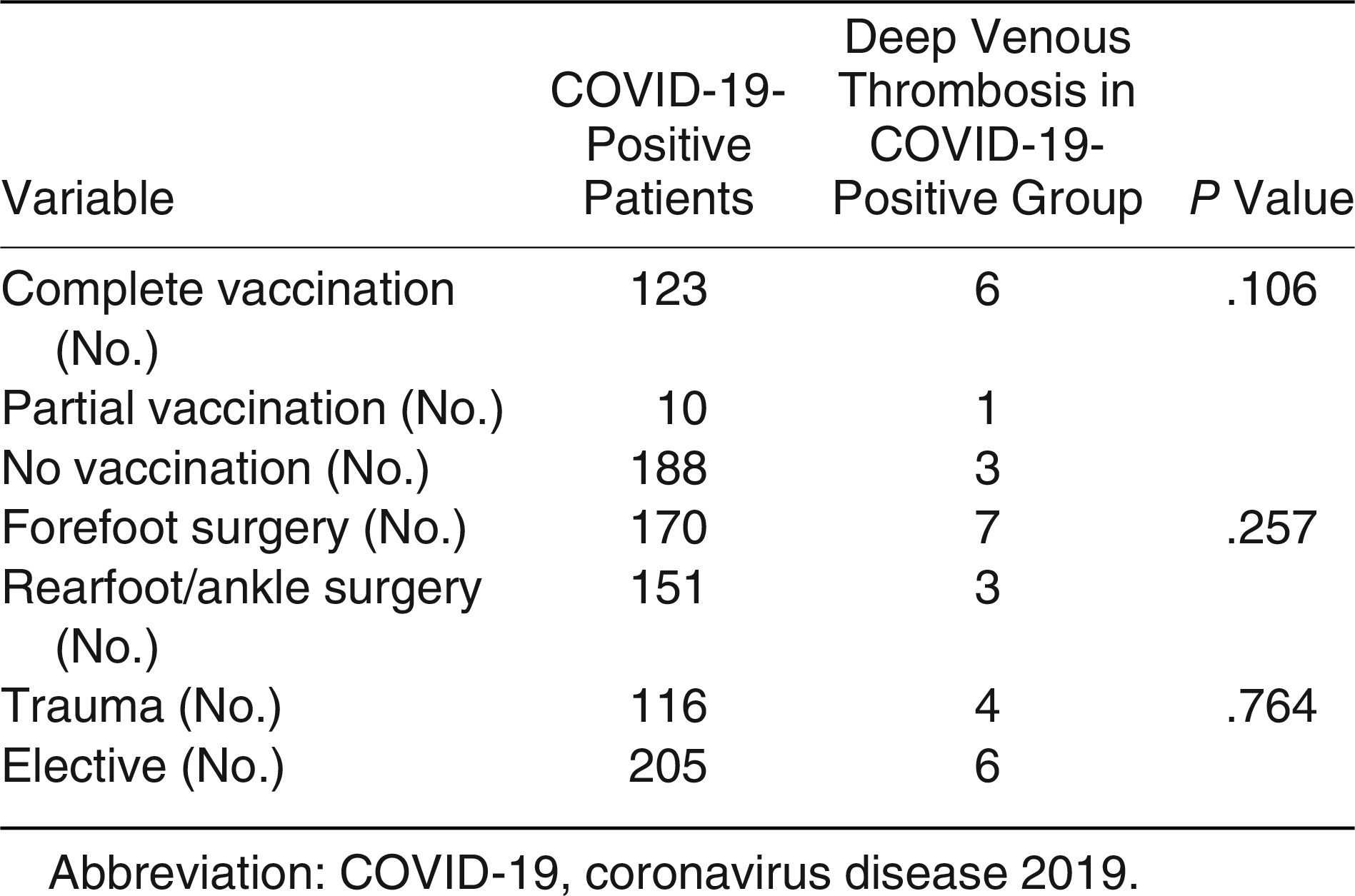
There was no statistically significant difference in deep venous thrombosis rate between patients with COVID-19 undergoing foot and ankle surgery who were not vaccinated, partially vaccinated, or completely vaccinated. Similarly, there was also no increased deep venous thrombosis rate among patients who underwent forefoot surgery versus rearfoot surgery or those who underwent operative intervention for traumatic injury versus elective surgery (Table 3).
Table 3.
Vaccination Status, Anatomical Location of Surgery, and Influence of Trauma on Deep Venous Thrombosis in Coronavirus Disease 2019-Positive Patient Population
Discussion
The overall symptomatic deep venous thrombosis rate in our cohort of patients who had foot and ankle surgery with a perioperative COVID-19 diagnosis was 3.12%. As discussed, this rate of symptomatic deep venous thrombosis is higher compared with previous studies but was not found to be significantly increased compared with patients who were COVID-19-negative. With varying numbers in the literature, the true rate of deep venous thrombosis in foot and ankle surgery continues to be debated. The study by Solis and Saxby [11]. demonstrated the highest deep venous thrombosis rate in foot and ankle surgery, but routine venous duplex ultrasounds were performed on these patients, which could exaggerate the true rate of deep venous thrombosis, especially in asymptomatic patients. To the best of our knowledge, there were no routine deep venous duplex ultrasounds performed on asymptomatic individuals in the present study.
There is limited research available on the incidence of deep venous thrombosis in patients with a recent COVID-19 diagnosis undergoing any surgical intervention. Our data demonstrated that there was no statistically significant difference regarding the risk of symptomatic deep venous thrombosis in relation to a recent, current, postoperative, or negative COVID-19 diagnosis within the perioperative period. Rosas et al [12]. looked at the incidence of deep venous thrombosis in patients with a recent COVID-19 diagnosis undergoing total hip arthroplasty and found no statistically significant increase in the rate of venous thromboembolism (VTE) following total hip arthroplasty, which is similar to our findings. Lee et al [13]. compared 90-day postoperative complications after total hip and knee arthroplasties in patients with a COVID-19 diagnosis within 6 months of surgery versus a COVID-19-negative cohort and found significantly higher rates of pulmonary complications, readmissions, and deep venous thrombosis in the COVID-19 cohort compared with the control group. In contrast to these studies, Vosburg et al [14]. evaluated 53 patients undergoing bariatric surgery who had recovered from a recent COVID-19 diagnosis and found no cardiovascular, VTE, or respiratory events over a 30-day postoperative period. Clearly, there are inconsistent findings regarding COVID-19’s influence on deep venous thrombosis in postoperative patients, with studies providing conflicting results.
In our study, coronary artery disease and previous history of deep venous thrombosis were found to increase the risk of deep venous thrombosis in the total population following foot and ankle surgery. However, when considering patients who were COVID-19-positive in the perioperative period versus those who were negative, there was no statistically significant increase in the incidence of deep venous thrombosis due to either of these medical conditions. This could suggest that any previous or perioperative diagnosis of COVID-19 regardless of timing may lead to an increase in deep venous thrombosis when patients have coronary artery disease or a previous history of deep venous thrombosis; however, these findings would need further investigation.
The present study also examined the effect of COVID-19 vaccination and whether there was any potential correlation with an increase in deep venous thrombosis formation. The COVID-19 vaccination as well as its potential influence on deep venous thrombosis formation has come under scrutiny since its inception. However, the current literature suggests that vaccination status does not increase the risk of deep venous thrombosis. Our study confirmed these findings, suggesting that there is no difference in deep venous thrombosis rate based on COVID-19 vaccination status. Only six of 123 patients were diagnosed with deep venous thrombosis while simultaneously being fully vaccinated, and this was not statistically different from the partially vaccinated and unvaccinated patients. Houghton et al. [15]. looked at 382,527 patients who had had at least one COVID-19 vaccination, and the overall rate of deep venous thrombosis was 1.86%. There was no statistically significant difference in deep venous thrombosis rate before and after vaccination and there was no difference between the Pfizer, Moderna, and Janssen vaccines.
It is well understood that there is an increased risk for the development of deep venous thrombosis in trauma patients owing to the long periods of venostasis, vascular insult, and periods of hypercoagulability [16]. Our study demonstrated that four of 116 patients who were COVID-19-positive developed deep venous thrombosis when undergoing trauma surgery. By contrast, six of 205 patients who underwent elective surgery developed deep venous thrombosis with a COVID-19-positive diagnosis. There was no statistical significance with regard to deep venous thrombosis rate in patients with a positive COVID-19 diagnosis who underwent traumatic versus elective foot and ankle surgery. A study by Pitts et al [17]. reviewing patients with ankle fractures and a COVID-19 diagnosis found no statistically significant increase in deep venous thrombosis compared with a control group of patients with ankle fractures who were negative for COVID-19, and our study confirmed these findings.
The current literature also suggests that there may be an increased risk of deep venous thrombosis in hindfoot procedures compared with forefoot procedures. Solis and Saxby [11]. demonstrated a higher incidence of deep venous thrombosis in patients who underwent hindfoot surgery compared with those who underwent forefoot and midfoot surgery. However, in the setting of COVID-19, our study found no statistical significance when comparing the rate of deep venous thrombosis in those who underwent forefoot surgery and those who underwent hindfoot surgery. In our cohort, three of 151 patients undergoing a rearfoot/ankle procedure with a COVID-19-positive diagnosis and seven of 170 patients undergoing a forefoot procedure with a COVID-19-positive diagnosis developed deep venous thrombosis.
Finally, the current consensus on the use of routine anticoagulation prophylaxis for deep venous thrombosis in foot and ankle surgery is nondefinitive. In a recent American College of Foot and Ankle Surgeons clinical consensus statement, the authors noted that the use of VTE prophylaxis should ultimately be based on a patient’s unique risk factors [18]. In general, routine chemical prophylaxis is not warranted in foot and ankle surgery given the low risk of developing VTE postoperatively. Providers are instead advised to stratify independent risk factors for each individual patient to determine if thromboprophylaxis is necessary. Our study found no difference in the rate of deep venous thrombosis between patients who did and those who did not receive chemical deep venous thrombosis prophylaxis. This suggests that deep venous thrombosis prophylaxis prescribing habits need not be altered when a patient has a perioperative COVID-19 diagnosis.
We acknowledge the limitations of our study. Data collection and patient chart review were performed manually by the authors, leading to an inherent risk of human error. Additionally, it is possible that patients may have been diagnosed with deep venous thrombosis at outside institutions, which would not have been accessible in the electronic medical record, skewing the obtainable data. Regarding positive COVID-19 diagnoses, there is variation in the sensitivity and specificity of various testing modalities. This may have led to false-positive or false-negative COVID-19 results. Finally, we were able to extract all patients who underwent foot and ankle surgery at our large institution following a COVID-19 diagnosis since the start of the global pandemic. This was only 472 patients, which was likely low because of the halting of surgery and patient selection for surgery during the pandemic period. Of note, we also excluded any patients who had concomitant surgery to any other location of the body, which also contributed to a low volume of patients. Thus, the strength of our findings is decreased given the limited population of the study. Multicenter studies or studies with larger patient populations would be of great benefit to this topic.
Conclusions
The purpose of our study was to measure the incidence of symptomatic deep venous thrombosis among COVID-19-positive patients following foot and ankle surgery and assess pertinent risk factors in this population. Overall, there was no increase in deep venous thrombosis rate in patients with a positive COVID-19 diagnosis in the perioperative period. There was no statistically significant influence regarding the timing of a positive COVID-19 diagnosis in relation to surgery, vaccination status, trauma, anatomical location of surgery, or chemical prophylaxis. No other demographic or medical history factors reached statistical significance. This study will serve to educate foot and ankle surgeons on the safety profile associated with operating on a patient with COVID-19.
Financial Disclosure
None reported.
Conflict of Interest
None reported.
References
- Dobesh PP, Trujillo TC: Coagulopathy, venous thromboembolism, and anticoagulation in patients with COVID-19. Pharmacotherapy 40: 1130, 2020.
- Chang H, Rockman CB, Jacobowitz GR, et al: Deep vein thrombosis in hospitalized patients with coronavirus disease 2019. J Vasc Surg Venous Lymphat Disord 9: 597, 2021.
- Di Minno A, Ambrosino P, Calcaterra I, et al: COVID-19 and venous thromboembolism: a meta-analysis of literature studies. Semin Thromb Hemost 46: 763, 2020.
- Loo J, Spittle DA, Newnham M: COVID-19, immunothrombosis and venous thromboembolism: biological mechanisms. Thorax 76: 412, 2021.
- Mucha SR, Dugar S, McCrae K, et al: Coagulopathy in COVID-19: manifestations and management. Cleve Clin J Med 87: 461, 2020.
- Zhou F, Yu T, Du R, et al: Clinical course and risk factors for mortality of adult inpatients with COVID-19 in Wuhan, China: a retrospective cohort study. Lancet 395: 1054, 2020.
- Anderson FA Jr, Spencer FA: Risk factors for venous thromboembolism. Circulation 107(suppl 1): I9, 2003.
- Griffiths JT, Matthews L, Pearce CJ, et al: Incidence of venous thromboembolism in elective foot and ankle surgery with and without aspirin prophylaxis. J Bone Joint Surg Br 94: 210, 2012.
- Mizel MS, Temple HT, Michelson JD, et al: Thromboembolism after foot and ankle surgery. A multicenter study. Clin Orthop Relat Res 348: 180, 1998.
- Shibuya N, Frost CH, Campbell JD, et al: Incidence of acute deep vein thrombosis and pulmonary embolism in foot and ankle trauma: analysis of the National Trauma Data Bank. J Foot Ankle Surg 51: 63, 2012.
- Solis G, Saxby T: Incidence of DVT following surgery of the foot and ankle. Foot Ankle Int 23: 411, 2002.
- Rosas S, Pollock DC, Roche MW, et al: Patients with previous COVID-19 infection can safely undergo primary total joint arthroplasty. J Arthroplasty 38: 649, 2023.
- Lee A, Durst CR, Rezzadeh KT, et al: Higher complication rate in COVID-19 recovered patients undergoing primary total joint arthroplasty. J Arthroplasty 38(suppl 2): S111, 2023.
- Vosburg RW, Pratt JSA, Kindel T, et al: Bariatric surgery is safe for patients after recovery from COVID-19. Surg Obes Relat Dis 17: 1884, 2021.
- Houghton DE, Padmanabhan A, Ashrani AA, et al: Deep vein thrombosis after COVID-19 vaccinations. Blood 138(suppl 1): 291, 2021.
- Agudelo JF, Morgan SJ, Smith WR: Venous thromboembolism in orthopedic trauma patients. Orthopedics 28: 1164, 2005.
- Pitts CC, Levitt EB, Patch DA, et al: Ankle fracture and length of stay in US adult population using data from the National COVID Cohort Collaborative. Foot Ankle Orthop 7: 24730114221077282, 2022.
- Fleischer AE, Abicht BP, Baker JR, et al: American College of Foot and Ankle Surgeons’ clinical consensus statement: risk, prevention, and diagnosis of venous thromboembolism disease in foot and ankle surgery and injuries requiring immobilization. J Foot Ankle Surg 54: 497, 2015.
© 2025 American Podiatric Medical Association