


Abstract
Background: Lower-extremity amputations are a common complication of poorly controlled diabetes and contribute to significant morbidity and mortality in diabetic patients. We sought to determine whether objective data points obtained on presentation or hospital admission, including white blood cell (WBC) count, hemoglobin A1c (HbA1c), C-reactive protein (CRP), and descriptive patient demographics allow for the ability to predict optimal amputation levels and outcomes of lower-extremity amputation in the diabetic population. Methods: A retrospective analysis of 162 patients was performed evaluating laboratory and descriptive values on hospital presentation for lower-extremity infection during a 16-year period. Occurrence of multiple amputations and level of amputation were assessed against laboratory values to determine whether these objective values would provide clinicians with a better understanding of amputations in the diabetic patient. Results: The mean patient age was 60.6 years. A significantly higher percentage of patients who underwent amputations through the tibia and fibula or of the foot midtarsal were male compared with patients who underwent amputations of the thigh through femur. Patients who had amputations through the tibia and fibula had a significantly higher WBC count compared with patients who had a transmetatarsal amputation (P = .03). There was no significant difference in type or quantity of amputations when analyzing HbA1c and CRP levels. Conclusions: An admission WBC count may be used as a predictor of lower-extremity amputation level and outcomes in diabetic infections. Although a statistically significant difference was not found for CRP or HbA1c levels between amputation procedures and number of procedures performed, these values remain useful in managing lower-extremity infections in diabetic patients.
The diagnosis of a diabetic foot infection is typically multifactorial, often relying on combined imaging, laboratory studies, and clinical evaluation to determine the presence and severity of infection.[1] Diabetic foot infections are a leading cause of lower-extremity amputation, with approximately 5% of infections leading to major amputation and 20% to 30% leading to minor amputation.[2] Comorbidities, including cardiovascular disease, increased hemoglobin A1c (HbA1c) level, and renal disease, increase these risks.[2,3] After lower-extremity amputation, there is a noted increase in mortality risk secondary to changes in cardiovascular status, as well as associated increased healthcare costs.[4] Maintaining patient ambulatory status has been shown to play a critical role in the patient’s quality of life. These quality of life metrics have resulted in increased efforts to maintain limb functionality by attempting to perform amputations as distally on the extremity as possible.[5] Determining objective factors that more accurately predict lower-extremity amputation rates and levels in the diabetic patient population may contribute to improved abilities to educate patients on potential outcomes, allowing for more informed patient decision-making abilities. This increase in understanding can also improve clinician decision-making capabilities regarding definitive surgical treatment.[5]
The aim of the present study was to determine whether objective data points obtained on presentation or admission to the hospital, including white blood cell (WBC) count, HbA1c level, and C-reactive protein (CRP) level, as well as patient demographic features would allow for the ability to better predict optimal amputation levels in the diabetic patient population.
Methods
This retrospective study was approved by the Geisinger Institutional Review Board, and exempt status was obtained for this study. Data were obtained through the hospital system’s electronic health record (EHR) evaluating emergency department and hospital admission encounters during a 16-year period (2000 to 2015). Current Procedural Terminology codes for amputation procedures as well as International Statistical Classification of Diseases and Related Health Problems (ICD) codes pertaining to a diagnosis of diabetes were used to screen the EHR. Laboratory values, including WBC count, HbA1c level, and CRP level, were obtained on arrival at the emergency department or on admission to the hospital immediately before the amputation procedure. Sex and tobacco use status were evaluated through the EHR at the time of the amputation. Inclusion criteria consisted of having an HbA1c measurement within 1 year of the amputation procedure, being 18 to 100 years of age, and having a recorded WBC count.
Exclusion criteria included no HbA1c values within 1 year of the amputation, age outside of 18 to 100 years, no diagnosis of diabetes, no amputation performed, and no documented WBC count. The preliminary EHR search for diabetes-associated ICD codes resulted in 1,964 patient encounters. These initial encounters were then cross-matched with the amputation procedures performed and HbA1c values. Many encounters were eliminated because they did not have a Current Procedural Terminology code consistent with transmetatarsal amputation, below-the-knee amputation, or above-the-knee amputation, resulting in 229 remaining individual encounters. These encounters were further narrowed by eliminating patients with multiple procedures by using only their first amputation for the final analysis, resulting in 162 patient encounters that were used for the final analysis and data evaluation. One patient did not have tobacco status or sex listed in the electronic health record, data from this patient were included where available. The aim of the present study was to determine the relationship of the WBC count, HbA1c level, and CRP level, as well as patient demographic characteristics, on arrival at the hospital and the level of amputation in the diabetic patient.
Descriptive statistics were generated for patient characteristics such as demographic features and laboratory values. Frequency (%) are reported for categorical variables, and mean ± SD are reported for continuous variables. Median (interquartile range) are also reported for continuous variables with a nonnormal data distribution. In addition, χ2, Fisher exact, Kruskal-Wallis, and Wilcoxon two-sample tests, where appropriate, were conducted to examine the association between patient characteristics and amputation procedure type and experience of multiple amputations outcome. Furthermore, pairwise comparisons following the χ2 test and multiple comparisons with Bonferroni adjustment following the Kruskal-Wallis test were conducted to examine between which two amputation type groups the patient characteristics were found to be significant.
All of the analyses were performed in SAS Enterprise Guide v8.2 (SAS Institute Inc, Cary, North Carolina) and R x64 4.0.3, with contrasts of P < .05 considered statistically significant.
Results
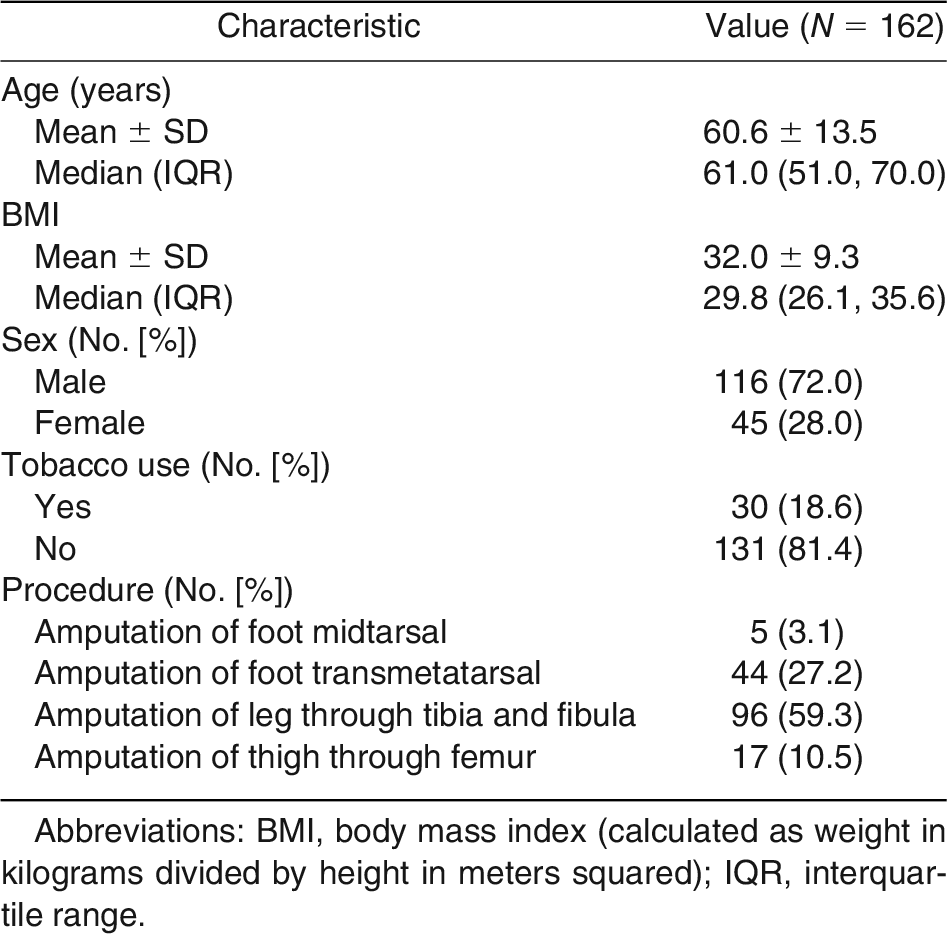
The final analytical population was 162 patients. The mean age and body mass index (calculated as weight in kilograms divided by height in meters squared) of patients were 60.6 years and 32.0, respectively (Table 1). A higher percentage of patients were male (72.1% versus 28.0%), did not have a history of tobacco use (81.4% versus 18.6%), and underwent amputation of the leg through the tibia and fibula (59.3%) (Table 1).

Table 1.
Patient Demographic Characteristics.
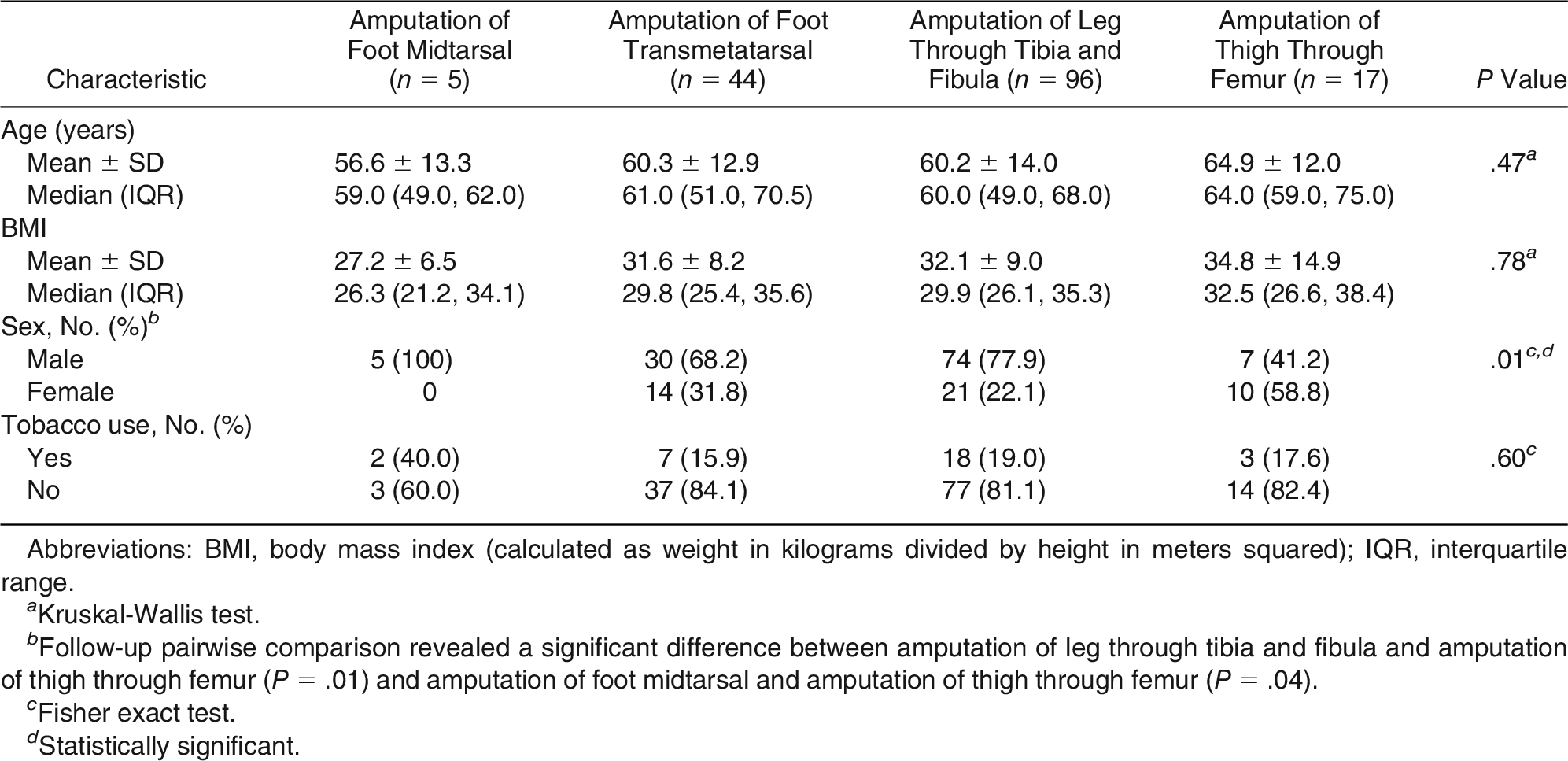
A comparison of demographic characteristics among the different amputation procedure types was performed. There was a significant association between sex and amputation type: a follow-up pairwise comparison revealed that patients who underwent an amputation of the leg through the tibia and fibula were significantly more likely to be male compared with patients who underwent an amputation of the thigh through the femur (77.9% versus 41.2%; P = .01) (Table 2). In addition, patients who underwent an amputation of foot midtarsal were more likely to be male compared with patients who underwent an amputation of the thigh through the femur (100% versus 41.2%; P = .04) (Table 2).
Table 2.
Comparison of Demographic Characteristics Among Different Amputation Types.
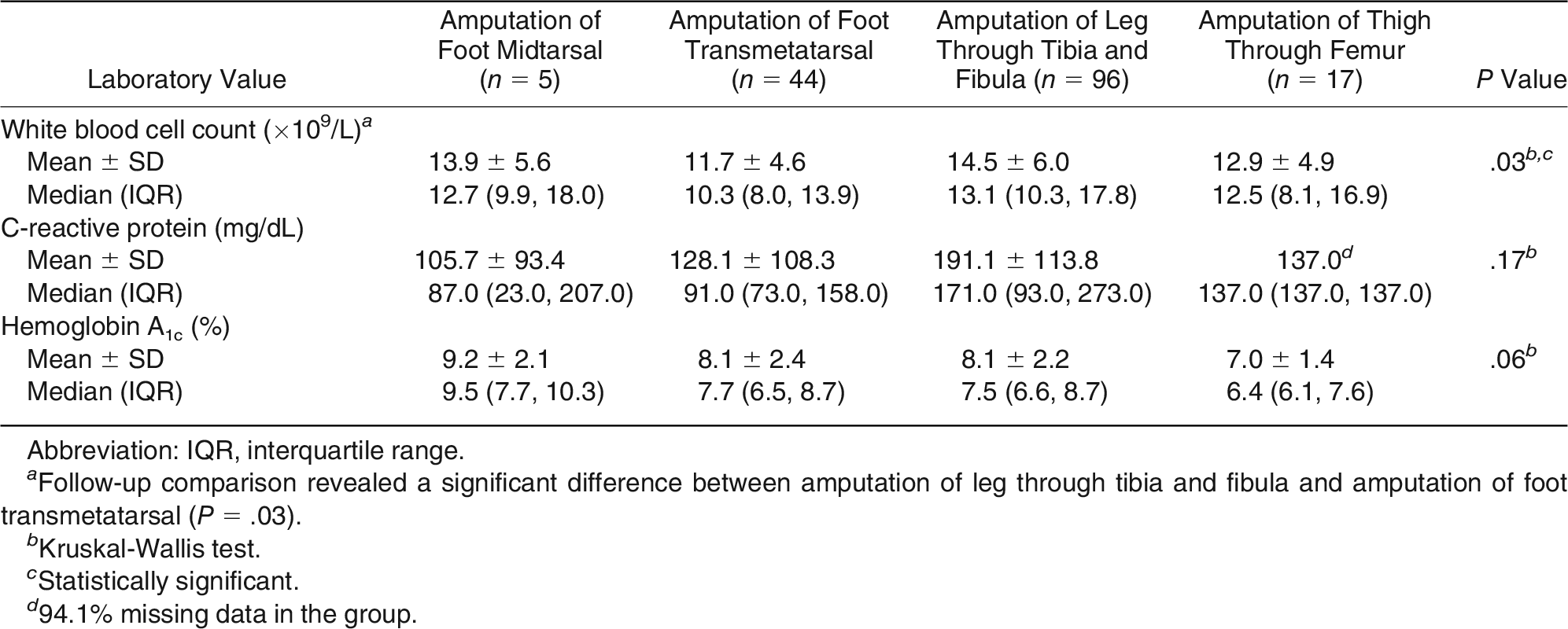
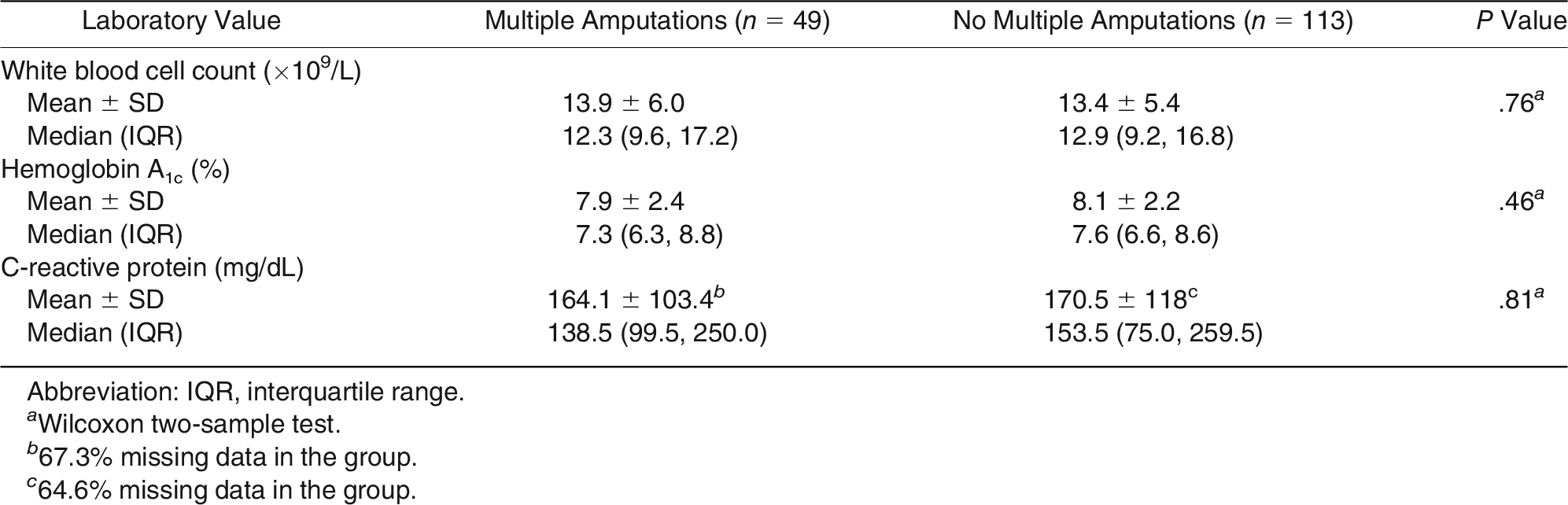
Laboratory values among the different amputation procedure types were analyzed. There was a significant difference in WBC counts among the amputation procedures (P = .03): follow-up pairwise comparisons revealed that patients who underwent an amputation of the leg through the tibia and fibula had a significantly higher WBC count compared with patients who underwent an amputation of the foot transmetatarsal (14.5×10⁹/L versus 11.7×10⁹/L; P = .03) (Table 3). There were no significant differences noted in the CRP and HbA1c values between amputation procedures or the occurrence of multiple amputations (Tables 3 and 5).
Table 3.
Comparison of Laboratory Values Among Different Amputation Types.
We compared demographic characteristics and laboratory values between patients who experienced multiple amputations and those who had a single procedure. Although patients who experienced multiple amputations were younger (58.7 years versus 61.5 years), had a lower BMI (31.2 versus 32.4), and had a higher WBC count (13.9×10⁹/L versus 13.4×10⁹/L) than patients who did not have more than one amputation, there was not a statistically significant difference in these characteristics between patients who had more than one amputation and those who had one amputation (Tables 4 and 5).
Table 4.
Comparison of Demographic Characteristics Between Patients Who Had Multiple Amputations and Patients Who Did Not Have Multiple Amputations.
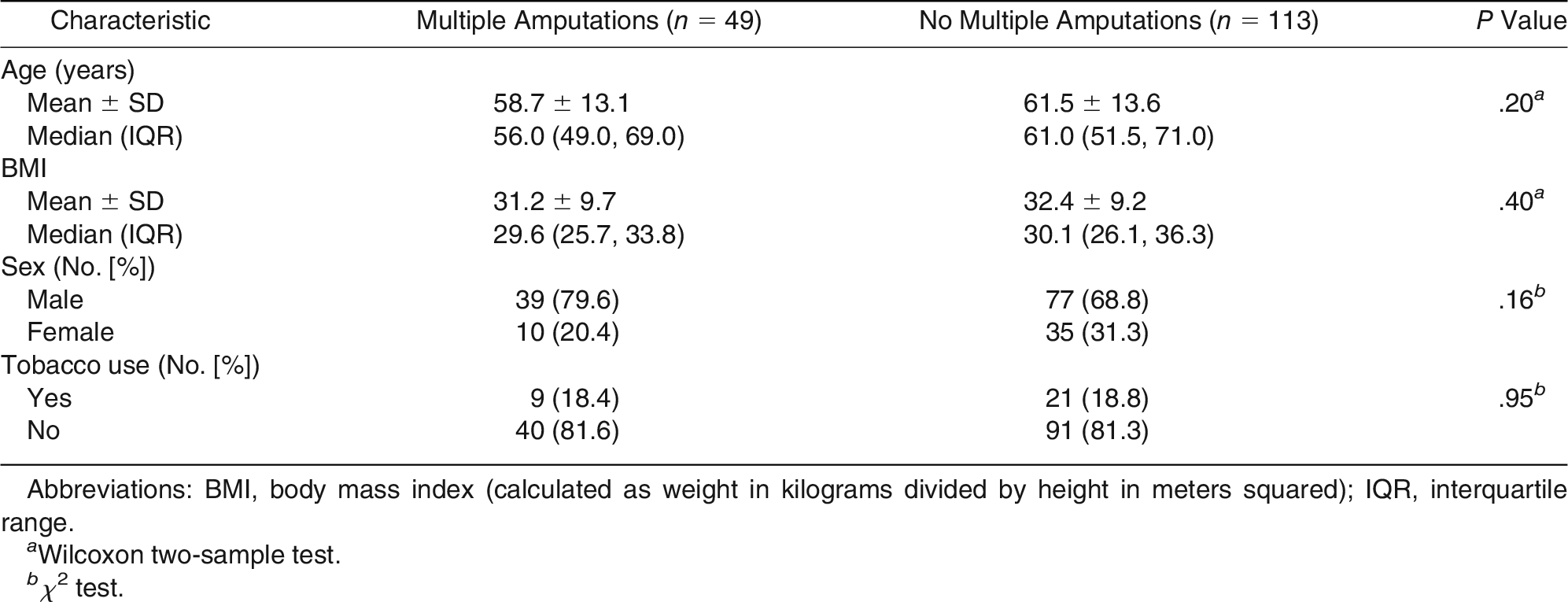
Table 5.
Comparison of Laboratory Values Between Patients Who Had Multiple Amputations and Patients Who Did Not Have Multiple Amputations.
Discussion
Lower-extremity amputations are common in the diabetic patient population, with risk of lower-extremity amputations being increased by 10 to 20 times compared with nondiabetic individuals.[4] Understanding factors that allow for better identification of patients at risk for amputation is important for the clinician. This study examined multiple types of amputations in the diabetic patient population across 16 years as well as the relationship of general descriptors and laboratory values, specifically WBC count, HbA1c level, and CRP level, on presentation to the hospital in an attempt to further understand the factors that lead to lower-extremity amputation in the diabetic patient population.
The present data demonstrate a mean age at amputation in our patient population of 60.6 years, which is marginally younger than reported in other studies.[2,4] Previous literature has demonstrated that most patients undergoing lower-extremity amputation were older[2,6] or older than 60 years.[7,8] This age relationship is likely related to an increased duration of diabetes; having diabetes for 15 years or longer has been shown to be associated with lower-extremity amputation.[3] Patients who underwent multiple procedures were statistically nonsignificantly younger (58.7 years) compared with patients who had only a single amputation performed (61.5 years; P = .20). This trending difference is likely related to the longevity of disease experienced by the individuals. The single-procedure group would likely have had more serious comorbidities for a longer time, which may have necessitated a single, more proximal amputation. Several sex differences were appreciated throughout the study.
Overall, the patients in the study undergoing amputation were predominantly male (72.1% compared with 28.0% female). This male predominance associated with amputation is consistent with other studies examining factors contributing to lower-extremity amputations.[3,6,7,9] The causes of unequal distributions between the sexes are unknown, but average structural differences as well as hormonal biochemical differences are thought to play a role.[9] These results differ from other studies that showed no difference in amputation rate regarding sex distribution.[8,10] This study found that male patients were more likely to have amputations through the tibia and fibula (P = .01) and through the midtarsal of the foot (P = .04), whereas amputations through the femur were more likely to occur in female patients. The exact reason for these differences is unknown.[9] Several reasons have been postulated in the literature, including smoking habits, average size, and compliance rates.[9]
Most patients in this study who underwent amputation were not tobacco users (81.4% versus 18.6%), with no significant difference associated with tobacco use and amputation type (P = .60). This was also demonstrated in other studies examining lower-extremity limb salvage and amputation.[8,11] Tobacco use has been demonstrated to increase the risk of repeated amputation after the initial procedure[5] and should be considered an important variable when evaluating patients for amputation or after an initial amputation, but it has not been shown to predict limb loss.[8] Body mass index was not noted to play a significant role in amputation type (P = .78), which was also consistent with lower-extremity amputation literature.[8]
The mean HbA1c level was not noted to be statistically significantly different between number and type of amputations. These data correlate with other studies that did not show a relationship between HbA1c level and amputation risk.[8,11] These results differ from additional work that has shown increased HbA1c level as a risk factor for lower-extremity amputation.[12]
The WBC count has previously been shown to predict limb loss at values of 15×109/L or greater[10] or greater than 11×109/L.[13] The present results demonstrate significance between the procedure types, with amputations through the tibia and fibula having a significantly higher WBC count than those undergoing transmetatarsal amputations (P = .03). These data are similar to those of Yusof et al,[14] who noted a significantly higher WBC count in patients who underwent major amputations compared with patients who underwent minor amputations. These results are likely explained by severity of infection, unexamined vascular status, and need for more viable proximal source control rather than performing a more distal procedure. Choi et al[11] demonstrated that higher WBC count was associated with failure in limb salvage attempts, resulting in amputation proximal to Chopart’s level. The present study demonstrated that CRP level was also noted to be elevated in both patients who underwent multiple procedures compared with single amputations (164.1 mg/dL versus 170.5 mg/dL; P = .81). Increased CRP levels have been shown to be associated with amputation previously in the literature,[2,10,11,15] with one study demonstrating a significantly higher CRP level in major amputations compared with minor amputations.[14]
The present study has several limitations. The retrospective nature of the study leads to missing data from the EHR system. Documentation and ordering trends during the study dates were not being performed for research purposes, and many variables were either not ordered consistently or not documented in the patient charts. The data being used for analysis are limited to one specific hospital system in a particular region of the Northeastern United States and may not be generalized to other regions of patient care. The sample size of 162 is relatively small and would be stronger with a larger patient population. Additional comorbid conditions associated with lower-extremity amputations other than what were previously reported were not studied, and amputation is intrinsically multifactorial. This may reflect the difference in WBC count and proximal amputation type because this study did not evaluate vascular status in the sample population, which may have contributed to a more proximal amputation procedure being necessary irrespective of WBC count.
Conclusions
These results demonstrate that males who did not use tobacco products had a higher percentage of amputations through the tibia and fibula compared with other amputation types studied, whereas female patients were more likely to have amputations through the femur. Also noted was that the WBC count was higher in patients who underwent amputations through the tibia and fibula compared with patients who had transmetatarsal amputations. These data provide advancement in the knowledge of amputations in the diabetic patient, but further work is needed in understanding all of the factors that contribute to limb loss.
Financial Disclosure: None reported.
Conflict of Interest: None reported.
References
- Armstrong DG, Perales TA, Murff RT, et al: Value of white blood cell count with differential in the acute diabetic foot infection. JAPMA 86: 224, 1996.
- Pickwell K, Siersma V, Kars M, et al: Predictors of lower-extremity amputation in patients with an infected diabetic foot ulcer. Diabetes Care 38: 852, 2015.
- Shatnawi NJ, Al-Zoubi NA, Hawamdeh HM, et al: Predictors of major lower limb amputation in type 2 diabetic patients referred for hospital care with diabetic foot syndrome. Diabetes Metab Syndr Obes 11: 313, 2018.
- Davis WA, Norman PE, Bruce DG, et al: Predictors, consequences and costs of diabetes-related lower extremity amputation complicating type 2 diabetes: the Fremantle diabetes study. Diabetologia 49: 2634, 2006.
- Czerniecki JM, Thompson ML, Littman AJ, et al: Predicting reamputation risk in patients undergoing lower extremity amputation due to the complications of peripheral artery disease and/or diabetes. Br J Surg 106: 1026, 2019.
- Hämäläinen H, Rönnemaa T, Halonen JP, et al: Factors predicting lower extremity amputations in patients with type 1 or type 2 diabetes mellitus: a population-based 7-year follow-up study. J Intern Med 246: 97, 1999.
- Unwin N: Epidemiology of lower extremity amputation in centres in Europe, North America and East Asia. Br J Surg 87: 328, 2000.
- Nather A, Bee CS, Huak CY, et al: Epidemiology of diabetic foot problems and predictive factors for limb loss. J Diabetes Complications 22: 77, 2008.
- Alvarsson A, Sandgren B, Wendel C, et al: A retrospective analysis of amputation rates in diabetic patients: can lower extremity amputations be further prevented? Cardiovasc Diabetol 11: 18. 2012.
- Aziz Z, Lin WK, Nather A, et al: Predictive factors for lower extremity amputations in diabetic foot infections. Diabet Foot Ankle 2: 10.3402/dfa.v2i0.7463, 2011.
- Choi MS, Jeon SB, Lee JH: Predictive factors for successful limb salvage surgery in diabetic foot patients. BMC Surg 14: 113, 2014.
- Chiu CC, Huang CL, Weng SF, et al: A multidisciplinary diabetic foot ulcer treatment programme significantly improved the outcome in patients with infected diabetic foot ulcers. J Plast Reconstr Aesthet Surg 64: 867, 2011.
- Lipsky BA, Weigelt JA, Sun X, et al: Developing and validating a risk score for lower-extremity amputation in patients hospitalized for a diabetic foot infection. Diabetes Care 34: 1695, 2011.
- Yusof NM, Rahman JA, Zulkifly AH, et al: Predictors of major lower limb amputation among type II diabetic patients admitted for diabetic foot problems. Singapore Med J 56: 626, 2015.
- Yesil S, Akinci B, Yener S, et al: Predictors of amputation in diabetics with foot ulcer: single center experience in a large Turkish cohort. Hormones (Athens, Greece)8: 286, 2009.
© 2024 American Podiatric Medical Association