


Abstract
Lateral wedges are a common intervention used to alter biomechanical function of the lower limb. Although there is evidence investigating the use and impact of lateral wedges in individuals with medial knee osteoarthritis, knowledge of how these wedges affect foot function in healthy adults is limited. Therefore, this study intends to investigate how lateral wedging affects foot function in healthy adults and, furthermore, how wedge design influences the outcome. The framework outlined by Arksey and O’Malley was used for this scoping review. To ensure methodologic quality and transparent reporting, the study adheres to the Preferred Reporting Items for Systematic Reviews and Meta-Analyses Extension for Scoping Reviews preferred reporting guidelines. A systematic search was conducted using MEDLINE by means of EBSCO; SPORT Discuss; CINAHL; AMED by means of OVID; and Scopus. The initial search yielded 252 articles in total; 21 studies were included in the final analysis. Significant incongruence exists in descriptions of wedge length among the 21 included studies. Thirteen studies (61%) reported using full-length wedges, five studies did not report wedge length, and only one study analyzed more than one wedge length. Ethylene vinyl acetate was the most common material, and reporting of hardness was inconsistent. A broad range of inclination angles were used, with limited explanation for why these values were selected. All but one study that analyzed ankle/subtalar joint frontal plane moments reported an increase in the external eversion moment. The review identified significant variation in the design of wedges used within this body of work and a lack of investigation into the influence of wedge design. Wedge design appears to be a secondary consideration, with very few studies examining multiple material types or wedge placements. All but one of the included studies reported a significant change in ankle/subtalar joint moments with lateral wedging. Unfortunately, further generalization was not possible because of the inconsistency and variation.
Lateral wedging, also known as valgus wedging, is a common conservative intervention used by health professionals as part of a management plan aimed at altering biomechanical function in the lower limb. Lateral wedges are created by sloping material so that the lateral side is thicker than the medial side and the gradient between is a uniform incline. These are typically added to an orthotic, an otherwise flat insole, or on occasion to the midsole of a shoe,[1] with the goal being to change foot function. The biomechanical effect of lateral wedges has been most frequently examined by research investigating medial knee osteoarthritis (OA)[2,3] and lateral ankle instability.[4,5]
The seminal work from Merton Root and his colleagues, now known as Root theory, appears to have been the first theoretical explanation for lateral wedging.[6] According to Root et al,[6] abnormal alignment of the foot, such as forefoot valgus, leads to compensatory movement, which may increase an individual’s risk of injury. In this example, Root theory would recommend clinicians build a wedge of equal size to the structural imbalance, and place this under the lateral aspect of the forefoot, thus “balancing” the rearfoot and forefoot and preventing compensation. Recently however, the concept of subtalar joint (STJ) neutral, a central theme discussed in Root theory, has been challenged.[7,8] Many of the assessments within Root theory, including forefoot position, are static and nonweightbearing. Concerns have been raised over the value of these assessments when it comes to designing orthoses to be used dynamically.[7,8] Given the paucity of other theoretical explanations, this leads us to question the conceptual reasons behind lateral wedge prescription in practice.
When designing and fabricating underfoot interventions such as orthoses or insole modifications, the materials used may impact kinematic and kinetic outcomes.[9,10,11,12] In healthy populations, material selection has been shown to affect plantar pressure, modify contact areas, and elicit mechanical change.[9,10,11,12] Therefore, appropriate choice of materials appears to be important for clinical interventions to be effective. In a recent systematic review on the effect of different orthotic materials on plantar pressures, Gerrard et al[10] suggested that it is essential for all clinicians who prescribe orthoses to have access to robust evidence examining the effects of material selection.
Despite evidence reporting the effects of lateral wedging in individuals with medial knee OA, a systematic understanding of how lateral wedging affects foot function in healthy adults is lacking. Therefore, the purpose of this study was to investigate how lateral wedging affects foot function in healthy adults and. furthermore, how wedge design influences the outcome. Based on a precursory assessment of the evidence, a scoping review has been deemed the most suitable way to answer this question.
Methods
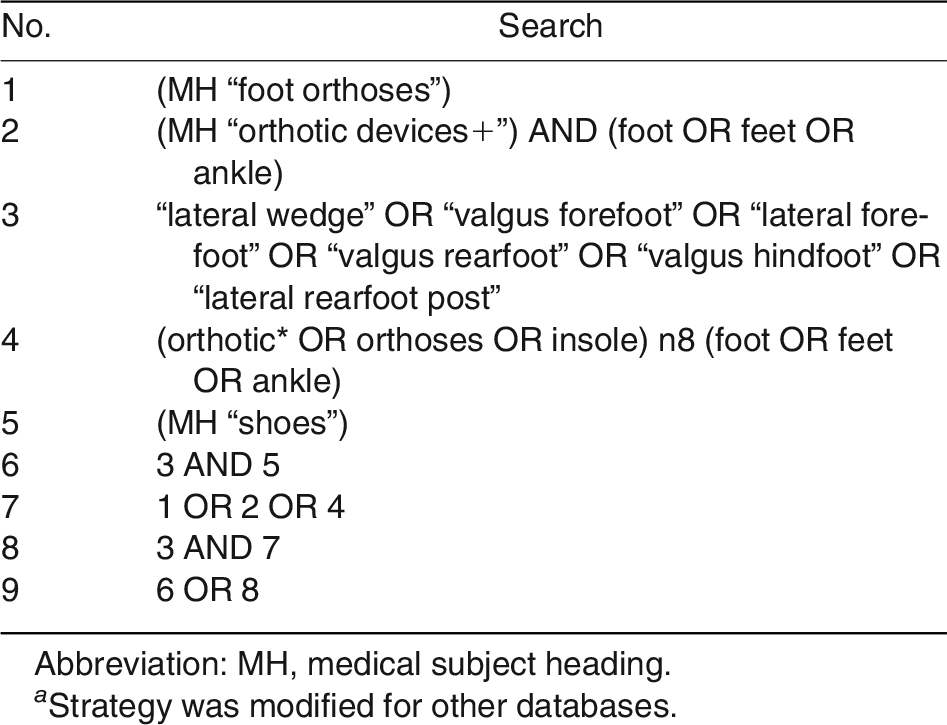
The framework outlined by Arksey and O’Malley[13] was used for this scoping review: step 1, identifying the research question; step 2, identifying relevant studies; step 3, selecting the studies; step 4, charting the data; and step 5, collating, summarizing and reporting the results. To ensure methodologic quality and transparent reporting, the Preferred Reporting Items for Systematic Reviews and Meta-Analyses Extension for Scoping Reviews preferred reporting guidelines were adhered to (Appendix 1).[14] A comprehensive search was formulated and conducted by the first author (A.J.) in April of 2021 using MEDLINE by means of EBSCO; SPORT Discuss; CINAHL; AMED by means of OVID; and Scopus. Search strategy terms displayed in Table 1 were truncated using wildcard symbols to broaden the search and modified for each database. No limitation was placed on the date of publication.

Table 1.
Search Strategy Used for MEDLINE Through EBSCOa
At the outset of this review process, inclusion and exclusion criteria were developed to ensure that only relevant studies were included for analysis. As the search was developing and familiarity with the literature increased, these criteria were reviewed and refined. Studies were included if they measured kinetic or kinematic variables in the foot when a lateral wedge is placed under the foot, assessed the effect of lateral wedging during walking or running gait, used live human participants, and were published in English. Studies were excluded if they had no extractable data for “healthy” participants, involved participants younger than 18 years, measured the effect of lateral wedging during a sporting activity other than walking or running, or measured the effect of lateral wedging following a surgical intervention.
Reference management software EndNote version X9.3.1 (Clarivate Analytics, Philadelphia, Pennsylvania) was used for the screening and analysis phase of this review. Before screening, all duplicates were removed by EndNote and then checked, and manually completed by the principal investigator (A.J.). Two reviewers (A.J. and P.M.) independently screened all titles and abstracts against eligibility criteria. In cases of nonconsensus, a third author’s opinion was planned for consultation (M.C.); however, this was not required. Reference lists of retrieved articles were searched for further potentially relevant studies. Following title and abstract screening, two reviewers (A.J. and P.M.) screened the full text of all remaining studies to compile a final list of included articles.
Data were charted using Microsoft Excel (Microsoft Corp, Redmond, Washington) to extract key information from the selected studies. This information included author(s), year of publication, study location, study population, wedge specifications (material, length, placement, and inclination), footwear conditions, gait type, outcome measures, and relevant findings. In some cases, studies compared a pathologic group to a healthy population. In these instances, only the relevant findings relating to the healthy group were extracted and charted.
Results
Selection and Characteristics of Studies
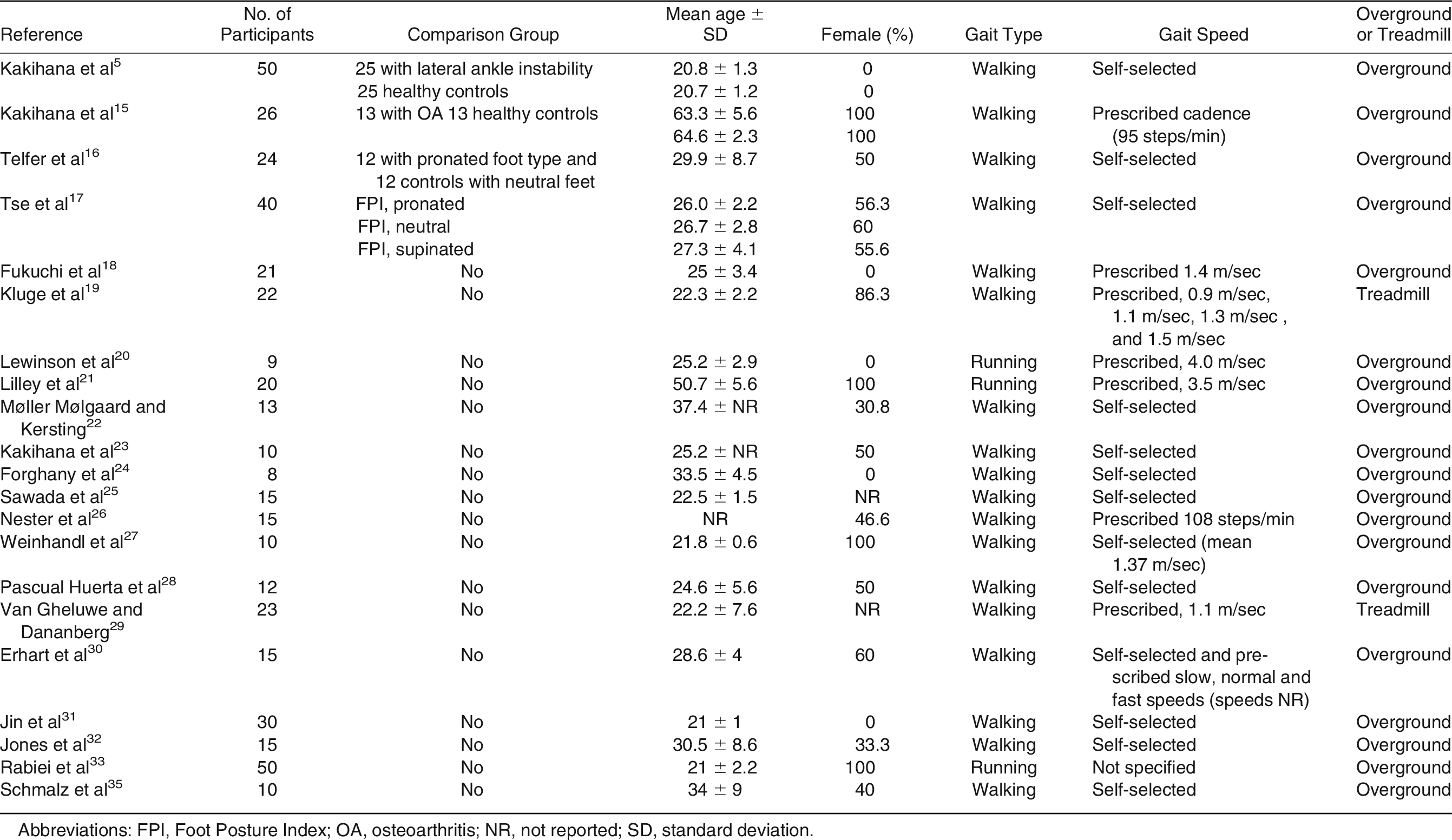
A total of 252 articles were retrieved for abstract review, with 21 studies satisfying the inclusion criteria included for final analysis (Fig. 1). Characteristics of these 21 included studies are presented in Table 2. Participant numbers ranged from eight to 50, with a mean age of 30.2 years. The date range of the publications spanned from 2003 to 2021, with 12 (57%) of the included studies published since 2013. Four of the included studies used a comparator group, with two comparing healthy individuals to a pathologic cohort (medial knee OA and lateral ankle instability)[5,15] and the other two compared groups with differing foot postures.[16,17]
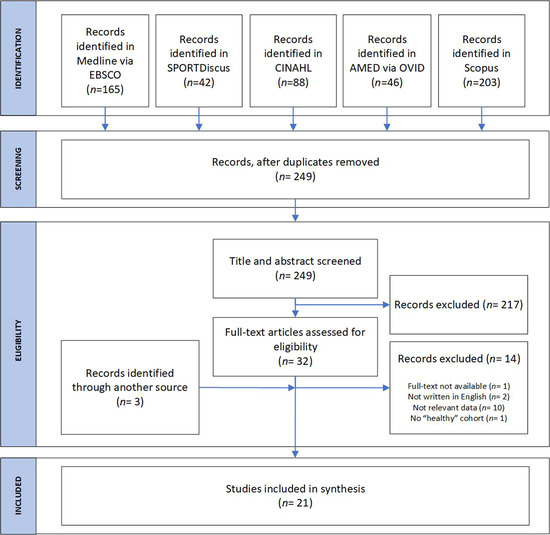
Figure 1.
Flowchart diagram of literature search, screening, and selection.
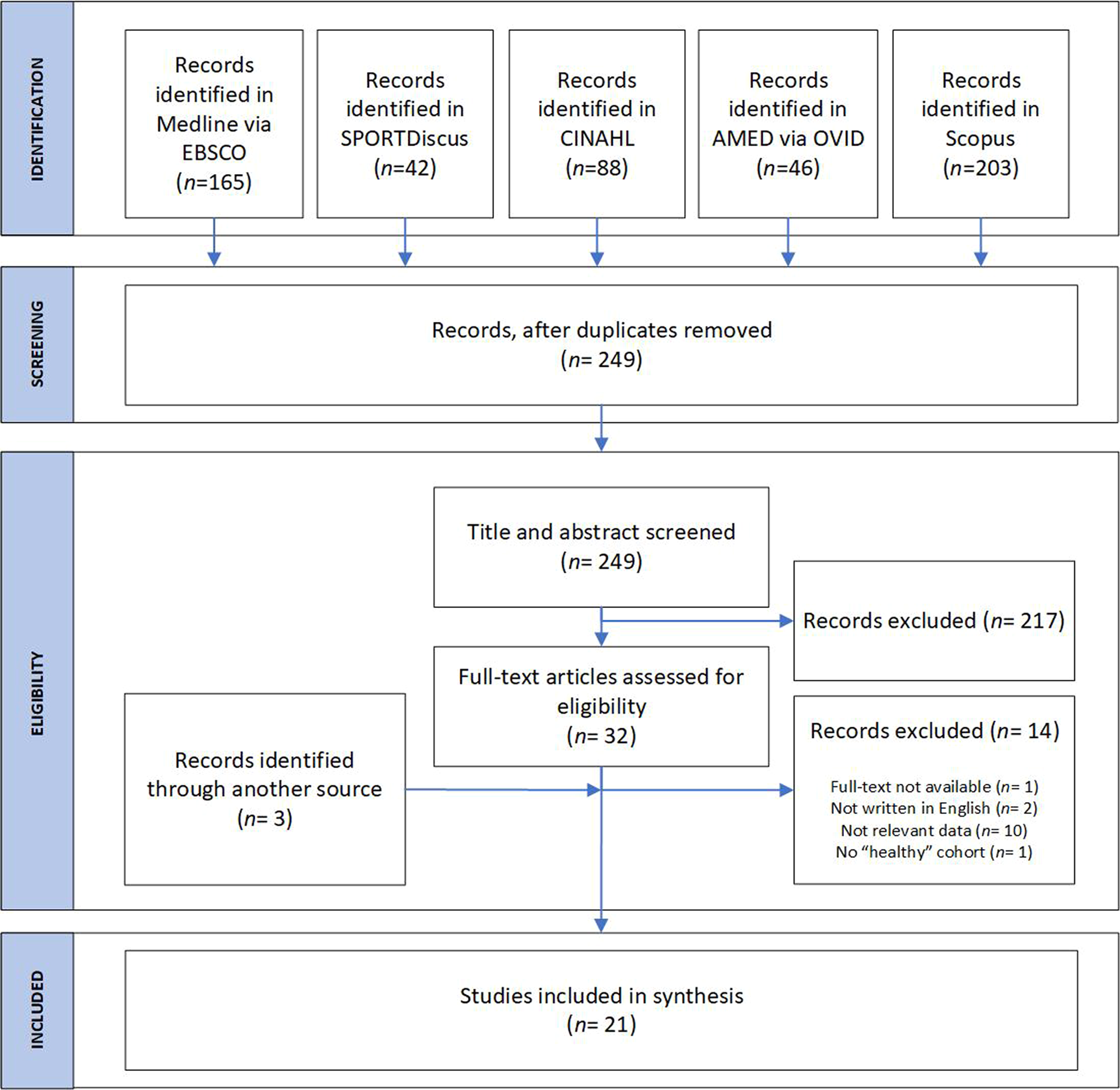
Table 2.
Demographic and Study Design Details of the Included Studies
Wedge Length
Specifications of wedges used in the included studies are detailed in Table 3. Eight studies reported using full length wedges.[5,15,18,19,20,21,22,23] Of these, two included images that show the wedge extending to the end of the insole.[19,21] Also included in the eight studies to report full-length wedging were the Fukuchi et al[18] and Lewinson et al[20] studies, both of which included an image showing wedges that extend just beyond the metatarsal heads to the sulcus of the foot. The remaining four studies in this group did not include an image of their wedge length, and as such, it was not possible to determine accuracy of the description “full length.”[5,15,22,23]
Table 3.
Wedge Design Specifications as Reported in the Included Studies
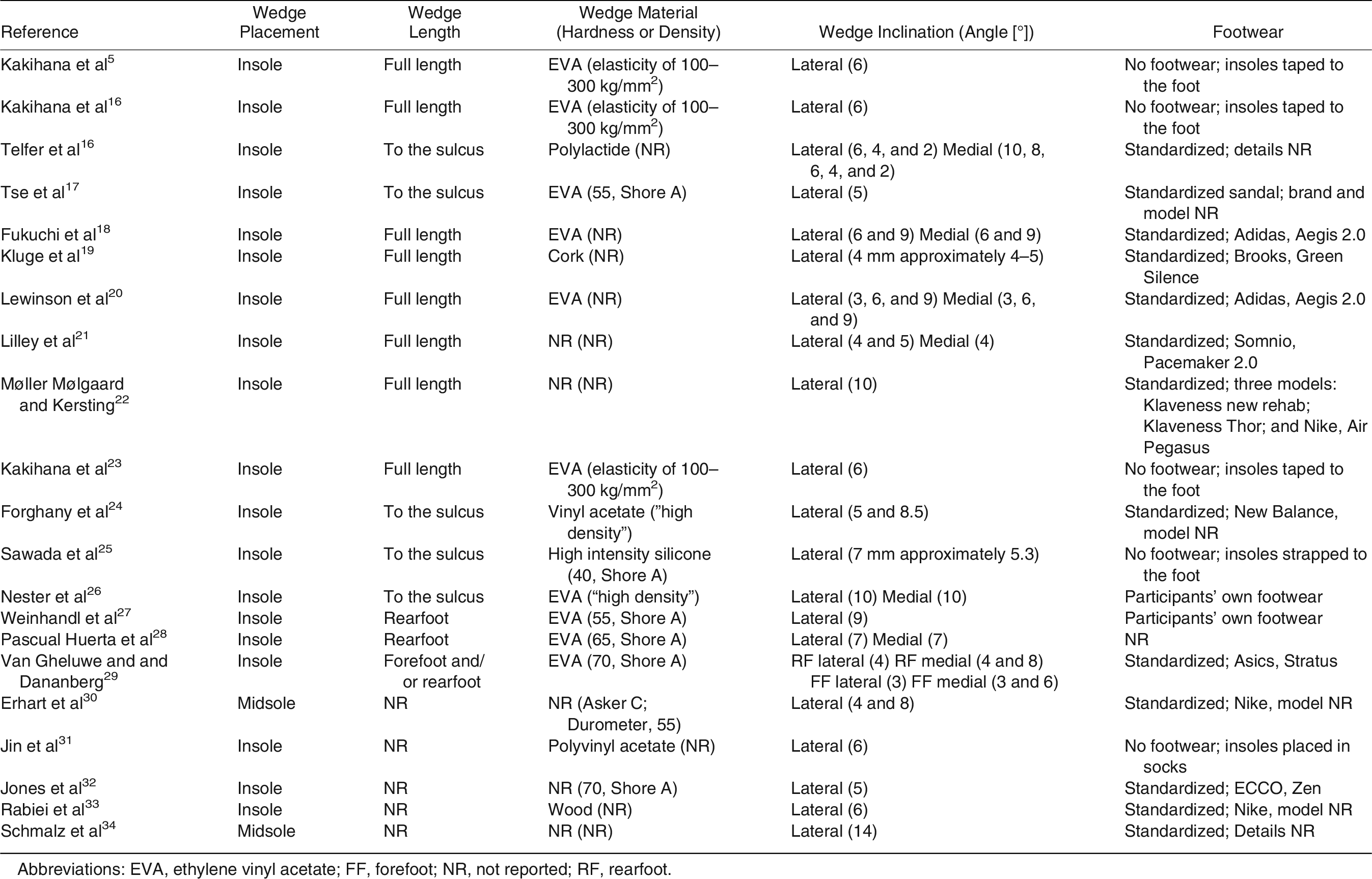
Five studies added wedges extending to the sulcus of the foot.[16,17,24,25,26] Only the Sawada et al[25] article included an image to provide visual clarification. The language used to describe length in this group was varied, with descriptions including: “3/4 length,”[16] “graded to zero at the base of the fifth metatarsal,”[24] “the lateral wedge insoles had base heights equal to that of the fifth metatarsal,”[25] “just distal of the fifth metatarsal,”[26] and “sulcus length.”[17]
Studies by Weinhandl et al[27] and Pascual Huerta et al[28] were the only two to report looking solely at rearfoot wedges; however, neither included an image to confirm placement. The Pascual Huerta et al[28] study stated that the wedges used in their study were 14 cm long and 4 cm wide. The study by Van Gheluwe and Dananberg[29] was the only one to examine differences in wedge length. This was also the only study to use a forefoot wedge, which in this case was compared to a rearfoot wedge. This study used six different insole conditions with a range of rearfoot (4° valgus to 8° varus) and forefoot (3° valgus to 6° varus) wedges, all compared to a neutral, flat insole. No details regarding wedge length were reported by five studies.[30,31,32,33,34] Despite not reporting length in the manuscript, three of these five provided images that showed wedges running the complete length of the insole or midsole.[30,32,34]
Wedge Material Type and Hardness
There were a range of materials used, with the most common being ethylene vinyl acetate (EVA), used in 10 studies (47%).[5,15,17,18,20,23,26,27,28,29] Other materials used included vinyl acetate,[24] polyvinyl acetate,[31] high-intensity silicon,[25] polylactide,[16] cork,[19] and wood.[33]
The reporting of material used and the hardness of the material was inconsistent. Five studies did not define the type of wedge material used[21,22,30,32,34] and nine studies provided no detail relating to material hardness of the wedge.[16,18,19,20,21,22,31,33,34] Within those studies that did report durometer (measure of hardness), there was variation in terminology. Scales used included Shore A,[17,25,27,28,29,32] which ranged from 40 to 70; Asker C[30]; and kilogram per square millimeter.[5,15,23] Two studies recorded the wedges simply as “high density.”[24,26] Three studies provided no detail of both the material type and hardness or density.[21,22,34]
Inclination Angle
A broad range of wedge inclination angles were used, ranging from 3° to 14° laterally wedged (6.21° ± 2.51°). The highest inclination angle, of 14°, was in the study by Schmalz et al,[34] where the wedge was placed in the midsole of a shoe. Considering only insole-based wedges, the range of inclinations were 3° to 10° laterally wedged (5.94° ± 2.10°). All studies in this review included an unwedged control condition as a comparison. Six studies compared more than one lateral wedge inclination.[16,18,20,21,24,30] Telfer et al[16] included the most comprehensive range of inclinations, extending from 6° laterally wedged through 10° medially wedged, in 2° increments. Although laterally wedged conditions were of interest to the current review, it was noted that seven studies also examined medial wedges.[16,18,20,21,26,28,29]
Nineteen studies (90%) reported inclination in degrees, whereas two studies reported millimeter thickness of the lateral border. Kluge et al[19] reported that using a 4-mm wedge is approximately equivalent to a 4° to 5° angle. Sawada et al[25] used a 7-mm wedge and noted that this was comparable to a 5.3° inclination angle. Neither study provided any further details about wedge dimensions such as foot or insole width.
Kinematic, Center of Pressure, and Kinetic Effect
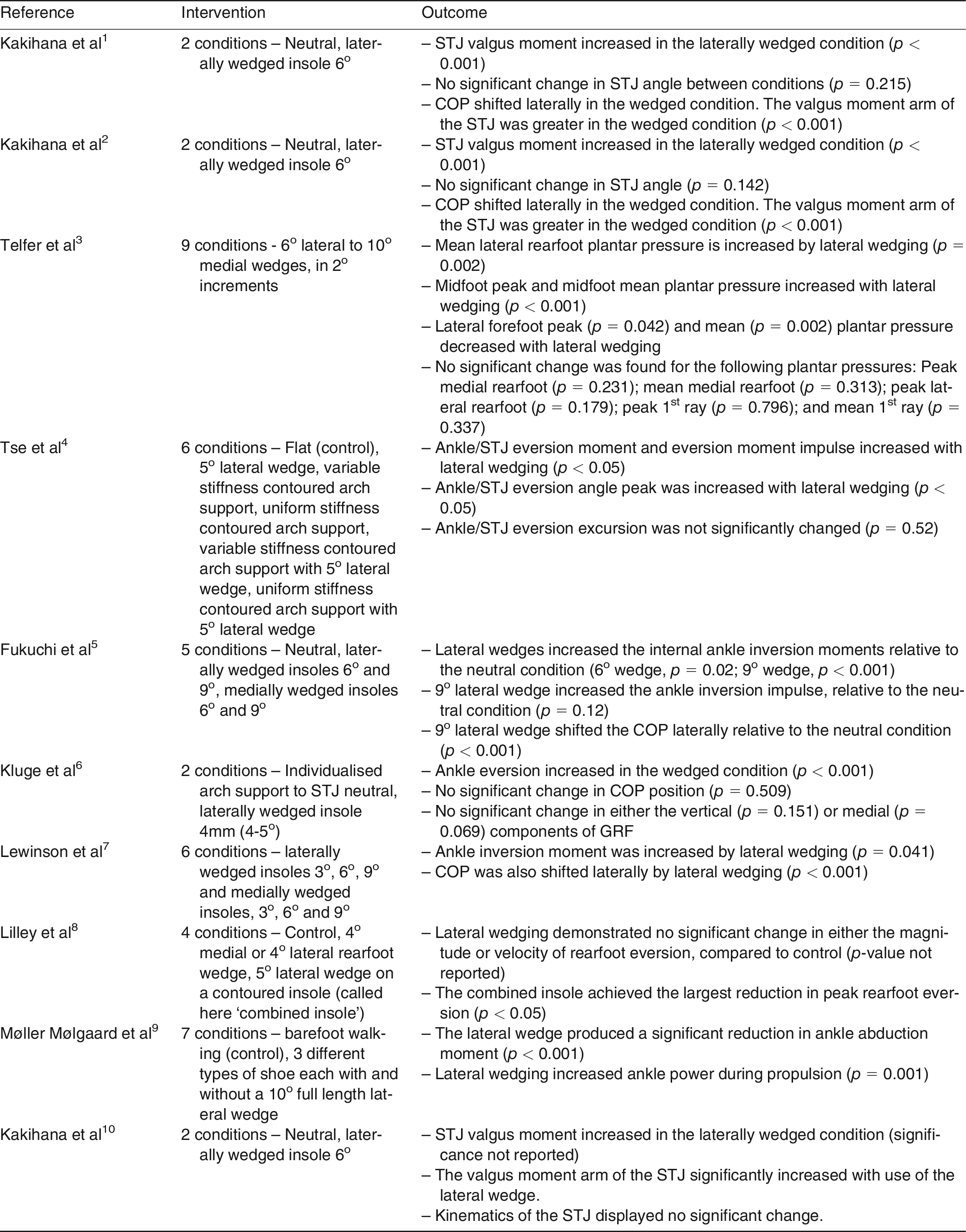
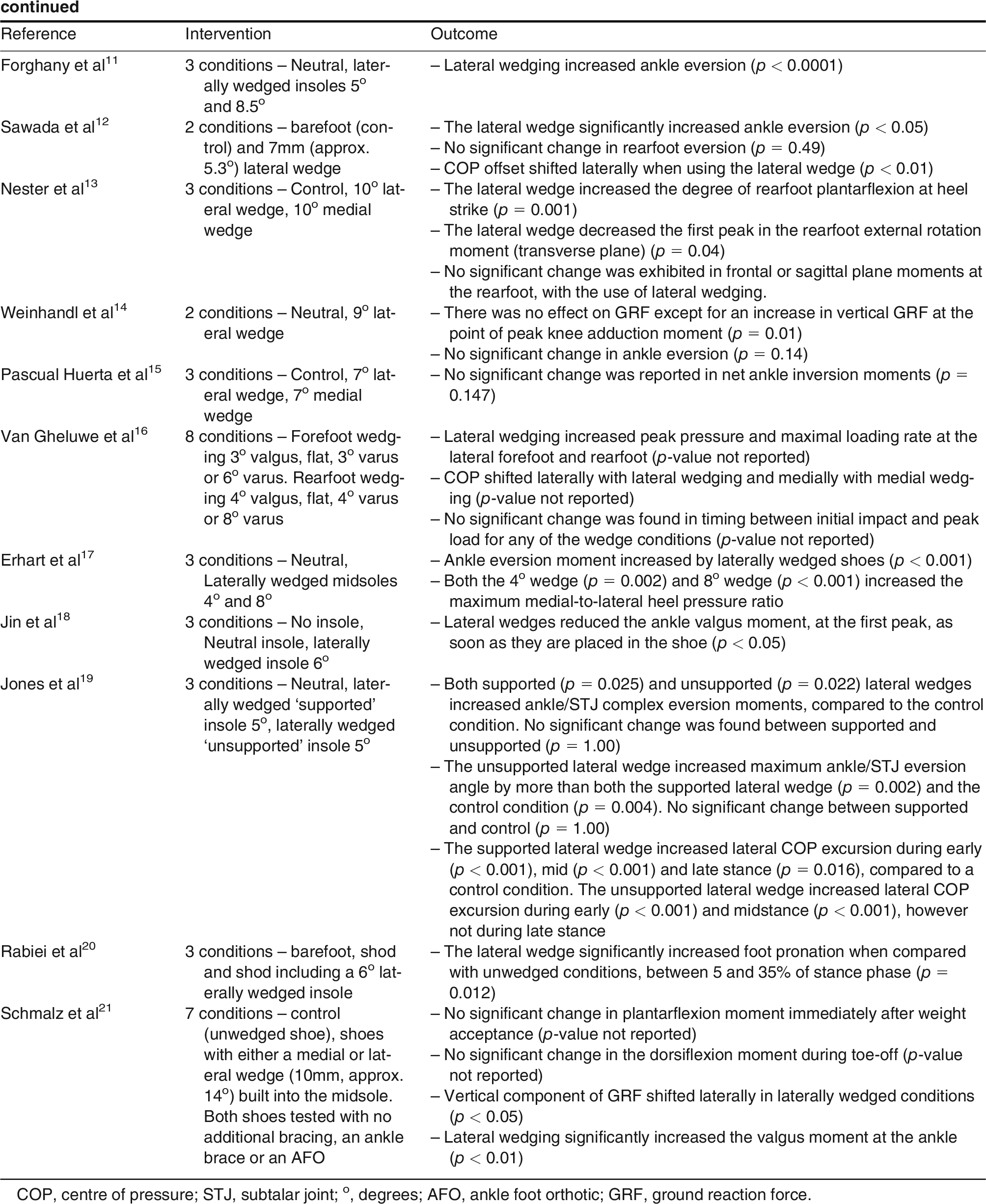
Kinematic and kinetic outcomes of the included studies are displayed in Appendix 2. Interpretation of kinematic and kinetic variables was difficult because of the varied terminology used across all studies.
STJ Moments
Eleven studies reported on ankle/STJ inversion, eversion, or valgus moments.[5,15,17,18,20,23,28,30,31,32,34] A mix of internal and external joint moments were measured which, when not clearly outlined, can make results appear contradictory. The external moment includes the impact of ground reaction force and inertial forces, and therefore is equal and opposite to the internal joint moment.[35] There are consistent findings among all but one study in this review that lateral wedging effects the ankle/STJ by increasing the external eversion moment,[17,30,32] increasing the internal inversion moment,[18,20] increasing the external valgus moment,[5,15,23,34] or decreasing the internal valgus moment.[31] These findings were all statistically significant (P < .05). The only study included that did not reach statistical significance was the work of Pascual Huerta et al.[28] In this study, the authors compared a 7° lateral rearfoot wedge to a flat condition and found no significant change in net ankle inversion moments.
Ankle Abduction Moment
The study by Møller Mølgaard and Kersting[22] was the only study to report ankle abduction moment. Looking at the effect of lateral wedging when used within three different types of footwear, the authors found a reduction in ankle abduction moment, across all conditions. Schmalz et al[34] used the steepest wedge included in this review (14°) and did not find statistically significant results. The insignificant findings are supported by Nester et al,[26] who analyzed a 10° insole-based lateral wedge, and also found no change with respect to rearfoot plantarflexion moments.
Center of Pressure
Centre of pressure (COP) was investigated by eight studies.[5,15,18,19,20,25,29,32] Seven of these studies (87.5%) reported that COP was shifted laterally with the use of lateral wedges.[5,15,18,20,25,29,32] Lewinson et al[20] noted that this effect was more pronounced as wedge inclination increased from 3° to 6° and 9°. Of these eight studies, the study by Kluge et al[19] was the only one to report insignificant findings.
Kinematics
Kinematics were reported by 12 of the included studies.[5,15,17,19,21,23,24,25,26,27,32,33] Nine studies discussed ankle/STJ eversion and, of these, five reported a significant increase.[17,19,24,25,32] Of these 12 studies, only Forghany et al[24] analyzed multiple inclinations, reporting a significantly larger effect from their steeper wedge (8.5°) when compared to their less steep (5°) condition. Kluge et al,[19] who assessed a range of walking speeds, reported that speed did influence the effect of lateral wedging on ankle eversion, with wedges making less of a difference at faster speeds. Three studies in this review showed insignificant effects of lateral wedging on ankle eversion. All three compared a single inclination to the control condition.[5,15,27] Two studies reported rearfoot eversion, both finding that lateral wedging did not induce a significant change.[21,25] Rabiei et al[33] analyzed “foot pronation” (measured as the combined movement in all three planes, frontal, sagittal, and transverse) in healthy female runners using a rearfoot lateral wedge. These findings indicated a significant increase in foot pronation, from 5% to 35% of stance phase (P = .012), compared to the control condition.
Discussion
Understanding of the effect exerted by lateral wedging on foot function is limited by inconsistency in reporting of lateral wedge length, minimal reporting of specific wedge properties, a wide variation in wedge inclination angles, and an array of kinematic and kinetic outcome variables used to assess their biomechanical effect. Interpretation of the kinematic and kinetic effect of wedging is also restricted by the use of inconsistent terminology.
This review found that full length or sulcus length wedges were used in the majority of included studies, rather than rearfoot or forefoot wedges. This finding may be explained by a dominance of literature that has investigated the relationship between lateral foot wedging and knee adduction moments (KAM).[2,36,37,38,39,40,41] Sixteen studies (80%) included in this review analyzed frontal plane knee kinetics such as KAM. With the preposition that full-length wedges are considered optimal to reduce KAM, it is perhaps not surprising that this was the dominant design.[42,43] Hinman et al[43] were the first authors to identify the impact of wedge length on KAM. Before this work, researchers interchangeably used rearfoot or full-length wedges. Initially Hinman et al,[43] and more recently Fischer et al,[42] have compared multiple lengths of lateral wedge, with both studies concluding that longer wedges (full length or sulcus length) elicited a larger reduction in KAM than a rearfoot-only wedge. Despite some evidence surrounding alteration to KAM with full length lateral wedges, there is currently very limited research indicating what is the optimal length and positioning of lateral wedging to elicit functional changes in foot biomechanics.
Kogler et al[44] have shown that lateral wedging under the forefoot is the most effective way to reduce strain in the plantar aponeurosis. This in vitro study analyzed nine different test conditions, considering all possible combinations of rearfoot lateral, forefoot lateral, rearfoot medial, and forefoot medial wedging. Results of this work showed that all configurations with a forefoot lateral wedge induced a greater reduction in plantar aponeurosis strain than those without, including a lateral rearfoot wedge. As the only study included in the current review to compare different wedge placements, Van Gheluwe and Dananberg[29] found that although rearfoot wedging had no impact on forefoot plantar pressures, lateral forefoot wedging shifted the COP laterally at the forefoot.
There has been limited investigation into the impact of material properties on lateral wedge function. A multitude of different materials were used in the included studies; the hardness of these was inconsistently reported. A recent systematic review has indicated that some orthotic materials can reduce peak plantar pressures during walking.[10] Although Gerrard et al[10] reported no clear consensus about the effects of EVA hardness on force modulation, they did note that softer EVA deforms to the shape of the foot, thus increasing the contact area with the foot and impacting plantar pressures. Soft materials are generally thought to be more suitable when cushioning or shock attenuation is the desired outcome, whereas firm materials are better suited to redistribution of load.[12] Gerrard et al[10] suggested that the ability of a material to conform to the foot is a key factor in altering plantar pressures. Extrapolating the results of Gerrard et al[10] to lateral wedging, it may be postulated that lateral wedges constructed from more firm material may induce a larger change in joint moments and kinematics because of their reduced compressibility. Conversely, wedges manufactured from softer materials may exert less kinetic and kinematic effect. Unfortunately, although a range of materials were used across all included studies, no studies analyzed more than one material type or hardness, therefore limiting our ability to draw conclusions or make recommendations relating to optimal material selection.
Lateral wedge inclination angles applied in the included studies ranged from 3° to 14°, with no clear rationale provided as to why particular inclination angles were selected. Previous research has highlighted comfort as a factor that may determine the degree of wedge inclination to be investigated.[45,46,47] Research has postulated that a threshold of between 5° and 7° exists and beyond this level comfort is adversely affected.[45,46,47] Erhart et al[30] and Lewinson et al[20] were the only studies in the current review to discuss comfort, both reporting higher discomfort levels with their largest inclination angles (8° and 9°, respectively). All studies in the current review that compared multiple inclination angles reported that an increase in angulation is associated with a larger biomechanical change.[16,18,20,21,24,30] Beyond the concept of comfort, the basis for using a particular material thickness or inclination angle appears be guided by a limited evidence base. In light of this finding, we postulate that inclination angles used in lateral wedge research may relate to the properties of commercially available prefabricated materials (such as thickness), rather than what is known to be optimal. That is, convenience of available material may be a significant factor that determines inclination angle selection.
Despite significant variance in wedge design, and the mix of internal and external joint moments reported, lateral wedges were reported to modify frontal plane moments of the ankle/STJ in all but one included study. Although analyzed by a smaller number of studies, several reported that lateral wedging shifts the COP laterally, thereby lengthening the ankle joint eversion moment arm. This lateralization of COP and change in moment arm appear to explain the increase in external eversion (valgus) moment at the ankle/STJ. With respect to other outcome measures analyzed by the included studies, there is insufficient consistency to make generalizations or draw conclusions.
Inconsistent terminology in the description of lateral wedges was a major finding of this review. Consequently, based on definitions drawn from included studies, we propose the following standard definitions for lateral wedge length and placement that can be adopted in future work:
- Full length lateral wedge: Beginning from the most proximal aspect of the insole, under the calcaneus. Extending to the distal end of the insole, past the apex of the digits.
- Sulcus length (3/4 length) lateral wedge: Beginning from the most proximal aspect of the insole, under the calcaneus. Extending to the sulcus of the foot, just distal to the metatarsal heads and tapering to nothing at this point.
- Rearfoot lateral wedge: Beginning from the most proximal aspect of the insole, under the calcaneus. Extending to the styloid process full thickness and tapering to nothing before the midshaft of the fifth metatarsal.
- Forefoot lateral wedge: Beginning from the calcaneocuboid joint and extending distally to the sulcus of the foot.
Conclusions
The review has identified significant variation in the design of wedges used within this body of work and a lack of investigation into the influence of wedge design. Wedge design appears to be a secondary consideration, with very few studies examining multiple material types or wedge placements. All but one of the included studies reported a significant change in ankle/STJ joint moments with lateral wedging. Unfortunately, further generalization was not possible because of the inconsistency and variation. This dearth of evidence suggests that clinicians using lateral wedges in practice are most likely fabricating these without robust evidence-based guidance. We recommend that future work should seek to provide clinicians with an understanding of how best to manufacture and prescribe lateral wedges that will achieve their desired clinical and biomechanical outcomes.
Financial Disclosure
None reported.
Conflict of Interest
None reported.
References
- Philps JW: The Functional Foot Orthosis, Churchill Livingstone, Melbourne, 1990.
- Zafar AQ, Zamani R, Akrami M: The effectiveness of foot orthoses in the treatment of medial knee osteoarthritis: a systematic review. Gait Posture 76: 238, 2020.
- Rodriguez-Merchan EC, De La Corte-Rodriguez H: The role of orthoses in knee osteoarthritis. Hosp Pract (1995) 47: 1, 2019.
- Jamali A, Forghany S, Bapirzadeh K, et al.: The effect of three different insoles on ankle movement variability during walking in athletes with functional ankle instability. Adv Biomed Res 8: 42, 2019.
- Kakihana W, Torii S, Akai M, et al.: Effect of a lateral wedge on joint moments during gait in subjects with recurrent ankle sprain. Am J Phys Med Rehabil 84: 11, 2005.
- Root ML, Orien WP, Weed JH: Normal and Abnormal Function of the Foot, Clinical Biomechanics Corp, Los Angeles, 1977.
- Harradine P, Gates L, Bowen C: If It doesn’t work, why do we still do it? The continuing use of subtalar joint neutral theory in the face of overpowering critical research. J Orthop Sports Phys Ther 48: 130, 2018.
- Jarvis HL, Nester CJ, Bowden PD, et al.: Challenging the foundations of the clinical model of foot function: further evidence that the root model assessments fail to appropriately classify foot function. J Foot Ankle Res 10: 7, 2017.
- Buonomo LJ, Klein JS, Keiper TL: Orthotic devices: custom-made, prefabricated, and material selection. Foot Ankle Clin 6: 249, 2001.
- Gerrard JM, Bonanno DR, Whittaker GA, et al.: Effect of different orthotic materials on plantar pressures: a systematic review. J Foot Ankle Res 13: 35, 2020.
- Lo WT, Yick KL, Ng SP, et al.: New methods for evaluating physical and thermal comfort properties of orthotic materials used in insoles for patients with diabetes. J Rehabil Res Dev 51: 311, 2014.
- Nicolopoulos CS, Black J, Anderson EG: Foot orthoses materials. Foot 10: 1, 2000.
- Arksey H, O’Malley L: Scoping studies: towards a methodological framework. Int J Soc Res Methodol 8: 19, 2007.
- Tricco AC, Lillie E, Zarin W, et al.: PRISMA extension for scoping reviews (PRISMA-ScR): checklist and explanation. Ann Intern Med 169: 467, 2018.
- Kakihana W, Akai M, Nakazawa K, et al.: Effects of laterally wedged insoles on knee and subtalar joint moments. Arch Phys Med Rehabil 86: 1465, 2005.
- Telfer S, Abbott M, Steultjens M, et al.: Dose-response effects of customised foot orthoses on lower limb muscle activity and plantar pressures in pronated foot type. Gait Posture 38: 443, 2013.
- Tse CTF, Ryan MB, Hunt MA: Influence of foot posture on immediate biomechanical responses during walking to variable-stiffness supported lateral wedge insole designs. Gait Posture 81: 21, 2020.
- Fukuchi CA, Lewinson RT, Worobets JT, et al.: Effects of lateral and medial wedged insoles on knee and ankle internal joint moments during walking in healthy men. JAPMA 106: 411, 2016.
- Kluge F, Krinner S, Lochmann M, et al.: Speed dependent effects of laterally wedged insoles on gait biomechanics in healthy subjects. Gait Posture 55: 145, 2017.
- Lewinson RT, Fukuchi CA, Worobets JT, et al.: The effects of wedged footwear on lower limb frontal plane biomechanics during running. Clin J Sport Med 23: 213, 2013.
- Lilley K, Stiles V, Dixon S: The influence of design variations in footwear medial-lateral support on the running biomechanics of older female runners. Proc Inst Mech Eng P J Sport Eng Technol 496: 53, 2021.
- Møller Mølgaard C, Kersting UG: The effect of shoe design and lateral wedges on knee load and neuromuscular control in healthy subjects during walking. Footwear Sci 6: 51, 2014.
- Kakihana W, Akai M, Yamasaki N, et al.: Changes of joint moments in the gait of normal subjects wearing laterally wedged insoles. Am J Phys Med Rehabil 83: 238, 2004.
- Forghany S, Jones R, Preece S, et al.: Early observations of the effects of lateral wedge orthoses on lower limb muscle length and potential for exacerbating spasticity. Prosthet Orthot Int 34: 319, 2010.
- Sawada T, Tokuda K, Tanimoto K: Foot alignments influence the effect of knee adduction moment with lateral wedge insoles during gait. Gait Posture 49: 451, 2016.
- Nester CJ, van der Linden ML, Bowker P: Effect of foot orthoses on the kinematics and kinetics of normal walking gait. Gait Posture 17: 180, 2003.
- Weinhandl JT, Sudheimer SE, Van Lunen BL, et al.: Immediate and 1 week effects of laterally wedge insoles on gait biomechanics in healthy females. Gait Posture 45: 164, 2016.
- Pascual Huerta J, Ropa Moreno JM, Kirby KA, et al.: Effect of 7-degree rearfoot varus and valgus wedging on rearfoot kinematics and kinetics during the stance phase of walking. JAPMA 99: 415, 2009.
- Van Gheluwe B, Dananberg HJ: Changes in plantar foot pressure with in-shoe varus or valgus wedging. JAPMA 94: 1, 2004.
- Erhart JC, Mündermann A, Mündermann L, et al.: Predicting changes in knee adduction moment due to load-altering interventions from pressure distribution at the foot in healthy subjects. J Biomech 41: 2989, 2008.
- Jin H, Xu R, Wang J: The effects of short-term wearing of customized 3D printed single-sided lateral wedge insoles on lower limbs in healthy males: a randomized controlled trial. Med Sci Monit 25: 7720, 2019.
- Jones RK, Zhang M, Laxton P, et al.: The biomechanical effects of a new design of lateral wedge insole on the knee and ankle during walking. Hum Mov Sci 32: 596, 2013.
- Rabiei M, Eslami M, Movaghar AF: The assessment of three-dimensional foot pronation using a principal component analysis method in the stance phase of running. Foot (Edinb) 29: 11, 2016.
- Schmalz T, Blumentritt S, Drewitz H, et al.: The influence of sole wedges on frontal plane knee kinetics, in isolation and in combination with representative rigid and semi-rigid ankle–foot-orthoses. Clin Biomech (Bristol, Avon) 21: 631, 2006.
- Moisio KC, Sumner DR, Shott S, et al.: Normalization of joint moments during gait: a comparison of two techniques. J Biomech 36: 599, 2003.
- Arnold JB, Wong DX, Jones RK, et al.: Lateral wedge insoles for reducing biomechanical risk factors for medial knee osteoarthritis progression: a systematic review and meta-analysis. Arthritis Care Res (Hoboken) 68: 936, 2016.
- Brouwer RW, Jakma TSC, Verhagen AP, et al.: Braces and orthoses for treating osteoarthritis of the knee. Cochrane Database Syst Rev 1: CD004020, 2005.
- Reilly KA, Barker KL, Shamley D: A systematic review of lateral wedge orthotics—how useful are they in the management of medial compartment osteoarthritis? Knee 13: 177, 2006.
- Shaw KE, Charlton JM, Perry CKL, et al.: The effects of shoe-worn insoles on gait biomechanics in people with knee osteoarthritis: a systematic review and meta-analysis. Br J Sports Med 52: 238, 2018.
- Xing F, Lu B, Kuang MJ, et al.: A systematic review and meta-analysis into the effect of lateral wedge arch support insoles for reducing knee joint load in patients with medial knee osteoarthritis. Medicine (Baltimore) 96: e7168, 2017.
- Zhang B, Yu X, Liang L, et al.: Is the wedged insole an effective treatment option when compared with a flat (placebo) insole: a systematic review and meta-analysis. Evid Based Complement Altern Med 2018: 8654107, 2018.
- Fischer AG, Ulrich B, Hoffmann L, et al.: Effect of lateral wedge length on ambulatory knee kinetics. Gait Posture 63: 114, 2018.
- Hinman RS, Bowles KA, Payne C, et al.: Effect of length on laterally-wedged insoles in knee osteoarthritis. Arthritis Care Res 59: 144, 2008.
- Kogler GF, Veer FB, Solomonidis SE, et al.: The influence of medial and lateral placement of orthotic wedges on loading of the plantar aponeurosis: an in vitro study. J Bone Joint Surg Am 81: 10, 1999.
- Butler RJ, Marchesi S, Royer T, et al.: The effect of a subject-specific amount of lateral wedge on knee mechanics in patients with medial knee osteoarthritis. J Orthop Res 25: 1121, 2007.
- Tipnis RA, Anloague PA, Laubach LL, et al.: The dose-response relationship between lateral foot wedging and the reduction of knee adduction moment. Clin Biomech (Bristol, Avon) 29: 984, 2014.
- Kerrigan D, Lelas J, Goggins J, et al.: Effectiveness of a lateral-wedge insole on knee varus torque in patients with knee osteoarthritis. Arch Phys Med Rehabil 83: 889, 2002.
Appendix 1. Preferred Reporting Items for Systematic Reviews and Meta-Analyses Extension for Scoping Reviews (PRISMA-ScR) Checklist.


Appendix 2. Kinetic and Kinematic Outcome Measures of the Included Studies.
References
- Kakihana W, Torii S, Akai M, Nakazawa K, Fukano M, Naito K: Effect of a lateral wedge on joint moments during gait in subjects with recurrent ankle sprain. Am J Phys Med Rehabil 84: 11, 2005
- Kakihana W, Akai M, Nakazawa K, Takashima T, Naito K, Torii S: Effects of laterally wedged insoles on knee and subtalar joint moments. Arch Phys Med Rehabil 86: 7, 2005
- Telfer S, Abbott M, Steultjens M, Rafferty D, Woodburn J: Dose-response effects of customised foot orthoses on lower limb muscle activity and plantar pressures in pronated foot type. Gait Posture 38: 3, 2013
- Tse CTF, Ryan MB, Hunt MA: Influence of foot posture on immediate biomechanical responses during walking to variable-stiffness supported lateral wedge insole designs. Gait Posture 81, 2020
- Fukuchi CA, Lewinson RT, Worobets JT, Stefanyshyn DJ: Effects of lateral and medial wedged insoles on knee and ankle internal joint moments during walking in healthy men. J Am Podiatr Med Assoc 106: 6, 2016
- Kluge F, Krinner S, Lochmann M, Eskofier BM: Speed dependent effects of laterally wedged insoles on gait biomechanics in healthy subjects. Gait Posture 55, 2017
- Lewinson RT, Fukuchi CA, Worobets JT, Stefanyshyn DJ: The effects of wedged footwear on lower limb frontal plane biomechanics during running. Clin J Sport Med 23: 3, 2013
- Lilley K, Stiles V, Dixon S: The influence of design variations in footwear medial-lateral support on the running biomechanics of older female runners. Proceedings of the Institution of Mechanical Engineers, Part P: Journal of Sports Engineering and Technology, 2021
- Møller Mølgaard C, Kersting UG: The effect of shoe design and lateral wedges on knee load and neuromuscular control in healthy subjects during walking. Footwear Science 6: 1, 2014
- Kakihana W, Akai M, Yamasaki N, Takashima T, Nakazawa K: Changes of joint moments in the gait of normal subjects wearing laterally wedged insoles. Am J Phys Med Rehabil 83: 4, 2004
- Forghany S, Jones R, Preece S, Nester C, Tyson S: Early observations of the effects of lateral wedge orthoses on lower limb muscle length and potential for exacerbating spasticity. Prosthet Orthot Int 34: 3, 2010
- Sawada T, Tokuda K, Tanimoto K, Iwamoto Y, Ogata Y, Anan M, et al.: Foot alignments influence the effect of knee adduction moment with lateral wedge insoles during gait. Gait Posture 49, 2016.
- Nester CJ, van der Linden ML, Bowker P: Effect of foot orthoses on the kinematics and kinetics of normal walking gait. Gait Posture 17: 2, 2003
- Weinhandl JT, Sudheimer SE, Van Lunen BL, Stewart K, Hoch MC: Immediate and 1 week effects of laterally wedge insoles on gait biomechanics in healthy females. Gait Posture 45, 2016
- Pascual Huerta J, Ropa Moreno JM, Kirby KA, Garcia Carmona FJ, OREJANA Garcia AM: Effect of 7-degree rearfoot varus and valgus wedging on rearfoot kinematics and kinetics during the stance phase of walking. J Am Podiatr Med Assoc 99: 5, 2009
- Van Gheluwe B, Dananberg HJ: Changes in plantar foot pressure with in-shoe varus or valgus wedging. J Am Podiatr Med Assoc 94: 1, 2004
- Erhart JC, Mündermann A, Mündermann L, Andriacchi TP: Predicting changes in knee adduction moment due to load-altering interventions from pressure distribution at the foot in healthy subjects. J Biomech 41: 14,S 2008
- Jin H, Xu R, Wang J: The Effects of Short-Term Wearing of Customized 3D Printed Single-Sided Lateral Wedge Insoles on Lower Limbs in Healthy Males: A Randomized Controlled Trial. Medical science monitor: international medical journal of experimental and clinical research 25, 2019
- Jones RK, Zhang M, Laxton P, Findlow AH, Liu A: The biomechanical effects of a new design of lateral wedge insole on the knee and ankle during walking. Human movement science 32: 4, 2013
- Rabiei M, Eslami M, Movaghar AF: The assessment of three-dimensional foot pronation using a principal component analysis method in the stance phase of running. Foot (Edinburgh, Scotland) 29, 2016
- Schmalz T, Blumentritt S, Drewitz H, Freslier M: The influence of sole wedges on frontal plane knee kinetics, in isolation and in combination with representative rigid and semi-rigid ankle–foot-orthoses. Clinical Biomechanics 21: 6, 2006
© 2023 American Podiatric Medical Association