


Abstract
Heparin-induced thrombocytopenia (HIT) is a prothrombotic state caused by the buildup of platelet factor 4 antibodies with decreased platelet count caused by heparin therapeutic or prophylactic therapy. It is important to detect this complication, especially in critically ill patients and cardiac patients. Detection of HIT can be demonstrated by positive antibodies in a HIT panel. Based on clinical and laboratory findings, heparin use should be discontinued with immediate transition to alternative anticoagulation therapies. Thromboembolic events can be an adverse effect of HIT and can cause local tissue necrosis, especially in the lower extremity. This case is a retrospective medical record review of a 52-year-old man who was initially admitted as an outpatient for coronary artery bypass grafting and mitral valve replacement who developed digital gangrene from HIT. This case emphasizes the rare adverse effects of HIT and the need for timely consultation for surgical treatment of limb ischemia/gangrene.
Heparin-induced thrombocytopenia (HIT) is an immunologically induced complication of therapeutic heparin that causes a prothrombotic state through the binding of IgG antibodies to heparin and platelet factor 4 [1–3]. Acute thrombocytopenia can occur within minutes in a patient with this immunologic response and can cause severe thrombosis with subsequent clinical manifestations such as soft-tissue necrosis and blood clot formation [4]. Differentiating between patients with HIT and those who form anti–platelet factor 4/heparin antibodies can be challenging, especially those who undergo cardiac surgery and have intensive care unit–level care [5]. It is not uncommon for patients undergoing cardiac surgery to be evaluated preoperatively for these antibodies [6–9]. Approximately 20% of cardiac patients may test positive for these platelet factor 4/heparin antibodies preoperatively; approximately 10 days after cardiac surgery, this will increase to approximately 50% to 75% of patients [6–9]. It is imperative to clinically monitor these patients and discontinue heparin therapy if a patient’s platelet count continues to decline.
Although HIT is a commonly encountered complication in hospitalized patients, heparin remains an integral part of anticoagulation therapy [6]. If there is suspicion of HIT, heparin needs to be discontinued immediately and a HIT panel needs to be ordered to identify antibodies [1]. In the interim, start first-line alterative anticoagulation drips, which include argatroban and bivalirudin. These alternatives do not cause the cascade of prothrombotic factors and are commonly used in patients with HIT [10,11].
Early detection of HIT can significantly lower mortality and morbidity rates and prevent thromboembolic events. Clinical manifestations of the lower extremities may include tissue loss and necrosis [1]. Once HIT has been diagnosed, it is equally as important to consult specialists such as podiatric and vascular surgeons for the attempt of limb salvage. In the present case report, we discuss and present a 52-year-old man who was initially admitted as an outpatient for coronary artery bypass grafting and mitral valve replacement who developed digital gangrene from HIT. This case emphasizes the rare adverse effects of HIT and long-term limb preservation via edge debridement. To our knowledge, this is the first reported case of bilateral forefoot gangrene secondary to HIT.
Case Report
This publication was approved by the ethics committees at Columbus Regional Health and the University of Oklahoma, and consent was obtained from the patient.
This is a case study of a 52-year-old man with a medical history of single-vessel coronary artery disease, hypertension, hyperlipidemia, obstructive sleep apnea, and degenerative disk disease admitted to the hospital for elective coronary artery bypass grafting and mitral valve replacement in January 2020. He was initially discharged from the hospital without complications; however, he returned to the emergency department 8 days later with dyspnea on exertion and was in sinus ventricular tachycardia and atrial flutter tachyarrhythmia. Subsequently, the patient was admitted with a dehisced sternal wound, and he was taken back to the operating room for mediastinal reexploration and successful repair of the dehiscence. Postoperatively, he was transferred to the intensive care unit for close monitoring. During his initial postoperative intensive care unit care, he was intubated and sedated and was appropriately anticoagulated with a heparin drip. However, within a few days it was noted that the patient had developed cyanotic discoloration of his digits on both feet. At this point, a vascular surgery consult was obtained for further evaluation and management.
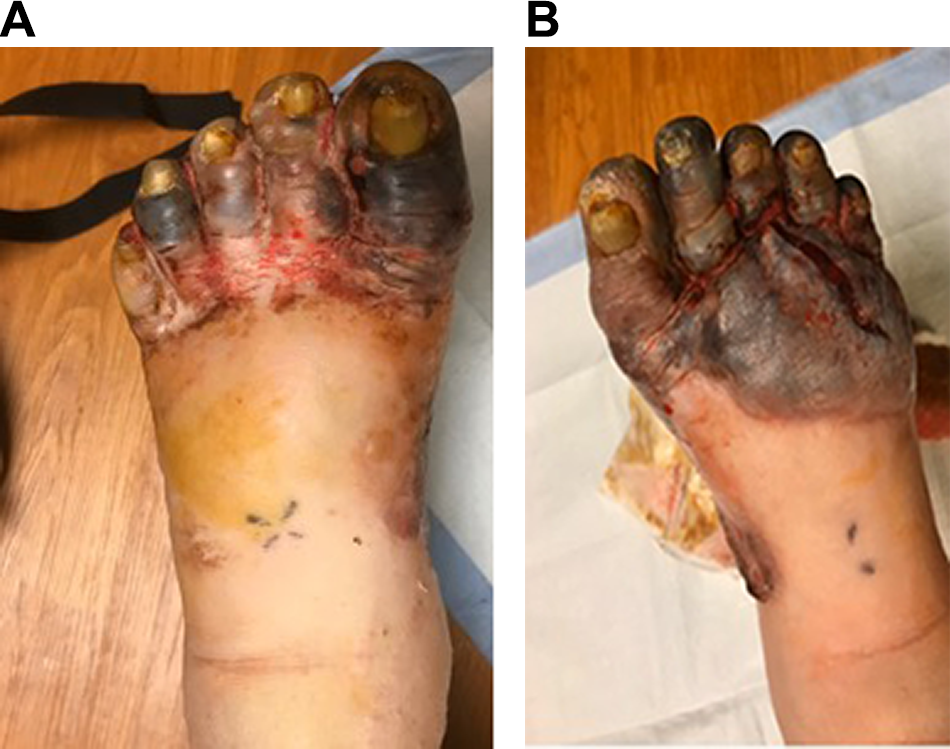
Based on the intensivist’s and vascular surgery’s recommendations, there was initial concern for HIT. He was switched to an argatroban drip, and a HIT panel was sent. Vascular surgery did not have surgical plans at this time; pedal pulse status was intact. The surgical team recommended the HIT work-up and local wound care with drainage of the dorsal bullae of the feet if they should form. Subsequently, the HIT panel came back a few days later and demonstrated positive antibodies. No surgical intervention was performed while the patient was in the hospital (Fig. 1). Once medically stable, he was discharged to inpatient rehabilitation, and a podiatric surgery consult was called for further management of his necrotic toes. The bullae were deroofed, and necrotic edges were debrided with continued demarcation of the feet of the distal forefoot, with larger areas of demarcation on the right foot compared with the left. Initial evaluation demonstrated a possible need for a transmetatarsal amputation, at least on the right foot. He continued to be seen by the podiatry service and continued local wound care daily with betadine-soaked nonadherent dressings (Adaptic; 3M, St Paul, Minnesota) and compression for edema control.
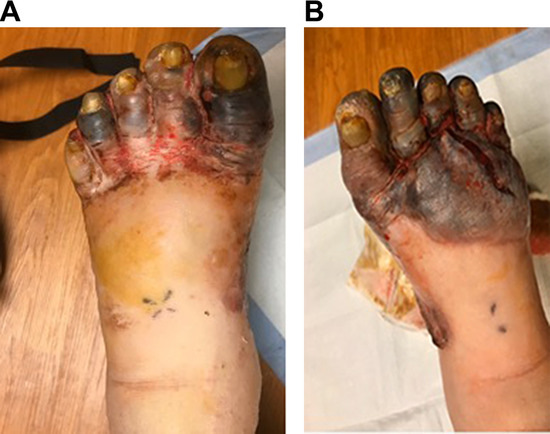
Figure 1.
Left (A) and right (B) feet with ischemic/digital gangrene. Consultation performed in January 2020.
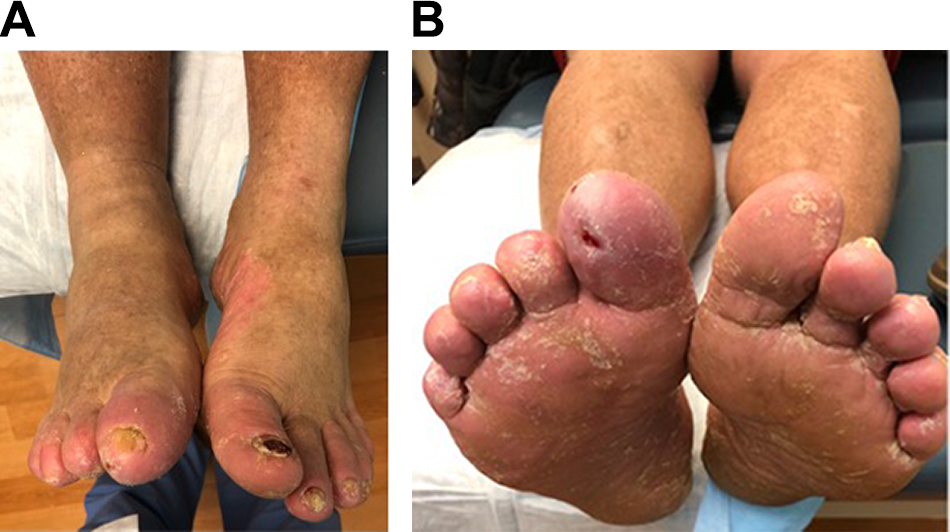
The patient continued to improve in his activity of daily living tasks and overall function. Subsequently, he was discharged home with weekly outpatient wound care follow-up by both podiatric and vascular surgery, as well as home nursing. In March 2020, he had significantly improved. The left foot digits were healing nicely, and the right foot had small patches of necrotic tissue to the distal digits. However, because second-digit necrosis became full thickness on the right foot, a partial right second-digit amputation was performed in the office (Fig. 2). The patient continued to improve with local wound care, compression therapy, and off-loading. By August 2020, the patient’s left foot was completely healed, and the right foot was 95% healed (Fig. 3). Local wound care with betadine dressing changes and strict outpatient follow-up were continued, and by December 2020, both of his feet were completely healed, with no further wounds or lesions (Fig. 4).
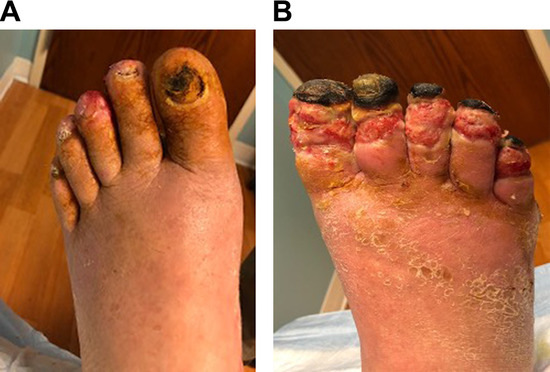
Figure 2.
Left (A) and right (B) feet with continued local wound care. Partial right second-digit amputation was performed in the office in March 2020.
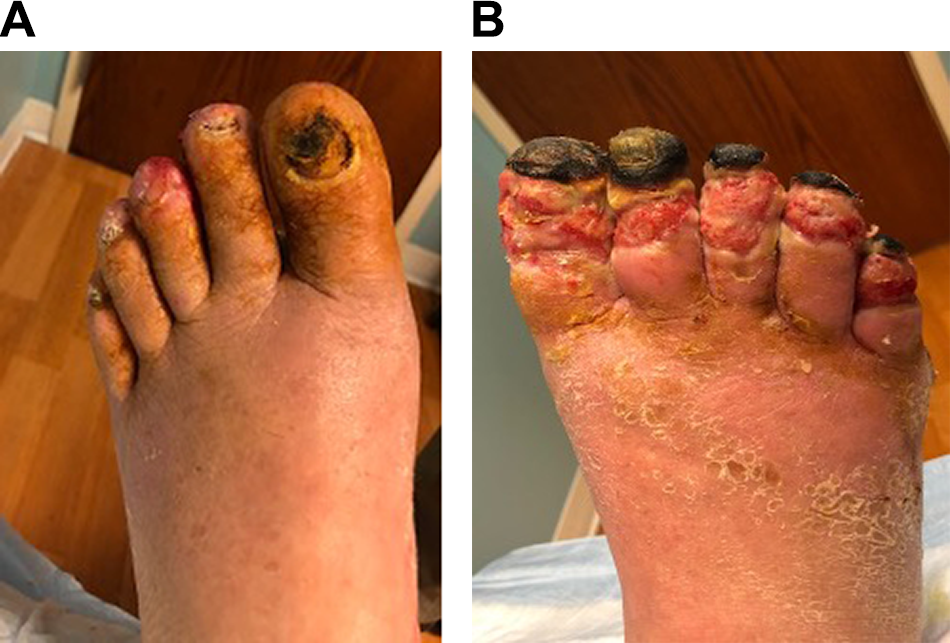
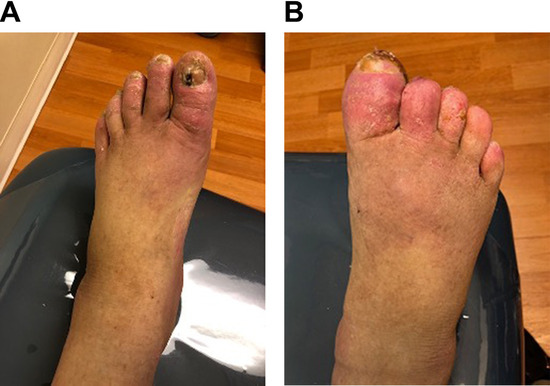
Figure 3.
Left (A) and right (B) feet with continued progress and almost at fully epithelized tissue in August 2020.
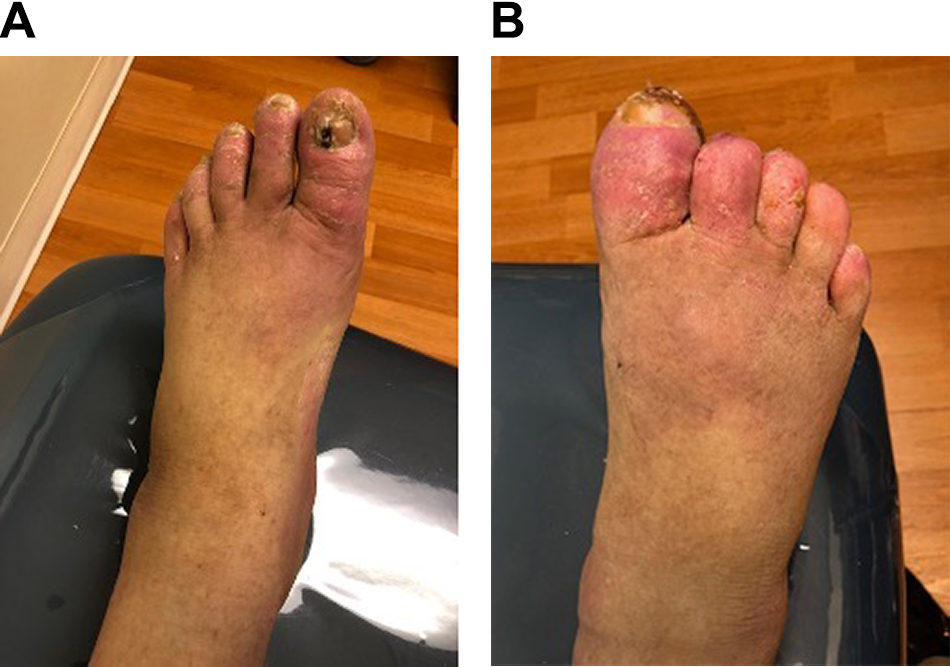
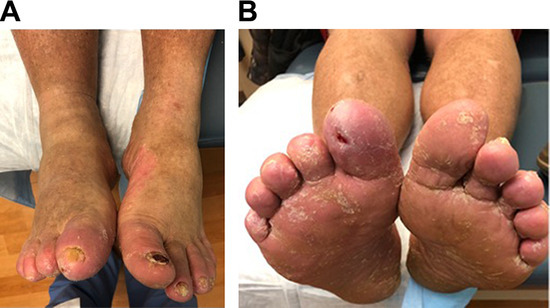
Figure 4.
Completely healed feet by December 2020.
Discussion
Prothrombotic disorders are commonly seen in hospitalized patients secondary to HIT. Postoperative patients are at increased risk, as are those who receive unfractionated heparin or low-molecular-weight heparin. Treatment includes discontinuing heparin therapy and switching to an alternative anticoagulation regimen, as well as performing daily laboratory tests for close monitoring as previously mentioned [12–17].
This case report highlights the significance of proper limb salvageability rather than immediately proceeding with amputation and the importance of a novel debridement technique, fringe debridement. Fringe debridement allows for eventual healing of large areas of gangrene by incremental sharp excisional debridement of eschar edges, allowing for slow epidermal creep. This technique can also be used in the setting of peripheral vascular disease to decrease the oxygen demand of healing. This case study also emphasizes the importance of a multidisciplinary approach to medical management of such patients so that they can have the appropriate care they need, both in the acute phase of illness and during long-term follow-up. Limb salvage typically increases time to healing but also patient satisfaction and functional outcome.
Acknowledgment
The nursing staff at Columbus Regional Health’s Wound Center for their excellent care rendered to patients, especially during the COVID-19 pandemic.
Financial Disclosure: None reported.
Conflict of Interest: None reported.
References
- Warkentin TE, Levine MN, Hirsh J, et al: Heparin-induced thrombocytopenia in patients treated with low-molecular-weight heparin or unfractionated heparin. N Engl J Med 332: 1330, 1995.
- Amiral J, Vissac AM: Heparin induced thrombocytopenia (HIT). Thromb Haemost 68: 95, 1992.
- Arepally GM: Heparin-induced thrombocytopenia. Blood 129: 2864, 2017.
- Fidlar E, Jaques LB: The effect of commercial heparin on the platelet count. J Lab Clin Med 33: 1410, 1948.
- Salter BS, Weiner MM, Trinh MA, et al: Heparin-induced thrombocytopenia: a comprehensive clinical review. J Am Coll Cardiol 67: 2519, 2016.
- Selleng S, Selleng K: Heparin-induced thrombocytopenia in cardiac surgery and critically ill patients. Thromb Haemost 116: 843, 2016.
- Bauer TL, Arepally G, Konkle BA, et al: Prevalence of heparin-associated antibodies without thrombosis in patients undergoing cardiopulmonary bypass surgery. Circulation 95: 1242, 1997.
- Pouplard C, May MA, Iochmann S, et al: Antibodies to platelet factor 4-heparin after cardiopulmonary bypass in patients anticoagulated with unfractionated heparin or a low-molecular-weight heparin: clinical implications for heparin-induced thrombocytopenia. Circulation 99: 2530, 1999.
- Selleng S, Malowsky B, Strobel U, et al: Early-onset and persisting thrombocytopenia in post-cardiac surgery patients is rarely due to heparin-induced thrombocytopenia, even when antibody tests are positive. J Thromb Haemost 8: 30, 2010.
- Koster A, Faraoni D, Levy JH: Argatroban and bivalirudin for perioperative anticoagulation in cardiac surgery. Anesthesiology 128: 390, 2018.
- Kujovich JL: “Factor V Leiden Thrombophilia,” in GeneReviews [Internet], ed by RA Pagon, MP Adam, HH Ardinger, et al, University of Washington, Seattle, 1993-2017. Available at: https://www.ncbi.nlm.nih.gov/sites/books/NBK1368/. Published May 14, 1999. Updated March 9, 2010.
- Gul EE, Abdulhalikov T, Aslan R, et al: A rare and undesirable complication of heparin-induced thrombocytopenia: acute massive pulmonary embolism. Clin Appl Thromb Hemost 17: 546, 2011.
- Junqueira DR, Zorzela LM, Perini E: Unfractionated heparin versus low molecular weight heparins for avoiding heparin-induced thrombocytopenia in postoperative patients. Cochrane Database Syst Rev 4: CD007557, 2017.
- Gul EE, Abdulhalikov T, Aslan R, et al: A rare and undesirable complication of heparin-induced thrombocytopenia: acute massive pulmonary embolism. Clin Appl Thrombosis/Hemostasis 17: 546, 2011.
- Padmanabhan A, Jones CG, Pechauer SM, et al: IVIG for treatment of severe refractory heparin-induced thrombocytopenia. Chest 152: 478, 2017.
- Warkentin TE: High-dose intravenous immunoglobulin for the treatment and prevention of heparin-induced thrombocytopenia: a review. Expert Rev Hematol 12: 685, 2019.
- Irani M, Siegal E, Jella A, et al: Use of intravenous immunoglobulin G to treat spontaneous heparin‐induced thrombocytopenia. Transfusion 59: 931, 2019.
© 2023 American Podiatric Medical Association