


Abstract
Background: Chronic, nonhealing wounds are a growing health-care problem in the United States, affecting more than 6.5 million patients annually and costing the health-care system over $25 billion. Chronic wounds, including diabetic foot ulcers (DFUs) and venous leg ulcers (VLUs), are often difficult to treat, and patients commonly fail to heal even with the most advanced therapies. The present study was designed to evaluate the efficacy and utility of the synthetic hybrid-scale fiber matrix in the treatment of complex chronic nonhealing lower-extremity ulcers refractory to advanced therapies. Methods: A retrospective analysis of 20 patients with a total of 23 wounds (DFUs, n = 18; VLUs, n = 5) who underwent treatment using the synthetic hybrid-scale fiber matrix was conducted. The majority of ulcers (78%) included in this study were refractory to one or multiple previous advanced wound therapies and therefore considered difficult-to-heal ulcers with high failure risk for future therapies. Results: Subjects had a mean wound age of 16 months and presented with 132 secondary comorbidities and 65 failed interventions and therapies. Treatment of VLUs with the synthetic matrix resulted in complete closure of 100% of the wounds over 244 ± 153 days with an average of 10.8 ± 5.5 applications. Treatment of DFUs with the synthetic matrix resulted in complete closure of 94% of the wounds over 122 ± 69 days with 6.7 ± 3.9 applications. Conclusions: Treatment with the synthetic hybrid-scale fiber matrix resulted in the closure of 96% of complex chronic ulcers refractory to existing therapies. The inclusion of the synthetic hybrid-scale fiber matrix in wound care programs provides a critical and needed solution for costly, long-standing refractory wounds.
Chronic, nonhealing wounds are a growing health-care problem in the United States, affecting more than 6.5 million patients annually and costing the health-care system over $25 billion [1–3]. Chronic wounds, including diabetic foot ulcers (DFUs) and venous leg ulcers (VLUs), are often difficult to treat, and patients commonly fail to heal even with the most advanced therapies.
Approximately 11.3% of the US population is affected by diabetes [4], and their medical cost has been reported to be 2.3 times higher than in patients without diabetes [5]. Diabetic foot ulcers are the most costly and challenging complication of diabetes mellitus and affect 19% to 34% of diabetic patients [6,7]. Treatment of a DFU costs the health-care system and patient approximately $50,000 [8], and the death rate at 5 years for diabetic patients with DFUs is 2.5 times higher than for diabetic patients who do not suffer from DFUs [9]. Moreover, 20% of moderate to severe DFUs result in amputation [10]. Also, the mortality rate following amputation increases by 70% in patients with diabetes. Studies have shown peripheral artery disease increases the risk of ulcer, infection, and amputation [11,12].
Another chronic ulcer type, which affects 3% of the world population, is VLU [13]. Venous leg ulcers are a major cause of morbidity and poor quality of life and result from venous insufficiency in the lower limbs. Venous leg ulcers are painful and malodorous, have heavy exudate, limit patient mobility, and significantly affect the quality of life [14]. Venous leg ulcers often have a long healing process, with a high risk of recurrence. The recurrence rate of VLUs is reported to be as high as 78% [15].
Given the increasing trend of chronic ulcers and high associated costs, evaluating the efficacy of current wound therapies and developing novel clinical approaches are of great importance. Many of these ulcers fail to respond to advanced therapies and become a significant challenge to the wound care clinician. A new approach to the treatment of these patients is greatly needed. Treatment options include negative-pressure wound therapy and hyperbaric oxygen therapy; however, studies have reported serious side effects, including myopia, oxygen toxicity in the brain leading to seizures, and pneumothorax [3,16]. Another treatment option for chronic ulcers are autografts; however, autografts are associated with high total cost of care, need for additional surgery, and negative side effects (eg, donor-site morbidity, infection, and hematoma formation) [17]. Allografts and xenografts are also inherently associated with drawbacks, including poor durability, rapid enzymatic degradation, potential graft rejection, patient ethnic or religious objections, and limited availability.
Throughout the chronic ulcer treatment process, wound complications, including wound recurrence, infection, and limited blood supply, have commonly been observed, greatly impacting the success rate of wound healing [3,18]. In recent years, significant progress has been made in the development of wound matrices with the goals of protecting the wound from infection, managing exudate, promoting cellular infiltration, and encouraging granulation tissue formation. It has been shown that synthetic matrices are a unique alternative to allografts and xenografts for supporting wound healing [19]. Synthetic matrices have been investigated broadly in the wound healing research field and have been shown to possess many advantages compared to previous treatment options. In particular, the use of the synthetic hybrid-scale fiber matrix in the treatment of chronic ulcers in this study led to excellent healing responses (96% healing rate for all ulcers).
In an effort to heal chronic ulcers refractory to existing advanced therapies, a regenerative synthetic hybrid-scale fiber matrix was used to encourage tissue healing, neovascularization, and durable closure [19]. The synthetic hybrid-scale fiber matrix is fabricated using electrospinning technology that provides the capability to tailor the structure of a three-dimensional wound matrix to mimic the scale and structure of native tissue. Using the electrospinning technique, micron and submicron fibers (ie, hybrid-scale fibers) are spun from resorbable polymers, polyglactin 910 and polydioxanone, into soft, white, compliant nonwoven sheets roughly 0.5 mm thick. The biocompatibility, safety, and efficacy of the synthetic hybrid-scale fiber matrix has been thoroughly evaluated by following the international standard of biological evaluation of medical devices (ISO 10993-1), in vitro assays, and in vivo animal model studies. The synthetic hybrid-scale fiber matrix offers a much-needed treatment approach for refractory difficult-to-heal chronic ulcers. Micron-scale fibers in the synthetic matrix allow cellular retention and submicron-scale fibers facilitate rapid cellular spreading in the porous structure of the matrix. Over time, as the submicron fibers resorb first, the porous matrix becomes even more porous, allowing for more vascularization and further tissue formation [19]. This hybrid-scale fiber mechanism encourages cellular ingrowth, neovascularization, and granulation tissue formation, resulting in 100% epithelialization and complete wound closure in the majority of the wounds in this study. The synthetic hybrid-scale fiber matrix is biocompatible, robust, and will completely resorb into the body as new tissue is formed. The present study was designed to evaluate the efficacy and utility of the synthetic hybrid-scale fiber matrix in the treatment of complex chronic nonhealing lower-extremity ulcers refractory to advanced therapies.
Methods
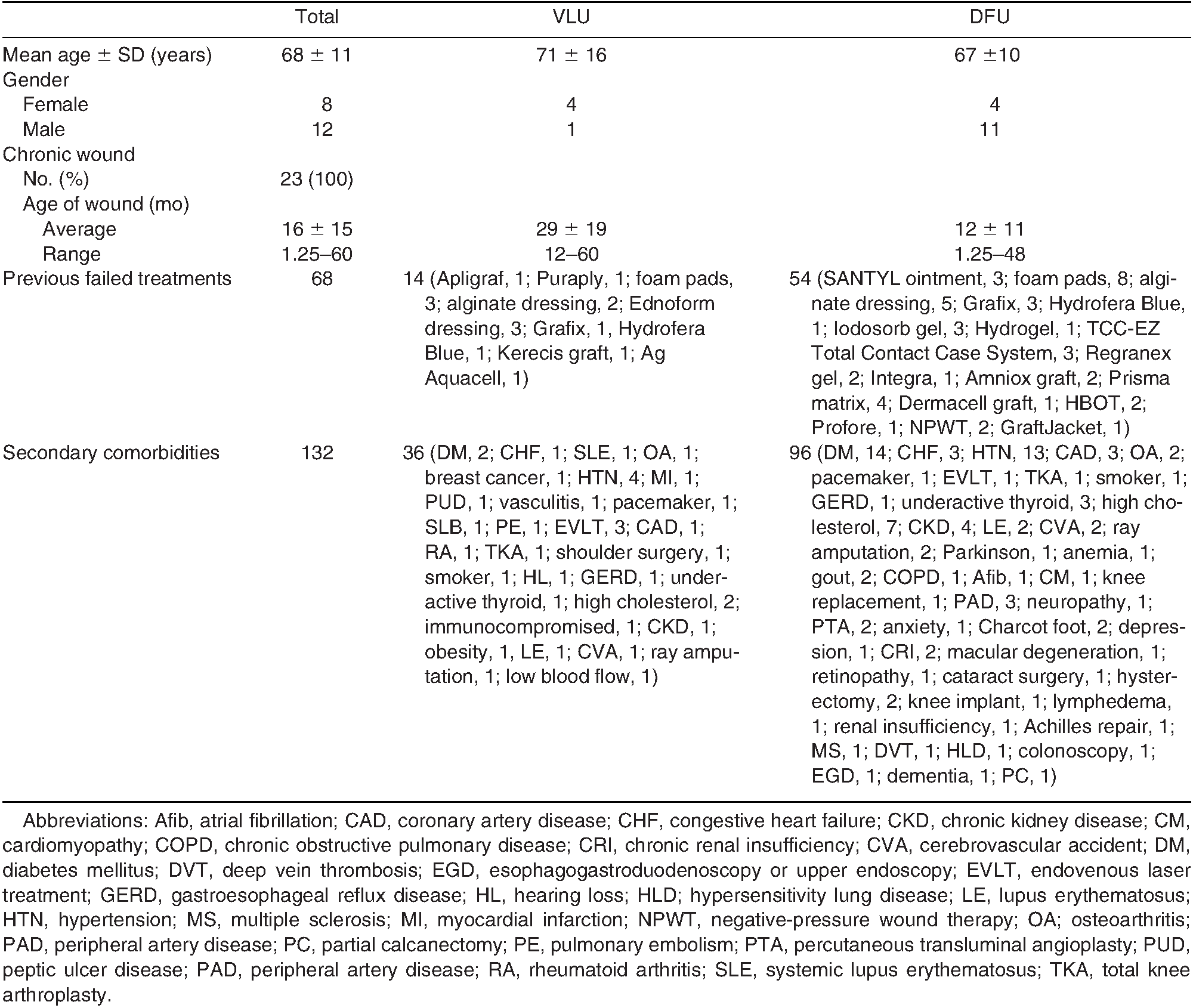
This retrospective study was conducted at the Midwest Foot and Ankle Clinics in Chicago, Illinois, and included 20 patients with a total of 23 wounds (DFUs, n = 18; VLUs, n = 5) (Table 1). All patients provided written informed consent for inclusion in the study and for publication of photographs. To protect patients’ privacy, all presented data were anonymized. All procedures in this study followed institutional guidelines and were approved by the review committee.
Table 1.
Patient Demographics and Wound Characteristics.
To treat lower-extremity ulcers, a clinical approach using the novel synthetic hybrid-scale fiber matrix (Restrata; Acera Surgical, Inc, St. Louis, Missouri) was developed. The matrix was cut to the shape and size of the wound and fenestrated. The prepared material was secured to the wound bed using sutures. All patients included in this study had no known sensitivity to absorbable sutures. Additional applications of the synthetic matrix were applied as needed based on the clinician’s discretion. Outcome measures were assessed by means of retrospective chart review, including the incidence of wound closure, time to closure, incidence of major wound complications, and total number of applications.
Results
In this study, 20 patients, the majority of whom were male patients (60%) with an average age of 68 ± 11 years, had a total of 23 wounds. Of 23 wounds, 18 were DFUs with an average wound age of 12 months, and five were VLUs that were open for an average of 29 months. Patients had multiple comorbidities including hypertension (85%), various types of cardiovascular disorders (95%), diabetes mellitus (80%), history of lower-extremity complications (40%), and high cholesterol (40%). The complete list of patient comorbidities is presented in Table 1. The majority of ulcers (78%) included in this study were refractory to one or multiple previous advanced wound therapies and therefore considered difficult-to-heal ulcers with high failure risk for future therapies (Table 2). Overall, patients had several health complications and refractory ulcers that did not heal under previous wound therapies that make the treatment approach more challenging for these difficult-to-heal ulcers.
Table 2.
Wound Healing Characteristic Following Treatment with the Synthetic Hybrid-Scale Fiber Matrix.
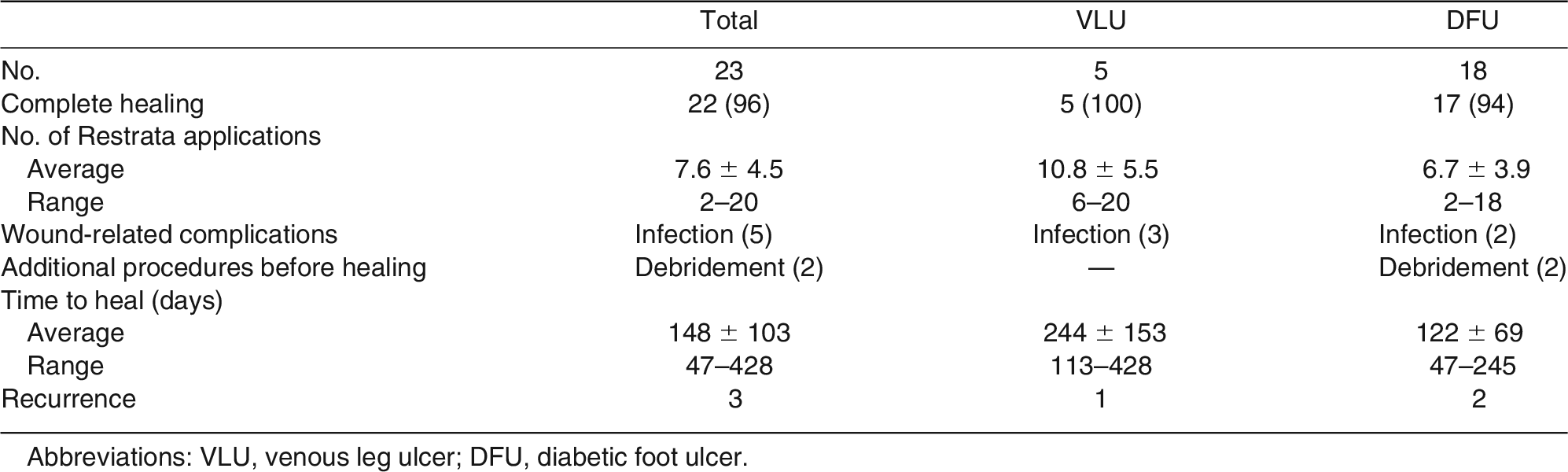
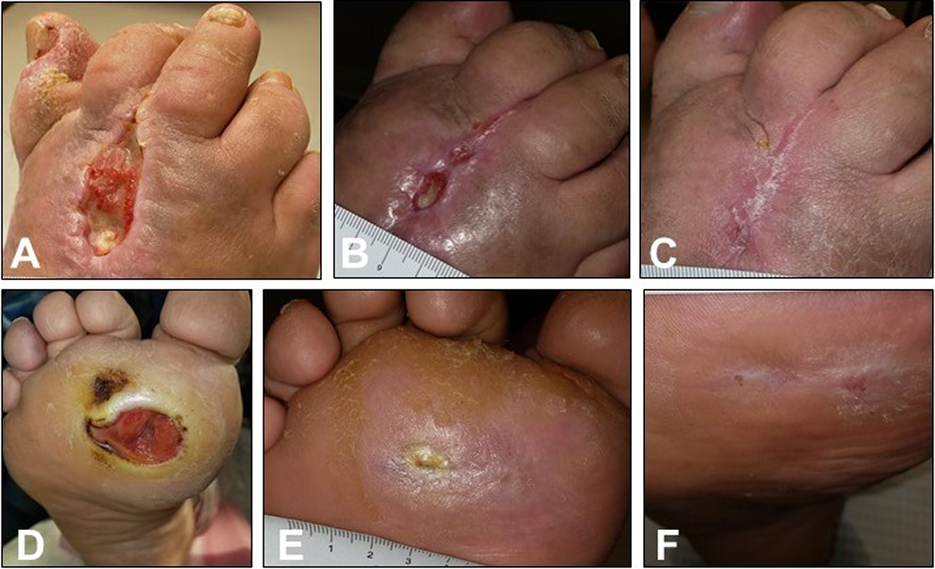
The results of this study showed excellent healing responses of these difficult-to-heal ulcers (Figs. 1 and 2). One hundred percent of the VLUs were completely healed over an average treatment period of 244 ± 153 days. The wounds received 10.8 ± 5.5 applications of the synthetic hybrid-scale fiber matrix. Figures 1 and 2 show treatment of representative VLUs. Eighteen DFUs were also included in this study, and 17 (94%) completely healed following treatment with the synthetic hybrid-scale fiber matrix. Diabetic foot ulcers were healed after 122 ± 69 days of the first synthetic matrix application, and on average, wounds received 6.7 ± 3.9 applications to achieve complete healing. Figures 3 and 4 show treatment of representative VLUs.
Figure 1.
Treatment of a 5-year venous leg ulcer (patient 1 in Table 3) using the synthetic hybrid-scale fiber matrix. (A) Week 0, (B) week 6, (C) week 12, and (D and E) complete healing at week 18.
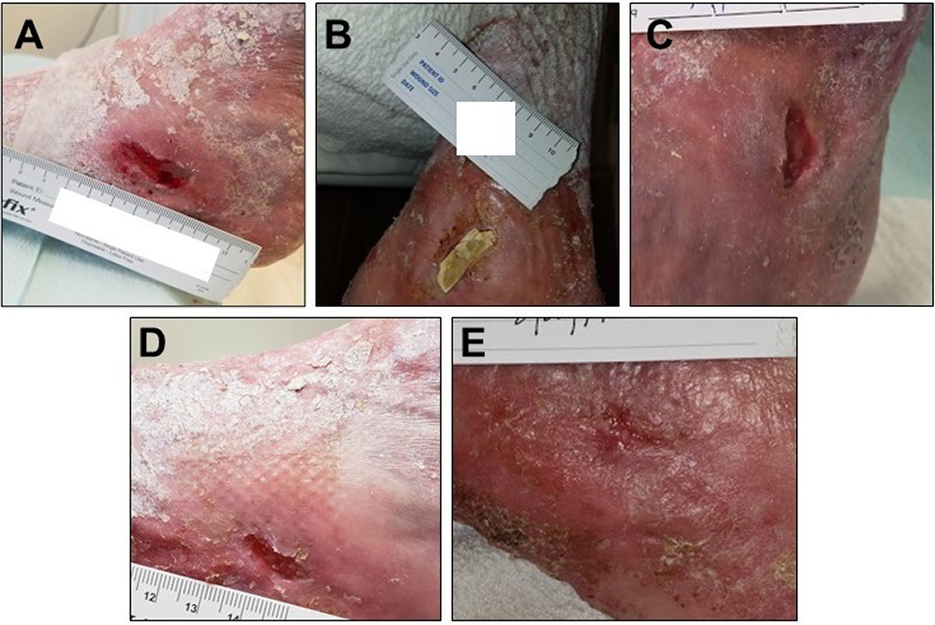
Figure 2.
Treatment of a 2-year VLU refractory (patient 3 in Table 3) to previous therapies using the synthetic hybrid-scale fiber matrix. The wound cause was a combination of rheumatoid vasculitis and a venous leg ulcer. (A) The ulcer before the treatment. (B) Wound condition at week 5. (C) Wound closure at week 10. (D) Wound recurrence 1 month after initial closure. (E) Complete wound healing after 22 weeks.
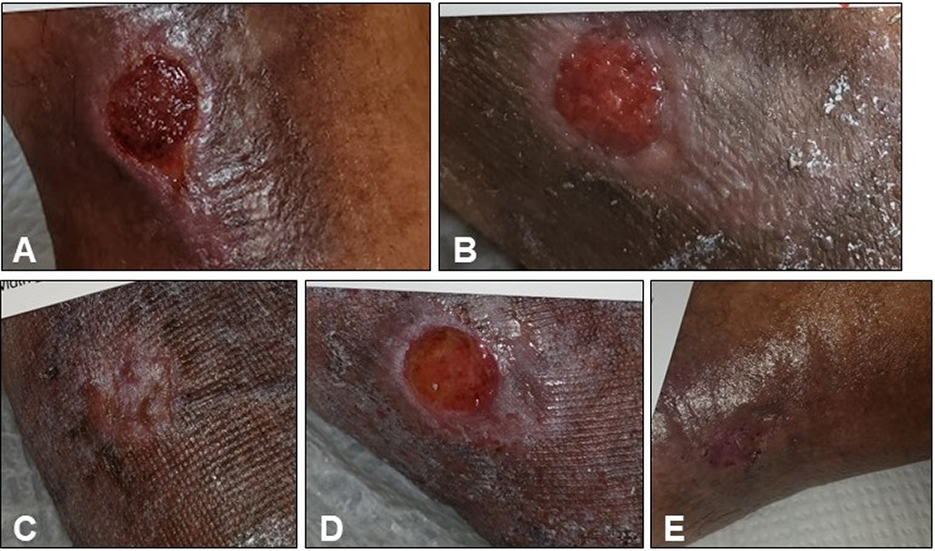
Figure 3.
Treatment of a diabetic foot ulcer (patient 11 in Table 3) using the synthetic matrix. (A) Week 0, (B) week 6, (C) week 10, and (D) complete healing at week 15.
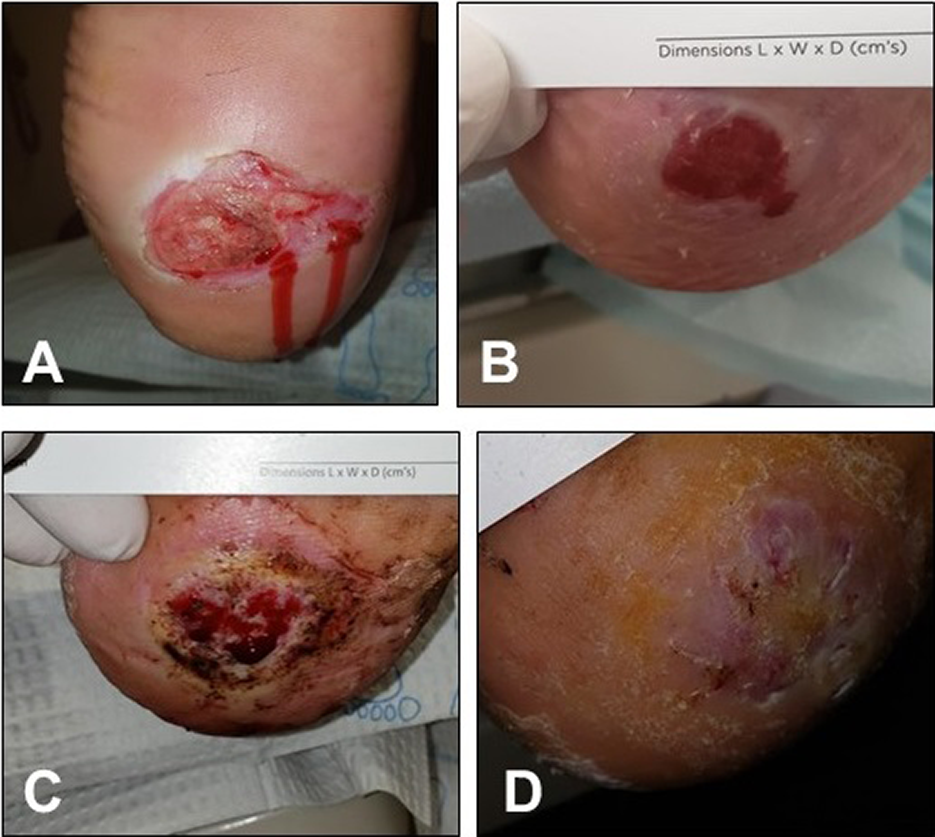
Figure 4.
Treatment of diabetic foot ulcer (patient 14 in Table 3) using the synthetic matrix. (A and D) Week 0, (B and E) week 5, and (C and F) complete healing of dorsal and plantar wound at week 10.
The clinical approach of using the synthetic hybrid-scale fiber matrix to treat ulcers in this study resulted in minimal wound-related complications and few additional procedures before healing (Table 2). During the treatment, the only observed wound complication was infection (five cases). The infections were reported to be unrelated to the synthetic hybrid-scale fiber matrix. Of the five infected ulcers, four wounds completely healed. Moreover, the only required procedure after application of the synthetic matrix was surgical debridement, needed for two DFUs.
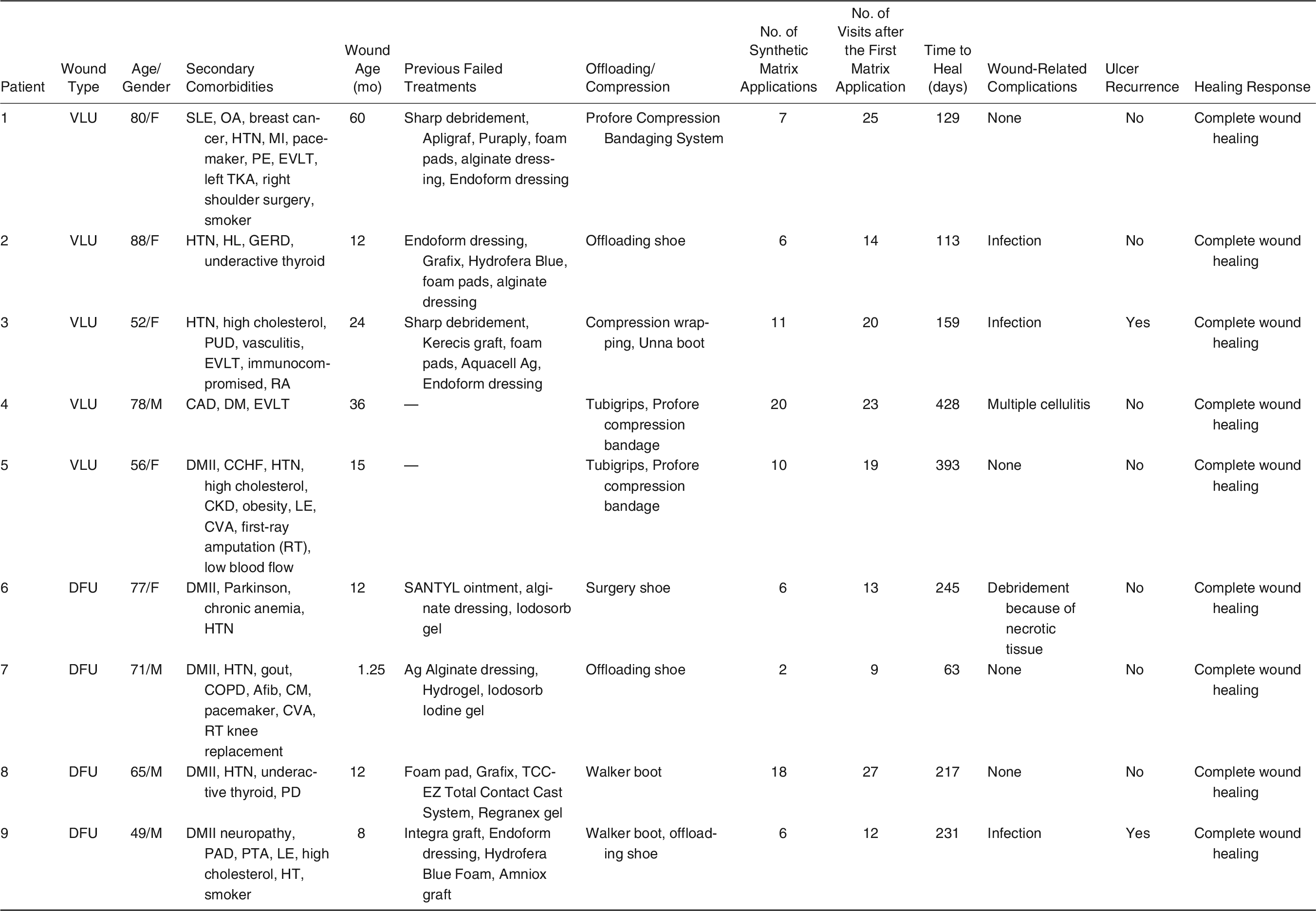
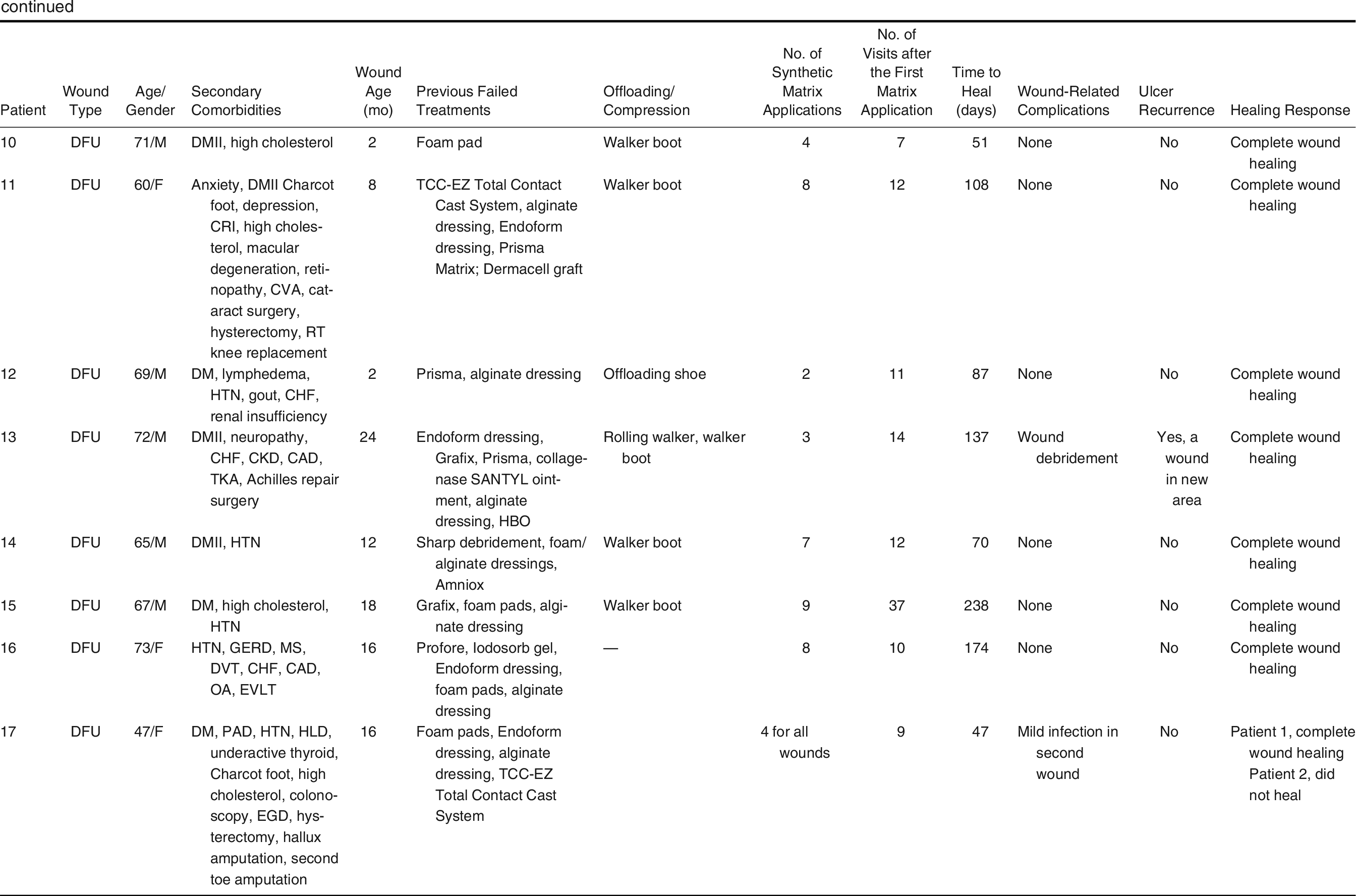
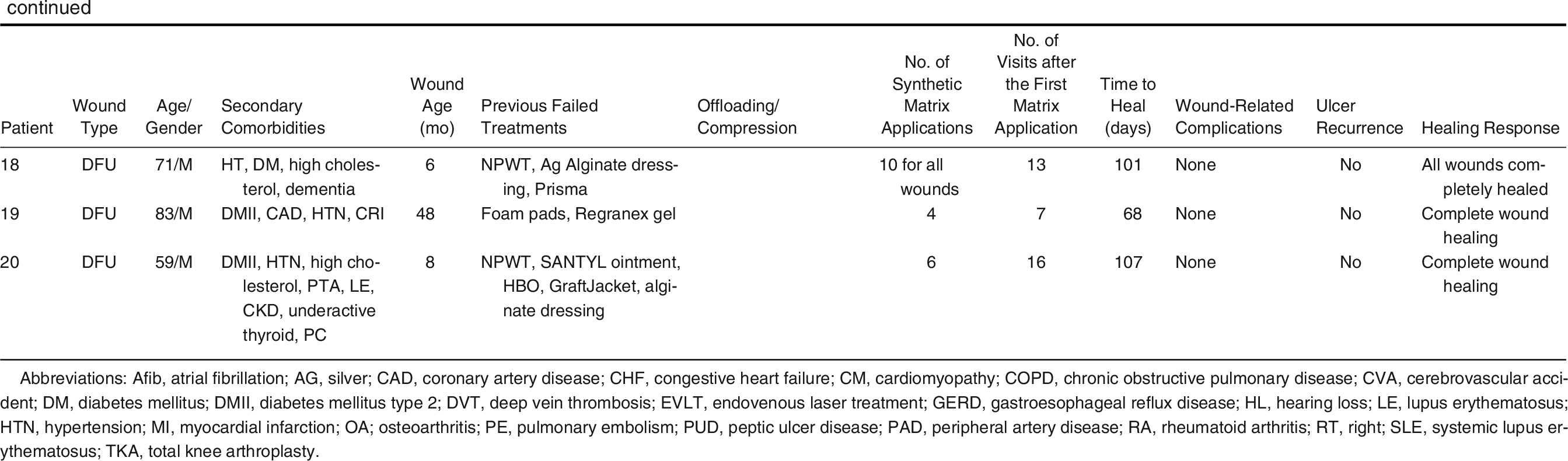
Wound recurrence was observed in three patients after complete wound healing was reported, and in all three cases, the patients were noncompliant with physician instructions, including wearing inappropriate shoes, nonuse of the prescribed ankle-foot orthosis brace, and ambulation on the treated foot. To provide more details about the synthetic hybrid-scale fiber matrix treatment approach, individual patients’ demographic information and healing responses are presented in Table 3.
Table 3.
Individual Patient Demographic Information, Wound Characteristics, Treatment Methods, and Healing Responses.
Discussion
This study demonstrated significantly improved healing outcomes when compared to previously published studies using other treatment modalities. In a clinical trial evaluating 154 diabetes patients with DFUs treated with a two-layer skin regeneration matrix (Integra Dermal Regeneration Template; Integra, Plainsboro Township, New Jersey), the healing rate was reported to be only 51% within 16 weeks [20]. Moreover, a 49% healing rate at 12 weeks was reported when DFUs of 37 patients were treated with an extracellular matrix graft (OASIS Wound Matrix; Smith & Nephew, London, United Kingdom) [21]. Similarly, a healing rate of only 60% at 12 weeks was achieved when VLUs of 52 patients were treated using dehydrated amnion/chorion membrane (EpiFix; MiMedx, Marietta, Georgia) [22]. In contrast, in this study, an excellent healing rate (96% for all ulcers; 100% for VLUs and 94% for DFUs) was achieved because of the synthetic hybrid-scale matrix enabling wound healing.
In this study, five cases of infection were reported; however, the infections were not related to the application of the synthetic hybrid-scale fiber matrix. The resulting complications were typical for chronic ulcers, including DFUs and VLUs. For example, previous reports have shown that, on average, more than half of DFUs become infected [23,24]. The infections may be related to various factors, including a compromised immune system, limited blood supply, and other secondary comorbidities. To treat the infections in this study, antibiotics were prescribed for the patients, and the application of the synthetic matrix was temporarily paused until the infections were resolved.
Risk of ulcer recurrence in patients with chronic disease is a major health concern, and the literature has reported a wide range of recurrence rates, ranging from 30% to 80% [18,25,26]. In this study, three patients experienced wound reopening (15%), a significantly lower recurrence rate compared to previous studies. Investigations following ulcer recurrence showed that the wound reopenings were the result of patient noncompliance.
One limitation of this study was the lack of a standardized follow-up period. In this study, the follow-up period was extended up to 1 year as needed. In addition, the present study did not involve a control group using the standard of care. Future studies evaluating the efficacy of the synthetic hybrid-scale fiber matrix as compared to standard of care in treating chronic ulcers are warranted to further assess healing rates and the incidence of wound complications. In these future studies, the follow-up period will be standardized across all subjects and will be defined based on the standard follow-up schedules after treatment.
Conclusions
Treatment with the synthetic hybrid-scale fiber matrix resulted in the closure of 96% of complex chronic ulcers treated in this study, each of which had been refractory to previous therapies. Given these results, inclusion of the synthetic hybrid-scale fiber matrix in wound care programs should be seriously considered, as it offers a promising option for costly, long-standing, refractory wounds.
Financial Disclosure
None reported.
Conflicts of Interest
None reported.
References
- Wu S, Armstrong DG: Risk assessment of the diabetic foot and wound. Int Wound J 2: 17, 2005.
- Raghav A, Ahmad Khan Z, Labala RK, et al: Financial burden of diabetic foot ulcers to world: a progressive topic to discuss always. Ther Adv Endocrinal Metab 9: 29, 2018.
- Han G, Ceilley R: Chronic wound healing: a review of current management and treatments. Adv Ther 34: 599, 2017.
- Centers for Disease Control and Prevention: National diabetes statistics report: estimates of diabetes and its burden in the United States. Available at: https://www.cdc.gov/diabetes/data/statistics-report/index.html. Accessed January 24, 2023.
- American Diabeters Association: Economic costs of diabetes in the US in 2012. Diabetes Care 36: 1033, 2013.
- Everett E, Mathioudakis N: Update on management of diabetic foot ulcers. Ann N Y Acad Sci 1411: 153, 2018.
- Vigersky RA, Fitzner K, Levinson J, et al: Barriers and potential solutions to providing optimal guideline-driven care to patients with diabetes in the US. Diabetes Care 36: 3843, 2013.
- Paquette D, Falanga V: Leg ulcers. Clin Geriatr Med 18: 77, 2002.
- Walsh JW, Hoffstad OJ, Sullivan DJ, et al: Association of diabetic foot ulcer and death in a population-based cohort from the United Kingdom. Diabet Med 33: 1493, 2016.
- Lipsky BA, Berendt AR, Cornia PB, et al: 2012 Infectious Diseases Society of America clinical practice guideline for the diagnosis and treatment of diabetic foot infections. Clin Infect Dis 54: e132, 2012.
- Mills JL Sr, Conte MS, Armstrong DG, et al: The Society for Vascular Surgery Lower Extremity Threatened Limb Classification System: risk stratification based on wound, ischemia, and foot infection (WIfI). J Vasc Surg 59: 220, 2014.
- Ward R, Dunn J, Clavijo L, et al: Outcomes of critical limb ischemia in an urban, safety net hospital population with high WIfI amputation scores. Ann Vasc Surg 38: 84, 2017.
- Margolisa DJ, Bilker W, Santanna J: Venous leg ulcer: incidence and prevalence in the elderly. J Am Acad Dermatol 46: 381, 2002.
- Guest JF, Fuller GW, Vowden P: Venous leg ulcer management in clinical practice in the UK: costs and outcomes. Int Wound J 15: 29, 2018.
- Abbade LPF, Lastória S: Venous ulcer: epidemiology, physiopathology, diagnosis and treatment. Int J Dermatol 44: 449, 2015.
- Wu SC, Marston W, Armstrong DG: Wound care: the role of advanced wound-healing technologies. JAPMA 100: 385, 2010.
- Oganesyan G, Jarell AD, Srivastava M, et al: Efficacy and complication rates of full-thickness skin graft repair of lower extremity wounds after Mohs micrographic surgery. Dermatol Surg 39: 1334, 2013.
- Armstrong DG, Bulton AJM, Bus SA: Diabetic foot ulcers and their recurrence. N Engl J Med 376: 2367, 2017.
- MacEwan MR, MacEwan S, Kovacs TR, et al: What makes the optimal wound healing material? A review of current science and introduction of a synthetic nanofabricated wound care scaffold. Cureus 9: e1736, 2017.
- Driver VR, Lavery LA, Reyzelman AM, et al: A clinical trial of Integra Template for diabetic foot ulcer treatment. Wound Repair Regen 23: 891, 2015.
- Niezgoda JA, Van Gils CC, Frykberg RG, et al: Randomized clinical trial comparing OASIS Wound Matrix to Regranex Gel for diabetic ulcers. Adv Skin Wound Care 18: 258, 2015.
- Bianchi C, Cazzell S, Vayser D, et al: A multicentre randomised controlled trial evaluating the efficacy of dehydrated human amnion/chorion membrane (EpiFix) allograft for the treatment of venous leg ulcers. Int Wound J 15: 114, 2018.
- Prompers L, Hujiberts M, Apelqvist J, et al: High prevalence of ischaemia, infection and serious comorbidity in patients with diabetic foot disease in Europe. Baseline results from the Eurodiale study. Diabetologia 50: 18, 2017.
- Lavery LA, Armstrong DG, Murdoch DP, et al: Validation of the Infectious Diseases Society of America’s diabetic foot infection classification system. Clin Infect Dis 44: 562, 2007.
- Lavery LA, Peters EJG, Williams JR, et al: Reevaluating the way we classify the diabetic foot: restructuring the diabetic foot risk classification system of the International Working Group on the Diabetic Foot. Diabetes Care 31: 154, 2008.
- Van Netten LL, Price PE, Lavery LA, et al: Prevention of foot ulcers in the at-risk patient with diabetes: a systematic review. Diabetes Metab Res Rev 32: 84, 2016.
© 2023 American Podiatric Medical Association