


Abstract
Nail pyogenic granulomas are common benign vascular lesions often occurring after trauma. A variety of treatment modalities exist, including topical therapies and surgical excision, although both have their pros and cons. In this communication, we describe the case of a 7-year-old boy with repeated toe trauma, who developed a large nail bed pyogenic granuloma after undergoing surgical debridement and nail bed repair. He was treated with 3 months of topical 0.5% timolol maleate, resulting in complete resolution of the pyogenic granuloma and minimal nail deformity.
Pyogenic granulomas (PGs) are common benign vascular lesions on the skin or mucous membranes. Pyogenic granulomas frequently affect children, young adults, and pregnant women [1]. Causes of PG include systemic medications, ingrown toenails, peripheral nerve damage, and frictional damage caused by prolonged walking. The exact pathogenesis remains unclear, although one-third of cases are estimated to occur after trauma [2]. Other contributing factors include infection, sex hormones, production of angiogenic growth factors, and overexpression of transcription factors such as STAT3 and phosphorylated-ATF2. Periungual or subungual PGs can be found with a high frequency because of susceptibility to trauma of the digits and the high vascularity of the nail unit [2].
Clinically, PGs present as rapidly growing, round, elevated, and red lesions that are prone to bleeding [1]. The persistent ulceration and bleeding often cause patients (or their parents) anxiety and require frequent wound care. Current treatments include topical and systemic therapies, surgical excision, sclerotherapy, photodynamic therapy, and laser treatment, although no standard treatment has been established [1]. Surgical excision with primary closure has been shown to have the lowest overall recurrence rate, but is often not amenable to nail-bed PGs or ideal in the pediatric population [3].
Nonselective β-blockers are considered to be the mainstay treatment for infantile hemangiomas, which are also benign vascular lesions that express β-adrenergic receptors. Recently, nonselective β-blockers have been reported to successfully treat cutaneous PGs [3,4,5,6,7,8,9,10]. Here, we present the case of a young boy with a large nail-bed PG successfully treated with topical timolol, resulting in complete PG resolution and minimal nail deformity.
Case Report
A 7-year-old boy presented to the clinic with repeated trauma to the left great toe over a 2.5-week period. He was initially seen in an urgent care setting a couple of times and then referred to our clinic because of continued bleeding. On examination, a subungual hematoma was noted at the eponychial fold of the great toe with persistent active bleeding and nail plate lifting. Radiography revealed no fracture. Because of the repeated trauma history and continued bleeding, a large disruption of the nail bed was suspected. The patient underwent operative exploration with debridement and repair of a 1 × 1-cm area at the junction of the sterile and germinal matrix. Given the persistent bleeding history, tissue was sent to rule out a pyogenic granuloma. Pathologic diagnosis was a “subungual hematoma of the left great toe,” and histologic examination showed areas of organized necrosis and ischemic hemorrhage, loss of nuclear definition, and no evidence of neoplasm.
Four weeks after surgery, the patient started to have persistent bloody drainage. He developed a bleeding, 8-mm-diameter mass in the nail bed (Fig. 1). Given the history of trauma, relatively rapid exophytic growth, persistent bleeding, and gross appearance, the diagnosis of PG was made clinically. Radiographs showed no sign of osteomyelitis. Despite topical analgesia, the patient was unable to tolerate silver nitrate treatment. Surgery for PG excision and nail bed reconstruction was planned; however, the parents wished to avoid surgery, so a trial of two drops of 0.5% timolol maleate solution three times daily was initiated topically. The PG had been present for approximately 1.5 weeks at the time of treatment. Within 1 week of treatment, the bleeding stopped, which was reassuring to his parents. After 2 months of treatment, the PG completely resolved, with regrowth of the nail plate. Treatment was continued for 1 more month to ensure complete resolution. At 1-year follow-up, the patient’s nail plate grew, with minimal deformity, and there was no recurrence of the PG (Fig. 2).
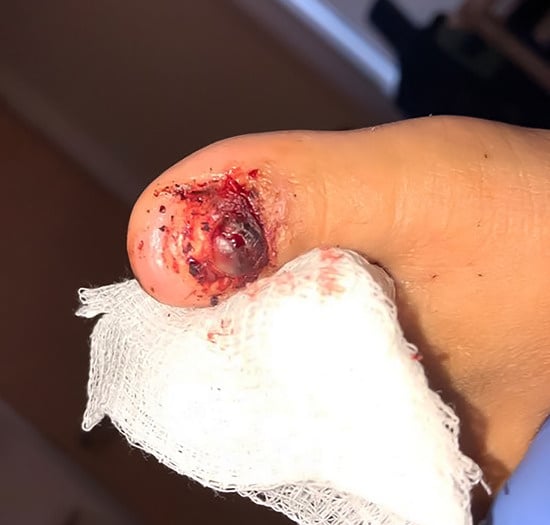
Figure 1.
Nail-bed pyogenic granuloma that developed 4 weeks after debridement and nail bed repair of great toe trauma.
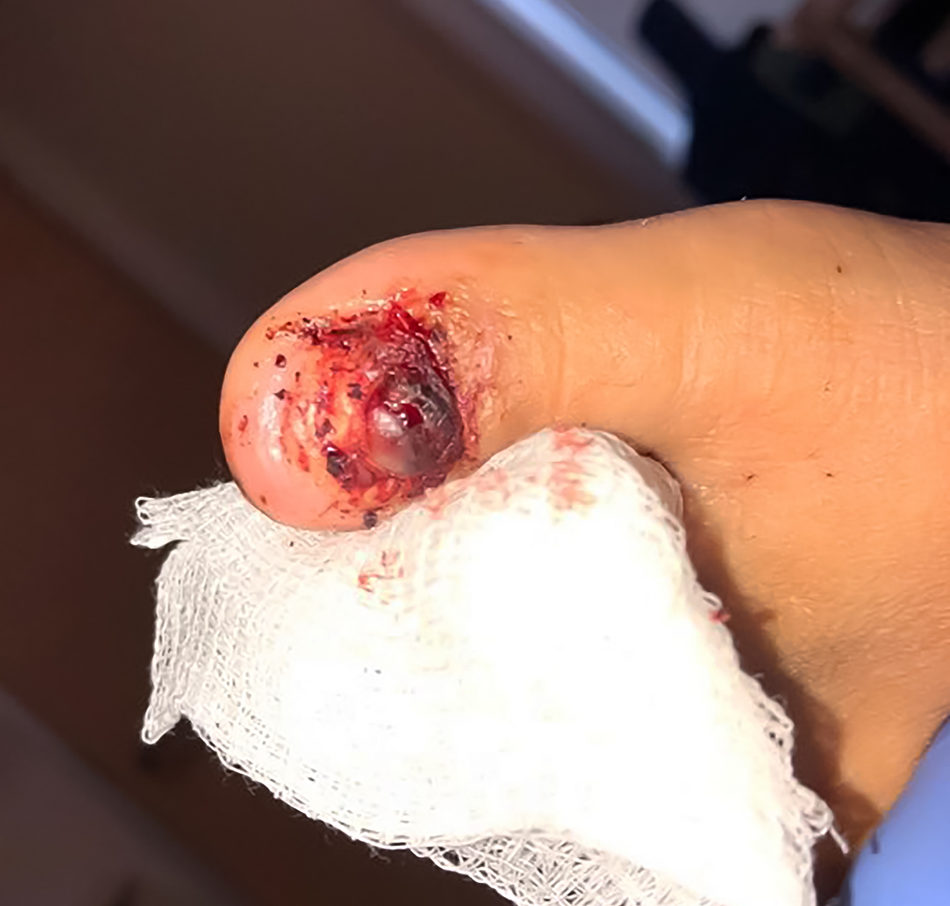
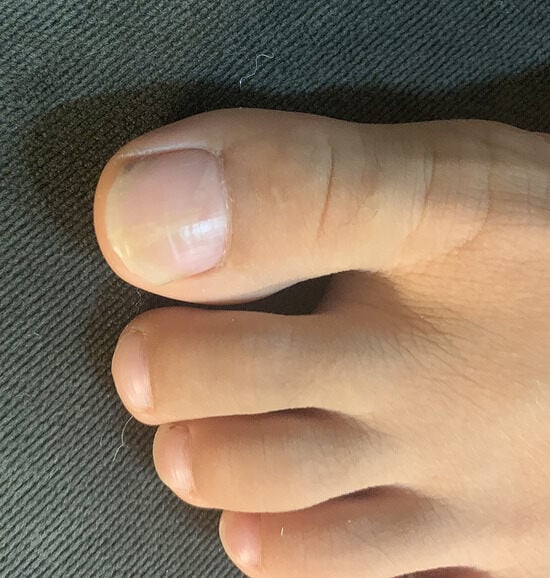
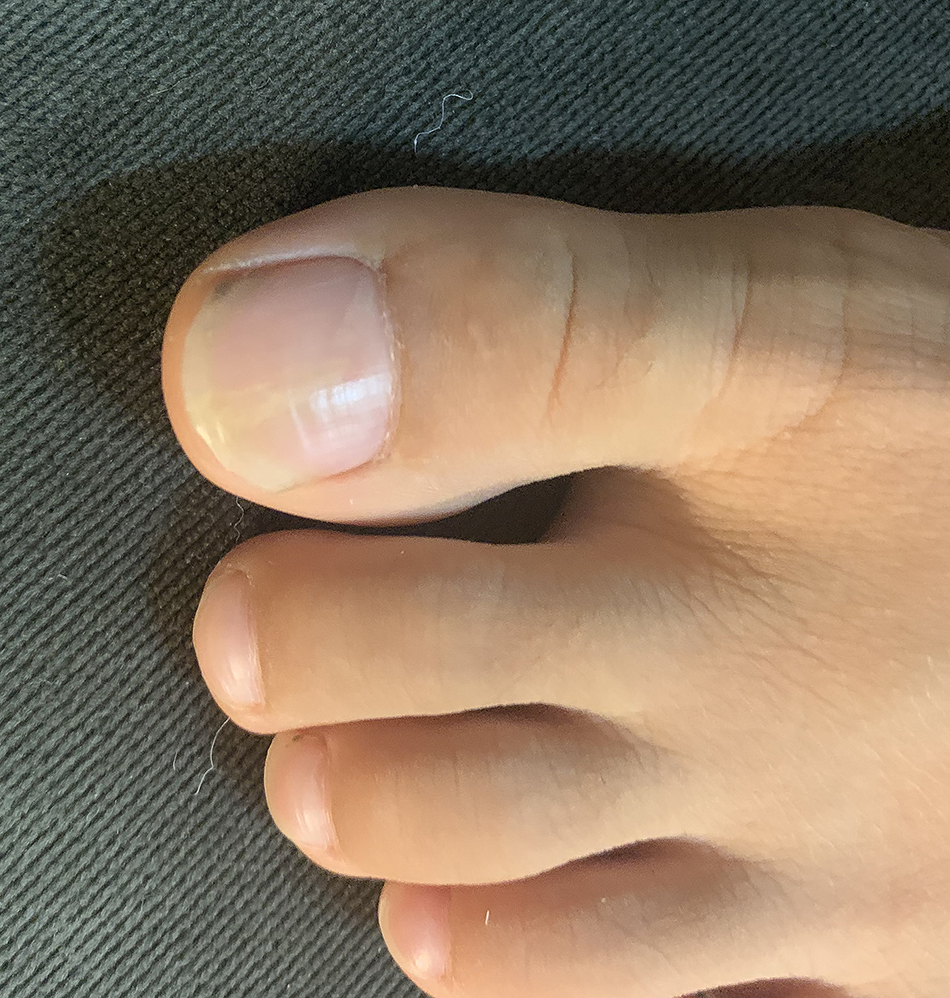
Figure 2.
One-year follow-up of left great toe after 3 months of topical timolol treatment showing resolution of the pyogenic granuloma and minimal nail deformity.
Discussion
In this communication, we describe the case of a young patient with a large nail-bed PG successfully treated with 3 months of topical timolol. Timolol maleate is a nonselective β-blocker that is available as an ophthalmic solution or a gel-forming solution. It acts by binding to β-adrenergic receptors to cause vasoconstriction, inhibit proangiogenic growth factors, and induce apoptosis of proliferating endothelial cells [11]. Timolol has a good safety profile and has been used topically to treat infantile hemangiomas without significant side effects [12]. Gupta et al [3]. monitored pulse, blood pressure, and blood glucose during treatment of cutaneous PGs with topical timolol and reported no local or systemic side effects. Although topical timolol has been used safely for over a decade, caution should be taken with use in patients diagnosed with bronchial asthma, severe chronic obstructive pulmonary disease, or severe cardiac disease [3].
Reports of PGs treated with timolol is limited, and there is no standardized treatment protocol. Protocols varied from using 0.5% or 2% timolol gel-forming solution two or three times per day under occlusion for 3 weeks to 6 months [5,9,10]. or using 0.5% timolol solution two or four times per day under occlusion for 3 days to 1 month [3,8]. We developed our protocol of two drops of 0.5% timolol maleate solution three times per day under occlusion for 3 months based on these reported protocols. Using this protocol, our patient immediately had resolution of bleeding, and by 2 months, the PG completely involuted, which followed a similar timeline as previous case reports [3,5]. Although complete resolution was seen in individual case reports [7,9,10]. and in our patient, in the case series by Gupta et al [3]. and Wine Lee et al, [5]. complete PG resolution occurred in only 40% to 57%, partial resolution occurred in 30% to 43%, and no resolution occurred in 0% to 30%. This variable response could be attributable to weak expression of β-adrenergic receptors on PGs [11].
As is typical with most nail-bed PG, the suspected cause of this patient’s pathology was repeated trauma to the toe. His symptoms of recurrent bleeding and parental distress because of home wound care are common among the pediatric population and highlight the unique challenges in treating these patients. The patient’s positive response to treatment with minimal nail deformity demonstrates the effectiveness of topical nonselective β-blockers in the treatment of PG and provides further evidence that surgical excision may be avoided. Although surgical treatment of PG has the lowest recurrence rate, the tradeoff is a scar. In addition, in the pediatric population, surgery typically involves the need for anesthesia, which most parents wish to avoid. This patient is a prime example of the decision making clinicians and parents must engage in when considering the tradeoff between scarring, discomfort, and lesion resolution. In addition, the patient could not tolerate nonsurgical therapy with silver nitrate despite topical anesthesia, which added a layer of complexity to treatment decision making. This experience is not uncommon in the pediatric population, as young children are often not amenable to cryotherapy, silver nitrate, or laser therapy because of pain [5].
Value-based health care is defined as “health outcomes relative to the total cost of care.” [13]. The use of topical β-blockers as a treatment for PG saves patients from discomfort and can reduce the total cost of care by decreasing charges associated with surgery or multiple laser sessions. Timolol is a widely available and inexpensive medication, and is often covered by insurance plans or can be found at a self-pay cost of $4 to $10. In our patient, the clinical outcome was successful, as the PG resolved and the patient avoided scarring and discomfort. This positive outcome, combined with the cost savings, makes topical β-blockers for nail-bed PG a high-value proposition. As we move toward care that places the patient first and considers economic costs, incorporating topical β-blockers into treatment considerations for PG may be of great benefit.
Conclusions
In conclusion, the treatment of PG in the pediatric population is challenging because of poor tolerance of some noninvasive treatments such as silver nitrate or cryotherapy, and parents often prefer to avoid the cost and risk of surgery. In addition, PG of the nail bed can be difficult to treat because of possible scarring leading to nail deformity, and the challenge of nail-bed reconstruction. Timolol is an inexpensive and relatively safe nonsurgical treatment for PG and should be considered as an option, especially in the pediatric population. Our case demonstrates successful treatment with topical timolol for a large nail-bed PG and a good cosmetic outcome.
Acknowledgments
Financial Disclosure: None reported.
Conflict of Interest: None reported.
References
- Plachouri KM, Georgiou S: Therapeutic approaches to pyogenic granuloma: an updated review. Int J Dermatol 58: 642, 2019.
- Piraccini BM, Bellavista S, Misciali C, ET AL: Periungual and subungual pyogenic granuloma. Br J Dermatol 163: 941, 2010.
- Gupta D, Singh N, Thappa DM: Is timolol an effective treatment for pyogenic granuloma? Int J Dermatol 55: 592, 2016.
- Mashiah J, Hadj-Rabia S, Slodownik D, ET AL: Effectiveness of topical propranolol 4% gel in the treatment of pyogenic granuloma in children. J Dermatol 46: 245, 2019.
- Wine Lee L, Goff KL, Lam JM, ET AL: Treatment of pediatric pyogenic granulomas using beta-adrenergic receptor antagonists. Pediatr Dermatol 31: 203, 2014.
- Piraccini BM, Alessandrini A, Dika E, ET AL: Topical propranolol 1% cream for pyogenic granulomas of the nail: open-label study in 10 patients. J Eur Acad Dermatol Venereol 30: 901, 2016.
- Khorsand K, Maier M, Brandling-Bennett HA: Pyogenic granuloma in a 5-month-old treated with topical timolol. Pediatr Dermatol 32: 150, 2015.
- Knopfel N, Escudero-Gongora MDM, Bauza A, ET AL: Timolol for the treatment of pyogenic granuloma (PG) in children. J Am Acad Dermatol 75: e105, 2016.
- Provvidenziale L, Russo F, Taddeucci P, ET AL: Treatment of childhood pyogenic granuloma of the nail bed with topical timolol. Dermatol Ther 33: e13710, 2020.
- Malik M, Murphy R: A pyogenic granuloma treated with topical timolol. Br J Dermatol 171: 1537, 2014.
- Chisholm KM, Chang KW, Truong MT, ET AL: Beta-adrenergic receptor expression in vascular tumors. Mod Pathol 25: 1446, 2012.
- Berk DR, Lehman PA, Franz TJ, ET AL: On topical timolol gel-forming solution for infantile hemangiomas. Pediatr Dermatol 30: 160, 2013.
- Porter ME, Teisberg EO: Redefining Health Care: Creating Value-Based Competition on Results, Harvard Business School Press, Boston, 2006.
© 2023 American Podiatric Medical Association