Next Article in Journal
Rock-Climbing Shoes: A Survey of Attitudes and Practices
Previous Article in Journal
Osteochondromas Around the Ankle
 
 
Journal of the American Podiatric Medical Association is published by MDPI from Volume 116 Issue 1 (2026). Previous articles were published by another publisher in Open Access under a CC-BY (or CC-BY-NC-ND) licence, and they are hosted by MDPI on mdpi.com as a courtesy and upon agreement with American Podiatric Medical Association.
Article

Comparative Acceptability of Weightbearing Physical Activity in Sporting Footwear Versus Barefoot in Habitually Shod Individuals

by
Christian A. Than
1,
Laura A. Seidl
1 and
Belinda R. Beck
2,3,*
1
The University of Queensland, School of Biomedical Sciences, Brisbane, Queensland, Australia
2
School of Health Sciences and Social Work, Menzies Health Institute Queensland, Gold Coast campus, Griffith University, QLD 4222, Australia
3
The Bone Clinic Pty Ltd, Queensland, Australia
*
Author to whom correspondence should be addressed.
J. Am. Podiatr. Med. Assoc. 2022, 112(3), 20148; https://doi.org/10.7547/20-148
Published: 1 May 2022

Abstract

Background: Perceived acceptability of barefoot use has largely been ignored in the literature despite its importance to long-term implementation and behavior change. This study aimed to compare the acceptability of undertaking weightbearing physical activities in regular running shoes versus barefoot in habitually shod individuals. Methods: Healthy young men and women were recruited from the Gold Coast. Participants completed six activities (ie, lunges, walking, jogging, sidestep, vertical jump, and hop) in shod and barefoot conditions then answered questions pertaining to level and source of discomfort, ease of performance, and acceptability. Indices of bone quality were measured from their dominant calcaneus by quantitative ultrasound. Results: Seventeen healthy male (n = 8) and female (n = 9) university students participated in the study (age, 26.59 ± 7.26 years; body mass index, 23.08 ± 3.58 kg/m2). Men were taller, heavier, and had higher broadband ultrasound attenuation than women (P < .05). For “no” discomfort, “very easy” ease of performance, and a “good amount” or “very good amount” of acceptability, the shod condition demonstrated response rates of 87.25%, 55.88%, and 72.55%, respectively. The barefoot condition demonstrated rates of those responses of 62.75%, 39.22%, and 48.03%, respectively, and reported more ball-of-foot, forefoot, heel, and plantar skin locations as sources of discomfort during activity than in the shod condition. The group vertical jump height was higher barefoot than shod (44.88 ± 8.44 cm and 43.25 ± 8.76 cm, respectively; P < .05), but no difference was seen for the hop. Men jumped and hopped higher than women under both footwear conditions (P < .05). Conclusions: Participants initiating barefoot weightbearing exercise may experience slightly greater discomfort and less ease of performance in the initial transition from the shod condition, but may perform better in vertical jump. Whether those differences in experience persist over the long term will require longitudinal studies.

Barefoot or minimal shoe conditions are considered by some to reduce injury and improve performance during running-related activity. Current literature attributes this effect to reduced joint loading rates, altered kinematics, and muscle activity patterns compared with standard running shoes [1]. In terms of injury mitigation, the alteration of landing strategies during barefoot running, by naturally encouraging forefoot or midfoot striking in comparison to rearfoot striking in the shod condition, has been suggested to reduce landing impact transients on the lower limb [2]. In addition, barefoot running strides are shortened, leading to higher stride frequencies and an overall decrease in ground contact time, which is thought to lessen lower extremity impact forces [3]. In terms of metabolic economy, studies are divided on which condition is more favorable. On the one hand, the damping material in standard running shoes, designed to promote comfort, is thought to decrease the storage and restitution of elastic energy during locomotion, resulting in lower net efficiency [4,5]. On the other hand, ultralightweight cushioned shod conditions may reduce the metabolic power required for submaximal treadmill running [6] and may thus provide metabolic savings of approximately 3% to 4% compared to the barefoot condition [7].
Although arguments for or against barefoot or minimal shoe use are varied, it is widely agreed that the adoption of a forefoot or midfoot strike pattern requires gradual introduction to accommodate physiologic adaptations to the altered loading [8]. In the absence of this transition, changes to minimal footwear may not be successful because of perceived discomfort, early difficulties in performance, or initial lack of enjoyment while training [9,10,11]. Although many have examined the biomechanical and physiologic differences between barefoot and shod conditions, perceived comfort, ease of performance, and acceptability or enjoyment of the barefoot condition have largely been ignored. The latter characteristics are nevertheless vital considerations of relevance to implementation and behavior change.
Furthermore, many studies primarily focus on running as the standard of experimental measurement when comparing barefoot and shod conditions. However, much human locomotion involves movement beyond simple linear planes. In fact, perceived acceptability may also factor in footwear choice in other forms of weightbearing loading, such as plyometric, ballistic, and lateral movements [12]. Vertical jump and hop tests can also be used as valid and reliable tests to quantify performance in different footwear conditions [12,13].
The aim of the current study was to compare perceived discomfort, ease of performance, and overall acceptability of habitually shod individuals when performing a variety of activities typically encountered in the course of a range of weightbearing physical activities, under shod and barefoot conditions. Qualitatively, it was hypothesized that the barefoot condition would be perceived to be less comfortable, more difficult to perform in, and generally less acceptable than the shod condition. Quantitatively, it was hypothesized that the barefoot condition would produce better performance in the vertical jump and unilateral hop activities than the shod condition.

Methods

Ethical Approval

Approval for the study was obtained from the Griffith University Human Research Ethics Committee. Written informed consent was obtained from each participant. All procedures were conducted in accordance with the ethical standards of the Griffith University Human Research Ethics Committee and with the 1964 Declaration of Helsinki and amendments.

Participants

Healthy male (n = 8) and female (n = 9) university students (age, 26.59 ± 7.26 years; body mass index, 23.08 ± 3.58 kg/m2) were recruited from the Griffith University Gold Coast campus by word of mouth and through the Griffith University group Facebook page. Participants were eligible if they were older than 18 years, able to consent independently, and recreationally active at least three times weekly under the shod condition in any physical activity of their choice. Volunteers were excluded if they were pregnant, had impaired balance, had a contagious skin condition of the feet (eg, athlete’s foot), had suffered from any condition that would prevent them from completing a number of jumps without pain or exacerbating a previous injury (eg, recent or existing back or lower limb injuries), or had trained barefoot within the previous 3 months.

Measures

All testing procedures were performed in the Griffith University Bone Densitometry Research Laboratory or adjacent corridor on a firm and smooth carpet-tiled floor free from obstructions and sufficient ceiling height to conduct vertical jumps.

Anthropometrics.

Standard procedures were used to measure anthropometrics. Height was measured using a wall-mounted stadiometer (Model 216; Seca, Hamburg, Germany). Weight was measured using a mechanical beam scale (Model 700; Seca). Length of the dominant foot was measured using a foot anthropometer (Ritz stick; Acor Orthopaedic, Inc, Cleveland Ohio). The dominant limb was defined as the leg preferred to kick a ball [14].

Bone Health.

As a marker of musculoskeletal health, to determine whether our participants fell in the normal range of bone quality for their age, quantitative ultrasound was used to measure speed of sound, broadband ultrasound attenuation, and stiffness of the dominant calcaneus (Lunar Achilles Insight; GE Healthcare, Milwaukee, Wisconsin). The standard automated measurement procedure was applied using manufacturer specifications with the participant in the seated position.

Qualitative Response.

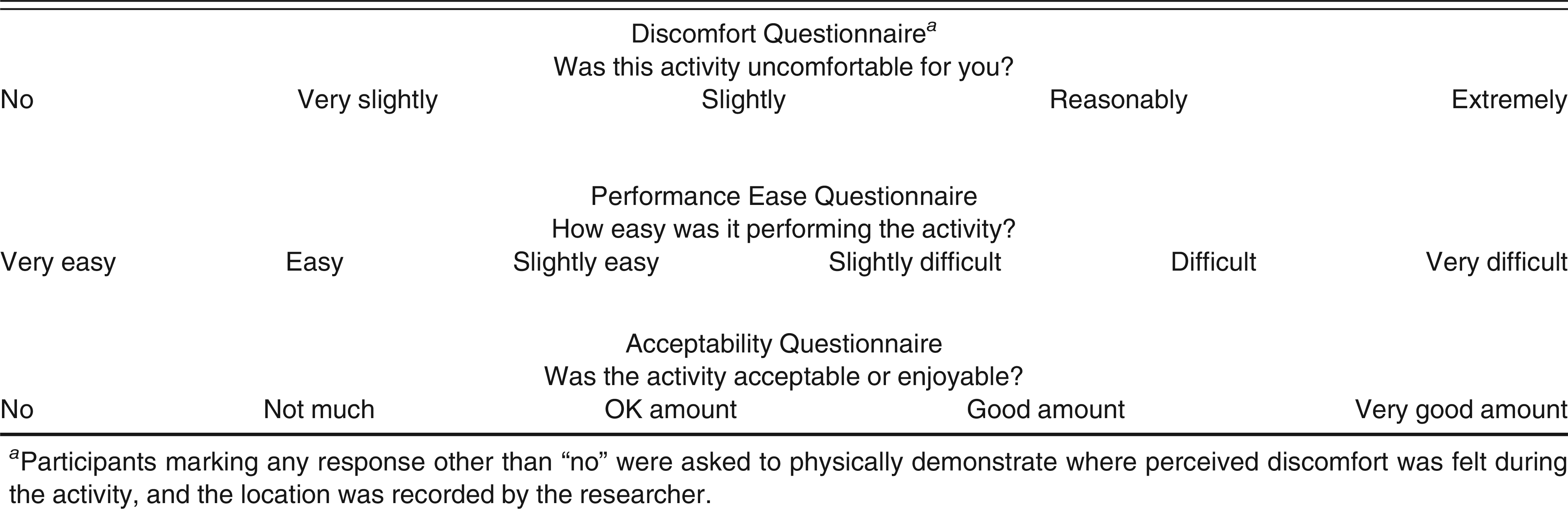
All data and questionnaire answers were recorded on an iPad using LimeSurvey (Production Environment V1.9x). Participants entered their date of birth, sports shoe type, reasons for shoe choice, and how long they had used the shoes, then provided scores related to discomfort, ease, and acceptability during six activities. Qualitative responses were scored on five- or six-point Likert scales, depending on the number of potential responses to each question (Table 1). Likert scales were selected over the traditional visual analog scale because of comparable reliability and ease of completion [15]. Six activities were completed in both shod and barefoot conditions. Order of conditions (shod or barefoot) was assigned randomly for each activity using a random number generator (Microsoft Excel; Microsoft Corp, Redmond, Washington); however, the order of activities was the same for all participants. Activities were intentionally ordered from least to most impactful (lunge, walk, jog, sidestep, vertical jump, and unilateral hop), to eliminate potential disparity in effect of a previous activity on responses to subsequent activities. Immediately after each activity, participants ranked discomfort (including region of discomfort), ease of performance, and acceptability.
Table 1. Qualitative Questionnaires
Japma 112 20148 g007

Exercises

The protocol involved two experimental conditions: shod (participants’ own running shoes) and barefoot. Standard running shoes (including a midsole minimum of 1 cm) to which the participant was accustomed were required. Flat-soled court shoe designs (eg, basketball shoes) or minimal shoes were not acceptable. The forward lunge was performed three times on each leg at a comfortable speed, with participants reaching a position of 90° at the hip and knee joints from a standing position before standing back up. A single 50-m walk was completed at usual walking speed in a straight line between two marked points. A single 50-m jog was completed at usual jogging speed in a straight line between two marked points. The 50-m sidestep was completed twice at a comfortable pace; once leading with the dominant side and once leading with the nondominant side. A standard vertical jump test was performed using Yardstick (Swift Performance; Wacol, Queensland, Australia), and the distance between the highest point reached in the standing position and jump height recorded. Dominant limb hop height was also measured using Yardstick in the same manner as for the vertical jump, with the nondominant limb off the ground at all times. Three trials each of the vertical jump and hop were performed, and scores were averaged for each activity.

Statistical Analysis

Sex differences in physical characteristics were examined using unpaired t test comparisons. Combined sex analyses of shod versus barefoot condition for the vertical jump and unilateral hop were examined using paired t test comparisons. A two-way analysis of variance was performed with Tukey’s post hoc testing to examine the effect of sex and footwear on vertical jump and hop height. All statistical analyses were performed in GraphPad Prism 8 (GraphPad Software, Inc, La Jolla, California). Significance was accepted as P < .05.

Results

Physical Characteristics

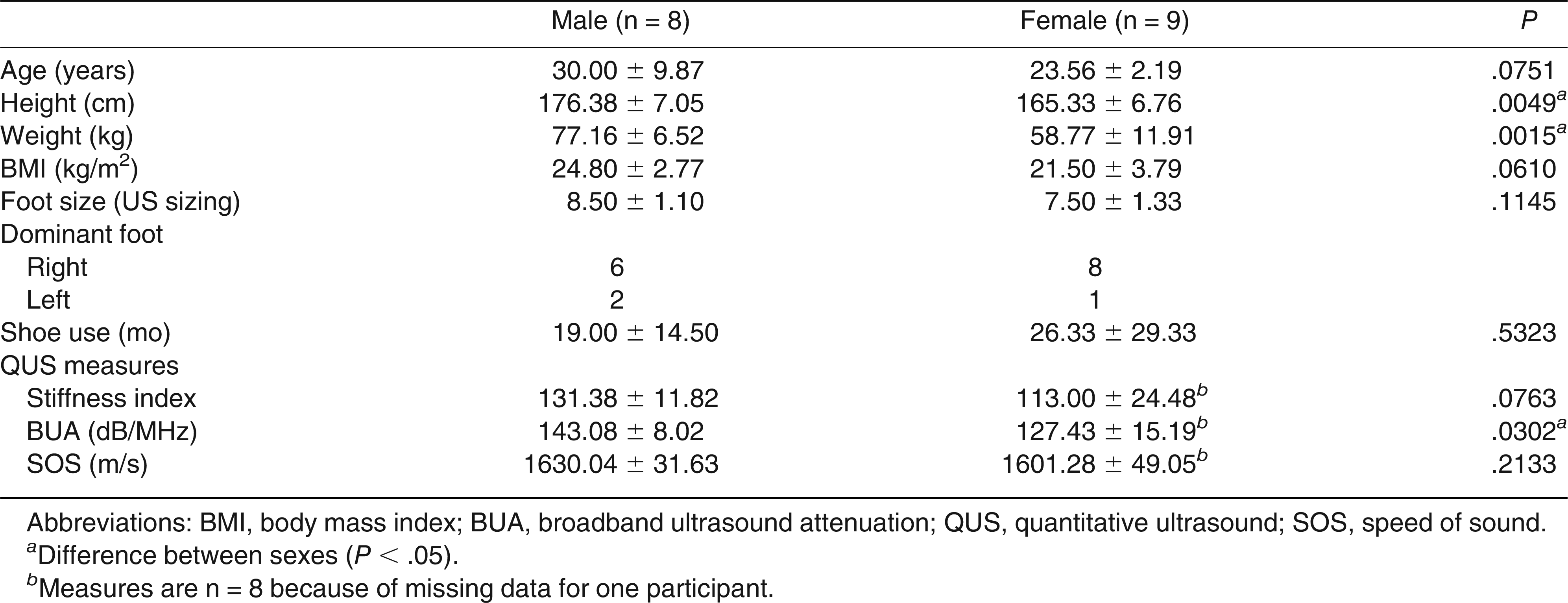
Table 2 presents participant physical characteristics. Men were taller and heavier, and had higher broadband ultrasound attenuation than women (P < .05). All other measures were comparable between sexes (P > .05). Quantitative ultrasound measures were indicative of normal bone quality as an index of average musculoskeletal status of the sample [16,17] (Table 2).
Table 2. Participant Characteristics
Japma 112 20148 g008

Footwear

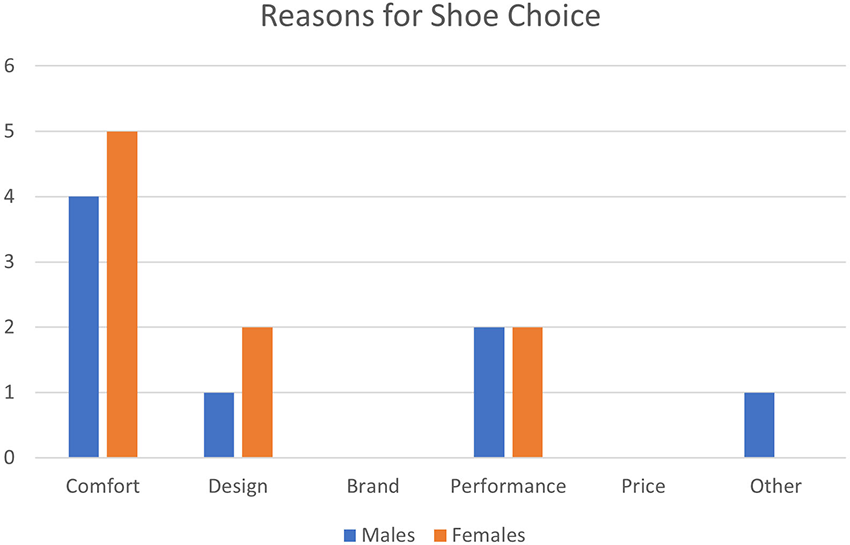
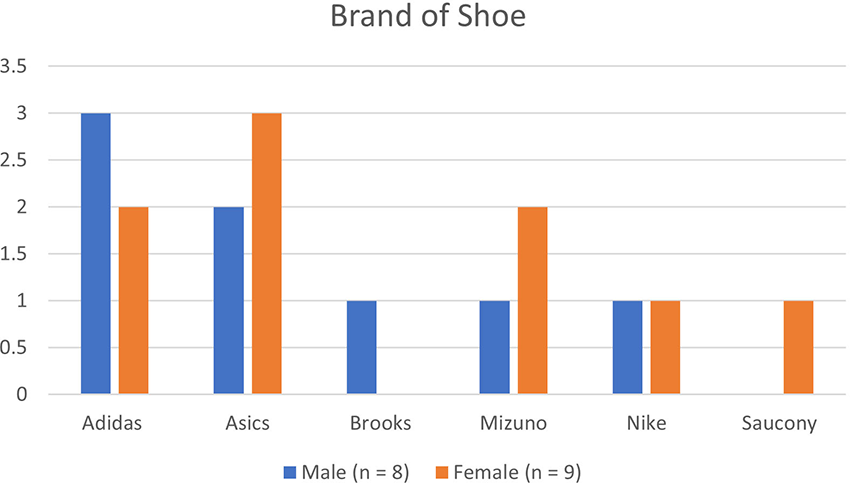
Just over half of participants chose comfort as the reason for footwear choice (52.95%), with the second highest reason being performance (23.52%) (Fig. 1). Adidas (Herzogenaurach, Germany) and Asics (Kobe, Japan) were the most common shoe brands (29.41% and 29.41%, respectively) (Fig. 2). No minimal shoes were worn by any participant, and all shoes had at least 1 cm of midsole thickness.
Figure 1. Reasons for shoe choice.
Japma 112 20148 g001
Figure 2. Brand of shoe.
Japma 112 20148 g002

Responses to Questionnaires

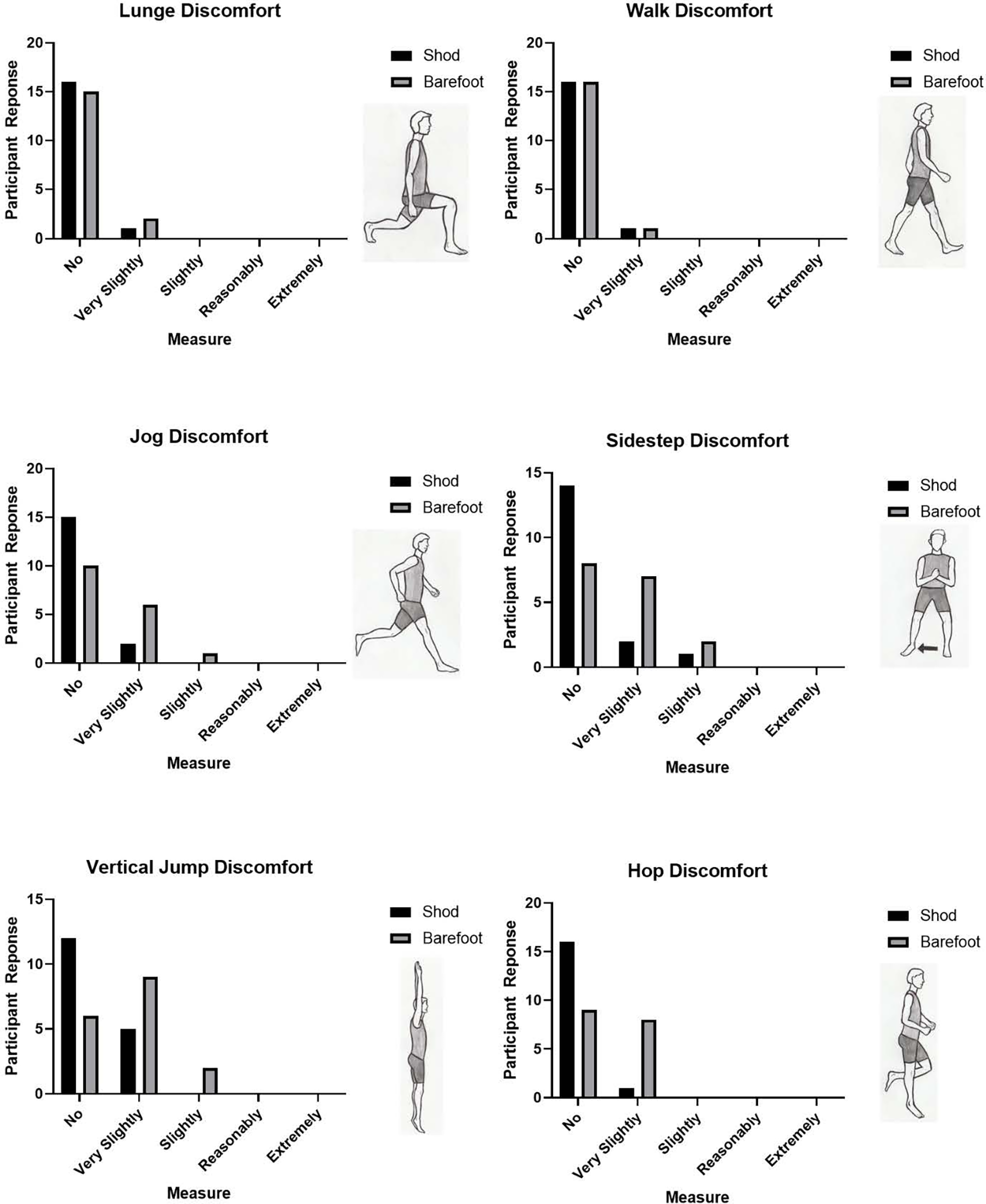
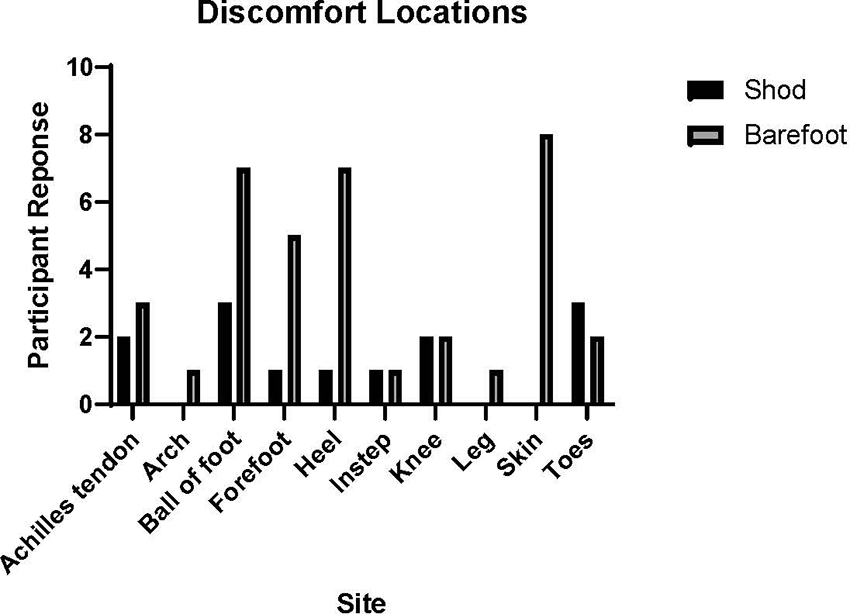
Under shod conditions, no discomfort was reported for 87.25% of activities, 11.76% of activities were associated “very slightly” with discomfort, and 0.98% were reported as “slightly” uncomfortable (Fig. 3). Under barefoot conditions, no discomfort was reported for 62.75% of activities, 32.35% were associated “very slightly” with discomfort, and 4.90% reported “slightly” (Fig. 3). There were 13 total reports of discomfort in the shod condition, and 37 total reports of discomfort in the barefoot condition (Fig. 4). Barefoot conditions caused greater discomfort at the Achilles tendon, arch, ball of foot, forefoot, heel, leg, and skin than shod conditions. Shod conditions caused greater discomfort at the toes. There were no differences between conditions for instep and knee discomfort (Fig. 4).
Figure 3. Discomfort. Participants were asked to rate their perception of discomfort while completing an activity under shod and barefoot conditions.
Japma 112 20148 g003
Figure 4. Discomfort location totals. Reporting total for each site of discomfort experienced while completing an activity under shod and barefoot conditions. Achilles tendon: calcaneal tendon. Arch: tarsal and metatarsals on the plantar side. Ball of foot: plantar side of metatarsophalangeal joints. Forefoot: metatarsals and phalanges on both dorsal and plantar sides. Heel: plantar surface of posterior calcaneus. Instep: dorsum of foot proximal to phalanges. Knee: joint between femur and tibia. Leg: between knee and ankle joints. Skin: superficial plantar surface of foot. Toes: phalanges only.
Japma 112 20148 g004
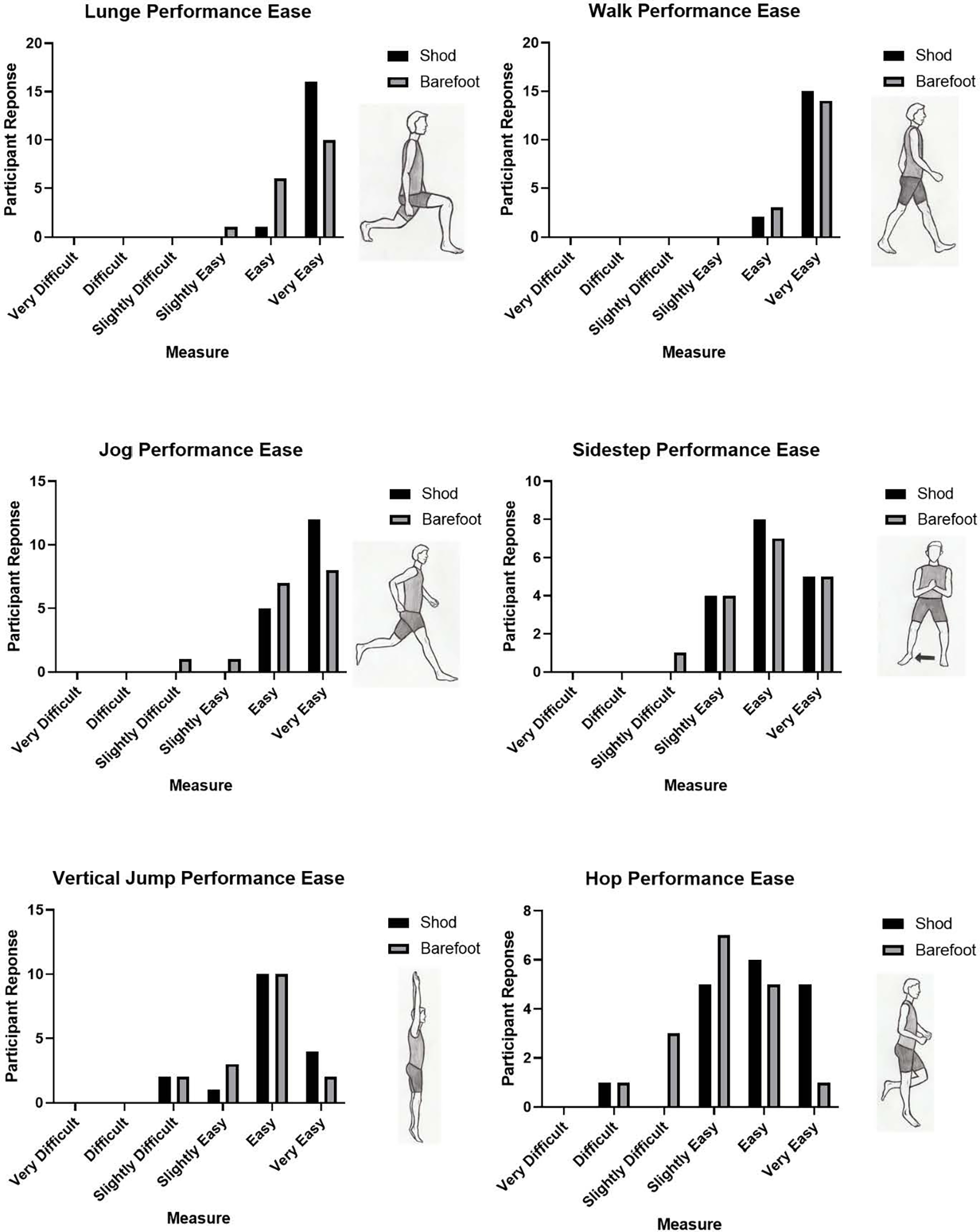
Under shod conditions, ease of performance during activity was reported as “very easy” in 55.88% of activities, “easy” in 31.37% of activities, “slightly easy” in 9.80% of activities, “slightly difficult” in 1.96% of activities, and “difficult” in 0.98% of activities (Fig. 5). Under barefoot conditions, ease of performance during activity was reported as “very easy” in 39.22% of activities, “easy” in 37.25% of activities, “slightly easy” in 15.69% activities, “slightly difficult” in 6.86% of activities, and “difficult” in 0.98% of activities (Fig. 5).
Figure 5. Ease of performance. Participants were asked to rate their perception of how easy it was to complete a task under shod and barefoot conditions.
Japma 112 20148 g005
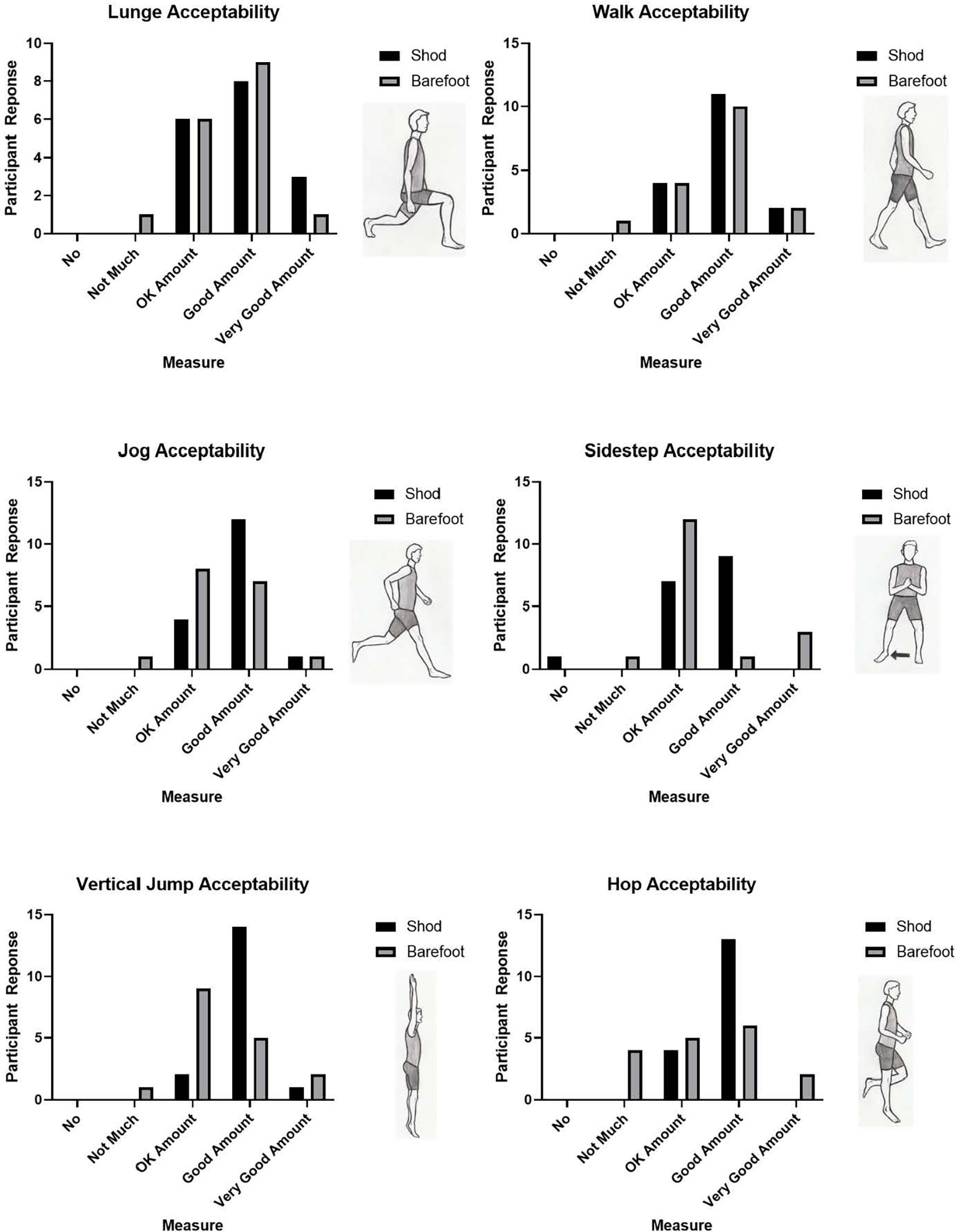
Under shod conditions, acceptability during activity was reported as a “very good amount” in 6.86% of activities, a “good amount” in 65.69% of activities, an “OK amount” in 26.47% of activities, and “no” acceptability in 0.98% of activities (Fig. 6). Under barefoot conditions, acceptability during activity was reported as a “very good amount” in 10.78% of activities, a “good amount” in 37.25% of activities, an “OK amount” in 43.14% of activities, and “not much” acceptability in 8.82% of activities (Fig. 6).
Figure 6. Acceptability. Participants were asked to rate their perception of how much they found a task to be acceptable or enjoyable under shod and barefoot conditions.
Japma 112 20148 g006

Vertical Jump and Hop

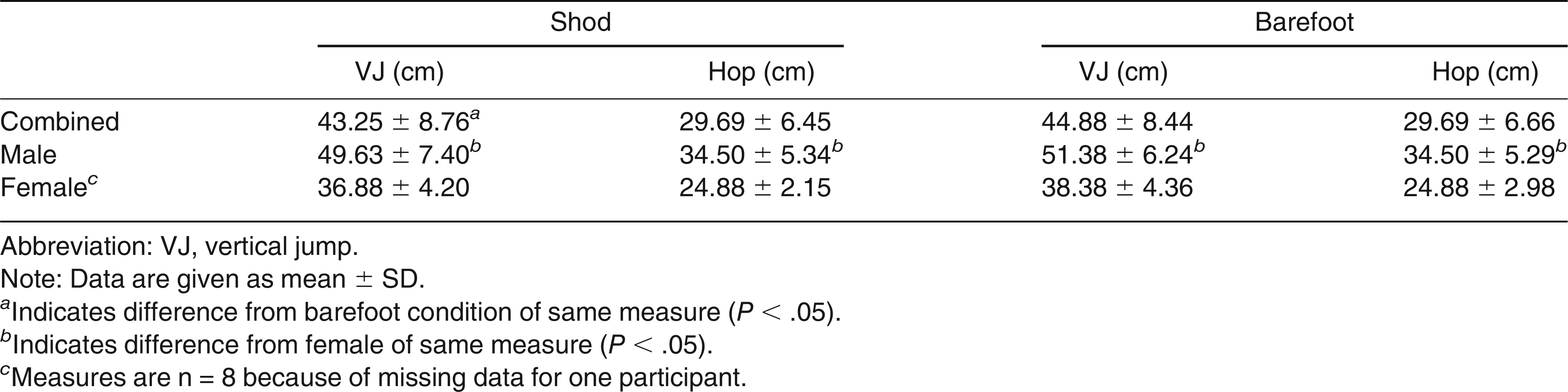
Vertical jump height was higher in the barefoot condition than shod in the combined sex analysis (P = .0120). Men vertically jumped higher in both shod (P = .0016) and barefoot (P = .0012) conditions than women (Table 3). There was no difference in hop height between the shod or barefoot conditions in (P > .05) in the combined sex analysis. However, men hopped higher in both shod (P = .0010) and barefoot (P = 0.0010) conditions than women (Table 3).
Table 3. Vertical Jump and Hop Height
Japma 112 20148 g009

Discussion

The purpose of the current study was to compare acute perceived discomfort, ease of performance, and acceptability during weightbearing physical activities in shod and barefoot conditions of healthy young adults naive to barefoot exercise. A trend of preference for the shod condition over barefoot was apparent in all qualitative criteria; however, vertical jump height was greater in the barefoot condition.
The higher percentage of “no” discomfort under shod conditions (87.25%), compared to barefoot (62.75%), was in accord with the study hypothesis that participants would find the shod condition to be more comfortable. This was also expected because just over half of the study’s habitually shod participants declared that shoe comfort was their deciding factor when purchasing footwear. High-impact movements, such as those tested in the current study, expose the skeleton to stress during foot-to-ground impacts and shock waves that pass through the body from heel to head [18]. Running shoes mitigate shock by incorporating cushioning (dampening material) within their design [5]. By absorbing some of the force that would otherwise be transferred to bones and joints [18,19], running shoes appear to provide greater comfort through the reduction of ground reaction forces (GRFs) on the body [2]. By contrast, barefoot conditions would not attenuate GRFs on the skeleton and joints, and the impact appears to be more uncomfortable than landing in shoes to habitually shod individuals. This observation is perhaps highly intuitive; however, it has also been suggested that regular use of running shoes with arch supports and shock-attenuating soles may weaken intrinsic foot muscles and arch strength [2]. The degeneration of these “anatomical shock absorbers” will prevent the body’s natural ability to attenuate GRFs and likely lead to greater perceived discomfort than if the feet were more conditioned to barefoot loading [20]. However, this has been a point of contention in recent years, as one study has observed increased activation from the intrinsic muscles of the longitudinal arch under shod conditions [21]. In addition, shoe type has recently been shown to have a marked effect on foot morphology [22]. As such, further longitudinal studies are required to clarify whether there is a discernible decrease, or increase, in intrinsic foot muscle size and strength under shod and barefoot conditions and whether this contributes to discomfort.
Participants reported a greater number of sites of discomfort during physical activity under barefoot conditions than shod. As barefoot running is characterized by forefoot or midfoot strikes compared with more frequent heel strikes during shod running [2,5], it is not unexpected that more discomfort would be perceived in the region of the metatarsals, phalanges, and metatarsophalangeal joints than when shod [8]. The landing of a barefoot heel has been shown to result in very high vertical ground reaction load rates that exceed those of shod heel striking [2,23] and may explain the greater reporting of barefoot heel discomfort in the current study, as also observed by others [8]. In terms of skin discomfort, barefoot loading has the logical disadvantage of exposing the plantar surface of the foot to direct contact with the landing surface. This creates vulnerabilities to cuts, bruises, and abrasions, in addition to potential friction that could elicit discomfort. However, the foot possesses sensory input to provoke avoidance responses, by means of rapid hip flexion, to unexpected stimuli as a safety mechanism [24]. In addition, the plantar surface of the foot requires greater abrading loads to reach the pain threshold than other skin surfaces [25]. The caveat is that the body requires an estimated 6-week period to acclimate these plantar skin sensations [26], which the habitually shod participants within the current study would not have had.
A higher percentage of “very easy” responses were recorded for performance evaluations in the shod condition (55.88%), than in the barefoot condition (39.22%), indicating that participants find the latter generally more difficult to perform in. This could again be attributed to the removal of arch supports and stiffened soles that the shod condition provided, forcing greater exertion from intrinsic foot and extrinsic leg muscles beyond familiar thresholds [2,20]. Furthermore, the unfamiliar biomechanics and plantar skin sensations, which the habitually shod individuals experienced under the barefoot condition, could also have contributed to greater perceived difficulty [5,26].
For acceptability, a higher combined percentage of a “very good amount” and a “good amount” for shod (6.86% and 65.69%, respectively), compared to the barefoot condition (10.78% and 37.25%, respectively), demonstrated the barefoot condition to be less acceptable. Acceptability, which defines willingness to perform a task and its tolerability, hinges on the perception of enjoyment experienced [27]. Therefore, the higher levels of discomfort and difficulty in performance in the barefoot condition would rationally equate to less enjoyment, and thus acceptability, when compared to the shod condition.
Despite general preference for the shod condition, participants performed better when barefoot during the quantitatively measured vertical jump, as others have also observed [12]. This could be attributed to the presence of cushioned midsoles within the shod condition, which are found in most commercial footwear [28]. The force dispersion into shoe cushioning preventing direct application to the ground, would likely reduce velocity, power, and jump height [12]. Curiously, hop height was not affected by footwear. This could be attributed to the greater push off force in bilateral vertical jumping [29], meaning potentially greater total force is lost to cushioning dispersion in jumping than hopping such that a difference is detectable between shod and barefoot performance. Greater participant numbers would also improve statistical power to detect an effect in the hop test. The greater vertical jump and hop in men than in women, under both footwear conditions, was expected and likely related to usual sex differences in jumping and landing mechanics, leg strength, and force and power production [30,31].
It should be noted that differing shoe constructs affect physical performance and perceived comfort [28]. Lack of standardization of athletic footwear used while shod within the current study could have skewed the results, depending on the shoe worn, and is undoubtedly a limitation. However, controlling individual shoe construct was beyond the scope of the current work, which was to simply investigate the acceptability of activities in the barefoot condition in those who are naive to it, compared to sports shoes they were habituated to.
Affective responses have an impact on motivation and behavior, with the amount of time spent in a specific situation predicted by the affect experienced in that situation [32]. Activities that cause “good” feelings are more likely to facilitate future participation, whereas those that do not more likely to lead to withdrawal from the activity [32]. For those motivated to adopt the barefoot condition, whether for performance or injury-prevention reasons, the current study provides evidence that the initial period of transition will likely involve a greater degree of discomfort than the familiar shod condition. Nevertheless, after a period of acclimatization, it is possible that those initial perceptions will dissipate as the body develops shock-attenuating strategies during loading and the foot anatomy adapts and strengthens, both of which may motivate sustained uptake [8,10,26,33]. Longitudinal studies are required to support or reject this notion.

Conclusions

The current study demonstrates that habitually shod individuals will likely find the barefoot condition to be more uncomfortable, more difficult to perform in, and less acceptable for weightbearing physical activity in the short term. However, the barefoot condition promotes quantifiable improvements in performance for forceful propulsion activities such as the vertical jump. Individuals looking to adopt the barefoot condition for athletic pursuits should expect and plan for a period of transition to accommodate to the discomfort associated with impact loading that differs from the shod condition.
Acknowledgement: Yukako Omura for substantial contributions to the data acquisition, preliminary statistical analyses, and write-up of the project.
Conflict of Interest: None reported.
Financial Disclosure: None reported.

References

  1. HALL, JP; BARTON, C; JONES, PR; et al. The biomechanical differences between barefoot and shod distance running: a systematic review and preliminary meta-analysis. Sports Med 2012, 43, 1335. [Google Scholar] [CrossRef]
  2. LIEBERMAN, DE; VENKADESAN, M; WERBEL, WA; et al. Foot strike patterns and collision forces in habitually barefoot versus shod runners. Nature 2010, 463, 531. [Google Scholar] [CrossRef]
  3. DIVERT, C; MORNIEUX, G; BAUR, H; et al. Mechanical comparison of barefoot and shod running. Int J Sports Med 2005, 26, 593. [Google Scholar] [CrossRef]
  4. DIVERT, C; MORNIEUX, G; FREYCHAT, P; et al. Barefoot-shod running differences: shoe or mass effect? Int J Sports Med 2008, 29, 512. [Google Scholar] [CrossRef]
  5. WANG, IL; GRAHAM, RB; BOURDON, EJP; et al. Biomechanical analysis of running foot strike in shoes of different mass. J Sports Sci Med 2020, 19, 130. [Google Scholar] [PubMed]
  6. TUNG, KD; FRANZ, JR; KRAM, R. A test of the metabolic cost of cushioning hypothesis during unshod and shod running. Med Sci Sports Exerc 2014, 46, 324. [Google Scholar] [CrossRef]
  7. FRANZ, JR; WIERZBINSKI, CM; KRAM, R. Metabolic cost of running barefoot versus shod: is lighter better? Med Sci Sports Exerc 2012, 44, 1519. [Google Scholar] [CrossRef]
  8. ALTMAN, AR; DAVIS, IS. Barefoot running: biomechanics and implications for running injuries. Curr Sports Med Rep 2012, 11, 244. [Google Scholar] [CrossRef]
  9. KENDZIERSKI, D; DECARLO, KJ. Physical activity enjoyment scale: two validation studies. J Sport Exerc Psychol 1991, 13, 50. [Google Scholar] [CrossRef]
  10. RIXE, JA; GALLO, RA; SILVIS, ML. The barefoot debate: can minimalist shoes reduce running-related injuries? Curr Sports Med Rep 2012, 11, 160. [Google Scholar] [CrossRef] [PubMed]
  11. HRYVNIAK, D; DICHARRY, J; WILDER, R. Barefoot running survey: evidence from the field. J Sport Health Sci 2014, 3, 131. [Google Scholar] [CrossRef]
  12. LAPORTA, JW; BROWN, LE; COBURN, JW; et al. Effects of different footwear on vertical jump and landing parameters. J Strength Cond Res 2013, 27, 733. [Google Scholar] [CrossRef] [PubMed]
  13. BANDY, WD; RUSCHE, KR; TEKULVE, FY. Reliability and limb symmetry for five unilateral functional tests of the lower extremities. Isokinet Exerc Sci 1994, 4, 108. [Google Scholar] [CrossRef]
  14. RIEMANN, BL; SCHMITZ, R. The relationship between various modes of single leg postural control assessment. Int J Sports Phys Ther 2012, 7, 257. [Google Scholar]
  15. VAN LAERHOVEN, H; VAN DER ZAAG-LOONEN, HJ; DERKX, BHF. A comparison of Likert scale and visual analogue scales as response options in children’s questionnaires. Acta Paediatr 2004, 93, 830. [Google Scholar] [CrossRef]
  16. WELCH, A; CAMUS, J; DALZELL, N; et al. Broadband ultrasound attenuation (BUA) of the heel bone and its correlates in men and women in the EPIC-Norfolk cohort: a cross-sectional population-based study. Osteoporos Int 2004, 15, 217. [Google Scholar] [CrossRef]
  17. LARA, B; SALINERO, JJ; GUTIÉRREZ, J; et al. Influence of endurance running on calcaneal bone stiffness in male and female runners. Eur J Appl Physiol 2016, 116, 327. [Google Scholar] [CrossRef] [PubMed]
  18. BRAMBLE, DM; LIEBERMAN, DE. Endurance running and the evolution of Homo. Nature 2004, 432, 345. [Google Scholar] [CrossRef]
  19. LOGAN, S; HUNTER, I; TY HOPKINS, JTJ; et al. Ground reaction force differences between running shoes, racing flats, and distance spikes in runners. J Sports Sci Med 2010, 9, 147. [Google Scholar]
  20. WHITMAN, R. The classic: a study of the weak foot, with reference to its causes, its diagnosis, and its cure; with an analysis of a thousand cases of so-called flat-foot. 1896. Clin Orthop Relat Res 2010, 468, 925. [Google Scholar] [CrossRef]
  21. KELLY, LA; LICHTWARK, GA; FARRIS, DJ; et al. Shoes alter the spring-like function of the human foot during running. J R Soc Interface 2016, 13, 20160174. [Google Scholar] [CrossRef] [PubMed]
  22. ZHANG, X; DELABASTITA, T; LISSENS, J; et al. The morphology of foot soft tissues is associated with running shoe type in healthy recreational runners. J Sci Med Sport 2018, 21, 686. [Google Scholar] [CrossRef]
  23. DE WIT, B; DE CLERCQ, D; AERTS, P. Biomechanical analysis of the stance phase during barefoot and shod running. J Biomech 2000, 33, 269. [Google Scholar] [CrossRef]
  24. ROBBINS, SE; HANNA, AM; GOUW, GJ. Overload protection: avoidance response to heavy plantar surface loading. Med Sci Sports Exerc 1988, 20, 85. [Google Scholar] [CrossRef]
  25. ROBBINS, S; GOUW, GJ; MCCLARAN, J; et al. Protective sensation of the plantar aspect of the foot. Foot Ankle 1993, 14, 347. [Google Scholar] [CrossRef]
  26. JENKINS, DW; CAUTHON, DJ. Barefoot running claims and controversies: a review of the literature. JAPMA 2011, 101, 231. [Google Scholar] [CrossRef] [PubMed]
  27. DEVEREUX-FITZGERALD, A; POWELL, R; DEWHURST, A; et al. The acceptability of physical activity interventions to older adults: a systematic review and meta-synthesis. Soc Sci Med 2016, 158, 14. [Google Scholar] [CrossRef] [PubMed]
  28. SUN, X; LAM, WK; ZHANG, X; et al. Systematic review of the role of wootwear constructions in running biomechanics: implications for running-related injury and performance. J Sports Sci Med 2020, 19, 20. [Google Scholar]
  29. SAMOZINO P, REJC E, DI PRAMPERO PE; et al. Force-velocity properties’ contribution to bilateral deficit during ballistic push-off. Med Sci Sports Exerc 2014, 46, 107. [Google Scholar] [CrossRef]
  30. MAYHEW, JL; SALM, PC. Gender differences in anaerobic power tests. Eur J Appl Physiol Occup Physiol 1990, 60, 133. [Google Scholar] [CrossRef]
  31. SAM, KL. Valgus knee angle during drop landing in female and male physical education major undergraduate students. Asian J Phys Educ Recreat 2010, 16, 65. [Google Scholar] [CrossRef]
  32. PARFITT, G; ROSE, EA; BURGESS, WM. The psychological and physiological responses of sedentary individuals to prescribed and preferred intensity exercise. Br J Health Psychol 2006, 11, 39. [Google Scholar] [CrossRef] [PubMed]
  33. DA SILVA AZEVEDO, DA; MÊZNCIO, B; AMADIO, AC; et al. 16 weeks of progressive barefoot running training changes impact force and muscle activation in habitual shod runners. PLoS One 2006, 11, e0167234. [Google Scholar]