Metatarsus adductus or forefoot adduction represents one of the most common residual deformities after the Ponseti treatment of congenital clubfoot; however, insufficient documentation is available in the literature regarding its early detection and late recurrence.[
1,
2,
3] Therefore, the differentiation between residual and relapsed deformity is not always straightforward for treating physicians. Although many reasons (eg, casting techniques, noncompliance with the bracing protocol, and genetic and neuromuscular factors) have been proposed to explain why this deformity relapses, the underlying mechanism has not been clearly understood.[
4,
5] Many authors have recently highlighted the role of muscle strength imbalance, which arises from strong supinator activity of tibialis anterior muscle against its poor antagonist, in the development of recurrent clubfoot.[
6,
7,
8,
9] Nevertheless, to our knowledge, this possible underlying mechanism behind recurrences has not been investigated sufficiently to date.
Previous studies dealing with residual muscle imbalance in the development of recurrent clubfoot have predominantly focused on the imbalance between invertor and evertor muscles.[
6,
7,
8,
9] Nonetheless, gait perturbations including increased ankle dorsiflexion angle and decreased plantarflexion strength have been reported in children with clubfeet treated by the Ponseti method.[
10,
11,
12] We considered that these impaired functional results may depend on Achilles tendon elongation following the Ponseti method. Moreover, differently from the previous studies,[
6,
7,
8,
9] we surmised that decreased plantarflexion strength secondary to Achilles tendon elongation following the Ponseti method may be a contributor to muscle imbalance and the development of metatarsus adductus deformity in recurrent clubfoot.
The aim of this study was to explore whether there is an increase in Achilles tendon length and a corresponding decrease in plantarflexion strength following the Ponseti method in children with recurrent metatarsus adductus deformity. We hypothesized that decreased plantarflexion strength secondary to Achilles tendon elongation following the Ponseti method would be a contributor to muscle strength imbalance in clubfeet with recurrent metatarsus adductus deformity.
Patients and Methods
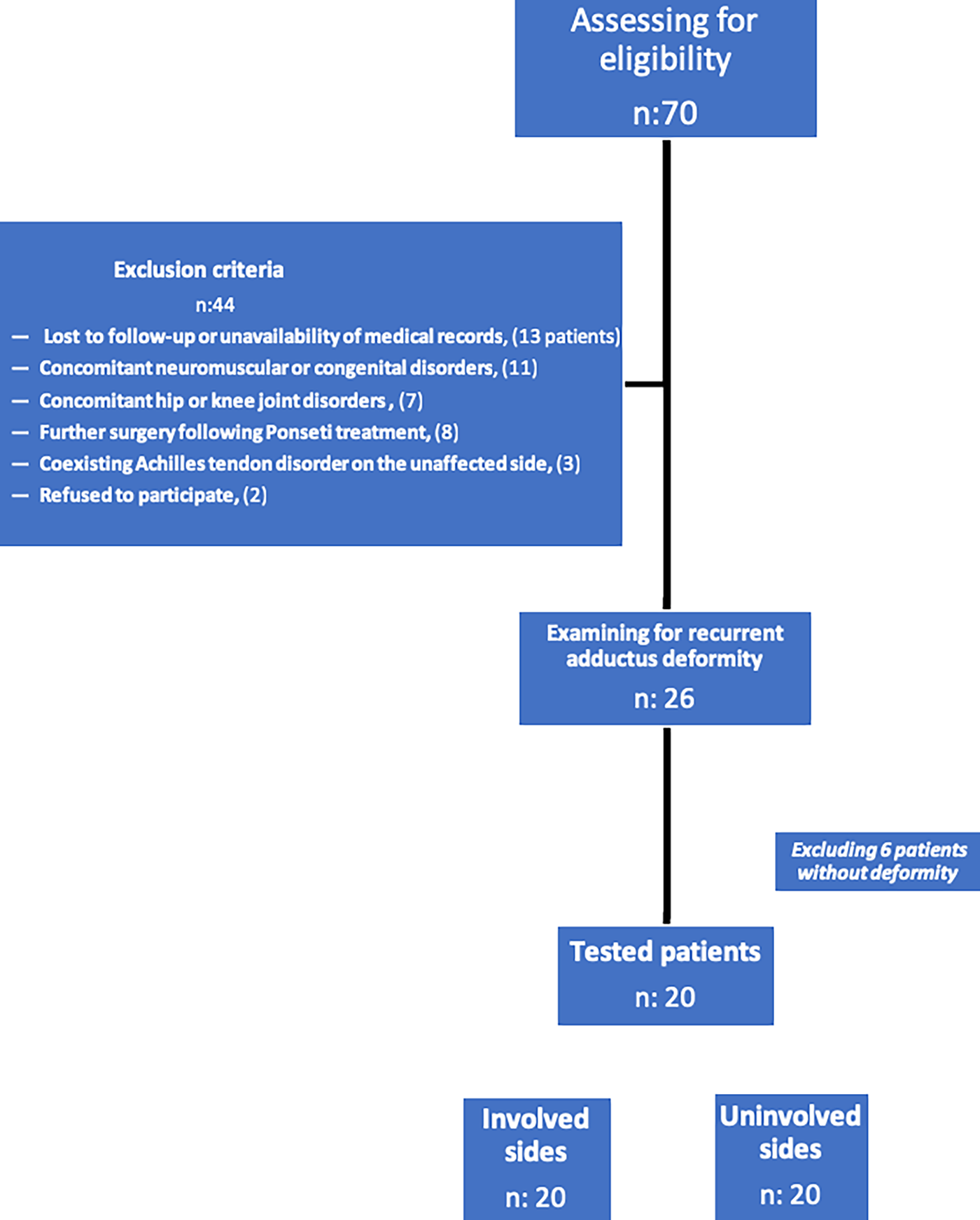
Following institutional review board approval, we retrospectively reviewed the medical records of 70 patients who were diagnosed and treated according to the Ponseti method for unilateral congenital clubfoot deformity between 2005 and 2010 at our institution. After 44 patients were excluded because of not meeting the eligibility criteria (
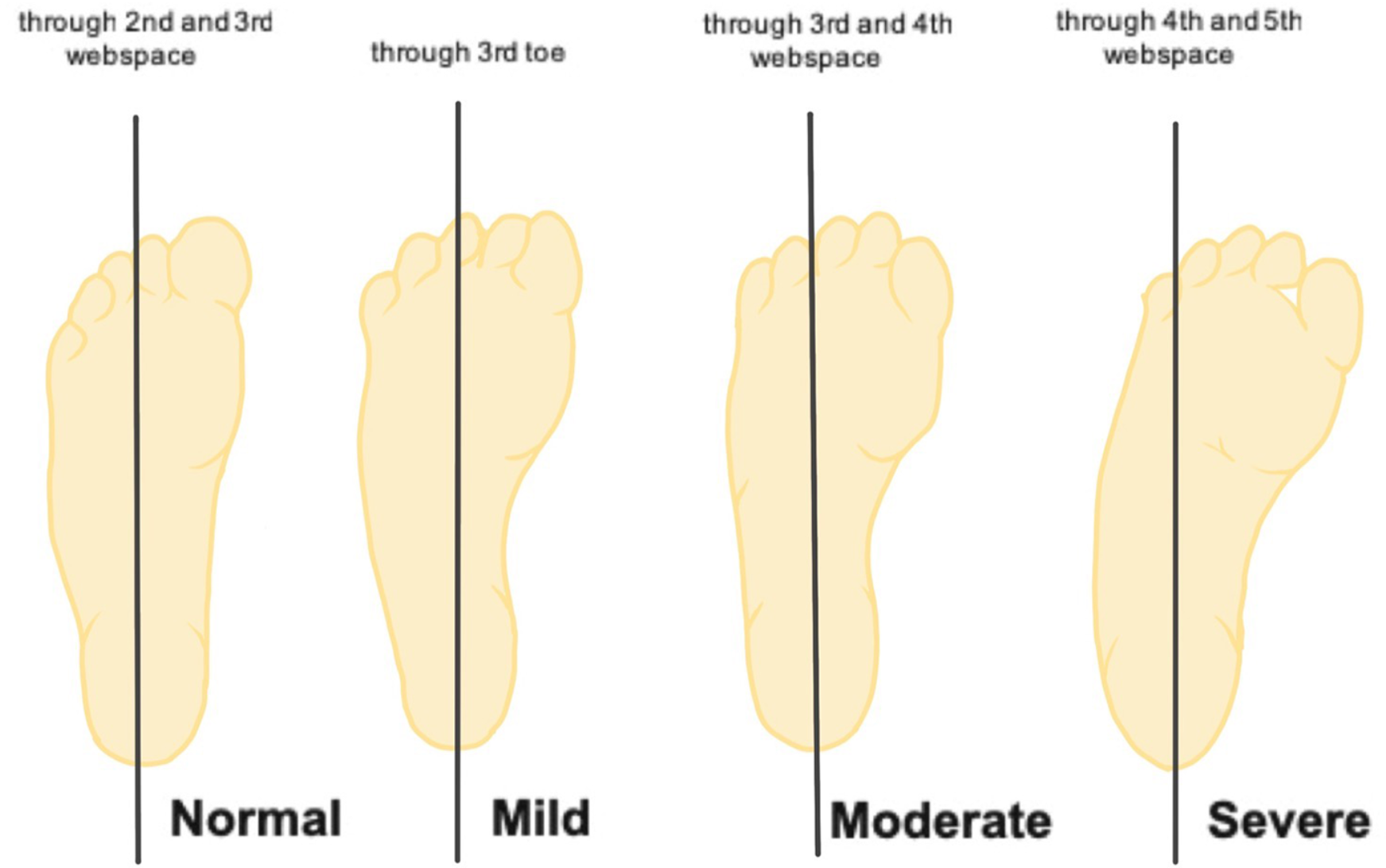
Table 1), the remaining 26 children were invited to a final follow-up examination. Each foot was then clinically screened for recurrent adductus of the forefoot according to the method of the Bleck heel bisector (
Fig. 1).[
13] Based on this method, six children who had no clinical evidence of recurrence were excluded, and the remaining 20 children (14 boys and six girls) with a varying clinical severity of recurrent metatarsus adductus deformity (mild in two, moderate in 11, and severe in seven cases) were enrolled in the study (
Fig. 2). In addition, all deformities analyzed in the study were assessed for their flexibility and categorized as either rigid or flexible. The deformity was considered flexible if the passive abduction of the metatarsal was possible to or beyond the normal alignment of the Bleck heel bisector. In rigid feet, abduction of the metatarsals could not bring the second toe in line with the heel bisector. There were four rigid and 16 flexible recurrent metatarsus adductus deformities. Parents were informed that medical records could be used for only scientific purposes; written informed consent was obtained at the final visit. The study protocol was approved by our institutional ethical committee on human research and was carried out in accordance with the guidelines of the Declaration of Helsinki.
Figure 1.
Clinical determination of metatarsus adductus deformity based on the Bleck heel bisector. The heel bisector classification is based on the association of the longitudinal axis of the heel with respect to the forefoot. According to the degree of variation from the heel bisector, the deformity is classified as mild, moderate, or severe.
Figure 1.
Clinical determination of metatarsus adductus deformity based on the Bleck heel bisector. The heel bisector classification is based on the association of the longitudinal axis of the heel with respect to the forefoot. According to the degree of variation from the heel bisector, the deformity is classified as mild, moderate, or severe.
Figure 2.
Flow diagram of the study participants.
Figure 2.
Flow diagram of the study participants.
Table 1.
Eligibility Criteria for Inclusion and Exclusion of the Study Participants
Table 1.
Eligibility Criteria for Inclusion and Exclusion of the Study Participants
Patients
All children included in the study had been initially successfully treated using serial casting and percutaneous Achilles tenotomy according to the standard Ponseti protocol[
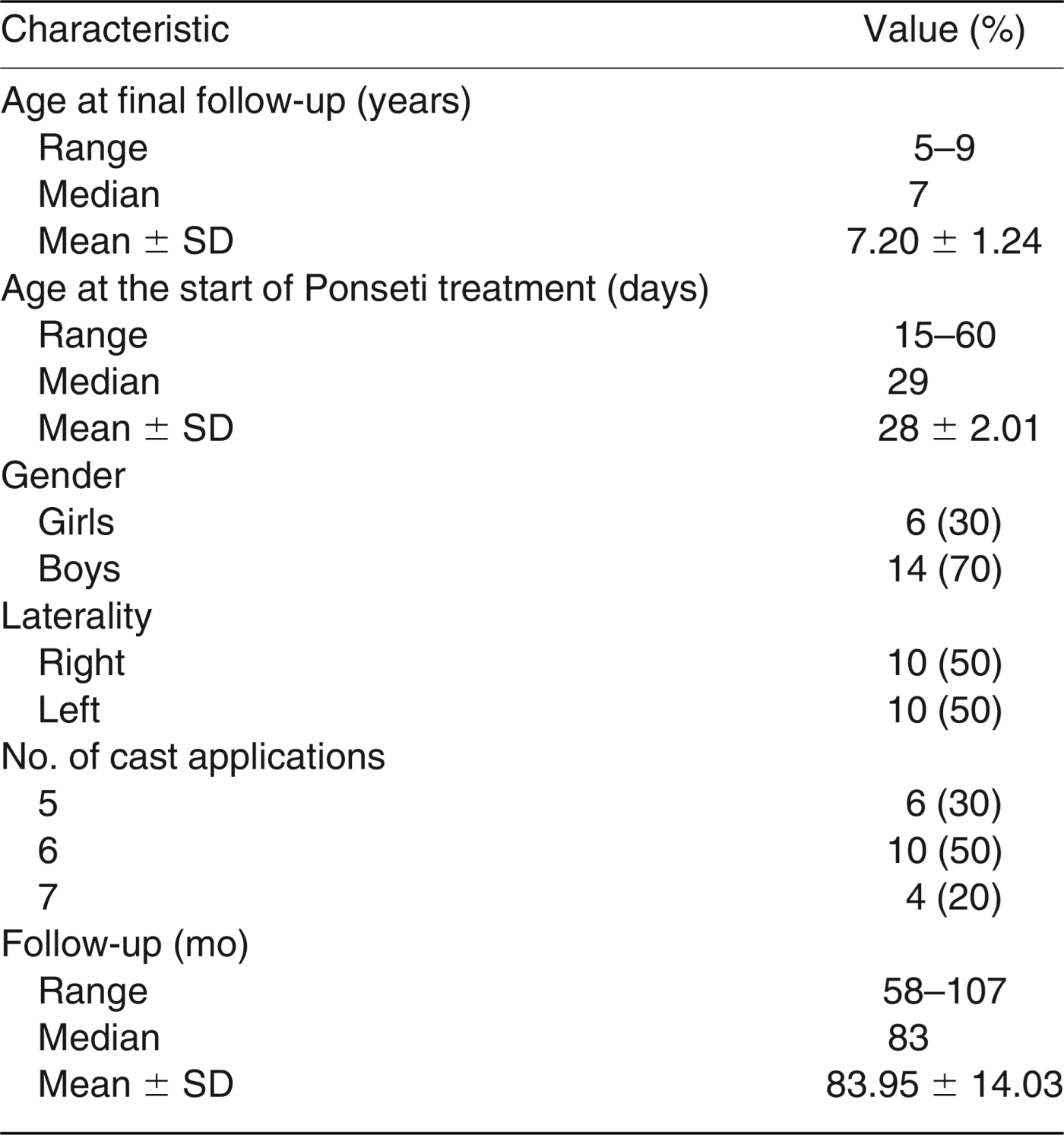
14] for idiopathic congenital clubfoot deformity. The demographic, clinical, and treatment characteristics of the participants are presented in
Table 2.
Table 2.
Demographic and Clinical Characteristics of the Study Participants
Table 2.
Demographic and Clinical Characteristics of the Study Participants
Percutaneous Achilles tenotomy was performed if the ankle dorsiflexion was less than 15° following serial casting. After the tenotomy, a final cast was applied by holding the foot in abduction and as much dorsiflexion as possible at the ankle for 3 weeks, as suggested by Ponseti.[
15] After full correction of the deformity, patients were followed up using the Denis-Browne abduction orthosis (full-time for the first 3 months and only at night for a further 3 years). To query the hypothesis of the study, in patients with unilateral clubfoot, the uninvolved side was regarded as a normal reference, and all outcome measures mentioned below were obtained from both involved and uninvolved, contralateral sides of the patients at the final follow-up examination.
Outcome Measures
Assessment of Muscle Strength Imbalance and Range of Motion.
Isometric muscle strength was measured using a portable, hand-held dynamometer (the wireless microFET 2 Digital Handheld Dynamometer muscle tester; Hoggan Scientific LLC, Salt Lake City, Utah) in reciprocal muscle groups of the ankle: invertors and evertors in addition to plantarflexors and dorsiflexors. The dynamometer was calibrated before and after each round of measurement in line with the manufacturer’s instructions. Each measurement was performed according to “the make test” protocol,[
16] where the examiner holds the dynamometer in a stationary position while the child pushes the dynamometer with a maximal strength. Furthermore, the measurement protocol was standardized for each muscle group in terms of dynamometer and subject position as described previously,[
17] with minor adjustments.
To measure ankle dorsiflexion and plantarflexion muscle strength, after participants were seated with the hip in 90° of flexion and the knee extended, the lower limb was stabilized proximal to the ankle. The dynamometer was then placed over the plantar surface of the metatarsal heads for plantarflexion strength (
Fig. 3A) and the dorsal surface of the metatarsal heads for ankle dorsiflexion (
Fig. 3B). To measure ankle inversion and eversion strength, the participants were seated with the hip and knee positioned at right angles. The lower limb was stabilized proximal to the ankle again. For ankle inversion and eversion, the dynamometer was put on the medial aspect of the base of the first metatarsal (
Fig. 4A) and the lateral aspect of the base of the fifth metatarsal, respectively (
Fig. 4B). Three attempts were executed per muscle group.
Figure 3.
Measurement of ankle dorsiflexion (A) and plantarflexion strength (B) with the hand-held dynamometer.
Figure 3.
Measurement of ankle dorsiflexion (A) and plantarflexion strength (B) with the hand-held dynamometer.
Figure 4.
Measurement of inversion (A) and eversion strength (B) using the hand-held dynamometer.
Figure 4.
Measurement of inversion (A) and eversion strength (B) using the hand-held dynamometer.
To investigate whether there is muscle imbalance around the ankle, plantarflexion-to-dorsiflexion and inversion-to-eversion strength ratios were calculated and compared between involved and uninvolved sides. Ankle range of motion (ROM), including inversion, eversion, dorsiflexion, and plantarflexion, was measured with a universal standard goniometer. All the above measurements were performed by the same orthopedic surgeon who specialized in pediatric orthopedics.
Length of Tendons Around the Ankle.
The length of the tendons, including the Achilles, tibialis anterior, tibialis posterior, and peroneus brevis, was measured ultrasonographically based on the method described by Barfod et al,[
18] with minor adjustments. All measurements were performed in two steps: 1) identifying and marking the anatomical landmarks, and 2) measuring the distance between the landmarks using a tape measure by two radiologists who are specialized in musculoskeletal radiology.
The proximal and distal landmarks were defined as the musculotendinous junction and bony insertions of the tendons, respectively. Participants were put in the supine position for measurement of tibialis anterior, posterior, and peroneus brevis tendon lengths; and in the prone position for the length of the Achilles tendon (
Fig. 5A). The distal landmark was then identified for each tendon by ultrasonographic examination using a 50-mm linear probe of 7.5 MHz (Sonolayer SSA-270A; Toshiba, Tokyo, Japan), and a 21-gauge needle was placed between the ultrasound probe and the skin area corresponding to the projection of the bony landmark (
Fig. 5B). With a marker pen, the intersected point between the probe and needle was marked on the skin (
Fig. 5C). A similar procedure, which includes identifying the landmark, providing its projection on the skin, and marking the intersected point, was conducted for the proximal landmarks of the tendons. Finally, the distance between skin landmarks was measured using a tape measure with 1-mm precision.
Figure 5.
Ultrasonographic measurement of the Achilles tendon length. Subjects were put in the prone position with the knee in flexion of 20°. The ankles were positioned in plantarflexion of approximately 10° using a cylindrical gel pad and a goniometer (A). With a marker pen, the crossed point between the needle and the probe was marked on the skin for both proximal and distal landmarks of the tendon (B and C).
Figure 5.
Ultrasonographic measurement of the Achilles tendon length. Subjects were put in the prone position with the knee in flexion of 20°. The ankles were positioned in plantarflexion of approximately 10° using a cylindrical gel pad and a goniometer (A). With a marker pen, the crossed point between the needle and the probe was marked on the skin for both proximal and distal landmarks of the tendon (B and C).
Correlation Between Achilles Tendon Length and Plantarflexion Strength.
A possible correlation between changes in the length of the Achilles tendon and those in plantarflexion strength was explored. In this correlation analysis, a new set of variables, which consist of the proportion of the measurements of involved sides compared to those of uninvolved sides (involved side–to–uninvolved side [I/U] ratio), was established.
Statistical Analysis
The statistical software package IBM SPSS Version 20.0 (IBM Corp, Armonk, New York) was used for analysis. Statistical significance was set at
P < .05. Test for normality of the variables was performed using the Shapiro-Wilk test. Descriptive data are given as frequencies, percentages, means and standard deviations, or medians and ranges (minimum and maximum). Comparisons were undertaken using paired-sample
t test for normally distributed continuous variables and the Wilcoxon test for nonnormal distributions. Spearman correlation analysis was used for correlations. A correlation was considered good, moderate, or poor for values of
r ≥ 0.70,
r < 0.70 > 0.5, and
r ≤ 0.49, respectively.[
19]
Results
Muscle Strength Imbalance and ROM
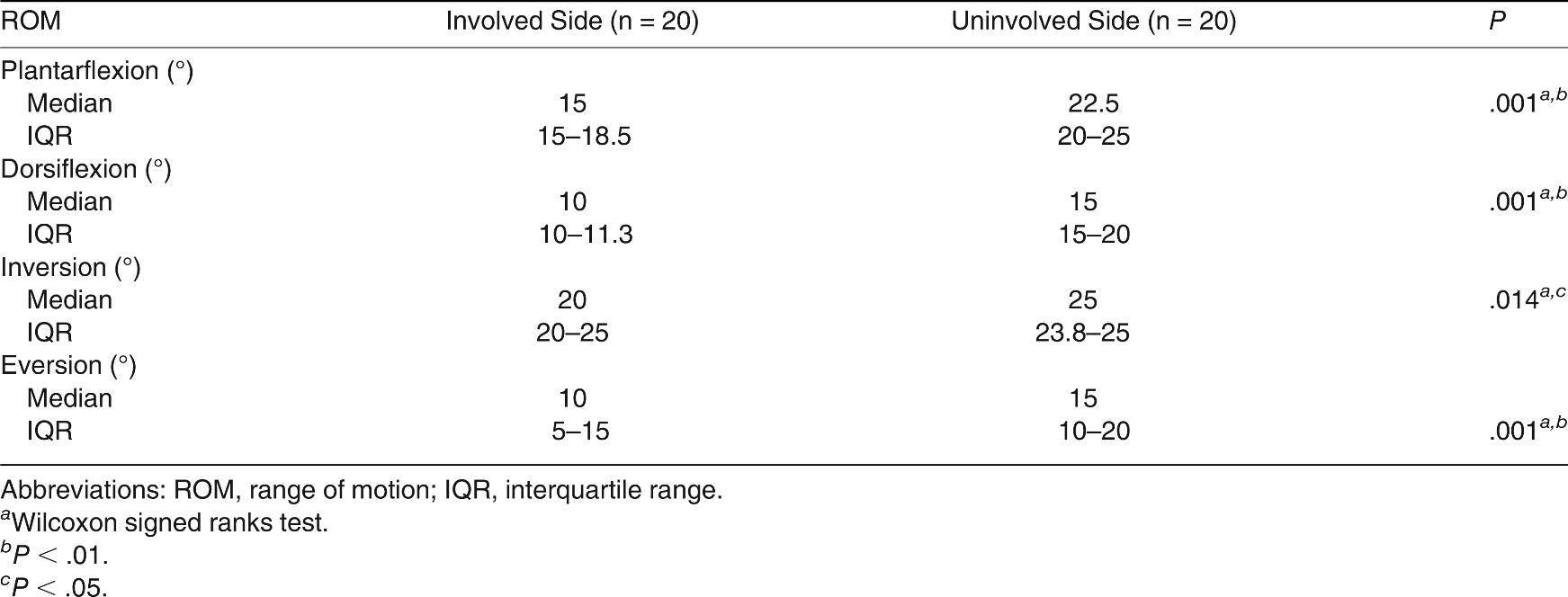
Tables 3 and
4 demonstrate comparative results of muscle strength and ROM between participants’ involved and uninvolved sides, respectively. Plantarflexion strength was found to be statistically lower on the involved side than on the uninvolved side (mean difference [MD], 24 N; 95% confidence interval [CI], 16.3–31.7 N;
P = .001), but there was no statistical difference in the dorsiflexion strength (MD, 0.35 N; 95% CI, –7.75 to 8.45 N;
P = .9). Both inversion and eversion strengths were significantly lower on involved sides compared with uninvolved sides (MD, 17.1 N; 95% CI, 11.7–22.2 N;
P = .001 for inversion strengths) (MD, 16.9 N; 95% CI, 12.7–21.2 N;
P = .001 for eversion strengths).
Table 3.
Comparative Results of Muscle Strength Between Involved and Uninvolved Sides
Table 3.
Comparative Results of Muscle Strength Between Involved and Uninvolved Sides
Table 4.
Comparative Results of ROM Between Involved and Uninvolved Sides
Table 4.
Comparative Results of ROM Between Involved and Uninvolved Sides
The plantarflexion-to-dorsiflexion ratio was lower on the involved side than on the uninvolved side (
P = .001). However, no statistically differences in the strength ratio of inversion/eversion were observed between both sides (
P = .4) (
Table 5).
Table 5.
Comparative Results of Ankle Muscle Strength Ratios Between Involved and Uninvolved Sides
Table 5.
Comparative Results of Ankle Muscle Strength Ratios Between Involved and Uninvolved Sides
In the measurement of ROM, both plantarflexion and dorsiflexion were significantly lower on involved sides than on uninvolved sides (P = .001 for each variable). Similarly, inversion and eversion were both found significantly lower on involved sides compared with uninvolved sides (P = .014 and P = .001, respectively).
Tendon Length
Descriptive and comparative statistics of tendon lengths on both sides of patients are presented in
Table 6. Although no difference was observed in lengths of tibialis anterior (MD, 0.01 cm; 95% CI, –0.335 to 0.355 cm;
P = .952) and posterior tendon between two sides (MD, 0.02 cm; 95% CI, –0.408 to 0.358 cm;
P = .839), the length of Achilles tendon was determined to be longer on the involved side compared with the uninvolved side (MD, –1.80 cm; 95% CI, –2.167 to –1.433 cm;
P = .001). Furthermore, the length of peroneal tendon was shorter on the involved side than on the uninvolved side (MD, 0.62 cm; 95% CI, 0.399–0.851 cm;
P = .001) (post hoc power, 100%).
Table 6.
Measurements of Tendon Lengths and Comparative Statistics Between the Two Sides
Table 6.
Measurements of Tendon Lengths and Comparative Statistics Between the Two Sides
Correlation Between Achilles Tendon Length and Plantarflexion Strength.
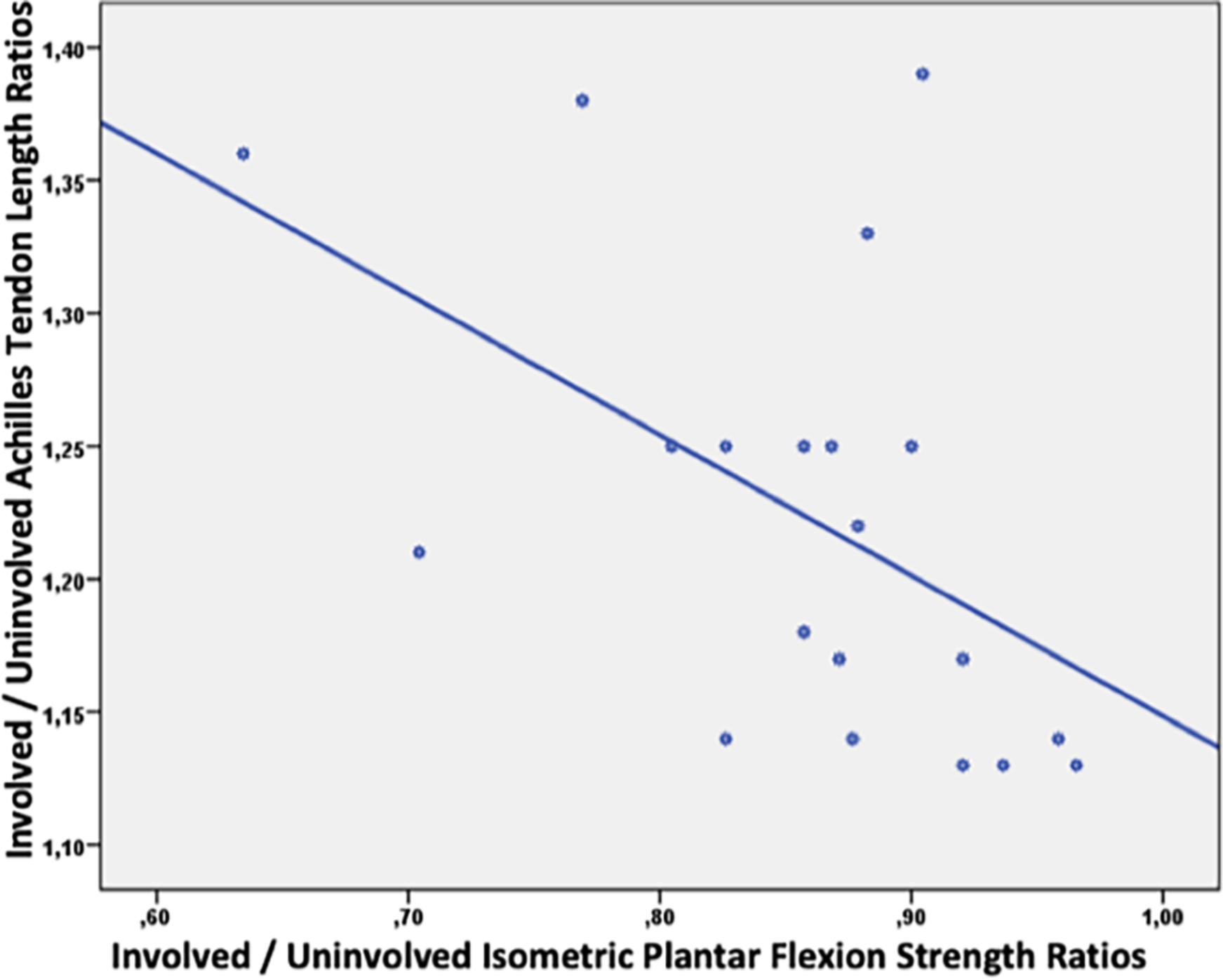
Isometric plantarflexion strength ratios were determined to reduce with increasing ratios of the Achilles tendon length. A moderate negative correlation was discovered between I/U Achilles tendon length ratios and I/U plantarflexion strength ratios (
r = –0.524;
P = .02;
P < .05; post hoc power, 69.2%) (
Fig. 6).
Figure 6.
The correlation graph between ratios of plantarflexion strength and ratios of Achilles tendon length.
Figure 6.
The correlation graph between ratios of plantarflexion strength and ratios of Achilles tendon length.
Discussion
In recent years, residual muscle strength imbalance following initial treatment has been widely considered as a primary pathophysiologic factor in the development of dynamic supination or relapsed structural deformities such as forefoot adductus in clubfoot.[
6,
7,
8,
20] In contrast, according to our review of the literature, previous studies have put the emphasis on the muscle strength imbalance but have not investigated in detail the profile of the antagonist muscle strength around the ankle. Accordingly, most of the implications regarding this topic rely on the case series of patients treated by the transfer of tibialis anterior tendon because of dynamic supination deformity, using subjective (qualitative) measures.[
7,
21,
22,
23]
Unlike most studies on the topic, we attempted to conduct a detailed investigation into this critical etiologic factor in a particular group of patients with recurrent metatarsus adductus deformity, by more objective and quantitative means. Given the findings that despite no difference in dorsiflexion strength, feet with recurrent adductus deformity showed a lower plantarflexion-to-dorsiflexion strength ratio, the present study supported the notion that muscle imbalance may be a causative or contributing factor in the pathogenesis of recurrences in idiopathic clubfoot. It is also worth noting that we found no statistically significant differences in the inversion-to-eversion strength ratio.
The major findings of the present study were that the Achilles tendon was determined to be longer on the involved sides compared with the uninvolved sides in children with unilateral clubfoot. Moreover, the research participants showed lower plantarflexion strength on their involved sides. These results may be interpreted as an argument that Achilles tendon elongation following the Ponseti treatment can lead to a decrease in plantarflexion strength. Furthermore, in support of this argument, the present study found an inverse correlation between these two variables.
Recently, investigators have assessed the functional outcome of nonoperative methods of clubfoot treatment, using gait analysis or muscle strength testing.[
10,
11,
24] El-Hawary et al[
10] compared two different methods of nonoperative treatment, the Ponseti technique and the French functional method, in a cohort of 105 children with 154 clubfeet (79 treated with casts and 85 treated with physical therapy), based on gait analysis that was performed at the age of 2. The investigators determined a higher rate of increased dorsiflexion at the stance phase (48% of the feet) in the Ponseti group and attributed this result to the Achilles tenotomy that had been performed before the application of final cast in 72% of clubfeet in this group. The authors drew the conclusion that the Ponseti method not only may aid in ameliorating ankle dorsiflexion at the age of 2 but also may generate a tendency to develop excessive ankle dorsiflexion because of postlengthening weakness in plantarflexor muscles. In the follow-up study of the same cohort at the age of 5, the same authors[
11] reported lower rates of increased ankle dorsiflexion (24%) in the Ponseti group. The authors underlined that increased dorsiflexion was related to decreased ankle push-off power in children treated by the Ponseti method because children with excessive dorsiflexion exhibited a mean 14% less push-off power than those with normal dorsiflexion. Although increased dorsiflexion was related to the Achilles tenotomy in the data involving 2-year-old patients, this association was not observed in the data involving 5-year-old patients.
As in the above studies, the evidence from this study supports the association between clubfoot and diminished plantarflexion strength. However, differently from the previous studies, we made an attempt to directly measure the Achilles tendon length, instead of ankle dorsiflexion ROM, which is a surrogate measure of Achilles tendon elongation. This appears to be the first study to demonstrate the inverse correlation between the Achilles tendon length and plantarflexion strength in clubfeet with recurrent metatarsus adductus deformity following the Ponseti method.
The present study also attempted to explore the possible role of Achilles tendon elongation in residual muscle imbalance in children with the recurrent forefoot adduction following the Ponseti treatment. Given the fact that despite no difference existing between invertors and evertors, measurements of muscle strength resulted in muscle imbalance between plantarflexors and dorsiflexors, the argument can be made that Achilles tendon elongation may play a role in the development of muscle imbalance.
Results of the present study should be interpreted with caution because of the following limitations associated with the study design: the retrospective nature of the study, the small sample size, and the lack of a control group consisting of age- and gender-matched clubfoot patients without recurrent adductus deformity treated by the Ponseti method. Furthermore, it is well known that the triceps surae muscle typically tends to be somewhat smaller in children with clubfeet, which may entail diminished muscle strength.
Conclusions
In conclusion, Achilles tendon elongation may be a contributor to the muscle imbalance in clubfeet with the relapsed forefoot adduction treated by the Ponseti technique.