


Abstract
Background: Maintaining autonomy is one of the principal objectives for seniors and people with psychiatric disorders. Podiatric medical care can help them maintain autonomy. This work aimed to characterize and quantify the support of the toes in a psychiatric population by analyzing the influence of psychotropic medications and toe and foot support parameters on the prevalence of falls. Methods: We conducted a cross-sectional descriptive study in 67 participants (31 people with psychiatric disorders and 36 without diagnosed disorders [control population]). Toe support pattern was analyzed with a pressure platform. Variables were measured in static and dynamic loading and related to falls and psychotropic medication use. Results: The psychiatric population fell more than the control population and presented less toe-ground contact in static measurements, although it has more foot-ground contact time. Maximum toe pressure during toe-off is also less intensive in the psychiatric population and is related to people who take psychotropic medications. Conclusions: Toe support pattern could be used as a predictive factor for falls and to improve stability in these populations.
Fall statistics in older people are a cause for concern: approximately one in three people older than 65 years falls at least once a year [1]. Some studies show that 2.9% of the population of legal age had to visit the emergency department due to a fall incident [2]. More recent studies show a 48% increase in visits to emergency departments related to falls in people older than 65 years [3].
This percentage varies according to the degree of dependence of the person [4], and the fall risk is higher in the population with psychiatric disorders [5-7]. Some populations may present a greater possibility of falls because some authors observed an increase in the frequency of falls and hip fractures in older persons medicated with hypnotics, which affect balance and gait [8]. However, the use of certain drugs, such as psychotropic drugs, is necessary to improve the quality of life of patients with psychiatric disorders [9].
Falls are costly for the health system. Because they can lead to relative isolation of the patient and social problems, especially in the case of older people [1], there are authors who recommend that health professionals develop protocols to identify the responsible factors and prevent falls [2,3,10].
Fall prevention strategies proposed by the World Health Organization include prioritizing research and exploring the risk factors that cause falls. The high fall rates have large socioeconomic costs for countries, which means that global organizations and many authors are committed to prevention strategies and recommend the investigation of risk factors and causes of falls [2,10].
Factors leading to falls can be extrinsic (footwear, uneven floors, obstacles, environmental factors, etc) [1,2,11] and intrinsic (age, sex, and state of health [physical and mental]) [10]. Other factors related to falls could be alterations in postural stability [12], muscle weakness or mobility problems [11], cognitive decline [1], and adverse effects of medications [7]. Some medicines are known to affect walking by slowing it down and influencing fall prevalence [7,13]. Decreased speed in the walking cycle is affected by many factors, including age, physical inactivity, and some illnesses [14,15].
Toes are designed for prehensile function [16]. They also have an important stabilizing role in supporting body weight [17], and they participate in the propulsive phase of walking [16]. Although pedobarography allows us to quantitatively analyze static and dynamic foot pressures [18,19], there are no studies in the literature that analyze the toe pattern and its relation to falls.
Therefore, the objective of this study was to characterize and quantify with a pressure platform the support of the toes in a psychiatric population in static standing (by analyzing toe-ground contact and toe-ground contact with the first toe) and in dynamic standing (by analyzing maximum toe pressure during toe-off and foot-ground contact time). We also analyzed the influence of psychotropic medications and these parameters on the prevalence of falls.
Materials and Methods
Study Design
A cross-sectional descriptive study was designed with a convenience sample. The project was approved by the Extremadura University Bioethics Committee and by the Social Health Center of Plasencia (Plasencia, Cáceres, Spain), where part of the study was conducted.
Study Sample
Sixty-seven participants were studied. The data were collected between January 1, 2014, and December 31, 2017. Two populations with distinct characteristics were chosen. The psychiatric population included 31 individuals institutionalized in a public health center (Social Health Center of Plasencia) with a mean ± SD age of 72.42 ± 6.637 years (48.4% women, 51.6% men). The control population included 36 participants who were voluntarily recruited from the community and screened at the podiatric medical clinic of Extremadura University. They had a mean ± SD age of 72.19 ± 4.477 years (50% women, 50% men).
Inclusion and Exclusion Criteria
Participants in the psychiatric population met the following inclusion criteria: 65 years or older, able to walk unaided, diagnosed as having a chronic psychiatric disorder, permanently hospitalized at the center where the study was conducted, and no asymmetry present in the digital formula. In all of the cases, the corresponding authorization was requested for examinations at the public mental health center. The size of the sample was obtained with these criteria, with a statistical error of 3%. Only 31 participants in the psychiatric population met the inclusion criteria. One of them was excluded for failing to comply with requirements on the measuring protocol.
The control population comprised community participants required to meet the following inclusion criteria: autonomous, no diagnosis of chronic psychiatric disorder, no current or previous permanent hospitalization in a psychiatric center, indicating whether they were taking psychiatric drugs, and no asymmetry present in the digital formula.
None of the participants in either group had severe foot alterations or underwent any orthopodological treatment that could have altered their toe support pattern. All of the patients signed an informed consent form before the study.
Equipment
A pressure platform, distributed for Dentalite Spain, (Stabylo Pro, Version 2.3.0; Progec srl. Azzano Decimo, Italy) was used for the pedobarographic measurement of static and dynamic plantar pressures and toe and foot support times.
Procedure
The height, weight, age, and foot size were added to the platform software before calculating the pressures. During static measurements, participants were positioned in the center of the platform in the anatomical position of the study (bipedal standing). For the dynamic measurements, we followed the protocol of Meyers-Rice et al. [20].
Variables Analyzed
The participant variables included were age, foot size, weight, and the medicines they normally took, distinguishing between those that affect the central nervous system and those that affect falls. The medicines analyzed were analgesics, antipsychotics, antidepressants, anxiolytics, sedative-hypnotics, and antiparkinsonian medicines. The study also included fall frequency in the past year. Participants were included in the fall category when they had fallen at least twice during the same 12-month period (falls rather than accidents or tripping). For the psychiatric population, the information on medications and falls was obtained from participants' medical histories. In the bipedestation static study, the variables studied were toe-ground contact (if support, any toe) and toe-ground contact with the first toe in the left and right feet (if support, first toe). The cursor is placed on the image of the foot in the zone of each toe; the software indicates the pressure received in each zone in kilopascals. Where no value is obtained (0 kPa), zero toe-ground contact is indicated. The data were transcribed as the presence or absence of toe-ground contact (yes, no). (Fig. 1A).
Figure 1.
Analysis of toe-ground contact in static and dynamic loading. A, Example of the measure of toe-ground contact using the platform for a male participant with a psychiatric disorder. The circle shows the hyperpressure zone. B–D, Examples of the measurements made in dynamic loading: the measure of maximum toe pressures during toe-off dynamic loading analysis and foot-ground contact total time on the left foot for a male participant with psychiatric disorders.
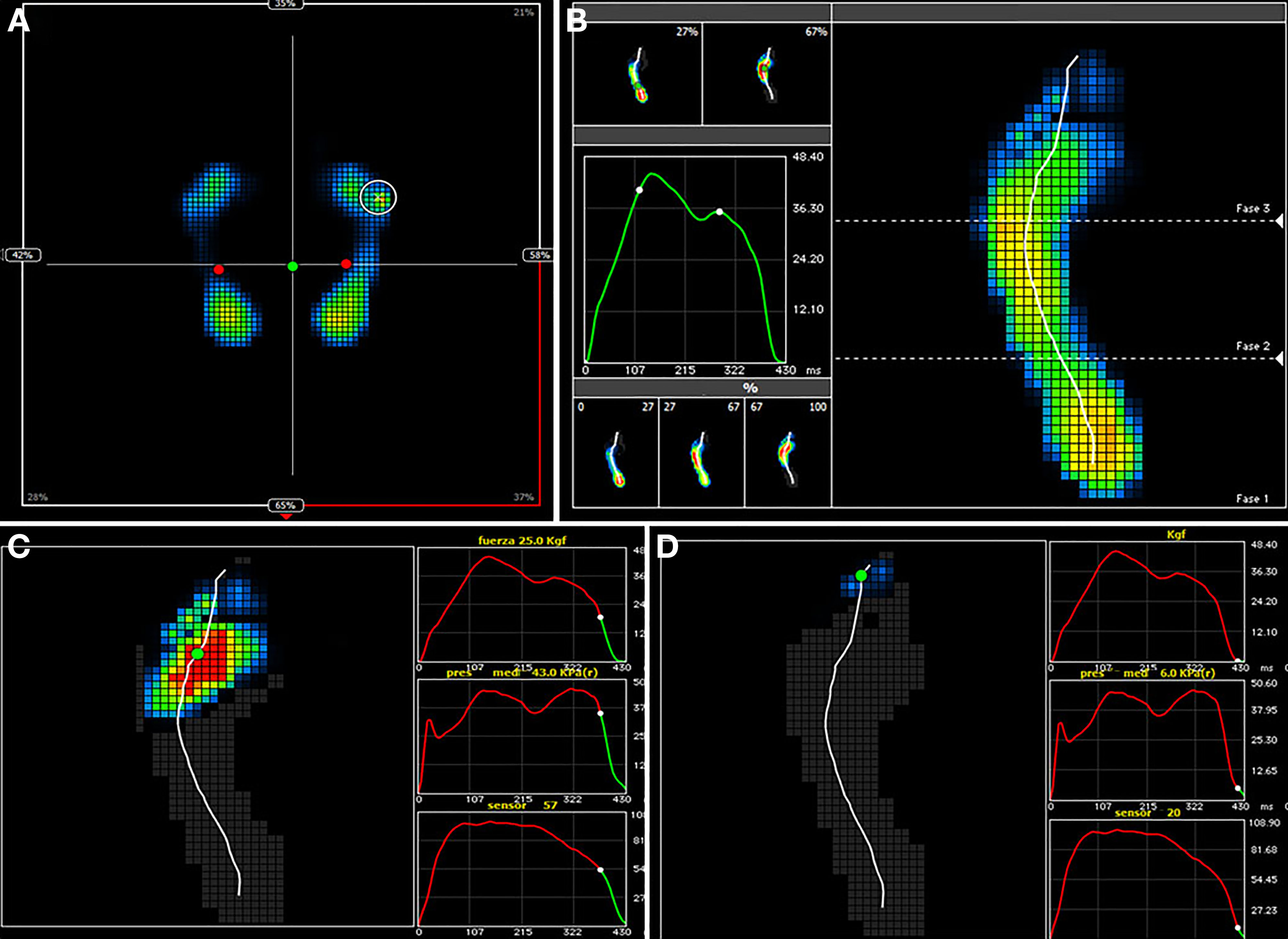
In the bipedestation dynamic study we analyzed foot-ground contact total time (the total time that the foot was in contact with the ground) and toe-ground contact time (the time that only the toes were supported on the platform). The units of measure were milliseconds, and maximum toe pressure during toe-off used kilopascals as the unit of measure. This value was obtained as soon as it was observed that the heel was no longer in contact with the platform and the pressure increased in the region of the anterior foot (Fig. 1 B–D).
Statistical Methods
The data obtained from the platform software were analyzed with a statistical software program (IBM SPSS Statistics for Windows, Version 19.0; IBM Corp, Armonk, New York). The quantitative variables are expressed as mean ± SD. In all cases, the normality of the groups was tested beforehand by applying the Kolmogorov-Smirnov normality test or the Shapiro-Wilk test. For the quantitative variables (time of stance phase, time of toe contact, and maximum toe pressure) that followed normality, the Student t test for two independent samples was used to compare the means. For variables that did not follow normality, the nonparametric test for two independent samples and the Mann-Whitney U test were used. To analyze the qualitative variables, the χ2 statistical test was applied. For all statistical tests, a significance level of 5% was established.
Results
Prevalence of Falls in the Populations
The fall analysis shows that 29% of the psychiatric population had a history of falls in the past year compared with only 8.3% of the control population. Fall prevalence is significantly higher in the psychiatric population (P = .029) than in the control population.
Static Analysis of the Toe Support Pattern in Relation to Falls and Between Populations
The results show that the psychiatric population has less toe-ground contact (77.4% compared with 100% in the control population; P = .003), which could explain their postural instability (Table 1).
Table 1.
Analysis of Static Bipedal Loading Tests
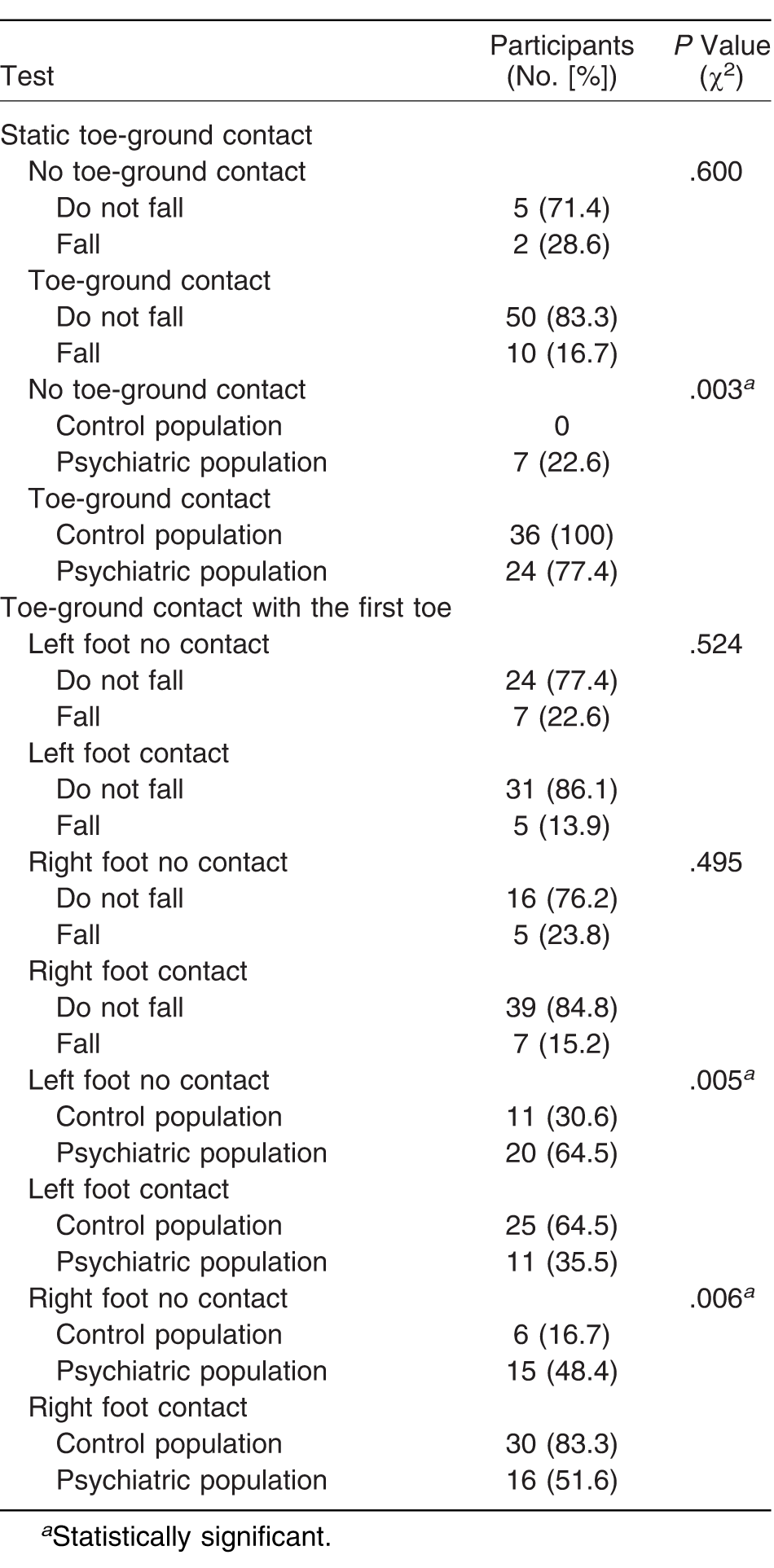
Toe-ground contact with the first toe in both feet, also analyzed in Table 1 (static toe-ground contact), shows that control participants have significantly more toe-ground contact with the first toe (P = .005 in the left foot and P = .006 in the right foot). We have not obtained a relationship between falls and less toe-ground contact (P = .600) or with less toe-ground contact with the first toe in both feet (P = 0.524 in the left foot and P = .495 in the right foot) (Table 1).
Dynamics Analysis of the Toe Support Pattern in Relation to Falls and Between Populations
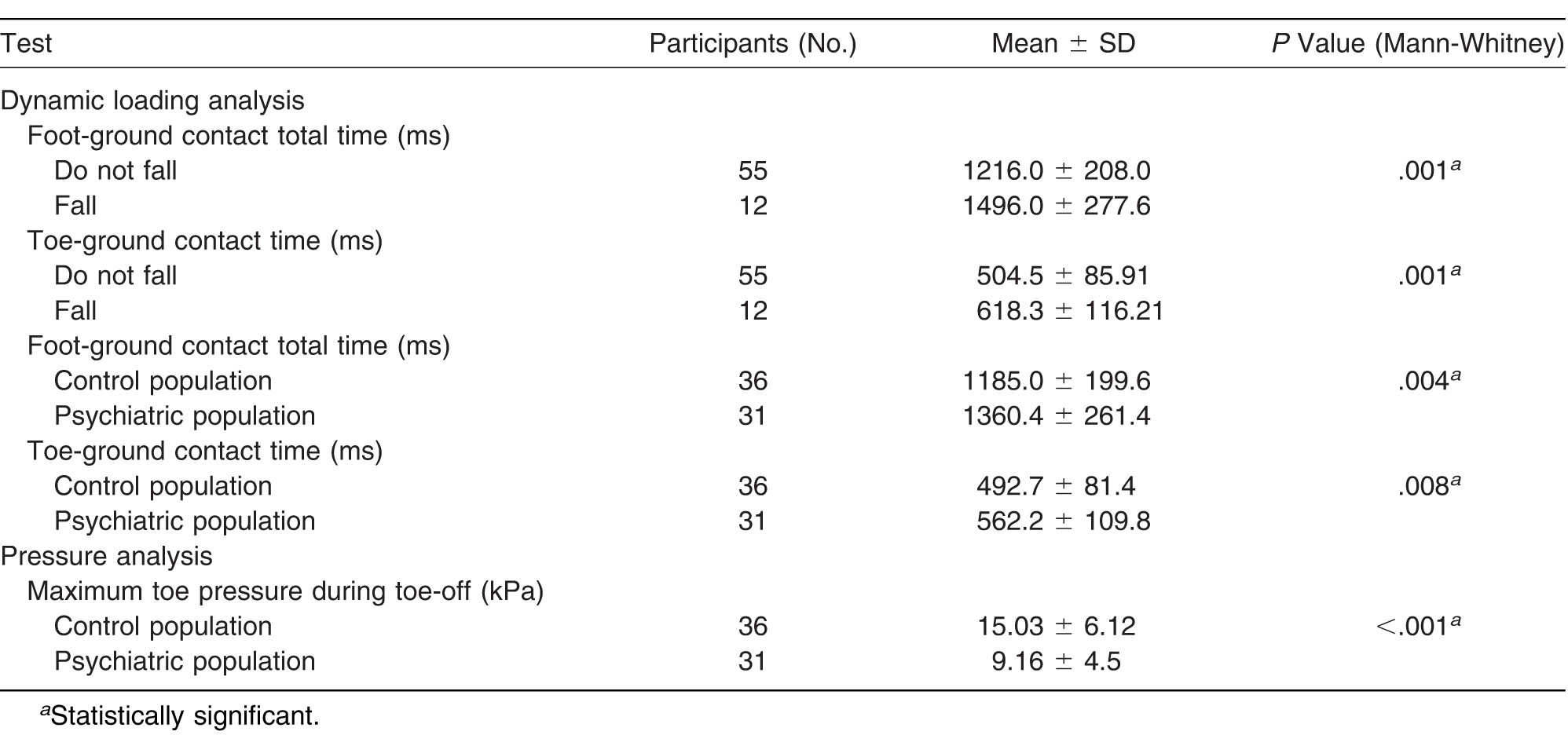
The results of the dynamic loading analysis (Table 2) indicate that participants who fall spend a significantly longer time with their feet and toes in contact with the ground. Both foot-ground and toe-ground contact times are significantly longer in the psychiatric population than in the control population. Table 2 also shows that the psychiatric population exhibits significantly lower maximum toe pressure during the push-off phase than the control population. This concurs with the static data, which show less toe-ground contact and seem to indicate that although toe-ground contact time is longer in the psychiatric population, these participants use less strength in their toes than participants in the control population. This shows insufficient grip in these toes, which could affect toe-off and influence fall prevalence.
Table 2.
Analysis of Dynamic Bipedal Loading Tests
Medication Analysis in Relation to Falls
Analysis of the medications taken by participants revealed an association between those who take antipsychotic, antiparkinsonian, and sedative-hypnotic drugs and previous multiple falls. In addition, a relation between participants who take antipsychotic drugs and toe-ground contact was obtained, observing less digital support in these patients, which could indicate that the medications taken by the psychiatric population could be influencing their biomechanics (Table 3).
Table 3.
Relation Between Medication Use and Fall Prevalence and Toe-Ground Contact
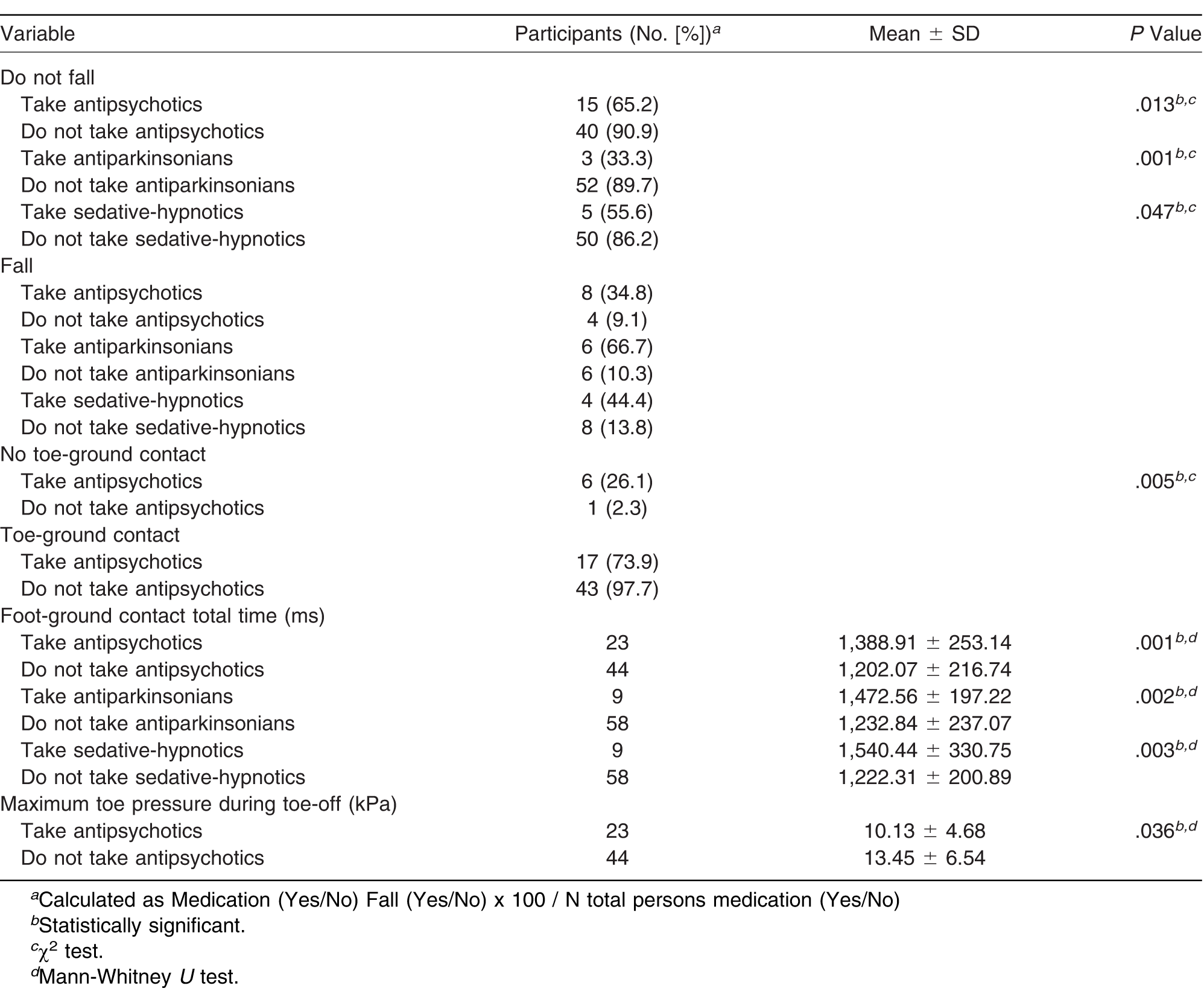
Table 3 also shows that antipsychotic, antiparkinsonian, and sedative-hypnotic drugs are associated with an increase in foot-ground contact total time. Only participants who take antipsychotic drugs also show decreased maximum toe pressure during toe-off. The remaining drugs analyzed showed no relation with any of the variables studied.
Discussion
It is known that there are populations in which falls are more prevalent, such as older people, institutionalized people, and individuals medicated with certain drugs, such as hypnotics [2,8]. The results obtained in this work coincide with the literature and show that patients in the institutionalized group taking psychotropic drugs have experienced more than three times consecutive falls compared with individuals in the control group (29% versus 8.3%). Note that the prevalence of falls in the control group could be due to their advanced age, which is a risk factor [21-23].
Numerous authors have studied the influence of podiatric medical factors and medications on increasing the prevalence of falls [2,7,11,21,22]. On the other hand, no study has focused on analysis of the toes in static and dynamic standing and the possible relation with falls, studying two population groups balanced in age and sex, and with other well-differentiated aspects, such as psychotropic medication use and mental pathology.
The psychiatric group analyzed herein is the one that supports their toes less, although the data do not show a relationship between the absence of static toe support and the prevalence of falls. This could be due to a compensatory process of these individuals. There are studies showing the discharge of the limbs increasing the probability of recovery of balance in people with balance problems, and the lack of contact of all of the toes could contribute to this discharge [24]. However, we cannot forget that the population with psychiatric problems has different characteristics than the control group, such as polypharmacy, which is known to affect the nervous system and postural stability, and sedentary lifestyle, which causes muscle weakness and hospitalization [6,7,25]. This distinction helps to explain why the psychiatric population loses control of balance in the standing position more easily and is more likely to fall than the control group [19].
Age is known to have a physiologic effect by decreasing the integrity of the balance systems. In addition, age is associated with a reduction in plantarflexion force of the toes, which could indicate less contact of the toes with the ground [26]. However, in the present study, age and sex were not influential factors because all of the participants were similarly aged and sex was balanced.
During dynamic standing, factors such as the muscles of the foot and toes that intervene in the grip on the ground during the take-off phase may have some influence on the pressures in relation to the first toe. According to some studies, weak toe grip affects the maintenance of postural stability [27,28]. For the first time, the present work demonstrated differences in toe support between the two studied groups, providing a possible predictive factor for falls.
In the literature consulted, the causes associated with postural instability during static standing include medication use and age [6,7,29]. We have not found any study that shows a relationship between medication use and the lack of support of the toes and the loss of strength of the first toe in the digital take-off phase. The literature mentions the slowdown of gait in relation to only certain psychotropic drugs [30]. Other studies reported that aging is associated with reduced plantarflexion strength of the toes, indicating less toe-ground contact [26].
According to Rosso et al. [31], decreased gait speed may be associated with impairment of the physiologic systems in older persons, which explains the falls in the control group, because both groups had a high average age. However, if we compare the groups, the data also indicate that the foot-ground contact total time is longer in the psychiatric population, in which fall prevalence is higher. This concurs with earlier studies that considered this group of patients to be slower and more posturally unstable, regardless of their medication use [25,32]. In relation to drugs, the present study shows that patients medicated with sedative-hypnotics have a longer foot support time on the platform (foot-ground contact total time) so that their walking should also be slowed down, which is concordant with previous studies [30,33]. These patients fall more, although patients who take antipsychotic and antiparkinsonian drugs also seem to follow this pattern. Concurring with other authors, the data in this study show a relation between sedative-hypnotic drug use (including benzodiazepines in this group) [33] and falls and a major foot-ground contact total time, although antipsychotic and antiparkinsonian drugs also seem to be involved in the longer foot-ground contact total time.
The evidence of less toe-ground contact and altered dynamic loading in the psychiatric population makes it necessary to assess the muscles involved in gripping the ground with the foot and the influence of psychopharmacologic medication on the functionality of the entire musculoskeletal system. Other variables that affect bipedal stance and posture maintenance could be also studied, and different factors affecting static standing and balance could be examined in future stabilometry studies.
Not all pressure platforms are sensitive enough to detect toe support. The platform used herein allows us to detect those pressures, but different results could be obtained with other, more sensitive platforms, which could be considered a limitation. Anyway, the results are comparable between studied populations.
These results constitute a valuable tool for health-care professionals dealing with institutionalized patients with advanced age and psychiatric pathology. Few studies provide scientific evidence such as that presented herein for preventing falls.
Falls are expensive for the health system, and prevention saves the health system money. Analyzing the support pattern of the toes and detecting fall risk factors can be useful in preventing falls in institutionalized people taking psychoactive drugs.
The data demonstrate the utility of measuring the support and strength of the toes, and these factors can be used in primary care to prevent falls. With this, we improve the quality of life of this population, and it could also be extended to older people who have the same support pattern, even if they do not take the same medications or have psychiatric pathology.
Conclusions
Older persons, institutionalized persons, and those taking psychotropic drugs have less static support of their toes and less strength in their first toe during dynamic activity despite having the foot in contact with the ground for a longer time, possibly due to compensatory movements. Therefore, we propose the toe support pattern as a predictive risk factor of falls in individuals who display the following conditions: 1) the absence of total support of the toes (including the first toe) in static standing and 2) longer support time of the foot on the ground and a decrease in the strength of the first toe in dynamic standing.
In the event that this toe support pattern occurs, we recommend adequate care for these patients, such as muscle exercises to compensate for possible alterations that may affect the imbalance and use of custom orthopedic insoles to stimulate better gait and improve stability for each individual.
Funding
This study was funded by the Extremadura Regional Government and the European Regional Development Fund through a grant to the research group (code CTS020, references GR18182).
Acknowledgments
The Directors Health Centre (Hospital Psychiatric Services) for allowing this study to take place following the ethical standards in force; Jane McGrath, juried translator, for assistance in revising the article and translating it into English; and Francisco Javier Iglesias Garín for help with the statistical analysis.
Conflicts of Interest
None reported.
References
- TinettiMESpeechleyMGinterSF:Risk factors for falls among elderly persons living in the community. N Engl J Med319: 1701, 1988.
- HartholtKAVan BeeckEFPolinderS: Societal consequences of falls in the older population: injuries, healthcare costs, and long-term reduced quality of life. J Trauma71: 748, 2011.
- OlijBFPannemanMJMvan BeeckEF: Fall-related healthcare use and mortality among older adults in the Netherlands, 1997–2016. Exp Gerontol120: 95, 2019.
- RappKBeckerCCameronI: Epidemiology of falls in residential aged care: analysis of more than 70,000 falls from residents of bavarian nursing homes. J Am Med Dir Assoc13: 187, 2012.
- HeslopKRWynadenDG:Impact of falls on mental health outcomes for older adult mental health patients: an Australian study. Int J Ment Health Nurs25: 3, 2016.
- KaminskaMSBrodowskiJKarakiewiczB:Fall risk factors in community-dwelling elderly depending on their physical function, cognitive status and symptoms of depression. Int J Environ Res Public Health12: 3406, 2015.
- WilliamsLJPascoJAStuartAL: Psychiatric disorders, psychotropic medication use and falls among women: an observational study. BMC Psychiatry15: 75, 2015.
- AllainHBentué-FerrerDPolardEetal: Postural instability and consequent falls and hip fractures associated with use of hypnotics in the elderly: a comparative review. Drugs Aging22: 749, 2005.
- SajatovicMDiBiasiFLegacySN:Attitudes toward antipsychotic treatment among patients with bipolar disorders and their clinicians: a systematic review. Neuropsychiatr Dis Treat13: 2285, 2017.
- Gómez GonzálezMPérez PicoAMartínez NovaA: Characteristics of hip fractures due to minimal trauma in older people of a health area in Southwest Spain. MOJ Gerontol Geriatr1: 1, 2017.
- BoelensCHekmanEEGVerkerkeGJ:Risk factors for falls of older citizens. Technol Heal Care21: 521, 2013.
- QuitschalRMFukunagaJYGanançaMM: Evaluation of postural control in unilateral vestibular hypofunction. Braz J Otorhinolaryngol80: 339, 2014.
- MakiBE:Gait changes in older adults: predictors of falls or indicators of fear. J Am Geriatr Soc45: 313, 1997.
- BuschT de ADuarteYAPires NunesD: Factors associated with lower gait speed among the elderly living in a developing country: a cross-sectional population-based study. BMC Geriatr15: 35, 2015.
- QuachLGalicaAMJonesRN: The non-linear relationship between gait speed and falls: the Mobilize Boston Study. J Am Geriatr Soc59: 1069, 2012.
- LambrinudiC:Use and abuse of toes. Postgrad Med J8: 459, 1932.
- CavanaghPRodgersMIiboshiA:Pressure distribution under symptom-free feet during barefoot standing. Foot Ankle7: 262, 1987.
- Martínez-NovaACuevas-GarcíaJCSánchez-RodríguezR: Estudio del patrón de presiones plantares en pies con hallux valgus mediante un sistema de plantillas instrumentadas. Rev Esp Cir Ortop Traumatol52: 94, 2008.
- MatsuuraYFujinoHHashimotoR: Standing postural instability in patients with schizophrenia: relationships with psychiatric symptoms, anxiety, and the use of neuroleptic medications. Gait Posture41: 847, 2015.
- Meyers-RiceBSugarsLMcPoilT: Comparison of three methods for obtaining plantar pressures in nonpathologic subjects. JAPMA84: 499, 1994.
- WylieGYoungZLittlefordR: Finding your feet: the development of a podiatry intervention to reduce falls in care home residents. J Foot Ankle Res8(suppl 1): A7, 2015.
- WylieGMenzHBMcFarlaneSPodiatry intervention versus usual care to prevent falls in care homes: pilot randomised controlled trial (the PIRFECT study). BMC Geriatr17: 1, 2017.
- WylieGTorrensCCampbellP: Podiatry interventions to prevent falls in older people: a systematic review and meta-Analysis. Age Ageing48: 327, 2019.
- BlaszczykJWPrinceFRaicheM: Effect of ageing and vision on limb load asymmetry during quiet stance. J Biomech33: 1243, 2000.
- GreeneECunninghamCJEustaceA: Recurrent falls are associated with increased length of stay in elderly psychiatric inpatients. Int J Geriatr Psychiatry16: 965, 2001.
- MenzHZammitGMunteanuS: Plantarflexion strength of the toes: age and gender differences and evaluation of a clinical screening test. Foot Ankle Int27: 1103, 2006.
- MickleKJMunroBJLordSR: ISB Clinical Biomechanics Award 2009: toe weakness and deformity increase the risk of falls in older people. Clin Biomech24: 787, 2009.
- TanakaTNoriyasuSInoS: Objective method to determine the contribution of the great toe to standing balance and preliminary observations of age-related effects. IEEE Trans Rehabil Eng4: 84, 1996.
- KorekiATsunodaKSuzukiT: Clinical and demographic characteristics associated with postural instability in patients with schizophrenia. J Clin Psychopharmacol31: 16, 2011.
- HuangTYLiangCKShenHC: Gait speed rather than dynapenia is a simple indicator for complex care needs: a cross-sectional study using minimum data set. Sci Rep7: 1, 2017.
- RossoALSandersJLArnoldAM: Multisystem physiologic impairments and changes in gait speed of older adults. J Gerontol A Biol Sci Med Sci70: 319, 2015.
- MatsubasaTKimuraAShinoharaM: Time study of staff members in an institution for severe motor and intellectual disabilities. Pediatr Int57: 1154, 2015.
- ChanCHGauSSFChanHY: Risk factors for falling in psychiatric inpatients: a prospective, matched case-control study. J Psychiatr Res47: 1088, 2013.
© 2021 American Podiatric Medical Association