


Abstract
Background: There is a need for postoperative pain control that minimizes or eliminates opioid use during the first 72 hours following surgery, when pain is most severe. HTX011 is an extended-release, dual-acting local anesthetic that demonstrated superior 72hour analgesia over standard of care bupivacaine hydrochloride (HCl) and saline placebo in a phase 3 bunionectomy study (EPOCH-1). Having shown HTX-011 monotherapy is superior to bupivacaine HCl in reducing postoperative pain intensity and opioid use, this follow-on study evaluated the safety and efficacy of HTX-011 as the foundation of a multimodal analgesia (MMA) regimen using over-the-counter medications recommended by practice guidelines for pain management. Methods: Following regional anesthesia administered as a lidocaine block, patients underwent unilateral bunionectomy with osteotomy and internal fixation. Prior to closure, HTX-011 (up to 60 mg bupivacaine/1.8 mg meloxicam) was applied without a needle. Patients received scheduled postoperative MMA alternating ibuprofen (600 mg) and acetaminophen (1 g) every 3 hours for 72 hours. Efficacy was assessed based on pain intensity (numeric rating scale [NRS; 0–10]) and consumption of opioid rescue medication (intravenous morphine milligram equivalents [MME]). Adverse event and vital sign monitoring, plus laboratory and wound healing assessments, were used to determine safety. Results: Over the 72-hour assessment period following bunionectomy, mean pain scores were mild in severity (NRS < 4) and 22/31 patients (71%) experienced no severe pain (NRS ≥7) with HTX-011 as the foundation of scheduled, non-opioid MMA. Patients consumed an average of 1.61 MME total, with 24/31 (77%) requiring no opioid rescue medication (opioid-free). HTX-011 was well-tolerated and demonstrated no safety concerns with the inclusion of postoperative MMA. Conclusions: HTX-011 as the foundation of an MMA regimen including scheduled ibuprofen and acetaminophen maintained mean postoperative pain scores in the mild range and enabled opioid-free recovery for 77% of bunionectomy patients through the 28-day recovery period.
During postoperative recovery, most patients report moderate or severe pain that is poorly controlled, particularly during the first 72 hours, [1,2] with one study in bunionectomy reporting 83% of patients experienced severe pain during this timeframe. [3] Postoperative pain is often managed with local anesthetics (eg, bupivacaine hydrochloride [HCl]) that have limited efficacy beyond 12 hours. [4,5] Attempts to extend the analgesic activity of local anesthetics—eg, with liposomal bupivacaine or with local anesthetics (bupivacaine, ropivacaine) delivered by catheters and pumps—have been disappointing, extending analgesic benefit inconsistently and for only 24 hours, despite bupivacaine plasma concentrations present for several days. [6−8] This lack of efficacy has been attributed to local acidosis resulting from surgery-induced inflammation that peaks around 24 hours and remains high for 72 hours, [9] inhibiting the ability of bupivacaine to cross the cell membranes of pain-transducing neurons. [10] To manage pain through the remainder of the critical 72-hour postoperative period, additional treatments are employed, including opioid medications that have potentially serious adverse events and can contribute to opioid dependency. [11−14] Thus, an unmet need exists for postoperative pain management in the critical first 72 hours following surgery, when many patients turn to opioids for relief.
HTX-011 is an investigational dual-acting local anesthetic comprising bupivacaine HCl and lowdose meloxicam at a 33:1 ratio formulated in a novel, extended-release polymer that allows the controlled diffusion of its active ingredients over 72 hours (Heron Therapeutics, San Diego, California). It is administered without a needle into the surgical site prior to wound closure to coat tissues in the surgical field that contain pain-generating nerve endings. The low dose of meloxicam in HTX-011 decreases local inflammation, normalizing local pH and potentiating the analgesic activity of bupivacaine to provide potent pain relief through 72 hours. [15]
Bunionectomy is frequently used as a model for postoperative bone pain due to its reproducible 72-hour pain profile that enables reliable assessment of analgesia. [16,17] HTX-011 demonstrated safe and efficacious analgesia through 72 hours in patients undergoing unilateral bunionectomy with osteotomy and internal fixation in the randomized, doubleblind phase 3 EPOCH-1 study (NCT03295721), wherein a single, intraoperative application of HTX-011 (60 mg bupivacaine/1.8 mg meloxicam) significantly reduced pain intensity and opioid use when compared with bupivacaine HCl and saline placebo. [3] Having established the superiority of HTX-011 in postoperative pain management and opioid-use versus standard of care bupivacaine HCl, subsequent studies have been designed to optimize outcomes by using HTX-011 with a scheduled nonopioid multimodal analgesia (MMA) regimen.
This prospective, single-arm, uncontrolled study was designed as a follow-on to EPOCH-1, with identical inclusion/exclusion criteria, surgical procedure, and endpoints. The aim in developing the treatment plan was to further the reduction of postoperative pain intensity and opioid use observed in EPOCH-1 by adding MMA comprising the over-the-counter (OTC) medications ibuprofen and acetaminophen to the pain management protocol.
Here we present, alongside the prior EPOCH-1 study endpoints, the efficacy and safety outcomes for HTX-011 when used as the foundation of a scheduled, non-opioid, MMA regimen to manage postoperative pain through 72 hours following unilateral bunionectomy with osteotomy and internal fixation.
Materials and Methods
Patient Eligibility
Eligible patients were adults (≥18 years of age) scheduled to undergo primary unilateral, distal, first metatarsal bunionectomy with osteotomy and internal fixation under regional anesthesia (lidocaine Mayo block), with an American Society of Anesthesiologists Physical Status of I, II, or III and a body mass index (BMI) ≤39 kg/m2. Patients were excluded if they had a known or suspected history of drug abuse or daily use of opioids for ≥7 consecutive days within the previous 6 months. The following drugs were prohibited during the associated timeframes leading up to surgery: longlasting opioids (3 days), any opioids (24 hours), and nonsteroidal anti-inflammatory drugs (NSAIDs; 10 days [low-dose acetylsalicylic acid for cardioprotection was permitted]). To facilitate comparison with EPOCH-1, the eligibility criteria were identical to that study, with the additional exclusion of patients unable to take the required medication ibuprofen.
Study Design
This follow-on study was conducted at two sites in the United States between October 18, 2018, and March 11, 2019, both under the purview of one of the authors (RP) who also participated in and authored the manuscript for EPOCH-1. The study protocol, amendments, and informed consent forms were approved by the applicable institutional review board (Aspire IRB, Santee, California) for both participating investigational sites before patients were screened; each patient provided written informed consent prior to commencing studyrelated procedures. The study was conducted in compliance with the protocol and all applicable regulatory requirements in accordance with International Council for Harmonisation (ICH)/Good Clinical Practice (GCP) and in general conformity with the most recent version of the Declaration of Helsinki. This study was registered with ClinicalTrials.gov (NCT03718039).
All patients underwent unilateral bunionectomy with osteotomy and internal fixation under a 1% lidocaine Mayo block (up to 20 mL). Intraoperatively, patients could receive up to 4 lg/kg fentanyl intravenously (IV) for pain control. Prior to closure, a single dose of HTX-011 was administered using a syringe with a Luer lock applicator to each fascial layer after final irrigation and suction, as in EPOCH-1. Surgeons were instructed to use enough HTX-011 (up to 60 mg bupivacaine/1.8 mg meloxicam, 2.1 mL) to properly coat tissues in the surgical site while avoiding excess that could be expressed from the incision upon closure. Syringes were weighed before and after administration to calculate the dose used in each procedure. As in the EPOCH-1 study, patients remained at the study site for a 72-hour postoperative assessment period.
Following surgery, as soon as they were able to tolerate oral medication, patients were administered a scheduled MMA regimen of 600 mg oral (PO) ibuprofen alternated with 1 g acetaminophen PO every 3 hours (such that each was taken at 6-hour intervals) throughout the 72-hour assessment period. Postoperative opioid rescue medication—PO immediate-release oxycodone (≤10 mg within a 4-hour period) and/or IV morphine (≤10 mg within a 2-hour period)—was available only upon request for pain control during the 72-hour observation window, as in EPOCH-1.
Upon discharge, patients were instructed to continue their regimen of ibuprofen (600 mg every 6 hours) as needed, with acetaminophen (1 g every 6 hours) as second-line therapy if the subject was still in pain. As in the EPOCH-1 study, a prescription for immediate-release oxycodone (up to 10 mg PO every 4 hours as needed) was only prescribed if the patient received ≥10 mg oxycodone in the 12 hours prior to discharge. Patients were provided a daily diary at discharge in which to record opioid use during the 28-day recovery period and returned for follow-up visits to assess pain intensity and wound healing on Days 7, 28, and 42.
Efficacy Endpoints and Assessments
Pain intensity was assessed using an 11-point numeric rating scale (NRS), in which 0 represents ‘‘no pain’’ and 10 represents ‘‘worst pain imaginable.’’ The primary endpoint was the area under the curve (AUC) of NRS pain intensity scores (adjusted for use of opioid rescue medication) during the first 72 hours after surgery (AUC0-72). The proportion of patients experiencing severe pain (NRS ≥7) at any time during the 72-hour postoperative assessment period was also used to assess analgesic efficacy.
Postoperative opioid consumption (in IV morphine milligram equivalents, MME; Opioid Morphine Equivalent Conversion Factors, Centers for Disease Control and Prevention, Atlanta, GA, May 2014) was reported as the mean total MME received through 72 hours, as done for EPOCH-1. Additional endpoints included the proportion of patients requiring no opioid rescue medication (ie, who remained opioid-free) during the 72-hour inpatient period, and the proportion of those who continued to report no opioid use in their daily diaries from discharge through the 28-day recovery period. If a patient failed to record opioid use on any day in the diary, they were not considered opioid-free (the same criteria as EPOCH-1).
Safety Endpoints and Assessments
Adverse events (AEs) and their severity were recorded through Day 42 to evaluate the MMA regimen’s safety. Potential opioid-related adverse events (ORAEs) were recorded, irrespective of actual opioid use, based on a prespecified custom list of preferred terms (PTs): nausea, vomiting, constipation, pruritus, pruritus generalized, somnolence, respiratory depression, or urinary retention. Given the addition of a scheduled MMA that included the NSAID ibuprofen, AEs were also analyzed for NSAIDrelated toxicity based on a prespecified list, which was used to assess the safety of celecoxib in a metaanalysis of 78,191 patients. [18] Additional safety measurements included vital sign monitoring throughout the 72-hour inpatient period and clinical laboratory tests (hematology and serum chemistry) performed at 72 hours. At follow-up visits on Days 7, 28, and 42, patients were evaluated for wound healing using a list of symptoms prespecified by the United States Food and Drug Administration: bruising, erythema, edema, heat, drainage, cellulitis, delayed healing, and dehiscence. Any wound healing abnormalities considered clinically significant were to be reported as AEs.
Statistical and Analytical Plan
Endpoints were assessed based on descriptive statistics. To adjust for the analgesic effect of opioid rescue medication, pain intensity scores during periods of rescue medication administration were replaced by the highest observed score before rescue medication use.
The planned sample size for this study (n = 30) was selected empirically without a formal statistical assumption.
Results
Study Parameters
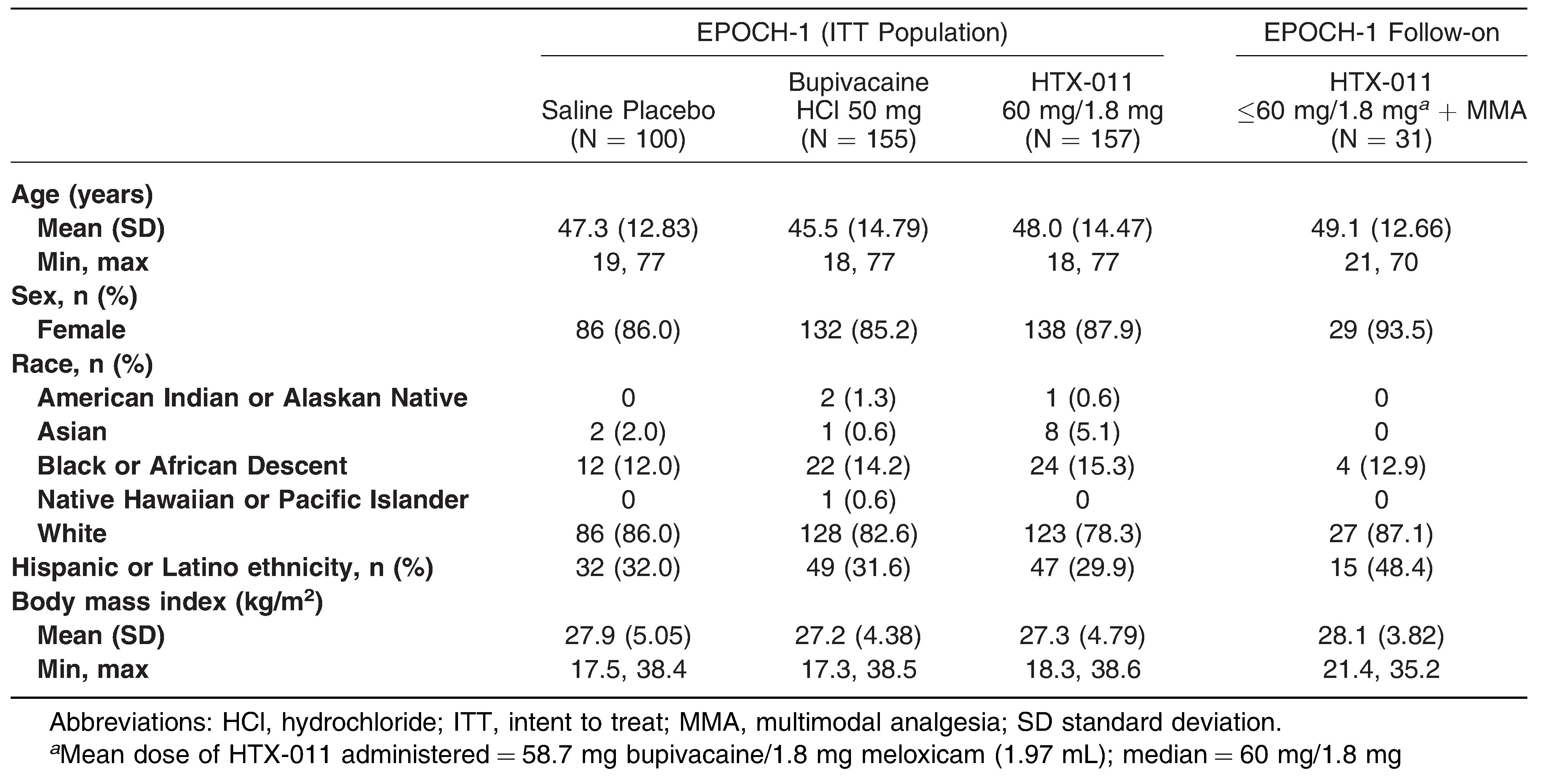
Thirty-one patients received HTX-011 during unilateral bunionectomy with osteotomy in this follow-on study. Patient characteristics were similar to those in the precedent EPOCH-1 study, [3] with a mean age of 49.1 years (vs means of 45.5 to 48.0 years in EPOCH-1 cohorts; Table 1). Female patients (29/31) made up 93.5% of the cohort (vs 85.2% [132/155] to 87.9% [138/157]) and the mean BMI was 28.1 kg/m2 (vs 27.2 to 27.9 kg/m2; Table 1).
The mean dose of HTX-011 administered was 58.7 mg bupivacaine/1.8 mg meloxicam (1.97 mL) and the median dose was 60 mg/1.8 mg, which is comparable to that prescribed in EPOCH-1 (60 mg/ 1.8 mg). [3]
Table 1.
Patient baseline characteristics.
Pain Intensity
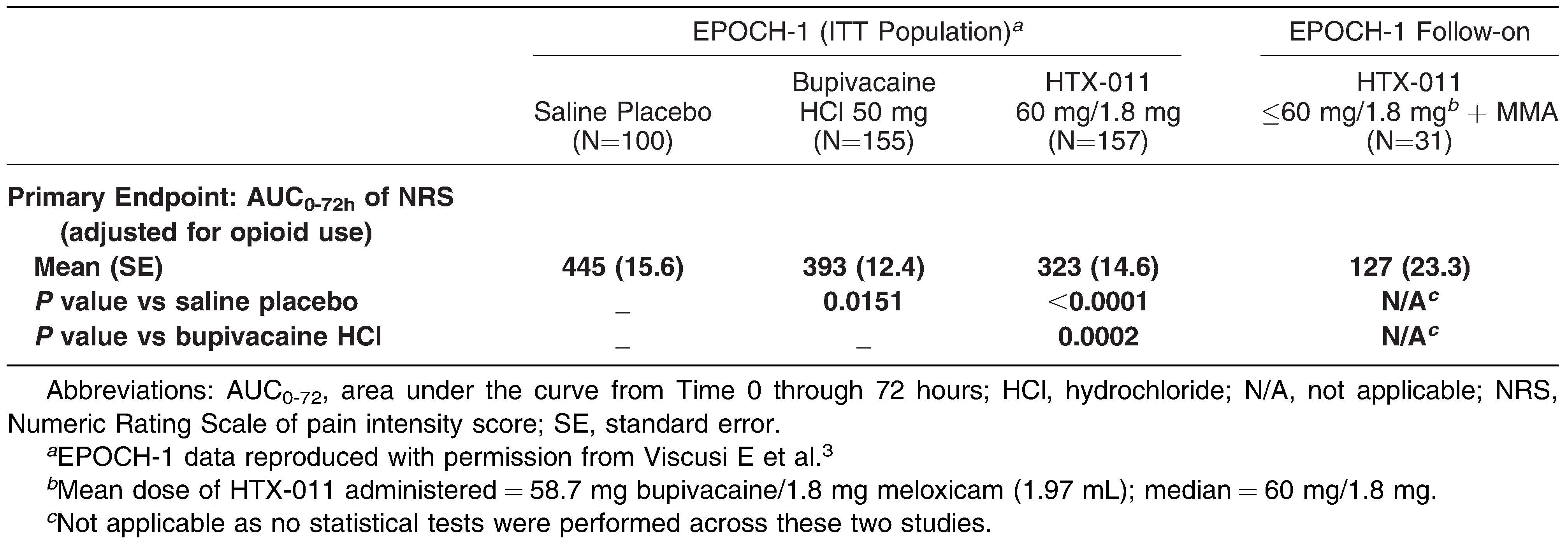
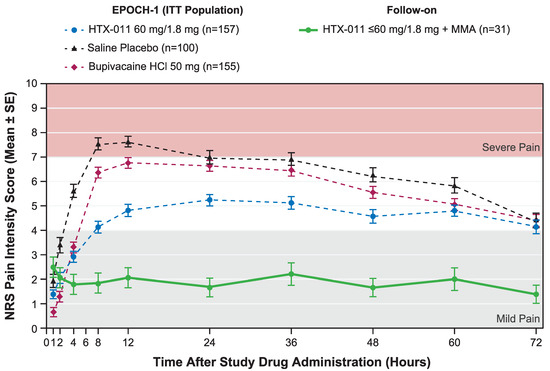
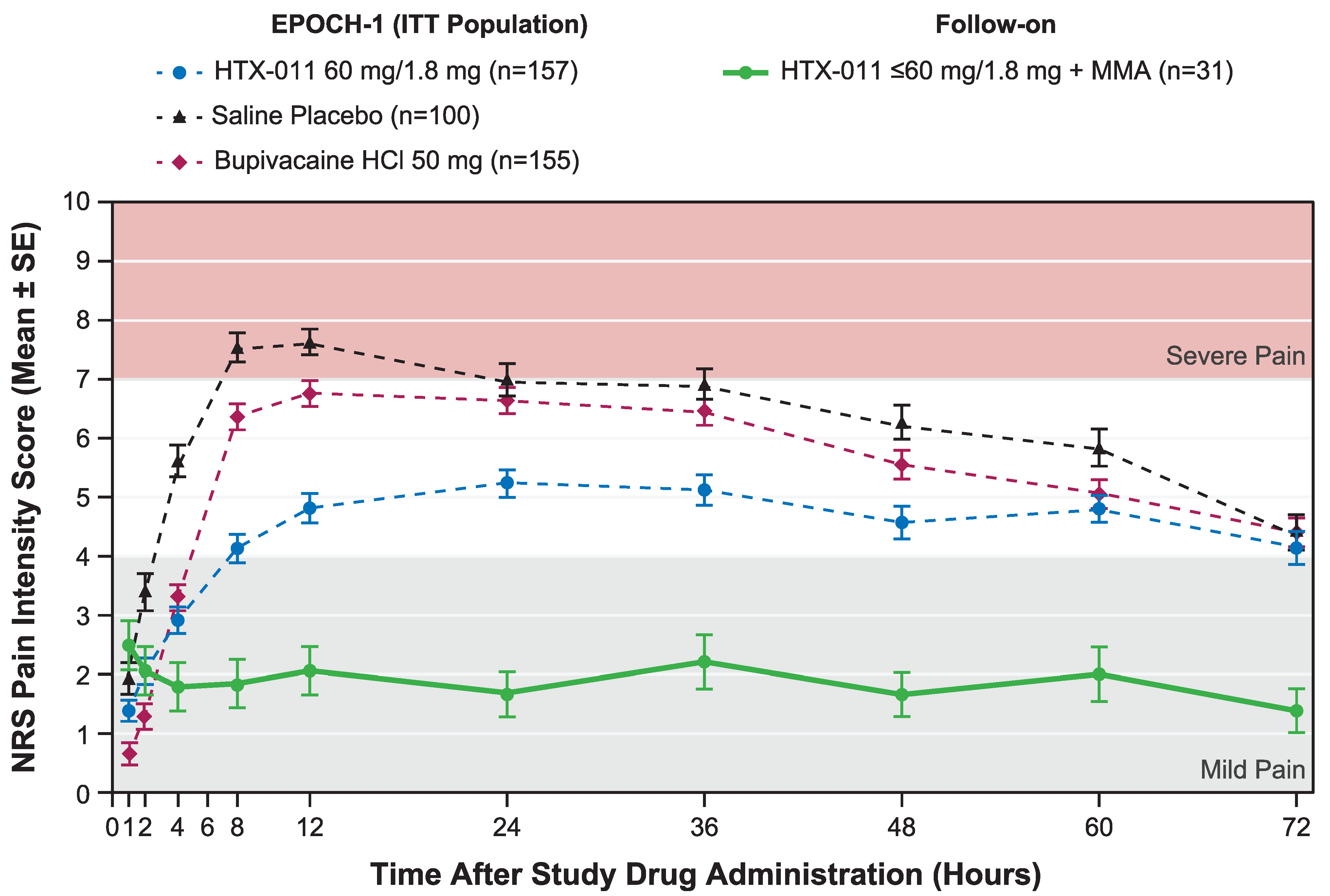
In EPOCH-1, HTX-011 (60 mg bupivacaine/1.8 mg meloxicam) provided significant pain reduction compared to standard of care bupivacaine HCl and saline placebo controls (Figure 1). As such, we predicted its use as the foundation of postoperative non-opioid MMA regimen would yield even greater pain relief. As anticipated, the mean AUC0-72 of NRS pain intensity scores was 127, approximately one third the intensity over time experienced by bupivacaine HCl injection-treated patients in EPOCH-13 (393; Table 2). With the addition of the non-opioid MMA regimen to HTX-011, mean pain intensity scores were maintained in the mild range (NRS < 4) through 72 hours—notably, the mean NRS score did not exceed 2.5 during the inpatient assessment period (Figure 1). Furthermore, 22 of the 31 (71%) patients that received HTX-011 as the foundation of a scheduled, non-opioid MMA regimen experienced no severe pain at all.
Figure 1.
Mean NRS pain intensity scores by timepoint over the 72-hour postoperative assessment period. The mean dose of HTX-011 administered in the follow-on study was 58.7 mg bupivacaine/1.8 mg meloxicam (1.97 mL); the median was 60 mg/1.8 mg. EPOCH-1 data reproduced with permission from Viscusi E et al. [3] Abbreviations: HCl, hydrochloride; ITT, intent-to-treat; MMA, multimodal analgesia; NRS, numeric rating scale of pain intensity.
Table 2.
Mean AUC0-72 of NRS pain intensity scores.
Opioid Consumption
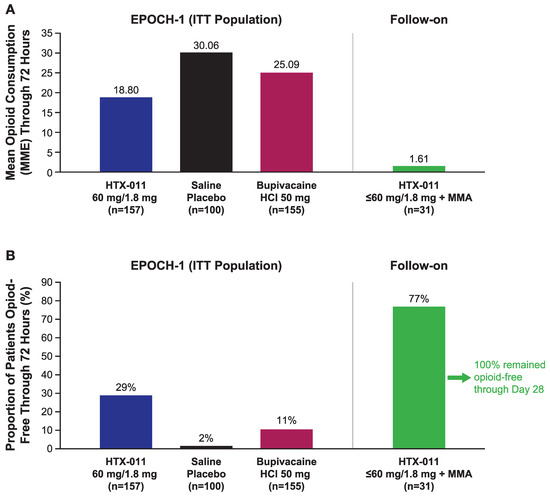
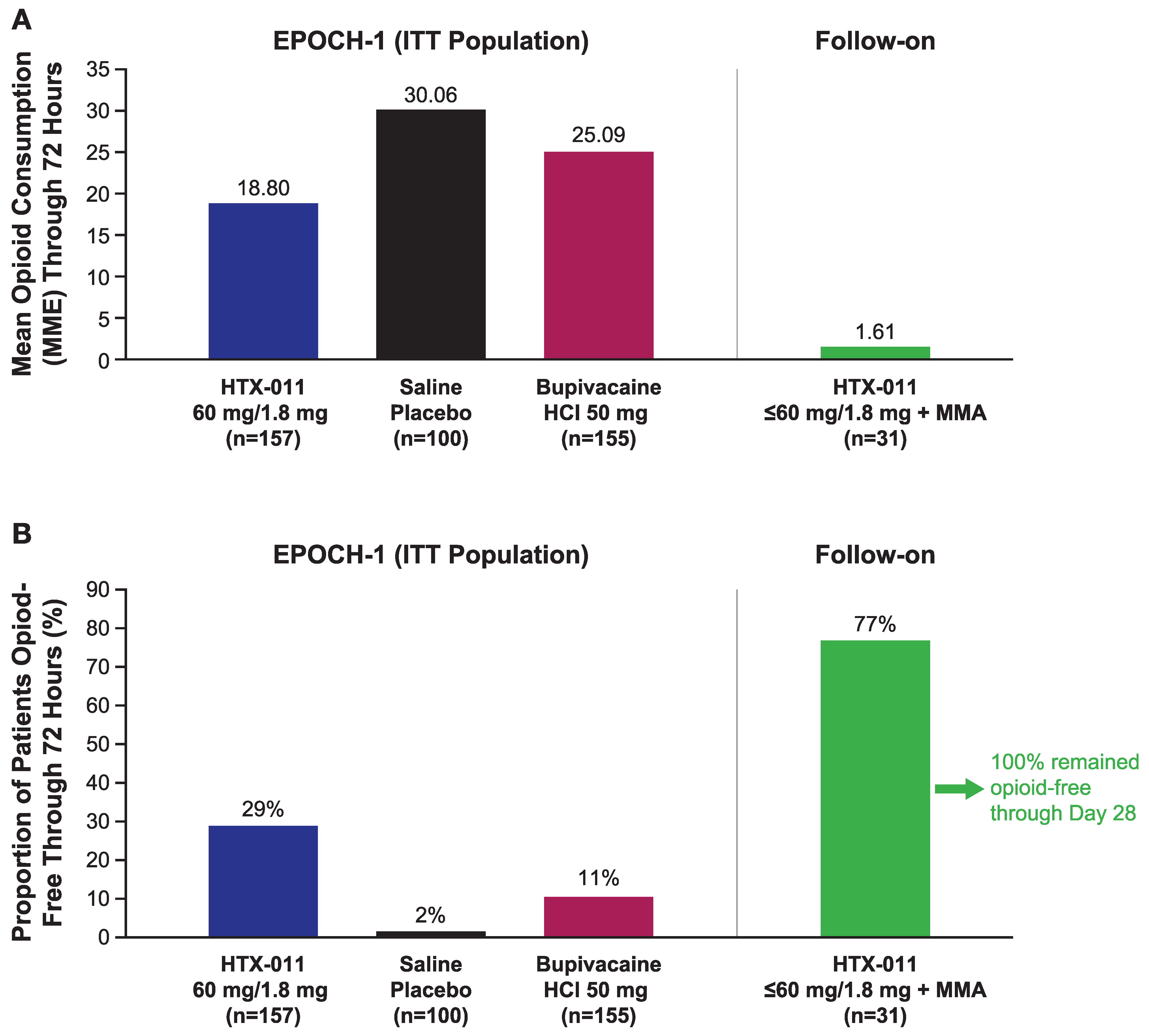
As HTX-011 significantly reduced patients’ need for opioid rescue medication in the EPOCH-1 study compared to bupivacaine HCl or saline placebo (Figure 2), we predicted additional reductions to opioid consumption when HTX-011 was applied as the foundation of a scheduled, non-opioid MMA regimen in the follow-on study. Indeed, the mean total opioid consumption over the 72-hour postoperative period was 1.61 MME (Figure 2), considerably less than patients treated with bupivacaine HCl injection in EPOCH-1 (25 MME). [3] Furthermore, most patients (24/31, 77%) required no rescue opioid medication (ie, were opioid-free) through 72 hours and continued to be opioid-free through Day 28 of recovery (Figure 2). Of the seven remaining patients, two required an opioid after the inpatient period, whereas five were opioid-free from discharge through Day 28 of recovery. One patient in the study (1/31, 3%) received ≥10 mg oxycodone within 12 hours before discharge and was therefore given an opioid prescription at discharge.
Figure 2.
(a) Mean total opioid consumption over the first 72 hours following surgery in MME and (b) the proportion of patients who consumed 0 MME (opioid-free) through 72 hours. EPOCH-1 data reproduced with permission from Viscusi E et al. [3] The mean dose of HTX-011 administered in the follow-on study was 58.7 mg bupivacaine/1.8 mg meloxicam (1.97 mL); the median was 60 mg/1.8 mg. Abbreviations: HCl, hydrochloride; ITT, intent-to-treat; MMA, multimodal analgesia; MME, IV morphine milligram equivalents.
Safety
All AEs reported in patients receiving HTX-011 with scheduled non-opioid MMA were mild or moderate in severity and resolved by the study’s end. Sixty-five percent of patients had at least one AE, the most commonly reported being nausea and vomiting—both among the AEs most frequently experienced in the control cohorts of EPOCH-1 (Table 3). [3] No deaths or serious AEs were reported during the study, and no AEs led to study withdrawal (Table 3).
The incidence of potentially NSAID-related AEs [18] was low (6.5%; 1 each [3.2%] pruritus and hypertension). No patients experienced cardiac, bleeding, renal/urinary, or hepatobiliary AEs, which can accompany NSAID and/or acetaminophen administration. Furthermore, there was no evidence of NSAIDor acetaminophen-related toxicity from HTX-011 and the scheduled non-opioid MMA regimen indicated by clinical laboratory evaluations, including liver function tests, serum creatinine, and estimated glomerular filtration rate.
Table 3.
Summary of adverse events.
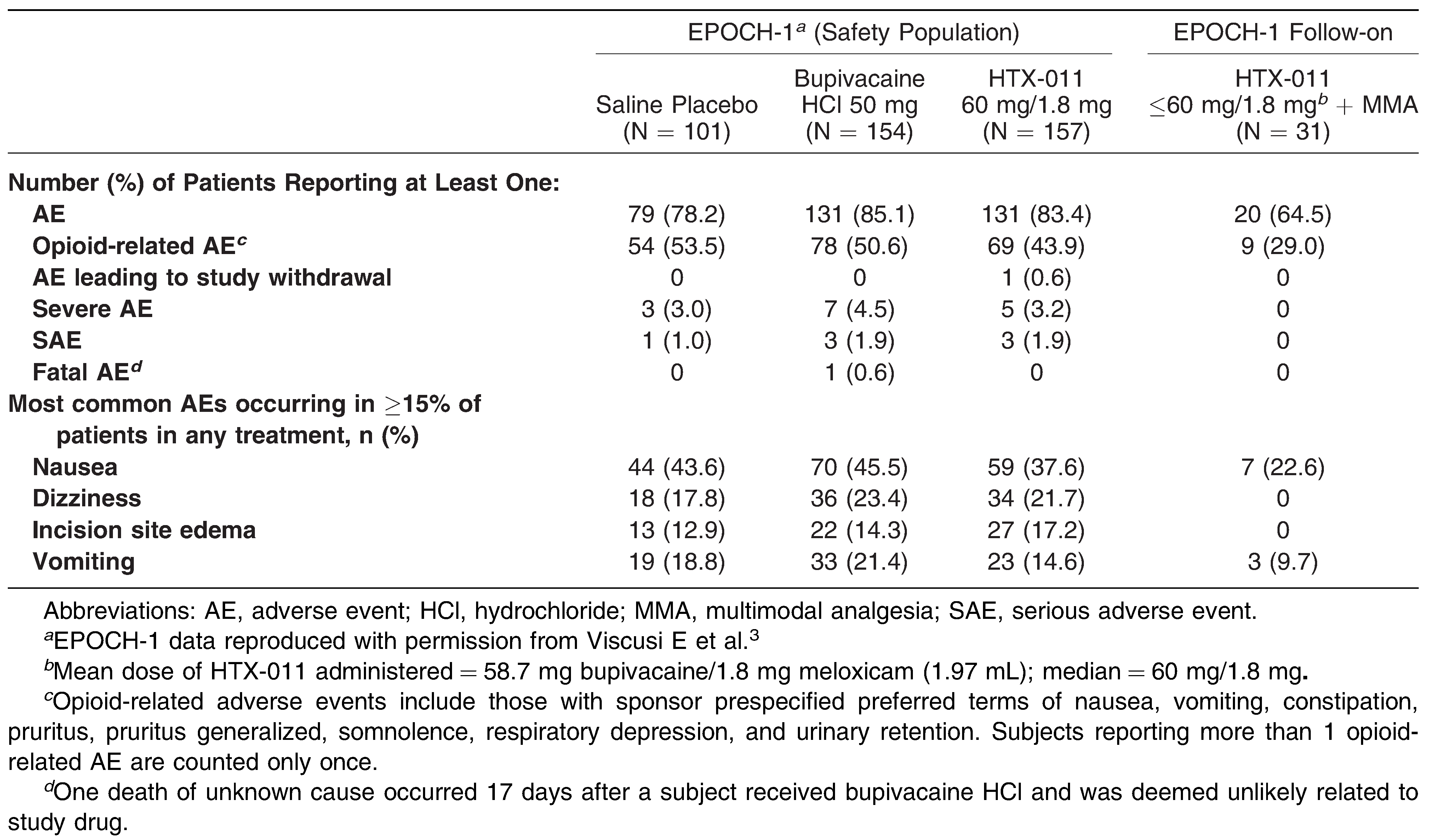
ORAEs, prespecified as nausea, vomiting, constipation, pruritus, pruritus generalized, somnolence, respiratory depression, and urinary retention, were experienced by 29% of patients (9/31), with nausea most reported (Table 3). The rate of ORAEs was lower in the present study than in the EPOCH-1 cohorts (Figure 2; Table 3).
Discussion
HTX-011, a dual-acting local anesthetic allowing for the extended release of bupivacaine and meloxicam, previously demonstrated superior pain relief and opioid use reduction compared to bupivacaine HCl and saline placebo during the 72-hour postoperative period, when severe pain is most common. [3,19,20] Evidence-based guidelines for real-world practice recommend employing MMA in the postoperative setting [21,22]; thus, the follow-on study was designed to evaluate HTX-011 as the foundation of a scheduled, non-opioid MMA regimen of OTC analgesics to maximize the analgesic benefit to patients. Designed with the same procedure and data elements as EPOCH-1, this study’s results suggest that addition of such MMA in the postoperative setting safely and effectively augments the pain relief provided by HTX-011 [3] and further reduces the need for opioid rescue medication after bunionectomy with osteotomy. Indeed, the combination of HTX-011 with a scheduled, non-opioid, OTC MMA regimen of ibuprofen and acetaminophen provided profound pain reduction enabling opioid-free recovery in a majority of bunionectomy patients. This result is substantial—a recent bunionectomy study employing a fixed-dose regimen of ibuprofen and acetaminophen (with no other non-opioid postoperative analgesia) reported that only 25% of patients were able to recover opioid-free through the first 48 hours; of patients who received only ibuprofen or only acetaminophen, less than 10% were opioid-free through 48 hours. [23] By comparison, the rate of opioid-free recovery for the first 48 hours was more than 3 times higher (81%) in patients receiving HTX011 as the foundation of the postoperative MMA regimen of ibuprofen and acetaminophen in this study. Throughout the entire 72-hour postoperative period, when severe pain is most common, 71% of patients experienced no severe pain, compared with 25% of patients from the EPOCH-1 study who were administered bupivacaine HCl and 46% of those who received HTX-011 alone. [3] Furthermore, 77% of patients treated with HTX-011 and the scheduled MMA in the follow-on study required no opioid medication during the 72-hour inpatient period, and all of these patients remained opioid-free through Day 28 of recovery. These findings are encouraging, given most patients require opioids following bunionectomy surgery. [3,23]
By reducing postoperative pain and the use of opioid rescue medication, HTX-011-based analgesia also has the potential to improve patient outcomes and facilitate recovery by minimizing the risk of ORAEs caused by opioids, including respiratory depression and opioid dependence. [24] Another bunionectomy study reported >90% of patients receiving intraoperative liposomal bupivacaine (120 mg) required opioids, consuming a mean total of 3.8 pills of rescue medication (5 mg oxycodone/325 mg acetaminophen) or 28.5 MME within the first 24 hours and experiencing correspondingly high rates of the ORAEs nausea (40.2%) and vomiting (27.8%). [25] In EPOCH-1, prespecified ORAEs were reported by more than half of patients receiving saline placebo or bupivacaine HCl (Table 3), with a mean of 25–30 MME consumed over the first 72 hours in these cohorts. By contrast, participants in this follow-on study experienced a lower ORAE rate of 29% (most commonly nausea [22.6%] and vomiting [9.7%]) and consumed much less opioid medication: 1.61 MME on average over the first 72 hours. Together, these studies support the correlation between total opioid consumption and ORAEs and the assumption that enabling opioid-free recovery with HTX-011 as the foundation of a scheduled non-opioid MMA regimen can lower ORAE risk after bunionectomy.
The potential for NSAID-related toxicity with ibuprofen and the low-dose meloxicam in HTX-011 was considered unlikely, and no increase in potential NSAID-related toxicity was observed. In this study, when HTX-011 was used as the foundation of an MMA including acetaminophen and ibuprofen, there were no serious AEs, and no evidence of NSAID-related toxicity based on the AE profiles and laboratory evaluations of liver and kidney function. Serious gastrointestinal (GI) AEs that have been associated with NSAIDs (including inflammation, bleeding, ulceration, and perforation of the GI tract) were not observed in any patient. Bleeding associated with NSAID use was also not observed, with the only cardiovascular AE being moderate hypertension reported by one patient on postoperative Day 30. These findings reinforce the safety of using HTX-011 as a part of a comprehensive surgical pain management protocol.
Limitations of the present study include its small size and certain aspects of its design. As a follow-on to the EPOCH-1 study with identical procedures, it required patients to remain on site for 72 hours following surgery, despite bunionectomy typically being an outpatient procedure. This inpatient period was critical for rigorous observation and confirmation of treatment compliance in these studies. Another potential limitation of this study’s follow-on design is that it does not include the active and control comparators of the precedent EPOCH-1 study. Having shown superiority of HTX-011 over bupivacaine HCl and saline placebo, [3,19,20] it was assumed HTX-011 + MMA would remain superior compared to either comparator + MMA. Additional studies are needed to confirm the safety and efficacy of HTX-011 when combined with different scheduled, non-opioid MMA regimens in real-world settings.
Conclusions
This follow-on study to EPOCH-1 demonstrated that a single dose of HTX-011 as the foundation of a scheduled, non-opioid OTC MMA regimen was able to maintain patients’ mean pain intensity in the mild range through 72 hours and eliminated opioid use in 77% of patients in this surgical model of bone pain. These results show that the use of HTX-011 as a foundation for MMA may offer a new and effective therapy for opioid-free recovery following bunionectomy with osteotomy.
Financial Disclosure
Funding for this research was provided by Heron Therapeutics, Inc (San Diego, California). Assistance with manuscript preparation was provided by ApotheCom (San Francisco, California) and funded by Heron Therapeutics, Inc (San Diego, California).
Conflicts of Interest
Richard Pollak and Tong J. Gan have received honoraria from Heron Therapeutics, Inc for consulting. Danlin Cai is an employee of Heron Therapeutics, Inc.
References
- GAN, TJ; HABIB, AS; MILLER, TE; et al. Incidence, patient satisfaction, and perceptions of post-surgical pain: results from a US national survey. Curr Med Res Opin 2014, 30, 149. [Google Scholar] [CrossRef] [Scilit]
- SVENSSON, I; SJOSTROM, B. HALJAMAE H: Assessment of pain experiences after elective surgery. J Pain Symptom Manage 2000, 20, 193. [Google Scholar] [CrossRef] [Scilit]
- VISCUSI, E; GIMBEL, JS; POLLAK, RA. ET AL: HTX-011 reduced pain intensity and opioid consumption versus bupivacaine HCl in bunionectomy: phase III results from the randomized EPOCH 1 study. Reg Anesth Pain Med 2019, 44, 700. [Google Scholar] [CrossRef] [Scilit]
- GOLEMBIEWSKI, J. DASTA J: Evolving role of local anesthetics in managing postsurgical analgesia. Clin Ther 2015, 37, 1354. [Google Scholar] [CrossRef] [Scilit]
- KEHLET, H; ANDERSEN, LO. Local infiltration analgesia in joint replacement: the evidence and recommendations for clinical practice. Acta Anaesthesiol Scand 2011, 55, 778. [Google Scholar] [CrossRef] [Scilit]
- BRAITO, M; DAMMERER, D; SCHLAGER, A. ET AL: Continuous wound infiltration after hallux valgus surgery. Foot Ankle Int 2018, 39, 180. [Google Scholar] [CrossRef] [Scilit]
- DASTA, J; RAMAMOORTHY, S; PATOU, G; et al. Bupivacaine liposome injectable suspension compared with bupivacaine HCl for the reduction of opioid burden in the postsurgical setting. Curr Med Res Opin 2012, 28, 1609. [Google Scholar] [CrossRef] [Scilit] [PubMed]
- HAMILTON, TW; ATHANASSOGLOU, V; MELLON, S. ET AL: Liposomal bupivacaine infiltration at the surgical site for the management of postoperative pain. Cochrane Database Syst Rev 2017, 2, CD011419. [Google Scholar] [PubMed]
- ENOCH S, LEAPER D: Basic science of wound healing. Surgery (Oxford) 2006, 23, 31.
- HARGREAVES, KM; KEISER, K. Local anesthetic failure in endodontics. Endod Top 2002, 1, 26. [Google Scholar] [CrossRef] [Scilit]
- KESSLER, ER; SHAH, M; GRUSCHKUS, SK; et al. Cost and quality implications of opioid-based postsurgical pain control using administrative claims data from a large health system: opioid-related adverse events and their impact on clinical and economic outcomes. Pharmacotherapy 2013, 33, 383. [Google Scholar] [CrossRef] [Scilit]
- RAMACHANDRAN, SK; HAIDER, N; SARAN, KA; et al. Life-threatening critical respiratory events: a retrospective study of postoperative patients found unresponsive during analgesic therapy. J Clin Anesth 2011, 23, 207. [Google Scholar] [CrossRef] [Scilit]
- SUN, EC; DARNALL, BD; BAKER, LC; ET, AL. Incidence of and risk factors for chronic opioid use among opioid-naive patients in the postoperative period. JAMA Intern Med 2016, 176, 1286. [Google Scholar] [CrossRef] [Scilit]
- BRUMMETT, CM; WALJEE, JF; GOESLING, J. ET AL: New persistent opioid use after minor and major surgical procedures in US adults. JAMA Surg 2017, 152, e170504. [Google Scholar] [CrossRef] [Scilit]
- OTTOBONI, T; QUART, B; PAWASAUKAS, J. ET AL: Mechanism of action of HTX-011: a novel, extended-release, dualacting local anesthetic formulation for postoperative pain. Reg Anesth Pain Med 2020, 45, 117. [Google Scholar] [CrossRef] [Scilit]
- WANG, H; GARGANO, C; LUKAC, S. ET AL: An enhanced bunionectomy model as a potential tool for early decision-making in the development of new analgesics. Adv Ther 2010, 27, 963. [Google Scholar] [CrossRef] [Scilit]
- SINGLA, NK; DESJARDINS, PJ; CHANG, PD. A comparison of the clinical and experimental characteristics of four acute surgical pain models: dental extraction, bunionectomy, joint replacement, and soft tissue surgery. Pain 2014, 155, 441. [Google Scholar] [CrossRef] [Scilit]
- ESSEX, MN; ZHANG, RY; BERGER, MF; ET, AL. Safety of celecoxib compared with placebo and non-selective NSAIDs: cumulative meta-analysis of 89 randomized controlled trials. Expert Opin Drug Saf 2013, 12, 465. [Google Scholar] [CrossRef] [Scilit] [PubMed]
- VISCUSI, E; MINKOWITZ, H; WINKLE, P. ET AL: HTX-011 reduced pain intensity and opioid consumption versus bupivacaine HCl in herniorrhaphy: results from the phase 3 EPOCH 2 study. Hernia 2019, 23, 1071. [Google Scholar] [CrossRef] [Scilit]
- LACHIEWICZ, PF; LEE, GC; POLLAK, R. ET AL: HTX-011 reduced pain and opioid use after primary total knee arthroplasty: results of a randomized phase 2b trial. J Arthroplast 2020. [Google Scholar] [CrossRef] [Scilit] [PubMed]
- Practice guidelines for acute pain management in the perioperative setting: an updated report by the American Society of Anesthesiologists Task Force on Acute Pain Management. Anesthesiology 2012, 116, 248. [CrossRef] [Scilit]
- Chou, R; Gordon, DB; De Leon-Casaola, OA; et al. Management of Postoperative Pain: A Clinical Practice Guideline From the American Pain Society, the American Society of Regional Anesthesia and Pain Medicine, and the American Society of Anesthesiologists’ Committee on Regional Anesthesia, Executive Committee, and Administrative Council. J Pain 2016, 17, 131. [Google Scholar] [CrossRef] [Scilit] [PubMed]
- DANIELS, SE; PLAYNE, R; STANESCU, I; et al. Efficacy and safety of an intravenous acetaminophen/ibuprofen fixed-dose combination after bunionectomy: a randomized, double-blind, factorial, placebo-controlled trial. Clin Ther 2019, 41, 1982. [Google Scholar] [CrossRef] [Scilit] [PubMed]
- HAH, JM; BATEMAN, BT; RATLIFF, J. ET AL: Chronic opioid use after surgery: implications for perioperative management in the face of the opioid epidemic. Anesth Analg 2017, 125, 1733. [Google Scholar] [CrossRef] [Scilit] [PubMed]
- GOLF, M; DANIELS, SE. ONEL E: A phase 3, randomized, placebo-controlled trial of DepoFoam(R) bupivacaine (extended-release bupivacaine local analgesic) in bunionectomy. Adv Ther 2011, 28, 776. [Google Scholar] [CrossRef] [Scilit] [PubMed]
This is an open-access article distributed under the terms of the Creative Commons Attribution Non-Commercial No Derivatives (CC BY-NC-ND) 4.0 License.