The purpose of this case report is to describe a veteran who satisfies many, but not all diagnostic criteria of DISH. Further imaging was performed to come to a conclusive diagnosis of psoriatic arthritis, which recent literature reports has many different variants and can be difficult to classify and diagnose at times.
Case Presentation
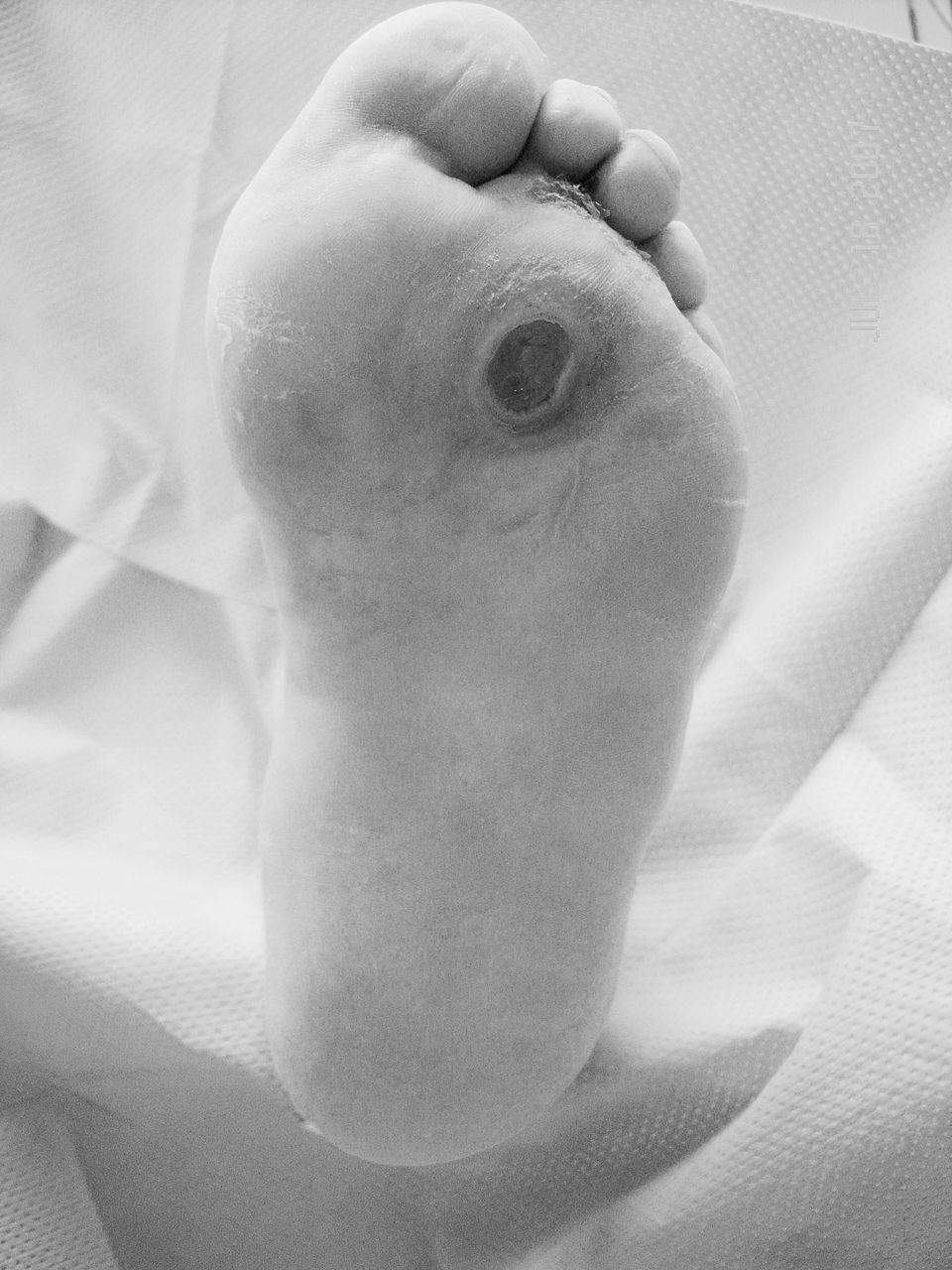
A 59-year-old male veteran first presented to the podiatry outpatient clinic at Louis Stokes Cleveland Department of Veterans Affairs, Cleveland, Ohio, on May 24, 2007, for diabetic ulcer care. He had a plantar lesion underlying the left third metatarsal that was present for approximately 6 months, despite wound care and off-loading (
Fig. 1). He was referred to our clinic for continued care and further work-up. At the time of presentation, the patient had a past medical history significant for multiple pedal ulcerations and infections requiring surgery at another facility, obesity, diabetes mellitus type II with peripheral neuropathy, hypertension, and psoriasis. His medications included glyburide, metformin, lisinopril, panafil, aspirin, and a multivitamin, and he had no known allergies.
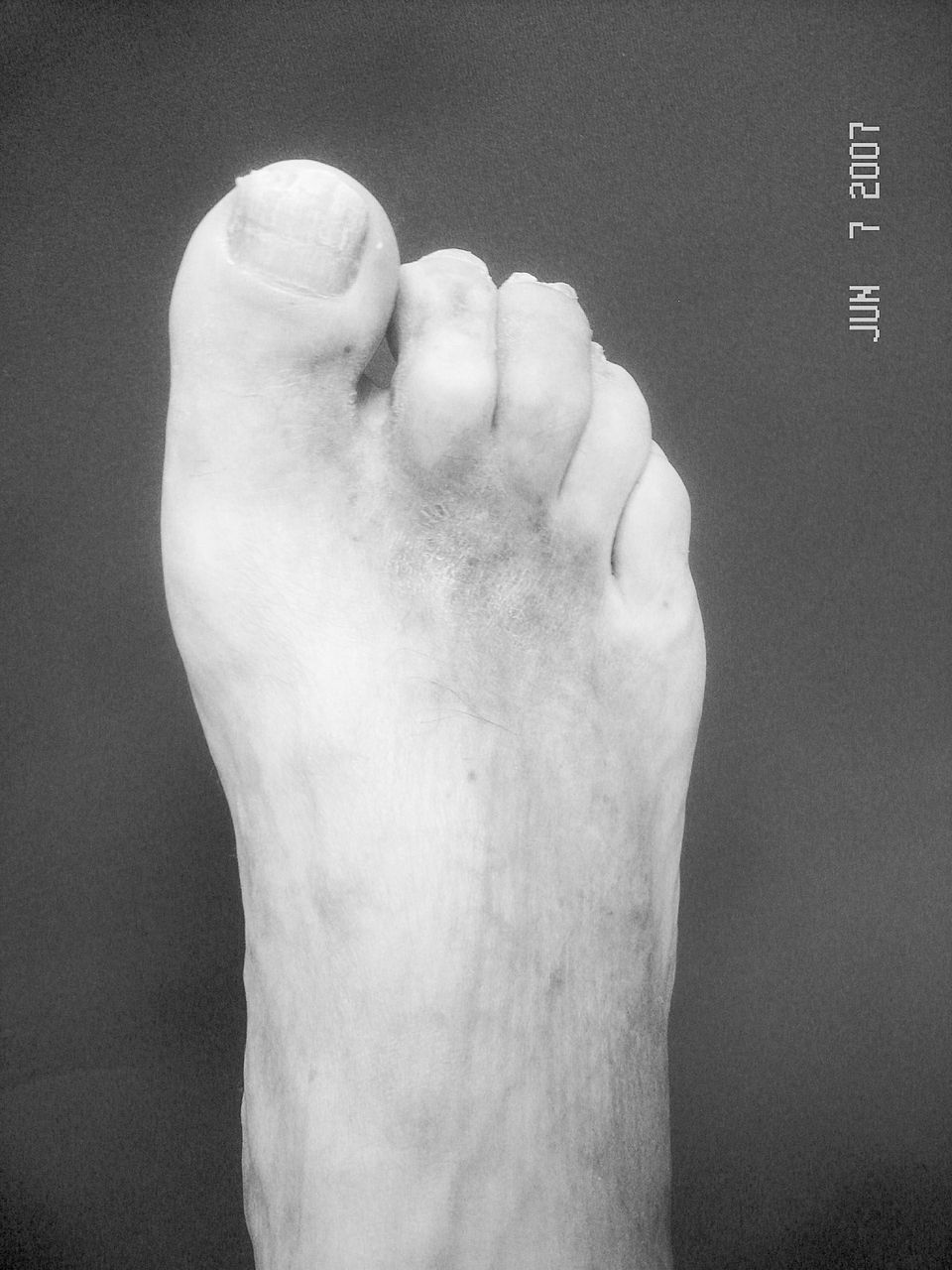
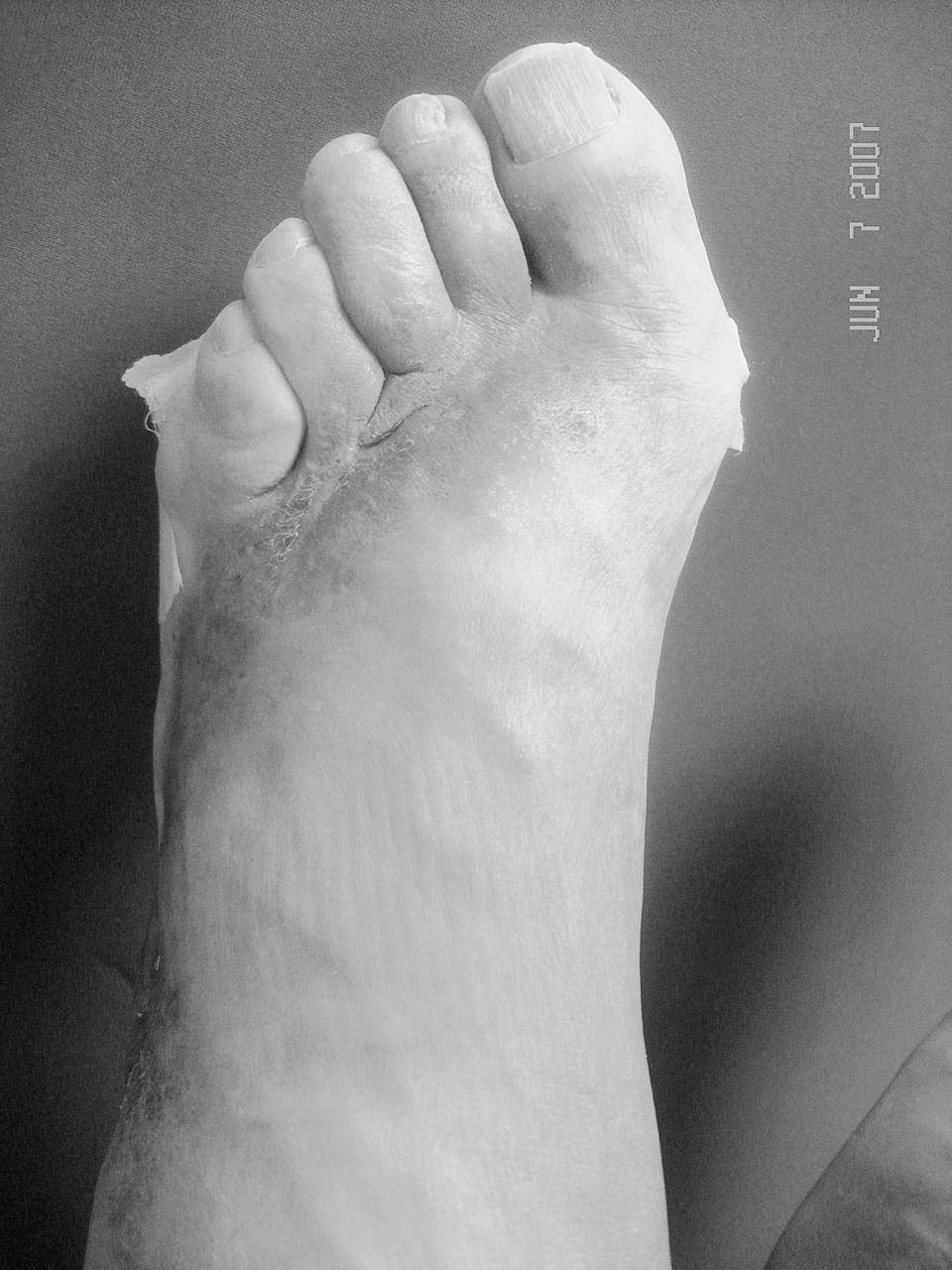
Upon physical exam, the patient was noted to have palpable pedal pulses, absent protective sensation bilateral via testing with 5.07 Semmes-Weinstein monofilament, an ulceration underlying a prominent left third metatarsal head, mild hallux abductovalgus and with an increased hallux abductus angle, as well as rigid digital deformities located at digits 2 through 5 bilaterally (
Figs. 2 and
3). No clinical signs of infection were noted. A complete blood count and comprehensive metabolic panel were within normal limits. C-reactive protein was minimally elevated at 1.1 mg/dL. A recently healed ulceration under the right first metatarsal head was noted as well as cicatrixes dorsally on the left. Hyperpigmentation on the dorsal distal aspect of bilateral feet was noted. Serial pedal radiographs available from September 2005 to April 2007 as well as updated films were reviewed and found to be inconclusive for signs of osteomyelitis. However, massive spurring, cystic changes, soft-tissue calcifications, and various other osseous changes were noted. Radiologic evidence of previous surgical intervention was somewhat difficult to distinguish from osseous changes consistent with pathologic conditions (
Fig. 4). Significant findings are discussed in the “radiology” section herein. Because of a history of repeat infections, surgical intervention, and current history of a nonhealing wound, a white blood cell—tagged bone scan was performed on May 30, 2007, to determine if osteomyelitis was present. The scan consisted of WBCs labeled with 23.9 mCi of Tc99m hexamethylpropyleneamine oxime.
Figure 1.
Clinical photograph of the left foot, demonstrating sub-third metatarsal head ulceration.
Figure 1.
Clinical photograph of the left foot, demonstrating sub-third metatarsal head ulceration.
Figure 2.
Clinical photograph of the right foot reveals rigidly contracted digits and mild HAA.
Figure 2.
Clinical photograph of the right foot reveals rigidly contracted digits and mild HAA.
Figure 3.
Clinical photograph of the left foot reveals rigidly contracted digits, mild HAV and HAA, as well as signs of previous surgical intervention.
Figure 3.
Clinical photograph of the left foot reveals rigidly contracted digits, mild HAV and HAA, as well as signs of previous surgical intervention.
Images were taken at 1 hour and 3 hours after infusion and revealed no increased accumulation to indicate osseous infection. Standard wound care and off-loading were continued.
Based on the patient’s past medical history and pedal radiographic findings, a laboratory work-up was ordered consisting of rheumatoid factor, antinuclear antibodies, and an arthritis panel. Rheumatoid factor and antinuclear antibodies were within normal limits. Fibrinogen was elevated to 435 mg/dL. Imaging of hands, spine, and feet were ordered (see “Radiology” section). A rheumatology consult was placed for further work-up because the differential diagnosis included psoriatic arthritis, Charcot neuroarthropathy, and DISH. The patient was seen by a fellow in the rheumatology clinic in June 2007. Upon rheumatologic consultation, the patient related a history of many years of joint problems, including bilateral feet, right shoulder, lower back and buttocks, and intermittent hand complaints. He denied a history of hot swollen joints, oral ulcers, Reynaud’s symptoms, eye inflammation, bloody stool, and urethritis. His history was positive for psoriatic skin changes including large, scaly, erythematous plaques on abdomen, back, and buttocks encompassing less than 20% of body surface area. The patient experienced improvement of cutaneous manifestations with natural sunlight and treatment with topicort and dovenox. His family history revealed no members with psoriasis or other inflammatory arthropathies. He denied recent non-steroidal anti-inflammatory drug and steroid use and morning stiffness, noting that his pain was worse in the evening. Laboratory results were negative for rheumatoid factory, anti-nuclear antibodies, and C-reactive protein. An HLA B-27 was never obtained. The rheumatologist doubted a diagnosis of psoriatic arthritis and ruled out gout. However, upon literature review, a diagnosis of psoriatic arthritis seemed most accurate. No further treatment was initiated and a follow-up appointment with a senior attending was scheduled for 6 months, which the patient failed to keep.
Figure 4.
Pre-operative radiographic view of the left foot showing osseous changes, evidence of previous surgeries, and no discernable signs of osteomyelitis.
Figure 4.
Pre-operative radiographic view of the left foot showing osseous changes, evidence of previous surgeries, and no discernable signs of osteomyelitis.
Despite imaging and clinical findings indicating no infection, off-loading in a surgical shoe, and wound care with daily dressing changes, the ulceration did not decrease in size over a total of approximately 8 months time. The left third metatarsal head was prominent plantarly. This was likely attributable to the contracture of the digits as well as a result of previous surgical interventions suspected at metatarsals 4 and 5. On July 18, 2007, the veteran elected to undergo left third metatarsal head resection with ulcer excision to diminish pressure and allow for closure of the chronic ulceration (
Fig. 5). At the patient’s first postoperative visit, he was placed on oral antibiotics because of concern for superficial infection. The infection quickly resolved. The dorsal incision and plantar ulceration closure site were healed at his August 23, 2007, follow-up appointment. In March, 2008, the patient had an incision and drainage with fifth metatarsal head resection on the right foot. At his last visit on September 29, 2011, the patient had no ulcerations noted.
Figure 5.
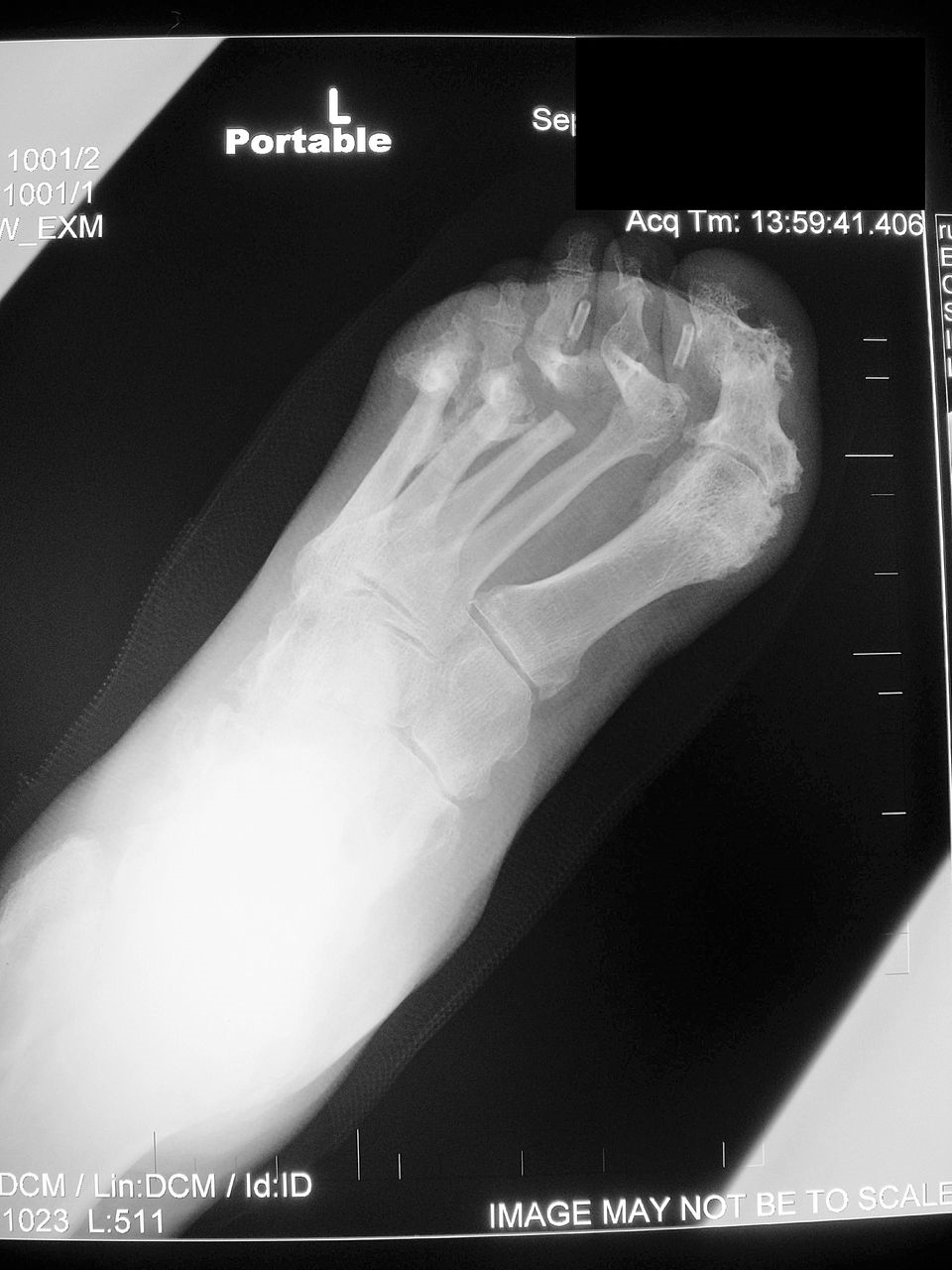
Post-operative radiograph of the left foot displaying resection of the third metatarsal head.
Figure 5.
Post-operative radiograph of the left foot displaying resection of the third metatarsal head.
Radiology
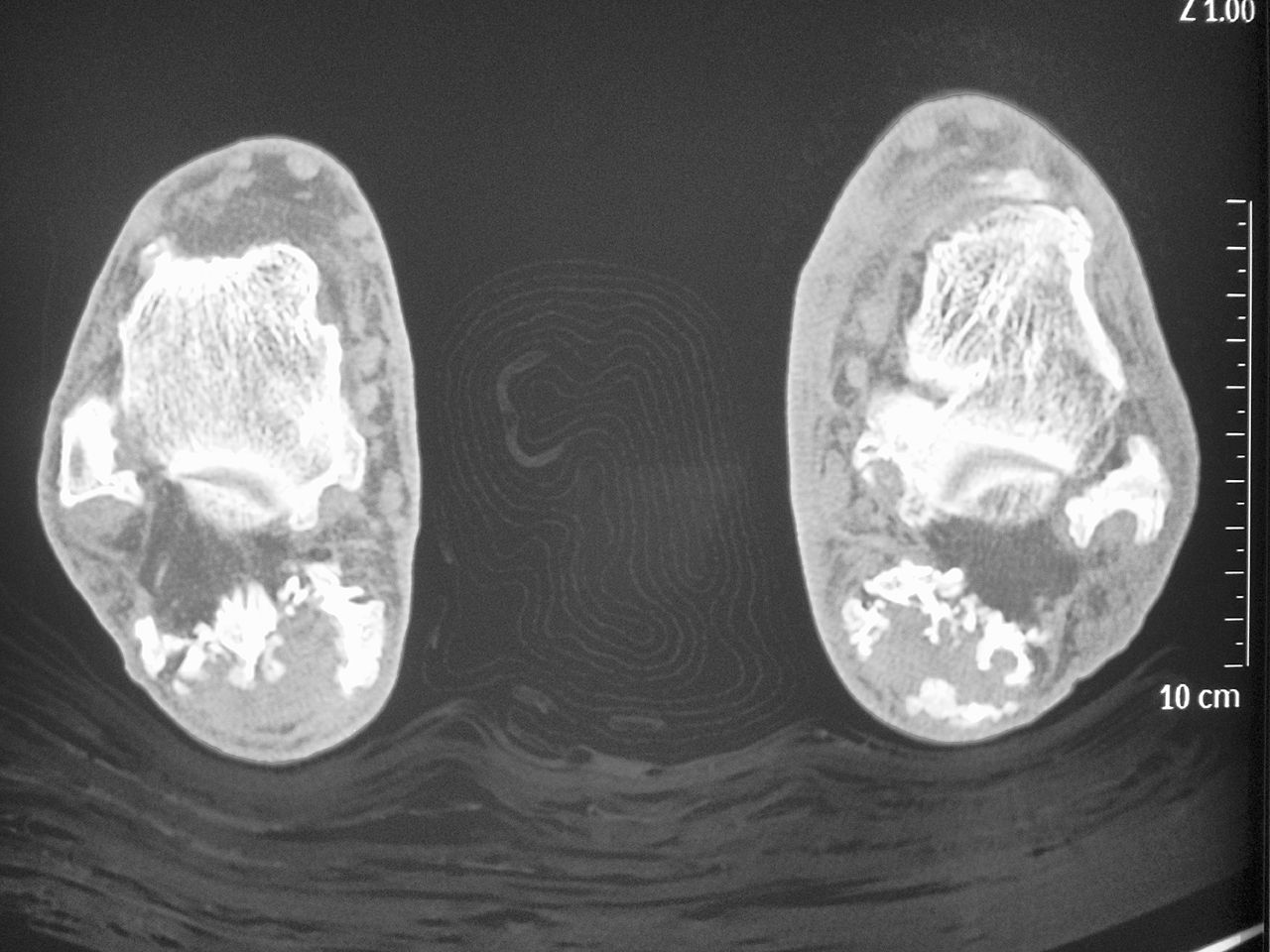
A series of radiographs were taken that included bilateral feet, bilateral hands, thoracic spine, cervical spine, and sacroiliac joints. Computed tomography revealed irregularities along the posterior margin of the calcaneus and extensive bony proliferation at the level of the plantar fascia (
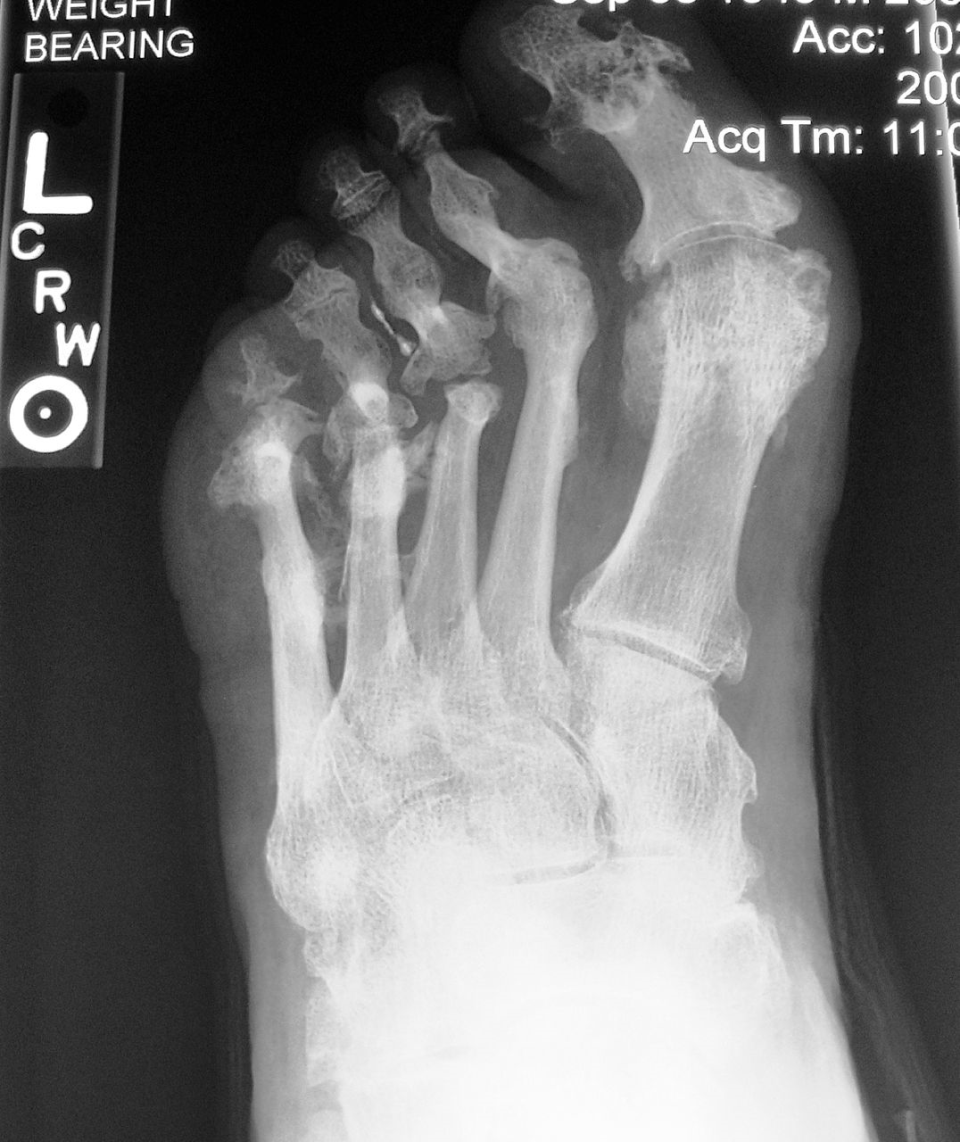
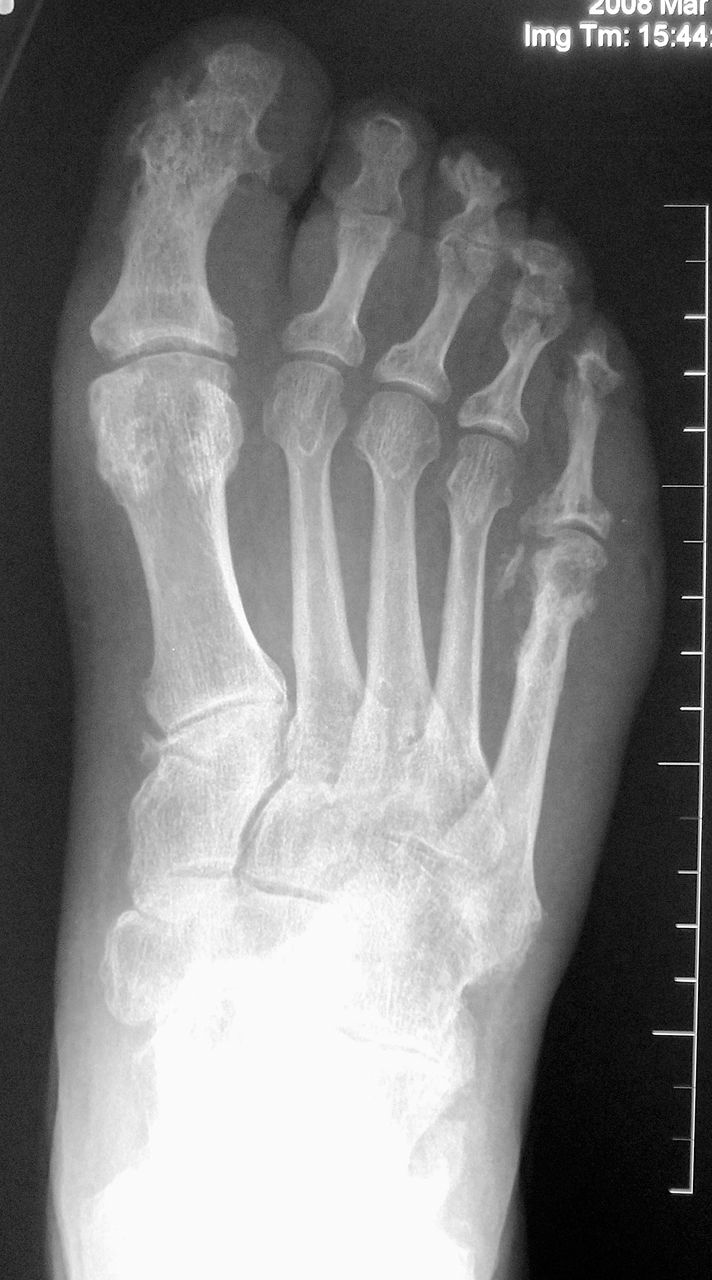
Fig. 6). Significant degenerative changes are noted at the right fifth metatarsophalangeal joint (MPJ) with erosions in the distal aspect of the metatarsal. There are several soft-tissue calcifications at this level that appear to be dystrophic. There are also extensive degenerative changes in the distal fifth toe. The middle phalanx is unable to be differentiated. There is fusion of the interphalangeal joint (IPJ) of the right hallux and mild degenerative changes at the first MPJ. Erosions and calcifications are identified at the first MPJ. Bony changes with fusion of the IPJ of the left hallux are present. Bony deformities involving the left second through fifth toes with subluxation are present. Although pedal radiographs are available from 2005 to present, the best representative images were chosen for discussion (
Figs. 7–
10).
Figure 6.
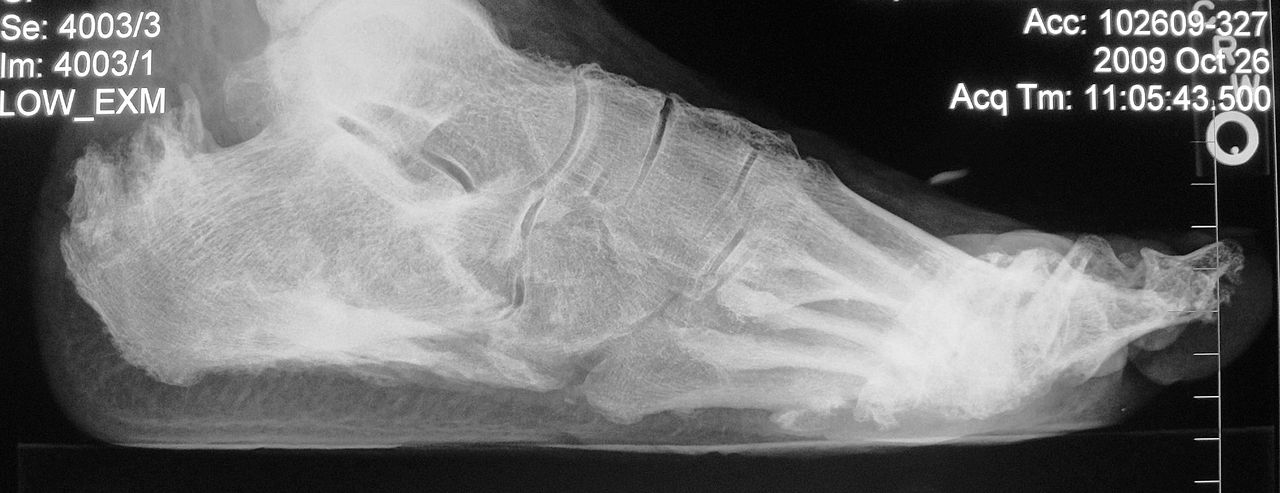
Computed tomography coronal images reveal hyperostosis along the posterior/superior margins of the calcanei.
Figure 6.
Computed tomography coronal images reveal hyperostosis along the posterior/superior margins of the calcanei.
Figure 7.
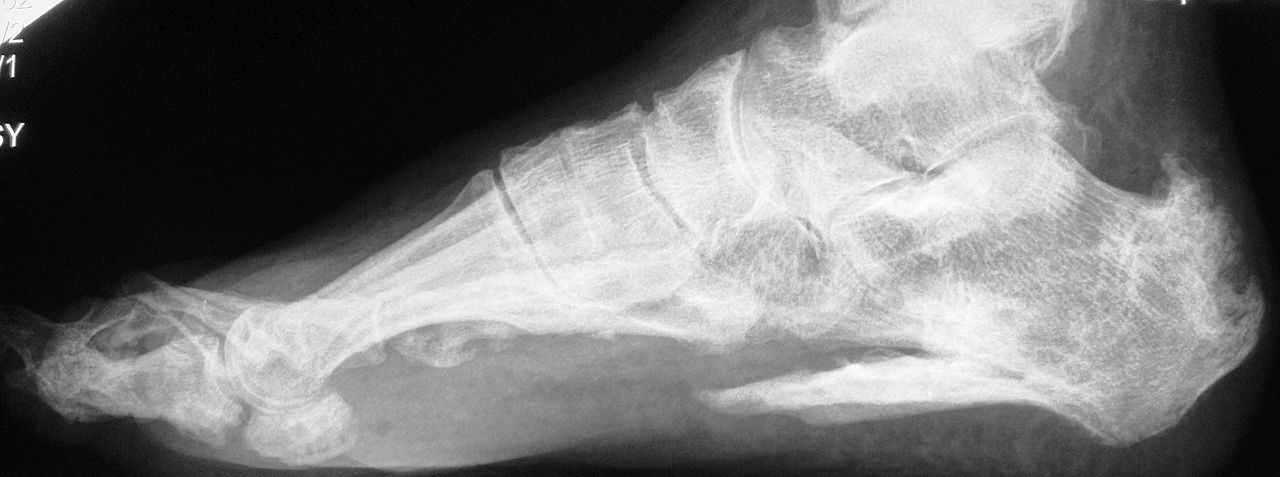
Radiograph of the left foot lateral demonstrating irregular posterior margin and extensive bony proliferations along the plantar fascia.
Figure 7.
Radiograph of the left foot lateral demonstrating irregular posterior margin and extensive bony proliferations along the plantar fascia.
A review of bilateral hand radiographs reveals that all joint spaces are well maintained with no erosions or focal osteoporosis noted. A very small soft-tissue calcification adjacent to the left third proximal interphalangeal joint is noted.
Figure 8.
Radiograph of the right foot lateral demonstrating irregular posterior margin and extensive bony proliferations along the plantar fascia.
Figure 8.
Radiograph of the right foot lateral demonstrating irregular posterior margin and extensive bony proliferations along the plantar fascia.
Figure 9.
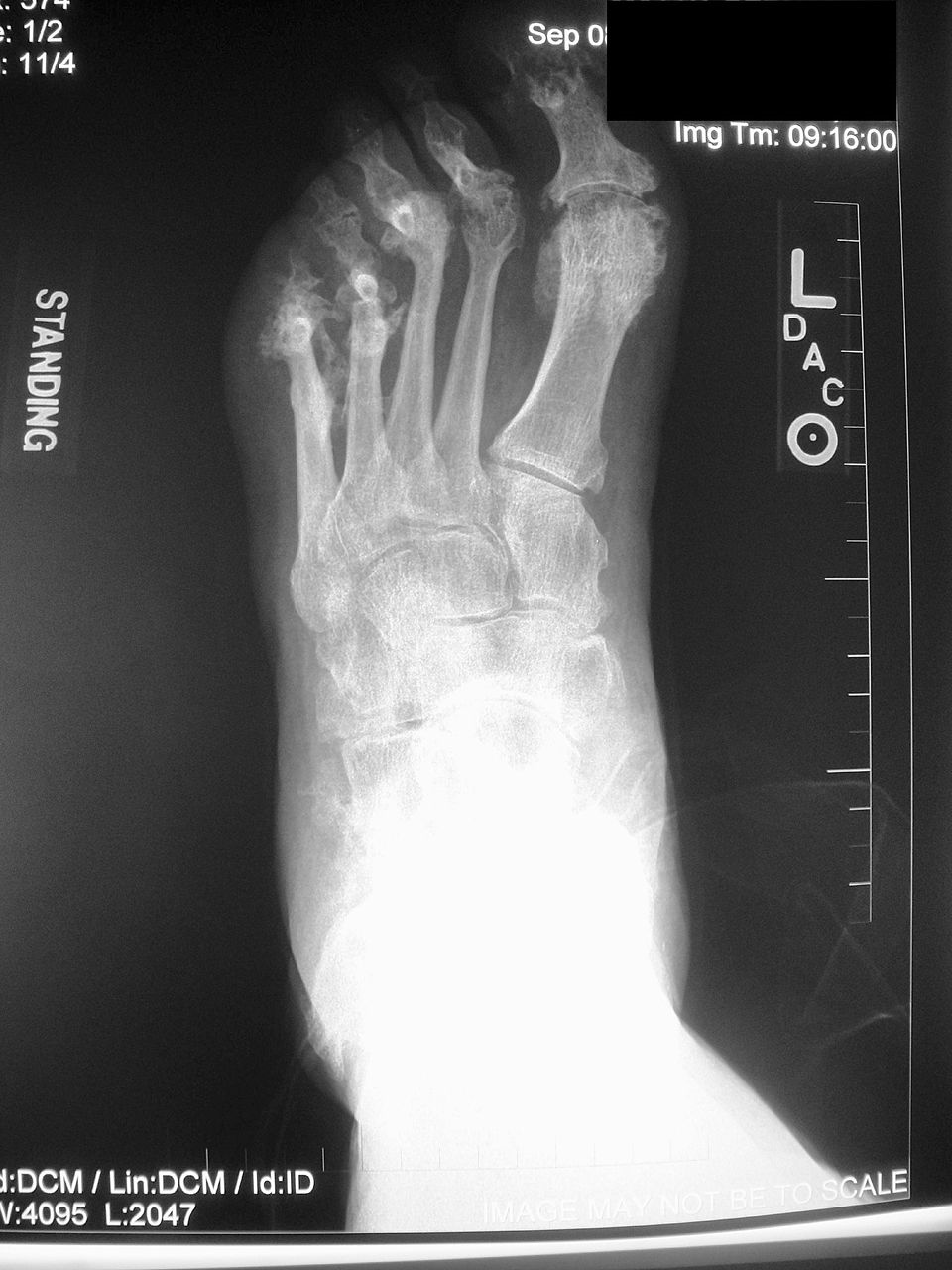
Anteroposterior radiograph of the left foot demonstrating cystic changes and calcification at the metatarsophalangeal joint as well as apparent fusion of the IPJ. Subluxations and calcifications noted at the lesser metatarsophalangeal joints.
Figure 9.
Anteroposterior radiograph of the left foot demonstrating cystic changes and calcification at the metatarsophalangeal joint as well as apparent fusion of the IPJ. Subluxations and calcifications noted at the lesser metatarsophalangeal joints.
Thoracic spine films reveal intact pedicles with identifiable spurs noted at a few levels but not diffusely. Disc spaces are well maintained. Cervical spine radiographs demonstrated no abnormalities of bones or joints. Radiographs of bilateral sacroiliac joints show preserved joints and no signs of bony erosions or destruction.
Discussion
The extensive proliferative calcaneal spurring on bilateral pedal radiographs appeared characteristic of peripheral involvement seen in DISH. Peripheral involvement is most commonly seen in the elbows, feet, heels, hands, and shoulders. Generally, DISH patients are white males older than 50. It has been shown that comorbidities such as diabetes mellitus, obesity, and hypertension can increase the chance of developing DISH [
1]. The veteran in this case report presented with all three of the aforementioned comorbidities. Resnick and Niwayama[
5] established radiographic criteria to establish a diagnosis. These criteria are: flowing calcification and ossification of at least four contiguous vertebral bodies; intervertebral disc heights maintained without evidence of disc degeneration; absence of apophyseal joint ankylosis, sacroiliac joint erosion, sclerosis, or fusion; and ossification of the anterior longitudinal ligament.
Figure 10.
Anteroposterior radiograph of the right foot demonstrating phalangeal and fifth metatarsal cystic changes, erosions, and soft-tissue calcifications. In addition, fusion of the IPJ is evident.
Figure 10.
Anteroposterior radiograph of the right foot demonstrating phalangeal and fifth metatarsal cystic changes, erosions, and soft-tissue calcifications. In addition, fusion of the IPJ is evident.
Review of thoracic, cervical, and sacroiliac radiographs seems to exclude DISH as a diagnosis because of a complete lack of axial radiographic findings.
Ankylosing spondylitis affects joints and entheses predominantly in the axial skeleton [
6]. Peripheral manifestations occur less commonly, but can be seen in the hips and shoulders. Arthritic involvement of the foot is uncommon but when found often involves erosions and proliferation of the calcaneus [
4]. A diagnosis of ankylosing spondylitis is highly unlikely due to the lack of involvement of spinal and sacroiliac joints.
Reiter’s syndrome is classically known as a triad of arthritis, conjunctivitis, and urethritis [
7]. This syndrome is most commonly seen in young males. Lower-extremity joints are most commonly involved including knees, ankles, and feet. The spine and sacroiliac joints are also common sites of involvement. In the forefoot, the predominant sites are the proximal interphalangeal joints and meta-tarsophalangeal joints. The radiographic findings in the rearfoot include extensive bony proliferation at the attachment of the Achilles tendon and plantar fascia. This veteran’s history is positive for the hindfoot and forefoot findings seen in Reiter’s syndrome but lacks any history of conjunctivitis, urethritis, and sacroiliitis. Clinical and radiographic evidence is lacking the necessary findings for a diagnosis of this syndrome.
In years past the classification system for psoriatic arthritis has been somewhat vague and simplistic. In 2006, a new set of criteria was published by the Classification Criteria for Psoriatic Arthritis (CASPAR) study group [
8]. Psoriatic arthritis presents in approximately 5 to 10% of patients with psoriasis and is associated with a long duration of cutaneous manifestations [
9]. Manifestations range from spinal disease; enthesitis; dactylitis; and peripheral or symmetric monoarticular, oligoarticular or polyarticular arthritis. Men are affected two to three times as frequently as women with the small joints of the hands and feet most commonly involved. The classic “pencil in cup” may be seen in phalanges and metatarsals. “Ivory” phalanx is a condition of the distal phalanx of the hallux that is thought to occur only in psoriatic arthritis. Rearfoot findings are identical to those seen in Reiter’s syndrome and other seronegative arthropathies. Axial joints are affected in up to 36% of veterans with psoriatic arthritis [
10]. Although this veteran does not have any axial manifestations, he satisfies enough of the CASPAR criteria to carry a diagnosis of psoriatic arthritis.