Diabetic foot ulcers remain a significant health-care issue. Their complications are the leading cause of hospitalization and amputation in patients with diabetes mellitus and a major source of disability and morbidity. In addition, there are significant social and economical burdens on patients, their families, and society as whole.[
1,
2,
3] The annual costs incurred for treating people with diabetic peripheral neuropathy and associated complications in the United States were estimated to be
$10.91 billion, of which 83% was attributed to foot ulceration.[
4]
In addition to treating the underlying disease, current treatment of these neuropathic foot ulcers focuses on correcting biomechanical abnormalities to reduce plantar pressure, sharply debriding necrotic and devitalized tissue, and creating a wound environment that facilitates cellular activity and promotes wound healing and closure.[
1,
5,
6,
7,
8] Collagen-based matrices have been used as wound covers to treat chronic wounds and have been shown to improve and expedite healing.[
9,
10,
11,
12,
13,
14,
15,
16,
17,
18,
19] These matrices may consist of allogeneic, xenogeneic, or chemical constructs that act as a temporary scaffold for cell migration and activity that is eventually displaced by the host tissue.
Recently, equine pericardium biomatrix has been introduced to the market, with clinical data limited to retrospective and prospective single-center studies in patients with wounds of several etiologies, including diabetes.[
13,
14] In this article, we present our experience with and results of 37 diabetic foot wounds treated with equine pericardium biomatrix from two institutions. The objective of this investigation was to evaluate the safety and performance of this biological wound cover for the treatment of chronic diabetic foot wounds.
Methods
Between May 1, 2007, and November 30, 2008, 34 patients with 37 diabetic foot wounds were enrolled and treated at 2 institutions (Rush Oak Park Hospital, Oak Park, Illinois, and KSB Hospital, Dixon, Illinois). Patients were included if they were at least 18 years old, had a significant medical history of diabetes (type 1 or 2), had a neuropathic foot wound of at least 4 weeks’ duration, were free of clinical infection, and agreed to sign an informed consent form and to complete follow-up visits for wound status evaluation. Wounds of other etiologies, such as ischemic, vasculitic, or due to radiation, were excluded.
All of the wounds were sharply debrided in a sterile field to remove fibrotic and nonviable tissue to obtain healthy bleeding tissue at the wound base. Hemostasis was then achieved with compression. After debridement, the wound was measured and photographed, followed by application of the equine pericardium biomatrix (Unite; Synovis Orthopedic and Woundcare Inc, Irvine, California). The equine pericardium biomatrix was prepared according to the manufacturer’s instructions and was cut to the size of the wound, with approximately 5 to 10 mm extended beyond the wound margins. The equine pericardium biomatrix was secured using either nylon sutures or skin staples. Care was taken to ensure that the xenograft was in complete contact with the wound bed. Any excess of the materials was then trimmed. The secondary dressings were used at the investigators’ discretion. At one institution, the following secondary dressings were used randomly by drawing method to collect initial assessment about the role of secondary dressings on the xenograft: Aquacel AG (ConvaTec Inc, Skillman, New Jersey), bacitracin ointment, Iodoflex (Smith & Nephew, London, England), normal saline, and SilvaSorb Gel (Medline Industries, Mundelein, Illinois). At the second institution, only Iodoflex was used as a secondary dressing. This dressing was then followed by bolstered gauze, Kerlix (Kendall Health Care Products Inc, Boston, Massachusetts), and compression wraps when edema was present to achieve maximum graft contact and to control peripheral edema. Patients were placed in off-loading boots or healing sandals according to the device they used before equine pericardium biomatrix treatment. Patients were followed up in the clinic for dressing change and wound evaluation every 48 to 72 hours until the wound healed or for 12 weeks. The equine pericardium biomatrix was maintained until the material fell off or became completely dry (nonviable). A second application was then applied if the wound did not heal and it was deemed necessary by the treating physician.
Unite biomatrix is an equine pericardium, which goes through a decellularization process followed by a stabilization (cross-linking) process and sterilization method with ethylene dichloride (a nontoxic, water-soluble chemical) to preserve the native structure of collagen. This process results in a fully flexible cross-linked tissue that is resistant to proteolytic enzyme degradation.[
20] Aquacel AG is a wound dressing made from sodium carboxymethyl-cellulose containing 1.2% silver in an ionic form. Bacitracin ointment is an antibiotic, and it has a limited ability to hydrate the wound bed. Iodoflex consists of cadexomer iodine in a macrogel base applied to a polyester gauze carrier. SilvaSorb Gel is a controlled-release antimicrobial silver hydrogel designed to reduce infectious bacteria and maintain a moist wound environment.
The end points for this study were 1) the time required for wound closure, 2) the proportion of wounds completely healed by 12 weeks, and 3) adverse events. Wound closure was defined as complete epithelialization and no discharge. Continuous variables are presented as means, medians, ranges, and standard deviations. Binary variables are presented as simple proportions. Time-dependent variables were analyzed with Kaplan-Meier cumulative incidence curves. Analysis was performed with a statistical software program (SAS, version 9.1; SAS Institute, Inc, Cary, North Carolina).
Results
Thirty-seven neuropathic foot wounds from 34 patients were treated. Patients’ demographics and baseline wound characteristics are listed in
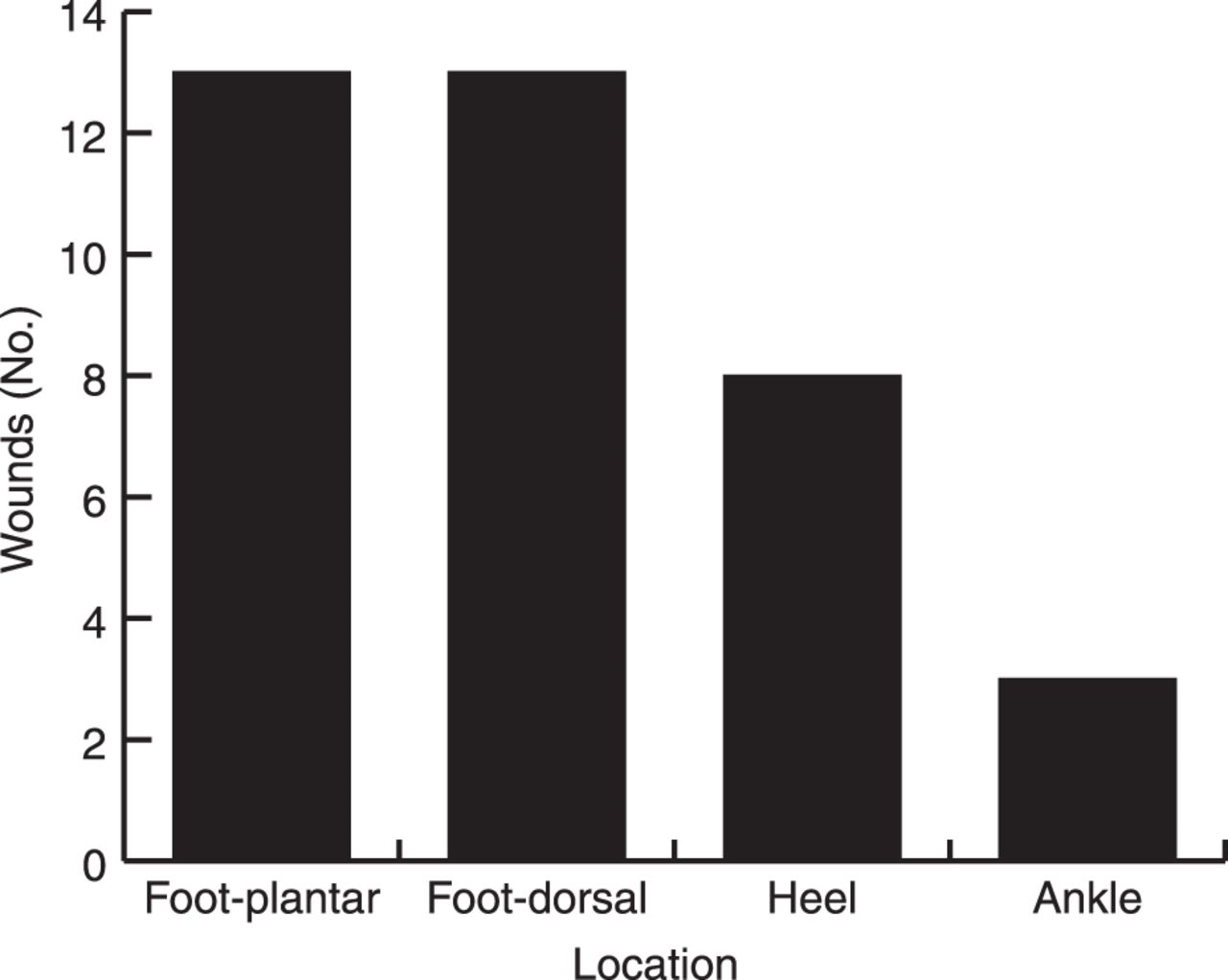
Table 1. Wound locations are presented in
Figure 1. Most wounds have failed previous treatment, including moist wound therapy (27%), growth factors (18.9%), other collagen scaffolds (24.3%), and split-thickness skin graft (10.8%). Except for one wound, all of the wounds were treated with a single application of equine pericardium biomatrix. In one wound, a second application was needed.
Table 1.
Demographic and Baseline Characteristics of 34 Patients with 37 Wounds
Table 1.
Demographic and Baseline Characteristics of 34 Patients with 37 Wounds
Figure 1.
Wound locations.
Figure 1.
Wound locations.
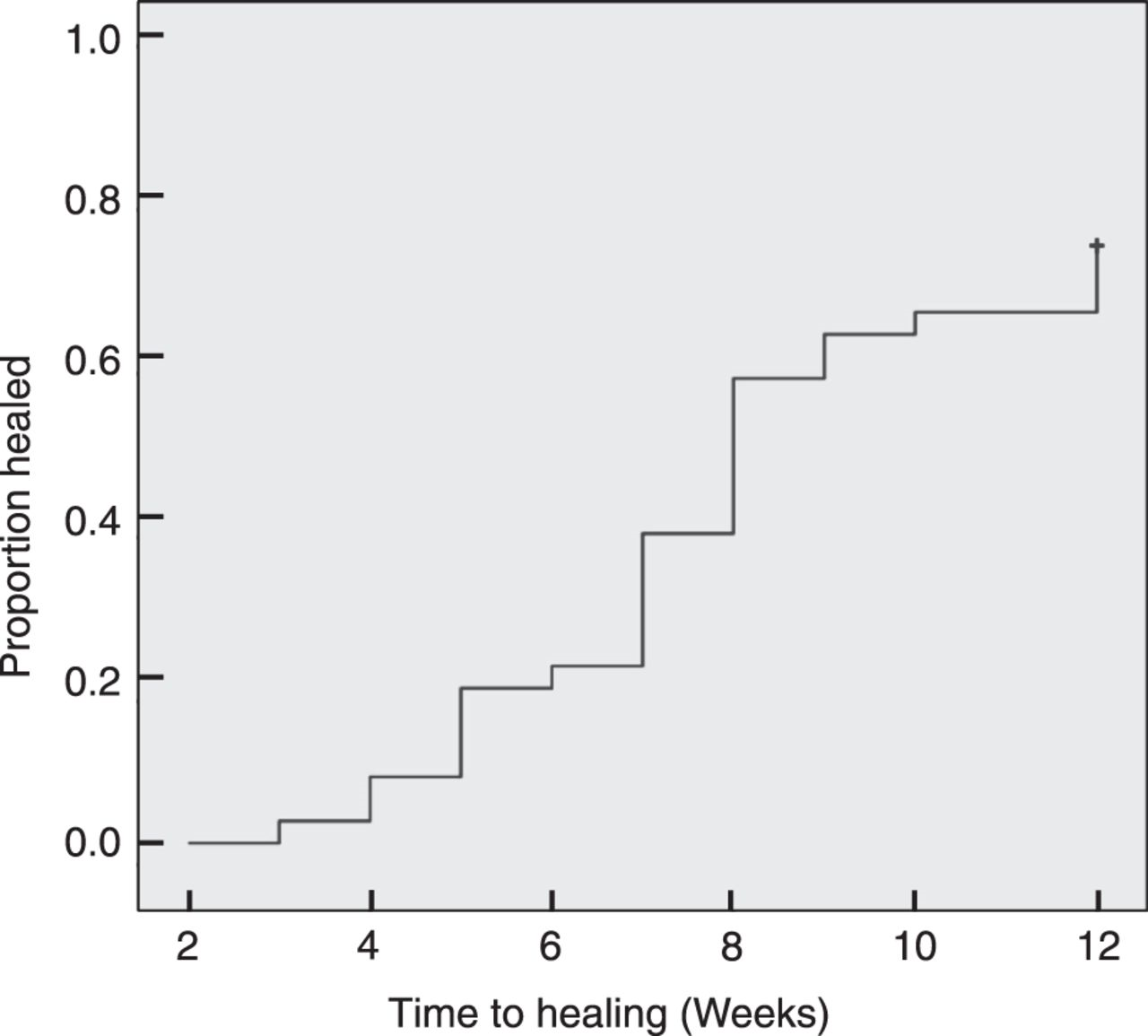
The proportion of wounds that completely healed by 12 weeks was 75.7% (n = 28). The mean ± SD time to wound closure was 7.2 ± 2.54 weeks (range, 2–12 weeks). The median time to wound closure was 7.0 weeks. Time to complete wound closure for all of the patients is illustrated in
Figure 2.
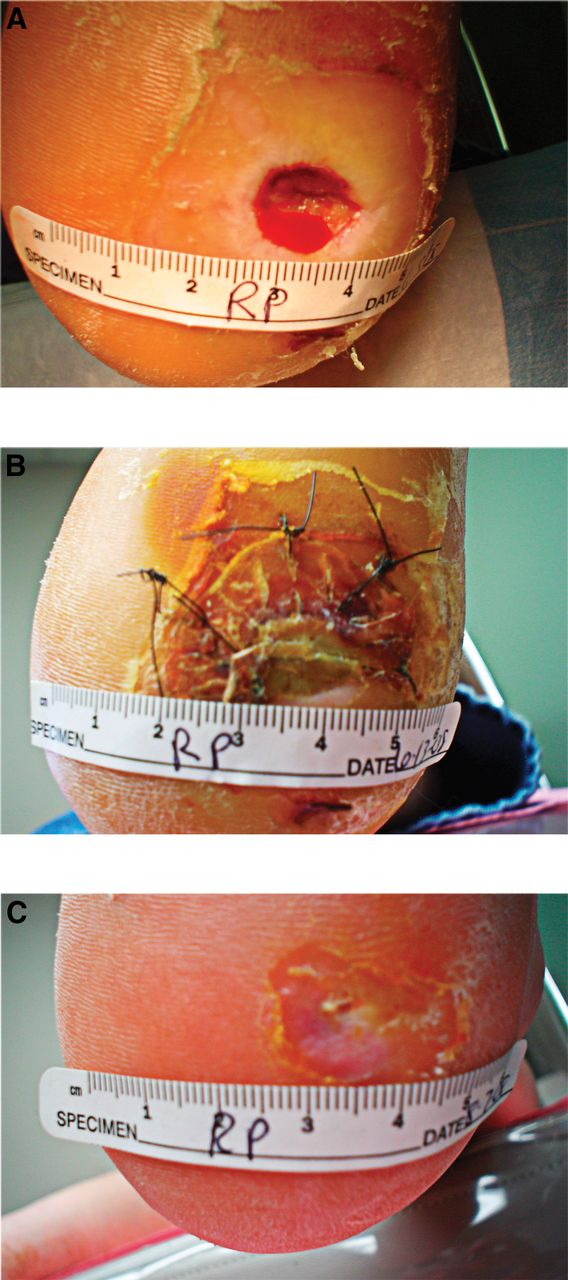
Figure 3 and
Figure 4 illustrate wounds before and after treatment. Except for normal saline, all of the secondary dressings were found to be suitable and appropriate for keeping the xenograft hydrated. No significant differences were found between the groups.
Two patients had complications. None of them were related to the dressings. One patient had a baseline wound surface area of 63 mm2 on the left heel. At week 6, the patient fell, dehisced his wound, and subsequently developed osteomyelitis. The second patient had a baseline wound surface of 400 mm2 on the plantar side of the left hallux. At week 4, the wound surface area was 165 mm2. At week 5, the patient injured her foot with a lawn mower, which led to gangrene and subsequent amputation. Of the seven wounds that did not heal by 12 weeks, five had a more than 80% reduction in their size. The other two wounds were reduced by 61.8% and 29.0%.
Figure 2.
Kaplan-Meier estimate of time to complete wound closure.
Figure 2.
Kaplan-Meier estimate of time to complete wound closure.
Discussion
The main objective of this study was to evaluate the safety and performance of the equine pericardium biomatrix in the treatment of chronic diabetic foot wounds. The results in this investigation demonstrate a favorable healing rate and time to wound closure that are similar to or exceed those reported previously with this xenograft and other products.[
9,
10,
11,
12,
13,
14,
16,
21]
Figure 3.
Intraoperative photographs of the left foot before (A) and after (B) equine pericardium biomatrix application. The same foot 1 week (C) and 8.5 weeks (D) postoperatively.
Figure 3.
Intraoperative photographs of the left foot before (A) and after (B) equine pericardium biomatrix application. The same foot 1 week (C) and 8.5 weeks (D) postoperatively.
Recently, several authors have reported successful outcomes with equine pericardium biomatrix for the treatment of chronic and difficult-to-heal wounds.[
13,
15,
22] In a case series of 32 chronic diabetic foot wounds treated with equine pericardium biomatrix, Fleischli et al[
13] reported an average reduction of 52.3% of wound size at 4 weeks and a 47% healing rate at 12 weeks in patients with significant comorbidities. Mulder and Lee,[
14] in their retrospective review of 24 difficult-to-heal and chronic wounds of different etiologies, including diabetic foot wounds, reported mean and median times to wound closure of 5.96 and 6 weeks, respectively, after treatment with equine pericardium biomatrix. In a prospective, randomized, multi-center study, Veves et al[
11] reported a 56% healing rate at 12-week follow-up and a median time to wound closure of 65 days in diabetic foot ulcerations treated with an average of 3.9 applications of Graftskin per patient. Other investigators reported on other collagen-based matrices and skin substitutes but did not reach this level of success.[
9,
10,
12,
16,
21] Most recently, in a prospective randomized study for the treatment of diabetic foot ulcer, Reyzelman et al[
17] reported a 69.6% healing rate at 12 weeks and a median time to complete healing of 4.5 weeks in 46 patients treated with dermis allograft. The wounds in their study included those of less than 4 weeks’ duration and with no previous treatment reported.[
17] In the present patients, all of the wounds were of at least 7 weeks’ duration and failed previous moist wound therapy and other treatments, including growth factor and other collagen scaffolds. In a meta-analysis study to determine the healing rate in the control group from several randomized clinical studies, Margolis et al[
23] established benchmark healing rates of 30.9% at 20 weeks and 24.2% at 12 weeks in neuropathic diabetic foot ulcers treated with good care, including debridement, infection control, off-loading, and saline-moistened gauze or placebo gel and gauze. The healing rate of 75.7% at 12 weeks in the present study, which is a 51.5% increase in this benchmark, demonstrates a favorable outcome.
Figure 4.
Photographs of the left heel before (A) and 10 days (B) and 8 weeks (C) after equine pericardium biomatrix application.
Figure 4.
Photographs of the left heel before (A) and 10 days (B) and 8 weeks (C) after equine pericardium biomatrix application.
The results of this investigation, including a healing rate of 75.7% at 12 weeks and mean and median times to wound closure of 7.2 and 7.0 weeks, respectively, support previous literature documenting positive clinical outcomes with the use of equine pericardium biomatrix.[
13,
15,
22] Compared with historical published data on other collagen-based matrices mentioned previously herein and the benchmark healing rates established by Margolis et al,[
23] the overall healing rate, the time to wound closure, and the lack of complications suggest that this biological dressing is safe and effective for the treatment of chronic diabetic foot wounds. As reported by Fleischli et al[
13] and Mulder and Lee,[
14,
15,
22] we also used a single application of equine pericardium biomatrix in 36 wounds (97.3%) compared with other collagen wound dressings, where multiple applications were needed to achieve healing.[
9,
11,
12,
16] In one wound, a second application was needed after the graft fell off at week 3 after initial application. This wound healed at week 7. Regarding the secondary dressing, all of the hydrating agents were found to work well with the xenograft except normal saline–moistened gauze, which seemed to provide a less optimum environment. Fleischli et al[
13] used a triple-antibiotic ointment placed directly on the xenograft and followed by a nonadherent layer. Also, Mulder and Lee[
14,
15,
22] used a single layer of Adaptic (Johnson & Johnson, New Brunswick, New Jersey) or Acticoat (Smith & Nephew) moistened by sterile water directly on the xenograft, followed by multiple layers of gauze. Although, there are no sufficient data to support one versus another, based on our observation, we believe that all of the previously mentioned secondary dressings except saline-moistened gauze are suitable for keeping the equine pericardium biomatrix hydrated. In this investigation, 56.7% of patients (n = 21) had wounds on the plantar side and were off-loaded. Each patient used the same off-loading device (sandal or boot) used before treatment with equine pericardium biomatrix. Although this could be a weakness of this study, our intention for not standardizing the off-loading device in those patients was to reduce variables that could contribute to the wound healing in wounds that failed other treatments. In another way, each patient was used as his or her own control, with the only difference being application of the equine pericardium biomatrix.
The mechanism of action of acellular matrices in chronic wounds is not fully understood. It has been suggested that acellular matrices act as a biological cover that modulates the wound environment and promotes healing. Although they differ in their origin, structure, contents, and the way they are processed, these tissues provide a temporary scaffold into which cells can migrate and proliferate in an organized manner, leading to tissue regeneration displacing the matrix and eventually wound closure.[
24] During tissue processing of animal- or human-origin matrices, viable cells are removed to minimize or prevent inflammatory or immunogenic reactions, whereas the collagen structure is maintained for tissue remodeling.[
20] As outlined in the recently published international consensus guidelines of acellular matrices for the treatment of chronic wounds, cross-linking stabilizes the collagen in these matrices, prevents its early degradation by proteases such as metalloproteinase enzymes, and subsequently prolongs its presence in the wounds.[
20,
24] In a case study, Mulder and Lee[
15] showed a successful wound closure with a cross-linked xenograft that withstood enzyme activity in a patient with a chronic ulcer and a high level of inflammation, whereas the non–cross-linked allograft dissolved at week 2 after application. Whereas human-derived acellular matrices are aseptically processed, animal-derived tissue undergo a sterilization process to reduce the risk of pathogen transmission. Sterilization methods, including radiation and chemicals such as gluteraldehyde and ethylene oxide, play an important role in the characteristics of these matrices that could impact wound healing. Whereas radiation could alter the structure of these matrices, leading to early breakdown and degradation, chemical sterilant residues may elicit host inflammatory responses.[
20,
24] Equine pericardium biomatrix undergoes a proprietary cross-linking and sterilization with nontoxic chemicals (ethylene dichloride), which reserve the native collagen structure and produce cross-links between collagen strands that are pliable and less prone to degradation secondary to the high levels of proteases and collagenases often present in chronic wounds.[
20,
24] It is flexible and conforms well on the wound surface. These features may explain the success presented in this study.
Limitations of this study include the lack of a control group to compare in the same setting and the small sample size. Study strengths include prospective evaluation and multicenter design. In addition, the lack of extensive inclusion and exclusion criteria suggests that the results provide a “real-practice” picture in patients with difficult-to-heal diabetic foot wounds.
Conclusions
Healing diabetic foot wounds in a timely manner is of paramount importance because the duration of ulceration correlates with increased rates of infection and amputation, costing billions of dollars yearly. Biological scaffolds present a viable option for improving healing and speeding time to wound closure. The results of this prospective investigation demonstrate that the use of equine pericardium as a temporary biological cover and scaffold is safe and effective for the treatment of diabetic foot wounds and support previously reported data about this xenograft. Further large, prospective, randomized controlled studies are warranted.