


Abstract
Background: Comfort evaluation techniques are commonplace in medicine. However, measures of lower-limb comfort are infrequently used in the sporting environment. The purpose of this study was to develop an instrument for measuring lower-limb comfort, which will extend previous work in the field of injury awareness. Methods: A lower-limb comfort index (LLCI) was developed for use in the environment of elite sport. Forty professional footballers participated in development of the index. The study had three components. A critical appraisal of the literature established the need for an LLCI. The second phase involved 20 professional footballers establishing and testing the components of the comfort index as an instrument for measuring comfort. Results: Nonparametric statistics (the McNemar test) in phase 2 indicated that the LLCI demonstrated good responsiveness to suitability (P = .019) and ease of use (P < .01). After a high level of agreement for responses, the third stage required 20 players to pilot test the reliability of the LLCI in a controlled environment. Repeated measures of difference between two periods for sum comfort (intraclass correlation coefficient = 0.99) and individual anatomical segments (κ = 0.72–1) provided confidence that the comfort index was reliable. Conclusions: The LLCI showed good trait construct to provide confidence to conduct a future study to investigate interrater consistency in a wider cohort of professional footballers under different conditions, such as match-day and training-week environments.
Comfort as a concept for measuring well-being and intervention outcomes in medicine is increasingly used as a method of measuring pain or discomfort. [1] Assessment of pain reduces to a very simple end point of an individual’s perception of comfort. [2] Comfort is the opposite of pain (discomfort) due to the interactive play of nociceptive stimulation and the cerebral cortex. Thus, the lack of pain stimuli via the neural networks of the body can be termed comfort. [3] However, comfort is difficult to define, and the concept lacks consensus in the literature. Arguably, comfort cannot be directly measured [4] because comfort concepts cannot be measured quantitatively. The comfort of one individual will differ from that of others. Nonetheless, it could be argued that individual comfort, which is self-rated, is quantifiable because it is a real phenomenon drawn from human experience that is of no value to another individual. Comfort is a holistic state, transversing aspects of well-being that are physical, psychospiritual, social, and environmental. [5] Perception of comfort is drawn from simultaneous and interrelated human experiences gathered over time. [6] Because comfort is innately individual, it means different things to different people. Thus, capturing all aspects of the concept and objectively quantifying comfort is difficult. [7, 8]
From a physical perspective, comfort affects common locomotor tasks, such as walking and running, [9, 10] and is correlated with skeletal alignment. [9] It is speculated that comfort is associated with fatigue and performance [11, 12] and that it can be influenced by footwear. [13, 14] Anatomical regions such as the foot, ankle, and knee, and footwear are commonly investigated in the literature, including public health medicine, epidemiologic, biomechanical, podiatric medical, and physiotherapy research, because of the high prevalence, cost, and morbidity of injury. [15] Statistics encompassing running-based sports indicate that most injuries sustained occur to the lower limbs. [16–18] Although the direct costs of lower-limb injury are difficult to quantify, the cost of overall sporting injuries has been calculated to exceed A$1.65 billion. [19] Specific to the football codes, using injury surveillance data, [20] the cost of lower-limb injury in one code of football played in Australia, calculated by us in terms of wage costs relative to missed games, exceeds A$20 million per year.
Measures of comfort, which are recorded prospectively, may be important in determining physical performance and injury outcomes. A technique for monitoring lower-limb comfort comprising key anatomical locations would offer an effective screening instrument for the state of lower-limb health and would assist in injury prevention management and early injury risk detection. Such an understanding of lower-limb comfort would be useful for individuals and allied health professionals.
Methods of measuring comfort pertaining to footwear and the lower limb commonly involve ordinal scales (Likert) [21–23] or continuous scales (visual analog scales). [10, 24, 25] The reliability and validity of visual analog scales as a psychophysical rating have been well documented [24, 26]; a perceived advantage is that they are not delimited by the discrete spacing of numerical ratings. [8] Limitations of visual analog scales include anchor words, the length of the scale, and the direction of the scale. [9, 27]
Ordinal scales, such as Likert scales, can measure comfort and have demonstrated acceptable validity [28, 29] and minimal measurement error, are simple to comprehend, and so are advantageous to visual analog scales. [30] Signposts, which generally accompany Likert scales, provide clear instruction for ease of interpretation and provide an even distribution of data rather than skewed data due to lack of signposts associated with visual analog scales. [1] However, limitations of ordinal rating scales include the interpretation of specific anchors, which will not be uniformly perceived by all respondents. [31] A further limitation of a Likert scale occurs where comfort measures (ordinal) are evaluated with continuous measures, such as grouped biomechanical variables. [9] However, individual comfort should not be analyzed as a group statistic, such as an overall mean response, because comfort is an innately individual phenomenon. [7] Therefore, the use of Likert scales is appropriate for analyzing individual comfort. A 7-point scale is the most widely used response scale, [32] enabling reasonable compromise among sensitivity, reliability, and ease of use. [33] Therefore, the purpose of this study was to develop an instrument for measuring lower-limb well-being using comfort as the primary criterion.
Methods
Development of the lower-limb comfort index (LLCI) had three stages: 1) critical appraisal, 2) developmental stage, and 3) pilot evaluation of reliability. Likert-based comfort paradigms currently used extensively in medicine were considered fundamental for establishing the comfort scale.
Stage 1: Critical Appraisal
The critical appraisal for developing an LLCI derived impetus from the following:
- 1)
- Information accessible to the public from professional allied health organizations and legislative bodies that provide the community with information about the management and prevention of musculoskeletal injury. The availability of such information in the public domain highlights the need for ongoing investigation to contribute to the injury awareness paradigm.
- 2)
- A comprehensive review of the medical and allied health literature. The electronic databases PubMed, CINHAL, Ovid MEDLINE, The Cochrane Library, and PsychINFO were searched up to and including February 2010. The search included all English-language articles and the following key words: leg, footwear, shoe, musculoskeletal, injury, lower limb, comfort, well-being, and measures. The following themes emerged, providing further impetus for the need to develop the LLCI: a high proportion of lower-limb musculoskeletal injuries (injury epidemiology), studies of the comfort paradigm that permeate the field of medicine, and lower-limb comfort measures applicable to sports are lacking (paucity of comfort measures in sports).
- 3)
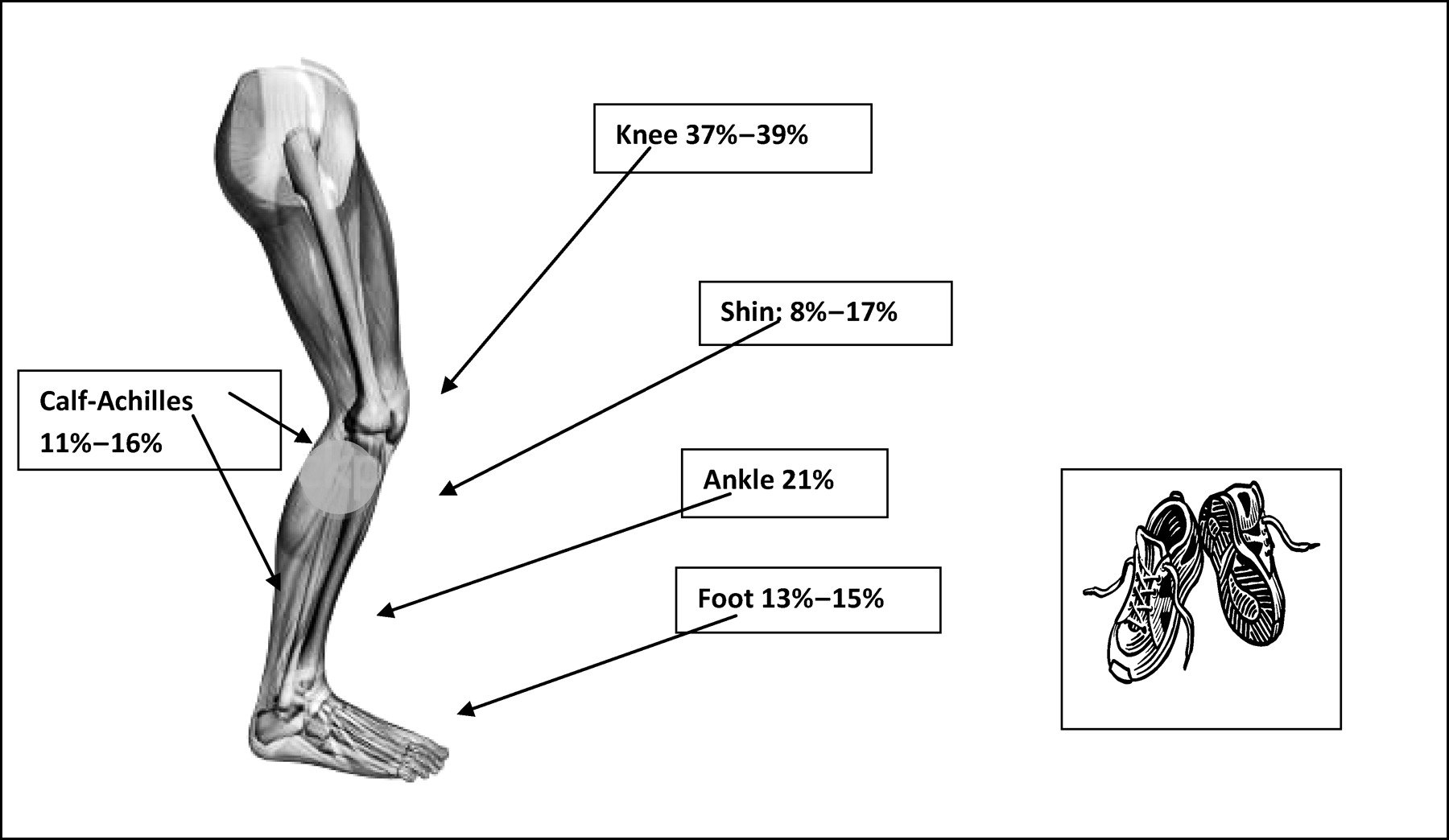
- Anatomical segments prevalent in epidemiologic studies to develop a suitable LLCI. The medical and allied health literature was searched to establish segments for inclusion to develop the LLCI. The criterion for inclusion was based on the gross anatomy of the lower limb and the anatomical areas that dominate the injury epidemiology literature for running-based activities (Fig. 1).
Stage 2: Developmental Stage
The developmental stage involved implementation and refinement of an experimental LLCI based on a 7-point Likert scale. Suitability of signposts, ease of administration, comprehension, and suitability of the descriptive terms that accompanied the LLCI scale were examined.
Twenty participants with varying years of professional football experience from two codes of football (rugby league and Australian rules) volunteered to test the suitability of the LLCI for use in the field. Ethical approval was obtained from the Human Ethics Research Committee at Victoria University, and participants completed informed consent declarations. Data from each participant were collected weekly for 18 weeks (360 responses). Versions of the LLCI were tested until all of the participants agreed with the format, determined by statistical merit. Each respondent completed a lower-limb comfort form under the instruction of either the researcher or the head team trainer, who was well versed in the study. Each respondent was interviewed in a casual environment during the developmental stage to obtain feedback. The LLCI was refined following respondent feedback.
Stage 3: Pilot Reliability of the LLCI
Once developed, the LLCI was piloted by 20 participants who were not involved in the development of the rating scale but who were considered representative of the wider professional football community. The reliability of the LLCI was measured at 0 and 4 hours in a stable environment, using reliability protocols previously established for footwear comfort. [8, 9, 34] Testing was performed on three separate occasions over 5 days with 48 hours between each session. To ensure the integrity of the test-retest condition, there were no physical or medical interventions within the 4 hours between the intratest comfort data collection sessions, which may have altered the testing environment. To guard against recall bias, the order in which each anatomical segment was ranked was randomly assigned for each participant for each of the intratest comfort collection sessions.
Figure 1.
Lower-limb injury incidence commonly cited in the literature. [16, 17, 20]
Statistical Analysis
To measure whether the respondents changed their judgments of LLCI appraisal for suitability, ease of use, anatomical descriptor suitability, and signpost suitability over the data collection periods during stage 1 (the developmental stage of LLCI), the data were cross-tabulated. The McNemar test of agreement was used to determine whether the number of players who responded with “agree” changed significantly over time. Where no players responded with an “ambivalent” or “disagree” response, these categories were combined because the main interest was to ascertain whether the percentage of players who agreed with the tool had increased.
Reliability was estimated in stage 3 of LLCI development using the absolute difference between periods. The absolute differences in the comfort index between the two periods for the 3 days and for each anatomical segment were calculated. A paired t test was used to compute the mean difference and its SD. The measurement error was computed from the SD around the mean difference using the formula: (SD of differences / √2)* 1.96. [35] The error indicates a range above and below a measure in which we can expect a player’s true comfort to lie. Where the comfort scores had the same category values on each occasion, reliability for each limb segment was also measured using Cohen’s κ, for which a value of 1 indicates perfect agreement and a value of 0 indicates that agreement is no better than chance. For the sums of comfort scores, the intraclass correlation coefficient was computed to measure relative agreement between times using a one-way random model.
Results
Stage 1: Embryonic Stage
Qualitative Clinical Experience.
The disciplines of allied health medicine inclusive of podiatric medicine, [36] sports medicine, [37] and physiotherapy [38] are engaged with areas of injury associated with exercise and physical activity. Because of an increasing awareness of the costs associated with sports injury, peak bodies have been established around the world to educate and train health professionals to provide advanced training for sports-related injuries, including those to the lower limb. Such groups include the International Federation of Sports Medicine, [39] the International Olympic Committee Medical Commission, [40] and the national sports medicine organizations that provide consensus statements on sports participation, including injury prevention, treatment, and management. The organizations educate their professional membership and disseminate guidelines on injury prevention to the general public, enabling successful empirical-based interventions.
Literature Review.
An integrative review of the published literature in sports medicine, nursing, biomechanical medicine, and allied health medicine (podiatric medicine and physiotherapy) provided information to support development of the LLCI. The major areas of interest were injury epidemiology, comfort paradigms, and anatomical segments of the lower limb with reccurring injury themes.
Injury Epidemiology.
Epidemiology for exercise and sporting injury is difficult to quantify; however, estimated direct costs range from A$830 million [41] to A$1.5 billion [42] per annum. Lower-limb injury across a variety of sports ranges from 40% to 87% (Table 1). Five of the studies reported injury as a physical complaint without confirming a time-loss event due to injury. The range of lower-limb injury defined this way, compared with other body injury, was 40% in a 10-year longitudinal study of injury among 16 professional Australian Rules football teams [50] to 82% in a study [19] that assessed recreational runners during a 13-week period. Using time loss as an injury definition, the lowest incidence of injury was in a study [48] of an amateur rugby union involving six teams for one season. The study [49] reporting the highest incidence of lower-limb injury (87%) involved a 5-year analysis of a European football league with more than 1,500 participants. Table 1 highlights a wide range of studies involving different codes of football and running, professional and amateur sport. Regardless of the injury definition used, the incidence of lower-limb injury was high, providing further evidence for lower-limb injury-based research.
Comfort Paradigms.
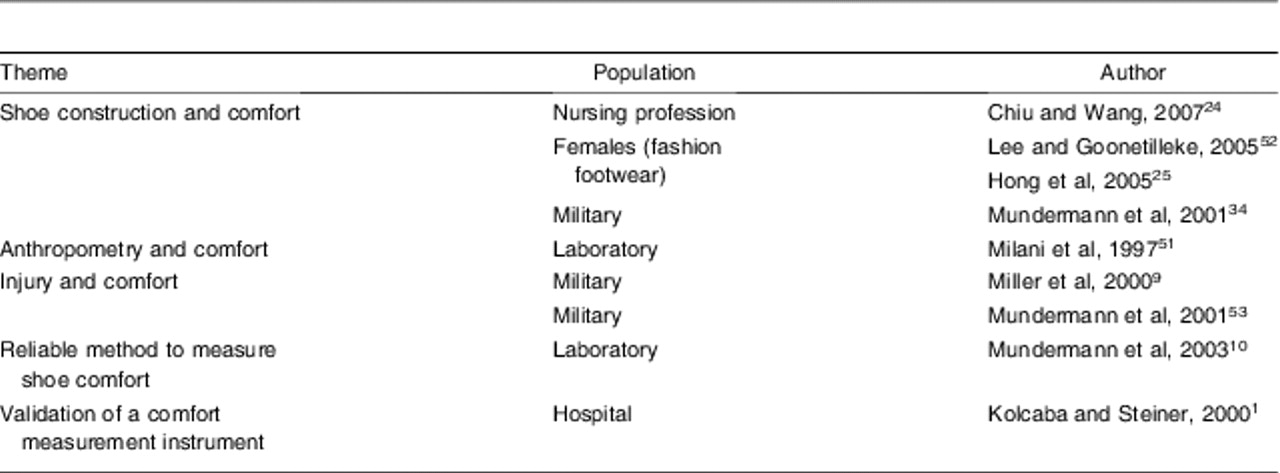
The themes pertaining to comfort were derived from the literature and included the role of shoe comfort, comfort as a measure of well-being, and reliability-validity studies (Table 2). Most comfort studies in the table are workplace related, including the nursing profession and the military. Footwear comfort studies [52, 53] have also been performed highlighting the importance of footwear as a variable for lower-limb studies of function and injury. However, no studies involved footwear comfort in sports despite the fact that most weightbearing sports use footwear. Relevant footwear in sports generally involved laboratory-based studies or friction-traction studies. The studies in Table 2 establish comfort as an important construct to general well-being and, thus, applicable to the sporting environment.
Table 1.
Incidence of Lower-limb Musculoskeletal Injury in the Literature
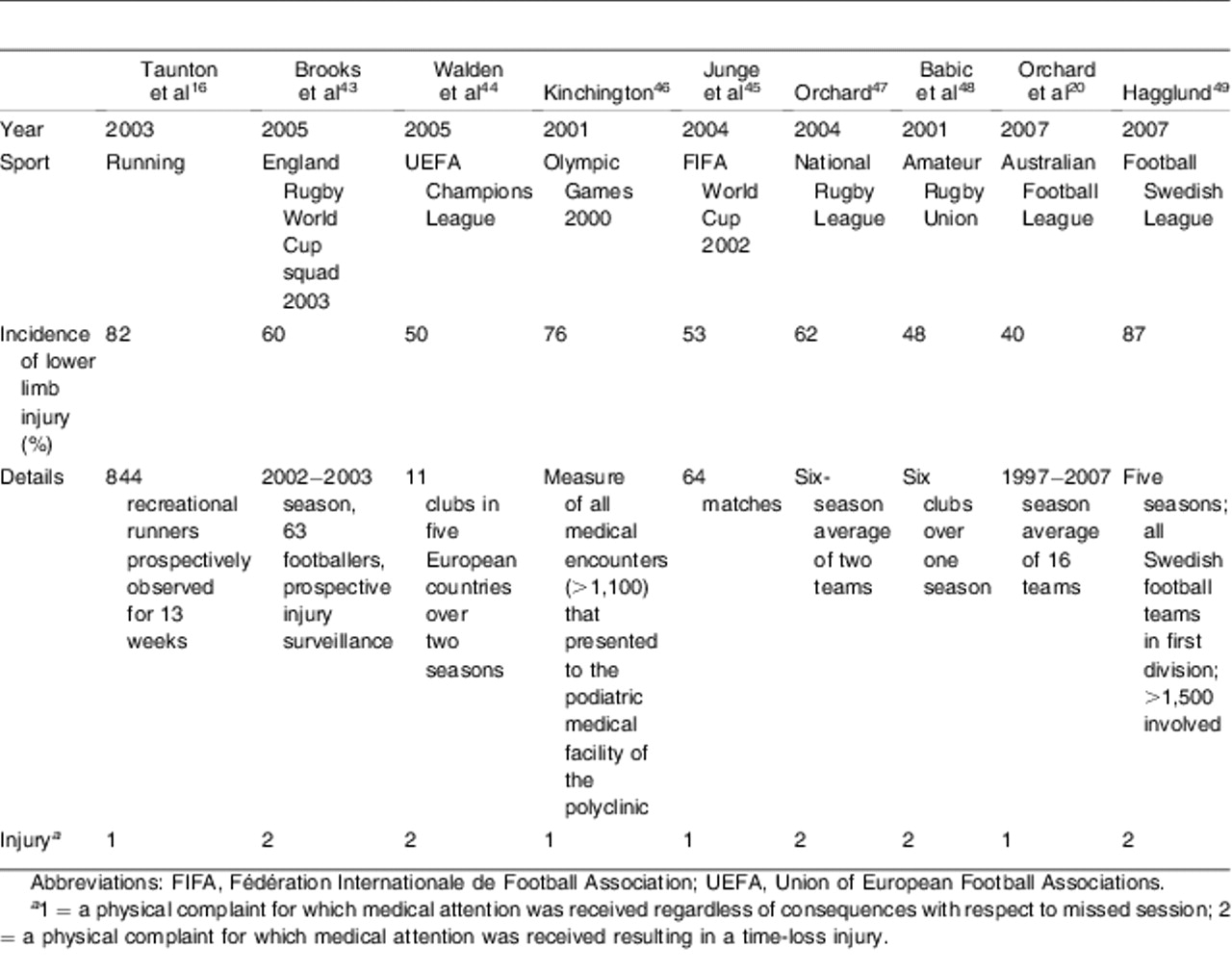
Table 2.
Comfort Themes Established in the Literature
Paucity of Lower-limb Comfort Measures in the Sporting Environment.
Table 2 shows comfort themes used in research for a diverse range of environments. However, no previous research extends to the sporting community. Although instruments exist to estimate physical activity and recovery (rate of perceived exertion and training function score), no such instrument capability is available to monitor lower-limb musculoskeletal well-being in sports. Where examples exist of subjective comfort covering a broad range of allied health disciplines, the few studies of lower-limb comfort are single measures of comfort and often exclude multiple anatomical regions. Examples of studies that have isolated one area include industrial footwear comfort, [24] work environment ground surface comfort, [54] plantar pressures with sport shoes, [55] insole-orthosis comfort, [10, 56] fashion shoe comfort, [56] skeletal alignment and footwear comfort, [9] and hybrid comfort studies examining the effect of footwear materials and inserts. [57–59] Furthermore, the sole field-based study [4] investigated the role of insert-shoe comfort and the effect on injury. It could, therefore, be argued that without a measure of multiple anatomical sites, an incomplete description of comfort to the lower limbs exists. Single-anatomy-site studies do not recognize the interaction of the anatomical linkage and the effect of body compensations.
Anatomical Segments for Comfort Index Inclusion.
The literature indicates that lower-limb injury inclusive of the foot, ankle, calf-Achilles, shin, and knee account for most of all injuries (Fig. 1 and Table 1). The inclusion of footwear as an anatomical segment was considered valuable because it is regularly used as protective apparel in most weightbearing sports. There is also much speculation that footwear plays a role in injury [9, 60, 61] and comfort. [61]
Stage 2: Developmental Stage
After assessments of various feedback scales purported in the health literature, a 7-point Likert scale from 0 to 6 was considered the most applicable to the professional sporting environment. An instrument to monitor lower-limb comfort was developed, with anchors and signposts at all of the comfort points (Fig. 2A). Because comfort is a positive feature, the scale was reversed, with 0 being the least and 6 the most comfortable score.
The mean age of the participants was 22.7 years (range, 18–28 years). Six rookies (first-year players), six footballers with experience (3–5 years), and eight senior-leadership players (>5 years of football experience) were recruited for the developmental stage. Three versions of the LLCI (LLCI1, LLCI2, and LLCI3) were trialled before the LLCI3 was considered ready for pilot evaluation (stage 3).
LLCI1.
Data were collected for 6 weeks (120 data sets). Each respondent was interviewed in a casual environment at weeks 2, 4, and 6 (60 responses; Table 3) to 1) provide feedback on interpretation of the LLCI, 2) assess usability, 3) obtain feedback on the appropriateness of the anatomical segments measured, and 4) evaluate anchors/signposts.
Feedback from the LLCI1 (Table 3) indicated high agreement for overall suitability of the comfort index (82%) and signpost descriptor suitability (83%). Ease of using or completing the scale was less than 50% agreement, and approximately half of the participants considered the anatomical descriptor tags appropriate. The low agreement of the cohort for ease of use involved confusion regarding Achilles comfort. Some placed the Achilles condition in the calf tag, and others used the ankle (due to its close proximity to the Achilles). Approximately half of the respondents (51%) reported ambivalence or disagreed with the ease of using the index. The LLCI1 had two descriptor sets, one for anatomical segments and a second for footwear, making interpretation of the comfort index more complex. The footwear descriptor set was subsequently deleted and footwear as a region of measurement was added to the anatomical descriptor set.
LLCI2.
The second version of the comfort index (LLCI2) was implemented for 6 weeks (120 data sets) and differed from the LLCI1 in two ways. The descriptive signposts and anchors for the footwear condition were removed to leave one descriptor set for anatomical segmental comfort and footwear comfort. The footwear condition was treated as a component of anatomical segmental comfort (shoe, foot, ankle, calf-Achilles, shin, and knee). The calf anatomical tag was expanded to include Achilles comfort (calf-Achilles). The LLCI2 was changed to reflect the feedback as outlined in the “Methods” section. The McNemar test of agreement indicated that suitability of the comfort index and signposts remained high (>80%). Ease of use increased to 70% and anatomical descriptor suitability increased to 95% due to the use of one descriptor for all segments. Feedback from interviews with the senior-leadership group of players indicated that some of the signposts, specifically, the descriptors for comfort scores 1, 2, 4, and 5, could be removed to improve ease of using the index.
LLCI3.
The LLCI with further modification (LLCI3) was implemented for 6 weeks (120 data sets). It differed from the LLCI2 by using two anchors and one signpost at the center of the scale. All of the respondents were reinterviewed to give a total of 60 responses during the 6 weeks (Table 3). Agreement among the respondents meant that no further refinements were required. The final scale comprised a comfort scoring system of 0 to 6 with anchors at the extremities (0 = extremely uncomfortable [unable to run or jump] and 6 = zero discomfort [best ever feel]). A midpoint signpost of 3 = neutral (neither comfortable nor uncomfortable) delineated uncomfortable (0–2) and comfortable (4–6) (Fig. 2B). The LLCI3 indicated high agreement for suitability (90%), ease of use (95%), anatomical descriptor agreement (95%), and signpost suitability (88%) calculated from the McNemar test of agreement. The results indicated no requirement for further refinement of the LLCI. The final index was a 7-point Likert scale that measured six areas pertinent to the lower limb. The scale had comfort scores of 0 to 6 with two anchors and one central signpost. The final version was considered appropriate for reliability evaluation in a larger cohort.
Figure 2.
A, The lower-limb comfort index (LLCI) in the developmental stage. B, The final LLCI3 included a partially anchored numeric rating scale with fixed anchor points at key positions on the scale. In addition, visual descriptive explanations were added to the anchors to provide further interpretation of the anchors relevant to the physical requirements of the participants, eg, unable to run or jump.
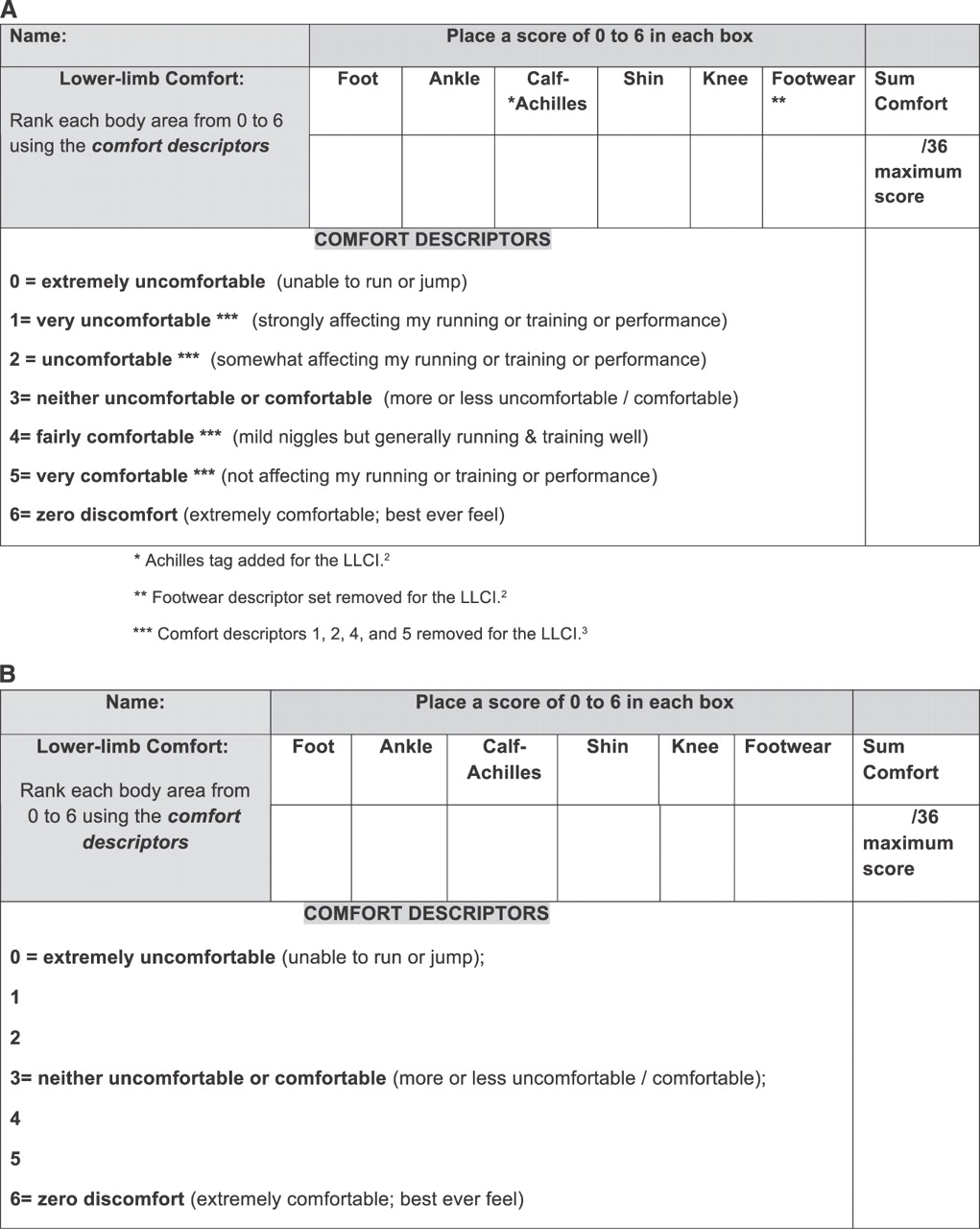
Table 3.
Respondent Results for LLCI Development with 60 Responses for Each Domain
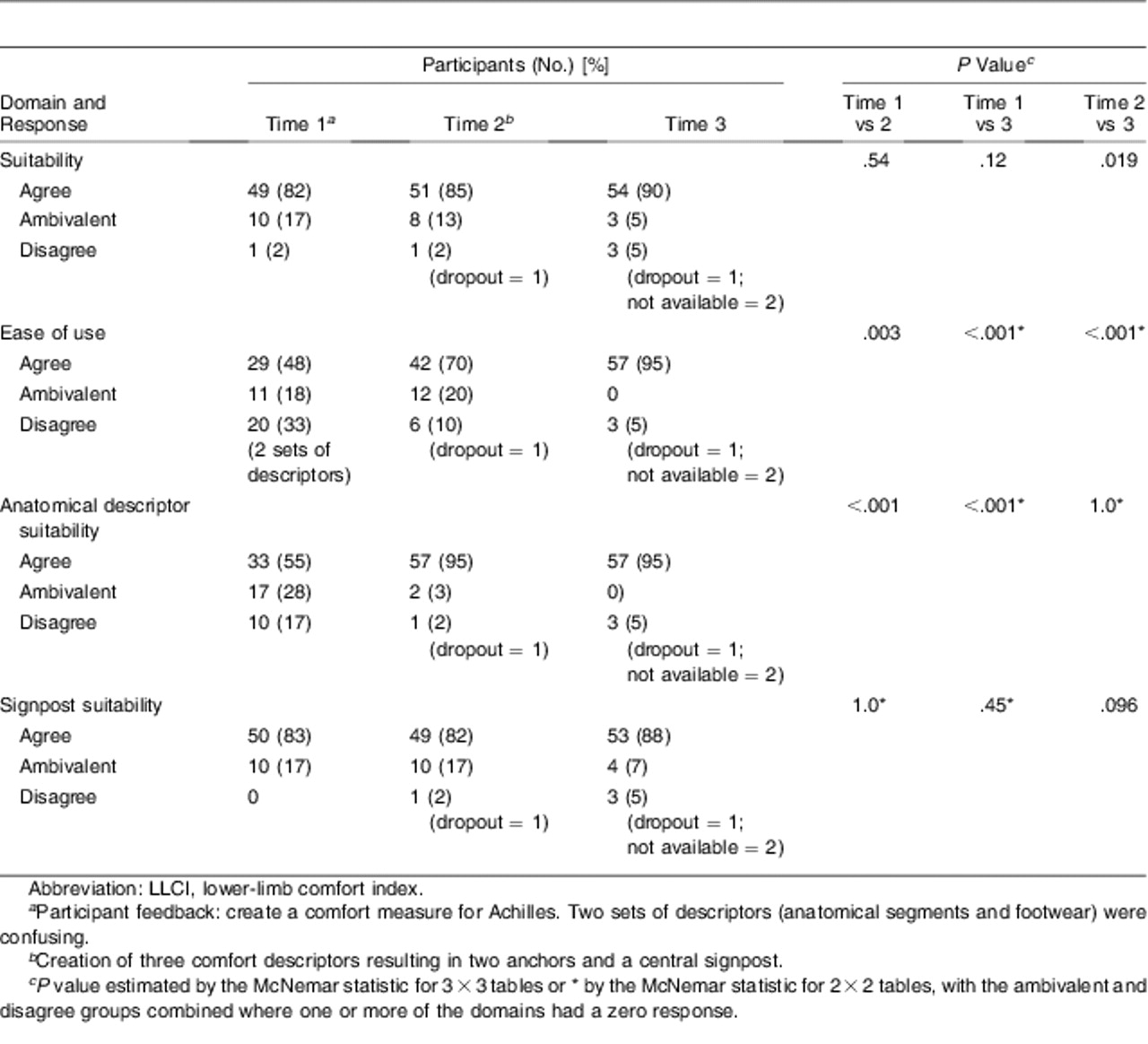
Table 3 shows the percentage of players who agreed, were ambivalent, or disagreed with each domain of the LLCI at each of the three time points using the McNemar test of agreement. The number of players who agreed with suitability increased across the three time points, with a significant increase from 82% at time 1 to 90% at time 3 (P = .019). For ease of use, there was a significant increase in the number of players who agreed across all time points (P < .0001), with the percentage who agreed increasing from 48.3% at time 1 to 70% at time 2 and 95% at time 3. Similarly, for anatomical descriptor of suitability, there was an increase from 55% at time 1 to 95% at times 2 and 3, which was highly significant (P < .0001). For signpost suitability, there was a trend for the percentage of players who agreed to increase only slightly across the three time points, and the changes in positive responses between times points were not statistically significant.
Stage 3: Reliability of LLCI
Twenty footballers (mean [SD] age, 24.4 [3.2] years) not used during the developmental stages of LLCI testing were recruited to field test the final version of the LLCI for reliability. Twelve players from rugby league and eight from Australian rules who were not familiar with the LLCI were recruited to test the index over three sessions.
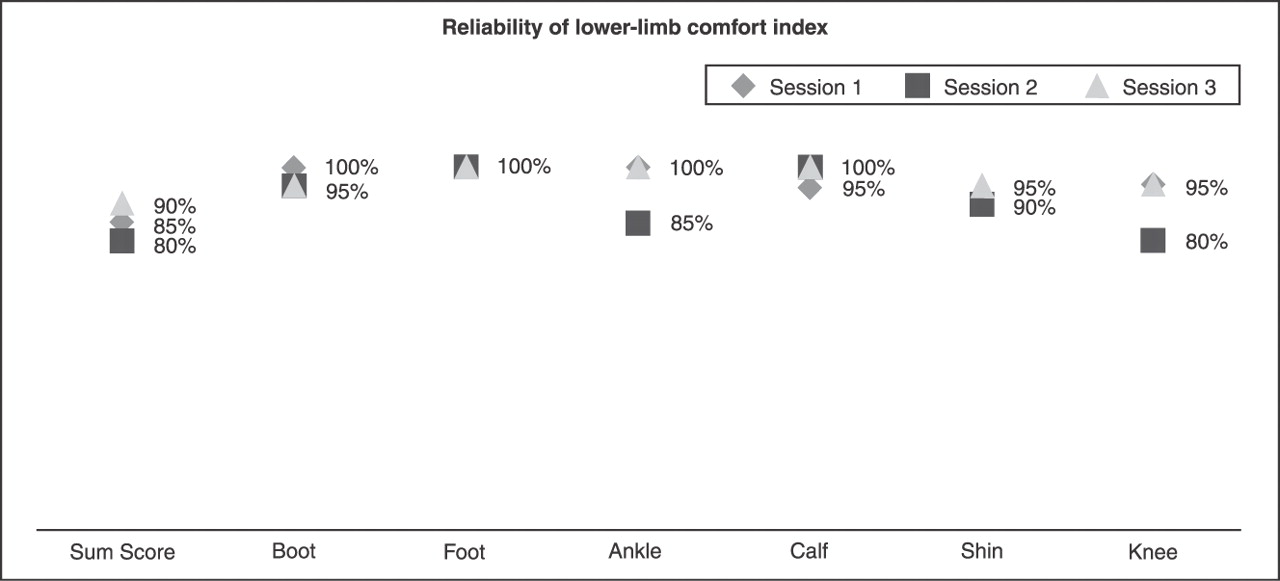
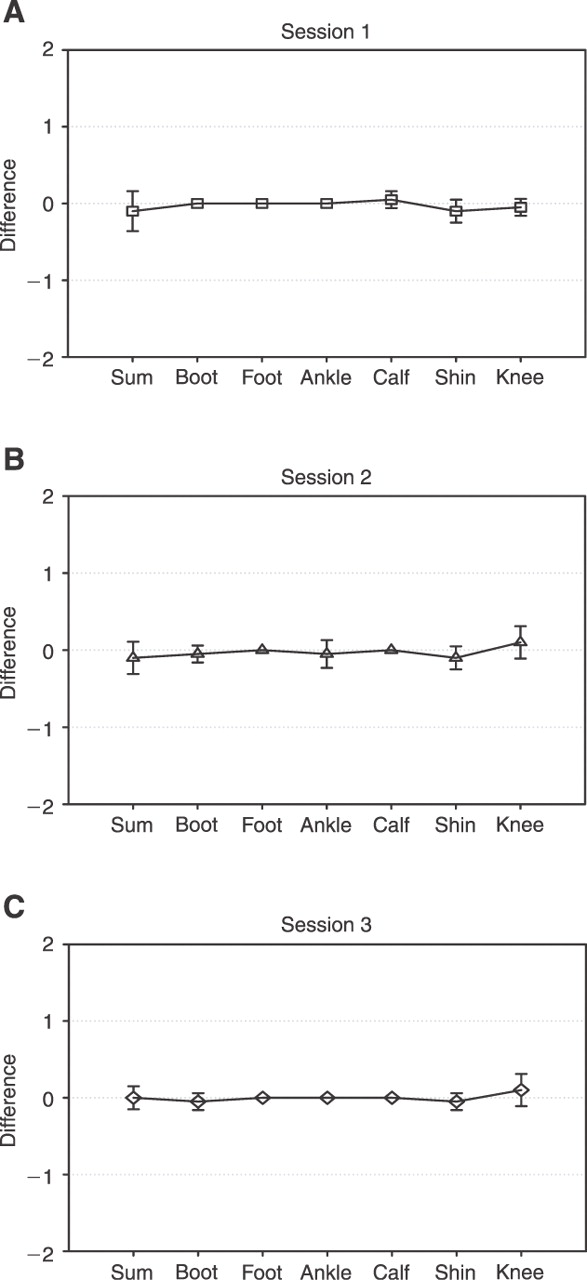
Table 4 indicates a high proportion of agreement for all comparisons of the LLCI. For overall lower-limb comfort (sum score), the lowest percentage agreement between 0 and 4 hours in an environment where there were no interventions to affect comfort was 80% for session 2 (intraclass correlation coefficient = 0.994). This was due to four participants having a difference in sum scores. However, the differences between time points were only 1 comfort point. For individual anatomical markers, κ agreement was 0.85 to 1.00 for session 1, 0.72 to 1.00 for session 2, and 0.92 to 1.00 for session 3. Markers for the knee and ankle showed the least agreement in session 2, where more than two participants recorded differences for the two time periods. However, the differences were only 1 comfort point. This effect is represented in Figure 3, in which the largest difference in agreement was 15% for the ankle and knee markers (session 2). The narrow range for test-retest percentage of agreement of lower-limb sum score and respective anatomical markers for three test sessions indicates high repeatability for two periods across three testing sessions. Mean differences indicated no differences for sum scores (Table 4). Figures 3 and 4 illustrate the lack of difference for each anatomical marker and narrow 95% confidence intervals, which confirms the reliability of the LLCI.
Table 4.
Frequency of Numbers in Agreement for Comparisons Between 0 and 4 Hours on Three Separate Days in 20 Participants
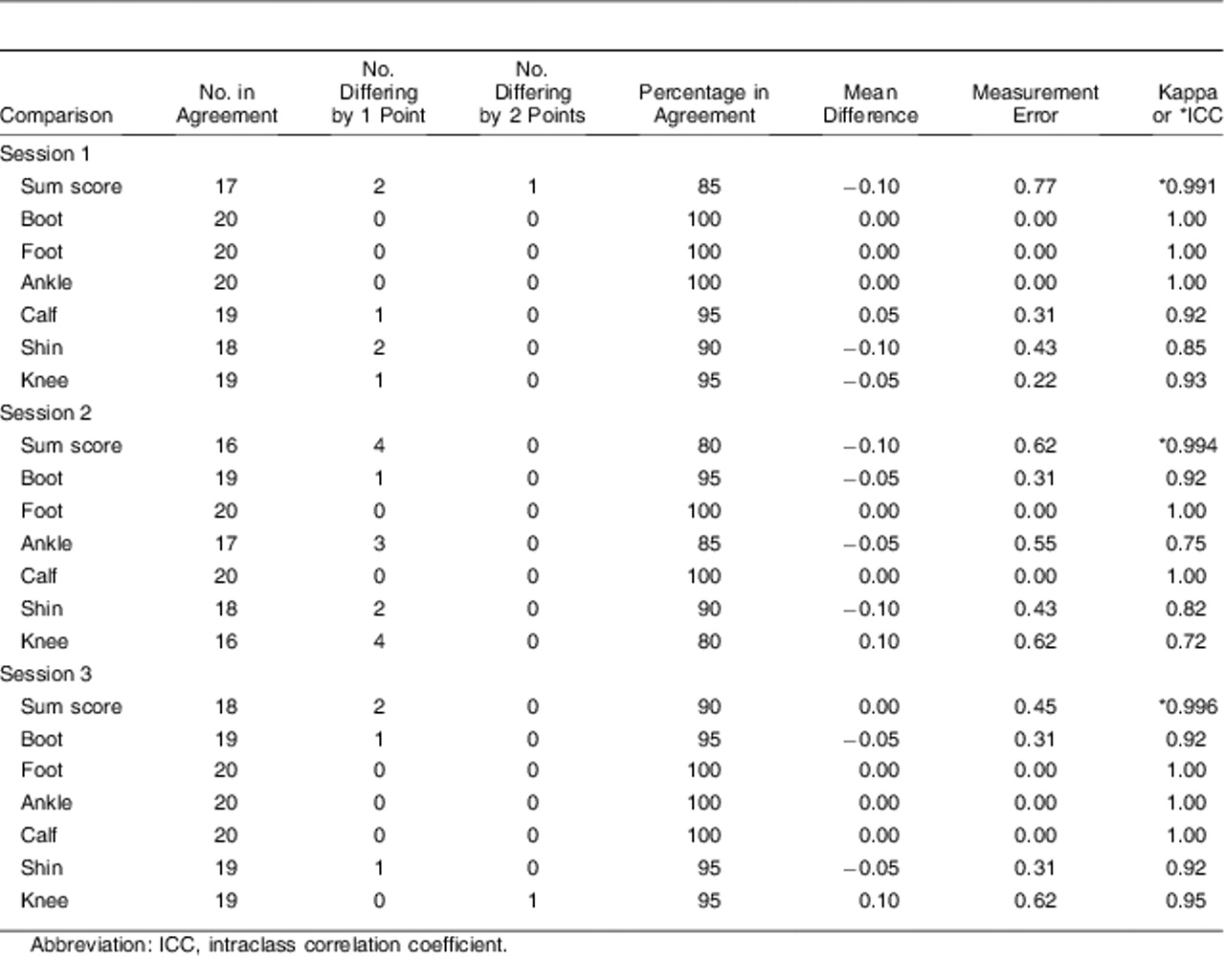
Figure 3.
Percentage of agreement between lower-limb sum scores and individual anatomical markers for three testing sessions.
Discussion
The purpose of this study was to develop an instrument for measuring lower-limb comfort that would be applicable but not limited to the sporting environment. Few techniques are available in the sports injury environment for gathering prospective data on lower-limb musculoskeletal comfort. An investigation of the literature indicated theoretical merit and had the potential to be feasible. Development was, therefore, based on stage 1 of a three-phase project. Stage 1 involved a critical appraisal of available evidence showing 1) the high incidence of lower-limb injury, ranging from 40% to 87% (Table 1) and the prevalence of injury at key anatomical segments (Fig. 1) for many sports, including three codes of elite football, and 2) the comfort paradigm, which permeates areas of biomechanics, footwear, military medicine, and hospital-nursing outcomes (Table 2) but has not been evaluated as an instrument of detection in sports medicine.
Professional footballers have many time restraints placed on their daily activities, so the LLCI had to be deemed worthwhile to those completing the task and had to be able to be completed swiftly. An important criterion for the respondent and the evaluator of the data is the ability of any response format not to be time consuming, to be well laid out, to be easy to understand, and to be able to be completed with minimal evaluation. Therefore, stages 2 and 3 of the study encompassed designing the LLCI and pilot testing in a controlled environment for use in football.
Stage 2 was the development of a 7-point Likert scale, which was considered the most appropriate method of measurement for a professional sporting environment owing to ease of administration, clarity in responding, and ease of interpretation for the respondent and the evaluator. We recruited footballers with varying years of football experience to participate in testing the anchor words and the ease and adaptability of the LLCI until the index was considered viable for pilot testing (stage 3). The opinions of senior players provided valuable feedback on the LLCI during the development (Table 3), offering a practical assessment about the suitability, benefit, and time constraints of the index. The inclusion of opinions from younger and middle-tier players provided a balanced response to ensure that the index was agreeable to a wide range of players. Population-specific instruments for football codes have been successfully used for injury surveillance. [48, 62]
Overall, compliance during the development stage of the LLCI was high. Less than 5% of participants did not complete the LLCI during any given week. The overall consensus was that the index was easy to understand and did not impose time constraints (took <60 sec to complete), and respondents considered the format to be of benefit (Table 3). Perceived benefits include 1) itemizing anatomical segmental well-being and overall lower-limb comfort, 2) benchmarking of an individual player’s comfort for football preparation (training and rehabilitation when injured), 3) providing a comfort reference point for an individual for future discomfort events, and 4) providing a method of quantifying the well-being of an individual.
Figures 4.
Mean differences for each anatomical marker for the first (A), second (B), and third (C) sessions. Error bars represent 95% confidence intervals.
During the developmental stage, modifications were made to the LLCI. Areas of the LLCI requiring adjustment to the index revolved around confusion and ambiguity regarding the comfort descriptors and anatomical tags. Respondents identified confusion regarding the footwear tag due to a second descriptor set that was dedicated to footwear. During the 6-week trial of the LLCI1, 45% of respondents did not enter a footwear response without prompting from the researcher. Reasons expressed by respondents included “did not see second set of descriptors” and “too much information to read with a second set of descriptions dedicated to the footwear condition.” The descriptor set for the LLCI2 incorporated the footwear tag. Subsequently, respondent agreement to ease of use and anatomical descriptor suitability increased to 70% and 95%, respectively.
Ambiguity was noted by some respondents for calf and ankle comfort. This was attributed to participants having two similar anatomical markers to record Achilles discomfort. The anatomy of the Achilles tendon approximates the calf and the ankle. During the developmental phase of the LLCI, the following scenarios occurred: 1) Achilles discomfort was duplicated by recording low comfort at two anatomical regions (ankle and calf); 2) Achilles discomfort was recorded inadvertently, affecting ankle or calf comfort scores; and 3) Achilles discomfort was not recorded at all because there was no obvious anatomical tag to describe the Achilles. The index was adjusted for the LLCI2 by the inclusion of an Achilles tag associated with the calf.
To improve the ease of use and suitability of the signposts, amendments were made to the comfort descriptor legend for the LLCI3. The descriptors at points 1, 2, 4, and 5 were considered redundant. The use of anchors (0 = extremely uncomfortable, unable to run or jump, and 6 = zero discomfort, best ever feel) provided two extremes of stimuli commonly used when anchoring subjective feedback scales. A central signpost denoted scores on either side of a central position and provides respondents with a clear delineation between comfort and discomfort. [63] Consequently, overall agreement rose to 90% for suitability, 95% for ease of use, and 88% for signpost suitability. Although speculative, the increase in disagreement from 1.7% to 5% for signpost suitability was most likely due to a decreased sample size during the LLCI3 that artificially inflated reports of relative error.
Other reasons for improvement in the statistical results for agreement may have involved familiarity with using the LLCI. The participants used the index over an 18-week period. Repeating task-oriented events will result in a participant’s skill acquisition improving from a novice status to one of expert as a task is learned. [64, 65] Although such a theory may apply to the ease of use and signpost suitability domains, high levels of agreement would not be expected for suitability or the anatomical segments measured if the index was not considered appropriate.
Good agreement for all facets of LLCI reliability indicated good face reliability for the LLCI. The use of multiple markers (foot, ankle, calf-Achilles, shin, knee, and footwear) to assess lower-limb comfort affects overall LLCI sensitivity to change compared with an instrument with fewer markers. This detail ensured a more clinically relevant instrument that provided a complete overview of lower-limb well-being and appraisal of individual anatomical segments. The use of multiple markers provides rigorous testing of reliability because six markers that are not repeatable will significantly affect overall sum score reliability.
The measurement errors (Table 4) show that the participants’ true comfort will lie within 1 point of their baseline comfort on most occasions for most markers measured. The chance for memory recall bias was limited by randomizing the order for scoring the anatomical markers between the two periods and for the three testing sessions. Therefore, the repeatability in scores between the two testing periods was considered valid and not due to recall bias.
Differences in agreement for lower-limb comfort over a short period (0 and 4 hours) will unlikely be attributed to a change in comfort if the testing environment remains constant. For this study, the testing period was stable, ie, no change to the testing environment, such as physical exertion or musculoskeletal rehabilitation. Anticipated reasons for differences in agreement will be due to 1) the inability of an individual to accurately self-assess comfort due to conceptual matters, 2) difficulty comprehending the tool used to measure comfort, and 3) true change in comfort. The LLCI showed good repeatability and minimal differences in agreement. The range of scores varied less than 1 comfort point for all marker measures, except for one occasion. Therefore, the small differences in agreement provide confidence that the variability in scores is not due to the conceptual inability of participants to assess comfort or an inability to comprehend the index. The observed differences may be due to judgment error by participants, which lies within an acceptable range and so does not affect reliability. The results also contribute to face validity, as Table 3 indicates that ease of completing (95%; P < .001) and suitability (90%; P < .019) of the LLCI were high. The small differences in agreement attest to these results.
Face reliability can be assessed by the conditions in which the testing occurred. Unlike laboratory or clinical research, in which full participant attention can be applied to the task at hand, football environments contain many distractions, including impromptu meetings, nonscheduled rehabilitation sessions, and multiple other priorities and interruptions from football-related matters. Often, research-related events involving professional footballers are an additional task for participants. Therefore, the ability of 20 participants to complete the LLCI over a three-session testing period with the distractions of the competing environment provided further confidence that the LLCI is an instrument that can be effectively applied in many different environments.
Summary
The importance of comfort as a means to aid health and well-being is recognized as a viable method of assessing pain and discomfort. However, such strategies appear infrequently in the sporting environment. The use of multiple anatomical markers to derive an overall lower-limb comfort score presents a new method of measuring lower-limb well-being. The development and implementation of the LLCI in the professional football environment is reliable in a controlled environment. The developed LLCI showed good trait construct and provides confidence to investigate the LLCI in a future study for interrater consistency in a wider cohort of professional footballers under different conditions, such as match-day and training-week environments.
Financial Disclosure
None reported.
Conflict of Interest
None reported.
References
- Kolcaba, K and RSteiner. :Empirical evidence for the nature of holistic comfort. .J Holist Nurs18::46. ,2000. .
- Dillard, J and SKnapp. :Complementary and alternative pain therapy in the emergency department. .Emerg Med Clin North Am23::529. ,2005. .
- Karoly, P and MJensen. :Multimethod Assessment of Chronic Pain. ,Pergamon Press. ,Oxford, England. ,1987. .
- Slater, K. :Human Comfort. ,Charles C Thomas Publisher. ,Springfield, IL. ,1985. .
- Kolcaba, K and EAFischer. :Holistic perspective on comfort care as an advance directive. .J Adv Nurs18::66. ,1996. .
- Kolcaba, K. :Holistic comfort: operationalizing the construct as a nurse-sensitive outcome. .ANS Adv Nurs Sci15::1. ,1992. .
- Hanspal, R, KFisher, and RNieveen. :Prosthetic socket fit comfort score. .Disabil Rehabil25::1278. ,2003. .
- Mundermann, A, RHumble, BNigg, et al. :Development of a reliable method to assess footwear comfort during running. .Gait Posture16::38. ,2002. .
- Miller, J, BNigg, WLiu, et al. :Influence of foot, shoe and leg characteristics on subjective comfort. .Foot Ankle9::759. ,2000. .
- Mundermann, A, RHumble, BNigg, et al. :Orthotic comfort is related to kinematics, kinetics and EMG in recreational runners. .Med Sci Sports Exerc35::1710. ,2003. .
- Nigg, B. :The role of impact forces and foot pronation: a new paradigm. .Clin J Sport Med11::2. ,2001. .
- Nigg, B, MNurse, and DStefanyshyn. :Shore inserts and orthotics for sport and physical activity. .Med Sci Sports Exerc31::421. ,1999. .
- McPoil, T. :Athletic footwear: design, performance and selection issues. .J Sci Med Sport3::260. ,2000. .
- Nigg, B and BSegesser. :Biomechanical and orthopedic concepts in sport shoe construction. .Med Sci Sports Exerc24::595. ,1992. .
- Collinge, R and JSimmonds. :Hypermobility, injury rate and rehabilitation in a professional football squad: a preliminary study. .Phys Ther Sport3::91. ,2009. .
- Taunton, J, MRyan, DClement, et al. :A prospective study of running injuries: the Vancouver Sun Run “In Training” clinics. .Br J Sports Med37::239. ,2003. .
- Guten, G. :Running Injuries. ,WB Saunders Co. ,Philadelphia. ,1997. .
- Kinchington, M. :Lower limb injury implications for taekwondo. .Paper presented at the 2nd International Symposium for Taekwonddo Studies,October 12–13,Copenhagen, Denmark,2009. .
- Orchard, JW and CFFinch. :Australia needs to follow New Zealand’s lead on sports injuries. .Med J Aust177::38. ,2002. .
- Orchard, J and HSeward. :Injury Report 2008: Australian Football League .Available at: http://www.injuryupdate.com.au/images/research/AFL_Injury_Report_2008.pdf. .Accessed February 10, 2010.
- King, P and AOrlando. :Relationship of demographic variables on perception of fatigue and discomfort following prolonged standing under various flooring conditions. .J Occup Rehabil14::63. ,2004. .
- Williams, A and CNester. :Patient perceptions of stock footwear design features. .Prosthet Orthot Int30::61. ,2006. .
- Impellizzeri, F and NMaffiuletti. :Convergent evidence for construct validity of a 7-point Likert scale of lower limb muscle soreness. .Clin J Sport Med6::494. ,2007. .
- Chiu, MC and MJWang. :Professional footwear evaluation for clinical nurses. .Appl Ergon38::133. ,2007. .
- Hong, W, YLee, HChen, et al. :Influence of heel height and shoe insert on comfort perception and biomechanical performance of young female adults during walking. .Foot Ankle Int26::1042. ,2005. .
- Boonstra, A, HSchiphorst Preuper, MFReneman, et al. :Reliability and validity of the visual analogue scale for disability in patients with chronic musculoskeletal pain. .Int J Rehabil Res31::165. ,2008. .
- Eich, E, JReeves, BJaeger, et al. :Memory for pain: relations between past and present pain intensity. .Pain5::23. ,1985. .
- Downie, W, PLeatham, VRhind, et al. :Studies with pain rating scales. .Ann Rheum Dis37::378. ,1978. .
- Lozano, L, EGarcía-Cueto, and JMuniz. :Effect of the number of response categories on the reliability and validity of rating scales. .Eur J Res Methods Behav Social Sci2::73. ,2008. .
- Dijkers, M, GKropp, REspers, et al. :Reporting on reliability and validity of outcome measures in medical rehabilitation research. .Disabil Rehabil24::819. ,2002. .
- Goldstein, G, SBeers, and MHersen. :Comprehensive Handbook of Psychological Assessment, Vol. 1: Intellectual and Neuropsychological Assessment. ,John Wiley & Sons. ,Hoboken, NJ. ,2004. .
- Gaunt, R and GO’Neill. :Seven point Likert scale .Available at: http://intelligentmeasurement.wordpress.com/?s=SEVEN+POINT+LIKERT+SCALE. .Accessed February 10, 2010.
- Bennett, PJ, CPatterson, and MPDunne. :Health-related quality of life following podiatric surgery. .JAPMA91::164. ,2001. .
- Mundermann, A, DStefanshyn, and BNigg. :Relationship between footwear comfort of shoe inserts and anthropometric and sensory factors. .Med Sci Sport Exerc33.:1939. ,2001. .
- Bland, J and DAltman. :Measurement error. .BMJ313::744. ,1996. .
- American Academy of Podiatric Sports Medicine Web site .Available at: http://www.aapsm.org. .Accessed February 20, 2010.
- American College of Sports Medicine Web site .Available at: http://www.acsm.org. .Accessed February 20, 2010.
- Sports Physical Therapy Section Web site .Available at: http://www.spts.org. .Accessed February 20, 2010.
- International Federation of Sports Medicine Web site .Available at: http://www.fims.org. .Accessed February 20, 2010.
- The Medical Commission: International Olympic Committee Web site .Available at: http://www.olympic.org/en/content/The-IOC/Commissions/Medical. .Accessed February 20, 2010.
- Medibank Private: The cost of physical inactivity: what is the lack of participation in physical activity costing Australia?Available at: http://www.medibank.com.au/Client/Documents/Pdfs/pyhsical_inactivity.pdf. .Accessed February 10, 2010.
- Sports Medicine Australia: Olympic gold and Australia’s economy harmed by injuries, media release ,2008. .Available at: http://sma.org.au/2008/08/olympic-gold-%e2%80%93-and-australia%e2%80%99s-economy-%e2%80%93-harmed-by-injuries/. .Accessed July 26, 2011.
- Brooks, J, CFuller, SKemp, et al. :A prospective study of injuries and training amongst the England 2003 Rugby World Cup Squad. .Br J Sports Med39::288. ,2005. .
- Walden, M, MHagglund, and JEkstrand. :UEFA Champions League Study: a prospective study of injuries in professional football during the 2001–2002 Season. .Br J J Sports Med39::542. ,2005. .
- Junge, A, JDvorak, and TGra-Baumann. :Football injuries during the World Cup 2002. .Am J Sports Med32 ( Suppl 1:) :23S. ,2004. .
- Kinchington, M. :Podiatric management at the Olympic and Paralympic Games Sydney. .Australian J Podiatr Med35::9. ,2001. .
- Orchard, J. :Missed time through injury and injury management at an NRL club. .Sports Health22::11. ,2004. .
- Babic, Z, MMisigoj-Durakovic, and HMatasic. :Croatian rugby project: part II. Injuries. .J Sports Med Phys Fitness41::392. ,2001. .
- Hagglund, M, MWalden, and JEkstrand. :Lower limb re-injury rate with a coach-controlled rehabilitation program in amateur male soccer: a randomized controlled trial. .Am J Sports Med9::1433. ,2007. .
- Orchard, J and HSeward. :Epidemiology of injuries in the Australian Football League, seasons 1997–2000. .Br J Sports Med36::39. ,2002. .
- Milani, T, EHennig, and MLaFotune. :Perceptual and biomechanical variables for running in identical shoe constructions with varying midsole hardness. .Clin Biomech12::294. ,2007. .
- Lee, E and RGoonetilleke. :A qualitative study on the comfort and fit of ladies’ dress shoes. .Appl Ergon38::687. ,2005. .
- Mundermann, A, DStefanshyn, and BNigg. :Relationship between footwear comfort of shoe inserts and anthropometric and sensory factors. .Med Sci Sport Exerc33.:1939. ,2001. .
- Charm, R and MRedfern. :Effect of flooring on standing comfort and fatigue. .Hum Factors43::381. ,2001. .
- Orendurff, M, ERohr, ASegal, et al. :Regional foot pressure during running, cutting, jumping, and landing. .Am J Sports Med3::566. ,2008. .
- Chen, H, BNigg, and Jde Koning. :Relationship between plantar pressure distribution under the foot and insole comfort. .Clin Biomech9::335. ,1994. .
- Wakeling, J, SPascual, and BNigg. :Altering muscle activity in the lower extremities by running with different shoes. .Med Sci Sports Exerc34::1529. ,2002. .
- Stefanyshyn, D and BNigg. :Influence of midsole bending stiffness on joint energy and jump height performance. .Med Sci Sports Exerc32::471. ,2000. .
- Lake, M and MLafortune. :Mechanical inputs related to perception of lower extremity impact loading severity. .Med Sci Sports Exerc30::136. ,1998. .
- Lake, M. :Determining the protective function of sports footwear. .Ergonomics43::1610. ,2000. .
- Yeung, E and SYeung. :Interventions for preventing lower limb soft-tissue injuries in runners. .Cochrane Database Syst Rev3::CD001256. ,2001. .
- Collie, A, PMaruff, MMakdissi, et al. :CogSport: reliability and correlation with conventional cognitive tests used in postconcussion medical evaluations. .Clin J Sport Med13::28. ,2003. .
- Redmond, A, JCrosbie, and ROuvrier. :Development and validation of a novel rating system for scoring standing foot posture: the Foot Posture Index. .Clin Biomech21::89. ,2006. .
- Benner, P. :From novice to expert. .Am J Nurs82::402. ,1982. .
- English, I. :Intuition as a function of the expert nurse: a critique of Benner’s novice to expert model. .J Adv Nurs18::387. ,2002. .
© 2011 American Podiatric Medical Association