


Abstract
Background: Older people have multiple foot health problems; therefore, nursing staff need to pay attention to the foot care of older people, especially in long-term care and nursing homes. The aim of this study was to investigate the knowledge of nursing staff (n = 16) regarding foot care, their foot-care activities, and the health of residents’ (n = 43) feet in a nursing home before and after an intervention (educational program). Methods: Nursing staff in a nursing home received a foot-care educational program that consisted of lectures and demonstrations. Results: After the intervention, nursing staff knowledge of foot care and foot-care activities had partially improved, which was mainly seen in residents’ skin health. Conclusions: The results of this study indicate that an educational program can change nursing staff knowledge of foot care and their foot-care activities. However, the educational program tested in this study needs further development.
Nursing consists of health promotion, disease prevention, care of patients with different diseases, and providing motivation toward selfcare. Foot care is usually seen as part of basic care, especially in long-term care and nursing homes. Thus, nursing staff need to be aware of foot health needs and be able to help the older person in foot care. [1]
Older people have multiple foot health problems. Based on current research, more than 36% of older people have at least one foot problem. [2] The most common foot structural problems are hallux valgus (37.1%) [3] and hammer toes (69%). [4] Hyperkeratosis (77%), dry skin (62.5%), and calluses (48%) are prevalent skin problems in older people. [4] Thickened toenails (47%) and fungal infections (59%) of the nails are the main nail problems of the aged. [5] Foot pain in older people is highly prevalent and is associated with self-reported function and disability. [6] Foot problems are associated with impaired mobility and weaker ability to perform daily activities [7] and can increase the risk of falls in older people. [8] In addition, although footwear plays an important role in maintenance of foot health, [9] many older people wear suboptimal footwear. [10] Munro and Steele, [11] for example, found that older people chose to wear slippers because they have a flexible structure and can comfortably accommodate elderly feet.
Nurses seem to improve their foot-care activities in practice if they receive education and support in performing daily foot care. [12,13] Daily performed foot care, which consists of hygiene, skin and nail care, and appropriate footwear, can help older people maintain good foot health and can support safe mobility. [5,14] Daily examination of the feet is crucial and should include inspection of the toes and nails for dryness, corns, calluses, and abrasions. [15,16]
The aim of this study was to determine whether an intervention would improve nursing staff footcare knowledge, their foot-care activities, and residents’ foot health. The hypotheses of the study were as follows: 1) intervention for nursing staff will improve their foot-care knowledge, 2) intervention for nursing staff will improve their foot-care activities with older people, and 3) improvements in foot-care knowledge and foot-care activities of the nursing staff will improve residents’ foot health.
Methods
Setting and Study Design
This study used a onegroup pretest-posttest design and was conducted in one, purposively selected, public nursing home in Southern Finland. This nursing home has 48 residents and is based in a community of 6,000 people, of whom approximately 20% are older than 65 years.
In Finland, nursing homes are part of the public health-care system, which is itself part of the social and welfare system. The responsibility for organizing health care in Finland lies with the approximately 440 municipalities across the country. [17] In the nursing home, residents’ care, medication, food, hygiene, clothing, and well-being are guaranteed by doctors and nursing staff. At the end of 2007, there were 19,000 older people receiving nursing home services in Finland. [18] Nursing staff in public nursing homes consist of registered nurses, practical nurses, and nursing aides. Registered nurses in Finland receive a 210-credit point (European Credit Transfer and Accumulation System) polytechnic education; practical nurses study a 120-credit vocational education; and nursing aides undergo 40 credits of vocational upper secondary education and training. [19] There is a primary nursing care system in most nursing homes. [20] Primary nursing is a clientfocused care delivery system in which nurses manage the progress of a client through an episode of care in a nursing unit. [21] Patients are allocated to an individual nurse, and that nurse has 24-hour responsibility for the care of the patient. [22]
Foot-care services are implemented in different ways in Finland. In some nursing homes there is a podiatrist, and in others a podiatrist visits regularly (eg, at 3-month intervals). Municipal foot care is organized only for certain patient groups: diabetic patients, patients with rheumatoid arthritis, patients with severe blood circulation problems in the feet, and patients with severe foot deformities. [23] Patients who do not belong to these groups need to pay for foot-care services themselves.
Sample
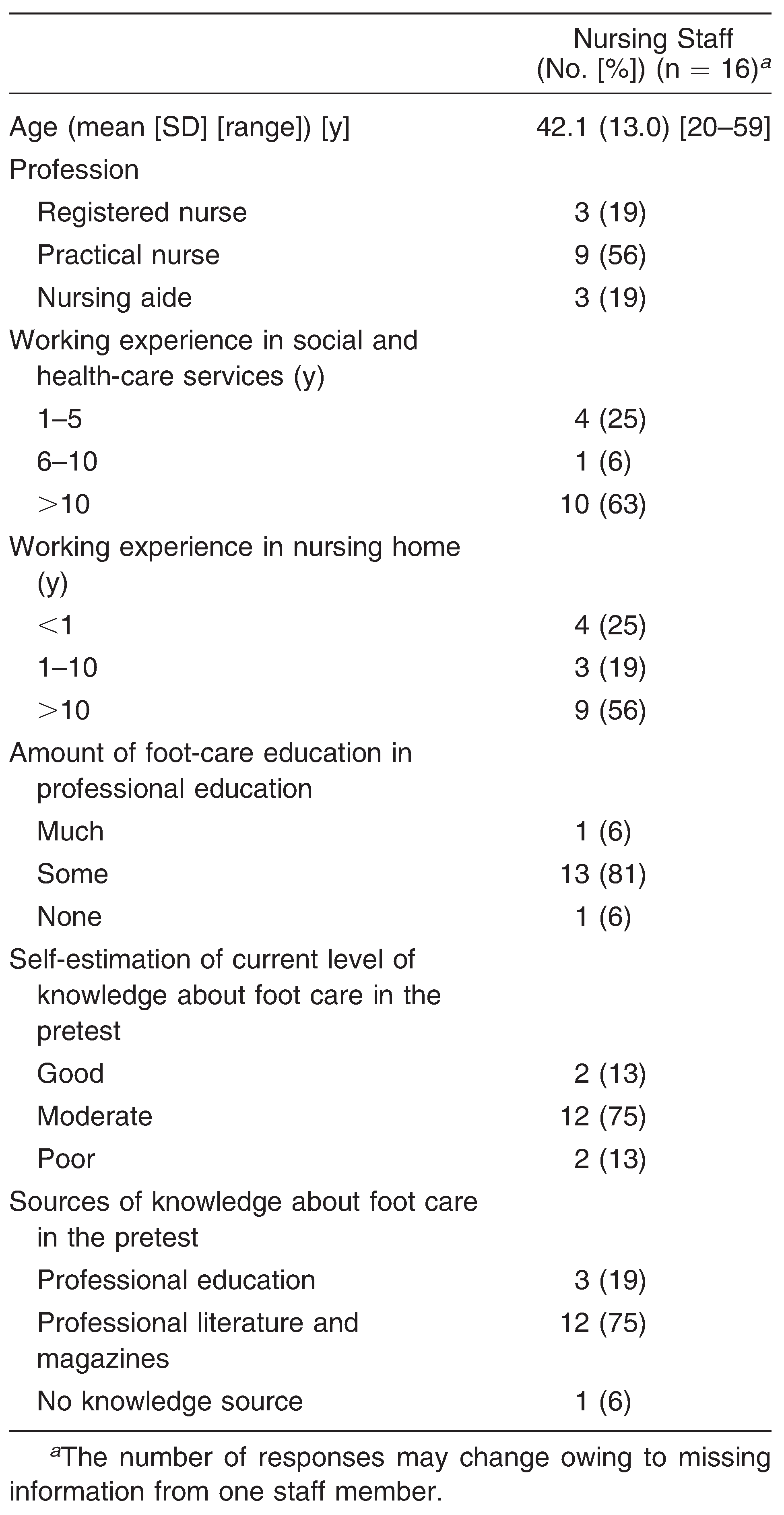
The purposively selected sample consisted of the nursing staff (n = 16) and the residents (n = 43) of one nursing home. Nursing staff had considerable working experience in social and health-care services and in the current workplace, but most of them estimated their current knowledge of foot care to be low. Details of the nursing staff sample are highlighted in Table 1.
The residents were selected based on the following inclusion criteria: able to communicate verbally and voluntary participation. In the pretest there were 46 residents and in the post-test there were 43 (three residents died). Most of the residents were women (84% in both tests). The mean (SD) age of residents at pretest was 86.4 (7.6) years (range, 63–100 years; median, 86.0 years) and at post-test was 87.2 (7.3) years (range, 64–100 years; median, 87.0 years).
Table 1.
Demographics of the Nursing Staff.
Intervention
The intervention was an educational program that consisted of lectures, demonstrations, and questions. It was designed to improve knowledge of foot care and foot-care activities, specifically skin and nail care and assessment of footwear. The intervention was created based on previous literature in the field [1,2,3,4,5,6,7,8,12,13,14] and consisted of two 90-min educational sessions.
The first 90-min session covered basic foot-care activities: daily foot hygiene (washing, toweling, and checking), care of skin and nails (care of calluses and corns, basic nail clipping, and treatment of different nail problems, eg, thickened toenails), and properties and selection of socks, footwear, and insoles (different sock materials, purpose of socks, properties and correct size of good indoor footwear, and shock-absorbing insoles).The second 90-min educational session covered the treatment of different foot problems. The recognition and care of athlete’s foot and onychomycosis were clarified. Then, key elements of diabetic foot care (skin and nail care and footwear) were emphasized. The purpose of foot creaming and moisturization was clarified, and foot creaming and massage of the lower limb were demonstrated. In addition, the roles of the nurse and the podiatrist in foot care were clarified (eg, basic skin and nail care is part of daily hygiene and difficult foot problems, eg, thickened toenails, need podiatric care). Both of the sessions were implemented by one of us (M.S.) and were repeated twice, thus giving all of the nursing staff the opportunity to participate.
Instruments and Data Collection
Two instruments were developed based on the previous literature: [1,2,3,4,5,6,7,8,12,13,14] 1) the Foot Health and Footwear Structured Assessment Form, and 2) the Nursing Staff’s Knowledge and Foot-Care Activities Questionnaire. The 38-item Foot Health and Foot-wear Structured Assessment Form was used for the assessment of residents’ foot health (made by M.S.). The first part of the assessment form included demographics (two items: age and sex), selfestimated foot pain (four items: intensity, frequency, disadvantage, and alleviation), and functional ability (two items: experienced functional ability and use of walking devices). The second part of the assessment form consisted of foot assessment: foot structural deformities (seven items: hallux valgus, Taylor’s bunion, lesser digital deformity, arch height, knee position in the frontal and sagittal planes, and foot length), range of motion of joints (five items: ankle dorsiflexion with knee flexed and extended, first metatarsophalangeal joint dorsiflexion, and dorsiflexion and plantarflexion of the first ray [the first ray consists of the first metatarsal and the first cuneiform bones]), skin health (six items: quality, color, condition, edema, corns and calluses, and skin between toes), nail health (four items: color, thickness, texture, and ingrowing toenails), properties of footwear (six items: length, fit, style, fixation, longitudinal sole rigidity, and stiffness of heel counter), and the researchers’ estimation of the patient’s need for foot care (two items: podiatric services and orthotic devices).
The residents’ demographic, foot pain, and functional ability data were collected using a face-to-face structured interview, and foot structure deformities, joint range of motion, skin health, nail health, footwear, and need for foot care were clinically assessed (by M.S.). The data from the residents were collected before (pretest [October 2005]) and 3 months after (post-test [February 2006]) the intervention.
The Nursing Staff’s Knowledge and Foot-Care Activities Questionnaire consisted of 34 items. Eight items were related to demographics (age, profession, years working in social and health care and in the current organization, amount of education in foot care in the nursing education, respondent’s own estimate of knowledge of foot care, importance of foot care, and source of extra knowledge of foot care). The Nursing Staff’s Knowledge and Foot-Care Activities Questionnaire was developed on the basis of earlier literature. [1,2,3,4,5,6,7,8,12,13,14] Nursing staff foot-care knowledge was evaluated with 16 multiple-choice questions about skin care (seven items), nail care (four items), diabetic foot care (two items), footwear (two items), and functional ability (one item). A correct answer produced 1 point, giving a possible total of 16 points. Nursing staff foot-care activities (ten items) were evaluated with questions about when the nurse evaluates a resident’s foot health, skin between toes, nails, corns and calluses, and lower-limb ulceration. Further questions concerned how often nursing staff perform a foot wash, moisturization, sock change, and nail clipping and what kind of instruments nursing staff had for nail clipping.
The data from the nursing staff were collected before (pretest [October 2005]) and 3 months after (post-test [February 2006]) the intervention. The questionnaires were distributed to nursing staff by the head nurse and were completed during ward meetings. Twenty-two nurses attended the intervention, but only 16 returned the questionnaire.
Statistical Analysis
The data were analyzed with statistical software (SAS Enterprise Guide version 3.0; SAS Institute Inc, Cary, North Carolina). Three-class variables on the questionnaire were changed into two-class variables such as no foot problems versus foot problems. The significance of changes in variables that consisted of two categories was analyzed with the McNemar test. This test is appropriate for pretest-posttest designs. [24] The change in knowledge test scores were tested with the nonparametric Wilcoxon signed rank test. This test examines changes that occur in pretest-posttest measures in continuous variables. The level of statistical significance was set at P < .05. [25] The results are described by using percentages, frequencies, and mean values.
Ethical Considerations
The ethical principles of the Declaration of Helsinki [26] were followed. Permission to conduct the study was granted by the head physician of the organization. Informed consent was obtained from the nursing staff and the residents. Participation was voluntary, and participants received a letter informing them of the purpose of the study. Relatives of residents were informed by a notice on an announcement board.
Results
Foot-Care Knowledge of Nursing Staff
There was a significant increase in nursing staff foot-care knowledge (P = .040). A statistically significant increase was seen in the total points gained in the knowledge test, from a mean (SD) of 12.0 (1.87) (median, 12.25; range, 9.5–15.5) to a mean (SD) of 13.36 (1.86) (median, 14.0; range, 10.0–15.5). At an individual level, in the post-test, ten members of the nursing staff improved their results in the knowledge test, four received a worse result than in the pretest, and two had the same results as in the pretest. There were no differences in the age, training, or working experience of the nurses whose scores increased versus decreased.
Foot-Care Activities of Nursing Staff
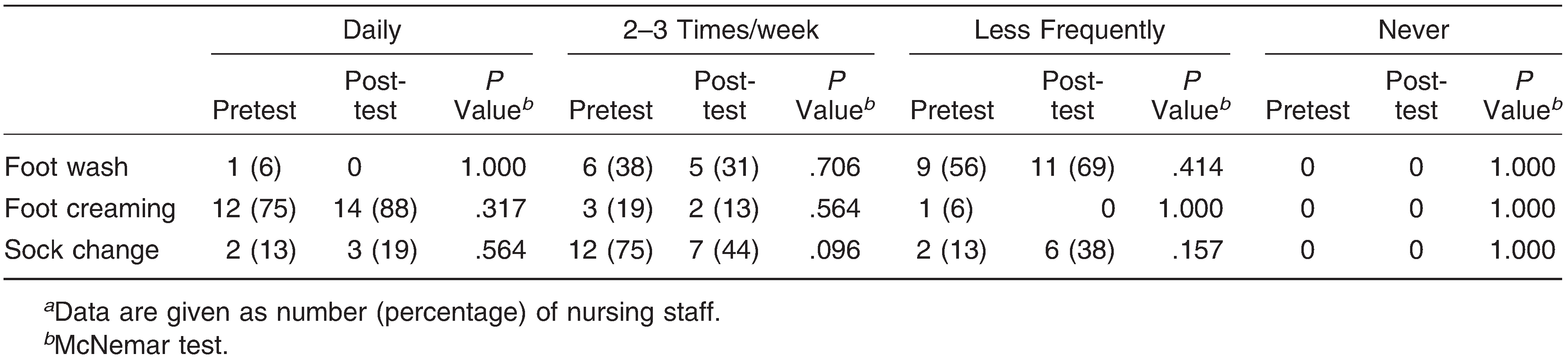
Foot-care activities were partially changed after the intervention. The intervention generated the desired outcomes in the evaluation of residents’ skin, skin between toes, and corns and calluses; these evaluations were mainly conducted during daily foot creaming after the intervention. The intervention did not change the time of the evaluation of lower-limb ulcers, which were evaluated in connection with sock clothing and foot creaming after the intervention (Table 2). There were no statistically significant changes in the frequency of nursing staff foot-care activities between pretest and post-test (Table 3). Nursing staff used mostly nail scissors or clippers for nail care in pretest and post-test. Most nursing staff clipped residents’ nails when necessary in pretest and post-test. The importance of foot care was considered high by 88% (n = 14) of the nursing staff in the pretest and by 100% in the post-test.
Table 2.
Nursing Staff Foot-Care Activities in the Pretest and the Post-testa.
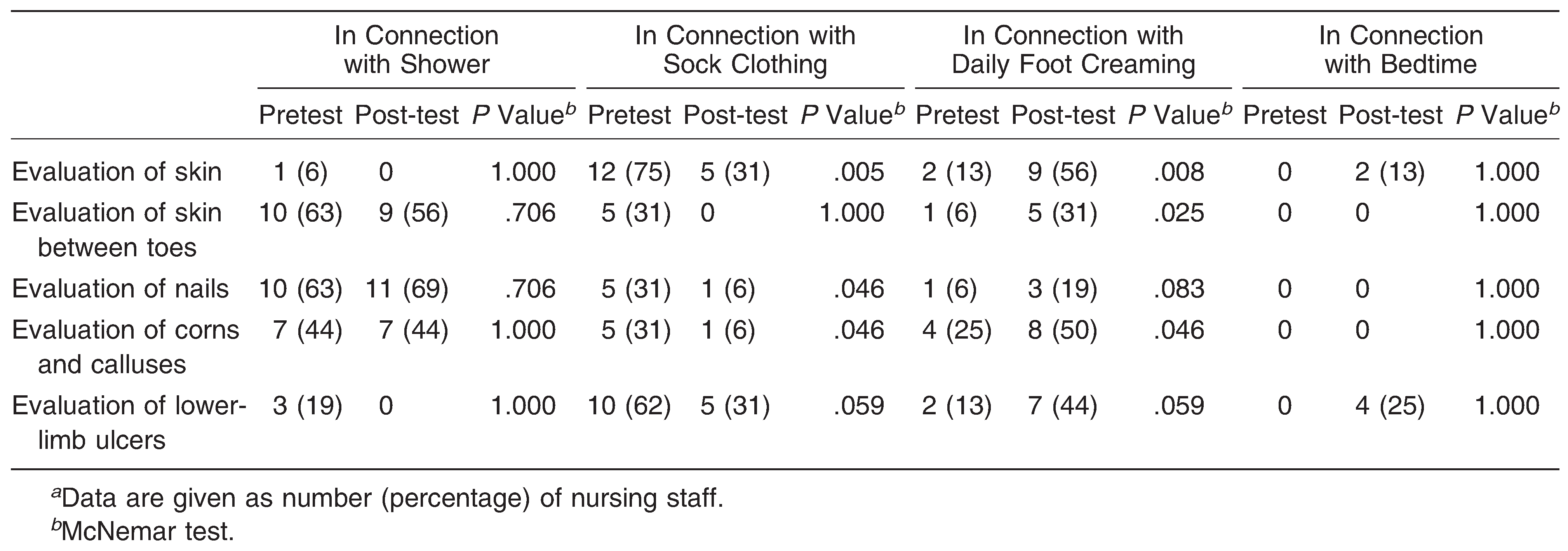
Table 3.
Frequency of Nursing Staff Foot-Care Activities in the Pretest and the Post-testa.
Staff whose knowledge of foot care improved after the intervention showed some changes in their foot-care activities. Ten staff members had improved knowledge of foot care after the intervention. In the pretest, most of the staff (n = 9) evaluated residents’ skin condition during sock clothing, and in the post-test this had fallen to three staff members. The change was significant (P = .014). Six of these nurses evaluated residents’ skin condition during daily foot creaming after the intervention. This was the most important change in nursing staff foot-care activities. In the pretest, lower-limb ulcers were evaluated in connection with sock clothing by eight staff members, and after the intervention, this was reduced to only two members of the nursing staff. This was a significant change (P = .046). As a result, most of the staff (n = 5) evaluated lower-limb ulcers during daily foot creaming after the intervention, which was the desired change. Staff whose knowledge points did not increase or were the same in the pretest and the post-test showed no statistically significant changes in foot-care activities.
Foot Health of Residents
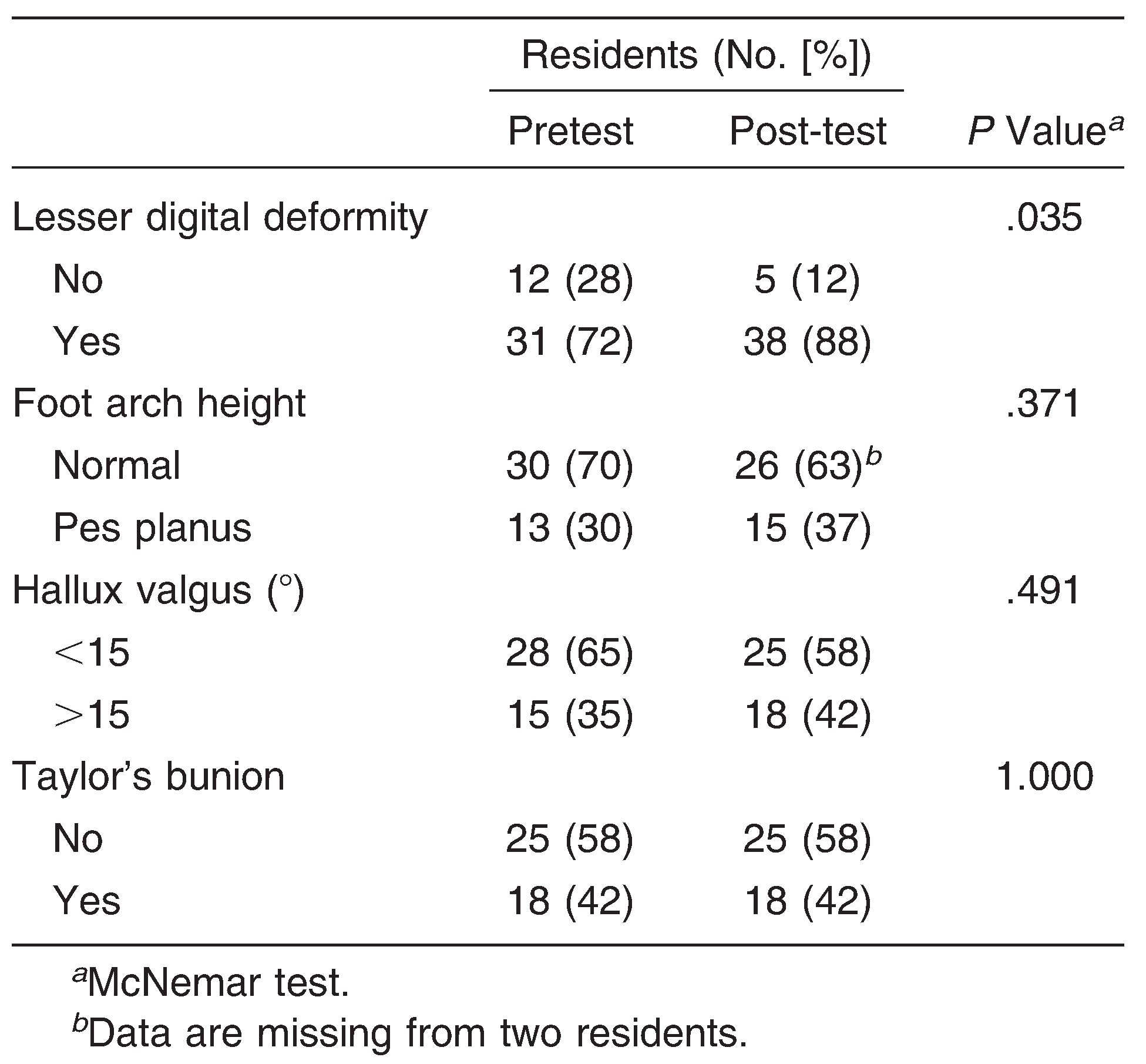
Residents had a variety of foot problems. The most common structural findings in the feet of residents (n = 43) in the pretest and the post-test were lesser digital deformities such as hammer toes and claw toes. These deformities significantly increased after the intervention (P = .035). Other structural findings related to the feet (hallux valgus and foot arch height) also partly increased after the intervention, but these pretest and post-test differences were not statistically significant (Table 4).
Table 4.
Structural Findings in 43 Residents’ Feet in the Pretest and the Post-test.
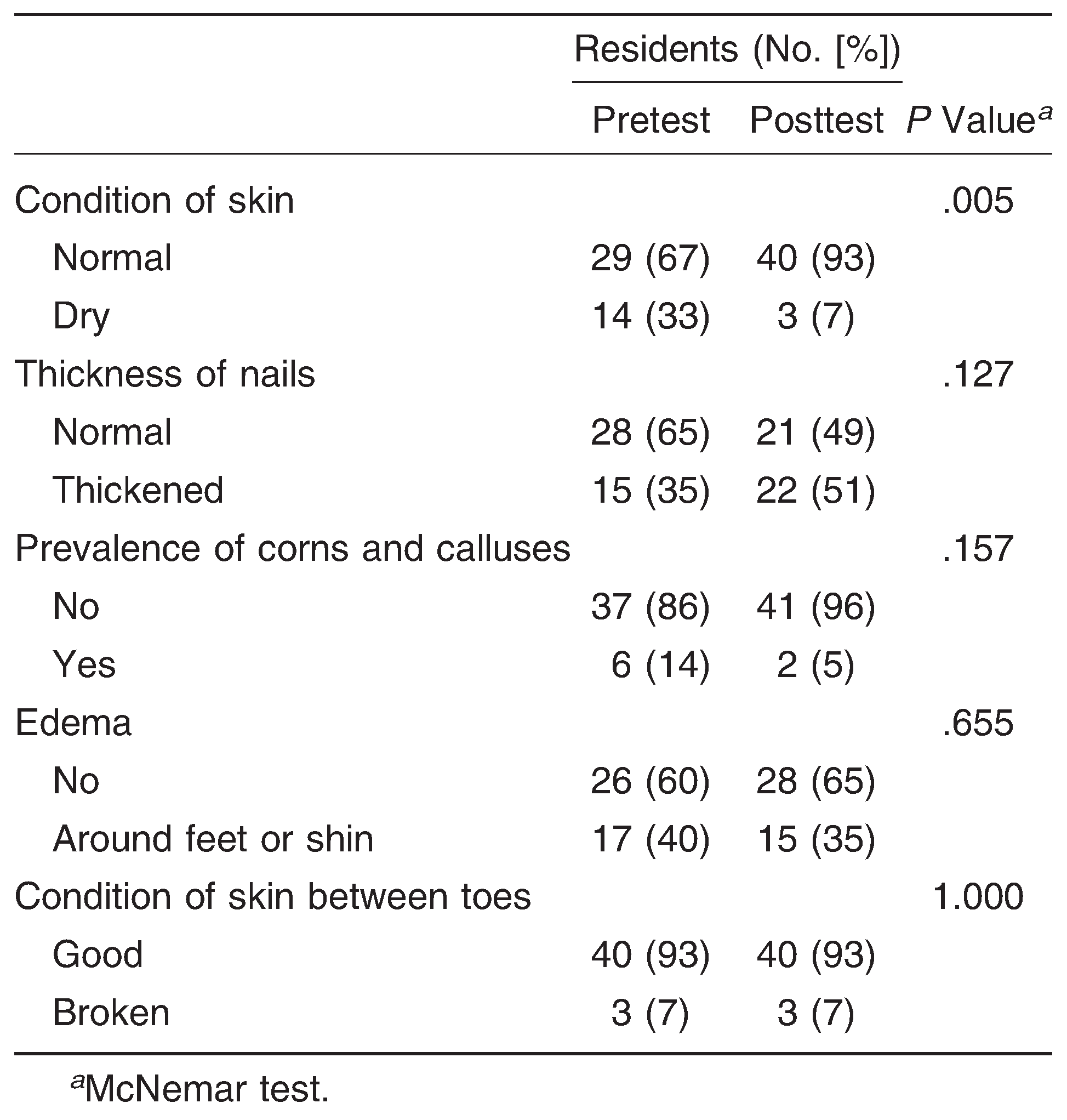
Residents also had various skin problems. After the intervention, the amount of dry skin decreased 26%, which was significant (P = .005). The amount of corns and calluses decreased 9% after the intervention. Edema around the feet also decreased 5% compared with the pretest (Table 5). Nail color was normal in 93% (n = 40) in the pretest, and in the post-test every resident had normal nail color. In contrast, the amount of thickened toenails increased by 14%. Range of motion in the ankle, first metatarsophalangeal, and firstray joints was limited in most residents in the pretest and the post-test. Three of four residents (74%, n = 32) had the need for podiatric services within 6 months because of skin, nail, and foot structural problems in the pretest and the post-test. Podiatric care was recommended to these residents.
Table 5.
Health of Foot Skin and Toenails of the 43 Residents in the Pretest and the Post-test.
Foot pain significantly decreased after the intervention (P = .035). Of all older residents (n = 43) the amount of those who had foot pain was 34% (n = 13) in the pretest and those who reported foot pain of all older residents was 18% (n = 7) in the post-test. The condition of residents’ footwear was unsatisfactory. Foot length was measured in 33 residents in the pretest and the post-test; the functional ability of the other ten residents was so weak that they did not want to stand owing to fear of falling. In the pretest, 70% of the residents (n = 23) had ill-fitting indoor footwear, half of which were slippers. Most of the residents had no fixation in the footwear, and the longitudinal sole rigidity and the heel counter were soft. In the post-test, the same footwear deficiencies were found as in the pretest.
Discussion
Research on nursing staff knowledge of foot care and their foot-care activities is limited. In the future, research in this area needs to be broadened to discover the knowledge gaps and deficiencies in foot-care activities. By improving nursing staff knowledge of foot care and their foot-care activities, health-care costs can be reduced because the nursing staff are then able to perform basic foot care. Foot health is significant for the functional ability and well-being of older people. Regularly performed foot-care maintains and improves older people’s foot health and prevents foot health problems. This intervention was designed to im-prove nursing staff knowledge and their foot-care activities so that they could better care for residents’ feet.
This study indicates that nursing staff foot-care knowledge can be improved by education. Most of the nursing staff demonstrated increased knowledge scores in foot care after the intervention similar to those indicated in a study by Pataky et al. [13] Although nursing staff seemed to have a good level of knowledge concerning foot care, they did not implement it in practice. The only clear relationship between nursing staff foot-care knowledge and foot-care activity was found in evaluation of the skin during daily foot creaming. Improvement of the knowledge of nursing staff in foot care improved the health of residents’ skin only. Contrary to previous studies, [3,12] the intervention did not decrease the number of residents’ foot problems.
The intervention did not have an effect on residents’ footwear in the nursing home. The condition of residents’ footwear was inappropriate in the pretest and the post-test. These deficiencies in the properties of footwear are congruent with those of a previous study. [4] Ill-fitting footwear may lead to falls in residential care. [8] Older people like to wear soft and light footwear, [11] but this may cause foot deformities and lead to falls. [8] There should be enough width at the toes and length over the longest toe for elongation during gait in footwear. [9] A footwear training program, which could advise older people what kind of footwear they should wear, would help them in the selection of appropriate footwear. Knowledge about the importance of footwear in preventing falls should also be emphasized in the future.
Because foot care is not a typical task in nursing practice, the lack of change in foot-care activities may be because of lack of time, fear of care, or routine tasks. Nursing staff may need more education and handson practice lessons about general foot care to strengthen their foot-care activities. The condition of residents’ foot health may change rapidly; therefore, nursing staff need to pay daily attention to foot health evaluation and care for or guide residents in foot health care. In the future, the significance of foot care will be increased as the number of older people is growing rapidly world-wide, and they will need the nursing staff’s guidance and care in foot health care. Therefore, nursing staff need to have adequate knowledge of foot care and foot-care activities.
There are limitations to this study. First, there was no randomization or control group, and the sample size was small. These reduce the generaliz ability of the results. Furthermore, the residents’ foot health and footwear were assessed by one researcher/podiatrist. In addition, the nursing staff and residents were measured only before and 3 months after the intervention. A longer period would have given more information about permanent outcomes.
The intervention itself also had limitations. In preference to two lectures in 2 weeks, lectures could be shorter, more numerous (concentrating on a specific topic each time), and include demonstrations (eg, nail clipping) showing concrete implementation of foot care in practice. [12] Further research should concentrate on the development and testing of this intervention.
Conclusions
These results indicate the need for further development and modification of this intervention. However, the results of this educational program reveal that nursing staff knowledge in foot care can be changed and that residents’ foot health, especially skin health, can be improved with an educational program. Because foot health care is significant for the general health of older people, development of interventions that support foot health is crucial. Nursing staff need to be encouraged in the foot care and foot health evaluation of older people.
Acknowledgments
Tero Vahlberg, MSc, for his expertise with the statistical analyses and Mike Nelson, PhD, for his expertise with the English language.
Financial Disclosure
None reported.
Conflicts of Interest
None reported.
References
- BENNETT PC: Foot care: prevention of problems for optimal health. Home Healthc Nurse 2006, 24, 325. [CrossRef] [Scilit] [PubMed]
- BARR, E.L.; BROWNING, C.; LORD, S.R.; et al. Foot and leg problems are important determinants of functional status in community dwelling older people. Disabil Rehabil 2005, 27, 917. [Google Scholar] [CrossRef] [Scilit] [PubMed]
- BADLISSI, F.; DUNN, J.E.; LINK, C.L. ET AL: Foot musculoskeletal disorders, pain, and foot-related functional limitation in older persons. J Am Geriatr Soc 2005, 53, 1029. [Google Scholar] [CrossRef] [Scilit] [PubMed]
- MENZ HB, MORRIS ME: Footwear characteristics and foot problems in older people. Gerontology 2005, 51, 346. [CrossRef] [Scilit] [PubMed]
- HELFAND, A.E. Foot problems in older patients: a focused podogeriatric assessment study in ambulatory care. JAPMA 2004, 94, 293. [Google Scholar] [CrossRef] [Scilit] [PubMed]
- KEYSOR, J.J.; DUNN, J.E.; LINK, C.L. ET AL: Are foot disorders associated with functional limitation and disability among community-dwelling older adults. J Aging Health 2005, 17, 734. [Google Scholar] [CrossRef] [Scilit] [PubMed]
- MENZ, H.B.; MORRIS, M.E.; LORD, S.R. Foot and ankle characteristics associated with impaired balance and functional ability in older people. J Gerontol A Biol Sci Med Sci 2005, 60, 1546. [Google Scholar] [CrossRef] [Scilit] [PubMed]
- MENZ, H.B.; MORRIS, M.E.; LORD, S.R. Foot and ankle risk factors for falls in older people: a prospective study. J Gerontol A Biol Sci Med Sci 2006, 61, 866. [Google Scholar] [CrossRef] [Scilit] [PubMed]
- WILLIAMS A: Footwear assessment and management. Podiatry Now 2006, 5, S1.
- MENANT, J.C.; STEELE, J.R. MENZ HB: Optimizing footwear for older people at risk of falls. J Rehabil Res Dev 2008, 45, 1167. [Google Scholar] [CrossRef] [Scilit] [PubMed]
- MUNRO, B.J.; STEELE, J.R. Household-shoe wearing and purchasing habits: a survey of people aged 65 years and older. JAPMA 1999, 89, 506. [Google Scholar] [CrossRef] [Scilit] [PubMed]
- HOWELL M, THIRLAWAY S: Integrating foot care into the everyday clinical practice of nurses. Br J Nurs 2004, 13, 470. [CrossRef] [Scilit] [PubMed]
- PATAKY, Z.; GOLAY, A.; RIEKER, A. ET AL: A first evaluation of an educational program for health care providers in a long-term care facility to prevent foot complications. Int J Low Extrem Wounds 2007, 6, 69. [Google Scholar] [CrossRef] [Scilit] [PubMed]
- Lorimer, D.; FRENCH, G.J.; O’DONNELL, M.; et al. Neale’s Disorders of the Foot, 7th ed; Churchill Livingstone: Edinburgh, 2006. [Google Scholar]
- WARNER I: Nursing and long-term care concerns of foot care in the elderly. Clin Podiatr Med Surg 2003, 20, 383. [CrossRef] [Scilit] [PubMed]
- HELFAND, A.E. Foot ffealth Training Guide for Long-term Care Personnel; Health Professions Press Inc: Balti-more, 2007. [Google Scholar]
- MINISTRY OF SOCIAL AFFAIRS AND HEALTH. Health care in Finland. Available online: http://www.stm.fi/en/publications/publication/_julkaisu/1059995#en. (accessed on 24 August 2009).
- OFFICIAL STATISTICS OF FINLAND. Social protection. National Institute for Health and Welfare Web site. Available online: http://www.stakes.fi/EN/tilastot/statisticsbytopic/socialservices/careandhousingservices.htm (accessed on 24 August 2009).
- MINISTRY OF EDUCATION AND CULTURE. Education. Available online: http://www.minedu.fi/OPM/Koulutus/?lang=en (accessed on 6 December 2008).
- MINISTRY OF SOCIAL AFFAIRS AND HEALTH. National frame-work for high-quality services for older people. Available online: http://www.stm.fi/Resource.phx/publishing/store/2008/02/ka1212393066110/passthru.pdf (accessed on 6 December 2008).
- GESSNER, T.L. Job Design and Work Processes in Patient Care,’’ in Nursing Administration: Managing Patient Care, 2nd Ed; Dienemann, J.A., Ed.; Appleton & Lange: Stamford, CT, 1998; p. 359. [Google Scholar]
- ADAMS A, HARDLEY M: Primary panacea? Nurs Times 1992, 88, 34.
- CITY OF HELSINKI HEALTH DEPARTMENT. Health centre. Available online: http://www.hel2.fi/terveyskeskus/english/services/index.html (accessed on 6 December 2008).
- POLIT, D.F.; BECK, C.T. Nursing Research: Generating and Assessing Evidence for Nursing Practice, 8th ed; Lippincott Williams & Wilkins: Philadelphia, 2008. [Google Scholar]
- BURNS, N.; GROVE, S.K. The Practice of Nursing Research: Conduct, Critique and Utilization, 5th ed; WB Saun-ders Co: Philadelphia, 2005. [Google Scholar]
- WORLD MEDICAL ASSOCIATION. Declaration of Helsinki: ethical principles for medical research involving human subjects. Available online: http://www.wma.net/en/30publications/10policies/b3/index.html (accessed on 6 December 2008).
This is an open-access article distributed under the terms of the Creative Commons Attribution Non-Commercial No Derivatives (CC BY-NC-ND) 4.0 License.