


Abstract
The topic of pain management remains a minor component of the formal education and training of residents and physicians in the United States. Misguided attitudes concerning acute and chronic pain management, in addition to reservations about the legal aspects of pain management, often translate into a “fear of the unknown” when it comes to narcotic prescription. The intentionally limited scope of this review is to promote an understanding of the laws regulating pain management practices in the United States and to provide recommendations for appropriate pain management assessment and documentation based on the Model Policy for the Use of Controlled Substances for the Treatment of Pain established by the Federation of State Medical Boards of the United States. (J Am Podiatr Med Assoc 100(6): 511–517, 2010)
Although most patients presenting for medical evaluation complain of pain,[1–9] the topic of pain management remains a minor component of the formal education and training of students, residents, and physicians in the United States.[1,10–14] This educational deficit contributes to “passive” attitudes regarding acute pain, particularly in the perioperative setting,[15] and misguided beliefs about the management of chronic pain states.[10–26] These reservations often translate into a “fear of the unknown” when it comes to the legal aspects of pain management[27–40] and, ultimately, into the unnecessary and dangerous undertreatment of pain in many situations.[41–56] Writing for the Federation of State Medical Boards, Fishman[57] cites five factors leading to the already developed problem of undertreated pain: lack of knowledge of medical standards and clinical guidelines, the unfounded perception that opioid prescription will result in regulatory scrutiny, misunderstanding the concepts of addiction and dependence, lack of understanding regarding the regulatory process, and an insufficiency in clear professional guidelines and treatment protocols.
However, the focus of this review is not on the undertreatment of pain. That conversation is generally reserved for pain management specialists who receive advanced training in the evaluation and treatment of chronic pain states. In fact, most would agree that podiatric physicians, similar to primary-care physicians and other surgical specialists, should not represent the principal medical intervention in the management of chronic pain. They should, however, play an active but secondary role in a multidisciplinary approach centered around a pain management center.[58] Nonetheless, this does not change the fact that patients regularly present to podiatric physicians with complaints of chronic pain. These complaints come in many forms, including, but not limited to, overuse musculoskeletal injuries, degenerative arthritides, and neuropathies. Furthermore, we treat (after traumatic events) and create (via elective surgery) acute pain states that have the potential to develop into situations of pathologic chronic pain. Given these circumstances, it is our duty and responsibility as podiatric physicians to have at the very least an appreciation for the topic of pain management.
This article also is not a review of potential pain management therapies and interventions. The field of pain management represents a vast and rapidly expanding specialty of medicine that is often outpacing the ability of practitioners to incorporate it into their practices. Although specific treatment algorithms detailing an active multimodal approach for acute and chronic pain management are beyond the defined scope of this article, this information is readily available, and several recommended resources are provided at the end of this article for interested physicians.
The specific aim of this review is to advance a further understanding of the laws regulating pain management practices in the United States and to provide recommendations for appropriate pain management assessment and documentation. The intended emphasis is to reject the “fear of the unknown” and instead to encourage physician awareness, to promote understanding, and to improve the overall care of our patients.
Federal and State Laws and Regulations
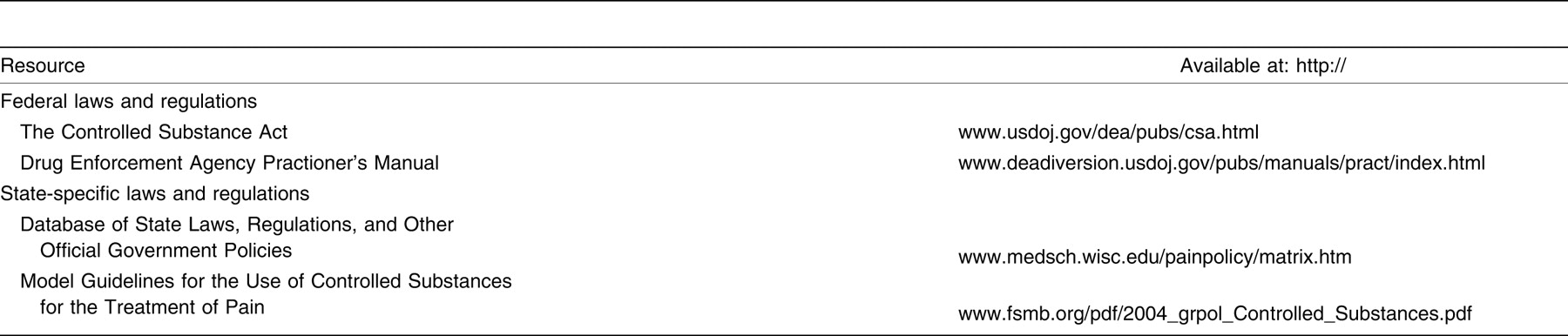
Despite the misconceptions of most physicians, disciplinary action for the prescription of opioids and other narcotics is relatively rare.[27–39] Furthermore, the area where most physicians are deficient with respect to their practices is documentation.[59–63] This is an entirely preventable situation but one in which many physicians are simply unaware of what constitutes “appropriate” pain management evaluation and documentation. Table 1 provides some online resources where most of this information can be found. Although all physicians who prescribe narcotics are strongly encouraged to review this unrestricted material, what follows in this review is a brief summary of this information.

Table 1.
Online Pain Management Resources for Podiatric Physicians
The Structure of Regulatory Investigations
An inquiry always begins with a complaint, which may come in several different direct or indirect forms. A grievance can be filed directly by an active patient, a former patient, or the family members of a patient. Although this may be someone who feels that he or she is being inappropriately treated or undertreated, it may also come from anxious family members who are concerned that too much pain medication is being administered.[64] Indirectly, a patient may lead to an inquiry if he or she is alleged to have misused, abused, or trafficked narcotics that you have prescribed. An investigation may also originate from a pharmacist who is concerned with a prescription that he or she is presented with from your office. It is important to appreciate that pharmacists are liable under a “corresponding duty” to maintain Drug Enforcement Agency standards with the prescribing physician, even without direct consultation between the physician and the pharmacist.[34,64] Other potential sources of a complaint that may initiate an investigation include insurance carriers, workman’s compensation groups, and prescription monitoring programs red-flagging narcotic prescriptions, as well as reports by fellow colleagues practicing in the local area. Prescription monitoring programs were introduced in some states to electronically track the number of prescribed narcotics. Physicians and law enforcement agents can track the use and abuse of prescriptions by individual patients through these programs.[65–67]
Criminal Investigations
The exact nature of the complaint dictates the general structure of the investigation. Criminal complaints are supervised by the Drug Enforcement Agency or by state law enforcement agencies and arise when narcotics are not prescribed or distributed for “legitimate medical purposes.” These agencies are not composed of medical physicians specializing in pain management but of law enforcement personnel without formal medical training. Examples of criminal charges that can be filed include trafficking, diversion, racketeering, money laundering, conspiracy, and reckless homicide or manslaughter.[64]
Federal laws and policies are outlined in the Controlled Substance Act, passed by Congress in 1970 to regulate the manufacture, importation, possession, and distribution of certain drugs. Although the entirety of the Controlled Substance Act can be found on the authorized Drug Enforcement Agency Web site,[68] a comprehensive description with analysis and recommendations is available at the University of Wisconsin Pain & Policy Studies Group Web site,[69] which is further organized into a database of state laws, regulations, and other official government policies (Table 1).[70]
Some points of emphasis from the Controlled Substance Act that frequently lead to hesitant or inappropriate prescription practices include the very intention of the prescription itself. Each narcotic prescription requires a legitimate, documented medical purpose. The Controlled Substance Act places no limit on the quantity of narcotics per prescription or the number of prescriptions, but it does tightly regulate refills and sequential prescriptions.
Narcotic dependence and addiction are two other areas regulated by the Controlled Substance Act in which physicians receive little to no formal training.[23] Federal laws and regulations do not prohibit narcotic prescription or administration to a narcotic-addicted patient if it is for alleviating a specific complaint of pain and with appropriate documentation; however, a separate Drug Enforcement Agency number, registration, or certification is required to administer narcotics to a narcotic-dependent patient for “detoxification” or “maintenance treatment.” Your documentation should clearly define the purpose of your prescription as being for a specific complaint and not for “maintenance” therapy if faced with this acute situation. It is also important to note that a physician’s individual Drug Enforcement Agency number should be closely guarded at all times. The use of a Drug Enforcement Agency number by another individual constitutes a crime.
Civil Investigations
Civil charges and investigations are generally handled by the state medical board and are broadly concerned with “unprofessional conduct.” Specific to pain management, this may include negligence in the practice of medicine; conduct likely to deceive, defraud, or harm; the use of a drug for something other than medically accepted purposes; commission or conviction of a gross misdemeanor or felony; and improper management of medical records.[69] Although these interdisciplinary state medical boards do not bring criminal charges after an investigation, they do have power and control over licensing. Again, individual state-specific laws, regulations, and recommendations are easily accessible on the Internet (Table 1).[70]
In an effort to promote unity and uniformity among the different state medical boards, the Federation of State Medical Boards updated the Model Policy for the Use of Controlled Substances for the Treatment of Pain in 2004.[71] Some states have adopted this policy verbatim, and others have made adjustments to the content. Although this policy does not outline absolute treatment protocols, it does provide basic clinical standards and guidelines. All physicians who prescribe narcotics should be familiar with this material and should make adjustments to their current interventions in an effort to meet the guidelines outlined in the policy if needed.
Appropriate Assessment and Documentation
The previously described Model Policy outlines seven areas for appropriate assessment: patient evaluation, treatment plan, informed consent and agreement for treatment, periodic review, consultation, medical records, and compliance with controlled substances laws and regulations.[57,71]
Patient Evaluation
The medical history and physical examination should include the nature and intensity of the pain, current and past medications/interventions (including date, type, dosage, and quantity) and their effectiveness, concurrent diseases/conditions, the effect of pain on physical and psychological function, any history of substance abuse, and the specific presence of one or more indications for the use of a controlled substance. This information should be fully documented each time a narcotic is prescribed.
The effect of pain on physical and psychological function can represent a difficult subset of the patient evaluation for surgeons. Passik et al[59,72] developed the Pain Assessment and Documentation Tool to assist physicians in quantifying this subjective information. This tool consists of measuring four areas of pain assessment: analgesia, activities of daily living, adverse effects, and aberrant behaviors. Other quantitative means include the numerical rating scale, the McGill Pain Questionnaire, the Brief Pain Inventory, and the Initial Pain Assessment Tool.[57] Physicians, particularly orthopedic surgeons, are also cautioned against maintaining a “Cartesian view” during the patient evaluation. In this situation, a specific physical reason for the pain is sought, and the emotional and psychological components of pain perception are underappreciated.[22,73]
Treatment Plan
One of the most important components of the treatment plan includes a written declaration of which objectives will be used to judge intervention success or failure. These objectives may include pain relief, improved physical functioning, and improved psychosocial functioning, among other measures. Effective and open physician-patient communication is necessary to achieve a mutual understanding of the expected outcomes of a pain management intervention. The patient should be aware of the criteria that the physician will use to judge a successful outcome, just as the physician should fully appreciate all facets of the patient’s complaint and expected results. It should be appreciated that in many situations, the complete relief of pain is an unrealistic goal.[57] In addition, the prescribing physician should be willing to adjust the treatment plan (medications, the use of adjuvant modalities, further diagnostic evaluations, etc) based on these outcome objectives.
Informed Consent and Agreement for Treatment
All potential risks, complications, and alternatives to the initiation or continuation of narcotic therapy should be fully reviewed with the patient in the setting of acute and chronic pain. This, again, underscores the importance of effective physician-patient communication and the development of mutual expected outcomes. Some even recommend a written contract, consent, or agreement signed by both parties in all situations, but particularly when long-term opioid therapy is used for the treatment of chronic pain.[57,58,74] These documents outline the responsibilities of the patient and the physician throughout the course of therapy. Patients should not receive narcotics from any other physician, never share or distribute prescriptions, use only one pharmacy, play an active role in their therapy, and consent to random blood and urine screenings. Physicians should never prescribe a narcotic without complete patient evaluation, observe the patient at regular intervals, actively change medications based on patient complaints, and evaluate the patient for the development of adverse effects and other conditions (including depression and dependence). Particularly with schedule II medications, physicians should perform a complete patient evaluation before allowing a prescription refill and should avoid the use of sequential prescriptions.
Periodic Review
Periodic review of the previously outlined treatment plan should be performed to assess the efficacy of the intervention. The physician should evaluate the objective analgesic and functioning measures that were developed with the patient at the time of treatment initiation. This should represent the basis for therapy continuation or change. If the patient has not made appropriate progress toward the established goals, then an amendment to intervention is required. The goal of this component of the patient evaluation is to prevent stagnant therapy, where patients are chronically prescribed narcotics without a change in symptom presentation. This situation of stagnant therapy is, in fact, detrimental to the patient’s overall level of care.
Consultation
When satisfactory progress toward mutual goals and expectations has not been met through the process of periodic review, then the prescribing physician should not hesitate to obtain appropriate referral and consultation. This is particularly true in situations of chronic pain and where dependence or addiction is suspected. Although physicians do not routinely receive formal education and training in these areas, it is their responsibility to recognize aberrant behaviors and to obtain appropriate treatment.[23] The immediate use of a multidisciplinary team at a pain management center is highly recommended for the treatment of these patients.
Medical Records
The previously outlined recommendations have specified appropriate physician action during the evaluation and treatment of patients with pain. The principle of documentation simply allows for others to follow this action through the maintenance of accurate and complete records that are readily available for review in written, dictated, or electronic form.[71] In addition to the required legal aspects of documentation, these records can only benefit long-term patient outcomes and continuity of care.
Compliance with Controlled Substance Laws and Regulations
Although this recommendation may initially seem to be self-explanatory, it can represent a difficult task to fully appreciate the specifics and differences between federal and state policies. Again, physicians are strongly encouraged to not only review this material (Table 1) but also to remain current on any updates or changes as they occur.
Conclusions
Appropriate pain management assessment and documentation within recommended clinical guidelines and the law consists of asking oneself a series of simple questions with each narcotic prescription, including those for acute postoperative analgesia:
- 1)
- Why am I writing this prescription? In other words, what is the “legitimate medical purpose” of the introduction or continuation of this action?
- 2)
- Who is the prescription for? What aspects of the patient evaluation led you to this diagnosis and treatment plan?
- 3)
- What is my expected outcome following this action, and what is the patient’s expected outcome? Which objective measures will be used to evaluate the effectiveness of the intervention, and how has the patient demonstrated an understanding of the treatment plan?
- 4)
- How and when will I know that this prescription has been effective? What are the long-term goals of the intervention, and what is the specific plan if these targets are not reached?
- 5)
- Where can someone else find the answers to these questions? How has your documentation answered the previous questions?
Opioids and other narcotics remain an important component of the multimodal approach to pain management needed to provide optimal patient care, but these benefits are not without risks to the patient and the physician. Thompson[75] discusses the “solemn responsibility” that physicians share to maintain pharmacovigilance in the current complex medical environment.[37] This concept maximizes the benefits of pain control while at the same time managing patient risk. All practicing physicians must appreciate their duty and obligation to use an active approach to pain management, particularly regarding legal aspects and documentation, to improve the overall care of our patients.
Financial Disclosure: None reported.
Conflict of Interest: None reported.
References
- Gatchel RJ: A biopsychosocial overview of pretreatment screening of patients with pain. Clin J Pain17: 192. ,2001.
- Hing E, Cherry DK, Woodwell DA: National Ambulatory Medical Care Survey: 2004 summary. Adv Data374: 1. ,2006.
- Loeser JD, Melzack R: Pain: an overview. Lancet353: 1607. ,1999.
- Badlissi F, Dunn HE, Link CL, et al: Foot musculoskeletal disorders, pain, and foot-related functional limitation in older persons. J Am Geriatr Soc53: 1029. ,2005.
- Greenberg L, Davis H: Foot problems in the US: the 1990 National Health Interview Survey. JAPMA83: 475. ,1993.
- Greenberg L: Foot care data from two recent nationwide surveys: a comparative analysis. JAPMA84: 365. ,1994.
- Helfand AE: Foot problems in older patients: a focused podogeriatric assessment study in ambulatory care. JAPMA94: 293. ,2004.
- Gould N, Schneider W, Ashikaga T: Epidemiological survey of foot problems in the continental United States: 1978–1979. Foot Ankle1: 8. ,1980.
- Chan MK, Chong LY; Achilles Project Working Group in Hong Kong: A prospective epidemiologic survey on the prevalence of foot disease in Hong Kong. JAPMA92: 450. ,2002.
- Rastegar DA, Fingerhood MI: “Introduction,” in Addiction Medicine: An Evidence-based Handbook, p 1, Lippincott Williams & Wilkins, Philadelphia. ,2005.
- Lin JJ, Alfandre D, Moore C: Physician attitudes toward opioid prescribing for patients with persistent non-cancer pain. Clin J Pain23: 799. ,2007.
- Ury WA, Rahn M, Tolentino V, et al: Can a pain management and palliative care curriculum improve the opioid prescribing practices of medical residents?. J Gen Intern Med17: 625. ,2002.
- Fishman SM, Gallagher RM, Carr DB, et al: The case for pain medicine as a medical specialty. Pain Med5: 255. ,2004.
- Meyr AJ, Steinberg JS: Preface. Clin Podiatr Med Surg25: xiii. ,2008.
- Bonica JJ, Loeser JD: “Applied Anatomy Relevant to Pain,” in Bonica’s Management of Pain, 3rd Ed, ed by JD Loeser, p 196, Lippincott Williams & Wilkins, Philadelphia. ,2001.
- Loeser JD: “The Current Issues in Pain Management,” in Current Diagnosis and Treatment of Pain, ed by JHV Roenn, ME Preodor, JA Paice, p 1, Lange Medical Books/McGraw-Hill, New York. ,2006.
- Park G, Fulton B, Senthuran S: “Why Is Pain Control a Problem?” in The Management of Acute Pain, 2nd Ed, p 1, Oxford University Press, Oxford. ,2000.
- Cailliet R: Pain: Mechanisms and Management, FA Davis Co, Philadelphia. ,1993.
- Pomm HA, Pomm RM: “Introduction,” in Management of the Addicted Patient in Primary Care, p 1, Springer Publishing Co, New York. ,2007.
- Califano JA: Substance abuse and addiction: the need to know. Am J Public Health88: 9. ,1988.
- Caudill-Slosberg MA, Schwartz LM, Woloshin S: Office visits and analgesic prescriptions for musculoskeletal pain in US: 1980 vs. 2000. Pain109: 514. ,2004.
- Meyr AJ, Saffran B: The pathophysiology of the chronic pain cycle. Clin Podiatr Med Surg25: 327. ,2008.
- Bobbitt KL, Keplinger LM, Althari HK: Understanding addiction: the orthopedic surgical perspective to a significant problem. Clin Podiatr Med Surg25: 493. ,2008.
- Fishman SM, Gallagher RM, Carr DB, et al: The case for pain management. Pain Med5: 281. ,2004.
- Fishman SM: Recognizing pain management as a human right: a first step. Anesth Analg105: 8. ,2007.
- Wilsey BL, Fishman SM, Crandall M, et al: A qualitative study of barriers to chronic pain management in the ED. Am J Emerg Med26: 255. ,2008.
- Richard J, Reidenberg MM: The risk of disciplinary action by state medical boards against physicians prescribing opioids. J Pain Symptom Manage29: 206. ,2005.
- Jung B, Reidenberg MM: The risk of disciplinary action by the Drug Enforcement Administration against physicians prescribing opioids for pain. Pain Med7: 353. ,2006.
- Weissman DE, Joranson DE, Hopwood MB: Wisconsin physicians’ knowledge and attitudes about opioid analgesic regulations. Wis Med J90: 671. ,1991.
- Von Roenn JH, Cleeland CS, Gonin R, et al: Physician attitudes and practice in cancer pain management: a survey from the Eastern Cooperative Oncology Group. Ann Intern Med119: 121. ,1993.
- Levin ML, Berry JI, Leiter J: Management of pain in terminally ill patients: physician reports of knowledge, attitudes and behavior. J Pain Symptom Manage15: 27. ,1998.
- Manchikanti L: National drug control policy and prescription drug abuse: facts and fallacies. Pain Physician10: 399. ,2007.
- Gilson AM, Joranson DE: U.S. policies relevant to the prescribing of opioid analgesics for the treatment of pain in patients with addictive disease. Clin J Pain18: (suppl):S91. ,2002.
- Joranson DE, Berger JW: Regulatory issues in pain management. J Am Pharm Assoc (Wash)40: (suppl 1):S60. ,2000.
- Fishman SM, Papazian JS, Gonzalez S, et al: Regulating opioid prescribing through prescription monitoring programs: balancing drug diversion and treatment of pain. Pain Med5: 309. ,2004.
- Fishman SM: From balanced pain care to drug trafficking: the case of Dr. William Hurwitz and the DEA. Pain Med6: 162. ,2005.
- Fishman SM: Trust and pharmacovigilance in pain medicine. Pain Med6: 392. ,2005.
- Fishman SM: Pain and politics: DEA, Congress, and the courts, oh my!. Pain Med7: 87. ,2006.
- Fishman SM: Risk of the view through the keyhole: there is much more to physician reactions to the DEA than the number of formal actions. Pain Med7: 360. ,2006.
- Chan KT, Fishman SM: Legal aspects of chronic opioid therapy. Curr Pain Headache Rep10: 426. ,2006.
- Cleeland CS: Undertreatment of cancer pain in elderly patients. JAMA279: 1914. ,1998.
- Pasero C, McCaffery M: The undertreatment of pain. Am J Nurs101: 62. ,2001.
- Resnick DB, Rehm M, Minard RB: The undertreatment of pain: scientific, clinical, cultural, and philosophical factors. Med Health Care Philos4: 277. ,2001.
- Frank-Stromborg M, Christensen A: A serious look at the undertreatment of pain: part I. Clin J Oncol Nurs5: 235. ,2001.
- Frank-Stromborg M, Christensen A: A serious look at the undertreatment of pain: part II. Clin J Oncol Nurs5: 276. ,2001.
- Cohen MJ, Jasser S, Herron PD, et al: Ethical perspectives: opioid treatment of chronic pain in the context of addiction. Clin J Pain19: (suppl):S99. ,2002.
- Green CR, Wheeler JR, LaPorte F, et al: How well is chronic pain managed? who does well?. Pain Med3: 56. ,2002.
- Green CR, Wheeler JR, Marchant B, et al: Analysis of the physician variable in pain management. Pain Med2: 317. ,2001.
- Primm BJ, Perez L, Dennis GC, et al: Managing pain: the challenge in underserved populations: appropriate use versus abuse and diversion. J Natl Med Assoc96: 1152. ,2004.
- Neighbor ML, Honner S, Kohn MA: Factors affecting emergency department opioid administration to severely injured patients. Acad Emerg Med11: 1290. ,2004.
- Vaglienti CS, Grinberg M: Emerging liability for the undertreatment of pain. J Nurs Law9: 7. ,2004.
- Stalnikowicz R, Mahamid R, Kaspi S, et al: Undertreatment of acute pain in the emergency department: a challenge. Int J Qual Health Care17: 173. ,2005.
- O’Malley P: The undertreatment of pain: ethical and legal implications for the Clinical Nurse Specialist. Clin Nurse Spec19: 236. ,2005.
- Popenhagen MP: Collaborative practice: undertreatment of pain and fears of addiction in pediatric chronic pain patients: how do we stop the problem?. J Spec Pediatr Nurs11: 61. ,2006.
- Altilio T: Pain and symptom management clinical policy, and political perspectives. J Psychosoc Oncol24: 65. ,2006.
- Hutchinson RW: Challenges in acute post-operative pain management. Am J Health Syst Pharm64: (suppl 4):S2. ,2007.
- Fishman SM: Responsible Opioid Prescribing, Waterford Life Sciences, Washington, DC. ,2007.
- Sherlekar S: Pain management clinics. Clin Podiatr Med Surg25: 477. ,2008.
- Passik SD, Kirsh KL: “Protecting Your Practice: Appropriate Documentation for Pain Management,” in Expert Guide to Pain Management, ed by B McCarberg, SD Passik, p 299, American College of Physicians, Philadelphia. ,2005.
- Solomon DH, Schaffer JL, Katz JN, et al: Can history and physical examination be used as markers of quality? an analysis of the initial visit note in musculoskeletal care. Med Care38: 383. ,2000.
- Rhodes DJ, Koshy RC, Waterfield WC, et al: Feasibility of quantitative pain assessment in outpatient oncology practice. J Clin Oncol19: 501. ,2001.
- Saigh O, Triola MM, Link RN: Brief report: failure of an electronic medical record tool to improve pain assessment documentation. J Gen Intern Med21: 185. ,2006.
- Drendel AL, Brousseau DC, Gorelick MH: Pain assessment for pediatric patients in the emergency department. Pediatrics117: 1511. ,2006.
- Baluss M: “Medical Board and Drug Enforcement Agency Investigations: How to Handle an Inquiry,” in Expert Guide to Pain Management, ed by B McCarberg, SD Passik, p 309, American College of Physicians, Philadelphia. ,2005.
- Katz N, Houle B, Fernandez KC, et al: Update on prescription monitoring in clinical practice: a survey study of prescription monitoring program administrators. Pain Med9: 587. ,2008.
- Manchikanti L, Whitfield E, Pallone F: Evolution of the National All Schedules Prescription electronic reporting act (NASPER): a public law for balancing treatment of pain and drug abuse and diversion. Pain Physician8: 335. ,2005.
- Fishman SM, Papazian JS, Gonzalez S, et al: Regulating opioid prescribing through prescription monitoring programs: balancing drug diversion and the treatment of pain. Pain Med5: 309. ,2004.
- US Drug Enforcement Agency. Controlled Substance Act. Available at: http://www.usdoj.gov/dea/pubs/csa.html. Accessed September 10. ,2008.
- Pain & Policy Studies Group Web site. Available at: http://www.painpolicy.wisc.edu. Accessed September 10. ,2008.
- Pain & Policy Studies Group: Database of state laws, regulations, and other official government policies. Available at: http://www.medsch.wisc.edu/painpolicy/matrix.htm. Accessed September 10. ,2008.
- Federation of State Medical Boards of the United States. Model policy for the use of controlled substances for the treatment of pain. Available at: http://www.fsmb.org. Accessed September 10. ,2008.
- Passik SD, Kirsh KL, Whitcomb L, et al: A new tool to assess and document pain outcomes in chronic pain patients receiving opioid therapy. Clin Ther26: 552. ,2004.
- Jacobson L, Mariano AJ: “General Considerations of Chronic Pain,” in Bonica’s Management of Pain, 3rd Ed, ed by JD Loeser, p 241, Lippincott Williams & Wilkins, Philadelphia. ,2001.
- Fishman SM, Kreis PG: The opioid contract. Clin J Pain18: (suppl):S70. ,2002.
- Thompson JN: “Foreword,” in Responsible Opioid Prescribing, ed by SM Fishman, p 1, Waterford Life Sciences, Washington, DC. ,2007.
Additional References: Recommended Reading for Physicians Interested in Incorporating Active Pain Management Approaches into Their Practices
- Ballantyne JC (ed): The Massachusetts General Hospital Handbook of Pain Management, 3rd Ed, Lippincott Williams & Wilkins, Philadelphia. ,2005.
- Benzon HT, Raja S, Molloy R, et al (eds): Essentials of Pain Medicine and Regional Anesthesia, 2nd Ed, Elsevier Churchill Livingstone, Philadelphia. ,2007.
- Benzon HT, Rathmell JP, Wu CL, et al (eds): Raj’s Practical Management of Pain, 4th Ed, Elsevier-Mosby, Philadelphia. ,2008.
- Fishman SM: Responsible Opioid Prescribing: A Physician’s Guide, Waterford Life Sciences, Washington, DC. ,2007.
- Joshi GP (ed): Anesthesiology Clinics of North America: Current Concepts in Postoperative Pain Management, p 23, Elsevier-Saunders, Philadelphia. ,2005.
- Loeser JD (ed): Bonica’s Management of Pain, 3rd Ed, Lippincott Williams & Wilkins, Philadelphia. ,2001.
- Meyr AJ, Steinberg JS (eds): Clinics in Podiatric Medicine and Surgery: Pain Management, p 25, Elsevier-Saunders, Philadelphia. ,2008.
- Shorten G, Carr DB, Harmon D, et al (eds): Post Operative Pain Management: An Evidence-Based Guide to Practice, Elsevier-Saunders, Philadelphia. ,2006.
- Warfield CA, Bajwa ZH (eds): Principles and Practice of Pain Medicine, 2nd Ed, McGraw-Hill, New York. ,2004.
© 2010 American Podiatric Medical Association