


Abstract
The Behavioral Finance (BF) has undergone significant developments due to the transformative influence of Environmental, Social and Governance (ESG) practices. BF and Sustainable Investment (SI) are closely intertwined domains, both of which bring into line with the broader framework of ESG. Integrating BF into the field of SI expands the understanding of how psychological biases, emotional factors, and cognitive constraints influence investors decisions connected to sustainability focused assets. Despite their growing relevance, the existing literature lacks a comprehensive review that provides holistic reviewing of research integrating into these areas. To address this gap, we provide an overview of BF and SI research in Socially Responsible Investments (SRI). Using both co-citation and bibliometric-coupling analysis, we infer the thematic structure of key words of BF and SI for a period of 20 years starting from 2004 to September 2025. Additionally using performance analysis and co-occurrence analysis, we highlighted trends and research directions regarding BF and SI. Further, seven thematic clusters and coupling networks were also identified which are offering to the researchers a structured foundation to explore emerging trends and consolidate knowledge within the BF and SI field. This Bibliometric study aids in recognizing the emerging topics for research in the domain of BF and SI.
1. Introduction
The Behavioral Finance (BF) theory provides a nuanced understanding of the psychological dimensions influencing financial decision-making, challenging the rationality assumption underpinning traditional finance theories (Almansour et al., 2023; Corzo et al., 2024; V. V. Kumar et al., 2026). Rooted in seminal contributions such as the prospect theory by Kahneman and Tversky (1979), BF posits that investors are not perfectly rational, utility-maximizing individuals but are instead subject to cognitive biases and emotional influences that systematically affect their investment behavior. Among the key behavioral biases identified by BF are overconfidence, herd behavior, anchoring, and loss aversion (Chishti et al., 2025; Herathmenike et al., 2025; Reddy et al., 2026; Shiller, 2000). These biases reveal that human decision-making is often guided by heuristics and emotions rather than logic, thereby explaining market anomalies such as bubbles, crashes, and inefficient resource allocation (Lukács & Tóth, 2025).
The interaction of green finance, sustainable investment, and behavioral biases has led to the ever-growing academic literature in finance, behavioral economics, environmental studies, and corporate governance (Filippini et al., 2026; Gupta & Goswami, 2024; Yulianingsih & Rosdini, 2025). Nevertheless, the real-world decision-making process of investors on sustainable investment does not always adhere to the rational models of sustainable decision-making despite the normative appeal and structural momentum of sustainable investment in the green finance ecosystem (U. Ahmad et al., 2025; Ghosh et al., 2025; Mahmood et al., 2024; Wang & Xu, 2025). Sustainable investment is currently among the most important fields of contemporary financial practice and scholarly study, in the larger framework of green finance (Kabiri et al., 2026; Kiky et al., 2026). Green finance as the backbone of a sustainable financial ecosystem gives the broad institutional and market framework of sustainable investment choices, assessment, and regulation (Guo & Hong, 2026; Zhu et al., 2025).
BF theory is particularly relevant in the context of Sustainable Investment (SI), which integrates ESG factors into portfolio decisions. It provides insight into why investors may undervalue long-term sustainability benefits in favour of short-term gains, thus exacerbating social inequities and environmental challenges (Brodback et al., 2019; Gómez Sánchez & Tobon, 2025). For instance, overconfidence may lead investors to underestimate the financial risks of climate change, while loss aversion may discourage participation in Green Investments (GI) perceived as riskier or less profitable (Gupta & Goswami, 2024). The integration of SI within BF has therefore gained prominence as researchers explore how psychological factors shape preferences for ESG-aligned assets, often finding that behavioral biases act as barriers to adopting responsible investment practices (Bihari et al., 2025b).
SI represents a paradigm shift in contemporary finance by embedding ethical and long-term societal considerations into investment analysis and decision-making (Friede et al., 2015; Dordi et al., 2024; Naseer et al., 2024). Investors now evaluate firms not only through financial metrics but also through social responsibility, often prioritizing identity reinforcement and moral satisfaction over immediate returns (Bollen, 2007; Pasquino & Lucarelli, 2025). This transition underscores how perceived ethical responsibility and non-financial motivations influence risk perception and portfolio diversification (Riedl & Smeets, 2017). Incorporating BF concepts into SI research thus enables a deeper understanding of how heuristics, biases, and value-driven motives guide the allocation of capital toward sustainability-oriented assets (Nofsinger & Varma, 2014). An interdisciplinary perspective enhances comprehension of how behavioral tendencies affect ESG investment patterns and their broader implications for market efficiency, financial stability, and societal welfare (Loewenstein et al., 2001). As noted by (Abhijith & Bijulal, 2025), the integration of cognitive and emotional factors within BF provides a robust framework to debunk the behavioral biases influencing sustainable investment decisions and challenge traditional market theories.
Empirical evidence further supports these behavioral insights. The ESG investing trends in emerging markets report emphasizes that the rapid expansion of ESG investing in developing economies is driven more by psychological factors such as herding, loss aversion, and overconfidence than by genuine long-term sustainability objectives. The report highlights the pivotal role of investor sentiment, media narratives, and socio-cultural influences in shaping ESG fund selection and portfolio adjustments, thereby affirming the behavioral nature of sustainable investments. Similarly, a behavioral choice experiment on Spanish investors found that personality traits like conscientiousness and agreeableness are positively associated with sustainable investment preferences, demonstrating how inherent psychological dispositions can elevate sustainable outcomes above immediate financial rewards (Muñoz-Muñoz et al., 2025). Considering the growing scholarly interest and the limited exploration of future research directions in SI, the present study seeks to address the following research questions:
- RQ1: What are the Publication Trends around BF and SI?
- RQ2: Which are the most influential authors, articles, journals, institutions and countries that have contributed to the field of BF and SI?
- RQ3: What are the possible thematic clusters and most referenced documents in the field of BF and SI?
- RQ4: What are influential topics in the field of BF and SI?
2. Bibliometric Research
2.1. Defining the Appropriate Search Terms
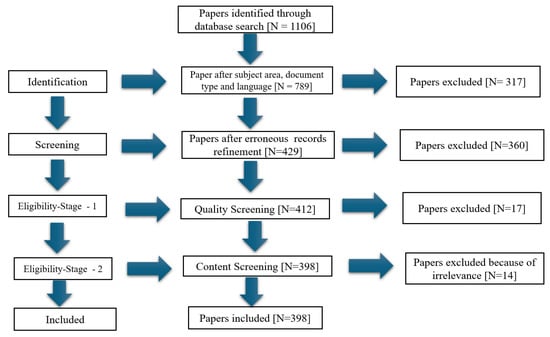
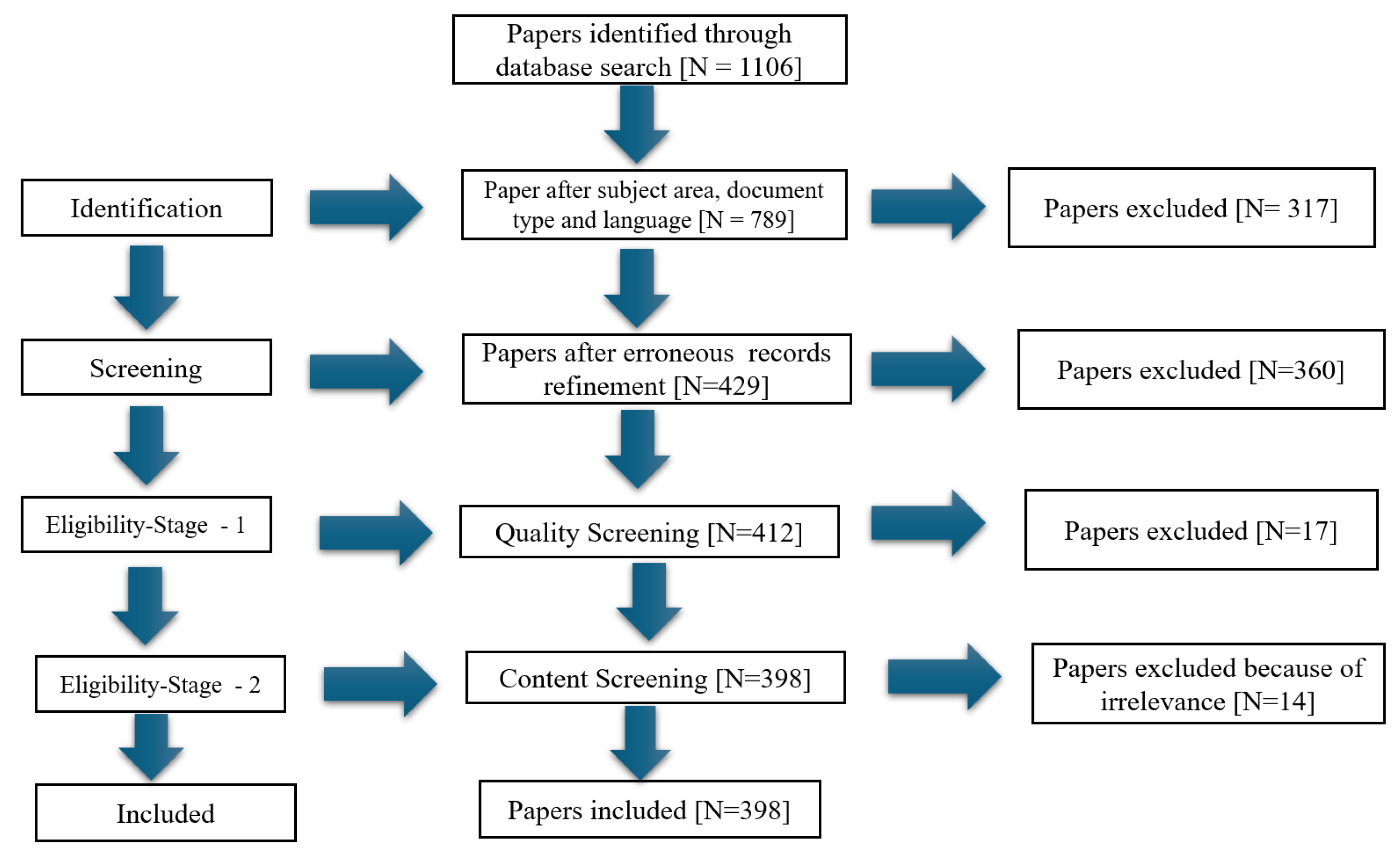
This study employs a cross-disciplinary vocabulary that integrates the domains of BF and SI. To ensure comprehensive representation of both fields, relevant keywords from each domain were systematically incorporated into the research framework. Figure 1 illustrates the two search strings and the corresponding sets of keywords used for Scopus data extraction and document selection. Following a preliminary review of key literature, the authors identified essential BF related terms such as behavioral biases, cognitive biases, investor behavior, investment decision-making, and financial behavior. Similarly, the primary SI related term incorporated was ESG.
Figure 1.
PRISMA Diagram.
2.2. Data Collection
The data for this study were sourced from the Scopus database, which encompasses a wide range of double-blind, peer-reviewed, and high-impact journals (Groff et al., 2020). A systematic procedure was employed to arrive at the final dataset comprising 398 articles, as depicted in Figure 1. The search utilized the keywords “Behavioral Finance”, “Behavioral Biases”, “Sustainable Investment”, “Investor Behavior”, “Investment Decision-Making”, “Financial Behavior”, “ESG”, and “Cognitive Biases”, to identify English-language publications across multiple disciplines. However, data retrieved from Scopus and similar web-based databases may include inaccuracies due to incomplete or erroneous bibliographic and bibliometric records, particularly in newly published research (Donthu et al., 2021). To minimize potential inconsistencies and misinterpretations, rigorous data cleaning and refinement procedures were undertaken. These steps facilitated a thorough examination of the bibliographic and bibliometric information, as well as the visualization and interpretation of results, following the methodological guidelines suggested by previous scholars (Donthu et al., 2021; Zupic & Čater, 2014).
2.3. Selecting the Techniques for Analysis
Bibliometric analysis refers to a series of tools used to analyze and quantify text and quantitative methodologies to present the information (Goyal & Kumar, 2021; Mishra et al., 2018). The method enables the derivation of new information based on literature reviews, which can be subsequently utilized to complement the study (Groff et al., 2020; Suominen et al., 2016). It is necessary to develop and post biographies on a topic, identify trends in a field of study, and critically assess research publications that serve as a mechanism of knowing the condition of research (Gao et al., 2021; Hossain et al., 2021). Bibliometric analysis of methodologies such as authorship, citation, bibliographic coupling, co-citation, and co-word, are used by the researchers to analyze the information on biographic data by (Donthu et al., 2021).
3. Findings
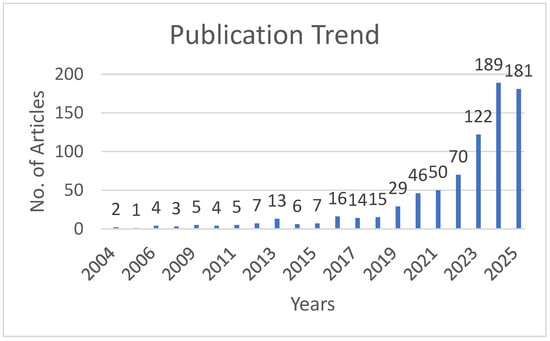
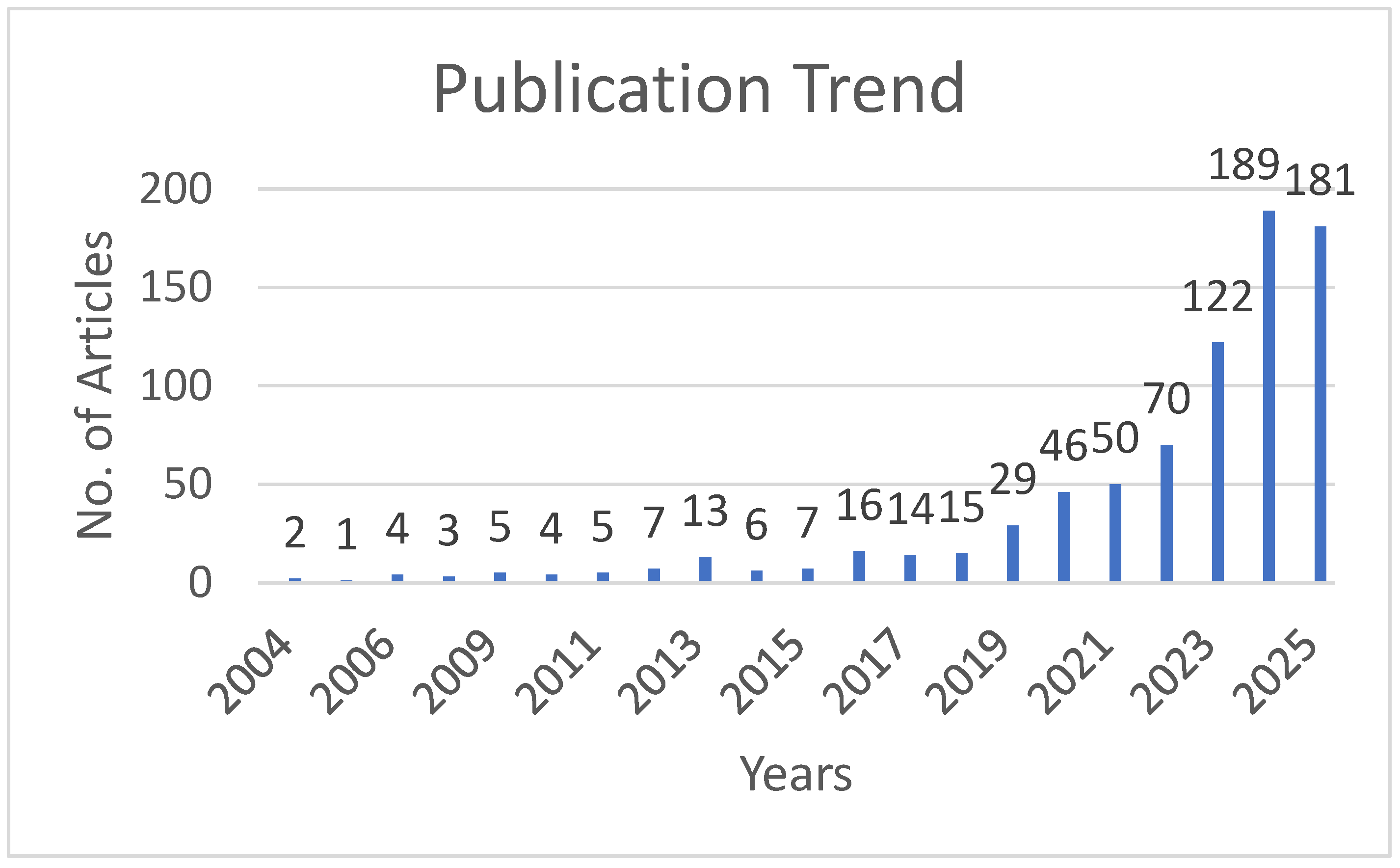
Figure 2 illustrates the publication trends in the field of BF research within SI. The research journey in this domain began in 2004, whereas 2024 emerging as the most productive year. Early studies primarily focused on financial reporting biases. From 2013 onward, there has been a notable rise in the popularity of BF research related to SI, and since 2016, the annual publication rate has shown a steady and significant increase. Overall, based on the current trend, it is expected that research activity in this domain will continue to grow in the coming years.
Figure 2.
Publication trend of Behavioral Finance and Sustainable Investment.
3.1. Most Productive Authors, Organizations and Countries for BF Research in SI
Table 1 indicates the most productive authors, institutions and countries for BI research and SI. The paper by Busch et al. (2016) with 388 citations as the lead authors followed by Chen et al. (2007), with 365 citations. Similarly, the most productive institutions are the University Hamburg, Hamburg, Germany with the citations of 526 with six research article publications and the Hong Kong Polytechnic University, Hong Kong with citation of 416 with three research paper publications. Likewise, most influential country is the India with 2139 citations with the 102 research article publications followed by USA with 1195 citations from 42 documents.
Table 1.
Most Influential Authors, Institutions and Country.
3.2. Most Influential Journals in BF and SI
Table 2 presents the most influential sources contributing to BF research in SI. Among these, Qualitative Research in Financial Markets emerges as the most productive source, with 19 published research articles and 944 citations. The journal holds a “B” ranking in the ABDC classification, an H-index of 33, an SJR score of 0.571, and is positioned in the Q2 quartile. This is followed by Finance Research Letters, which has published 14 research articles and received 571 citations. It is ranked “A” in the ABDC list, possesses an H-index of 123, an SJR score of 1.711, and is categorized under the Q1 quartile.
Table 2.
Most Influential Journals in Behavioral Finance and Sustainable Investment.
3.3. Most Influential Articles on BF and SI
Table 3 highlights the most cited and influential articles in the field of BF and SI research. The article “Trading performance, disposition effect, overconfidence, representativeness bias, and experience of emerging market investors” by Chen et al. (2007), with 365 citations, stands as the most impactful. The study examined the investment decision-making in emerging markets and revealed that investors often make suboptimal trading decisions. Similarly, Billio et al. (2021), with 314 citations for their article “Inside the ESG ratings: (Dis)agreement and performance”, analyzed the ESG rating criteria employed by major agencies and found that ESG factors significantly influence sustainable investments. The study further identified inconsistencies among rating agencies, demonstrating how these variations affect ESG investors’ preferences and, consequently, asset prices.
Table 3.
Most influential articles on Behavioral Finance and Sustainable Investment.
Further examination of the top-cited publications in the domain of BF and SI reveals several significant contributions. Busch et al. (2016) demonstrated that financial market participants are increasingly integrating ESG factors into their investment decisions. Masini and Menichetti (2012) emphasized the importance of underlying investments in renewable energy technologies and sustainable investments. Several scholars explored behavioral biases in investment decision-making (Costa et al., 2017; Flyvbjerg, 2021; Jain et al., 2020; Joghee et al., 2020; S. Kumar & Goyal, 2015; Schumacher et al., 2020; Shah et al., 2018; Zahera & Bansal, 2018). Some researchers focused on financial performance of sustainable investments of individuals and firms (M. Ahmad & Wu, 2022; Costa et al., 2019; Cunha et al., 2021; Jain et al., 2022; S. Kumar & Goyal, 2016). Literature also reveals some studies on the impact of air pollution on mental health cognition (Li et al., 2021), and individual investment behavior (Raut et al., 2020). For example, Folqué et al. (2021) analysed sustainable investment funds and ESG risks in ESG portfolios. Some early scholars (e.g., Sahi et al., 2013) identified the beliefs and attitudes of individual investors in financial decision-making, with particular attention to behavioral biases.
3.4. Co-Citation of Articles on BF and SI
Table 4 presents the most frequently cited articles based on local and global citation counts, illustrating how often articles are referenced within and beyond the field of BF and SI. This analysis provides deeper insight into the breadth of research areas and related studies that may otherwise have been overlooked in BF and SI research. Global citations represent the frequency with which an article is cited by publications outside the BF and SI domain, whereas local citations indicate how often the article is cited within the same field.
Table 4.
Top References for Behavioral Finance and Sustainable Investment.
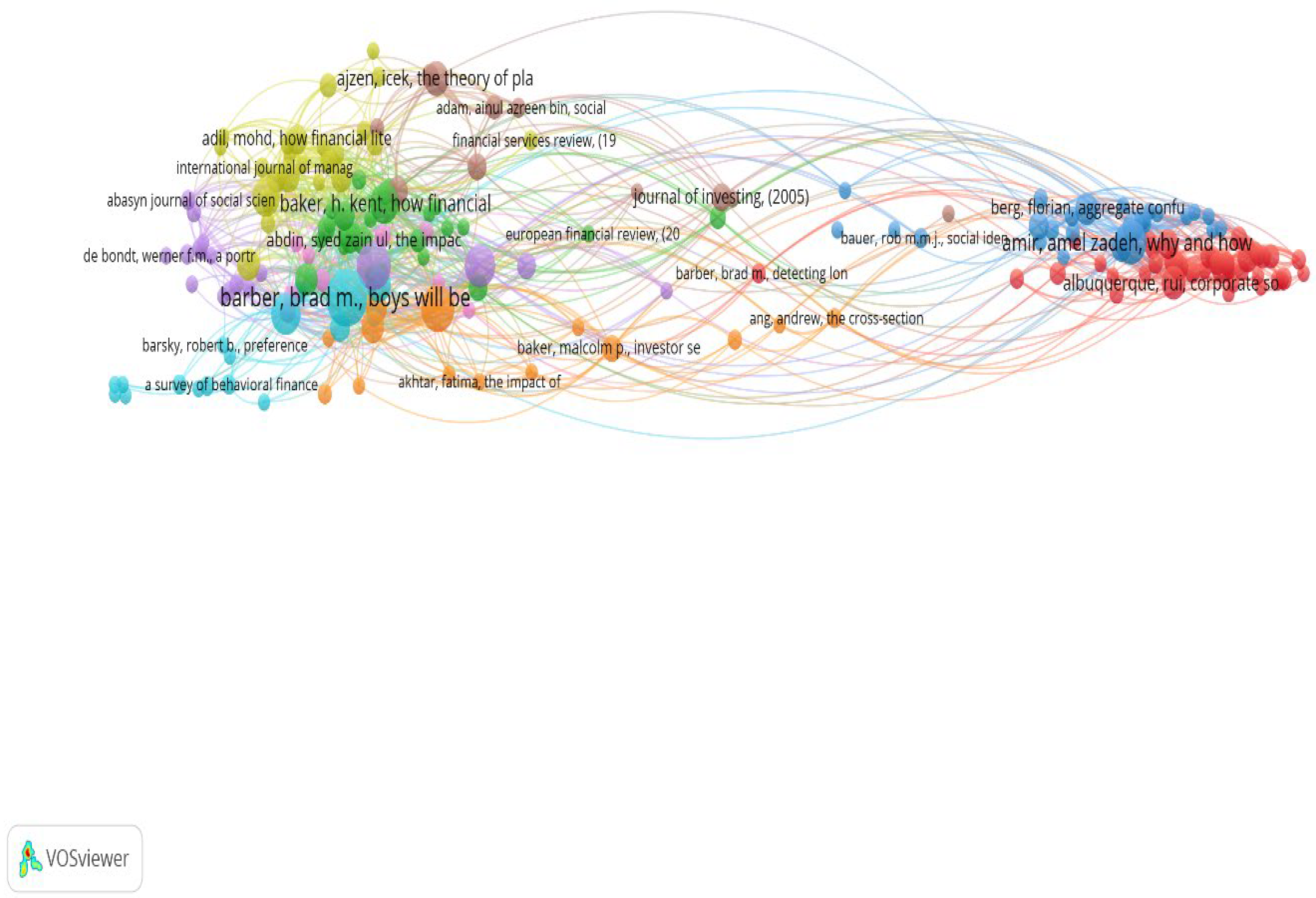
Interpreting Table 4, Barber and Odean (2000, 2001) emerges as the most frequently cited authors, with 22 and 32 local citations, respectively. In terms of global citations, Barber and Odean (2000, 2001) again lead, with 1889 and 2912 citations, respectively. Barber and Odean (2001) in the article title “Boys will be boys: Gender, overconfidence, and common stock investment” discussed that according to theoretical models, overconfident investors engage in excessive trading. According to psychological research, men are more likely than women to trade because they are overconfident in their financial abilities. Men traded 45 per cent more than women, according to an analysis of over 35,000 brokerage accounts from 1991 to 1997. Men’s yearly net returns were lowered by 2.65 percentage points due to this excessive trading, while women’s were lowered by 1.72 and in Barber and Odean (2000) discussed in article titled “Trading is hazardous to your wealth: The common stock investment performance of individual investors” active trading causes a significant performance penalty for individual investors who own common stocks. The majority of the 66,465 households that traded between 1991 and 1996 received an annual return of 11.4 percent, compared to 17.9 percent of the market. The typical investor turns over 75 per cent a year, earns 16.4 per cent, and prefers small-value, high-beta stocks. This poor performance can be explained by overconfidence and to give a message “trading is hazardous to your wealth”. Barberis and Thaler (2003) discussed in their paper titled “Chapter 18 A survey of behavioral finance” about BF uses models of non-rational agents to explain financial phenomena. It covers markets, returns, trading, corporate finance, and the psychology of deviations in addition to limits on arbitrage with the local citation of 18 and 1048 global citation respectively. Amir and George (2018) titled “Why and how investors use ESG information: Evidence from a global Survey” analyze the most common reasons for using ESG are client demand and ethics, followed by relevance to investment performance, according to survey data from mainstream investment firms. ESG use is hindered by a lack of reporting standards. Full integration is thought to be more effective than negative screening with the 19 local citations and 882 global citations respectively.
Followed by other authors like Bauer et al. (2006) offers fresh data regarding the performance and investment approach of Australian retail ethical funds with 11 local citations and 184 global citations respectively. Baker et al. (2019) examine the relationship between behavioral biases and demographic factors (gender, age, income level, education, occupation, marital status, and investment experience) and financial literacy with 16 local citations and 168 global citations respectively. Similarly, Barber and Odean (1999) draw attention to two typical errors made by investors: excessive trading and the propensity to sell profitable investments while holding onto lost ones.
Barberis and Huang (2001) examine equilibrium firm-level stock returns over portfolio variations and individual stock fluctuations in two economies where investors are loss averse. High mean returns, excessive volatility, and a high value premium are better explained by the latter with the local citations of 10 and global citations of 210 respectively. Ahmed and Duellman (2013) found that CEO overconfidence and conservatism were found to be negatively correlated, with external monitoring unable to offset this effect. Overconfident managers overestimate future returns, postpone loss recognition, and use less conservative accounting with local citations of 5 and 428 global citations respectively.
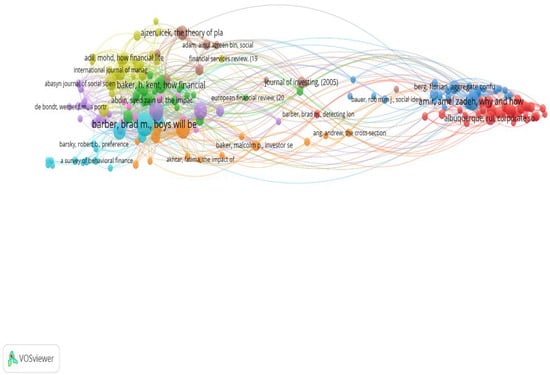
Figure 3 illustrates the co-citation network among references used in BF and SI research. Nodes represent the cited references, with their colors signifying semantic clusters that group references sharing thematic similarities. The size of each node reflects its degree of local citations, where larger nodes correspond to a higher number of local citations. Connections between nodes indicate instances of co-citation, and the thickness of the connecting lines denotes the strength of these relationships, the thicker the line, the higher the degree of co-citation between the references.
Figure 3.
Top References for Behavioral Finance and Sustainable Investment.
3.5. Thematic Clusters for BF and SI Through Bibliographic Coupling
Building on the established knowledge base, the bibliographic coupling technique proposed by Boyack and Klavans (2010) an advanced form of co-citation analysis as discussed by Donthu et al. (2021) was employed to identify thematic clusters. This technique enables the exclusion of minimally cited and indirectly related articles, ensuring that only thematically coherent works are grouped within the same cluster.
- Cluster 1: SI and Finance, ESG Investment
Cluster 1 comprises articles focusing on sustainable finance, ESG investment, and sustainable business practices. The most cited work within this cluster is by Cunha et al. (2020) with 127 citations. As per the study of Cunha et al. (2020), ESG standards and sustainable investments are becoming more popular among investors, but they still need trustworthy data to make decisions. Using both traditional and contemporary metrics, an analysis of Dow Jones Sustainability Indices (2013–2018) across major regions reveals heterogeneous performance, although some regions offer promising risk-adjusted returns. The Sustainable Development Goals (SDGs) are advanced by practitioners, managers, scholars, and stakeholders with the help of these insights. Sinha Ray and Goel (2023) discussed that using both static and dynamic panel regressions, the study empirically examines how ESG scores affect key financial variables of 48 Indian BSE-100 companies between 2011 and 2019. Results indicate that, although with time lags, ESG performance influences ROA, ROE, firm size, market capitalization, PBDIT, Tobin’s Q, and share price. Interestingly, there is a long-term positive correlation between average share price and ESG disclosure, highlighting ESG’s increasing importance in predicting financial performance and influencing risk-reduction strategies in India. Yu et al. (2024) applies the system generalized method of moments (GMM) to investigate how ESG performance influences environmental and earnings-driven (capital) investments among BRICS non-financial firms from 2010 to 2022. The findings reveal trade-offs as ESG scores increase capital investment while decreasing environmental spending. Investment patterns are also impacted by firm size, debt, cash holdings, and CO2 emissions, underscoring conflicts between sustainability and profitability.
- Cluster 2: Financial Behavior, ESG Rating, and Responsible Investment
Cluster 2 encompasses articles focusing on ESG ratings, Corporate Social Responsibility (CSR), and responsible investment practices. The three most cited works within this cluster are Billio et al. (2021), Busch et al. (2016), and Cunha et al. (2021), with 314, 312, and 158 citations, respectively. Billio et al. (2021) analyzed the ESG rating criteria employed by major rating agencies and identified a lack of uniformity among them. Their study revealed that inconsistencies in ESG scores dilute the influence of ESG investors’ preferences on asset prices. Busch et al. (2016) explored the role of financial markets in promoting sustainable development and observed that their contribution remains modest. They highlighted a paradox wherein financial market participants increasingly integrate ESG criteria into investment decisions, yet the overall systemic transformation remains limited. Cunha et al. (2021) proposed a conceptual framework for understanding the Sustainable Finance and Investment (SFI) field, along with a research agenda that structures key SFI research questions and suggests appropriate methodological approaches to address them. Sharma et al. (2024) emphasize that with global sustainability emerging as a central objective, socially conscious investors are increasingly attentive to the non-financial dimensions of investment specifically ESG factors. Their study seeks to determine whether integrating ESG data points supports profitable investments while simultaneously advancing sustainability goals.
- Cluster 3: Behavioral Finance and Biases, Investment Decision-Making, and Financial Literacy
Cluster 3 comprises articles that explore the interrelation between behavioral tendencies, financial decisions, and investor awareness. The three most cited works in this cluster are by M. Ahmad and Wu (2022), Carpena et al. (2019), and Costa et al. (2017) with 118, 91, and 86 citations, respectively. M. Ahmad and Wu (2022) investigated how overconfidence affects individual investor decisions and performance on the Pakistan Stock Exchange (PSX), highlighting the mediating role of risk perception and the moderating influence of financial literacy in shaping investment outcomes. Carpena et al. (2019) investigates the limitations restricting the impact of financial education through a large-scale field experiment in India. Setting financial goals and receiving individualized counseling greatly enhanced financial outcomes, but financial incentives did not enhance learning. Results show that financial education can be effectively supplemented. Costa et al. (2017) conducted a bibliometric analysis examining the connection between behavioral finance and managerial decision-making, focusing on cognitive biases such as overconfidence, anchoring effects, and confirmation bias. Their findings reveal a growing body of research linking these biases to behavioral finance. Among the biases studied, overconfidence exhibited the strongest association with behavioral finance, whereas confirmation bias had the fewest related publications.
- Cluster 4: Cognitive Biases, Investor Behavior, and Financial Performance
Cluster 4 includes studies focused on behavioral biases, investor behavior, and financial outcomes. The three most cited works in this cluster are by (Flyvbjerg, 2021; Muradoglu & Harvey, 2012; Rasheed et al., 2018) with 106, 78, and 71 citations, respectively. Flyvbjerg (2021) highlights the ten most important biases for project management out of the more than 200 that behavioral science has identified, pointing out that behavioral bias encompasses both political and cognitive components. A more scientific general theory of project management may be guided by power law outcomes, and it highlights base rate neglect as a significant contributor to project underperformance. Rasheed et al. (2018) investigates whether locus control mitigates the effects of representative and availability biases on investment decisions. Results using structural equation modeling and data from 227 Pakistani investors demonstrate that both heuristics considerably hinder rational decision-making, while locus of control has no moderating effect. These findings provide important information for investors and policymakers Muradoglu and Harvey (2012) Presents a special issue on behavioral finance, describing its contributions, main methodological techniques, and historical background. It emphasizes how experimental psychology predominates over sociological approaches because of its lower cost and preference for causal control. The study anticipates increased cooperation between sociology and finance and highlights the expansion of interdisciplinary research.
- Cluster 5: Behavioral Biases and Theories
Cluster 5 encompass studies examining prospect theory, emotional factors, and cognitive biases affecting investor behavior. The most cited work in this cluster is Chen et al. (2007) with 365 citations. F. Ahmad (2020) based on information from 396 respondents, this study demonstrates that personality traits have a major impact on investors’ disposition effect, herding behavior, and overconfidence. All three biases are predicted by extraversion, overconfidence and disposition effect are related to conscientiousness, and herding is predicted by neuroticism. These correlations are moderated by risk aversion, underscoring the significant influence of psychological characteristics on investment decision-making. Chen et al. (2007) analyze that investment decision making in an emerging market using Chinese brokerage account data and concludes that Chinese investors frequently make poor trading decisions because the stocks they purchase typically underperform those they sell. Three major behavioral biases are identified by the analysis: a strong disposition effect, in which investors easily recognize gains but retain losses; substantial overconfidence, manifested in frequent trading despite little diversification; and a representativeness bias, in which past returns are erroneously perceived as indicators of future performance. These biases seem more pronounced when compared to investors in the United States. Moreover, having more investing experience does not always make one less vulnerable to these tendencies. Analyzing survey data from 243 investors to examine how behavioral biases affect investment choices on the National Stock Exchange. Results indicate that while anchoring and disposition effects are also present, overconfidence and herding have a major impact on decisions. In general, investors exhibit a lack of understanding and are prone to psychological mistakes, providing financial advisers with valuable information.
- Cluster 6 Investor Behavior, Behavioral Biases, Investment Decision-Making.
Cluster 6 focuses on the most cited articles of scholars (S. Kumar & Goyal, 2015; Li et al., 2021; Masini & Menichetti, 2012; Raut, 2020; Zahera & Bansal, 2018), with 212, 133, 266, 133, and 182 citations respectively. S. Kumar and Goyal (2015), a systematic literature review (SLR) of 117 peer-reviewed publications from 1980 to 2013 was used in the study. Publication years, journals, national contexts, statistical techniques, and citation trends were all examined. Its primary conclusions highlight the paucity of research on behavioral biases in emerging markets, the predominance of secondary data, and the inconsistent findings about home bias and herding. Li et al. (2021) their study shows that air pollution greatly increases investors’ disposition effect in financial markets using data from more than 773,000 Chinese mutual fund accounts across 247 cities. The Huai River policy and wind-driven pollution dissipation have established causal relationships that point to mood regulation as a possible mechanism connecting air pollution to increased cognitive bias. Masini and Menichetti (2012), study uses econometric analysis on primary data from European investors to investigate investment decisions related to renewable energy (RE). It investigates how risk attitudes, policy preferences, and investor beliefs affect RE investments. The conceptual model highlights important structural and behavioral factors influencing these investment choices and finds that higher RE share in portfolios improves performance. Raut (2020) using the theory of planned behavior, the study analyzes how Indian investors’ decisions are influenced by financial literacy, social influence, and past behavior. Social pressure has a significant impact on investment intentions, and survey analysis confirms significant effects for all variables. 36 per cent of the variation in intentions can be explained by the model, and financial literacy can mitigate this effect. Zahera and Bansal (2018) studied the reviews of behavioral finance research conducted between 1979 and 2016 and identifies 17 investment biases in both institutional and individual behavior. It emphasizes the need for research intermediaries and emerging markets, the impact of emotions on financial decisions, and the growing interest of academics and businesses. The study helps new researchers and provides information to investors and policymakers so that they can reduce biases and make better decisions.
- Cluster 7 Sustainable development, ESG consumer behavior
Cluster 7 comprises of 47 articles focused on sustainable development, ESG consumer behavior, CSR, and behavioral finance. The most cited studies in these clusters are (Gödker & Mertins, 2018; Jain et al., 2020; Kartini & Nahda, 2021; Ngo et al., 2023) with the 31, 122, 59, and 37 citations respectively. Gödker and Mertins (2018) stated that the investor behavior is greatly impacted by corporate social responsibility (CSR) disclosure, which shapes information processing and investment choices. A comprehensive framework pinpoints the investor traits and disclosure that influence reactions. Identifying causal effects, separating behavioral drivers, and taking investor social interactions into account are important research gaps that will direct future investigations into the financial impact of CSR. Ngo et al. (2023) studied the Taskforce on Climate-Related Financial Disclosure (TCFD) guidelines for climate-related financial disclosures improve investor transparency, facilitate better risk assessment and sustainability-aligned decision-making. By encouraging sustainable investments worldwide and meeting regulatory requirements in financial markets, these disclosures assist investors and businesses in incorporating climate risks into strategies. Kartini and Nahda (2021). Psychological biases have a big influence on investing choices. It verifies through surveys and statistical tests that investors’ decisions are influenced by cognitive biases like anchoring, representativeness, loss aversion, overconfidence, optimism, and emotional factors like herding behavior, enhancing comprehension for better decision-making Jain et al. (2020). Using the Fuzzy Analytic Hierarchy Process, the study ranks the behavioral biases affecting individual equity investors in Punjab, India. The most significant effects are found to be herding bias, loss aversion, and overconfidence. Preferences for selling gains, media influence, investing in segmented portfolios, losing stocks, and providing investors with guidance on biases for better decision-making are important factors.
3.6. Thematic Trends Established in the Discipline of BI and SI Through Co-Occurrence Analysis
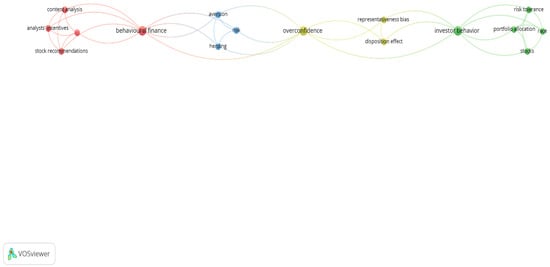
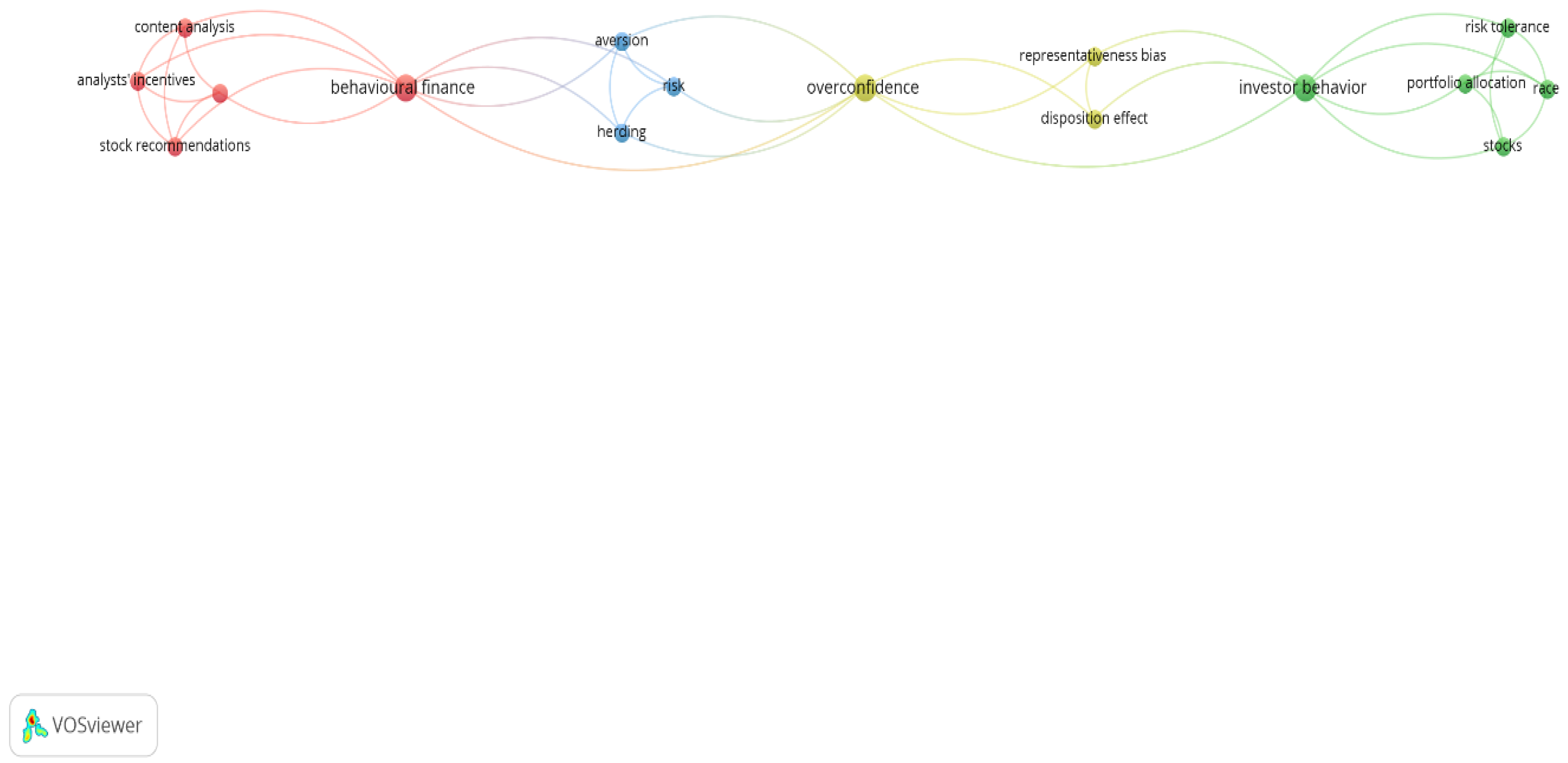
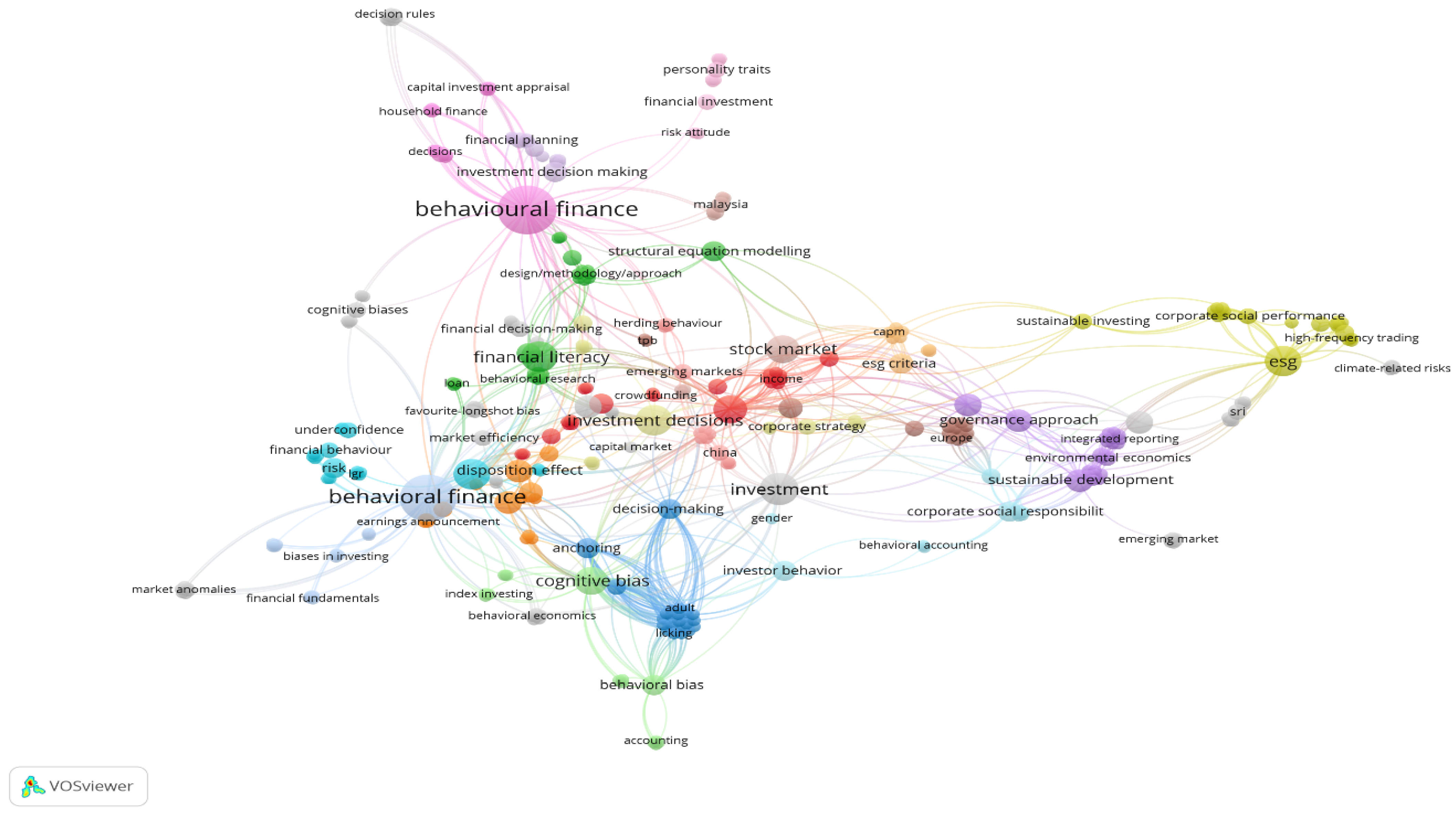
Figure 4 illustrates the year-by-year thematic clusters, which were further analysed using co-occurrence analysis to identify evolving patterns over time. The most prevalent research topics emerging between 2004 and 2009 (see Figure 5) are represented by colored nodes: red nodes indicate behavioral finance, green nodes denote investor behavior, and yellow and red nodes correspond to behavioral biases.
Figure 4.
Thematic clusters of Behavioral Finance and Sustainable Investment.
Figure 5.
Influential topics during 2004–2009.
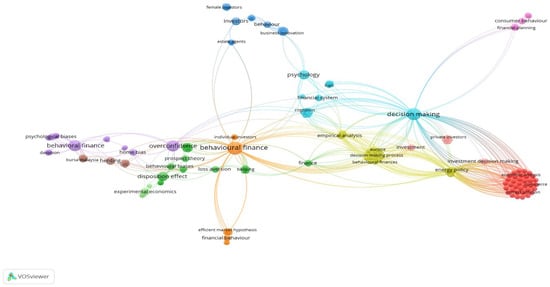
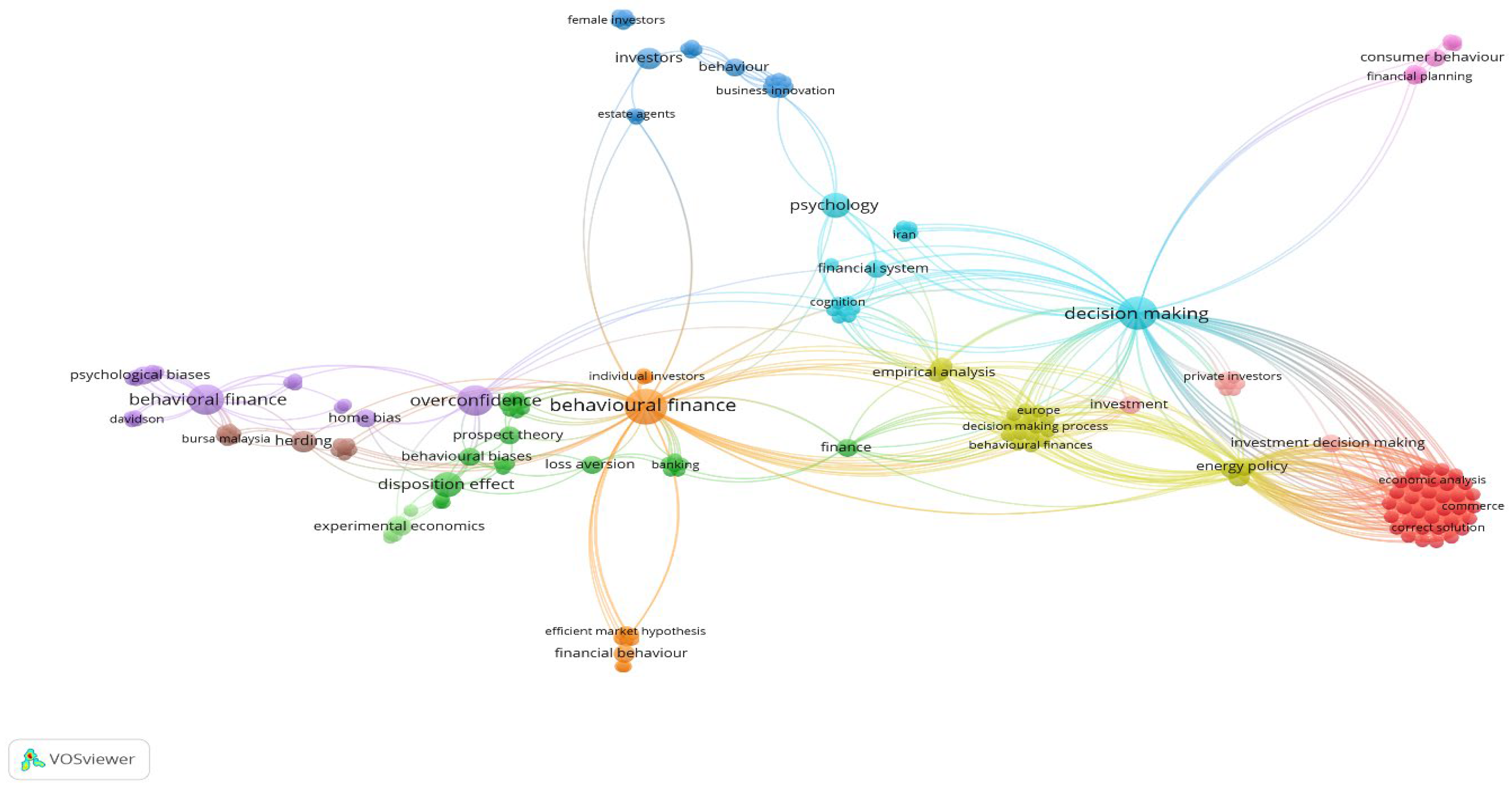
Figure 6 presents a more detailed review of the period 2010–2015, showing the addition of new research keywords to the previously identified clusters. During this timeframe, topics such as decision-making, consumer behavior, and an expanded range of behavioral biases and theories became increasingly prominent within behavioral finance, represented by sky blue nodes, pink nodes, and green nodes, respectively.
Figure 6.
Influential topic during 2010–2015.
Figure 7 presents a detailed review of the period 2016–2020, highlighting the introduction of new research keywords into the existing clusters. During this period, sustainable investing is represented by yellow nodes, sustainable development by purple nodes, and corporate social responsibility by sky blue nodes.
Figure 7.
Influential topics during 2016–2020.
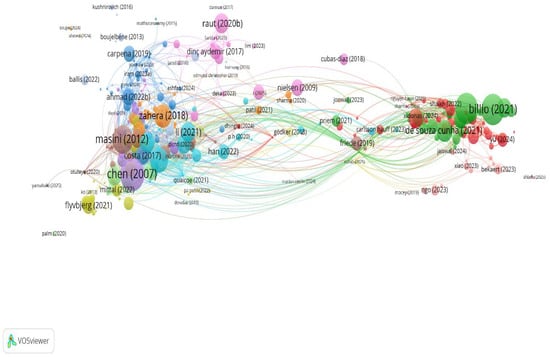
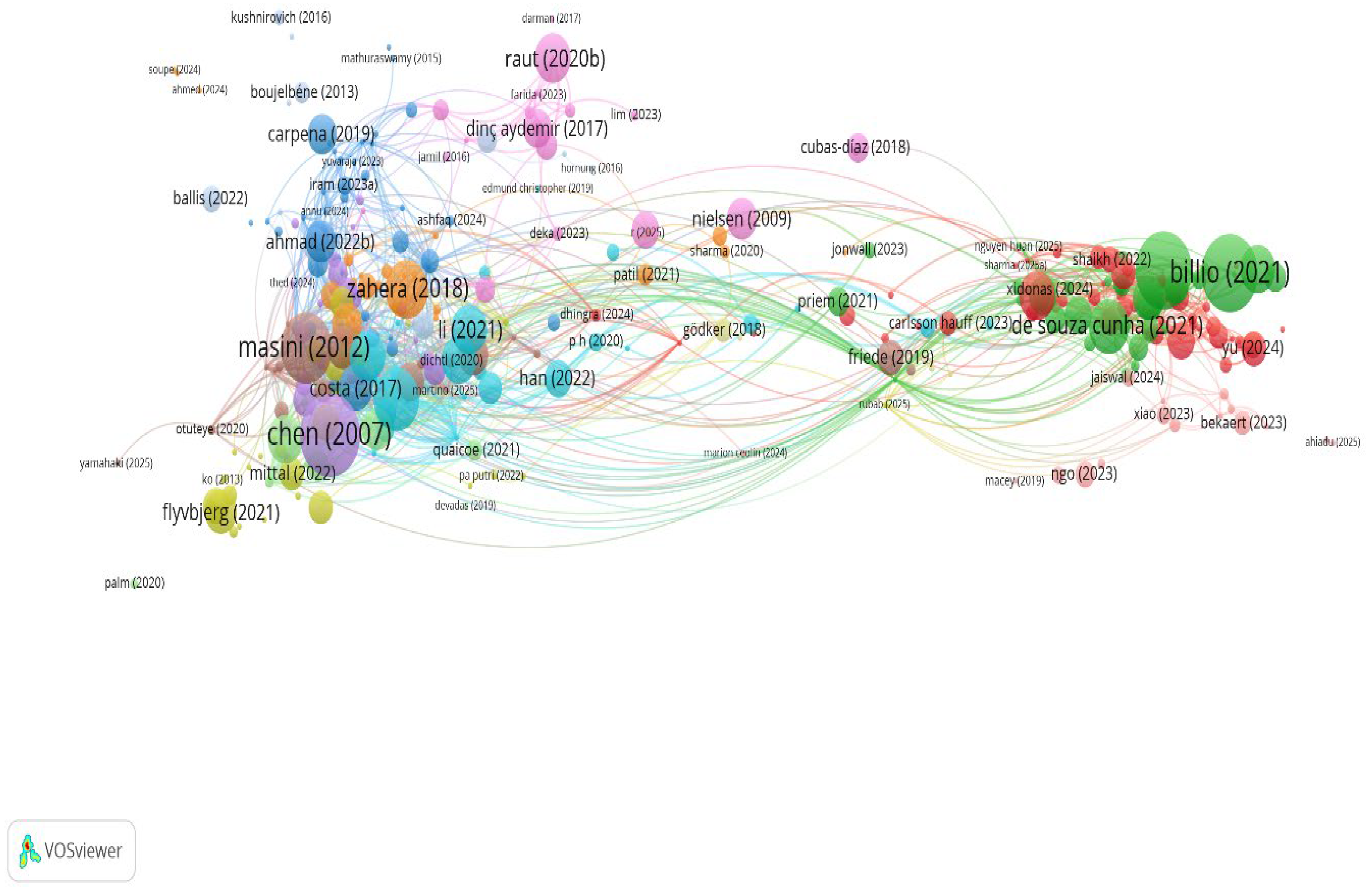
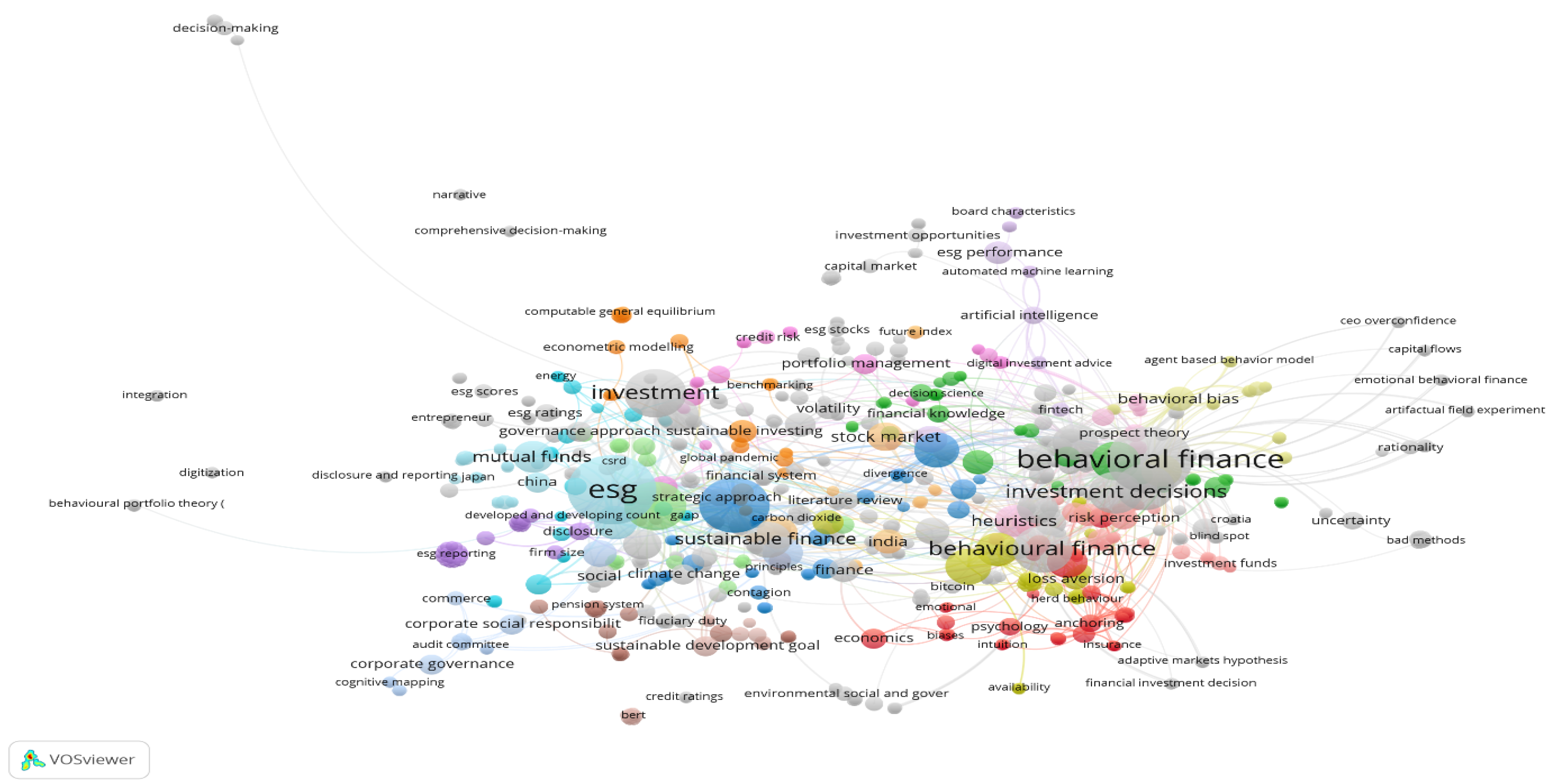
Figure 8 illustrates the most recent period, 2021–2025, which witnessed the highest volume of research publications. The thematic trends identified during this term include ESG and mutual funds (sky blue nodes), behavioral portfolio theory (grey nodes), ESG performance, artificial intelligence, and personal finance (magenta nodes), and green investment (purple nodes).
Figure 8.
Influential topics during 2021–2025.
4. Conclusions
The integration of BF into the domain of SI enhances the understanding of how psychological biases, emotional influences, and cognitive limitations shape investors’ choices regarding sustainability-oriented assets. Behavioral insights reveal that deviations from rationality such as loss aversion, framing effects, and herding behaviour significantly affect the extent to which investors incorporate ESG considerations into their portfolios. By accounting for these behavioral factors, it becomes possible to design investment frameworks and policies that more effectively promote sustainable capital allocation. The convergence of behavioral and sustainable finance not only facilitates long-term economic resilience, environmental stewardship, and social equity but also enriches theoretical perspectives on investment behaviour.
This bibliometric study examined all dimensions of SI and BF, as well as the existing research in this field, to inform potential directions for future investigation. A bibliometric analysis of publications from 2004 to September 2025 was conducted to address this gap. A total of 398 articles published in reputable, Scopus-indexed international journals were reviewed. To provide a comprehensive overview of prior research patterns between 2004 and 2025, co-citation analysis and bibliographic coupling techniques were employed to identify prevalent themes in BF research related to SI. Furthermore, seven thematic clusters and co-citation networks were identified and critically evaluated. These clusters and coupling networks offer researchers a structured foundation to explore emerging trends and consolidate knowledge within this evolving field.
Contribution of This Study
This study makes a pivotal contribution to the literature on BF. While, prior reviews examined separately either behavioral finance or sustainable investing, the present study integrates both the domains and applies multiple bibliometric techniques to map the intellectual structure, thematic evolution, and future research directions of BF and SI. The differences between the present bibliometric study and previously conducted studies are captured in Table 5.
Table 5.
Comparison of the present study with earlier bibliometric and systematic reviews.
5. Implications
5.1. Theoretical Implications
This study highlights the how the integration of traditional theories of rational decision-making in finance are challenged by the integration of psychological and cognitive factors. Within the framework of BF theory, biases like overconfidence bias, representative bias, anchoring bias, loss aversion, optimism bias, herding bias, and framing effects have an impact on investor behavior in SI contexts. The capital allocation required for sustainability goals is made more difficult by these biases, which frequently lead investors to favor short-term financial gains over long-term environmental and social benefits (Moosa & Ramiah, 2017).
BF also suggests that social norms, ethical motivations, and cognitive constraints must be considered to fully explain sustainable investing (Gupta & Goswami, 2024). This broadened theoretical frameworks to include risk perception elements that influence sustainability preferences as well as financial and non-financial motivations influencing investment choices. By integrating BF, socially conscious investment, SI, investor behavior, and decision-making literature, the paper offers multidisciplinary insights. It highlights how investors’ decisions are influenced by behavioral and socioeconomic factors.
5.2. Practical Implications
This study provides important insights for Investors, policymakers, and financial advisors. To help prospects make more sensible investment decisions, financial advisors can better understand behavioral biases like herding, loss aversion, representative bias, anchoring bias, regret aversion, recency bias and overconfidence. These insights can be used by policymakers to create initiatives that support informed decision-making, such as simplified disclosures, investor education programs, and tech-driven tools like robo-advisors.
This study stresses emerging themes like investor education, greenwashing risks, and technological impacts to better understand BF and SI phenomena. Most importantly, this literature review highlights key areas that will help ESG regulators, financial institutions, and policy makers to formulae strategies to minimize greenwashing and actually engage in environmental protection. Theoretical implications also include developing models that take into consideration investor behavior heterogeneity brought on by cultural, cognitive, and demographic variations, enabling more precise segmentation and focused policy initiatives (Bihari et al., 2025a; Cheng & Cao, 2025; S. Kumar et al., 2022).
6. Limitations of the Study and Future Research Directions
We acknowledge the limitations first and then give suggestions for future research.
A major limitation of the current study is that the data were sourced exclusively from the Scopus database. Although Scopus offers one of the largest collections of peer-reviewed bibliographic records, some high-quality journals are not indexed in Web of Science. Consequently, certain relevant documents indexed only in the Web of Science were not included. Future bibliometric studies could integrate both Scopus and Web of Science databases to provide a more comprehensive analysis. Second, we identified various clusters and integrating various theories with the clusters is not effectively done. Partly this is because of overlap between theories and clusters. For example, theory of planned behavior is a common thread of many clusters. So strict compartmentalization of theories with topics under seven clusters is challenging as the differences are blurry.
By identifying the most productive authors, papers, and journals, the present study aims to enhance the quality of future research. It provides guidance for upcoming researchers by highlighting the key contributors, seminal publications, and influential sources in the fields of SI and BF. Moreover, the study delineates areas for future research, assisting readers and scholars in exploring various dimensions of SI and BF and uncovering novel insights within the existing literature.
Future studies should concentrate on developing an efficient system to penalize companies or funds that engage in greenwashing as well as on how to identify it. Research in that area would help policymakers understand how well ESG-focused laws, like the European Commission’s proposed amendment to the Unfair Commercial Practices Directives (UCPD) and the Consumer Rights Directive, work to prevent greenwashing (Kräussl et al., 2024). Most of the recent research has used traditional statistical methods, such as partial least square SEM and covariance-based SEM, to investigate the effects of behavioral biases on equity investors’ decisions. Additional research could be carried out using machine learning models, such as Python 3.14.0, recurrent, and artificial neural networks, which could forecast the potential for behavioral biases to affect stock investors’ decisions. Comparative research between nations with different institutional and cultural frameworks can yield more complex conclusions and viewpoints and future research could look at how cultural influences or demographic characteristics like age, education, and investing experience mitigate the effects of these behavioral biases (Chishti et al., 2025). It is possible to investigate the role that financial intermediaries and institutional investors play in encouraging the inclusion of ESG factors in Investment decision making. It is possible to investigate how ESG integration affects corporate social responsibility and business behavior (Bihari et al., 2025a). Research can also focus, through behavioral lenses encompassing emotional responses and financial literacy, on emerging topics such as climate finance and the mobilization of sustainable capital to address climate change. Decision-making under uncertainty can be analysed through frameworks like prospect theory to investigate the gap between knowledge of sustainable investment options and actual investor behavior, particularly among younger generations (Aulia et al., 2024). Additionally, studies can assess the prevalence of greenwashing in ESG reporting, its impact on investor confidence, and behavioral responses to discrepancies or falsifications in sustainability metrics (V. V. Kumar et al., 2026).
In summary, the present bibliometric study provides some insightful and prospective future research areas. In the present digital age and with Artificial Intelligence (AI) is spanning through various domains, future studies may focus on the effect of AI in research related to BF.
Author Contributions
Conceptualization and methodology: R.G.; software, data curation and validation: K.S. and S.B.; formal analysis, and writing—original draft preparation: R.G., K.S. and P.V.; Review and editing, and visualization: S.P. and V.M. All authors have read and agreed to the published version of the manuscript.
Funding
This research received no external funding.
Institutional Review Board Statement
Not applicable.
Informed Consent Statement
Not applicable.
Data Availability Statement
No new data were created or analyzed in this study. Data sharing is not applicable to this article.
Conflicts of Interest
The authors declare no conflicts of interest.
References
- Abhijith, R., & Bijulal, D. (2025). Decoding investor’s irrationality: A fuzzy AHP exploration of behavioural biases. Vision, 09722629251329995. [Google Scholar] [CrossRef] [Scilit]
- Ahmad, F. (2020). Personality traits as predictor of cognitive biases: Moderating role of risk-attitude. Qualitative Research in Financial Markets, 12(4), 465–484. [Google Scholar] [CrossRef] [Scilit]
- Ahmad, M., & Wu, Q. (2022). Does herding behavior matter in investment management and perceived market efficiency? Evidence from an emerging market. Management Decision, 60(8), 2148–2173. [Google Scholar] [CrossRef] [Scilit]
- Ahmad, U., Van Keulen, M., Briassouli, A., & Saad, M. (2025). Cognitive biases, robo advisor and investment decision psychology: An investor’s perspective from New York stock exchange. Acta Psychologica, 256, 105048. [Google Scholar] [CrossRef] [Scilit]
- Ahmed, A. S., & Duellman, S. (2013). Managerial overconfidence and accounting conservatism. Journal of Accounting Research, 51(1), 1–30. [Google Scholar] [CrossRef] [Scilit]
- Ajzen, I. (1991). The theory of planned behavior. Organizational Behavior and Human Decision Processes, 50(2), 179–211. [Google Scholar] [CrossRef] [Scilit]
- Almansour, B. Y., Elkrghli, S., & Almansour, A. Y. (2023). Behavioral finance factors and investment decisions: A mediating role of risk perception. Cogent Economics and Finance, 11(2), 2239032. [Google Scholar] [CrossRef] [Scilit]
- Amir, A.-Z., & George, S. (2018). Why and how investors use ESG information: Evidence from a global survey. Financial Analysts Journal, 74(3), 87–103. [Google Scholar] [CrossRef] [Scilit]
- Aulia, M., Afiff, A. Z., Hati, S. R. H., & Gayatri, G. (2024). Consumers’ sustainable investing: A systematic lit-erature review and research agenda. Cleaner and Responsible Consumption, 14, 100215. [Google Scholar] [CrossRef] [Scilit]
- Baker, H. K., Kumar, S., Goyal, N., & Gaur, V. (2019). How financial literacy and demographic variables relate to behavioral biases. Managerial Finance, 45(1), 124–146. [Google Scholar] [CrossRef] [Scilit]
- Barber, B. M., & Odean, T. (1999). The courage of misguided convictions. Financial Analysts Journal, 55(6), 41–55. [Google Scholar] [CrossRef] [Scilit]
- Barber, B. M., & Odean, T. (2000). Trading is hazardous to your wealth: The common stock investment performance of individual investors. The Journal of Finance, 55(2), 773–806. [Google Scholar] [CrossRef] [Scilit]
- Barber, B. M., & Odean, T. (2001). Boys will be boys: Gender, overconfidence, and common stock investment. The Quarterly Journal of Economics, 116(1), 261–292. [Google Scholar] [CrossRef] [Scilit]
- Barberis, N., & Huang, M. (2001). Mental accounting, loss aversion, and individual stock returns. The Journal of Finance, 56(4), 1247–1292. [Google Scholar] [CrossRef] [Scilit]
- Barberis, N., & Thaler, R. (2003). A survey of behavioral finance. In Handbook of the economics of finance (Vol. 1, pp. 1053–1128). Elsevier. [Google Scholar] [CrossRef] [Scilit]
- Barnett, M. L., & Salomon, R. M. (2006). Beyond dichotomy: The curvilinear relationship between social responsibility and financial performance. Strategic Management Journal, 27(11), 1101–1122. [Google Scholar] [CrossRef] [Scilit]
- Bauer, R., Otten, R., & Rad, A. T. (2006). Ethical investing in Australia: Is there a financial penalty? Pacific-Basin Finance Journal, 14(1), 33–48. [Google Scholar] [CrossRef] [Scilit]
- Bihari, A., Dash, M., Muduli, K., Kumar, A., Luthra, S., & Upadhyay, A. (2025a). Sustainable development investment decision: Do environmental, social and governance (ESG) and behavioral biases factors matter? Sustainable Development, 33(S1), 1161–1181. [Google Scholar] [CrossRef] [Scilit]
- Bihari, A., Dash, M., Muduli, K., Kumar, A., Mulat-Weldemeskel, E., & Luthra, S. (2025b). Does cognitive biased knowledge influence investor decisions? An empirical investigation using machine learning and artificial neural network. VINE Journal of Information and Knowledge Management Systems, 55(2), 445–469. [Google Scholar] [CrossRef] [Scilit]
- Billio, M., Costola, M., Hristova, I., Latino, C., & Pelizzon, L. (2021). Inside the ESG ratings: (Dis)agreement and performance. Corporate Social Responsibility and Environmental Management, 28(5), 1426–1445. [Google Scholar] [CrossRef] [Scilit]
- Billio, M., Costola, M., Hristova, I., Latino, C., & Pelizzon, L. (2024). Sustainable finance: A journey toward ESG and climate risk. International Review of Environmental and Resource Economics, 18(1), 1–75. [Google Scholar] [CrossRef] [Scilit]
- Bollen, N. P. B. (2007). Mutual fund attributes and investor behavior. The Journal of Financial and Quantitative Analysis, 42(3), 683–708. [Google Scholar] [CrossRef] [Scilit]
- Boyack, K. W., & Klavans, R. (2010). Co-citation analysis, bibliographic coupling, and direct citation: Which citation approach represents the research front most accurately? Journal of the American Society for information Science and Technology, 61(12), 2389–2404. [Google Scholar] [CrossRef] [Scilit]
- Brodback, D., Guenster, N., & Mezger, D. (2019). Altruism and egoism in investment decisions. Review of Financial Economics, 37(1), 118–148. [Google Scholar] [CrossRef] [Scilit]
- Busch, T., Bauer, R., & Orlitzky, M. (2016). Sustainable development and financial markets: Old paths and new avenues. Business & Society, 55(3), 303–329. [Google Scholar] [CrossRef] [Scilit]
- Carpena, F., Cole, S., Shapiro, J., & Zia, B. (2019). The ABCs of financial education: Experimental evidence on attitudes, behavior, and cognitive biases. Management Science, 65(1), 346–369. [Google Scholar] [CrossRef] [Scilit]
- Chen, G., Kim, K. A., Nofsinger, J. R., & Rui, O. M. (2007). Trading performance, disposition effect, overconfidence, representativeness bias, and experience of emerging market investors. Journal of Behavioral Decision Making, 20(4), 425–451. [Google Scholar] [CrossRef] [Scilit]
- Cheng, Q., & Cao, W. (2025). Does sustainable investment knowledge affect investment behavior? A social cognitive theory perspective. Sage Open, 15(3), 1–13. [Google Scholar] [CrossRef] [Scilit]
- Chishti, M. F., Ali, F., Khan, M. R., Khan, I., Luong, N. T., & Ghouri, A. M. (2025). Understanding behavioral biases in investment decisions: Empirical insights from an emerging market. Cogent Economics & Finance, 13(1), 2567499. [Google Scholar] [CrossRef] [Scilit]
- Corzo, T., Hernán, R., & Pedrosa, G. (2024). Behavioral finance in a hundred keywords. Heliyon, 10(16), e35979. [Google Scholar] [CrossRef] [Scilit] [PubMed]
- Costa, D. F., Carvalho, F. d. M., & Moreira, B. C. D. M. (2019). Behavioral economics and behavioral finance: A bibliometric analysis of the scientific fields. Journal of Economic Surveys, 33(1), 3–24. [Google Scholar] [CrossRef] [Scilit]
- Costa, D. F., de Melo Carvalho, F., de Melo Moreira, B. C., & do Prado, J. W. (2017). Bibliometric analysis on the association between behavioral finance and decision making with cognitive biases such as overconfidence, anchoring effect and confirmation bias. Scientometrics, 111(3), 1775–1799. [Google Scholar] [CrossRef] [Scilit]
- Cunha, F. A. F. D. S., de Oliveira, E. M., Orsato, R. J., Klotzle, M. C., Cyrino Oliveira, F. L., & Caiado, R. G. G. (2020). Can sustainable investments outperform traditional benchmarks? Evidence from global stock markets. Business Strategy and the Environment, 29(2), 682–697. [Google Scholar] [CrossRef] [Scilit]
- Cunha, F. A. F. D. S., Meira, E., & Orsato, R. J. (2021). Sustainable finance and investment: Review and research agenda. Business Strategy and the Environment, 30(8), 3821–3838. [Google Scholar] [CrossRef] [Scilit]
- Donthu, N., Kumar, S., Mukherjee, D., Pandey, N., & Lim, W. M. (2021). How to conduct a bibliometric analysis: An overview and guidelines. Journal of Business Research, 133, 285–296. [Google Scholar] [CrossRef] [Scilit]
- Dordi, T., Stephens, P., Geobey, S., & Weber, O. (2024). New bottle or new label? Distinguishing impact investing from responsible and ethical investing. Accounting & Finance, 64(1), 309–330. [Google Scholar] [CrossRef] [Scilit]
- Filippini, M., Leippold, M., & Wekhof, T. (2026). The impact of sustainable finance literacy on investment decisions. Journal of Banking & Finance, 187, 107687. [Google Scholar] [CrossRef] [Scilit]
- Flyvbjerg, B. (2021). Top ten behavioral biases in project management: An overview. Project Management Journal, 52(6), 531–546. [Google Scholar] [CrossRef] [Scilit]
- Folqué, M., Escrig-Olmedo, E., & Corzo Santamaría, T. (2021). Sustainable development and financial system: Integrating ESG risks through sustainable investment strategies in a climate change context. Sustainable Development, 29, 876–890. [Google Scholar] [CrossRef] [Scilit]
- Friede, G., Busch, T., & Bassen, A. (2015). ESG and financial performance: Aggregated evidence from more than 2000 empirical studies. Journal of Sustainable Finance and Investment, 5(4), 210–233. [Google Scholar] [CrossRef] [Scilit]
- Gao, P., Meng, F., Mata, M. N., Martins, J. M., Iqbal, S., Correia, A. B., Dantas, R. M., Waheed, A., Rita, J. X., & Farrukh, M. (2021). Trends and future research in electronic marketing: A bibliometric analysis of twenty years. Journal of Theoretical and Applied Electronic Commerce Research, 16(5), 1667–1679. [Google Scholar] [CrossRef] [Scilit]
- Ghosh, P., Chaudhary, H. K., Dhiman, R., & Khatter, A. (2025). Exploring predictors of green investment behaviour: The role of behavioural intention, green financial behaviour, perceived behavioural control, green investment knowledge and attitude. FIIB Business Review, 23197145251392697. [Google Scholar] [CrossRef] [Scilit]
- Goyal, K., & Kumar, S. (2021). Financial literacy: A systematic review and bibliometric analysis. International Journal of Consumer Studies, 45, 80–105. [Google Scholar] [CrossRef] [Scilit]
- Gödker, K., & Mertins, L. (2018). CSR disclosure and investor behavior: A proposed framework and research agenda. Behavioral Research in Accounting, 30(2), 37–53. [Google Scholar] [CrossRef] [Scilit]
- Gómez Sánchez, L., & Tobon, S. (2025). Sustainable investing among young generations: Balancing ideals and financial realities. Discover Sustainability, 6(1), 275. [Google Scholar] [CrossRef] [Scilit]
- Groff, M. L., Offringa, M., Emdin, A., Mahood, Q., Parkin, P. C., & Cohen, E. (2020). Publication trends of pediatric and adult randomized controlled trials in general medical journals, 2005–2018: A citation analysis. Children, 7(12), 293. [Google Scholar] [CrossRef] [Scilit] [PubMed]
- Guo, H., & Hong, J. (2026). Exploring and examining an investor-oriented ESG intelligence transformation model: Insights from Chinese analyst reports. Sustainability, 18(6), 3076. [Google Scholar] [CrossRef] [Scilit]
- Gupta, A., & Goswami, S. (2024). Behavioral perspective on sustainable finance: Nudging investors toward SRI. Asian Journal of Economics and Banking, 8(3), 366–390. [Google Scholar] [CrossRef] [Scilit]
- Herathmenike, H. M. M. A., Dewasiri, N. J., & Munasinghe, A. (2025). Unpacking investor psychology: A systematic review and meta-analysis of behavioural biases shaping investment decisions. F1000Research, 14, 1146. [Google Scholar] [CrossRef] [Scilit]
- Hossain, M. R., Akhter, F., & Sultana, M. M. (2021). SMEs in COVID-19 crisis and combating strategies: A systematic literature review (SLR) and a case from emerging economy. Operations Research Perspectives, 9, 100222. [Google Scholar] [CrossRef] [Scilit]
- Jain, J., Walia, N., & Gupta, S. (2020). Evaluation of behavioral biases affecting investment decision making of individual equity investors by fuzzy analytic hierarchy process. Review of Behavioral Finance, 12(3), 297–314. [Google Scholar] [CrossRef] [Scilit]
- Jain, J., Walia, N., Singh, S., & Jain, E. (2022). Mapping the field of behavioral biases: A literature review using bibliometric analysis. Management Review Quarterly, 72, 823–855. [Google Scholar] [CrossRef] [Scilit]
- Joghee, S., Alzoubi, H. M., & Dubey, A. R. (2020). Decisions effectiveness of FDI investment biases at real estate industry: Empirical evidence from Dubai smart city projects. International Journal of Scientific & Technology Research, 9(3), 3499–3503. [Google Scholar]
- Kabiri, M., Heydari Rostami, K., & Talaie, H. (2026). Decoding market instability: The interplay of attention deficits, internal information risks, and investor sentiment in shaping sustainable investments in Iran’s energy and technology sectors. The Engineering Economist, 71(2), 114–141. [Google Scholar] [CrossRef] [Scilit]
- Kahneman, D., & Tversky, A. (1979). Prospect theory: An analysis of decision under risk. Econometrica, 47(2), 263–291. [Google Scholar] [CrossRef] [Scilit]
- Kartini, K., & Nahda, K. (2021). Behavioral biases on investment decision: A case study in Indonesia. The Journal of Asian Finance, Economics and Business (JAFEB), 8(3), 1231–1240. [Google Scholar] [CrossRef]
- Kiky, A., Pradana, B. L., & Loebiantoro, I. Y. (2026). Framing sustainability: How positive and negative messages shape confidence and green investment decisions. Journal of Risk and Financial Management, 19(3), 186. [Google Scholar] [CrossRef] [Scilit]
- Kräussl, R., Oladiran, T., & Stefanova, D. (2024). A review on ESG investing: Investors’ expectations, beliefs and perceptions. Journal of Economic Surveys, 38(2), 476–502. [Google Scholar] [CrossRef] [Scilit]
- Kumar, S., & Goyal, N. (2015). Behavioural biases in investment decision making—A systematic literature review. Qualitative Research in Financial Markets, 7(1), 88–108. [Google Scholar] [CrossRef] [Scilit]
- Kumar, S., & Goyal, N. (2016). Evidence on rationality and behavioural biases in investment decision making. Qualitative Research in Financial Markets, 8(4), 270–287. [Google Scholar] [CrossRef] [Scilit]
- Kumar, S., Rao, S., Goyal, K., & Goyal, N. (2022). Journal of behavioral and experimental finance: A bib-liometric overview. Journal of Behavioral and Experimental Finance, 34, 100652. [Google Scholar] [CrossRef] [Scilit]
- Kumar, V. V., Kumar, V. M., Dupam, V. L., & Ghayas, S. R. A. (2026). Behavioral finance: A four-decade bibliometric exploration. Journal of Economics, Finance and Administrative Science, 1–48. [Google Scholar] [CrossRef] [Scilit]
- Li, J. J., Massa, M., Zhang, H., & Zhang, J. (2021). Air pollution, behavioral bias, and the disposition effect in China. Journal of Financial Economics, 142(2), 641–673. [Google Scholar] [CrossRef] [Scilit]
- Loewenstein, G., Weber, E. U., Hsee, C. K., & Welch, N. (2001). Risk as feelings. Psychological Bulletin, 127(2), 267–286. [Google Scholar] [CrossRef] [Scilit]
- Lukács, B., & Tóth, Á. (2025). Investor bias in ESG ratings: Implications for sustainable portfolios. Ecocycles, 11(2), 67–77. [Google Scholar] [CrossRef] [Scilit]
- Mahmood, F., Arshad, R., Khan, S., Afzal, A., & Bashir, M. (2024). Impact of behavioral biases on investment decisions and the moderation effect of financial literacy; an evidence of Pakistan. Acta Psychologica, 247, 104303. [Google Scholar] [CrossRef] [Scilit]
- Masini, A., & Menichetti, E. (2012). The impact of behavioural factors in the renewable energy investment decision making process: Conceptual framework and empirical findings. Energy Policy, 40, 28–38. [Google Scholar] [CrossRef] [Scilit]
- Mishra, D., Gunasekaran, A., Papadopoulos, T., & Dubey, R. (2018). Supply chain performance measures and metrics: A bibliometric study. Benchmarking: An International Journal, 25(3), 932–967. [Google Scholar] [CrossRef] [Scilit]
- Moosa, I. A., & Ramiah, V. (2017). The rise and rise of behavioural finance. In The financial consequences of behavioural biases. Palgrave Macmillan. [Google Scholar] [CrossRef] [Scilit]
- Muñoz-Muñoz, E., Crespo-Cebada, E., Mirón-Sanguino, A. S., & Díaz-Caro, C. (2025). Investors personality correlates with sustainability preferences in investment—A choice experiment with Spanish investors. Journal of Behavioral and Experimental Economics, 114, 102332. [Google Scholar] [CrossRef] [Scilit]
- Muradoglu, G., & Harvey, N. (2012). Behavioural finance: The role of psychological factors in financial decisions. Review of Behavioural Finance, 4(2), 68–80. [Google Scholar] [CrossRef] [Scilit]
- Naseer, M. M., Guo, Y., Bagh, T., & Zhu, X. (2024). Sustainable investments in volatile times: Nexus of climate change risk, ESG practices, and market volatility. International Review of Financial Analysis, 95, 103492. [Google Scholar] [CrossRef] [Scilit]
- Ngo, T., Le, T., Ullah, S., & Trinh, H. H. (2023). Climate risk disclosures and global sustainability initiatives: A conceptual analysis and agenda for future research. Business Strategy and the Environment, 32(6), 3705–3720. [Google Scholar] [CrossRef] [Scilit]
- Nofsinger, J., & Varma, A. (2014). Socially responsible funds and market crises. Journal of Banking and Finance, 48, 180–193. [Google Scholar] [CrossRef] [Scilit]
- Pasquino, M., & Lucarelli, C. (2025). Socially responsible investments inside out: A new conceptual framework for investigating retail investor preferences. International Journal of Bank Marketing, 43(3), 449–475. [Google Scholar] [CrossRef] [Scilit]
- Rasheed, M. H., Rafique, A., Zahid, T., & Akhtar, M. W. (2018). Factors influencing investor’s decision making in Pakistan: Moderating the role of locus of control. Review of Behavioral Finance, 10(1), 70–87. [Google Scholar] [CrossRef] [Scilit]
- Raut, R. K. (2020). Past behaviour, financial literacy and investment decision-making process of individual investors. International Journal of Emerging Markets, 15(6), 1243–1263. [Google Scholar] [CrossRef] [Scilit]
- Raut, R. K., Das, N., & Mishra, R. (2020). Behaviour of individual investors in stock market trading: Evidence from India. Global Business Review, 21(3), 818–833. [Google Scholar] [CrossRef] [Scilit]
- Reddy, N. D., Santosh, B. R., & Desai, G. (2026). Behavioral biases and investment decision-making in the Indian stock market: The moderating role of financial literacy and investor experience. F1000Research, 14, 1283. [Google Scholar] [CrossRef] [Scilit] [PubMed]
- Riedl, A., & Smeets, P. (2017). Why do investors hold socially responsible mutual funds? The Journal of Finance, 72(6), 2505–2550. [Google Scholar] [CrossRef] [Scilit]
- Sahi, S. K., Arora, A. P., & Dhameja, N. (2013). An exploratory inquiry into the psychological biases in financial investment behavior. Journal of Behavioral Finance, 14(2), 94–103. [Google Scholar] [CrossRef] [Scilit]
- Schumacher, K., Chenet, H., & Volz, U. (2020). Sustainable finance in Japan. Journal of Sustainable Finance and Investment, 10(2), 213–246. [Google Scholar] [CrossRef] [Scilit]
- Shah, S. Z. A., Ahmad, M., & Mahmood, F. (2018). Heuristic biases in investment decision-making and perceived market efficiency: A survey at the Pakistan stock exchange. Qualitative Research in Financial Markets, 10(1), 85–110. [Google Scholar] [CrossRef] [Scilit]
- Sharma, U., Gupta, A., & Gupta, S. K. (2024). The pertinence of incorporating ESG ratings to make investment decisions: A quantitative analysis using machine learning. Journal of Sustainable Finance & Investment, 14(1), 184–198. [Google Scholar] [CrossRef] [Scilit]
- Shiller, R. J. (2000). Measuring bubble expectations and investor confidence. Journal of Psychology and Financial Markets, 1(1), 49–60. [Google Scholar] [CrossRef] [Scilit]
- Sinha Ray, R., & Goel, S. (2023). Impact of ESG score on financial performance of Indian firms: Static and dynamic panel regression analyses. Applied Economics, 55(15), 1742–1755. [Google Scholar] [CrossRef] [Scilit]
- Souza, V. V., Souza, L. L. F., Oliveira, O., Souza, E. M. D., & Costa, J. S. (2024). Do heuristics affect Brazilian investors’ decision-making process? Review of Behavioral Finance, 16(2), 282–299. [Google Scholar] [CrossRef] [Scilit]
- Suominen, A., Li, Y., Youtie, J., & Shapira, P. (2016). A bibliometric analysis of the development of next generation active nanotechnologies. Journal of Nanoparticle Research, 18(9), 270. [Google Scholar] [CrossRef] [Scilit]
- Wang, P., & Xu, X. (2025). Green finance and energy efficiency improvement: The role of green innovation and industrial upgrading. Innovation and Green Development, 4(1), 100200. [Google Scholar] [CrossRef] [Scilit]
- Yu, Z., Farooq, U., Alam, M. M., & Dai, J. (2024). How does environmental, social, and governance (ESG) performance determine investment mix? New empirical evidence from BRICS. Borsa Istanbul Review, 24(3), 520–529. [Google Scholar] [CrossRef] [Scilit]
- Yulianingsih, P., & Rosdini, D. (2025). Exploring the dynamics of sustainable finance: Interplay of policy impact and investor behaviour—A systematic literature review. Asia-Pacific Journal of Accounting & Economics, 1–18. [Google Scholar] [CrossRef] [Scilit]
- Zahera, S. A., & Bansal, R. (2018). Do investors exhibit behavioral biases in investment decision making? A systematic review. Qualitative Research in Financial Markets, 10(2), 210–251. [Google Scholar] [CrossRef] [Scilit]
- Zhu, J., Zhao, M., Zhang, T., & Li, R. (2025). The role of ESG score in forecasting China corporate green bond issuance: Evidence from tree-based learning models. Sustainable Futures, 10, 101324. [Google Scholar] [CrossRef] [Scilit]
- Zupic, I., & Čater, T. (2014). Bibliometric methods in management and organization. Organizational Research Methods, 18(3), 429–472. [Google Scholar] [CrossRef] [Scilit]

Disclaimer/Publisher’s Note: The statements, opinions and data contained in all publications are solely those of the individual author(s) and contributor(s) and not of MDPI and/or the editor(s). MDPI and/or the editor(s) disclaim responsibility for any injury to people or property resulting from any ideas, methods, instructions or products referred to in the content. |
© 2026 by the authors. Licensee MDPI, Basel, Switzerland. This article is an open access article distributed under the terms and conditions of the Creative Commons Attribution (CC BY) license.