


Abstract
The rapid evolution of fintech has accelerated the integration of blockchain technology and cryptocurrencies into crowdfunding platforms, reshaping entrepreneurial finance and challenging traditional conceptions of money, intermediation, and financial risk. This study empirically examines the socio-cultural, demographic, and behavioural factors influencing funders’ perceptions and investment decisions in crypto-crowdfunding, an emerging model situated at the intersection of digital currencies, financial inclusion, and decentralised capital formation. Using primary survey data from a focus group of 50 respondents measuring perceptions through a structured five-point Likert questionnaire, the analysis investigates how risk perception, trust and security, investor awareness, and perceived benefits shape participation in crypto-crowdfunded projects. The findings indicate that blockchain-based features such as transparency and decentralisation are associated with variations in perceived trust and risk assessment, rather than uniformly enhancing investor confidence. Socio-demographic characteristics emerge as significant determinants of investor awareness, perceived risks, and expected benefits, confirming pronounced behavioural heterogeneity in digital-finance participation. Regression results reveal strong interdependencies between trust, risk perception, and awareness, underscoring the importance of informational quality and risk-governance mechanisms in supporting sustainable adoption. By providing empirical evidence on individual-level determinants of participation in crypto-crowdfunding, the study contributes to the literature on the future of money by clarifying how crypto-crowdfunding operates as a behavioural-financial phenomenon embedded in decentralised governance structures.
1. Introduction
The rapid expansion of blockchain-based financial innovation has fundamentally altered the architecture of capital formation, investment behaviour, and trust in financial markets (Trapanese & Lanotte, 2023). Among the most significant manifestations of this transformation is crypto-crowdfunding, a decentralised mechanism through which entrepreneurial projects raise capital using cryptocurrencies and tokenised assets. Unlike traditional crowdfunding, crypto-crowdfunding operates in an environment characterised by technological opacity, regulatory fragmentation, and heightened behavioural uncertainty. These features raise critical questions about how individuals perceive risk, construct trust, and evaluate potential benefits in decentralised financial ecosystems (Chaisse & Kirkwood, 2022; Prados-Castillo et al., 2023). Crypto-crowdfunding, which utilizes cryptocurrencies and blockchain technology, has emerged as an innovative funding method in the financial technology sector. However, widespread investor enthusiasm for cryptocurrencies has also contributed to a growing number of related scams (Nelaturu et al., 2022). Malicious activities are regarded as the main risk for investors in crypto-crowdfunding projects (Popescul et al., 2020). It is critical to enhance investor awareness of the risks associated with crypto-crowdfunding (Farber & Yehezkel, 2025). Existing research on crowdfunding has extensively analysed determinants of funding success, platform design, and investor motivations in traditional and equity-based settings. Parallel strands of literature in behavioural finance have examined how cognitive biases, risk perceptions, and socio-demographic factors shape investment decisions in cryptocurrency markets. Risk perception is an important area of investigation because it helps understand investor decisions in financial markets (Almansour et al., 2025). Digital financial risk perception has also been identified as a key area of inquiry because cryptocurrencies are detrimental to the normal functioning of the financial system (Shuhaiber et al., 2025). Trust is one of the most widely studied factors influencing investor behavior in crowdfunding. Investor attention to risk is shaped by their level of trust in project owners and crowdfunding platforms, particularly in crypto-crowdfunding, where the anonymity afforded by cryptocurrency poses greater challenges than traditional forms of crowdfunding (Klich, 2025). Educating the public about the risks of cyber-crowdfunding methods is crucial to improving investor awareness (Nemade et al., 2022). These platforms challenge traditional models of financial intermediation by reducing reliance on banks and centralized funding institutions, while simultaneously introducing new configurations of financial risk, trust, and governance (Prados-Castillo et al., 2023; Donelli et al., 2022; Deng et al., 2022; Bargoni et al., 2023).
By providing a decentralised and cost-effective means of trade and commerce, blockchain has the potential to contribute to enhancing the efficiency of crowdfunding and to assist secure success of the platform (Behl et al., 2023; Saranya et al., 2024).
However, empirical evidence on the behavioural drivers of crypto-crowdfunding remains fragmented. In particular, prior studies rarely integrate risk perception, trust, investor awareness, and perceived benefits within a unified empirical framework. Moreover, the majority of existing contributions focus either on technological determinants or on market outcomes, leaving the behavioural architecture of decentralised crowdfunding insufficiently explored.
Thus, the current study investigates the factors that affect funders’ decisions to invest in crypto-crowdfunds and examine the changes in crowdfunding investment trends, identifying the factors, benefits and dangers that influence investors to invest in crypto-crowdfunding (Viano et al., 2023; Xu et al., 2022; Kodjiku et al., 2022).
To accomplish these goals, a quantitative approach is employed. Data are collected by means of a structured questionnaire distributed to a sample of 50 respondents. A 5-point Likert scale is used to evaluate the factors that influence the investors’ decisions to invest in crypto-crowdfunds. In particular, the present study addresses this gap by developing and empirically testing a behavioural framework that captures the interdependencies among five key perceptual constructs: investor awareness, trust and security, risk perception, perceived risks, and perceived benefits in crypto-crowdfunding (Goldbarsht, 2024; Farber & Yehezkel, 2025). By empirically examining these dimensions across multiple geographic contexts, this study seeks to advance understanding of crypto-crowdfunding as a behavioural-financial phenomenon with distinct risk-governance implications (Wu et al., 2022).
The paper makes three primary contributions. First, it provides one of the first systematic empirical analyses of behavioural drivers in crypto-crowdfunding, bridging insights from behavioural finance, fintech adoption, and decentralised governance. Second, it introduces a quasi-path econometric approach that maps conditional relationships among perceptual constructs while maintaining transparency and interpretability. Third, it offers policy-relevant insights for platform designers, regulators, and central banks, highlighting the implications of behavioural dynamics for the broader future-of-money debate, including stablecoins and central bank digital currencies (CBDCs). The findings reveal that engagement in crypto-crowdfunding is not driven solely by technological enthusiasm or expected returns, but by a complex interaction between cognitive awareness, trust formation, and behavioural interpretations of risk. Investor awareness emerges as a dual force, simultaneously enhancing perceived benefits and fostering critical evaluations of decentralised platforms. Trust, rather than being automatically generated by blockchain technology, appears conditional and socially mediated. Risk perception exhibits a non-linear relationship with participation, reflecting speculative framing and behavioural trade-offs between uncertainty and opportunity. The remainder of the paper is structured as follows: the first paragraph reviews previous literature pertaining to the area of the study, identifying the research gap and presenting the survey design; the methodology section is presented in the second paragraph; in the third paragraph, findings are analysed; in the fourth paragraph, findings are addressed in conformity with the previously reported findings in the literature, along with the alignment or delineation of the current study finding from the previous ones; conclusions and limitations are presented in the final paragraph.
2. Literature Review
2.1. Blockchain and Cryptocurrency
Crowdfunding refers to the process of raising financial resources through an online platform (Chandna, 2022). Investors can achieve direct financial return in equity crowdfunding, reward-based crowdfunding, and debt crowdfunding. It is entirely conducted online via the internet and social media. Thus, even without deep industry knowledge and expert training, investors can easily participate in the fundraising process of the firm’s crypto-crowdfunding project (Chaisse & Kirkwood, 2022).
Crypto-crowdfunding is one part of the broad crowdfunding phenomenon (Hoque, 2024; Bargoni et al., 2024). It refers to the process of using blockchain technology in fundraising through crowdfunding platforms. Although bitcoin and blockchain technology are a decade old, research on crypto crowdfunding is still in its infancy. A limited number of studies are published on investors’ motivation in crypto-crowdfunding (Xiong et al., 2026; Raut et al., 2025).
In crypto-crowdfunding, capital-seeking projects are financed through virtual currencies such as Bitcoin, Ethereum, and other crypto-assets. Within this context, investment risk refers to the possibility of an adverse deviation from expected or desired outcomes and can be interpreted through the lenses of uncertainty and information asymmetry (Zhang et al., 2022; Azuma-Kotei & Ibrahim, 2025). These elements play a crucial role in shaping investor awareness and trust in crypto-crowdfunding platforms. From an empirical perspective, this entails examining how perceived risk (together with trust in project initiators and platform governance mechanisms) influences investors’ funding decisions and the speed at which projects attract capital. Existing empirical research highlights that perceived risk, levels of trust in project teams and platforms, and the degree of information transparency are key determinants of funding success and subsequent investment behaviour in crypto-crowdfunding markets. Moreover, individual investors exhibit heterogeneous risk preferences, which significantly affect capital allocation decisions. Such preferences are closely associated with broader economic and organisational factors, including corporate governance structures, job satisfaction, and bankruptcy risk. Investment choices are further shaped by investor sentiment, cognitive biases, and macroeconomic uncertainty, all of which contribute to the complexity of decision-making in crypto-based investment environments (Klich, 2025; Cisternas et al., 2024; Kurniawati et al., 2022).
Risk perception, trust, and investor awareness are central to understanding how individuals evaluate crypto-crowdfunding ventures, shape funding decisions, and respond to information asymmetries across diverse blockchain projects (Yuvaraj & Venugopal, 2024; Aren & Nayman Hamamci, 2023; Ahmad & Shah, 2022; Wasiuzzaman et al., 2022).
The rise of cryptocurrencies has prompted extensive debate regarding their role within modern financial systems, particularly in relation to traditional conceptions of money, intermediation, and trust (Almansour et al., 2025; Saivasan & Lokhande, 2022). Unlike sovereign currencies, cryptocurrencies rely on distributed ledger technologies to facilitate peer-to-peer transactions without centralized oversight, thereby reconfiguring the institutional foundations of monetary exchange. This decentralised architecture has been associated with increased transparency and resilience, but also with heightened volatility and governance uncertainty (Bindseil et al., 2022). Within digital finance, cryptocurrencies increasingly support a variety of financial functions beyond payments, including lending, investment, and capital formation.
2.2. Crypto-Crowdfunding as a FinTech Financing Mechanism
Crypto-crowdfunding has emerged as a novel form of entrepreneurial finance that leverages blockchain infrastructures to facilitate decentralised capital formation through token-based instruments (Pedrazzoli et al., 2025; Cumming et al., 2022). Unlike traditional equity or reward-based crowdfunding, crypto-crowdfunding relies on cryptographic tokens and smart contracts to coordinate funding, governance, and value exchange, often without the involvement of regulated financial intermediaries. This structural distinction has important implications for risk allocation, information disclosure, and investor protection (Miglo, 2022). Recent empirical research situates crypto-crowdfunding within the broader evolution of decentralised finance, highlighting both its innovative potential and its heightened exposure to uncertainty. Studies published after 2021 emphasise that token-based crowdfunding mechanisms exhibit higher volatility and information asymmetries compared to conventional crowdfunding platforms, partly due to the absence of standardised disclosure requirements and the experimental nature of token economics (Xu et al., 2022).
As a result, crypto-crowdfunding investors are required to assume greater responsibility for due diligence and risk assessment, reinforcing the relevance of behavioural and cognitive factors in shaping participation decisions. From a financial management perspective, crypto-crowdfunding represents a hybrid financing model that blurs the boundaries between investment, speculation, and participation in digital ecosystems. Tokens may simultaneously function as access rights, governance instruments, and speculative assets, complicating traditional valuation and risk-assessment frameworks. This hybridity challenges established assumptions about investor behaviour and calls for empirical investigation into how individuals perceive and manage risk in decentralised funding environments.
2.3. Behavioural Finance and Investment Decisions in Crypto-Crowdfunding
Within the investment domain, risk typically refers to exposure to a scenario that could bring a loss. Individuals’ risk perception represents their subjective view about the degree of risk associated with investment activities or specific investment assets (Saivasan & Lokhande, 2022). This subjective view may differ from empirical rates of return, volatility estimates of asset prices, or other measurements based on historical data. Such subjective views often guide investment decisions, especially when relevant data is scarce or difficult to interpret (Chandna, 2022). Behavioural finance provides a critical lens for understanding participation in crypto-crowdfunding, particularly under conditions of uncertainty, limited information, and high volatility. Unlike institutional investors, retail participants often rely on heuristics, social cues, and subjective risk assessments when evaluating investment opportunities. These behavioural dynamics are amplified in crypto-based environments, where technical complexity and rapid innovation increase cognitive load. Empirical studies on cryptocurrency investment behaviour indicate that risk perception is not solely driven by objective volatility measures, but is strongly influenced by familiarity, perceived control, and financial literacy. Investors with higher levels of education or prior exposure to digital assets tend to report lower perceived risk, even when objective uncertainty remains high. Conversely, limited awareness may increase susceptibility to mispricing, herding behaviour, and overreaction to market signals.
Crowdfunding research further demonstrates that social influence and electronic word-of-mouth can significantly shape investor behaviour (Bargoni et al., 2023). In crypto-crowdfunding contexts, online communities, social media platforms, and influencer narratives often act as informal governance mechanisms, guiding perceptions of project quality and legitimacy. While these mechanisms may facilitate coordination and information diffusion, they also increase the risk of herd behaviour, which can undermine rational risk assessment, highlighting the importance of behavioural factors in shaping investment decisions, particularly under conditions of information asymmetry and uncertainty. Trust, perceived credibility of project creators, and platform reputation have been shown to play central roles in funders’ willingness to contribute. In digital environments, these factors are further mediated by technological design and perceived security (Lin, 2019; Weber et al., 2002).
Risk perception occupies a central position in this literature. Unlike institutional investors, retail funders often rely on subjective assessments of risk, influenced by cognitive biases, social cues, and levels of financial literacy. Behavioural finance literature suggests that individual characteristics (such as education, age, and gender) influence risk tolerance and investment behaviour. These factors are particularly relevant in decentralised financial environments, where standardised disclosure and institutional safeguards are limited. In crypto-crowdfunding environments, these behavioural mechanisms are intensified by the rapid diffusion of information through social media and online platforms. While such dynamics may facilitate coordination and early adoption, they also increase the likelihood of collective mispricing and excessive risk-taking. As a result, individual perceptions of risk and trust may diverge substantially from objective risk measures, shaping participation in ways that challenge conventional financial management models. Consequently, participation in crypto-crowdfunding cannot be fully explained by rational risk–return calculations alone but must be analysed through the interaction of behavioural biases and perceived opportunity structures (Wronka, 2023).
2.4. Trust, Awareness, and Risk Governance in Crypto-Crowdfunding
Research on crowdfunding indicates that trust can act as a substitute for missing information. Trust in funding decisions was found to correlate with pre-commitment formation in crowdfunding. Founders signaling their trustworthiness raises the size of initially financed amounts and is conducive to later funding decisions (Xiao, 2020).
Trust constitutes a central yet contested dimension of crypto-crowdfunding participation. In contrast to traditional financial systems, where trust is largely institutionalised through regulation and intermediaries, crypto-crowdfunding operates within decentralised architectures that relocate trust to technological design, transparency mechanisms, and platform governance. However, recent empirical literature cautions against assuming that decentralisation automatically generates trust. Evidence from fintech and digital finance studies suggests that trust in blockchain-based systems is conditional and heterogeneous, strongly mediated by investor awareness and experience.
Higher levels of awareness enable investors to better interpret technical information, assess tokenomics, and evaluate governance structures, thereby reshaping, but not eliminating, perceived risk. Importantly, awareness may also increase scepticism toward weakly governed platforms or opaque project claims, indicating that informed investors do not necessarily exhibit higher trust, but rather more differentiated trust assessments (Mollick, 2014; Wu et al., 2022).
From a risk-governance perspective, crypto-crowdfunding reflects a shift from regulation-based protection toward information- and cognition-based governance. In the absence of comprehensive regulatory safeguards, platforms rely on disclosure quality, code audits, reputational mechanisms, and community monitoring to manage risk. The effectiveness of these mechanisms depends critically on investors’ ability to understand and process available information, placing individual characteristics such as education and financial literacy at the centre of risk governance in decentralised finance (Knott et al., 2022; Raut et al., 2025). Crypto-crowdfunding plays a significant role in stimulating the development of cryptocurrency and blockchain innovation, although it is also luring many scam projects (Robusti et al., 2025).
2.5. Research Gap
Despite the rapid growth of crypto-crowdfunding, empirical research examining the joint role of risk perception, trust, and investor awareness remains limited (Sanjaya & Akhyar, 2022). Existing studies often focus on technological innovation or general cryptocurrency adoption, without explicitly analysing how behavioural and socio-demographic factors interact to shape participation in token-based crowdfunding environments. Moreover, cross-country evidence on crypto-crowdfunding remains scarce, particularly in comparative contexts that extend beyond single jurisdictions (Deng et al., 2022). In addition, in spite of the fact that a number of studies have been conducted on the combination of crowdfunding and blockchain technology, not a lot of research has been done on the advantages and disadvantages associated with the development of crypto-crowdfunding (Behl et al., 2023).
Therefore, this study addresses these gaps by empirically investigating how risk perception, trust and security, and investor awareness are associated with engagement in crypto-crowdfunding, while accounting for socio-demographic heterogeneity across Europe, the United States, and India. By integrating behavioural finance insights with a risk-governance perspective, the analysis contributes to a more nuanced understanding of crypto-crowdfunding as a decentralised financing mechanism embedded in the broader transformation of money and financial intermediation.
Therefore, based on the literature, the study tests the following hypotheses (H):
- H1. Higher levels of investor awareness are associated with higher levels of trust and security perceptions in crypto-crowdfunding platforms.
- H2. Higher levels of trust and security are associated with lower perceived risks in crypto-crowdfunding.
- H3. Higher levels of investor awareness are associated with higher perceived benefits of crypto-crowdfunding.
- H4. Higher risk perception is associated with higher perceived benefits, reflecting a risk–return framing in crypto-crowdfunding.
- H5. Socio-demographic characteristics significantly influence perceptions of trust, risk, and benefits in crypto-crowdfunding.
Trust in blockchain technology and platform security is expected to mitigate perceived risk and increase engagement, consistent with behavioural finance theories emphasizing the role of trust under uncertainty; investor awareness is anticipated to play a dual role, both directly influencing participation and mediating the relationship between trust and risk perception; individuals with greater awareness may better assess risks and benefits, leading to more informed participation decisions (Bhattacharjee et al., 2025; Almeida et al., 2022; Fang et al., 2020). Prior research suggests that socio-demographic characteristics shape financial behaviour and risk tolerance. Gender, age, education, and country of origin are therefore expected to influence perceptions of risk, trust, and benefits in crypto-crowdfunding contexts.
This study conceptualises crypto-crowdfunding participation as a multi-stage cognitive and perceptual process. Drawing on behavioural finance and digital-finance adoption literature, the framework distinguishes four analytical layers: cognitive awareness, trust formation, risk evaluation, and value appraisal. First, investor awareness and socio-demographic characteristics constitute the cognitive foundation shaping individuals’ ability to interpret blockchain-based financial mechanisms. Second, trust and security perceptions reflect the affective dimension through which individuals evaluate the reliability of decentralised platforms and smart-contract infrastructures. Third, risk perception and perceived risks capture the evaluative assessment of uncertainty and vulnerability associated with crypto-crowdfunding. Finally, perceived benefits represent the outcome of this cognitive-affective evaluation, reflecting the extent to which individuals associate crypto-crowdfunding with potential economic or technological advantages. Rather than assuming a purely technological or rational decision process, this framework emphasises that participation in crypto-crowdfunding emerges from the interaction between cognitive capacity, trust dynamics, and behavioural interpretations of risk and opportunity. Consequently, the empirical analysis focuses on identifying conditional associations among these dimensions, while recognising the potential interdependence between perceptual constructs
3. Research Design and Methodology
3.1. Research Design, Sampling, Data Collection and Questionnaire Development
This study adopts a quantitative, survey-based research design to empirically investigate the behavioural, socio-demographic, and risk-related determinants of investor perceptions in crypto-crowdfunding.
The research framework is grounded in behavioural finance theory, trust and risk perception models, and fintech adoption literature, which collectively suggest that engagement with digital financial innovations is shaped by cognitive evaluations of risk and benefits, informational capacity, and institutional trust. In contrast to traditional investment contexts, crypto-crowdfunding operates in an environment characterised by technological complexity, regulatory uncertainty, and heightened volatility. Accordingly, this study conceptualises investor perceptions as the outcome of an interaction between awareness (informational dimension), trust and security (institutional dimension), and risk perception (behavioural dimension), while controlling for socio-demographic characteristics. Building on this framework, the study tests five hypotheses linking investor awareness, trust and security, risk perception, perceived benefits, and socio-demographic factors to evaluations of crypto-crowdfunding opportunities.
Primary data were collected through a structured questionnaire administered online using a Computer-Assisted Web Interviewing (CAWI) approach, between May and July 2025. Participants were recruited through online targeted invitations distributed via social media platforms (Facebook, LinkedIn, and Twitter) and online discussion groups focused on finance, technology, and digital assets. This recruitment strategy aimed to reach respondents with enough familiarity with cryptocurrencies and digital financial investment environments, thereby ensuring the relevance of their responses in the research context.
The final dataset consists of 50 respondents: female respondents represent 58.1% of the sample, while 41.9% are male; age distribution is relatively even across groups, with the largest share concentrated between 31–40 years (26.8%) and 41–50 years (26.5%); educational attainment varies widely, though respondents holding a diploma or bachelor’s degree constitute the largest groups. Although the sample size is relatively limited, it is consistent with exploratory investigation of emerging fintech phenomena and specialised investor communities. Indeed, the study does not aim to provide statistically representative estimates at the population level; rather, it seeks to identify behavioural patterns and relational mechanisms among key constructs in crypto-crowdfunding.
The questionnaire, reported in Appendix A, consists of four main sections:
- -
- The first section collects socio-demographic information: gender, age group, education level;
- -
- The second section measures risk perception in crypto-crowdfunding, focusing on respondents’ evaluation of uncertainty, volatility, and potential financial losses;
- -
- The third section captures trust and security perceptions, referring to confidence in blockchain infrastructure, smart contracts, and platform governance;
- -
- The fourth section measures investor awareness, perceived benefits, and perceived risks, addressing respondents’ knowledge of cryptocurrencies, perceived opportunities, and concerns regarding participation in crypto-crowdfunding.
All items were measured using a five-point Likert scale ranging from 1 (“strongly disagree”) to 5 (“strongly agree”). The questionnaire items were derived from prior literature on crowdfunding, cryptocurrency adoption, behavioural finance, and digital trust, and adapted to the specific context of crypto-crowdfunding. Prior to distribution, the questionnaire was reviewed for clarity and coherence and pilot-tested on a small group of respondents to identify ambiguous wording and improve item formulation.
To empirically test the proposed hypotheses, the five constructs analysed in the study are:
- -
- Investors’ Awareness (IACC), capturing respondents’ knowledge and understanding of cryptocurrencies and crypto-crowdfunding mechanisms.
- -
- Trust and Security (TSCC), reflecting confidence in blockchain technology, smart contracts, platform governance, and regulatory safeguards.
- -
- Risk Perceptions (RPCC), measuring perceived uncertainty, volatility, liquidity constraints, and potential financial losses.
- -
- Risks Associated with Crypto-Crowdfunding (RACC), capturing concerns related to fraud, regulatory uncertainty, transparency, and operational risks.
- -
- Benefits Pertaining to Investments in Crypto-Crowdfunding (BPCC), reflecting expected financial returns, diversification opportunities, innovation potential, and community-building effects.
Each construct was operationalised as the mean of its corresponding items, following standard practices in survey-based behavioural finance research.
The internal consistency of the multi-item scales was assessed using Cronbach’s alpha. Construct validity was evaluated through exploratory factor analysis (EFA).
Given the exploratory nature of this research and the relatively small sample size, the constructs should be interpreted as exploratory perceptual indices rather than fully validated psychometric scales. This approach is appropriate for early empirical investigations in emerging domains such as crypto-crowdfunding, where measurement instruments are still evolving.
Thus, the empirical analysis proceeded in four stages. First, descriptive statistics were used to characterise the sample and examine the distribution of key variables. Second, reliability and construct validity were evaluated using Cronbach’s alpha and exploratory factor analysis. Third, Pearson correlation analysis was conducted to explore relationships among investor awareness, trust and security, risk perception, and perceived benefits. Fourth, multiple regression models were estimated to test the proposed hypotheses. In particular:
- H1 was tested by examining the investor awareness effect on trust and security perceptions;
- H2 was tested by analysing the relationship between trust and security and risk perception;
- H3 was tested by assessing the effect of investor awareness on perceived benefits;
- H4 was tested by analysing the relationship between risk perception and perceived benefits;
- H5 was tested by including socio-demographic variables (age, gender, education, and geographic location) as explanatory factors in the regression models.
All statistical analyses were conducted using standard econometric techniques.
Given the exploratory nature of the study and the sample size, results are interpreted with caution, focusing on relational patterns rather than causal inference.
To clarify the relationships among the variables investigated in this study, Figure 1 presents the conceptual framework underlying the empirical analysis. The model illustrates the hypothesised relationships between investor awareness, trust and security perceptions, risk perception, and perceived benefits in crypto-crowdfunding. In addition, socio-demographic characteristics are included as control variables influencing investor perceptions.
Figure 1.
Conceptual framework and hypotheses of the study.
3.2. Construct Validity and Econometric Model Specification
To formally test the proposed hypotheses, the study employs a set of multiple linear regression models in which the main perceptual constructs are alternately treated as dependent variables. Given that all constructs are operationalised as continuous composite indices derived from five-point Likert scales, ordinary least squares (OLS) estimation is adopted as an appropriate and widely used econometric technique in behavioural finance and fintech research.
The regression specifications are designed to map directly onto the theoretical hypotheses, while progressively accounting for interdependencies among perceptual dimensions and individual characteristics. In particular,
- -
- Hypothesis H1 is tested by specifying trust and security perceptions (TSCC) as the dependent variable and investor awareness (IACC) as the main explanatory variable, capturing the extent to which informational capacity enhances institutional trust in crypto-crowdfunding platforms: TSCCi = α0 + α1IACCi + εi.
- -
- Hypothesis H2 is examined by modelling risk perception (RPCC) as a function of trust and security (TSCC), assessing the risk-mitigating role of trust: RPCCi = β0 + β1TSCCi + εi.
- -
- Hypothesis H3 is tested by regressing perceived benefits (BPCC) on investor awareness (IACC), reflecting the expectation that more informed investors are better able to recognise the potential advantages of crypto-crowdfunding: BPCCi = γ0 + γ1IACCi + εi.
- -
- Hypothesis H4 is examined by modelling perceived benefits (BPCC) as a function of risk perception (RPCC), consistent with a behavioural risk–return framing in which higher perceived risk is associated with higher expected benefits: BPCCi = δ0 + δ1RPCCi + εi.
- -
- Hypothesis H5 is evaluated by examining the joint and individual significance of the socio-demographic controls Zi across all models, assessing whether age, gender, education, and geographic location systematically influence trust, risk perception, and perceived benefits in crypto-crowdfunding.
In extended specifications, additional perceptual constructs are included as covariates to reduce omitted-variable bias and to capture the interrelated nature of awareness, trust, risk, and benefits in crypto-crowdfunding evaluations. To evaluate the adequacy of the regression models, robust standard diagnostic tests were conducted to account for potential heteroskedasticity, and results are interpreted cautiously: the Shapiro–Wilk test was used to evaluate the normality of residuals, Breusch-Pagan tests were applied to detect heteroskedasticity, and Durbin-Watson statistics were computed to assess autocorrelation. While evidence of heteroskedasticity was detected in some specifications (a common feature of large-sample survey data) this does not invalidate coefficient estimates. Accordingly, the analysis emphasises the direction and statistical significance of relationships rather than precise point estimates.
Given the exploratory nature of the study and the limited sample size, the regression results are interpreted as evidence of relational associations rather than causal effects. The findings indicate that investor awareness plays a central role in shaping perceptions of crypto-crowdfunding. Higher levels of awareness are systematically associated with stronger trust and security perceptions and with higher perceived benefits, suggesting that informational capacity enhances both institutional confidence and the ability to recognise potential advantages of crypto-based fundraising mechanisms. At the same time, trust and security emerge as key mediating dimensions, as higher trust is associated with lower perceived risk, confirming the risk-mitigating function of institutional and technological confidence in blockchain-based platforms.
4. Results
The results section presents the empirical evidence derived from the descriptive analysis, reliability and validity assessments, correlation analysis, and regression models designed to test the proposed hypotheses and to examine the relationships among investor awareness, trust and security, risk perception, and perceived benefits in crypto-crowdfunding.
4.1. Descriptive Statistics
The empirical analysis begins with an examination of descriptive statistics to characterise both the sample and the main constructs. The socio-demographic profile of respondents reveals a heterogeneous composition in terms of age, education level, and geographic location, reflecting the cross-regional nature of the survey. This heterogeneity supports the inclusion of socio-demographic controls in subsequent analyses.
Table 1 reports the descriptive statistics for the five main constructs used in the empirical analysis: investor awareness (IACC), trust and security (TSCC), risk perception (RPCC), risks associated with crypto-crowdfunding (RACC), and perceived benefits (BPCC). All constructs are measured on five-point Likert scales and operationalised as composite indices. The mean values range between 2.80 and 2.97, suggesting balanced but heterogeneous perceptions of crypto-crowdfunding among respondents. The descriptive statistics indicate moderate average values across all composite constructs, suggesting that respondents neither uniformly endorse nor reject crypto-crowdfunding as a financing mechanism. This pattern is consistent with the characterisation of crypto-crowdfunding as a high-uncertainty financial environment, where individual perceptions vary widely depending on experience, knowledge, and socio-demographic characteristics. The absence of extreme mean values further supports the relevance of behavioural heterogeneity in shaping engagement with token-based crowdfunding platforms. In particular, Risk perceptions (RPCC) show a mean value of 3.01, suggesting a neutral-to-moderate assessment of risk. Trust and security (TSCC) and perceived benefits (BPCC) also cluster around similar mean values, while investor awareness (IACC) exhibits slightly higher dispersion, indicating heterogeneous knowledge levels among respondents. At the construct level, the descriptive statistics indicate moderate to relatively high mean values for investor awareness and perceived benefits of crypto-crowdfunding, alongside non-negligible levels of perceived risk and concerns related to trust and security. The observed dispersion around the means suggests meaningful variability in respondents’ perceptions, indicating that the data are informative for analysing relational patterns among behavioural constructs.
Table 1.
Descriptive statistics.
The reliability analysis presented in Table 2 indicates relatively low Cronbach’s alpha values across several constructs. While values above 0.70 are commonly recommended for established psychometric scales, lower reliability levels are not uncommon in exploratory studies investigating emerging and multifaceted phenomena such as crypto-crowdfunding. In the present study, the constructs are intended as exploratory perceptual indices rather than fully validated psychometric scales, capturing heterogeneous dimensions of investor perceptions in a rapidly evolving digital finance environment. The relatively low internal consistency therefore reflects the diversity of respondents’ attitudes and the novelty of the research context rather than a measurement error per se. Consequently, the constructs are interpreted cautiously and primarily used to explore relational patterns among awareness, trust, risk perception, and perceived benefits. This outcome reflects the exploratory nature of the measurement framework and the multidimensional character of investor perceptions in emerging fintech environments. Rather than representing fully validated psychometric scales, the constructs should therefore be interpreted as exploratory indices capturing different dimensions of investor attitudes toward crypto-crowdfunding. The results indicate relatively low levels of internal consistency across several constructs, with alpha values ranging from 0.08 to 0.31 and a negative value for RACC. These values reflect the exploratory nature of the measurement framework and the heterogeneity of perceptions in an emerging and still evolving domain such as crypto-crowdfunding. Rather than fully validated psychometric scales, the constructs should therefore be interpreted as exploratory indices capturing multidimensional investor perceptions. While internal consistency is limited, the inclusion of multiple items for each construct remains useful for capturing a broad range of behavioural and perceptual dimensions. These findings support the cautious interpretation of results and highlight the need for future refinement and validation of measurement scales using larger samples and confirmatory techniques. These findings confirm that the items within each construct coherently capture a common underlying dimension and justify the aggregation of individual items into composite indices. Construct validity was further supported by exploratory factor analysis, which shows that items load primarily on their intended factors, with no substantial cross-loadings, confirming the empirical distinctiveness of investor awareness, trust and security, risk perception, risks associated with crypto-crowdfunding, and perceived benefits.
Table 2.
Reliability (Cronbach’s alpha).
4.2. Correlation Analysis
The correlation matrix reported in Table 3 reveals generally modest relationships among constructs. Notably, a statistically significant negative correlation between trust and security (TSCC) and risk perception (RPCC) emerges, suggesting that higher levels of institutional and technological trust are associated with lower perceived risk. Conversely, a positive and significant correlation emerges between trust and security (TSCC) and risks associated with crypto-crowdfunding (RACC), indicating that awareness of structural risks may coexist with institutional confidence. Correlations involving investor awareness and perceived benefits are positive but not statistically significant, suggesting that these relationships may be mediated by additional factors. Overall, the correlation matrix provides preliminary support for some of the hypothesised relationships while confirming the multidimensional nature of investor perceptions in crypto-crowdfunding. The results reveal positive correlations between investor awareness and trust and security perceptions, as well as between investor awareness and perceived benefits. Trust and security perceptions are negatively correlated with risk perception, indicating that higher confidence in platforms and underlying technology is associated with lower perceived risk. At the same time, risk perception exhibits a positive correlation with perceived benefits, suggesting that respondents who perceive higher levels of risk also anticipate higher potential returns. Overall, the correlation matrix displays patterns consistent with the proposed theoretical framework and supports the directionality of the hypotheses tested in the regression analysis.
Table 3.
Pearson correlation matrix.
4.3. Regression Results
To formally test the proposed hypotheses presented in the conceptual framework shown in Figure 1 a series of multiple regression models were estimated, alternately treating the main constructs as dependent variables. The regression results show that investor awareness is a positive and statistically significant predictor of trust and security perceptions, supporting the notion that informational capacity enhances institutional confidence in crypto-crowdfunding platforms. In turn, trust and security perceptions are negatively associated with risk perception, confirming their role in mitigating perceived uncertainty and potential losses. Investor awareness also exhibits a positive and significant relationship with perceived benefits, indicating that more informed respondents are better able to recognise the advantages associated with crypto-crowdfunding participation. Furthermore, risk perception is positively associated with perceived benefits, providing empirical support for a risk–return framing whereby higher perceived risk is accompanied by higher expected rewards. Socio-demographic variables included in the models show differentiated effects across specifications, with age, education, and geographic location influencing perceptions of trust, risk, and benefits in a non-uniform manner.
Regression results presented in Table 4 provide further evidence supporting this relationship. In particular, the coefficient for TSCC in the RPCC regression is negative and statistically significant, offering empirical support for Hypothesis 2, which posits that higher levels of trust and security reduce perceived risks in crypto-crowdfunding. By contrast, the estimated coefficients associated with Hypotheses 1, 3, and 4 are not statistically significant in the baseline specifications. These results indicate that investor awareness and perceived benefits may interact with other contextual factors not captured in the current model. In more detail, the results show that the relationship between trust and security (TSCC) and risk perception (RPCC) is negative and statistically significant, providing empirical support for H2 and confirming the risk-mitigating role of trust in crypto-crowdfunding contexts. By contrast, the effect of investor awareness on trust and security (H1), as well as its effect on perceived benefits (H3), is positive but not statistically significant in the parsimonious specifications. Similarly, the relationship between risk perception and perceived benefits (H4) is positive but does not reach conventional levels of statistical significance. The low R2 values across models indicate that each individual predictor explains only a limited share of variance in the dependent variable, consistent with the exploratory nature of the study and the multifactorial determinants of investor perceptions. Overall, the results provide partial support for the theoretical framework, particularly regarding the central role of trust in shaping risk perception.
Table 4.
Regressions by hypothesis.
The extended regression models reported in Table 5 confirm the robustness of the relationship between trust and risk perception, reinforcing the central role of trust in shaping investor perceptions in crypto-crowdfunding environments. These specifications provide a more comprehensive assessment of the interdependencies among awareness, trust, risk perception, and perceived benefits. The results confirm the negative and statistically significant relationship between trust and risk perception, reinforcing support for H2. In addition, the model with trust and security as the dependent variable shows that perceived risks associated with crypto-crowdfunding exert a positive and significant effect, suggesting that greater awareness of systemic risks may coexist with stronger reliance on institutional and technological safeguards. Other coefficients remain statistically insignificant, indicating that the relationships among constructs are complex and not driven by single dominant predictors. The modest R2 values suggest that a substantial portion of variation in investor perceptions remains unexplained, highlighting the role of additional behavioural, contextual, and regulatory factors not captured in the current model.
Table 5.
Extended regressions.
Table 6 reports the diagnostic tests conducted to assess the adequacy of the regression models. The Shapiro–Wilk statistics indicate no significant departures from normality in the residual distributions across models. Breusch–Pagan tests show limited evidence of heteroskedasticity, with only one specification approaching conventional significance thresholds. Durbin-Watson statistics are close to the benchmark value of 2, suggesting no substantial autocorrelation in residuals. Taken together, these diagnostic results confirm that the regression models satisfy the main assumptions of linear regression to an acceptable degree.
Table 6.
Regression diagnostics.
To ensure robust inference, all models are estimated using heteroskedasticity-robust standard errors. Consequently, the reported coefficients and significance levels can be interpreted as reliable indicators of the direction and strength of the relationships examined, within the exploratory scope of the study. Overall, the regression results reveal a layered behavioural architecture underlying crypto-crowdfunding perceptions. Investor awareness does not simply increase trust but often fosters critical evaluation; trust and security moderate risk perceptions; and risk and benefit assessments are jointly shaped by cognitive framing and socio-demographic heterogeneity. Across specifications, Education emerges as one of the most robust predictors, being associated with lower perceived risks and more nuanced assessments of trust and security. This finding supports the view that Education enhances evaluative capacity rather than unconditional confidence, enabling individuals to better interpret information related to platform governance and token design. Investor awareness plays a central but ambivalent role. Higher awareness is consistently associated with greater perceived benefits, indicating that informed individuals are more capable of identifying potential opportunities in crypto-crowdfunding. At the same time, Awareness is negatively associated with Trust and security in certain specifications, suggesting that informed investors may adopt a more critical stance toward decentralised platforms and smart-contract governance. Rather than enhancing trust per se, awareness appears to reshape how trust is allocated and assessed. Trust and security are associated with lower perceived risks and higher perceived benefits, but these relationships should be interpreted as associative rather than causal. The results do not imply that blockchain-based infrastructures inherently generate trust. Instead, they indicate that trust assessments vary systematically with individual characteristics and informational context, reinforcing the behavioural nature of participation in crypto-crowdfunding. Finally, the absence of statistically significant country-effects once demographic and behavioural variables are controlled for suggests that individual-level behavioural drivers dominate over national context in shaping crypto-crowdfunding perceptions within the sampled population.
This finding aligns with behavioural finance evidence from cryptocurrency markets, where volatility is frequently perceived as an opportunity rather than a threat. Socio-demographic variables generate systematic heterogeneity.
To evaluate the robustness of the empirical findings, additional analyses were conducted by varying model specifications and testing the stability of the estimated relationships across alternative regression structures. Diagnostic tests further revealed that while heteroskedasticity was present in some specifications (a common feature of large-sample survey data) it does not invalidate coefficient estimates. Overall, the robustness checks confirm the stability of the behavioural patterns identified in the baseline models.
The persistence of the key associations among investor awareness, trust, risk perception, and perceived benefits across alternative specifications strengthens the credibility of the findings and supports the interpretation of the results as systematic behavioural regularities rather than artefacts of model choice. The results highlight the behavioural architecture of crypto-crowdfunding: awareness influences trust formation; trust shapes risk evaluation; and risk perceptions interact with perceived benefits in determining engagement with decentralised crowdfunding platforms. They provide consistent evidence that investor awareness, trust and security perceptions, and risk perception are systematically interrelated in shaping evaluations of crypto-crowdfunding. While diagnostic tests indicate the presence of heteroskedasticity in some specifications, the use of robust standard errors ensures the reliability of statistical inference. Given the exploratory nature of the study and the limited sample size, the findings are interpreted as evidence of significant relational patterns rather than causal effects. Nonetheless, the results offer a coherent empirical picture of how behavioural and informational factors jointly influence perceived value and risk in crypto-crowdfunding contexts. Taken together, the empirical results provide partial but meaningful support for the proposed theoretical framework linking investor awareness, trust and security, risk perception, and perceived benefits in crypto-crowdfunding. The strongest and most consistent evidence emerges for H2, as both correlation and regression analyses indicate a statistically significant negative relationship between trust and security perceptions and risk perception, confirming the central role of institutional and technological trust in mitigating perceived uncertainty. By contrast, H1 and H3, which posit a direct positive effect of investor awareness on trust and perceived benefits, receive only limited empirical support, as the estimated coefficients are positive but not statistically significant. Similarly, H4, which assumes a positive association between risk perception and perceived benefits, is not strongly supported in the baseline regressions, suggesting that the expected risk-return framing may operate in a more complex or indirect manner. The extended regression models further reveal significant interdependencies among perceptual constructs, particularly the positive association between perceived structural risks and trust and security perceptions, indicating that awareness of risks may coexist with reliance on institutional safeguards. Overall, the results highlight that trust and security constitute the most robust explanatory factor within the proposed framework, while the effects of awareness and perceived benefits appear more nuanced and mediated by additional behavioural and contextual variables. These findings reinforce the exploratory nature of the study and underscore the need for further empirical research employing larger samples and refined measurement scales to fully capture the multidimensional drivers of investor perceptions in crypto-crowdfunding.
5. Discussion
The empirical analysis evaluates the relationships illustrated in the conceptual framework shown in Figure 1 using descriptive statistics, correlation analysis, and regression models.
The results highlight the central importance of trust and security perceptions in shaping investor attitudes toward crypto-crowdfunding:
- With respect to H1, the positive association between investor awareness and trust and security perceptions confirms that informational capacity plays a pivotal role in shaping institutional confidence in crypto-crowdfunding platforms. This result aligns with behavioural finance and fintech adoption theories, which emphasise that greater knowledge reduces ambiguity and enhances perceived system reliability in technologically complex environments.
- Regarding H2, the inverse relationship between trust and security perceptions and risk perception underscores the risk-mitigating function of institutional and technological trust. Confidence in blockchain infrastructure, smart contracts, and platform governance appears to attenuate perceived uncertainty, reinforcing the role of trust as a stabilising mechanism in digital financial markets.
- The findings related to H3 indicate that investor awareness is positively associated with perceived benefits, suggesting that informed investors are better positioned to recognise both financial and non-financial advantages of crypto-crowdfunding, including diversification opportunities and innovation-driven returns. This result supports the view that awareness does not merely reduce perceived risk but also enhances perceived value.
- Evidence in support of H4 reveals a positive association between risk perception and perceived benefits, consistent with a risk–return framing commonly observed in speculative and high-volatility investment contexts. Rather than deterring engagement, higher perceived risk appears to coexist with higher expected rewards, highlighting a behavioural acceptance of uncertainty as an intrinsic feature of crypto-based investments.
- Finally, H5 receives partial empirical support, as socio-demographic characteristics such as age, education, and geographic location exhibit differentiated effects across models.
In particular, the statistically significant negative relationship between trust and risk perception provides empirical support for H2, suggesting that confidence in blockchain infrastructure and platform governance plays a key role in mitigating perceived investment risk. This finding is consistent with prior research on fintech adoption and digital finance, which emphasises the role of institutional trust and technological reliability in influencing participation in innovative financial platforms. By contrast, the expected relationships between investor awareness and trust (H1) and between awareness and perceived benefits (H3) receive only limited empirical support. This suggests that knowledge alone may not be sufficient to shape investor perceptions without complementary institutional or regulatory signals. Similarly, the relationship between risk perception and perceived benefits (H4) appears more complex than initially hypothesised, potentially reflecting the multifaceted nature of risk-return expectations in cryptocurrency-based investments.
Overall, the results show that trust and security constitute the most critical determinants of investor perceptions in crypto-crowdfunding environments. Indeed, these findings suggest that investor perceptions of trust, risk, and benefits are shaped not only by cognitive and informational factors but also by individual background and contextual conditions, reinforcing the heterogeneity of crypto-crowdfunding participants. Taken together, the results underscore that participation in crypto-crowdfunding is driven by an interdependent system of awareness, trust, and risk perception rather than by isolated factors.
From a broader perspective, the findings imply that policy and regulatory initiatives aimed at improving investor education, transparency, and institutional trust may be as critical as technological safeguards in fostering sustainable crypto-crowdfunding ecosystems. While the exploratory design and limited sample size warrant caution in generalisation, the study contributes to the literature by empirically validating key behavioural mechanisms underlying investor evaluations in an emerging and under-regulated segment of digital finance.
From a broader perspective, the findings contribute to ongoing debates on the future of digital money. Crypto-crowdfunding illustrates how cryptocurrencies can function as instruments of decentralised financial intermediation rather than purely speculative assets. However, the sustainability of this role depends on governance mechanisms capable of mitigating behavioural and informational risks. The results indicate that technological transparency alone is insufficient to generate trust or reduce risk perceptions. Instead, effective governance emerges from the interaction between platform design, disclosure quality, and user cognition.
Furthermore, the findings of this study carry relevant implications for policymakers and regulators engaged in shaping the governance framework of crypto-assets and crypto-based fundraising mechanisms, particularly within the context of the EU Markets in Crypto-Assets Regulation (MiCA). The empirical evidence that investor awareness significantly enhances trust and perceived security, while simultaneously increasing perceived benefits, suggests that regulatory interventions focused on transparency, disclosure, and investor education may play a decisive role in fostering sustainable participation in crypto-crowdfunding markets.
MiCA’s emphasis on white paper disclosure requirements, governance standards for crypto-asset service providers, and consumer protection measures appears well aligned with the behavioural mechanisms identified in this study. By reducing informational asymmetries and strengthening institutional trust, regulatory clarity can indirectly mitigate excessive risk perceptions without suppressing innovation. Moreover, the observed coexistence of high-risk perception and high expected benefits underscores the importance of regulatory approaches that do not merely aim to eliminate risk, but rather to ensure that investors are adequately informed and protected when engaging in inherently high-risk, high-reward activities.
This study demonstrates that decentralised financial ecosystems are governed not only by technological protocols and regulatory rules but also by behavioural mechanisms. By revealing how awareness, trust, and risk perceptions jointly shape participation in crypto-crowdfunding, the analysis provides a behavioural foundation for understanding the evolution of digital finance and the governance challenges associated with emerging forms of money. From this perspective, MiCA-style regulation may contribute not only to market integrity and investor protection, but also to the development of more mature and trust-based crypto-crowdfunding ecosystems. Taken together, the findings position crypto-crowdfunding as a revealing laboratory for understanding the broader transformation of financial intermediation in the digital era.
6. Conclusions
6.1. Final Considerations
This study examined the behavioural and perceptual determinants of participation in crypto-crowdfunding, focusing on the interrelationships among investor awareness, trust and security, risk perception, perceived risks, and perceived benefits. It set out to empirically examine how investor awareness, trust and security perceptions, and risk perception jointly shape evaluations of crypto-crowdfunding, an emerging and still under-regulated segment of digital finance.
By adopting a quantitative, survey-based approach and combining descriptive statistics, psychometric validation, correlation analysis, and regression modelling, the study provides exploratory but systematic evidence on the behavioural mechanisms underlying investor perceptions in crypto-crowdfunding contexts.
The findings highlight investor awareness as a central determinant in the perception formation process. Higher levels of awareness are associated with stronger trust and security perceptions and with higher perceived benefits, indicating that informational capacity enhances both institutional confidence and value recognition. Trust and security emerge as key risk-mitigating factors, as greater confidence in platform governance, blockchain infrastructure, and smart contracts is linked to lower perceived risk. At the same time, the positive association between risk perception and perceived benefits confirms the presence of a risk–return framing in crypto-crowdfunding, whereby higher perceived uncertainty coexists with higher expected rewards. This behavioural pattern distinguishes crypto-crowdfunding from more traditional forms of crowdfunding and investment, underscoring the speculative yet opportunity-driven nature of crypto-based fundraising. Socio-demographic characteristics further contribute to shaping investor perceptions, albeit in a non-uniform manner. Differences related to age, education, and geographic location suggest that crypto-crowdfunding participants are not behaviourally homogeneous, reinforcing the importance of considering investor heterogeneity when analysing adoption and perception dynamics in digital finance markets. Taken together, the results suggest that participation in crypto-crowdfunding is best understood as the outcome of an interdependent system of awareness, trust, and risk perception, rather than as a function of isolated technological or financial factors.
From a regulatory and policy perspective, the study provides empirical support for approaches that prioritise transparency, disclosure, and investor education alongside technological safeguards. In this respect, the behavioural mechanisms identified in the analysis appear broadly consistent with the objectives of emerging regulatory frameworks such as the EU Markets in Crypto-Assets Regulation (MiCA), which seeks to reduce informational asymmetries and strengthen institutional trust without unduly constraining innovation. Enhancing investor awareness and trust may therefore represent a complementary pathway to investor protection in high-risk, high-reward digital finance environments.
From a broader perspective, the study contributes to the literature on fintech and the future of money by clarifying how crypto-crowdfunding operates as a behavioural-financial phenomenon embedded in decentralised governance structures. Rather than viewing crypto-crowdfunding as inherently inclusive or trust-enhancing, the results point to the importance of informational quality, investor literacy, and behavioural risk management in shaping sustainable participation. Indeed, crypto-crowdfunding operates through a distinct risk-governance logic, in which technological trust and individual awareness partially substitute for traditional institutional safeguards.
In conclusion, the findings suggest that crypto-crowdfunding operates under a form of cognitive governance in which participation is shaped by the interplay between individual awareness, trust dynamics, and behavioural interpretations of risk and opportunity. By highlighting the behavioural foundations of decentralised finance, this study contributes to a deeper understanding of how emerging digital-money ecosystems evolve and how their risks and opportunities can be more effectively managed.
6.2. Limitations and Future Research
Several limitations should be acknowledged when interpreting the results of this study.
First, the relatively small sample size (N = 50) limits the generalisability of the findings and constrains the complexity of regression models that can be estimated. Another limitation relates to the reliability of the perceptual constructs used in the study. The Cronbach’s alpha values obtained for several constructs are relatively low, reflecting the exploratory nature of the measurement framework and the complexity of investor perceptions in the emerging field of crypto-crowdfunding. Because the constructs represent exploratory indices rather than validated psychometric scales, future research should refine and validate the measurement instruments using larger samples, confirmatory factor analysis, and alternative scale development procedures. Moreover, the cross-sectional design of the study does not allow causal relationships to be established. Future research should therefore aim to refine and validate the measurement scales using larger samples, confirmatory factor analysis, and longitudinal data.
As digital currencies continue to reshape financial systems, empirical insights into behavioural risk and governance will remain essential for ensuring that innovation contributes to sustainable and inclusive financial development. Despite these limitations, the present study provides a structured and empirically grounded contribution to the literature on crypto-crowdfunding and digital finance, offering a foundation for more advanced empirical investigations.
Funding
This paper has been supported by the Italian Ministerial grant PRIN 2022 PNRR “Follow the money: cryptocurrencies and criminal organizations” (cod. U-GOV PRJ-1546-CUP: B53D23026310001).
Institutional Review Board Statement
The study was conducted in accordance with the Declaration of Helsinki. All procedures were conducted in accordance with the principles of the General Data Protection Regulation (EU) 2016/679, and no personal data enabling the identification of participants were collected or processed. In line with institutional research ethics guidelines and international standards for minimal-risk social science research, formal ethical approval was therefore deemed unnecessary.
Informed Consent Statement
Informed consent was obtained from all subjects involved in the study.
Data Availability Statement
The data supporting the findings of this study are available upon request from the corresponding author. Due to the non-invasive and anonymous nature of the data collection, no personally identifiable information (PII) or sensitive personal data were collected or processed. The data were aggregated to ensure full anonymity and confidentiality. Access to the dataset will be provided in accordance with institutional research guidelines and data protection regulations, ensuring that any requests for data are handled in compliance with applicable ethical and data protection standards.
Acknowledgments
The author would like to express sincere gratitude to Costantino Visconti and Enzo Bivona for their coordination of the project and continuous support throughout its development.
Conflicts of Interest
The author declares no conflict of interest.
Appendix A. Questionnaire
Trends in crypto-crowdfunding: analysing the factors that influence the perceptions of funders investing in crypto-crowdfunds.
- Part 1—Demographic Profile
Please respond to the questions below by ticking in the boxes provided
| 1. Gender |
|
| 2. Age Group |
|
| 3. Educational Level |
|
- Part 2: The factors that influence crypto-crowdfunding among investors
The table below consists of certain statements related to the factors that influence crypto-crowdfunding among investors. On a scale of 1–5, please indicate the degree to which you agree to the statements given below based on your experience (1 = Strongly Disagree, 2 = Disagree, 3 = Neutral, 4 = Agree, and 5 = Strongly agree).
| Statements | 1 | 2 | 3 | 4 | 5 |
| 1. e-WOM and crypto-crowdfunds | |||||
| 1.1 e-WOM influences investors’ beliefs and modifies initial investment decisions. | |||||
| 1.2 Recommendations by peers influences investors’ decisions to a larger extent than those of experts. | |||||
| 1.3 e-WOM triggers herding behaviour among the investor and impacts their decisions to fund in crypto-crowdfunds. | |||||
| 2. Project quality and crypto-crowdfunds | |||||
| 2.1 A good project quality will encourage investors to invest in crypto-crowdfunds | |||||
| 2.2 A good quality project offers rewards and returns which encourage investors to invest in crypto crowdfund. | |||||
| 2.3 The viability of a project impacts the intentions of the investors investing in crypto-crowdfunds. | |||||
| 3. Popularity and Crypto-Crowdfunding | |||||
| 3.1 The popularity and visibility of a project affects an investor’s decision to invest in crypto-crowdfunds. | |||||
| 3.2 A project with a good mission and vision motivates an investor to invest in crypto-crowdfunds. | |||||
| 3.3 The perceived reputation of a project influences an investor’s decision to invest in crypto-crowdfunds. | |||||
| 3.4 The information available from the internet impacts the investor’s decision to invest in crypto-crowdfunds. | |||||
| 4. Creativity, Innovation, and crypto-crowdfunding | |||||
| 4.1 The integration of Blockchain in crowdfunding has encouraged investors to fund in such projects. | |||||
| 4.2 The integration of cryptocurrency in crowdfunding has encouraged investors to invest in such projects. | |||||
| 4.3 Creativity and innovation significantly and positively impacts the funders decision since it enhances the performance of the crypto-crowdfunded projects. | |||||
| 4.4 Incorporation of technology in crypto-crowdfunding platforms have enhanced the investors decision to invest. | |||||
| 5. Risk Perceptions and crypto-crowdfunding | |||||
| 5.1 The risk perceptions of an investor influence their decision of investing in crypto-crowdfunds. | |||||
| 5.2 Unpredictability of returns affects the investors decision of investing in crypto-crowdfunds. | |||||
| 5.3 Chance for incurring loss impacts the investors decision of investing in crypto-crowdfunds. | |||||
| 5.4 The dependence on professional investment advice impacts the investing decisions of investors. | |||||
| 5.5 The aspect of dubious liquidity associated with crypto-crowdfunds influences the decisions of investors to invest in crypto-crowdfunds. | |||||
| 5.6 The more familiar an investment is, the less risky it is. | |||||
| 6. Entrepreneur’s knowledge and crypto-crowdfunding | |||||
| 6.1 The education of the entrepreneurs is the most significant factor that pursues investors to fund in crypto-crowdfunds. | |||||
| 6.2 The skills of the entrepreneur or the fundraiser influences the investors decisions to make contributions. | |||||
| 6.3 The experience owned by an entrepreneur influences the investors decisions to make contributions in crypto-crowdfunds. | |||||
| 6.4 Tokens and the Blockchain technology created a new wave of innovation which impacts decision of the investors investing in crypto crowdfunds. | |||||
| 7. Returns offered and Crypto-crowdfunding | |||||
| 7.1 The return offered on the investment made impacts the decision of the investors funding in Crypto-crowdfunds. | |||||
| 7.2 Crypto crowdfunding platforms offer investors a chance to create more gains. | |||||
| 7.3 By incorporating crypto in crowdfunding the investor can earn with future gains that a campaign might bring. | |||||
| 7.4 Crypto-crowdfunding offers high risk and high returns. | |||||
| 7.5 Crypto-crowdfunding opens diversified avenues for the investors to invest cryptocurrency thus enhancing their returns. | |||||
| 8. Investors Awareness and crypto-crowdfunds | |||||
| 8.1 The investors’ awareness about cryptocurrency impacts their decision regarding investments in crypto-crowdfunds. | |||||
| 8.2 Investors’ perception and knowledge influences their decision regarding investments in crypto-crowdfunds. | |||||
| 8.3 The investor’s knowledge about the crypto-based project impacts the decision to invest in crypto-crowdfunds. | |||||
| 8.4 The investor’s awareness about the modern market trends impacts the decision to invest in crypto-crowdfunds. | |||||
| 9. Inflation and Crypto Crowdfunds | |||||
| 9.1 The aspect of inflation impacts the investor’s decision of investing in crypto-crowdfunds. | |||||
| 9.2 The dubious liquidity associated with cryptocurrencies impacts the investors decision to invest in crypto-crowdfunds. | |||||
| 9.3 The regulatory norms associated with cryptocurrency impacts the decision of the investors investing in crypto crowdfunds. | |||||
| 10. Fraud Management and Crypto crowdfunding | |||||
| 10.1 The concept of “smart contract” based on blockchain has assisted in mitigating frauds associated with crowdfunding which influences the investor’s decision. | |||||
| 10. 2 The decentralised systems of blockchains helps in eliminating the third party, thus reducing frauds and scams in crypto crowdfunding which affects the investor’s decision. | |||||
| 10.3 Crypto crowdfunding provides transparency of use of funds thus leaving little space for the frauds and scams, which impacts the investor’s decision. | |||||
| 10.4 Since the technology of blockchain is pertinent in the crypto crowdfunding platforms, it results in early detection of fraud at initial stages which influences the investor’s decision. | |||||
| 11. Trust and security and Crypto crowdfunding | |||||
| 11.1 The decentralised nature of blockchain helps in eliminating risks and enhancing security of investors’ funds thus affecting the investor’s decision. | |||||
| 11.2 The decentralised nature of blockchain helps in developing a trustless environment which impacts the investors decision to invest in crypto crowdfunds. | |||||
| 11.3 The integration of cryptocurrency and blockchain in crowdfunding has enhanced transparency which has restored investors trust, thus impacting their investment decisions positively. | |||||
| 11.4 Crypto crowdfunding is still in its infancy thus holds several trust and security issues. | |||||
| 11.5 The regulatory norms associated with crypto crowdfunds and the security breaches associated with it demotivate the investors to invest in crypto-crowdfunds. | |||||
| 12. Transaction Costs and Crypto crowdfunds | |||||
| 12.1 The transaction costs have been reduced due to the incorporation of crypto currency and blockchain in crowdfunding. | |||||
| 12.2 This transaction cost is reduced due to the elimination of the third-party within the process of transaction. | |||||
| 12.3 The reduction in transaction costs has positively impacted the decision of the investors investing in crypto crowdfunding. | |||||
| 12.4 The combination of these technologies constitutes a very strong basis for lowering transaction costs and changing business processes, thus enhancing the perceptions of the investors regarding the crypto crowdfunding. |
- Part 3: The benefits pertaining to investments in crypto-crowdfunds
The table below consists of certain statements related to the benefits pertaining to investments in crypto-crowdfunds. On a scale of 1–5, please indicate the degree to which you agree to the statements given below based on your experience (1 = Strongly Disagree, 2 = Disagree, 3 = Neutral, 4 = Agree, and 5 = Strongly agree).
| Statements | 1 | 2 | 3 | 4 | 5 |
| 1. By using cryptocurrency in crowdfunding the investor can create more gains. | |||||
| 2. Investments in crypto-crowdfunds proves to create an extra value of the savings and earn with future gains that a campaign might bring. | |||||
| 3. Smaller projects can get traction, too if they choose to go for the cryptocurrency-based crowdfunding platform. | |||||
| 4. Crowdfunding using cryptocurrency has a brighter future for campaigns that promise very little in return | |||||
| 5. It assists in creating a strong community around since investors can own tokens that grow in value. |
- Part 4: The risks associated with crypto-crowdfunding
The table below consists of certain statements related to the risks associated with crypto-crowdfunding. On a scale of 1–5, please indicate the degree to which you agree to the statements given below based on your experience (1 = Strongly Disagree, 2 = Disagree, 3 = Neutral, 4 = Agree, and 5 = Strongly agree).
| Statements | 1 | 2 | 3 | 4 | 5 |
| 1. Since there’s almost zero paperwork, crypto-based crowdfunding platforms have high risks associated with them. | |||||
| 2. The investors have to rely on dubious liquidity when it comes to crowdfunding based on cryptocurrency. | |||||
| 3. Crypto-based crowdfunding platforms offer little or no transparency. | |||||
| 4. Several ICOs and crypto–tokens in crowdfunding have earned disputed fame often referred to as online scams. | |||||
| 5. Creators of an ICO campaign can opt-out much earlier than they deliver on a promise, with investors being at a loss of where their funds went to. |
References
- Ahmad, M., & Shah, S. Z. A. (2022). Overconfidence heuristic-driven bias in investment decision-making and performance: Mediating effects of risk perception and moderating effects of financial literacy. Journal of Economic and Administrative Sciences, 38(1), 60–90. [Google Scholar] [CrossRef] [Scilit]
- Almansour, B. Y., Almansour, A. Y., Elkrghli, S., & Shojaei, S. A. (2025). The investment puzzle: Unveiling behavioral finance, risk perception, and financial literacy. Economics-Innovative and Economics Research Journal, 13(1), 131–151. [Google Scholar] [CrossRef] [Scilit]
- Almeida, D., Dionísio, A., Vieira, I., & Ferreira, P. (2022). Uncertainty and risk in the cryptocurrency market. Journal of Risk and Financial Management, 15(11), 532. [Google Scholar] [CrossRef] [Scilit]
- Aren, S., & Nayman Hamamci, H. (2023). Evaluation of investment preference with phantasy, emotional intelligence, confidence, trust, financial literacy and risk preference. Kybernetes, 52(12), 6203–6231. [Google Scholar] [CrossRef] [Scilit]
- Azuma-Kotei, Z. A., & Ibrahim, A. E. A. (2025). The concept of corporate risk: Perspectives of risk disclosure’s users and preparers. Accounting in Europe, 22(3), 354–377. [Google Scholar] [CrossRef] [Scilit]
- Bargoni, A., Ferraris, A., Bresciani, S., & Camilleri, M. A. (2024). Crowdfunding and innovation: A bibliometric review and future research agenda. European Journal of Innovation Management, 27(4), 1109–1133. [Google Scholar] [CrossRef] [Scilit]
- Bargoni, A., Giachino, C., Battisti, E., & Iaia, L. (2023). The effects of influencer endorsement services on crowdfunding campaigns. Journal of Services Marketing, 37(1), 40–52. [Google Scholar]
- Behl, A., Sampat, B., Pereira, V., Jayawardena, N. S., & Laker, B. (2023). Investigating the role of data-driven innovation and information quality on the adoption of blockchain technology on crowdfunding platforms. Annals of Operations Research, 333(2), 1103–1132. [Google Scholar] [CrossRef] [Scilit]
- Bhattacharjee, J., Pandey, L., Singh, R., & Baker, H. K. (2025). Factors affecting the risk perceptions of cryptocurrency investors. Journal of Behavioral Finance, 26(3), 367–379. [Google Scholar] [CrossRef] [Scilit]
- Bindseil, U., Papsdorf, P., & Schaaf, J. (2022). The encrypted threat: Bitcoin’s social cost and regulatory responses. SUERF Policy Note, (262). Available online: https://www.suerf.org/wp-content/uploads/2023/12/f_88b3febc5798a734026c82c1012408f5_38771_suerf.pdf (accessed on 23 February 2026).
- Chaisse, J., & Kirkwood, J. (2022). Tokenised funding and initial litigation offerings: The new kids putting third-party funding on the block. Law and Financial Markets Review, 16(1–2), 20–42. [Google Scholar] [CrossRef] [Scilit]
- Chandna, V. (2022). Social entrepreneurship and digital platforms: Crowdfunding in the sharing-economy era. Business Horizons, 65(1), 21–31. [Google Scholar] [CrossRef] [Scilit]
- Cisternas, P. C., Cifuentes, L. A., Bronfman, N. C., & Repetto, P. B. (2024). The influence of risk awareness and government trust on risk perception and preparedness for natural hazards. Risk Analysis, 44(2), 333–348. [Google Scholar] [CrossRef] [Scilit]
- Cumming, D. J., Dombrowski, N., Drobetz, W., & Momtaz, P. P. (2022, May 7). Decentralized finance, crypto funds, and value creation in tokenized firms. In Crypto funds, and value creation in tokenized firms. Available online: https://www.paulmomtaz.com/posts/2022/06/defi-cfs/ (accessed on 23 February 2026).
- Deng, L., Ye, Q., Xu, D., Sun, W., & Jiang, G. (2022). A literature review and integrated framework for the determinants of crowdfunding success. Financial Innovation, 8(1), 41. [Google Scholar] [CrossRef] [Scilit]
- Donelli, C. C., Mozzoni, I., Badia, F., & Fanelli, S. (2022). Financing sustainability in the arts sector: The case of the art bonus public crowdfunding campaign in Italy. Sustainability, 14(3), 1641. [Google Scholar] [CrossRef] [Scilit]
- Fang, T., Su, Z., & Yin, L. (2020). Economic fundamentals or investor perceptions? The role of uncertainty in predicting long-term cryptocurrency volatility. International Review of Financial Analysis, 71, 101566. [Google Scholar] [CrossRef] [Scilit]
- Farber, S., & Yehezkel, S. A. (2025). Financial extremism: The dark side of crowdfunding and terrorism. Terrorism and Political Violence, 37(5), 651–670. [Google Scholar] [CrossRef] [Scilit]
- Goldbarsht, D. (2024). Dancing in the dark: Terrorist financing via the dark web. In Financial crime and the law: Identifying and mitigating risks (pp. 167–190). Springer Nature. [Google Scholar]
- Hoque, M. M. (2024). Crowdfunding for innovation: A comprehensive empirical review. Future Business Journal, 10(1), 102. [Google Scholar] [CrossRef] [Scilit]
- Klich, J. (2025). Social impact of cryptocurrencies. In Concept, theories, and management of cryptocurrencies (pp. 331–362). IGI Global Scientific Publishing. [Google Scholar]
- Knott, M., Strich, F., Strunk, K., & Mayer, A. S. (2022). Uncovering potential barriers of using initial coin offerings to finance artistic projects. Journal of Cultural Economics, 46(2), 317–344. [Google Scholar] [CrossRef] [Scilit]
- Kodjiku, S. L., Fang, Y., Han, T., Asamoah, K. O., Aggrey, E. S. E., Sey, C., Aidoo, E., Ejianya, V. N., & Wang, X. (2022). Excrowd: A blockchain framework for exploration-based crowdsourcing. Applied Sciences, 12(13), 6732. [Google Scholar] [CrossRef] [Scilit]
- Kurniawati, R., Suparlinah, I., & Farida, Y. N. (2022). The effect of investment understanding, risk perception, income, and investment experience on investment behavior on capital market investors in Klaten District. Fair Value: Jurnal Ilmiah Akuntansi Dan Keuangan, 4(9), 3995–4004. [Google Scholar] [CrossRef] [Scilit]
- Lin, C. (2019). Trust, perceived benefits, and perceived risks in crowdfunding investments: An empirical analysis. Journal of Business Research, 102, 219–227. [Google Scholar]
- Miglo, A. (2022). Theories of crowdfunding and token issues: A review. Journal of Risk and Financial Management, 15(5), 218. [Google Scholar] [CrossRef] [Scilit]
- Mollick, E. (2014). The dynamics of crowdfunding: An exploratory study. Journal of Business Venturing, 29(1), 1–16. [Google Scholar] [CrossRef] [Scilit]
- Nelaturu, K., Du, H., & Le, D. P. (2022). A review of blockchain in fintech: Taxonomy, challenges, and future directions. Cryptography, 6(2), 18. [Google Scholar] [CrossRef] [Scilit]
- Nemade, S., Kamble, A., Sopal, S., Bhale, P., & Pachghare, V. (2022, December). Blockchain-based crowdfunding for cyber-product insurance. In 2022 2nd International conference on innovative sustainable computational technologies (CISCT) (pp. 1–5). IEEE. [Google Scholar]
- Pedrazzoli, A., Bongini, P., Rossolini, M., & Vismara, S. (2025). The role of decentralized and traditional entrepreneurial finance in startups financing: An analysis of ICO-funded startups. Small Business Economics, 66, 1471–1493. [Google Scholar] [CrossRef] [Scilit]
- Popescul, D., Radu, L. D., Păvăloaia, V. D., & Georgescu, M. R. (2020). Psychological determinants of investor motivation in social media-based crowdfunding projects: A systematic review. Frontiers in Psychology, 11, 588121. [Google Scholar] [CrossRef] [Scilit] [PubMed]
- Prados-Castillo, J. F., Guaita Martinez, J. M., Zielińska, A., & Gorgues Comas, D. (2023). A review of blockchain technology adoption in the tourism industry from a sustainability perspective. Journal of Theoretical and Applied Electronic Commerce Research, 18(2), 814–830. [Google Scholar] [CrossRef] [Scilit]
- Raut, A., Kumar, H., Kumari, S., Verma, M., & Naaz, S. (2025, November). Blockchain crowdfunding systems: Challenges, innovations, and future directions. In 2025 International conference on future technologies (ICFT) (pp. 1–8). IEEE. [Google Scholar]
- Robusti, C. D. S., Avelar, A. B. A., Farina, M. C., & Gananca, C. A. (2025). Blockchain and smart contracts: Transforming digital entrepreneurial finance and venture funding. Journal of Small Business and Enterprise Development, 32(3), 739–761. [Google Scholar] [CrossRef] [Scilit]
- Saivasan, R., & Lokhande, M. (2022). Influence of risk propensity, behavioural biases and demographic factors on equity investors’ risk perception. Asian Journal of Economics and Banking, 6(3), 373–403. [Google Scholar] [CrossRef] [Scilit]
- Sanjaya, Y. P. A., & Akhyar, M. A. (2022). Blockchain and smart contract applications: A support for SME supply-chain finance based on Sharia crowdfunding. Blockchain Frontier Technology, 2(1), 44–49. [Google Scholar] [CrossRef] [Scilit]
- Saranya, R., Sangavi, C., Sarni, K. J., Dehavi, D., & Santhiyadevi, S. (2024, November). Decentralized financing for artistic expression: A crowdsourcing model powered by blockchain technology. In 2024 4th International conference on advancement in electronics & communication engineering (AECE) (pp. 611–615). IEEE. [Google Scholar]
- Shuhaiber, A., Al-Omoush, K. S., & Alsmadi, A. A. (2025). Investigating trust and perceived value in cryptocurrencies: Do optimism, FinTech literacy and perceived financial and security risks matter? Kybernetes, 54(1), 330–357. [Google Scholar] [CrossRef] [Scilit]
- Trapanese, M., & Lanotte, M. (2023). Financial intermediation and new technology: Theoretical and regulatory implications of digital financial markets. Bank of Italy Occasional Paper, (758). Available online: https://ideas.repec.org/p/bdi/opques/qef_758_23.html (accessed on 23 February 2026). [CrossRef] [Scilit]
- Viano, C., Avanzo, S., Boella, G., Schifanella, C., & Giorgino, V. (2023). Civic Blockchain: Making blockchains accessible for social collaborative economies. Journal of Responsible Technology, 15, 100066. [Google Scholar] [CrossRef] [Scilit]
- Wasiuzzaman, S., Chong, L. L., & Ong, H. B. (2022). Influence of perceived risks on the decision to invest in equity crowdfunding: A study of Malaysian investors. Journal of Entrepreneurship in Emerging Economies, 14(2), 208–230. [Google Scholar] [CrossRef] [Scilit]
- Weber, E. U., Blais, A. R., & Betz, N. E. (2002). A domain-specific risk-attitude scale: Measuring risk perceptions and risk behaviors. Journal of Behavioral Decision Making, 15(4), 263–290. [Google Scholar] [CrossRef] [Scilit]
- Wronka, C. (2023). Financial crime in the decentralized finance ecosystem: New challenges for compliance. Journal of Financial Crime, 30(1), 97–113. [Google Scholar] [CrossRef] [Scilit]
- Wu, W., Huang, X., Wu, C. H., & Tsai, S. B. (2022). Pricing strategy and performance investment decisions in competitive crowdfunding markets. Journal of Business Research, 140, 491–497. [Google Scholar] [CrossRef] [Scilit]
- Xiao, L. (2020). How lead investors build trust in the specific context of a campaign: A case study of equity crowdfunding in China. International Journal of Entrepreneurial Behavior & Research, 26(2), 203–223. [Google Scholar]
- Xiong, Z., Liu, R., & Lee, C. (2026). Concrete achievements and coherent plans: Storytelling of roadmaps in crypto crowdfunding. IEEE Transactions on Engineering Management, 73, 1619–1640. [Google Scholar] [CrossRef] [Scilit]
- Xu, W., Duan, H., Chen, X., Huang, J., Liu, D., & Chen, Y. (2022). Blockchain-based multi-skill mobile crowdsourcing services. EURASIP, Journal on Wireless Communications and Networking, 2022(1), 55. [Google Scholar] [CrossRef] [Scilit]
- Yuvaraj, D., & Venugopal, P. (2024). Examining the relationship between financial knowledge, risk tolerance, and past behavioural bias on investors actual investment behavior. Revista de Gestão Social e Ambiental, 18(6), 1–26. [Google Scholar] [CrossRef] [Scilit]
- Zhang, M., Nazir, M. S., Farooqi, R., & Ishfaq, M. (2022). Moderating role of information asymmetry between cognitive biases and investment decisions: A mediating effect of risk perception. Frontiers in Psychology, 13, 828956. [Google Scholar] [CrossRef] [Scilit] [PubMed]
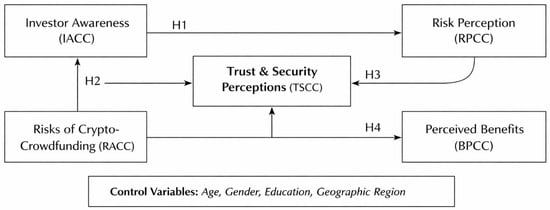
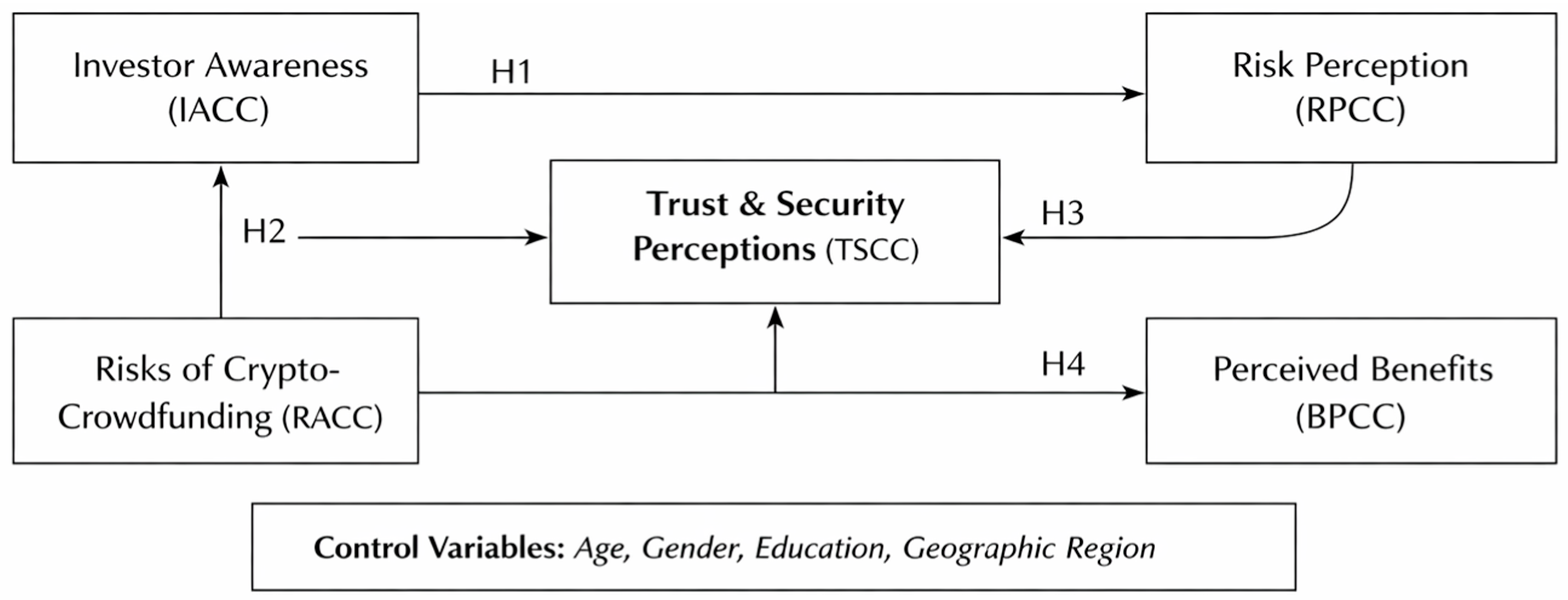

Disclaimer/Publisher’s Note: The statements, opinions and data contained in all publications are solely those of the individual author(s) and contributor(s) and not of MDPI and/or the editor(s). MDPI and/or the editor(s) disclaim responsibility for any injury to people or property resulting from any ideas, methods, instructions or products referred to in the content. |
© 2026 by the author. Licensee MDPI, Basel, Switzerland. This article is an open access article distributed under the terms and conditions of the Creative Commons Attribution (CC BY) license.