A Randomized Trial Evaluating Personalized Versus Guideline-Based Well Follow-Up Strategies for Patients with Early Breast Cancer: Feasibility Outcomes
by
 , , , , , , , , , and
Ana-Alicia Beltran-Bless
1,2 ,
,
Emma Himmelman
2,
Alexander Kim
2,
Gregory R. Pond
3,
Parvaneh Fallah
1,
Terry Ng
1,2 ,
,
John Hilton
1,2,
Marie-France Savard
1,2,
Gail Larocque
4,
Kelly-Anne Baines
4,
Kendra Primeau
4,
Deanna Saunders
2,
Danielle Allard
2,
Lisa Vandermeer
2 and
Mark Clemons
1,2,* 1
Department of Medicine, Division of Medical Oncology, The Ottawa Hospital and University of Ottawa, 501 Smyth Road, Ottawa, ON K1H 8L6, Canada
2
Cancer Therapeutics Program, Ottawa Hospital Research Institute, Ottawa, ON K1H 8L6, Canada
3
Escarpment Cancer Research Institute, McMaster University, Hamilton, ON L8V 1C3, Canada
4
Ottawa Hospital Cancer Centre, The Ottawa Hospital, Ottawa, ON K1H 1C4, Canada
*
Author to whom correspondence should be addressed.
Curr. Oncol. 2026, 33(4), 224; https://doi.org/10.3390/curroncol33040224
Submission received: 20 February 2026
/
Revised: 1 April 2026
/
Accepted: 12 April 2026
/
Published: 17 April 2026
(This article belongs to the Section Breast Cancer)
Simple Summary
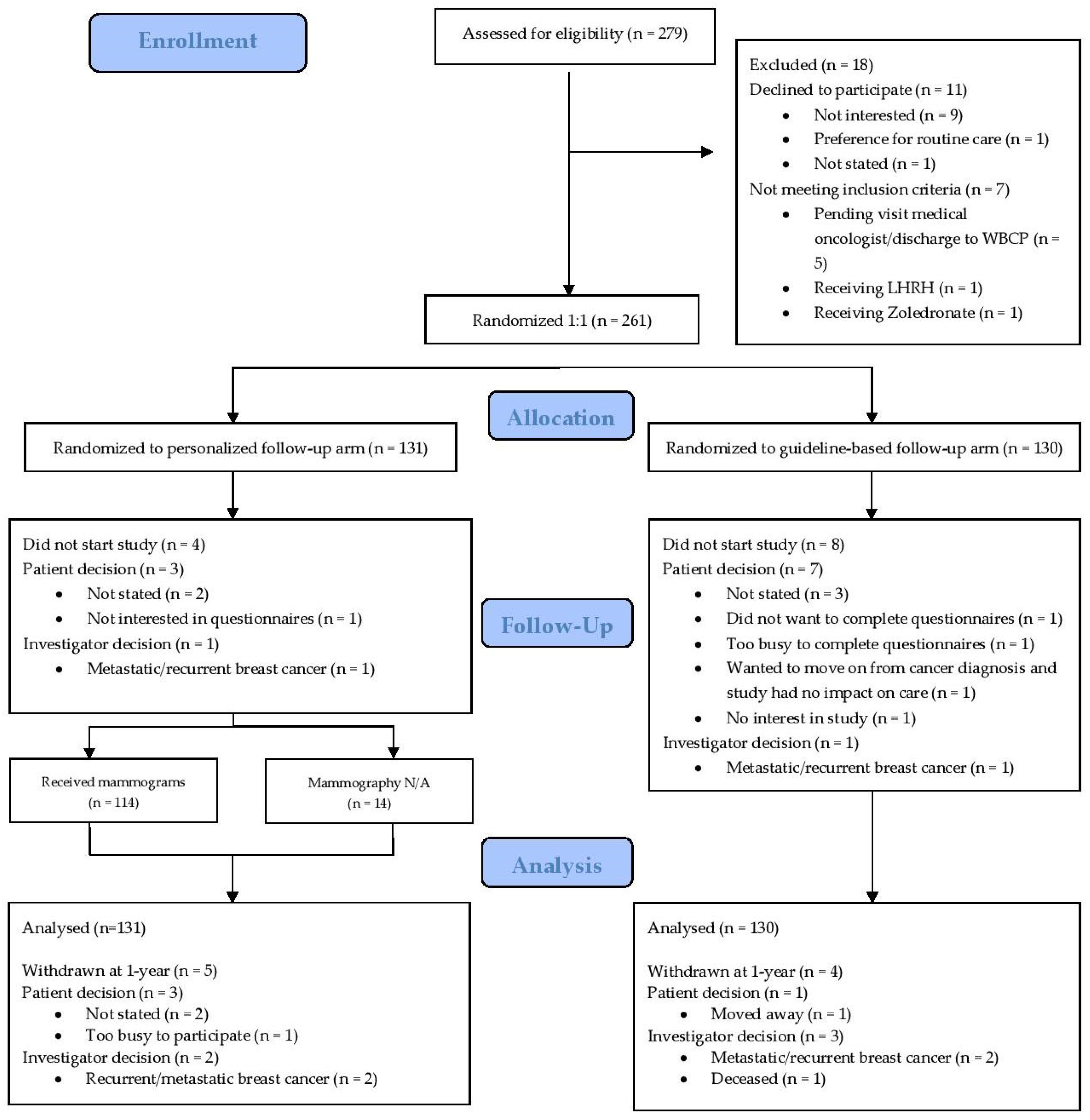
Routine in-person follow-up after early breast cancer treatment is common, but evidence for the best approach does not exist. We tested the feasibility of a trial comparing personalized follow-up to standard guideline-based care. Of the 279 patients approached, 261 agreed to participate, all accepted their assigned follow-up plan, and all participating healthcare providers actively enrolled patients. One-year retention was 92%, with no withdrawals due to group assignment. These results show that both patients and providers are willing to participate in studies testing different follow-up strategies. The findings provide practical guidance for designing future trials and support the feasibility of conducting larger studies to determine the most effective and patient-centered approach to post-treatment breast cancer care.
Abstract
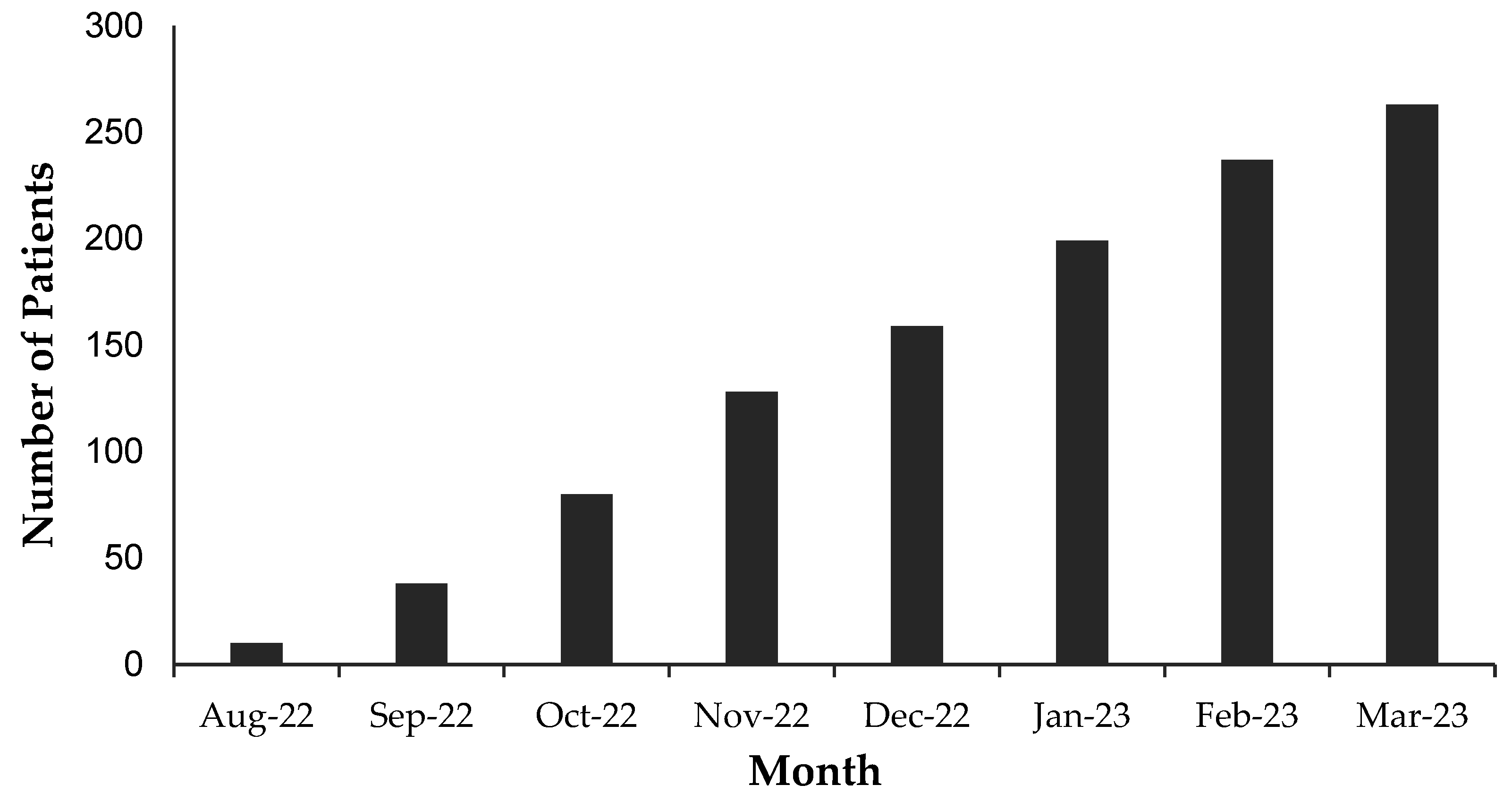
Despite the paucity of high-quality data supporting its benefits, routinely scheduled, in-person post-treatment surveillance of early breast cancer (EBC) patients remains common. Evaluation of different follow-up strategies is required. We present the feasibility phase of an ongoing randomized controlled trial (RCT) comparing two different follow-up strategies. Patients with EBC who completed the acute phase of their treatment were randomized to receive either personalized or ASCO guideline-based follow-up care alone. Feasibility endpoints, including rate of accrual, physician participation, patient acceptance of randomization arm, and patient retention 1 year after randomization, are presented. Of 279 patients approached, 261 (93.5%) were eligible and provided consent. Median rate of accrual was 34.5 patients per month, and all healthcare providers who agreed to study participation (n = 11) approached patients. Patients were randomized to receive personalized (n = 131) or guideline-based (n = 130) follow-up. No patients declined their randomization arm. For all 261 randomized patients, the 1-year participant retention rate was 92.0% (240/261). This RCT confirms both patient and healthcare-provider enthusiasm for studies comparing different strategies for post-treatment surveillance. No patients withdrew consent post-randomization due to a preference for one study arm over the other. While clinical effectiveness and patient satisfaction remain to be analyzed, our reported rates of attrition can be used by others when designing similar studies.
Keywords:
breast cancer; post-treatment; surveillance; follow-up