


Simple Summary
Cancer cachexia causes involuntary weight and muscle loss and can make cancer treatment more difficult. Drugs already licensed for other conditions offer practical treatment options, but their benefits differ. Some improve appetite or weight; these changes do not necessarily mean that muscle strength or daily activity improves. We reviewed clinical studies, guidelines, and selected trial registrations to clarify what commonly used drugs can achieve and what remains uncertain. Low-dose olanzapine has useful evidence for appetite and weight, whereas other drugs have more limited or inconsistent benefits and important safety considerations. In one trial, patients receiving nutrition, exercise and anti-inflammatory treatment maintained their weight, but their muscle measurements and activity were similar to those with usual care. Future studies should match their main outcome to the intended benefit, measure patient function and treatment tolerance, and account for concurrent cancer therapy.
Abstract
Cancer cachexia combines reduced intake, altered metabolism, and progressive tissue wasting, yet pharmacological management commonly relies on drugs approved for other indications. This narrative review integrates clinical trials, guidelines, and selected ClinicalTrials.gov records to evaluate repurposed agents according to appetite, body weight, muscle mass, physical function, and outcomes during anticancer treatment. Low-dose olanzapine has the clearest recent randomized evidence for appetite and weight, but muscle preservation and functional benefit remain uncertain. Megestrol acetate and corticosteroids can provide symptom benefit in selected patients, with thrombotic, endocrine, metabolic, and functional concerns. Mirtazapine, cannabinoids, anabolic agents, and anti-inflammatory drugs have heterogeneous evidence that does not support routine cachexia-directed use. In a 212-patient multimodal trial, body weight stabilized over six weeks without a detectable between-group difference in muscle area or activity. Ghrelin receptor agonists illustrate how effects on appetite, lean mass and strength can diverge within one drug class. Clinical benefit requires alignment between treatment mechanism, disease stage, endpoint hierarchy, and patient priorities. Future studies should prespecify interpretable muscle and functional assessments, explicitly manage intercurrent events, and evaluate treatment tolerance alongside multimodal supportive care.
1. Introduction
Cancer cachexia is a multifactorial syndrome in which reduced food intake and abnormal metabolism drive loss of skeletal muscle, with or without fat loss. Conventional nutritional support alone does not fully reverse it. Its clinical importance extends beyond the scale: impaired activity, symptom burden, treatment interruptions, and reduced physiological reserve shape patients’ experience of cancer care [1,2,3]. Weight history remains informative. A grading system developed in 8160 patients and validated in an independent cohort showed that body mass index and percentage weight loss jointly discriminate prognosis [4]. However, muscle depletion can occur at normal or high body weight, so absence of underweight does not exclude clinically important wasting [5,6].
Body composition is also relevant to anticancer treatment. Studies have associated low muscle mass with fluoropyrimidine toxicity and poor outcomes across several settings, although the association is not consistent across all treatments or populations [7,8,9]. In the Swiss Group for Clinical Cancer Research (SAKK) 75/08 esophageal cancer substudy, sarcopenia became more prevalent during neoadjuvant treatment and was associated with greater chemoradiation toxicity [10]. Conversely, skeletal muscle index predicted prognosis but not everolimus toxicity in one metastatic renal cell carcinoma cohort [11]. These findings justify assessment; they do not prove that increasing muscle pharmacologically improves survival or treatment tolerance.
Repurposing is attractive because a licensed drug has an existing supply, established pharmacology, and experience in another population. These advantages can shorten development, but they do not establish efficacy at the dose, disease stage, and treatment background relevant to cachexia [12,13]. Recent evidence has made this distinction clinically important. The 2023 American Society of Clinical Oncology (ASCO) update recommends offering low-dose olanzapine for appetite and weight gain in adults with advanced cancer, while a randomized trial of the growth differentiation factor 15 (GDF-15) antibody ponsegromab demonstrated the value of a biologically selected population [14,15]. Neither development makes appetite, muscle mass, and function interchangeable.
This review asks a practical question: which benefits can clinicians reasonably expect from repurposed drugs, and which trial designs would establish benefits that remain uncertain? We organize evidence around intended clinical effects rather than a catalog of mechanisms. Selected registrations illustrate endpoint choices, while published studies expose the limitations of registry-only conclusions. The resulting framework connects prescribing decisions with muscle assessment, patient function, concurrent therapy, and feasible research priorities.
2. Scope and Approach to the Evidence
This is a targeted narrative review, not a systematic review or meta-analysis. Clinical questions and a list of drugs used or proposed for cancer-related wasting guided targeted identification of relevant studies and trial registrations. PubMed-indexed records were retrieved through Europe PMC using combinations of cancer cachexia, anorexia, muscle wasting, individual drug names, clinical trials, body composition, physical function, and treatment toxicity. Targeted title and author searches recovered landmark studies; searches were updated through 14 October 2026. References of accessible primary reports and major guidelines informed contextual selection. No prospective protocol, independent duplicate screening, exhaustive database search, formal risk-of-bias scoring, or new pooled analysis was undertaken. Supplementary Table S1 describes the selection criteria and the evidence for each drug. The original query strings and counts at successive screening stages were not retained. Table S1 also gives the exact queries and return counts for two searches run during revision on 22 November 2026. The broader search used the original publication cut-off. A second search informed the new subsection on ghrelin receptor agonists.
We prioritized controlled clinical studies, guidelines, and measurement research. Primary full texts were consulted where accessible; indexed abstracts were used when full texts were unavailable. Published systematic reviews supplied pooled estimates rather than recalculations. We recorded the population, randomized, and analyzed denominators, comparators, outcome hierarchy, assessment period, effects, and harms. Registrations supplied planned or reported design information, not evidence that an intervention worked. We retrieved the 30 selected ClinicalTrials.gov records through the registry’s public application programming interface and compared the registered fields with the corresponding reports when available. For the original submission, the authors performed evidence selection, retrieval, comparison and interpretation. Generative AI was used for language editing and for rendering author-designed figures. During revision, OpenAI Codex assisted with additional searches, source comparisons and drafting amended text. The selected records are a contextual sample, not a complete census of worldwide cachexia trials. Supplementary Table S2 documents record-level verification and Supplementary Table S3 reproduces outcome wording.
We use repurposing to describe the evaluation of a licensed drug for an additional indication. Prescribing outside the local product label is off-label use. Expanded access, often called compassionate use, is a separate pathway for obtaining an investigational product outside a trial [16]. The status of an individual prescription therefore depends on the product, indication and jurisdiction. Anamorelin, enobosarm, bermekimab, ponsegromab, and espindolol are discussed as development or endpoint comparators, with their different regulatory and developmental histories kept explicit. Malnutrition, sarcopenia, anorexia, and consensus-defined cachexia are distinguished because eligibility based on one does not establish efficacy in another. Where publications and registry records disagree, clinical results are attributed to the publication and registry discrepancies are retained rather than silently reconciled.
3. What Counts as Clinically Meaningful Benefit in Cancer Cachexia
3.1. Population and Stage
The international cachexia framework recognizes precachexia, established cachexia, and refractory cachexia. The commonly used diagnostic criteria include weight loss of >5% over the preceding six months in the absence of simple starvation, or weight loss of >2% in patients with a body mass index < 20 kg/m2 or with sarcopenia [3]. These criteria describe a syndrome rather than a single biological mechanism. Sarcopenia emphasizes strength and muscle quantity or quality, while the Global Leadership Initiative on Malnutrition criteria combine phenotypic depletion with reduced intake or disease-related inflammation [17,18]. Their overlap is clinically useful, but the labels should not be substituted without specifying the measurements used [19].
Weight loss, intake, inflammation, and muscle depletion vary between patients and across treatments. Data-driven grading and international cohort analyses support recording this multidimensional baseline rather than relying on a single weight-loss threshold [20,21]. Longitudinal work also suggests that muscle and functional deterioration follow different trajectories depending on prior weight loss [22]. An intervention may therefore have a greater opportunity to stabilize tissue early than to reverse severe depletion later. In refractory disease, comfort, food enjoyment, and reducing family distress may appropriately take priority over an anabolic treatment target.
3.2. Appetite and Weight Are Legitimate but Distinct Outcomes
Anorexia can cause substantial suffering. Taste and smell disturbance, nausea, constipation, dysphagia, pain, and mood symptoms can limit intake independently of the metabolic component of cachexia. Observational studies link sensory disturbance with lower intake and poorer anorexia-related quality of life [23]. Patients and families also experience eating-related distress that is only partly captured by body weight; this warrants direct assessment and communication [24,25,26]. Relief of such symptoms is a meaningful benefit even when the muscle does not increase.
Weight remains inexpensive, familiar, and prognostically informative. It is also a mixture of tissues and fluid. Edema, ascites, hydration, adipose gain, and tumor burden can obscure changes in skeletal muscle. The endpoint literature consequently favors retaining weight while adding measurements that test the intervention’s intended mechanism [27]. Appetite scores and energy intake are similarly related but distinct. A patient may report a better appetite without increasing intake, or an increased intake without reversing catabolism. Validated instruments and an explicit assessment period are preferable to unspecified claims of appetite improvement [28].
3.3. Muscle Quantity Does Not Establish Function
Computed tomography (CT), dual-energy X-ray absorptiometry (DXA), magnetic resonance imaging (MRI), and bioelectrical impedance analysis (BIA) measure different aspects of body composition. CT acquired during routine cancer care can quantify anatomically defined muscle and adipose tissue; DXA provides whole-body or appendicular lean soft tissue mass; BIA estimates body composition using electrical properties and model assumptions [29]. These methods are not interchangeable. A direct comparison in non-small-cell lung cancer found clinically important disagreement between BIA and CT measurements [30]. Fluid-sensitive estimates should be interpreted with particular caution during advanced disease and systemic therapy.
Mass, strength, performance, and habitual activity should also remain separate domains. Studies associate muscle quantity with physical performance, but these associations do not support using muscle quantity as a surrogate for functional treatment benefit [31,32]. A systematic review found substantial variation among physical function instruments and inconsistent treatment effects, including positive findings in some studies; the evidence does not support declaring handgrip universally unresponsive [33]. Selection should reflect the population, expected effect, and assessment burden [34].
Patient-reported function and quality of life complement objective measures. The cachexia endpoint reviews identify heterogeneity, unclear clinical thresholds, and inadequate attention to multiplicity in quality-of-life analyses [35]. Biomarkers may establish target engagement or enrich recruitment, but changes in albumin, cytokines, or GDF-15 are not automatically patient benefits [36]. Similarly, survival and chemotherapy completion are relevant but difficult to attribute to supportive interventions without adequate randomization, power, and control of concurrent therapy [37]. A trial should specify which of these benefits it intends to establish before selecting its primary endpoint. Figure 1 summarizes these complementary domains and the limits of interpreting improvement across them.
Figure 1.
Distinct domains of benefit in cancer cachexia. The illustration distinguishes appetite and dietary intake (A), body weight (B), muscle quantity and related body-composition measures (C), physical function (D), and symptoms, quality of life, and treatment outcomes (E). Appetite and intake require separate assessments, and weight gain does not establish muscle preservation. Computed tomography (CT) and magnetic resonance imaging (MRI) assess anatomically defined muscle; dual-energy X-ray absorptiometry (DXA) measures lean soft tissue, whereas bioelectrical impedance analysis (BIA) provides model-based estimates of body compartments. These methods are not interchangeable. Strength, physical performance, and habitual activity also require distinct measurements. The parallel panels do not represent a causal sequence or a validated composite endpoint. Improvement in one domain does not necessarily translate to improvement in another; interpretation depends on the population, disease stage, and treatment setting. The authors designed this figure. Details of visual rendering are given in the Acknowledgments.
4. What the Repurposed Drugs Have Demonstrated
4.1. Olanzapine
Olanzapine has the clearest recent randomized evidence for appetite and weight. In 124 patients starting chemotherapy for advanced gastric, hepatopancreaticobiliary, or lung cancer, 2.5 mg daily for 12 weeks produced weight gain greater than 5% in 60% versus 9% of analyzable patients and improved appetite measures. The trial analyzed 112 participants; nutritional advice was provided in both groups [38]. An earlier 80-patient comparison of megestrol with or without olanzapine also favored the combination for several symptoms and weight, but could not isolate an olanzapine monotherapy effect [39]. Neither establishes preservation of skeletal muscle.
The subsequent Olanzapine Anorexia Cachexia (OlAnCa) trial randomized 164 patients with incurable cancer and cachexia to olanzapine 5 mg daily or placebo for four weeks. The primary one-week anorexia score improved more with olanzapine, and more participants gained over 5% body weight by week four. However, the trial did not demonstrate a functional benefit: handgrip decline was greater in the olanzapine arm in the per-protocol analysis, and grade 3 or higher anemia and leukopenia were more frequent [40]. These findings should not be interpreted as definitive causal evidence of muscle harm, given the secondary analyses, but they preclude a simple conclusion that improved appetite translates into stronger patients.
The ASCO recommendation is appropriately scoped to appetite and weight; it does not establish a disease-modifying effect on cachexia [15]. Differences between the 2.5-mg chemotherapy population and the 5-mg palliative population also caution against treating their efficacy and safety as identical. Current trials include weight-based endpoints, optional or secondary body-composition assessments, and populations receiving different cancer treatments [41,42,43]. A clinically useful next step is a prespecified assessment of muscle and function alongside symptom benefit, with dose and antiemetic co-exposure recorded.
4.2. Megestrol Acetate and Corticosteroids
Megestrol has extensive evidence for appetite and modest weight gain, but its overall benefit depends on the comparator and patient priorities. An updated systematic review estimated a mean weight advantage of 2.25 kg over placebo, with no clear quality-of-life improvement and more adverse events. The included populations and comparisons were heterogeneous, so these pooled estimates should not be described as a precise cancer-only treatment effect [44,45]. The megestrol/eicosapentaenoic acid trial reported 421 assessable patients, while its registry lists 429 enrolled [46,47]. That trial and an earlier active-comparator study illustrate how the outcome measure and comparator affect the interpretation of appetite and weight gain [46,48]. In the United States, the Megace ES oral suspension label covers anorexia, cachexia or unexplained significant weight loss in patients with acquired immunodeficiency syndrome [49]. In Spain, the Borea label explicitly includes anorexia–cachexia associated with advanced neoplasia in adults [50]. Thus, an identical symptom goal can fall within the label in one setting and outside it in another.
In a later 190-patient trial, day-seven appetite response occurred in 79.3% with megestrol, 65.5% with dexamethasone, and 58.5% with placebo; the overall comparison did not meet statistical significance (p = 0.067). Performance status and quality of life did not differ. Hyperglycemia and deep-vein thrombosis were more frequent with dexamethasone [51]. The substantial placebo response underlines why within-group improvement cannot demonstrate drug efficacy. It does not negate all prior evidence of symptoms or demonstrate equivalence between treatments.
The composition of weight gained during megestrol treatment varies across populations. In 30 older men without cancer, weight increased during megestrol treatment, while thigh muscle area decreased in the group without resistance training; this study raises a concern but cannot establish the same effect in cancer [52]. Conversely, recent nonrandomized cancer studies report preservation or improvement of muscle measurements. A prospective study of 97 patients and a retrospective analysis of 431 patients with non-small-cell lung cancer offer hypotheses worth testing, but treatment selection, concurrent therapy, and time-dependent survival bias preclude causal conclusions about muscle or survival [53,54].
Megestrol can therefore be considered for a defined symptom goal when guideline-supported alternatives are unsuitable, with careful attention to thrombotic and endocrine risk. Corticosteroids can offer short-term relief, but prolonged treatment raises concerns about glucose control, infection, and muscle catabolism. Effects on protein synthesis and proteolysis provide a rationale for monitoring strength and function during prolonged glucocorticoid exposure [55]. ASCO, the European Society for Medical Oncology (ESMO), and the Spanish Society of Medical Oncology (SEOM) guidance place these drugs within supportive care rather than as established muscle-restoring treatments [15,56,57,58].
4.3. Mirtazapine and Cannabinoids
Mirtazapine should not be treated as an established cachexia drug. An early uncontrolled phase II study suggested benefit in some patients, but a 120-patient placebo-controlled trial of 15 mg nightly did not show a between-group advantage in appetite and reported more somnolence [59,60]. In 86 patients with advanced non-small-cell lung cancer, a subsequent trial found no difference in appetite scores but reported greater energy intake with mirtazapine, underscoring the distinction between intake and perceived appetite [61].
Active-comparator evidence is inconsistent. A 52-patient randomized trial favored megestrol over mirtazapine for weight and appetite, whereas an 80-patient study did not find a significant between-group difference in appetite [62,63]. These differences may reflect dose, population, instruments, and attrition. A separate indication, such as depression, insomnia, or nausea, may support individualized mirtazapine prescribing, but symptom overlap is not proof of cachexia modification. Body composition and function should be measured whenever that broader benefit is claimed.
Cannabinoids have similarly heterogeneous results. In a 469-patient trial, megestrol improved appetite more often than dronabinol, and adding dronabinol did not improve outcomes compared with megestrol alone [64]. A multicenter phase III trial of cannabis extract, tetrahydrocannabinol, and placebo found no appetite or quality-of-life advantage at the tested doses [65]. Smaller trials of tetrahydrocannabinol for sensory disturbance and nabilone in lung cancer suggest a possible benefit in selected symptom domains but do not establish an anabolic effect [66,67]. ASCO’s cannabinoid guideline supports cautious, indication-specific discussion and recognizes uncertainty for supportive outcomes beyond refractory chemotherapy-induced nausea and vomiting [68]. A registered cannabidiol study used lean body mass as its primary outcome, illustrating a different research question rather than evidence of efficacy [69].
4.4. Testosterone, Nandrolone, and Adrenergic Agents
Testosterone replacement for documented hypogonadism has an established indication. Using testosterone to treat cancer-associated wasting is a distinct investigational use [70]. Wright and colleagues enrolled 28 patients with cervical or head-and-neck squamous cell carcinoma; 21 were included in the final analysis. Seven weeks of adjunct testosterone increased lean body mass by 3.2%, whereas placebo recipients lost 3.3% (p = 0.015). The publication describes a phase II trial including men and women [71]. ClinicalTrials.gov labels the linked record phase I and female-only [72]. The enrollment and treatment results reported here come from the publication. Small size, attrition, and heterogeneous treatment limit any recommendation.
Nandrolone was evaluated in a 60-patient registration using malnutrition criteria, with body mass index, raw impedance parameters, and quality of life as co-primary outcomes. Nandrolone plus corticosteroid was compared with corticosteroid alone [73]. Such a design cannot be equated with a placebo-controlled trial of muscle restoration in consensus-defined cachexia. Anabolic benefit must also be weighed against hormonal, hematological, and tumor-specific safety.
A phase I/II study gave formoterol with megestrol to 13 patients; seven reached the eight-week assessment and six met a prespecified muscle-response criterion. MRI and strength measurements were informative, but the uncontrolled combination design and high attrition prevent attribution of benefit to formoterol [74]. Tremor and tachyarrhythmia also matter in patients with reduced reserve. The ACT-ONE espindolol trial provides an additional development comparator: among 87 patients, the higher dose improved weight trajectory, lean mass, and handgrip preservation, although other performance measures did not significantly differ [75]. Espindolol was investigated as a distinct agent, so the result should not be extrapolated to the routine use of any licensed beta-blocker.
4.5. Anti-Inflammatory and Metabolic Strategies
Etanercept did not confer a clinically important benefit in weight or appetite in 63 evaluable patients [76]. Infliximab plus docetaxel did not meet the weight-response endpoint and was associated with greater fatigue and worse global quality of life [77]. In pancreatic cancer, a trial of infliximab plus gemcitabine randomized 89 patients and found no significant between-group difference in lean body mass at eight weeks [78]. The registry lists 73 enrolled and specifies assessment at the end of the first cycle, which its detailed description defines as eight weeks [79].
Thalidomide produced encouraging tissue and weight findings in a small pancreatic cancer trial, but another placebo-controlled study was limited by low accrual, attrition, and the absence of a clear between-group advantage [80,81]. Celecoxib studies range from small pilot or nonrandomized signals to a randomized comparison in which adding celecoxib to megestrol did not improve the primary weight outcome [82,83,84]. Pentoxifylline trials likewise did not establish durable weight or appetite benefit [85,86]. These agents remain research candidates; mechanistic plausibility does not offset the risks of infection, bleeding, renal, cardiovascular, or neurological complications.
Ruxolitinib connects a plausible pathway with the practical difficulty of clinical testing. Experimental inhibition of the Janus kinase (JAK)/signal transducer and activator of transcription 3 (STAT3) pathway protects muscle downstream of interleukin-6 signaling [87], but the RUXexia registration terminated after enrolling 8 participants, and a second study enrolled 10 participants with exploratory muscle and safety outcomes [88,89]. Insulin and pioglitazone registrations address metabolic or body-composition questions but do not establish routine clinical benefit: the insulin record lists several incompletely specified primary outcomes without a hierarchy in the registry record despite an earlier published report, while pioglitazone targets skeletal muscle insulin sensitivity [90,91]. Table 1 summarizes the principal clinical evidence without ranking mechanisms as treatments.
Table 1.
Clinical evidence for selected repurposed drugs in cancer cachexia.
5. Lessons from Combination Trials and New Drug Development
5.1. Muscle Outcomes in Combination Trials
A 332-patient study of progestogens, eicosapentaenoic acid, carnitine, thalidomide, and their combination explicitly described itself as a randomized phase III and designated lean body mass, resting energy expenditure, and fatigue as primary endpoints [94]. Other published phase III combination studies also measured lean mass or physical activity as primary outcomes, including a 104-patient gynecological cancer study and a 60-patient carnitine/celecoxib study [92,93].
These studies do not establish an isolated effect of any drug, and their open-label or combination designs, within-group comparisons, and multiple endpoints require careful interpretation. The main uncertainty is how much any individual drug contributes to changes in muscle, function or treatment tolerance. Phase labels, particularly for repurposed combinations, are less informative than the comparator, conduct, sample size, and analysis.
Multimodal supportive care also requires controlled evidence. The 46-patient feasibility study preceding the Multimodal Exercise, Nutrition and Anti-inflammatory Medication for Cachexia (MENAC) trial demonstrated feasibility but did not show significant effects on muscle or activity [95]. Its secondary methodological analysis found weight more responsive than muscle and handgrip measures, indicating that mandatory measurement alone does not guarantee adequate power [96]. The phase III MENAC study tested nutritional support, exercise and anti-inflammatory medication alongside standard care [97,98]. Its conference abstract reports 212 patients with advanced lung or pancreatic cancer (105 assigned to multimodal treatment and 107 to standard care), compared with 221 in the registration [97,99]. Mean weight change at six weeks was +0.05 kg with the intervention and −0.99 kg with standard care (p = 0.04). The groups lost similar amounts of lumbar muscle area on CT (−6.5 vs. −6.3 cm2, p = 0.93) and showed similar changes in daily steps (−378 vs. −458, p = 0.89) [99]. The weight effect applies to the combined intervention. The Effect of Multimodal Intervention Care on Cachexia in Patients with Advanced Cancer Compared to Conventional Management (MIRACLE) trial prespecified lean mass and handgrip as co-primary outcomes in a planned 112-patient multimodal comparison [100,101]. Its protocol is evidence of planned assessment, not a completed efficacy result.
Nonpharmacological studies clarify the comparator against which new drugs should be evaluated. The second Nutrition and Exercise Treatment for Advanced Cancer trial (NEXTAC-TWO) did not prolong disability-free survival despite high adherence [102,103]. A separate nutrition/exercise trial improved some symptoms and protein intake but did not improve global quality of life or physical performance [104]. Studies of eicosapentaenoic acid, amino acid mixtures, and carnitine show similarly variable efficacy and feasibility [105,106,107,108]. These findings support standardizing supportive care across both trial groups, while avoiding the claim that any component or package has already demonstrated functional benefit. The broader multimodal literature remains heterogeneous [109].
5.2. What New Agents Teach About Endpoint Alignment
Enobosarm generated a phase II lean-mass signal and advanced to the POWER program, with lean body mass and stair-climb power as co-primary responder endpoints [110,111,112,113,114]. The design demonstrates operational feasibility; a protocol or registry entry is not evidence of a positive phase III result. It also cautions against substituting threshold-based responder analyses for continuous information without a clear clinical justification.
Bermekimab, originally designated MABp1, was used in a composite combining stable or increased lean mass with stable or improved symptoms in refractory colorectal cancer. Among 309 treated participants, the composite was achieved by 33% versus 19% with placebo [115]. This is a precedent for a multidomain endpoint, not validation of every future muscle–symptom composite. Components can differ in responsiveness and importance, and symptom improvement may dominate interpretation. The registered projected sample differs from the published randomized and treated denominators, another reason to reconcile reports with registrations [116].
Ponsegromab provides a different example. After preliminary phase Ib findings, a 187-patient randomized study selected patients with serum GDF-15 of at least 1500 pg/mL and used weight change at 12 weeks as the primary outcome. At 400 mg, the median placebo-adjusted difference was 2.81 kg, with improvements in appetite, cachexia symptoms, and digital activity measures [14,117]. Preclinical GDF-15 blockade and activin-receptor experiments explain why intake and peripheral catabolism can sometimes be addressed together, but do not establish the efficacy of unrelated repurposed drugs [118,119,120]. A weight-primary trial can therefore be clinically informative when its other measurements test a coherent causal pathway. There is no single endpoint that is correct for every mechanism or disease stage. Table 2 illustrates how endpoint selection and hierarchy define the clinical claim supported by each trial or program.
Table 2.
Selected trial examples linking endpoint hierarchy to the clinical claim.
5.3. Ghrelin Receptor Agonists in Cancer Cachexia
Ghrelin stimulates appetite through the growth hormone secretagogue receptor (GHS-R1a). In seven patients with cancer and anorexia, an infusion increased intake at a single meal by 31% relative to saline [132]. A 21-patient crossover study found similar food intake with ghrelin and placebo [133]. In a separate eight-week comparison in 31 patients with weight-losing gastrointestinal cancers, high-dose ghrelin improved appetite and attenuated fat loss relative to low-dose ghrelin [134]. These small studies leave open whether the appetite response translates into sustained functional benefit.
Macimorelin is an oral agonist approved in the European Union for diagnostic testing of adult growth hormone deficiency [135]. In a one-week cancer-cachexia pilot, 10 patients received macimorelin and five received placebo. Two versus zero met the weight-response threshold, and no participant met the prespecified insulin-like growth factor 1 threshold. Between-group comparisons did not establish clinical efficacy [136]. Its diagnostic indication and short-term tolerability provide little guidance on prolonged treatment for wasting.
Anamorelin has the largest oncology program. ROMANA 1 and 2 randomized 484 and 495 patients with advanced non-small-cell lung cancer and cachexia. Lean body mass increased with anamorelin, while the co-primary handgrip endpoint showed no significant advantage [129,137]. A randomized gastric cancer study also illustrates variation across settings. Among 203 randomized patients, mean lean-mass change at eight weeks was +0.99 kg with anamorelin and +0.14 kg with control (primary comparison, p = 0.063) [138]. Two later lung cancer trials (318 participants each) paired weight with a five-item anorexia symptom score. Registry-posted results favored anamorelin for mean weight change over 12 weeks (placebo-adjusted differences +1.35 and +1.28 kg). Neither trial met its co-primary symptom endpoint (p = 0.1514 and 0.7241, respectively) [139,140].
Japan approved anamorelin for cachexia associated with non-small-cell lung, gastric, pancreatic and colorectal cancers [141]. The European Medicines Agency confirmed its refusal of the Adlumiz application after re-examination in 2017, citing limited clinical benefit and concerns about the reliability of safety data [142]. Other members of this class have different evidence bases. SUN11031 was studied in chronic obstructive pulmonary disease, ibutamoren in healthy older adults, ipamorelin in postoperative ileus and relamorelin in diabetic gastroparesis [143,144,145,146]. Capromorelin has a veterinary indication for weight loss in cats with chronic kidney disease [147]. Findings with growth hormone-releasing peptide 2 (GHRP-2) in chemotherapy-treated mice and Z-505 after gastrectomy in rats remain preclinical [148,149]. These indications and models do not establish efficacy for human cancer cachexia.
6. Integrating Pharmacotherapy with Anticancer Treatment
6.1. Multimodal Care and a Defined Prescribing Goal
Guidelines from ESMO, the European Society for Clinical Nutrition and Metabolism (ESPEN), ASCO, and SEOM converge on assessment, nutritional counseling, management of nutrition-impact symptoms, and individualized supportive care, with drugs used for specific goals [56,57,58,150]. For a patient distressed by appetite loss, symptom benefit may justify a time-limited drug trial. For a patient losing strength despite adequate intake, the same treatment may not address the dominant problem. Recording the intended goal, baseline symptom burden, and reassessment interval makes it more defensible to continue or stop treatment.
Multidisciplinary services can improve care coordination and patient experience, although observational improvement cannot establish the contribution of an individual intervention [151]. Psychosocial support, family education, and reducing pressure to eat are also components of treatment, especially when tissue recovery is unlikely [152]. Artificial nutrition should not be substituted reflexively for this assessment. In a randomized trial of advanced cancer with no intestinal impairment, supplemental parenteral nutrition did not improve quality of life or survival and caused more serious adverse events [153]. Decisions must reflect intestinal function, prognosis, goals, and the burden of treatment.
6.2. Co-Medication and Safety
Drugs are given during a changing cancer-treatment course, not against a stable physiological background. Treatment can aggravate nausea, inactivity, inflammation, and tissue wasting while also controlling the tumor driving cachexia [154]. Trial eligibility should therefore be examined alongside the efficacy estimate. The megestrol, olanzapine, and MENAC registrations restrict the use of various corticosteroids, appetite stimulants, anticoagulants, or poorly controlled comorbidities [41,47,97,121]. Such exclusions can be reasonable for safety or measurement reasons, but they narrow the applicability; they do not prove that the drug is unsafe in every excluded patient.
Olanzapine requires attention to sedation, glycemia, falls, and concurrent antiemetic use. The 2023 chemotherapy trial reported favorable treatment tolerance, whereas OlAnCa reported distinct hematological and functional signals [38,40]. These studies used different doses, populations, and durations. Clinicians should reconcile total exposure across appetite and antiemetic indications rather than assume that a low-dose cachexia prescription is the patient’s only exposure.
Megestrol decisions should account for a history of thrombosis, fluid retention, and endocrine effects; corticosteroid decisions should account for hyperglycemia, infection risk, and treatment duration [44,51]. Corticosteroid use during checkpoint inhibition requires particular nuance. Retrospective studies associated baseline steroids with poorer outcomes, but an analysis separating palliative from nonpalliative indications suggests substantial confounding by indication and prognosis [155,156]. These observations do not establish that brief antiemetic dexamethasone or every symptom-directed course impairs immunotherapy efficacy.
Anti-inflammatory biologics, Janus kinase inhibitors, anabolic steroids, and adrenergic agents have agent-specific risks that become more consequential during myelosuppressive, cardiotoxic, hormonal, or hepatotoxic treatment. A negative single-agent study cannot be dismissed simply because a preferable endpoint might have been selected; the observed harms and direct muscle findings remain relevant [71,74,77,78]. Table 3 distinguishes observed clinical signals from questions that require a prospective study.
Table 3.
Safety and applicability during concurrent anticancer treatment.
6.3. Outcomes During Cancer Treatment
Cachexia and muscle depletion can identify patients at high risk during chemotherapy or immunotherapy, but prognostic associations are not therapeutic effects [8,9,157]. Claims that a repurposed drug improves survival by preserving muscle require adequate randomized evidence, not a mediation analysis of a retrospectively selected cohort. Tumor response, treatment exposure, dose delays, hospitalization, and clinically important toxicity should be collected when plausible, while avoiding multiple unpowered claims. The endpoint review literature shows how uncommon robust, prespecified oncological benefits remain [37].
6.4. Choosing a Treatment Goal Across the Disease Course
Palliative care can accompany anticancer therapy. The practical question is what the patient wants to achieve in the time available. For a patient starting systemic treatment who hopes to keep eating and remain active between cycles, treating nausea, pain or constipation may help more immediately than an appetite stimulant. If anorexia persists, a symptom-directed drug with supporting evidence can be considered alongside nutritional counseling and activity as tolerated. Follow the symptom the patient selected and, when relevant, daily function and treatment interruptions. Evidence for an appetite response alone cannot establish improved chemotherapy delivery or survival [15,56,57].
When disease is progressing and eating has become burdensome, ask whether more appetite or greater enjoyment of food is a priority for the patient. A short trial for distressing anorexia can be reasonable if the likely time to benefit fits the prognosis and the burden is acceptable. Agree in advance on the symptom to reassess and stop if there is no worthwhile relief or if sedation, metabolic toxicity or other adverse effects outweigh it. In the final weeks, relief of thirst, nausea and eating-related distress may matter more than weight change. Discussing these priorities with the family can reduce pressure to eat [24,25,26,56,57].
7. A Feasible Research Agenda
7.1. Match Mechanism, Endpoint, and Patient Priority
Future trials should begin with a precise intended benefit. An appetite-directed drug can legitimately use a validated appetite measure as the primary endpoint, with prespecified weight, muscle, and functional outcomes defining the limits of interpretation. A muscle-directed drug should quantify muscle using a reproducible method and test whether preservation matters to patient function. A multimodal program may prioritize disability, quality of life, or treatment tolerance. This approach extends established endpoint recommendations without imposing a muscle-primary rule on every intervention [27,28,33,35]. Figure 2 presents a proposed framework linking population characterization, intended benefit, endpoint selection, and prespecified design and analysis.
Figure 2.
Aligning treatment goals with trial endpoints in cancer cachexia. This proposed framework links population characterization (A), selection of endpoints aligned with the intended benefit (B), and prespecified design and analysis (C). Within B, illustrative goals address appetite and intake (a), muscle preservation (b), and function, quality of life, or treatment tolerance (c). Endpoint choices are illustrative rather than mandatory. Appetite and dietary intake are distinct outcomes, and muscle size and lean soft tissue require method-specific interpretation. Complementary assessments define the scope of any observed benefit. Death is not an ordinary missing measurement and requires an explicit estimand strategy. Composite or co-primary endpoints require appropriate multiplicity control and component reporting. Arrows indicate planning steps, not biological causation or a validated clinical algorithm. Conclusions should remain aligned with the intended benefit and prespecified analysis. The authors designed this figure. Details of visual rendering are given in the Acknowledgments.
Stabilization is often meaningful in a progressive wasting disorder, but should be defined relative to measurement error and the untreated trajectory. Both continuous change and clinically justified responder thresholds can be useful. Composite or co-primary strategies require explicit rationale, a manageable number of domains, multiplicity control, and component reporting. A significant composite does not prove that each component improved; conversely, several separately nonsignificant components do not automatically invalidate a prespecified composite. Trial conclusions should match the analysis actually performed.
7.2. Make Measurements Reliable and Sufficiently Informative
Routine CT can reduce the need for additional visits, particularly when scan timing is compatible with the study. Central reading, standardized anatomical landmarks, consistent acquisition and segmentation, and explicit handling of edema and missing scans are necessary. DXA or MRI may be more suitable in some settings, while BIA requires careful validation and hydration assessment [29,30]. Access to a scan does not make an imaging substudy cost-free or adequately powered. Amending an ongoing study may require consent, ethics review, prospective analytic changes, and an assessment of recruitment or missingness.
Handgrip, stair-climb power, walking tests, and patient-reported function measure different capacities. Cross-sectional associations and responsiveness studies can inform selection but cannot identify one universal replacement [32,34,96]. Wearable activity offers repeated assessment in daily life and may reduce clinic burden, yet illness, weather, hospitalization, adherence, and device algorithms affect its meaning. Digital endpoints should demonstrate feasibility, reproducibility, and relevance to patients before confirmatory use [158]. They should complement established assessments rather than be preferred solely because an earlier trial had a positive signal.
7.3. Account for Progression, Death, and Generalizability
Attrition is integral to advanced cancer trials. Radiation Therapy Oncology Group (RTOG) trial 0122 and NOURISH illustrate the consequences of poor completion or accrual, while the formoterol pilot illustrates how a completer analysis can overstate an apparent response [74,105,108]. Trials should specify the estimand: the patient population, treatment comparison, outcome, summary measure, and treatment of intercurrent events such as progression, hospitalization, treatment change, and death [159]. Death makes a later muscle or function measurement undefined; it is not simply another missing value. Composite failure rules, treatment-policy strategies where feasible, or carefully justified survivor-based questions answer different clinical questions. Competing-risk methods are appropriate for certain time-to-event outcomes, not automatically for every repeated muscle measure.
Missing-data prevention, transparent reasons for missingness, and sensitivity analyses remain essential [160]. Sample-size estimates should reflect the expected muscle or functional effect and attrition, rather than borrowing variance or the effect of body weight. Similarly, common co-medications can often be addressed through stratification, stable dosing, or prespecified adjustment, but a genuine safety contraindication should remain an exclusion criterion. Generalizability does not justify enrolling unsafe combinations.
7.4. Prioritize Questions That Can Change Practice
For olanzapine, the immediate question is whether symptom and weight benefits coincide with muscle preservation and maintained activity at commonly used doses. For megestrol, controlled muscle assessments should test the newer observational signals without assuming either muscle harm or restoration. Testosterone requires an adequately sized confirmation of the published mixed-sex study with predefined hormonal and tumor-specific safety. Formoterol requires attribution of any effect to the agent rather than an uncontrolled combination. Anti-inflammatory studies require a plausible biological subgroup, an acceptable safety profile, and evidence that the target is engaged; negative clinical studies remain part of that justification.
Selected registrations indicate that these questions are still being addressed using diverse designs. Nano-megestrol studies include appetite-, weight-, and quality-of-life primary outcomes across varying phases and with intended sample sizes [124,125,126,127,128]. They should be judged by their eventual conduct and results, not by projected enrollment or novelty of formulation alone. In the placebo-controlled mirtazapine study, the registered dose was half a 30-mg tablet nightly (15 mg), consistent with the publication [59,161]. A separate study evaluated appetite and energy intake in patients with lung cancer [61,162]. The staged priorities in Table 4 favor questions that could clarify current practice over an unsupported ranking of therapeutic promise.
Table 4.
Priorities for clinically useful repurposing studies.
8. Limitations
This review selects evidence to answer a clinical and methodological question; it cannot establish the prevalence of every design in the worldwide trial literature. Searches were targeted, one registry was checked, and selection was not conducted as an independently screened systematic review. Some primary full texts were inaccessible, so interpretations based on indexed abstracts were restricted to reported designs and findings. No new pooled effect, formal certainty grade, or quantitative phase–endpoint association is presented. Individual registrations can be traced by identifier. The original search strings and numbers screened, excluded and retained are unavailable. The dated queries in Supplementary Table S1 provide independent retrieval counts for the revision and cannot establish how many potentially eligible studies the original review missed.
Registration fields may be incomplete or may describe a different population from the one analyzed in a publication. Supplementary Tables S2 and S3 identify the source and denominator used for each comparison. Published combination trials offer direct muscle measurements, although their design limits attribution to individual drugs. Trials of agents developed for cachexia inform endpoint selection.
Most studies involve heterogeneous tumors, disease stages, anticancer regimens, and assessment periods. Positive exploratory or secondary findings can be exaggerated by attrition and multiple comparisons; negative findings can be imprecise. Symptom relief, muscle preservation, improved function, and longer survival remain separate claims. Recommendations here describe how to test uncertain benefits and how to interpret existing evidence, rather than endorsing experimental treatment.
9. Conclusions
Repurposed drugs have a useful but bounded role in cancer cachexia care. Olanzapine can improve appetite and weight in selected patients; megestrol and short corticosteroid courses may address specific symptoms when their risks are acceptable. Evidence for reliable improvement in muscle, physical function, or cancer-treatment outcomes is less consistent, and other agents generally require controlled evaluation. MENAC illustrates the distinction clinically. Average weight stabilized over six weeks, while muscle area and activity declined to a similar extent in both groups. The choice to prescribe should reflect the patient’s symptom priorities, expected time to benefit and treatment burden.
Progress requires matching the intended benefit to the primary endpoint, measuring complementary domains prospectively, separating drug effects from combination effects, and accounting for disease progression, co-medication, and attrition. A drug that improves appetite should be described as doing so; a claim of muscle preservation or functional recovery requires its own evidence. That distinction supports more accurate prescribing today and more useful cachexia trials tomorrow.
Supplementary Materials
The following supporting information can be downloaded at https://www.mdpi.com/article/10.3390/curroncol33120741/s1, Supplementary Table S1: Search methods, revision-stage queries and evidence by drug. Supplementary Table S2: Selected trial registrations, source verification, and publication discrepancies. Supplementary Table S3: Registered primary outcome wording and interpretation notes.
Author Contributions
Conceptualization, J.-K.C., S.H.B., Y.-S.H. and S.-J.K.; methodology, J.-K.C. and S.H.B.; investigation, J.-K.C., S.H.B., H.-G.K. and S.-J.L.; data curation, J.-K.C., S.H.B., H.-G.K. and S.-J.L.; validation, H.-G.K., S.-J.L., Y.-S.H. and S.-J.K.; writing—original draft preparation, J.-K.C. and S.H.B.; writing—review and editing, J.-K.C., S.H.B., H.-G.K., S.-J.L., Y.-S.H. and S.-J.K.; visualization, J.-K.C. and S.H.B.; supervision, Y.-S.H. and S.-J.K.; project administration, Y.-S.H.; funding acquisition, J.-K.C. and S.-J.K. All authors have read and agreed to the published version of the manuscript.
Funding
This work was supported by the National Research Foundation of Korea (NRF) grant funded by the Korean government (RS-2026-25485640) and by the New Faculty Research Support Grant from Gyeongsang National University in 2025 (GNU-NFRSG-0044).
Institutional Review Board Statement
Not applicable.
Informed Consent Statement
Not applicable.
Data Availability Statement
The evidence discussed is available in the cited publications and public trial registrations. Selected registration details and source discrepancies are documented in the Supplementary Materials. No new patient-level data were generated.
Acknowledgments
For the original submission, Claude (Opus 5, Anthropic) assisted with English-language editing and ChatGPT (GPT-6, OpenAI) rendered the authors’ designs for Figure 1 and Figure 2 and the graphical abstract. The authors selected and assessed the original evidence and checked registry information. During revision, OpenAI Codex (GPT-6) assisted with supplementary searches, comparison of public sources and drafting of revisions and responses. The authors retain responsibility for the scientific interpretation, text, figures and tables. All figures and tables, including the graphical abstract, are original works prepared specifically for this article. None were reproduced, redrawn, or adapted from previously published material. Where tables summarize previously published findings, the original studies are cited in the corresponding cells. Accordingly, no third-party copyright permissions were required.
Conflicts of Interest
The authors declare no conflicts of interest.
Abbreviations
The following abbreviations are used in this manuscript:
| ASCO | American Society of Clinical Oncology |
| BIA | bioelectrical impedance analysis |
| BMI | body mass index |
| CT | computed tomography |
| DXA | dual-energy X-ray absorptiometry |
| EPA | eicosapentaenoic acid |
| ESMO | European Society for Medical Oncology |
| ESPEN | European Society for Clinical Nutrition and Metabolism |
| GDF-15 | growth differentiation factor 15 |
| JAK | Janus kinase |
| MENAC | Multimodal Exercise, Nutrition and Anti-inflammatory Medication for Cachexia |
| MIRACLE | Effect of Multimodal Intervention Care on Cachexia in Patients with Advanced Cancer Compared to Conventional Management |
| MRI | magnetic resonance imaging |
| NEXTAC | Nutrition and Exercise Treatment for Advanced Cancer |
| NRF | National Research Foundation of Korea |
| NSAIDs | nonsteroidal anti-inflammatory drugs |
| NSCLC | non-small-cell lung cancer |
| OlAnCa | Olanzapine Anorexia Cachexia trial |
| QoL | quality of life |
| RTOG | Radiation Therapy Oncology Group |
| SAKK | Swiss Group for Clinical Cancer Research |
| SEOM | Spanish Society of Medical Oncology |
| STAT3 | signal transducer and activator of transcription 3 |
| THC | tetrahydrocannabinol |
| TNF | tumor necrosis factor |
References
- Baracos, V.E.; Martin, L.; Korc, M.; Guttridge, D.C.; Fearon, K.C.H. Cancer-associated cachexia. Nat. Rev. Dis. Primers 2018, 4, 17105. [Google Scholar] [CrossRef] [Scilit] [PubMed]
- Evans, W.J.; Morley, J.E.; Argilés, J.; Bales, C.; Baracos, V.; Guttridge, D.; Jatoi, A.; Kalantar-Zadeh, K.; Lochs, H.; Mantovani, G.; et al. Cachexia: A new definition. Clin. Nutr. 2008, 27, 793–799. [Google Scholar] [CrossRef] [Scilit] [PubMed]
- Fearon, K.; Strasser, F.; Anker, S.D.; Bosaeus, I.; Bruera, E.; Fainsinger, R.L.; Jatoi, A.; Loprinzi, C.; MacDonald, N.; Mantovani, G.; et al. Definition and classification of cancer cachexia: An international consensus. Lancet Oncol. 2011, 12, 489–495. [Google Scholar] [CrossRef] [Scilit] [PubMed]
- Martin, L.; Senesse, P.; Gioulbasanis, I.; Antoun, S.; Bozzetti, F.; Deans, C.; Strasser, F.; Thoresen, L.; Jagoe, R.T.; Chasen, M.; et al. Diagnostic criteria for the classification of cancer-associated weight loss. J. Clin. Oncol. 2015, 33, 90–99, Erratum in J. Clin. Oncol. 2015, 33, 814. https://doi.org/10.1200/JCO.2015.61.1483. [Google Scholar] [CrossRef] [Scilit] [PubMed]
- Martin, L.; Birdsell, L.; Macdonald, N.; Reiman, T.; Clandinin, M.T.; McCargar, L.J.; Murphy, R.; Ghosh, S.; Sawyer, M.B.; Baracos, V.E. Cancer cachexia in the age of obesity: Skeletal muscle depletion is a powerful prognostic factor, independent of body mass index. J. Clin. Oncol. 2013, 31, 1539–1547. [Google Scholar] [CrossRef] [Scilit] [PubMed]
- Prado, C.M.; Lieffers, J.R.; McCargar, L.J.; Reiman, T.; Sawyer, M.B.; Martin, L.; Baracos, V.E. Prevalence and clinical implications of sarcopenic obesity in patients with solid tumours of the respiratory and gastrointestinal tracts: A population-based study. Lancet Oncol. 2008, 9, 629–635. [Google Scholar] [CrossRef] [Scilit] [PubMed]
- Kazemi-Bajestani, S.M.; Mazurak, V.C.; Baracos, V. Computed tomography-defined muscle and fat wasting are associated with cancer clinical outcomes. Semin. Cell Dev. Biol. 2016, 54, 2–10. [Google Scholar] [CrossRef] [Scilit] [PubMed]
- Prado, C.M.; Baracos, V.E.; McCargar, L.J.; Mourtzakis, M.; Mulder, K.E.; Reiman, T.; Butts, C.A.; Scarfe, A.G.; Sawyer, M.B. Body composition as an independent determinant of 5-fluorouracil-based chemotherapy toxicity. Clin. Cancer Res. 2007, 13, 3264–3268. [Google Scholar] [CrossRef] [Scilit] [PubMed]
- Prado, C.M.; Baracos, V.E.; McCargar, L.J.; Reiman, T.; Mourtzakis, M.; Tonkin, K.; Mackey, J.R.; Koski, S.; Pituskin, E.; Sawyer, M.B. Sarcopenia as a determinant of chemotherapy toxicity and time to tumor progression in metastatic breast cancer patients receiving capecitabine treatment. Clin. Cancer Res. 2009, 15, 2920–2926. [Google Scholar] [CrossRef] [Scilit] [PubMed]
- Panje, C.M.; Höng, L.; Hayoz, S.; Baracos, V.E.; Herrmann, E.; Garcia Schüler, H.; Meier, U.R.; Henke, G.; Schacher, S.; Hawle, H.; et al. Skeletal muscle mass correlates with increased toxicity during neoadjuvant radiochemotherapy in locally advanced esophageal cancer: A SAKK 75/08 substudy. Radiat. Oncol. 2019, 14, 166. [Google Scholar] [CrossRef] [Scilit] [PubMed]
- Auclin, E.; Bourillon, C.; De Maio, E.; By, M.A.; Seddik, S.; Fournier, L.; Auvray, M.; Dautruche, A.; Vano, Y.A.; Thibault, C.; et al. Prediction of Everolimus Toxicity and Prognostic Value of Skeletal Muscle Index in Patients with Metastatic Renal Cell Carcinoma. Clin. Genitourin. Cancer 2017, 15, 350–355. [Google Scholar] [CrossRef] [Scilit] [PubMed]
- Ashburn, T.T.; Thor, K.B. Drug repositioning: Identifying and developing new uses for existing drugs. Nat. Rev. Drug Discov. 2004, 3, 673–683. [Google Scholar] [CrossRef] [Scilit] [PubMed]
- Pushpakom, S.; Iorio, F.; Eyers, P.A.; Escott, K.J.; Hopper, S.; Wells, A.; Doig, A.; Guilliams, T.; Latimer, J.; McNamee, C.; et al. Drug repurposing: Progress, challenges and recommendations. Nat. Rev. Drug Discov. 2019, 18, 41–58. [Google Scholar] [CrossRef] [Scilit] [PubMed]
- Groarke, J.D.; Crawford, J.; Collins, S.M.; Lubaczewski, S.; Roeland, E.J.; Naito, T.; Hendifar, A.E.; Fallon, M.; Takayama, K.; Asmis, T.; et al. Ponsegromab for the Treatment of Cancer Cachexia. N. Engl. J. Med. 2024, 391, 2291–2303. [Google Scholar] [CrossRef] [Scilit] [PubMed]
- Roeland, E.J.; Bohlke, K.; Baracos, V.E.; Smith, T.J.; Loprinzi, C.L.; Cancer Cachexia Expert Panel. Cancer Cachexia: ASCO Guideline Rapid Recommendation Update. J. Clin. Oncol. 2023, 41, 4178–4179. [Google Scholar] [CrossRef] [Scilit] [PubMed]
- U.S. Food and Drug Administration. Expanded Access Information for Patients. Available online: https://www.fda.gov/news-events/expanded-access/expanded-access-information-patients (accessed on 22 November 2026).
- Cederholm, T.; Jensen, G.L.; Correia, M.I.T.D.; Gonzalez, M.C.; Fukushima, R.; Higashiguchi, T.; Baptista, G.; Barazzoni, R.; Blaauw, R.; Coats, A.J.S.; et al. GLIM criteria for the diagnosis of malnutrition—A consensus report from the global clinical nutrition community. J. Cachexia Sarcopenia Muscle 2019, 10, 207–217. [Google Scholar] [CrossRef] [Scilit] [PubMed]
- Cruz-Jentoft, A.J.; Bahat, G.; Bauer, J.; Boirie, Y.; Bruyère, O.; Cederholm, T.; Cooper, C.; Landi, F.; Rolland, Y.; Sayer, A.A.; et al. Sarcopenia: Revised European consensus on definition and diagnosis. Age Ageing 2019, 48, 16–31. [Google Scholar] [CrossRef] [Scilit] [PubMed]
- Wang, T.; Zhou, D.; Hong, Z. Sarcopenia and cachexia: Molecular mechanisms and therapeutic interventions. Med. Comm. 2025, 6, e70030. [Google Scholar] [CrossRef] [Scilit] [PubMed]
- Martin, L. Diagnostic criteria for cancer cachexia: Data versus dogma. Curr. Opin. Clin. Nutr. Metab. Care 2016, 19, 188–198. [Google Scholar] [CrossRef] [Scilit] [PubMed]
- Martin, L.; Muscaritoli, M.; Bourdel-Marchasson, I.; Kubrak, C.; Laird, B.; Gagnon, B.; Chasen, M.; Gioulbasanis, I.; Wallengren, O.; Voss, A.C.; et al. Diagnostic criteria for cancer cachexia: Reduced food intake and inflammation predict weight loss and survival in an international, multi-cohort analysis. J. Cachexia Sarcopenia Muscle 2021, 12, 1189–1202. [Google Scholar] [CrossRef] [Scilit] [PubMed]
- Stene, G.B.; Balstad, T.R.; Leer, A.S.M.; Bye, A.; Kaasa, S.; Fallon, M.; Laird, B.; Maddocks, M.; Solheim, T.S. Deterioration in Muscle Mass and Physical Function Differs According to Weight Loss History in Cancer Cachexia. Cancers 2019, 11, E1925. [Google Scholar] [CrossRef] [Scilit] [PubMed]
- Otani, H.; Amano, K.; Morita, T.; Miura, T.; Mori, N.; Tatara, R.; Kessoku, T.; Matsuda, Y.; Tagami, K.; Mori, M.; et al. Impact of taste/smell disturbances on dietary intakes and cachexia-related quality of life in patients with advanced cancer. Support. Care Cancer 2023, 31, 141. [Google Scholar] [CrossRef] [Scilit] [PubMed]
- Amano, K.; Hopkinson, J.; Baracos, V. Psychological symptoms of illness and emotional distress in advanced cancer cachexia. Curr. Opin. Clin. Nutr. Metab. Care 2022, 25, 167–172. [Google Scholar] [CrossRef] [Scilit] [PubMed]
- Amano, K.; Morita, T.; Koshimoto, S.; Uno, T.; Katayama, H.; Tatara, R. Eating-related distress in advanced cancer patients with cachexia and family members: A survey in palliative and supportive care settings. Support. Care Cancer 2019, 27, 2869–2876. [Google Scholar] [CrossRef] [Scilit] [PubMed]
- Amano, K.; Morita, T.; Miyashita, M. Potential Measurement Properties of a Questionnaire for Eating-Related Distress Among Advanced Cancer Patients with Cachexia: Preliminary Findings of Reliability and Validity Analysis. J. Palliat. Care 2022, 37, 107–112. [Google Scholar] [CrossRef] [Scilit] [PubMed]
- Brown, L.R.; Sousa, M.S.; Yule, M.S.; Baracos, V.E.; McMillan, D.C.; Arends, J.; Balstad, T.R.; Bye, A.; Dajani, O.; Dolan, R.D.; et al. Body weight and composition endpoints in cancer cachexia clinical trials: Systematic Review 4 of the cachexia endpoints series. J. Cachexia Sarcopenia Muscle 2024, 15, 816–852. [Google Scholar] [CrossRef] [Scilit] [PubMed]
- Vagnildhaug, O.M.; Balstad, T.R.; Ottestad, I.; Bye, A.; Greil, C.; Arends, J.; Baracos, V.; Brown, L.R.; Dajani, O.F.; Dolan, R.D.; et al. Appetite and dietary intake endpoints in cancer cachexia clinical trials: Systematic Review 2 of the cachexia endpoints series. J. Cachexia Sarcopenia Muscle 2024, 15, 513–535. [Google Scholar] [CrossRef] [Scilit] [PubMed]
- Mourtzakis, M.; Prado, C.M.; Lieffers, J.R.; Reiman, T.; McCargar, L.J.; Baracos, V.E. A practical and precise approach to quantification of body composition in cancer patients using computed tomography images acquired during routine care. Appl. Physiol. Nutr. Metab. 2008, 33, 997–1006. [Google Scholar] [CrossRef] [Scilit] [PubMed]
- Hansen, C.; Tobberup, R.; Rasmussen, H.H.; Delekta, A.M.; Holst, M. Measurement of body composition: Agreement between methods of measurement by bioimpedance and computed tomography in patients with non-small cell lung cancer. Clin. Nutr. ESPEN 2021, 44, 429–436. [Google Scholar] [CrossRef] [Scilit] [PubMed]
- Anderson, L.J.; Chong, N.; Migula, D.; Sauer, A.; Garrison, M.; Wu, P.; Dash, A.; Garcia, J.M. Muscle mass, not radiodensity, predicts physical function in cancer patients with or Without cachexia. Oncotarget 2020, 11, 1911–1921. [Google Scholar] [CrossRef] [Scilit] [PubMed]
- Anderson, L.J.; Lee, J.; Mallen, M.C.; Migula, D.; Liu, H.; Wu, P.C.; Dash, A.; Garcia, J.M. Evaluation of physical function and its association with body composition, quality of life and biomarkers in cancer cachexia patients. Clin. Nutr. 2021, 40, 978–986. [Google Scholar] [CrossRef] [Scilit] [PubMed]
- McDonald, J.; Sayers, J.; Anker, S.D.; Arends, J.; Balstad, T.R.; Baracos, V.; Brown, L.; Bye, A.; Dajani, O.; Dolan, R.; et al. Physical function endpoints in cancer cachexia clinical trials: Systematic Review 1 of the cachexia endpoints series. J. Cachexia Sarcopenia Muscle 2023, 14, 1932–1948. [Google Scholar] [CrossRef] [Scilit] [PubMed]
- Fram, J.; Vail, C.; Roy, I. Assessment of Cancer-Associated Cachexia—How to Approach Physical Function Evaluation. Curr. Oncol. Rep. 2022, 24, 751–761. [Google Scholar] [CrossRef] [Scilit] [PubMed]
- Hjermstad, M.J.; Jakobsen, G.; Arends, J.; Balstad, T.R.; Brown, L.R.; Bye, A.; Coats, A.J.S.; Dajani, O.F.; Dolan, R.D.; Fallon, M.T.; et al. Quality of life endpoints in cancer cachexia clinical trials: Systematic review 3 of the cachexia endpoints series. J. Cachexia Sarcopenia Muscle 2024, 15, 794–815. [Google Scholar] [CrossRef] [Scilit] [PubMed]
- Yule, M.S.; Thompson, J.; Leesahatsawat, K.; Sousa, M.S.; Anker, S.D.; Arends, J.; Balstad, T.R.; Brown, L.R.; Bye, A.; Dajani, O.; et al. Biomarker endpoints in cancer cachexia clinical trials: Systematic Review 5 of the cachexia endpoint series. J. Cachexia Sarcopenia Muscle 2024, 15, 853–867. [Google Scholar] [CrossRef] [Scilit] [PubMed]
- Dajani, O.; Philips, I.; Størkson, E.K.; Balstad, T.R.; Brown, L.R.; Bye, A.; Dolan, R.; Greil, C.; Hjermstad, M.; Jakobsen, G.; et al. Oncological and Survival Endpoints in Cancer Cachexia Clinical Trials: Systematic Review 6 of the Cachexia Endpoints Series. J. Cachexia Sarcopenia Muscle 2025, 16, e13756. [Google Scholar] [CrossRef] [Scilit] [PubMed]
- Sandhya, L.; Devi Sreenivasan, N.; Goenka, L.; Dubashi, B.; Kayal, S.; Solaiappan, M.; Govindarajalou, R.; Kt, H.; Ganesan, P. Randomized Double-Blind Placebo-Controlled Study of Olanzapine for Chemotherapy-Related Anorexia in Patients with Locally Advanced or Metastatic Gastric, Hepatopancreaticobiliary, and Lung Cancer. J. Clin. Oncol. 2023, 41, 2617–2627. [Google Scholar] [CrossRef] [Scilit] [PubMed]
- Navari, R.M.; Brenner, M.C. Treatment of cancer-related anorexia with olanzapine and megestrol acetate: A randomized trial. Support. Care Cancer 2010, 18, 951–956. [Google Scholar] [CrossRef] [Scilit] [PubMed]
- Othman, N.O.; Abdel-Aal, H.H.; Elsherief, W.A.; Farag, D.E.; Hunter, C.N.; Alsirafy, S.A. Olanzapine for Anorexia in Patients with Incurable Cancer and Cachexia (OlAnCa): A Double-Blind, Placebo-Controlled, Randomized Clinical Trial. J. Natl. Compr. Canc. Netw. 2025, 23, 385–392. [Google Scholar] [CrossRef] [Scilit] [PubMed]
- ClinicalTrials.gov. Olanzapine for the Management of Cancer Associated Appetite Loss in Patients with Advanced Esophagogastric, Hepatopancreaticobiliary, Colorectal or Lung Cancer. ClinicalTrials.gov Identifier: NCT05705492. Available online: https://clinicaltrials.gov/study/NCT05705492 (accessed on 14 October 2026).
- ClinicalTrials.gov. Olanzapine for Cancer Related Anorexia-cachexia Syndrome. ClinicalTrials.gov Identifier: NCT06517199. Available online: https://clinicaltrials.gov/study/NCT06517199 (accessed on 14 October 2026).
- ClinicalTrials.gov. Olanzapine in the Prevention and Treatment of Anorexia-Cachexia Syndrome in Patients Receiving Neoadjuvant/Preoperative Chemotherapy. ClinicalTrials.gov Identifier: NCT07633236. Available online: https://clinicaltrials.gov/study/NCT07633236 (accessed on 14 October 2026).
- Ruiz Garcia, V.; López-Briz, E.; Carbonell Sanchis, R.; Gonzalvez Perales, J.L.; Bort-Marti, S. Megestrol acetate for treatment of anorexia-cachexia syndrome. Cochrane Database Syst. Rev. 2013, 2013, CD004310. [Google Scholar] [CrossRef] [Scilit] [PubMed]
- Ruiz-García, V.; López-Briz, E.; Carbonell-Sanchis, R.; Bort-Martí, S.; Gonzálvez-Perales, J.L. Megestrol acetate for cachexia-anorexia syndrome. A systematic review. J. Cachexia Sarcopenia Muscle 2018, 9, 444–452. [Google Scholar] [CrossRef] [Scilit] [PubMed]
- Jatoi, A.; Rowland, K.; Loprinzi, C.L.; Sloan, J.A.; Dakhil, S.R.; MacDonald, N.; Gagnon, B.; Novotny, P.J.; Mailliard, J.A.; Bushey, T.I.; et al. An eicosapentaenoic acid supplement versus megestrol acetate versus both for patients with cancer-associated wasting: A North Central Cancer Treatment Group and National Cancer Institute of Canada collaborative effort. J. Clin. Oncol. 2004, 22, 2469–2476. [Google Scholar] [CrossRef] [Scilit] [PubMed]
- ClinicalTrials.gov. Comparison of Megestrol and/or Omega-3 Fatty Acid-Enriched Nutritional Supplement in Treating Patients with Cancer-Related Weight Loss and Lack of Appetite. ClinicalTrials.gov Identifier: NCT00031707. Available online: https://clinicaltrials.gov/study/NCT00031707 (accessed on 14 October 2026).
- Loprinzi, C.L.; Kugler, J.W.; Sloan, J.A.; Mailliard, J.A.; Krook, J.E.; Wilwerding, M.B.; Rowland, K.M.; Camoriano, J.K.; Novotny, P.J.; Christensen, B.J. Randomized comparison of megestrol acetate versus dexamethasone versus fluoxymesterone for the treatment of cancer anorexia/cachexia. J. Clin. Oncol. 1999, 17, 3299–3306. [Google Scholar] [CrossRef] [Scilit] [PubMed]
- U.S. Food and Drug Administration. Megace ES (Megestrol Acetate) Oral Suspension. Prescribing Information. Available online: https://www.accessdata.fda.gov/drugsatfda_docs/label/2018/021778s024lbl.pdf (accessed on 22 November 2026).
- Agencia Española de Medicamentos y Productos Sanitarios. Ficha Técnica de Borea 160 mg Comprimidos, Section 4.1. Available online: https://cima.aemps.es/cima/dochtml/ft/58775/FichaTecnica_58775.html (accessed on 22 November 2026).
- Currow, D.C.; Glare, P.; Louw, S.; Martin, P.; Clark, K.; Fazekas, B.; Agar, M.R. A randomised, double blind, placebo-controlled trial of megestrol acetate or dexamethasone in treating symptomatic anorexia in people with advanced cancer. Sci. Rep. 2021, 11, 2421. [Google Scholar] [CrossRef] [Scilit] [PubMed]
- Lambert, C.P.; Sullivan, D.H.; Freeling, S.A.; Lindquist, D.M.; Evans, W.J. Effects of testosterone replacement and/or resistance exercise on the composition of megestrol acetate stimulated weight gain in elderly men: A randomized controlled trial. J. Clin. Endocrinol. Metab. 2002, 87, 2100–2106. [Google Scholar] [CrossRef] [PubMed]
- Zhang, Y.; Huang, X.; Luo, B.; Jiang, L.; Wang, W.; Song, Y.; Li, X.; Zhu, Z.; Huang, J.; Guo, H.; et al. Reversing sarcopenia with megestrol acetate ameliorates systemic inflammation and improves survival in NSCLC. Transl. Oncol. 2026, 73, 102891. [Google Scholar] [CrossRef] [Scilit] [PubMed]
- Zhong, X.; Kuang, B.; Yang, K.; Zhou, H.; Yuan, C.; Wang, X.; Chen, H.; Zeng, X.; Li, A.; Lai, W.; et al. Megestrol acetate in the management of cancer cachexia: A prospective quasi-experimental study focusing on body composition and patient-reported outcomes. Front. Nutr. 2026, 13, 1780653. [Google Scholar] [CrossRef] [Scilit] [PubMed]
- Schakman, O.; Kalista, S.; Barbé, C.; Loumaye, A.; Thissen, J.P. Glucocorticoid-induced skeletal muscle atrophy. Int. J. Biochem. Cell Biol. 2013, 45, 2163–2172. [Google Scholar] [CrossRef] [Scilit] [PubMed]
- Arends, J.; Strasser, F.; Gonella, S.; Solheim, T.S.; Madeddu, C.; Ravasco, P.; Buonaccorso, L.; de van der Schueren, M.A.E.; Baldwin, C.; Chasen, M.; et al. Cancer cachexia in adult patients: ESMO Clinical Practice Guidelines☆. ESMO Open 2021, 6, 100092. [Google Scholar] [CrossRef] [Scilit] [PubMed]
- Roeland, E.J.; Bohlke, K.; Baracos, V.E.; Bruera, E.; Del Fabbro, E.; Dixon, S.; Fallon, M.; Herrstedt, J.; Lau, H.; Platek, M.; et al. Management of Cancer Cachexia: ASCO Guideline. J. Clin. Oncol. 2020, 38, 2438–2453. [Google Scholar] [CrossRef] [Scilit] [PubMed]
- Soria Rivas, A.; Escobar Álvarez, Y.; Blasco Cordellat, A.; Majem Tarruella, M.; Molina Mata, K.; Motilla de la Cámara, M.; Del Mar Muñoz Sánchez, M.; Zafra Poves, M.; Beato Zambrano, C.; Cabezón Gutierrez, L. SEOM clinical guidelines for cancer anorexia-cachexia syndrome (2023). Clin. Transl. Oncol. 2024, 26, 2866–2876. [Google Scholar] [CrossRef] [Scilit] [PubMed]
- Hunter, C.N.; Abdel-Aal, H.H.; Elsherief, W.A.; Farag, D.E.; Riad, N.M.; Alsirafy, S.A. Mirtazapine in Cancer-Associated Anorexia and Cachexia: A Double-Blind Placebo-Controlled Randomized Trial. J. Pain Symptom. Manag. 2021, 62, 1207–1215. [Google Scholar] [CrossRef] [Scilit] [PubMed]
- Riechelmann, R.P.; Burman, D.; Tannock, I.F.; Rodin, G.; Zimmermann, C. Phase II trial of mirtazapine for cancer-related cachexia and anorexia. Am. J. Hosp. Palliat. Care 2010, 27, 106–110. [Google Scholar] [CrossRef] [Scilit] [PubMed]
- Arrieta, O.; Cárdenas-Fernández, D.; Rodriguez-Mayoral, O.; Gutierrez-Torres, S.; Castañares, D.; Flores-Estrada, D.; Reyes, E.; López, D.; Barragán, P.; Soberanis Pina, P.; et al. Mirtazapine as Appetite Stimulant in Patients with Non-Small Cell Lung Cancer and Anorexia: A Randomized Clinical Trial. JAMA Oncol. 2024, 10, 305–314. [Google Scholar] [CrossRef] [Scilit] [PubMed]
- Almeida, O.L.S.; Ferriolli, E.; Taveira, R.C.C.; Rosenburg, M.G.; Campanari, D.D.; da Cruz Alves, N.M.; Pfrimer, K.; Rapatoni, L.; Peria, F.M.; Lima, N.K.C. Mirtazapine versus Megestrol in the Treatment of Anorexia-Cachexia Syndrome in Patients with Advanced Cancer: A Randomized, Double-Blind, Controlled Phase II Clinical Trial. Cancers 2023, 15, 3588. [Google Scholar] [CrossRef] [Scilit] [PubMed]
- Chowdhury, I.H.; Rahman, M.S.; Chowdhury, M.N.K.; Afroze, Y.J.; Tabassum, M.; Marnush, M.; Zerin, N. Mirtazapine versus megestrol acetate in treatment of anorexia-cachexia in advanced cancer patients: A randomized, double-blind trial. Jpn. J. Clin. Oncol. 2024, 54, 530–536. [Google Scholar] [CrossRef] [Scilit] [PubMed]
- Jatoi, A.; Windschitl, H.E.; Loprinzi, C.L.; Sloan, J.A.; Dakhil, S.R.; Mailliard, J.A.; Pundaleeka, S.; Kardinal, C.G.; Fitch, T.R.; Krook, J.E.; et al. Dronabinol versus megestrol acetate versus combination therapy for cancer-associated anorexia: A North Central Cancer Treatment Group study. J. Clin. Oncol. 2002, 20, 567–573. [Google Scholar] [CrossRef] [PubMed]
- Cannabis-In-Cachexia-Study-Group; Strasser, F.; Luftner, D.; Possinger, K.; Ernst, G.; Ruhstaller, T.; Meissner, W.; Ko, Y.D.; Schnelle, M.; Reif, M.; et al. Comparison of orally administered cannabis extract and delta-9-tetrahydrocannabinol in treating patients with cancer-related anorexia-cachexia syndrome: A multicenter, phase III, randomized, double-blind, placebo-controlled clinical trial from the Cannabis-In-Cachexia-Study-Group. J. Clin. Oncol. 2006, 24, 3394–3400. [Google Scholar] [CrossRef] [Scilit] [PubMed]
- Brisbois, T.D.; de Kock, I.H.; Watanabe, S.M.; Mirhosseini, M.; Lamoureux, D.C.; Chasen, M.; MacDonald, N.; Baracos, V.E.; Wismer, W.V. Delta-9-tetrahydrocannabinol may palliate altered chemosensory perception in cancer patients: Results of a randomized, double-blind, placebo-controlled pilot trial. Ann. Oncol. 2011, 22, 2086–2093. [Google Scholar] [CrossRef] [Scilit] [PubMed]
- Turcott, J.G.; Del Rocío Guillen Núñez, M.; Flores-Estrada, D.; Oñate-Ocaña, L.F.; Zatarain-Barrón, Z.L.; Barrón, F.; Arrieta, O. The effect of nabilone on appetite, nutritional status, and quality of life in lung cancer patients: A randomized, double-blind clinical trial. Support. Care Cancer 2018, 26, 3029–3038. [Google Scholar] [CrossRef] [Scilit] [PubMed]
- Braun, I.M.; Bohlke, K.; Abrams, D.I.; Anderson, H.; Balneaves, L.G.; Bar-Sela, G.; Bowles, D.W.; Chai, P.R.; Damani, A.; Gupta, A.; et al. Cannabis and Cannabinoids in Adults with Cancer: ASCO Guideline. J. Clin. Oncol. 2024, 42, 1575–1593. [Google Scholar] [CrossRef] [Scilit] [PubMed]
- ClinicalTrials.gov. The Effect of Cannabidiol on Lean Body Mass in Patients Receiving Chemotherapy. ClinicalTrials.gov Identifier: NCT04585841. Available online: https://clinicaltrials.gov/study/NCT04585841 (accessed on 14 October 2026).
- U.S. National Library of Medicine. DailyMed. Testosterone Cypionate Injection, USP. Indications and Usage. Available online: https://dailymed.nlm.nih.gov/dailymed/fda/fdaDrugXsl.cfm?setid=66d4ae28-97c2-42cc-ab5a-a765a623c944&type=display (accessed on 22 November 2026).
- Wright, T.J.; Dillon, E.L.; Durham, W.J.; Chamberlain, A.; Randolph, K.M.; Danesi, C.; Horstman, A.M.; Gilkison, C.R.; Willis, M.; Richardson, G.; et al. A randomized trial of adjunct testosterone for cancer-related muscle loss in men and women. J. Cachexia Sarcopenia Muscle 2018, 9, 482–496. [Google Scholar] [CrossRef] [Scilit] [PubMed]
- ClinicalTrials.gov. Testosterone for Treating Cachexia in Patients with Squamous Cell Carcinoma. ClinicalTrials.gov Identifier: NCT00878995. Available online: https://clinicaltrials.gov/study/NCT00878995 (accessed on 14 October 2026).
- ClinicalTrials.gov. Impact of the Use of Nandrolone on the Treatment of Malnutrition Induced by Cancer. ClinicalTrials.gov Identifier: NCT03263520. Available online: https://clinicaltrials.gov/study/NCT03263520 (accessed on 14 October 2026).
- Greig, C.A.; Johns, N.; Gray, C.; MacDonald, A.; Stephens, N.A.; Skipworth, R.J.; Fallon, M.; Wall, L.; Fox, G.M.; Fearon, K.C. Phase I/II trial of formoterol fumarate combined with megestrol acetate in cachectic patients with advanced malignancy. Support. Care Cancer 2014, 22, 1269–1275. [Google Scholar] [CrossRef] [Scilit] [PubMed]
- Stewart Coats, A.J.; Ho, G.F.; Prabhash, K.; von Haehling, S.; Tilson, J.; Brown, R.; Beadle, J.; Anker, S.D. for and on behalf of the ACT-ONE study group. Espindolol for the treatment and prevention of cachexia in patients with stage III/IV non-small cell lung cancer or colorectal cancer: A randomized, double-blind, placebo-controlled, international multicentre phase II study (the ACT-ONE trial). J. Cachexia Sarcopenia Muscle 2016, 7, 355–365. [Google Scholar] [CrossRef] [Scilit] [PubMed]
- Jatoi, A.; Dakhil, S.R.; Nguyen, P.L.; Sloan, J.A.; Kugler, J.W.; Rowland, K.M.; Soori, G.S.; Wender, D.B.; Fitch, T.R.; Novotny, P.J.; et al. A placebo-controlled double blind trial of etanercept for the cancer anorexia/weight loss syndrome: Results from N00C1 from the North Central Cancer Treatment Group. Cancer 2007, 110, 1396–1403. [Google Scholar] [CrossRef] [Scilit] [PubMed]
- Jatoi, A.; Ritter, H.L.; Dueck, A.; Nguyen, P.L.; Nikcevich, D.A.; Luyun, R.F.; Mattar, B.I.; Loprinzi, C.L. A placebo-controlled, double-blind trial of infliximab for cancer-associated weight loss in elderly and/or poor performance non-small cell lung cancer patients (N01C9). Lung Cancer 2010, 68, 234–239. [Google Scholar] [CrossRef] [Scilit] [PubMed]
- Wiedenmann, B.; Malfertheiner, P.; Friess, H.; Ritch, P.; Arseneau, J.; Mantovani, G.; Caprioni, F.; Van Cutsem, E.; Richel, D.; DeWitte, M.; et al. A multicenter, phase II study of infliximab plus gemcitabine in pancreatic cancer cachexia. J. Support. Oncol. 2008, 6, 18–25. [Google Scholar] [PubMed]
- ClinicalTrials.gov. A Study of the Safety and Effectiveness of Infliximab (Remicade) in Patients with Pancreatic Cancer Related Cachexia. ClinicalTrials.gov Identifier: NCT00060502. Available online: https://clinicaltrials.gov/study/NCT00060502 (accessed on 14 October 2026).
- Gordon, J.N.; Trebble, T.M.; Ellis, R.D.; Duncan, H.D.; Johns, T.; Goggin, P.M. Thalidomide in the treatment of cancer cachexia: A randomised placebo controlled trial. Gut 2005, 54, 540–545. [Google Scholar] [CrossRef] [Scilit] [PubMed]
- Yennurajalingam, S.; Willey, J.S.; Palmer, J.L.; Allo, J.; Del Fabbro, E.; Cohen, E.N.; Tin, S.; Reuben, J.M.; Bruera, E. The role of thalidomide and placebo for the treatment of cancer-related anorexia-cachexia symptoms: Results of a double-blind placebo-controlled randomized study. J. Palliat. Med. 2012, 15, 1059–1064. [Google Scholar] [CrossRef] [Scilit] [PubMed]
- Kouchaki, B.; Janbabai, G.; Alipour, A.; Ala, S.; Borhani, S.; Salehifar, E. Randomized double-blind clinical trial of combined treatment with megestrol acetate plus celecoxib versus megestrol acetate alone in cachexia-anorexia syndrome induced by GI cancers. Support. Care Cancer 2018, 26, 2479–2489. [Google Scholar] [CrossRef] [Scilit] [PubMed]
- Lai, V.; George, J.; Richey, L.; Kim, H.J.; Cannon, T.; Shores, C.; Couch, M. Results of a pilot study of the effects of celecoxib on cancer cachexia in patients with cancer of the head, neck, and gastrointestinal tract. Head Neck 2008, 30, 67–74. [Google Scholar] [CrossRef] [Scilit] [PubMed]
- Mantovani, G.; Macciò, A.; Madeddu, C.; Serpe, R.; Antoni, G.; Massa, E.; Dessì, M.; Panzone, F. Phase II nonrandomized study of the efficacy and safety of COX-2 inhibitor celecoxib on patients with cancer cachexia. J. Mol. Med. 2010, 88, 85–92. [Google Scholar] [CrossRef] [Scilit] [PubMed]
- Goldberg, R.M.; Loprinzi, C.L.; Mailliard, J.A.; O’Fallon, J.R.; Krook, J.E.; Ghosh, C.; Hestorff, R.D.; Chong, S.F.; Reuter, N.F.; Shanahan, T.G. Pentoxifylline for treatment of cancer anorexia and cachexia? A randomized, double-blind, placebo-controlled trial. J. Clin. Oncol. 1995, 13, 2856–2859. [Google Scholar] [CrossRef] [Scilit] [PubMed]
- Mehrzad, V.; Afshar, R.; Akbari, M. Pentoxifylline treatment in patients with cancer cachexia: A double-blind, randomized, placebo-controlled clinical trial. Adv. Biomed. Res. 2016, 5, 60. [Google Scholar] [CrossRef] [Scilit] [PubMed]
- Bonetto, A.; Aydogdu, T.; Jin, X.; Zhang, Z.; Zhan, R.; Puzis, L.; Koniaris, L.G.; Zimmers, T.A. JAK/STAT3 pathway inhibition blocks skeletal muscle wasting downstream of IL-6 and in experimental cancer cachexia. Am. J. Physiol. Endocrinol. Metab. 2012, 303, E410–21. [Google Scholar] [CrossRef] [Scilit] [PubMed]
- ClinicalTrials.gov. Study of Ruxolitinib in the Treatment of Cachexia in Patients with Tumor-Associated Chronic Wasting Diseases. ClinicalTrials.gov Identifier: NCT02072057. Available online: https://clinicaltrials.gov/study/NCT02072057 (accessed on 14 October 2026).
- ClinicalTrials.gov. Ruxolitinib for Cancer Cachexia. ClinicalTrials.gov Identifier: NCT04906746. Available online: https://clinicaltrials.gov/study/NCT04906746 (accessed on 14 October 2026).
- ClinicalTrials.gov. Insulin Treatment in Cancer Cachexia. ClinicalTrials.gov Identifier: NCT00329615. Available online: https://clinicaltrials.gov/study/NCT00329615 (accessed on 14 October 2026).
- ClinicalTrials.gov. The Neuroendocrine Effects of Pioglitazone in Patients with Cancer and Cachexia. ClinicalTrials.gov Identifier: NCT05919147. Available online: https://clinicaltrials.gov/study/NCT05919147 (accessed on 14 October 2026).
- Macciò, A.; Madeddu, C.; Gramignano, G.; Mulas, C.; Floris, C.; Sanna, E.; Cau, M.C.; Panzone, F.; Mantovani, G. A randomized phase III clinical trial of a combined treatment for cachexia in patients with gynecological cancers: Evaluating the impact on metabolic and inflammatory profiles and quality of life. Gynecol. Oncol. 2012, 124, 417–425. [Google Scholar] [CrossRef] [Scilit] [PubMed]
- Madeddu, C.; Dessì, M.; Panzone, F.; Serpe, R.; Antoni, G.; Cau, M.C.; Montaldo, L.; Mela, Q.; Mura, M.; Astara, G.; et al. Randomized phase III clinical trial of a combined treatment with carnitine + celecoxib ± megestrol acetate for patients with cancer-related anorexia/cachexia syndrome. Clin. Nutr. 2012, 31, 176–182. [Google Scholar] [CrossRef] [Scilit] [PubMed]
- Mantovani, G.; Macciò, A.; Madeddu, C.; Serpe, R.; Massa, E.; Dessì, M.; Panzone, F.; Contu, P. Randomized phase III clinical trial of five different arms of treatment in 332 patients with cancer cachexia. Oncologist 2010, 15, 200–211. [Google Scholar] [CrossRef] [Scilit] [PubMed]
- Solheim, T.S.; Laird, B.J.A.; Balstad, T.R.; Stene, G.B.; Bye, A.; Johns, N.; Pettersen, C.H.; Fallon, M.; Fayers, P.; Fearon, K.; et al. A randomized phase II feasibility trial of a multimodal intervention for the management of cachexia in lung and pancreatic cancer. J. Cachexia Sarcopenia Muscle 2017, 8, 778–788. [Google Scholar] [CrossRef] [Scilit] [PubMed]
- Balstad, T.R.; Brunelli, C.; Pettersen, C.H.; Schønberg, S.A.; Skorpen, F.; Fallon, M.; Kaasa, S.; Bye, A.; Laird, B.J.A.; Stene, G.B.; et al. Power Comparisons and Clinical Meaning of Outcome Measures in Assessing Treatment Effect in Cancer Cachexia: Secondary Analysis from a Randomized Pilot Multimodal Intervention Trial. Front. Nutr. 2020, 7, 602775. [Google Scholar] [CrossRef] [Scilit] [PubMed]
- ClinicalTrials.gov. Multimodal Intervention for Cachexia in Advanced Cancer Patients Undergoing Chemotherapy. ClinicalTrials.gov Identifier: NCT02330926. Available online: https://clinicaltrials.gov/study/NCT02330926 (accessed on 14 October 2026).
- Solheim, T.S.; Laird, B.J.A.; Balstad, T.R.; Bye, A.; Stene, G.; Baracos, V.; Strasser, F.; Griffiths, G.; Maddocks, M.; Fallon, M.; et al. Cancer cachexia: Rationale for the MENAC (Multimodal-Exercise, Nutrition and Anti-inflammatory medication for Cachexia) trial. BMJ Support. Palliat. Care 2018, 8, 258–265. [Google Scholar] [CrossRef] [Scilit] [PubMed]
- Solheim, T.S.; Laird, B.J.A.; Balstad, T.R.; Stene, G.B.; Baracos, V.; Bye, A.; Dajani, O.; Hendifar, A.E.; Strasser, F.; Chasen, M.R.; et al. Results from a randomised, open-label trial of a multimodal intervention (exercise, nutrition and anti-inflammatory medication) plus standard care versus standard care alone to attenuate cachexia in patients with advanced cancer undergoing chemotherapy. J. Clin. Oncol. 2024, 42, LBA12007. [Google Scholar] [CrossRef] [Scilit]
- ClinicalTrials.gov. Effect of Multi-modal Intervention Care on Cachexia in Patients with Advanced Cancer Compared to Conventional Management (MIRACLE). ClinicalTrials.gov Identifier: NCT04907864. Available online: https://clinicaltrials.gov/study/NCT04907864 (accessed on 14 October 2026).
- Maeng, C.H.; Kim, B.H.; Chon, J.; Kang, W.S.; Kang, K.; Woo, M.; Hong, I.K.; Lee, J.; Lee, K.Y. Effect of multimodal intervention care on cachexia in patients with advanced cancer compared to conventional management (MIRACLE): An open-label, parallel, randomized, phase 2 trial. Trials 2022, 23, 281. [Google Scholar] [CrossRef] [Scilit] [PubMed]
- Mitsunaga, S.; Naito, T.; Imai, H.; Kimura, M.; Miura, S.; Tanaka, H.; Mizukami, T.; Imoto, A.; Kondoh, C.; Okuyama, H.; et al. A Randomized Trial of Nutrition and Exercise Treatment in Patients with Pancreatic and Non-Small Cell Lung Cancer (NEXTAC-TWO). J. Cachexia Sarcopenia Muscle 2025, 16, e13871. [Google Scholar] [CrossRef] [Scilit] [PubMed]
- Miura, S.; Naito, T.; Mitsunaga, S.; Omae, K.; Mori, K.; Inano, T.; Yamaguchi, T.; Tatematsu, N.; Okayama, T.; Morikawa, A.; et al. A randomized phase II study of nutritional and exercise treatment for elderly patients with advanced non-small cell lung or pancreatic cancer: The NEXTAC-TWO study protocol. BMC Cancer 2019, 19, 528. [Google Scholar] [CrossRef] [Scilit] [PubMed]
- Uster, A.; Ruehlin, M.; Mey, S.; Gisi, D.; Knols, R.; Imoberdorf, R.; Pless, M.; Ballmer, P.E. Effects of nutrition and physical exercise intervention in palliative cancer patients: A randomized controlled trial. Clin. Nutr. 2018, 37, 1202–1209. [Google Scholar] [CrossRef] [Scilit] [PubMed]
- Berk, L.; James, J.; Schwartz, A.; Hug, E.; Mahadevan, A.; Samuels, M.; Kachnic, L.; RTOG. A randomized, double-blind, placebo-controlled trial of a beta-hydroxyl beta-methyl butyrate, glutamine, and arginine mixture for the treatment of cancer cachexia (RTOG 0122). Support. Care Cancer 2008, 16, 1179–1188. [Google Scholar] [CrossRef] [Scilit] [PubMed]
- Fearon, K.C.; Barber, M.D.; Moses, A.G.; Ahmedzai, S.H.; Taylor, G.S.; Tisdale, M.J.; Murray, G.D. Double-blind, placebo-controlled, randomized study of eicosapentaenoic acid diester in patients with cancer cachexia. J. Clin. Oncol. 2006, 24, 3401–3407. [Google Scholar] [CrossRef] [Scilit] [PubMed]
- Kraft, M.; Kraft, K.; Gärtner, S.; Mayerle, J.; Simon, P.; Weber, E.; Schütte, K.; Stieler, J.; Koula-Jenik, H.; Holzhauer, P.; et al. L-Carnitine-supplementation in advanced pancreatic cancer (CARPAN)--a randomized multicentre trial. Nutr. J. 2012, 11, 52. [Google Scholar] [CrossRef] [Scilit] [PubMed]
- Pascoe, J.; Jackson, A.; Gaskell, C.; Gaunt, C.; Thompson, J.; Billingham, L.; Steven, N. Beta-hydroxy beta-methylbutyrate/arginine/glutamine (HMB/Arg/Gln) supplementation to improve the management of cachexia in patients with advanced lung cancer: An open-label, multicentre, randomised, controlled phase II trial (NOURISH). BMC Cancer 2021, 21, 800. [Google Scholar] [CrossRef] [Scilit] [PubMed]
- McKeaveney, C.; Maxwell, P.; Noble, H.; Reid, J. A Critical Review of Multimodal Interventions for Cachexia. Adv. Nutr. 2021, 12, 523–532. [Google Scholar] [CrossRef] [Scilit] [PubMed]
- ClinicalTrials.gov. Study of GTx-024 on Muscle Wasting (Cachexia) Cancer. ClinicalTrials.gov Identifier: NCT00467844. Available online: https://clinicaltrials.gov/study/NCT00467844 (accessed on 14 October 2026).
- ClinicalTrials.gov. Effect of GTx-024 on Muscle Wasting in Patients with Non-Small Cell Lung Cancer (NSCLC) on First Line Platinum. ClinicalTrials.gov Identifier: NCT01355497. Available online: https://clinicaltrials.gov/study/NCT01355497 (accessed on 14 October 2026).
- ClinicalTrials.gov. Phase III Study of the Effect of GTx-024 on Muscle Wasting in Patients with Non-Small Cell Lung Cancer (NSCLC). ClinicalTrials.gov Identifier: NCT01355484. Available online: https://clinicaltrials.gov/study/NCT01355484 (accessed on 14 October 2026).
- Crawford, J.; Prado, C.M.; Johnston, M.A.; Gralla, R.J.; Taylor, R.P.; Hancock, M.L.; Dalton, J.T. Study Design and Rationale for the Phase 3 Clinical Development Program of Enobosarm, a Selective Androgen Receptor Modulator, for the Prevention and Treatment of Muscle Wasting in Cancer Patients (POWER Trials). Curr. Oncol. Rep. 2016, 18, 37. [Google Scholar] [CrossRef] [Scilit] [PubMed]
- Dobs, A.S.; Boccia, R.V.; Croot, C.C.; Gabrail, N.Y.; Dalton, J.T.; Hancock, M.L.; Johnston, M.A.; Steiner, M.S. Effects of enobosarm on muscle wasting and physical function in patients with cancer: A double-blind, randomised controlled phase 2 trial. Lancet Oncol. 2013, 14, 335–345. [Google Scholar] [CrossRef] [Scilit] [PubMed]
- Hickish, T.; Andre, T.; Wyrwicz, L.; Saunders, M.; Sarosiek, T.; Kocsis, J.; Nemecek, R.; Rogowski, W.; Lesniewski-Kmak, K.; Petruzelka, L.; et al. MABp1 as a novel antibody treatment for advanced colorectal cancer: A randomised, double-blind, placebo-controlled, phase 3 study. Lancet Oncol. 2017, 18, 192–201. [Google Scholar] [CrossRef] [Scilit] [PubMed]
- ClinicalTrials.gov. A Phase 3 Study to Evaluate Xilonix as an Anticancer Therapy in Patients with Symptomatic Colorectal Cancer. ClinicalTrials.gov Identifier: NCT02138422. Available online: https://clinicaltrials.gov/study/NCT02138422 (accessed on 14 October 2026).
- Crawford, J.; Calle, R.A.; Collins, S.M.; Weng, Y.; Lubaczewski, S.L.; Buckeridge, C.; Wang, E.Q.; Harrington, M.A.; Tarachandani, A.; Rossulek, M.I.; et al. A Phase Ib First-In-Patient Study Assessing the Safety, Tolerability, Pharmacokinetics, and Pharmacodynamics of Ponsegromab in Participants with Cancer and Cachexia. Clin. Cancer Res. 2024, 30, 489–497. [Google Scholar] [CrossRef] [Scilit] [PubMed]
- Argilés, J.M.; Busquets, S.; Stemmler, B.; López-Soriano, F.J. Cancer cachexia: Understanding the molecular basis. Nat. Rev. Cancer 2014, 14, 754–762. [Google Scholar] [CrossRef] [Scilit] [PubMed]
- Suriben, R.; Chen, M.; Higbee, J.; Oeffinger, J.; Ventura, R.; Li, B.; Mondal, K.; Gao, Z.; Ayupova, D.; Taskar, P.; et al. Antibody-mediated inhibition of GDF15-GFRAL activity reverses cancer cachexia in mice. Nat. Med. 2020, 26, 1264–1270. [Google Scholar] [CrossRef] [Scilit] [PubMed]
- Zhou, X.; Wang, J.L.; Lu, J.; Song, Y.; Kwak, K.S.; Jiao, Q.; Rosenfeld, R.; Chen, Q.; Boone, T.; Simonet, W.S.; et al. Reversal of cancer cachexia and muscle wasting by ActRIIB antagonism leads to prolonged survival. Cell 2010, 142, 531–543. [Google Scholar] [CrossRef] [Scilit] [PubMed]
- ClinicalTrials.gov. Olanzapine Anorexia Cachexia. ClinicalTrials.gov Identifier: NCT05243251. Available online: https://clinicaltrials.gov/study/NCT05243251 (accessed on 14 October 2026).
- ClinicalTrials.gov. Docetaxel with or Without Infliximab in Treating Weight Loss, Loss of Appetite, and Fatigue in Patients with Unresectable Non-Small Cell Lung Cancer (Infliximab Treatment Discontinued Effective 10/05/05). ClinicalTrials.gov Identifier: NCT00040885. Available online: https://clinicaltrials.gov/study/NCT00040885 (accessed on 14 October 2026).
- ClinicalTrials.gov. Etanercept in Treating Cancer-Related Cachexia and Anorexia in Patients with Advanced Cancer. ClinicalTrials.gov Identifier: NCT00046904. Available online: https://clinicaltrials.gov/study/NCT00046904 (accessed on 14 October 2026).
- ClinicalTrials.gov. Nano-crystalline Megestrol Acetate for Anorexia-Cachexia Syndrome in Advanced Lung Cancer. ClinicalTrials.gov Identifier: NCT07092137. Available online: https://clinicaltrials.gov/study/NCT07092137 (accessed on 14 October 2026).
- ClinicalTrials.gov. Clinical Study on the Treatment of Anorexia and Cachexia in Advanced Gastric and Esophageal Cancer with Nanosized Megestrol Acetate Combined with Immunochemotherapy. ClinicalTrials.gov Identifier: NCT06963593. Available online: https://clinicaltrials.gov/study/NCT06963593 (accessed on 14 October 2026).
- ClinicalTrials.gov. Clinical Study on Nanocrystalline Megestrol Acetate for Appetite Improvement and Weight Gain in Pre-Cachexia and Cachexia Stages Key Terminology Analysis. ClinicalTrials.gov Identifier: NCT06961188. Available online: https://clinicaltrials.gov/study/NCT06961188 (accessed on 14 October 2026).
- ClinicalTrials.gov. Nanocrystalline Megestrol + Immunochemo As 1st-Line for ES-SCLC Cachexia. ClinicalTrials.gov Identifier: NCT06793228. Available online: https://clinicaltrials.gov/study/NCT06793228 (accessed on 14 October 2026).
- ClinicalTrials.gov. A Prospective Real-World Observational Study of Nanocrystalline Megestrol Acetate in Patients with Cancer Cachexia. ClinicalTrials.gov Identifier: NCT07243379. Available online: https://clinicaltrials.gov/study/NCT07243379 (accessed on 14 October 2026).
- Temel, J.S.; Abernethy, A.P.; Currow, D.C.; Friend, J.; Duus, E.M.; Yan, Y.; Fearon, K.C. Anamorelin in patients with non-small-cell lung cancer and cachexia (ROMANA 1 and ROMANA 2): Results from two randomised, double-blind, phase 3 trials. Lancet Oncol. 2016, 17, 519–531. [Google Scholar] [CrossRef] [Scilit] [PubMed]
- ClinicalTrials.gov. A Feasibility Study of Ketorolac Treatment for Cachexia in Patients with Advanced Pancreatic Ductal Adenocarcinoma. ClinicalTrials.gov Identifier: NCT05336266. Available online: https://clinicaltrials.gov/study/NCT05336266 (accessed on 14 October 2026).
- ClinicalTrials.gov. The Safety and Effect Study of Acupuncture for Anorexia in Patients with Gastrointestinal Tract and Lung Cancers. ClinicalTrials.gov Identifier: NCT02619266. Available online: https://clinicaltrials.gov/study/NCT02619266 (accessed on 14 October 2026).
- Neary, N.M.; Small, C.J.; Wren, A.M.; Lee, J.L.; Druce, M.R.; Palmieri, C.; Frost, G.S.; Ghatei, M.A.; Coombes, R.C.; Bloom, S.R. Ghrelin increases energy intake in cancer patients with impaired appetite: Acute, randomized, placebo-controlled trial. J. Clin. Endocrinol. Metab. 2004, 89, 2832–2836. [Google Scholar] [CrossRef] [Scilit] [PubMed]
- Strasser, F.; Lutz, T.A.; Maeder, M.T.; Thuerlimann, B.; Bueche, D.; Tschöp, M.; Kaufmann, K.; Holst, B.; Brändle, M.; von Moos, R.; et al. Safety, tolerability and pharmacokinetics of intravenous ghrelin for cancer-related anorexia/cachexia: A randomised, placebo-controlled, double-blind, double-crossover study. Br. J. Cancer 2008, 98, 300–308. [Google Scholar] [CrossRef] [Scilit] [PubMed]
- Lundholm, K.; Gunnebo, L.; Körner, U.; Iresjö, B.M.; Engström, C.; Hyltander, A.; Smedh, U.; Bosaeus, I. Effects by daily long term provision of ghrelin to unselected weight-losing cancer patients: A randomized double-blind study. Cancer 2010, 116, 2044–2052. [Google Scholar] [CrossRef] [Scilit] [PubMed]
- European Medicines Agency. Ghryvelin (Macimorelin). Available online: https://www.ema.europa.eu/en/medicines/human/EPAR/ghryvelin (accessed on 22 November 2026).
- Herodes, M.; Anderson, L.J.; Shober, S.; Schur, E.A.; Graf, S.A.; Ammer, N.; Salas, R.; Marcelli, M.; Garcia, J.M. Pilot clinical trial of macimorelin to assess safety and efficacy in patients with cancer cachexia. J. Cachexia Sarcopenia Muscle 2023, 14, 835–846. [Google Scholar] [CrossRef] [Scilit] [PubMed]
- Bai, Y.; Hu, Y.; Zhao, Y.; Yu, X.; Xu, J.; Hua, Z.; Zhao, Z. Anamorelin for cancer anorexia-cachexia syndrome: A systematic review and meta-analysis. Support. Care Cancer 2017, 25, 1651–1659. [Google Scholar] [CrossRef] [Scilit] [PubMed]
- Yamamoto, K.; Kurokawa, Y.; Miyazaki, Y.; Omori, T.; Yanagimoto, Y.; Shinno, N.; Takeno, A.; Kawabata, R.; Akamaru, Y.; Sugimura, K.; et al. Efficacy and safety of anamorelin for cancer cachexia in patients with unresectable or recurrent gastric cancer: A multicentre, open-label, randomised controlled trial. EClinicalMedicine 2025, 88, 103500. [Google Scholar] [CrossRef] [Scilit] [PubMed]
- ClinicalTrials.gov. A Study to Evaluate the Efficacy and Safety of Anamorelin HCl for the Treatment of Malignancy Associated Weight Loss and Anorexia in Adult Patients with Advanced Non-Small Cell Lung Cancer (NSCLC)—1. NCT03743051 (results posted). Available online: https://clinicaltrials.gov/study/NCT03743051?tab=results (accessed on 22 November 2026).
- ClinicalTrials.gov. A Study to Evaluate the Efficacy and Safety of Anamorelin HCl for the Treatment of Malignancy Associated Weight Loss and Anorexia in Adult Patients with Advanced Non-Small Cell Lung Cancer (NSCLC)—2. NCT03743064 (results posted). Available online: https://clinicaltrials.gov/study/NCT03743064?tab=results (accessed on 22 November 2026).
- Pharmaceuticals and Medical Devices Agency. Anamorelin Hydrochloride and Posaconazole. Revision of Precautions, 8 October 2026. Available online: https://www.pmda.go.jp/files/000283141.pdf (accessed on 22 November 2026).
- European Medicines Agency. Adlumiz (Anamorelin Hydrochloride). Refusal of Marketing Authorisation. Available online: https://www.ema.europa.eu/en/medicines/human/EPAR/adlumiz (accessed on 22 November 2026).
- ClinicalTrials.gov. SUN11031 in Cachexia Associated with Chronic Obstructive Pulmonary Disease (COPD). NCT00698828. Available online: https://clinicaltrials.gov/study/NCT00698828 (accessed on 22 November 2026).
- Nass, R.; Pezzoli, S.S.; Oliveri, M.C.; Patrie, J.T.; Harrell, F.E.; Clasey, J.L.; Heymsfield, S.B.; Bach, M.A.; Vance, M.L.; Thorner, M.O. Effects of an oral ghrelin mimetic on body composition and clinical outcomes in healthy older adults: A randomized trial. Ann. Intern. Med. 2008, 149, 601–611. [Google Scholar] [CrossRef] [Scilit] [PubMed]
- Beck, D.E.; Sweeney, W.B.; McCarter, M.D.; Ipamorelin 201 Study Group. Prospective, randomized, controlled, proof-of-concept study of the Ghrelin mimetic ipamorelin for the management of postoperative ileus in bowel resection patients. Int. J. Color. Dis. 2014, 29, 1527–1534. [Google Scholar] [CrossRef] [Scilit] [PubMed]
- Lembo, A.; Camilleri, M.; McCallum, R.; Sastre, R.; Breton, C.; Spence, S.; White, J.; Currie, M.; Gottesdiener, K.; Stoner, E.; et al. Relamorelin Reduces Vomiting Frequency and Severity and Accelerates Gastric Emptying in Adults with Diabetic Gastroparesis. Gastroenterology 2016, 151, 87–96.e6. [Google Scholar] [CrossRef] [Scilit] [PubMed]
- U.S. Food and Drug Administration. FDA Approves Elura (Capromorelin Oral Solution) for Managing Weight Loss in Cats with Chronic Kidney Disease. Available online: https://www.fda.gov/animal-veterinary/cvm-updates/fda-approves-elura-capromorelin-oral-solution-managing-weight-loss-cats-chronic-kidney-disease (accessed on 22 November 2026).
- Perboni, S.; Bowers, C.; Kojima, S.; Asakawa, A.; Inui, A. Growth hormone releasing peptide 2 reverses anorexia associated with chemotherapy with 5-fluoruracil in colon cancer cell-bearing mice. World J. Gastroenterol. 2008, 14, 6303–6305. [Google Scholar] [CrossRef] [Scilit] [PubMed]
- Shiomi, Y.; Yoshimura, M.; Hori, Y.; Ohira, Y.; Nagahama, K.; Ozaki, T.; Takei, M.; Tanaka, T.; Uno, T. Z-505, an Oral Ghrelin Receptor Agonist, Attenuates Anorexia After Total Gastrectomy in Rats. J. Surg. Res. 2020, 246, 527–534. [Google Scholar] [CrossRef] [Scilit] [PubMed]
- Muscaritoli, M.; Arends, J.; Bachmann, P.; Baracos, V.; Barthelemy, N.; Bertz, H.; Bozzetti, F.; Hütterer, E.; Isenring, E.; Kaasa, S.; et al. ESPEN practical guideline: Clinical Nutrition in cancer. Clin. Nutr. 2021, 40, 2898–2913. [Google Scholar] [CrossRef] [Scilit] [PubMed]
- Bland, K.A.; Harrison, M.; Zopf, E.M.; Sousa, M.S.; Currow, D.C.; Ely, M.; Agar, M.; Butcher, B.E.; Vaughan, V.; Dowd, A.; et al. Quality of Life and Symptom Burden Improve in Patients Attending a Multidisciplinary Clinical Service for Cancer Cachexia: A Retrospective Observational Review. J. Pain Symptom. Manag. 2021, 62, e164–e176. [Google Scholar] [CrossRef] [Scilit] [PubMed]
- Hopkinson, J.B. The Psychosocial Components of Multimodal Interventions Offered to People with Cancer Cachexia: A Scoping Review. Asia Pac. J. Oncol. Nurs. 2021, 8, 450–461. [Google Scholar] [CrossRef] [Scilit] [PubMed]
- Bouleuc, C.; Anota, A.; Cornet, C.; Grodard, G.; Thiery-Vuillemin, A.; Dubroeucq, O.; Crétineau, N.; Frasie, V.; Gamblin, V.; Chvetzoff, G.; et al. Impact on Health-Related Quality of Life of Parenteral Nutrition for Patients with Advanced Cancer Cachexia: Results from a Randomized Controlled Trial. Oncologist 2020, 25, e843–e851. [Google Scholar] [CrossRef] [Scilit] [PubMed]
- Thakir, T.M.; Wang, A.R.; Decker-Farrell, A.R.; Ferrer, M.; Guin, R.N.; Kleeman, S.; Levett, L.; Zhao, X.; Janowitz, T. Cancer therapy and cachexia. J. Clin. Investig. 2025, 135, e191934. [Google Scholar] [CrossRef] [Scilit] [PubMed]
- Arbour, K.C.; Mezquita, L.; Long, N.; Rizvi, H.; Auclin, E.; Ni, A.; Martínez-Bernal, G.; Ferrara, R.; Lai, W.V.; Hendriks, L.E.L.; et al. Impact of Baseline Steroids on Efficacy of Programmed Cell Death-1 and Programmed Death-Ligand 1 Blockade in Patients with Non-Small-Cell Lung Cancer. J. Clin. Oncol. 2018, 36, 2872–2878. [Google Scholar] [CrossRef] [Scilit] [PubMed]
- Ricciuti, B.; Dahlberg, S.E.; Adeni, A.; Sholl, L.M.; Nishino, M.; Awad, M.M. Immune Checkpoint Inhibitor Outcomes for Patients with Non-Small-Cell Lung Cancer Receiving Baseline Corticosteroids for Palliative Versus Nonpalliative Indications. J. Clin. Oncol. 2019, 37, 1927–1934. [Google Scholar] [CrossRef] [Scilit] [PubMed]
- Rounis, K.; Makrakis, D.; Tsigkas, A.P.; Georgiou, A.; Galanakis, N.; Papadaki, C.; Monastirioti, A.; Vamvakas, L.; Kalbakis, K.; Vardakis, N.; et al. Cancer cachexia syndrome and clinical outcome in patients with metastatic non-small cell lung cancer treated with PD-1/PD-L1 inhibitors: Results from a prospective, observational study. Transl. Lung Cancer Res. 2021, 10, 3538–3549. [Google Scholar] [CrossRef] [Scilit] [PubMed]
- Aryal, S.; Bachman, S.L.; Lyden, K.; Clay, I. Measuring What Is Meaningful in Cancer Cachexia Clinical Trials: A Path Forward with Digital Measures of Real-World Physical Behavior. JCO Clin. Cancer Inform. 2023, 7, e2300055. [Google Scholar] [CrossRef] [Scilit] [PubMed]
- Pohl, M.; Baumann, L.; Behnisch, R.; Kirchner, M.; Krisam, J.; Sander, A. Estimands-A Basic Element for Clinical Trials. Dtsch. Arztebl. Int. 2021, 118, 883–888. [Google Scholar] [CrossRef] [Scilit] [PubMed]
- Little, R.J.; D’Agostino, R.; Cohen, M.L.; Dickersin, K.; Emerson, S.S.; Farrar, J.T.; Frangakis, C.; Hogan, J.W.; Molenberghs, G.; Murphy, S.A.; et al. The prevention and treatment of missing data in clinical trials. N. Engl. J. Med. 2012, 367, 1355–1360. [Google Scholar] [CrossRef] [Scilit] [PubMed]
- ClinicalTrials.gov. Mirtazapine for Treatment of Cancer Associated Anorexia-cachexia. ClinicalTrials.gov Identifier: NCT03254173. Available online: https://clinicaltrials.gov/study/NCT03254173 (accessed on 14 October 2026).
- ClinicalTrials.gov. Effect of Mirtazapine Versus Placebo in Patients with Non-small Cell Lung Cancer and Anorexia. ClinicalTrials.gov Identifier: NCT04748523. Available online: https://clinicaltrials.gov/study/NCT04748523 (accessed on 14 October 2026).
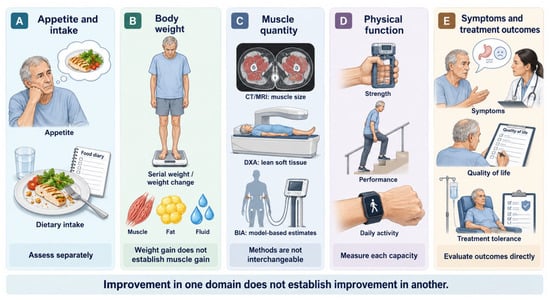
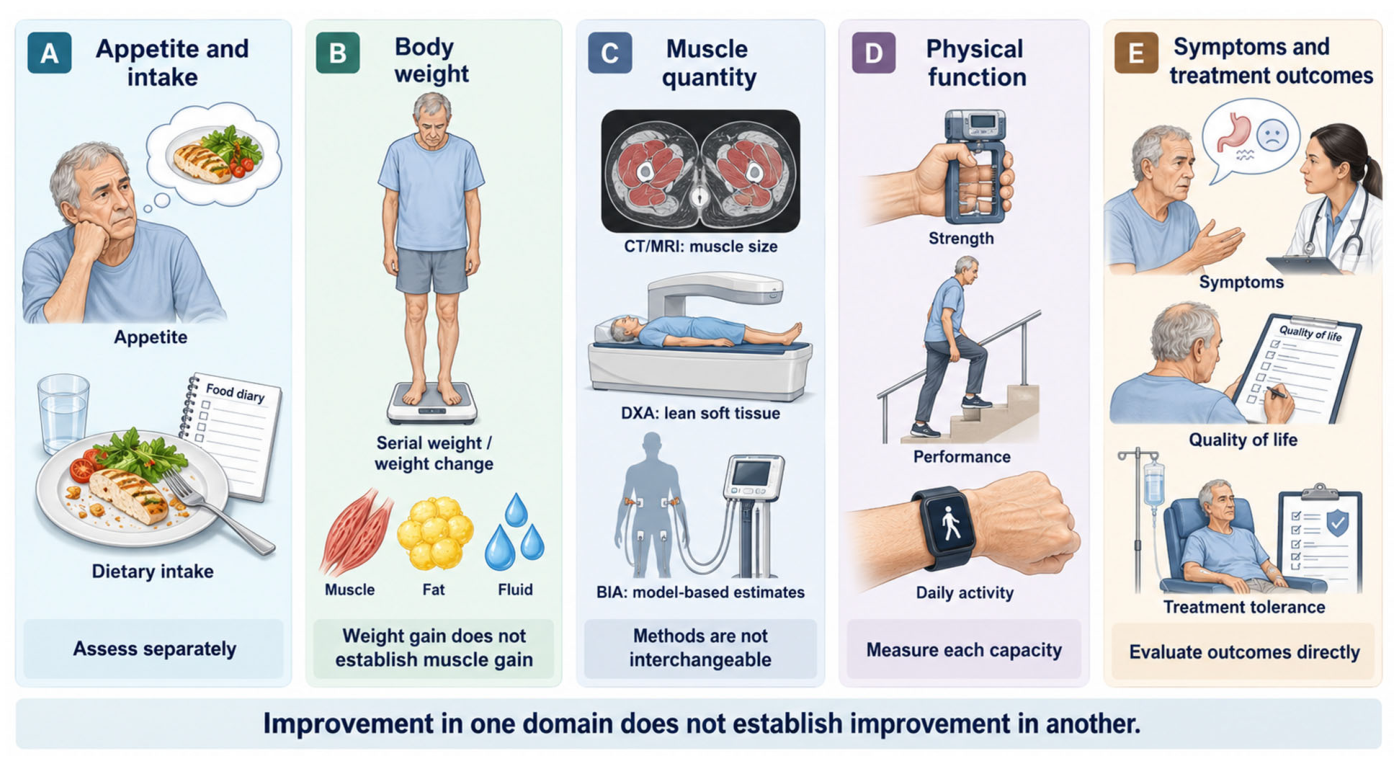
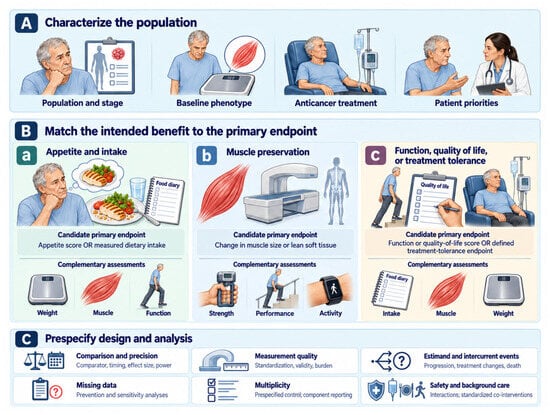
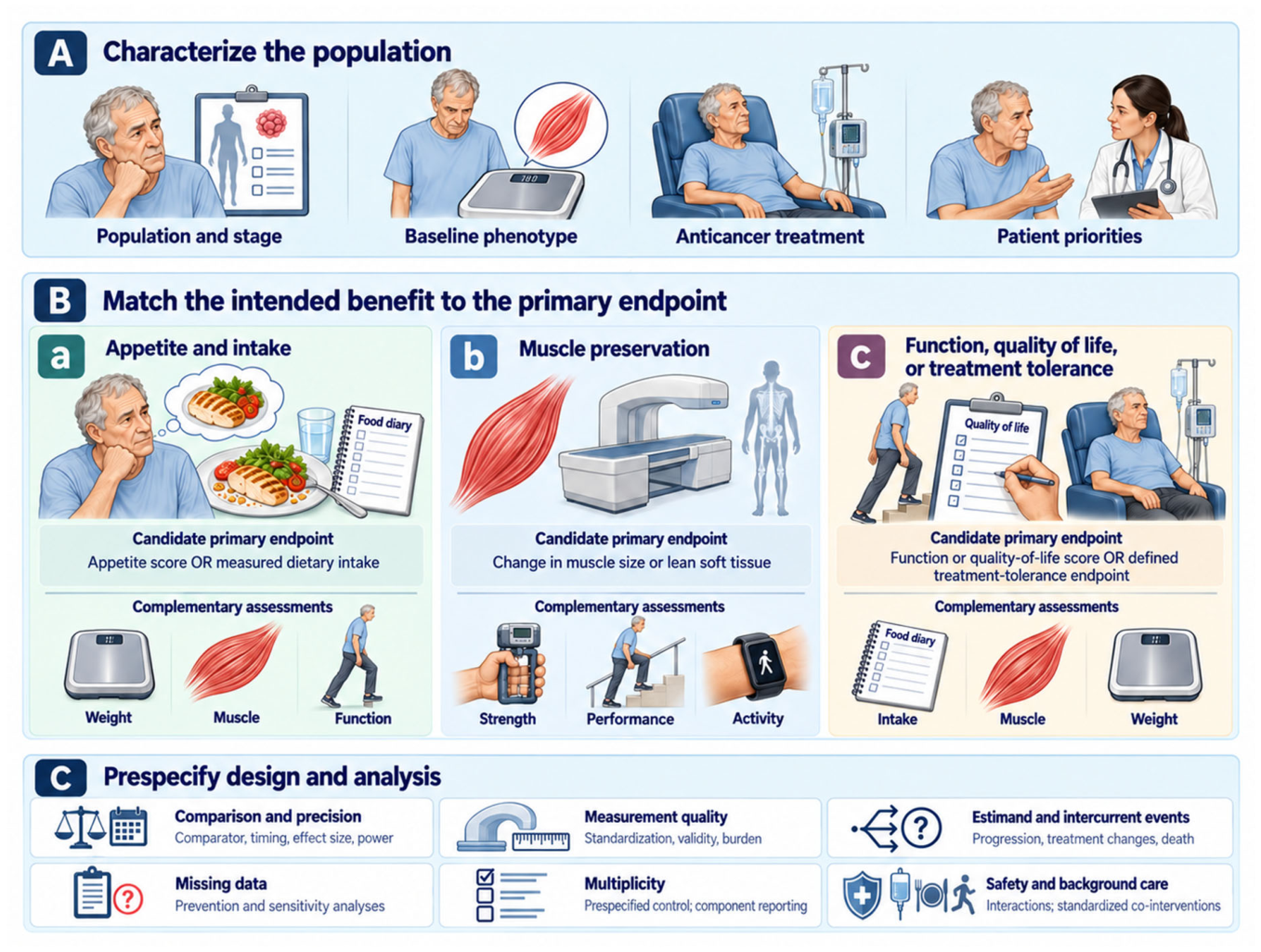

Disclaimer/Publisher’s Note: The statements, opinions and data contained in all publications are solely those of the individual author(s) and contributor(s) and not of MDPI and/or the editor(s). MDPI and/or the editor(s) disclaim responsibility for any injury to people or property resulting from any ideas, methods, instructions or products referred to in the content. |
© 2026 by the authors. Licensee MDPI, Basel, Switzerland. This article is an open access article distributed under the terms and conditions of the Creative Commons Attribution (CC BY) license.