


Abstract
We report a case of an incidentally fished coronary stent through a filter-based embolic protection device. This device was successfully replaced in its initial location by pushing a balloon passing between the struts of the stent. This case report underlines the possibility of fishing an underexpanded coronary stent by a distal protection device.
Case report
A 67-year-old white male was admitted with acute coronary syndrome without ST segment elevation. He was medically treated for an anterior myocardial infarction 20 years prior to admission. He complained of typical chest pain 2 hours before admission but had been asymptomatic since that time. His ECG displayed the scar of an anterior myocardial infarction. His known cardiovascular risk factors were diabetes mellitus, dyslipidaemia, and smoking cigarettes (40 packs/year).
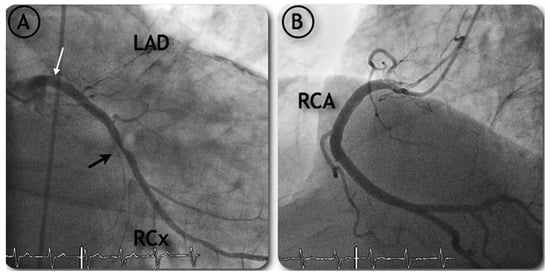
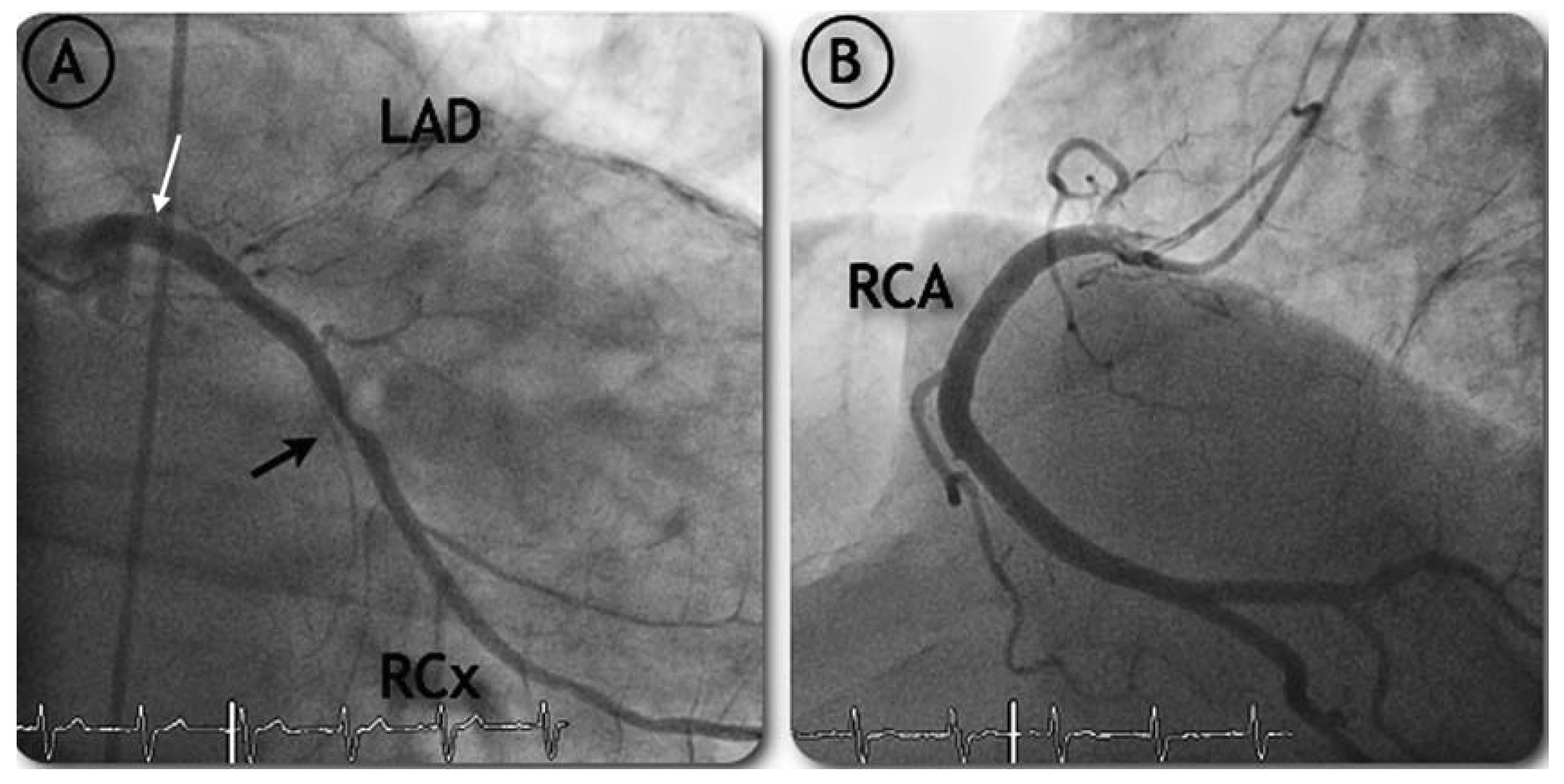
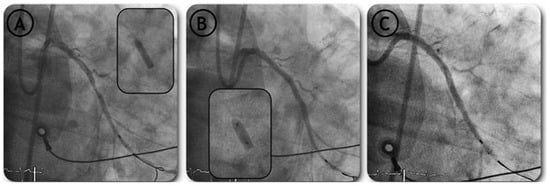
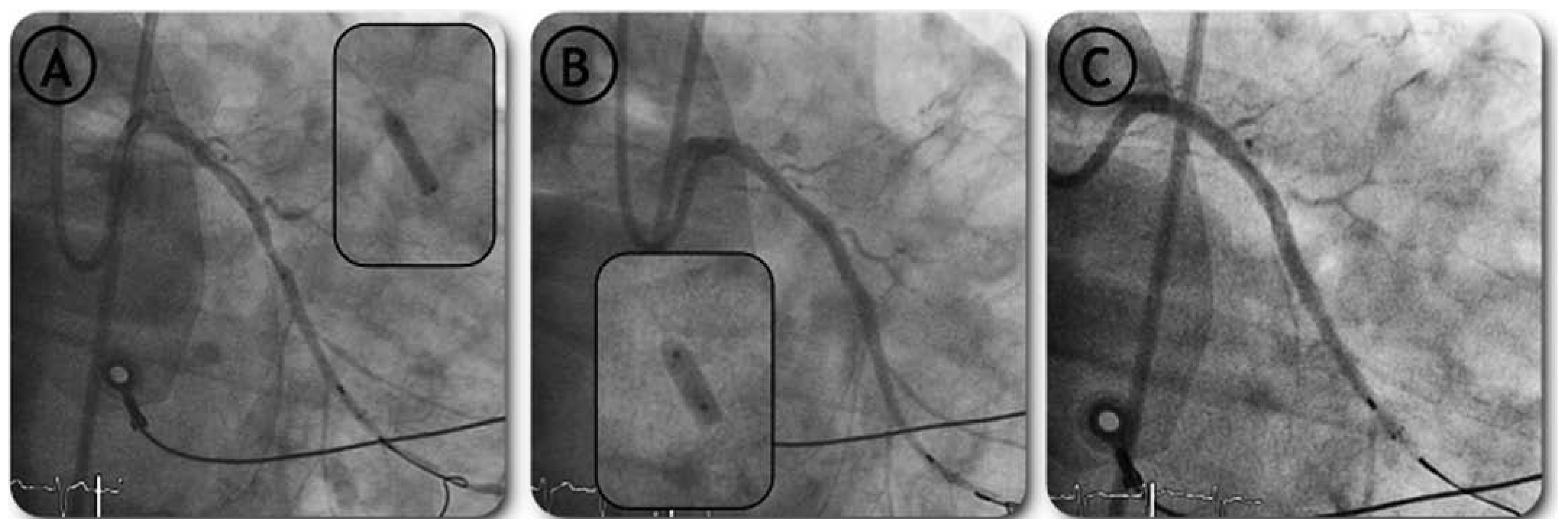
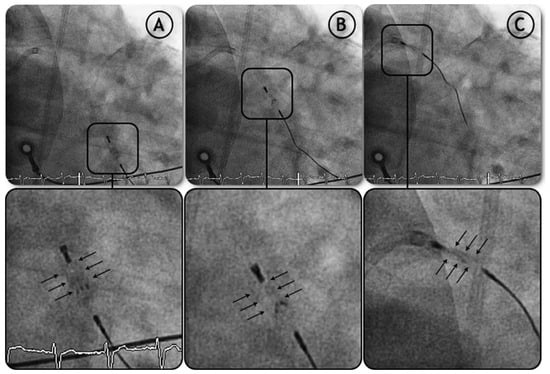
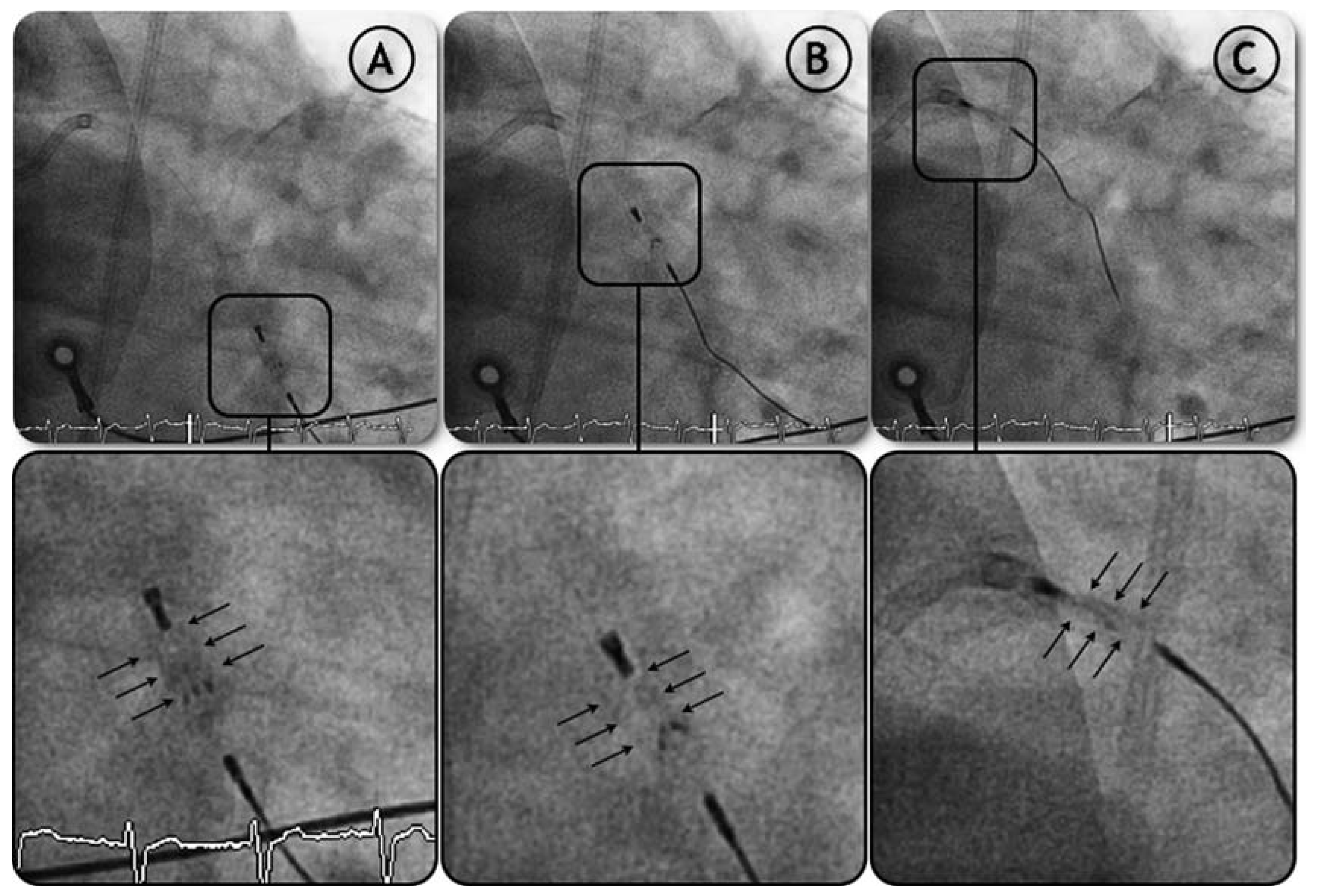
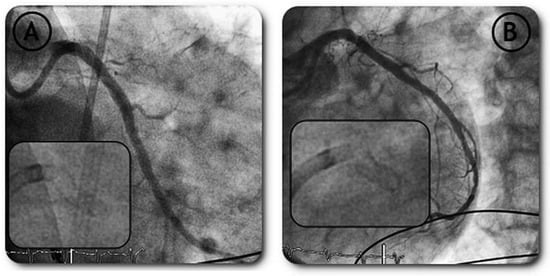
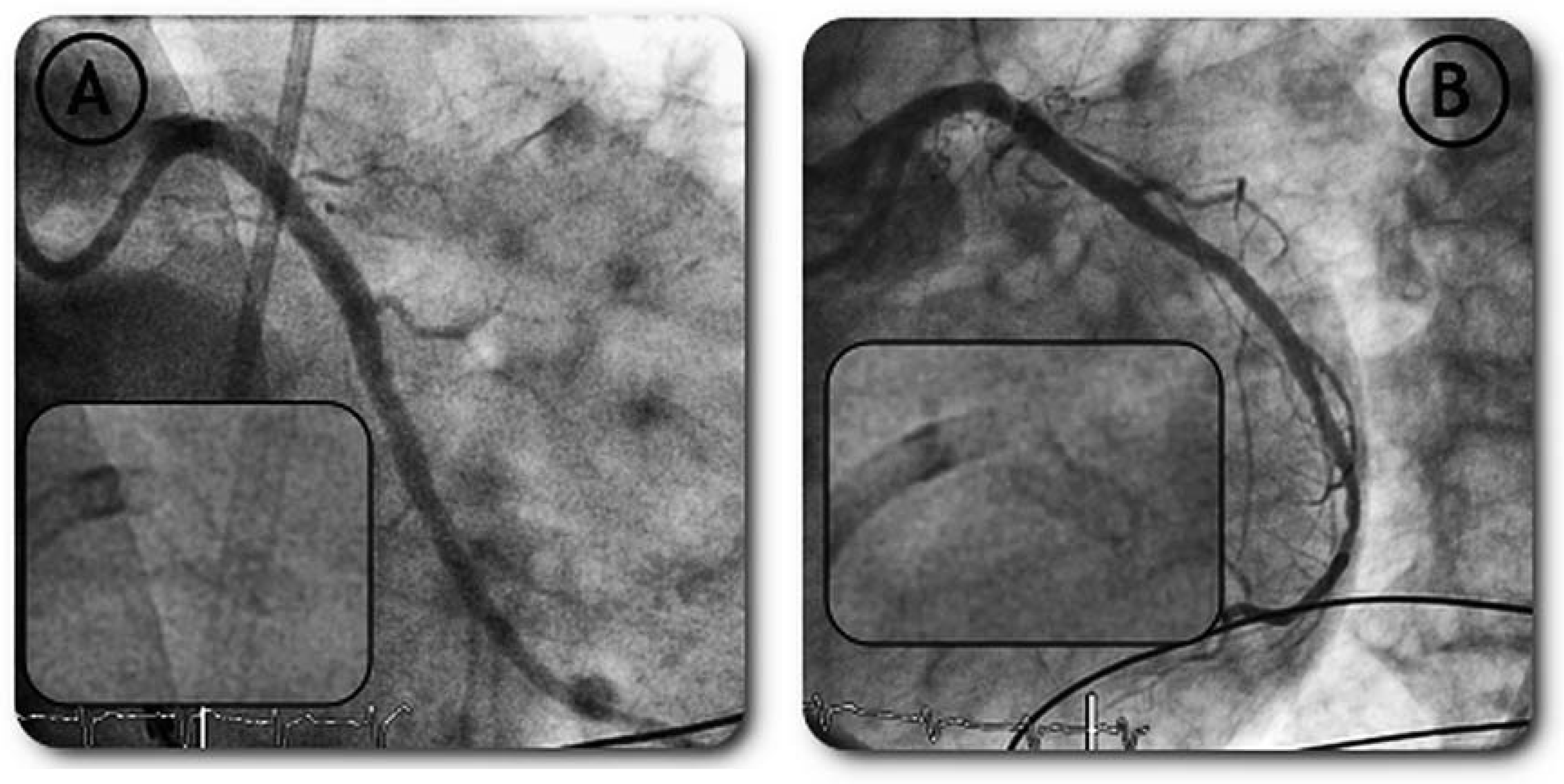
He underwent coronary angiography (Figure 1), which revealed a chronic occlusion of the left anterior descending artery (LAD, arrow) and a high-grade stenosis of the circumflex artery. The new lesion of the circumflex artery was treated and percutaneous coronary intervention was undertaken. In order to limit embolism from thrombotic material, the distal vessel was protected with a 4-mm Angiogard® (Cordis, J&J Corps) distal protection system. The lesion was passed through the filter and treated by direct stent implantation using a 3.5/15-mm everolimus-eluting stent (Xience V®, Guidant). Because the result was unsatisfactory with acute recoil (Figure 2), postdilatation with a 3.5/9-mm non-compliant balloon (Sprinter NC®, Medtronic) was performed up to 26 bars. The control angiogram showed a satisfactory result and the filter was removed. Some resistance was noted when advancing the pusher, and a careful look at the tip of the filter showed that the stent was pushed into the filter (Figure 3). The stent was retrieved with the protection device, which went easily until entrance in the guiding catheter. At that point, the filter prolapsed distally and released the undeployed stent into the left main coronary artery (Figure 4).
Figure 1.
Initial coronary angiogram. A RAO caudal view demonstrating a chronic occlusion of the ostium of the left descending artery (slight arrow) and a high-grade stenosis of the circumflex artery (arrow). B LAO cranial view showing the right coronary artery.
Figure 2.
Stent implantation. A Direct stenting with one 3.5/15-mm everolimus-eluting stent (Xience V®, Guidant) of the high-grade stenosis of the circumflex artery. B Acute stent recoil and postdilatation with Sprinter NC 3.5/9-mm. C Final result.
Figure 3.
Stent caught during filter retrieval. A Some resistance was noted by advancing the pusher and carefully looking at the tip of the filter showed that the stent was imprisoned in the filter. B, C Stent retrieval with the protection device.
Figure 4.
Undeployed coronary stent in the left main coronary artery after unsuccessful retrieval using the filter protection device. A RAO caudal view. B LAO 60°.
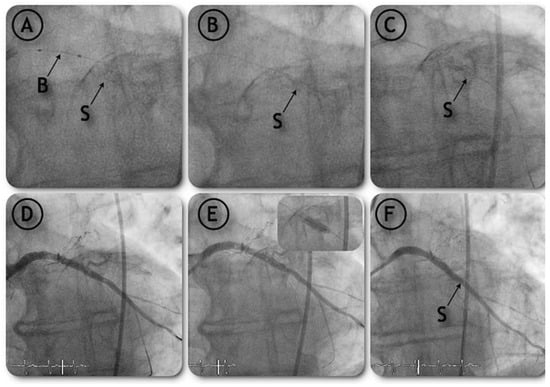
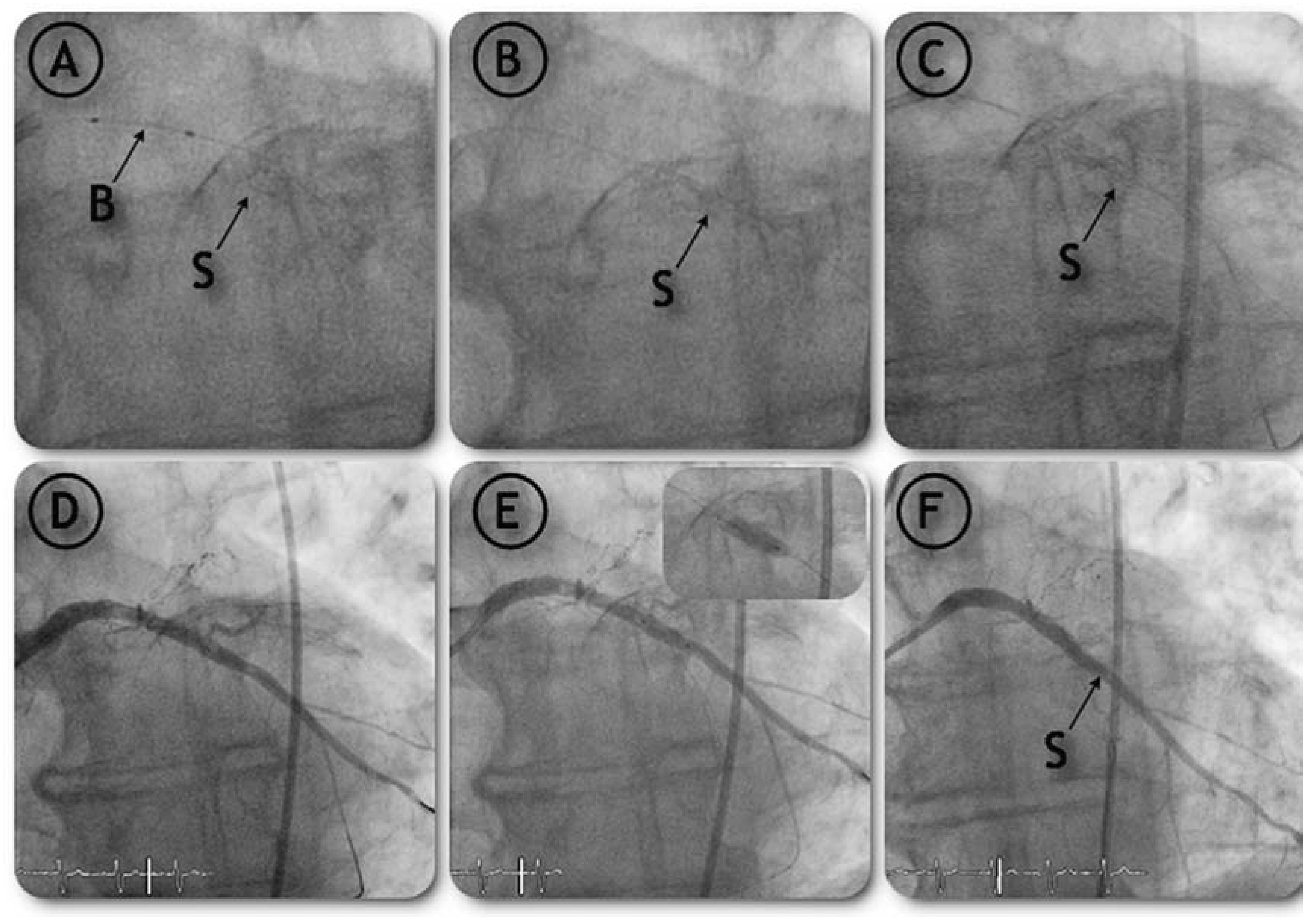
Next, a 0.014” Whisper® (Abbott) guidewire was advanced and tangentially crossed with the stent struts (Figure 5). By advancing a Maverick® 2.5/20 mm balloon (Boston Scientific), the stent could be replaced in the start position. A control angiography showed no dissection or perforation. A 0.014” Balance Middleweight® guidewire (Guidant) was able to cross the lumen of the stent, and postdilatation with a 4.0/20 mm Maverick® balloon (Boston Scientific) was achieved. The final result was satisfactory.
Figure 5.
Stent replacement. A, B By advancing a 2.5/20mm balloon (Maverick®, Boston Scientific), the stent could be replaced in the start position (C). D A control angiography showed no dissection or perforation. E A 0.014’’ Balance Middleweight® guidewire (Guidant) was able to cross the lumen of the stent and postdilatation with a 4.0/20 mm Maverick® Balloon (Boston Scientific) was achieved. F Final result.
The recovery was uneventful and the patient was discharged after 2 days. Aspirin was prescribed lifelong, and clopidogrel was prescribed for 12 months.
Discussion
The present case report underlines the risk of fishing for an underexpanded coronary stent with a distal protection device. Observation studies suggest the beneficial impact of using distal protection devices and encourage their use in patients with thrombus-containing coronary lesions and other embolic-prone stenosis, such as degenerated saphenous vein aortocoronary bypass grafts [1,2,3,4,5]. However, following the example of a lucky fisherman, an invasive cardiologist should be aware that a stent could be imprisoned in the “net”, even when the final angiographic result looks fine. By contrast, and as illustrated by the second part of the present case report, some authors testify to the use of a filter device to capture lost coronary stents [6,7]. Whenever the use of such devices for retrieval of an embolised stent is an attractive option, vessel tortuosity and obstacles along the pullback (such as the interventional guiding catheter in the present case report) may cause the opening of the umbrella and the loss of its content. Also, obviously, retrieval of a half-expanded filter through the vessel could lead to vessel injury, such as dissection, perforation or disruption.
Moreover, the present case report emphasises that acute recoil is still encountered with newly available coronary stents. Second-generation drug-eluting stents have been developed on stent platforms with thinner stent struts in order to lower vascular injury and to improve stent deliverability and crossability. However, with this advantage comes a price: the radial force is weaker, which may increase the risk of acute and chronic stent recoil.
Conflicts of Interest
There is no conflict of interest.
References
- Limbruno, U.; Micheli, A.; De Carlo, M.; et al. Mechanical prevention of distal embolization during primary angioplasty: safety, feasibility, and impact on myocardial reperfusion. Circulation. 2003, 108, 171–6. [Google Scholar] [CrossRef] [Scilit] [PubMed]
- Huang, Z.; Katoh, O.; Nakamura, S.; et al. Evaluation of the PercuSurge Guardwire Plus Temporary Occlusion and Aspiration System during primary angioplasty in acute myocardial infarction. Catheter Cardiovasc Interv. 2003, 60, 443–51. [Google Scholar] [CrossRef] [Scilit] [PubMed]
- Yip, H.K.; Wu, C.J.; Chang, H.W.; et al. Effect of the PercuSurge GuardWire device on the integrity of microvasculature and clinical outcomes during primary transradial coronary intervention in acute myocardial infarction. Am J Cardiol. 2003, 92, 1331–5. [Google Scholar] [CrossRef] [Scilit] [PubMed]
- Orrego, P.S.; Delgado, A.; Piccalo, G.; et al. Distal protection in native coronary arteries during primary angioplasty in acute myocardial infarction: single-center experience. Catheter Cardiovasc Interv. 2003, 60, 152–8. [Google Scholar] [CrossRef] [Scilit] [PubMed]
- Nakamura, T.; Kubo, N.; Seki, Y.; et al. Effects of a distal protection device during primary stenting in patients with acute anterior myocardial infarction. Circ J. 2004, 68, 763–8. [Google Scholar] [CrossRef] [Scilit] [PubMed]
- Guigauri, P.; Dauerman, H.L. A novel use for a distal embolic protection device: stent retrieval. J Invasive Cardiol. 2005, 17, 183–4. [Google Scholar] [PubMed]
- Webb, J.G.; Solankhi, N.; Carere, R.G. Facilitation of stent retention and retrieval with an emboli containment device. Catheter Cardiovasc Interv. 2000, 50, 215–7. [Google Scholar] [CrossRef] [Scilit]
© 2007 by the authors. Attribution - Non-Commercial - NoDerivatives 4.0.