Article

Psychosocial Job Characteristics and Job Strain Among Nurses in Urban Primary Healthcare Centers in Vietnam: A Multicenter Cross-Sectional Study

Faculty of Public Health, University of Medicine and Pharmacy at Ho Chi Minh City, 217 Hong Bang, Cho Lon Ward, Ho Chi Minh 700000, Vietnam
*
Author to whom correspondence should be addressed.
Int. J. Environ. Res. Public Health 2026, 23(8), 962; https://doi.org/10.3390/ijerph23080962
Submission received: 4 April 2026 / Revised: 21 July 2026 / Accepted: 23 July 2026 / Published: 25 July 2026

Highlights

Public health relevance—How does this work relate to a public health issue?
  • Psychosocial working conditions are important in primary healthcare.
  • Evidence from urban primary healthcare centers in Vietnam remains limited.
Public health significance—Why is this work of significance to public health?
  • Low-strain and active jobs predominated.
  • Job strain was associated with several sociodemographic and work-related factors.
Public health implications—What are the key implications or messages for practitioners, policy makers and/or researchers in public health?
  • The findings provide context-specific evidence.
  • Future longitudinal and intervention research is needed.

Abstract

Psychosocial job characteristics are important components of the work environment and are closely associated with occupational health, particularly among nurses working in demanding healthcare settings. However, evidence from primary healthcare settings in low- and middle-income countries remains limited. This study aimed to describe psychosocial job characteristics and job strain among nurses in urban primary healthcare centers in Vietnam and to examine factors associated with psychosocial job characteristics and job strain. A multicenter cross-sectional study was conducted among 768 nurses across four district-level healthcare centers in Ho Chi Minh City, Vietnam, using a structured questionnaire including the validated Vietnamese Job Content Questionnaire. Nurses reported moderate-to-high job demands, high social support, and limited decision latitude. Most participants reported low strain (45.6%) or active jobs (42.4%), while fewer were in the high-strain (6.3%) and passive (5.7%) categories. Sociodemographic and work-related factors were significantly associated with job strain (p < 0.001). Although the prevalence of high strain was relatively low, differences between perceived job demands and specific dimensions of decision latitude were observed. These findings highlight the importance of job control, workload, and workplace support as factors associated with psychosocial job characteristics and job strain and may help inform future workplace interventions and longitudinal research.

1. Introduction

Psychosocial job characteristics are important components of the work environment and are closely associated with occupational health and well-being, particularly among nurses working in complex and demanding clinical settings [1,2]. The demand–control–support model conceptualizes job strain as a condition arising from the interaction between high job demands, low decision latitude, and inadequate social support [2,3]. Within this framework, nurses are especially vulnerable due to their continuous exposure to patient care, time pressure, and organizational constraints [2,3]. Globally, increasing healthcare demands and workforce shortages have intensified these psychosocial stressors, placing nurses at elevated risk of burnout, psychological distress, and reduced quality of life [4,5]. Recent evidence indicates that burnout, psychological distress, and other work-related mental health problems affect a substantial proportion of nurses worldwide, underscoring the growing importance of improving psychosocial working conditions in healthcare settings [4,5]. However, empirical evidence consistently shows that imbalances between job demands and available resources are common in nursing settings [1]. Therefore, examining psychosocial job characteristics provides a critical lens for understanding workforce sustainability in modern health systems.
The consequences of psychosocial job characteristics and job strain extend beyond individual health outcomes and have direct implications for clinical performance and patient care. Nurses experiencing high job strain are more likely to report decreased work efficiency, emotional exhaustion, and reduced engagement in clinical tasks [6,7]. Importantly, these factors have been associated with increased risk of medical errors, compromised patient safety, and lower quality of care [8,9]. Job strain may impair cognitive functioning, decision-making capacity, and communication, all of which are essential for effective clinical practice [10]. Furthermore, adverse psychosocial work environments can weaken teamwork and reduce coordination across healthcare providers [1]. Previous studies have suggested that greater decision latitude and stronger workplace social support are associated with more favorable psychosocial work outcomes [3].
Despite extensive research on job strain among nurses [1], several important gaps remain. First, the majority of existing studies have been conducted in high-income countries [5,11], limiting the applicability of findings to healthcare systems with different organizational and resource contexts [5]. Second, many studies have focused on isolated dimensions of occupational stress rather than applying comprehensive theoretical models such as the demand–control–support framework [2]. Third, although previous studies have investigated psychosocial job characteristics among nurses in primary healthcare settings [12], evidence from low- and middle-income countries, particularly Vietnam, remains limited. Moreover, nurses in primary healthcare settings often work under different conditions compared with those in hospital environments [13]. These gaps highlight the need for context-specific studies to better understand psychosocial job characteristics and factors associated with job strain among nurses working in primary healthcare settings in Vietnam, thereby providing evidence to inform future longitudinal studies and intervention research [11,12].
In Vietnam, rapid health system expansion, increasing patient demand, and workforce constraints have created substantial pressure on healthcare workers, particularly nurses in primary healthcare settings [14,15]. These professionals often face prolonged working hours, high workloads, and competing responsibilities between work and family roles [15]. However, empirical evidence on psychosocial job characteristics and job strain in this context remains limited. Therefore, this study aims to describe psychosocial job characteristics and job strain among nurses in urban primary healthcare centers in Vietnam. In addition, the study seeks to examine sociodemographic and work-related factors associated with job strain. The findings are expected to provide evidence on psychosocial job characteristics and factors associated with job strain and may help inform future workplace policies and research in primary healthcare settings.

2. Materials and Methods

2.1. Study Design and Participants

This quantitative study employed a multicenter cross-sectional design conducted in urban primary healthcare centers in Ho Chi Minh City, Vietnam. The target population included all nurses working at district-level healthcare centers, while the study population comprised nurses who were actively working in selected healthcare centers. The study was conducted in December 2025 across four healthcare centers, including Tan Phu District Health Center, District 6 Health Center, Thu Duc District Health Center, and Binh Chanh District Health Center. This study used a census sampling approach, whereby all eligible nurses working at the four selected healthcare centers were invited to participate through a voluntary online survey. Eligible participants were those who were currently employed as nurses at the selected centers. A survey link was distributed to all eligible nurses (approximately 1000 nurses). A total of 783 nurses responded to the survey. After excluding 15 incomplete questionnaires, 768 completed questionnaires were included in the final analysis.

2.2. Study Procedures

Data were collected using a structured, self-administered questionnaire distributed to participants via an online platform. The entire study protocol, including the online recruitment process, participant information sheet, and implied informed consent through voluntary completion and submission of the anonymous online questionnaire, was reviewed and approved by the Ethics Committee for Biomedical Research at the University of Medicine and Pharmacy at Ho Chi Minh City (Approval No. 806/HĐĐĐ/ĐHYD). Before accessing the questionnaire, participants were provided with an electronic participant information sheet explaining the purpose of the study, confidentiality measures, voluntary participation, and their rights, including that they could withdraw at any time without any consequences. The information sheet also clearly stated that completion and submission of the online questionnaire would be considered as implied informed consent to participate in the study. Completed questionnaires were reviewed for completeness and consistency, and invalid or incomplete responses were excluded. Data were then coded and entered into a database for analysis.

2.3. Measurements

The questionnaire included three main components. The first component was about sociodemographic characteristics such as age, sex, marital status, caregiving responsibilities, housing status, and income. The second component captured work-related characteristics, including educational level, department, years of experience, weekly working hours, and additional responsibilities. The third component assessed psychosocial job characteristics using the Karasek Job Content Questionnaire (JCQ) [2,16,17]. The JCQ is widely recognized as a standard tool for measuring job strain and comprises 33 items covering three domains: job demand, decision latitude, and social support at work [16]. The Vietnamese version of the JCQ had been previously translated and validated [16,17]. The internal consistency of the JCQ domains in the present study was good, with Cronbach’s alpha coefficients of 0.937 for job demand, 0.801 for decision latitude, and 0.892 for social support.
The JCQ items were scored on a 4-point Likert scale ranging from 1 (“strongly disagree”) to 4 (“strongly agree”). Domain scores were calculated by summing the relevant items without weighting. Job demand was calculated from 8 items, with a possible score range of 8–32. Decision latitude was calculated from 17 items, with a possible score range of 17–68. Social support was calculated from 8 items, with a possible score range of 8–32. For descriptive presentation, job demand and social support scores were categorized into four levels, namely very low, low, high, and very high, using the following ranges: 8, 9–16, 17–24, and 25–32, respectively. Decision latitude was categorized using the following ranges: 17, 18–34, 35–51, and 52–68, respectively.
Job strain was classified by combining job demand and decision latitude according to the demand–control model. Job demand was dichotomized as low (≤16) and high (>16), while decision latitude was dichotomized as low (≤34) and high (>34). Four categories were then created: high strain (high demand/low decision latitude), passive job (low demand/low decision latitude), active job (high demand/high decision latitude), and low strain (low demand/high decision latitude).

2.4. Data Analysis

Descriptive statistics were used to summarize participants’ characteristics and psychosocial job factors, with categorical variables presented as frequencies and percentages and continuous variables as means and standard deviations. For a descriptive presentation of individual JCQ items, the original four response categories were collapsed into two groups (strongly disagree/disagree and agree/strongly agree) to facilitate interpretation of participants’ responses. To preserve the original quantitative information, the mean and standard deviation of each item based on the original four-point Likert responses are also presented. This dichotomization was applied solely for descriptive presentation and did not affect the calculation of JCQ domain scores or any subsequent statistical analyses, which were based on the original four-point item scores. Moreover, given the descriptive and exploratory nature of the study, analyses were primarily based on descriptive statistics and conventional bivariate tests without further multivariable modeling. Chi-square tests were used to compare categorical variables. For continuous variables, independent-sample t-tests were used to compare two groups, while one-way analysis of variance (ANOVA) was used to compare more than two groups, as appropriate. A p-value of less than 0.05 was considered statistically significant.

3. Results

3.1. Participants’ Characteristics

Among 768 nurses, the majority were female (72.5%) and aged between 31 and 50 years (86.5%) (Table 1). Most participants had a bachelor’s degree or higher (87.9%) and were married (68.9%). A large proportion reported renting their accommodation (69.3%) and having a monthly income between 7 and 14 million VND (77.6%). Additionally, most nurses were responsible for caregiving duties, including caring for children under five years (66.1%) and elderly or disabled family members (79.9%). Nearly half had more than nine years of experience (44.4%), and the majority worked in clinical departments (69.0%), with 41.5% reporting more than 48 working hours per week.

3.2. Psychosocial Job Characteristics and Job Strain

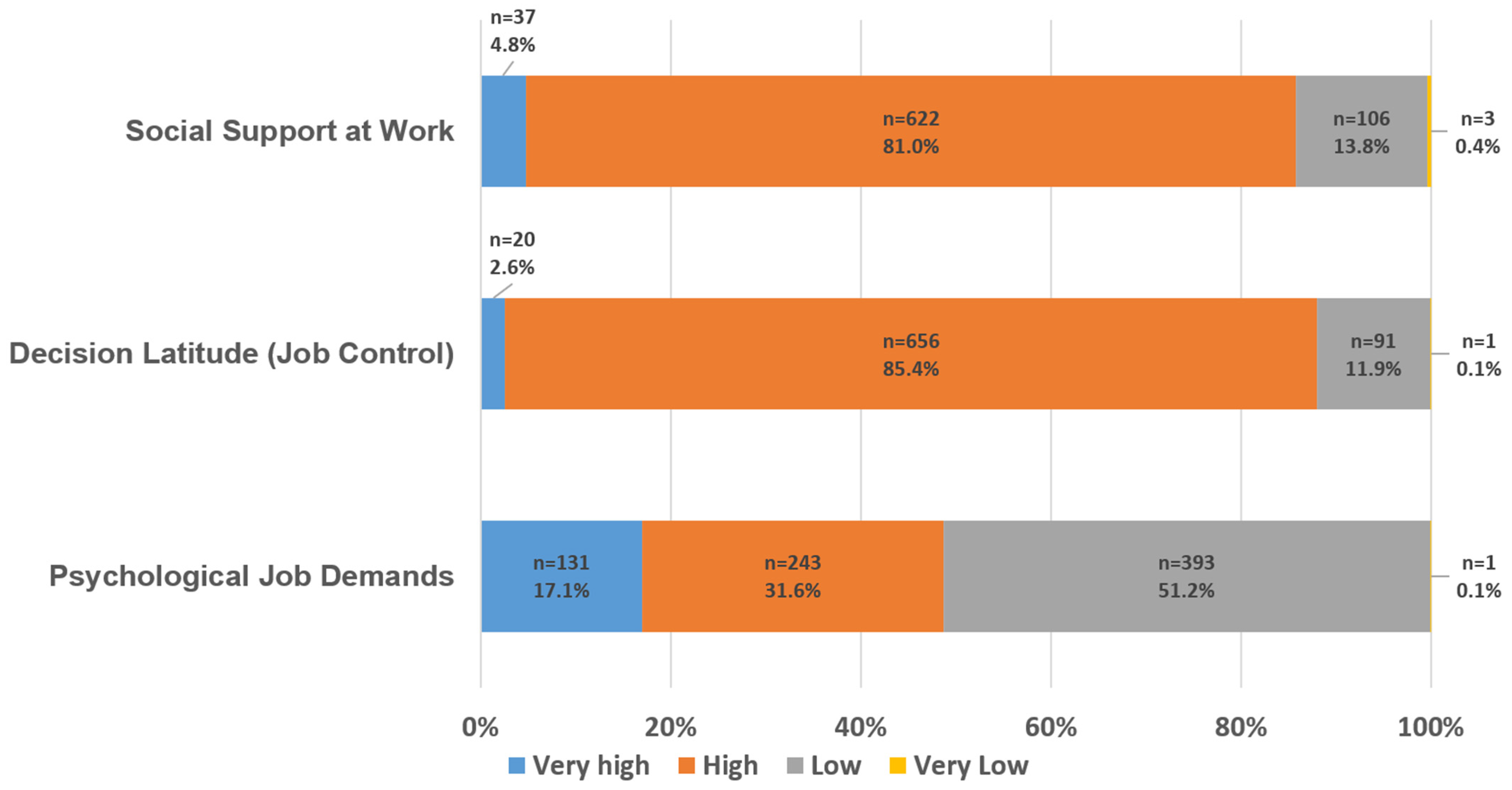
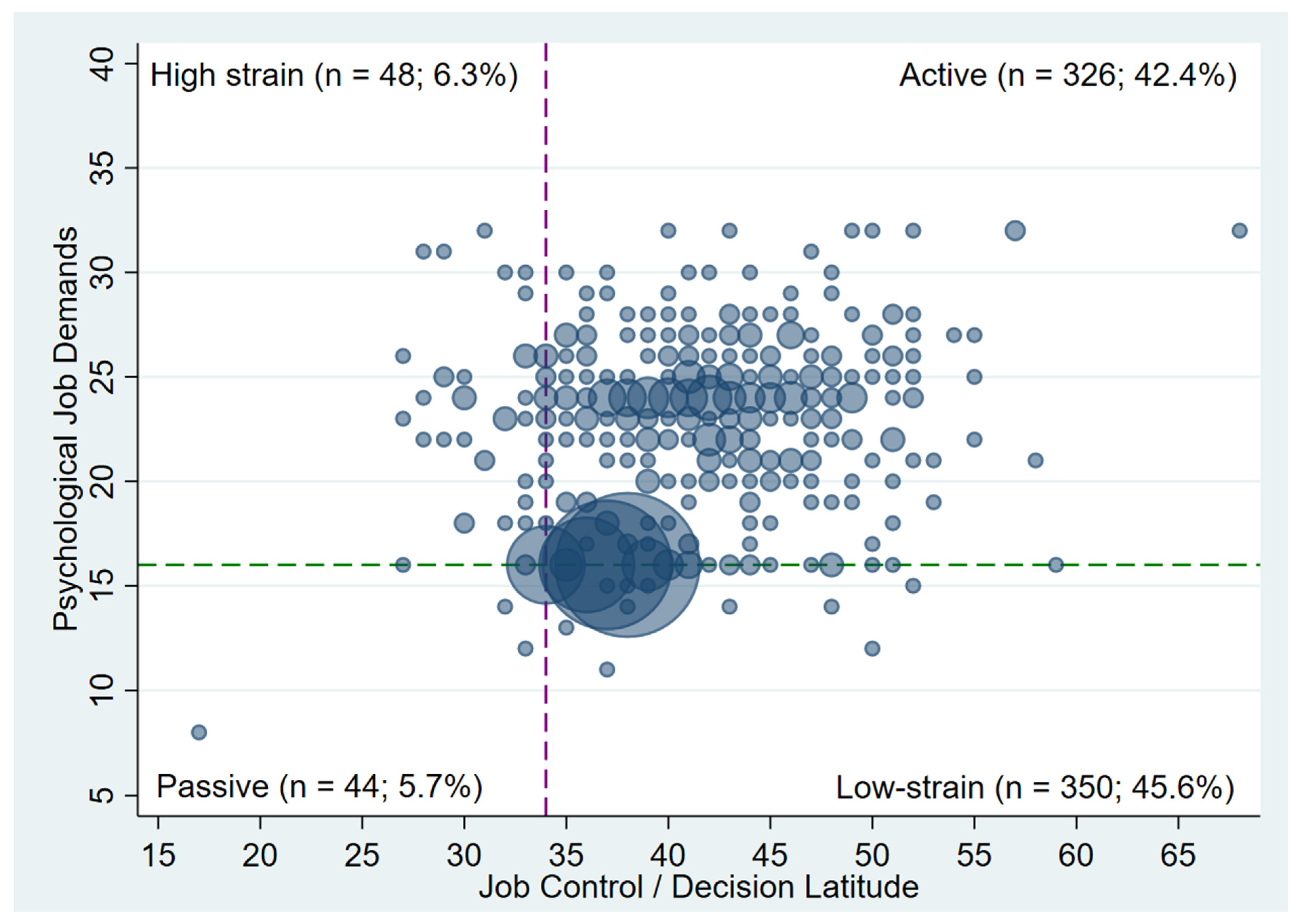
Psychosocial job characteristics are presented in Table 2, showing that the mean scores were highest for social support, followed by job demand and decision latitude. While job demand items were relatively balanced between agreement and disagreement, indicators of decision latitude consistently showed lower agreement levels, suggesting restricted autonomy among nurses. In contrast, most participants reported favorable social support conditions, particularly in supervisor relationships and workplace communication. As illustrated in Figure 1, most nurses reported moderate-to-high levels of job demands and decision latitude, with the majority classified as low or high rather than extreme categories, while social support was predominantly high. According to the job strain model (Figure 2), the majority of nurses reported either low strain (45.6%) or active jobs (42.4%), whereas relatively small proportions were in the high-strain (6.3%) and passive (5.7%) categories.

3.3. Factors Associated with Psychosocial Job Characteristics and Job Strain

Significant associations were observed between sociodemographic characteristics and job strain distribution (p < 0.001) (Table 3). Female nurses were more likely to experience low strain (57.1%), whereas male nurses more frequently reported active jobs (71.1%) and high strain (10.0%). Age also showed a clear gradient association, with younger nurses more likely to report low strain, while older nurses were more likely to be in the active group. Marital status, education level, housing status, income, and caregiving responsibilities were all significantly associated with job strain categories. Notably, individuals with lower income and caregiving responsibilities were more likely to experience passive or high-strain conditions.
Work-related characteristics were strongly associated with job strain (p < 0.001) (Table 4). Nurses with longer working hours (>48 h per week) and those holding managerial or additional positions were more likely to report active or high-strain jobs. In contrast, nursesworking ≤40 h per week were predominantly classified as low strain (86.0%). Department type also played a significant role, with nurses in clinical departments more likely to report low strain, whereas those in administrative and paraclinical departments were more likely to fall into the active or high-strain categories. Length of employment was also associated with job strain, with more experienced nurses tending toward active job profiles.

4. Discussion

This study is among the first to provide a comprehensive assessment of psychosocial job characteristics and job strain among nurses in urban primary healthcare settings in Vietnam. Overall, the findings indicate that nurses experienced moderate-to-high job demands, relatively favorable social support, and limited decision latitude. When classified according to the job strain model, the majority of participants were distributed in the low-strain and active job categories, while only a small proportion reported high strain. Significant associations were observed between psychosocial job components, job strain categories, and a range of sociodemographic and work-related factors, indicating that nurses’ psychosocial working conditions varied according to individual and organizational characteristics.

4.1. Psychosocial Job Characteristics

Our findings reveal a distinct imbalance between job demands, decision latitude, and social support. Consistent with the literature, job demand levels were generally moderate to high [16,18], reflecting the inherently demanding nature of nursing work, including workload intensity, time pressure, and continuous patient care [1,19]. In contrast, decision latitude was consistently lower [20], indicating limited autonomy and restricted control over work processes [21]. This imbalance between high demand and low control represents a key mechanism underlying occupational stress [22]. Notably, in our study, social support was relatively high, indicating positive relationships with colleagues and supervisors. Previous studies have highlighted the protective role of social support in mitigating the negative effects of high job demands [23]. Therefore, while nurses operate in demanding environments, supportive organizational contexts may partially buffer adverse psychosocial conditions. However, improving decision latitude remains critical to achieving a more balanced and sustainable work environment [1].

4.2. Job Strain

When examined using the job strain classification, the overall prevalence of high job strain in our study was relatively low and consistent with previous research conducted in Vietnam using the JCQ instrument [16,17]. However, the majority of nurses were classified into low-strain and active job categories. The relatively high proportion of nurses classified in the active job category may also reflect the organizational characteristics of urban primary healthcare centers in Vietnam. Compared with hospital settings, nurses in primary healthcare often undertake diverse responsibilities, including preventive care, chronic disease management, health promotion, and community-based healthcare services [14,15]. These roles may require high job demands while providing greater opportunities for professional decision-making and autonomy, which may partly explain the relatively high proportion of nurses classified in the active job category. Because healthcare organizations, nursing roles, and local practice requirements differ across settings and countries, such comparisons should be interpreted with caution. While the active job category is generally considered less detrimental than high strain, previous studies have suggested that prolonged exposure to high job demands may be associated with fatigue and burnout over time [3]. The relatively low proportion of passive jobs suggests that most nurses were actively engaged in their work, although work engagement and productivity were not directly assessed in the present study [24]. Nevertheless, the small but important proportion of high-strain workers remains a concern due to its association with adverse health and performance outcomes. These findings highlight the importance of interpreting job strain distribution holistically rather than focusing solely on high strain prevalence [25].

4.3. Factors Associated with Psychosocial Job Characteristics

In our study, several sociodemographic and work-related factors were significantly associated with job demands, decision latitude, and social support. Specifically, factors such as age, sex, income, and caregiving responsibilities were linked to variations in perceived job demands and social support. Nurses with greater family responsibilities, particularly caregiving for children or elderly relatives, may experience higher perceived demands due to competing roles [26,27]. Work-related characteristics, including working hours, department type, and managerial roles, were strongly associated with job demands and decision latitude. These findings are consistent with previous studies demonstrating that longer working hours, managerial responsibilities, and both personal and organizational factors influence psychosocial working conditions among nurses [22,28]. Our findings suggest that psychosocial job characteristics were associated with both structural and contextual factors. Future studies are warranted to further investigate these relationships and inform the development of workplace interventions.

4.4. Factors Associated with Job Strain

Similar patterns of association were observed when psychosocial working conditions were analyzed using job strain categories. Sociodemographic factors, including sex, age, marital status, educational level, and income, were significantly associated with the distribution of job strain categories. Previous studies have shown that differences in job strain between male and female nurses may reflect variations in role expectations and coping mechanisms [29]. Moreover, family-related factors, including caregiving responsibilities, were also associated with a higher likelihood of passive or high-strain conditions. Similar to previous studies, work-related characteristics, particularly long working hours [30] and managerial responsibilities [31], were associated with an increased likelihood of being classified in active or high-strain groups [32]. These findings suggest that job strain is not only a function of workplace conditions but also influenced by broader social and family contexts [27].

4.5. Implications of the Study

The findings may have implications for healthcare management and policy in urban primary healthcare settings similar to those included in this study. First, future workplace interventions may consider enhancing nurses’ autonomy and involvement in decision-making processes, as previous studies have suggested that greater decision latitude may help reduce job strain [22,33]. Second, maintaining supportive workplace environments may be beneficial. Previous studies have suggested that social support is associated with more favorable psychosocial working conditions, although these outcomes were not directly assessed in the present study [23,34]. Third, future workplace strategies may consider workload management, including optimizing staffing levels and working hours [35]. The effectiveness of such strategies should be evaluated in future interventions and longitudinal studies. Additionally, targeted interventions should focus on vulnerable groups, such as nurses with significant caregiving responsibilities or those working extended hours, to alleviate work-family conflict and associated stress [26,36]. These strategies aim to balance job demands with available resources, including decision latitude and workplace support.

4.6. Study Limitations

Several limitations should be considered when interpreting the findings of this study. First, the cross-sectional design limits the ability to establish causal relationships. Second, the use of self-reported data may introduce reporting bias and social desirability bias. Furthermore, as a quantitative study, the findings may not fully capture participants’ experiences or the contextual factors underlying psychosocial job characteristics and job strain. Qualitative or mixed-methods studies may provide deeper insights into these issues. Third, the study was conducted in selected urban primary healthcare centers in Ho Chi Minh City. Therefore, the findings may not be generalizable to rural primary healthcare settings, hospitals, private healthcare facilities, or other regions of Vietnam. The results should be interpreted within the context of the study population. Additionally, although multiple factors were examined, other relevant variables such as organizational culture and leadership style were not included. The absence of multivariable analysis may also limit the ability to identify independent determinants of job strain. Future research should consider longitudinal designs and more advanced analytical approaches.

5. Conclusions

This study demonstrates that nurses in urban primary healthcare settings experience an imbalance between moderate-to-high job demands and limited decision latitude, despite relatively strong social support. Although the prevalence of high job strain was low, a substantial proportion of nurses were exposed to potentially stressful work conditions, particularly within active job profiles. Both sociodemographic and work-related factors were significantly associated with psychosocial job characteristics and job strain, highlighting the multifactorial nature of occupational stress. These findings provide evidence on psychosocial job characteristics and factors associated with job strain among nurses in urban primary healthcare settings. They may help inform future longitudinal studies and workplace interventions aimed at improving psychosocial working conditions.

Author Contributions

Conceptualization: M.P.T.T. and X.T.P.; methodology: M.P.T.T.; formal analysis: M.P.T.T.; investigation: M.P.T.T. and X.T.P.; data curation: M.P.T.T. and X.T.P.; writing—original draft preparation: M.P.T.T. and X.T.P.; writing—review and editing: X.T.P.; project administration: M.P.T.T. All authors have read and agreed to the published version of the manuscript.

Funding

This research received no external funding.

Institutional Review Board Statement

The study protocol was reviewed and approved by the Ethics Committee for Biomedical Research at the University of Medicine and Pharmacy in Ho Chi Minh City (Approval number: 806/HĐĐĐ/ĐHYD) on 14 December 2021.

Informed Consent Statement

Participation was entirely voluntary. Completion and submission of the online questionnaire implied informed consent to participate in this study. To ensure confidentiality, the survey was conducted anonymously, and all collected data were used solely for research purposes. No identifiable personal information was recorded.

Data Availability Statement

The data presented in this study are available upon request from the corresponding author.

Conflicts of Interest

The authors report no competing interests.

References

  1. Broetje, S.; Jenny, G.J.; Bauer, G.F. The Key Job Demands and Resources of Nursing Staff: An Integrative Review of Reviews. Front. Psychol. 2020, 11, 84. [Google Scholar] [CrossRef] [PubMed]
  2. García-Selva, A.; Río, B.M.d.; Leiva-Bianchi, M. Psychosocial work environment beyond WEIRD: Meta-analytic and psychometric evidence on the Job Content Questionnaire. Front. Psychol. 2025, 16, 1642607. [Google Scholar] [CrossRef] [PubMed]
  3. Pisanti, R.; Doef, M.v.d.; Maes, S.; Meier, L.L.; Lazzari, D.; Violani, C. How Changes in Psychosocial Job Characteristics Impact Burnout in Nurses: A Longitudinal Analysis. Front. Psychol. 2016, 7, 1082. [Google Scholar] [CrossRef] [PubMed]
  4. Chiou, P.Y. Rebuilding a Sustainable Nursing Workforce: From Evidence to Action. J. Nurs. Res. 2025, 33, e408. [Google Scholar] [CrossRef] [PubMed]
  5. Torreno, F.; Flores, F. Global Stressors Among Nurses: A Systematic Review and Meta-Analysis Stratified by Income Tier and Region. ResearchSquare 2025. [Google Scholar] [CrossRef] [PubMed]
  6. Mohammed, A.I. Workplace Stress among Nurses. Int. J. Innov. Res. Med. Sci. 2019, 4, 690–693. [Google Scholar] [CrossRef]
  7. Welp, A.; Meier, L.L.; Manser, T. Emotional exhaustion and workload predict clinician-rated and objective patient safety. Front. Psychol. 2015, 5, 1573. [Google Scholar] [CrossRef] [PubMed]
  8. Albarqi, M.S.; Alyami, H.S.; Alshareef, R.A.; Alsaad, S.M.; AlGhounaim, F.B.; Alsofyani, K.K.; Alshehri, M.S.; Al-baqawi, M.S. The relation between burnout, intention to leave and healthcare quality; Systematic review. World J. Adv. Res. Rev. 2021, 11, 404–409. [Google Scholar] [CrossRef]
  9. Zabin, L.M.; Zaitoun, R.S.A.; Sweity, E.M.; Tantillo, L.d. The relationship between job stress and patient safety culture among nurses: A systematic review. BMC Nurs. 2023, 22, 39. [Google Scholar] [CrossRef] [PubMed]
  10. Gao, M.; Ou, J.; Cao, H.; Lv, F. Association between nursing work environment and decision fatigue among clinical nurses: A moderated mediation analysis on the roles of job stress and resilience. Front. Psychol. 2026, 16, 1676964. [Google Scholar] [CrossRef] [PubMed]
  11. Lohmann, J.; John, D.; Dzay, A. A scoping review of the methodological quality of research on mental health of healthcare professionals in low- and lower-middle income countries. Wellcome Open Res. 2023, 7, 169. [Google Scholar] [CrossRef] [PubMed]
  12. Monsalve-Reyes, C.S.; Luis-Costas, C.S.; Gómez-Urquiza, J.L.; Albendín-García, L.; Aguayo-Estremera, R.; Fuente, G.A.C.D.l. Burnout syndrome and its prevalence in primary care nursing: A systematic review and meta-analysis. BMC Fam. Pract. 2018, 19, 59. [Google Scholar] [CrossRef] [PubMed]
  13. Robat, R.M.; Fauzi, M.F.M.; Saruan, N.A.M.; Yusoff, H.M.; Harith, A.A. Why so stressed? A comparative study on stressors and stress between hospital and non-hospital nurses. BMC Nurs. 2021, 20, 2. [Google Scholar] [CrossRef] [PubMed]
  14. Le, T.T.H.; Nhan, L.C.; Tran, H.B. Healthcare Human Resource Shortfall in Vietnam Compared to Select Countries in Asean. Arch. Sci. 2024, 74, 258–264. [Google Scholar] [CrossRef] [PubMed]
  15. Van, H.L.T.; Volrathongchai, K.; Nguyễn, V.Q.H.; Đức, T.N.M.; Hung, D.V.; Liên, T.T. Quality of work life among nurses working at a provincial general hospital in Vietnam: A cross-sectional study. Cent. Eur. J. Nurs. Midwifery 2020, 11, 188–195. [Google Scholar] [CrossRef]
  16. Sasaki, N.; Imamura, K.; Tran, T.T.T.; Watanabe, K.; Nguyen, H.T.; Kuribayashi, K.; Sakuraya, A.; Thu, B.M.; Quynh, N.T.; Kiên, N.T.; et al. Validation of the Job Content Questionnaire among hospital nurses in Vietnam. J. Occup. Health 2019, 62, e12086. [Google Scholar] [CrossRef] [PubMed]
  17. Giang, H.T.; Corbière, M.; Negrini, A.; Khuê, P.M.; Reinharz, D. Validation of the Karasek-Job Content Questionnaire to Measure Job Strain in Vietnam. Psychol. Rep. 2013, 113, 363–379. [Google Scholar] [CrossRef] [PubMed]
  18. Bani-Hani, M.A.; Hamdan-Mansour, A.M.; Atiyeh, H.; Alslman, E.T. Theoretical Perspective of Job Demands Correlates among Nurses: Systematic Literature Review. Health 2016, 8, 1744–1758. [Google Scholar] [CrossRef]
  19. Güngör, S.; Sönmez, B. Work intensification and occupational fatigue on nurses: A cross-sectional and correlational study. BMC Health Serv. Res. 2025, 25, 163. [Google Scholar] [CrossRef] [PubMed]
  20. Norberg, A.L.; Falkstedt, D. The meaning of decision latitude in registered nurses’ night work. Int. J. Qual. Stud. Health Well-Being 2023, 18, 2253572. [Google Scholar] [CrossRef] [PubMed]
  21. Väänänen, A.; Toivanen, M. The challenge of tied autonomy for traditional work stress models. Work Stress 2017, 32, 1–5. [Google Scholar] [CrossRef]
  22. Schmidt, K.H.; Diestel, S. Differential effects of decision latitude and control on the job demands–strain relationship: A cross-sectional survey study among elderly care nursing staff. Int. J. Nurs. Stud. 2010, 48, 307–317. [Google Scholar] [CrossRef] [PubMed]
  23. Riu, S.D.M.; Pandin, M.G.R. An overview of the impact of social support on nurse burn out in hospitals. medRxiv 2023. [Google Scholar] [CrossRef]
  24. Hussein, S. Job demand, control and unresolved stress within the emotional work of long-term care in England. Int. J. Care Caring 2018, 2, 89–108. [Google Scholar] [CrossRef]
  25. Niedhammer, I.; Milner, A.; Coutrot, T.; Geoffroy-Perez, B.; LaMontagne, A.D.; Chastang, J.F. Psychosocial Work Factors of the Job Strain Model and All-Cause Mortality: The STRESSJEM Prospective Cohort Study. Psychosom. Med. 2020, 83, 62–70. [Google Scholar] [CrossRef] [PubMed]
  26. Asiedu, E.E.A.; Annor, F.; Amponsah-Tawiah, K.; Dartey-Baah, K. Juggling family and professional caring: Role demands, work–family conflict and burnout among registered nurses in Ghana. Nurs. Open 2018, 5, 611–620. [Google Scholar] [CrossRef] [PubMed]
  27. Maglalang, D.D.; Sorensen, G.; Hopcia, K.; Hashimoto, D.M.; Katigbak, C.; Pandey, S.; Takeuchi, D.T.; Sabbath, E.L. Job and family demands and burnout among healthcare workers: The moderating role of workplace flexibility. SSM-Popul. Health 2021, 14, 100802. [Google Scholar] [CrossRef] [PubMed]
  28. Lönnqvist, K.; Sinervo, T.; Kaihlanen, A.M.; Vehviläinen-Julkunen, K.; Elovainio, M. Psychosocial work characteristics and sleep quality among early career registered nurses: A cross-sectional latent profile analysis. BMC Health Serv. Res. 2023, 23, 1020. [Google Scholar] [CrossRef] [PubMed]
  29. Zabin, L.M.; Battat, M.; Qaddumi, J.; Ghawadra, S.F.; Sakleh, I.R.; Abdullah, A. Job stress and its impact on daytime sleepiness among nurses in Palestine: A cross-sectional study. Sleep Sci. Pract. 2025, 9, 28. [Google Scholar] [CrossRef]
  30. Lin, R.T.; Lin, Y.-T.; Hsia, Y.F.; Kuo, C.C. Long working hours and burnout in health care workers: Non-linear dose-response relationship and the effect mediated by sleeping hours—A cross-sectional study. J. Occup. Health 2021, 63, e12228. [Google Scholar] [CrossRef] [PubMed]
  31. Carrillo-Garcia, C.; Rísquez, M.I.R.; Fernández, L.E.; Roche, M.E.M. Factores de estrés laboral en el personal de enfermería hospitalario del equipo volante según el modelo de demanda-control-apoyo. Enferm. Glob. 2018, 17, 304–324. [Google Scholar] [CrossRef]
  32. Jurado, M.d.M.M.; Martínez, Á.M.; Fuentes, M.d.C.P.; López, H.C.; Linares, J.J.G. Job strain and burnout in Spanish nurses during the COVID-19: Resilience as a protective factor in a cross-sectional study. Hum. Resour. Health 2022, 20, 79. [Google Scholar] [CrossRef] [PubMed]
  33. Eva, G.F.; Amo-Setién, F.; César, L.C.; Concepción, S.S.; Roberto, M.M.; Jesús, M.M.; Carmen, O.M. Effectiveness of intervention programs aimed at improving the nursing work environment: A systematic review. Int. Nurs. Rev. 2024, 71, 148–159. [Google Scholar] [CrossRef] [PubMed]
  34. Diehl, E.; Rieger, S.; Letzel, S.; Schablon, A.; Nienhaus, A.; Pinzón, L.C.E.; Dietz, P. The relationship between workload and burnout among nurses: The buffering role of personal, social and organisational resources. PLoS ONE 2021, 16, e0245798. [Google Scholar] [CrossRef] [PubMed]
  35. Scott-Marshall, H.K. Safe limits on work hours for the nursing profession: A rapid evidence review. Front. Glob. Womens Health 2024, 5, 1455422. [Google Scholar] [CrossRef] [PubMed]
  36. Yao, X.; Wen, S.; Song, Z.; Wang, J.; Shen, Y.; Xiaoqiong, H. Work–family conflict categories and support strategies for married female nurses: A latent profile analysis. Front. Public Health 2024, 12, 1324147. [Google Scholar] [CrossRef] [PubMed]
Figure 1. Psychosocial job characteristics based on the Job Content Questionnaire among nurses from primary healthcare centers.
Ijerph 23 00962 g001
Figure 2. Job strain among nurses in primary healthcare centers. Note: Larger bubbles indicate higher frequencies (number of participants).
Ijerph 23 00962 g002
Table 1. Characteristics of nurses at primary healthcare centers.
CharacteristicsFrequencyPercentage
Sex
     Male 21127.5
     Female 55772.5
Age (year) Mean (Standard Deviation)40.7 6.9
Age category
     ≤30 607.8
     31–40 34044.3
     41–50 32442.2
     >50 445.7
Education level
     Vocational/College diploma7910.3
     Bachelor’s degree or postgraduate67587.9
     Other141.8
Marital status
     Married 52968.9
     Single 15720.4
     Other 8210.7
Housing status
     Own house 15219.8
     Rented house53269.3
     Other8410.9
Monthly income (million VND)
     <7 (~300 USD)16321.2
     7–14 (300–600 USD) 59677.6
     ≥14 (≥600 USD)91.2
Caring for children under 5 years
     No26033.9
     Yes50866.1
Caring for elderly or disabled family members
     No15420.1
     Yes61479.9
Length of employment at healthcare centers (year)
     <3222.9
     3–611715.2
     7–928837.5
     >9 34144.4
Current working department
     Clinical departments53069.0
     Paraclinical departments8611.2
     Administrative departments13417.4
     Logistics/support departments182.3
Weekly working hours
     ≤4037849.2
     41–48719.2
     >48 31941.5
Holding managerial or additional positions
     No50365.5
     Yes 26534.5
Table 2. Psychosocial job characteristics among nurses at primary healthcare centers.
JCQ ItemMean (SD)Category
Strongly Disagree/DisagreeStrongly Agree/Agree
(JD) Heavy workload2.47 (0.66)438 (57.0)330 (43.0)
(JD) Work overload2.51 (0.71)445 (57.9)323 (42.1)
(JD) Insufficient time for tasks2.49 (0.70)449 (58.5)319 (41.5)
(JD) Unreasonable job demands2.49 (0.71)458 (59.6)310 (40.4)
(JD) Prolonged concentration requirement2.49 (0.71)455 (59.2)313 (40.8)
(JD) Frequent work interruptions2.46 (0.68)468 (60.9)300 (39.1)
(JD) Constant busyness2.45 (0.66)464 (60.4)304 (39.6)
(JD) Delays from others2.45 (0.65)457 (59.5)311 (40.5)
Psychological job demand19.80 (4.56)
(DL) Decision-making freedom2.42 (0.64)487 (63.4)281 (36.6)
(DL) Work method autonomy2.35 (0.62)524 (68.2)244 (31.8)
(DL) Influence over job matters2.37 (0.63)507 (66.0)261 (34.0)
(DL) Control over task sequence2.34 (0.61)535 (69.7)233 (30.3)
(DL) Flexible working schedule2.30 (0.61)546 (71.1)222 (28.9)
(DL) Ability to leave workstation temporarily2.35 (0.62)493 (64.2)275 (35.8)
(DL) Ability to stop work when desired2.32 (0.64)505 (65.8)263 (34.2)
(DL) Control over work pace2.12 (0.52)646 (84.1)122 (15.9)
(DL) Learning requirement2.40 (0.66)415 (54.0)353 (46.0)
(DL) Low task repetition2.11 (0.57)624 (81.3)144 (18.8)
(DL) Creativity requirement2.52 (0.66)340 (44.3)428 (55.7)
(DL) High skill requirement2.58 (0.64)291 (37.9)477 (62.1)
(DL) Task variety2.27 (0.59)538 (70.1)230 (29.9)
(DL) Opportunities for professional development2.43 (0.63)412 (53.6)356 (46.4)
(DL) Fixed working hours2.20 (0.53)598 (77.9)170 (22.1)
(DL) Break-time autonomy2.15 (0.54)615 (80.1)153 (19.9)
(DL) Leave-time autonomy2.17 (0.56)606 (78.9)162 (21.1)
Decision latitude (job control)39.40 (5.18)
(SS) Positive work environment2.70 (0.59)231 (30.1)537 (69.9)
(SS) Low coworker conflict2.67 (0.60)232 (30.2)536 (69.8)
(SS) Coworker support availability2.67 (0.61)234 (30.5)534 (69.5)
(SS) Good supervisor relationship2.69 (0.62)220 (28.6)548 (71.4)
(SS) Supervisor listening support2.66 (0.63)243 (31.6)525 (68.4)
(SS) Supervisor clarity about performance2.71 (0.61)216 (28.1)552 (71.9)
(SS) Availability of work assistance2.69 (0.59)223 (29.0)545 (71.0)
(SS) Workplace information communication2.73 (0.57)210 (27.3)558 (72.7)
Social support at work21.53 (3.65)
JD: job demand, DL: decision latitude, SS: social support.
Table 3. Sociodemographic factors associated with psychosocial job characteristics and job strain among nurses in primary healthcare centers.
CharacteristicsPsychosocial Job DemandDecision Latitude (Job Control)Social Support at WorkJob Strain
High/Very HighpHigh/Very HighpHigh/Very HighpLow Strain
n = 350, 45.6%
Active
n = 326, 42.4%
Passive
n = 44, 5.7%
High Strain
n = 48, 6.3%
p
Sex
     Male 171 (81.0)<0.001182 (86.3)0.354167 (79.1)0.00132 (15.2)150 (71.1)8 (3.8)21 (10.0)<0.001
     Female 203 (36.4) 494 (88.7) 492 (88.3) 318 (57.1)176 (31.6)36 (6.5)27 (4.8)
Age (year) Mean (Standard Deviation)43.7 (6.5)<0.00140.7 (6.8)0.60840.1 (6.9)<0.00137.6 (5.7)44.0 (6.2)38.5 (7.5)41.9 (8.0)<0.001
Age category
     ≤30 14 (23.3)<0.00147 (78.3)0.12457 (95.0)<0.00138 (63.3)9 (15.0)8 (13.3)5 (8.3)<0.001
     31–40 110 (32.4) 304 (89.4) 310 (91.2) 212 (62.4)92 (27.1)18 (5.3)18 (5.3)
     41–50 211 (65.1) 285 (88.0) 256 (79.0) 96 (29.6)189 (58.3)17 (5.2)22 (6.8)
     >50 39 (88.6) 40 (90.9) 36 (81.8) 4 (9.1)36 (81.8)1 (2.3)3 (6.8)
Education level
     Vocational/College diploma23 (29.1)<0.00150 (63.3)<0.00173 (92.4)0.15535 (44.3)15 (19.0)21 (26.6)8 (10.1)<0.001
     Bachelor’s degree or postgraduate339 (50.2) 617 (91.4) 573 (84.9) 313 (46.4)304 (45.0)23 (3.4)35 (5.2)
     Other12 (85.7) 9 (64.3) 13 (92.9) 2 (14.3)7 (50.0)0 (0)5 (35.7)
Marital status
     Married 196 (37.1)<0.001483 (91.3)<0.001463 (87.5)0.007312 (59.0)171 (32.3)21 (4.0)25 (4.7)<0.001
     Single 101 (64.3) 122 (77.7) 135 (86.0) 33 (21.0)89 (56.7)23 (14.6)12 (7.6)
     Other 77 (93.9) 71 (86.6) 61 (74.4) 5 (6.1)66 (80.5)0 (0)11 (13.4)
Housing status
     Own house 132 (86.8)<0.001128 (84.2)0.262115 (75.7)<0.00116 (10.5)112 (73.7)4 (2.6)20 (13.2)<0.001
     Rented house170 (32.0) 474 (89.1) 480 (90.2) 322 (60.5)152 (28.6)40 (7.5)18 (3.4)
     Other72 (85.7) 74 (88.1) 64 (76.2) 12 (14.3)62 (73.8)0 (0)10 (11.9)
Monthly income (million VND)
     <7 (~300 USD)69 (42.3)0.001123 (75.5)<0.001150 (92.0)0.01767 (41.1)56 (34.4)27 (16.6)13 (8.0)<0.001
     7–14 (300–600 USD) 296 (49.7) 544 (91.3) 502 (84.2) 283 (47.5)261 (43.8)17 (2.9)35 (5.9)
     ≥14 (≥600 USD)9 (100) 9 (100) 7 (77.8) 0 (0)9 (100)0 (0)0 (0)
Caring for children under 5 years
     No73 (28.1)<0.001218 (83.8)0.011244 (93.8)<0.001152 (58.5)66 (25.4)35 (13.5)7 (2.7)<0.001
     Yes 301 (59.3) 458 (90.2) 415 (81.7) 198 (39.0)260 (51.2)9 (1.8)41 (8.1)
Caring for elderly or disabled family members
     No57 (37.0)0.001121 (78.6)<0.001141 (91.6)0.02276 (49.4)45 (29.2)21 (13.6)12 (7.8)<0.001
     Yes 317 (51.6) 555 (90.4) 518 (84.4) 274 (44.6)281 (45.8)23 (3.7)36 (5.9)
Table 4. Work-related characteristics associated with psychosocial job characteristics and job strain among nurses in primary healthcare centers.
CharacteristicsPsychosocial Job DemandDecision Latitude (Job Control)Social Support at WorkJob Strain
High/Very HighpHigh/Very HighpHigh/Very HighpLow Strain
n = 350, 45.6%
Active
n = 326, 42.4%
Passive
n = 44, 5.7%
High Strain
n = 48, 6.3%
p
Length of employment at healthcare centers (year)
     <310 (45.5)<0.00118 (81.8)0.41720 (90.9)<0.00112 (54.5)6 (27.3)0 (0)4 (18.2)<0.001
     3–627 (23.1) 99 (84.6) 111 (94.9) 76 (65.0)23 (19.7)14 (12.0)4 (3.4)
     7–985 (29.5) 256 (88.9) 257 (89.2) 183 (63.5)73 (25.3)20 (6.9)12 (4.2)
     >9 252 (73.9) 303 (88.9) 271 (79.5) 79 (23.2)224 (65.7)10 (2.9)28 (8.2)
Current working department
     Clinical departments148 (27.9)<0.001468 (88.3)0.038473 (89.2)<0.001340 (64.2)128 (24.2)42 (7.9)20 (3.8)<0.001
     Paraclinical departments82 (95.3) 78 (90.7) 69 (80.2) 4 (4.7)74 (86.0)0 (0)8 (9.3)
     Administrative departments127 (94.8) 118 (88.1) 109 (81.3) 5 (3.7)113 (84.3)2 (1.5)14 (10.4)
     Logistics/support departments17 (94.4) 12 (66.7) 8 (44.4) 1 (5.6)11 (61.1)0 (0)6 (33.3)
Weekly working hours
     ≤4014 (3.7)<0.001337 (89.2)0.610378 (100)<0.001325 (86.0)12 (3.2)39 (10.3)2 (0.5)<0.001
     41–4861 (85.9) 61 (85.9) 44 (62.0) 9 (12.7)52 (73.2)1 (1.4)9 (12.7)
     >48 299 (93.7) 278 (87.1) 237 (74.3) 16 (5.0)262 (82.1)4 (1.3)37 (11.6)
Holding managerial or additional positions
     No135 (26.8)<0.001445 (88.5)0.598471 (93.6)<0.001327 (65.0)118 (23.5)41 (8.2)17 (3.4)<0.001
     Yes 239 (90.2) 231 (87.2) 188 (70.9) 23 (8.7)208 (78.5)3 (1.1)31 (11.7)
Disclaimer/Publisher’s Note: The statements, opinions and data contained in all publications are solely those of the individual author(s) and contributor(s) and not of MDPI and/or the editor(s). MDPI and/or the editor(s) disclaim responsibility for any injury to people or property resulting from any ideas, methods, instructions or products referred to in the content.