


Highlights
Public health relevance—How does this work relate to a public health issue?
- Considering the socio-economic status of people in low- and middle-income countries, this study recommends affordable, preventive multi-component intervention strategies, including lifestyle modifications, therapeutic recreation, and dietary management.
- Integrating therapeutic recreation and diet into community-based programmes encourages sustainable behavioural changes and improves adherence to treatment plans.
Public health significance—Why is this work of significance to public health?
- It contributes to the economics of knowledge in alternative multi-component approaches to controlling diseases within the healthcare ecosystem in low- and middle-income countries.
- It creates awareness, empowering patients to self-manage their conditions and reducing the pressure on overstretched health systems, ultimately improving health outcomes and reducing inequalities in low-resource settings.
Public health implications—What are the key implications or messages for practitioners, policy makers and/or researchers in public health?
- Since this multi-component self-management approach is recommended, it will help lower healthcare burdens and costs in the healthcare ecosystem in low- and middle-income countries.
- These recommended approaches will improve population health and strengthen prevention-focused healthcare systems in low- and middle-income countries.
Abstract
In low- and middle-income countries, the burden of hypertension and hyperglycaemia is alarming. These conditions remain major, recurring public health concerns that demand alternative healthcare strategies. This systematic review critiques and synthesises the existing evidence on the roles of recreational activities and dietary management in treating hypertension and hyperglycaemia in adults in low- and middle-income countries. The aim is to create awareness for hypertensive and hyperglycaemic patients. A systematic search was conducted using the PRISMA guidelines across six online databases: PubMed, Scopus, Google Scholar, Cochrane Library, Web of Science, and CINAHL. The search included peer-reviewed articles published between 2015 and 2025. Of the 12,500 identified articles, only 35 met the inclusion criteria. The evidence suggests that active recreational activities and dietary interventions are the most effective strategies for managing hypertension and hyperglycaemia when implemented properly. Current studies demonstrate that aerobic recreational activity improves vascular function, lowers blood pressure, and enhances insulin sensitivity. DASH and Mediterranean diets support cardiometabolic health in hypertensive and hyperglycaemic patients. These diets help reduce hypertension, control blood sugar levels, and lower cardiovascular risk. If sustained, these intervention strategies can effectively prevent and manage hypertension and hyperglycaemia. This review recommends that healthcare systems integrate therapeutic recreational activities with the DASH and Mediterranean diets as alternative interventions for adults with hypertension and hyperglycaemia.
1. Introduction
In low- and middle-income countries (LMICs), the burden of hypertension and hyperglycaemia is alarming and remains a major, recurring public health concern [1,2]. These concerns demand alternative responsive healthcare strategies. Because a significant proportion of both inpatients and outpatients are diagnosed with one or both conditions, this puts pressure on health systems that are already constrained by resource shortages. Many healthcare centres in most of these countries rely primarily on pharmaceutical care as a key strategy for managing hypertension and hyperglycaemia. This could be because their healthcare is shaped by the limited resources within their facilities. Shortages of trained staff and inconsistent availability of diagnostic tools are common challenges in most LMIC facilities. This problem compromises effective disease control, and these conditions require multiple intervention strategies.
Hypertension and hyperglycaemia are closely interrelated non-communicable diseases (NCDs) that often result from being overweight and physically inactive. When both conditions occur in a patient, they increase the risk of cardiovascular and renal complications if not managed early [3]. Renal complications may require dialysis, and in most public hospitals, dialysis units are often fully booked. Given limited resources and the serious risks associated with these conditions, prevention and management are essential for patients with hypertension and hyperglycaemia. Scientific evidence strongly supports food-based dietary interventions for managing these conditions.
The main point is that both the DASH and Mediterranean diets can improve blood pressure, glycaemic control, and overall cardiometabolic health, but their effectiveness depends on long-term adherence. The DASH diet is particularly effective when sustained, while the Mediterranean diet shows long-term benefits for insulin sensitivity and cardiovascular health [4,5,6,7,8].
The main argument is that combining dietary approaches with regular recreational aerobic and resistance exercise provides a complementary strategy. This joint approach reduces vascular resistance, improves insulin action, and lowers circulating glucose [4,6,9]. Adopting a healthy lifestyle that sustains balanced diets and activity is a cost-effective, sustainable intervention, especially beneficial for helping patients in resource-constrained settings to manage their conditions.
The main argument of this review is that an integrated approach combining pharmacological care, lifestyle modifications like diet and exercise, early screening, public health education, and community interventions provides an effective and sustainable solution to the dual burden of hypertension and hyperglycaemia in LMICs. This strategy can alleviate strain on health systems, prevent economic threats, and significantly improve health outcomes for adults worldwide.
Objective of the Study
This systematic review critiques and synthesises existing evidence on the role of recreational activities and dietary management in treating hypertension and hyperglycaemia in adults in low- and middle-income countries in order to raise awareness among hypertensive and hyperglycaemic patients.
2. Materials and Methods
2.1. Study Design
A systematic review was conducted in accordance with PRISMA 2020 recommendations. The research question was formulated in line with the study’s overall purpose. To develop a focused, structured question, the authors of this review used the PICO framework (Population, Intervention, Comparator, Outcome). Using this approach, the guiding question was framed as follows: in what way do recreational activities and dietary strategies contribute to the management of hypertension and hyperglycaemia among adults in LMICs?
2.2. Review Question
This systematic review aimed to answer the following question:
How do recreational activities and dietary interventions (DASH and Mediterranean diets) manage hypertension and hyperglycaemia among adults?
To guide the development of this review question and eligibility criteria, the PICO framework was applied:
- Population (P): Adults (≥18 years) diagnosed with hypertension, hyperglycaemia, or type 2 diabetes.
- Intervention (I): Therapeutic recreational activities (e.g., walking, cycling, swimming, dancing, structured exercise) and dietary interventions (DASH diet and Mediterranean diet).
- Comparison (C): Standard healthcare, usual lifestyle practices, or alternative interventions.
- Outcomes (O): Clinical outcomes such as blood pressure, fasting glucose, HbA1c, insulin sensitivity, BMI, lipid profile, and overall cardiometabolic health.
The framework provided a structured, focused basis for reviewing the available evidence on lifestyle-based strategies for managing hypertension and hyperglycaemia across diverse adult populations.
2.3. Protocol and Registration
The review protocol was registered with PROSPERO to promote transparency and avoid duplication (Registration Number: CRD420251161063). The registration outlines the review objectives, criteria, search strategy, and data synthesis methods. This step follows best practices for systematic reviews and ensures accountability.
2.4. Inclusion and Exclusion Criteria
The PICO framework was used to identify studies based on specific inclusion and exclusion criteria as presented in Table 1.
Table 1.
Inclusion and exclusion criteria that guided this systematic review.
Inclusion criteria for this systematic review were carefully designed. To ensure that only relevant, high-quality studies addressing the management of hypertension and hyperglycaemia are included. This review focused on patients aged 18 years or older and those at high risk of cardiometabolic complications.
2.5. Search Strategy
The search strategy employed a combination of keywords and Boolean operators to maximise coverage and capture all pertinent literature.
The following search terms were used in combination with appropriate Boolean operators:
(“active recreational activities” OR “physical activity” OR exercise) AND (“ dietary” OR “DASH diet” OR “Mediterranean diet” OR “dietary intervention”) AND (hyperglycaemia OR “high blood glucose” OR “type 2 diabetes”) AND (hypertension OR “high blood pressure”). Additional filters were applied: abstracts, full texts, clinical trials, reviews, human subjects, and age ≥18 years. The search strategy was adapted for each database.
2.6. Study Selection Process
Two reviewers (KL and SAM) independently screened titles and abstracts using Rayyan software (version 1.7.7) to identify studies. Each record was first assessed against predefined inclusion and exclusion criteria (Table 1) by both KL and SAM. If KL and SAM disagreed, a third reviewer (OLM) then reviewed the record and made a final decision. This process ensured consensus and objectivity, aligned with best practices in systematic review methods, and minimised bias while strengthening inter-rater reliability.
Following this stage, KL, SAM, and OLM retrieved and assessed the full texts of potentially relevant articles to determine their eligibility. Studies that met all inclusion criteria were retained, while those that failed to meet methodological or outcome requirements were excluded. To further ensure methodological rigour, any remaining uncertainties were resolved in consultation with a third reviewer (OLM).
2.7. Data Extraction
Two reviewers (KL and SAM) independently extracted data using a standardised form developed for this review. After completing their extractions, the reviewers compared results to identify and address discrepancies through discussion. If they could not reach a consensus, a third reviewer (OLM) adjudicated and made the final decision. Extracted information included study characteristics (author, year, country, study design, sample size, and population), intervention details (type, duration, and intensity of recreational activity or dietary programme), comparator, and reported outcomes. These outcomes included blood pressure, glycaemic control, insulin sensitivity, BMI, lipid profiles, and other cardiometabolic indicators.
2.8. Quality Assessment
The methodological quality of included studies was independently appraised by two reviewers (OLM and SAM). Randomised controlled trials were assessed using the Cochrane Risk of Bias Tool. At the same time, observational and cohort studies were evaluated using the Newcastle–Ottawa Scale, and reviews and meta-analyses were evaluated using the AMSTAR-2 checklist. Each study was rated as low, moderate, or high quality. Disagreements were resolved through discussion or consultation with a third reviewer (SAM). Risk of bias assessments guided the interpretation of findings and highlighted methodological limitations in the evidence base.
2.9. Data Synthesis
A narrative synthesis was employed due to heterogeneity in study designs, interventions, and outcome measures. To provide structure, findings were grouped into two main categories: (1) recreational activities and (2) dietary interventions (DASH and Mediterranean diets). Within each category, evidence was synthesised to highlight effects on blood pressure, glycaemic control, and broader cardiometabolic health. Additionally, where available, data were further compared by study setting (high-income vs. low- and middle-income countries) to assess contextual differences. Throughout this synthesis, consistent patterns of evidence were highlighted, and gaps in the literature were identified to inform future research.
2.10. Ethical Considerations
This was a systematic review, and no primary data involving human participants were collected. Therefore, ethical approval was not required.
3. Results
3.1. Screening and Selection Process
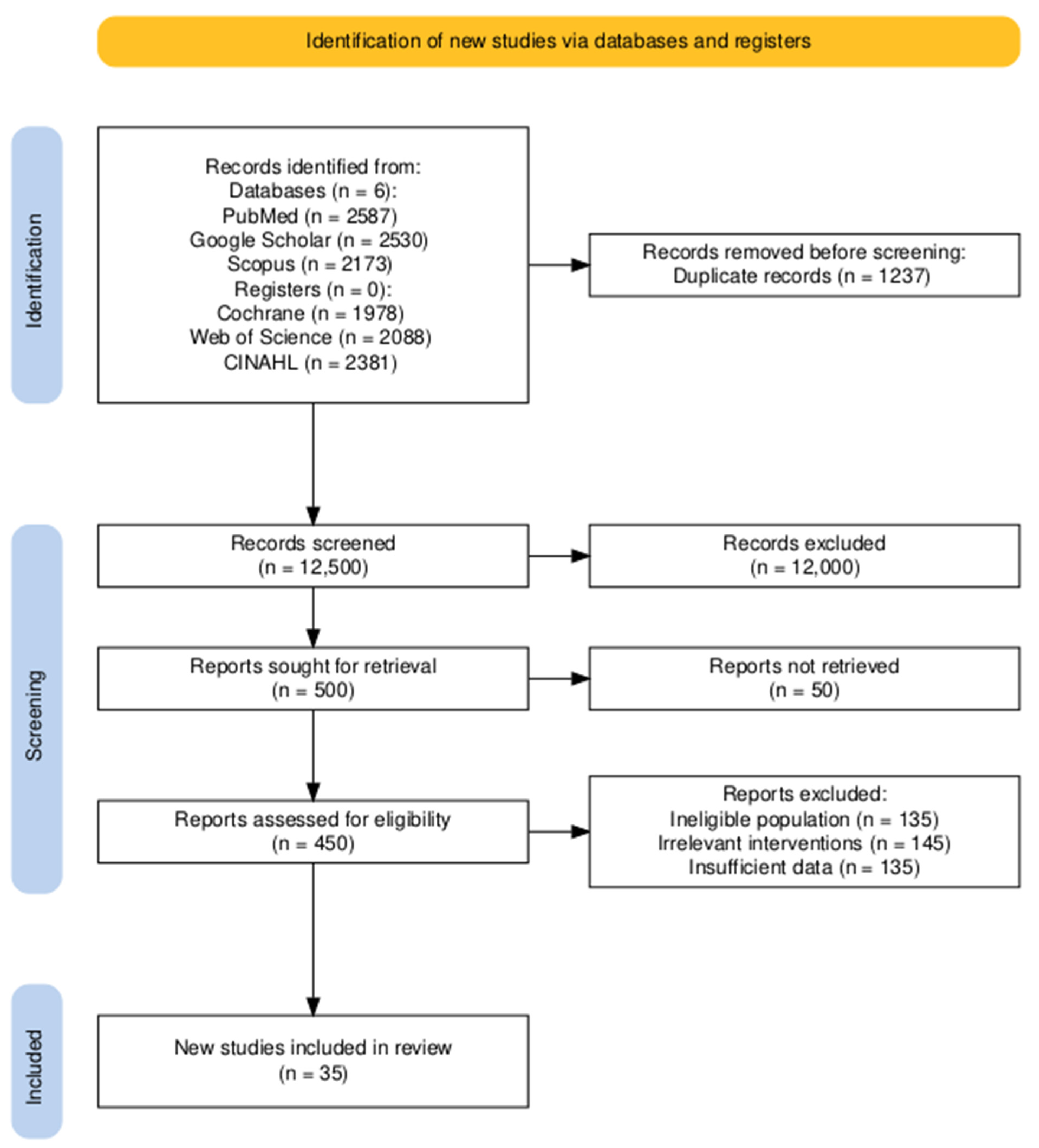
The screening and selection process for this systematic review was conducted systematically. The main reason for this was to ensure the inclusion of relevant, high-quality studies. A comprehensive search across multiple databases, including PubMed, Scopus, Web of Science, CINAHL, and the Cochrane Library, as well as grey literature, was conducted to identify potential studies. Titles and abstracts were screened against predefined inclusion and exclusion criteria. The duplicates were removed. The ineligible studies were excluded. Full-text articles were then assessed for methodological quality, relevance of interventions, and outcome measures, with discrepancies resolved through discussion among reviewers. Ultimately, the studies included in the final synthesis are illustrated in the PRISMA flow diagram below (Figure 1).
Figure 1.
PRISMA flowchart [10].
3.2. Study Characteristics
A total of 35 studies met the inclusion criteria for this systematic review. The included studies were conducted across diverse settings, including high-income countries such as the United States, Canada, Australia, and several European nations [11,12,13,14], as well as low- and middle-income countries (LMICs) such as India, Nepal, Kenya, Iran, and China [6,15,16,17]. This diversity [6,15,16] was included for cross-contextual comparisons between resource-rich and resource-limited environments.
Study designs varied, with the majority comprising randomised controlled trials [6,11,18,19], cohort studies [20], and intervention-based trials [21,22], while several were systematic or narrative reviews providing secondary evidence [2,4,23]. Sample sizes ranged from small community-based studies to large multinational cohorts [24,25].
Interventions fell into two main categories:
- Recreational activities: Several studies examined walking, cycling, swimming, yoga, resistance training, or structured exercise programmes, all demonstrating positive effects on hypertension and glycaemic regulation [16,20,21]. Some interventions combined dietary and physical activity strategies, showing synergistic benefits [11,26].
- Dietary interventions take centre stage in most studies, with the DASH and Mediterranean diets leading to significant benefits in blood pressure, glycaemic control, and lipid profiles [13,27]. Importantly, a few studies introduced creative variations, such as integrating time-restricted eating with DASH [6] or tailoring diets to specific groups, demonstrating innovation and adaptability.
Comparators in these studies varied: some included standard care, others assessed usual lifestyle practices, and others compared alternative non-structured interventions. This approach enabled a clearer understanding of the added value of structured diet and activity-based interventions [15,17].
Researchers assessed outcomes such as systolic and diastolic blood pressure, fasting glucose, HbA1c, insulin sensitivity, BMI, waist circumference, and lipid profiles. Most interventions enhanced vascular function, metabolic regulation, and overall cardiometabolic health through recreational activities and dietary strategies [4,9].
Regarding geographic distribution, the majority of studies were conducted in high-income countries, with fewer contributions from African and other LMIC contexts [2,15]. This represents a critical evidence gap, as feasibility, cultural acceptability, and adherence may differ significantly across populations.
In summary, evidence from the included studies consistently supports the effectiveness of recreational activity and dietary modification in managing hypertension and hyperglycaemia. Nevertheless, direct comparability was limited by heterogeneity in design, intervention duration, and outcome reporting [23,28].
The findings in Table 2 reveal several management strategies for hypertension and hyperglycaemia. Notably, most USA studies reported the DASH and Mediterranean diets as central intervention strategies. Both diets provide robust evidence of efficacy, though their mechanisms and areas of greatest impact differ. Specifically, the DASH diet offers pronounced reductions in blood pressure, while the Mediterranean diet helps to control glycaemia. Additionally, some studies indicated that recreational activities improve vascular function and enhance insulin sensitivity. Other studies have emphasised the importance of integrating recreational activities with DASH and Mediterranean diets.
Table 2.
Characteristics of the included studies.
3.3. Intervention Types
3.3.1. Dietary Interventions (DASH and Mediterranean Diets)
The majority of included studies evaluated dietary interventions, particularly the DASH and Mediterranean diets. Across the reviewed literature, adherence to the Dietary Approaches to Stop Hypertension (DASH) eating pattern was consistently associated with meaningful reductions in blood pressure [40]. Reported decreases in systolic blood pressure generally ranged between 5 and 11 mmHg, while diastolic pressure declined by approximately 3 to 6 mmHg [6]. In addition to these effects, some studies reported slight improvements in glycaemic control, with HbA1c reductions typically ranging from 0.3% to 0.8%, influenced by participants’ baseline metabolic status and the duration of the intervention, which commonly spanned 8 to 24 weeks.
In comparison, the Mediterranean dietary pattern appeared to exert more pronounced effects on glycaemic outcomes. Studies have frequently documented HbA1c reductions of 0.5% to 1.0%, along with enhanced insulin sensitivity and improved lipid profiles [14]. Although reductions in blood pressure were also observed, these were generally less substantial than those reported for DASH-based interventions. Intervention periods varied from approximately three months to over one year, with evidence suggesting that longer adherence contributed to greater overall cardiometabolic improvements.
3.3.2. Active Recreational Activity Interventions
Studies examining active recreational activities primarily focused on aerobic-based exercises such as walking, cycling, swimming, and structured exercise programmes. These interventions were associated with moderate reductions in blood pressure, with systolic values decreasing by approximately 4–9 mmHg and diastolic values by approximately 2–5 mmHg [21,36]. Improvements in glycaemic control were also observed, particularly among individuals with type 2 diabetes, with HbA1c levels declining by 0.4% to 0.9%. The duration of interventions ranged from 8 weeks to 12 months, with evidence indicating that programmes of greater intensity and longer duration yielded stronger outcomes.
Furthermore, several studies have documented additional health benefits, including enhanced vascular function, improved insulin sensitivity, and reduced body mass index (BMI), underscoring the broad, multifaceted impact of recreational physical activity.
3.3.3. Combined Lifestyle Interventions (Diet + Physical Activity)
Only a limited number of studies examined interventions that combined dietary changes with physical activity. However, these multi-component strategies produced the most substantial overall benefits, with reductions in systolic blood pressure often surpassing 10 mmHg and decreases in HbA1c reaching or exceeding 1.0% in certain populations [26]. Despite these promising outcomes, multi-component strategies and integrated lifestyle approaches remain relatively scarce in the existing literature, highlighting a notable gap in research on comprehensive interventions.
3.4. Comparative Effectiveness and Consistency of Findings
The evidence indicates consistent positive effects across different types of interventions, although outcomes vary depending on study design, intervention intensity, and participant characteristics. Dietary strategies tended to have a greater influence on long-term metabolic outcomes, whereas physical activity interventions were associated with a wider range of physiological benefits [11]. Interventions that combined both approaches yielded the most clinically significant improvements, despite being examined in relatively few studies.
3.5. Quality and Bias Assessment
The quality of the included studies ranged from moderate to high, with most evidence derived from randomised controlled trials and cohort studies. These studies generally support the effectiveness of active recreational activities and dietary interventions. Several biases were noted. Selection bias was common due to convenience sampling. Therefore, adherence to interventions was often self-reported, introducing performance bias. Attrition in long-term studies and variations in outcome measurement contributed to potential detection bias.
Additionally, publication bias may have influenced the evidence base. Studies reporting positive outcomes are more likely to be published. Despite these limitations, the overall findings provide a reliable indication of the benefits of lifestyle interventions, though caution is needed in interpreting the results across diverse populations and settings.
4. Discussion
This systematic review synthesised existing evidence on the role of active recreational activities in the management of hypertension and hyperglycaemia to raise awareness among adults. The findings suggest that active participation in a combination of recreational activities that have aerobic and resistance training can lower blood pressure and improve glycaemic control in patients [41]. Scientific evidence consistently demonstrates that engaging in regular aerobic-based recreational activities reduces both systolic and diastolic blood pressure. Aerobic recreational activities such as brisk walking, swimming, and dancing have been recognised as appropriate for improving vascular elasticity, reducing arterial stiffness, and enhancing endothelial function in hypertensive and hyperglycaemic patients.
The literature indicates that repeated bouts of active recreational activities increase blood flow, generating shear stress along the arterial walls of hypertensive and hyperglycaemic patients [42]. This mechanical stimulus promotes favourable structural changes, such as the preservation of elastin and a reduction in collagen deposition. As a result, arteries become more compliant, allowing them to expand and recoil efficiently. In hypertensive individuals, this improved elasticity contributes to reduced peripheral resistance and lower resting blood pressure. However, these manifest only when appropriately administered in a home-based or clinical setting. Structured recreational activity also supports cardiovascular health and weight management, which are critical for the prevention and control of hypertension.
The positive effects of active recreational activity on hyperglycaemia are well established. Studies consistently show that regular light- to moderate-intensity active recreational activities improve insulin sensitivity in hypertensive and hyperglycaemic patients [28,43]. They are scientifically proven to boost skeletal muscle glucose uptake and lower glycated haemoglobin (HbA1c) in patients with type 2 diabetes [9,31]. These benefits are largely mediated through physiological mechanisms. Active recreational activities stimulate muscle contractions, which promote insulin-independent glucose uptake by increasing the translocation of GLUT4 transporters to the cell membrane [44,45], while also enhancing insulin signalling pathways and receptor sensitivity in the post-exercise period. In addition, regular participation in active recreational activities improves mitochondrial function, reduces adiposity, and lowers chronic inflammation. This contributes to more efficient insulin action and glucose metabolism.
In addition to active recreational activities. Dietary interventions are fundamental to managing hypertension and hyperglycaemia [40]. The literature underscores the importance of dietary interventions that include consumption of fruits, vegetables, whole grains, legumes, nuts, lean protein, and low-fat dairy [40,46]. These are essential elements of the DASH intervention. Fruits provide key nutrients that directly support blood pressure control and glucose regulation in hypertension and hyperglycaemia patients [47]. Research demonstrates that fruits are rich sources of potassium, a mineral that counteracts the effects of sodium [47]. Elevated sodium intake is a significant risk factor for hypertension [39,48]. Potassium contributes to the relaxation of blood vessel walls, thereby improving vascular tone and reducing blood pressure. For optimal hypertension management, adherence to the DASH diet is recommended.
Nutritionally, the literature shows that the DASH diet is rich in the following nutrients that patients following DASH should consume potassium, magnesium, calcium, and dietary fibre which regulate vascular tone and improve insulin sensitivity in individuals with hypertension [40]. Patients should adhere to this diet consistently to achieve positive outcomes. Evidence consistently demonstrates its efficacy in reducing blood pressure [26,27,33], while additional studies have confirmed benefits for fasting glucose and lipid profiles in patients with type 2 diabetes. However, it is worth highlighting that adherence remains a dietary challenge among hypertensive and hyperglycaemic patients. This may be because patients are exposed to processed and packaged foods in their communities.
Another dietary pattern of significant relevance is the Mediterranean diet, which should be considered or recommended by health practitioners for patients [34]. This diet strongly recommends consuming fruits, vegetables, and olive oil as the primary sources of fat, along with moderate fish and poultry, moderate wine intake, and limited red meat intake [23,27,35], unlike the DASH diet, which is designed primarily to prevent hypertension. Mediterranean diet reduces cardiovascular morbidity and improves glycaemic control, making it particularly beneficial in populations with a high prevalence of diabetes. This review suggests integration of diet with recreational activity. This integration is cost-effective and sustainable when administered at home rather than in a clinical setting. Hypertensive and hyperglycaemic patients should adopt this non-pharmacological approach.
5. Strengths and Limitations of the Review
This systematic review shows several strengths. A broad, structured search across multiple databases increased the likelihood of finding relevant studies. Including randomised controlled trials, cohort studies, and review articles offered a comprehensive perspective. Following PRISMA guidelines promoted transparency and reproducibility. Despite its strengths, this review has limitations. The included studies varied in intervention approaches, duration, outcome measures, and participant characteristics, making direct comparison impossible and meta-analysis unfeasible. Most studies were conducted in high-income settings, creating a geographic imbalance and reducing their relevance to low- and middle-income regions. These factors should be taken into account when interpreting the results. Future research would benefit from standardised reporting of outcomes, increased representation of under-researched regions, and rigorous study designs that minimise bias. Additionally, investigating the effectiveness of interventions in low- and middle-income contexts and utilising objective measures of adherence would help address current gaps.
6. Conclusions
This systematic review highlights that hypertension and hyperglycaemia frequently coexist in adults. Both conditions remain major public health challenges in LMICs. Regular participation in activities such as walking, cycling, swimming, and dancing is beneficial, and it achieves the following:
- ▪
- Improves the vascular function of the participants;
- ▪
- Enhances the insulin sensitivity of the participants;
- ▪
- Reduces the body weight of the participants;
- ▪
- Lowers the blood pressure of the participants;
- ▪
- Circulates the glucose levels of the participants.
However, to achieve the optimal health outcomes, long-term adherence to the programmes is highly recommended for patients.
Dietary interventions also play a crucial role in managing hypertension and hyperglycaemia in adults. Patients should follow the DASH eating plan, which recommends a 2000-calorie-a-day diet. This plan helps lower blood pressure and improve cardiometabolic outcomes. The diet includes a variety of vegetables, whole grains, and reduced sodium intake. It demonstrates significant effectiveness.
Equally important as the above, the Mediterranean diet, centred on plant-based foods, olive oil, legumes, fish, and moderate wine intake, has been shown to benefit glycaemic control, cardiovascular health, and longevity. This diet’s daily recommendations are:
- ▪
- To eat 5 servings of vegetables (leafy greens and tomatoes).
- ▪
- To eat 2–3 servings of fruits.
- ▪
- To eat 4–6 servings of whole-grain bread, pasta, or brown rice.
- ▪
- To drink 2–4 tablespoons of Extra Virgin Olive Oil per day as the main source of added fat.
Importantly, neither dietary change nor recreational activity alone is sufficient to address the complex pathophysiology of hypertension and hyperglycaemia fully. Rather, a synergistic approach that combines structured recreational activity with adherence to healthy dietary patterns offers the most sustainable and effective management strategy for these conditions.
In LMICs, where the burden of these conditions is increasing rapidly, integrating lifestyle interventions into public health initiatives is strategically important. The primary approach is early community screening and disclosing negative health outcomes from medical screenings. Next, diet plans should be tailored to cultural and socio-economic factors. Third, community- and home-based recreational initiatives should be promoted to manage these conditions. Based on the discussed health outcomes and intervention strategies, further studies are required to identify effective combinations of therapeutic recreational activities and diet.
Author Contributions
K.L. coordinated the review, and K.L. and O.L.M. conducted the data extraction. K.L. and S.A.M. analysed and drafted the paper. K.L., O.L.M. and S.A.M. conducted the literature search, data extraction, and analysis and participated in drafting the paper. S.A.M.: Investigation, software, validation, writing—review and editing. All authors have read and agreed to the published version of the manuscript.
Funding
This research received no external funding.
Institutional Review Board Statement
Not applicable.
Informed Consent Statement
Not applicable.
Data Availability Statement
No new data were created or analyzed in this study. Data sharing is not applicable to this article.
Conflicts of Interest
The authors declare no conflict of interest.
Abbreviations
The following abbreviations are used in this manuscript:
| DASH | Dietary Approach to Stop Hypertension |
| LMICs | Low- and middle-income countries |
| NCDs | Non-communicable diseases |
| PRISMA | Preferred Reporting Items for Systematic Reviews and Meta-anal |
References
- Dunachie, S.; Chamnan, P. The Double Burden of Diabetes and Global Infection in Low and Middle-Income Countries. Trans. R. Soc. Trop. Med. Hyg. 2019, 113, 56–64. [Google Scholar] [CrossRef] [Scilit] [PubMed]
- Schutte, A.E.; Srinivasapura Venkateshmurthy, N.; Mohan, S.; Prabhakaran, D. Hypertension in Low- and Middle-Income Countries. Circ. Res. 2021, 128, 808–826. [Google Scholar] [CrossRef] [Scilit] [PubMed]
- Yuyun, M.F.; Sliwa, K.; Kengne, A.P.; Mocumbi, A.O.; Bukhman, G. Cardiovascular Diseases in Sub-Saharan Africa Compared to High-Income Countries: An Epidemiological Perspective. Glob. Heart 2020, 15, 15. [Google Scholar] [CrossRef] [Scilit] [PubMed]
- Siervo, M.; Lara, J.; Chowdhury, S.; Ashor, A.; Oggioni, C.; Mathers, J.C. Effects of the Dietary Approach to Stop Hypertension (DASH) Diet on Cardiovascular Risk Factors: A Systematic Review and Meta-Analysis. Br. J. Nutr. 2015, 113, 1–15. [Google Scholar] [CrossRef] [Scilit] [PubMed]
- Brouwer, E.D.; Watkins, D.; Olson, Z.; Goett, J.; Nugent, R.; Levin, C. Provider Costs for Prevention and Treatment of Cardiovascular and Related Conditions in Low- and Middle-Income Countries: A Systematic Review. BMC Public Health 2015, 15, 1183. [Google Scholar] [CrossRef] [Scilit] [PubMed]
- Zhou, X.; Lin, X.; Yu, J.; Yang, Y.; Muzammel, H.; Amissi, S.; Schini-Kerth, V.B.; Lei, X.; Jose, P.A.; Yang, J.; et al. Effects of DASH Diet with or without Time-Restricted Eating in the Management of Stage 1 Primary Hypertension: A Randomized Controlled Trial. Nutr. J. 2024, 23, 65. [Google Scholar] [CrossRef] [Scilit] [PubMed]
- Ferrannini, E.; DeFronzo, R.A. Impact of Glucose-Lowering Drugs on Cardiovascular Disease in Type 2 Diabetes. Eur. Heart J. 2015, 36, 2288–2296. [Google Scholar] [CrossRef] [Scilit] [PubMed]
- Tsapas, A.; Karagiannis, T.; Kakotrichi, P.; Avgerinos, I.; Mantsiou, C.; Tousinas, G.; Manolopoulos, A.; Liakos, A.; Malandris, K.; Matthews, D.R.; et al. Comparative Efficacy of Glucose-lowering Medications on Body Weight and Blood Pressure in Patients with Type 2 Diabetes: A Systematic Review and Network Meta-analysis. Diabetes Obes. Metab. 2021, 23, 2116–2124. [Google Scholar] [CrossRef] [Scilit] [PubMed]
- Wang, J.-S.; Liu, W.-J.; Lee, C.-L. Associations of Adherence to the DASH Diet and the Mediterranean Diet with All-Cause Mortality in Subjects with Various Glucose Regulation States. Front. Nutr. 2022, 9, 828792. [Google Scholar] [CrossRef] [Scilit]
- Haddaway, N.R.; Page, M.J.; Pritchard, C.C.; McGuinness, L.A. PRISMA2020: An R Package and Shiny App for Producing PRISMA 2020-compliant Flow Diagrams, with Interactivity for Optimised Digital Transparency and Open Synthesis. Campbell Syst. Rev. 2022, 18, e1230. [Google Scholar] [CrossRef] [Scilit] [PubMed]
- Blumenthal, J.A.; Sherwood, A.; Smith, P.J.; Mabe, S.; Watkins, L.; Lin, P.-H.; Craighead, L.W.; Babyak, M.; Tyson, C.; Young, K.; et al. Lifestyle Modification for Resistant Hypertension: The TRIUMPH Randomized Clinical Trial. Am. Heart J. 2015, 170, 986–994.e5. [Google Scholar] [CrossRef] [Scilit] [PubMed]
- Carlson, D.J.; Inder, J.; Palanisamy, S.K.A.; McFarlane, J.R.; Dieberg, G.; Smart, N.A. The Efficacy of Isometric Resistance Training Utilising Handgrip Exercise for Blood Pressure Management: A Randomized Trial. Medicine 2016, 95, e5791. [Google Scholar] [CrossRef] [Scilit] [PubMed]
- Patel, Y.R.; Robbins, J.M.; Gaziano, J.M.; Djoussé, L. Mediterranean, DASH, and Alternate Healthy Eating Index Dietary Patterns and Risk of Death in the Physicians’ Health Study. Nutrients 2021, 13, 1893. [Google Scholar] [CrossRef] [Scilit] [PubMed]
- Filippou, C.; Tatakis, F.; Polyzos, D.; Manta, E.; Thomopoulos, C.; Nihoyannopoulos, P.; Tousoulis, D.; Tsioufis, K. Overview of Salt Restriction in the Dietary Approaches to Stop Hypertension (DASH) and the Mediterranean Diet for Blood Pressure Reduction. Rev. Cardiovasc. Med. 2022, 23, 36. [Google Scholar] [CrossRef] [Scilit]
- Vedanthan, R.; Kamano, J.H.; Chrysanthopoulou, S.A.; Mugo, R.; Andama, B.; Bloomfield, G.S.; Chesoli, C.W.; DeLong, A.K.; Edelman, D.; Finkelstein, E.A.; et al. Group Medical Visit and Microfinance Intervention for Patients with Diabetes or Hypertension in Kenya. J. Am. Coll. Cardiol. 2021, 77, 2007–2018. [Google Scholar] [CrossRef] [Scilit] [PubMed]
- Dhungana, R.R.; Pedisic, Z.; Joshi, S.; Khanal, M.K.; Kalauni, O.P.; Shakya, A.; Bhurtel, V.; Panthi, S.; Ramesh Kumar, K.C.; Ghimire, B.; et al. Effects of a Health Worker-Led 3-Month Yoga Intervention on Blood Pressure of Hypertensive Patients: A Randomised Controlled Multicentre Trial in the Primary Care Setting. BMC Public Health 2021, 21, 550. [Google Scholar] [CrossRef] [Scilit] [PubMed]
- Praveen, D.; Peiris, D.; MacMahon, S.; Mogulluru, K.; Raghu, A.; Rodgers, A.; Chilappagari, S.; Prabhakaran, D.; Clifford, G.D.; Maulik, P.K.; et al. Cardiovascular Disease Risk and Comparison of Blood Pressure Management Strategies in Rural India. BMC Public Health 2018, 18, 1264. [Google Scholar] [CrossRef] [Scilit] [PubMed]
- Hinderliter, A.L.; Smith, P.; Sherwood, A.; Blumenthal, J. Lifestyle Interventions Reduce the Need for Guideline-Directed Antihypertensive Medication. Am. J. Hypertens. 2021, 34, 1100–1107. [Google Scholar] [CrossRef] [Scilit] [PubMed]
- Maluleka, R.J. The Status of Traditional Healing in the Limpopo Province of South Africa. HTS Teol. Stud. Theol. Stud. 2020, 76, 12. [Google Scholar] [CrossRef] [Scilit]
- Jarvie, J.L.; Pandey, A.; Ayers, C.R.; McGavock, J.M.; Sénéchal, M.; Berry, J.D.; Patel, K.V.; McGuire, D.K. Aerobic Fitness and Adherence to Guideline-Recommended Minimum Physical Activity Among Ambulatory Patients with Type 2 Diabetes Mellitus. Diabetes Care 2019, 42, 1333–1339. [Google Scholar] [CrossRef] [Scilit] [PubMed]
- Ohta, Y.; Kawano, Y.; Minami, J.; Iwashima, Y.; Hayashi, S.; Yoshihara, F.; Nakamura, S. Effects of Daily Walking on Office, Home and 24-h Blood Pressure in Hypertensive Patients. Clin. Exp. Hypertens. 2015, 37, 433–437. [Google Scholar] [CrossRef] [Scilit] [PubMed]
- Kao, C.-W.; Chen, T.-Y.; Cheng, S.-M.; Lin, W.-S.; Chang, Y.-C. A Web-Based Self-Titration Program to Control Blood Pressure in Patients with Primary Hypertension: Randomized Controlled Trial. J. Med. Internet Res. 2019, 21, e15836. [Google Scholar] [CrossRef] [Scilit] [PubMed]
- Różańska, D. The Mediterranean Diet, the DASH Diet, and the MIND Diet in Relation to Sleep Duration and Quality: A Narrative Review. Nutrients 2024, 16, 4191. [Google Scholar] [CrossRef] [Scilit] [PubMed]
- Saglimbene, V.M.; Wong, G.; Craig, J.C.; Ruospo, M.; Palmer, S.C.; Campbell, K.; Garcia-Larsen, V.; Natale, P.; Teixeira-Pinto, A.; Carrero, J.-J.; et al. The Association of Mediterranean and DASH Diets with Mortality in Adults on Hemodialysis: The DIET-HD Multinational Cohort Study. J. Am. Soc. Nephrol. 2018, 29, 1741–1751. [Google Scholar] [CrossRef] [Scilit] [PubMed]
- Katzmarzyk, P.T.; Friedenreich, C.; Shiroma, E.J.; Lee, I.-M. Physical Inactivity and Non-Communicable Disease Burden in Low-Income, Middle-Income and High-Income Countries. Br. J. Sports Med. 2022, 56, 101–106. [Google Scholar] [CrossRef] [Scilit] [PubMed]
- Kindlovits, R.; Sousa, A.C.; Viana, J.L.; Milheiro, J.; Oliveira, B.M.P.M.; Marques, F.; Santos, A.; Teixeira, V.H. Evaluating the Therapeutic Potential of Exercise in Hypoxia and Low-Carbohydrate, High-Fat Diet in Managing Hypertension in Elderly Type 2 Diabetes Patients: A Novel Intervention Approach. Nutrients 2025, 17, 522. [Google Scholar] [CrossRef] [Scilit]
- Hashemi, A.; Vasquez, K.; Guishard, D.; Naji, M.; Ronning, A.; George-Alexander, G.; Vasquez, D.; Sylvester, C.; Pagano, W.; Khalida, C.; et al. Implementing DASH-Aligned Congregate Meals and Self-Measured Blood Pressure in Two Senior Centers: An Open Label Study. Nutr. Metab. Cardiovasc. Dis. 2022, 32, 1998–2009. [Google Scholar] [CrossRef] [Scilit]
- Blumenthal, J.A.; Hinderliter, A.L.; Smith, P.J.; Mabe, S.; Watkins, L.L.; Craighead, L.; Ingle, K.; Tyson, C.; Lin, P.-H.; Kraus, W.E.; et al. Effects of Lifestyle Modification on Patients with Resistant Hypertension: Results of the TRIUMPH Randomized Clinical Trial. Circulation 2021, 144, 1212–1226. [Google Scholar] [CrossRef] [Scilit] [PubMed]
- Blyler, C.A.; Rader, F. Sustainability of Blood Pressure Reduction in Black Barbershops. Curr. Opin. Cardiol. 2019, 34, 693–699. [Google Scholar] [CrossRef] [Scilit]
- Brunel, P.; Baschiera, F.; Cifkova, R. Exercise Testing in Hypertensive Patients for Assessing the Cardiovascular Protective Potential of Antihypertensive Drugs. Ther. Adv. Cardiovasc. Dis. 2013, 7, 99–108. [Google Scholar] [CrossRef] [Scilit] [PubMed]
- Egan, B.M.; Mattix-Kramer, H.J.; Basile, J.N.; Sutherland, S.E. Managing Hypertension in Older Adults. Curr. Hypertens. Rep. 2024, 26, 157–167. [Google Scholar] [CrossRef] [Scilit]
- Farber, H.W.; Miller, D.P.; Poms, A.D.; Badesch, D.B.; Frost, A.E.; Rouzic, E.M.-L.; Romero, A.J.; Benton, W.W.; Elliott, C.G.; McGoon, M.D.; et al. Five-Year Outcomes of Patients Enrolled in the REVEAL Registry. Chest 2015, 148, 1043–1054. [Google Scholar] [CrossRef] [Scilit] [PubMed]
- Keramati, M.; Kheirouri, S.; Etemadifar, M. Dietary Approach to Stop Hypertension (DASH), but Not Mediterranean and MIND, Dietary Pattern Protects against Parkinson’s Disease. Food Sci. Nutr. 2024, 12, 943–951. [Google Scholar] [CrossRef] [Scilit] [PubMed]
- Park, Y.-M.M.; Steck, S.E.; Fung, T.T.; Zhang, J.; Hazlett, L.J.; Han, K.; Lee, S.-H.; Kwon, H.-S.; Merchant, A.T. Mediterranean Diet, Dietary Approaches to Stop Hypertension (DASH) Style Diet, and Metabolic Health in U.S. Adults. Clin. Nutr. 2017, 36, 1301–1309. [Google Scholar] [CrossRef] [Scilit] [PubMed]
- Sakhaei, R.; Shahvazi, S.; Mozaffari-Khosravi, H.; Samadi, M.; Khatibi, N.; Nadjarzadeh, A.; Zare, F.; Salehi-Abargouei, A. The Dietary Approaches to Stop Hypertension (DASH)-Style Diet and an Alternative Mediterranean Diet Are Differently Associated with Serum Inflammatory Markers in Female Adults. Food Nutr. Bull. 2018, 39, 361–376. [Google Scholar] [CrossRef] [Scilit] [PubMed]
- Smith, P.J.; Blumenthal, J.A.; Babyak, M.A.; Georgiades, A.; Hinderliter, A.; Sherwood, A. Effects of Exercise and Weight Loss on Depressive Symptoms among Men and Women with Hypertension. J. Psychosom. Res. 2007, 63, 463–469. [Google Scholar] [CrossRef] [Scilit] [PubMed]
- Spence, J.D. Controlling Resistant Hypertension. Stroke Vasc. Neurol. 2018, 3, 69–75. [Google Scholar] [CrossRef] [Scilit]
- Van Der Pligt, P.F.; Ebrahimi, S.; Kuswara, K.; Abbott, G.R.; McNaughton, S.A.; Islam, S.M.S.; Ellery, S.J. Associations of Adherence to the DASH Diet and Mediterranean Diet with Maternal C-Reactive Protein Levels during Pregnancy. Nutr. Metab. Cardiovasc. Dis. 2024, 34, 672–680. [Google Scholar] [CrossRef] [Scilit] [PubMed]
- Wang, C.; Cheng, W.; Bai, S.; Ye, L.; Du, J.; Zhong, M.; Liu, J.; Zhao, R.; Shen, B. White Mulberry Fruit Polysaccharides Enhance Endothelial Nitric Oxide Production to Relax Arteries in Vitro and Reduce Blood Pressure In Vivo. Biomed. Pharmacother. 2019, 116, 109022. [Google Scholar] [CrossRef] [Scilit] [PubMed]
- Agarwal, P.; Leurgans, S.E.; Agrawal, S.; Aggarwal, N.T.; Cherian, L.J.; James, B.D.; Dhana, K.; Barnes, L.L.; Bennett, D.A.; Schneider, J.A. Association of Mediterranean-DASH Intervention for Neurodegenerative Delay and Mediterranean Diets with Alzheimer Disease Pathology. Neurology 2023, 100, e2259–e2268. [Google Scholar] [CrossRef] [Scilit]
- Park, S.; Shin, J.; Ihm, S.H.; Kim, K.; Kim, H.-L.; Kim, H.C.; Lee, E.M.; Lee, J.H.; Ahn, S.Y.; Cho, E.J.; et al. Resistant Hypertension: Consensus Document from the Korean Society of Hypertension. Clin. Hypertens. 2023, 29, 30. [Google Scholar] [CrossRef] [Scilit] [PubMed]
- Teixeira, A.L.; Padilla, J.; Vianna, L.C. Impaired Popliteal Artery Flow-Mediated Dilation Caused by Reduced Daily Physical Activity Is Prevented by Increased Shear Stress. J. Appl. Physiol. 2017, 123, 49–54. [Google Scholar] [CrossRef] [Scilit] [PubMed]
- Swift, D.L.; Houmard, J.A.; Slentz, C.A.; Kraus, W.E. Effects of Aerobic Training with and without Weight Loss on Insulin Sensitivity and Lipids. PLoS ONE 2018, 13, e0196637. [Google Scholar] [CrossRef] [Scilit] [PubMed]
- DiMenna, F.J.; Arad, A.D. The Acute vs. Chronic Effect of Exercise on Insulin Sensitivity: Nothing Lasts Forever. Cardiovasc. Endocrinol. Metab. 2021, 10, 149–161. [Google Scholar] [CrossRef] [Scilit] [PubMed]
- Iaccarino, G.; Franco, D.; Sorriento, D.; Strisciuglio, T.; Barbato, E.; Morisco, C. Modulation of Insulin Sensitivity by Exercise Training: Implications for Cardiovascular Prevention. J. Cardiovasc. Transl. Res. 2021, 14, 256–270. [Google Scholar] [CrossRef] [Scilit] [PubMed]
- Choi, Y.; Kang, K.; Je, M.; Lee, Y.-M.; Kim, Y. The Influence of Dietary Patterns on Polycystic Ovary Syndrome Management in Women: A Review of Randomized Controlled Trials with and Without an Isocaloric Dietary Design. Nutrients 2025, 17, 674. [Google Scholar] [CrossRef] [Scilit] [PubMed]
- Sriperumbuduri, S.; Welling, P.; Ruzicka, M.; Hundemer, G.L.; Hiremath, S. Potassium and Hypertension: A State-of-the-Art Review. Am. J. Hypertens. 2024, 37, 91–100. [Google Scholar] [CrossRef] [Scilit] [PubMed]
- Zupo, R.; Castellana, F.; Boninfante, B.; Lampignano, L.; Lattanzio, A.; Sardone, R.; Giannelli, G.; De Pergola, G. Uric Acid and Potassium Serum Levels Are Independent Predictors of Blood Pressure Non-Dipping in Overweight or Obese Subjects. Nutrients 2019, 11, 2970. [Google Scholar] [CrossRef] [Scilit] [PubMed]

Disclaimer/Publisher’s Note: The statements, opinions and data contained in all publications are solely those of the individual author(s) and contributor(s) and not of MDPI and/or the editor(s). MDPI and/or the editor(s) disclaim responsibility for any injury to people or property resulting from any ideas, methods, instructions or products referred to in the content. |
© 2026 by the authors. Licensee MDPI, Basel, Switzerland. This article is an open access article distributed under the terms and conditions of the Creative Commons Attribution (CC BY) license.