


Highlights
Public health relevance—How does this work relate to a public health issue?
- Pharmacy students worldwide experience high levels of depression, anxiety, stress, and suicidal ideation, representing a substantial and underrecognized public health burden in this essential healthcare workforce.
- Significant regional and socioeconomic disparities show higher mental-health prevalence in low- and middle-income countries and resource-limited regions, underscoring inequities in mental-health vulnerability among future pharmacists.
Public health significance—Why is this work of significance to public health?
- Identifying mental-health problems in pharmacy students is crucial, as psychological distress can impair academic performance, professional competency, and the quality of pharmaceutical care.
- This study provides high-quality pooled evidence from 51 studies across 16 countries, offering a global perspective to guide policy, resource allocation, and strategies to strengthen the mental well-being of future healthcare providers.
Public health implications—Key implications or messages for practitioners, policymakers, and researchers
- Institutions and policymakers should prioritize evidence-based mental-health support systems such as screening, counseling, stress management, and academic support tailored to pharmacy students.
- Health authorities should address structural determinants such as economic disparities, academic pressures, and limited mental-health infrastructure and invest in longitudinal studies to guide targeted interventions for reducing psychological distress in this population.
Abstract
Mental health conditions have become an increasing concern among university students, particularly those pursuing health science disciplines such as pharmacy. Rigorous academic demands, high workloads, and sustained psychological pressure place pharmacy students at a high risk of mental health disorders, including depression, anxiety, stress, and suicidal ideation. This study aimed to systematically review and quantitatively synthesize existing evidence on the prevalence of mental health conditions among pharmacy students in Thailand and globally using a meta-analytic approach. A comprehensive literature search was conducted across the major academic databases, including PubMed, ScienceDirect, Scopus, and ThaiJo, using predefined search terms and stringent inclusion criteria to ensure methodological rigor and relevance. Data from eligible studies were extracted and analyzed using STATA software to ensure statistical precision and reliability of the pooled estimates. A total of 51 studies, comprising 17,717 pharmacy students across 16 countries, including the United States, Thailand, Brazil, Malaysia, Syria, Pakistan, Poland, France, Portugal, Nigeria, Saudi Arabia, Sudan, Lebanon, Egypt, the United Arab Emirates, and Vietnam, were included. The meta-analysis revealed pooled prevalence rates of 44.26% for depression (95% CI: 36.08–52.61), 52.01% for anxiety (95% CI: 42.86–61.09), 48.10% for stress (95% CI: 32.96–63.43), and 24.52% for suicidal ideation (95% CI: 14.10–36.70). These findings reflect a substantial mental health burden among pharmacy students, necessitating immediate and context-specific interventions. Considering these findings, academic institutions must develop and implement comprehensive mental health support strategies. Such initiatives should include early identification and screening programs, access to psychological counseling services, resilience-building interventions, and stress management workshops to effectively address the psychological needs of pharmacy students and enhance their academic and personal well-being.
Keywords:
pharmacy students; depression; anxiety; suicidal ideation; stress; systematic review; meta-analysis 1. Introduction
Mental health issues are characterized by alterations in emotional regulation, cognitive function, and behavioral patterns that are often associated with psychological distress and impaired daily functioning or occupational performance. These conditions may also include suicidal ideation or self-harming behaviors [1]. The etiology of mental health disorders is multifactorial and encompasses a wide array of personal, social, and structural determinants. Personal factors include individual capacities for emotional regulation and genetic predispositions, while social and structural determinants include exposure to adverse environments, sociopolitical instability, economic inequality, and insufficient access to supportive communities or healthcare infrastructure. Collectively, these determinants may compromise mental well-being and increase the risk of mental health disorders [2].
According to the World Health Organization (WHO), approximately 970 million individuals were affected by mental health conditions globally in 2019. Notably, the prevalence of anxiety and depressive disorders surged by 26% and 28%, respectively, within a single year, underscoring the growing public health burden associated with these conditions [1]. A growing body of literature has highlighted the substantial mental health burden faced by pharmacy students, particularly depression and suicidal ideation. According to a recent study published in the American Journal of Pharmaceutical Education, a significant proportion of pharmacy students report experiencing depressive symptoms, with 13.5% claiming to experience suicidal ideation [3]. However, estimates of the prevalence of depression among this population vary widely across studies, ranging from 4.8% to 78.8%, reflecting considerable heterogeneity in study design, assessment tools, and contextual factors [4].
In addition, findings regarding the association between depressive symptoms or suicidality and demographic variables, such as academic year, sex, and other individual characteristics, remain inconsistent across studies, warranting further investigation. Accurate and reliable estimates of the prevalence of depression and suicidal ideation among pharmacy students are essential to develop targeted prevention, early detection, and intervention strategies. In a previous national study conducted in the United States, 35.1% of pharmacy students reported experiencing moderate to severe depressive symptoms, whereas 17.3% acknowledged experiencing suicidal ideation [3]. Furthermore, additional mental health concerns were observed, including clinically significant anxiety in 21% of pharmacy students in the same country [5]. The reported levels of stress were also notable, with 3.0% of the students categorized as experiencing intermediate-level stress and 2.8% as experiencing high-level stress [6].
Growing evidence indicates that mental health problems among pharmacy students are significantly associated with impaired academic performance and reduced productivity [7,8]. Pharmacy students may be particularly vulnerable to mental health difficulties due to the demanding nature of their training. Compared with other health science programs, pharmacy curricula often involve an intensive workload, extensive pharmacotherapy content, laboratory-based practical components, and high-stakes assessments, alongside clinical placement requirements, all of which contribute to elevated academic pressure.
Mental health disorders, particularly depression, have been shown to negatively affect cognitive functioning, concentration, and academic engagement, all of which are critical for the success of rigorous professional programs such as pharmacy. Psychological distress is associated with an increased risk of academic attrition. Students experiencing mental health challenges are more likely to disengage from academic activities and may even discontinue their studies altogether [9].
In particular, depressive symptoms have been found to correlate with various maladaptive behaviors among pharmacy students. These include a higher likelihood of engaging in risky behaviors such as illicit substance use and frequent binge drinking [10], as well as reduced participation in physical activity [11]. Moreover, students reporting depressive symptoms have been reported to demonstrate a greater propensity for self-injurious behaviors and suicidal ideation, further underscoring the seriousness of mental health deterioration in this population [5]. In summary, the increasing prevalence of depressive symptoms among pharmacy students has far-reaching implications, not only compromising individual student well-being and academic progression but also adversely affecting institutional outcomes and broader societal health. These findings highlight the urgent need for evidence-based strategies to promote mental health awareness, prevention, and interventions in pharmacy education [12].
A recent systematic review that examined the prevalence and incidence of depressive symptoms among pharmacy students reported considerable variability across studies. The estimated prevalence rates for overall, mild, moderate, and severe depressive symptoms ranged from 4.8% to 78.8%, 9.1% to 42.1%, 5.8% to 30.0%, and 0% to 50.0%, respectively [4]. This 2023 systematic review synthesized 19 studies published between 2009 and January 2022 [4]; however, more than 10 additional studies have been published since 2022. Furthermore, the present meta-analysis incorporates meta-regression to explore associations between prevalence estimates and relevant contextual factors, providing a deeper understanding beyond pooled estimates alone.
This wide range reflects the significant heterogeneity in the study populations, diagnostic criteria, and assessment methodologies. Understanding the pooled prevalence of mental health conditions among pharmacy students, whether overall or stratified by symptom severity, is essential for developing effective prevention strategies, optimizing treatment approaches, and implementing appropriate psychosocial support interventions. Accordingly, the present study aimed to conduct a systematic review and meta-analysis of published literature to determine the pooled prevalence estimates of depression, anxiety, stress, and suicidal ideation among undergraduate pharmacy students.
To this end, a comprehensive systematic review and meta-analysis were undertaken to synthesize the existing evidence from studies reporting the prevalence of depression-related outcomes in this population. The primary focus was to quantify the burden of mental health issues and provide data-driven insights to guide academic institutions and healthcare stakeholders in enhancing mental health initiatives for students.
2. Materials and Methods
This systematic review and meta-analysis were conducted in accordance with the methodological guidelines outlined in the Cochrane Handbook for Systematic Reviews of Interventions [13]. The review adhered to the Preferred Reporting Items for Systematic Reviews and Meta-Analyses (PRISMA) statement to ensure transparency and methodological rigor, and followed the checklist (Supplementary Material). The review protocol was prospectively registered in the PROSPERO database (Registration No. CRD420251018051), reinforcing the commitment of this study to methodological integrity and reproducibility. A detailed overview of the literature selection process is presented in the PRISMA flow diagram (Figure 1).
Figure 1.
PRISMA flow diagram illustrating the selection process of studies included in the systematic review.
2.1. Data Sources and Search Strategy
A comprehensive literature search was conducted across the following databases from their inception to 30 April 2025: PubMed, ScienceDirect, Scopus, ThaiJo, and Thai Thesis. Studies published in English or Thai were considered eligible for inclusion. The search strategy employed a combination of controlled vocabulary and free-text terms related to mental health, specifically (Depression OR “Depressive illness” OR “Depressive disorder” OR Depres*) OR (Anxiety) OR (Stress) OR (Suicide OR “Suicidal ideation”) AND (“Pharmacy student” OR “Pharmacy school”). No restrictions were imposed on the publication year to ensure comprehensive coverage of the literature. To promote methodological transparency and reproducibility, the full search strategy applied to each database is provided in Appendix A.1.
2.2. Selection Criteria
Studies were included in this review based on the following eligibility criteria: (1) the study investigated the prevalence of mental health problems among pharmacy students; (2) the publication was available in either Thai or English; and (3) the study was presented in the form of an original research article, dissertation, research report, or randomized controlled trial (RCT).
Studies were excluded if they met any of the following criteria: (1) duplicate publication, (2) full-text articles that were inaccessible, or (3) a narrative review or review article.
2.3. Data Extraction
All literature retrieved from the electronic databases was imported and screened using the Rayyan platform (https://rayyan.qcri.org/) (accessed on 15 October 2025) for systematic review management. Both electronic and manual search methods were employed to ensure comprehensive identification of eligible studies. Study selection and quality assessment were independently conducted by two reviewers (WP and CT) using reference and citation management programs to facilitate the screening process. Duplicate records were identified and excluded before screening. Titles and abstracts of the remaining studies were reviewed to determine their relevance. In cases where discrepancies arose between the reviewers regarding study inclusion, a consensus was reached through discussion. If necessary, the full text was retrieved to resolve disagreements. When a consensus could not be reached, a third reviewer (KS) was consulted to provide a final decision.
Studies that met the inclusion criteria based on title and abstract screening were further assessed through full-text review. Eligibility was confirmed according to predefined inclusion and exclusion criteria, and detailed reasons for exclusion were documented. For studies with inaccessible full texts, the corresponding authors were contacted to obtain the necessary data. Studies were excluded if the full text could not be obtained or if no response was received.
The study selection process, including the number of records identified, screened, included, and excluded along with the corresponding reasons, was documented using the PRISMA flow diagram framework. Key data from each included study were systematically extracted using a standardized data extraction form adapted from the Cochrane Data Collection Form and recorded in a Microsoft Excel spreadsheet for analysis. In instances where the data formats were unclear or interpretation was uncertain, a third reviewer (KS) was consulted. In addition, where necessary, the authors of the original studies were contacted for clarification or to obtain missing information.
2.4. Quality Assessment
The quality of non-randomized studies was assessed using the Newcastle–Ottawa Scale (NOS), which assigns scores ranging from 0 to 10. This tool evaluates studies across three key domains: (1) selection of study groups, (2) comparability of groups, and (3) outcome ascertainment. Based on the NOS scoring, studies were classified as follows: scores <3 were considered low quality, those between 4 and 6 as moderate quality, and those between 7 and 10 as high quality [14].
For RCTs, the study quality was assessed using both the Jadad Scale and the Cochrane Risk of Bias tools. According to the Jadad Scale, studies scoring between 3 and 5 points were deemed to be of high quality, while those with scores ≤2 were classified as low quality [15]. The Risk of Bias tool evaluated the potential for bias within each domain, with ratings as follows: Low Risk of Bias indicates minimal concerns regarding bias in that domain; Some concerns suggest possible Risk of Bias; and High Risk of Bias indicates clear evidence of bias [16].
The Grading of Recommendations Assessment, Development, and Evaluation (GRADE) approach was applied as the final step in the quality assessment process to strengthen the credibility and interpretability of the study findings. The GRADE framework evaluates the certainty of evidence across five critical domains: (1) Risk of bias, which assesses the methodological rigor and potential for systematic errors within individual studies; (2) Inconsistency, which examines the degree of heterogeneity in outcomes across multiple studies; (3) Indirectness, which evaluates the extent to which the evidence is directly applicable to the population, intervention, comparator, and outcomes of interest in real-world clinical settings; (4) Imprecision, which considers the level of uncertainty around the effect estimates, often influenced by sample size and confidence interval width; and (5) Other considerations, including publication bias, residual confounding, and the magnitude or dose–response gradient of the observed effect. Based on an evaluation of these domains, the GRADE system categorizes the certainty of evidence into four levels: (1) High certainty, indicating strong confidence that the true effect is close to the estimated effect; (2) Moderate certainty, suggesting that the true effect is likely close to the estimate, although there is a possibility that it may differ substantially; (3) Low certainty, reflecting limited confidence in the estimate, with a substantial likelihood that the true effect may differ; and (4) Very low certainty, implying that the estimate is highly uncertain and that the true effect is likely to differ significantly from the reported value [17].
2.5. Statistical Analysis
A meta-analysis was conducted for each mental health outcome using STATA statistical software version 15 (StataCorp, College Station, TX, USA). Pooled prevalence estimates were calculated using a random-effects model to account for inter-study variability, and the results are reported as effect sizes with corresponding 95% confidence intervals (CIs). Moreover, 95% prediction intervals (PIs) were calculated for all pooled estimates, which accounted for an estimated range for the true treatment effect in an individual study and the expected uncertainty of the estimate in a new study [18]. Forest plots were generated to visually present the combined results. Heterogeneity across studies was assessed using the I2 statistic, with values exceeding 50% and a p-value < 0.05 indicating substantial heterogeneity. Inter-rater agreement between the independent reviewers involved in study selection and the risk of bias assessment was evaluated using Cohen’s kappa (κ) coefficient to quantify the level of concordance [19].
Sensitivity analyses were conducted to assess the robustness of the primary findings by reestimating the pooled prevalence using a fixed-effects model. Subgroup analyses were stratified by the WHO regional classification (Africa, Americas, South-East Asia, Europe, Eastern Mediterranean, and Western Pacific), World Bank income group (low-, lower-middle-, upper-middle-, and high-income), and average gross domestic product (GDP). To further explore the sources of heterogeneity, meta-regression analyses were performed to evaluate the impact of geographical region, income classification, and average GDP on the pooled prevalence estimates of mental health symptoms.
Assessment of potential publication bias was undertaken through visual inspection of funnel plots when a sufficient number of studies (typically ≥10) were available. Statistical tests for funnel plot asymmetry, including Begg’s and Egger’s tests, were applied, with a p-value < 0.10 considered indicative of publication bias [20,21]. In cases where publication bias was detected, the trim-and-fill method was employed to adjust for potential bias and provide corrected estimates [22].
3. Results
A total of 1688 records were initially identified through database searches, comprising 29 studies from PubMed, 1360 from ScienceDirect, and 299 from Scopus. After removing 251 duplicate records, 1437 unique studies were screened. Screening of titles and abstracts led to the exclusion of 824 studies that were deemed irrelevant to the research objectives.
Further exclusions were made based on the following criteria: 452 studies involved non-target populations, 70 were book chapters, 20 were poster presentations, 15 were peripheral articles, and five were published in non-English or non-Thai languages. An additional five studies were excluded after full-text screening owing to outcome irrelevance, and two were excluded owing to insufficient alignment with the study scope. Supplementary searches yielded eight additional studies from other sources, including ThaiJo (n = 4), Journal of Advanced Pharmaceutical Sciences (JAPS; n = 1), Chulalongkorn University Journal of Opinion (CUJO; n = 1), Journal of Pharmacy and Bioallied Sciences (n = 1), and Revista Latino-Americana de Enfermagem (RLAE; n = 1). One of these studies was excluded because of a lack of relevance. Finally, 51 studies met the inclusion criteria and were included in the final analysis. The study selection process is illustrated in Figure 1.
3.1. Characteristics of Included Studies
A total of 51 studies published between 2005 and 2024, which encompassed data from 17,717 participants across 16 countries, were included in this review. These countries included the United States, Thailand, Brazil, Malaysia, Syria, Pakistan, Poland, France, Portugal, Nigeria, Saudi Arabia, Sudan, Lebanon, Egypt, the United Arab Emirates, and Vietnam. The distribution of studies by country was as follows: the United States (n = 11), Thailand (n = 8), Brazil (n = 3), Malaysia (n = 8), Syria (n = 1), Pakistan (n = 3), Poland (n = 1), France (n = 2), Portugal (n = 2), Nigeria (n = 1), Saudi Arabia (n = 2), Sudan (n = 4), Lebanon (n = 1), Egypt (n = 2), the United Arab Emirates (n = 2), and Vietnam (n = 1).
The participants were pharmacy students aged 18–34 years. Various validated screening tools were used to assess mental-health outcomes in the reviewed studies. These included the following: the Diagnostic and Statistical Manual of Mental Disorders (DSM), Beck Depression Inventory (BDI), Patient Health Questionnaire (PHQ), Center for Epidemiological Studies–Depression Scale (CES-D), Kutcher Adolescent Depression Scale (KADS), Hospital Anxiety and Depression Scale (HADS), Depression Anxiety Stress Scale (DASS), Suanprung Stress Test-20 (SPST-20), State-Trait Anxiety Inventory (STAI), Westside Test Anxiety Scale (WTAS), Generalized Anxiety Disorder-7 (GAD-7), Zung Self-Rating Anxiety Scale (SAS), Cognitive Test Anxiety Scale–2nd Edition (CTAS-2), Counseling Center Assessment of Psychological Symptoms-62 (CCAPS-62), Test Anxiety Inventory (TAI), Beck Scale for Suicidal Ideation (BSI), Stress Test Questionnaire (ST-5), and the Perceived Stress Scale (PSS). In some studies, the specific tools used for screening were not reported.
The majority of included studies employed a cross-sectional design (n = 50), while one study was a randomized controlled trial. The primary mental health outcomes assessed were depression, anxiety, suicidal ideation, and stress. A summary of the study characteristics and outcome measures is presented in Table 1.
Table 1.
Summary of general data extracted from all 51 included studies, detailing the study design, geographic location, sample size, participant characteristics, screening tools used, and primary mental health outcomes assessed.
3.2. Quality Assessment of Included Studies
The quality assessment of cross-sectional, longitudinal, and repeated-measures studies conducted using the NOS revealed that all 48 studies achieved scores ranging from 7 to 9, indicating a high level of methodological quality. Two longitudinal and repeated-measures studies were evaluated using the same NOS criteria. These studies received scores ranging from 6 to 7, which correspond to a moderate to high level of quality. The detailed results are presented in Table 2. The single RCT included in this review was assessed using the Risk of Bias tool. The results indicate a high risk of bias, demonstrating clear methodological concerns (Table 3).
Table 2.
Quality assessment results of the included cross-sectional studies based on the NOS.
Table 3.
Risk of bias assessment for each included study.
3.3. Prevalence of Depression Among Pharmacy Students
The meta-analysis of depression prevalence among pharmacy students revealed a pooled prevalence estimate of 44.26% (95% CI: 36.08–52.61 and 95% PI: 8.6% to 85.3%), indicating a substantial burden within this population. The analysis demonstrated considerable heterogeneity across studies (I2 = 99.06, p < 0.001). A forest plot summarizing these findings is shown in Figure 2.
Figure 2.
Pooled prevalence of depression among pharmacy [5,6,23,25,26,27,29,32,33,34,35,36,37,38,39,40,41,42,43,44,45,47,48,49,52,53,57,58,59,60,61,62,63,64,66,67,68,69,70]. (The solid black square (■) represents the point estimate of the observed outcome. The diamond square (◆) denotes the pooled or overall estimate derived from the aggregated data. The dotted line (---) indicates the final pooled estimate).
3.4. Prevalence of Anxiety Among Pharmacy Students
The meta-analysis assessing the prevalence of anxiety among pharmacy students revealed a pooled prevalence estimate of 52.01% (95% CI: 42.86–61.09; 95% PI: 19.3% to 80.5%), indicating a high burden of anxiety within this population. The analysis revealed substantial heterogeneity across the included studies (I2 = 98.79, p < 0.001). These findings are depicted in Figure 3.
Figure 3.
Pooled prevalence of anxiety among pharmacy students [5,28,29,31,35,37,43,45,46,50,51,53,54,55,56,57,58,61,62,64,65,66,67]. (The solid black square (■) represents the point estimate of the observed outcome. The diamond square (◆) denotes the pooled or overall estimate derived from the aggregated data. The dotted line (---) indicates the final pooled estimate).
3.5. Prevalence of Stress Among Pharmacy Students
The meta-analysis examining the prevalence of stress among pharmacy students yielded a pooled prevalence estimate of 48.10% (95% CI: 32.96–63.43; 95% PI: 12.9% to 86.5%), highlighting a considerable psychological burden within this population. The analysis demonstrated a high degree of heterogeneity across the included studies (I2 = 98.98, p < 0.001). A visual summary of these findings is presented in Figure 4.
Figure 4.
Pooled prevalence of stress among pharmacy students [30,37,38,43,45,58,61,62,66,69]. (The solid black square (■) represents the point estimate of the observed outcome. The diamond square (◆) denotes the pooled or overall estimate derived from the aggregated data. The dotted line (---) indicates the final pooled estimate).
3.6. Prevalence of Suicidal Ideation Among Pharmacy Students
The meta-analysis assessing the prevalence of suicidal ideation among pharmacy students revealed a pooled prevalence of 24.52% (95% CI: 14.10–36.70; 95% PI: 3.6% to 72.2%), indicating a concerning level of psychological distress in this population. The analysis demonstrated substantial heterogeneity among the included studies (I2 = 94.22, p < 0.001). These findings are depicted in Figure 5.
Figure 5.
Pooled prevalence of suicidal ideation among pharmacy students [3,6,24,36,57]. (The solid black square (■) represents the point estimate of the observed outcome. The diamond square (◆) denotes the pooled or overall estimate derived from the aggregated data. The dotted line (---) indicates the final pooled estimate).
3.7. Subgroup Analysis
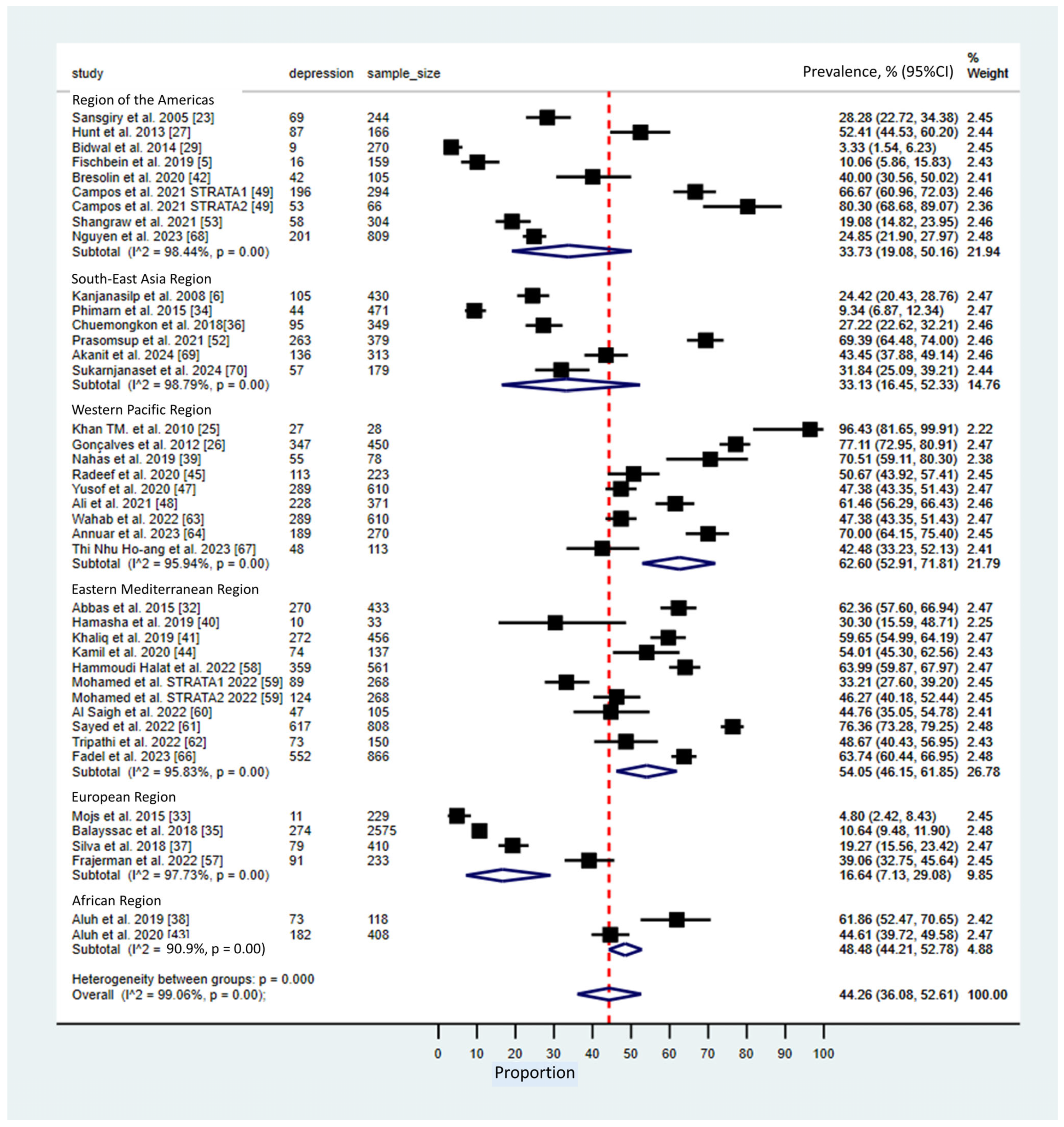
Subgroup analysis revealed significant regional variations in the pooled prevalence of depression among pharmacy students across WHO regions. The highest prevalence was observed in the Western Pacific Region at 62.60% (95% CI: 52.91–71.81, I2 = 95.94%, p < 0.001), followed by the Eastern Mediterranean Region at 54.05% (95% CI: 46.15–61.85, I2 = 95.83%, p < 0.001), and the African Region at 48.48% (95% CI: 44.21–52.78). The South-East Asia Region and the Region of the Americas reported comparable prevalence estimates of 33.13% (95% CI: 16.45–52.33, I2 = 98.79%, p < 0.001) and 33.73% (95% CI: 19.08–50.16, I2 = 98.44%, p < 0.001), respectively. The lowest prevalence was reported in the European Region at 16.64% (95% CI: 7.13–29.08, I2 = 97.73%, p < 0.001) (Appendix A.2), underscoring substantial heterogeneity in depression prevalence across global regions.
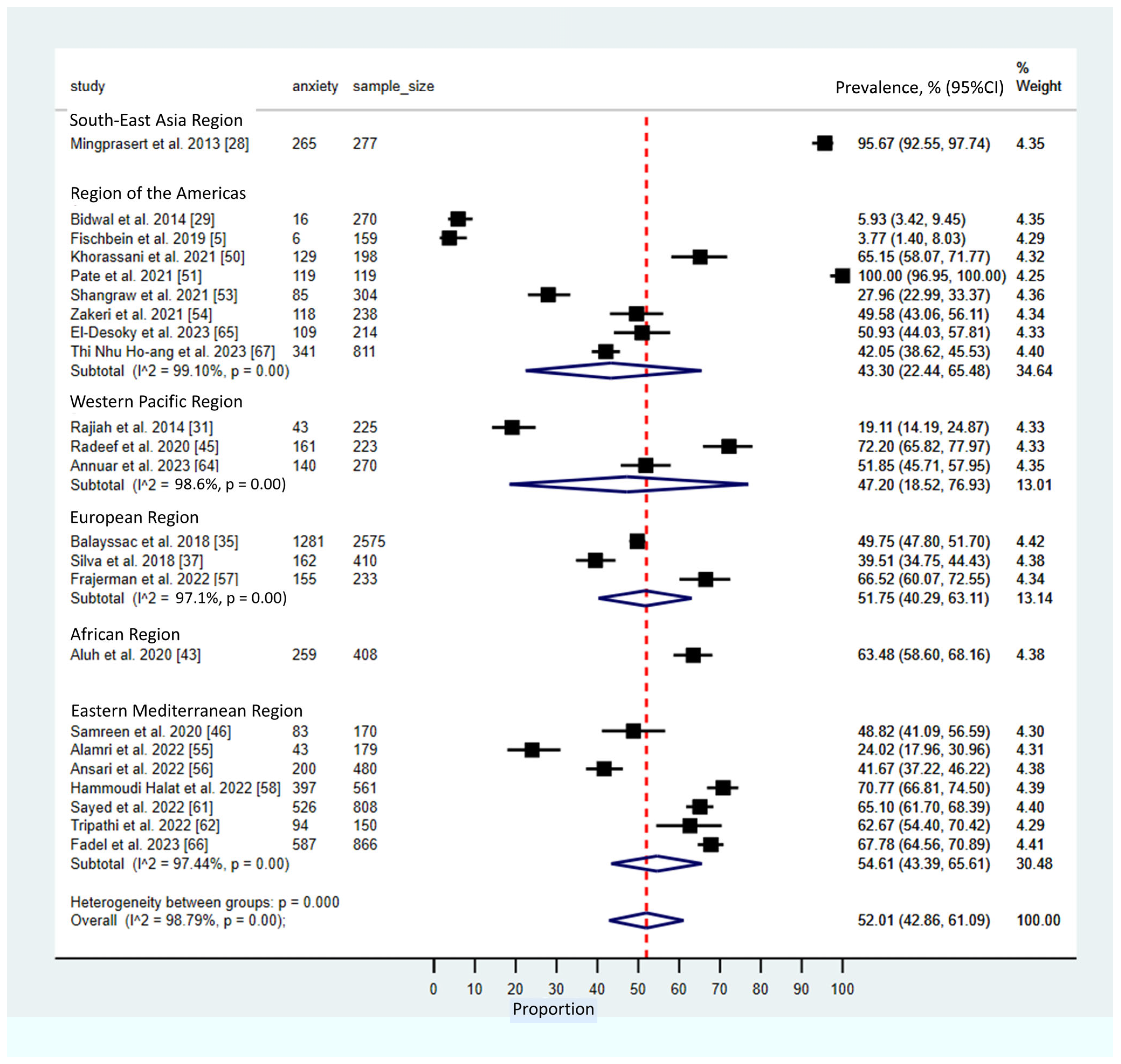
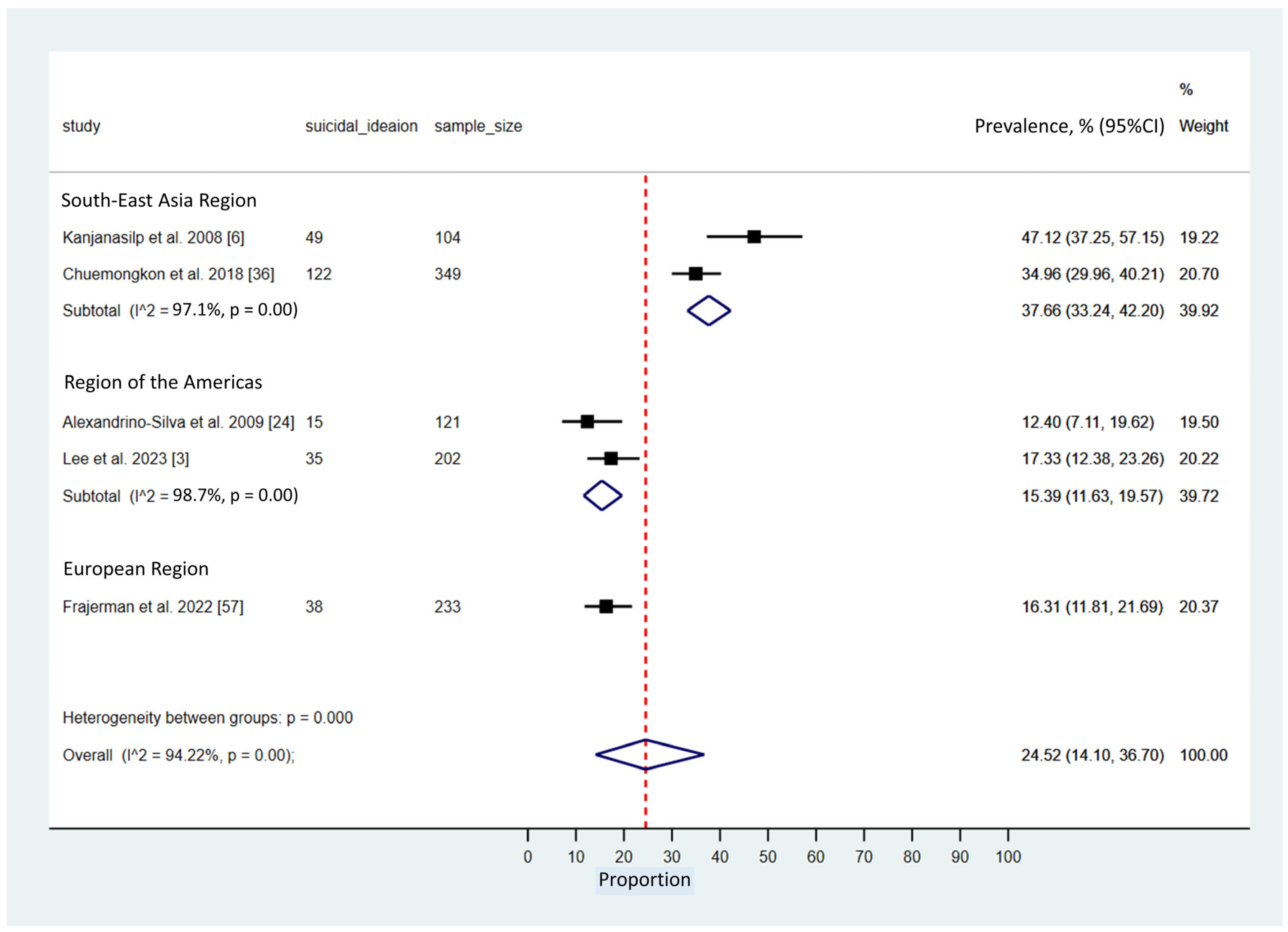
Similarly, considerable regional variation was observed in the prevalence of anxiety. The South-East Asia Region reported the highest rate at 95.67% (95% CI: 92.55–97.74), followed by the African Region at 63.48% (95% CI: 58.60–68.16) and the Eastern Mediterranean Region at 54.61% (95% CI: 43.39–65.61, I2 = 97.44%, p < 0.001). The European Region reported an anxiety prevalence of 51.75% (95% CI: 40.29–63.11), while lower estimates were found in the Western Pacific Region (47.20%; 95% CI: 18.52–76.93) and the Region of the Americas (43.30%; 95% CI: 22.44–65.48, I2 = 99.10%, p < 0.001) (Appendix A.3). These results reflect the marked differences in the prevalence of anxiety among pharmacy students across geographical contexts. In terms of suicidal ideation, the highest pooled prevalence was found in the South-East Asia Region at 37.66% (95% CI: 33.24–42.20), indicating a notable mental health burden among students in this area. In contrast, substantially lower rates were reported in the Region of the Americas at 15.39% (95% CI: 11.63–19.57) and the European Region at 16.31% (95% CI: 11.81–21.69) (Appendix A.4), further highlighting regional disparities in mental health outcomes among pharmacy students.
3.8. Meta-Regression
This study employed meta-regression analysis to investigate the association between depression prevalence among pharmacy students and three key country-level variables: WHO regional classification, World Bank income level, and GDP. The analysis of the relationship between national income level and depression prevalence revealed a statistically significant positive association, with lower-income countries reporting higher prevalence rates. The meta-regression yielded τ2 = 0.027, 95% CI: 0.0800–0.2123, I2 = 88.84%, and p < 0.001. These findings underscore the influence of socioeconomic disparities on mental health outcomes among student populations. A graphical representation of this association is presented in Figure 6. Similarly, a statistically significant negative association was observed between national GDP and the prevalence of depression. The analysis produced τ2 = 0.0362, 95% CI: –1.5 × 10⁻⁸ to –2.83 × 10⁻⁹, I2 = 94.75%, and p = 0.005, indicating that countries with lower GDP tend to have a higher prevalence of depression among pharmacy students. This relationship is illustrated in Figure 7.
Figure 6.
Meta-regression analysis assessing the association between the prevalence of depression among pharmacy students and national income level as classified by the World Bank. (The circle represents an individual study, with its size proportional to its statistical weight in the meta-regression model. The solid red line shows the fitted meta-regression line, indicating the estimated linear association between the covariate and the outcome).
Figure 7.
Meta-regression analysis assessing the association between depression prevalence among pharmacy students and national GDP. (The circle represents an individual study, with its size proportional to its statistical weight in the meta-regression model. The solid red line shows the fitted meta-regression line, indicating the estimated linear association between the covariate and the outcome).
In addition, a meta-regression analysis assessing the association between WHO regional classification and the prevalence of stress among pharmacy students revealed a statistically significant negative relationship. The results showed τ2 = 0.0283, 95% CI: –0.2311 to –0.0348, I2 = 91.48%, and p = 0.014, suggesting that regional characteristics as classified by the WHO may significantly influence stress prevalence in this population. A visual summary of these findings is depicted in Figure 8.
Figure 8.
Meta-regression analysis results following examination of the association between the prevalence of stress among pharmacy students and the WHO regional classification. (The circle represents an individual study, with its size proportional to its statistical weight in the meta-regression model. The solid red line shows the fitted meta-regression line, indicating the estimated linear association between the covariate and the outcome).
3.9. Publication Bias
To examine the potential for publication bias, which is defined as the systematic tendency to publish studies reporting favorable or hypothesis-confirming results more frequently, this study utilized multiple diagnostic techniques, including visual inspection of funnel plots, Egger’s test, and Egger’s regression plots. For depression prevalence analysis, the funnel plot (Figure 9A) appears symmetrical around the vertical axis, representing the pooled effect size, and indicating no substantial evidence of publication bias. This was corroborated by Egger’s test, which yielded an intercept of 0.39 (SE = 0.24, 95% CI: −0.09 to 0.88, t = 1.63, p = 0.11), suggesting the absence of statistically significant bias. The Egger’s regression plot further supported this finding, with the regression line intersecting the Y-axis near zero and the 95% CI spanning across zero.
Figure 9.
(A) Forest plot for the subgroup analysis of depression prevalence. (B) Forest plot for the subgroup analysis of anxiety prevalence. (C) Forest plot for the subgroup analysis of stress prevalence. (D) Forest plot for the subgroup analysis of suicidal ideation prevalence. (Each point represents an individual study in the meta-analysis. The vertical line indicates the pooled overall effect, and the diagonal lines form a symmetrical funnel corresponding to the expected 95% confidence limits in the absence of publication bias).
A similar pattern was observed in anxiety prevalence. The funnel plot (Figure 9B) shows visual symmetry around the central vertical axis, suggesting no evidence of publication bias. Egger’s test confirmed this interpretation, with an intercept of –0.35 (SE = 0.58, 95% CI: –1.56 to 0.85, t = –0.62, p = 0.54). Additionally, the Egger’s regression plot demonstrated a Y-axis intersection near zero and a 95% CI encompassing zero, indicating no statistical evidence of publication bias in the included studies. In contrast, the analysis of stress prevalence revealed potential publication bias. Although the funnel plot (Figure 9C) appears visually symmetrical, Egger’s test indicated statistically significant asymmetry, with an intercept of –2.21 (SE = 0.93, 95% CI: –4.37 to –0.06, t = –2.37, p = 0.045). This finding was further supported by Egger’s regression plot, which showed the regression line intersecting the Y-axis near zero, but with a 95% CI that did not span zero, providing additional evidence of publication bias in the included studies. No evidence of publication bias was observed in the analysis of suicidal ideation prevalence. The funnel plot (Figure 9D) is symmetrical, and Egger’s test yielded non-significant results (intercept = 0.21 SE = 1.39, 95% CI: –4.23 to 4.65, t = 0.15, p = 0.889). Similarly, Egger’s regression plot showed a regression line intersecting the Y-axis near zero with a 95% CI crossing zero, supporting the absence of publication bias.
4. Discussion
A review of the literature revealed that the present study is an updated systematic review and meta-analysis that specifically examined the prevalence of mental health problems, namely depression, anxiety, suicidal ideation, and stress, among pharmacy students globally. The findings of this study indicated that the pooled prevalence of depression was 44.26%, anxiety 52.01%, stress 48.10%, and suicidal ideation 24.52%. These results provide compelling evidence supporting the urgent need to develop mental health support strategies tailored for pharmacy students. Such strategies are essential for formulating policies and practices aimed at promoting student well-being and mitigating the impact of mental health problems within this population.
The quality of the included studies was assessed using the NOS and the Risk of Bias Tool to ensure data reliability and methodological rigor. Among the 48 included cross-sectional studies, most received NOS scores ranging from 7 to 9, indicating high methodological quality. This reflects a robust study design and reliable data collection procedures. Two longitudinal and repeated-measures studies scored between 6 and 7, indicating moderate-to-high quality, although some methodological limitations were noted. The single RCT included in this review was evaluated using the Risk of Bias Tool. Overall, the included studies were of high quality and provided reliable evidence. Nevertheless, it is important to interpret findings from studies with a higher risk of bias cautiously to avoid overestimation or misinterpretation of the results. Therefore, the present study provides valuable high-quality data that can inform the development of targeted and effective mental health interventions for pharmacy students.
When compared with previous research, the prevalence of depression (44.26%) and suicidal ideation (24.52%) among pharmacy students observed in this study appears substantially higher than those reported among medical students. For instance, a meta-analysis by Rotenstein et al. (2016) [71] found that the prevalence of depression and suicidal ideation among medical students was 27.2% and 11.1%, respectively. Furthermore, the highest prevalence of depression among pharmacy students in this study was found in the Western Pacific Region, which contrasts with the findings of Shorey et al. (2022) [72]. Their global meta-analysis of depression in adolescents reported the highest prevalence in Asia, the Middle East, and Africa.
The subgroup analysis revealed a substantial disparity in depression prevalence between the Western Pacific Region (62.60%) and the European Region (16.64%). This difference may reflect the tendency for pharmacy and other health-science students in Asian contexts to report higher levels of psychological distress, a phenomenon often linked to more intensive academic workloads, competitive learning environments, and cultural stigma associated with seeking mental-health support, which may delay early intervention and exacerbate symptoms [69,73,74]. Conversely, European higher-education settings generally offer more established student mental-health support systems, greater openness toward mental-health disclosure, and wider availability of institutional counseling services, potentially contributing to lower observed prevalence [75,76]. Furthermore, variation in screening instruments, diagnostic thresholds, and symptom reporting norms across regions may also influence prevalence estimates and contribute to observed discrepancies between studies conducted in Europe and Asia.
The included studies utilized a range of screening instruments to assess depression, anxiety, and stress (e.g., BDI, PHQ-9, DASS-21), each applying different scoring thresholds and severity classifications. In the present meta-analysis, prevalence was extracted based on the proportion of participants meeting the minimum cut-off for clinical symptoms, irrespective of severity level, as defined in the original studies. Consequently, the pooling of outcomes derived from heterogeneous measurement tools and varying severity thresholds may have contributed to the high heterogeneity observed, potentially resulting in an overestimation of prevalence in the aggregated meta-analytic estimates.
This study also identified significant associations between national economic indicators and depression prevalence. Specifically, countries with lower income levels had a significantly higher prevalence of depression among pharmacy students. A similar inverse association was observed between GDP and the prevalence of depression, suicidal ideation, and stress, indicating that students in countries with lower GDPs are more likely to experience these mental health challenges. These findings are inconsistent with a systematic review and meta-analysis by Akhtar et al. (2020) [77], which assessed the prevalence of depression among university students in low- and middle-income countries (LMICs). Their review of 37 studies involving 76,608 students across 20 countries concluded that there were no significant differences in depression prevalence based on study design, sampling method, sample size, field of study, academic level, economic region, or screening tool.
Our presented association, therefore, warrants further examination to understand the potential causal pathways linking macroeconomic conditions to the psychological well-being of student populations. There are several potential mechanisms through which national economic indicators may influence mental health outcomes among students. First, economic hardship at the national level often translates into constrained public investment in education and mental health care infrastructure. In LMICs, limited access to psychological services, financial aid, and academic support programs can exacerbate students’ vulnerability to stress and depression [78]. Second, macroeconomic instability may lead to household-level financial insecurity, increasing the pressure on students who must simultaneously cope with academic demands and socioeconomic stressors [79]. This aligns with social causation theory, which posits that poverty and low socioeconomic status contribute causally to the onset of mental disorders, particularly depression [80].
In the educational context, pharmacy students in LMICs may face heightened academic workloads, poor educational infrastructure, and limited employment prospects after graduation, all of which may synergistically compound psychological distress. Recent data from LMICs have shown that pharmacy curricula are perceived as academically intense and often lack adequate support systems and career counseling services [5,81]. These factors contribute to increased rates of anxiety and depression compared to students in higher-income settings, where institutional support and resilience-building programs are more accessible [82].
Interestingly, the current findings diverge from those reported by Akhtar et al. (2020) [77], whose systematic review and meta-analysis of 37 studies involving over 76,000 university students across 20 LMICs found no significant differences in depression prevalence based on economic region or other study characteristics. This discrepancy may have arisen from several methodological factors. For example, Akhtar et al. aggregated data across diverse academic disciplines and educational contexts, potentially diluting discipline-specific stressors that are particularly pronounced in fields such as pharmacy. Moreover, variations in the operationalization of depression, cultural norms regarding emotional disclosure, and differences in measurement tools may further obscure the relationship between economic indicators and the prevalence of depression [83].
The high heterogeneity observed in our meta-analysis may influence the reliability and stability of the association between GDP classification and depression prevalence. Previous meta-analyses demonstrated that heterogeneity is often substantial in mental-health prevalence research, and high I2 can affect the precision of meta-regression coefficients, potentially leading to over- or under-estimation of socioeconomic effects [84,85]. Moreover, socioeconomic gradients in mental health are multifactorial, influenced not only by GDP but also by health system capacity, cultural perceptions, and stress-coping environments [78,86,87].
Another possible explanation is the heterogeneity of LMICs. When grouped collectively, countries classified as LMICs exhibit wide variations in healthcare access, cultural attitudes toward mental health, and economic resilience, which could differentially affect student well-being. For instance, studies in sub-Saharan Africa have reported a higher prevalence of depression than those in Southeast Asia, even among countries with comparable GDP per capita, indicating the influence of additional sociopolitical and cultural factors [88,89].
The observed association between low national income and a high prevalence of depression underscores the need for targeted mental health interventions in economically disadvantaged regions. Strategies may include the integration of mental health services within academic institutions, expansion of financial support for students, and structural investments in the health and education sectors. Future research should employ multilevel modeling approaches to disentangle individual-level stressors from country-level economic variables and identify the protective factors that buffer mental distress in low-resource settings.
Although the present study did not specifically analyze the causal factors underlying depression, anxiety, suicidal ideation, or stress, the existing literature provides important insights into the potential mechanisms that contribute to these mental health issues among pharmacy students. Previous empirical studies identified psychosocial and academic stressors as key contributors, suggesting a complex interplay between personal, interpersonal, and institutional factors. A descriptive cross-sectional study by Sukarnjanaset et al. (2024) [70] revealed that interpersonal relationships with peers, romantic partners, and/or family members were significantly associated with depressive symptoms in pharmacy students. These difficulties can foster feelings of loneliness, rejection, and low self-worth, which can precipitate or exacerbate depressive episodes [90]. Moreover, sleep disturbances, which were also highlighted in the study by Sukarnjanaset [70], are both a symptom of and a potential causal factor for depression. Insufficient or poor sleep quality has been shown to impair emotional regulation and cognitive performance, thereby increasing susceptibility to mood disorders [91,92]. Another study also noted that students in their first year of pharmacy school experienced higher levels of depression than their senior peers [93], possibly because of academic transition stress, lack of coping mechanisms [94], and diminished social support during the adjustment phase [95,96].
Complementing the above findings, Akanit et al. (2024) [69] utilized a mixed-methods approach combining quantitative surveys and qualitative interviews to explore academic-related stressors. They identified five primary academic challenges that are strongly associated with depression: (1) unmet academic expectations, (2) difficulty keeping pace with classmates, (3) overly complex course content, (4) insufficient time for exam preparation, and (5) presentation-related anxiety. These findings align with the academic stress model, which posits that a mismatch between academic demands [97] and students’ perceived capabilities trigger psychological strain [98,99]. When students are unable to meet their academic goals, either self-imposed or externally driven, they may experience feelings of inadequacy, fear of failure, and learned helplessness, all of which are key precursors of depression [100,101].
Moreover, the pharmacy curriculum is widely acknowledged to be academically rigorous and often involves heavy workloads, high-stakes assessments, and competitive environments [102,103]. These factors may disproportionately affect students who lack effective time management or study skills, or those with high levels of perfectionism, a trait associated with increased vulnerability to depressive symptoms [104]. Anxiety around public presentations, a stressor identified by Akanit et al. [69], is particularly relevant for students with social anxiety or low self-esteem and may exacerbate avoidance behaviors and isolation, compounding depressive tendencies [105,106].
Identifying these causative relationships has practical implications. Interventions targeted at improving interpersonal skills, stress management, and sleep hygiene should be integrated into pharmacy education programs. Additionally, academic support services such as tutoring, peer mentoring, and flexible examination scheduling may mitigate the negative mental health impacts of educational stressors. From a research perspective, longitudinal studies are needed to establish the temporal relationship between these stressors and mental health outcomes. Moreover, mediation analyses could elucidate how variables such as resilience, coping style, and social support modulate the effects of these stressors on depressive symptoms.
Based on subgroup analyses, our findings highlight the need for tiered, context-specific mental health interventions for pharmacy students. In low- and middle-income settings with higher prevalence, priorities include improving access to basic mental health services, early screening, and referral pathways. In high-income settings, interventions should focus on academic stress management, workload optimization, and resilience building. Stage-specific support, including transition programs for junior students and stress-coping interventions for senior students, is also warranted.
High heterogeneity is common in meta-proportion analyses due to methodological and contextual diversity across studies, particularly in mental-health research [107]. Potential contributors include variation in assessment instruments and diagnostic cut-offs such as the use of DASS-21, PHQ-9, GAD-7, HADS, and Beck inventories each demonstrating different sensitivity and scoring thresholds that influence prevalence estimates [108,109]. Considerable variation in population characteristics, academic stage, and learning environment (e.g., pre-clinical vs. clinical years, examination periods, internship demands) further contributes to psychological burden disparities among pharmacy students [110]. Additionally, geographical and sociocultural differences, including mental-health stigma, access to psychological support, and variability in educational systems, have been shown to influence prevalence outcomes across countries [86,111]. Temporal factors also play an important role, as studies conducted during the COVID-19 pandemic reported significantly higher levels of anxiety and depression than pre-pandemic periods [112,113]. Heterogeneity is further amplified by differences in study design, sampling approaches (online vs. campus-based surveys), voluntary participation, and sample size variation, with smaller studies tending to overestimate prevalence in meta-analyses. Moreover, the statistical behavior of proportional data, particularly when estimates approach 0% or 100%, naturally increases variance across studies [71,114].
This study has several limitations that warrant consideration. First, only one RCT was included in the analysis, and it was assessed as having a high risk of bias using the Risk of Bias Tool, which may undermine the overall credibility of the pooled results. Second, the included studies were conducted across diverse countries with differing cultural norms, educational structures, and social contexts, which likely contributed to substantial variability in reported outcomes. The extremely high heterogeneity observed across all pooled prevalence estimates (I2 > 98%) and the very wide 95% PIs of all outcomes indicates substantial between-study heterogeneity and considerable uncertainty regarding the expected prevalence in a future study. Therefore, these findings have important implications for their interpretation. In meta-analyses of proportions, such heterogeneity reflects genuine between-study differences arising from variation in population characteristics, geographic settings, assessment instruments, cut-off thresholds, and study designs. Although random-effects models were appropriately applied, the resulting pooled prevalence estimates should be interpreted primarily as descriptive summaries of overall burden rather than precise epidemiological estimates applicable to specific populations. Consequently, these pooled estimates may have limited statistical and clinical precision, and their generalizability is inherently constrained. The prevalence figures reported in this study are thus intended to illustrate broad global trends in mental health burden among pharmacy students, while subgroup and meta-regression analyses should be viewed as exploratory and hypothesis-generating. Furthermore, the absence of data from some countries with distinct mental health profiles may have further limited the consistency and generalizability of the findings. Third, the use of a wide range of mental health assessment tools, such as the PHQ-9, BDI, HADS, DASS-21, and ST-5, may have introduced variability in measurement sensitivity and specificity, potentially affecting the comparability of results across studies and contributing to measurement bias. Fourth, this review may be subject to geographic and language bias, as gray literature searches were limited to ThaiJo and Thai Thesis databases and only English- and Thai-language studies were included. Moreover, this study did not include searches in specialized psychiatric and medical databases such as PsycINFO and Embase, which may have resulted in the omission of relevant mental health–related literature. Future research should incorporate PsycINFO and Embase to achieve more comprehensive coverage and reduce the potential for publication bias. Finally, subgroup analyses by WHO region and World Bank income level were performed to explore global geographic and economic patterns in mental health prevalence among pharmacy students. However, some subgroups, particularly the European region, included few studies, which may limit estimate stability and precision. Therefore, these findings should be interpreted cautiously and considered exploratory. The classifications were retained to maintain global relevance and facilitate cross-regional comparison, with results intended to illustrate broad trends rather than definitive regional prevalence.
Future research should investigate the environmental factors that may influence the mental health of pharmacy students, including the structure of the educational system, academic pressure, work–life balance, and social environment, all of which may play critical roles in psychological well-being. Insights from such studies could contribute to a more comprehensive understanding of the determinants of mental health issues in this population. Furthermore, the findings should be applied to inform the development of preventive measures aimed at supporting the mental health of students. This may include the implementation of psychological counseling services, stress management training programs, and the creation of supportive networks within universities to foster resilience and promote overall mental wellness among pharmacy students.
5. Conclusions
In conclusion, this systematic review and meta-analysis provide a comprehensive global overview and evidence of the prevalence of mental health problems among pharmacy students. The findings revealed alarmingly high prevalence rates of mental health issues among pharmacy students, including depression, anxiety, stress, and suicidal ideation. This highlights the critical and pervasive burden of psychological distress in this population. Given the demanding nature of pharmacy education and its associated stressors, the mental well-being of pharmacy students warrants immediate and sustained attention from academic institutions, healthcare policymakers, and mental health professionals.
Supplementary Materials
The following supporting information can be downloaded at: https://www.mdpi.com/article/10.3390/ijerph23020155/s1, Table S1: PRISMA 2020 checklist [115].
Author Contributions
Conceptualization, W.P., T.P., J.K., P.T., C.T. and K.S.; methodology, W.P., T.P., J.K., P.T. and K.S.; software, W.P., J.K., P.T., C.T. and K.S.; validation, W.P., T.P., J.K., P.T., C.T. and K.S.; formal analysis, W.P., J.K. and P.T.; investigation, W.P.; resources, W.P., J.K. and P.T.; data curation, W.P., T.P. and C.T.; writing—original draft preparation, W.P., T.P., C.T. and K.S.; writing—review and editing, W.P., T.P., C.T. and K.S.; visualization, W.P.; supervision, W.P.; project administration, W.P.; funding acquisition, W.P. All authors have read and agreed to the published version of the manuscript.
Funding
This research project was financially supported by Mahasarakham University; grant number 2568.
Institutional Review Board Statement
Not applicable.
Informed Consent Statement
Not applicable.
Data Availability Statement
The datasets used and/or analyzed during the current study are available from the corresponding author on reasonable request.
Conflicts of Interest
The authors declare no conflicts of interest.
Abbreviations
The following abbreviations are used in this manuscript:
| BDI | Beck Depression Inventory |
| BSI | Beck Scale for Suicidal Ideation |
| CCAPS-62 | Counseling Center Assessment of Psychological Symptoms-62 |
| CES-D | Center for Epidemiological Studies–Depression Scale |
| CI | Confidence interval |
| CTAS-2 | Cognitive Test Anxiety Scale–2nd Edition |
| DASS | Depression Anxiety Stress Scale |
| DSM | Diagnostic and Statistical Manual of Mental Disorders |
| GAD-7 | Generalized Anxiety Disorder-7 |
| GDP | Gross domestic product |
| GRADE | The Grading of Recommendations Assessment, Development, and Evaluation |
| HADS | Hospital Anxiety and Depression Scale; DASS |
| KADS | Kutcher Adolescent Depression Scale |
| LMICs | Low- and Middle-Income Countries |
| NOS | The Newcastle-Ottawa quality assessment scale |
| PHQ | Patient Health Questionnaire |
| PIs | Prediction intervals |
| PRISMA | The Preferred Reporting Items for Systematic Reviews and Meta-Analyses |
| PSS | Perceived Stress Scale |
| SAS | Zung Self-Rating Anxiety Scale |
| SPST-20 | Suanprung Stress Test-20 |
| STAI | State-Trait Anxiety Inventory |
| ST-5 | Stress Test Questionnaire |
| TAI | Test Anxiety Inventory |
| WHO | World Health Organization |
| WTAS | Westside Test Anxiety Scale |
Appendix A
Appendix A.1
Table A1.
Search strategies.
Appendix A.2
Figure A1.
Subgroup analysis prevalence of depression among pharmacy students across WHO regions. (The solid black square (■) represents the point estimate of the observed outcome. The diamond square (◆) denotes the pooled or overall estimate derived from the aggregated data. The dotted line (---) indicates the final pooled estimate).
Appendix A.3
Figure A2.
Subgroup analysis prevalence of anxiety among pharmacy students across WHO regions. (The solid black square (■) represents the point estimate of the observed outcome. The diamond square (◆) denotes the pooled or overall estimate derived from the aggregated data. The dotted line (---) indicates the final pooled estimate).
Appendix A.4
Figure A3.
Subgroup analysis prevalence of suicidal ideation among pharmacy students across WHO regions. (The solid black square (■) represents the point estimate of the observed outcome. The diamond square (◆) denotes the pooled or overall estimate derived from the aggregated data. The dotted line (---) indicates the final pooled estimate).
References
- World Health Organization. Mental Disorders. Available online: https://www.who.int/news-room/fact-sheets/detail/mental-disorders (accessed on 12 January 2025).
- World Health Organizaton. Mental Health. Available online: https://www.who.int/news-room/fact-sheets/detail/mental-health-strengthening-our-response (accessed on 12 January 2025).
- Lee, K.C.; Huang, R.; Tal, I.R.; Downs, N.; Zisook, S. Comparison of Suicidal Ideation and Depressive Symptoms Between Medical and Pharmacy Students. Am. J. Pharm. Educ. 2023, 87, ajpe8881. [Google Scholar] [CrossRef] [Scilit]
- Clavero, M.A.; Visacri, M.B.; Lima, T.d.M.; Rotta, I.; Aguiar, P.M. Prevalence and Incidence of Depressive Symptoms in Pharmacy Students: A Systematic Review. J. Am. Pharm. Assoc. 2023, 63, 1452–1460. [Google Scholar] [CrossRef] [Scilit]
- Fischbein, R.; Bonfine, N. Pharmacy and Medical Students’ Mental Health Symptoms, Experiences, Attitudes and Help-Seeking Behaviors. Am. J. Pharm. Educ. 2019, 83, 7558. [Google Scholar] [CrossRef] [Scilit]
- Kanjanasilp, J.; Saramunee, K.; Kongsree, S.; Suthiraksa, S.; Chummalee, I.; Hanrin, R. The Prevalence of Stress and Depression among Pharmacy Students at Mahasarakham University. Isan J. Pharm. Sci. 2008, 4, 65–72. [Google Scholar]
- Sabourin, A.A.; Prater, J.C.; Mason, N.A. Assessment of Mental Health in Doctor of Pharmacy Students. Curr. Pharm. Teach. Learn. 2019, 11, 243–250. [Google Scholar] [CrossRef] [Scilit]
- Chu, T.; Liu, X.; Takayanagi, S.; Matsushita, T.; Kishimoto, H. Association between Mental Health and Academic Performance among University Undergraduates: The Interacting Role of Lifestyle Behaviors. Int. J. Methods Psychiatr. Res. 2023, 32, e1938. [Google Scholar] [CrossRef] [Scilit] [PubMed]
- Arria, A.M.; Caldeira, K.M.; Vincent, K.B.; Winick, E.R.; Baron, R.A.; O’Grady, K.E. Discontinuous College Enrollment: Associations With Substance Use and Mental Health. Psychiatr. Serv. 2013, 64, 165–172. [Google Scholar] [CrossRef] [Scilit] [PubMed]
- Oliver, W.; McGuffey, G.; Westrick, S.C.; Jungnickel, P.W.; Correia, C.J. Alcohol Use Behaviors Among Pharmacy Students. Am. J. Pharm. Educ. 2014, 78, 30. [Google Scholar] [CrossRef] [Scilit] [PubMed]
- Zhang, H.; Hashim, S.B.; Huang, D.; Zhang, B. The Effect of Physical Exercise on Depression among College Students: A Systematic Review and Meta-Analysis. PeerJ 2024, 12, e18111. [Google Scholar] [CrossRef] [Scilit]
- Yang, S.; Huang, P.; Li, B.; Gan, T.; Lin, W.; Liu, Y. The Relationship of Negative Life Events, Trait-Anxiety and Depression among Chinese University Students: A Moderated Effect of Self-Esteem. J. Affect. Disord. 2023, 339, 384–391. [Google Scholar] [CrossRef] [Scilit]
- Cumpston, M.; Li, T.; Page, M.J.; Chandler, J.; Welch, V.A.; Higgins, J.P.; Thomas, J. Updated Guidance for Trusted Systematic Reviews: A New Edition of the Cochrane Handbook for Systematic Reviews of Interventions. Cochrane Database Syst. Rev. 2019, 10, ED000142. [Google Scholar] [CrossRef] [Scilit]
- Lo, C.K.-L.; Mertz, D.; Loeb, M. Newcastle-Ottawa Scale: Comparing Reviewers’ to Authors’ Assessments. BMC Med. Res. Methodol. 2014, 14, 45. [Google Scholar] [CrossRef] [Scilit]
- Jadad, A.R.; Moore, R.A.; Carroll, D.; Jenkinson, C.; Reynolds, D.J.M.; Gavaghan, D.J.; McQuay, H.J. Assessing the Quality of Reports of Randomized Clinical Trials: Is Blinding Necessary? Control. Clin. Trials 1996, 17, 1–12. [Google Scholar] [CrossRef] [Scilit]
- Sterne, J.A.C.; Savović, J.; Page, M.J.; Elbers, R.G.; Blencowe, N.S.; Boutron, I.; Cates, C.J.; Cheng, H.-Y.; Corbett, M.S.; Eldridge, S.M.; et al. RoB 2: A Revised Tool for Assessing Risk of Bias in Randomised Trials. BMJ 2019, 366, l4898. [Google Scholar] [CrossRef] [Scilit] [PubMed]
- Prasad, M. Introduction to the GRADE Tool for Rating Certainty in Evidence and Recommendations. Clin. Epidemiol. Glob. Health 2024, 25, 101484. [Google Scholar] [CrossRef] [Scilit]
- Riley, R.D.; Higgins, J.P.T.; Deeks, J.J. Interpretation of Random Effects Meta-Analyses. BMJ 2011, 342, d549. [Google Scholar] [CrossRef] [Scilit]
- McHugh, M.L. Interrater Reliability: The Kappa Statistic. Biochem. Med. 2012, 22, 276–282. [Google Scholar] [CrossRef] [Scilit]
- Michael, H. The Power Functions of Begg’s and Egger’s Tests for Publication Bias. Stat. Neerl. 2025, 79, e12364. [Google Scholar] [CrossRef] [Scilit]
- Lin, L.; Chu, H. Quantifying Publication Bias in Meta-Analysis. Biometrics 2018, 74, 785–794. [Google Scholar] [CrossRef] [Scilit] [PubMed]
- Shi, L.; Lin, L. The Trim-and-Fill Method for Publication Bias: Practical Guidelines and Recommendations Based on a Large Database of Meta-Analyses. Medicine 2019, 98, e15987. [Google Scholar] [CrossRef] [Scilit]
- Sansgiry, S.S.; Bhosle, M.; Dutta, A.P. Predictors of Test Anxiety in Doctor of Pharmacy Students: An Empirical Study. Pharm. Educ. 2005, 5, 121–129. [Google Scholar] [CrossRef] [Scilit]
- Alexandrino-Silva, C.; Pereira, M.L.G.; Bustamante, C.; Ferraz, A.C.d.T.; Baldassin, S.; de Andrade, A.G.; Alves, T.C.d.T.F. Suicidal Ideation among Students Enrolled in Healthcare Training Programs: A Cross-Sectional Study. Rev. Bras. Psiquiatr. 2009, 31, 338–344. [Google Scholar] [CrossRef] [Scilit] [PubMed]
- Khan, T.M.; Humera, T.K.A. Incidence of Major Depression among First Year Pharmacy Undergraduates. J. Clin. Diagn. Res. 2010, 1, 2265–2270. [Google Scholar]
- Gonçalves, V.; Zidan, A.; Issa, M.; Barah, F. A Longitudinal Investigation of Depressive Symptoms in Undergraduate Students of Pharmacy in Syria. J. Nerv. Ment. Dis. 2012, 200, 395–400. [Google Scholar] [CrossRef] [Scilit]
- Hunt, K.; Gable, K.N. Prevalence of Depressive Symptoms and Obsessive–Compulsive Personality Traits among Pharmacy Students. Curr. Pharm. Teach. Learn. 2013, 5, 541–545. [Google Scholar] [CrossRef] [Scilit]
- Minkprasert, A. An Affecting Factors on the Anxiety Students in Faculty of Pharmacy at Rangsit University. Chandrakasem Rajabhat Univ. J. 2013, 19, 67–74. [Google Scholar]
- Bidwal, M.K.; Ip, E.J.; Shah, B.M.; Serino, M.J. Stress, Drugs, and Alcohol Use Among Health Care Professional Students. J. Pharm. Pract. 2015, 28, 535–542. [Google Scholar] [CrossRef] [Scilit]
- Minkprasert, A.; De Sheng, K. A Study of Mental Health and the Stress of Undergraduate Students in Faculty of Pharmacy at Rangsit University. J. Soc. Sci. Hum. 2014, 40, 211–227. [Google Scholar]
- Rajiah, K.; Saravanan, C. The Effectiveness of Psychoeducation and Systematic Desensitization to Reduce Test Anxiety Among First-Year Pharmacy Students. Am. J. Pharm. Educ. 2014, 78, 163. [Google Scholar] [CrossRef] [Scilit]
- Abbas, A.; Rizvi, S.A.; Hasan, R.; Aqeel, N.; Khan, M.; Bhutto, A.; Khan, Z.; Mannan, Z. The Prevalence of Depression and Its Perceptions among Undergraduate Pharmacy Students. Pharm. Educ. 2015, 15, 57–63. [Google Scholar]
- Mojs, E.H.; Warchoł-Biedermann, K.; Głowacka, M.D.; Strzelecki, W.; Ziemska, B.; Samborski, W. Are Students Prone to Depression and Suicidal Thoughts? Arch. Med. Sci. 2015, 3, 605–611. [Google Scholar] [CrossRef] [Scilit]
- Phimarn, W.; Kaewphila, P.; Suttajit, S.; Saramunee, K. Depression Screening and Advisory Service Provided by Community Pharmacist for Depressive Students in University. Springerplus 2015, 4, 470. [Google Scholar] [CrossRef] [Scilit] [PubMed]
- Balayssac, D.; Pereira, B.; Darfeuille, M.; Cuq, P.; Vernhet, L.; Collin, A.; Vennat, B.; Authier, N. Use of Psychotropic Medications and Illegal Drugs, and Related Consequences Among French Pharmacy Students—SCEP Study: A Nationwide Cross-Sectional Study. Front. Pharmacol. 2018, 9, 725. [Google Scholar] [CrossRef] [Scilit]
- Chuemongkon, W.; Rungrattanapongporn, P. Depression and Suicidal Risk among Pharmacy Students at Srinakharinwirot University. J. Med. Health Sci. 2018, 25, 124–134. [Google Scholar]
- Silva, R.G.; Figueiredo-Braga, M. Evaluation of the Relationships among Happiness, Stress, Anxiety, and Depression in Pharmacy Students. Curr. Pharm. Teach. Learn. 2018, 10, 903–910. [Google Scholar] [CrossRef] [Scilit]
- Aluh, D.O.; Okonta, M.; Odili, V. A Comparative Study of Depression Literacy between Pharmacy and Non-Pharmacy Students of a Nigerian University. J. Ment. Health Train. Educ. Pract. 2019, 15, 114–124. [Google Scholar] [CrossRef] [Scilit]
- Nahas, A.R.F.; Elkalmi, R.; Al-Shami, A.; Elsayed, T. Prevalence of Depression among Health Sciences Students: Findings from a Public University in Malaysia. J. Pharm. Bioallied Sci. 2019, 11, 170. [Google Scholar] [CrossRef] [Scilit]
- Hamasha, A.A.-H.; Kareem, Y.M.; Alghamdi, M.S.; Algarni, M.S.; Alahedib, K.S.; Alharbi, F.A. Risk Indicators of Depression among Medical, Dental, Nursing, Pharmacology, and Other Medical Science Students in Saudi Arabia. Int. Rev. Psychiatry 2019, 31, 646–652. [Google Scholar] [CrossRef] [Scilit] [PubMed]
- Khaliq, S.A.; Khaliq, S.A.; Aslam, S.; Ali, S.; Lone, W.A.; Din, M.; Ahmed, S. Major Depressive Disorders and Persistent Depressive Disorders among Pharm.D Students: A Cross Sectional Study. J. Univ. Med. Dent. Coll. 2019, 10, 25–29. [Google Scholar]
- Bresolin, J.Z.; Dalmolin, G.d.L.; Vasconcellos, S.J.L.; Barlem, E.L.D.; Andolhe, R.; Magnago, T.S.B.d.S. Depressive Symptoms among Healthcare Undergraduate Students. Rev. Lat. Am. Enferm. 2020, 28, e3239. [Google Scholar] [CrossRef] [Scilit]
- Aluh, D.O.; Abba, A.; Afosi, A.B. Prevalence and Correlates of Depression, Anxiety and Stress among Undergraduate Pharmacy Students in Nigeria. Pharm. Educ. 2020, 20, 236–248. [Google Scholar] [CrossRef] [Scilit]
- Kamil, N.A.A.; Mohammed, S.E.E.; Elhadi, Y.A.M.; Musa, M.B.; Adebisi, Y.A.; Prisno, D.E.-L., III. The Impact of COVID-19 on Pharmacy Students in Sudan: A Cross-Sectional Survey. Pharm. Educ. 2020, 20, 276–782. [Google Scholar] [CrossRef] [Scilit]
- Radeef, A.S.; Faisal, G.G. Depression, Anxiety and Stress Among Pharmacy Students in Malaysia. J. Int. Dent. Med. Res. 2020, 13, 628–632. [Google Scholar]
- Samreen, S.; Siddiqui, N.A.; Mothana, R.A. Prevalence of Anxiety and Associated Factors among Pharmacy Students in Saudi Arabia: A Cross-Sectional Study. Biomed. Res. Int. 2020, 2020, 2436538. [Google Scholar] [CrossRef] [Scilit]
- Yusof, N.S.M.; Zainal, Z.A.; Huri, H.Z.; Jacob, S.A.; Alwi, M.N.M.; Hassan, Y.; Hashim, R. Prevalence of Depression among Undergraduate Pharmacy Students in Malaysia. Int. J. Pharm. Res. 2020, 12, 2033–2042. [Google Scholar] [CrossRef] [Scilit]
- Blebil, A.; Dujaili, J.; Haider Mohammed, A.; Cheong, C.M.; Hoo, Y. The Effect of Stress and Depression on Quality of Life of Pharmacy Students in Malaysia. Pharm. Educ. 2021, 21, 323–333. [Google Scholar] [CrossRef] [Scilit]
- Campos, J.A.D.B.; Campos, L.A.; Bueno, J.L.; Martins, B.G. Emotions and Mood Swings of Pharmacy Students in the Context of the Coronavirus Disease of 2019 Pandemic. Curr. Pharm. Teach. Learn. 2021, 13, 635–642. [Google Scholar] [CrossRef] [Scilit]
- Khorassani, F.; Hassani, B.; Conry, J.; Espejo, G. Evaluation of Anxiety in Doctor of Pharmacy Students in Their First through Fourth Professional Years. Curr. Pharm. Teach. Learn. 2021, 13, 628–634. [Google Scholar] [CrossRef] [Scilit] [PubMed]
- Pate, A.N.; Neely, S.; Malcom, D.R.; Daugherty, K.K.; Zagar, M.; Medina, M.S. Multisite Study Assessing the Effect of Cognitive Test Anxiety on Academic and Standardized Test Performance. Am. J. Pharm. Educ. 2021, 85, 8041. [Google Scholar] [CrossRef] [Scilit] [PubMed]
- Prasomsup, S.; Pannoi, K.; Kamchaithep, N.; Maitreemit, P.; Gorsanan, S.A.L. Factors Affecting Stress in Students, Faculty of Pharmacy, Mahidol University. J. Health Sci. 2021, 30, 1122–1133. [Google Scholar]
- Shangraw, A.M.; Silvers, J.; Warholak, T.; Vadiei, N. Prevalence of Anxiety and Depressive Symptoms Among Pharmacy Students. Am. J. Pharm. Educ. 2021, 85, 8166. [Google Scholar] [CrossRef] [Scilit]
- Zakeri, M.; De La Cruz, A.; Wallace, D.; Sansgiry, S.S. General Anxiety, Academic Distress, and Family Distress Among Doctor of Pharmacy Students. Am. J. Pharm. Educ. 2021, 85, 8522. [Google Scholar] [CrossRef] [Scilit]
- Alamri, A.; Nazir, M.A. Test Anxiety and Related Factors among Health Professions Students: A Saudi Arabian Perspective. Behav. Sci. 2022, 12, 98. [Google Scholar] [CrossRef] [Scilit] [PubMed]
- Ansari, S.K.; Khan, S.Y.; Jabeen, F.; Riaz, A.; Cheema, A.H. Unmediated Connection of Mental Health Decline and Suicide among Medical and Nonmedical Undergraduates during the Pandemic of COVID-19: A Cross-Sectional Comparative Study. Pak. J. Med. Sci. 2022, 38, 1093–1100. [Google Scholar] [CrossRef] [Scilit]
- Frajerman, A.; Chaumette, B.; Krebs, M.-O.; Morvan, Y. Mental Health in Medical, Dental and Pharmacy Students: A Cross-Sectional Study. J. Affect. Disord. Rep. 2022, 10, 100404. [Google Scholar] [CrossRef] [Scilit]
- Hammoudi Halat, D.; Younes, S.; Safwan, J.; Akiki, Z.; Akel, M.; Rahal, M. Pharmacy Students’ Mental Health and Resilience in COVID-19: An Assessment after One Year of Online Education. Eur. J. Investig. Health Psychol. Educ. 2022, 12, 1082–1107. [Google Scholar] [CrossRef] [Scilit]
- Mohamed, A.S.; Abdelrahman, A.A.; Ahmad, H.M.; Abdel Aziz, O.R.; Mesameh, Y.S.; Mohamad, S.A. The Effect of COVID-19 Home Quarantine on the Psychological State of Pharmacy Students: A Cross-Sectional Study. J. Pharm. Policy Pract. 2022, 15, 77. [Google Scholar] [CrossRef] [Scilit] [PubMed]
- Al Saigh, R.; Herzallah, R.; Alhusban, A. Problematic Use of Social Media Platforms and Its Association With Depression in Pharmacy Students. Am. J. Pharm. Educ. 2022, 86, 8625. [Google Scholar] [CrossRef] [Scilit] [PubMed]
- Sayed, M.; Naiim, C.M.; Aboelsaad, M.; Ibrahim, M.K. Internet Addiction and Relationships with Depression, Anxiety, Stress and Academic Performance among Egypt Pharmacy Students: A Cross-Sectional Designed Study. BMC Public Health 2022, 22, 1826. [Google Scholar] [CrossRef] [Scilit]
- Tripathi, R.; Alqahtani, S.S.; Meraya, A.M.; Makeen, H.A.; Tripathi, P.; Pancholi, S.S. Evaluation of Depression, Anxiety, and Stress among University Healthcare Students. J. Appl. Pharm. Sci. 2022, 12, 78–87. [Google Scholar] [CrossRef] [Scilit]
- Wahab, I.A.; Goh, K.W.; Zainal, Z.A.; Mohamed Yusof, N.S.M.; Huri, H.Z.; Jacob, S.A.; Mohamad Alwi, M.N.M.; Hashim, R.; Ahmad Hisham, S.A.; Jamil, N. Targeted Primary and Secondary Preventive Strategies for Depression among Malaysian Pharmacy Students. Int. J. Environ. Res. Public Health 2022, 19, 9629. [Google Scholar] [CrossRef] [Scilit]
- Annuar, N.A.; Shia, J.K.S.; Yob, N.J.; Zakaria, Y.; Hussin, N.S. Caffeine Intake and Its Association with Mental Health Status among Pharmacy Students at UiTM Puncak Alam. Malays. J. Med. Health Sci. 2023, 19, 36–44. [Google Scholar] [CrossRef] [Scilit]
- El-Desoky, R.; De La Cruz, A.; Thornton, J.D.; Wanat, M.A.; Varkey, D. Identifying Predictors of Generalized Anxiety among Student Pharmacists in Response to the COVID-19 Pandemic. Curr. Pharm. Teach. Learn. 2023, 15, 34–42. [Google Scholar] [CrossRef] [Scilit] [PubMed]
- Fadel, S.; Fahda, S.; Akel, M.; Rahal, M.; Bou Malhab, S.; Haddad, C.; Dimassi, A. Mental Health Assessment of Lebanese Pharmacy Students after Returning to School Post-COVID-19: A Cross-Sectional Study. Pharm. Educ. 2023, 23, 180–192. [Google Scholar] [CrossRef] [Scilit]
- Thi Nhu Hoang, N.; Jirapongsuwan, A.; Siri, S. Depression and Related Factors among Health Science Students in Da Nang, Vietnam: A Cross-Sectional Study. J. Health Res. 2022, 37, 145–152. [Google Scholar] [CrossRef] [Scilit]
- Nguyen, M.D.; Stocks, A.M.; Anksorus, H.N.; Harris, S.C. Assessing the Mental Health, Physical Health, and Well-Being of Doctor of Pharmacy Students. Curr. Pharm. Teach. Learn. 2023, 15, 170–177. [Google Scholar] [CrossRef] [Scilit] [PubMed]
- Akanit, U.; Boonlue, T.; Lapmag, A.; Dongtai, W.; Kladroke, I.T.W. Academic Factors Affecting the Stress and Depression among Pharmacy Students in Ubon Ratchathani University. Isan J. Pharm. Sci. 2024, 20, 67–79. [Google Scholar]
- Sukarnjanaset, P.K.P. Prevalence and Factors Associated with Depression among Pharmacy Students, Rangsit University. Isan J. Pharm. Sci. 2024, 20, 46–57. [Google Scholar]
- Rotenstein, L.S.; Ramos, M.A.; Torre, M.; Segal, J.B.; Peluso, M.J.; Guille, C.; Sen, S.; Mata, D.A. Prevalence of Depression, Depressive Symptoms, and Suicidal Ideation Among Medical Students. JAMA 2016, 316, 2214. [Google Scholar] [CrossRef] [Scilit]
- Shorey, S.; Ng, E.D.; Wong, C.H.J. Global Prevalence of Depression and Elevated Depressive Symptoms among Adolescents: A Systematic Review and Meta-analysis. Br. J. Clin. Psychol. 2022, 61, 287–305. [Google Scholar] [CrossRef] [Scilit]
- Fadilah, N.A.; Habibie, H.; Kristina, S.A.; Perwitasari, D.A.; Fitria, N.; Rusli, R.; Syahruddin, M.; Arifin, B. Analysis of the Mental Health of Pharmacy Students at A Number of Public and Private Universities in Indonesia. Explor. Res. Clin. Soc. Pharm. 2024, 16, 100500. [Google Scholar] [CrossRef] [Scilit]
- Park, J.; Lee, S.; Park, G.; Woodward, S. Mental Health Help-Seeking Behaviours of East Asian Immigrants: A Scoping Review. Eur. J. Psychotraumatol. 2025, 16, 2514327. [Google Scholar] [CrossRef] [Scilit]
- Franzoi, I.G.; Sauta, M.D.; Carnevale, G.; Granieri, A. Student Counseling Centers in Europe: A Retrospective Analysis. Front. Psychol. 2022, 13, 894423. [Google Scholar] [CrossRef] [Scilit] [PubMed]
- Henderson, C.; Potts, L.; Robinson, E.J. Mental Illness Stigma after a Decade of Time to Change England: Inequalities as Targets for Further Improvement. Eur. J. Public Health 2020, 30, 497–503. [Google Scholar] [CrossRef] [Scilit]
- Akhtar, P.; Ma, L.; Waqas, A.; Naveed, S.; Li, Y.; Rahman, A.; Wang, Y. Prevalence of Depression among University Students in Low and Middle Income Countries (LMICs): A Systematic Review and Meta-Analysis. J. Affect. Disord. 2020, 274, 911–919. [Google Scholar] [CrossRef] [Scilit]
- Patel, V.; Saxena, S.; Lund, C.; Thornicroft, G.; Baingana, F.; Bolton, P.; Chisholm, D.; Collins, P.Y.; Cooper, J.L.; Eaton, J.; et al. The Lancet Commission on Global Mental Health and Sustainable Development. Lancet 2018, 392, 1553–1598. [Google Scholar] [CrossRef] [Scilit]
- Lund, C.; Breen, A.; Flisher, A.J.; Kakuma, R.; Corrigall, J.; Joska, J.A.; Swartz, L.; Patel, V. Poverty and Common Mental Disorders in Low and Middle Income Countries: A Systematic Review. Soc. Sci. Med. 2010, 71, 517–528. [Google Scholar] [CrossRef] [Scilit] [PubMed]
- Dohrenwend, B.P.; Levav, I.; Shrout, P.E.; Schwartz, S.; Naveh, G.; Link, B.G.; Skodol, A.E.; Stueve, A. Socioeconomic Status and Psychiatric Disorders: The Causation-Selection Issue. Science 1992, 255, 946–952. [Google Scholar] [CrossRef] [Scilit] [PubMed]
- Mayberry, K.; Zapata, L.V.; Byers, M.; Thurston, M.M. A Scoping Review of Well-Being Assessment and Interventions in Student Pharmacists. Am. J. Pharm. Educ. 2022, 86, 8793. [Google Scholar] [CrossRef] [Scilit]
- Ibrahim, A.K.; Kelly, S.J.; Adams, C.E.; Glazebrook, C. A Systematic Review of Studies of Depression Prevalence in University Students. J. Psychiatr. Res. 2013, 47, 391–400. [Google Scholar] [CrossRef] [Scilit]
- Steel, Z.; Marnane, C.; Iranpour, C.; Chey, T.; Jackson, J.W.; Patel, V.; Silove, D. The Global Prevalence of Common Mental Disorders: A Systematic Review and Meta-Analysis 1980–2013. Int. J. Epidemiol. 2014, 43, 476–493. [Google Scholar] [CrossRef] [Scilit]
- Higgins, J.P.T.; Thompson, S.G. Quantifying Heterogeneity in a Meta-analysis. Stat. Med. 2002, 21, 1539–1558. [Google Scholar] [CrossRef] [Scilit] [PubMed]
- Geissbühler, M.; Hincapié, C.A.; Aghlmandi, S.; Zwahlen, M.; Jüni, P.; da Costa, B.R. Most Published Meta-Regression Analyses Based on Aggregate Data Suffer from Methodological Pitfalls: A Meta-Epidemiological Study. BMC Med. Res. Methodol. 2021, 21, 123. [Google Scholar] [CrossRef] [Scilit]
- Andrade, L.H.; Alonso, J.; Mneimneh, Z.; Wells, J.E.; Al-Hamzawi, A.; Borges, G.; Bromet, E.; Bruffaerts, R.; de Girolamo, G.; de Graaf, R.; et al. Barriers to Mental Health Treatment: Results from the WHO World Mental Health Surveys. Psychol. Med. 2014, 44, 1303–1317. [Google Scholar] [CrossRef] [Scilit]
- Burr, H.; Müller, G.; Rose, U.; Formazin, M.; Clausen, T.; Schulz, A.; Berthelsen, H.; Potter, G.; D’Errico, A.; Pohrt, A. The Demand–Control Model as a Predictor of Depressive Symptoms—Interaction and Differential Subscale Effects: Prospective Analyses of 2212 German Employees. Int. J. Environ. Res. Public Health 2021, 18, 8328. [Google Scholar] [CrossRef] [Scilit] [PubMed]
- Fentahun, S.; Takelle, G.M.; Rtbey, G.; Andualem, F.; Tinsae, T.; Nakie, G.; Melkam, M.; Tadesse, G. Prevalence of Depression and Its Associated Factors among Ethiopian Students: A Systematic Review and Meta-Analysis. BMJ Open 2024, 14, e076580. [Google Scholar] [CrossRef] [Scilit] [PubMed]
- Ngasa, S.N.; Sama, C.-B.; Dzekem, B.S.; Nforchu, K.N.; Tindong, M.; Aroke, D.; Dimala, C.A. Prevalence and Factors Associated with Depression among Medical Students in Cameroon: A Cross-Sectional Study. BMC Psychiatry 2017, 17, 216. [Google Scholar] [CrossRef] [Scilit]
- Mushtaq, R. Relationship Between Loneliness, Psychiatric Disorders and Physical Health ? A Review on the Psychological Aspects of Loneliness. J. Clin. Diagn. Res. 2014, 8, WE01–WE04. [Google Scholar] [CrossRef] [Scilit]
- Vandekerckhove, M.; Wang, Y. Emotion, Emotion Regulation and Sleep: An Intimate Relationship. AIMS Neurosci. 2018, 1, 1–22. [Google Scholar] [CrossRef] [Scilit]
- Tomaso, C.C.; Johnson, A.B.; Nelson, T.D. The Effect of Sleep Deprivation and Restriction on Mood, Emotion, and Emotion Regulation: Three Meta-Analyses in One. Sleep 2021, 44, zsaa289. [Google Scholar] [CrossRef] [Scilit]
- Iorga, M.; Dondas, C.; Zugun-Eloae, C. Depressed as Freshmen, Stressed as Seniors: The Relationship between Depression, Perceived Stress and Academic Results among Medical Students. Behav. Sci. 2018, 8, 70. [Google Scholar] [CrossRef] [Scilit]
- Chemagosi, M.J.; Ajayi, O.B. Coping Mechanism for First-Year Students Transitioning to Higher Education. In Handbook of Research on Coping Mechanisms for First-Year Students Transitioning to Higher Education; IGI Global: Hershey, PA, USA, 2023; pp. 230–244. [Google Scholar]
- Babal, J.C.; Abraham, O.; Webber, S.; Watterson, T.; Moua, P.; Chen, J. Student Pharmacist Perspectives on Factors That Influence Wellbeing During Pharmacy School. Am. J. Pharm. Educ. 2020, 84, ajpe7831. [Google Scholar] [CrossRef] [Scilit] [PubMed]
- McLean, L.; Gaul, D.; Penco, R. Perceived Social Support and Stress: A Study of 1st Year Students in Ireland. Int. J. Ment. Health Addict. 2023, 21, 2101–2121. [Google Scholar] [CrossRef] [Scilit]
- Abdollahi, A.; Panahipour, S.; Akhavan Tafti, M.; Allen, K.A. Academic Hardiness as a Mediator for the Relationship between School Belonging and Academic Stress. Psychol. Sch. 2020, 57, 823–832. [Google Scholar] [CrossRef] [Scilit]
- Liu, Y.; Yu, H.; Shi, Y.; Ma, C. The Effect of Perceived Stress on Depression in College Students: The Role of Emotion Regulation and Positive Psychological Capital. Front. Psychol. 2023, 14, 1110798. [Google Scholar] [CrossRef] [Scilit] [PubMed]
- Beverly, E.A.; Díaz, S.; Kerr, A.M.; Balbo, J.T.; Prokopakis, K.E.; Fredricks, T.R. Students’ Perceptions of Trigger Warnings in Medical Education. Teach. Learn. Med. 2018, 30, 5–14. [Google Scholar] [CrossRef] [Scilit]
- Klein, D.C.; Fencil-Morse, E.; Seligman, M.E. Learned Helplessness, Depression, and the Attribution of Failure. J. Pers. Soc. Psychol. 1976, 33, 508–516. [Google Scholar] [CrossRef] [PubMed]
- Daggol, G.D. An Examination of Turkish College-Level Students’ Learned Helplessness States in Efl Context. J. High. Educ. Sci. 2018, 8, 145. [Google Scholar]
- Le, U.M.; Tran, T.T.; Vinall, R.; Kreys, E.; Phan, V.; Malhotra, A. Impact of High-Stakes Exams, Incentives, and Preparation on Student Performance: Insights from the Pharmacy Curriculum Outcomes Assessment. Curr. Pharm. Teach. Learn. 2024, 16, 77–86. [Google Scholar] [CrossRef] [Scilit]
- Singleton, J.; Nissen, L. Teaching Pharmacy Students How to Manage Effectively in a Highly Competitive Environment. Pharm. Educ. 2014, 14, 21–25. [Google Scholar]
- Smith, M.M.; Sherry, S.B.; Ray, C.; Hewitt, P.L.; Flett, G.L. Is Perfectionism a Vulnerability Factor for Depressive Symptoms, a Complication of Depressive Symptoms, or Both? A Meta-Analytic Test of 67 Longitudinal Studies. Clin. Psychol. Rev. 2021, 84, 101982. [Google Scholar] [CrossRef] [Scilit] [PubMed]
- Ratnani, I.; Vala, A.; Panchal, B.; Tiwari, D.; Karambelkar, S.; Sojitra, M.; Nagori, N. Association of Social Anxiety Disorder with Depression and Quality of Life among Medical Undergraduate Students. J. Fam. Med. Prim. Care 2017, 6, 243. [Google Scholar] [CrossRef] [Scilit]
- Iancu, I.; Bodner, E.; Ben-Zion, I.Z. Self Esteem, Dependency, Self-Efficacy and Self-Criticism in Social Anxiety Disorder. Compr. Psychiatry 2015, 58, 165–171. [Google Scholar] [CrossRef] [Scilit]
- Barendregt, J.J.; Doi, S.A.; Lee, Y.Y.; Norman, R.E.; Vos, T. Meta-Analysis of Prevalence. J. Epidemiol. Commun. Health 2013, 67, 974–978. [Google Scholar] [CrossRef] [Scilit]
- Levis, B.; Yan, X.W.; He, C.; Sun, Y.; Benedetti, A.; Thombs, B.D. Comparison of Depression Prevalence Estimates in Meta-Analyses Based on Screening Tools and Rating Scales versus Diagnostic Interviews: A Meta-Research Review. BMC Med. 2019, 17, 65. [Google Scholar] [CrossRef] [Scilit]
- Homaifar, B.Y.; Brenner, L.A.; Gutierrez, P.M.; Harwood, J.F.; Thompson, C.; Filley, C.M.; Kelly, J.P.; Adler, L.E. Sensitivity and Specificity of the Beck Depression Inventory-II in Persons With Traumatic Brain Injury. Arch. Phys. Med. Rehabil. 2009, 90, 652–656. [Google Scholar] [CrossRef] [Scilit]
- Zeeman, J.M.; Benksy, H.P.; Minshew, L.M. Pharmacy Student Stress and Time Use in Pre-Clinical and Clinical Students. Am. J. Pharm. Educ. 2023, 87, 100073. [Google Scholar] [CrossRef] [Scilit]
- Evans-Lacko, S.; Brohan, E.; Mojtabai, R.; Thornicroft, G. Association between Public Views of Mental Illness and Self-Stigma among Individuals with Mental Illness in 14 European Countries. Psychol. Med. 2012, 42, 1741–1752. [Google Scholar] [CrossRef] [Scilit]
- Bueno-Notivol, J.; Gracia-García, P.; Olaya, B.; Lasheras, I.; López-Antón, R.; Santabárbara, J. Prevalence of Depression during the COVID-19 Outbreak: A Meta-Analysis of Community-Based Studies. Int. J. Clin. Health Psychol. 2021, 21, 100196. [Google Scholar] [CrossRef] [Scilit] [PubMed]
- Racine, N.; McArthur, B.A.; Cooke, J.E.; Eirich, R.; Zhu, J.; Madigan, S. Global Prevalence of Depressive and Anxiety Symptoms in Children and Adolescents During COVID-19. JAMA Pediatr. 2021, 175, 1142. [Google Scholar] [CrossRef] [Scilit] [PubMed]
- Barker, T.H.; Migliavaca, C.B.; Stein, C.; Colpani, V.; Falavigna, M.; Aromataris, E.; Munn, Z. Conducting Proportional Meta-Analysis in Different Types of Systematic Reviews: A Guide for Synthesisers of Evidence. BMC Med. Res. Methodol. 2021, 21, 189. [Google Scholar] [CrossRef] [Scilit] [PubMed]
- Page, M.J.; McKenzie, J.E.; Bossuyt, P.M.; Boutron, I.; Hoffmann, T.C.; Mulrow, C.D.; Shamseer, L.; Tetzlaff, J.M.; Akl, E.A.; Brennan, S.E.; et al. The PRISMA 2020 Statement: An Updated Guideline for Reporting Systematic Reviews. BMJ 2021, 372, n71. [Google Scholar] [CrossRef] [Scilit] [PubMed]
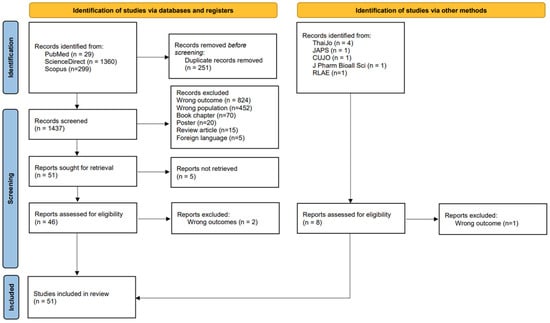
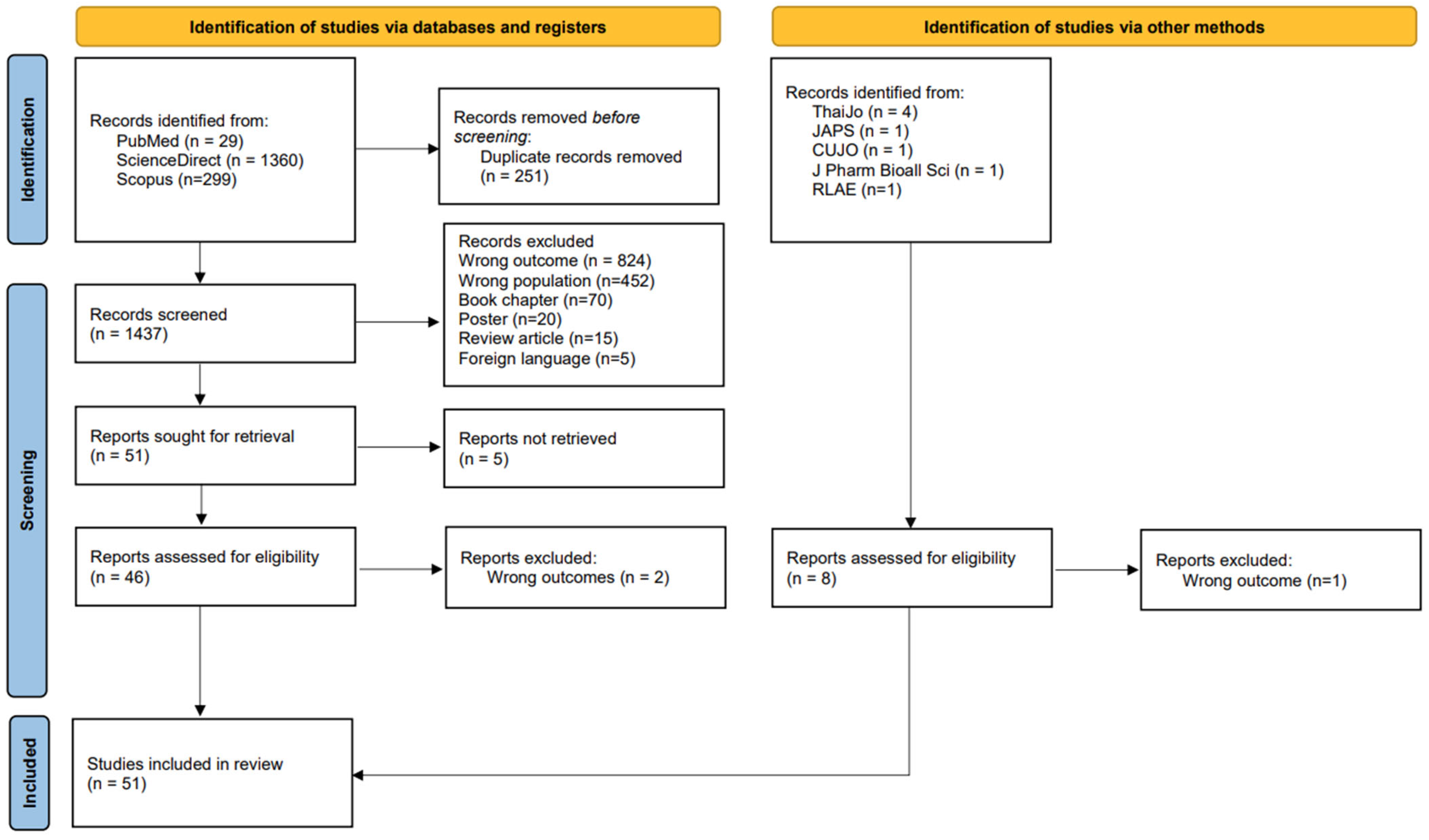
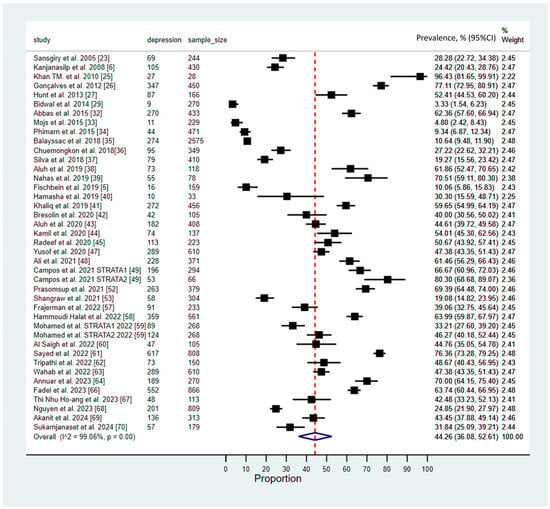
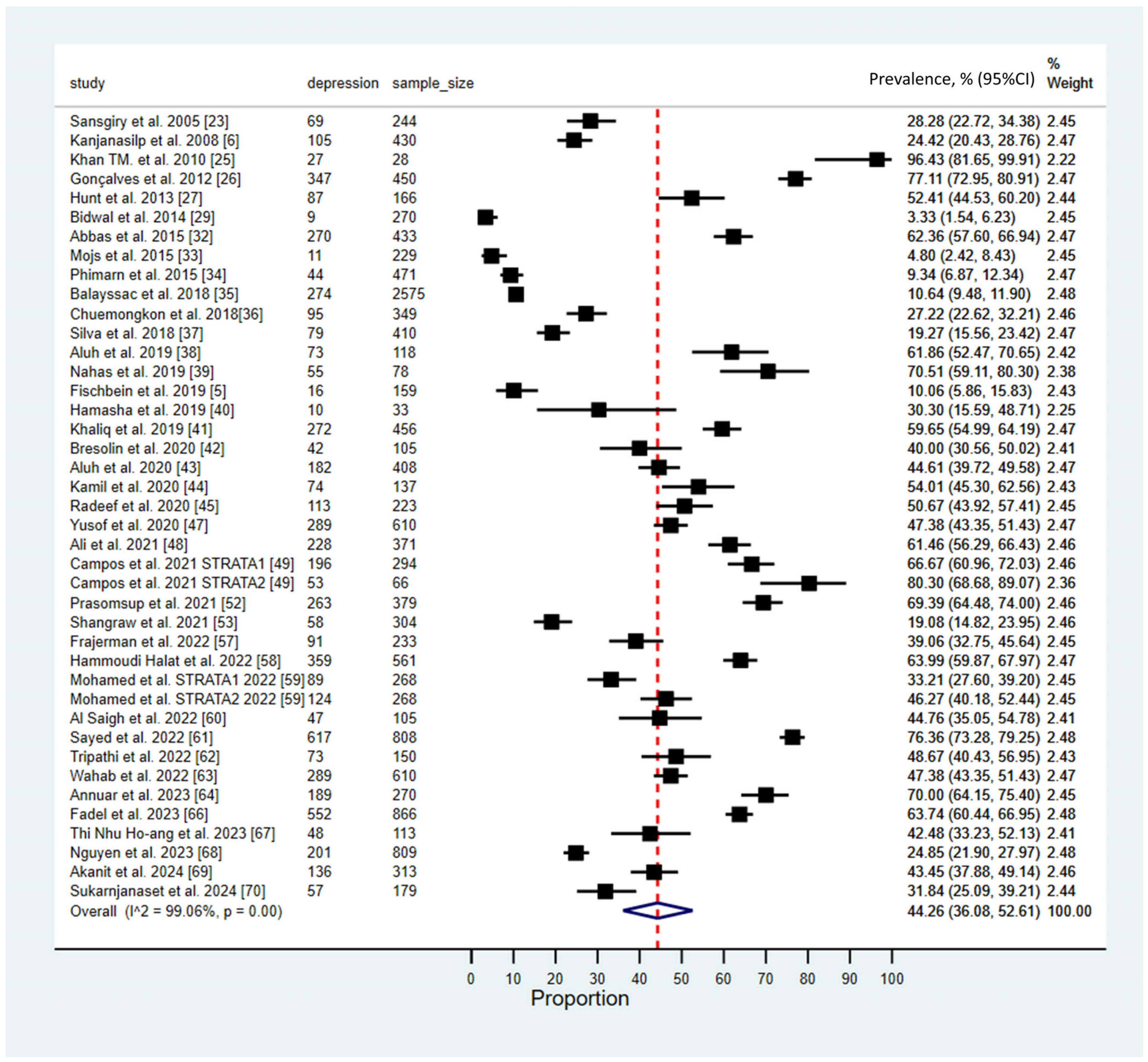
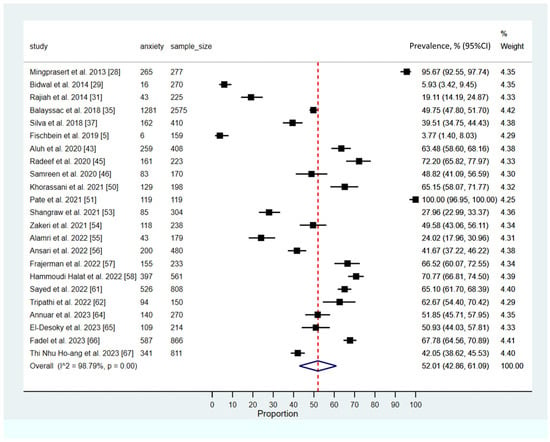
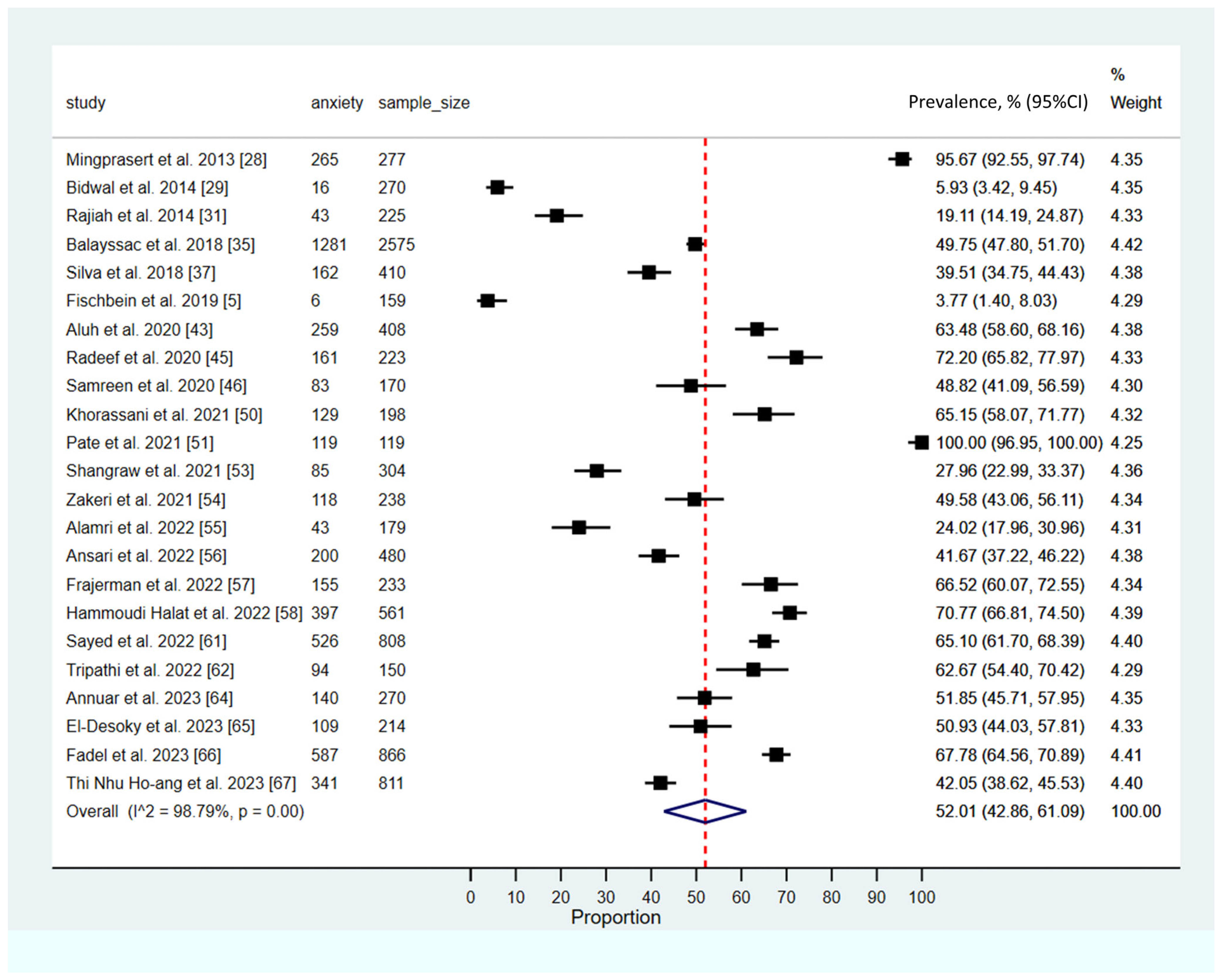
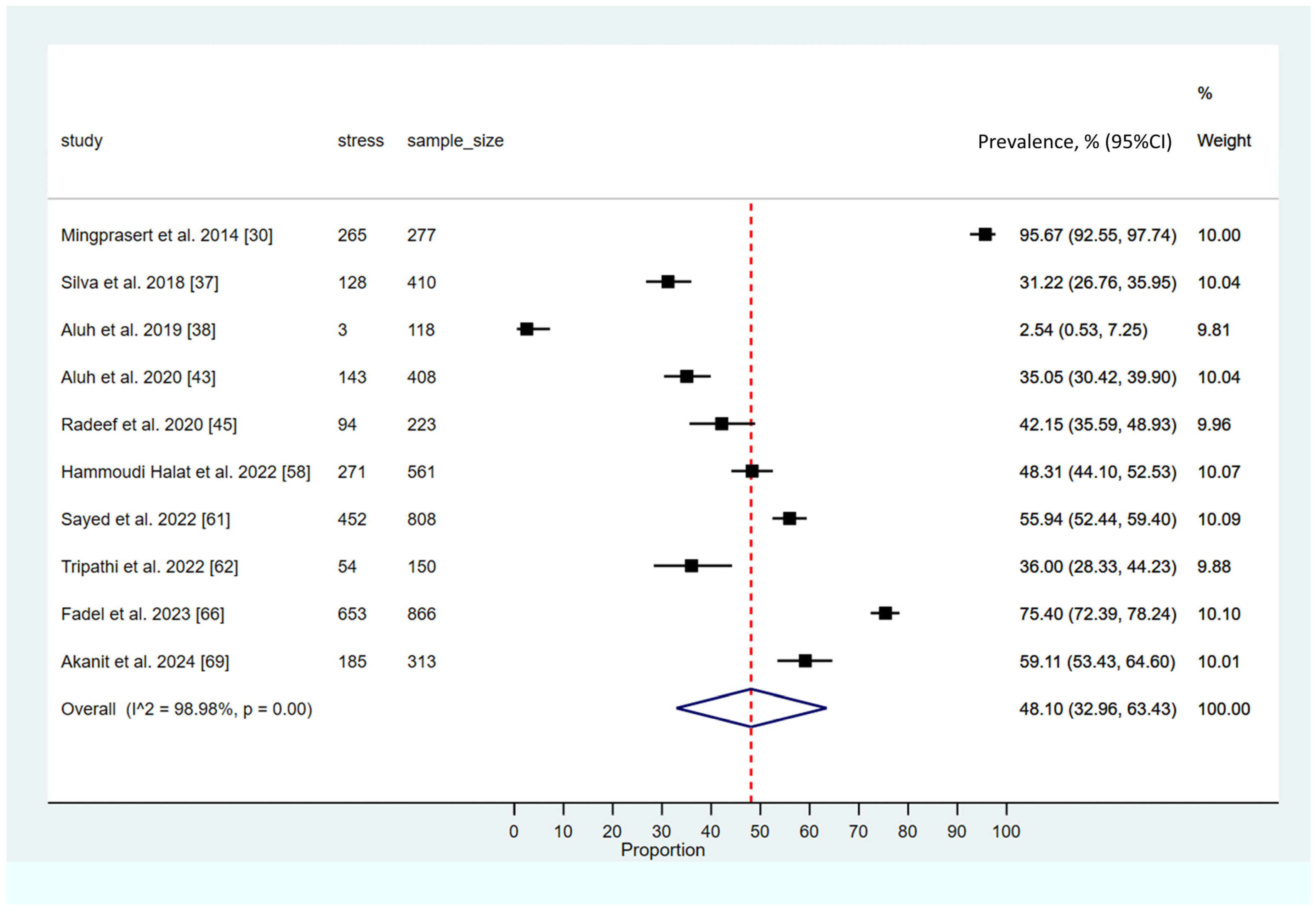
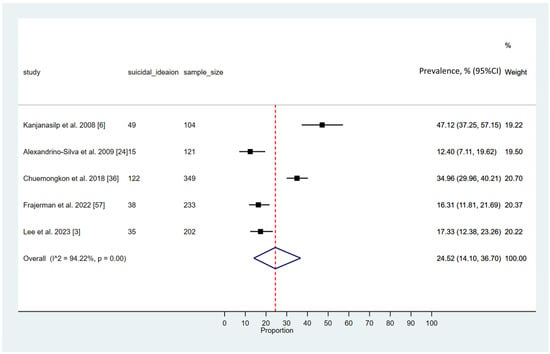
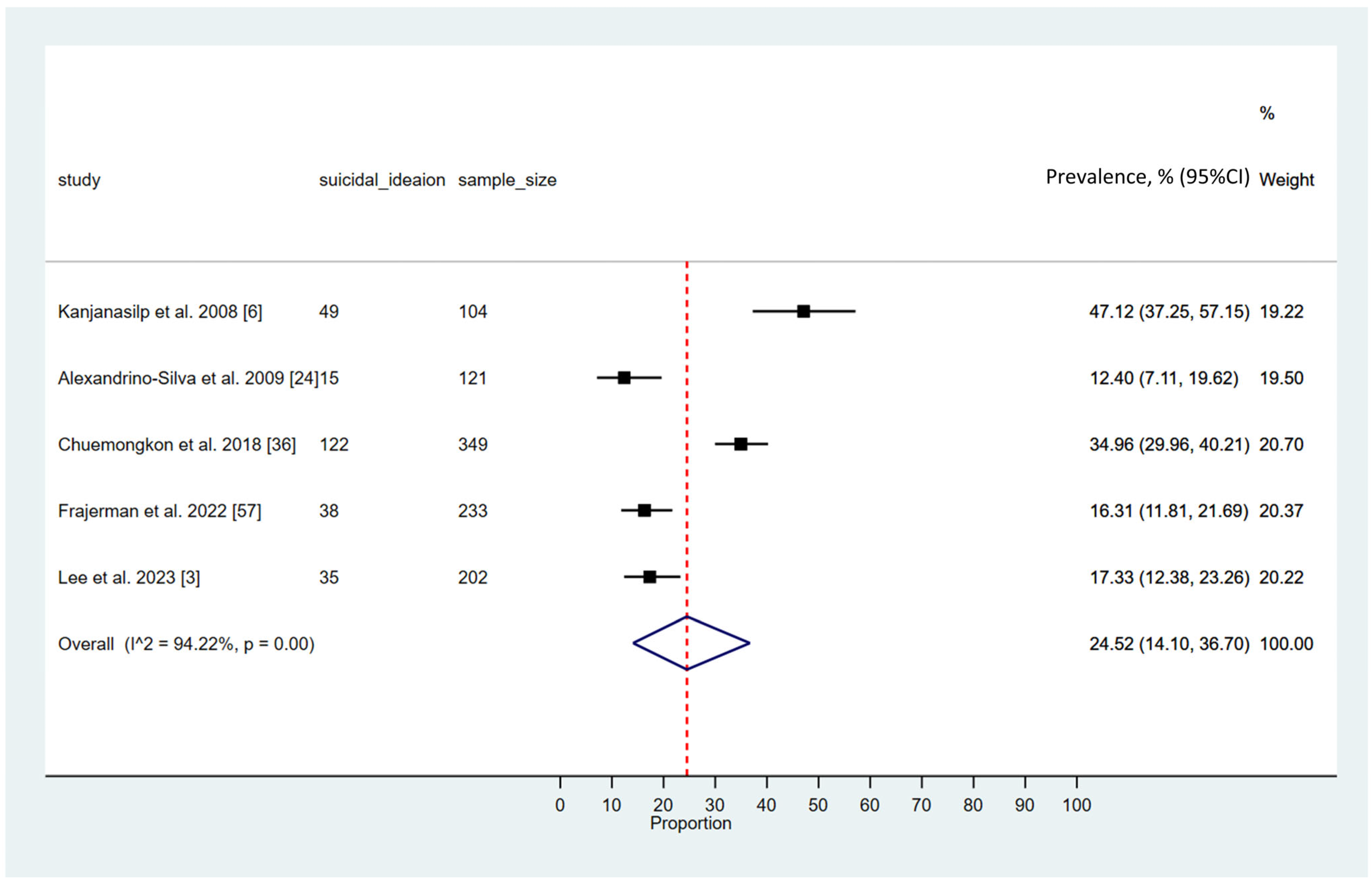
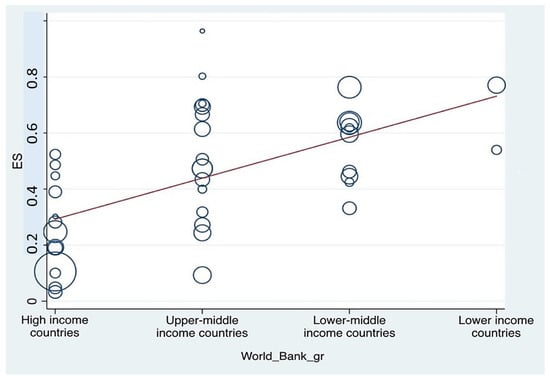
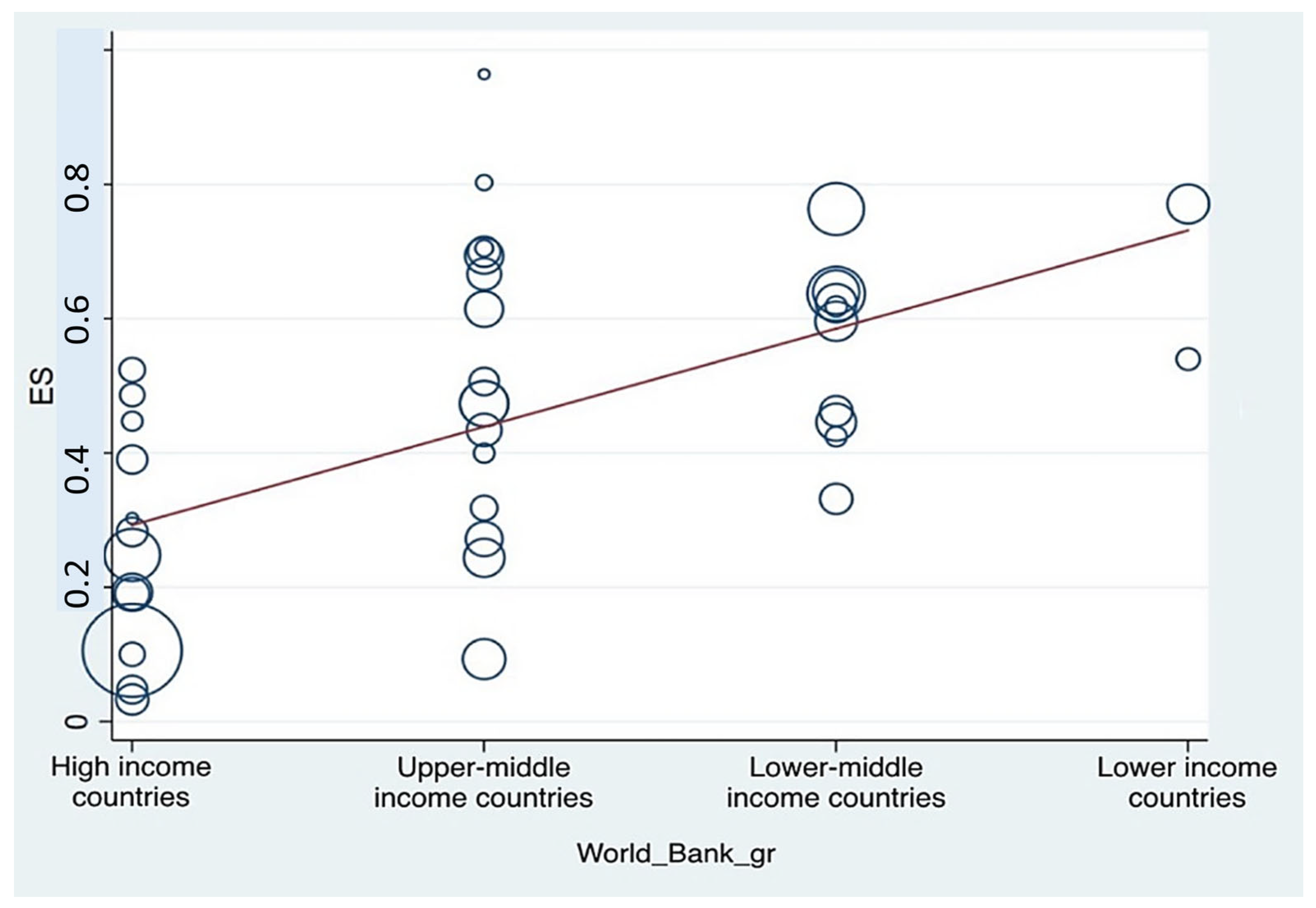
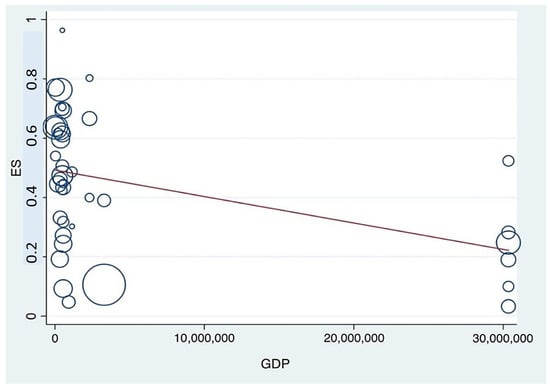
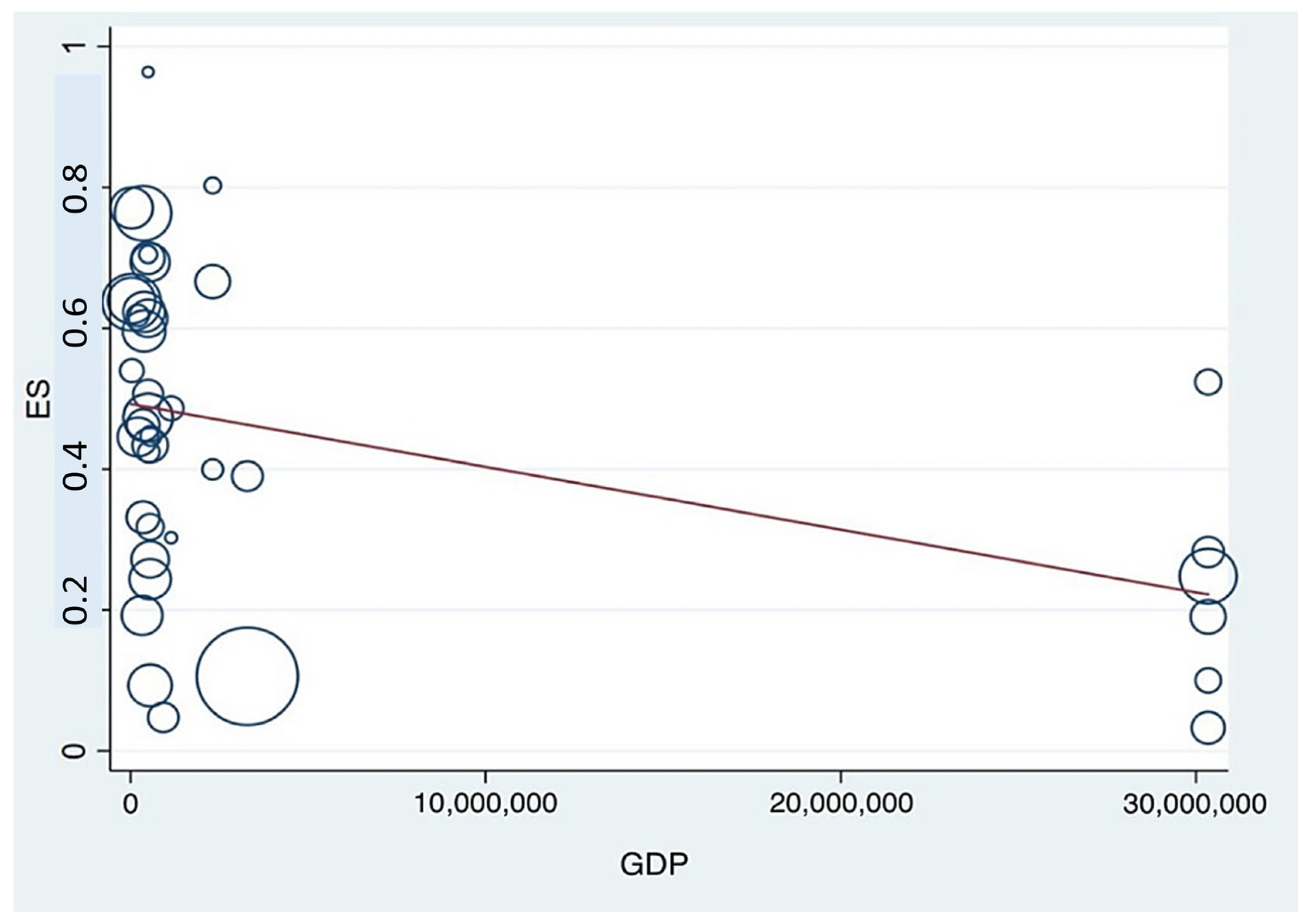
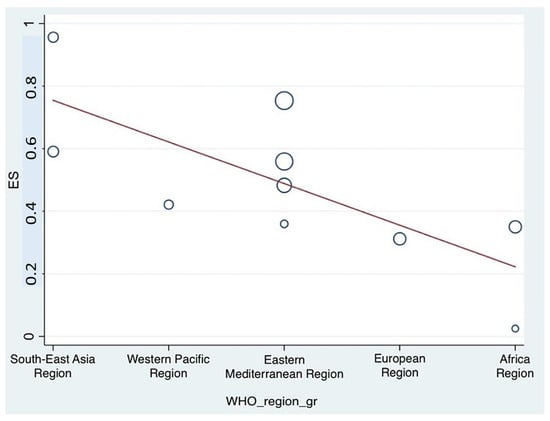
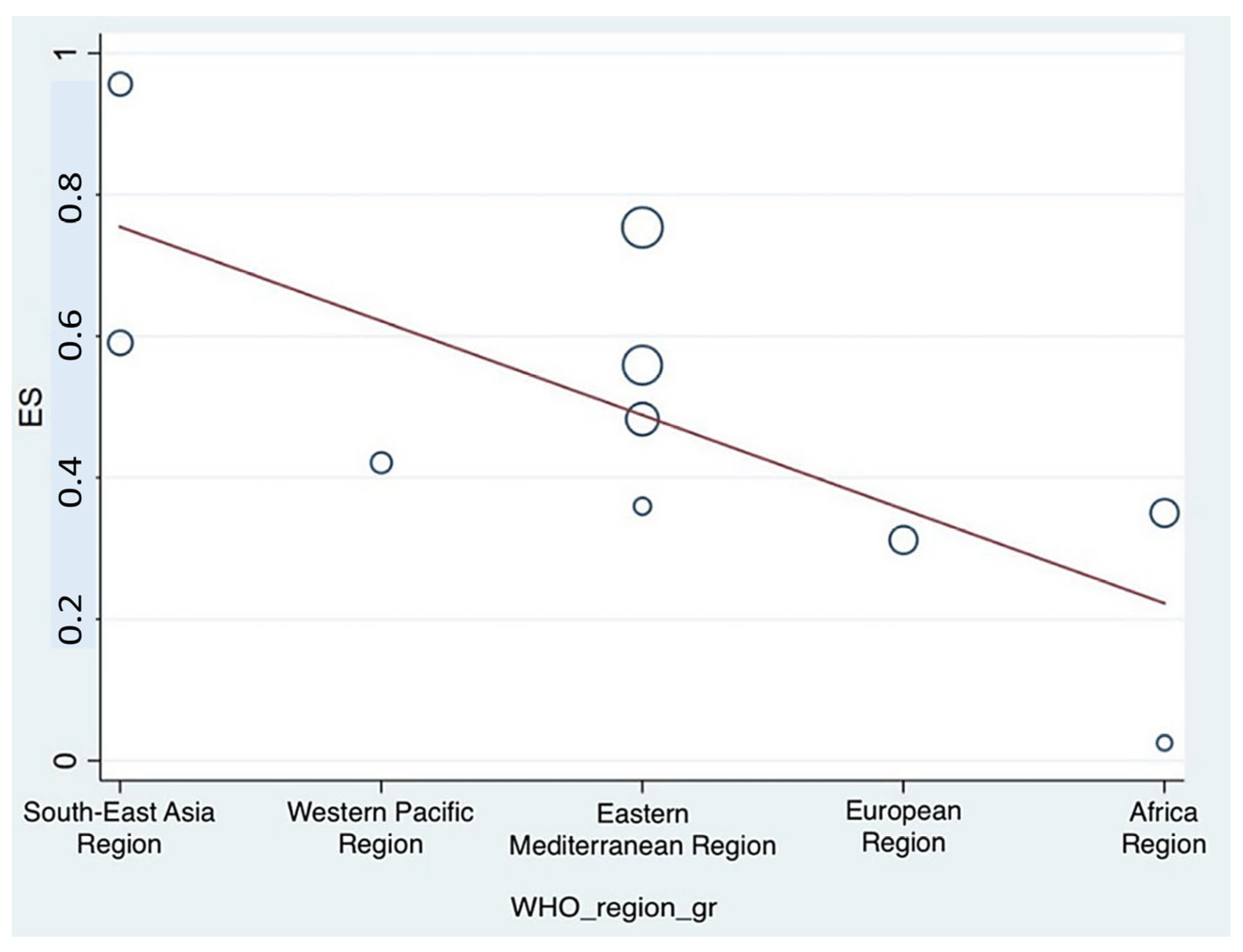
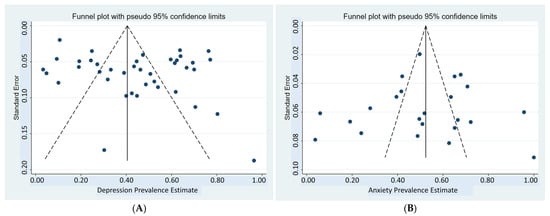
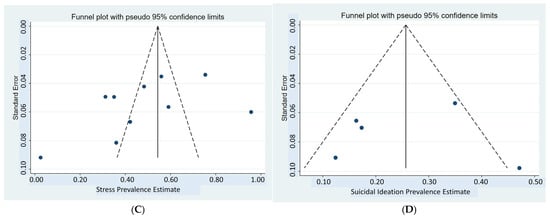
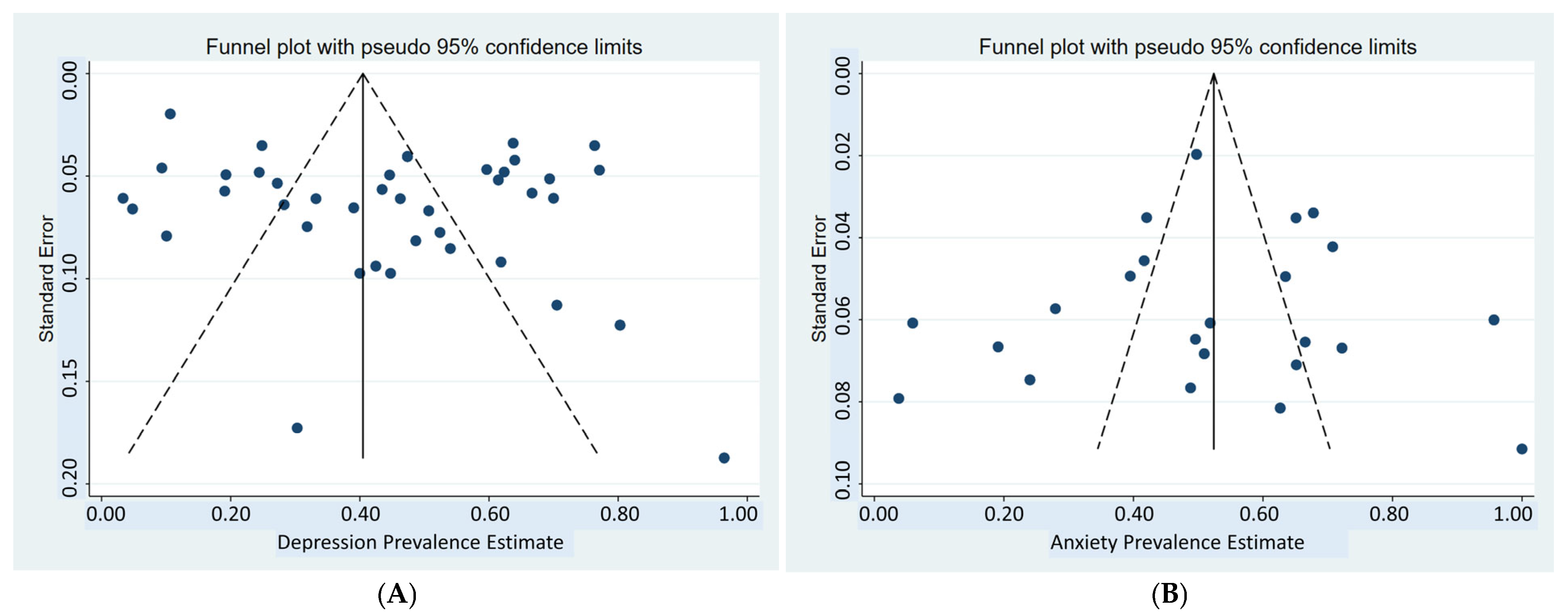
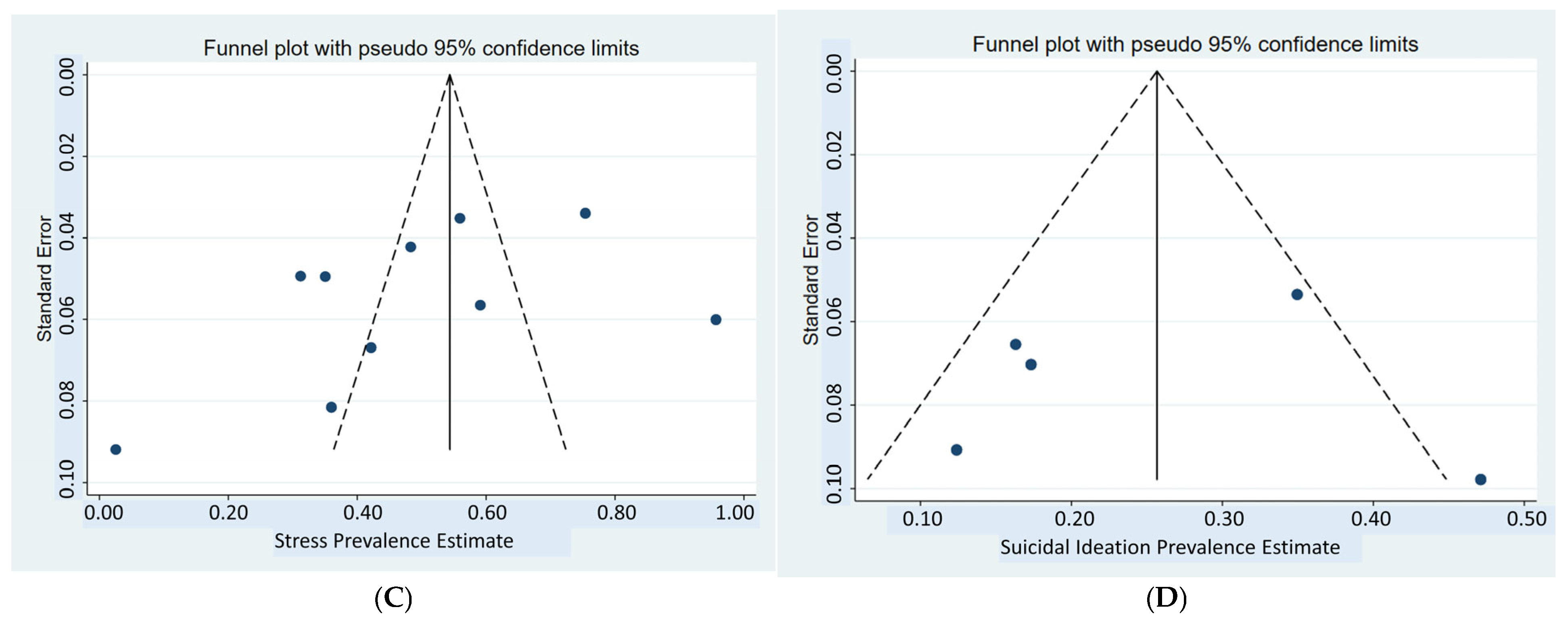

Disclaimer/Publisher’s Note: The statements, opinions and data contained in all publications are solely those of the individual author(s) and contributor(s) and not of MDPI and/or the editor(s). MDPI and/or the editor(s) disclaim responsibility for any injury to people or property resulting from any ideas, methods, instructions or products referred to in the content. |
© 2026 by the authors. Licensee MDPI, Basel, Switzerland. This article is an open access article distributed under the terms and conditions of the Creative Commons Attribution (CC BY) license.