


Highlights
Public health relevance—How does this work relate to a public health issue?
- Cyber Dating Abuse is a public health concern during adolescence, with potential implications for adolescents’ mental health, well-being, and healthy relationship development.
- This systematic review synthesizes evidence on parenting in relation to Cyber Dating Abuse victimization and perpetration, two distinct but potentially overlapping forms of involvement.
Public health significance—Why is this work of significance to public health?
- Parental monitoring and involvement were more frequently associated with lower perpetration, whereas evidence specifically concerning victimization was more limited.
- Positive intrafamilial relationships and parental closeness may be relevant to victimization and its psychological consequences, while findings regarding parental supervision, control, and parenting styles were less consistent.
Public health implications—What are the key implications or messages for practitioners, policy makers and/or researchers in public health?
- Family-based prevention strategies may benefit from combining developmentally appropriate monitoring with approaches that strengthen positive parent–adolescent and family relationships.
- Future research should distinguish CDA victimization from perpetration, while accounting for their co-occurrence, and use longitudinal designs and more standardized measures.
Abstract
Cyber Dating Abuse (CDA) is a public health concern among adolescents. This systematic review synthesized quantitative evidence on parenting dimensions in relation to CDA victimization, perpetration, and psychological adjustment following victimization. Eligible studies were peer-reviewed quantitative investigations assessing CDA within adolescent dating relationships and examining parenting-related factors, including studies addressing co-occurring forms of dating violence. Studies exclusively examining offline dating violence or reporting combined offline and digital outcomes without separately identifiable CDA measures were excluded. Scopus, Web of Science, PubMed, and B-on were searched between February and May 2026, with the final search conducted on 30 May 2026. Methodological quality was assessed using the Mixed Methods Appraisal Tool (MMAT), and findings were narratively synthesized by outcome. Ten studies comprising 15,402 participants (9 cross-sectional and one longitudinal) were included. Parental monitoring and involvement were more frequently associated with lower CDA perpetration, although these associations were not consistently maintained in more fully adjusted models. Evidence concerning CDA victimization was more limited and highlighted the potential relevance of positive intrafamilial relationships and parental closeness, although findings varied across analytical models. Parental closeness was also associated with psychological adjustment following CDA victimization. Findings regarding parental supervision, communication, and parenting styles were less consistent, with several studies reporting non-significant associations. Considerable heterogeneity in the conceptualization and measurement of parenting and CDA limited comparisons across studies. Given the predominance of cross-sectional evidence, the findings do not establish causal or preventive effects. Overall, the review highlights the importance of considering parenting as a multidimensional construct and distinguishing between CDA perpetration and victimization when informing future research and family-based prevention and intervention strategies. The review was registered in the Open Science Framework (OSF; DOI: 10.17605/OSF.IO/KZNC7) and was supported by the Portuguese Foundation for Science and Technology (FCT; UID/01662/2025).
1. Introduction
1.1. Conceptualizing Cyber Dating Abuse in Adolescence
Adolescence is a developmental period characterized by profound physical, cognitive, emotional, and social changes [1,2]. During this stage, peer relationships become increasingly central to psychosocial development, and adolescents begin to establish their first romantic relationships, which contribute to the development of emotion regulation, interpersonal competencies, and future relationship patterns [3,4].
The increasing integration of Information and Communication Technologies (ICTs) into adolescents’ daily lives has profoundly transformed how romantic relationships are initiated, maintained, and experienced [5]. Although digital technologies provide important opportunities for communication, identity exploration, and social connectedness [6,7], they have also created new contexts in which interpersonal violence may occur, exposing adolescents to online risks such as cyberbullying, stalking, sexting, and Cyber Dating Abuse (CDA) [8,9,10].
Against this backdrop, CDA has emerged as a significant public health concern. It encompasses a range of abusive behaviours perpetrated by a current or former intimate partner through digital technologies, including monitoring and controlling behaviours, psychological aggression, harassment, threats, sexual coercion, and the non-consensual sharing of intimate content [11,12]. CDA involvement can be examined from two distinct, although potentially overlapping, perspectives: perpetration and victimization [5,11]. CDA perpetration refers to the enactment of abusive or controlling behaviors toward a current or former dating partner through digital technologies, whereas CDA victimization refers to experiencing such behaviors from a dating partner [11]. Although adolescents may be involved in CDA as perpetrators, victims, or both, perpetration and victimization represent conceptually distinct forms of involvement and should therefore be differentiated when examining their correlates [5]. Accordingly, distinguishing between perpetration and victimization is important when examining the prevalence, correlates, and potential protective factors associated with CDA.
Although CDA is strongly associated with offline dating violence and frequently co-occurs with face-to-face victimization and perpetration, evidence indicates that it also presents unique characteristics that justify its consideration as a distinct, yet related, form of intimate partner violence [8,13]. Compared with offline dating violence, CDA is characterized by the absence of temporal and geographical boundaries, the permanence of digital content, and the possibility of continuous access to victims, increasing the risk of revictimization and making abusive behaviours more difficult to identify and interrupt [14,15].
Although prevalence estimates vary considerably across studies, victimization rates range from 5.8% to 92% and perpetration rates from 6% to 93.7%, largely reflecting differences in conceptual definitions and measurement approaches [16]. Collectively, evidence indicates that involvement in CDA is associated with adverse outcomes, including depressive and anxiety symptoms, hostility, substance use, sexual risk behaviours, and offline dating violence [17,18,19]. These findings underscore the importance of identifying factors that may protect adolescents from involvement in CDA and inform evidence-based prevention strategies.
1.2. Risk and Protective Factors Associated with Cyber Dating Abuse
From a theoretical perspective, CDA can be understood through complementary socioecological and developmental approaches. The Socioecological Model [20] conceptualizes abusive behaviours as emerging from the interaction of individual, relational, family, peer, and broader sociocultural influences, rather than from isolated risk factors. Developmental perspectives further emphasize that adolescence represents a critical period for the formation of romantic relationship expectations, emotional regulation, and interpersonal competencies [4,21]. Within this context, behaviours involving jealousy, monitoring, and control may be interpreted differently by adolescents, potentially contributing to difficulties in recognizing abusive relationship dynamics [11,15,22,23]. Routine Activity Theory [24] provides an additional perspective by highlighting how opportunities for technology-facilitated abusive behaviours may be influenced by patterns of online interaction and informal guardianship. Together, these theoretical perspectives provide a rationale for examining how parenting dimensions, including parental warmth, communication, and monitoring, may be associated with adolescents’ involvement in CDA, while recognizing that these associations may differ between victimization and perpetration.
Evidence has consistently identified several individual risk factors, including psychopathological symptoms, hostility, anger, substance use, risky online behaviours, early sexual initiation, and attitudes that normalize jealousy, control, and aggression within romantic relationships [14,16,18]. At the relational level, controlling behaviours, excessive monitoring, jealousy, and the co-occurrence of offline and online dating violence have been associated with higher levels of CDA [11,15,21]. Peer influences, characteristics of the digital environment (e.g., anonymity and permanent connectivity), and broader sociocultural factors, including gender stereotypes and sexism, have also been identified as relevant contributors [22,23].
Although these findings demonstrate that CDA results from the interaction of multiple ecological systems [20,25], recent research has increasingly shifted towards identifying protective factors that may reduce adolescents’ vulnerability to this form of violence. Among these, parenting has emerged as one of the most promising areas of research, although the available evidence remains fragmented and, in some cases, inconsistent.
Gender represents an additional dimension in understanding CDA within a socioecological framework. Gender stereotypes, traditional relationship expectations, and unequal power dynamics may influence how adolescents perceive and interpret abusive behaviours in digital dating relationships, particularly those involving jealousy, monitoring, and control. Importantly, gender differences in CDA should not be understood exclusively in terms of prevalence. A recent meta-analysis found no statistically significant overall gender differences in CDA perpetration or victimization among adolescents and young adults, although developmental characteristics moderated some differences in victimization [26]. Conversely, a scoping review of qualitative studies highlighted gendered patterns in the experiences and consequences of CDA, including the use of digital technologies for monitoring and controlling girls and potentially more severe negative consequences for female victims [27]. These findings suggest that gender norms and power relations may be particularly relevant to understanding the context, meaning, and consequences of abusive behaviours, even when differences in overall prevalence are inconsistent.
1.3. Parenting and the Prevention of Cyber Dating Abuse
Among the protective factors associated with healthy adolescent development, parenting has received increasing attention because of its potential to shape adolescents’ emotional, behavioural, and relational development. As digital technologies become progressively embedded in adolescents’ daily lives, parenting also plays a critical role in reducing exposure to online risks, including cyberbullying, problematic Internet use, sexting, and CDA [28]. Through supportive relationships, open communication, appropriate behavioural monitoring, and the establishment of clear boundaries, parents may promote healthy relationship behaviours and reduce adolescents’ vulnerability to technology-facilitated interpersonal violence.
Parenting is a multidimensional construct encompassing parental warmth, communication, behavioural regulation, monitoring, and emotional support. One of the most widely adopted conceptual frameworks distinguishes four parenting styles—authoritative, authoritarian, permissive, and neglectful—based on the interaction between parental warmth and behavioural control [29,30]. These dimensions have been widely used to examine how parenting influences adolescents’ psychosocial adjustment and online behaviour.
Parenting practices may also intersect with gendered socialization processes, as expectations regarding adolescent autonomy, intimate relationships, and acceptable behaviours may differ according to gender. Nevertheless, the extent to which these processes influence associations between parenting and CDA remains insufficiently understood and requires consideration of both adolescents’ characteristics and the specific parenting dimensions assessed.
Previous research suggests that several parenting dimensions, particularly parental warmth, communication, monitoring, and behavioural regulation, are associated with lower involvement in online aggressive behaviours and healthier patterns of adolescent adjustment [28,31]. However, findings remain inconsistent. While some studies report that authoritative parenting and parental monitoring are associated with lower involvement in online aggression, others suggest that parental supervision alone may be insufficient to prevent certain online risk behaviours, such as sexting [32].
Although the influence of parenting has been extensively examined in relation to adolescents’ online behaviours, evidence specifically addressing its contribution to the prevention of CDA remains fragmented. Existing studies have adopted different conceptualizations of parenting, assessed diverse parenting dimensions, and reported heterogeneous findings, making it difficult to determine which parenting characteristics are consistently associated with lower involvement in CDA. Clarifying these associations is essential for informing family-based prevention strategies and guiding the development of evidence-based interventions aimed at promoting healthy adolescent relationships.
1.4. The Present Study
Despite the growing body of research on CDA, no previous systematic review has comprehensively synthesized the evidence regarding the associations between parenting dimensions and adolescents’ involvement in this form of violence. The methodological heterogeneity of existing studies, together with the diversity of conceptualizations and terminology used to describe both CDA and parenting, makes it difficult to draw robust conclusions regarding the parenting dimensions that may protect adolescents from involvement in CDA. Addressing this gap is essential for informing family-based prevention strategies and supporting the development of evidence-based interventions aimed at promoting healthy adolescent relationships.
Accordingly, this systematic review was guided by the following research question: Which parenting dimensions are associated with CDA victimization and perpetration among adolescents, and how consistent are these associations across studies? Specifically, the review sought to identify the parenting dimensions examined in the literature, assess the direction and consistency of their associations with CDA victimization and perpetration, and examine how differences in the conceptualization and measurement of these constructs may contribute to variability across studies. Where reported, sex-related differences were also considered. By synthesizing these findings, the review aims to inform future research and the development of family-based prevention and intervention strategies, while acknowledging the predominantly correlational nature of the available evidence.
2. Materials and Methods
2.1. Study Design and Registration
This systematic review was conducted and reported in accordance with the Preferred Reporting Items for Systematic Reviews and Meta-Analyses (PRISMA 2020) guidelines [33] (see File S1) and was prospectively registered in the Open Science Framework (OSF; Registration DOI: 10.17605/OSF.IO/KZNC7). The review protocol is publicly available through the OSF registration [34]. No amendments to the registered protocol were made.
2.2. Eligibility Criteria
Studies were considered eligible if they examined the relationship between parenting and CDA among adolescents, reported quantitative empirical findings on CDA victimization and/or perpetration, were published in peer-reviewed journals, and were written in English, Portuguese, or Spanish. Given the conceptual heterogeneity of the field, studies using related technology-facilitated constructs (e.g., electronic dating violence, online dating violence, cyber-aggression, or non-consensual dissemination of intimate content) were retained only when these behaviours specifically occurred within adolescent intimate or dating relationships and CDA-specific findings could be identified. The inclusion of quantitative studies was a deliberate methodological decision aligned with the objectives of this review, which sought to examine the direction and consistency of empirical associations between parenting dimensions and CDA victimization and perpetration. Although qualitative research can provide valuable insights into adolescents’ experiences and the relational processes underlying these associations, the present review focused specifically on studies reporting quantitative evidence on parenting-related factors and CDA outcomes. This approach was considered appropriate for systematically identifying, comparing, and synthesizing the available evidence on these associations, while acknowledging the methodological heterogeneity across studies. The specific CDA outcome and whether it reflected victimization, perpetration, both, or a combined measure of technology-facilitated abuse within dating relationships were recorded during data extraction. Studies were excluded if they consisted of grey literature (e.g., theses and dissertations), were literature reviews or meta-analyses, adopted exclusively qualitative methodologies, did not focus on adolescent intimate relationships, or addressed exclusively offline dating violence. Studies reporting combined offline and digital dating violence outcomes without identifiable CDA-specific findings were also excluded. Study selection was conducted independently by two reviewers, and any disagreements were resolved through discussion or, when necessary, consultation with a third reviewer.
2.3. Information Sources and Search Strategy
A comprehensive search strategy was developed using combinations of keywords related to CDA, parenting, and adolescence. The following search equation was applied: (“Cyber Dating Abuse” OR “Cyber Dating Violence” OR “Cyber Dating Aggression” OR “Online Dating Abuse” OR “Online Dating Violence” OR “Online Dating Aggression” OR “Digital Dating Abuse” OR “Digital Dating Violence” OR “Digital Dating Aggression” OR “Electronic Dating Abuse” OR “Electronic Dating Violence” OR “Electronic Dating Aggression” OR “Technology-Facilitated Dating Abuse” OR “Technology-Facilitated Dating Violence” OR “Technology-Facilitated Dating Aggression”) AND (Parenting OR “Parenting Involvement” OR “Parenting Style” OR “Parenting Profiles” OR “Parenting Educational Styles” OR “Parenting Attitudes” OR “Parental Involvement” OR “Parental Influence” OR “Parental Style” OR “Parental Practices” OR “Parental Educational Style”) AND (Adolescents OR Teens OR Youth OR Students).
The search strategy was designed to identify studies examining associations between parenting and CDA, using broad parenting-related terms intended to capture different dimensions of parental practices and involvement. To maintain consistency across databases, the same search equation, comprising identical keywords and Boolean operators, was applied to Scopus, Web of Science, PubMed, and B-on, without database-specific adaptations. Searches were conducted between February and May 2026, with the final search performed in all four databases on 30 May 2026. Searches were limited to titles, abstracts, and keywords, and no publication date restrictions were applied. Nevertheless, the absence of database-specific adaptations and more specific parenting-related terms, such as “parental monitoring”, “family functioning”, and “parent–adolescent communication”, may have limited the sensitivity of the search and resulted in the omission of potentially relevant studies. Furthermore, given the rapid evolution of digital technologies, differences across publication periods were considered when interpreting the findings.
No publication date restrictions were applied to ensure comprehensive coverage of the available literature, including earlier studies that could contribute to understanding the development of research on parenting and CDA.
2.4. Study Selection
All records retrieved from the electronic databases were exported to Rayyan [35], where duplicate records were identified and removed.
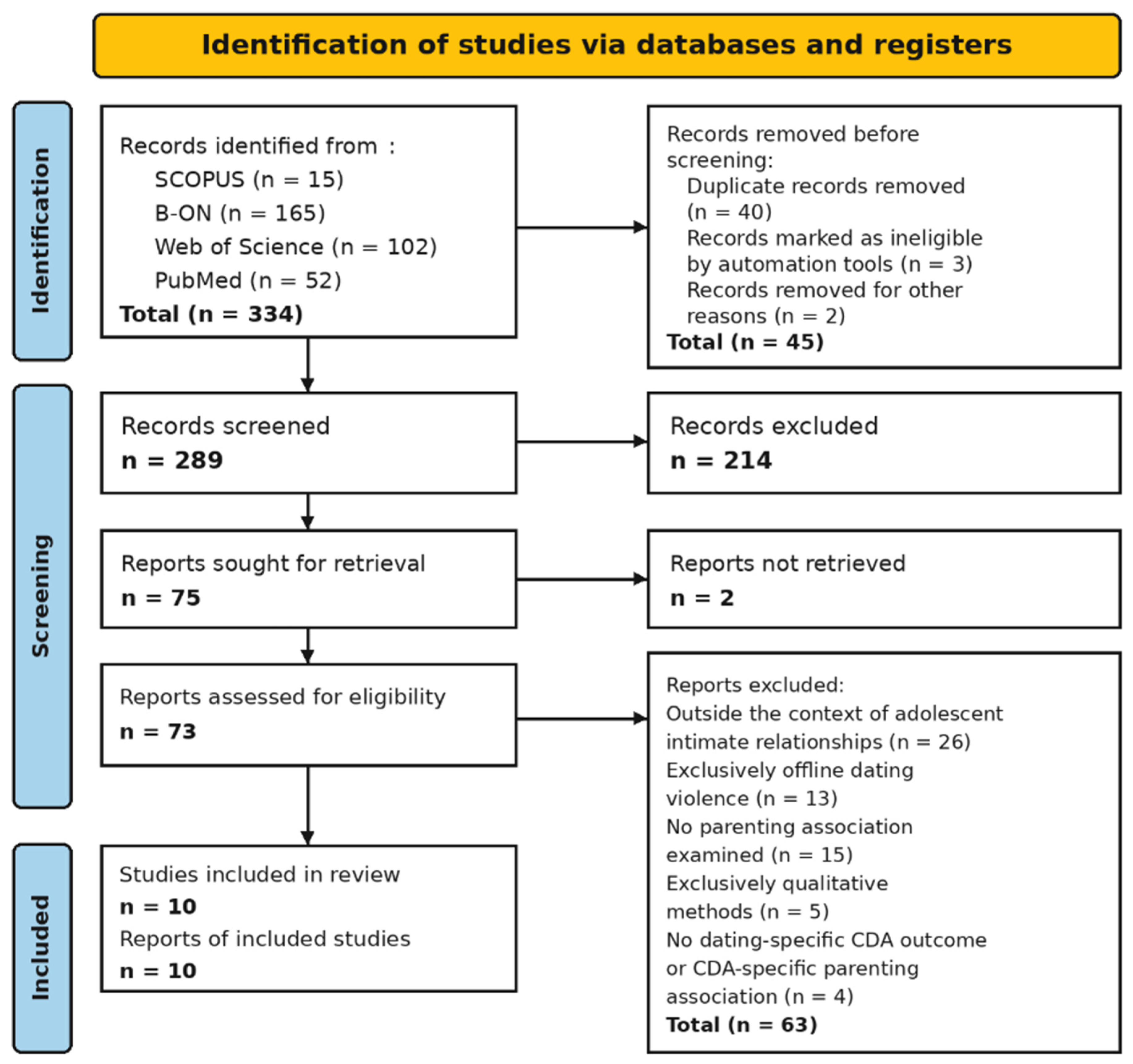
Study selection was conducted in two stages (Figure 1). First, titles and abstracts were independently screened according to the predefined eligibility criteria. Subsequently, the full texts of potentially eligible studies were retrieved and assessed for final inclusion in the review. Both stages were independently conducted by two junior researchers (master’s students), under the supervision of a senior researcher with a PhD in Psychology and extensive research experience in adolescent dating violence. Disagreements were resolved through discussion or, when necessary, consultation with the senior researcher.
Rayyan was used to manage records, identify duplicates, and facilitate the screening process. All eligibility decisions were made independently by two reviewers, without the use of automated eligibility assessment or exclusion procedures.
At the full-text screening stage, exclusion decisions were documented according to the predefined eligibility criteria. The main reasons for exclusion were studies conducted outside the context of adolescent intimate relationships, studies addressing exclusively offline dating violence, studies not examining associations between parenting dimensions and CDA-related outcomes, and studies employing exclusively qualitative methodologies. The number of studies excluded for each reason is presented in the PRISMA flow diagram (Figure 1).
2.5. Data Extraction
Data extraction was performed independently by two reviewers using a standardized coding framework developed specifically for this review. For each included study, the following information was extracted: authors and year of publication, country, study design, sample characteristics, study objectives, assessment measures, CDA outcomes assessed, including whether each study examined victimization, perpetration, both outcomes separately, or a combined/general measure of CDA involvement, parenting dimensions examined, main findings regarding the association between parenting and CDA, and study limitations.
Any discrepancies in the extracted data were resolved through discussion until consensus was reached. All reported findings relevant to the association between parenting dimensions and CDA outcomes were considered, including those derived from different measures or analyses, when available. When studies reported multiple CDA outcomes, findings were extracted separately for victimization and perpetration whenever possible. Results involving broader or combined measures of technology-facilitated dating violence were retained and classified accordingly. Where information was incomplete or unclear, the available data were interpreted cautiously, without imputing missing values. No study authors were contacted for additional information.
2.6. Quality Assessment
The methodological quality of the included studies was assessed independently by two reviewers using the Mixed Methods Appraisal Tool (MMAT), version 2018 [36]. The MMAT allows the appraisal of studies with different methodological designs using five design-specific criteria. Each study was evaluated against the criteria applicable to its study design, with judgments recorded as “Yes”, “No”, or “Can’t tell”. Any disagreements between reviewers were resolved through discussion until consensus was reached. The methodological appraisal was considered when interpreting the findings of the review. The results of the quality assessment are presented in Table 1.
2.7. Data Synthesis
Given the methodological heterogeneity of the included studies regarding study design, sample characteristics, the conceptualization and assessment of CDA and parenting, and the reported outcomes, a quantitative meta-analysis was not considered appropriate.
Therefore, a narrative synthesis was conducted following the guidance proposed by Popay et al. [37]. The findings were synthesized thematically according to the main domains addressed by the included studies: (a) the prevalence and characteristics of CDA, (b) individual and contextual factors associated with adolescents’ involvement in CDA, and (c) the parenting dimensions examined and their associations with CDA victimization and perpetration. Whenever possible, findings were synthesized separately for CDA victimization and perpetration. Studies were classified according to whether they examined victimization, perpetration, both outcomes separately, or broader/combined patterns of CDA involvement. The term “CDA involvement” was retained when the original studies did not distinguish between victimization and perpetration or reported combined involvement profiles.
Given the diversity of analytical approaches across studies, no common effect measure was calculated. The findings were presented in descriptive tables (Tables 1 and 2) and synthesized narratively, considering the direction and consistency of the reported associations and, when available, the effect measures provided in the original studies. Potential sources of heterogeneity were explored narratively by comparing findings according to study design, sample characteristics, parenting dimensions, and the conceptualization and measurement of CDA outcomes. Particular attention was given to distinguishing findings related specifically to victimization or perpetration from those concerning broader or combined forms of technology-facilitated involvement. Given the diversity of analytical approaches and outcome measures across studies, findings were synthesized as originally reported, without data transformations, conversions, or imputations. No formal sensitivity analyses or statistical assessments of publication bias were performed, given the absence of pooled effect estimates and the limited number of heterogeneous studies. Although the methodological quality of individual studies was assessed using the MMAT, no formal assessment of the overall certainty of the evidence was conducted. These decisions were considered when interpreting the strength and consistency of the findings.
3. Results
3.1. Characteristics of the Included Studies
Following the screening process and reassessment of study eligibility, 10 studies published between 2014 and 2023 were included in this systematic review (Figure 1). Of the 73 full-text reports assessed, 63 were excluded because they did not address adolescent intimate relationships (n = 26), focused exclusively on offline dating violence (n = 13), did not examine associations with parenting dimensions (n = 15), employed exclusively qualitative methodologies (n = 5), or did not specifically assess CDA or report CDA-specific results (n = 4).
As presented in Table 1, nine studies employed a cross-sectional design, whereas one adopted a longitudinal design. The studies were conducted in three countries, with six studies originating from the United States, three from Spain, and one from Mexico. Sample sizes ranged from 394 to 3918 participants, comprising a total of 15,402 adolescents, with reported mean ages ranging from approximately 12 to 16.18 years. Most studies reported relatively balanced sex distributions, although some included a higher proportion of female participants.
Overall, the included studies demonstrated substantial methodological heterogeneity regarding study objectives, the conceptualization and assessment of CDA and parenting, and the parenting dimensions examined.
Figure 1.
PRISMA 2020 flow diagram of the study selection process.
3.2. Methodological Quality
The methodological quality of the included studies was assessed using the Mixed Methods Appraisal Tool (MMAT), version 2018. As presented in Table 1, the number of criteria rated positively ranged from three to five out of the five applicable methodological criteria. Specifically, one study met all five criteria (5/5), four studies met four criteria (4/5), and five studies met three criteria (3/5). These values represent descriptive summaries of the criteria fulfilled rather than overall methodological quality scores. The assessment considered the five MMAT criteria applicable to each study design, covering aspects related to sampling, measurement, potential sources of bias, and the appropriateness of the analytical procedures. The interpretation of the findings also took into account relevant methodological limitations, particularly the predominance of cross-sectional designs and reliance on self-report measures (Table 1).
3.3. Conceptualization and Assessment of Cyber Dating Abuse and Parenting
The included studies demonstrated considerable heterogeneity in the conceptualization and assessment of both CDA and parenting (Table 1). CDA was operationalized through different forms of technology-facilitated abusive behaviour within adolescent dating relationships, including digital monitoring and control, cyberharassment, electronic aggression, coercive behaviours, and other forms of electronic dating violence. Although several studies employed established assessment instruments, others relied on adapted items or ad hoc measures, limiting comparability across studies. The studies also differed in the CDA outcomes assessed: some focused specifically on perpetration, others on victimization, while some examined both outcomes or combined patterns of electronic dating violence without clearly distinguishing between perpetration and victimization. This variability was considered in the synthesis, with findings for perpetration and victimization reported separately whenever the original data allowed this distinction.
Similarly, parenting was conceptualized as a multidimensional construct encompassing parental monitoring, communication, closeness, supervision, involvement, parenting styles, family functioning and cohesion, family relationships, parental knowledge of adolescents’ online activities, and family-related support. These dimensions were assessed using different instruments, ranging from established multidimensional scales to adapted or ad hoc measures, predominantly based on adolescents’ self-reports. Overall, the considerable variability in the conceptualization and operationalization of both CDA and parenting contributes to the methodological heterogeneity identified across the included studies, limiting the comparability and consistency of findings.
3.4. Main Findings
3.4.1. Prevalence and Characteristics of Cyber Dating Abuse
Prevalence estimates of Cyber Dating Abuse (CDA) varied considerably across the included studies, reflecting differences in sample characteristics, conceptual definitions, assessment measures, reference periods, and the specific forms of abuse evaluated (Table 1). Regarding CDA perpetration, reported rates ranged from 8.8% [38] to 53.3% [39]. Smith-Darden et al. [40] reported that 38% of adolescents had engaged in at least one technology-facilitated abusive behaviour within a dating relationship, including cyberharassment, cyberstalking, and coercive sexting. Peskin et al. [41] found that 14.6% of early adolescents with dating experience reported having perpetrated at least one form of CDA.
Regarding CDA victimization, prevalence estimates also showed substantial variability across studies. Javier-Juárez et al. [42] reported that 62.3% of adolescents experienced monitoring and controlling behaviours perpetrated by a dating partner, whereas Zweig et al. [19] found that approximately 26% of adolescents with dating experience reported CDA victimization. These differences should be interpreted cautiously, given the variability in the behaviours assessed and the characteristics of the study samples.
Across studies, the abusive behaviours assessed included electronic monitoring and controlling behaviours, unauthorized access to a dating partner’s social media accounts, cyberharassment, threatening or intimidating messages, and sexually coercive behaviours involving digital technologies. Overall, these findings illustrate the diversity of abusive behaviours occurring within adolescents’ digital dating relationships. However, differences in measurement approaches and reference periods limit direct comparisons of prevalence estimates across studies.
3.4.2. Individual and Contextual Factors Associated with Cyber Dating Abuse
The included studies identified several individual and contextual factors associated with adolescents’ involvement in Cyber Dating Abuse (CDA), although findings varied according to the specific outcomes examined (Table 1). Age-related patterns were not uniform [43] identified developmental variations in electronic dating violence, with involvement generally increasing during adolescence and peaking around ages 16–17. Findings regarding sex differences were also inconsistent. Soriano-Ayala et al. [39] reported higher CDA perpetration among girls, while Zweig et al. [19] identified higher victimization rates among girls. Other studies suggested that sex-related associations may vary according to the specific abusive behaviours assessed and adolescents’ developmental characteristics. Overall, the available evidence does not support a consistent pattern of sex differences across all forms of CDA involvement.
Table 1.
Characteristics of the included studies (N = 10).
Other factors associated with CDA included previous experiences of dating violence, bullying perpetration, attitudes towards violence, delinquent behaviours, psychological symptoms, substance use, and adverse childhood experiences. However, these associations differed across studies and analytical models. For example, Soriano-Ayala et al. [39] identified CDA victimization as a particularly relevant correlate of perpetration, while Peskin et al. [41] found associations between perpetration and individual factors, including attitudes towards violence and bullying perpetration. Zweig et al. [19] reported associations between CDA victimization and delinquent behaviours, depressive symptoms, and anger/hostility. Smith-Darden et al. [40] and Thulin et al. [43] also highlighted the relevance of adverse childhood experiences, although associations varied according to the CDA outcomes and developmental periods examined.
Contextual factors were less consistently examined. Muñiz [38] identified lower school affiliation among adolescents involved in online dating violence, while Smith-Darden et al. [40] reported an association between greater perceived community safety and lower electronic dating aggression perpetration. Thulin et al. [43] also examined social support, although its associations varied across forms of electronic dating violence and age groups. Taken together, these findings suggest that adolescents’ involvement in CDA is associated with multiple individual and contextual factors, while highlighting the need for caution when interpreting their potential protective or risk-related roles. Parenting-related factors are examined in greater detail in the following section.
3.4.3. Parenting and Cyber Dating Abuse
Across the included studies, several parenting dimensions were examined in relation to adolescents’ involvement in Cyber Dating Abuse (CDA), although considerable variability was observed both in the parenting dimensions examined and in the CDA outcomes assessed across studies (Table 2). The available evidence included studies focusing specifically on perpetration or victimization, studies examining both outcomes, and studies assessing broader or combined forms of technology-facilitated dating violence.
Regarding perpetration, parental monitoring and involvement emerged as relevant parenting dimensions. Higher parental monitoring was associated with lower CDA perpetration in Soriano-Ayala et al. [39], while Smith-Darden et al. [40] found that greater parental involvement was associated with lower electronic dating aggression perpetration. Peskin et al. [41] found that greater parental monitoring and parent–child closeness were associated with lower odds of CDA perpetration in bivariate analyses. Parental monitoring remained significantly associated with perpetration in the family-level model, but neither parenting dimension was retained in the final multivariable model. Parent–child communication was not significantly associated with perpetration. Muñiz [38] similarly identified poorer family functioning among adolescents involved in online dating violence perpetration. Parenting styles were also associated with perpetration in Muñiz-Rivas et al. [46], with adolescents from indulgent families reporting the lowest levels of dating violence and authoritarian maternal parenting being associated with higher levels of online violence and control.
Evidence specifically addressing CDA victimization was more limited. Javier-Juárez et al. [42] found that positive intra-family relationships were negatively associated with CDA victimization involving control/monitoring and direct aggression. Zweig et al. [19] found that adolescents reporting CDA victimization perceived lower parental closeness than non-victimized adolescents. However, this association was not maintained in the final multivariable model. Parental communication and shared activities were not significantly associated with CDA victimization. Strickland et al. [44] examined a different potential role of parenting in the context of victimization: greater parental closeness buffered the association between CDA victimization and depressive symptoms, with this association being stronger among adolescents reporting lower levels of parental closeness. Thus, in this study, parental closeness was related to the psychological consequences of victimization rather than to a lower likelihood of victimization itself.
Other studies examined broader or combined patterns of technology-facilitated dating violence, including its co-occurrence with other forms of dating violence. Paat et al. [45] examined psycho-emotional dating violence victimization and perpetration in relation to broader patterns of co-occurring cyber, physical, and sexual dating violence and found no significant association with parental control. Thulin et al. [43], who examined broader electronic dating violence engagement across harassment, coercion, and monitoring rather than separating victimization from perpetration in the main analyses, found that higher parental monitoring was associated with lower electronic dating violence engagement during specific developmental periods, particularly among younger boys. Taken together, these findings suggest that associations involving parental monitoring and control varied according to the specific outcomes examined and the adolescents’ developmental characteristics.
Some findings also suggest that associations between parenting and CDA may vary according to sex and developmental characteristics. For instance, Muñiz-Rivas et al. [46] identified an association between authoritarian maternal parenting and higher levels of online violence and control, while Thulin et al. [43] reported that parental monitoring was associated with lower electronic dating violence involvement during specific developmental periods, particularly among younger boys. However, the available studies did not consistently examine sex-specific associations between parenting dimensions and CDA, limiting the possibility of identifying systematic differences across groups.
Overall, the findings indicate that associations between parenting and CDA should be interpreted in relation to the specific form of involvement examined. Parental monitoring and involvement were more frequently examined in relation to CDA perpetration, although associations were not consistently maintained in fully adjusted models. Evidence concerning victimization was more limited, highlighting associations with positive intrafamilial relationships and parental closeness, with the latter varying across analytical models. Parental closeness was also identified as a potential moderator of the association between CDA victimization and depressive symptoms. Taken together, the evidence points to potentially relevant roles for parental monitoring, involvement, family relationships, and parenting styles, while also underscoring substantial heterogeneity in both parenting constructs and CDA-related outcomes across studies.
Table 2.
Summary of the Main Findings of the Included Studies (N= 10).
4. Discussion
The present systematic review synthesized the available evidence regarding the role of parenting in adolescents’ involvement in Cyber Dating Abuse (CDA). Overall, the findings indicate that several parenting dimensions may be relevant to adolescents’ involvement in technology-facilitated dating violence, although their associations varied according to the parenting dimension and the CDA outcome examined. Parental monitoring and involvement were generally associated with lower CDA perpetration, although these associations were not consistently maintained in fully adjusted models [39,40,43]. Evidence concerning victimization was more limited [19,42,44], and highlighted the potential relevance of positive intrafamilial relationships and parental closeness, while findings regarding parenting styles, parental communication, and supervisory practices were less consistent.
A key contribution of this review is the differentiation of associations between parenting dimensions and distinct forms of CDA involvement. Rather than simply confirming the broader relevance of positive parenting, the findings suggest that parental monitoring, emotional closeness, and family functioning may be associated with different outcomes, including CDA perpetration, victimization, and psychological adjustment following victimization. At the same time, the inconsistencies identified across studies highlight the limits of the current evidence and the need for more conceptually and methodologically precise research. This interpretation is consistent with developmental and socioecological perspectives [20], which emphasize that adolescents’ behaviours emerge from the interaction of multiple ecological systems. Within this framework, the family represents one of the most influential developmental contexts, potentially shaping adolescents’ relational experiences both offline and online. The present findings are also consistent with broader literature demonstrating that parental support, communication, and behavioural regulation are associated with lower involvement in adolescents’ online risk behaviours [28,31].
Among the parenting dimensions examined, parental monitoring and involvement were among the most frequently investigated. Soriano-Ayala et al. [39] reported that greater parental monitoring was associated with lower CDA perpetration, while Smith-Darden et al. [40] found an association between greater parental involvement and lower electronic dating aggression perpetration. Thulin et al. [43] also identified associations between parental monitoring and lower electronic dating violence involvement during specific developmental periods, particularly among younger boys. Peskin et al. [41] found that greater parental monitoring was associated with lower odds of CDA perpetration in bivariate analyses and remained significant in the family-level model, but was not retained in the final multivariable model. These findings are compatible with Routine Activity Theory [24], which provides a theoretical framework for understanding how parental monitoring might be associated with opportunities for engagement in online abusive behaviours through informal guardianship. However, the available evidence does not establish this mechanism or demonstrate a preventive effect. Overall, the findings suggest that associations involving parental monitoring may depend on the specific parenting practices assessed, the CDA outcomes examined, and the inclusion of other individual and contextual factors in the analyses.
Relational dimensions of parenting and family functioning also emerged as potentially relevant, although the available evidence was more limited [12,38,40,44]. Positive intrafamilial relationships were negatively associated with CDA victimization, while poorer family functioning was associated with greater online dating violence perpetration. Regarding parental closeness, Zweig et al. [19] found that adolescents reporting CDA victimization perceived lower parental closeness than non-victimized adolescents, although this association was not significant in the final multivariable model. Strickland et al. [44] identified a different role of parental closeness, showing that it moderated the associations between CDA victimization and both depressive symptoms, with weaker associations observed among adolescents reporting greater parental closeness. Together, these findings highlight the potential relevance of the quality of parent–adolescent relationships, including emotional support and positive family relationships, while conclusions regarding their protective role should remain cautious given the limited number of studies specifically examining victimization.
Evidence regarding parenting styles was limited, with Muñiz-Rivas et al. [46] providing the main findings in this domain. The authors reported differences in dating violence according to parenting style, including an association between authoritarian maternal parenting and higher levels of online violence and control. Although these findings suggest that specific parenting styles may be relevant to CDA perpetration, evidence from a single study is insufficient to establish consistent patterns or draw broader conclusions about their potential protective or risk-related roles. Furthermore, variations in the conceptualization and measurement of CDA across the included studies, including electronic monitoring, control, harassment, and coercive behaviours, limit direct comparisons of parenting-related findings.
A gender-sensitive perspective may further contribute to understanding the associations between parenting and CDA. Although the studies included in this review reported inconsistent sex-related differences in CDA involvement, recent meta-analytic evidence found no significant overall gender differences in CDA perpetration or victimization [26]. Nevertheless, gender norms and expectations surrounding romantic relationships, jealousy, and control may shape how adolescents perceive and experience abusive behaviours. In this regard, Afrouz and Vassos [27] highlighted gendered patterns in digital monitoring, surveillance, and control, as well as differences in the consequences of CDA. Parenting may also interact with these processes, as Muñiz-Rivas et al. [46] identified significant interactions between maternal parenting styles and adolescents’ sex in relation to online violence and control. However, the available evidence remains limited, as gender norms and their potential role in the associations between parenting and CDA were not systematically examined across the included studies. Future research should therefore adopt more gender-sensitive approaches, considering how gender norms, family socialization, and power dynamics may influence both parenting practices and adolescents’ experiences of CDA.
An important finding of this review concerns the distinction between CDA perpetration and victimization. Although these experiences may overlap within adolescent dating relationships, they represent conceptually distinct forms of involvement and were not examined equally across the included studies. Evidence concerning parenting was more frequently available for perpetration or broader measures of technology-facilitated dating violence, whereas fewer studies examined parenting specifically in relation to CDA victimization. Moreover, the available findings suggest that parenting dimensions may operate differently depending on the outcome considered. Parental monitoring and involvement were more frequently examined in relation to perpetration, although associations varied across analytical models, whereas positive intrafamilial relationships and parental closeness were examined in relation to victimization. These differences underscore the importance of examining victimization and perpetration separately whenever possible, while also considering their potential co-occurrence.
The methodological heterogeneity identified across the included studies represents one of the main challenges for advancing knowledge in this field. Considerable variability was observed in the conceptualization and assessment of both CDA and parenting. Studies employed different definitions of technology-facilitated dating violence, varied in whether they assessed victimization, perpetration, both, or broader/combined forms of involvement, assessed diverse parenting dimensions, and used a range of established instruments, adapted items, and ad hoc self-report measures. This lack of conceptual and methodological consistency likely contributes to the variability of findings reported across studies and highlights the importance of developing more standardized approaches to the assessment of both parenting and CDA in future research [13,16].
The findings of this review have several implications for prevention and intervention. First, they suggest that family-based prevention strategies may benefit from moving beyond approaches focused exclusively on digital surveillance and technological restrictions. From a preliminary intervention perspective, these findings suggest that programmes could consider combining developmentally appropriate parental monitoring with broader relational components, such as parent–adolescent communication and emotional support, although the effectiveness of these approaches in preventing CDA remains to be established. These approaches may be particularly relevant for addressing CDA perpetration, given the associations identified between parental monitoring, involvement, and lower levels of CDA perpetration or broader electronic dating violence involvement [39,40,43]. Nevertheless, findings from Peskin et al. [41] indicate that these associations may not remain significant after accounting for other relevant individual and contextual factors. However, the inconsistent findings regarding parental supervision indicate that monitoring alone should not be assumed to prevent all forms of CDA.
Second, the findings highlight the importance of distinguishing between preventing involvement in CDA and supporting adolescents who have already experienced victimization. While positive intrafamilial relationships were associated with lower CDA victimization in one study [42], parental closeness was also found to buffer the association between victimization and depressive symptoms [44]. These findings suggest that family-based interventions could consider not only strategies for promoting healthy digital relationships but also the development of supportive family environments that facilitate communication, disclosure, and access to appropriate support following abusive experiences. In this context, the perceived accessibility of parents and other trusted adults may also be relevant to adolescents’ help-seeking. Although research on peer responses to teen dating violence suggests that adolescents frequently intend to encourage peers to seek adult support [47], this evidence does not establish how adults respond to disclosures or whether such support influences CDA-related outcomes.
Finally, these implications should be interpreted cautiously, as the predominantly cross-sectional nature of the available evidence does not allow conclusions regarding the causal or preventive effects of specific parenting practices.
The findings should be interpreted in light of several limitations related to both the available evidence and the present review. First, most included studies adopted cross-sectional designs, limiting causal inferences regarding the relationship between parenting and CDA. Importantly, the identified statistical associations may reflect complex and potentially reciprocal developmental processes, including the influence of adolescents’ behaviours on parenting practices, as well as unmeasured individual, relational, and contextual factors. Therefore, these associations should not be interpreted as evidence of causal relationships or preventive effects. Second, substantial methodological heterogeneity was observed in the conceptualization and measurement of both parenting and CDA, limiting comparability across studies and making a meta-analysis inappropriate. Third, parenting was predominantly assessed through adolescents’ self-reports, which may not fully reflect actual parenting practices. Fourth, the included studies were conducted exclusively in the United States, Spain, and Mexico, limiting the generalizability of findings to other geographical and cultural contexts.
Regarding the review process, although the study followed the PRISMA 2020 guidelines, was prospectively registered in the Open Science Framework, and included searches across four international databases, restricting eligibility to studies published in English, Portuguese, and Spanish may have resulted in the omission of relevant evidence. Additionally, the use of a uniform search equation across databases, without database-specific adaptations or the inclusion of certain parenting-related terms, may have limited the comprehensiveness of the search and resulted in the omission of potentially relevant studies. Furthermore, the absence of formal sensitivity analyses, reporting bias assessments, and an overall certainty-of-evidence assessment limits the evaluation of the robustness and certainty of the synthesized findings. The methodological appraisal and synthesis were also primarily descriptive, and the absence of detailed criterion-level quality assessments and systematically reported effect estimates further constrains the critical evaluation and comparability of individual studies. Taken together, these limitations underscore that the contribution of this review lies in identifying patterns of association, inconsistencies, and gaps in the available evidence, rather than establishing the causal mechanisms through which parenting may influence adolescents’ involvement in CDA.
Future research would benefit from longitudinal designs capable of clarifying the developmental pathways linking parenting and CDA. Greater conceptual and methodological consistency is also needed regarding the operationalization and assessment of both parenting and technology-facilitated dating violence. In particular, future studies should distinguish between CDA victimization and perpetration in both measurement and analysis, while also examining their co-occurrence. In addition, future studies should investigate the mechanisms underlying the observed associations between parenting dimensions and adolescents’ involvement in CDA, including potential mediating and moderating processes, while extending research to underrepresented cultural contexts. Qualitative and mixed-methods research could complement these findings by providing a more in-depth understanding of the relational, developmental, and contextual processes underlying associations between parenting and CDA, including adolescents’ and parents’ perspectives on communication, monitoring, autonomy, and digital relationship experiences. The generalizability of these findings to sexual and gender minority adolescents also remains uncertain. Although a systematic review of teen dating violence in these populations highlighted the scarcity of research on digital forms of abuse [48], the available evidence does not establish whether associations between parenting dimensions and CDA differ according to sexual orientation or gender identity.
Overall, the available evidence suggests that parenting may play a relevant role in adolescents’ involvement in CDA, although this role varies according to the parenting dimension and the specific form of technology-facilitated dating violence examined. Parental monitoring and involvement were more frequently examined in relation to CDA perpetration, although the associations identified were not consistently maintained in fully adjusted models. Evidence concerning victimization was more limited, highlighting the potential relevance of positive intrafamilial relationships and parental closeness, while the latter was also associated with psychological adjustment following CDA victimization. The heterogeneity of findings across victimization, perpetration, and broader forms of cyber-involvement reinforces the need for more longitudinal research using clearly differentiated and standardized CDA outcomes. These findings provide a foundation for further examining the role of the family in prevention and intervention strategies aimed at promoting healthy romantic relationships during adolescence.
5. Conclusions
This systematic review synthesized the available evidence regarding associations between parenting and adolescents’ involvement in Cyber Dating Abuse (CDA). Overall, the findings suggest that several parenting dimensions may be relevant to technology-facilitated dating violence, although associations varied according to the parenting dimension, the CDA outcome examined, and the analytical approach adopted. Parental monitoring and involvement were associated with lower CDA perpetration in some studies, although these associations were not consistently maintained in fully adjusted models. Evidence concerning CDA victimization was more limited, highlighting potential associations with positive intrafamilial relationships and parental closeness, although findings varied across analytical models. Parental closeness was also found to moderate the association between CDA victimization and depressive symptoms, suggesting a potentially relevant role in adolescents’ psychological adjustment following victimization. Findings regarding parenting styles, communication, and supervisory practices were less consistent.
Despite the methodological heterogeneity identified across the included studies, these findings highlight the importance of considering parenting as a multidimensional construct and distinguishing between CDA perpetration, victimization, and psychological adjustment following victimization. Family-based prevention and intervention strategies may benefit from considering not only developmentally appropriate parental monitoring but also the broader quality of parent–adolescent relationships, including communication and emotional support. However, given the predominance of cross-sectional designs and the limited number of studies, the available evidence does not establish that strengthening these parenting dimensions prevents CDA or improves outcomes following victimization.
Future research should prioritize longitudinal and cross-cultural studies using clearer and more standardized conceptualizations and assessment measures of both parenting and CDA. Particular attention should be given to examining victimization and perpetration separately, while also considering their potential co-occurrence, and to investigating the mechanisms through which parenting dimensions may be associated with different CDA-related outcomes. Such research is essential to strengthen the evidence base and inform the development and evaluation of family-based prevention and intervention programmes aimed at promoting healthy romantic relationships during adolescence.
Supplementary Materials
The following supporting information can be downloaded at: https://www.mdpi.com/article/10.3390/ijerph23111384/s1, File S1: PRISMA 2020 checklist [33].
Author Contributions
Conceptualization, P.S. and S.C.; methodology, P.S., R.P. and S.C.; validation, S.C.; formal analysis, P.S., R.P. and S.C.; investigation, P.S., R.P. and S.C.; data curation, P.S.; writing—original draft preparation, P.S. and S.C.; writing—review and editing, P.S. and S.C.; visualization, P.S.; supervision, S.C.; project administration, S.C. All authors have read and agreed to the published version of the manuscript.
Funding
This study was conducted at the Psychology Research Centre (CIPsi; PSI/01662), School of Psychology, University of Minho, and was supported by the Portuguese Foundation for Science and Technology (FCT; UID/01662/2025) through the Portuguese State Budget. The Centre is registered under the DOI: https://doi.org/10.54499/UID/01662/2025.
Institutional Review Board Statement
Ethical review and approval were not required for this study because it is a systematic review based exclusively on published literature and did not involve human participants or the collection of primary data.
Informed Consent Statement
Not applicable.
Data Availability Statement
This systematic review was based exclusively on previously published studies, and no primary data were collected. The characteristics of the included studies and the main extracted findings are presented in Table 1 and Table 2. Additional materials generated during the review, including the data extraction records and methodological quality assessments, are not publicly available but may be made available by the corresponding author upon reasonable request.
Conflicts of Interest
The authors declare no conflicts of interest. The funders had no role in the design of the study; in the collection, analyses, or interpretation of data; in the writing of the manuscript; or in the decision to publish the results.
Abbreviations
The following abbreviations are used in this manuscript:
| CADRI | Conflict in Adolescent Dating Relationships Inventory |
| CDA | Cyber Dating Abuse |
| CDAQ | Cyber Dating Abuse Questionnaire |
| ESPA29 | Parental Socialization Scale for Adolescence |
| e-VPA | Adolescent Online Dating Violence Scale |
| ICTs | Information and Communication Technologies |
| MMAT | Mixed Methods Appraisal Tool |
| PRISMA | Preferred Reporting Items for Systematic Reviews and Meta-Analysis |
References
- Nelson, E.E.; Guyer, A.E. The development of the ventral prefrontal cortex and social flexibility. Dev. Cogn. Neurosci. 2011, 1, 233–245. [Google Scholar] [CrossRef] [Scilit] [PubMed]
- Nelson, E.E.; Jarcho, J.M.; Guyer, A.E. Social re-orientation and brain development: An expanded and updated view. Dev. Cogn. Neurosci. 2016, 17, 118–127. [Google Scholar] [CrossRef] [Scilit] [PubMed]
- Fombouchet, Y.; Pineau, S.; Perchec, C.; Lucenet, J.; Lannegrand, L. The development of emotion regulation in adolescence: What do we know and where to go next? Soc. Dev. 2023, 32, 1227–1242. [Google Scholar] [CrossRef] [Scilit]
- Leadbeater, B.; Connolly, J.; Temple, J.R. Changing your status in a changing world: It is complicated! A developmental system framework for understanding dating violence in adolescents and young adults. In Adolescent Dating Violence: Theory, Research, and Prevention; Wolfe, D.A., Temple, J.R., Eds.; Elsevier: San Diego, CA, USA, 2018; pp. 1–28. [Google Scholar] [CrossRef] [Scilit]
- Borrajo, E. Cyber dating abuse and relational variables. In Adolescent Dating Violence: Outcomes, Challenges, and Digital Tools; Caridade, S., Dinis, M.A.P., Eds.; Nova Science Publishers: Hauppauge, NY, USA, 2020; pp. 49–72. [Google Scholar]
- Machado, B.; de Faria, P.L.; Araújo, I.; Caridade, S. Cyber interpersonal violence: Adolescent perspectives and digital practices. Int. J. Environ. Res. Public Health 2024, 21, 832. [Google Scholar] [CrossRef] [Scilit] [PubMed]
- Pereira, F.; Matos, M. Cyber-stalking victimization: What predicts fear among Portuguese adolescents? Eur. J. Crim. Policy Res. 2016, 22, 253–270. [Google Scholar] [CrossRef] [Scilit]
- Caridade, S.; Ataíde, I.; Dinis, M.A.P. Cyber dating abuse victimization and association with offline dating violence. In Victims of Violence: Support, Challenges and Outcomes; Knudsen, M.L., Ed.; Nova Science Publishers: Hauppauge, NY, USA, 2020; pp. 231–250. [Google Scholar]
- Gámez-Guadix, M.; Borrajo, E.; Calvete, E. Partner abuse, control and violence through Internet and smartphones: Characteristics, evaluation, and prevention. Psychol. Pap. 2018, 39, 218–227. [Google Scholar] [CrossRef] [Scilit]
- Jun, W. A study on the cause analysis of cyber bullying in Korean adolescents. Int. J. Environ. Res. Public Health 2020, 17, 4648. [Google Scholar] [CrossRef] [Scilit] [PubMed]
- Borrajo, E.; Gámez-Guadix, M.; Calvete, E. Cyber dating abuse: Prevalence, context, and relationship with offline dating aggression. Psychol. Rep. 2015, 116, 565–585. [Google Scholar] [CrossRef] [Scilit] [PubMed]
- Watkins, L.E.; Maldonado, R.C.; DiLillo, D. The Cyber Aggression in Relationships Scale: A new multidimensional measure of technology-based intimate partner aggression. Assessment 2018, 25, 608–626. [Google Scholar] [CrossRef] [Scilit] [PubMed]
- Rodríguez-deArriba, M.-L.; Santos, C.; Cunha, O.; Sánchez-Jiménez, V.; Caridade, S. Relationship between cyber and in-person dating abuse: A systematic review. Aggress. Violent Behav. 2024, 77, 101943. [Google Scholar] [CrossRef] [Scilit]
- Afrouz, R. The nature, patterns, and consequences of technology-facilitated domestic abuse: A scoping review. Trauma Violence Abus. 2023, 24, 313–327. [Google Scholar] [CrossRef] [Scilit] [PubMed]
- Stonard, K.E.; Bowen, E.; Walker, K.; Price, S.A. “They’ll always find a way to get to you”: Technology use in adolescent romantic relationships and its role in dating violence and abuse. J. Interpers. Violence 2017, 32, 2083–2117. [Google Scholar] [CrossRef] [Scilit] [PubMed]
- Caridade, S.; Braga, T.; Borrajo, E. Cyber dating abuse (CDA): Evidence from a systematic review. Aggress. Violent Behav. 2019, 48, 152–168. [Google Scholar] [CrossRef] [Scilit]
- Lu, Y.; Van Ouytsel, J.; Walrave, M.; Ponnet, K.; Temple, J.R. Cross-sectional and temporal associations between cyber dating abuse victimization and mental health and substance use outcomes. J. Adolesc. 2018, 65, 1–5. [Google Scholar] [CrossRef] [Scilit]
- Van Ouytsel, J.; Ponnet, K.; Walrave, M.; Temple, J.R. Adolescent cyber dating abuse victimization and its associations with substance use and sexual behaviors. Public Health 2016, 135, 147–151. [Google Scholar] [CrossRef] [Scilit] [PubMed]
- Zweig, J.M.; Lachman, P.; Yahner, J.; Dank, M. Correlates of cyber dating abuse among teens. J. Youth Adolesc. 2014, 43, 1306–1321. [Google Scholar] [CrossRef] [Scilit] [PubMed]
- Bronfenbrenner, U. Ecological models of human development. In International Encyclopedia of Education, 2nd ed.; Husen, T., Postlethwaite, T., Eds.; Pergamon: Oxford, UK, 1994; Volume 3, pp. 1643–1647. [Google Scholar]
- Baker, C.K.; Carreño, P.K. Understanding the role of technology in adolescent dating and dating violence. J. Child Fam. Stud. 2016, 25, 308–320. [Google Scholar] [CrossRef] [Scilit]
- Jiménez, S.; Muñoz-Fernández, V.; Lucio López, L.A.; Ortega-Ruíz, R. Ciberagresión en parejas adolescentes: Un estudio transcultural España-México. Rev. Mex. Psicol. 2017, 34, 46–54. [Google Scholar]
- Stonard, K.E. “Technology was designed for this”: Adolescents’ perceptions of the role and impact of the use of technology in cyber dating violence. Comput. Hum. Behav. 2020, 105, 106211. [Google Scholar] [CrossRef] [Scilit]
- Cohen, L.E.; Felson, M. Social change and crime rate trends: A routine activity approach. Am. Sociol. Rev. 1979, 44, 588–608. [Google Scholar] [CrossRef] [Scilit] [PubMed]
- Caridade, S.M.M.; Braga, T. Youth cyber dating abuse: A meta-analysis of risk and protective factors. Cyberpsychology 2020, 14, 2. [Google Scholar] [CrossRef] [Scilit]
- Erbiçer, E.S.; Metin, A.; Zencir, T.; Boranlı, E.N.; Toplu Demirtaş, E.; Şen, S. Gender differences in cyber dating violence among adolescents and young adults: A systematic review and meta-analysis. J. Res. Adolesc. 2025, 35, e70108. [Google Scholar] [CrossRef] [Scilit]
- Afrouz, R.; Vassos, S. Adolescents’ experiences of cyber-dating abuse and the pattern of abuse through technology, a scoping review. Trauma Violence Abus. 2024, 25, 2814–2828. [Google Scholar] [CrossRef] [Scilit] [PubMed]
- Moreno-Ruiz, D.; Martínez-Ferrer, B.; García-Bacete, F. Parenting styles, cyberaggression, and cybervictimization among adolescents. Comput. Hum. Behav. 2019, 93, 252–259. [Google Scholar] [CrossRef] [Scilit]
- Baumrind, D. The influence of parenting style on adolescent competence and substance use. J. Early Adolesc. 1991, 11, 56–95. [Google Scholar] [CrossRef] [Scilit]
- Maccoby, E.E.; Martin, J.A. Socialization in the context of the family: Parent-child interaction. In Handbook of Child Psychology: Socialization, Personality and Social Development, 4th ed.; Mussen, P.H., Hetherington, E.M., Eds.; Wiley: New York, NY, USA, 1983; Volume IV, pp. 1–101. [Google Scholar]
- Dehue, F.; Bolman, C.; Vollink, T.; Pouwelse, M. Cyber bullying and traditional bullying in relation to adolescents’ perception of parenting. J. Cyber Ther. Rehabil. 2012, 5, 25–34. [Google Scholar]
- Dodaj, A.; Sesar, K.; Novak, T. Exploring victimization and perpetration of sext dissemination among adolescents. Curr. Psychol. 2024, 43, 25114–25126. [Google Scholar] [CrossRef] [Scilit]
- Page, M.J.; McKenzie, J.E.; Bossuyt, P.M.; Boutron, I.; Hoffmann, T.C.; Mulrow, C.D.; Shamseer, L.; Tetzlaff, J.M.; Akl, E.A.; Brennan, S.E.; et al. The PRISMA 2020 statement: An updated guideline for reporting systematic reviews. BMJ 2021, 372, n71. [Google Scholar] [CrossRef] [Scilit] [PubMed]
- Sousa, P.; Caridade, S. Parenting and Cyber Dating Abuse among Adolescents: A Systematic Review. Open Science Framework. 2026. Available online: https://osf.io/kznc7/overview (accessed on 27 October 2026).
- Ouzzani, M.; Hammady, H.; Fedorowicz, Z.; Elmagarmid, A. Rayyan—A web and mobile app for systematic reviews. Syst. Rev. 2016, 5, 210. [Google Scholar] [CrossRef] [Scilit] [PubMed]
- Hong, Q.N.; Pluye, P.; Fàbregues, S.; Bartlett, G.; Boardman, F.; Cargo, M.; Dagenais, P.; Gagnon, M.-P.; Griffiths, F.; Nicolau, B.; et al. Mixed Methods Appraisal Tool (MMAT), Version 2018: User Guide; Canadian Intellectual Property Office, Industry Canada: Gatineau, QC, Canada, 2018. Available online: http://mixedmethodsappraisaltoolpublic.pbworks.com (accessed on 27 October 2026).
- Popay, J.; Roberts, H.; Sowden, A.; Petticrew, M.; Arai, L.; Rodgers, M.; Britten, N.; Roen, K.; Duffy, S. Guidance on the Conduct of Narrative Synthesis in Systematic Reviews; A Product from the ESRC Methods Programme; Lancaster University: Lancaster, UK, 2006. [Google Scholar]
- Muñiz, M. Online teen dating violence, family and school climate from a gender perspective. J. Study Educ. Dev. 2017, 40, 572–598. [Google Scholar] [CrossRef] [Scilit]
- Soriano-Ayala, E.; Cala, V.C.; Orpinas, P. Prevalence and predictors of perpetration of cyberviolence against a dating partner: A cross-cultural study with Moroccan and Spanish youth. J. Interpers. Violence 2023, 38, 4366–4389. [Google Scholar] [CrossRef] [Scilit] [PubMed]
- Smith-Darden, J.P.; Kernsmith, P.D.; Victor, B.G.; Lathrop, R.A. Electronic displays of aggression in teen dating relationships: Does the social ecology matter? Comput. Hum. Behav. 2017, 67, 33–40. [Google Scholar] [CrossRef] [Scilit]
- Peskin, M.F.; Markham, C.M.; Shegog, R.; Temple, J.R.; Baumler, E.R.; Addy, R.C.; Hernandez, B.; Cuccaro, P.; Gabay, E.K.; Thiel, M.; et al. Prevalence and correlates of the perpetration of cyber dating abuse among early adolescents. J. Youth Adolesc. 2017, 46, 358–375. [Google Scholar] [CrossRef] [Scilit] [PubMed]
- Javier-Juárez, S.P.; Hidalgo-Rasmussen, C.A.; de Jesús Díaz-Reséndiz, F.; Vizcarra-Larrañaga, M.B. Abuso cibernético en el noviazgo y relación intrafamiliar en adolescentes estudiantes mexicanos. Behav. Psychol. 2021, 29, 127–143. [Google Scholar] [CrossRef] [Scilit]
- Thulin, E.J.; Zimmerman, M.A.; Kusunoki, Y.; Kernsmith, P.; Smith-Darden, J.; Heinze, J.E. Electronic teen dating violence curves by age. J. Youth Adolesc. 2022, 51, 45–61. [Google Scholar] [CrossRef] [Scilit] [PubMed]
- Strickland, M.L.; Love, H.; Kimmes, J. The interaction between adolescent cyber dating abuse and parenting on mental health outcomes. J. Child Fam. Stud. 2023, 32, 769–780. [Google Scholar] [CrossRef] [Scilit]
- Paat, Y.-F.; Markham, C.; Peskin, M. Psycho-emotional violence, its association, co-occurrence, and bidirectionality with cyber, physical and sexual violence. J. Child Adolesc. Trauma 2020, 13, 365–380. [Google Scholar] [CrossRef] [Scilit] [PubMed]
- Muñiz-Rivas, M.; Vera, M.; Povedano-Díaz, A. Parental style, dating violence and gender. Int. J. Environ. Res. Public Health 2019, 16, 2722. [Google Scholar] [CrossRef] [Scilit] [PubMed]
- Sulla, F.; Lavanga, A.; Santamato, M.; Merafina, N.; Leone, S.A.; Fiorentino, G.; Sorrentino, A. Adolescents’ responses to peer disclosure of teen dating violence: Relationship configuration, response intentions, and protective adult support. Behav. Sci. 2026, 16, 1043. [Google Scholar] [CrossRef] [Scilit] [PubMed]
- Sulla, F.; Fiorentino, G.; La Selva, G.; Merafina, N.; Leone, S.A.; Monacis, L. Risk factors for teen dating violence among sexual and gender minority youths: A systematic review. Adolescents 2025, 5, 37. [Google Scholar] [CrossRef] [Scilit]
Disclaimer/Publisher’s Note: The statements, opinions and data contained in all publications are solely those of the individual author(s) and contributor(s) and not of MDPI and/or the editor(s). MDPI and/or the editor(s) disclaim responsibility for any injury to people or property resulting from any ideas, methods, instructions or products referred to in the content. |
© 2026 by the authors. Licensee MDPI, Basel, Switzerland. This article is an open access article distributed under the terms and conditions of the Creative Commons Attribution (CC BY) license.