


Highlights
Public health relevance—How does this work relate to a public health issue?
- Workplace stress and low levels of well-being are prevalent concerns in occupational settings.
- Workplaces are key settings for public health promotion, and active breaks (ABs) may be useful in this regard, although further research is needed.
Public health significance—Why is this work of significance to public health?
- The study examined the relationship between ABs and workers’ tense mood as a proxy measure of daily job stress.
- Findings suggest that ABs may represent a promising workplace health promotion strategy, as a higher self-reported number of daily ABs is associated with lower levels of tense mood.
Public health implications—What are the key implications or messages for practitioners, policy makers and/or researchers in public health?
- ABs may offer a promising workplace health promotion strategy to reduce (job) strain.
Abstract
Workplace stress is a prevalent concern in occupational settings. Active breaks (ABs), recognized as brief periods of physical activity interrupting sedentary behaviour during working hours, may represent a possible strategy to enhance workers’ well-being. This study examined associations between daily ABs and workers’ daily strain symptoms, focusing on tense mood, and investigated whether workload, autonomy, and baseline musculoskeletal complaints conditioned these associations. In this four-month uncontrolled longitudinal study, workers had access to three brief AB videos per working day. Daily surveys assessing daily ABs performed, workload, autonomy, and tense mood were administered during the first and final two weeks, whereas adherence was monitored using a self-reported diary throughout the intervention to provide an overview of participation across the four months. Of 92 participants who provided informed consent, 77 initiated the intervention. Among these, 66 provided sufficient daily survey data for correlation and multilevel regression analyses (579 observations), while 37 completed the adherence diary. At the within-person level, days with more ABs were associated with lower tense mood, although this association was moderated by daily workload. At the between-person level, participants with higher average of daily AB engagement reported lower tense mood. Median self-reported adherence during the four months was 50% (IQR: 43%). Overall, greater daily AB engagement was associated with lower tense mood, with this relationship varying according to workload and individual differences.
1. Introduction
Workplaces have been recognized as key settings for supporting public health initiatives and addressing global health challenges through the implementation of a variety of health promotion strategies [1]. However, reduced levels of well-being are frequently observed among workers [2,3] with stress symptoms representing a highly prevalent concern in contemporary occupational settings [2,3]. Job-related stress can have detrimental effects on both employees and organizations, potentially leading over time to burnout, mental and physical health problems, decreased performance, higher absenteeism, and employee turnover. Job stress may manifest in different types of strain; however, one of the most proximal reactions is affective. According to the allostatic load model [4], negative emotions such as anger, tension, and anxiety are among the first symptoms of stress, acting as primary mediators in the process that leads to altered well-being and compromised health. Similarly, Lazarus [5] argued that negative emotion is the essence of psychological stress.
Therefore, the implementation of strategies aimed at enhancing workers’ well-being is essential. In this context, active breaks (ABs) may represent a promising approach. ABs are recognized as short bouts of physical activity (PA) performed during working hours to interrupt sedentary behaviour (SB) [6]. While SB is associated with a wide range of negative health consequences [7,8,9,10], PA (any bodily movement that leads to energy expenditure [11]) is widely recognized for its physical, psychological, and social benefits [12,13,14,15,16,17,18,19,20,21]. Existing studies provide promising evidence regarding the use of ABs [22,23,24]; however, findings regarding their potential effects on stress have been mixed: Batista Ferreira et al. reported a significant reduction in perceived stress [24], whereas Rabal-Pelay et al. found no significant changes [25]. Moreover, despite the perceived benefits of ABs, the literature also highlights perceived barriers to their integration into workers’ daily routines, particularly in the context of high workloads [26,27]. This highlights the need for further research to better understand the associations between ABs and other relevant outcomes.
The aim of this study was to evaluate the relationship between ABs and workers’ tense mood as a proxy measure of daily job stress. Mood is considered a diffuse affective state that operates continuously and provides the emotional colour to all that we do [28]. Research on daily work stress has shown that daily events are as important to consider as major events when it comes to understanding what causes our mood at work [29] and negative affective reactions and mood have frequently been taken as indicators of daily job strain reflecting the experience of a higher level of work-related stress [29,30,31]. Therefore, in the present study we used daily tense mood as a stress-related phenomenon and tested the overall idea that the enactment of ABs during the workday may predict a lower level of tense mood. In other words, we propose that ABs may protect employees from experiencing job stress during the workday. In the following section we provide the theoretical rationale regarding the role of ABs and develop the specific study hypotheses.
Hypotheses
ABs may be conceptualized as an “internal” recovery activity taking place during working hours [32], offering employees temporary disengagement from job demands and facilitating both physical and psychological relief. Recovery can be understood as a process of unwinding and restoration, through which strain levels, elevated due to work-related effort, return to their baseline or pre-effort state [33]. Such recovery processes can occur outside of work, for example during evenings, weekends, or vacations (off-work recovery), but they may also take place within the work environment itself (on-work, or internal, recovery) [34]. Therefore, recovery can be achieved through brief activities such as coffee breaks, informal conversations with colleagues about non-work topics, or more structured practices and activities like ABs.
Based on this perspective, we hypothesized (Hypothesis 1) that engaging in daily ABs would help reduce job-related strain and therefore tense mood. Specifically, we expected that on days when employees took more ABs, they would report lower levels of tense mood.
Moreover, ABs do not operate in isolation in influencing job strain. Employees are embedded within a broader work environment characterized by various conditions related to both the context and the content of their work, some of which may be particularly demanding on certain days. Among these conditions, two key factors are workload and autonomy. Workload refers to the quantity of tasks to be completed and the pace required to accomplish them (i.e., quantitative workload), whereas autonomy relates to the level of control and self-determination employees have over their work, including aspects such as skill use, and the ability to influence work pace, methods, and conditions [35,36,37,38]. Previous research has consistently shown that high job demand (i.e., workload) and low control (i.e., autonomy) are both associated with increased job strain, even when examined at the within-person daily level [29,39,40]. Building on this evidence, we hypothesized that the relationship between ABs and tense mood as an indicator of job strain may be contingent upon daily variations in workload and autonomy. Specifically, we expected that on days characterized by higher workload, the negative association between daily ABs and tense mood would be attenuated (Hypothesis 2). In such situations, individuals experience heightened strain due to the greater effort required to manage increased demands, potentially limiting the effectiveness of ABs in reducing job strains. Conversely, on days when employees experience higher levels of autonomy, they are more likely to benefit from ABs and experience lower strain symptoms and therefore a lower level of tense mood (Hypothesis 3), as greater perceived control allows them to disengage more easily from work tasks and allocate sufficient time to the proposed activities. This, in turn, creates more favourable conditions for ABs to exert their strain-reducing effects.
In addition to investigating the short term (daily) within-person relationship between ABs and tense mood, given that our intervention based on ABs lasted for several months, we explored whether an indicator of higher compliance with the intervention, defined as a higher average number of ABs during the observation period (two weeks at the beginning and two weeks at the end of the AB programme) was associated with a lower average level of tense mood during the same period (Hypothesis 4), possibly suggesting a protective role of ABs manifesting also at the between-person level. Importantly, showing that the relationship between ABs and tense mood is homologous at different levels of analysis (i.e., within- and between-person) may be taken as evidence of the robustness of the relationship, attesting for the parsimony and breadth of the explanations linking the two variables and the generalizability of the underlying processes [41,42]. Furthermore, we also explored whether the level of musculoskeletal complaints, reported by the participant at the beginning of the intervention period, could change the potential impact of ABs on tense mood. We specifically expected (Hypothesis 5) that participants with sub-optimal physical conditions as indicated by a higher level of musculoskeletal complaints would benefit less from conducting ABs, given the higher level of strain and tension generally associated with musculoskeletal complaints [43], which would weaken the positive influence of ABs.
2. Materials and Methods
2.1. Study Design
The study is a single-group uncontrolled longitudinal study. Ethical approval was obtained from the Bioethical Committee of the University of Bologna (Prot. n. 0312121), in accordance with the ethical principles set out in the Declaration of Helsinki and its subsequent amendments.
2.2. Participant Recruitment
The recruitment process began with the identification of suitable workplace settings, selected on the basis of work roles that were predominantly non-physically demanding and involved substantial sedentary time. Subsequently, the identified workplace settings were contacted through their designated representatives, who were provided with a detailed description of the study and intervention procedures. Following their agreement to support the project, the research team visited the respective workplaces to present the study directly to workers. Organization-level recruitment was conducted via direct institutional email contact between May 2025 and January 2026.
Inclusion criteria required participants to be currently employed, engaged in sedentary occupations, able to comprehend Italian language, and willing to provide written informed consent. Exclusion criteria included any medical or physical condition contraindicating engagement in light-to-moderate PA, as assessed during the recruitment process through a verbal discussion with prospective participants. Workers interested in participating were then provided with the informed consent form and could formally enrol in the study by providing their consent. Participation was entirely voluntary, and participants were explicitly informed that they could withdraw from the study at any time without providing a reason and without any consequences.
This recruitment process ultimately resulted in the inclusion of workers from three large organizations: two private companies operating in the journalism and food sector management, respectively, and one public healthcare authority.
2.3. Intervention and Data Collection
The intervention began with a brief counselling session led by expert kinesiologists, during which participants received all necessary technical and practical information. They were then granted access to a shared online folder containing the AB videos, marking the start of the four-month intervention period. Three videos per day (up to five minutes each) were made available on each working day throughout the week. The ABs consisted of brief PA breaks combining exercises such as breathing, balance, muscle activation, and stretching, lasting 3–5 min and designed to be integrated into the workday rhythm. All exercises required no equipment and could be performed using office furniture. No prompts or alerts were scheduled to remind participants to perform each individual AB. However, the research team remained fully available throughout the intervention and periodically sent reminder emails to support participant engagement and adherence. A detailed description of the AB programme is available in this study [6].
Participants were assessed after the counselling session (baseline, T0), and during the intervention period. All collected data were immediately pseudonymized by assigning each participant a unique identification code, allowing the research team to re-identify participants only when strictly necessary and exclusively for research purposes. Following completion of the analyses, all data were fully anonymized. The collected data and the corresponding analyses were stored in a dedicated OneDrive folder, accessible exclusively to the research team through password-protected access.
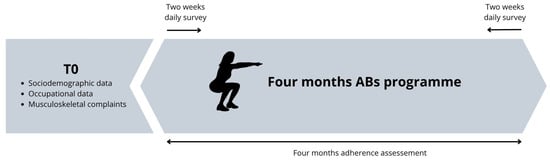
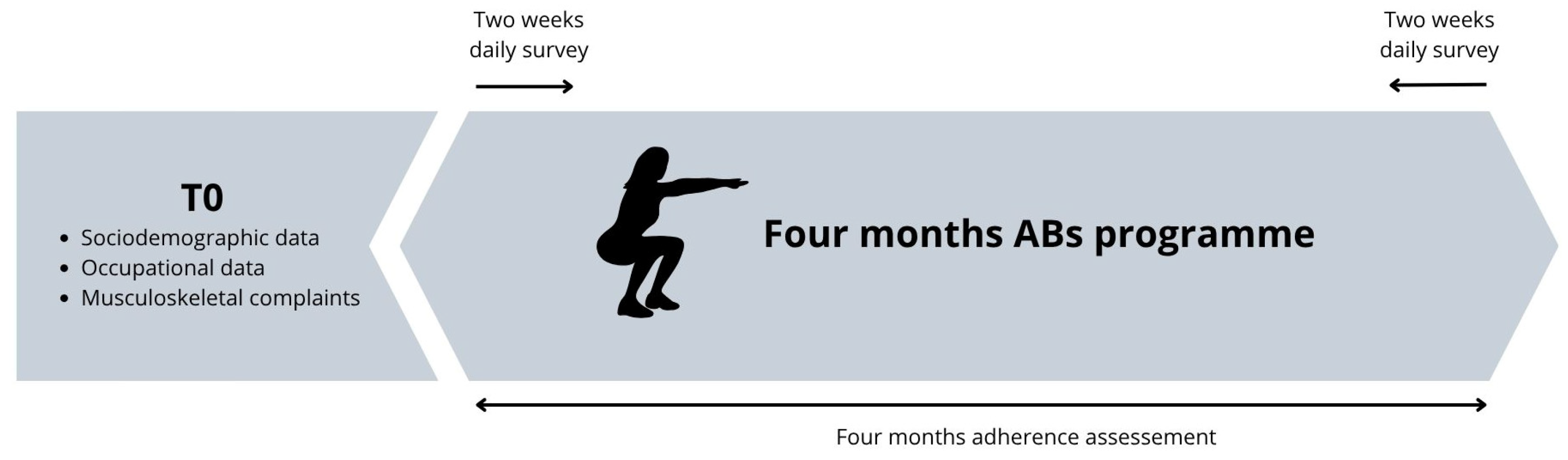
At T0 the following information was collected: age, body weight, height, sex, employment contract (fixed-term or permanent), working time (full-time or part-time), occupational category, and musculoskeletal complaints (assessed using the Nordic Musculoskeletal Questionnaire, NMQ) [44,45]. In addition, participants completed a daily survey during the first two weeks and the final two weeks of the AB programme, which was implemented and administered in the last part of the working day through Qualtrics (Qualtrics Experience Management, Provo, UT, USA). Participants received a link to the survey and could respond either via personal computer or smartphone. The survey investigated different day-level variables, including those considered in the present study: the number of ABs conducted during the day, the level of workload and autonomy reported at work, and tense mood. Additionally, participants entered their assigned identification code in each survey, which was used to link the different daily surveys completed by the same individual throughout the 4-week observation period. Finally, participants were asked to maintain a self-reported adherence diary throughout the study period of four months to record AB adherence. Figure 1 provides a schematic overview of the timing of the assessments conducted throughout the study.
Figure 1.
Schematic overview of the timing of assessments. Note. T0 = baseline.
2.4. Primary Outcome
The primary outcome of the study was day-level strain defined in terms of tense mood. This outcome reflects the level of tension and negative arousal experienced by workers in their daily lives and is characterized by highly activated negative affective symptoms.
2.5. Secondary Outcome
Adherence was considered as secondary outcome of this study. It was evaluated using a self-reported adherence diary. This analysis was included purely as a descriptive secondary outcome to provide insight into programme engagement across the 4-month intervention, rather than for correlation or integration with the primary outcome.
2.6. Measures
To evaluate the associations between ABs and tense mood, we implemented a daily survey design covering two distinct 2-week observation windows at the beginning and at the end of a 4-month intervention period. This approach allowed us to examine within-person daily fluctuations (comparing high- versus low-break days) as well as differences between the initial and final stages of the programme.
Day-level tense mood was measured with three items of the daily survey (e.g., “Today, at work: I felt very nervous”, “I felt very agitated”, “I felt very tense”) derived from the Multidimensional Mood Questionnaire [46] as revised by Menghini et al. [47]. Items were rated on a 7-point Likert scale from 1 (totally disagree) to 7 (totally agree). To assess reliability, we computed multilevel omega (ω) following standard recommendations [48]. The scale showed satisfactory (i.e., >0.70) level-specific reliability within the present data (ω-within = 0.93, 95% CI: 0.90–0.95; ω-between = 0.99, 95% CI: 0.99–1.00).
Day-level workload was measured with three items of the daily survey (e.g., “Today: I had to work very fast”, “I had much to do”, “I had to work very intensively”) included in the Task Demand Scale [47]. Items were rated on the same 7-point Likert response scale. Level-specific reliability within the present data was satisfactory (ω-within = 0.87, 95% CI: 0.83–0.90; ω-between = 0.96; 95% CI: 0.93–0.99).
Day-level autonomy was measured with three items of the daily survey (e.g., “Today: I could decide how to perform the tasks”, “I could plan the pace of work”, “I could choose when to switch to a different job task”) composing the Task Control Scale [47]. Again, responses were collected on the same 7-point Likert scale. Level-specific reliability within the present data was satisfactory (ω-within = 0.86, 95% CI: 0.82–0.89; ω-between = 0.98, 95% CI: 0.96–0.99).
For all the three scales described above (i.e., day-level tense mood, day-level workload, and day-level autonomy) we computed the average scale score as an estimation of the underlying constructs.
Day-level ABs were derived from participants’ responses to the daily survey item assessing the number of ABs completed on that day. Response options were 0, 1, 2, or 3 (i.e., all) ABs.
Sex and age were obtained directly from participants’ self-reported T0 data. Similarly, body mass index (BMI) was calculated using the standard formula (body weight [kg]/height2 [m2]) based on participants’ self-reported body weight and height collected at baseline.
Musculoskeletal complaints were measured by using the NMQ [44,45]. The NMQ scoring procedure was based on the methodology proposed by Santos et al. [49]. According to this approach, each anatomical region (neck, shoulders, upper back, elbows, wrists/hands, lower back, hips/thighs, knees, and ankles/feet), was assigned a score of 0 in the absence of symptoms; 1 in the presence of pain in the last 12 months or in the last 7 days; 2 in the presence of pain in both the last 12 months and the last 7 days; 3 when pain in either period was associated with withdrawal from activities; and 4 when pain was reported in both periods and resulted in withdrawal from activities. A total score was then obtained by summing the scores across all anatomical regions (range 0–4), yielding an overall score ranging from 0 (no reported pain/discomfort) to 36 (maximum reported pain/discomfort).
Adherence was calculated as the proportion of ABs performed by each participant relative to the total number of ABs available during the intervention period for that individual. Specifically, the denominator corresponded to the number of ABs scheduled for each participant after excluding days in which participants were not expected to be at work (e.g., vacation, sickness, leave, company closure, or other reported absences). Conversely, days in which participants were working but did not report complete ABs, as well as days for which no diary information was provided, were considered as available intervention days and were included in the denominator. This approach was adopted to ensure that adherence reflected participants’ engagement with the AB programme only during periods in which the intervention could have been performed.
2.7. Statistical Analysis
The normality of data distribution was assessed using Shapiro–Wilk test. Descriptive statistics were used to summarize sociodemographic and occupational characteristics.
Data were organized hierarchically, with workdays nested within persons. Thus, to test the main study hypotheses, we used multilevel regression analysis [50]. Using SPSS version 26, we fitted a series of nested models predicting daily tense mood on the listwise-deleted dataset (579 observation). We used listwise deletion to ensure comparability across models. This approach resulted in a constant analytic sample across all multilevel models, allowing differences in parameter estimates and model fit to be attributed to model specification rather than to changes in the composition of the sample. By doing so, 6.9% of the initial observations (622 observation) were lost. To ensure stability of the obtained results, we separately replicated all the analyses with a different software (i.e., Mplus version 8.7; [51]) allowing for full information maximum likelihood estimation.
We started by estimating a null (or intercept-only) model (Model 0) that we used as a baseline model to assess the amount of within- and between-person variance in the outcome variable. This baseline model included only the dependent variable (i.e., tense mood) and estimated three parameters: the intercept, and the two variance components, that is, the within-person variance (i.e., level 1 [L1] variance) and the intercept variance (level 2 [L2] variance). We then fitted the first of the focal study models (Model 1), testing Hypothesis 1, that daily ABs would be negatively related with daily tense mood over and above daily workload and daily autonomy, and Hypothesis 4, that a higher average level of ABs during the observation period would be related with a lower level of tense mood. Model 1 included ABs, daily workload and daily autonomy as predictors of tense mood at the within-person level. These variables were first person-mean centered so that they could explain only within-person (i.e., day-level) variance in tense mood [52]. Model 1 also included the average number of ABs during the observation period, as well as sex, age, BMI, and musculoskeletal complaints, all of which acted at the between-person level (i.e., level 2). We estimated fixed effects only for all predictors. Therefore, Model 1 estimated eight additional parameters compared to Model 0, for a total of 11 parameters.
Following Model 1, we fitted a second model (Model 2) including the two within-person interactions (i.e., daily ABs by daily workload and daily ABs by daily autonomy) testing for Hypotheses 2 and 3. Model 2 estimated a total of 13 parameters.
Subsequently, we fitted Model 3 testing for Hypothesis 5, that is, the between-person-level interaction between the average number of ABs done across the sampled working days and musculoskeletal complaints.
Model 3 was nested within Model 1 including only the main fixed effects of all the study variables; therefore Model 3 estimated 12 parameters. The used estimation method was maximum likelihood.
Adherence was described using mean and standard deviation (SD) or median and interquartile range (IQR), as appropriate. No comparative statistical analyses were performed between participants who returned the adherence diary and those who did not.
2.8. Sample Size
The study was based on a final sample of 66 participants (level 2 of the analysis), who provided data on a total of 579 daily observations (level 1). According to accepted standards [53], sample size is adequate at level 1 (i.e., day-level), while it may be slightly underpowered at level 2 (i.e., person level), for which a sample size of at least 83 has been suggested [53]. However, a sample size at level 2 lower than 83 is not uncommon in applied psychology research [52,53].
3. Results
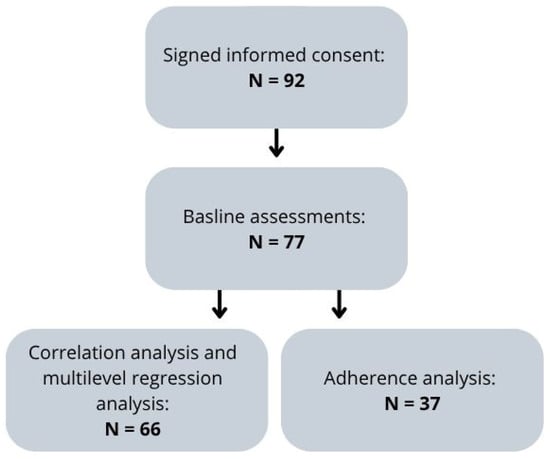
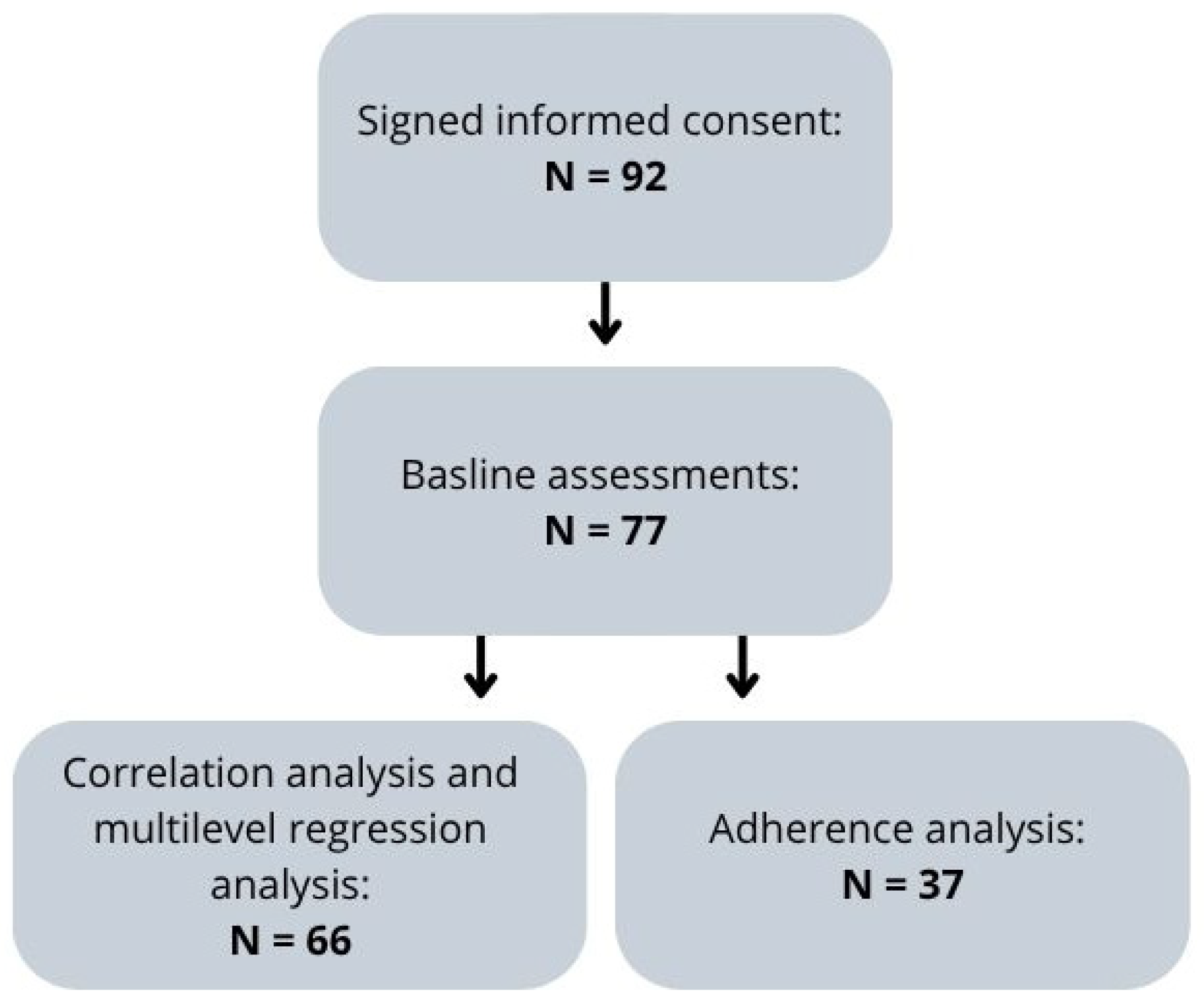
A total of 92 subjects provided written informed consent. Of these, 15 participants withdrew prior to programme without providing any further information to the research team. Thus, 77 participants across the three participating organizations initiated the AB intervention and completed baseline (T0) evaluations; their sociodemographic and occupational characteristics are detailed in Table 1. For the correlation and multilevel regression analyses, 11 participants were excluded because they did not provide a sufficient number of responses to the daily surveys. Additionally, adherence analyses were conducted exclusively among the 37 participants who returned a correctly completed adherence diary at the end of the 4-month intervention period. Figure 2 provides a graphical overview of the participant flow throughout the study.
Table 1.
Sociodemographic and occupational characteristics of the baseline sample.
Figure 2.
Graphic overview of the participant flow. Note. N = number.
3.1. Correlation Analysis
Starting from the initial dataset of 77 cases and a total of 622 observations, we retained cases who had data on at least two daily surveys with complete data (i.e., no missing values) on the used variables. This resulted in a final dataset of 66 cases and a total of 579 observations.
Table 2 reports descriptive statistics and correlations between the study variables. At the within-person level, day-level tense mood correlated positively with day-level workload (r = 0.23, p < 0.001) and negatively with day-level autonomy (r = −0.12, p < 0.01) and day-level ABs (r = −0.14, p < 0.001). Between-person-level correlations were similar to within-person-level correlations, with the exception that they were generally stronger (Table 1). Musculoskeletal complaints were not significantly related to tense mood (r = 0.23, p = 0.06).
Table 2.
Descriptive statistics and intercorrelations of study variables.
3.2. Multilevel Regression Analysis
Table 3 reports the results of multilevel regression predicting day-level tensed mood. Model 1 revealed that, over and above covariates, day-level ABs were negatively related with day-level tense mood (b = −0.13, SE = 0.06, p < 0.05). Among day-level covariates, only day-level workload was significantly and positively related with tense mood (b = 0.23, SE = 0.05, p < 0.001). At the between-person level, the results showed that participants with a higher average level of ABs across the observation period reported lover levels of tense mood (b = −0.42, SE = 0.18, p < 0.01) over and above same-level covariates, that is, musculoskeletal complaints, sex, age and BMI, which did not show a significant relationship with tense mood.
Table 3.
Results of multilevel regression predicting day-level tense mood.
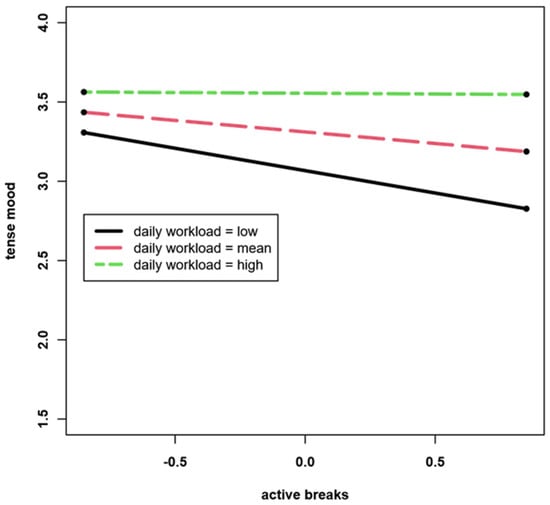
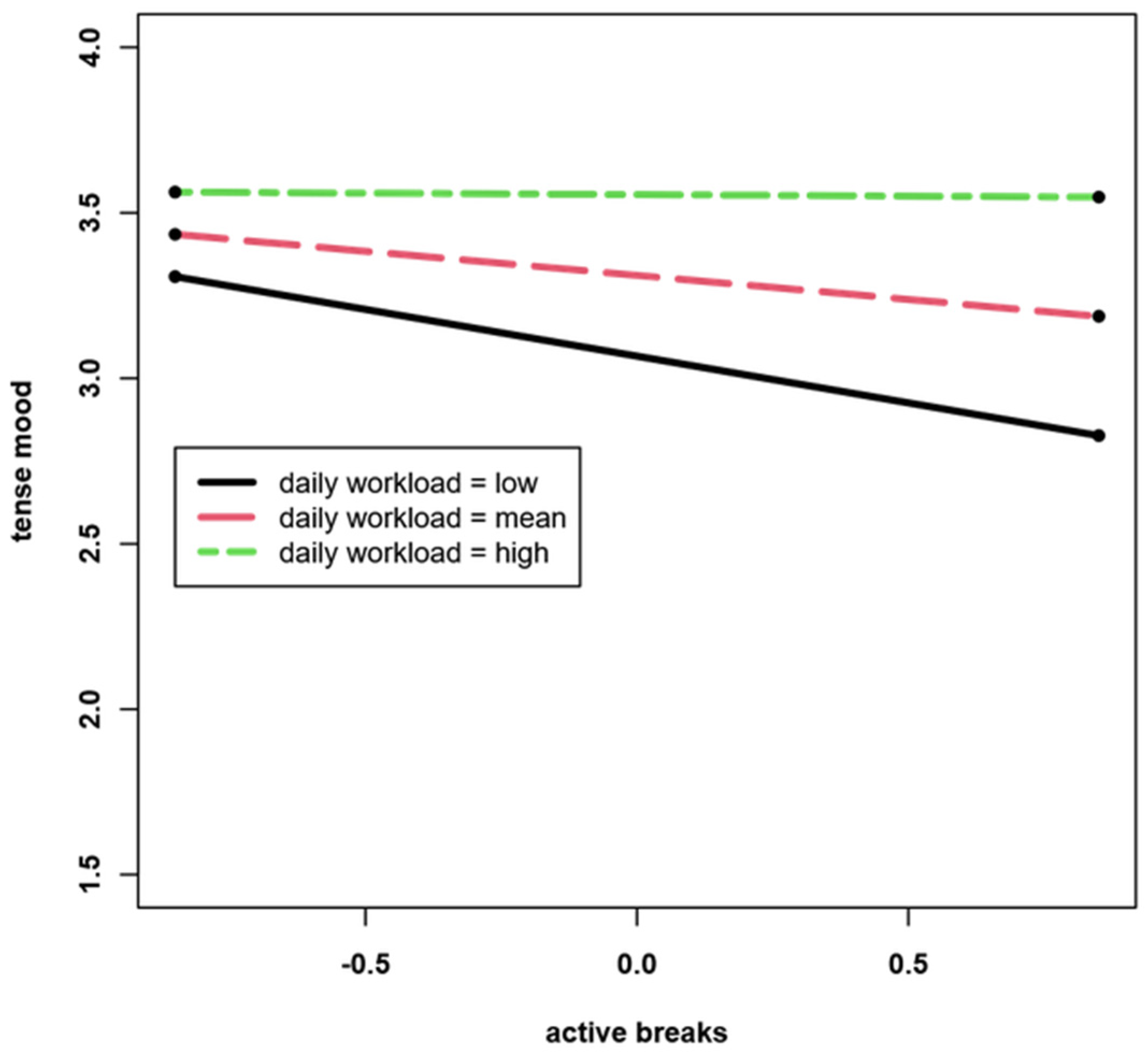
We then fitted the two interactive models, i.e., Model 2 and Model 3. In Model 2 day-level workload interacted significantly with day-level ABs (b = 0.13, SE = 0.06, p < 0.05, 95% CI: 0.02–0.24). Results of simple slope analysis showed that the relationship between daily ABs and daily tense mood was negative and significant at lower (1 SD below the mean) (b = −0.28, SE = 0.09, p < 0.01, 95% CI: −0.16–0.10) and average (b = −0.15, SE = 0.06, p < 0.05, 95% CI: −0.27–−0.03) levels of daily workload, while it was not significant (b = −0.01, SE = 0.08, ns, 95% CI: −0.16–0.14) when daily workload was higher (Figure 3). This result supported Hypothesis 2. To the contrary, daily autonomy did not significantly moderate the relationship between daily ABs and daily tense mood, which did not support Hypothesis 3.
Figure 3.
Graphical representation of the within-person-level interaction between daily active breaks and daily workload on daily tense mood.
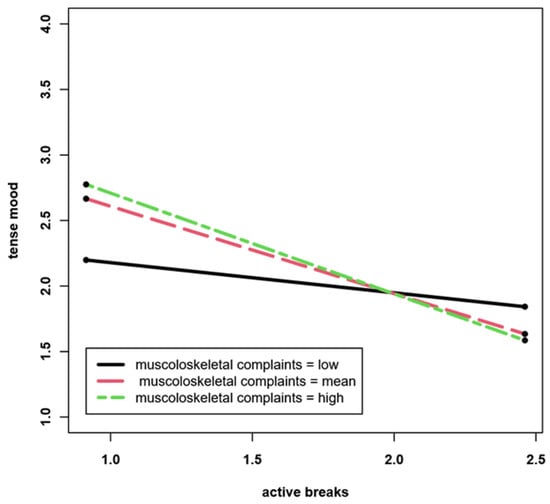
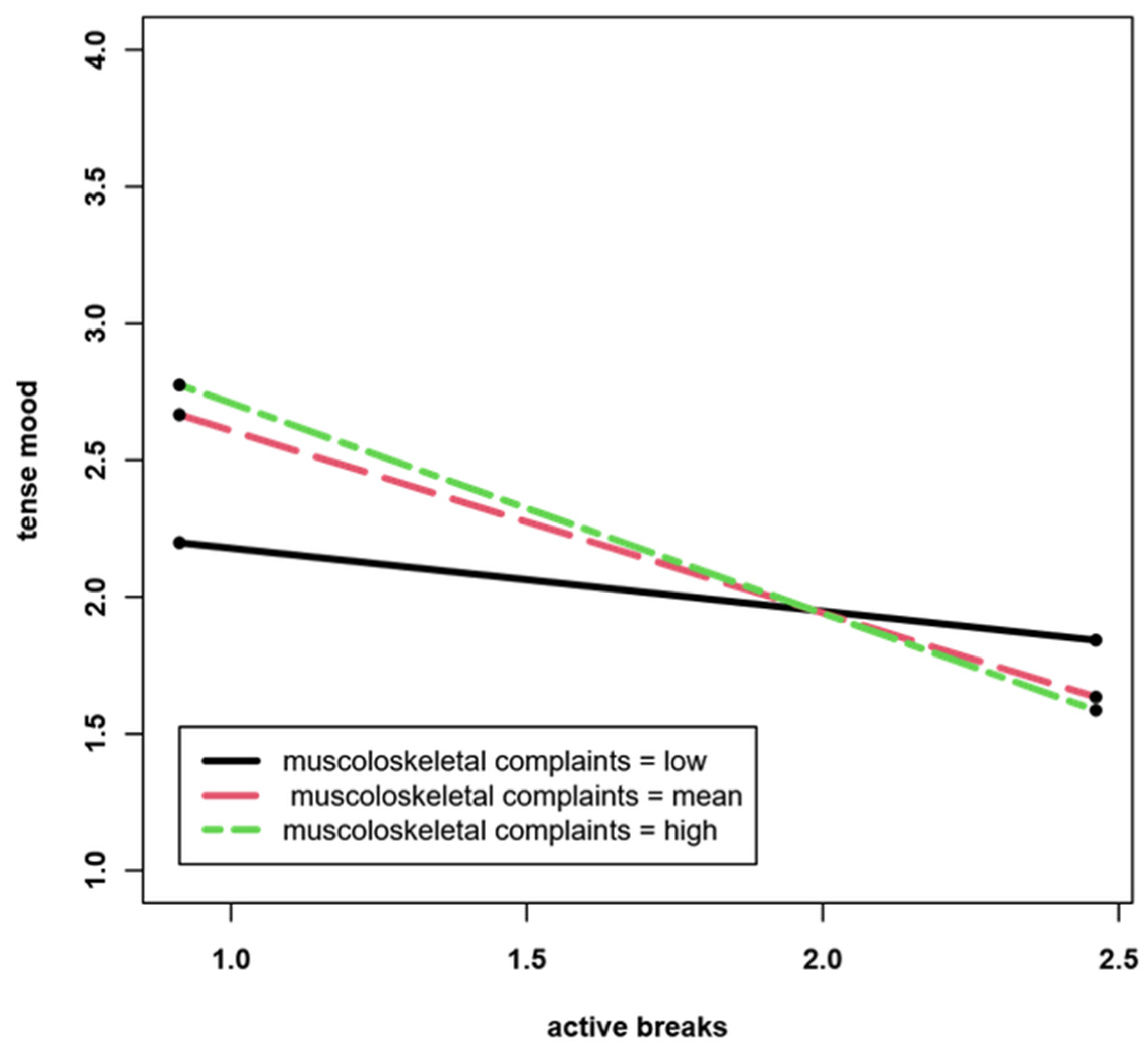
Model 3 showed a significant between-person-level interaction between the average level of ABs across the observation period and musculoskeletal complaints (b = −0.06, SE = 0.03, p < 0.05, 95% CI: −0.11–−0.01). Simple slope analysis indicated that the relationship between average level of ABs and tense mood was negative and significant when musculoskeletal complaints were either high, that is 1 SD above the mean (b = −0.77, SE = 0.18, p < 0.001, 95% CI: −1.12–−0.42), or at the mean (b = −0.67, SE = 0.18, p < 0.001, 95% CI: −1.02–−0.32), while the relationship was not significant when musculoskeletal complaints were low, that is 1 SD below the mean (b = −0.23, SE = 0.27, ns, 95% CI: −0.76–0.30) (Figure 4).
Figure 4.
Graphical representation of the between-person-level interaction between average daily active breaks and musculoskeletal complaints on daily tense mood.
To be confident about the obtained results against missing cases, we replicated the multilevel analysis by using full information maximum likelihood estimation as a way to deal with missing cases [52]. We obtained exactly the same results. Such additional analysis is available upon request to the corresponding author.
3.3. Adherence
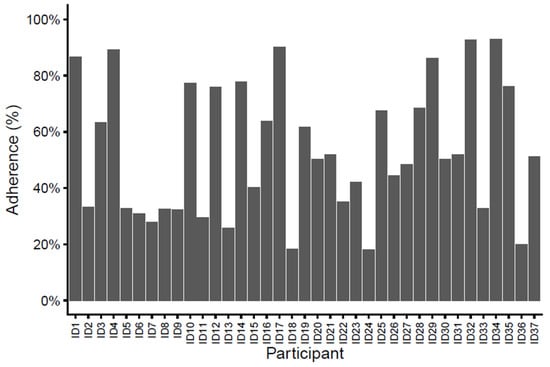
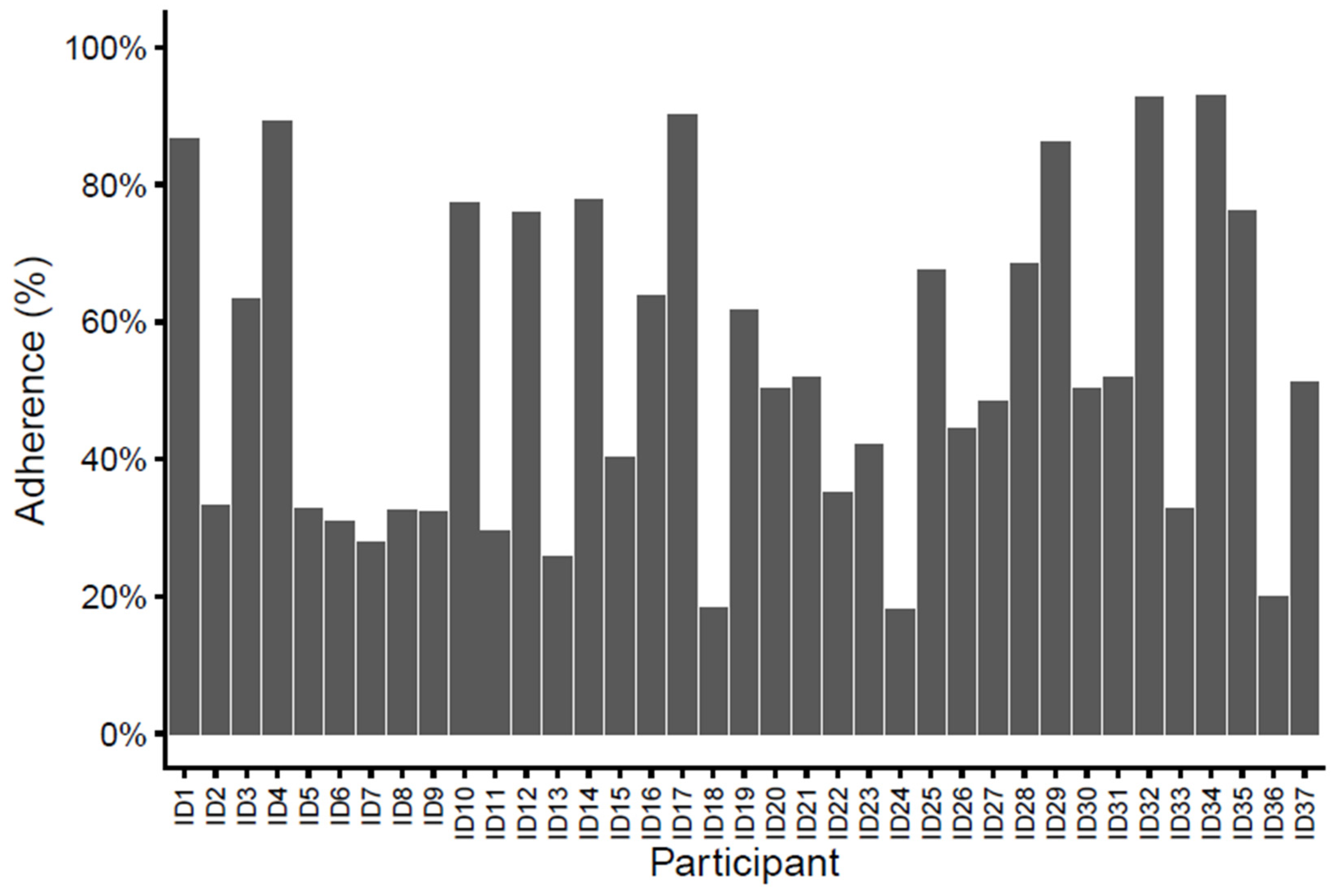
Of the 77 participants included in the initial sample, 37 correctly completed and returned the self-reported adherence diary after following the AB protocol provided by the research team. This tool was included strictly as a complementary descriptive index to observe general programme engagement over time. Because it was not possible to verify whether non-returning participants (N = 40) were non-adherent to the exercise programme or merely non-compliant with diary completion, no inferential or relational analyses were conducted between the 4-month adherence diary and the daily survey variables to avoid introducing analytical bias. Among the 37 respondents, median self-reported adherence was 50% (IQR: 43%). Figure 5 represents the distribution of individual adherence values as percentage.
Figure 5.
Distribution of individual adherence values as a percentage. Note. ID = identification code.
4. Discussion
The findings of the present study provide insights into the dynamics of workplace health promotion, suggesting that ABs may represent a potential internal recovery activity. In particular, greater engagement in ABs was associated with lower levels of strain symptoms, that is, tense mood. At the within-person level, our results demonstrate that on days when employees engaged in a higher number of ABs, they reported significantly lower levels of tense mood, validating the core assumption of Hypothesis 1. This aligns with scientific literature suggesting that brief bouts of PA during the workday have an immediate mitigating effect on psychological strain [54,55]. This acute benefit is supported by the between-person analysis, which reveals that individuals who maintain a higher average compliance throughout the observation period experience lower average levels of tense mood, supporting Hypothesis 4. Nevertheless, it should be acknowledged that the between-person analyses were based on a relatively small, although acceptable, sample and may therefore have had limited statistical power. Accordingly, these findings should be interpreted cautiously, as they may indicate a positive trend rather than provide definitive evidence. Taken together, the results obtained appear to be consistent with theoretical frameworks of on-work recovery and may suggest that brief physical disengagements during the workday could facilitate the unwinding process and contribute to limiting the accumulation of strain [56,57]. However, this interpretation remains hypothetical and should be better investigated in future studies.
However, this mechanism does not operate in a vacuum, as evidenced by the significant interaction between daily ABs and daily workload, which confirms Hypothesis 2. This association remained robust on days characterized by low or average workloads but was weaker on days characterized by high workloads. This attenuation suggests that when quantitative demands and temporal pressures reach a critical threshold, the cognitive and emotional effort required to manage the workload limits the employee’s ability to psychologically detach during a break. This association appears to be in line with the Job Demands–Resources model, which posits that excessive qualitative or quantitative demands can deplete regulatory resources and impair the effectiveness of recovery opportunities [58]. In such high-strain scenarios, workers might perceive the physical interruption as an ulterior logistical burden rather than a source of relief, pointing to the necessity of systemic organizational interventions that adjust baseline demands alongside individual health initiatives. Contrary to our expectations, daily autonomy did not appear to significantly moderate the association between daily ABs and tense mood. This apparently suggests that the immediate obstacle to effective recovery in the observed sample is the sheer volume of daily tasks rather than the perceived control over one’s schedule.
Concerning Hypothesis 5, we initially hypothesized that sub-optimal physical conditions would be associated with a lower perceived benefit from ABs. However, the data revealed the exact opposite pattern: the negative association between the average number of ABs and tense mood was most pronounced among individuals reporting severe musculoskeletal discomfort. This finding could highlight a compensatory mechanism. For employees enduring physical tension, movement sequences such as stretching and muscle activation may provide physical relief [59]. Nevertheless, this interpretation remains hypothetical and extends beyond what was directly examined in the present study. In accordance with the mutually reinforcing dynamics of pain and psychological strain [43], this physical mitigation may be indirectly related to lower affective strain, potentially making ABs a useful intervention for the most physically vulnerable segments of the workforce. However, as musculoskeletal complaints were assessed only at baseline and the study was uncontrolled, this finding should be interpreted as a moderation effect rather than as evidence that ABs are particularly beneficial for workers with musculoskeletal complaints.
Nevertheless, given the absence of a control group, it cannot be determined with certainty whether the observed associations may also be influenced by other factors. This aspect should therefore be taken into account when interpreting the findings.
Regarding adherence, the analysis of self-reported adherence diaries revealed an overall median compliance rate of 50% (IQR: 43%) across the four months of AB intervention. Although this percentage reflects a medium-to-low adherence level with significant variability among participants, it aligns with broader findings in workplace AB interventions, which report post-intervention adherence rates of around 58.6% [60]. The moderate level of adherence observed in our sample may provide useful insight into the practical challenges of sustaining participation in a prolonged AB programme. The four-month duration of the programme required participants to maintain regular participation over an extended period, including seasonal holidays and vacation periods that may have disrupted established daily routines. In addition, the intervention did not incorporate automated digital prompts or real-time reminders to support participation throughout the study period, despite these having been identified as potential facilitators [27]. These characteristics may have contributed to the observed level of adherence and highlight the importance of considering both programme duration and ongoing behavioural support when designing workplace AB intervention. In the context of adherence assessment, it is important to clarify that adherence data were included solely to provide an overall descriptive overview and were not incorporated into the analyses of the other study variables. Accordingly, adherence should be interpreted as an additional descriptive measure rather than as a variable examined in relation to the other outcomes.
Limitations
Several limitations should be considered when interpreting the findings of this study. The main limitation of this study is the absence of a control group. Consequently, it is not possible to determine whether the observed associations are specifically attributable to ABs or may instead reflect other factors occurring during the intervention period.
Additionally, our assessments relied exclusively on self-reported measures. Although questionnaires such as the NMQ are widely validated, they remain subject to subjective perception and social desirability biases, which may limit the accuracy of the reported outcomes. Similarly, adherence was assessed using a self-reported diary, potentially introducing additional reporting bias, as the accuracy of the recorded information could not be objectively verified. Furthermore, some diary entries were completed inconsistently, requiring the research team to standardize participants’ responses before analysis. This additional step may have introduced a further source of subjectivity into the assessment of adherence. Likewise, BMI was calculated from self-reported weight and height, as it was not possible to objectively verify the measurements reported by participants.
Another limitation is that the main study variables, including daily AB engagement, workload, autonomy, and level of tense mood, were collected within the same daily survey, which may have introduced common-method bias and may have influenced the observed associations. In addition, musculoskeletal complaints were assessed only at baseline, limiting the possibility of examining how changes in these symptoms over the intervention period may have been related to the daily measures. Future studies incorporating objective or time-stamped measures of AB participation and repeated assessments of musculoskeletal complaints and other variables could help reduce these potential sources of bias and provide a more comprehensive understanding of these associations.
Moreover, daily repeated measurements of tense mood were gathered exclusively during two 2-week windows (the first two and final two weeks of the programme), although the AB intervention spanned a total duration of four months. While this design minimized participant survey fatigue, it did not capture continuous daily data during the intervening months. As a result, our findings cannot establish the continuous longitudinal trajectory or week-by-week dynamic evolution of strain symptoms (e.g., tense mood) across the full four-month period.
Furthermore, this study did not execute specific subgroup analyses stratified by occupational categories in relation to the typical time spent in SB during a single working day. Baseline levels of SB and daily PA were not objectively quantified before the program. Although participants were recruited from organizations with predominantly desk-based duties, the absence of baseline accelerometry or validated PA profiling prevents us from objectively verifying individual baseline exposure to sedentary time. Consequently, we had to rely on participants’ self-reported information provided during recruitment. Future studies should incorporate objective devices (e.g., body-worn accelerometers) at baseline to precisely quantify SB and PA levels before implementing AB interventions.
Moreover, the level-2 analyses, including the test for the between-person interaction between ABs and musculoskeletal complaints, were based on a sub-optimal sample size. Although such sample size at level 2 is not uncommon in diary research [53], the findings should be interpreted with caution, and their generalizability should be further examined in larger samples.
As a further limitation, we did not control at the between-person level for contextual job characteristics (e.g., job demands, job autonomy, role conflict and ambiguity, and organizational change processes) that may chronically affect the job strain process and, consequently, influence the between-person-level relationship between ABs and tense mood. Therefore, the between-person findings should be considered preliminary. Further research is needed to examine the robustness of these associations, particularly in light of the limited number of participants available at this level of analysis.
Moreover, given the lack of a universally standardized methodology to calculate a singular final composite score for the NMQ, our strategy was adapted from Santos et al. [49] to sum region-specific scores into an overall index ranging from 0 to 36. While summarizing total musculoskeletal complaints into a single metric was appropriate for the present study to test general physical burden as a moderator of the stress-reducing effects of ABs, it does not differentiate between specific anatomical areas. Future research should distinguish between total musculoskeletal burden and region-specific pain (e.g., neck vs. lower back) to clarify whether ABs exert differential benefits depending on the precise anatomical location of discomfort.
Additionally, the primary outcome variable (tense mood) and some of the predictors were assessed at the end of the workday, limiting the ability to draw causal inferences from the observed relationships. Future research should seek to measure ABs more objectively and capture their timing (e.g., through computer vision or PC camera-based monitoring). Tense mood could then be assessed later in the day, allowing for temporal separation between the predictor and outcome variables. These precautions would strengthen causal inference.
Regarding the secondary outcome, a key limitation is that 4-month adherence was assessed exclusively through self-reported diaries, which were returned by fewer than half of the initial sample (N = 37). This may have introduced self-selection bias. Accordingly, the reported 50% median adherence should be interpreted as an exploratory descriptive estimate based on a subsample and does not allow long-term adherence across the full sample to be established beyond the intensive daily assessment periods. Future studies should consider continuous objective measures of engagement, such as automated digital tracking or wearable devices, as well as repeated assessments distributed across longer intervention periods, to better characterize the temporal evolution and sustainability of adherence.
Finally, this study did not include assessments of outcomes such as job satisfaction or absenteeism. Future studies should consider these aspects, as they may provide further insight into additional factors associated with AB and tense mood.
5. Conclusions
In conclusion, ABs may represent a valuable workplace health promotion strategy, since a greater number of self-reported daily ABs is associated with lower levels of tense mood. This association, however, appears to depend on contextual factors, particularly daily workload, and may be greater among workers reporting more severe musculoskeletal symptoms. The association between ABs and musculoskeletal complaints also warrants further investigation to clarify the potential link between these factors. Nevertheless, other unmeasured contextual or individual factors may also have contributed to the observed associations, particularly given the absence of a control group.
Author Contributions
Conceptualization, M.S.M., G.S., C.B. and L.B.; methodology, M.S.M., G.S., C.B. and L.B.; software, C.B.; formal analysis, M.S.M., G.S. and C.B.; investigation, M.S.M., G.S. and L.B.; resources, M.S.M., G.S., S.P., L.R., R.Z., E.P., C.B. and L.B.; data curation, M.S.M., G.S., S.P. and C.B.; writing—original draft preparation, M.S.M., G.S., C.B. and L.B.; writing—review and editing, M.S.M., G.S., S.P., L.R., R.Z., E.P., C.B. and L.B.; visualization, M.S.M., G.S. and C.B.; supervision, L.B.; project administration L.B. All authors have read and agreed to the published version of the manuscript.
Funding
Maria Scoppolini Massini’s contribution to this work was funded by the European Union under the Next Generation EU, Missione 4, Componente 1, Investimento 4.1 (DM 118/2023), CUP J33C23002570002. Giulio Senesi’s contribution to this work was funded by the European Union under the Next Generation EU, Missione 4, Componente 1, Investimento 4.1 (DM 118/2023), CUP J33C23002120002.
Institutional Review Board Statement
The study was approved by the Bioethical Committee of the University of Bologna (Prot. n. 0312121, date of approval 10 October 2024), in accordance with the ethical principles set out in the Declaration of Helsinki and its subsequent amendments.
Informed Consent Statement
Informed consent was obtained from all subjects involved in the study. Consent for publication was not required because all results were presented in a fully anonymized form.
Data Availability Statement
All data relevant to the understanding and interpretation of the study are reported in the manuscript. The complete datasets, although anonymized, are not publicly available due to ethical considerations. Only the analysis related to full information maximum likelihood estimation is available upon request to the corresponding author.
Conflicts of Interest
The authors declare no conflicts of interest.
Abbreviations
The following abbreviations are used in this manuscript:
| PA | Physical activity |
| SB | Sedentary behaviour |
| ABs | Active breaks |
| NMQ | Nordic musculoskeletal questionnaire |
| BMI | Body mass index |
| N | Number |
| IQR | Interquartile range |
| SD | Standard deviation |
| M | Mean |
| % | Percentage |
| ICC | Interclass correlation coefficient |
| DWL | Daily-level workload |
| DA | Daily-level autonomy |
| DABs | Daily-level active breaks |
| MCs | Musculoskeletal complaints |
| cm | Centimetres |
| Kg | Kilograms |
| SE | Standard error |
| ML | Maximum likelihood estimation |
References
- Andersen, L.L. Health Promotion and Chronic Disease Prevention at the Workplace. Annu. Rev. Public Health 2024, 45, 337–357. [Google Scholar] [CrossRef] [Scilit] [PubMed]
- International Labour Organization. Occupational Safety and Health and Working Environment. In The Psychosocial Working Environment: Global Developments and Pathways for Action: Global Report, 1st ed.; ILO: Geneva, Switzerland, 2026. [Google Scholar] [CrossRef] [Scilit]
- Rugulies, R.; Aust, B.; Greiner, B.A.; Arensman, E.; Kawakami, N.; LaMontagne, A.D.; Madsen, I.E.H. Work-related causes of mental health conditions and interventions for their improvement in workplaces. Lancet 2023, 402, 1368–1381. [Google Scholar] [CrossRef] [Scilit] [PubMed]
- Ganster, D.C.; Rosen, C.C. Work Stress and Employee Health: A Multidisciplinary Review. J. Manag. 2013, 39, 1085–1122. [Google Scholar] [CrossRef] [Scilit]
- Lazarus, R.S. Stress and Emotions: A New Synthesis; Springer: New York, NY, USA, 2006. [Google Scholar]
- Scoppolini Massini, M.; Senesi, G.; Pinelli, E.; Zinno, R.; Pinelli, S.; Balducci, C.; Bragonzoni, L. Interrupting sedentary behaviour in the workplace through active breaks: A protocol study. BMJ Open Sport Exerc. Med. 2026, 12, e003226. [Google Scholar] [CrossRef] [Scilit] [PubMed]
- Powell, C.; Herring, M.P.; Dowd, K.P.; Donnelly, A.E.; Carson, B.P. The cross-sectional associations between objectively measured sedentary time and cardiometabolic health markers in adults—A systematic review with meta-analysis component. Obes. Rev. 2018, 19, 381–395. [Google Scholar] [CrossRef] [Scilit] [PubMed]
- Wilmot, E.G.; Edwardson, C.L.; Achana, F.A.; Davies, M.J.; Gorely, T.; Gray, L.J.; Khunti, K.; Yates, T.; Biddle, S.J.H. Sedentary time in adults and the association with diabetes, cardiovascular disease and death: Systematic review and meta-analysis. Diabetologia 2012, 55, 2895–2905, Erratum in Diabetologia 2013, 56, 942–943. [Google Scholar] [CrossRef] [Scilit] [PubMed]
- Giurgiu, M.; Koch, E.D.; Ottenbacher, J.; Plotnikoff, R.C.; Ebner-Priemer, U.W.; Reichert, M. Sedentary behavior in everyday life relates negatively to mood: An ambulatory assessment study. Scand. Med. Sci. Sports 2019, 29, 1340–1351. [Google Scholar] [CrossRef] [Scilit] [PubMed]
- Saunders, T.J.; McIsaac, T.; Douillette, K.; Gaulton, N.; Hunter, S.; Rhodes, R.E.; Prince, S.A.; Carson, V.; Chaput, J.-P.; Chastin, S.; et al. Sedentary behaviour and health in adults: An overview of systematic reviews. Appl. Physiol. Nutr. Metab. 2020, 45, S197–S217. [Google Scholar] [CrossRef] [Scilit] [PubMed]
- World Health Organization. WHO Guidelines on Physical Activity and Sedentary Behaviour; World Health Organization: Geneva, Switzerland, 2020; Available online: https://www.who.int/publications/i/item/9789240015128 (accessed on 13 October 2026).
- An, H.-Y.; Chen, W.; Wang, C.-W.; Yang, H.-F.; Huang, W.-T.; Fan, S.-Y. The Relationships between Physical Activity and Life Satisfaction and Happiness among Young, Middle-Aged, and Older Adults. Int. J. Environ. Res. Public Health 2020, 17, 4817. [Google Scholar] [CrossRef] [Scilit] [PubMed]
- Das, P.; Horton, R. Rethinking our approach to physical activity. Lancet 2012, 380, 189–190. [Google Scholar] [CrossRef] [Scilit] [PubMed]
- Dhuli, K.; Naureen, Z.; Medori, M.C.; Fioretti, F.; Caruso, P.; Perrone, M.A.; Nodari, S.; Manganotti, P.; Xhufi, S.; Bushati, M.; et al. Physical activity for health. J. Prev. Med. Hyg. 2022, 63, E150. [Google Scholar] [CrossRef] [Scilit] [PubMed]
- World Health Organization. Global recommendations on physical activity for health. In Recommandations Mondiales sur L’activité Physique Pour la Santé; World Health Organization: Geneva, Switzerland, 2010. [Google Scholar]
- Lee, I.-M.; Shiroma, E.J.; Lobelo, F.; Puska, P.; Blair, S.N.; Katzmarzyk, P.T. Effect of physical inactivity on major non-communicable diseases worldwide: An analysis of burden of disease and life expectancy. Lancet 2012, 380, 219–229. [Google Scholar] [CrossRef] [Scilit] [PubMed]
- Mctiernan, A.; Friedenreich, C.M.; Katzmarzyk, P.T.; Powell, K.E.; Macko, R.; Buchner, D.; Pescatello, L.S.; Bloodgood, B.; Tennant, B.; Vaux-Bjerke, A.; et al. Physical Activity in Cancer Prevention and Survival: A Systematic Review. Med. Sci. Sports Exerc. 2019, 51, 1252–1261. [Google Scholar] [CrossRef] [Scilit] [PubMed]
- Schuch, F.B.; Vancampfort, D.; Richards, J.; Rosenbaum, S.; Ward, P.B.; Stubbs, B. Exercise as a treatment for depression: A meta-analysis adjusting for publication bias. J. Psychiatr. Res. 2016, 77, 42–51. [Google Scholar] [CrossRef] [Scilit] [PubMed]
- Wicks, C.; Barton, J.; Orbell, S.; Andrews, L. Psychological benefits of outdoor physical activity in natural versus urban environments: A systematic review and meta-analysis of experimental studies. Appl. Psychol. Health Well Being 2022, 14, 1037–1061. [Google Scholar] [CrossRef] [Scilit] [PubMed]
- Livingston, G.; Sommerlad, A.; Orgeta, V.; Costafreda, S.G.; Huntley, J.; Ames, D.; Ballard, C.; Banerjee, S.; Burns, A.; Cohen-Mansfield, J.; et al. Dementia prevention, intervention, and care. Lancet 2017, 390, 2673–2734. [Google Scholar] [CrossRef] [Scilit] [PubMed]
- Smith, P.J.; Merwin, R.M. The Role of Exercise in Management of Mental Health Disorders: An Integrative Review. Annu. Rev. Med. 2021, 72, 45–62. [Google Scholar] [CrossRef] [Scilit] [PubMed]
- Michishita, R.; Jiang, Y.; Ariyoshi, D.; Yoshida, M.; Moriyama, H.; Obata, Y.; Nagata, M.; Nagata, T.; Mori, K.; Yamato, H. The Introduction of an Active Rest Program by Workplace Units Improved the Workplace Vigor and Presenteeism Among Workers: A Randomized Controlled Trial. J. Occup. Environ. Med. 2017, 59, 1140–1147. [Google Scholar] [CrossRef] [Scilit] [PubMed]
- Waongenngarm, P.; Areerak, K.; Janwantanakul, P. The effects of breaks on low back pain, discomfort, and work productivity in office workers: A systematic review of randomized and non-randomized controlled trials. Appl. Ergon. 2018, 68, 230–239. [Google Scholar] [CrossRef] [Scilit] [PubMed]
- Batista-Ferreira, L.; Sandy, D.D.; Silva, P.C.M.C.; Medeiros-Lima, D.J.M.; Rodrigues, B.M. Impact of active breaks on sedentary behavior and perception of productivity in office workers. Rev. Bras. Med. Trab. 2024, 22, e20231213. [Google Scholar] [CrossRef] [Scilit] [PubMed]
- Rabal-Pelay, J.; Cimarras-Otal, C.; Coscolla-Palma, S.; Burillo-Villuendas, A.; Villalba-Ruete, J.A.; Bataller-Cervero, A.V. Effect of active breaks on stress and musculoskeletal discomfort during work in office workers. Sport Sci. Health 2025, 21, 2835–2843. [Google Scholar] [CrossRef] [Scilit]
- Bardus, M.; Blake, H.; Lloyd, S.; Suzanne Suggs, L. Reasons for participating and not participating in a e-health workplace physical activity intervention: A qualitative analysis. Int. J. Workplace Health Manag. 2014, 7, 229–246. [Google Scholar] [CrossRef] [Scilit]
- Pinelli, E.; Masini, A.; Scoppolini Massini, M.; Dallolio, L.; Bragonzoni, L. Investigating facilitators and barriers of university-based administrative staff, residents and researchers to implement an active breaks intervention: A mixed-methods study. BMJ Open 2025, 15, e093781. [Google Scholar] [CrossRef] [Scilit] [PubMed]
- Davidson, R.J. On emotion, mood, and related affective constructs. In The Nature Ofemotion. Fundamental Questions; Oxford University Press: New York, NY, USA, 1994; pp. 51–55. [Google Scholar]
- Totterdell, P.; Wood, S.; Wall, T. An intra-individual test of the demands-control model: A weekly diary study of psychological strain in portfolio workers. J. Occup. Organ. Psychol. 2006, 79, 63–84. [Google Scholar] [CrossRef] [Scilit]
- Ilies, R.; Dimotakis, N.; De Pater, I.E. PSYCHOLOGICAL AND PHYSIOLOGICAL REACTIONS TO HIGH WORKLOADS: IMPLICATIONS FOR WELL-BEING. Pers. Psychol. 2010, 63, 407–436. [Google Scholar] [CrossRef] [Scilit]
- Menghini, L.; Spagnoli, P.; Balducci, C. Uncovering the main and interacting impact of workaholism on momentary hedonic tone at work: An experience sampling approach. J. Occup. Health Psychol. 2023, 28, 380–394. [Google Scholar] [CrossRef] [Scilit] [PubMed]
- Geurts, S.A.; Sonnentag, S. Recovery as an explanatory mechanism in the relation between acute stress reactions and chronic health impairment. Scand. J. Work Environ. Health 2006, 32, 482–492. [Google Scholar] [CrossRef] [Scilit] [PubMed]
- Sonnentag, S.; Venz, L.; Casper, A. Advances in recovery research: What have we learned? What should be done next? J. Occup. Health Psychol. 2017, 22, 365–380. [Google Scholar] [CrossRef] [Scilit] [PubMed]
- Sonnentag, S.; Cheng, B.H.; Parker, S.L. Recovery from Work: Advancing the Field Toward the Future. Annu. Rev. Organ. Psychol. Organ. Behav. 2022, 9, 33–60. [Google Scholar] [CrossRef] [Scilit]
- Häusser, J.A.; Mojzisch, A.; Niesel, M.; Schulz-Hardt, S. Ten years on: A review of recent research on the Job Demand–Control (-Support) model and psychological well-being. Work Stress 2010, 24, 1–35. [Google Scholar] [CrossRef] [Scilit]
- Karasek, R.; Brisson, C.; Kawakami, N.; Houtman, I.; Bongers, P.; Amick, B. The Job Content Questionnaire (JCQ): An instrument for internationally comparative assessments of psychosocial job characteristics. J. Occup. Health Psychol. 1998, 3, 322–355. [Google Scholar] [CrossRef] [PubMed]
- Karasek, R.; Theorell, T. Healthy Work; Basic Books: New York, NY, USA, 1990. [Google Scholar]
- Theorell, T. The empowered organization and personnel health. In Stress in Health and Disease; Arnetz, N.B.B., Ekman, R., Eds.; Wiley: New York, NY, USA, 2006; pp. 122–140. [Google Scholar]
- Bowling, N.A.; Alarcon, G.M.; Bragg, C.B.; Hartman, M.J. A meta-analytic examination of the potential correlates and consequences of workload. Work Stress 2015, 29, 95–113. [Google Scholar] [CrossRef] [Scilit]
- Luchman, J.N.; González-Morales, M.G. Demands, control, and support: A meta-analytic review of work characteristics interrelationships. J. Occup. Health Psychol. 2013, 18, 37–52. [Google Scholar] [CrossRef] [Scilit] [PubMed]
- Chen, G.; Bliese, P.D.; Mathieu, J.E. Conceptual Framework and Statistical Procedures for Delineating and Testing Multilevel Theories of Homology. Organ. Res. Methods 2005, 8, 375–409. [Google Scholar] [CrossRef] [Scilit]
- Kovalchuk, L.S.; González-Romá, V.; Balducci, C.; Molinaro, D.; Spagnoli, P. The influence of unfinished tasks on subjective ease of falling asleep via negative emotions at work: A diary study. Anxiety Stress Coping 2026, 39, 408–424. [Google Scholar] [CrossRef] [Scilit] [PubMed]
- Aboushaar, N.; Serrano, N. The mutually reinforcing dynamics between pain and stress: Mechanisms, impacts and management strategies. Front. Pain Res. 2024, 5, 1445280. [Google Scholar] [CrossRef] [Scilit] [PubMed]
- Kuorinka, I.; Jonsson, B.; Kilbom, A.; Vinterberg, H.; Biering-Sørensen, F.; Andersson, G.; Jørgensen, K. Standardised Nordic questionnaires for the analysis of musculoskeletal symptoms. Appl. Ergon. 1987, 18, 233–237. [Google Scholar] [CrossRef] [Scilit] [PubMed]
- Ghersi, R.; Martinelli, S.; Richeldi, A.; Clerici, P.; Grazioli, P.; Gobba, F.M. The Italian version of Nordic Musculoskeletal Standardized Questionnaire. G. Ital. Med. Lav. Ergon. 2007, 29, 564–566. [Google Scholar] [PubMed]
- Wilhelm, P.; Schoebi, D. Assessing Mood in Daily Life. Eur. J. Psychol. Assess. 2007, 23, 258–267. [Google Scholar] [CrossRef] [Scilit]
- Menghini, L.; Pastore, M.; Balducci, C. Workplace Stress in Real Time: Three Parsimonious Scales for the Experience Sampling Measurement of Stressors and Strain at Work. Eur. J. Psychol. Assess. 2022, 39, 424. [Google Scholar] [CrossRef] [Scilit]
- Geldhof, G.J.; Preacher, K.J.; Zyphur, M.J. Reliability estimation in a multilevel confirmatory factor analysis framework. Psychol. Methods 2014, 19, 72–91. [Google Scholar] [CrossRef] [Scilit] [PubMed]
- Santos, C.S.; Araújo Neto, M.G.D.; Nascimento, A.L.A.; Silva, G.L.M.; Rêgo, A.S.; Gonçalves, M.C. Index of severity of musculoskeletal symptoms in keyboardists. Fisioter. Mov. 2019, 32, e003247. [Google Scholar] [CrossRef] [Scilit]
- Hox, J.J.; Moerbeek, M.; Van De Schoot, R. Multilevel Analysis: Techniques and Applications, 3rd ed.; Routledge: New York, NY, USA, 2017. [Google Scholar] [CrossRef] [Scilit]
- Muthén, L.K.; Muthén, B.O. Mplus User’s Guide, 8th ed.; Muthén & Muthén: Los Angeles, CA, USA, 1998. [Google Scholar]
- González-Romá, V.; Hernández, A. Conducting and Evaluating Multilevel Studies: Recommendations, Resources, and a Checklist. Organ. Res. Methods 2023, 26, 629–654. [Google Scholar] [CrossRef] [Scilit]
- Gabriel, A.S.; Podsakoff, N.P.; Beal, D.J.; Scott, B.A.; Sonnentag, S.; Trougakos, J.P.; Butts, M.M. Experience Sampling Methods: A Discussion of Critical Trends and Considerations for Scholarly Advancement. Organ. Res. Methods 2019, 22, 969–1006. [Google Scholar] [CrossRef] [Scilit]
- Hansen, Å.M.; Blangsted, A.K.; Hansen, E.A.; Søgaard, K.; Sjøgaard, G. Physical activity, job demand–control, perceived stress–energy, and salivary cortisol in white-collar workers. Int. Arch. Occup. Environ. Health 2010, 83, 143–153. [Google Scholar] [CrossRef] [Scilit] [PubMed]
- Lindberg, C.M.; Srinivasan, K.; Gilligan, B.; Razjouyan, J.; Lee, H.; Najafi, B.; Canada, K.J.; Mehl, M.R.; Currim, F.; Ram, S.; et al. Effects of office workstation type on physical activity and stress. Occup. Environ. Med. 2018, 75, 689–695. [Google Scholar] [CrossRef] [Scilit] [PubMed]
- Ginoux, C.; Isoard-Gautheur, S.; Sarrazin, P. “Workplace Physical Activity Program” (WOPAP) study protocol: A four-arm randomized controlled trial on preventing burnout and promoting vigor. BMC Public Health 2019, 19, 289. [Google Scholar] [CrossRef] [Scilit] [PubMed]
- Naczenski, L.M.; De Vries, J.D.; Van Hooff, M.L.M.; Kompier, M.A.J. Systematic review of the association between physical activity and burnout. J. Occup. Health 2017, 59, 477–494. [Google Scholar] [CrossRef] [Scilit] [PubMed]
- Balducci, C.; Schaufeli, W.B.; Fraccaroli, F. The job demands–resources model and counterproductive work behaviour: The role of job-related affect. Eur. J. Work Organ. Psychol. 2011, 20, 467–496. [Google Scholar] [CrossRef] [Scilit]
- Tersa-Miralles, C.; Bravo, C.; Bellon, F.; Pastells-Peiró, R.; Rubinat Arnaldo, E.; Rubí-Carnacea, F. Effectiveness of workplace exercise interventions in the treatment of musculoskeletal disorders in office workers: A systematic review. BMJ Open 2022, 12, e054288. [Google Scholar] [CrossRef] [Scilit] [PubMed]
- Kitano, N.; Jindo, T.; Yoshiba, K.; Yamaguchi, D.; Fujii, Y.; Wakaba, K.; Maruo, K.; Kai, Y.; Arao, T. Effectiveness of short active breaks for reducing sedentary behavior and increasing physical activity among Japanese office workers: One-year quasi-experimental study. Scand. J. Work Environ. Health 2025, 51, 312–322. [Google Scholar] [CrossRef] [Scilit] [PubMed]

Disclaimer/Publisher’s Note: The statements, opinions and data contained in all publications are solely those of the individual author(s) and contributor(s) and not of MDPI and/or the editor(s). MDPI and/or the editor(s) disclaim responsibility for any injury to people or property resulting from any ideas, methods, instructions or products referred to in the content. |
© 2026 by the authors. Licensee MDPI, Basel, Switzerland. This article is an open access article distributed under the terms and conditions of the Creative Commons Attribution (CC BY) license.