


Highlights
Public health relevance—How does this work relate to a public health issue?
- Adults with type 2 diabetes and obesity in rural areas may have limited access to coordinated weight-management services.
- This trial assessed whether benefits of a nurse practitioner-led interdisciplinary clinic persisted after structured support ended.
Public health significance—Why is this work of significance to public health?
- At 12 months post-intervention benefits were sustained; body weight was 11.8 kg lower and HbA1c was 0.75 percentage points lower in the intervention group than in standard care.
- Physical quality of life remained higher, although effects on other metabolic outcomes were less consistent.
Public health implications—What are the key implications or messages for practitioners, policy makers and/or researchers in public health?
- Structured obesity treatment should be considered a core component of type 2 diabetes care rather than an adjunct.
- Nurse practitioner-led interdisciplinary models may improve access to sustained obesity and diabetes care in rural health services.
Abstract
Background: Sustaining weight and glycaemic improvements after structured obesity care ends is challenging. This study assessed 6- and 12-month post-intervention outcomes of a nurse practitioner-led interdisciplinary obesity clinic. Methods: In this unblinded randomised controlled trial, 224 rural Australian adults with type 2 diabetes and obesity were allocated to the 24-month AMOS intervention (n = 113) or standard diabetes care (n = 111). Outcomes at 6- and 12-months post-intervention were analysed using mixed-effects linear regression, with multiple imputation for missing data. The trial was registered with the Australian New Zealand Clinical Trials Registry (ACTRN12622000240741). Results: Compared with standard care, the intervention group maintained greater reductions at 6 months post-intervention in body weight (−13.5 kg; 95% CI: −16.8 to −10.1), BMI (−4.6 kg/m2; 95% CI: −5.7 to −3.5) and HbA1c (−0.53 percentage points; 95% CI: −0.97 to −0.09). Differences remained at 12 months for body weight (−11.8 kg; 95% CI: −15.2 to −8.5), BMI (−4.1 kg/m2; 95% CI: −5.2 to −3.0) and HbA1c (−0.75 percentage points; 95% CI: −1.19 to −0.31). Physical quality of life remained higher; other metabolic outcomes were inconsistent. Conclusions: Greater reductions in weight and HbA1c persisted at 12 months after the multidisciplinary AMOS intervention ended, supporting the potential value of integrated obesity treatment within diabetes care.
1. Introduction
The global prevalence of type 2 diabetes (T2D) continues to rise at an alarming rate, with the International Diabetes Federation estimating that over 530 million adults were living with diabetes in 2021, projected to increase to 783 million by 2045 [1]. This trend is reflected in Australia, where national burden of disease data demonstrates substantial increases in T2D incidence, prevalence, and associated morbidity over recent decades [2]. The rising global burden of type 2 diabetes is closely linked to increasing obesity prevalence, with the Global Burden of Disease Study estimating that 52.2% of global type 2 diabetes DALYs in 2021 were attributable to high BMI [3]. The 2025 Lancet Diabetes & Endocrinology Commission further framed obesity as a multifactorial condition of excess adiposity associated with increased risk of T2D and other non-communicable diseases [4].
Despite this strong pathophysiological link, weight management has historically been under-emphasised in type 2 diabetes care relative to glycaemic targets and pharmacotherapy [5]. This is important because obesity not only contributes to insulin resistance and worsening glycaemia but may also be exacerbated by some commonly used glucose-lowering therapies, such as insulin and certain sulfonylureas [6]. As a result, conventional glucose-centric approaches may improve glycaemia without adequately addressing the underlying metabolic drivers of disease. These limitations have contributed to growing interest in treatment models that target obesity more directly as part of diabetes management.
In recent years, there has been a growing shift towards weight-centred approaches in type 2 diabetes management. Evidence from structured lifestyle interventions and multidisciplinary programs has shown that weight loss can improve glycaemic outcomes, reduce medication burden and, in some cases, support remission [7,8,9]. GLP-1 receptor agonists and newer dual agonists have changed type 2 diabetes treatment by improving both weight and glycaemic outcomes [10,11]. Reflecting this evidence, the ADA Standards of Care (2025) now state that, in people with T2D and overweight or obesity, weight management should be a primary goal of treatment alongside glycaemic management [12]. Together, these developments have challenged the traditional glucose-centric model of care and support a broader metabolic approach to diabetes management.
However, an important evidence gap remains. While weight-centred interventions have shown benefits during active treatment, less is known about whether these improvements are sustained once structured support ends. This is particularly relevant in type 2 diabetes, where long-term maintenance of weight and metabolic improvement is needed to meaningfully alter disease trajectory. Evaluating these outcomes within rural services contributes evidence from settings where access to specialist and multidisciplinary care may differ from metropolitan services [13]. Understanding whether benefits can be maintained beyond the intervention period is therefore critical to assessing the real-world value of interdisciplinary, obesity-focused models of care.
The Assessment and Management of Obesity and Self-Maintenance (AMOS) trial was designed within this context. Weight reduction has the potential to improve not only glycaemia, but also blood pressure, lipid profile, treatment burden, and overall metabolic health [14]. Interdisciplinary models of care may be especially valuable, as they can combine medication optimisation with dietary, behavioural, and lifestyle support in a coordinated way [14,15]. Previous analyses from the AMOS trial demonstrated benefits during the 24-month active intervention period [14]. The present study extends that work by examining whether these benefits were sustained after the intervention had ceased. Specifically, this study aimed to evaluate whether the metabolic and weight-related benefits of an interdisciplinary, obesity-focused model of care were sustained at 6- and 12-months after the intervention period, compared with standard care.
2. Materials and Methods
2.1. Study Design and Setting
This study reports 12-month post-intervention follow-up findings from the Assessment and Management of Obesity and Self-Maintenance (AMOS) trial, a pragmatic, unblinded, randomised controlled trial conducted in a rural/regional Tasmanian diabetes service. The original trial methods have been described in detail previously [14]. Briefly, the trial was conducted across two Tasmanian Health Service sites, North-West Regional Hospital, Burnie, and Devonport Community Health Services Centre, and compared an interdisciplinary obesity-focused model of care (AMOS clinic) with standard diabetes centre care in adults with type 2 diabetes and obesity. Weight was measured using a HBI Technologies XL 550 series scale (Phoenix, AZ, USA) and the monitor calibrated each 3 months with routine hospital scheduled assessments. Resting blood pressure was measured using an Omron BP-203RPEIII VP-1000 device (Kyoto, Japan). The trial was registered with the Australian New Zealand Clinical Trials Registry (ANZCTR; ACTRN12622000240741) on 10 February 2022.
2.2. Participants Eligibility and Sample Size
Participants were adults already attending the Diabetes Centre who had type 2 diabetes, were aged 18 to <75 years and had a body mass index (BMI) of > 30 kg/m2. Exclusion criteria were cognitive impairment, intellectual disability, uncontrolled psychotic illness, pregnancy, or breastfeeding. Participants were recruited from the original AMOS trial cohort and remained in their originally assigned randomised groups for follow-up analyses [14]. The original trial required 212 participants (106 per group), assuming Cohen’s d = 0.5, 95% power and α = 0.05 for between-group differences in HbA1c, Edmonton Obesity Staging System status or absolute cardiovascular risk [14]. This follow-up study used the original enrolled cohort of 224 participants (113 intervention; 111 control), with no separate sample-size calculation.
2.3. Intervention and Comparator
The AMOS intervention was a nurse practitioner-led interdisciplinary obesity care model designed to support weight loss and self-maintenance in adults with obesity and type 2 diabetes. The intervention included medical assessment, medication review and optimisation, dietetic input, physiotherapy, psychological support where indicated, referral for bariatric surgery where appropriate, and structured follow-up to 24 months. Core consultations were delivered face-to-face at recruitment, 6- and 12-weeks, and then at 3-monthly intervals until 24 months. The comparator was standard Diabetes Centre care, consisting of routine diabetes management delivered by a credentialled diabetes educator and endocrinologist, with referral to allied health as clinically indicated. Full intervention details have been reported previously.
2.4. Post-Intervention Follow-Up and Outcomes
The AMOS intervention was delivered over 24 months, with the structured multidisciplinary component concluding at 24 months. Following completion of the intervention, participants returned to usual clinical services and continued to receive routine clinical care, including access to nurse practitioner or endocrinology care, or discharged to their general practitioner if health outcomes were to target. In this paper, the post-intervention period therefore refers to the period following completion of the structured multidisciplinary AMOS intervention rather than cessation of all clinical care. Participants were followed for an additional 12 months, with outcome assessments at 6- and 12-months post-intervention. The primary focus of this study was to determine whether the metabolic and weight-related benefits observed during the active intervention period were sustained following completion of the intervention.
Primary outcomes were change in body weight, BMI and HbA1c. Secondary outcomes included lipid profile, estimated glomerular filtration rate, blood pressure and quality-of-life measures, consistent with the available follow-up dataset.
2.5. Data Collection
Outcome data were collected using the same procedures as in the original AMOS trial. All anthropometric and blood pressure measurements were obtained in the clinic by trained clinical staff and were not self-reported. Body weight and height were measured using digital scales with participants in minimal clothing and without shoes, and BMI was calculated as weight in kilograms divided by height in square metres. Resting blood pressure was measured by a clinic nurse using an automated device, with participants seated. A single reading was taken in most cases. HbA1c was assessed at regular follow-up, and pathology measures, including fasting lipids and renal function, were analysed by a local pathology service.
2.6. Statistical Analysis
Analyses were conducted on an intention-to-treat basis using mixed-effects linear regression, adjusted for age and initial BMI, to estimate mean outcome values and changes over time within and between groups. Follow-up measurements at each timepoint were compared with baseline, with between-group differences reported as mean differences with 95% confidence intervals and p-values. A p-value < 0.05 was considered statistically significant.
Consistent with the original AMOS trial, missing values were handled using multiple imputation by chained equations, with 50 imputed datasets generated. The imputation model included variables from the outcome analyses and relevant participant and clinical characteristics, assuming data were missing at random conditional on the variables included. Confidence intervals and p-values for comparisons between visits were adjusted using the Sidak method [14]. For the current study, the dataset was re-analysed to incorporate the additional post-intervention follow-up period, including assessments at 6- and 12-months after intervention completion. Accordingly, because the imputation model was based on the full extended dataset, point estimates for earlier timepoints may differ slightly from those reported previously. All analyses were performed using Stata 16.1 MP2 (StataCorp LLC, College Station, TX, USA).
3. Results
3.1. Participants
Staggered recruitment for the original AMOS trial occurred between February 2015 and June 2016. A total of 224 participants were included in the randomised trial, comprising 113 in the intervention group and 111 in the control group. Group allocations were retained for the follow-up analysis presented in this paper according to their original randomised allocation.
Baseline characteristics are shown in Table 1. Groups were broadly similar with respect to age, BMI, diabetes duration, blood pressure, HbA1c, smoking status and most lipid measures. However, there were some between-group differences at recruitment, including sex distribution, number of non-insulin glucose-lowering medications, Edmonton Obesity Staging System category and renal measures.
Table 1.
Characteristics of participants at recruitment.
3.2. Primary Outcomes
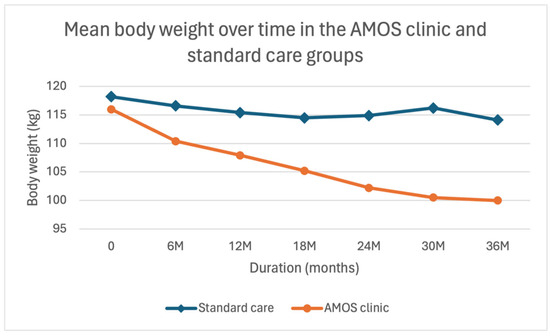
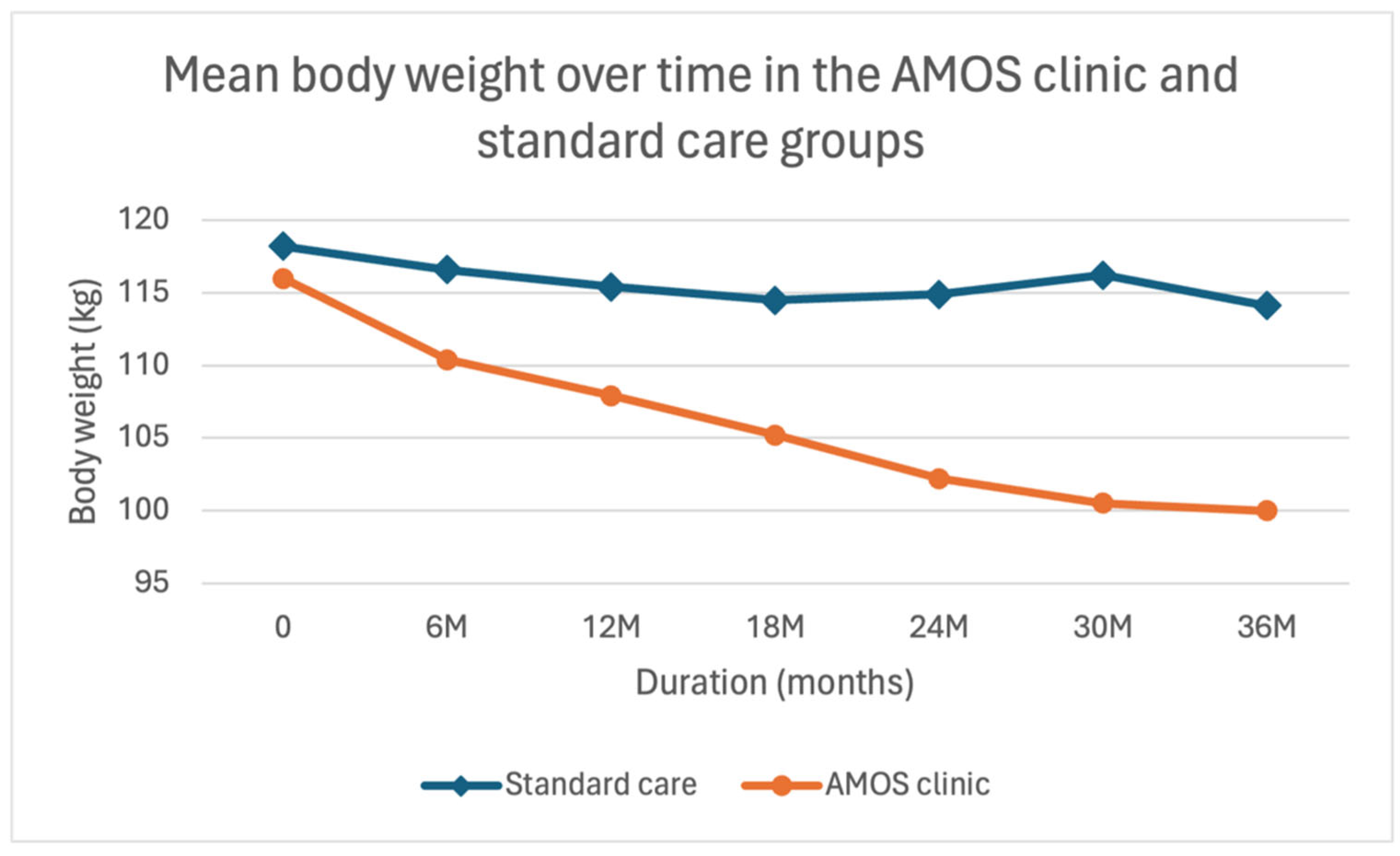
With adjustment for age and initial BMI, intervention participants had significantly greater reductions in body weight than controls at both post-intervention follow-up timepoints. At 6 months post-intervention, corresponding to 30 months from baseline, the between-group difference in body weight change was −13.5 kg (95% CI: −16.8 to −10.1; p < 0.0001), favouring the AMOS intervention group. At 12 months post-intervention, corresponding to 36 months from baseline, the between-group difference in body weight reduction remained significant at −11.8 kg (95% CI: −15.2 to −8.5; p < 0.0001) (Table 2 and Figure 1). BMI also remained significantly lower in the intervention group at 6 months post-intervention (−4.6 kg/m2, 95% CI: −5.7 to −3.5; p < 0.0001) and 12 months post-intervention (−4.1 kg/m2, 95% CI: −5.2 to −3.0; p < 0.0001) (Table 3).
Table 2.
Estimated treatment effect on body weight of AMOS clinic management compared with standard care.
Figure 1.
Mean body weight over time in the AMOS clinic and standard care groups.
Table 3.
Estimated treatment effect on BMI of AMOS clinic management compared with standard care.
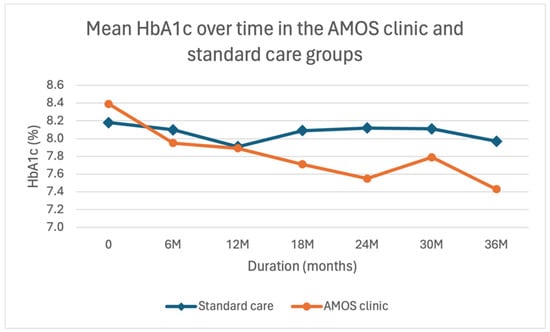
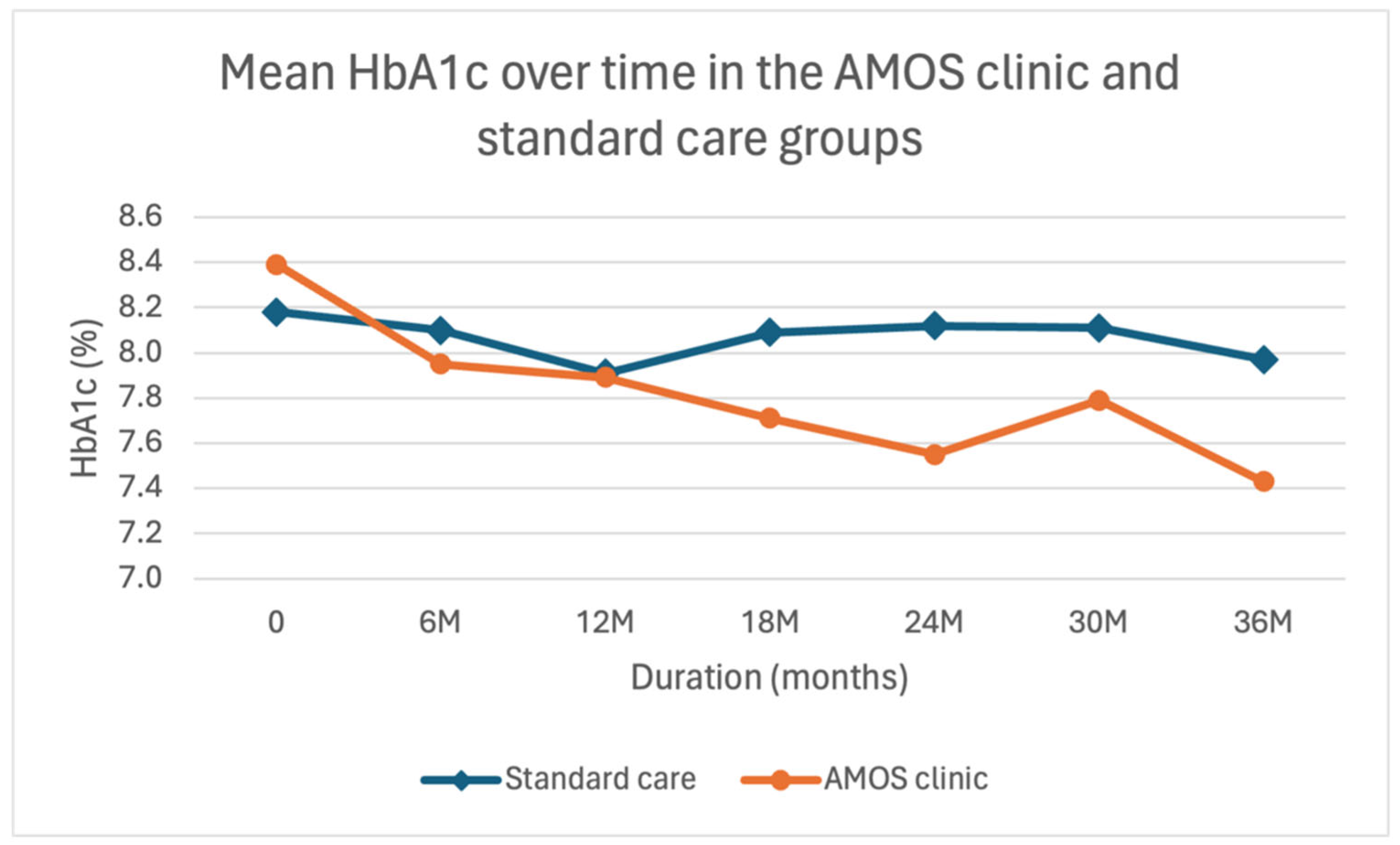
Glycaemic benefits were sustained during the 12-month post-intervention period. In the standard care group, the mean HbA1c changed from 8.18% at baseline to 8.12% at completion of intervention (M24), and remained relatively stable at 8.11% at 6 months (M30) and 7.97% at 12 months (M36) post-intervention. In the AMOS intervention group, the mean HbA1c decreased from 8.39% initially to 7.55% at completion of intervention (M24), increased slightly to 7.79% at 6 months (M30) and then reduced to 7.43% at 12 months (M36) post-intervention. Thus, the improvement achieved during the intervention was sustained at 12 months post-intervention, with the mean HbA1c at M36 lower than at M24 in both groups. The within-group treatment effect remained statistically significant at 6 months (M30) (−0.60%; p < 0.0001) and 12 months (M36) post-intervention (−0.96%; p < 0.0001). The between-group treatment effect was −0.53% at 6 months (M30) (95% CI: −0.97 to −0.09; p = 0.014) and −0.75% at 12 months (M36) (95% CI: −1.19 to −0.31; p = 0.0003) post intervention, favouring the intervention group (Figure 2 and Table S1).
Figure 2.
Mean HbA1c over time in the AMOS clinic and standard care groups.
3.3. Secondary Outcomes
Findings for secondary metabolic outcomes were mixed. There was no significant between-group difference in total cholesterol at 6 months post-intervention (−0.10 mmol/L, 95% CI: −0.38 to 0.17; p = 0.64), but by 12 months post-intervention, the intervention group showed a significantly greater reduction than controls (−0.40 mmol/L, 95% CI: −0.68 to −0.13; p = 0.0022; Table S2). Triglycerides did not differ significantly between groups at 6 months post-intervention (−0.35 mmol/L, 95% CI: −0.83 to 0.13; p = 0.19) but favoured the intervention group at 12 months post-intervention (−0.85 mmol/L, 95% CI: −1.32 to −0.37; p = 0.0001; Table S3). LDL cholesterol did not differ significantly between groups at either post-intervention timepoint (Table S4). HDL cholesterol showed no significant between-group difference at 6 months post-intervention; however, was lower in the intervention group at 12 months post-intervention (−0.13 mmol/L, 95% CI: −0.24 to −0.02; p = 0.017; Table S5).
For renal and blood pressure outcomes, no sustained between-group differences were observed during the post-intervention period. eGFR did not differ significantly between groups at 6 months (M30) post-intervention (2.2 mL/min/1.73 m2, 95% CI: −1.0 to 5.4; p = 0.23) or 12 months (M36) post-intervention (−1.5 mL/min/1.73 m2, 95% CI: −4.7 to 1.7; p = 0.51; Table S6). Systolic blood pressure was numerically lower in the intervention group, but between-group differences did not reach statistical significance at either 6 months (M30) (−5.4 mmHg, 95% CI: −11.1 to 0.3; p = 0.065) or 12 months (M36) post-intervention (−5.2 mmHg, 95% CI: −10.9 to 0.5; p = 0.080; Table S7). There was no statistically significant between-group difference in diastolic blood pressure (Table S8).
Quality-of-life outcomes suggested a sustained benefit for physical health after the AMOS intervention ended, while mental health scores did not differ significantly between groups. For the SF-36 Physical Component Score, the intervention group had significantly better outcomes than controls at 6 months (M30) post-intervention (+6.6, 95% CI: 2.3 to 10.9; p = 0.0011) and 12 months (M36) post-intervention (+7.9, 95% CI: 3.6 to 12.2; p = 0.0001; Table S9). In contrast, there were no significant between-group differences in the SF-36 Mental Component Score at 6 months (M30) post-intervention (−2.4, 95% CI: −6.6 to 1.8; p = 0.37) or 12 months (M36) post-intervention (+2.2, 95% CI: −2.0 to 6.4; p = 0.43; Table S10).
4. Discussion
To our knowledge, this is one of the first randomised controlled trials conducted in a rural and regional setting to evaluate the post-intervention sustainability of an interdisciplinary obesity-focused diabetes care model following cessation of the intervention. While many weight management interventions demonstrate short-term benefits, long-term sustainability remains a major challenge in diabetes care. The AMOS trial showed that clinically meaningful improvements in body weight, BMI and HbA1c were maintained at both 6- and 12-months after intervention completion. These findings suggest that structured, interdisciplinary obesity care may produce sustained behavioural and metabolic benefits beyond the period of multidisciplinary obesity-focused support in people with type 2 diabetes.
The DiRECT trial was pivotal in reframing type 2 diabetes as a potentially modifiable metabolic condition, showing that remission was strongly related to the magnitude and maintenance of weight loss. At 2 years, participants in the DiRECT intervention group had a mean weight loss of 7.6 kg, and 36% were in remission [9]. Although AMOS was not designed as a remission trial, it provides complementary evidence from a rural/regional diabetes service. AMOS demonstrated sustained post-intervention improvements in body weight and HbA1c, including an 11.8 kg greater reduction in body weight and 0.75% greater reduction in HbA1c compared with standard care at 12 months post-intervention. Together, these findings support structured weight-focused care as a pathway to durable metabolic benefit beyond glucose-focused treatment escalation alone.
The sustained improvements in body weight and HbA1c observed in AMOS align with broader evidence that interventions targeting weight and energy balance can produce durable metabolic benefits in people with type 2 diabetes [16,17,18]. AMOS evaluated an individualised, interdisciplinary obesity-model integrating dietary, behavioural and physical activity support with individualised medication management and consideration of bariatric surgery where clinically appropriate. Bariatric surgery was incorporated as one option within the individualised treatment algorithm for eligible participants; however, the study was designed to evaluate the overall model of individualised obesity care rather than the effects of bariatric surgery as a specific intervention. In addition, as AMOS was not designed to assess diabetes remission, its findings should not be interpreted as evidence of remission. Overall, the findings suggest that this approach may help maintain improvements after structured multidisciplinary obesity care support ends.
The findings for secondary cardiovascular outcomes were mixed. HDL cholesterol remained relatively stable in the intervention group but increased in the standard care group, resulting in a statistically significant between-group difference at 12 months (M36) post-intervention. This isolated finding may reflect differences in dietary intake, physical activity, lipid-lowering medication use or other unmeasured factors during follow-up, and its clinical significance remains uncertain. Although blood pressure values varied between groups over time, the between-group differences were not statistically significant and should not be interpreted as intervention effects.
Although weight reduction is an important therapeutic target, preserving muscle mass, strength and physical function is particularly important for older adults at risk of sarcopenia [19]. The physiotherapy component of AMOS enabled individualised exercise support alongside weight management, while physical health was monitored using the SF-36 Physical Component Score. However, this measure does not directly assess muscle mass or strength. Future studies should include objective measures of muscle mass, strength and physical performance to evaluate whether interdisciplinary weight-management models reduce the risk of sarcopenia.
The AMOS findings are consistent with contemporary guidelines that position weight management alongside glycaemic management as a central component of type 2 diabetes care [20,21]. They are also biologically consistent with models linking excess adiposity and ectopic fat accumulation with insulin resistance, beta-cell dysfunction and worsening glycaemia [22]. In AMOS, obesity management was the primary therapeutic focus, with diabetes management integrated into this approach and glucose-lowering therapy adjusted as clinically indicated. AMOS contributes to the broader shift away from viewing type 2 diabetes as an inevitably progressive glucose disorder by demonstrating sustained improvements in weight and glycaemic outcomes through integrated obesity care. These results support integrating structured weight management into diabetes care rather than relying solely on the escalation of glucose-lowering therapy.
These findings highlight the need to consider how structured weight management can be integrated into routine diabetes care without losing the key components of the AMOS model. Interdisciplinary obesity clinics represent one approach, but similar models may be adapted to different healthcare settings if they retain coordinated medical, dietary, behavioural and physical activity support. The AMOS model integrated nurse practitioner-led medical review and medication adjustment with dietetic, physiotherapy and psychological support, as well as referral for bariatric surgery where appropriate, to address dietary behaviours, physical activity, psychological factors, medication-related weight gain and clinical inertia. The sustained improvements observed in this trial suggest that embedding coordinated, interdisciplinary weight management within existing diabetes services may provide a practical approach to making weight-focused care a routine component of type 2 diabetes management [23]. Further research is needed to evaluate the implementation and effectiveness of this model in other healthcare settings.
Limitations
Minor variations in effect size estimates between the earlier and current AMOS reports likely reflect differences in the data available for multiple imputation and the covariates included in the adjusted regression models. These differences were small and did not alter the overall interpretation of the findings.
Medication use was collected during the post-intervention follow-up. However, detailed medication exposure data for the 6- and 12-month post-intervention assessments were not available to the study team for analysis. Consequently, the extent to which changes in insulin, GLP-1 receptor agonist, SGLT2 inhibitor or other glucose-lowering medication use contributed to the observed weight and HbA1c outcomes could not be determined.
Beyond the 24-month intervention, some participants continued to receive nurse practitioner care, while others were referred to endocrinology when clinically indicated or discharged to primary care when HbA1c was at target. Consequently, exposure to ongoing nurse practitioner input during the post-intervention period was variable across both groups, and the extent of ongoing clinical support could not be standardised. Participants may also have continued to apply knowledge and self-management skills acquired during the AMOS intervention. These factors mean that the observed outcomes cannot be attributed solely to the effects of the original multidisciplinary intervention.
The trial was conducted at two diabetes service sites in rural/regional Tasmania, which may limit generalisability to other populations and healthcare settings. No urban comparator was included, and the influence of geographical location, service availability and access barriers on outcomes was not assessed. The findings therefore demonstrate outcomes within this setting but do not establish that the benefits are specific to rural populations.
5. Conclusions
The AMOS trial provides evidence that an interdisciplinary, obesity-focused model of care can achieve sustained improvements in weight and glycaemic outcomes for people living with type 2 diabetes and obesity. These findings support the importance of addressing adiposity and energy balance as part of type 2 diabetes management, alongside appropriate pharmacotherapy. Rather than viewing weight management as an adjunct to diabetes care, structured obesity treatment should be considered an important component of integrated metabolic care for people in whom excess adiposity contributes to disease burden.
The findings also highlight the potential role of interdisciplinary teams, including nurse practitioners and allied health professionals, in delivering coordinated care that addresses medical, nutritional and behavioural factors. Further research should assess whether the AMOS model can be adapted and sustained across other healthcare settings. Further work is needed to determine which elements of the intervention are most strongly associated with long-term outcomes and how these models can be delivered equitably at scale.
Supplementary Materials
The following supporting information can be downloaded at: https://www.mdpi.com/article/10.3390/ijerph23101318/s1, Table S1: Estimated treatment effect on Haemoglobin A1c of AMOS clinic management compared to standard care; Table S2: Estimated treatment effect on Total Cholesterol of AMOS clinic management compared to standard care; Table S3: Estimated treatment effect on Triglycerides of AMOS clinic management compared to standard care; Table S4: Estimated treatment effect on LDL-Cholesterol of AMOS clinic management compared to standard care; Table S5: Estimated treatment effect on HDL-Cholesterol of AMOS clinic management compared to standard care; Table S6: Estimated treatment effect on Estimated Glomerular Filtration Rate (eGFR) of AMOS clinic management compared to standard care; Table S7: Estimated treatment effect on Systolic Blood Pressure of AMOS clinic management compared to standard care; Table S8: Estimated treatment effect on Diastolic Blood Pressure of AMOS clinic management compared to standard care; Table S9: Estimated treatment effect on Physical Component Score (SF36) of AMOS clinic management compared to standard care; Table S10: Estimated treatment effect on Mental Component Score (SF36) of AMOS clinic management compared to standard care.
Author Contributions
Conceptualisation, G.M.; methodology, G.M.; software, I.R.; validation, I.R.; formal analysis, G.M. and I.R.; investigation, G.M.; resources, G.M.; data curation, G.M.; writing—original draft preparation, G.M. and W.W.; writing—review and editing, G.M., W.W., M.K. and I.R.; visualization, W.W.; supervision, G.M.; project administration, G.M.; funding acquisition, G.M. All authors have read and agreed to the published version of the manuscript.
Funding
This research was funded through funding from the National Partnership Agreement—Tasmanian Assistance Package grant (administered June 2012 to June 2014) through the Tasmanian Department of Health.
Institutional Review Board Statement
Ethics approval was granted by the Tasmanian Health and Medical Human Research Ethics Committee (approval number: H0014324). The ethics application for this study was submitted in November 2014 and approved on 22 December 2014. The research team received approval to extend the follow-up period by 12 months on 26 March 2018.
Informed Consent Statement
Informed consent was obtained from all subjects involved in the study.
Data Availability Statement
De-identified data supporting the findings of this study may be made available by the corresponding author upon reasonable request, subject to ethical approval, privacy requirements and any applicable data-sharing agreements. Identifiable participant data will not be shared.
Acknowledgments
The authors gratefully acknowledge the people living with diabetes who participated in the study.
Conflicts of Interest
Author I.R. was employed by the Clifford Craig Foundation. The remaining authors declare that the research was conducted in the absence of any commercial or financial relationships that could be construed as a potential conflict of interest.
Abbreviations
The following abbreviations are used in this manuscript:
| ADA | American Diabetes Association |
| AMOS | Assessment and Management of Obesity and Self-Maintenance |
| BMI | body mass index |
| EASD | European Association for the Study of Diabetes |
| eGFR | estimated glomerular filtration rate |
| GIP | glucose-dependent insulinotropic polypeptide |
| GLP-1 | glucagon-like peptide-1 |
| HbA1c | glycated haemoglobin |
| SF-36 | 36-Item Short Form Health Survey |
| T2D | type 2 diabetes |
References
- Sun, H.; Saeedi, P.; Karuranga, S.; Pinkepank, M.; Ogurtsova, K.; Duncan, B.B.; Stein, C.; Basit, A.; Chan, J.C.N.; Mbanya, J.C.; et al. IDF Diabetes Atlas: Global, Regional and Country-Level Diabetes Prevalence Estimates for 2021 and Projections for 2045. Diabetes Res. Clin. Pract. 2022, 183, 109119. [Google Scholar] [CrossRef] [Scilit]
- Australian Institute of Health and Welfare. Diabetes: Australian Facts. 2026. Available online: https://www.aihw.gov.au/reports/diabetes/diabetes/contents/how-common-is-diabetes/type-2-diabetes (accessed on 9 October 2026).
- Ong, K.L.; Stafford, L.K.; McLaughlin, S.A.; Boyko, E.J.; Vollset, S.E.; Smith, A.E.; Dalton, B.E.; Duprey, J.; Cruz, J.A.; Hagins, H.; et al. Global, Regional, and National Burden of Diabetes from 1990 to 2021, with Projections of Prevalence to 2050: A Systematic Analysis for the Global Burden of Disease Study 2021. Lancet 2023, 402, 203–234. [Google Scholar] [CrossRef] [Scilit]
- Rubino, F.; Cummings, D.E.; Eckel, R.H.; Cohen, R.V.; Wilding, J.P.H.; Brown, W.A.; Stanford, F.C.; Batterham, R.L.; Farooqi, I.S.; Farpour-Lambert, N.J.; et al. Definition and Diagnostic Criteria of Clinical Obesity. Lancet Diabetes Endocrinol. 2025, 13, 221–262. [Google Scholar] [CrossRef] [Scilit]
- Lingvay, I.; Sumithran, P.; Cohen, R.V.; Le Roux, C.W. Obesity Management as a Primary Treatment Goal for Type 2 Diabetes: Time to Reframe the Conversation. Lancet 2022, 399, 394–405. [Google Scholar] [CrossRef] [Scilit]
- Turner, R.; Holman, R.; Cull, C.; Stratton, I.; Matthews, D.; Frighi, V.; Manley, S.; Neil, A.; McElroy, H.; Wright, D.; et al. Intensive Blood-Glucose Control with Sulphonylureas or Insulin Compared with Conventional Treatment and Risk of Complications in Patients with Type 2 Diabetes (UKPDS 33). Lancet 1998, 352, 837–853. [Google Scholar] [CrossRef] [Scilit]
- Mueller, J.; Breeze, P.; Fusco, F.; Sharp, S.J.; Pidd, K.; Brennan, A.; Hill, A.J.; Morris, S.; Hughes, C.A.; Bates, S.E.; et al. Glucose Lowering through Weight Management (GLoW): A Randomised Controlled Trial of the Clinical and Cost Effectiveness of a Diabetes Education and Behavioural Weight Management Programme vs a Diabetes Education Programme in Adults with a Recent Diagnosis of Type 2 Diabetes. Diabetologia 2025, 68, 969–980. [Google Scholar] [CrossRef] [Scilit]
- Lean, M.E.; Leslie, W.S.; Barnes, A.C.; Brosnahan, N.; Thom, G.; McCombie, L.; Peters, C.; Zhyzhneuskaya, S.; Al-Mrabeh, A.; Hollingsworth, K.G.; et al. Primary Care-Led Weight Management for Remission of Type 2 Diabetes (DiRECT): An Open-Label, Cluster-Randomised Trial. Lancet 2018, 391, 541–551. [Google Scholar] [CrossRef] [Scilit]
- Lean, M.E.J.; Leslie, W.S.; Barnes, A.C.; Brosnahan, N.; Thom, G.; McCombie, L.; Peters, C.; Zhyzhneuskaya, S.; Al-Mrabeh, A.; Hollingsworth, K.G.; et al. Durability of a Primary Care-Led Weight-Management Intervention for Remission of Type 2 Diabetes: 2-Year Results of the DiRECT Open-Label, Cluster-Randomised Trial. Lancet Diabetes Endocrinol. 2019, 7, 344–355. [Google Scholar] [CrossRef] [Scilit]
- Frías, J.P.; Davies, M.J.; Rosenstock, J.; Pérez Manghi, F.C.; Fernández Landó, L.; Bergman, B.K.; Liu, B.; Cui, X.; Brown, K. Tirzepatide versus Semaglutide Once Weekly in Patients with Type 2 Diabetes. N. Engl. J. Med. 2021, 385, 503–515. [Google Scholar] [CrossRef] [Scilit]
- Davies, M.; Færch, L.; Jeppesen, O.K.; Pakseresht, A.; Pedersen, S.D.; Perreault, L.; Rosenstock, J.; Shimomura, I.; Viljoen, A.; Wadden, T.A.; et al. Semaglutide 2·4 Mg Once a Week in Adults with Overweight or Obesity, and Type 2 Diabetes (STEP 2): A Randomised, Double-Blind, Double-Dummy, Placebo-Controlled, Phase 3 Trial. Lancet 2021, 397, 971–984. [Google Scholar] [CrossRef] [Scilit]
- American Diabetes Association Professional Practice Committee; ElSayed, N.A.; McCoy, R.G.; Aleppo, G.; Balapattabi, K.; Beverly, E.A.; Briggs Early, K.; Bruemmer, D.; Echouffo-Tcheugui, J.B.; Ekhlaspour, L.; et al. 8. Obesity and Weight Management for the Prevention and Treatment of Type 2 Diabetes: Standards of Care in Diabetes–2025. Diabetes Care 2025, 48, S167–S180. [Google Scholar] [CrossRef] [Scilit]
- Mullan, L.; Armstrong, K.; Job, J. Barriers and Enablers to Structured Care Delivery in Australian Rural Primary Care. Aust. J. Rural Health 2023, 31, 361–384. [Google Scholar] [CrossRef] [Scilit]
- Murfet, G.O.; Robertson, I.K.; Luccisano, S.P.; Kilpatrick, M.L. Effect of Interdisciplinary Obesity Care on Metabolic Markers and Body Weight in People with Type 2 Diabetes in a Rural Setting: A Randomised Controlled Trial. Clin. Obes. 2025, 15, e12715. [Google Scholar] [CrossRef] [Scilit]
- Prior, S.J.; Luccisano, S.P.; Kilpatrick, M.L.; Murfet, G.O. Assessment and Management of Obesity and Self-Maintenance (AMOS): An Evaluation of a Rural, Regional Multidisciplinary Program. Int. J. Environ. Res. Public Health 2022, 19, 12894. [Google Scholar] [CrossRef] [Scilit]
- Schauer, P.R.; Bhatt, D.L.; Kirwan, J.P.; Wolski, K.; Aminian, A.; Brethauer, S.A.; Navaneethan, S.D.; Singh, R.P.; Pothier, C.E.; Nissen, S.E.; et al. Bariatric Surgery versus Intensive Medical Therapy for Diabetes—5-Year Outcomes. N. Engl. J. Med. 2017, 376, 641–651. [Google Scholar] [CrossRef] [Scilit]
- Sjöström, L.; Peltonen, M.; Jacobson, P.; Ahlin, S.; Andersson-Assarsson, J.; Anveden, Å.; Bouchard, C.; Carlsson, B.; Karason, K.; Lönroth, H.; et al. Association of Bariatric Surgery With Long-Term Remission of Type 2 Diabetes and With Microvascular and Macrovascular Complications. JAMA 2014, 311, 2297–2304. [Google Scholar] [CrossRef] [Scilit]
- Garvey, W.T.; Frias, J.P.; Jastreboff, A.M.; Le Roux, C.W.; Sattar, N.; Aizenberg, D.; Mao, H.; Zhang, S.; Ahmad, N.N.; Bunck, M.C.; et al. Tirzepatide Once Weekly for the Treatment of Obesity in People with Type 2 Diabetes (SURMOUNT-2): A Double-Blind, Randomised, Multicentre, Placebo-Controlled, Phase 3 Trial. Lancet 2023, 402, 613–626. [Google Scholar] [CrossRef] [Scilit]
- Donini, L.M.; Busetto, L.; Bischoff, S.C.; Cederholm, T.; Ballesteros-Pomar, M.D.; Batsis, J.A.; Bauer, J.M.; Boirie, Y.; Cruz-Jentoft, A.J.; Dicker, D.; et al. Definition and Diagnostic Criteria for Sarcopenic Obesity: ESPEN and EASO Consensus Statement. Clin. Nutr. 2022, 41, 990–1000. [Google Scholar] [CrossRef] [Scilit]
- Davies, M.J.; Aroda, V.R.; Collins, B.S.; Gabbay, R.A.; Green, J.; Maruthur, N.M.; Rosas, S.E.; Del Prato, S.; Mathieu, C.; Mingrone, G.; et al. Management of Hyperglycemia in Type 2 Diabetes, 2022. A Consensus Report by the American Diabetes Association (ADA) and the European Association for the Study of Diabetes (EASD). Diabetes Care 2022, 45, 2753–2786. [Google Scholar] [CrossRef] [Scilit]
- National Heart Foundation of Australia. Obesity and Cardiovascular Disease. A Clinical Consensus Statement from the National Heart Foundation of Australia. 2026. Available online: https://www.heartfoundation.org.au/for-professionals/obesity-cvd-consensus-statement (accessed on 9 October 2026).
- Taylor, R.; Al-Mrabeh, A.; Sattar, N. Understanding the Mechanisms of Reversal of Type 2 Diabetes. Lancet Diabetes Endocrinol. 2019, 7, 726–736. [Google Scholar] [CrossRef] [Scilit]
- Jennings, A.; Hughes, C.A.; Kumaravel, B.; Bachmann, M.O.; Steel, N.; Capehorn, M.; Cheema, K. Evaluation of a Multidisciplinary Tier 3 Weight Management Service for Adults with Morbid Obesity, or Obesity and Comorbidities, Based in Primary Care. Clin. Obes. 2014, 4, 254–266. [Google Scholar] [CrossRef] [Scilit]

Disclaimer/Publisher’s Note: The statements, opinions and data contained in all publications are solely those of the individual author(s) and contributor(s) and not of MDPI and/or the editor(s). MDPI and/or the editor(s) disclaim responsibility for any injury to people or property resulting from any ideas, methods, instructions or products referred to in the content. |
© 2026 by the authors. Licensee MDPI, Basel, Switzerland. This article is an open access article distributed under the terms and conditions of the Creative Commons Attribution (CC BY) license.