


Abstract
Introduction: Pelvic floor dysfunction (PFD) is prevalent among athletes. Investigating whether athletes are practicing pelvic floor muscle training (PFMT) will assist in delineating the factors underlying the burden of PFD in this population. Additionally, investigating athletes’ knowledge of PFD and knowledge of and attitudes toward PFMT may inform interventions to improve the practice of PFMT. Aims: This scoping review aimed to collate the available evidence regarding athletes’ knowledge of PFD and their knowledge of and engagement with PFMT. Furthermore, this review aimed to determine the types of athletes (sports and competition levels) research had been conducted on and the definitions of PFD and PFMT most used. Methods: Six databases were searched up to January 2024. No study design or publication types were restricted; however, non-English articles were excluded due to resource constraints. Additional publications were identified through the reference lists of included articles. Data were synthesized and presented under subheadings relevant to the aims of this review. Results: Thirty-five publications were included for data extraction. Athletes had low practice of PFMT, poor knowledge of PFD and PFMT, but positive attitudes toward PFMT. One publication reported that higher levels of knowledge were associated with a lower prevalence of PFD. The athletic population was heterogeneous in sport type and competition level, and the definitions of PFD and PFMT were ill-defined. Conclusions: Athletes have a low practice of PFMT and poor knowledge of PFD and PFMT. The education of athletes may have a role in supporting pelvic floor health.
1. Introduction
Pelvic floor dysfunction (PFD) refers to conditions that lead to moderate-to-severe impairment of the pelvic floor (PF) [1]. The symptoms of PFD can include urinary incontinence (UI), pelvic organ prolapse (POP), anal incontinence (AI), lumbopelvic pain, and sexual dysfunction [2]. Males and females can experience PFD, with PFD being more prevalent in athletes than non-athletes [3]. In some athletes, PFD is associated with reduced quality of life and impaired sports performance [4,5].
Pelvic floor muscle training (PFMT) is an exercise designed to improve pelvic floor muscle strength, endurance, power, and relaxation [6]. When practiced, PFMT has been found to decrease PFD and improve quality of life [7]. Some authors suggest that greater benefits could be seen if PFMT was included in athletes’ general strength training programs [8].
Despite the benefits of PFMT, there is limited research on athletes’ practice of PFMT in different sports [1]. Additionally, coaches do not have the skills to advise on pelvic floor muscles within their scope of practice [9]. The dearth of research means the relationship between athletes’ PFMT practice and the PFD they experience is unclear. Athletes may practice PFMT, and their PFD may remain due to other factors [10]. Alternatively, as hypothesized by Stickley et al. (2023), low levels of practice of PFMT may be contributing to athletes’ high prevalence of PFD [11]. If athletes’ practice of PFMT is low, improving their practice may decrease PFD, and subsequently, strategies for increasing their practice of PFMT may become treatment priorities for health professionals. Understanding athletes’ practice of PFMT would assist in delineating the factors associated with their significant burden of PFD and inform the role of health professionals in addressing PFD.
Similarly, the literature is lacking regarding athletes’ knowledge of PFD and PFMT and their attitudes toward PFMT. Knowledge and attitudes may influence the prevalence of PFD through their effect on the practice of PFMT. Without knowledge of PFMT, athletes cannot complete the exercises, and their practice of PFMT may reduce if they have inaccurate knowledge [12]. Additionally, attitudinal change is considered the antecedent to behavioral change in behavior change models [13]. Athletes’ attitudes toward PFMT arise as a topic of interest as attitudinal change may be required to facilitate the practice of PFMT. Jaffar et al. (2022) supported these points when they determined that both knowledge of and attitudes toward PFMT were significantly associated with PFD in pregnant women and should be addressed when managing UI [14]. In a non-athletic population, educational interventions have been suggested to improve women’s knowledge and attitudes to increase adherence to PFMT programs and decrease PFD [12]. Understanding athletes’ knowledge of PFD and PFMT and attitudes toward PFMT may inform appropriate educational interventions that might improve athletes’ practice of PFMT and subsequently reduce the negative impact of PFD.
With acknowledgment of the benefit of PFMT in reducing PFD [7] and the burden of PFD in athletes [3,4], investigating why the high rates of PFD prevail in this population is an area that warrants research. This scoping review aimed to address the above gaps and collate the available evidence regarding athletes’ knowledge of PFD and their knowledge of and engagement with PFMT. Furthermore, this review aimed to ascertain the types of athletes (sports and competition level) described in published research and synthesize the study characteristics, outcomes, and definitions of ‘PFD’ and ‘PFMT’ within the identified literature.
2. Materials and Methods
2.1. Review Typology
A scoping review was chosen to determine the extent of the literature available on the topic and identify concepts that need to be researched further. This typology enabled the working definitions of ‘PFD’ and ‘PFMT’ to be clarified so that the boundaries of this topic can be understood. The Johanna Briggs Institute scoping manual was used to guide the authors in preparing this review. The PRISMA Scoping Reviews Checklist was used to ensure systematic and thorough reporting [15].
2.2. Research Question
The following primary research question was developed: “What is athletes’ knowledge of PFD and PFMT and what is their engagement with PFMT?”.
One sub-question was developed to describe the relevant population:
“What type of athletes (what sports and competition level) has this research been conducted on?”.
2.3. Eligibility Criteria
Studies were eligible for inclusion in this review if they met the following population, concept, and context criteria:
- -
- Population: athletes as defined by their involvement in competitive sports or as identified as athletes within the study;
- -
- Concept: knowledge of PF function or PFD or knowledge of and engagement with PFMT. Engagement with PFMT was defined as concerning athletes’ attitudes toward PFMT and their practice (habitual application) of PFMT;
- -
- Context: competitive sporting environment of any level (local to international).
This scoping review included the academic literature of any study design or publication type. No restrictions were applied to the date or geographical location to facilitate a comprehensive review. Studies were restricted to the English language given the resourcing constraints.
2.4. Search Strategy
Test searches were undertaken in Medline via Ovid, Embase, and CINAHL Complete to identify keywords and subject headings were mapped to the relevant results. A librarian assisted with the final search strategy using the indexed keywords and MESH terms. This was then adapted for Medline via Ovid, Scopus, Emcare, SportDiscus, Web of Science, and CINAHL. An example for the range of pelvic floor disorders searched is “Pelvic Floor” OR “urinary incontinence” OR “stress urinary incontinence” OR “urge urinary incontinence” OR “Fecal Incontinence” OR “pelvic organ prolapse” OR cystocele OR “rectal prolapse” OR “uterine prolapse” OR “visceral prolapse” OR “rectal prolapse” OR rectocele OR “Pelvic Floor Disorders” OR “Pelvic dysfunction” OR incontinen*. The complete examples of these are included in Supporting Information File S1. The reference lists of studies included in this scoping review were also searched for the additional relevant literature.
2.5. Study Selection
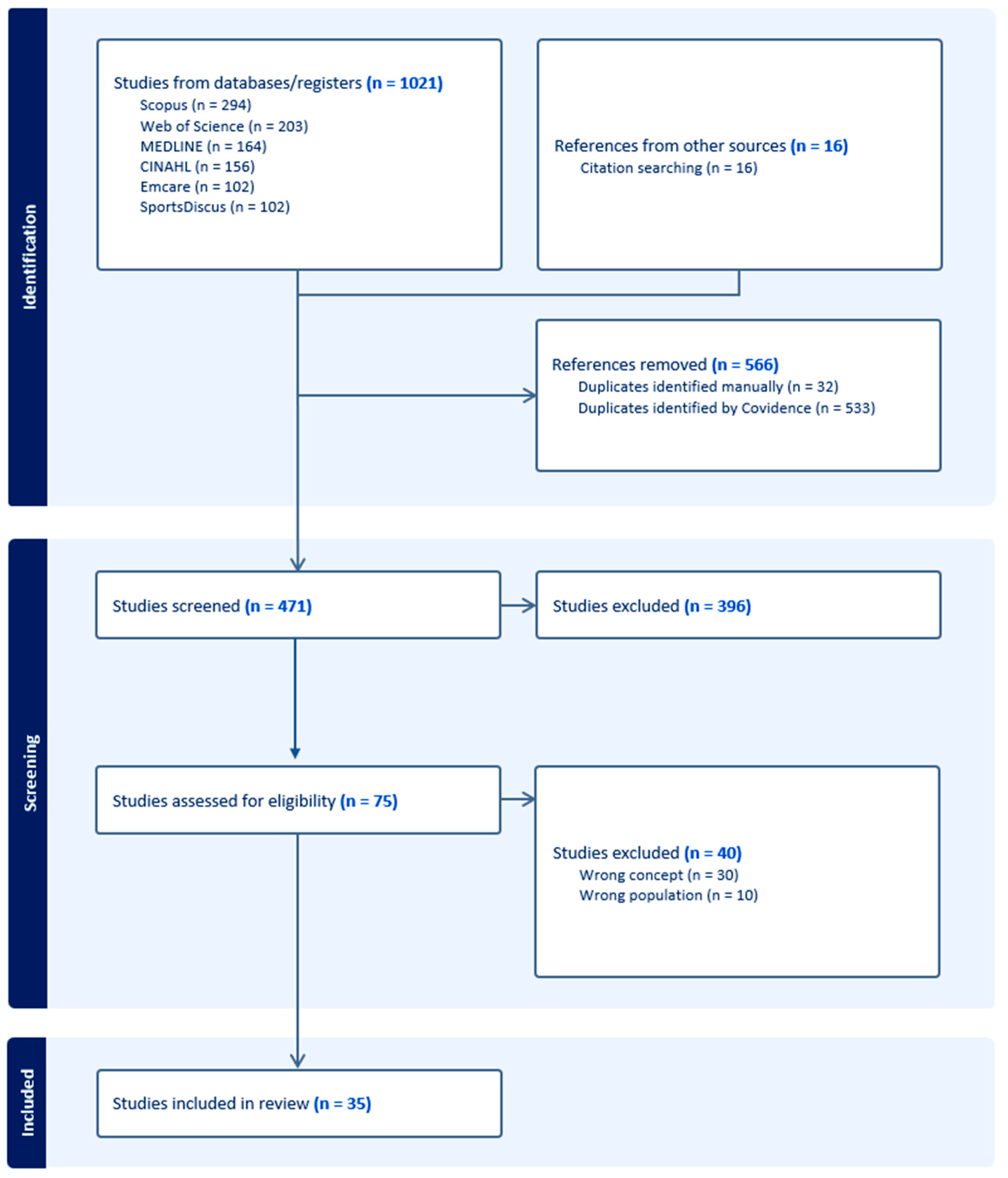
After the search was completed, all results were imported into Covidence ™. In Covidence, duplicates were automatically removed and then a two-step screening process of title and abstract screening and full-text screening was undertaken. Studies were excluded at each step if it became clear they did not meet the eligibility criteria. Both steps involved independent screening of the articles by two authors. If there was a conflict, this was resolved via discussion or via review from a third author.
Articles were not systematically or critically appraised, in line with the JBI methodology [16]. Study selection was reported in the Preferred Reporting Items for Systematic Reviews and Meta-analyses (PRISMA 2020) flow diagram [17].
2.6. Data Extraction
The extracted data included study author/s, publication year, study design, participant characteristics, study objective, main findings, and definitions of ‘PFD’ and ‘PFMT’. The main findings reported were only those relevant to the topic of this review, consistent with the Johanna Briggs Institute scoping manual. The authors developed a data extraction form that was designed and refined over multiple team meetings. The data were analyzed for content [18], and the main findings were synthesized under the subheadings of ‘athletes’ knowledge of PFD’, ‘athletes’ knowledge of PFMT’, ‘athletes’ attitudes toward PFMT’, and ‘athletes’ practice of PFMT’.
3. Results
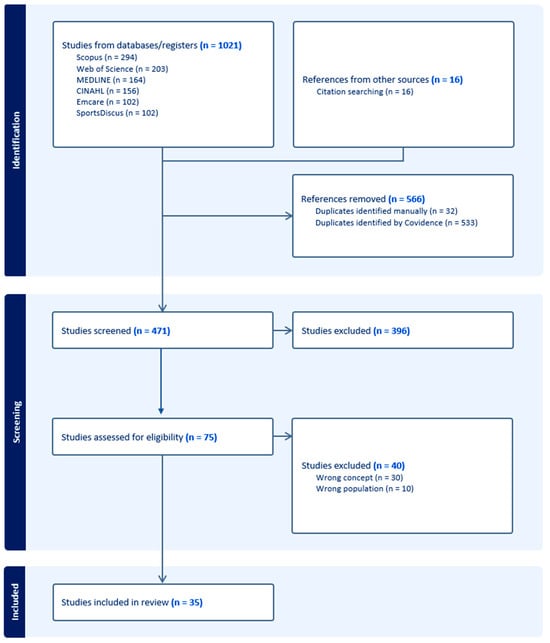
As shown in Figure 1, 1021 articles were identified and imported into Covidence. A total of 35 papers met our eligibility criteria. There was one instance where a conference abstract described an already-included full-text study in a different format [19,20]; therefore, the sample includes 35 papers describing 34 studies.
Figure 1.
Preferred reporting items for systematic reviews and meta-analyses 2020.
3.1. Characteristics of the Included Studies
Of the 35 included publications, 29 were primary research articles (4 were abstracts), with 23 studies being quantitative and 6 using mixed methods. The sample included three systematic review articles, the two literature reviews, and one narrative review. The oldest study was published in 2002; however, more than half of the studies were published in the last four years.
3.2. Characteristics of the Participants
The number of participants included in the studies ranged from 11 to 480 athletes, and the largest systematic review included over 2000 participants. Only two quantitative studies reported findings on male athletes, and the remaining literature was specific to females. The parity of athletes was often incompletely reported or absent. Therefore, this review categorized athletes as either having ‘had previous pregnancy or birth’ or ‘no stated previous pregnancy or birth’ as there were insufficient findings to categorize athletes as nulliparous or not across all studies. The majority of women were in the ‘no previous pregnancy or birth’ category. Participant characteristics are presented in Table 1.
Across the 35 papers, there were 241 sports mentioned. The sports mentioned the most frequently were running-related sports (n = 24), football/futsal/soccer (n = 14), volleyball (n = 12), gymnastics (n = 12), basketball (n = 11), CrossFit (n = 11), and weightlifting (n = 10). Sports were only counted once from each paper, for example, when a systematic review included three papers on gymnasts, gymnast was only counted once. When considering the level of competition, there were 12 mentions of national-level athletes and 10 mentions, respectively, of both international and local-level athletes; however, many of the studies did not report the competition level. Ultimately, there were too many sports and variable competition levels to comment on the findings between or across sports. Supporting Information File S2 contains information on sports and competition levels within the sample.
3.3. Working Definition of PFD
Only one study defined PFD specifically, stating it was ‘a collection of signs, symptoms, and conditions that affect the pelvic floor’, including urinary incontinence (UI), stress UI (SUI), urge UI (UUI), anorectal dysfunction, sexual dysfunction, pelvic organ prolapse (POP), and pelvic pain [4]. Three other studies mentioned the term PFD and some additional conditions may include anal incontinence (AI), lumbopelvic pain, and fecal incontinence (FI) [2,21,22]. The remaining studies either defined or only mentioned components of PFD, including two that were not mentioned in the above five studies: mixed UI (MUI) and athletic incontinence.
All studies defined or mentioned at least one form of UI. Definitions given for the terms AI, FI, and anorectal dysfunction appeared synonymous with each other and these terms were mentioned in eight studies [2,4,5,21,22,23,24,25]. Six studies mentioned POP [2,4,5,21,22,24] and only three defined POP [5,21,22]. Definitions of POP focused on the descent of female pelvic organs [5,21,22]. Supporting Information File S3 can be referred to for the extracted definitions of terms.
3.4. Working Definition of PFMT
The term PFMT was defined in two studies. Jacome et al. [26] suggested ‘PFMT … involves strengthening of the PFM’ and the second study by Joseph et al. [27] suggested ‘the training consists typically of regular contraction and relaxation of the pelvic muscles, also known as Kegel exercises’. Other papers used synonymous terms including pelvic floor muscle exercises (PFME), physiotherapeutic care, and pelvic floor training program; however, these terms were not specially defined. Table 2 outlines further details.
Table 1.
Participant characteristics.
Table 2.
Definitions and terms of PFD and PFMT from included papers.
3.5. Athletes’ Knowledge of PFD
Eighteen studies discussed athletes’ knowledge of PFD [2,4,5,8,21,24,25,26,28,31,32,34,36,37,38,40,41,43]. Thirteen of these were quantitative studies, three were systematic reviews, and two were literature reviews. The common findings were that many athletes knew little about the normal function of the PFM [2,4,5,8,21,25,28,36,43].
Several studies found gaps in athletes’ knowledge of UI specifically [26,28,32,34,37,38,40,41]. Two studies assessed and graded athletes’ knowledge as adequate or inadequate using the Knowledge, Attitudes, and Practice (KAP) survey created by Cardoso et al. (2018). According to the KAP, only 53.4% of female cross-fitters and 31% of high-impact athletes had adequate knowledge [31,41]. Both studies including male athletes found that men had less PF knowledge than women [2,5].
3.6. Athletes’ Knowledge of PFMT
Seventeen papers discussed athletes’ knowledge of PFMT [2,4,5,8,19,20,24,25,26,27,28,29,30,31,32,35,41]. Ten of these were quantitative, one used mixed methods, two were systematic reviews, and three were literature reviews. Many athletes did not know how to train the PFM [4,5,8,24,25] and many also did not know why they should undertake the training [4,5,8,25]. Males knew less than females in relation to both of these questions [5].
Several athletes had not heard of PFMT [2,20,27,28,30], and even if they had, some were unaware it could be used to treat PFD [19,26,29,32]. Similarly, Cardoso et al. (2018)’s KAP survey determined that many athletes’ knowledge of PFMT was poor. They also found that athletes with adequate knowledge of PFD and PFMT were 57% less likely to develop UI [31]. A higher number of athletes demonstrated adequate knowledge in 36. Pereira et al.’s [41] study, which reported that knowledge was not significantly associated with UI. Krnicar et al. [35] reported the most positive findings, with 85.71% of the respondents demonstrating a familiarity with correct pelvic floor muscle contractions.
3.7. Athletes’ Attitudes Toward PFMT
Fifteen papers discussed athletes’ attitudes toward PFMT [4,5,11,19,20,25,29,30,31,39,41,42,46,47,48]. Eleven of these were quantitative, four used mixed methods, and one was a systematic review.
Several studies reported that athletes would use PFMT to treat PFD if they knew how [4,5,11,20,25]. Other athletes conveyed interest in receiving education regarding PFMT and treatment via pelvic floor physiotherapy [19,29,39,42]. Some athletes gave the caveat that they would only use PFMT if UI became severely bothersome [42]. Another study that reported on athletes describing the tailored physiotherapy intervention they received (which included PFMT) reported that the athletes viewed the PFMT as valuable [30]. According to the KAP, athletes’ attitudes toward PFMT were mostly adequate [31,41].
Once aware of PFMT, athletes’ confidence in their ability to perform PFMT was reasonably high, with studies reporting that close to 70% of female athletes were confident, regardless of whether they had PFD or not [4,46,47,48].
3.8. Athletes’ Practice of PFMT
Fifteen studies discussed athletes’ practice of PFMT [2,4,22,23,25,31,33,35,36,37,41,44,45,47,48]. Eleven of these were quantitative, three used mixed methods, and one was a systematic review. In 12 studies, athletes reported practicing PFMT at some point [2,4,22,23,25,33,35,37,44,45,47,48]. However, the practice of PFMT was generally low, with many studies reporting that less than 10% of participants had practiced PFMT [2,4,25,37,44,45]. In one study including male athletes, four males and four females reported practicing PFMT [2]. However, as the overall sample in this study included 29 females and 59 males, females were concluded as more likely to practice PFMT than males [2]. Similarly, Lúovíksdóttir et al. [36] determined that female athletes were more likely to practice PFMT than non-athletic female controls.
Of those who did practice PFMT, many reported using it to manage UI [4,33,37,44,45,47,48].
Using the KAP survey, Pereira et al. [41] determined that 3.7% of athletes had adequate practice of prevention, management, and treatment strategies, whereas Cardoso et al. [31] found that 0% had adequate practice. Table 3. provides a summary of the outcomes measured in the included studies and Table 4. provides details on the outcomes themselves.
Table 3.
Summary of the findings each study reported on.
Table 4.
Knowledge of PFD and PFMT, attitudes and practice of PFMT.
4. Discussion
This scoping review has collated the available evidence on athletes’ knowledge of PFD and knowledge of and engagement with PFMT. Additionally, the review has mapped the existing literature to establish the working definitions of ‘PFD’ and ‘PFMT’ and explored the types of athletes that have been studied. The main findings were that athletes had low practice of PFMT, and poor knowledge of PFD and PFMT, although most athletes expressed positive attitudes towards PFMT. The working definitions of PFD and PFMT are ill-defined, and the researched athletic population is too heterogeneous (both in sport type and competition level) to confidently comment on whether findings were consistent between or across sports. The literature is lacking describing PFMT in male athletes.
The literature on athletes’ knowledge of PFD and PFMT is sparse but emerging, with most included studies being published in the last four years. Since this review was completed, another study was published regarding female athletes’ knowledge of PFD [50]. Bosch-Donate et al. [50] found that athletes’ knowledge was generally poor, except for knowledge of UI, where more than 70% of participants provided correct responses [50]. This finding makes sense in the context of the current review and the extant literature, as UI is the most researched and well-defined component of PFD [3].
The high proportion of studies identified in this review focusing only on women may derive from the higher prevalence of PFD amongst females compared to males [5]. The recent increase in publications specific to female pelvic floor function demonstrates efforts to increase the literature focusing on women’s healthcare and women in sports and efforts to improve sex and gender equity [51].
Two of the publications included in this review considered the relationship between knowledge and the prevalence of PFD [31,41]. Cardoso et al. [31] found a significant relationship between knowledge and PFD, stating that those with adequate knowledge were 57% less likely to have PFD. This suggests that educating athletes on this topic may decrease the prevalence of PFD. This idea is supported by studies suggesting that athletes would complete PFMT if they knew how [4,5,11,20,25]. Additionally, athletes in Carls’ [19] study responded affirmatively to wanting pelvic floor education, and similarly, athletes in Campbell et al.’s [30] study described PFMT education as valuable.
There are, however, several factors to consider before suggesting education as an intervention. For instance, the findings in Pereira et al.’s 2022 study [41] contrasted with Cardoso et al. [31] as they found no significant relationship between knowledge and PFD. Subsequently, improving athletes’ knowledge may not produce the desired outcome of decreasing PFD. Pereira et al. [41] found that even when athletes had positive attitudes toward PFMT, they still did not have adequate practice of PFMT, suggesting that variables other than knowledge and attitude influence practice. While Campbell et al. [30] educated athletes, their study was not designed to test the effect of this education on knowledge or engagement with PFMT, which means their work does not prove that education will improve athletes’ knowledge and engagement with PFMT. However, their qualitative findings suggest that future research on this intervention is warranted [30]. Education as an intervention is further supported in a recent review that described the potential for education to contribute to the rehabilitation of dysfunction in athletes [52].
This paper should encourage health professionals to consider the risks associated with athletes with a low knowledge of PFD and PFMT and low engagement with PFMT, and what their role may be in mitigating these risks. One role may be working with athletes and coaching in improving awareness of pelvic floor muscle training, or instigating screening for people who exercise [53]. Future research should explore the components of successful educational interventions and consider investigating whether the results of this review are relevant to male athletes. Components of PFD other than UI also warrant further research.
Limitations of This Review
The methodology of this review retrieved a broad range of studies and the heterogeneity of qualitative data made it difficult to synthesize findings. There were very few components of PFD other than UI explored and it is unclear whether the results would have been the same if more publications explored AI, POP, or other forms of PFD.
5. Conclusions
Despite positive attitudes toward PFMT, the athletes identified in this review had low practice of PFMT and poor knowledge of PFD and PFMT. The current review also identified that health professionals may have a role in addressing these deficits through educational interventions. The concepts of PFD and PFMT are ill-defined, which makes comparisons across the included studies difficult. A wide range of sport types and competition levels across the athletes limit the generalizability of findings. One publication identified in the review reported that higher levels of knowledge were associated with a lower prevalence of PFD, indicating that the education of athletes may have a role in supporting pelvic floor health. Educational interventions for athletes warrant further investigation.
Supplementary Materials
The following supporting information can be downloaded from https://www.mdpi.com/article/10.3390/ijerph22010104/s1, S1 Search strategies from all databases; S2 Athlete’s sports and competition level; S3 Detailed definitions of PFD from the included papers.
Author Contributions
Conceptualization, J.M. and R.M.; methodology, R.M. and M.-L.B.; formal analysis, J.M., R.M. and M.-L.B.; writing—original draft preparation, J.M.; writing—review and editing, R.M. and M.-L.B.; supervision, R.M. and M.-L.B.; project administration, R.M. All authors have read and agreed to the published version of the manuscript.
Funding
This research received no external funding.
Conflicts of Interest
The authors declare no conflict of interest.
References
- Giagio, S.; Innocenti, T.; Pillastrini, P.; Gava, G.; Salvioli, S. What is known from the existing literature about the available interventions for pelvic floor dysfunction among female athletes? A scoping review. Neurourol. Urodyn. 2022, 41, 573–584. [Google Scholar] [CrossRef] [Scilit] [PubMed]
- Toprak ÇElenay, Ş.; DÜŞGÜN, E.S.; DeĞİRmenderelİ, A.R. High-impacts Sport Athletes’ Pelvic Floor Knowledge, Awareness, and Lower Urinary Tract Symptoms: A Cross-Sectional Pilot Study. Turk. Klin. J. Sports Sci. 2021, 13, 477–484. [Google Scholar] [CrossRef] [Scilit]
- Giagio, S.; Salvioli, S.; Pillastrini, P.; Innocenti, T. Sport and pelvic floor dysfunction in male and female athletes: A scoping review. Neurourol. Urodyn. 2021, 40, 55–64. [Google Scholar] [CrossRef] [Scilit]
- Culleton-Quinn, E.; Bo, K.R.; Fleming, N.; Mockler, D.; Cusack, C.; Daly, D. Elite female athletes’ experiences of symptoms of pelvic floor dysfunction: A systematic review. Int. Urogynecol. J. 2022, 33, 2681–2711. [Google Scholar] [CrossRef] [Scilit] [PubMed]
- Skaug, K.L.; Engh, M.E.; Frawley, H.; Bo, K. Prevalence of Pelvic Floor Dysfunction, Bother, and Risk Factors and Knowledge of the Pelvic Floor Muscles in Norwegian Male and Female Powerlifters and Olympic Weightlifters. J. Strength. Cond. Res. 2022, 36, 2800–2807. [Google Scholar] [CrossRef] [Scilit]
- Frawley, H.; Shelly, B.; Morin, M.; Bernard, S.; Bø, K.; Digesu, G.A.; Dickinson, T.; Goonewardene, S.; McClurg, D.; Rahnama’i, M.S. An International Continence Society (ICS) report on the terminology for pelvic floor muscle assessment. Neurourol. Urodyn. 2021, 40, 1217–1260. [Google Scholar] [CrossRef] [Scilit]
- Rodríguez-Longobardo, C.; López-Torres, O.; Guadalupe-Grau, A.; Gómez-Ruano, M. Pelvic Floor Muscle Training Interventions in Female Athletes: A Systematic Review and Meta-analysis. Sports Health 2023, 16, 766–775. [Google Scholar] [CrossRef] [Scilit]
- Gram, M.C.D.; Bo, K. High level rhythmic gymnasts and urinary incontinence: Prevalence, risk factors, and influence on performance. Scand. J. Med. Sci. Sports 2020, 30, 159–165. [Google Scholar] [CrossRef] [Scilit] [PubMed]
- Hillman, D.R. Pelvic Floor Health: Examining the Knowledge, Attitudes and Experiences of Personal Trainers and Middle-Aged Women in Inner Regional Queensland. Master’s Thesis, University of Southern Queensland, Toowoomba, QLD, Australia, 2023. [Google Scholar]
- Skaug, K.L.; Engh, M.E.; Bø, K. Pelvic floor muscle training in female functional fitness exercisers: An assessor-blinded randomised controlled trial. Br. J. Sports Med. 2024, 58, 486–493. [Google Scholar] [CrossRef] [Scilit] [PubMed]
- Stickley, L.; McDowell, D. Prevalence, Knowledge, and Perceived Impact of Urinary Incontinence in Female Collegiate Athletes. J. Women’s Pelvic Health Phys. Ther. 2023, 47, 237–244. [Google Scholar] [CrossRef] [Scilit]
- Bayat, M.; Eshraghi, N.; Naeiji, Z.; Fathi, M. Evaluation of Awareness, Adherence, and Barriers of Pelvic Floor Muscle Training in Pregnant Women: A Cross-sectional Study. Urogynecology 2021, 27, e122–e126. [Google Scholar] [CrossRef] [Scilit] [PubMed]
- Lu, Y.J.; Lai, H.R.; Lin, P.C.; Kuo, S.Y.; Chen, S.R.; Lee, P.H. Predicting exercise behaviors and intentions of Taiwanese urban high school students using the theory of planned behavior. J. Pediatr. Nurs. 2022, 62, e39–e44. [Google Scholar] [CrossRef] [Scilit] [PubMed]
- Jaffar, A.; Mohd-Sidik, S.; Foo, C.N.; Admodisastro, N.; Abdul Salam, S.N.; Ismail, N.D. Improving Pelvic Floor Muscle Training Adherence Among Pregnant Women: Validation Study. JMIR Hum. Factors 2022, 9, e30989. [Google Scholar] [CrossRef] [Scilit]
- McGowan, J.; Straus, S.; Moher, D.; Langlois, E.V.; O’Brien, K.K.; Horsley, T.; Aldcroft, A.; Zarin, W.; Garitty, C.M.; Hempel, S. Reporting scoping reviews—PRISMA ScR extension. J. Clin. Epidemiol. 2020, 123, 177–179. [Google Scholar] [CrossRef] [Scilit] [PubMed]
- Peters, M.D.; Godfrey, C.; McInerney, P.; Khalil, H.; Larsen, P.; Marnie, C.; Pollock, D.; Tricco, A.C.; Munn, Z. Best practice guidance and reporting items for the development of scoping review protocols. JBI Evid. Synth. 2022, 20, 953–968. [Google Scholar] [CrossRef] [Scilit] [PubMed]
- Page, M.J.; Moher, D.; Bossuyt, P.M.; Boutron, I.; Hoffmann, T.C.; Mulrow, C.D.; Shamseer, L.; Tetzlaff, J.M.; Akl, E.A.; Brennan, S.E.; et al. PRISMA 2020 explanation and elaboration: Updated guidance and exemplars for reporting systematic reviews. Bmj 2021, 372, n160. [Google Scholar] [CrossRef]
- Mohajan, H.K. Qualitative research methodology in social sciences and related subjects. J. Econ. Dev. Environ. People 2018, 7, 23–48. [Google Scholar] [CrossRef] [Scilit]
- Carls, C. The prevalence of stress urinary incontinence in high school- and college-age female athletes in the midwest: Evidence of stigma and implications for education and prevention. J. Wound Ostomy Cont. Nurs. 2006, 33, S40–S41. [Google Scholar]
- Carls, C. The prevalence of stress urinary incontinence in high school and college-age female athletes in the midwest: Implications for education and prevention. Urol. Nurs. 2007, 27, 21–39. [Google Scholar] [PubMed]
- Garrington, C.; O’Shea, S.; Pope, R. Prevention and management of urinary incontinence, anal incontinence and pelvic organ prolapse in military women and female elite athletes. J. Mil. Veterans Health 2022, 30, 71–84. [Google Scholar]
- High, R.; Thai, K.; Virani, H.; Malek, M.; Kuehl, T.; Danford, J. Prevalence of pelvic floor disorders in female crossfit athletes. Int. Urogynecol. J. 2018, 29, S166–S167. [Google Scholar] [CrossRef] [Scilit]
- Bo, K.; Backe-Hansen, K.L. Do elite athletes experience low back, pelvic girdle and pelvic floor complaints during and after pregnancy? Scand. J. Med. Sci. Sports 2007, 17, 480–487. [Google Scholar] [CrossRef] [Scilit] [PubMed]
- Bo, K.; Nygaard, I.E. Is Physical Activity Good or Bad for the Female Pelvic Floor? A Narrative Review. Sports Med. 2020, 50, 471–484. [Google Scholar] [CrossRef] [Scilit]
- Skaug, K.L.; Engh, M.E.; Frawley, H.; Bo, K. Urinary and anal incontinence among female gymnasts and cheerleaders-bother and associated factors. A cross-sectional study. Int. Urogynecol. J. 2022, 33, 955–964. [Google Scholar] [CrossRef] [Scilit] [PubMed]
- Jácome, C.; Oliveira, D.; Marques, A.; Sá-Couto, P. Prevalence and impact of urinary incontinence among female athletes. Int. J. Gynecol. Obstet. 2011, 114, 60–63. [Google Scholar] [CrossRef] [Scilit]
- Joseph, C.; Srivastava, K.; Ochuba, O.; Ruo, S.W.; Alkayyali, T.; Sandhu, J.K.; Waqar, A.; Jain, A.; Poudel, S. Stress Urinary Incontinence Among Young Nulliparous Female Athletes. Cureus 2021, 13, e17986. [Google Scholar] [CrossRef] [Scilit]
- Almousa, S.; Moser, H.; Kitsoulis, G. The prevalence of urine incontinence in nulliparous female athletes: A systematic review. Int. Urogynecology J. 2015, 26, S65. [Google Scholar] [CrossRef] [Scilit]
- Brennand, E.; Ruiz-Mirazo, E.; Tang, S.; Kim-Fine, S.; for the Calgary Women’s Pelvic Health Research Group. Urinary leakage during exercise: Problematic activities, adaptive behaviors, and interest in treatment for physically active Canadian women. Int. Urogynecology J. 2018, 29, 497–503. [Google Scholar] [CrossRef] [Scilit]
- Campbell, K.G.; Batt, M.E.; Drummond, A. A feasibility study of the physiotherapy management of urinary incontinence in athletic women: Trial protocol for the POsITIve study. Pilot. Feasibility Stud. 2020, 6, 103. [Google Scholar] [CrossRef] [Scilit]
- Cardoso, A.M.B.; Lima, C.; Ferreira, C.W.S. Prevalence of urinary incontinence in high-impact sports athletes and their association with knowledge, attitude and practice about this dysfunction. Eur. J. Sport Sci. 2018, 18, 1405–1412. [Google Scholar] [CrossRef] [Scilit] [PubMed]
- Gan, Z.S.; Smith, A.L. Urinary Incontinence in Elite Female Athletes. Curr. Urol. Rep. 2023, 24, 51–58. [Google Scholar] [CrossRef] [Scilit]
- Gill, N.; Jeffrey, S.; Lin, K.Y.; Frawley, H. The prevalence of urinary incontinence in adult netball players in South Australia. Aust. New Zealand Cont. J. 2017, 23, 104–105. [Google Scholar]
- Hazar, H.U. Urinary incontinence in female volleyball players. Ovidius University Annals. Ser. Phys. Educ. Sport Sci. Mov. Health 2020, 20, 233–236. [Google Scholar]
- Krnicar, I.; Scepanovic, D.; Lukanovic, A. Prevalence of urinary incontinence in physically active women and sportswomen—literature review. Obz. Zdr. Nege 2004, 38, 241–254. [Google Scholar]
- Lúovíksdóttir, I.; Haroardóttir, H.; Siguroardóttir, P.; Ulfarsson, G.F. Comparison of pelvic floor muscle strength in competition-level athletes and untrained women. Laeknabladid 2018, 104, 133–138. [Google Scholar] [CrossRef] [Scilit]
- Mahoney, K.; Heidel, R.E.; Olewinski, L. Prevalence and Normalization of Stress Urinary Incontinence in Female Strength Athletes. J. Strength Cond. Res. 2023, 37, 1877–1881. [Google Scholar] [CrossRef] [Scilit]
- Moreno, T.R.P.; de Araujo, M.P.; Benayon, P.C.; Faroni, R.P.; Barsottini, C.G.N.; Sartori, M.G.F. brazilian olympic female athletes’ multidisciplinary care: An observational study. Rev. Bras. De Med. Do Esporte 2022, 28, 281–285. [Google Scholar] [CrossRef] [Scilit]
- Neels, H.; Roosens, E.; Buley, R.; Struyf, F.; Aerenhouts, D.; Vermandel, A. Introducing Pelvic Floor Muscle Training In Weekly training sessions of young adult female athletes: A pilot study. Neurourol. Urodyn. 2017, 36, S353–S354. [Google Scholar]
- Parmigiano, T.; Zucchi, E.; Araujo, M.; Negra, L.; Guindalini, C.; Castro, R.; Moreno, C.; Girão, M.; Cohen, M.; Sartori, M. Gynecological pre participation examination–a new proposal for female athletes care. Br. J. Sports Med. 2011, 45, 367. [Google Scholar] [CrossRef] [Scilit]
- Pereira, E.D.; Ferreira, A.P.D.; Almeida, M.D.; Barbosa, C.S.; Monteiro, G.D.F.; Barbosa, L.; Lemos, A. Prevalence and factors associated with urinary incontinence in female crossfitters: A cross-sectional study. Luts-Low. Urin. Tract. Symptoms 2022, 14, 281–288. [Google Scholar] [CrossRef] [Scilit]
- Rohde, M.; Brumitt, J.; Sandvik, J.; Bo, K. Prevalence, risk factors, and quality of life concerning stress urinary incontinence in US female athletes participating in strength sports. Neurourol. Urodyn. 2020, 39, S391–S392. [Google Scholar]
- Rolli, F.; Frigeri, D. A prospective comparative urinary incontinence study between nulliparous female basketball athletes and non-athletes indicates a key role for health professionals in prevention. Pelviperineology 2016, 35, 77. [Google Scholar]
- Thyssen, H.H.; Clevin, L.; Olesen, S.; Lose, G. Urinary incontinence in elite female athletes and dancers. Int. Urogynecol. J. Pelvic Floor. Dysfunct. 2002, 13, 15–17. [Google Scholar] [CrossRef] [Scilit]
- Wikander, L.; Cross, D.; Gahreman, D.E. Prevalence of urinary incontinence in women powerlifters: A pilot study. Int. Urogynecol. J. 2019, 30, 2031–2039. [Google Scholar] [CrossRef] [Scilit] [PubMed]
- Wikander, L.; Kirshbaum, M.N.; Gahreman, D.E. Urinary incontinence and women crossfit competitors. Int. J. Women’s Health 2020, 12, 1189–1195. [Google Scholar] [CrossRef] [Scilit] [PubMed]
- Wikander, L.; Kirshbaum, M.N.; Waheed, N.; Gahreman, D.E. Urinary Incontinence in Competitive Women Powerlifters: A Cross-Sectional Survey. Sports Med. Open 2021, 7, 89. [Google Scholar] [CrossRef] [Scilit]
- Wikander, L.; Kirshbaum, M.N.; Waheed, N.; Gahreman, D.E. Urinary Incontinence in Competitive Women Weightlifters. J. Strength Cond. Res. 2022, 36, 3130–3135. [Google Scholar] [CrossRef] [Scilit]
- Dockter, M.; Kolstad, A.M.; Martin, K.A.; Schiwal, L.J. Prevalence of urinary incontinence: A comparative study of collegiate femaleathletes and non-athletic controls. J. Women’s Pelvic Health Phys. Ther. 2007, 31, 12–17. [Google Scholar] [CrossRef] [Scilit]
- Bosch-Donate, E.; Vico-Moreno, E.; Fernández-Domínguez, J.C.; González-Trujillo, A.; Sastre-Munar, A.; Romero-Franco, N. Symptomatology and knowledge regarding pelvic floor dysfunctions and influence of gender stereotypes in female athletes. Sci. Rep. 2024, 14, 11052. [Google Scholar] [CrossRef] [Scilit]
- Noordhof, D.A.; Janse de Jonge, X.A.K.; Hackney, A.C.; de Koning, J.J.; Sandbakk, Ø. Sport-Science Research on Female Athletes: Dealing With the Paradox of Concurrent Increases in Quantity and Quality. Int. J. Sports Physiol. Perform. 2022, 17, 993–994. [Google Scholar] [CrossRef] [Scilit]
- Demeco, A.; Bartocci, G.; Astore, N.; Vignali, B.; Salerno, A.; Palermi, S.; Foresti, R.; Martini, C.; Costantino, C. The Efficacy of Pelvic Floor Rehabilitation in the Treatment of Urinary Incontinence in Female Athletes: A Systematic Review. Sports 2024, 12, 338. [Google Scholar] [CrossRef] [Scilit] [PubMed]
- Dakic, J.G.; Hay-Smith, J.; Cook, J.; Lin, K.-Y.; Frawley, H.C. Screening for pelvic floor symptoms in exercising women: A survey of 636 health and exercise professionals. J. Sci. Med. Sport 2023, 26, 80–86. [Google Scholar] [CrossRef] [Scilit]

Disclaimer/Publisher’s Note: The statements, opinions and data contained in all publications are solely those of the individual author(s) and contributor(s) and not of MDPI and/or the editor(s). MDPI and/or the editor(s) disclaim responsibility for any injury to people or property resulting from any ideas, methods, instructions or products referred to in the content. |
© 2025 by the authors. Licensee MDPI, Basel, Switzerland. This article is an open access article distributed under the terms and conditions of the Creative Commons Attribution (CC BY) license (https://creativecommons.org/licenses/by/4.0/).