


Abstract
Nowadays, the contamination caused by emerging pollutants is a global concern due to the lack of scientific evidence to demonstrate the risk or toxicity to humans due to the presence of pharmaceutical residues in the environment. This study aimed to identify and describe the disposal practices of unused and unwanted medications, as well as to analyze and identify the most frequent drugs determined on water bodies adjacent to the biggest urban population in Mexico. A two-phase study with an epidemiological and an ecological assessment was performed. The epidemiological phase was carried out with a descriptive cross-sectional study among citizens from Mexico City and the metropolitan area using an electronic survey applied to 719 subjects aimed to assess practices in which pharmaceutical products are disposed. The ecological phase included a review of scientific reports. The results show that nearly 83.5% of those surveyed use inappropriate practices for disposal medicines, the main ones are through the municipal dump or directly in the drain. The ecological approach was carried out by a systematic literature review of original reports published between 2013 to 2023; information about the class of drugs, active substance, environmental compartments, location, and concentration was extracted and presented. Fifty-one different types of pharmaceutical residues were detected in wastewater in Mexico City in the last decade. The results of this study can contribute to the application of public policies for waste management authorities to mitigate the socio-environmental risks due to the inappropriate disposal of medicines.
1. Introduction
In recent years, there has been an increased international awareness on medical waste, including contaminated packaging, the improper disposal of unused or expired pharmaceuticals, as well as their possible associations with environmental and health effects [1].
One of the main reasons why medical drugs are found in the environment is because organisms does not absorb a certain percentage of medicines, or some metabolites are excreted through urine. Meanwhile, topical medications or medical personal care products are eliminated during showering. Besides, it has been suggested that disposal of unwanted medications in households made mostly through environmentally-unfavorable routes, such as rubbish bins, or a direct release into wastewater systems through the sink or toilet may contribute significantly to water and ground contamination, thus, forty-nine percent (49%) of generated pharmaceutical waste ends up in the local and surrounding areas, 21% contaminates the drainage system, and 25% is discharged into receiving waters [2,3].
In the case of Mexico City, the principal and biggest urban area in Mexico, some medical wastes, such as estrogens, ibuprofen, gemfibrozil, ketoprofen, diclofenac, salicylic acid, 2-ethylhexyl phthalate, buthylbencylphtalate, tryclosan, bysphenol A, and 4-nonilphenol, in the drinking water supply have been found since 2013 [4,5,6,7,8,9,10,11,12,13,14,15,16].
Even though there is no definitive scientific evidence to demonstrate the risk or toxicity to humans due the presence of pharmaceutical residues in the environment, it has been suggested that a negative or diffuse effect may result from an interaction between plants, animals, and humans, which can lead to chronic toxicity and cause genotoxicity, carcinogenicity, interference with hormone and immune systems, and drug resistant bacteria in the latter [17,18].
In this sense, the adverse effects of pharmaceutical effluents specifically on aquatic ecosystems are related to the exposure and bioaccumulation of these compounds in organisms, either through metabolic disorders, biochemical alteration, reproduction disruption, genotoxic effects, growth inhibition, behavioral changes, or mortality. These effects modify population dynamics and the trophic chain of ecosystems [19,20].
In response to this topic, at the government level, Mexico has standards to indicate the maximum permissible limits of contaminants in wastewater [21,22,23,24]. Expired medicines are considered as a hazardous waste [21], and in the specific case of medical wastes, The Official Mexican Standard NOM-073-ECOL-1996, published in 1996, establishes the maximum permissible limits of contaminants in wastewater discharges to water bodies from pharmaceutical and pharmachemical industries. This standard only considers five basic parameters to pharmaceutical wastes: pH, biochemical oxygen demand, chemical oxygen demand, fats and oils, and total suspended solids, and for the pharmachemical industry, adds cyanide concentrations [23].
Unfortunately, Mexican standards for wastewater do not consider specific compounds that, through the years, have been suggested to have a negative effect on the environment and human health. Furthermore, there are no regulations that establish the proper way to dispose of chemical and toxic waste as pharmaceutical residues, whether they are discarded by the industry or public population [13,14,15,16].
Instead, there are some strategies aimed to promote correct medication disposal, of which one stands out: the National Management System of Residuals of Containers and Medications (SINGREM), which is a non-profit civil organization created by the pharmaceutical industry and is supported by the Mexican health and environment authorities at the Federal and local level. It aims to responsibly address the problems generated by medications that expired in Mexican households, including the management and final disposal of expired medications and their surpluses in the homes of the user public, based on the General Law for prevention and management of waste [24,25].
This program is implemented on a national level to every community with over 100,000 inhabitants and their conurbation areas. Special containers are employed, in which the medicine user deposit expired or unused medications and a specialized recollection is programmed periodically. Finally, destruction takes place through authorized third parties, in compliance with the applicable Environment and Natural Resources Secretary (SEMARNAT) regulation, and the residuals undergo physical processes of trituration and then are co-processed in a cement furnace [24,25].
Considering that Mexico is a country with a high consumption of medications and that there are no studies regarding an integrative quantity assessment of the medical disposal in household wastes, nor the presence of pharmaceutical compounds in municipal garbage dumps, underground water, or surface water, we propose that assessing inadequate practices of the disposal of medicines could be related to the presence of drugs in the environment, and this evidence could contribute to reinforce the promotion of a correct unwanted medicines take-back, representing one of the few feasible solutions to reduce pharmaceutical discharges into the environment and, therefore, reduce adverse consequences for public health. Thus, this study was aimed to identify and describe the disposal practices of unused and unwanted medications, as well as to analyze and identify the most frequent drugs determined in water bodies adjacent to the biggest urban population in Mexico, Mexico City and the metropolitan area.
2. Materials and Methods
2.1. Study Design
This was a two-phase study in which epidemiological and ecological assessments are presented.
2.2. Epidemiological Approach
A descriptive cross-sectional study was performed among citizens from Mexico City and the metropolitan area, in which an electronic pretested survey was designed, validated, and used to collect data regarding risk practices related to the disposal of unused or expired medications. Inclusion criteria included subjects of either gender, aged between 18 to 75 years, living in Mexico City and the metropolitan area, including students, public and private sector employees, and the general population with a drug prescription for any acute disease in the last 12 months. Exclusion criteria considered those subjects under chronic pharmacological treatment, since regular use could suggest a bias to identify expired or unwanted drugs.
A sample size of 385 subjects was calculated considering a population of 9,209,944 residents of Mexico City with a confidence level of 95% and a sample error of 5%. Participants were invited using a convenience non-probability sampling.
An electronic survey consisted of three sections validated by experts. In the first one, the participant’s profile was assessed, including variables such as gender, age, job situation, work area, and consumption of medication practices, as well as the type of medication used in the last 12 months, generic or brand name. Participants were categorized into six different categories according to their pharmaceutical use: analgesic, antibiotics, non-steroidal anti-inflammatory drugs (NSAIDs), antacid, antihistamines, and skeletal muscle relaxants.
Section two describes the practices in which medications are stored into the household; this data was presented elsewhere. The third section of the survey, which will be analyzed and discussed at length in this article, describes the disposal practices of unwanted and unused medications. An open question was included to inquire how those surveyed dispose of the medications and to describe these practices. The rest of the questions focused on the general knowledge that the respondents have on the correct way to dispose of pharmaceutical products in specific containers, including where they have seen them and if they know what they are for.
2.3. Ecological Approach
This approach was made through an exhaustive review of scientific documents published in peer-reviewed journals during the period of 2013–2023 from databases such as Pubmed, EBSCO, Scopus, and Google Scholar, using key words such as “medicine”, “pharmaceutical”, “residues/pollution or emerging contaminants”, “water bodies”, sewage waters”, AND “Mexico City”, “Valley of México” “urban”. After an initial review, studies focused solely on the assessment and determination of the presence of a pharmaceutical residue in the natural environment, including surface waters, drinking waters, and wastewaters, and were contextualized within the current environmental and geographical framework. Regarding information of the type and quantity, if any, of medicines in water, ten studies were determined as relevant to the research and these articles were reviewed further. Information regarding type, category, and active substance of the medication, as well as environmental compartments, class, locality, and concentration if reported, was extracted and synthesized in this document in Appendix A.
In addition, a desk study reviewed the current national regulations in Mexico in which four national policies and guidelines relevant to this framework (environmental sanitation, water, and management of pharmaceutical waste) were reviewed. In addition, a bibliographic search was performed; once the documents were selected according to the scope and provided information, the variables of interest were obtained and categorized (type and concentration of pharmaceutical residues, if reported; specific region adjacent to the metropolitan area), and a matrix with environmental data was built.
2.4. Data Analysis
All returned surveys were double checked for accuracy and consistency by two blinded reviewers (LMR, AVC). The collected data was coded and then a single researcher categorized the answers collected on open questions. Analyses were performed using SPSS–IBM version 21®. The participants were classified into comparison groups according to gender and to the working field, as it has been suggested that these characteristics are considered confounding variables [26].
The nominal variables were described through absolute values and percentages and were compared between the groups using the χ2 test or Fisher’s exact test, while the continuous variables of the ratio were described using the mean and standard deviation. The continuous variables were tested for the normal distribution using the Kolmogorov–Smirnov test; if the variables did not meet the normality criterion, they were described as medians and 25 and 75 percentiles. The comparisons that were done to the independent variables and that marked the association were made using the Student’s t-test for independent samples or the Mann–Whitney test, as appropriate. A p value < 0.05 and p < 0.001 were considered statistically significant with 95% and 99% confidence, respectively.
For the environmental data assessment, 3130 papers were identified and reviewed, and only 10 of them were used to extract information about the presence and determination of drugs in the Valley of México. No statistical analyses were performed due the heterogeneity of the used methodologies and reporting of the findings.
2.5. Ethical Considerations
Participation in this survey was voluntary and the identity of the respondents was kept confidential. Before answering the survey and after letting them know the purpose of the study, the respondents pre-approved its application with the question “Are you willing to participate?” Out of 747 people that were asked, 15 respondents denied the application of the survey. An ethics committee was not necessary because this study involved a risk lower than minimum and a secondary analysis of reports. The study was conducted according to the Mexican General Health Law and the International Organisms.
3. Results
3.1. Practices of Disposal of Unused, Unwanted, or Expired Medications
As can be observed in Table 1, a total of 719 surveys were analyzed, reaching a response rate of 96.2%; 58.6% of respondents were female, aged 33.6 ± 11.9 years old, while 41.3% of the surveyed were males, aged 31.9 ± 12.7 years old. Most of the subjects are full-time employees (46.6%), followed by students (26.4%) and half-time employees (10.4%), with unemployed being the less frequent answer (1.9%). Out of the 719 respondents, 92.8% claimed that they had used any type of medication in the last 12 months, 95.5% of these responses came from women and 88.9% from men. Thirty-nine different types of medications were reported, the most frequent being analgesics (62.4%), antibiotics (40.6%), non-steroidal anti-inflammatory drugs (NSAIDs) (30.7%), and antacids (21.0%).
Table 1.
Characteristics of the sample of participants living in Mexico City and the metropolitan area according to gender.
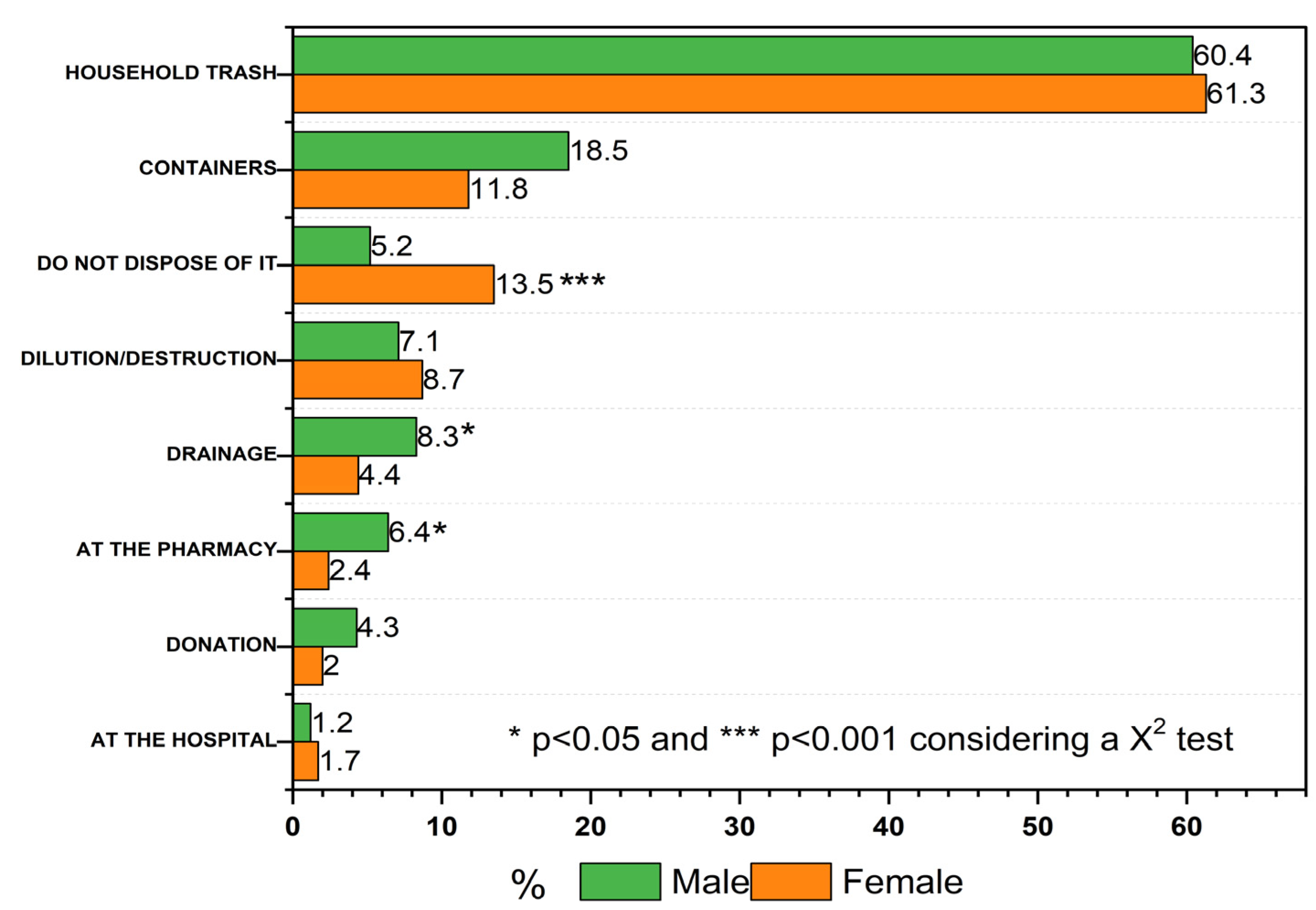
Several methods were reported for disposal of unused drugs; the most common was getting rid of the medication directly in the household trash (60.8%), followed by what respondents mentioned as containers (15.7%), meanwhile 7.5% of the respondents mentioned that they destroy or dilute the medication and 6.7% answered that they flush it down the toilet or drain.
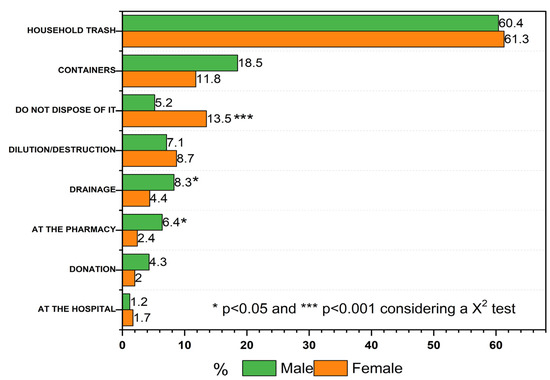
As it can be seen in Figure 1, some differences were observed between genders for the following techniques: disposal in containers, drainage, and disposal at the pharmacy. According to the survey, 13.5% of males and 5.2% of females said that they do not dispose of their medications and instead they keep them. On the other hand, 8.3% of females surveyed stated that they dispose of medication via the drains, against 4.4% of male respondents, and lastly, 6.4% of female respondents said that they dispose of medications at the pharmacy, against 2.4% of male respondents. These differences implied statistical significance (p < 0.001).
Figure 1.
Disposal techniques according to gender.
According to the surveys, there are two main methods for final medication disposal: the first one is common household trash, and the second is the use of official medical containers. In addition, it was observed that depending on the work field, those surveyed use of one of these methods.
As it can be observed in Table 2, 26.4% of those surveyed work in some Health Sciences-related job, while 73.5% of them work in any other field. From the Health Sciences workers, 42.3% dispose of their medication in the household trash, while from the other worker group, 67.3% use the same disposal method. The containers method is used by 38.1% of the Health Sciences workers compared with the 7.8% of the other working group.
Table 2.
Disposal techniques and knowledge of specific containers for the proper handling of medication, according to employment in the health-related area.
As the current and main strategy for proper medication disposal, 34.5% of the respondents said they had seen these specific containers and only 27.3% mentioned that these are for the disposal of unused or expired medications. Meanwhile, the rest of those surveyed did not know the use of the containers or they are confused with some other waste collection points (batteries or electronic devices). These vessels were mostly seen in the pharmacy (24.6%), followed by hospitals (11%) and supermarkets (10.3%). To the group of respondents who work in a Health Sciences-related field, 43.9% use the containers found in pharmacies compared with the 17.8% surveyed from other work fields, followed by the 9.8% that use the containers found in supermarkets.
Differences were observed regarding disposal methods between individuals that work in health-related areas versus individuals that have other jobs: Participants belonging to the latter group are more prone to dispose of the medications via the household trash (67.3%), while those working in health-related areas are more prone to dispose of medications via containers (38.1%) and at the Pharmacy (11.6%).
Despite this difference, knowledge in the health-related areas of how and where they can dispose of the unused or expired medicines correctly did not even reach half of the positive answers.
3.2. Main Drugs Found in Water Bodies in Mexico City and Metropolitan Area
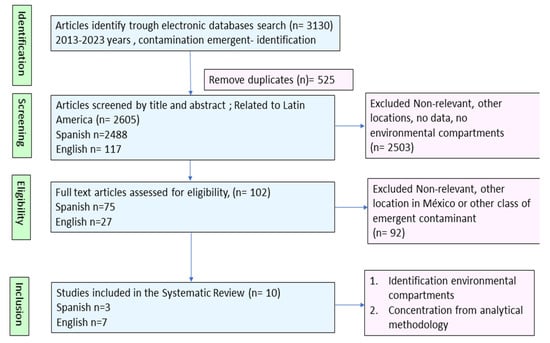
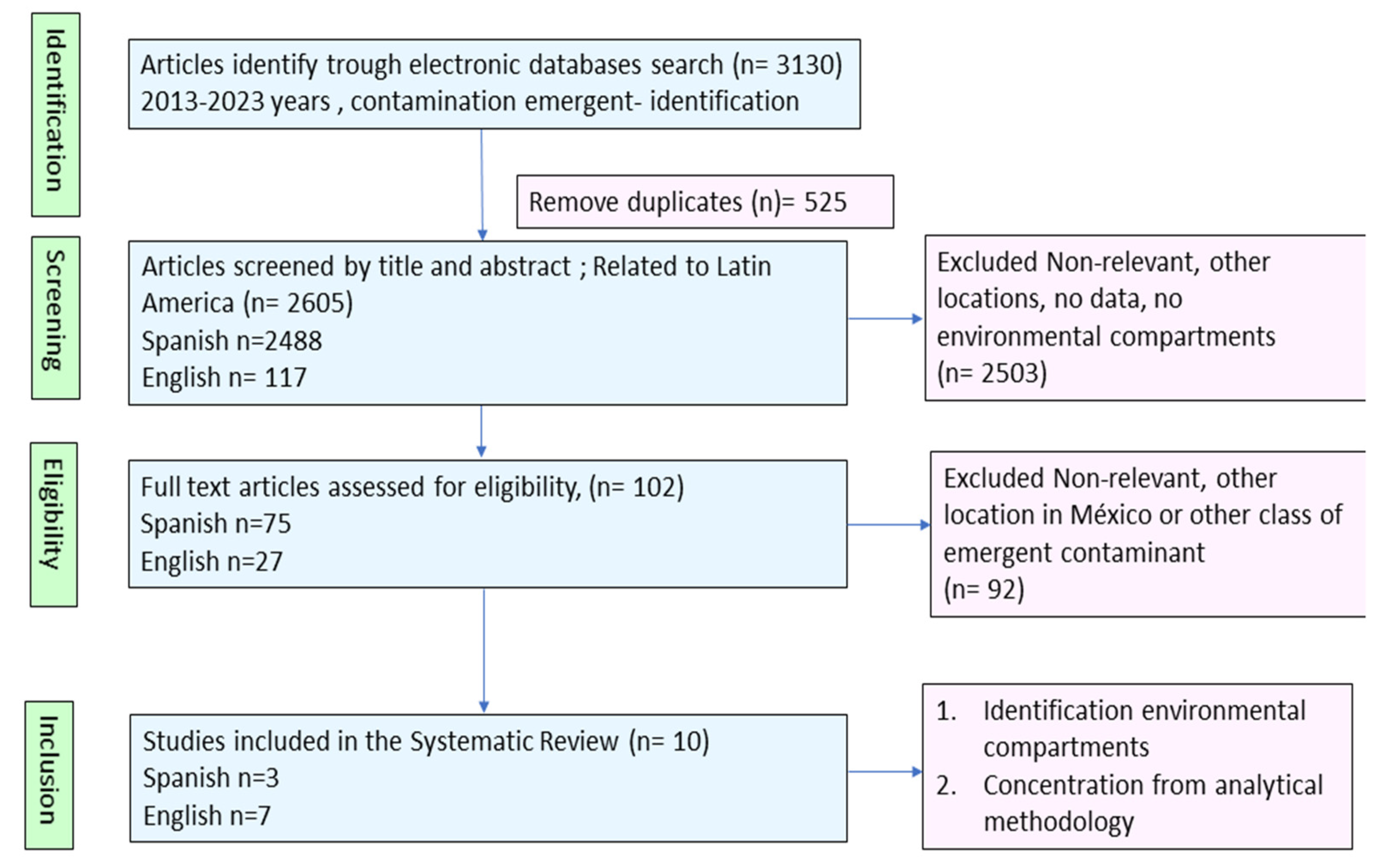
In order to identify reported data of the presence of drugs and their quantification in the Valley of México, a systematic literature search was conducted using databases and a search strategy described in the methodology section. Criteria used to identify relevant published papers for the period between 2013 to 2023 was carried out in several steps, as in the flowchart detailed in Figure 2. The search was refined in English and Spanish, taking into account the language spoken in the study country.
Figure 2.
Disposal techniques according to gender.
After a review of titles, results that were irrelevant or repeated data were excluded. Only studies with two requirements were taken into account: those with the identification of drugs in environmental compartments and with concentration values that result from the quantification carried out by a developed and validated analytical methodology. Finally, information about class of drugs, active substance, environmental compartments, location, and concentration was extracted.
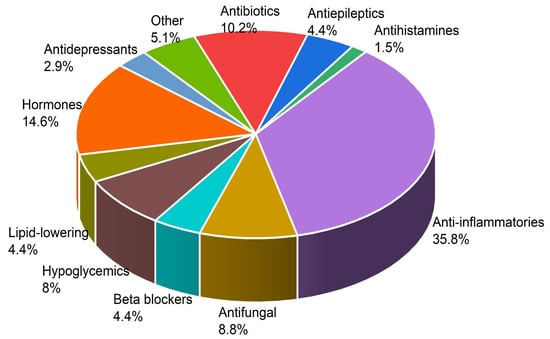
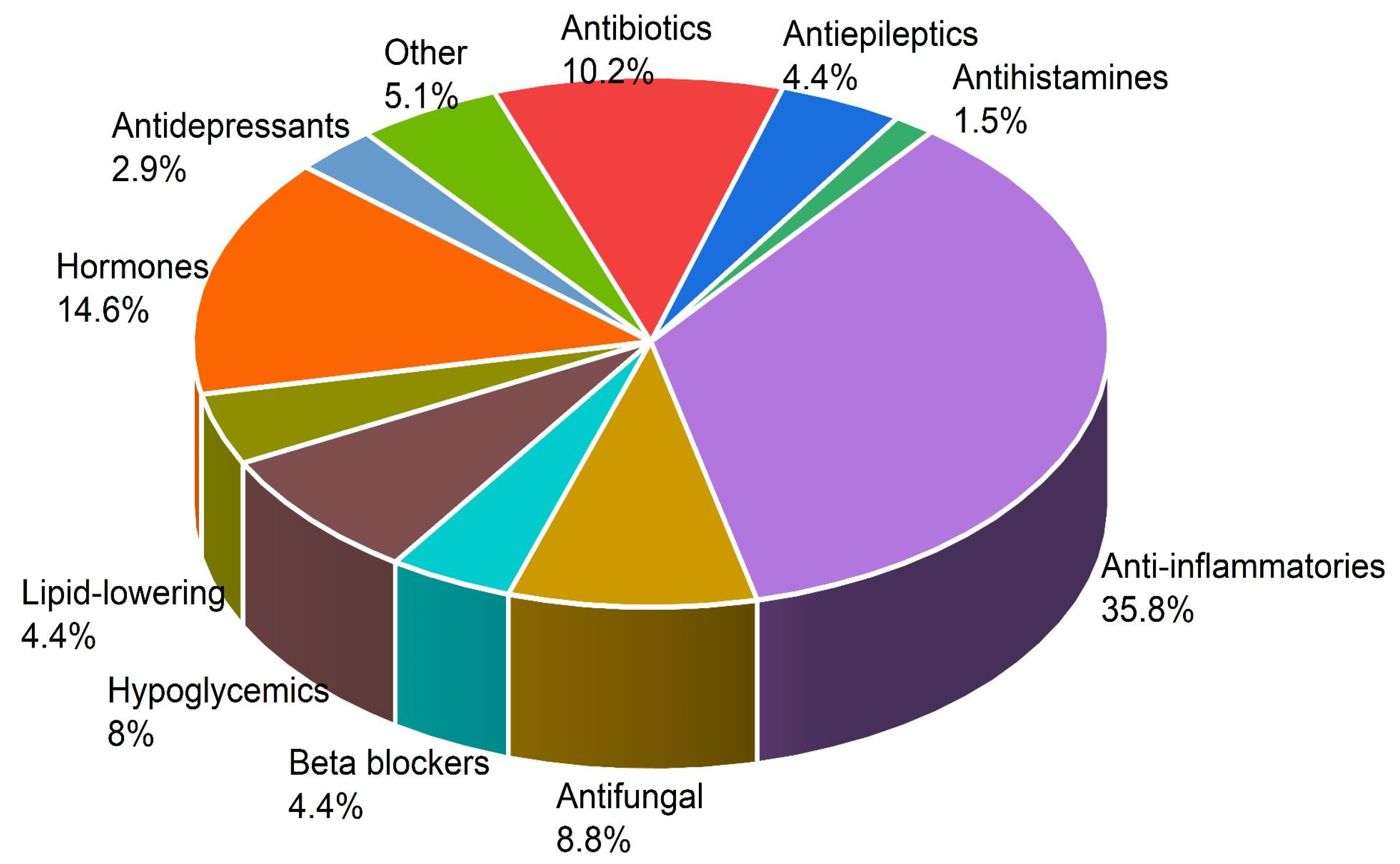
In total, 3130 papers were identified and reviewed, and only 10 of them were used to extract information about the presence and determination of drugs in the Valley of México. It is important to highlight that although the review covers until 2023, the most recent data reports are from 2019. In this research, 10 papers with 132 independent quantifications of drugs with different classes or active substances were detected, in which the presence of at least 51 different types of pharmaceutical residues were detected in wastewater in Mexico City (Appendix A). In addition, as can be seen in Figure 3, more than 50% of all the pharmaceutical wastes identified were anti-inflammatory, hormones, and antibiotics. These results are congruent, considering that in Mexico, drugs such as ibuprofen, paracetamol, and salicylic acid, among others, can be purchased without medical prescriptions.
Figure 3.
Percentages of different pollutants found in Mexico City and the metropolitan area (2013–2023) [14,15,16,27,28,29,30,31,32,33].
The maximum concentrations detected for each type of drug in the different studies were as follows: anti-inflammatories (naproxen 7010 ng/L), hormones (androsterone 3020 ng/L), antibiotics (erythromycin 769 ng/L), antifungals (triclosan 988 ng/L), hypoglycemics (metformin 32,100 ng/L), others (teofiline 10,400 ng/L), antiepileptics (carbamazepine 678.3 ng/L), beta blockers (metoprolol 87.2 ng/L), lipid-lowering (clofibric acid 5856 ng/L), antidepressants (diazepam 2.61 ng/L), and antihistamines (acetaminophen 18,500 ng/L).
The presence of hormones in wastewater could be explained due to treatments used as hormone replacement therapy or fertility treatments, for the prescription of corticosteroids for autoimmune diseases, severe respiratory disorders, certain allergic conditions, and prescriptions to treat several dermatological conditions. All these compounds reach the water bodies when they are discarded in the urine or through expired medicines that are thrown directly down the drain.
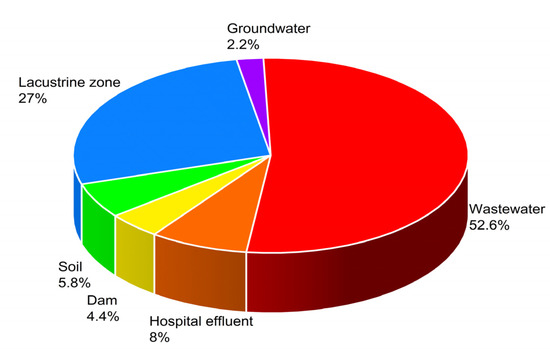
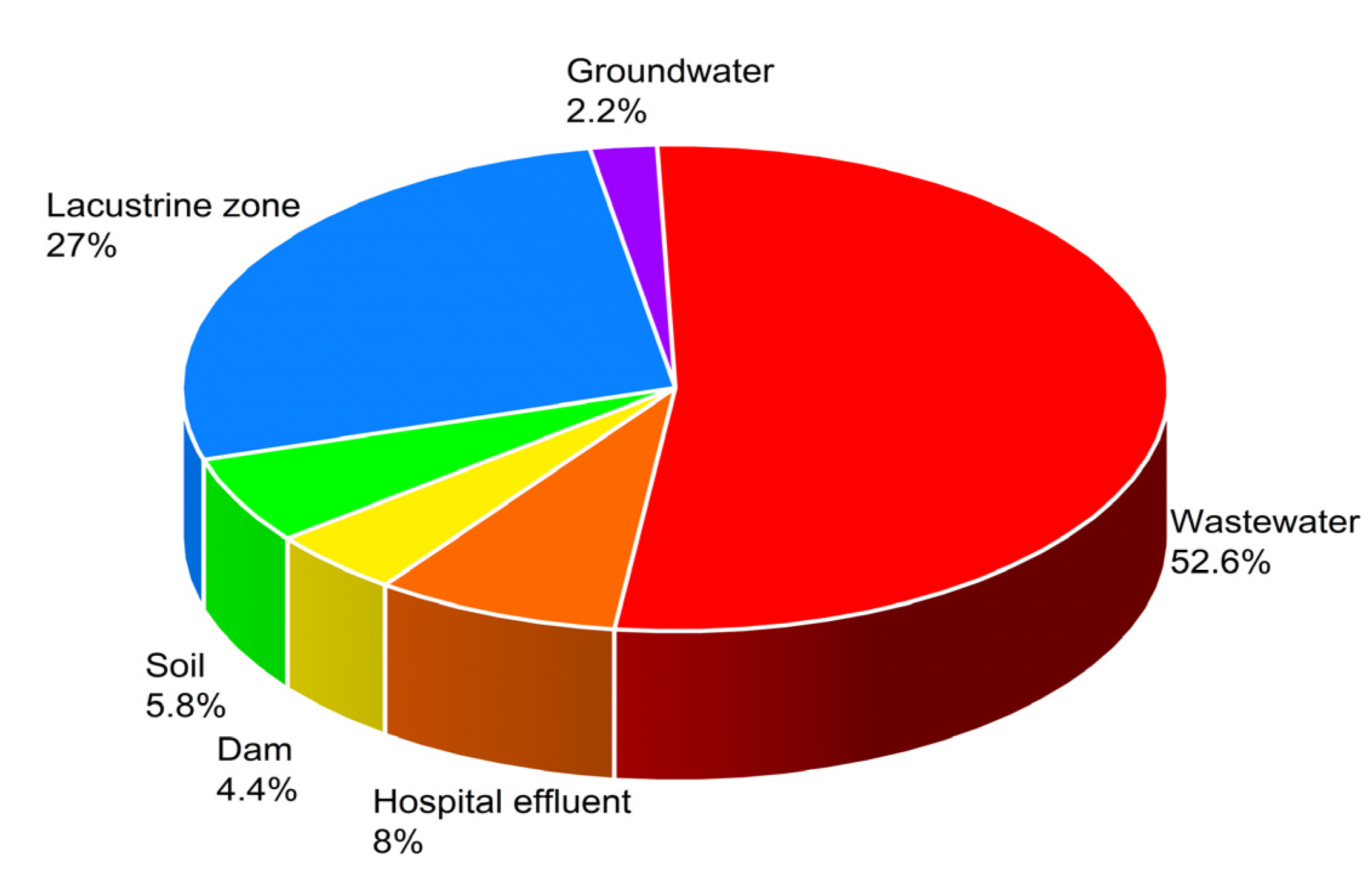
According to the analyzed reports, domestic and industrial wastewater concentrates the largest amount of the identified medical drugs, followed by the lacustric zone of the region, which includes the south municipalities such as Xochimilco, Milpa Alta, and Tlahuac (Figure 4).
Figure 4.
Distribution of water bodies with pollutants of pharmaceutical origin in Mexico City and the metropolitan area (2013–2023) [14,15,16,27,28,29,30,31,32,33].
4. Discussion
Mexico is a great market for drug manufacturers and medical devices, both from national and global companies, and nowadays is considered as the second largest pharmaceutical industry in Latin America. Hence, the presence of active pharmaceutical compounds, such as antibiotics, steroid hormones, antihypertensives, neuroactive drugs (antiepileptic and antidepressants), painkillers, or analgesic and anti-inflammatory drugs, have been determined in the environment, freshwater bodies, and in some cases, they are detected downstream of waste of water treatment plants or adjacent to fields receiving animal manures, representing a potential environmental hazard of exposure to these chemicals [14,15,16,27,28,29,30,31,32,33].
The results show that nearly 83.5% of those surveyed disposed of their pharmaceutical products in an incorrect way. The main method used to dispose of them is in the municipal dump, directly in the drain, or burning them, which is in accordance with some other reports [34,35,36,37,38], with very low awareness (10.5%) of them knowing how the medical drugs can be properly disposed, as reported previously [38,39].
Similar results were found in the study conducted by Zúñiga-Lemus et al. in Oaxaca, Mexico, where the surveyed population was not aware of how to properly dispose of medications and the unused medicines were kept at households for an average time of one year, disposing of them afterwards via the household trash or through the drainage [35], which is in contrast to that the observed in Sweden, where 85% of the respondents were aware that returning unused and expired medication to a pharmacy is the appropriate method for its disposal [40].
Although statistically significant differences according to the background of the participants were found, those who are working in a health-related area, as students or workers, showed a tendency to have better disposal practices, as seen in other reports [41,42]. There was a large proportion of participants presenting risk behaviors regarding the final management of medications, where 61.9% of those surveyed working in health-related areas do not dispose of medications appropriately, in spite of their scientific background, who should entail knowledge on this matter and, therefore, recognize the implications on the potential environmental and health hazards [41,42].
Similar reports have been made, in which pharmacists, residents, and medical students were assessed to identify the appropriate methods of medication disposal that they could use or recommend to patients, indicating that nearly 10–15% were able to recognize all the appropriate methods to discard medications [42]; almost two-thirds indicated complete lack of knowledge of documented guidelines for medication disposal in contrast with only 25% whom had specific training on disposal practices.
Antibiotics were the second most frequent discarded medication reported by the participants, and among the first ones found in water bodies adjacent to Mexico City. The information obtained is consistent with that reported in some urban areas in China [43,44], where a continual exposure to this kind of pollution could develop an antibacterial resistance in the natural environment, posing a direct risk for the population [43].
In addition, analgesics and NSAIDs were also mentioned as the most commonly discarded medications, as reported in other research [45,46], which have been world widely reported as one of the most dominant and frequently detected groups in environmental matrices including wastewater, surface water, suspended solids, sediments, groundwater, and even drinking water. There is definitive evidence for the adverse impacts of NSAID residues on scavenging birds and aquatic species [46].
The maximum reported values of drugs for Mexico City in wastewater, dam, groundwater, and the lacustrine zone do not exceed the critical environmental concentration (CEC) (Table 3). The CEC indicates an approximation of the concentration of the drug in the medium that can increase the concentration within an organism. For there to be acute toxicity of drugs at different levels of the trophic chain (phytoplankton, zooplankton, benthos, and fish), the concentrations must exceed 500,000 ng/L, while for chronic toxicity, the concentrations must be greater than 1000 ng/L [47]. Although the maximum values of the present study do not exceed these values, bioaccumulation in organisms can increase the concentrations of these compounds and generate adverse effects [48]. However, considering that most drugs have log Kow values between 2 and 5, it indicates that these compounds are potentially bioaccumulative in aquatic organisms [49]. In addition, the adsorption of drugs by microplastics has currently been demonstrated, which could increase the accumulation of these compounds within organisms in aquatic ecosystems [50]. On the other hand, there are reports that aquatic species of animals, plants, and bacteria react differently to various concentrations and exposure times, making it difficult to determine the large-scale effect of these pharmaceutical residues [51].
Furthermore, one of the biggest challenges for infection control worldwide and, therefore, a public health concern regarding environmental-gene interaction, is the bacterial resistance to Enterococcus faecium, Escherichia coli, Sthapylococcus aureus, Klebsiella pneumoniae, Acinetobacter baumanni, Pseudomonas aeruginosa, and some other Enterobacter species, which could lead to an increase in the morbidity and mortality rates [1,17].
In this sense, a study conducted by Guardabassi et al. demonstrated a possible increase in antibiotic-resistant bacteria in sewage associated with the discharge of wastewater from a pharmaceutical plant and a hospital using Acinetobacter species as environmental bacterial indicators [18]. The results indicated that the discharge of wastewater from the pharmaceutical plant was associated with an increase in the prevalence of both single and multiple antibiotic resistance among the Acinetobacter species in the sewers [2,18]. Besides, other data obtained suggests that metabolites of germifrozil, carbamazepine (carbamazepine epoxide), diclofenac (4′- and 5-hydroxy diclofenac), and atorvastatin (o- and p-hydroxy atorvastatin) are detected at higher concentrations than the parent pharmaceuticals into inflow proportional 24 h composite samples of wastewater effluent collected from urban Norwegian cities [52].
Table 3.
Characteristics of the active substances registered for Mexico City associated with ecological effects.
As a response to this challenge, eco pharmacovigilance (EPV) [44,55,56] has arisen as an emerging science concerning the detection, assessment, understanding, and prevention of adverse effects related to the presence of pharmaceuticals in the environment, which affect human and other animals.
After the pharmaceutical compounds enter the environment, the active substances move from one environmental compartment to others, contaminating surface and ground water, soil, and even air. The highly liposoluble compounds can accumulate in fatty tissue of animals and return to food chain [57].
However, the possible negative effect to human beings is not as clear as for the environment; drinking water and food contain low levels of these chemical compounds but are not considered toxic to humans in the short term, but in long term, could be by its own toxic nature. Authors should discuss the results and how they can be interpreted from the perspective of previous studies and of the working hypotheses [58]. The findings and their implications should be discussed in the broadest context possible. Future research directions may also be highlighted.
5. Conclusions
This study shows that a large proportion of the general population, including those related to a health-field, do not dispose of medications appropriately and are not aware of the proper mechanisms to do it, even those who work in a health-related areas. Thus, one of the inputs of this study is the need to organize educational campaigns focused in the overall community considering integral strategies between industry, academia, and the government aimed to ensure that pharmaceuticals in the environment are managed appropriately in a timely way to prevent health risks.
On the other hand, we highlight the recognition of significant environmental issues associated with pharmaceuticals in the environment, as emerging contaminants and the need to increase the awareness for proper disposal, and whether the inadequate disposal of pharmaceuticals results in a direct impact on the environment and possibly on human health.
A parallel and integrative approach is required to perform more research focused on biological monitoring of different species, measurements, predictions, and the identification of potential effects of pharmaceutical pollutants to improve scientific understanding of pharmaceuticals in the environment. Additionally, one long-term response to this problem could be the development of a “green and sustainable pharmacy” as an effective measure to solve the issue of emerging pollution by pharmaceutical residues.
Author Contributions
Conceptualized the framework of this manuscript; L.M.-R., A.B.-R., A.P.-M. and A.V.-C.; data curation and epidemiological analysis, L.M.-R., J.A.A.-B., B.I.M.-L. and A.V.-C. Ecological analysis and visualization, A.B.-R., A.P.-M. and A.I.-G., writing—original draft preparation, A.B.-R., A.P.-M., A.I.-G., B.I.M.-L., writing—review and editing A.V.-C., A.B.-R., A.P.-M. All authors have read and agreed to the published version of the manuscript.
Funding
This study was supported and funded by Universidad La Salle México through registered project IMC-18/21.
Institutional Review Board Statement
Ethical review and approval were waived for this study due to this study involved a risk lower than minimum and a secondary analysis of reports; and was conducted according to the Mexican General Health Law and the International Organisms.
Informed Consent Statement
Participation in the survey was voluntary and the identity of the respondents was kept confidential. Before answering it and after letting them know the purpose of the study, the respondents pre-approved its application with a question asking for their consent.
Data Availability Statement
All data are available in the manuscript when requested to the corresponding author.
Conflicts of Interest
The authors declare no conflict of interest.
Appendix A
The Table A1 presents the ecological data obtained of published reports.
Table A1.
Distribution of pharmaceutical residues in adjacent water bodies to Mexico City and the metropolitan area (2013–2023).
References
- Statista. Statista Universidad La Salle. Available online: https://s443-www-statista-com.lasalle.lsproxy.net/statistics/266226/leading-mexican-pharmaceutical-companies-by-revenue/#statisticContainer (accessed on 2 January 2023).
- Esseku, Y.Y.; Mante, P.K.; Dodoo, A.N.O.; Woode, E. Drug Disposal and Ecopharmacovigilance Practices in the Krowor Municipality, Ghana. J. Tox. 2022, 2022, 7674701. [Google Scholar] [CrossRef] [Scilit] [PubMed]
- Wang, J.; Hu, X. Ecopharmacovigilance: Current state, challenges and opportunities in Chine. Indian J. Pharm. 2014, 1, 13. [Google Scholar] [CrossRef] [Scilit]
- Lichtveld, M.Y.; Rodenbeck, S.E.; Lybarger, J.A. The findings of the agency for toxic substnces and disease registry medical waste tracking act report. Environ. Health Perspect. 1992, 98, 243–250. [Google Scholar] [CrossRef]
- Kane, N.M. Pharmaceutical cost containment and innovation in the United States. Health Policy 1997, 41, S71–S89. [Google Scholar] [CrossRef] [Scilit] [PubMed]
- Kolpin, D.W.; Furlong, E.T.; Meyer, M.T.; Thurman, E.M.; Zaugg, S.D.; Barber, L.B.; Buxton, H.T. Pharmaceuticals, hormones and other organic wastewater contaminants in U.S. streams 1999–2000. A national reconnaissance. Environ. Sci. Tech. 2002, 6, 1202–1211. [Google Scholar] [CrossRef] [Scilit] [PubMed]
- Cargouët, M.; Perdiz, D.; Mouatassim-Souali, A.; Tamisier-Karolak, S.; Levi, Y. Cargouët. Assessment of river contamination by estrogenic compounds in Paris area. Sci. Total Environ. 2004, 324, 55–66. [Google Scholar] [CrossRef] [Scilit]
- Wiegel, S.; Aulinger, A.; Brockmeyer, R.; Harms, H.; Löffler, J.; Reincke, H.; Wanke, A. Pharmaceuticals in the river Elve and its tributaries. Chemosphere 2004, 57, 107–126. [Google Scholar] [CrossRef] [Scilit]
- Ferari, B. Erratum to Ecotoxicological impact of pharmaceuticals found in treated wastewater: Study of carbamazepine, clofibric acid and diclofenac. Ecotox. Environ. 2003, 55, 359–370. [Google Scholar] [CrossRef] [Scilit]
- Clara, M.; Strenn, B.; Gans, O.; Martinez, E.; Kreuzinger, N.; Kroiss, H. Removal of selected pharmaceuticals, fragrances and endocrine disrupting compounds in a membrane bioreactor and conventional wastewater treatment plants. Water Res. 2005, 39, 4797–4807. [Google Scholar] [CrossRef] [Scilit]
- Miao, X.S.; Yang, J.J.; Metcalfe, C.D. Carbamazepine and its metabolites in wastewater and in biosolids in a municipal wastewater treatment plant. Environ. Sci. Technol. 2005, 39, 7469–7475. [Google Scholar] [CrossRef] [Scilit]
- Zhang, Y.; Geißen, S.U.; Gal, C. Carbamazepine and diclofenac: Removal in wastewater treatment plants and occurrence in water bodies. Chemosphere 2008, 73, 1151–1161. [Google Scholar] [CrossRef] [Scilit] [PubMed]
- Gibson, R.; Durán-Álvarez, J.C.; Estrada, K.L.; Chávez, A.; Cisneros, B.J. Accumulation and leaching potential of some pharmaceuticals and potential endocrine disruptors in soils irrigated with wastewater in the Tula Vlley. México. Chemosphere 2010, 81, 1437–1445. [Google Scholar] [CrossRef] [Scilit]
- Estrada-Arriaga, E.B.; Mijaylova-Nacheva, P.; Moeller-Chavez, G.; Mantilla-Morales, G.; Ramírez-Salinas, N.; Sánchez-Zarza, M. Presencia y tratamiento de compuestos disruptores endócrinos en aguas residuales de la Ciudad de México empleando un biorreactor con membranas sumergidas. Ing. Investig. Y Tecnol. 2013, 14, 275–284. [Google Scholar]
- Félix–Cañedo, T.E.; Durán–Álvarez, J.C.; Jiménez–Cisneros, B. The occurrence and distribution of a group of organic micropollutants in Mexico City’s water sources. Sci. Total Environ. 2013, 454, 109–118. [Google Scholar] [CrossRef] [Scilit]
- Morachis-Valdez, G.; Dublán-García, O.; López-Martínez, L.X.; Galar-Martínez, M.; Saucedo-Vence, K.; Gómez-Oliván, L.M. Chronic exposure to pollutants in Madín reservoir (Mexico) alter oxidative stress status and flesh quality in the common carp Cyprinus Carpio. Environ. Sci. Polllution Res. 2015, 22, 9159–9172. [Google Scholar] [CrossRef] [Scilit] [PubMed]
- KPMG, M. La Industria Farmacéutica Mexicana. Actualidades Delineando Estrategias, una Visión de KPMG. 2nd Edition. 2017. Available online: https://rb.gy/fphnz5 (accessed on 14 March 2023).
- Guardabassi, L.; Petersen, A.; Olsen, J.E.; Dalsgaard, A. Antibiotic Resistance in Acinetobacter spp. Isolated from severs receiving waste effluent from Hospital and a Pharmaceutical Plant. Appl. Environ. Microbio. 1998, 64, 3499–3502. [Google Scholar] [CrossRef] [Scilit]
- Ortúzar, M.; Esterhuizen, M.; Olicón-Hernández, D.R.; González-López, J.; Aranda, E. Pharmaceutical Pollution in Aquatic Environments: A Concise Review of Environmental Impacts and Bioremediation Systems. Front. Microbiol. 2022, 13, 869332. [Google Scholar] [CrossRef] [Scilit]
- Hejna, M.; Kapuścińska, D.; Aksmann, A. Pharmaceuticals in the aquatic environment: A review on eco-toxicology and the remediation potential of algae. Int. J. Environ. Res. Public Health 2022, 19, 7717. [Google Scholar] [CrossRef] [Scilit] [PubMed]
- SEGOB. Senado de la República. Ley General del Equilibrio Ecológico y la Protección al Ambiente. Available online: https://www.senado.gob.mx/comisiones/desarrollo_social/docs/marco/Ley_GEEPA.pdf (accessed on 2 January 2023).
- Diario Oficial de la Federación (DOF). Que Establece las Características, el Procedimiento de Identificación, Clasificación y Los Listados de Los Residuos Peligrosos. Available online: http://www.economia-noms.gob.mx/normas/noms/2006/052semarnat.pdf (accessed on 2 January 2023).
- CENAPRED. Guía de Guía Para la Disposición Segura de Medicamentos Caducos Acumulados en Situaciones de Emergencia. Available online: http://www.proteccioncivil.gob.mx/work/models/ProteccionCivil/Resource/373/1/images/guia_dsmcase.pdf (accessed on 2 January 2023).
- DOF, NORMA Oficial Mexicana NOM-001-SEMARNAT-2021, Que Establece los Límites Permisibles de Contaminantes en Las Descargas de Aguas Residuales en Cuerpos Receptores Propiedad de la Nación. Available online: https://dof.gob.mx/nota_detalle.php?codigo=5645374&fecha=11/03/2022#gsc.tab=0 (accessed on 2 January 2023).
- SINGREM. Sistema Nacional de Gestión de Residuos de Envses y Medicamentos A.C. Available online: https://www.singrem.org.mx/ (accessed on 3 March 2023).
- Paut Kusturica, M.; Tomas, A.; Sabo, A. Disposal of unused drugs: Knowledge and behavior among people around the world. Rev. Environ. Contam. Toxicol. 2017, 240, 71–104. [Google Scholar] [PubMed]
- Melo-Guimarães, A.; Torner-Morales, F.J.; Durán-Álvarez, J.C.; Jiménez-Cisneros, B.E. Removal and fate of emerging contaminants combining biological, flocculation and membrane treatments. Water Sci. Technol. 2013, 67, 877–885. [Google Scholar] [CrossRef] [Scilit]
- Díaz-Torres, E.; Gibson, R.; González-Farías, F.; Zarco-Arista, A.E.; Mazari-Hiriart, M. Endocrine disruptors in the Xochimilco wetland, Mexico City. Water Air Soil Pollut. 2013, 224, 1586. [Google Scholar] [CrossRef] [Scilit]
- Peña-Álvarez, A.; Castillo-Alanís, A. Identificación y cuantificación de contaminantes emergentes en aguas residuales por microextracción en fase sólida-cromatografía de gases-espectrometría de masas (MEFS-CG-EM). TIP Rev. Espec. En Cienc. Químico-Biológicas 2015, 18, 29–42. [Google Scholar] [CrossRef] [Scilit]
- Estrada-Arriaga, E.B.; Cortés-Muñoz, J.E.; González-Herrera, A.; Calderón-Mólgora, C.G.; de Lourdes Rivera-Huerta, M.; Ramírez-Camperos, E.; García-Sánchez, L. Assessment of full-scale biological nutrient removal systems upgraded with physico-chemical processes for the removal of emerging pollutants present in wastewaters from Mexico. Sci. Total Environ. 2016, 571, 1172–1182. [Google Scholar] [CrossRef] [Scilit]
- Campos Silva, C.; Alvarado Martinez, E.; Becerril Bravo, J.E. Determinación de fármacos y metabolitos en muestras de agua, suelo y sedimento de la zona lacustre de la ciudad de México, por extracción acelerada con disolventes y cromatografía de gases acoplada a espectrometría de masas. Rev. AIDIS De Ing. Y Cienc. Ambientales. Investig. Desarro. Y Práctica 2017, 10, 285–302. [Google Scholar]
- Hernández-Quiroz, M.; Ruiz-Meza, D.; Rojo-Callejas, F.; Ponce de León-Hill, C. Determinación de la distribución de contaminantes emergentes en agua intersticial en sedimentos de humedal mediante la optimización y validación de un método analítico. Rev. Int. Contam. Ambient. 2019, 35, 407–419. [Google Scholar] [CrossRef] [Scilit]
- Pérez-Alvarez, I.; Islas-Flores, H.; Gómez-Oliván, L.M.; Barceló, D.; De Alda, M.L.; Solsona, S.P.; Galar-Martínez, M. Determination of metals and pharmaceutical compounds released in hospital wastewater from Toluca, Mexico, and evaluation of their toxic impact. Environ. Pollut. 2018, 240, 330–341. [Google Scholar] [CrossRef] [Scilit]
- Nepal, S.; Giri, A.; Bhandari, R.; Chand, S.; Nepal, S.; Aryal, S.; Shastry, C.S. Poor and unsatisfactory disposal of expired and unused pharmaceuticals: A global issue. Curr. Drug Saf. 2020, 15, 167–172. [Google Scholar] [CrossRef] [Scilit] [PubMed]
- Zuñiga-Lemus, O.; Balderas-Gómez, F.L.; Castro-Bear, V. Destino final de los medicamentos caducos en el municipio de Teotitlán de Flores Magón, Oaxaca. Rev. Salud Y Adm. 2017, 4, 15–23. [Google Scholar]
- Nurolaini, K.; Sultana, S.M.; Wai See, W. Medication wastage and its disposal amongst patients at Suri Seri Begawan Hospital in Brunei Darussalam. Med. Health 2016, 11, 139–150. [Google Scholar]
- Banwat, S.B.; Auta, A.; Dayom, D.W.; Buba, Z. Assessment of the storage and disposal of medicines in some homes in Jos north local government area of Plateau State, Nigeria. Trop. J. Pharm. Res. 2016, 15, 989–993. [Google Scholar] [CrossRef] [Scilit]
- Kusturica, M.P.; Sabo, A.; Tomic, Z.; Horvat, O.; Šolak, Z. Storage and disposal of unused medications: Knowledge, behavior, and attitudes among Serbian people. Int. J. Clin. Pharm. 2012, 34, 604–610. [Google Scholar] [CrossRef] [Scilit]
- Husain, T.; Farooqi, S.; Khan, M.; Humayoon, R.; Jabeen, S. Medication disposal: Household practices in Karachi, Pakistan. Need for a medication Take-back program. Prof. Med. J. 2017, 24, 1380–1386. [Google Scholar] [CrossRef] [Scilit]
- Persson, M.; Sabelström, E.; Gunnarsson, B. Handling of unused prescription drugs—Knowledge, behaviour and attitude among Swedish people. Environ. Int. 2009, 35, 771–774. [Google Scholar] [CrossRef] [Scilit] [PubMed]
- Gachuz, J.F.; Romo, A.G.; González, Y.L.; Morales, J.M.T.; Ledezma, J.C.R.; Álvarez, E.B.M.; Vázquez, J.R. Medicamentos caducos, uso y conocimiento en estudiantes del Instituto de Ciencias de la Salud de una Universidad Pública. J. Negat. No Posit. Results 2018, 3, 866–874. [Google Scholar]
- Wilson, T.N.; Weiss, L.B.; Malone, J.O.; Garnier, K. Physician knowledge and perception of the need for drug disposal guidelines. Osteopath. Fam. Physician 2011, 3, 48–52. [Google Scholar] [CrossRef] [Scilit]
- Liu, J.L.; Wong, M.H. Pharmaceuticals and personal care products (PPCPs): A review on environmental contamination in China. Environ. Int. 2013, 59, 208–224. [Google Scholar] [CrossRef] [Scilit]
- Wang, J.; He, B.; Hu, X. Human-use antibacterial residues in the natural environment of China: Implication for ecopharmacovigilance. Environ. Monit. Assess. 2016, 187, 331. [Google Scholar] [CrossRef] [Scilit]
- Gracia-Vásquez, S.L.; Ramírez-Lara, E.; Camacho-Mora, I.A.; Cantú-Cárdenas, L.G.; Gracia-Vásquez, Y.A.; Esquivel-Ferriño, P.C.; Gonzalez-Barranco, P. An analysis of unused and expired medications in Mexican households. Int. J. Clin. Pharm. 2015, 37, 121–126. [Google Scholar] [CrossRef] [Scilit]
- He, B.S.; Wang, J.; Liu, J.; Hu, X.M. Eco-pharmacovigilance of non-steroidal anti-inflammatory drugs: Necessity and opportunities. Chemosphere 2017, 181, 178–189. [Google Scholar] [CrossRef] [Scilit]
- Fent, K. Effects of pharmaceuticals on aquatic organisms. In Pharmaceuticals in the Environment; Kümmerer, K., Ed.; Springer: Berlin/Heidelberg, Germany, 2008; pp. 175–203. [Google Scholar]
- Fabbri, E.; Franzellitti, S. Human pharmaceuticals in the marine environment: Focus on exposure and biological effects in animal species. Environ. Toxicol. Chem. 2016, 35, 799–812. [Google Scholar] [CrossRef] [Scilit]
- Gómez-Regalado, M.C.; Martín, J.; Santos, J.L.; Aparicio, I.; Alonso, A.; Zafra-Gómez, A. Bioaccumulation/bioconcentration of pharmaceutical active compounds in aquatic organisms: Assessment and factors database. Sci. Total Environ. 2023, 861, 160638. [Google Scholar] [CrossRef] [Scilit] [PubMed]
- Santos, L.H.; Rodríguez-Mozaz, S.; Barceló, D. Microplastics as vectors of pharmaceuticals in aquatic organisms—An overview of their environmental implications. Case Stud. Chem. Environ. Eng. 2021, 3, 100079. [Google Scholar] [CrossRef] [Scilit]
- Srain, H.S.; Beazley, K.F.; Walker, T.R. Pharmaceuticals and personal care products and their sublethal and lethal effects in aquatic organisms. Environ. Rev. 2020, 29, 142–181. [Google Scholar] [CrossRef] [Scilit]
- Langford, K.; Thomas, K.V. Input of selected human pharmaceutical metabolites into the Norwegian aquatic environment. J. Environ. Monit. 2011, 13, 416–421. [Google Scholar] [CrossRef] [Scilit]
- Tixier, C.; Singer, H.; Oellers, S.; Muller, S. Occurrence and Fate of Carbamazepine, Clofibric Acid, Diclofenac, Ibuprofen, Ketoprofen and Naproxen in Surface Waters. Environ. Sci. Technol. 2003, 37, 1061–1106. [Google Scholar] [CrossRef] [Scilit] [PubMed]
- Figueroa-Valverde, L.; Díaz-Cedillo, F.; García-Cervera, E.; Pool-Gómez, J.E.M.; Arcona-León, G. A facile synthesis of an androsterone derivative. QSAR study. Int. J. Chem. Tech. Res. 2010, 2, 2163–2168. [Google Scholar]
- Velo, G.M.U. Ecopharmacovigilance for better health. Drug Saf. 2010, 33, 963–968. [Google Scholar] [CrossRef] [Scilit]
- Holm, G.; Snape, J.R.; Murray-Smith, R.; Talbot, J.; Taylor, D.; Sörme, P. Implementing ecopharmacovigilance in practice: Challenges and potential opportunities. Drug Saf. 2013, 36, 533–546. [Google Scholar] [CrossRef] [Scilit]
- Soteromp, F.R. BIO Intelligence Service. 2013. Available online: https://health.ec.europa.eu/system/files/2016-11/study_environment_0.pdf (accessed on 2 January 2023).
- West, L.M.; Diack, L.; Cordina, M.; Stewart, D. A systematic review of the literature on ‘medication wastage’: An exploration of causative factors and effect of interventions. Int. J. Clin. Pharm. 2014, 36, 873–881. [Google Scholar] [CrossRef] [Scilit]

Disclaimer/Publisher’s Note: The statements, opinions and data contained in all publications are solely those of the individual author(s) and contributor(s) and not of MDPI and/or the editor(s). MDPI and/or the editor(s) disclaim responsibility for any injury to people or property resulting from any ideas, methods, instructions or products referred to in the content. |
© 2023 by the authors. Licensee MDPI, Basel, Switzerland. This article is an open access article distributed under the terms and conditions of the Creative Commons Attribution (CC BY) license (https://creativecommons.org/licenses/by/4.0/).