


Abstract
Medical conditions can increase drowning risk. No prior study has systematically reviewed the published evidence globally regarding medical conditions and drowning risk for adults. MEDLINE (Ovid), PubMed, EMBASE, Scopus, PsycINFO (ProQuest) and SPORTDiscus databases were searched for original research published between 1 January 2005 and 31 October 2021 that reported adult (≥15 years) fatal or non-fatal drowning of all intents and pre-existing medical conditions. Conditions were grouped into the relevant International Classifications of Diseases (ICD) codes. Eighty-three studies were included (85.5% high-income countries; 38.6% East Asia and Pacific region; 75.9% evidence level III-3). Diseases of the nervous system (n = 32 studies; 38.6%), mental and behavioural conditions (n = 31; 37.3%) and diseases of the circulatory system (n = 25; 30.1%) were the most common categories of conditions. Epilepsy was found to increase the relative risk of drowning by 3.8 to 82 times, with suggested preventive approaches regarding supervised bathing or showering. Drowning is a common suicide method for those with schizophrenia, psychotic disorders and dementia. Review findings indicate people with pre-existing medical conditions drown, yet relatively few studies have documented the risk. There is a need for further population-level research to more accurately quantify drowning risk for pre-existing medical conditions in adults, as well as implementing and evaluating population-level attributable risk and prevention strategies.
Keywords:
pre-existing medical condition; drown; epilepsy; cardiac; injury; suicide; dementia; depression; ischaemic heart disease; seizure 1. Introduction
Drowning has been described as an underexplored threat to public health [1]. Drowning, the process of experiencing respiratory impairment due to immersion or submersion in liquid, has both fatal and non-fatal outcomes, with or without morbidity [2]. Drowning may also be unintentional, intentional or of undetermined intent. Unintentional drowning alone was estimated to claim the lives of 295,000 people around the world in 2017, with the true estimate likely to be significantly higher with the inclusion of transportation and disaster-related drowning [3]. Though less is known about drowning due to intentional self-harm [4,5], many countries also report high drowning rates due to suicide [6,7,8].
Chronic medical conditions are becoming more common [9]. This phenomenon effects low and high-income countries alike. Research on unintentional drowning risk among children has identified epilepsy [10,11] and autism spectrum disorder as conditions posing an increased risk of drowning [12,13,14]. Several studies have explored the role of chronic disease on drowning risk among older people—an age group of growing concern with respect to drowning due to an aging population [15,16]. Studies among the elderly population have highlighted the risk for drowning of conditions such as dementia, sarcopenia, epilepsy, cardiac conditions and depression [5,11,17,18,19,20]. However, little is known regarding the drowning risk associated with pre-existing medical conditions and the interventions recommended to reduce this risk.
To date, no study has systematically reviewed the literature to examine the role of pre-existing medical conditions on adult drowning risk. This review will address the following research questions concerning the link between pre-existing medical conditions, drowning and drowning risk:
- Which pre-existing medical conditions have been reported in adult (aged 15 years and older) drowning cases?
- Which pre-existing medical conditions does the literature suggest impact the risk of drowning?
- In which population (s) do pre-existing medical conditions increase drowning risk and burden?
- What drowning reduction strategies are recommended in the literature?
2. Materials and Methods
A systematic review of peer-reviewed literature was undertaken to identify and critically analyse studies reporting drowning and chronic medical conditions in adults (aged 15 years and older) and was prospectively registered with PROSPERO (#CRD42020190605). The study followed the Preferred Reporting Items for Systematic Reviews and Meta-Analysis (PRISMA) guidelines [21]. From the search results, the PRISMA statement was used to identify, screen and determine eligibility for the included studies.
Peer-reviewed literature published in English between 1 January 2005 and 31 October 2021 was identified from searches of MEDLINE (OVID), PubMed, EMBASE, Scopus, PscyINFO (ProQuest) and SPORTDiscus databases. Search terms were intentionally broad, and no qualification of methodology or publication type was applied in the first search to capture all relevant article sets. Search terms included “drown*”, “adult”, “medical”, “disease” and various medical conditions. Where possible, terms and medical conditions were mapped to MESH terms. The Boolean search strings utilised for this study are described in Appendix A.
Literature was limited to a publication date of 2005, as this was the year the current drowning definition was established [2]. Studies of human drowning and chronic medical conditions were included regardless of outcome (fatal or non-fatal) and intent (unintentional, intentional self-harm, undetermined intent). Non-fatal drowning was defined in line with the Non-Fatal Drowning Categorisation Framework (NDCF) [22]. The full inclusion and exclusion criteria for the study are displayed in Table 1. Studies were included where data could be extracted for pre-existing medical conditions for people aged 15 years and older. Medical conditions were included if there was a history of the condition for the person who drowned, even if the condition was not indicated at autopsy. Conditions noted at autopsy but unknown at the time of the drowning incident were also included. Studies were excluded if they only reported acute conditions (e.g., a broken bone during the drowning incident). Case reports were included if they contained data for six or more drowning cases, regardless of the presence of a pre-existing medical condition. (Table 1).
Table 1.
Inclusion and exclusion criteria.
Using Covidence literature screening software, the independent dual screening of title and abstract was undertaken, with conflicts resolved via consensus between the two reviewers. The process was repeated for the full-text review. Data were extracted using a custom-built Microsoft Excel spreadsheet. Data extracted included age group and number of participants, number of drowning incidents including by intent and outcome, study type, name of medical condition(s), number, proportion and/or rate of those who drowned with medical condition and statistical measure of risk (i.e., Chi-square tests of independence, relative risk, odds ratio). Medical conditions were identified by extracting key medical findings (i.e., medical condition, pathophysiology findings) presented in the literature. Specific medical conditions were coded to the relevant category within the International Classification of Diseases (ICD) 10 category [23]. The categories and examples of conditions coded to each category taken from included studies are shown in Table 2. For the top three most common groups of conditions, the specific conditions within the groupings were further categorised as depicted in Table 2 [24,25]. Where studies did not report on a specific medical condition, these were coded to a grouping called “all pre-existing medical conditions”.
Table 2.
Medical condition groupings and examples of included conditions.
Risk factors were defined if statistical tests identified a significant link between the medical condition and risk of drowning or drowning outcome (i.e., Chi-square tests of significance, odds ratio, relative risk). Prevention strategies were extracted as free text if proposed, implemented and/or evaluated specific to drowning. Prevention strategies were coded as primary, secondary or tertiary prevention [26] and against the corresponding level within the Hierarchy of Control [27]. Quality of evidence was also assessed using the National Health and Medical Research Council (Australia) Levels of Evidence [28]. Levels of evidence range from Level I (a systematic review of Level II studies (randomised controlled trial)) to Level IV (case studies with either post-test or pre-test/post-test outcomes). Region and income levels of countries represented in included studies were assessed using the World Bank open data country profiles [29].
3. Results
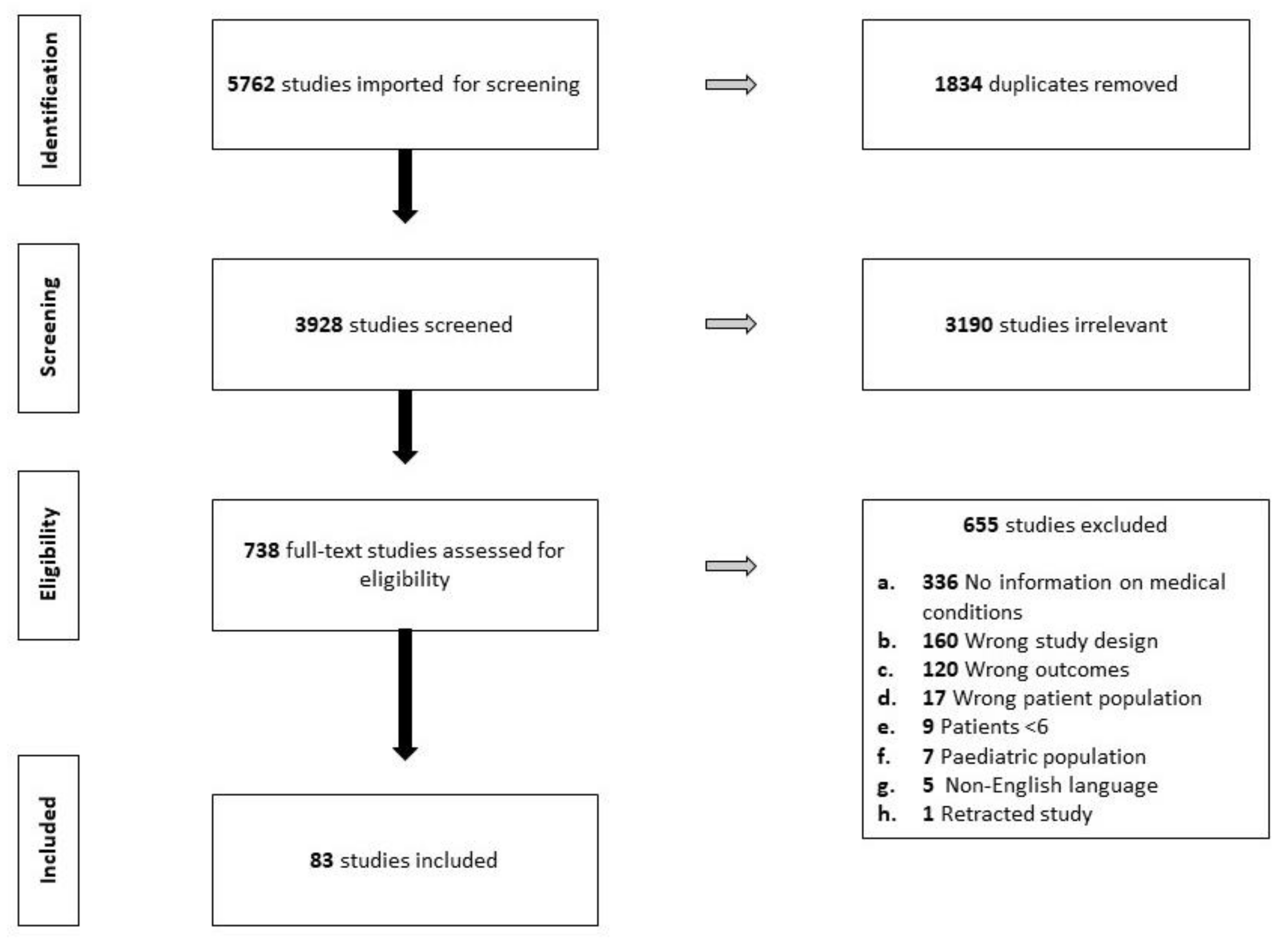
Initial searches identified 5762 studies. After the removal of 1834 duplicates, a total of 3928 studies were screened at the title and abstract stage. After the removal of studies not meeting the inclusion criteria, 738 full-text studies were assessed for eligibility. Following a full text review, 83 studies were included for data extraction (Figure 1).
Figure 1.
PRISMA flow chart.
Included studies predominately reported data from high-income countries (n = 71; 85.5%). The largest numbers of included studies were from the World Bank region groupings East Asia and the Pacific (n = 32; 38.6%) and Europe and Central Asia (n = 28; 33.7%). The majority of the included studies were assessed at a level of evidence of III-3 (n = 63; 75.9%). There were 48 studies (57.8%) that reported unintentional drowning, and 79 (95.2%) reporting fatal drowning. The study characteristics of the full list of included studies can be found in Appendix B.
With respect to grouped medical conditions, diseases of the nervous system [7,11,19,20,30,31,32,33,34,35,36,37,38,39,40,41,42,43,44,45,46,47,48,49,50,51,52,53,54,55,56,57] and mental and behavioural conditions [7,37,42,43,54,56,57,58,59,60,61,62,63,64,65,66,67,68,69,70,71,72,73,74,75,76,77,78,79,80,81,82] were the most commonly reported categories of medical conditions in drowning, identified in 32 studies (38.6%) and 31 studies (37.3%), respectively. This was followed by diseases of the circulatory system (n = 25 studies; 30.1% of all included studies) [19,43,46,49,53,54,55,57,63,76,83,84,85,86,87,88,89,90,91,92,93,94,95,96,97,98] (Table 3).
Table 3.
Grouped medical condition by included studies.
There were 13 studies that reported all pre-existing medical conditions [7,43,49,53,63,69,98,103,104,105,106,107,108]. The proportion of drowning involving pre-existing medical conditions ranged from 2.8% with chronic illness among fatal land motor vehicle drownings in Finland [106] to 24.6% of elderly (defined as 65 years and over) drowning patients in South Korea (fatal and non-fatal) reporting chronic illness (such as diabetes, hypertension and hepatitis) [69]. In the South Korean study, a significantly higher (p < 0.001) of elderly patients had chronic disease (24.6%) compared with the rest of the adult population who drowned (3.3%)[69]. A total population study of unintentional drowning fatalities in Canada identified that 67.3% of all adults 65+ years reported one or more accompanying chronic conditions [98]. Pre-exiting medical conditions were also prevalent in a study of intentional drowning death in Australia, found in 83.1% of deaths [7].
Seizure disorders (including epilepsy) were the most commonly reported condition within the diseases of the nervous system category, reported in 23 studies [11,19,20,30,32,33,34,35,37,38,39,40,43,44,45,46,47,49,52,53,54,55,56]. Epilepsy was found to occur in 11% of sudden deaths in hot bathtubs in Japan [20] and 9.6% of adult unintentional fatal drownings in Bangladesh [37]. Among those with epilepsy, drowning accounted for 83.3% of accidental injury deaths in Bangladesh [44] yet just 0.05% of seizure-related fatal unintentional injuries in Thailand [38] and 0.4% of hospitalised epilepsy deaths in the USA [39].
Almost half (49.1%) of all people in Portugal and the United Kingdom (UK) surveyed with Parkinson’s Disease reported having experienced a non-fatal drowning [48]. Drowning deaths of people with dementia who die after going missing or wandering span from 11.3% to 42.1% [36,51] (Table 4).
Table 4.
Studies reporting conditions within the diseases of the nervous system category.
Within the mental and behavioural conditions category, psychotic disorders (n = 15 studies) and mood disorders (n = 13 studies) were the two most commonly reported types of conditions implicated in cases of drowning. Drowning accounted for 9% of suicidal deaths in patients with schizophrenia in Taiwan [74]. Among those with psychotic disorders, drowning deaths varied from a high of 20.9% among people with personality disorders in Sweden [60] to a low of 1.3% of intentional drowning deaths in Australia [7]. Forty percent of psychiatric patients who died by suicide in South Korea drowned with psychotic disorders [75]. Psychotic disorders were present in 27.2% of patients who died from intentional drowning within one year of contact with mental health services in the UK [65].
Mood disorders (including bipolar and depression) were present in 61.3% of drowning deaths (both intentional and unintentional) in the Madurai region of India [79] and in 45.0% of intentional fatal drowning among psychiatric patients who suicided in South Korea [75]. A further eight studies reported substance abuse disorders. It should be noted that substance use disorders were present in 75.3% of suicidal drowning deaths in Australia [64] and 15.6% of drowning deaths in France [76] (Table 5).
Heart arrythmias (or related conditions) were the most commonly reported condition within the diseases of the circulatory system category, reported in eight studies [19,63,83,84,86,91,95,96]. Heart arrythmias were present in 22.9% of “unexplained” drowning deaths referred for a cardiac channel molecular autopsy in the USA [91] and 22.2% of diving-related drowning fatalities in Australia [95]. Among older people, heart arrythmias were present in 21.7% of bathtub drownings among people aged 65+ years in Canada [63] and 15.6% of the same cohort in Australia [19].
Ischaemic heart disease was identified in five included studies [53,55,85,89,90]. Two studies were from Greece, finding that ischaemic heart disease was present in 87.9% [85] and 51.8% of drowning deaths, respectively [89]. Two other studies reporting bath-related deaths found that ischaemic heart disease was present in 34.2% of bath-related deaths in Japan [53] and 73.7% in South Korea [55].
Among other circulatory system conditions, hypertensive heart disease was present in 66.7% of drowning deaths among those competing in triathlons in the USA [83,84], and atherosclerosis was found in 20% of those who drowned with a pre-existing medical condition in Greece [85] (Table 6).
Table 6.
Studies reporting conditions within the diseases of the circulatory system category.
Table 5.
Studies reporting conditions within the mental and behavioural conditions category.
There were 10 risk factors identified from the literature. These included increasing age, being at home, living near water, freshwater, medical conditions, medication (not on correct dose), sex (depending on medical condition), time of day and inpatient vs outpatient treatment (Table 7).
For epilepsy, there is an increase in the risk of drowning from between 3.8 times in the USA [39] to 82 times in China [47]. Specific to epilepsy and drowning, those with epilepsy in a study from the USA were found to be more likely to drown at home than in hospital or at a health care facility [31]; in rural China, those with epilepsy were found to have greater drowning risk if they resided in waterside areas than those living in the mountains [35], to have had epilepsy for a shorter period than those who survived [47] and to have a lower dosage of phenobarbital recorded at time of last follow up than those who survived [47].
By sex, females with personality disorders [60] and schizophrenia [74] were found to be at increased risk of suicidal drowning when compared to males; however, males were found to be at increased risk of dying from drowning with epilepsy [47]. Older age was found to be a risk factor for drowning with pre-existing medical conditions in studies of disability in South Korea (those aged 80+ years) [42], among coastal drowning fatalities in Australia [105] and for elderly patients with diabetes, hypertension and hepatitis in South Korea [69] (Table 7).
There were a total of 17 studies that discussed 26 unique strategies for preventing drowning related to pre-existing medical conditions [7,11,19,31,34,41,44,47,48,53,57,59,68,77,89,91,96]. The majority of strategies were administrative in nature when aligned to the Hierarchy of Control (n = 24; 92.3%) and all were proposed, as opposed to implemented and/or evaluated. Strategies were commonly educational in nature (n = 12 recommendations; 48.0% of all recommendations), followed by testing (n = 6; 24.0%), treatment (n = 3; 12.0%) and policy (n = 3; 12.0%) (Table 8).
Table 8.
Drowning prevention strategies documented in included literature by medical condition.
Table 7.
Risk factors related to pre-existing medical conditions and drowning.
4. Discussion
As the global population ages, the prevalence of comorbidities grows [109]. This systematic literature review shows that drowning occurs in people with pre-existing medical conditions, and that people with pre-existing medical conditions appear to be over-represented in drowning statistics. It also identified several conditions where drowning risk is heightened. Epilepsy was found to increase the relative risk of drowning by between 3.8 [39] and 82 times [47]. Risk factors for drowning in epilepsy included being of male sex [47], drowning at home [31], lower dosage of phenobarbital [47] (although it must be noted this is not a commonly used medication for seizure control/management in middle and high income country medical systems) and having a shorter duration of epilepsy [47]. Aside from seizures, other nervous system conditions, including dementia and Parkinson’s Disease, were also identified. Drowning is both a leading cause of death among those with dementia who die while wandering [36] and a common suicide method for those with dementia [50]. Parkinson’s Disease was reported to impact swimming ability leading to non-fatal drowning [48].
Mental and behavioural conditions was the second most commonly explored category of condition within the included literature. The included literature identified drowning as a popular suicide method for those with schizophrenia [74], psychotic disorders [77] and dementia [50]. Comprehensive psychiatric assessment and management and education in alcohol and substance misuse were recommended as education-based primary prevention strategies for intentional drowning involving mental and behavioural disorders, as well as bystander rescue and CPR training as secondary and tertiary measures [7]. Suicide response training for lifeguard and lifesavers has also been proposed, but not yet implemented or evaluated [68].
Diseases of the circulatory system were highlighted in 30% of included studies. Given ischaemic heart disease remains a leading cause of mortality globally [110], it is unsurprising to see cardiac conditions well represented within the drowning literature. Similarly, physical exercise such as swimming can temporarily increase the risk of aggravating cardiovascular conditions [85]. This is an important challenge, as aquatic exercise can be an effective and low-impact form of exercise, thus improving health and fitness [111]. The prevalence of unknown cardiac disease or cardiac conductivity issues during autopsy was also highlighted [63,83,86,91].
Diseases of the nervous system were also highlighted in the literature. Nervous systems disorders are wide-ranging, and this was reflected in the literature. The conditions that were highlighted appear to reflect those relating to the central nervous system and those that propagate immobility. Although aquatic exercise is often promoted to individuals with these conditions due to the non-weight bearing nature of the exercise, the risk of drowning must be considered. Levels of consciousness and mobility both pose a risk in drowning.
With this exploration of drowning and medical conditions, it was difficult to determine if there was an increased rate of drowning. For future studies, we propose that the studies include the total number of drowning deaths, the total number of people in the population, the population rate of the condition being studied and a relative risk (or similar) for drowning. This would allow future reviews to clearly be able to show the rate of drowning and the rate of drowning in the condition being explored, thus enabling a relative risk to be calculated.
One of the most common drowning prevention recommendations related to supervised bathing or the replacement of bathing with showering for those with diseases of the nervous system, such as seizure disorders [31]. Additionally, it was recommended that care givers of those with diseases of the circulatory system be aware of the drowning risks for those with such conditions, especially in the winter months [53]. For elderly adults with pre-existing medical conditions of any kind, showering with the use of an aid, such as a chair, was also recommended [19]. The majority of proposed drowning prevention encompassed primary drowning prevention strategies; however, many were administrative in nature, reflecting a low level of effectiveness on the hierarchy of control [27]. Additionally, all 25 unique drowning prevention recommendations were proposed only, identifying a knowledge gap regarding the efficacy of interventions based on implementation and evaluation.
Finally, with an aging population and increasing comorbidities comes an increased prescription medical rate, resulting in polypharmacy [112]. Multiple medications can contribute to drowning risk [113]; however, no study to date has examined the complex nature of polypharmacy, pre-existing medical conditions and adult drowning risk. This topic presents an opportunity for future research.
This study is the first to systematically explore the peer-reviewed literature to explore drowning and comorbidities and provides valuable information around conditions increasing drowning risk and research gaps. However, the findings of this study must be considered in light of some limitations. Within the included literature, we did not document if the person who drowned knew they had the particular condition or were treated appropriately for it. Only one included study reported medication levels as a risk factor, exploring phenobarbital levels among epileptics [47]. Secondly, the included studies are where drowning and a particular pre-existing medical condition co-occurred; there did not need to be, nor did we draw, a causal link between drowning and the condition in order for the study to be included in this review. Thirdly, where multiple pre-existing medical conditions are present, we did not examine the attributable drowning risk for individual conditions. All limitations also offer opportunities to strengthen the evidence base around medical conditions and drowning risk in the future.
5. Conclusions
Drowning occurs in people with existing medical conditions. This review has highlighted several pre-existing medical conditions that increase drowning risk; however, we also identified numerous research gaps. As we live longer and the proportion of the population with comorbidities increases, there is a need to better quantify the drowning risk associated with pre-existing medical conditions. Future research should include population level studies comparing disease prevalence in the general population to those who drown and better delineate the attributable risk for those with multiple medical conditions. In addition, there is a need for the implementation and evaluation of proposed strategies to reduce drowning burden and the risk associated with pre-existing medical conditions.
Author Contributions
Conceptualisation, D.H.T., R.C.F. and A.E.P.; methodology, D.H.T., A.E.P. and R.C.F.; data extraction, A.E.P. and D.H.T.; writing—original draft preparation, A.E.P.; writing—review and editing, A.E.P., D.H.T. and R.C.F. All authors have read and agreed to the published version of the manuscript.
Funding
This research received no external funding.
Institutional Review Board Statement
Not applicable.
Informed Consent Statement
Not applicable.
Data Availability Statement
Not applicable.
Conflicts of Interest
The authors declare no conflict of interest.
Appendix A
Table A1.
Databases and Search Terms Used.
Appendix B
Table A2.
Characteristics of Included Studies (n = 83).
References
- World Health Organization. Global Report on Drowning: Preventing a Leading Killer; World Health Organization: Geneva, Switzerland, 2014. [Google Scholar]
- Van Beeck, E.; Branche, C.M.; Szpilman, D.; Modell, J.H.; Bierens, J. A new definition of drowning: Towards documentation and prevention of a global public health problem. Bull. World Health Organ. 2005, 83, 853–856. [Google Scholar] [PubMed]
- Peden, A.; Franklin, R.C.; 1Mahony, A.; Barnsley, P.; Scarr, J. Using a retrospective cross-sectional study to analyse unintentional fatal drowning in Australia: ICD-10 coding-based methodologies verses actual deaths. BMJ Open 2017, 7, e019407. [Google Scholar] [CrossRef] [Scilit] [PubMed]
- Haw, C.; Hawton, K. Suicide and Self-Harm by Drowning: A Review of the Literature. Arch. Suicide Res. 2016, 20, 95–112. [Google Scholar] [CrossRef] [Scilit] [PubMed]
- Cenderadewi, M.; Franklin, R.C.; Peden, A.E.; Devine, S. Fatal intentional drowning in Australia: A systematic literature review of rates and risk factors. PLoS ONE 2020, 15, e0231861. [Google Scholar] [CrossRef] [Scilit] [PubMed]
- Hsieh, W.-H.; Wang, C.-H.; Lu, T.-H. Drowning mortality by intent: A population-based cross-sectional study of 32 OECD countries, 2012–2014. BMJ Open 2018, 8, e021501. [Google Scholar] [CrossRef] [Scilit] [PubMed]
- Cenderadewi, M.; Franklin, R.C.; Peden, A.E.; Devine, S. Pattern of intentional drowning mortality: A total population retrospective cohort study in Australia, 2006–2014. BMC Public Health 2019, 19, 207. [Google Scholar] [CrossRef] [Scilit] [PubMed]
- Claesson, A.; Krig, A.; Jonsson, M.; Ringh, M.; Svensson, L.; Forsberg, S.; Nord, A.; Nordberg, P.; Olausson, M.; Jacobsson, A. Incidence and characteristics of drowning in Sweden during a 15-year period. Resuscitation 2021, 162, 11–19. [Google Scholar] [CrossRef] [Scilit] [PubMed]
- Wolff, J.L.; Starfield, B.; Anderson, G. Prevalence, Expenditures, and Complications of Multiple Chronic Conditions in the Elderly. Arch. Intern. Med. 2002, 162, 2269–2276. [Google Scholar] [CrossRef] [Scilit]
- Franklin, R.C.; Pearn, J.H.; Peden, A.E. Drowning fatalities in childhood: The role of pre-existing medical conditions. Arch. Dis. Child. 2017, 102, 888–893. [Google Scholar] [CrossRef] [Scilit]
- Bain, E.; Keller, A.E.; Jordan, H.; Robyn, W.; Pollanen, M.S.; Williams, A.S.; Donner, E.J. Drowning in epilepsy: A population-based case series. Epilepsy Res. 2018, 145, 123–126. [Google Scholar] [CrossRef] [Scilit]
- Chang, S.S.M.; Ozanne-Smith, J. Drowning mortality in children aged 0–14 years in Victoria, Australia: Detailed epidemiological study 2001–2016. Inj. Prev. 2019, 26, 593–598. [Google Scholar] [CrossRef] [Scilit] [PubMed]
- Guan, J.; Li, G. Characteristics of unintentional drowning deaths in children with autism spectrum disorder. Inj. Epidemiol. 2017, 4, 32. [Google Scholar] [CrossRef] [Scilit] [PubMed]
- Peden, A.E.; Willcox-Pidgeon, S. Autism spectrum disorder and unintentional fatal drowning of children and adolescents in Australia: An epidemiological analysis. Arch. Dis. Child. 2020, 105, 869–874. [Google Scholar] [CrossRef] [Scilit]
- Peden, A.E.; Franklin, R.C.; Queiroga, A.C. Epidemiology, risk factors and strategies for the prevention of global unintentional fatal drowning in people aged 50 years and older: A systematic review. Inj. Prev. 2018, 24, 240–247. [Google Scholar] [CrossRef] [Scilit] [PubMed]
- Clemens, T.; Peden, A.E.; Franklin, R.C. Exploring a Hidden Epidemic: Drowning among adults aged 65 years and older. J. Aging Health 2021, 33, 828–837. [Google Scholar] [CrossRef] [Scilit]
- Thurman, D.J.; Logroscino, G.; Beghi, E.; Hauser, W.A.; Hesdorffer, D.C.; Newton, C.R.; Scorza, F.A.; Sander, J.W.; Tomson, T.; the Epidemiology Commission of the International League Against Epilepsy. The burden of premature mortality of epilepsy in high-income countries: A systematic review from the Mortality Task Force of the International League Against Epilepsy. Epilepsia 2017, 58, 17–26. [Google Scholar] [CrossRef] [Scilit]
- Mahony, A.J.; Peden, A.E.; Franklin, R.C.; Pearn, J.H.; Scarr, J. Fatal, unintentional drowning in older people: An assessment of the role of preexisting medical conditions. Healthy Aging Res. 2017, 6, e7. [Google Scholar] [CrossRef] [Scilit]
- Peden, A.E.; Franklin, R.C.; Pearn, M.D.J.H.; Mahony, A.J. Unintentional bathtub drowning deaths among those aged 65 years and older in Australia. Int. J. Aquat. Res. Educ. 2019, 11, 2. [Google Scholar] [CrossRef] [Scilit]
- Satoh, F.; Osawa, M.; Hasegawa, I.; Seto, Y.; Tsuboi, A. ”Dead in Hot Bathtub” Phenomenon: Accidental Drowning or Natural Disease? Am. J. Forensic Med. Pathol. 2013, 34, 164–168. [Google Scholar] [CrossRef] [Scilit]
- Moher, D.; Liberati, A.; Tetzlaff, J.; Altman, D.G. Preferred Reporting Items for Systematic Reviews and Meta-Analyses: The PRISMA Statement. Br. Med. J. 2009, 339, b2535. [Google Scholar] [CrossRef]
- Beerman, S.B.; Bierens, J.J.L.M.; Clemens, T.; Meddings, D.; Rahman, A.; Szpilman, D. Clarification and Categorization of Non-fatal Drowning: A Draft Position Statement for Review and Input by the Global Drowning Community. Available online: https://www.who.int/docs/default-source/documents/drowning/non-fatal-drowning-categorization.pdf?sfvrsn=44d18cc1_2 (accessed on 11 January 2022).
- World Health Organization. International Classification of Diseases. 10th Revision. Available online: http://www.cdc.gov/nchs/icd/icd10.htm (accessed on 29 June 2021).
- American Psychiatric Association. Diagnostic and Statistical Manual of Mental Disorders: DSM-5, 5th ed.; American Psychiatric Association: Washington, DC, USA, 2013. [Google Scholar]
- Kumar, V.; Abbas, A.K.; Fausto, N.; Aster, J.C. Robbins and Cotran Pathologic Basis of Disease, Professional Edition E-Book; Elsevier Health Sciences: Philadelphia, PA, USA, 2014. [Google Scholar]
- Pless, I.B.; Hagel, B. Injury prevention: A glossary of terms. J. Epidemiol. Community Health 2005, 59, 182. [Google Scholar] [CrossRef] [Scilit] [PubMed]
- National Safety Council. The Hierarchy of Controls. Available online: https://www.safetyandhealthmagazine.com/articles/16790-the-hierarchy-of-controls (accessed on 3 January 2019).
- National Health and Medical Research Council (NHMRC). A Guide to the Development, Implementation and Evaluation of Clinical Practice Guidelines; National Health and Medical Research Council: Canberra, Australia, 1999.
- The World Bank. World Bank Open Data Country Profiles. Available online: https://data.worldbank.org/country (accessed on 29 January 2022).
- Barooni, S.; Thambirajah Balachandra, A.; Lee, L. Death in epileptic people: A review of Manitoba’s medical examiner’s cases. J. Forensic Leg. Med. 2007, 14, 275–278. [Google Scholar] [CrossRef] [Scilit] [PubMed]
- Bowman, S.M.; Aitken, M.E.; Sharp, G.B. Disparities in injury death location for people with epilepsy/seizures. Epilepsy Behav. 2010, 17, 369–372. [Google Scholar] [CrossRef] [Scilit]
- Chang, C.-Y.; Lu, T.-H.; Cheng, T.-J. Trends in reporting injury as a cause of death among people with epilepsy in the U.S., 1981–2010. Seizure 2014, 23, 836–843. [Google Scholar] [CrossRef] [Scilit]
- Chang, Y.-H.; Ho, W.-C.; Tsai, J.-J.; Li, C.-Y.; Lu, T.-H. Risk of mortality among patients with epilepsy in southern Taiwan. Seizure 2012, 21, 254–259. [Google Scholar] [CrossRef] [Scilit]
- Cihan, E.; Hesdorffer, D.C.; Brandsoy, M.; Li, L.; Fowler, D.R.; Graham, J.K.; Donner, E.J.; Devinsky, O.; Friedman, D. Dead in the water: Epilepsy-related drowning or sudden unexpected death in epilepsy? Epilepsia 2018, 59, 1966–1972. [Google Scholar] [CrossRef] [Scilit]
- Ding, D.; Wang, W.; Wu, J.; Yang, H.; Li, S.; Dai, X.; Yang, B.; Wang, T.; Yuan, C.; Ma, G.; et al. Premature mortality risk in people with convulsive epilepsy: Long follow-up of a cohort in rural China. Epilepsia 2013, 54, 512–517. [Google Scholar] [CrossRef] [Scilit]
- Furumiya, J.; Hashimoto, Y. A descriptive study of elderly patients with dementia who died wandering outdoors in Kochi Prefecture, Japan. Am. J. Alzheimer’s Dis. Other Dement. 2015, 30, 307–312. [Google Scholar] [CrossRef] [Scilit] [PubMed]
- Hossain, M.; Biswas, A.; Mashreky, S.; Rahman, F.; Rahman, A. Epidemiology of adulthood drowning deaths in Bangladesh: Findings from a nationwide health and injury survey. F1000Research 2017, 6, 589. [Google Scholar] [CrossRef] [Scilit]
- Jinda, J.; Pranboon, S.; Tiamkao, S. Incidence of Seizure-Related Injury: Traffic Accident, Falling and Drowning in Epileptic Patients. J. Med. Assoc. Thail. 2019, 102, 6. [Google Scholar]
- Kaiboriboon, K.; Schiltz, N.K.; Bakaki, P.M.; Lhatoo, S.D.; Koroukian, S.M. Premature mortality in poor health and low income adults with epilepsy. Epilepsia 2014, 55, 1781–1788. [Google Scholar] [CrossRef] [Scilit]
- Karlovich, E.; Devinsky, O.; Brandsoy, M.; Friedman, D. SUDEP among young adults in the San Diego County Medical Examiner Office. Epilepsia 2020, 61, e17–e22. [Google Scholar] [CrossRef] [Scilit]
- Kikuchi, K.; Ijuin, M.; Awata, S.; Suzuki, T. Exploratory research on outcomes for individuals missing through dementia wandering in Japan. Geriatr. Gerontol. Int. 2019, 19, 902–906. [Google Scholar] [CrossRef] [Scilit] [PubMed]
- Kim, Y.-S.; Kwon, S.; Ho, S.H. Ten-Year Trend Analysis of Mortality Due to External Causes of Injury in People with Disabilities, South Korea, 2008–2017. Int. J. Environ. Res. Public Health 2021, 18, 3672. [Google Scholar] [CrossRef] [Scilit]
- Markarian, T.; Loundou, A.; Heyer, V.; Marimoutou, C.; Borghese, L.; Coulange, M.; Michelet, P. Drowning Classification: A Reappraisal of Clinical Presentation and Prognosis for Severe Cases. Chest 2020, 158, 596–602. [Google Scholar] [CrossRef] [Scilit] [PubMed]
- Mateen, F.J.; Shinohara, R.T.; Alam, N.; Black, R.E.; Streatfield, P.K. Injury deaths among people with epilepsy in rural Bangladesh: A retrospective population-based study. Epilepsy Behav. 2012, 23, 291–293. [Google Scholar] [CrossRef] [Scilit] [PubMed]
- Mbizvo, G.K.; Schnier, C.; Simpson, C.R.; Chin, R.F.M.; Duncan, S.E. A national study of epilepsy-related deaths in Scotland: Trends, mechanisms, and avoidable deaths. Epilepsia 2021, 62, 2667–2684. [Google Scholar] [CrossRef] [Scilit] [PubMed]
- Morris, N.K.; du Toit-Prinsloo, L.; Saayman, G. Drowning in Pretoria, South Africa: A 10-year review. J. Forensic Leg. Med. 2015, 37, 66–70. [Google Scholar] [CrossRef] [Scilit] [PubMed]
- Mu, J.; Liu, L.; Zhang, Q.; Si, Y.; Hu, J.; Fang, J.; Gao, Y.; He, J.; Li, S.; Wang, W.; et al. Causes of death among people with convulsive epilepsy in rural West China. Neurology 2011, 77, 132–137. [Google Scholar] [CrossRef] [Scilit]
- Neves, M.A.; Bouça-Machado, R.; Guerreiro, D.; Caniça, V.; Pona-Ferreira, F.; Ferreira, J.J. Swimming is Compromised in Parkinson’s Disease Patients. Mov. Disord. 2020, 35, 365–369. [Google Scholar] [CrossRef] [Scilit]
- Okuda, T.; Wang, Z.; Lapan, S.; Fowler, D.R. Bathtub drowning: An 11-year retrospective study in the state of Maryland. Forensic Sci. Int. 2015, 253, 64–70. [Google Scholar] [CrossRef] [Scilit] [PubMed]
- Purandare, N.; Voshaar, R.C.O.; Rodway, C.; Bickley, H.; Burns, A.; Kapur, N. Suicide in dementia: 9-year national clinical survey in England and Wales. Br. J. Psychiatry 2009, 194, 175–180. [Google Scholar] [CrossRef] [Scilit] [PubMed]
- Rowe, M.A.; Vandeveer, S.S.; Greenblum, C.A.; List, C.N.; Fernandez, R.M.; Mixson, N.E.; Ahn, H.C. Persons with dementia missing in the community: Is it wandering or something unique? BMC Geriatr. 2011, 11, 28. [Google Scholar] [CrossRef] [Scilit] [PubMed]
- Sillanpää, M.; Shinnar, S. Long-Term Mortality in Childhood-Onset Epilepsy. N. Engl. J. Med. 2010, 363, 2522–2529. [Google Scholar] [CrossRef] [Scilit]
- Suzuki, H.; Hikiji, W.; Tanifuji, T.; Abe, N.; Fukunaga, T. Characteristics of sudden bath-related death investigated by medical examiners in Tokyo, Japan. J. Epidemiol. 2015, 25, 126–132. [Google Scholar] [CrossRef] [Scilit]
- Tellier, É.; Simonnet, B.; Gil-Jardiné, C.; Castelle, B.; Bailhache, M.; Salmi, L.-R. Characteristics of drowning victims in a surf environment: A 6-year retrospective study in southwestern France. Inj. Epidemiol. 2019, 6, 17. [Google Scholar] [CrossRef] [Scilit]
- Yang, K.; Choi, B.H.; Lee, B.; Yoo, S.H. Bath-related Deaths in Korea between 2008–2015. J. Korean Med. Sci. 2018, 33, e108. [Google Scholar] [CrossRef] [Scilit]
- Youn, C.S.; Choi, S.P.; Yim, H.W.; Park, K.N. Out-of-hospital cardiac arrest due to drowning: An Utstein Style report of 10 years of experience from St. Mary’s Hospital. Resuscitation 2009, 80, 778–783. [Google Scholar] [CrossRef] [Scilit]
- Peden, A.; Franklin, R.C.; Leggat, P.A. The Hidden Tragedy of Rivers: A decade of unintentional fatal drowning in Australia. PLoS ONE 2016, 11, e0160709. [Google Scholar] [CrossRef] [Scilit]
- Aaltonen, K.I.; Isometsä, E.; Sund, R.; Pirkola, S. Risk factors for suicide in depression in Finland: First-hospitalized patients followed up to 24 years. Acta Psychiatr. Scand. 2019, 139, 154–163. [Google Scholar] [CrossRef] [Scilit]
- Ahlm, K.; Lindqvist, P.; Saveman, B.-I.; Bjornstig, U. Suicidal drowning deaths in northern Sweden 1992-2009-The role of mental disorder and intoxication. J. Forensic Leg. Med. 2015, 34, 168–172. [Google Scholar] [CrossRef] [Scilit] [PubMed]
- Björkenstam, C.; Ekselius, L.; Berlin, M.; Gerdin, B.; Björkenstam, E. Suicide risk and suicide method in patients with personality disorders. J. Psychiatr. Res. 2016, 83, 29–36. [Google Scholar] [CrossRef] [Scilit] [PubMed]
- Fang, Y.X.; He, M.; Lin, J.Y.; Ma, K.J.; Zhao, H.; Hong, Z.; Li, B.X. Suicidal drownings with psychiatric disorders in Shanghai: A retrospective study from 2010.1 to 2014.6. PLoS ONE 2015, 10, e0121050. [Google Scholar] [CrossRef] [Scilit] [PubMed]
- Flaig, B.; Zedler, B.; Ackermann, H.; Bratzke, H.; Parzeller, M. Anthropometrical differences between suicide and other non-natural death circumstances: An autopsy study. Int. J. Leg. Med. 2013, 127, 847–856. [Google Scholar] [CrossRef] [Scilit]
- Guay, M.; D’Amours, M.; Provencher, V. When bathing leads to drowning in older adults. J. Saf. Res. 2019, 69, 69–73. [Google Scholar] [CrossRef] [Scilit]
- Haines, J.; Williams, C.L.; Lester, D. Completed suicides: Is there method in their madness? Correlates of choice of method for suicide in an Australian sample of suicides. Clin. Neuropsychiatry 2010, 7, 133–140. [Google Scholar]
- Hunt, I.M.; Kapur, N.; Robinson, J.; Shaw, J.; Flynn, S.; Bailey, H.; Meehan, J.; Bickley, H.; Parsons, R.; Burns, J.; et al. Suicide within 12 months of mental health service contact in different age and diagnostic groups: National clinical survey. Br. J. Psychiatry 2006, 188, 135–142. [Google Scholar] [CrossRef] [Scilit] [PubMed]
- Kielty, J.; van Laar, A.; Davoren, M.; Conlon, L.; Hillick, A.; McDonald, C.; Hallahan, B. Psychiatric and psycho-social characteristics of suicide completers: A comprehensive evaluation of psychiatric case records and postmortem findings. Ir. J. Psychol. Med. 2015, 32, 167–176. [Google Scholar] [CrossRef] [Scilit] [PubMed]
- Koo, Y.W.; Kõlves, K.; de Leo, D. Profiles by suicide methods: An analysis of older adults. Aging Ment. Health 2019, 23, 385–391. [Google Scholar] [CrossRef] [Scilit]
- Lawes, J.C.; Peden, A.E.; Bugeja, L.; Strasiotto, L.; Daw, S.; Franklin, R.C. Suicide along the Australian coast: Exploring the epidemiology and risk factors. PLoS ONE 2021, 16, e0251938. [Google Scholar] [CrossRef] [Scilit]
- Lee, D.H.; Park, J.H.; Choi, S.P.; Oh, J.H.; Wee, J.H. Clinical characteristics of elderly drowning patients. Am. J. Emerg. Med. 2019, 37, 1091–1095. [Google Scholar] [CrossRef] [Scilit] [PubMed]
- Ljušić, D.; Ravanić, D.; Stojanović-Tasić, M.; Filipović-Danić, S.; Cvetković, J.; Soldatović, I. Characteristics of suicide in the city of Niš within the period 2000–2010. Vojnosanit. Pregl. 2018, 75, 749–755. [Google Scholar] [CrossRef] [Scilit]
- Maity, S.; Chowdhuri, S.; Das, S.; Das, S.K.; RupamKarmakar. A Demographic Study on Cases of Drowning with Special Reference to Histopathological Changes of Lung and Other Tissues in a Tertiary Centre. Indian J. Forensic Med. Toxicol. 2020, 14, 63–69. [Google Scholar] [CrossRef] [Scilit]
- Kumar, D.N. A Study on Clinical Profile and Trend in Suicide Attempters in Psychiatry Consultation. Indian J. Public Health Res. Dev. 2017, 8, 28. [Google Scholar] [CrossRef] [Scilit]
- Nishida, N.; Hata, Y.; Yoshida, K.; Kinoshita, K. Neuropathologic Features of Suicide Victims Who Presented With Acute Poststroke Depression: Significance of Association With Neurodegenerative Disorders. J. Neuropathol. Exp. Neurol. 2015, 74, 401–410. [Google Scholar] [CrossRef] [Scilit]
- Pan, C.-H.; Chen, P.-H.; Chang, H.-M.; Wang, I.S.; Chen, Y.-L.; Su, S.-S.; Tsai, S.-Y.; Chen, C.-C.; Kuo, C.-J. Incidence and method of suicide mortality in patients with schizophrenia: A Nationwide Cohort Study. Soc. Psychiatry Psychiatr. Epidemiol. 2021, 56, 1437–1446. [Google Scholar] [CrossRef] [Scilit]
- Park, S.; Ahn, M.H.; Na, R.; Kim, S.-O.; Yoon, J.S.; Park, J.-H.; Hong, J.P. Factors associated with suicide method among psychiatric patients in a general hospital in Korea. Psychiatry Res. 2013, 210, 945–950. [Google Scholar] [CrossRef] [Scilit]
- Reizine, F.; Delbove, A.; Dos Santos, A.; Bodenes, L.; Bouju, P.; Fillâtre, P.; Frérou, A.; Halley, G.; Lesieur, O.; Jonas, M.; et al. Clinical spectrum and risk factors for mortality among seawater and freshwater critically ill drowning patients: A French multicenter study. Crit. Care 2021, 25, 372. [Google Scholar] [CrossRef] [Scilit]
- Runeson, B.; Tidemalm, D.; Dahlin, M.; Lichtenstein, P.; Långström, N. Method of attempted suicide as predictor of subsequent successful suicide: National long term cohort study. BMJ 2010, 341, c3222. [Google Scholar] [CrossRef] [Scilit]
- Schaffer, A.; Sinyor, M.; Reis, C.; Goldstein, B.I.; Levitt, A.J. Suicide in bipolar disorder: Characteristics and subgroups. Bipolar Disord. 2014, 16, 732–740. [Google Scholar] [CrossRef] [Scilit]
- Selvaraj, T.; Rama, V. Epidemiological Study of Drowning Deaths in Madurai Region. Indian J. Forensic Med. Toxicol. 2020, 14, 576–579. [Google Scholar] [CrossRef] [Scilit]
- Stemberga, V.; Bralic, M.; Coklo, M.; Cuculic, D.; Bosnar, A. Suicidal Drowning in Southwestern Croatia: A 25-Year Review. Am. J. Forensic Med. Pathol. 2010, 31, 52–54. [Google Scholar] [CrossRef] [Scilit] [PubMed]
- Stephenson, L.; Stockham, P.; van den Heuvel, C.; Byard, R.W. Characteristics of drowning deaths in an inner city river. Leg. Med. 2020, 47, 101783. [Google Scholar] [CrossRef] [Scilit] [PubMed]
- Williams, V.F.; Oh, G.-T.; Stahlman, S. Update: Accidental drownings and near drownings, active component, US Armed Forces, 2013-2017. Med. Surveill. Mon. Rep. 2018, 25, 15–19. [Google Scholar]
- Harris, K.M.; Creswell, L.L.; Haas, T.S.; Thomas, T.; Tung, M.; Isaacson, E.; Garberich, R.F.; Maron, B.J. Death and Cardiac Arrest in U.S. Triathlon Participants, 1985 to 2016. Ann. Intern. Med. 2017, 167, 529–535. [Google Scholar] [CrossRef] [Scilit]
- Harris, K.M.; Henry, J.T.; Rohman, E.; Haas, T.S.; Maron, B.J. Sudden Death During the Triathlon. JAMA 2010, 303, 1255–1257. [Google Scholar] [CrossRef] [Scilit]
- Kevrekidis, D.P.; Brousa, E.; Mastrogianni, O.; Orfanidis, A.; Gika, H.G.; Raikos, N. Risk factors for fatal drowning in a Greek region: A retrospective case–control study. Inj. Prev. 2021, 27, 316–323. [Google Scholar] [CrossRef] [Scilit]
- Lippmann, J.; Lawrence, C.; Davis, M. Snorkelling and breath-hold diving fatalities in New Zealand, 2007 to 2016. Diving Hyperb. Med. 2021, 51, 25–33. [Google Scholar] [CrossRef] [Scilit]
- Mishima, S.; Suzuki, H.; Fukunaga, T.; Nishitani, Y. Postmortem computed tomography findings in cases of bath-related death: Applicability and limitation in forensic practice. Forensic Sci. Int. 2018, 282, 195–203. [Google Scholar] [CrossRef] [Scilit]
- Morgan, D.; Ozanne-Smith, J.; Triggs, T. Descriptive epidemiology of drowning deaths in a surf beach swimmer and surfer population. Inj. Prev. 2008, 14, 62–65. [Google Scholar] [CrossRef] [Scilit]
- Papadodima, S.A.; Sakelliadis, E.I.; Kotretsos, P.S.; Athanaselis, S.A.; Spiliopoulou, C.A. Cardiovascular disease and drowning: Autopsy and laboratory findings. Hell. J. Cardiol. 2007, 48, 198–205. [Google Scholar]
- Schneppe, S.; Dokter, M.; Bockholdt, B. Macromorphological findings in cases of death in water: A critical view on “drowning signs”. Int. J. Leg. Med. 2021, 135, 281–291. [Google Scholar] [CrossRef] [Scilit] [PubMed]
- Tester, D.J.; Medeiros-Domingo, A.; Will, M.L.; Ackerman, M.J. Unexplained Drownings and the Cardiac Channelopathies: A Molecular Autopsy Series. Mayo Clin. Proc. 2011, 86, 941–947. [Google Scholar] [CrossRef] [Scilit] [PubMed]
- Tikka, J.; Lunetta, P. Land-traffic crash leading to passenger vehicle submersion, drowning and other fatal injuries: A 44-year study based on records from the Finnish Crash Data Institute. J. Saf. Res. 2021, 77, 99–104. [Google Scholar] [CrossRef] [Scilit]
- Tzimas, I.; Zingraf, J.-C.; Bajanowski, T.; Poetsch, M. The role of known variants of KCNQ1, KCNH2, KCNE1, SCN5A, and NOS1AP in water-related deaths. Int. J. Leg. Med. 2016, 130, 1575–1579. [Google Scholar] [CrossRef] [Scilit]
- Vinkel, J.; Bak, P.; Hyldegaard, O. Danish diving-related fatalities 1999–2012. Diving Hyperb. Med. 2016, 46, 142–149. [Google Scholar]
- Walker, D. Provisional report on diving-related fatalities in Australian waters 2001. Diving Hyperb. Med. 2006, 36, 122. [Google Scholar]
- Walker, D.; Lippmann, J.; Lawrence, C.; Houston, J.; Fock, A. Provisional report on diving-related fatalities in Australian water 2004. Diving Hyperb. Med. 2009, 39, 138–161. [Google Scholar]
- Claesson, A.; Druid, H.; Lindqvist, J.; Herlitz, J. Cardiac disease and probable intent after drowning. Am. J. Emerg. Med. 2013, 31, 1073–1077. [Google Scholar] [CrossRef] [Scilit]
- Clemens, T.; Tamim, H.; Rotondi, M.; Macpherson, A.K. A population based study of drowning in Canada. BMC Public Health 2016, 16, 559. [Google Scholar] [CrossRef] [Scilit]
- Meyer-Rochow, V.B.; Hakko, H.; Ojamo, M.; Uusitalo, H.; Timonen, M. Suicides in Visually Impaired Persons: A Nation-Wide Register-Linked Study from Finland Based on Thirty Years of Data. PLoS ONE 2015, 10, e0141583. [Google Scholar] [CrossRef] [Scilit] [PubMed]
- Löfman, S.; Räsänen, P.; Hakko, H.; Mainio, A. Suicide Among Persons with Back Pain: A Population-Based Study of 2310 Suicide Victims in Northern Finland. Spine 2011, 36, 541–548. [Google Scholar] [CrossRef] [Scilit] [PubMed]
- Wingren, C.J.; Ottosson, A. Body mass index and suicide methods. J. Forensic Leg. Med. 2016, 42, 45–50. [Google Scholar] [CrossRef] [Scilit] [PubMed]
- Kong, F.; Wang, A.; Su, J.; He, J.; Xie, D.; Xiong, L.; Sheng, X.; Liu, Z. Accidental death during pregnancy and puerperium from 2009 to 2019 in Hunan, China: A cross-sectional study. BMJ Open 2021, 11, e047660. [Google Scholar] [CrossRef] [Scilit] [PubMed]
- Hong, J.; Lee, W.-K.; Kim, M.K.; Lee, B.-E.; Shin, S.D.; Park, H. Effect of comorbidity on length of hospital stay and in-hospital mortality among unintentionally injured patients. Accid. Anal. Prev. 2013, 52, 44–50. [Google Scholar] [CrossRef] [Scilit]
- Kotsiou, O.; Pasparaki, E.; Bibaki, E.; Damianaki, A.; Kotsios, V.; Ntaoukakis, E.; Gourgoulianis, Κ. Drowning and near drowning victims in Chania area. Pneumon 2014, 27, 231–235. [Google Scholar]
- Lawes, J.C.; Ellis, A.; Daw, S.; Strasiotto, L. Risky business: A 15-year analysis of fatal coastal drowning of young male adults in Australia. Inj. Prev. 2021, 27, 442. [Google Scholar] [CrossRef] [Scilit]
- Lunetta, P.; Haikonen, K. Land motor vehicle-related fatal drowning in Finland: A nation-wide population-based survey. Traffic Inj. Prev. 2020, 21, 533–538. [Google Scholar] [CrossRef] [Scilit]
- Peden, A.; Franklin, R.C.; Leggat, P.A. International travelers and unintentional fatal drowning in Australia-a 10 year review 2002-12. J. Travel Med. 2016, 23, tav031. [Google Scholar] [CrossRef] [Scilit]
- Peden, A.E.; Franklin, R.C.; Clemens, T. Exploring the burden of fatal drowning and data characteristics in three high income countries: Australia, Canada and New Zealand. BMC Public Health 2019, 19, 794. [Google Scholar] [CrossRef] [Scilit]
- Piccirillo, J.F.; Vlahiotis, A.; Barrett, L.B.; Flood, K.L.; Spitznagel, E.L.; Steyerberg, E.W. The changing prevalence of comorbidity across the age spectrum. Crit. Rev. Oncol. Hematol. 2008, 67, 124–132. [Google Scholar] [CrossRef] [Scilit] [PubMed]
- Vos, T.; Lim, S.S.; Abbafati, C.; Abbas, K.M.; Abbasi, M.; Abbasifard, M.; Abbasi-Kangevari, M.; Abbastabar, H.; Abd-Allah, F.; Abdelalim, A.; et al. Global burden of 369 diseases and injuries in 204 countries and territories, 1990–2019: A systematic analysis for the Global Burden of Disease Study 2019. Lancet 2020, 396, 1204–1222. [Google Scholar] [CrossRef]
- Abadi, F.H.; Sankaravel, M.; Zainuddin, F.F.; Elumalai, G.; Choo, L.A.; Sattari, H. A perspective on water properties and aquatic exercise for older adults. Int. J. Aging Health Mov. 2020, 2, 1–10. [Google Scholar]
- Morin, L.; Johnell, K.; Laroche, M.-L.; Fastbom, J.; Wastesson, J.W. The epidemiology of polypharmacy in older adults: Register-based prospective cohort study. Clin. Epidemiol. 2018, 10, 289. [Google Scholar] [CrossRef] [Scilit] [PubMed]
- Pearn, J.H.; Peden, A.E.; Franklin, R.C. The Influence of Alcohol and Drugs on Drowning among Victims of Senior Years. Safety 2019, 5, 8. [Google Scholar] [CrossRef] [Scilit]


Publisher’s Note: MDPI stays neutral with regard to jurisdictional claims in published maps and institutional affiliations. |
© 2022 by the authors. Licensee MDPI, Basel, Switzerland. This article is an open access article distributed under the terms and conditions of the Creative Commons Attribution (CC BY) license (https://creativecommons.org/licenses/by/4.0/).