


Abstract
Robust population-based research has established that sexual and gender minority youths (SGMYs) are at an increased risk of mental ill-health, but there is a dearth of literature that seeks to explore how to best support SGMY mental wellbeing. This scoping review aims to identify findings related to coping strategies and/or interventions for building resilience and/or enhancing the mental wellbeing of SGMYs. PRISMA extension for scoping review (PRISMA-ScR) guidelines was utilized for this review. Studies were included if they were peer-reviewed papers containing primary data; reported psycho-social coping strategies for SGMY; were conducted with SGMYs in the adolescent age range; and were published in English. MEDLINE, Embase, and PsycINFO databases were searched. Of the 3692 papers initially identified, 68 papers were included with 24 intervention-focused studies of 17 unique interventions found. The most commonly cited therapeutic modality was cognitive behavioral therapy (CBT) (n = 11 studies). Despite the need to support the mental wellbeing of SGMYs, few interventions focused on this area and unique populations have been reported upon in the peer-reviewed literature. As a result, there is considerable potential to develop supports for SGMYs.
Keywords:
LGBT; e-therapy; depression; adolescent; youth; online; sexuality; gender; resilience; scoping review 1. Introduction
Sexual and gender minority youths (SGMYs) include the young people who identify as lesbian, gay, bisexual, transgender/trans, and queer, as well as all other sexual and gender minority (i.e., LGBTQ+) youth. It is estimated that up to 10% of the adolescent population are SGMYs, based on the results of a range of population-based studies [1,2]. Prior research has indicated that SGMYs are more likely to experience mental health problems in comparison to their peers who are heterosexual and cisgender (i.e., not transgender). For example, a systematic review and meta-analysis of population-based studies reported sexual minority youths had three times the risk (odds ratio = 2.9) of depression in comparison to heterosexual youths [1]. Estimates of depression for gender minority youths indicate even greater mental health needs, with a nationally representative population-based estimate from New Zealand reporting gender minority youths had almost six times the odds (odds ratio = 5.7) of depression when compared to their peers who are cisgender [3].
The elevated rates of mental health problems frequently experienced by SGMYs are hypothesized to be largely driven by minority stress. The effects of the stigma, discrimination, or victimization that SGMYs can experience in their everyday lives, and the high and chronic levels of stress they face, place them at an increased risk [4,5]. In short, “…it is toxic social environments that place SGMY at elevated risk of mental ill-health” [6] (p. 6). Logically more needs to be done to improve these challenging social environments, over and above the work LGBTQ+ organizations have engaged with over many years to bring about positive change. Improving the overall milieu for SGMYs is therefore important, and some further efforts are underway to address these challenging environments, for example, the work associated with the UK’s “LGBT Action Plan 2018: Improving the lives of Lesbian, Gay, Bisexual and Transgender people” [7]. However, overall progress seems out of step with the relative size of the SGMY population, as well as the considerable mental health needs of SGMYs. For instance, there appears to be limited interventions specifically designed to support the mental health of SGMYs, as highlighted in three systematic reviews that sought to identify such resources [8,9,10].
Fortunately, considerable evidence is already available on how to treat commonly occurring mental health problems, such as for depression and anxiety in young people generally. For instance, the use of cognitive behavioral therapy (CBT) has been recommended for children and young people with mild through to severe depression in the UK’s influential National Institute for Health and Care Excellence/NICE treatment guidelines [11]. However, sexual and gender minority (SGM) people have not been well served by the mainstream health and social care services that are evidence-based [12,13,14]. For example, when Foy et al. [12] surveyed sexual minority adults about their treatment experiences, which frequently included CBT, half (52.2%) highlighted that services should be improved for sexual minority clients. Common issues identified by participants included their therapist’s lack of awareness and understanding of sexual minority identities and community-specific challenges, with distrust, disillusionment, and exclusion being common therapy experiences [12]. Furthermore, previous work has reported that the clinical outcomes from mainstream therapy services for SGM individuals are poor relative to those of their heterosexual cisgender peers [13,14]. This is especially the case for lesbian women and bisexual adults [13], as well as gender minority adolescents [14].
Given that mainstream services appear less acceptable and effective for SGM adults and gender minority youths, an investigation of the therapeutic potential and usefulness of supports for SGMYs more generally is warranted. However, internationally, only 24 such interventions have been identified and most of these (n = 17) have a sexual health focus [8]. SGMYs have highlighted a preference for digital psychosocial supports [15]. However, given the results of the reviews to date, few such digital interventions have been developed specifically to meet the needs of SGMYs [8,9,10]. We identified several broadly related literature reviews associated with the efforts to support SGMYs, but none had a focus on the specific coping strategies and/or interventions for building resilience and/or enhancing the mental wellbeing of SGMYs. For instance, there have been reviews with an emphasis on defining resilience, either for young people generally [16] or SGMYs more specifically [17]. Reviews have also described the SGMY inequities context [18] and have assisted our understanding of the overall methods that should be employed when working with SGMYs, including strength-based approaches [19]. However, it appears that there is scant evidence and explanations pertaining to the specific psycho-social skills or resources used within interventions that build resilience or promote mental wellbeing and coping strategies for SGMYs, either digitally or in-person. This gap in the knowledge-base is likely to go some way to explain the lack of tools being developed and offered for SGMY mental health promotion.
1.1. Rationale
As a study team, we are in the process of creating a bespoke digital intervention. This new resource is intended to build the resilience skills and enhance the mental wellbeing of SGMYs [6]. We have decided to conduct a scoping review to support us in developing this intervention for two key reasons. Firstly, because the digital intervention field is a fast-moving area, this time-efficient overarching review methodology is especially useful. Secondly, there is a gap in the literature in relation to what appears effective and acceptable for SGMYs in terms of evidence-informed psycho-social coping strategies and/or interventions.
1.2. Objective
Our objective is to identify the scope of evidence for the recommended psycho-social coping techniques or strategies for building resilience and/or enhancing the wellbeing of SGMYs in the adolescent age range.
2. Methods
2.1. Protocol and Registration
The reporting of this scoping review was guided by the Preferred Reporting Items for Systematic Reviews and Meta-Analyses extension for Scoping Reviews (PRISMA-ScR) checklist [20]. Given that we have time limited funding to design, co-create, and evaluate a new web-based intervention (by the end of 2022), this scoping review was not registered prior to being conducted.
2.2. Eligibility Criteria
The eligibility criteria for our scoping review, from database inception to January 2022, were as follows. Publications were included if they were:
- Peer-reviewed papers containing primary data (using quantitative, qualitative, or mixed-methods research designs);
- Papers that reported on what is considered effective or useful in terms of psycho-social coping strategies for SGMYs;
- Studies that were conducted with SGMYs in the adolescent age range, which could potentially include participants as young as 10 years and as old as 19 years (i.e., the World Health Organization/WHO definition of adolescence), or where the sample included adults (or children) then more than 50% of the study’s participants are adolescents;
- Were published in English.
- Publications were excluded if they were:
- Studies where adolescent data were not presented separately from adult or child data;
- Literature reviews;
- Opinion pieces, commentaries, or theoretical pieces (i.e., the publication did not contain original data);
- Conference abstracts (i.e., only a brief summary of the research conducted);
- Dissertations.
We excluded papers that did not focus on adolescents as we aimed to create a developmentally appropriate resource for SGMYs. Moreover, we only included original data from peer-reviewed papers, as we are interested in summaries of the empirical research and what has been concluded based on that data.
2.3. Information Sources and Search Details
Three databases were searched, specifically MEDLINE, Embase, and PsycInfo from their inception to 19 January 2022. The searches across the three databases were based on the search terms used for MEDLINE. The search strategy for MEDLINE was built by three of the authors (i.e., M.F.G.L., R.S., and K.A.R.) and was then reviewed and refined by the remaining authors (i.e., A.N.-G., L.M.W., and K.E.B.) before the full search was conducted. For MEDLINE, the searching was from the database’s inception (which was in 1946) to 19 January 2022 (for the specific search terms used, see Appendix A). The same electronic limits were applied to all three databases, specifically that all papers were to be published in the English language, involved humans, and had adolescent participants.
2.4. Selection of Evidence and Data Processes
M.F.G.L. screened all the titles and abstracts from the papers initially identified. The full-text papers were all checked by both M.F.G.L. and A.N.-G. and any disagreements about their inclusion were resolved via discussion with R.S. and K.A.R. Nine articles were identified by checking the reference lists of the included studies. Where it was not clear whether or not a paper should have been included, due to a lack of demographic information in the actual paper, the corresponding author was contacted. All data extraction and reporting were conducted by M.F.G.L. and independently checked by A.N.-G. Key information collated included details about the author(s); year of publication; study location; the sample size; how the target population was defined; the salient features of psycho-social coping techniques or strategies for SGMYs identified; and (where applicable) the format of the intervention. Given the diverse ways in which SGMY populations are described, the language as utilized in the individual papers was employed when the paper was summarized.
2.5. Appraisal of Individual Sources of Evidence and Synthesis of Results
Prior to commencing this work, we initially debated focusing our review exclusively on trials of mental health interventions conducted with SGMYs. However, it was apparent during the early stages of developing our search terms that such a restrictive focus would be counter-productive, due to the small number of trials identified in the reviews already conducted. A conventional critical appraisal of the quality of the evidence was outside the scope of this review, which was designed to identify the key psychosocial techniques that have been employed for and by SGMYs. Consequently, we have taken a more descriptive approach, as recommended by Arksey and O’Malley [21], where we have not rated the evidence per se, but have outlined the common focus, features, and format of interventions; the standardized assessments used; and the significant clinical or other outcomes reported. We also sought to summarize the expert by experience insights into potentially effective strategies that were provided by SGMYs, as outlined in a range of qualitative studies. Arksey and O’Malley’s [21] framework informed the overall process and synthesis of the review, using their five stages of identifying the research question; identifying relevant studies; study selection; charting the data; and collating, summarizing, and reporting the results.
3. Results
3.1. Selection of Sources of Evidence
The initial results yielded a total of 3692 articles that were from:
- MEDLINE = 1100 articles;
- Embase = 1226 articles;
- PsycInfo = 1366 articles.
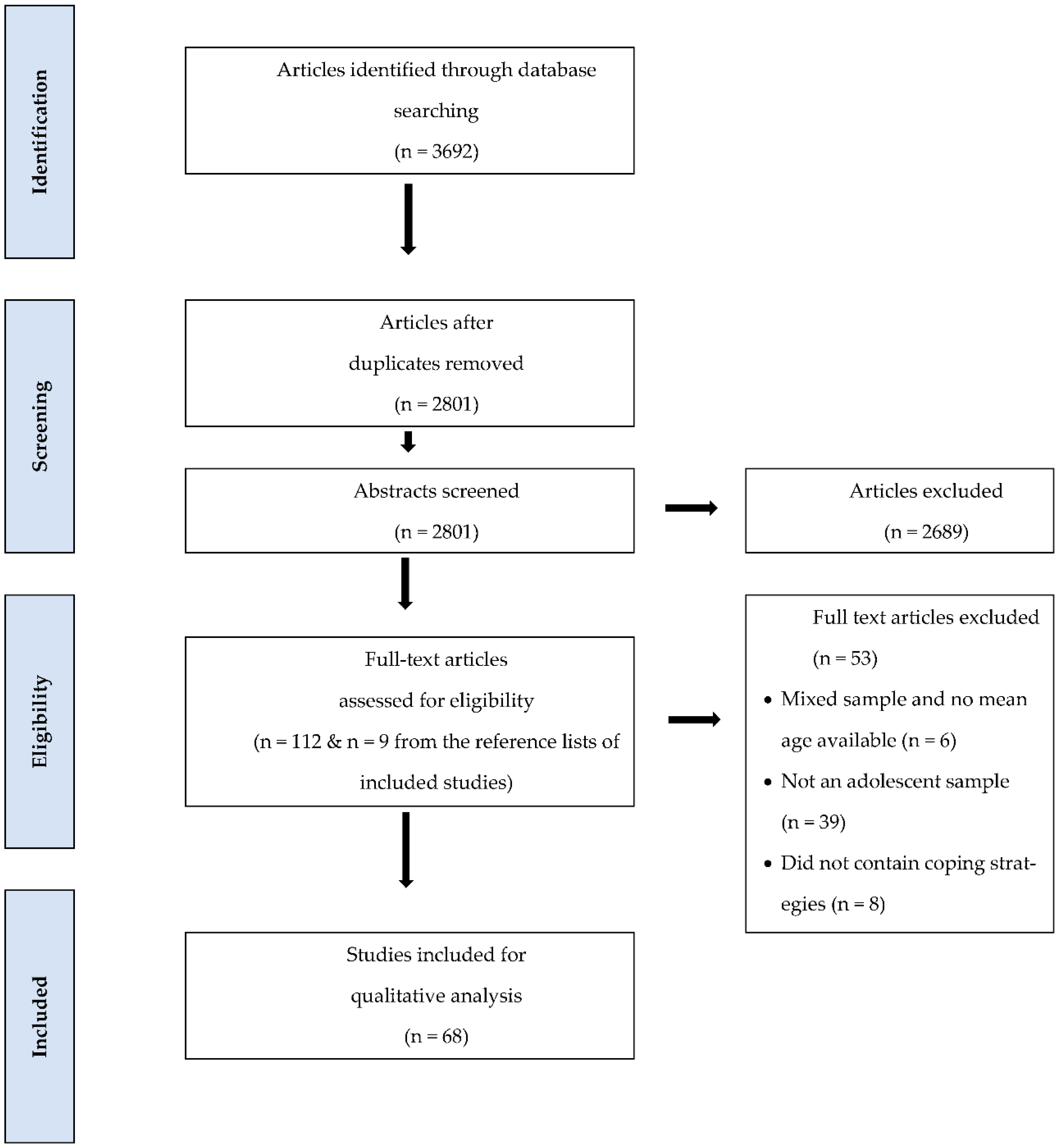
Once the duplicates were removed, there were 2801 articles identified for title and abstract screening. Of these articles, 2689 were excluded and 112 were identified for a full-text review, 59 of these full-texts were included in this review and an additional 9 papers were identified after reviewing the reference lists of the included full texts. As a result, 68 papers were included in our review (see Figure 1 for details).
Figure 1.
PRISMA flow diagram for scoping review.
3.2. Overall Characteristics of the Sources of Evidence
In total, 68 studies were included in this review. The research in the field is fairly recent, as the oldest papers date from 2008 and more than half of the studies have been published from 2017 onwards (n = 35 studies). Most studies involved fewer than 50 participants (n = 40 studies). North American research predominates, with over two-thirds of papers consisting of participants from the USA (n = 47), including five studies where the participants were from both Canada and the USA. Other studies were conducted in a single country, specifically Canada (n = 5), the United Kingdom (n = 4), New Zealand (n = 4), and Australia (n = 2), with one study each conducted in South Africa, Belgium, Puerto Rico, Israel, and Norway. One study drew participants from across ten African countries (i.e., [22]). There was no uniform focus on the LGBTQ+ sub-populations of interest, but the studies could be broadly categorized into one of three main groups:
- Those that consisted of LGB (or sexual minority) youths (n = 26 studies).
- Those that consisted of LGBTQ/+ (or sexual and gender minority) youths (n = 28 studies).
- Those that consisted of transgender/trans (or gender minority) youths (n = 14 studies).
The majority of studies (n = 41, 60.3%) provided details of the funder/s of the research (e.g., government ministries, individual universities, and research funding councils); the remainder did not explicitly acknowledge a funder or funders.
3.3. Appraisal of the Intervention-Focused Studies (n = 24)
Of the 68 papers, 24 were intervention-focused. Of these, more than half (n = 13 studies) included SGMY/LGBTQ+ youths and the remainder either focused on sexual minority/LGB young people (n = 9 studies) or gender minority/trans young people (n = 2 studies). Table 1 provides an overview of these 24 studies (which represent 17 unique interventions). Of the 17 unique interventions, most were primarily psychotherapeutic in nature (n = 12). A smaller number were, broadly speaking, preventive or universal interventions (n = 5), which were designed either for SGMYs specifically or for all young people more generally.
Table 1.
Intervention-focused studies (n = 24 studies).
The majority of studies were focused on the initial development or assessment of novel interventions for SGMYs. The most commonly cited therapeutic modality was cognitive behavioral therapy (n = 11 studies), which was utilized in “AFFIRM” (n = 4 studies), “SPARX/Rainbow SPARX” (n = 3 studies), “ASSET” (n = 1 study), and in unnamed interventions for three studies (i.e., [23,24,25]). Two interventions consisted of family therapy, specifically “Familias con Orgullo/Families with Pride”, and an unnamed intervention (i.e., [26]).
Most of the interventions were provided in-person (n = 14 studies) in either individual or group formats, with four being delivered in schools (i.e., [24,27,28,29]). Five interventions (n = 9 studies) were provided digitally, in synchronous (e.g., for “Q-Chat Space”) or asynchronous formats (e.g., for “Singularities”). One study explored the potential of a yet-to-be-created intervention, and, as such, it was yet to be determined whether the eventual intervention would be delivered digitally (i.e., [30]). Two of the interventions delivered digitally (n = 5 studies) were provided in serious game formats (i.e., “Singularities” and “SPARX/Rainbow SPARX”).
Most commonly, the study designs were pilot studies (n = 9) and only one was a randomized controlled trial (i.e., [31]). The focus of the pilot studies was predominantly testing the acceptability, feasibility, and/or preliminary effectiveness of the interventions. A range of standardized assessments were used across the pilot studies, such as measures of depressive symptoms (e.g., the Beck Depression Inventory). Given the design of these studies (i.e., small-scale open trials/pilots), it is unknown if any of the interventions are effective, although acceptability data appear positive based on the feedback from SGMYs.
3.4. Summary of the Interventions’ Content
Table 2 provides an overview of the therapeutic content or coping strategies that were common across the interventions. These could be broadly categorized as cognitive/emotional or cognitive (n = 6), environmental/social (n = 5), or behavioral (n = 2). Many were evidence-based techniques adapted for SGMYs. For instance, CBT techniques, such as cognitive restructuring, where the “ABCD” cognitive restructuring method (as outlined in “AFFIRM”) was applied, in particular, where this method was then linked to salient experiences with accompanying suggested responses for SGMYs, such as in this example:
Table 2.
Common content across the intervention-focused studies.
“A [Activating event]: I am genderqueer. B [Belief or thought]: “No one can be happy if they are genderqueer,” or “Being genderqueer is going to ruin my life,” and “I won’t be able to handle the discrimination and stigma associated with being genderqueer.” C [Consequence of your thought]: I feel hopeless and worried. D [Dispute or talk back to your thought]: “There are people who are genderqueer who are as happy as people with other identities.” “Discrimination against genderqueer people happens and it is awful, but it won’t ruin each minute of my life.” “I am a strong and determined person, who can have a good life in spite of discrimination.” “Instead of wasting energy doubting myself and feeling anxiety, I can use my energy to figure out the best way to live an authentic life”[33] (p. 5).
Of note, all the interventions were affirming of SGMYs’ identities. Although not a technique per se, the instillation of hope for SGMYs was recognized as important, for instance, in “AFFIRM” [34] and “Rainbow SPARX” [42]. Where the latter stated to users of the program:
“The other message in the game [Rainbow SPARX] was about having hope. It’s good to repeat these simple messages: “I won’t always feel this way”; “Things will get better”; or “It can be hard not being straight, but I know I can handle the challenges that come my way.” “These statements are true and thinking them can make you feel a little better almost instantly, even if you don’t believe them at first”[42] (p. 206).
3.5. Appraisal of the Non-Intervention-Focused Studies (n = 44)
Table 3 summarizes the methods and key findings obtained from the non-intervention-focused studies, which frequently drew upon the expert by experience perspectives of SGMYs in regard to psycho-social coping techniques or strategies. Repeatedly, in the included studies, the ability to obtain support and a connection with other SGMYs was seen as important (e.g., [46,47,48,49,50,51]). The opportunity to meet people “like me” was seen as especially useful. This point was reinforced by a participant who highlighted: “…being surrounded by so many LGBTQ community members and allies convinced me that I can one day feel as happy, safe, and loved all the time” [48] (p. 55).
Table 3.
Overview of non-intervention-focused studies (n = 44).
The Internet was frequently seen as an important way in which SGMYs could achieve a connection with other SGMYs for support purposes (e.g., [52,53,54,55,56,57,58]). The Internet was even described as “life saving” for SGMYs [59]. This point was reinforced by an SGMY who stated: “There’s a supportive community out there online and they mean the world to me– they’ve saved my life” [59] (p. 37). However, the Internet could also be problematic for SGMYs [56,60]. For example, SGMYs could be exposed to mistreatment online, with one adolescent noting: “It’s [social media] public. Which is both a blessing and a curse because you can connect with all these people but also you are open to a lot of hate” [56] (p. 278). Even social media groups, specifically for SGMYs, could be a source of discrimination and stigma [55]. For instance, certain SGMYs expressed racist or transphobic views or engaged in exclusionary behavior within a group, expressing sentiments such as: “you cannot be in here, you are not gay enough’’ [55] (p. 426). As a result of online issues, SGMYs are required to be skillful users of the Internet, such as when they use certain platform features to protect themselves (e.g., by utilizing blocking and privacy settings for safety reasons) [60].
SGMYs taking on an educator role (i.e., [56,61]) or something akin to a political advocate role (i.e., [46,57,62]) was perceived as helpful by SGMYs. For instance, when SGMYs held a “proud LGBTQ+ position”, this could be resilience-enhancing in the face of mistreatment [62]. Engaging in altruistic activities or roles where SGMYs were “giving back” was also thought to be beneficial (i.e., [59,60,63]). This included SGMYs mentoring other SGMYs (i.e., [63,64]) or providing online support to SGMYs [60]—which in turn helped them “feel good after helping their peers” [60] (p. 171).
SGMYs also sought to “escape” from challenging environments (i.e., [51,59,65]) and they created “pockets of safety” [61] for themselves. They used cognitive strategies to manage negative messages, such as those of a religious nature [52,61,66]. An example is when an SGMY reflected: “Because I believe God made everybody, so if God didn’t want people to be gay, then God wouldn’t have made them gay” [52] (p. 7).
Being “out” in terms of one’s sexuality and/or gender identity proffered both potential wellbeing benefits and challenges. In some instances, “learning to hide” [67], as it was described in South Africa, or being “being closeted”, as cited in Belgium [68], could be adaptive given the potential negative reactions of others towards “out” SGMYs. This meant that SGMYs used “…a closed visibility management strategy in specific social situations that are perceived as risky” [68] (p. 697). A similar point was also made by Rubin and McClelland [69] in their research on queer American women of color, where concerns about possible homophobic comments from peers meant that deleting their social media profile was an adaptive way to maintain personal safety. By contrast, being out has the potential to increase the amount of support that SGMYs receive (i.e., [61]). This can be the case, despite the “many cultural and familial taboos” SGMYs can experience [61] (p. 628).
Certain behavioral techniques were described as being valuable in terms of supporting mental wellbeing, including diversionary activities (i.e., [70,71]). For example, Strauss and colleagues [70] noted that amongst trans and gender diverse young people, being distracted by social media, games, or watching online media “…took their minds off their concerns, at least momentarily” [70] (p. 5). Physical exercise was also cited as important (i.e., [71,72]), especially during the COVID-19 pandemic where exercise and outdoor activities provided benefits to mental wellbeing. As noted by an SGMY, “…the lack of sports has really had a negative impact on me [during the pandemic]. It’s hard to motivate myself, but I always feel better after exercising” [72] (p. 1055). These activities were not merely distractions, but could also provide a way to feel more positive about their identity [71], as demonstrated by an SGMY in relation to going to the gym as a coping strategy. He did this when confronted with anti-LGBTQ+ experiences, stating: “I feel the frustration, the anger—it’s like the fuel for me to work out and push harder. It kinda turns into a positive. I feel better.” [71] (p. 145).
SGMYs can engage in coping strategies usually viewed by others as problematic, in particular, self-harming (i.e., [60,73,74]). However, for some LGBTQ+ participants, their self-harming was perceived to be a positive coping strategy [75]. Other coping strategies that caused harm and/or serious risk to the young person included suicide attempts, risky sexual practices, and excessive drinking and recreational drug-taking [22,62,74].
Certain psychological strategies were also described. For example, in terms of coping with victimization, participants described using mindfulness and emotional regulation strategies; cognitive reappraisals; assertive communication techniques; and questioning and resisting rigid culturally bound labels [57,71,76]. Some used apathy as a response to emotional pain (i.e., [52,77]). Avoidance—both psychologically and physically—was also a perceived coping strategy (i.e., [50,60]). Regarding emotional avoidance, participants suppressed emotions as a means to block these challenging feelings, in an attempt to avoid pain and humiliation [67]. Ignoring or avoiding certain people or behavior was a strategy utilized to reduce the likelihood of distress, and hence preserve emotional energy [78]. For instance, as highlighted by an SGMY: “…I know when to just drop it and walk away/block them when they aren’t open to learning. Negative comments online are inevitable and they can be hurtful… You have the opportunity to teach them but if they aren’t open minded, you can simply ignore them…” [60] (p. 170).
4. Discussion
The issues SGMYs face, from physical violence to unsupportive families, have been well documented in the literature, but there is much less research on how SGMYs can best cope with environments that are often hostile to them. The present scoping review supports the earlier findings highlighting the relative paucity of interventions designed to support the mental wellbeing of SGMYs, including those that are web-based in format [8,9,10]. However, a UK Department of Health commissioned report highlighted SGMYs’ strong preference to access help on the Internet, whereby 82.3% (n = 572) of SGMY participants reported that they would be “likely” or “very likely” to select help in this format [89]. Prior reviews have not delved into the therapeutic content of interventions, or the specific strategies designed to be effective in supporting the mental wellbeing of SGMYs, which represents a key strength of the present review.
Our current review indicates that a range of techniques or coping strategies have been considered as effective across cognitive or cognitive/emotional, environmental/social, and behavioral domains. When incorporated within interventions, the majority have been provided in-person. Therefore, there exists an untapped potential in adapting successful psychotherapeutic techniques to a Web-based format, in line with SGMYs’ preferences. In relation to the intervention-focused studies, many of the techniques or strategies were evidence-informed and adapted to meet the needs of SGMYs. For example, the CBT techniques of cognitive restructuring and behavioral activation, adapted to be usefully applied to the lives of SGMYs, are adaptations that have long been advocated by psychotherapy experts in the field of SGMY mental health (i.e., [90,91]).
The review findings suggest some challenges for the developers of Web-based interventions for SGMYs. For instance, the ability for SGMYs to connect with other SGMYs has been reinforced as particularly important in regard to supporting the mental wellbeing of these young people. However, this connecting requires careful considerations if provided online, given the feedback provided earlier by both professionals and SGMYs about the risks [15]. Specifically, there are risks concerning online stranger connections, and Internet safety and security issues, including the risk of SGMYs being outed on the Web or specifically targeted for sexual exploitation. There are also serious challenges associated with how suicidality is safely managed in a Web-based context [15]. Another salient challenge is ensuring that interventions do not neglect the needs of SGMYs with other socially disadvantaged characteristics, such as minority race/ethnicity, disability, or female sex. Therefore, future interventions should represent multiple identities by fully acknowledging the intersections between SGM status [65], and other minority characteristics. In part, this could be achieved by using authentic portrayals of LGBTQ+ people, as suggested by Davis and colleagues [80], which would ensure that people with multiple identities are included.
Many simple strategies should be straightforward to embed in future Web-based and other interventions, such as psychoeducation pertaining to minority stress and its impact on SGMYs, as well as basic behavioral techniques, such as relaxations exercises. Youth-friendly and inclusive language adopted in interventions should also be easy to apply and readily adopted in future Web-based interventions, specifically the promotion of inclusivity by using an SGMY’s preferred name and pronouns to model transgender supportiveness in resources. Interventions should also strive to use developmentally appropriate language, so that the terminology employed is easily understood by younger SGMYs. Therefore, therapy jargon and psychological concepts will need to be outlined suitably and acceptably to SGMYs.
Strengths and Limitations
To the best of our knowledge, the present review is the first to identify the recommended psycho-social coping techniques or strategies for building resilience and/or enhancing the wellbeing of SGMYs, based on the primary data published in peer-reviewed papers. A drawback of this approach is that we did not explore the gray literature and could have potentially missed relevant findings as a result. Our analysis of the included studies consisted of a narrative synthesis, as outlined by Arksey and O’Malley [21], which was required in this review due to it focusing on investigating the types of psychosocial techniques reported in the previous research, rather than quantifying the quality of the included studies or their success. In particular, given the diverse nature of the research reported upon, which included quantitative, qualitative, and mixed-method studies, a conventional sensitivity analysis (similar to those frequently applied to quantitative studies) was not possible. Moreover, given the heterogenous nature of the existing literature and the lack of intervention trials, a critical appraisal of the clinical outcomes associated with the intervention-focused studies is currently premature. As is commonplace, we only included papers published in the English language, due to our limited resources [92]. That this scoping review only included studies published in English means that the potential insights from papers written in all other languages will have been missed. Studies from a range of countries were included, such as research conducted in South Africa, Israel, and Puerto Rico. However, over two-thirds of the studies were from a single high-income Western nation, specifically the USA. American predominance in psycho-social research is not new [93], but this focus on the USA does create a bias we would like to acknowledge. Of relevance to the research on LGBTQ+ people is that studies will likely be absent in countries where social environments make basic survival challenging for SGMYs, such as in the countries where there is a death penalty for “homosexual acts”. By contrast, across a range of more progressive countries, there has been considerable social progress for LGBTQ+ individuals (e.g., marriage equality). However, many SGMYs continue to face challenging social environments, which need to be improved. Whilst the focus of this review was on the coping strategies SGMYs could employ themselves, subsequent work should explore what is likely to be effective in regard to improving social environments for SGMYs. Fortunately, related work is underway, such as a PROSPERO registered review entitled “A realist evidence synthesis of mechanisms by which school-based interventions may widen or reduce inequalities in LGBT adolescents’ mental health”. We set our inclusion and exclusion criteria to emphasize an adolescent sample of SGMYs and we were holistic in terms of what was to be included regarding a study’s design and particular focus. Others may have decided to make different decisions in shaping a comparable review; nevertheless, we strove to be transparent and have provided details around our searching of the literature and our rationale.
5. Conclusions
For years now, the unique issues and mental health challenges that SGMYs commonly face have been evidenced in considerable depth in the research literature. It is now timely to start developing robust and evidence-informed interventions that seek to assist SGMYs best manage their adolescent years, which are often experienced in unsupportive environments. This review provides an overview of the coping strategies designed to enhance the mental wellbeing of SGMYs, and, as such, it can be used to support efforts in assisting SGMYs to thrive. A range of strategies and interventions appear promising for use in Web-based tools, in order to support the mental wellbeing of SGMYs. However, issues around appropriately managing peer-to-peer online interactions and inclusion, especially for youth who experience multiple social disadvantages, will require careful consideration.
Author Contributions
Conceptualization, M.F.G.L., A.N.-G., K.A.R., L.M.W., K.E.B. and R.S.; methodology, M.F.G.L., A.N.-G., K.A.R., L.M.W., K.E.B. and R.S.; screening, M.F.G.L. and A.N.-G.; data curation, M.F.G.L. and A.N.-G.; writing—original draft preparation, M.F.G.L.; writing—review and editing, M.F.G.L., A.N.-G., K.A.R., L.M.W., K.E.B. and R.S.; project administration, A.N.-G.; funding acquisition, M.F.G.L., K.A.R., L.M.W., K.E.B. and R.S. All authors have read and agreed to the published version of the manuscript.
Funding
The funding for this project was provided by the UK’s Medical Research Council (grant reference MR/V031449/1).
Institutional Review Board Statement
Not applicable.
Informed Consent Statement
Not applicable.
Data Availability Statement
Not applicable.
Acknowledgments
The authors would like to thank the stakeholders, organizational partners, and academic advisors for this project, such as our partner LGBTQ+ (lesbian, gay, bisexual, trans, queer) organizations and third-sector service providers. The authors also thank their other partners, which include two local authorities’ public health departments, and the Centre for Policing Research and Learning (at The Open University). They also acknowledge their other advisors and the youth e-therapy research team in New Zealand.
Conflicts of Interest
The authors declare no conflict of interest. The funder had no role in the design, collection, analysis, or interpretation of the data; writing of the manuscript; or the decision to submit this scoping review for publication.
Appendix A. Databases, Search Terms, and Search Results
Appendix A.1. Medline
Search period: From inception in 1946 to 19 January 2022
Electronic limits: “Humans”, “Adolescent (13 to 18 years)”, and the “English” language
Results: 1100 articles
Table A1.
Medline search terms.
Appendix A.2. Embase
Search period: From inception in 1980 to 19 January 2022
Electronic limits: “Humans”, “Adolescent (13 to 17 years)”, and the “English” language
Results: 1226 articles
Table A2.
Embase search terms.
Appendix A.3. PsycInfo
Search period: From inception in 1806 to 19 January 2022
Electronic limits: “Humans”, “Adolescent (13 to 17 years)”, and the “English” language
Results: 1366 articles
Table A3.
PsycInfo search terms.
References
- Lucassen, M.F.G.; Stasiak, K.; Samra, R.; Frampton, C.M.; Merry, S.N. Sexual minority youth and depressive symptoms or depressive disorder: A systematic review and meta-analysis of population-based studies. Aust. N. Z. J. Psychiatry 2017, 51, 774–787. [Google Scholar] [CrossRef] [Scilit] [PubMed]
- Reisner, S.L.; Poteat, T.; Keatley, J.; Cabral, M.; Mothopeng, T.; Dunham, E.; Holland, C.E.; Ryan, M.; Baral, S.D. Global health burden and needs of transgender populations: A review. Lancet 2016, 388, 412–436. [Google Scholar] [CrossRef] [Scilit]
- Clark, T.C.; Lucassen, M.F.G.; Bullen, P.; Denny, S.J.; Fleming, T.M.; Robinson, E.M.; Rossen, F.V. The health and well-being of transgender high school students: Results from the New Zealand Adolescent Health Survey (Youth’12). J. Adolesc. Health 2014, 55, 93–99. [Google Scholar] [CrossRef] [Scilit] [PubMed]
- Meyer, I.H. Prejudice, social stress, and mental health in lesbian, gay, and bisexual populations: Conceptual issues and research evidence. Psychol. Bull. 2003, 129, 674–697. Available online: https://www.ncbi.nlm.nih.gov/pmc/articles/PMC2072932/pdf/nihms32623.pdf (accessed on 30 May 2022). [CrossRef] [Scilit] [PubMed]
- Denny, S.; Lucassen, M.F.G.; Stuart, J.; Fleming, T.; Bullen, P.; Peiris-John, R.; Rossen, F.V.; Utter, J. The association between supportive high school environments and depressive symptoms and suicidality among sexual minority students. J. Clin. Child Adolesc. Psychol. 2016, 45, 248–261. [Google Scholar] [CrossRef] [Scilit]
- Lucassen, M.F.G.; Samra, R.; Rimes, K.A.; Brown, K.E.; Wallace, L.M. Promoting resilience and well-being through co-design (The PRIDE Project): Protocol for the development and preliminary evaluation of a prototype resilience-based intervention for sexual and gender minority youth. JMIR Res. Protoc. 2022, 11, e31036. [Google Scholar] [CrossRef] [Scilit]
- Government Equalities Office. LGBT Action Plan: Improving the Lives of Lesbian, Gay, Bisexual and Transgender People; UK Government: London, UK, 2018.
- Gilbey, D.; Morgan, H.; Lin, A.; Perry, Y. Effectiveness, acceptability, and feasibility of digital health interventions for LGBTIQ+ young people: Systematic review. J. Med. Internet Res. 2020, 22, e20158. [Google Scholar] [CrossRef] [Scilit]
- Hobaica, S.; Alman, A.; Jackowich, S.; Kwon, P. Empirically based psychological interventions with sexual minority youth: A systematic review. Psychol. Sex. Orientat. Gend. Divers. 2018, 5, 313–323. [Google Scholar] [CrossRef] [Scilit]
- Van Der Pol-Harney, E.; McAloon, J. Psychosocial interventions for mental illness among LGBTQIA youth: A PRISMA-based systematic review. Adolesc. Res. Rev. 2019, 4, 149–168. [Google Scholar] [CrossRef] [Scilit]
- National Institute for Health and Care Excellence. Depression in Children and Young People: Identification and Management [NICE Guideline NG134]; National Institute for Health and Care Excellence: London, UK, 2019. [Google Scholar]
- Foy, A.A.; Morris, D.; Fernandes, V.; Rimes, K.A. LGBQ+ adults’ experiences of Improving Access to Psychological Therapies and primary care counselling services: Informing clinical practice and service delivery. Cogn. Behav. Ther. 2019, 12, e42. [Google Scholar] [CrossRef] [Scilit]
- Rimes, K.A.; Ion, D.; Wingrove, J.; Carter, B. Sexual orientation differences in psychological treatment outcomes for depression and anxiety: National cohort study. J. Consult. Clin. Psychol. 2019, 87, 577–589. [Google Scholar] [CrossRef] [Scilit]
- Lucassen, M.F.G.; Stasiak, K.; Fleming, T.; Frampton, C.; Perry, Y.; Shepherd, M.; Merry, S.N. Computerized cognitive behavioural therapy for gender minority adolescents: Analysis of the real-world implementation of SPARX in New Zealand. Aust. N. Z. J. Psychiatry 2021, 55, 874–882. [Google Scholar] [CrossRef] [Scilit] [PubMed]
- Lucassen, M.F.G.; Samra, R.; Iacovides, I.; Fleming, T.; Shepherd, M.; Stasiak, K.; Wallace, L. How LGBT+ young people use the internet in relation to their mental health and envisage the use of e-therapy: Exploratory study. JMIR Serious Games 2018, 6, e11249. [Google Scholar] [CrossRef] [Scilit] [PubMed]
- Christmas, C.M.; Khanlou, N. Defining youth resilience: A scoping review. Int. J. Ment. Health Addict. 2019, 17, 731–742. [Google Scholar] [CrossRef] [Scilit]
- Colpitts, E.; Gahagan, J. The utility of resilience as a conceptual framework for understanding and measuring LGBTQ health. Int. J. Equity Health 2016, 15, 60. [Google Scholar] [CrossRef] [Scilit] [PubMed]
- McDermott, E.; Nelson, R.; Weeks, H. The politics of LGBT+ health inequality: Conclusions from a UK scoping review. Int. J. Environ. Res. Public Health 2021, 18, 826. [Google Scholar] [CrossRef] [Scilit]
- Gahagan, J.; Colpitts, E. Understanding and measuring LGBTQ pathways to health: A scoping review of strengths-based health promotion approaches in LGBTQ health research. J. Homosex. 2017, 64, 95–121. [Google Scholar] [CrossRef] [Scilit]
- Tricco, A.C.; Lillie, E.; Zarin, W.; O’Brien, K.K.; Colquhoun, H.; Levac, D.; Moher, D.; Peters, M.D.J.; Horsley, T.; Weeks, L.; et al. PRISMA extension for scoping reviews (PRISMA-ScR): Checklist and explanation. Ann. Intern. Med. 2018, 169, 467–473. [Google Scholar] [CrossRef] [Scilit]
- Arksey, H.; O’Malley, L. Scoping studies: Towards a methodological framework. Int. J. Soc. Res. Methodol. 2005, 8, 19–32. [Google Scholar] [CrossRef] [Scilit]
- Winskell, K.; Sabben, G. Sexual stigma and symbolic violence experienced, enacted, and counteracted in young Africans’ writing about same-sex attraction. Soc. Sci. Med. 2016, 161, 143–150. [Google Scholar] [CrossRef] [Scilit]
- Duarté-Vélez, Y.; Bernal, G.; Bonilla, K. Culturally adapted cognitive-behavioral therapy: Integrating sexual, spiritual, and family identities in an evidence-based treatment of a depressed Latino adolescent. J. Clin. Psychol. 2010, 66, 895–906. [Google Scholar] [CrossRef] [Scilit] [PubMed]
- Heck, N.C. The potential to promote resilience: Piloting a minority stress-informed, GSA-based, mental health promotion program for LGBTQ youth. Psychol. Sex. Orientat. Gend. Divers. 2015, 2, 225–231. [Google Scholar] [CrossRef] [Scilit] [PubMed]
- Craig, S.L.; Austin, A.; Alessi, E. Gay affirmative cognitive behavioral therapy for sexual minority youth: Clinical adaptations and approaches. Clin. Soc. Work. J. 2013, 41, 258–266. [Google Scholar] [CrossRef] [Scilit]
- Diamond, G.M.; Diamond, G.S.; Levy, S.; Closs, C.; Ladipo, T.; Siqueland, L. Attachment-based family therapy for suicidal lesbian, gay, and bisexual adolescents: A treatment development study and open trial with preliminary findings. Psychol. Sex. Orientat. Gend. Divers. 2013, 1, 91–100. [Google Scholar] [CrossRef] [Scilit]
- Craig, S.L.; Austin, A.; McInroy, L.B. School-based groups to support multiethnic sexual minority youth resiliency: Preliminary effectiveness. Child Adolesc. Soc. Work. J. 2014, 31, 87–106. [Google Scholar] [CrossRef] [Scilit]
- Lucassen, M.F.G.; Burford, J. Educating for diversity: An evaluation of a sexuality diversity workshop to address secondary school bullying. Australas. Psychiatry 2015, 23, 544–549. [Google Scholar] [CrossRef] [Scilit]
- Greytak, E.A.; Kosciw, J.G.; Boesen, M.J. Putting the “T” in “resource”: The benefits of LGBT-related school resources for transgender youth. J. LGBT Youth 2013, 10, 45–63. [Google Scholar] [CrossRef] [Scilit]
- Grafsky, E.L.; Gary, E.A. What sexual minority youths want in a program to assist with disclosure to their family. J. Gay Lesbian Soc. Serv. 2018, 30, 172–191. [Google Scholar] [CrossRef] [Scilit]
- Egan, J.E.; Corey, S.L.; Henderson, E.R.; Abebe, K.Z.; Louth-Marquez, W.; Espelage, D.; Hunter, S.C.; DeLucas, M.; Miller, E.; Morrill, B.A.; et al. Feasibility of a web-accessible game-based intervention aimed at improving help seeking and coping among sexual and gender minority youth: Results from a randomized controlled trial. J. Adolesc. Health 2021, 69, 604–614. [Google Scholar] [CrossRef] [Scilit]
- Austin, A.; Craig, S.L. Empirically supported interventions for sexual and gender minority youth. J. Evid.-Inf. Soc. Work. 2015, 12, 567–578. [Google Scholar] [CrossRef] [Scilit]
- Austin, A.; Craig, S.L.; D’Souza, S.A. An AFFIRMative cognitive behavioral intervention for transgender youth: Preliminary effectiveness. Prof. Psychol. Res. Pract. 2018, 49, 1–8. [Google Scholar] [CrossRef] [Scilit]
- Craig, S.L.; Austin, A. The AFFIRM open pilot feasibility study: A brief affirmative cognitive behavioral coping skills group intervention for sexual and gender minority youth. Child. Youth Serv. Rev. 2016, 64, 136–144. [Google Scholar] [CrossRef] [Scilit]
- Craig, S.L.; Austin, A.; Huang, Y.T. Being humorous and seeking diversion: Promoting healthy coping skills among LGBTQ+ youth. J. Gay Lesbian Ment. Health 2018, 22, 20–35. [Google Scholar] [CrossRef] [Scilit]
- Coulter, R.W.S.; Sang, J.M.; Louth-Marquez, W.; Henderson, E.R.; Espelage, D.; Hunter, S.C.; DeLucas, M.; Abebe, K.Z.; Miller, E.; Morrill, B.A.; et al. Pilot testing the feasibility of a game intervention aimed at improving help seeking and coping among sexual and gender minority youth: Protocol for a randomized controlled trial. JMIR Res. Protoc. 2019, 8, e12164. [Google Scholar] [CrossRef] [Scilit]
- Fish, J.N.; McInroy, L.B.; Paceley, M.S.; Williams, N.D.; Henderson, S.; Levine, D.S.; Edsall, R.N. “I’m kinda stuck at home with unsupportive parents right now”: LGBTQ youths’ experiences with COVID-19 and the importance of online support. J. Adolesc. Health 2020, 67, 450–452. [Google Scholar] [CrossRef] [Scilit] [PubMed]
- Fish, J.N.; Williams, N.D.; McInroy, L.B.; Paceley, M.S.; Edsall, R.N.; Devadas, J.; Henderson, S.B.; Levine, D.S. Q Chat Space: Assessing the Feasibility and Acceptability of an Internet-Based Support Program for LGBTQ Youth. Prev. Sci. 2021, 23, 130–141. [Google Scholar] [CrossRef] [Scilit] [PubMed]
- Gillig, T.K.; Miller, L.C.; Cox, C.M. “She finally smiles... for real”: Reducing depressive symptoms and bolstering resilience through a camp intervention for LGBTQ youth. J. Homosex. 2019, 66, 368–388. [Google Scholar] [CrossRef] [Scilit] [PubMed]
- Lozano, A.; Estrada, Y.; Tapia, M.I.; Dave, D.J.; Marquez, N.; Baudin, S.; Prado, G. Development of a family-based preventive intervention for Latinx sexual minority youth and their parents. Cult. Divers. Ethn. Minor. Psychol. 2021, 28, 227–239. [Google Scholar] [CrossRef] [Scilit]
- Lucassen, M.F.G.; Hatcher, S.; Fleming, T.M.; Stasiak, K.; Shepherd, M.J.; Merry, S.N. A qualitative study of sexual minority young people’s experiences of computerised therapy for depression. Australas. Psychiatry 2015, 23, 268–273. [Google Scholar] [CrossRef] [Scilit]
- Lucassen, M.F.G.; Merry, S.N.; Hatcher, S.; Frampton, C.M.A. Rainbow SPARX: A novel approach to addressing depression in sexual minority youth. Cogn. Behav. Pract. 2015, 22, 203–216. [Google Scholar] [CrossRef] [Scilit]
- McDanal, R.; Rubin, A.; Fox, K.R.; Schleider, J.L. Associations of LGBTQ+ identities With acceptability and efficacy of online single-session youth mental health interventions. Behav. Ther. 2022, 53, 376–391. [Google Scholar] [CrossRef] [Scilit] [PubMed]
- Painter, K.R.; Scannapieco, M.; Blau, G.; Andre, A.; Kohn, K. Improving the mental health outcomes of LGBTQ youth and young adults: A longitudinal study. J. Soc. Serv. Res. 2018, 44, 223–235. [Google Scholar] [CrossRef] [Scilit]
- Wilkerson, J.M.; Schick, V.R.; Romijnders, K.A.; Bauldry, J.; Butame, S.A. Social support, depression, self-esteem, and coping among LGBTQ adolescents participating in hatch youth. Health Promot. Pract. 2017, 18, 358–365. [Google Scholar] [CrossRef] [Scilit]
- Johns, M.M.; Zamantakis, A.; Andrzejewski, J.; Boyce, L.; Rasberry, C.N.; Jayne, P.E. Minority stress, coping, and transgender youth in schools—Results from the Resilience and Transgender Youth Study. J. Sch. Health 2021, 91, 883–893. [Google Scholar] [CrossRef] [Scilit] [PubMed]
- DiFulvio, G.T. Sexual minority youth, social connection and resilience: From personal struggle to collective identity. Soc. Sci. Med. 2011, 72, 1611–1617. [Google Scholar] [CrossRef] [Scilit] [PubMed]
- Wagaman, M.A.; Shelton, J.; Carter, R.; Stewart, K.; Cavaliere, S.J. “I’m totally transariffic”: Exploring how transgender and gender-expansive youth and young adults make sense of their challenges and successes. Child Youth Serv. 2019, 40, 43–64. [Google Scholar] [CrossRef] [Scilit]
- Zeeman, L.; Aranda, K.; Sherriff, N.; Cocking, C. Promoting resilience and emotional well-being of transgender young people: Research at the intersections of gender and sexuality. J. Youth Stud. 2017, 20, 382–397. [Google Scholar] [CrossRef] [Scilit]
- Budge, S.L.; Belcourt, S.; Conniff, J.; Parks, R.; Pantalone, D.; Katz-Wise, S.L. A grounded theory study of the development of trans youths’ awareness of coping with gender identity. J. Child Fam. Stud. 2018, 27, 3048–3061. [Google Scholar] [CrossRef] [Scilit]
- Craig, S.L.; McInroy, L.; McCready, L.T.; Alaggia, R. Media: A catalyst for resilience in lesbian, gay, bisexual, transgender, and queer youth. J. LGBT Youth 2015, 12, 254–275. [Google Scholar] [CrossRef] [Scilit]
- Goldbach, J.T.; Gibbs, J. Strategies employed by sexual minority adolescents to cope with minority stress. Psychol. Sex. Orientat. Gend. Divers. 2015, 2, 297–306. [Google Scholar] [CrossRef] [Scilit]
- Goldbach, J.T.; Gibbs, J.J. A developmentally informed adaptation of minority stress for sexual minority adolescents. J. Adolesc. 2017, 55, 36–50. [Google Scholar] [CrossRef] [Scilit] [PubMed]
- Wike, T.L.; Bouchard, L.M.; Kemmerer, A.; Yabar, M.P. Victimization and resilience: Experiences of rural LGBTQ+ youth across multiple contexts. J. Interpers. Violence 2021. ePub ahead of press. [Google Scholar] [CrossRef] [Scilit] [PubMed]
- Berger, M.N.; Taba, M.; Marino, J.L.; Lim, M.S.C.; Cooper, S.C.; Lewis, L.; Albury, K.; Chung, K.S.K.; Bateson, D.; Rachel Skinner, S. Social media’s role in support networks among LGBTQ adolescents: A qualitative study. Sex. Health 2021, 18, 421–431. [Google Scholar] [CrossRef] [Scilit]
- Selkie, E.; Adkins, V.; Masters, E.; Bajpai, A.; Shumer, D. Transgender adolescents’ uses of social media for social support. J. Adolesc. Health 2020, 66, 275–280. [Google Scholar] [CrossRef] [Scilit]
- Erhard, R.L.; Ben-Ami, E. The schooling experience of lesbian, gay, and bisexual youth in lsrael: Falling below and rising above as a matter of social ecology. J. Homosex. 2016, 63, 193–227. [Google Scholar] [CrossRef] [Scilit]
- Craig, S.L.; Eaton, A.D.; McInroy, L.B.; Leung, V.W.Y.; Krishnan, S. Can social media participation enhance LGBTQ+ youth well-being? Development of the social media benefits scale. Soc. Media Soc. 2021, 7, 1–13. [Google Scholar] [CrossRef] [Scilit]
- Austin, A.; Craig, S.L.; Navega, N.; McInroy, L.B. It’s my safe space: The life-saving role of the internet in the lives of transgender and gender diverse youth. Int. J. Transgender Health 2020, 21, 33–44. [Google Scholar] [CrossRef] [Scilit] [PubMed]
- Craig, S.L.; Eaton, A.D.; McInroy, L.B.; D’Souza, S.A.; Krishnan, S.; Wells, G.A.; Twum-Siaw, L.; Leung, V.W.Y. Navigating negativity: A grounded theory and integrative mixed methods investigation of how sexual and gender minority youth cope with negative comments online. Psychol. Sex. 2020, 11, 161–179. [Google Scholar] [CrossRef] [Scilit]
- Craig, S.L.; Austin, A.; Alessi, E.J.; McInroy, L.; Keane, G. Minority stress and HERoic coping among ethnoracial sexual minority girls: Intersections of resilience. J. Adolesc. Res. 2017, 32, 614–641. [Google Scholar] [CrossRef] [Scilit]
- McDermott, E.; Roen, K.; Scourfield, J. Avoiding shame: Young LGBT people, homophobia and self-destructive behaviours. Cult. Health Sex. 2008, 10, 815–829. [Google Scholar] [CrossRef] [Scilit]
- Torres, R.S.; Harper, G.W.; Sanchez, B.; Fernandez, M.I. Examining natural mentoring relationships (NMRs) among self-identified gay, bisexual, and questioning (GBQ) male youth. Child. Youth Serv. Rev. 2012, 34, 8–14. [Google Scholar] [CrossRef] [Scilit] [PubMed]
- McInroy, L.B. Building connections and slaying basilisks: Fostering support, resilience, and positive adjustment for sexual and gender minority youth in online fandom communities. Inf. Commun. Soc. 2020, 23, 1874–1891. [Google Scholar] [CrossRef] [Scilit]
- Follins, L.D. Identity development of young black lesbians in New York City: An exploratory study. J. Gay Lesbian Ment. Health 2011, 15, 368–381. [Google Scholar] [CrossRef] [Scilit]
- Gibbs, J.J.; Goldbach, J.T. Religious identity dissonance: Understanding how sexual minority adolescents manage antihomosexual religious messages. J. Homosex. 2021, 68, 2189–2213. [Google Scholar] [CrossRef] [Scilit]
- Butler, A.H.; Astbury, G. The use of defence mechanisms as precursors to coming out in post-apartheid South Africa: A gay and lesbian youth perspective. J. Homosex. 2008, 55, 223–244. [Google Scholar] [CrossRef] [Scilit]
- Dewaele, A.; Van Houtte, M.; Cox, N.; Vincke, J. From coming out to visibility management-A new perspective on coping with minority stressors in LGB youth in Flanders. J. Homosex. 2013, 60, 685–710. [Google Scholar] [CrossRef] [Scilit]
- Rubin, J.D.; McClelland, S.I. ‘Even though it’s a small checkbox, it’s a big deal’: Stresses and strains of managing sexual identity(s) on Facebook. Cult. Health Sex. 2015, 17, 512–526. [Google Scholar] [CrossRef] [Scilit]
- Strauss, P.; Morgan, H.; Toussaint, D.W.; Lin, A.; Winter, S.; Perry, Y. Trans and gender diverse young people’s attitudes towards game-based digital mental health interventions: A qualitative investigation. Internet Interv. 2019, 18, 100280. [Google Scholar] [CrossRef] [Scilit]
- Madsen, P.W.B.; Green, R.-J. Gay adolescent males’ effective coping with discrimination: A qualitative study. J. LGBT Issues Couns. 2012, 6, 139–155. [Google Scholar] [CrossRef] [Scilit]
- O’Brien, R.P.; Parra, L.A.; Cederbaum, J.A. “Trying my best”: Sexual minority adolescents’ self-care during the COVID-19 pandemic. J. Adolesc. Health 2021, 68, 1053–1058. [Google Scholar] [CrossRef] [Scilit]
- Johnson, K.C.; LeBlanc, A.J.; Sterzing, P.R.; Deardorff, J.; Antin, T.; Bockting, W.O. Trans adolescents’ perceptions and experiences of their parents’ supportive and rejecting behaviors. J. Couns. Psychol. 2020, 67, 156–170. [Google Scholar] [CrossRef] [Scilit]
- Scourfield, J.; Roen, K.; McDermott, L. Lesbian, gay, bisexual and transgender young people’s experiences of distress: Resilience, ambivalence and self-destructive behaviour. Health Soc. Care Community 2008, 16, 329–336. [Google Scholar] [CrossRef] [Scilit] [PubMed]
- McDermott, E.; Hughes, E.; Rawlings, V. Norms and normalisation: Understanding lesbian, gay, bisexual, transgender and queer youth, suicidality and help-seeking. Cult. Health Sex. 2018, 20, 156–172. [Google Scholar] [CrossRef] [Scilit] [PubMed]
- Toomey, R.B.; Anhalt, K. Mindfulness as a coping strategy for bias-based school victimization among Latina/o sexual minority youth. Psychol. Sex. Orientat. Gend. Divers. 2016, 3, 432–441. [Google Scholar] [CrossRef] [Scilit] [PubMed]
- Budge, S.L.; Orzechowski, M.; Schams, S.; Lavender, A.; Onsgard, K.; Leibowitz, S.; Katz-Wise, S.L. Transgender and gender nonconforming youths’ emotions: The appraisal, valence, arousal model. Couns. Psychol. 2021, 49, 138–172. [Google Scholar] [CrossRef] [Scilit]
- Kuper, L.E.; Coleman, B.R.; Mustanski, B.S. Coping with LGBT and racial-ethnic-related stressors: A mixed-methods study of LGBT youth of color. J. Res. Adolesc. 2014, 24, 703–719. [Google Scholar] [CrossRef] [Scilit]
- Bond, B.J.; Loewenstern, J.N. Employing memory narratives to dissect the well-being of lesbian, gay, and bisexual adolescents. J. LGBT Youth 2014, 11, 189–211. [Google Scholar] [CrossRef] [Scilit]
- Davis, T.S.; Saltzburg, S.; Locke, C.R. Supporting the emotional and psychological well being of sexual minority youth: Youth ideas for action. Child. Youth Serv. Rev. 2009, 31, 1030–1041. [Google Scholar] [CrossRef] [Scilit]
- Davis, T.S.; Saltzburg, S.; Locke, C.R. Assessing community needs of sexual minority youths: Modeling concept mapping for service planning. J. Gay Lesbian Soc. Serv. 2010, 22, 226–249. [Google Scholar] [CrossRef] [Scilit]
- Grossman, A.H.; D’augelli, A.R.; Frank, J.A. Aspects of psychological resilience among transgender youth. J. LGBT Youth 2011, 8, 103–115. [Google Scholar] [CrossRef] [Scilit]
- Higa, D.; Hoppe, M.J.; Lindhorst, T.; Mincer, S.; Beadnell, B.; Morrison, D.M.; Wells, E.A.; Todd, A.; Mountz, S. Negative and positive factors associated with the well-being of lesbian, gay, bisexual, transgender, queer, and questioning (LGBTQ) youth. Youth Soc. 2014, 46, 663–687. [Google Scholar] [CrossRef] [Scilit] [PubMed]
- Jessen, R.S.; Waehre, A.; David, L.; Stanicke, E. Negotiating gender in everyday life: Toward a conceptual model of gender dysphoria in adolescents. Arch. Sex. Behav. 2021, 50, 3489–3503. [Google Scholar] [CrossRef] [Scilit] [PubMed]
- Marshall, A.; Yarber, W.L.; Sherwood-Laughlin, C.M.; Gray, M.L.; Estell, D.B. Coping and survival skills: The role school personnel play regarding support for bullied sexual minority-oriented youth. J. Sch. Health 2015, 85, 334–340. [Google Scholar] [CrossRef] [Scilit] [PubMed]
- Singh, A.A. Transgender youth of color and resilience: Negotiating oppression and finding support. Sex Roles 2013, 68, 690–702. [Google Scholar] [CrossRef] [Scilit]
- Steinke, J.; Root-Bowman, M.; Estabrook, S.; Levine, D.S.; Kantor, L.M. Meeting the needs of sexual and gender minority youth: Formative research on potential digital health interventions. J. Adolesc. Health 2017, 60, 541–548. [Google Scholar] [CrossRef] [Scilit]
- Wolowic, J.M.; Heston, L.V.; Saewyc, E.M.; Porta, C.; Eisenberg, M.E. Chasing the rainbow: Lesbian, gay, bisexual, transgender and queer youth and pride semiotics. Cult. Health Sex. 2017, 19, 557–571. [Google Scholar] [CrossRef] [Scilit]
- McDermott, E.; Hughes, E.; Rawlings, V. Queer Futures: Understanding Lesbian, Gay, Bisexual and Trans (LGBT) Adolescents’ Suicide, Self-Harm and Help-Seeking Behaviour (Main Results); Department of Health: London, UK, 2016. [Google Scholar]
- Martell, C.R.; Safren, S.A.; Prince, S.E. Cognitive-Behavioral Therapies with Lesbian, Gay, and Bisexual Clients; The Guilford Press: New York, NY, USA, 2004. [Google Scholar]
- Safren, S.A.; Hollander, G.; Hart, T.A.; Heimberg, R.G. Cognitive-behavioral therapy with lesbian, gay, and bisexual youth. Cogn. Behav. Pract. 2001, 8, 215–223. [Google Scholar] [CrossRef] [Scilit]
- Stern, C.; Kleijnen, J. Language bias in systematic reviews: You only get out what you put in. JBI Evid. Synth. 2020, 18, 1818–1819. [Google Scholar] [CrossRef] [Scilit]
- Bajwa, N.u.H.; König, C.J. How much is research in the top journals of industrial/organizational psychology dominated by authors from the US? Scientometrics 2019, 120, 1147–1161. [Google Scholar] [CrossRef] [Scilit]

Publisher’s Note: MDPI stays neutral with regard to jurisdictional claims in published maps and institutional affiliations. |
© 2022 by the authors. Licensee MDPI, Basel, Switzerland. This article is an open access article distributed under the terms and conditions of the Creative Commons Attribution (CC BY) license (https://creativecommons.org/licenses/by/4.0/).