


Abstract
Carbon capture and storage is a popular CO2-reduction technology, and carbon capture and utilization (CCU) technology has been reported frequently over the years. However, CCU has certain disadvantages, including the requirement of high energy consumption processes such as mineral carbonation. In addition, stable metal sources are required to fix CO2. This study used concentrated seawater to supply metal ions. In addition, the selected 5 wt % amine solution changed CO2 into aqueous CO2 to reduce the additional energy required to form the metal carbonate under moderate conditions. As a result, precipitates were formed because of the reaction of carbonate radicals with metal ions in the seawater. These precipitates were analyzed by X-ray diffraction and field-emission scanning electron microscopy, and they were found to mostly consist of CaCO3 and NaCl. Furthermore, it was verified that the conversion solution maintained its CO2-loading capacity even after the solids and liquid were filtered twice. Therefore, the proposed method permits a substantial reuse of CO2 and waste seawater when sufficient metal ions are supplied. Therefore, methods to improve their purity will be developed in future studies.
1. Introduction
The emission of CO2 as a greenhouse gas (GHG) has been increasing worldwide owing to the use of fossil fuels [1]. According to the Intergovernmental Panel on Climate Change (IPCC), CO2 is one of the major GHGs, along with CH4, N2O, HFC, PFC, and SF6 [2,3]. CO2 is generated by human activities, such as those in coal-fired power plants and steel and cement industries. Among these sources of emission, coal-fired power plants produce the highest amount of CO2. Consequently, several researchers have been exploring methods to reduce CO2 emissions from such industries. From the point of view of CO2 capture, CO2-reduction technologies consist of pre and post-combustion as well as oxy-fuel combustion [4]. Among these methods, carbon capture and storage (CCS) is the most popular post-combustion CO2 reduction technology used in Korea [5]. CCS can be applied to industries that are responsible for a large amount of CO2 emission such as coal-fired power plants [6]. For example, the Korea Electric Power Research Institute has developed 50 MW pilot plants that aim for the reduction of CO2 emission.
However, CCS technology requires additional energy to separate the CO2 absorbed in the solvent [7]. In general, the absorbed CO2 is separated using heat and/or decompression [8,9]. More than 80% of the energy needed for CCS is used during this process [4]. Furthermore, a storage area is required for the captured CO2 [9]. Some countries, including South Korea, do not have sufficient space to store the captured CO2 [10]. In addition, even if such space can be secured, the stored CO2 is not stable [4]. Generally, as mentioned, the separated CO2 is stored in the ocean or underground [11]. Therefore, any changes to those areas, for example, an earthquake or a volcanic eruption, could lead to the stored CO2 being re-emitted into the atmosphere [5,12]. For these reasons, carbon storage in solids such as carbonate minerals is crucial [13].
Recently, carbon capture and utilization (CCU) has been reported to reduce and change the emitted CO2 into more stable materials. “Mineral carbonation” is a representative CCU technology. First suggested by Sefritz in the 1990s [14], this mechanism facilitates the generation of solid-state CO2. As expressed by Equations (1)–(4), 1 mol of bivalent metal ion reacts with 1 mol of aqueous CO2 ion as follows:
Net ionic equation of carbonation system in natural water [15]:
H2O + CO2 ↔ H2CO3
H2CO3 ↔ HCO3− + H+
HCO3− ↔ H+ + CO32−
M2+ + CO32− → MCO3↓
In general, CO2 is converted into aqueous CO2 in water, in forms such as H2CO3, HCO3−, and CO32−. Thereafter, aqueous CO2 reacts with the metal ions present in the solution. In nature, this process is referred to as weathering and it is a slow reaction [16]. Through this process, the CO2 in the atmosphere is stored semi-permanently in solid materials.
However, the natural carbonation process has certain drawbacks. First, the conversion rate of CO2 into metal carbonate is low. To form the metal carbonate, the conversion rate of CO2 (into carbonate ions, CO32−) must be sufficient to rapidly react with the metal sources. Owing to the low conversion rate, a long residence time is required to form metal carbonates through the natural carbonation process. This means that when this process is used in industries, large reactors are required. Second, a stable metal ion supplement is required. Even if the conversion rate of CO2 is sufficient to supply the metal ions, metal carbonates will be formed slowly if the concentration of metal ions is low. According to Park et al. [4,6], most of the converted CO2 in an amine solution can be used to form metal carbonates inasmuch as there are enough metal ions. Finally, the process requires high temperature and pressure [12,17]. In general, CO2 in the gaseous state requires high energy to react with metal ions which are in the solid state. According to the results of previous studies, a pressure higher than 20 bar and temperature higher than 210 °C are required to create an excited state for each ion [9]. Therefore, a higher conversion rate and stable metal ion supplementation must be achieved under low energy consumption conditions.
The purpose of this study is to explore the possibility of reusing wastewater by applying the CCU methodology. Generally, concentrated seawater (desalination seawater) has a high concentration of NaCl and metal ions. Therefore, it could be problematic to release it in the environment; however, its use could help solve environmental problems. To improve the conversion rate of CO2, monoethanolamine (MEA), di-ethanolamine (DEA), and methyl-diethanolamine (MDEA) were selected. In our previous studies, amine solutions facilitated an increase in the rate of CO2 conversion [4,5,6,16]. Various amine solutions such as MEA, di-ethanolamine (DEA), and methyl-di-ethanolamine (MDEA) have been used before [4,9,16]. Further, concentrated seawater is used to supply stable metal ions [18]. As is widely known, various positive ions (such as Ca2+, Mg2+, and Na+) are dissolved in seawater. These positive ions react well with aqueous CO2. Thus, solid metal carbonates (e.g., MgCO3, CaCO3, etc.,) are formed. Therefore, in this study, it was assumed that, facilitated by the amine solution and concentrated seawater, CO2 would rapidly change into metal carbonates. Based on these assumptions, the possibility of recovering valuable metals from seawater was combined with the potential for CO2 reduction.
2. Theory and Assumptions
2.1. CO2 Conversion Using Amine Solution
Amine solutions can aid in improving the CO2 conversion rate. Generally, an amine solution is Amine solutions can aid in improving the CO2 conversion rate. Generally, an amine solution is used as a solvent in the CO2 capture process. According to Hook [7], the CO2 absorbed in an amine solution changes into aqueous CO2 in forms such as carbamate, bicarbonate, and carbonate. In the CO2 absorption process, aqueous CO2 is indicated by the zwitterion state. The pH of the amine solution varies continuously as CO2 is absorbed. The chemical reactions of the absorbed CO2 in the amine solution are represented by Equations (5)–(9). The reactions depend on the changes in pH. This means that the pH values of the amine solutions increase and as they become more alkaline the absorbed CO2 decreases. The composition of aqueous CO2 varies based on these reactions. On the other hand, absorbed CO2 can convert to metal carbonate when metal ions are supplied [6]. Thus, the amine solution is changed into a free amine state to absorb CO2 again. For this technology to be applicable, it should be capable of not only separating the absorbed CO2 but also recovering the valuable metals easily.
The dominant reactions of CO2 with MEA [4,6,9] can be described as follows:
RNH2 + H2O ↔ RNH3+ + OH−
OH− + CO2 ↔ HCO3−
2RNH2 + CO2 ↔ RNH3+ + RNHCOO−
RNHCOO− + H2O ↔ RNH2 (free amine) + HCO3−
RNH2 + CO2 + H2O ↔ RNH3+ + HCO3−
As expressed in Equations (1)–(4) and (5)–(9), the absorbed CO2 is converted into aqueous CO2 in forms such as H2CO3, HCO3−, and CO32−. These aqueous forms of CO2 react with the artificial metal ions supplied as follows:
Examples of metal carbonate formation:
Carbamate:
RNHCO2−RNH3+ + 2H2O + M2+ ↔ 2RNH3+ + H2O + MCO3↓
Bicarbonate:
RNH3+HCO3− + RNH2 + H2O + M2+ ↔ 2RNH3+ + H2O + MCO3↓
Carbonate:
2RNH3+ + CO32− +H2O + M2+ ↔ 2RNH3+ + H2O + MCO3↓
The CO2 absorbed in the amine solution is indicated by the zwitterion state [Equations (10)–(12)]. These ions lose their electrons/negative charge (in this case, aqueous CO2) because of the metal sources. The bonding energy of the metal carbonate is higher than that of the aqueous CO2 maintained using the amine solution. Therefore, aqueous CO2 easily changes into metal carbonates. Furthermore, unlike the CO2 separation process implemented in the CCS technology, this process does not use additional energy to produce a metal carbonate. Therefore, the recommended processes could lead to a novel CO2 removal methodology and recover valuable metal ions from a multicomponent metal ion solution, which was concentrated seawater in this case. The role of concentrated seawater is explained in the following section.
2.2. CO2 Mineralization with Concentrated Seawater
For the implementation of the CO2 mineralization methodology, a source of stable metal ions is required. Earlier studies have employed artificial metal ion sources such as Ca(OH)2, BaCl2, and CaCl2 [6,9,16]. The authors used simulated metal solutions with a metal ion concentration of 20 wt % with balanced water. That is, the concentration of the supplied metal ion was higher than the amount of absorbed CO2 because the concentration of the latter was approximately 0.2–0.5 mol in the amine solution [4,9,16,19]. Therefore, most of the absorbed CO2 in the amine solution was converted into metal carbonate. For this reason, we selected concentrated seawater, which, according to Dickson and Goyet [18], is widely known to dissolve various metal ions and thus, is a suitable source of metal ions. Specifically, Na, Mg, and Ca are the major dissolved metals of seawater at a salinity of 35 [20]. Thus, the dissolved metal ions can be recovered using aqueous CO2. Although the CO2 mineralization method can easily be used to form a metal carbonate, in our study, the general CO2 mineralization method could not recover the metal ions from natural seawater because the concentration of dissolved metal ions was low. However, certain processes such as salt refining and desalination produce concentrated seawater. According to Wang and Li, concentrated seawater has the potential to supply stable metal ions and form metal carbonates [21]. Equations (13) and (14) prove that concentrated seawater can produce metal carbonates:
Formation of metal carbonate with aqueous CO2 using concentrated seawater
Carbamate:
RNHCO2−RNH3+ + 2H2O + M2+ + NaCl → 2RNH3+ + H2O + MCO3↓ + NaCl↓
Bicarbonate:
RNH3+HCO3− + RNH2 + H2O + M2+ + NaCl → 2RNH3+ + H2O + MCO3↓ + NaCl↓
Carbonate:
2RNH3+ + CO32− +H2O + M2+ + NaCl → 2RNH3+ + H2O + MCO3↓ + NaCl↓
However, concentrated seawater is expected to form two types of major precipitates, NaCl and CaCO3 [Equations (13)–(15)], because its major component is sodium. The solubility of NaCl in the solution decreases because CO2 is absorbed into a solution of amine and concentrated seawater. Simultaneously, a CaCO3 precipitate is formed with NaCl. According to Sun et al. [22], the formation of MgCO3 is an exothermic reaction. This means that additional heat is required to produce MgCO3 from the concentrated seawater, although the Mg ion is one of the major components of concentrated seawater. For this reason, the formation of MgCO3 was not observed under the conditions of this study. The case of CaCO3 is different. According to Romão et al. [23], CaCO3 was formed to absorb heat because it is an endothermic reaction. In this study, we assume that MgCO3 does not require additional energy to produce a metal carbonate. Therefore, concentrated seawater and amine solution could produce NaCl and CaCO3 first. Considering the metal ion concentration and CO2 mineralization reactions, concentrated seawater is an adequate metal supplement resource.
Furthermore, the amine solution used can reabsorb the emitted CO2 under identical experimental conditions. As expressed by Equations (13)–(15), the amine solution loses the absorbed CO2.
3. Materials and Methods
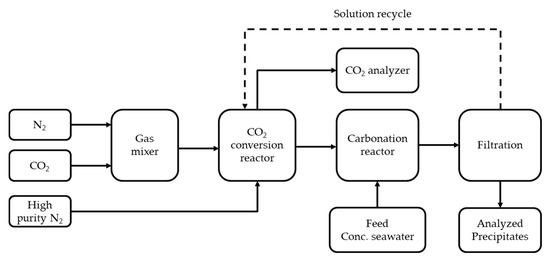
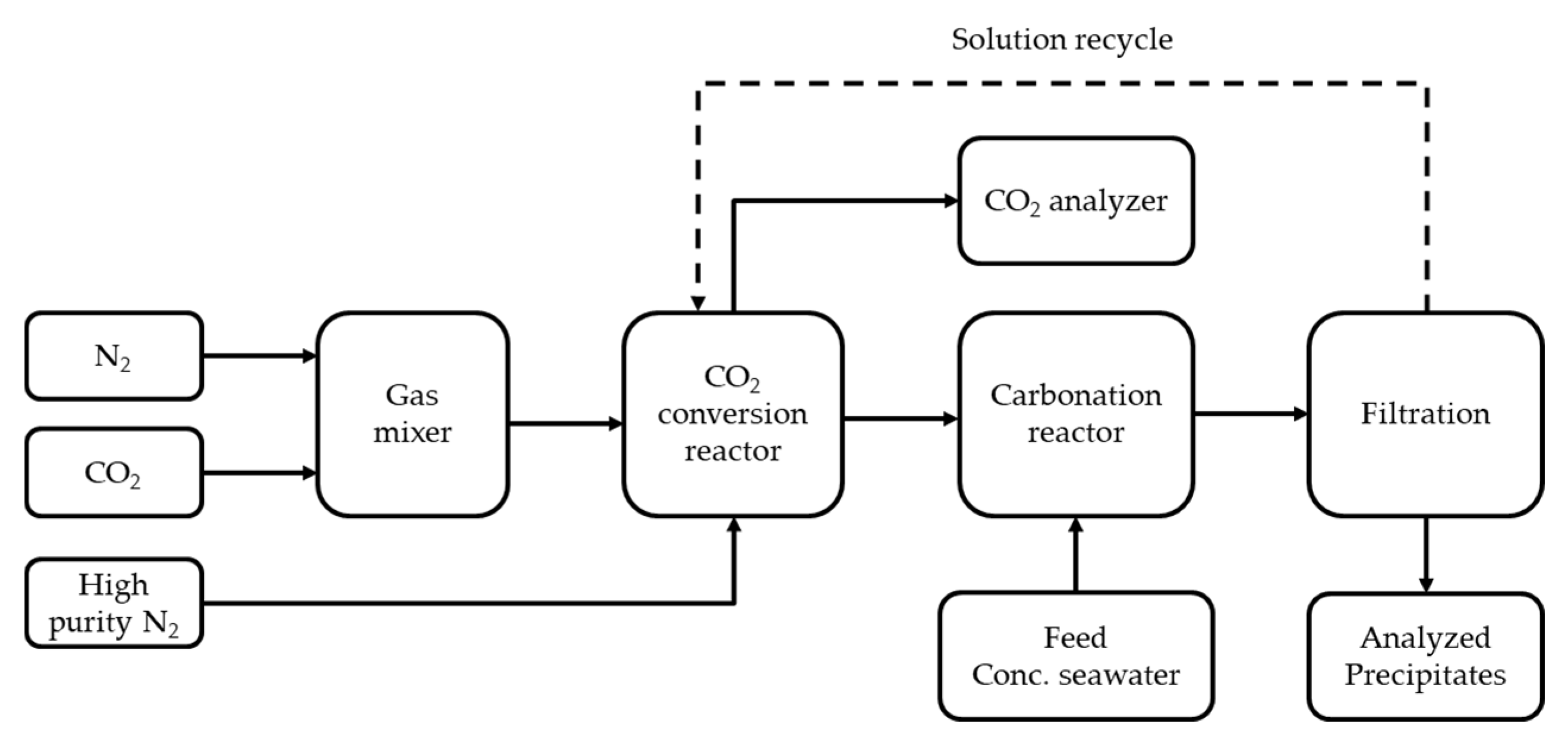
The flow schematic of the experiment is depicted in Figure 1. To verify the results of our study, we assumed that the concentration of CO2 was 15 vol%. A mass flow controller was used to achieve a balance between N2 gas (purity: 99%) and CO2 gas (purity: 99%). We used a CO2 analyzer (Sensor Lonic Co. Ltd., Korea) to regulate the gas flow rate to 1880 mL/min and 300 mL/min for N2 and CO2, respectively. Before the experiment, all reactors were purged with N2 (purity: 99.999%) to remove any trace gases. Finally, we performed an experiment in which none of the residue gases in any of the reactors were detected by the analyzer. The simulated gases (N2 and CO2) were mixed in a saturated reactor before they were introduced into the CO2 conversion reactor made of Pyrex glass. The saturated reactor was filled with water, and its temperature was maintained at 30 °C. The temperature was controlled using a thermal water bath. From the saturated reactor, the simulated gas flowed into the conversion reactor after passing through a Teflon tube, where it was dispersed using a bubble diffuser. The conversion reactor was filled with 5 wt % MEA balanced water. The selected amine with purities higher than 99% was purchased from Sigma Aldrich Co. Ltd. The conversion solution volume was 400 mL. The venting gas flowed continuously into the CO2 analyzer at 30 s intervals. We assumed that the CO2 conversion solution was saturated by CO2 when its concentration in the venting gas was 15 vol%, as indicated by a CO2 analyzer. The venting gas was passed through the condenser, which was maintained at a temperature of less than −5 °C to maintain the concentration of the conversion solution by preventing vapor loss. Throughout these processes, the MEA concentration was kept constant at 5 wt %. We added concentrated seawater to the CO2-saturated conversion solution when the first conversion reaction was completed. To recover the metal carbonate, concentrated seawater was used (Table 1), because it matched the total CO2-loading values and the metal ion rate. In a previous study, Park et al. [16,24] reported that most of the converted CO2 could form metal carbonates when the concentration of metal ions was adequate for the reaction. Thereafter, the CO2-saturated solution (amine in this study) was mixed with concentrated seawater. Next, we used a magnetic stirrer at 200 rpm for 24 h. The precipitate was separated using filter paper with a pore size of 0.7 μm. The separated precipitate was dried in an oven at 105 °C for 24 h. The dried material was washed with water to remove soluble components such as NaCl. Finally, the residue solid was dried again in an oven. The dried separated solids were analyzed using X-ray diffraction (XRD) to determine the composition at each step (first and second dried samples). Finally, we used a desorption process to check the amount of residual CO2 in the solution (separated liquid). Only N2 gas at 70 °C was used in the desorption experiment, and its flow rate was maintained at 1880 mL/min until the CO2 analyzer indicated 0 vol%. The retention time was maintained for 30 min after it reached 0% according to the CO2 analyzer. Finally, we performed the same experiment again to confirm that the separated conversion solution could be reused twice under identical experimental conditions.
Figure 1.
Schematic diagram and apparatus for experiment.
Table 1.
Components of concentrated seawater.
4. Results and Discussion
4.1. CO2 Loading and Conversion
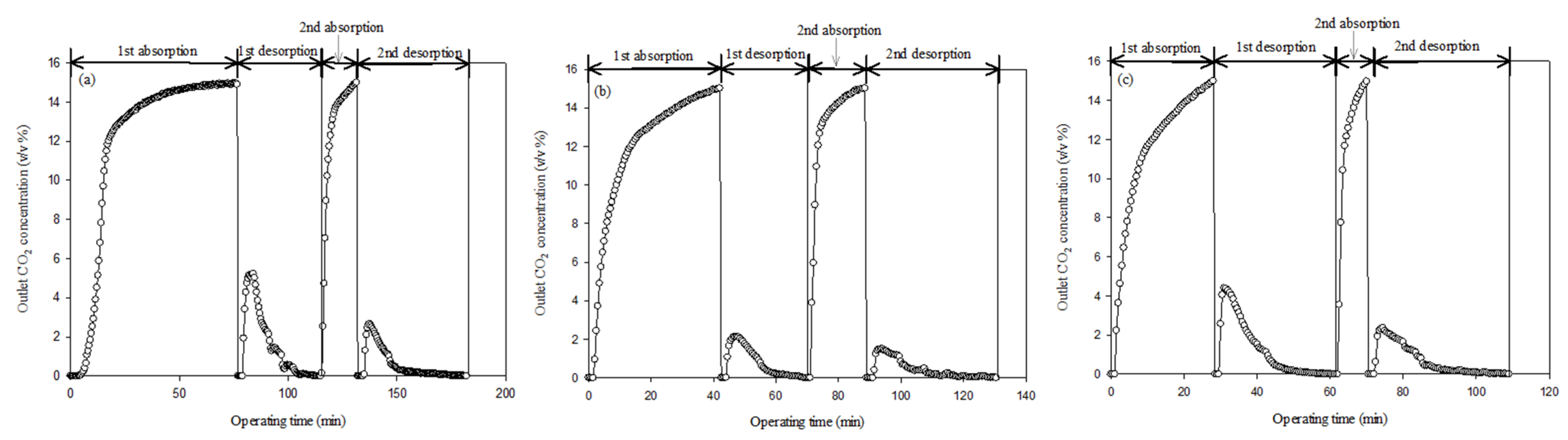
Figure 2a–c present the CO2-loading results of the three selected types of 5 wt % amine solutions. Considering the previously obtained results, the 5 wt % MEA solution was better than the 30 wt % MEA solution for operating the general process. A higher-concentration MEA solution required a longer reaction time than a lower-concentration one. This means that the operation time could be reduced by using a lower-concentration MEA solution [4,6,16]. As mentioned above, we used absorption and desorption in experiments twice under identical conditions. We used a 5 wt % amine conversion solution because it could adapt to the absorbed CO2 and metal ion concentrations. According to Park et al. [9], a high concentration of amines is required along with a similar concentration of metal ions to produce a precipitate. Earlier, we explained the metal ion composition of seawater as proposed by the carbon mineralization theory. The amount of converted CO2 in the conversion solution was higher than the amount of CO2 used in the formation of metal carbonate. Therefore, the residual CO2 in the solution can be re-emitted into the atmosphere or concentrate if it does not react with the metal ions. Consequently, a low concentration of the conversion solution was considered advantageous. Rapid CO2 conversion was required to provide the metal ions needed to produce the metal carbonate, and the conversion solution could be rapidly reused because the total CO2-loading capacity was lower than that of the high-concentration solution. The low concentration of the added metal ions could also be applied to the low-concentration conversion solution. This result indicated that the carbonate precipitate and conversion solution reuse cycle time would be reduced. According to Park et al. [4], a 5 wt % amine solution had a lower CO2-loading capacity than a 30 wt % amine solution. Therefore, experiments were conducted using a 5 wt % amine solution to reduce the reaction time. We expect that this will help reduce the process scale.
Figure 2.
Results of CO2 loading at 5 wt % for each amine by (re-)absorption and (re-)desorption. First desorption and second absorption experiments as checked by the residual CO2 remaining after reaction with metal ions in concentrated seawater: (a) monoethanolamine (MEA) solution, (b) di-ethanolamine (DEA) solution, and (c) methyl-diethanolamine (MDEA) solution.
As illustrated in Figure 2, we were able to determine the amount of converted CO2. The first and second steps were absorption and desorption, respectively. These results were similar to those obtained by other researchers. According to Park et al. [6,24], the general CO2-loading value in the absorbent increased when the emitted CO2 flowed into the absorbent. The desorption process also re-emitted the absorbed CO2 into the atmosphere by heat (70 °C), and only N2 gas was used. Furthermore, Kang et al. [19] reported that the CO2-loading capacities of the 5 wt % amine solution for MEA, DEA, and MDEA were 0.1545, 0.0955, and 0.0761 mol of CO2, respectively. They reported that the CO2-loading capacities decreased when identical experimental conditions were used to check for changes (MEA 0.1357, DEA 0.0911, and MDEA 0.0848 mol of CO2) [19]. This result indicates that the added artificial metal sources could be attributed to a decrease in the CO2-loading capacity because CaO was used to fix the converted CO2 in the amine solution. According to Park et al. [24], this was caused by zwitterion complexes as they produce various types of aqueous CO2 (HCO3−, H2CO3, CO32−). In particular, the CO2-loading capacity of the 30 wt % amine solution was not three times greater than that of the 5 wt % solution because it was caused by different amine molecular weights [19]. Considering the results obtained by other researchers, the CO2 conversion results (absorption) obtained in this study also indicated a tendency similar to that of typical amines (Table 2).
Table 2.
Results of CO2 loading of amines selected for the present study.
However, the amount of emitted CO2 in the desorption process was not the same as the amount of absorbed CO2 in the typical desorption process reported by other researchers. This result was attributed to the presence of other positive and negative ions in the seawater [20], generated by the absorbed CO2 (aqueous CO2), that reacted with the metal sources present in the seawater. As previously stated, various positive ions are dissolved in seawater. Among these, sodium chloride (NaCl) was the major component. We were not sure whether the highly concentrated NaCl would have a decisive effect on the CO2 loading. In addition, we assumed that the formation of the metal carbonate would incorporate aqueous CO2 with metal sources from the seawater. As mentioned earlier, we used artificial concentrated seawater. Therefore, several ions were involved in the reaction, and the concentration of NaCl in our study was greater than that in normal seawater. Therefore, we hypothesized that this would cause an interference response. Hence, the reaction generated a precipitate that included aqueous CO2 in forms such as carbamate, bicarbonate, or carbonate, and similar curves were observed for each amine. In the case of MEA, there was a larger amount of converted aqueous CO2 compared to the cases of other amines because the CO2-loading time was longer.
In addition, the reabsorption test indicated a relative decrease in the CO2-loading time (Figure 2). The absorption time for MDEA was shorter than that for DEA. A small amount of amine was removed from the precipitate and liquid during the separation process. However, we believe that this technique has the potential to decrease the CO2 loading owing to the presence of other ions in the seawater when we consider the results of a previous study by Park et al. [4,9]. They assumed that the decrease in CO2 loading was caused by the separation process. The results of their second step decreased by approximately 0.02 mol-CO2/mol of amine. From this point of view, the large number of ions in concentrated seawater was detrimental to the reuse of the conversion solution. Kang et al. [19] indicated that the amount of absorbed CO2 in the MEA solution was higher than that in the DEA and MDEA solutions under identical absorption time conditions. Regarding the conversion of CO2, we assume that the CO2 loading time is not significant because we also assume that there is a possibility of CO2 fixation when concentrated seawater is used. Other researchers have claimed that metal ion concentration is more significant when compared with the CO2-loading capacity [5,16,24]. This result indicates that the amount of metal carbonate formed depended on the amount of added metal ions to fix the CO2, and this was confirmed by our results. Therefore, the desorption curves obtained in our study were different from those obtained in other studies when we used the desorption process to check the amount of residual CO2 in the amine solution. Further details are presented in the following section.
4.2. Verification of Precipitate Formation
We conducted a metal carbonate (precipitation) experiment after the CO2 conversion step in the amine solution was. From the results of this experiment, we confirmed that the solution rapidly changed to opaque when the concentrated seawater was added to the CO2-saturated amine solution. We assumed that this was due to the formation of solids (metal precipitate) because the concentrated seawater was perfectly transparent. To verify the formation of precipitates, the opaque solution was separated into solids and liquids using a vacuum pump. The separated precipitates were measured by weight at each step of the experiment after the first and second reactions. In the first precipitation experiment, the weights of MEA, DEA, and MDEA precipitates were 25.8, 15.4, and 16.2 g, respectively (Table 3). In the second, their weights were 132.4, 109.1, and 89.3 g, respectively (Table 3). Thus, it was concluded that the concentrated seawater provided enough positive ions to rapidly cause CO2 precipitation.
Table 3.
Amount of precipitates formed in each step and for each solution.
We believe that these results have significant implications. Considering the weights, more precipitate was formed in the second step than in the first one, because the second experiment used the same concentrated seawater after the first experiment. That is, the second experiment used the separated solution from the first experiment. Therefore, some of the unreacted ions in the separated solution (first experiment) were assumed to participate in the formation of the second precipitate. From Table 1, Table 2 and Table 3, we were able to calculate the amount of precipitate theoretically. However, the actual amount generated differed from the theoretical calculation. Our previous studies used only singular chemicals such as Ca, Mg, and Ba to produce metal carbonates [4,5,9,16,24]. These cases were more suitable for calculating the expected precipitates than the present case. Previous studies considered only one reaction, in which the amount of CO2 dissolved in the solution and the singular chemical concentration were considered. However, in the present study, we must consider several variables because of the multi-ion solution used. A more detailed explanation of this phenomenon and its implications are discussed in Section 4.4.
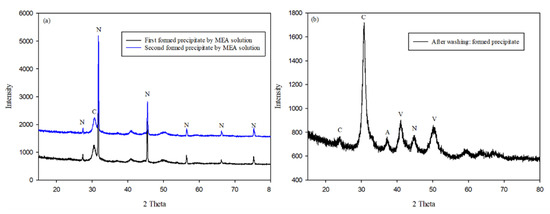
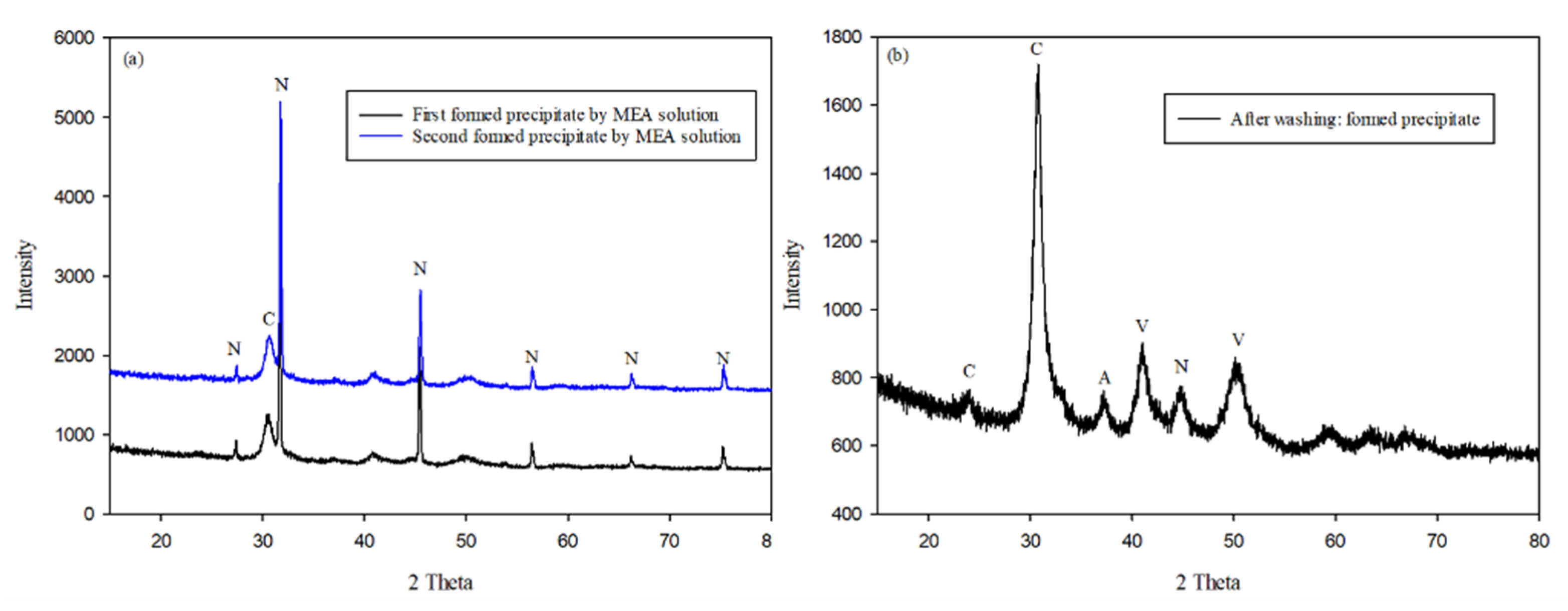
XRD was used to verify the composition of the precipitate, and NaCl was found to be the major component. The used seawater had a higher concentration than natural seawater. Thus, the solubility of the total number of ions exceeded this limit.
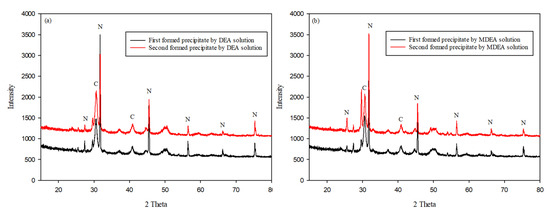
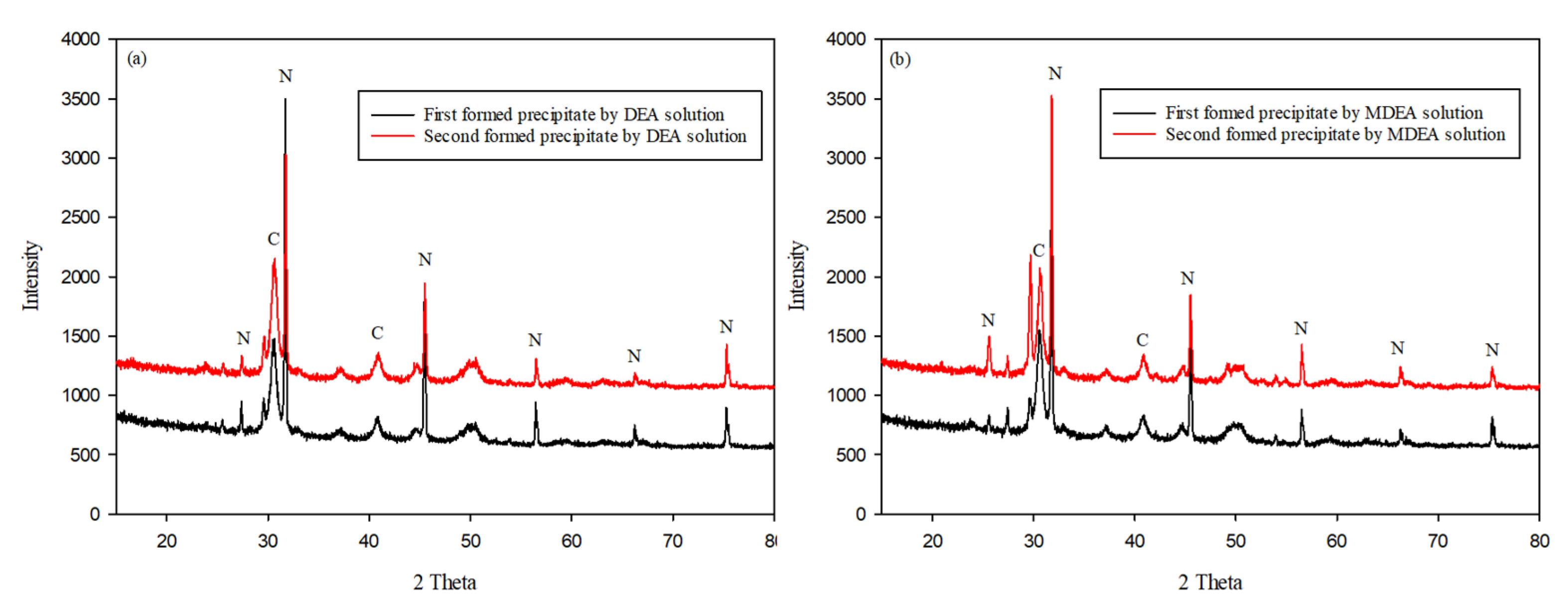
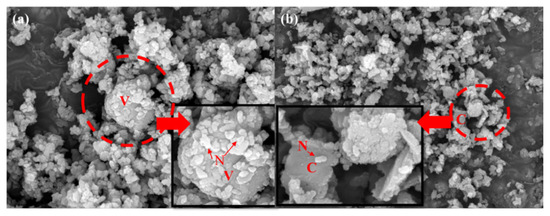
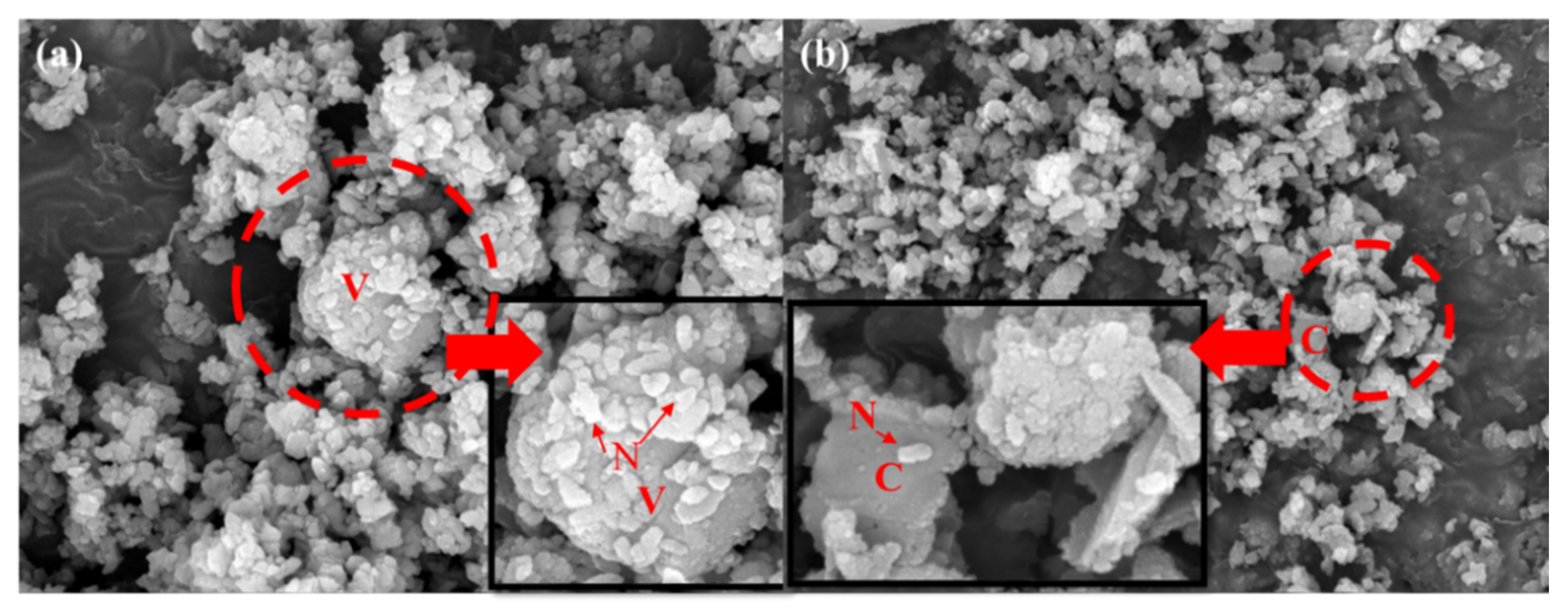
Figure 3a and Figure 4a,b, present similar results. The other precipitates could not be distinguished well because the concentration of NaCl in the major precipitate was very high. Ca2+ metal ions existed in the seawater, but their concentrations were relatively low when compared with those of NaCl. However, a certain amount of CaCO3 was formed on the reaction of aqueous CO2 and dissolved Ca ions in the seawater. We considered how this result could be verified with the precipitate. As previously stated, the aim of this study is to verify the potential of applying seawater and CO2 conversion solutions. We focused on removing the major precipitate, NaCl, which dissolves easily in water. Therefore, we dissolved the precipitate in water to examine the metal carbonates. An insoluble solid is formed by the metal carbonates depicted in Figure 3b and Figure 5. Most of the precipitates consisted of CaCO3, for example, vaterite, aragonite, and calcite. Although there were several positive ions in seawater, the major carbonate was CaCO3 because its formation requires heat. This means that the formation of CaCO3 is an endothermic reaction [25,26]. In addition, the amount of MgCO3 formed is generally lower than that of CaCO3 because the enthalpy of CaCO3 is lower than that of MgCO3 [27]. However, the results obtained in this study indicate otherwise. As mentioned previously, additional heat is required to form MgCO3. According to Fricker et al. [28], the advantage of high temperature is that MgCO3 can be produced. On the other hand, the formation of CaCO3 is an exothermic reaction [26]. Furthermore, MgCO3 does not form well when Ca and Mg ions are mixed. In particular, the concentration of Mg ions was higher than that of Ca ions [29]. Considering the results obtained by other researchers, we can conclude that most of the precipitate was CaCO3. For this reason, the formation of MgCO3 was not observed under the conditions of this study.
Figure 3.
XRD results for precipitate formed in 5 wt % MEA solution with simulated seawater: (a) unwashed precipitate and (b) washed precipitate. (N: NaCl, C: calcite, V: vaterite, A: aragonite).
Figure 4.
Verification of the precipitates in 5 wt % amines by XRD, except for MEA solution. The formed precipitate was not washed in water. The results were like those in Figure 3a, because the formed sodium chloride concentration was higher than that of the other precipitates: (a) aqueous CO2 with 5 wt % DEA solution with concentrated seawater and (b) aqueous CO2 with 5 wt % MDEA solution with concentrated seawater. (N: NaCl, C: calcite, V: vaterite, A: aragonite).
Figure 5.
SEM image of carbonate in 5 wt % MEA solution. The formed CaCO3 was not visible, because of the sodium chloride (a). However, it appears differently in (b) because of washing the NaCl. (b) shows the CaCO3: (a) correspond to not washed carbonate and (b) to washed carbonate. (N: NaCl, C: calcite, V: vaterite).
The calculation of the concentration of calcium ions in the concentrated seawater was done as follows:
The formation of metal carbonate using seawater at 25 °C can be expressed as follows:
Sodium chloride:
Na+ + Cl− → NaCl ΔG° = −384 kJ/mol
Calcium carbonate:
Ca2+ + CO32− → CaCO3 ΔG° = −1128 kJ/mol
Magnesium carbonate:
Mg2+ + CO32− → MgCO3 ΔG° = −1012 kJ/mol
Potassium carbonate:
2K+ + CO32− → K2CO3 ΔG° = −1064 kJ/mol
This can be explained by examining the thermodynamic properties. The Gibb’s free energy (ΔG°) for CaCO3 [−1128 kJ/mol] was lower than that of other compounds. Equations (16)–(20) show the ΔG° values of the other precipitate components of the representative metal ions in seawater. The precipitate was dissolved in water, and a small amount of NaCl was present in the residue. However, we believe that our proposed method has potential for CO2 fixation with seawater because the amount of CO2 converted in the selected amines was very small (Table 2), and the concentration of the added calcium ions in the seawater was 0.6315 mol (Equation (16)). Therefore, most of the converted CO2 in the amine solution formed a metal carbonate. In particular, the amount of converted CO2 was lower than that of the added calcium ions. Therefore, a large amount of the second precipitate was formed, especially NaCl. This indicated that the residual metal ions were not dissolved until the second absorption experiment. Therefore, they could react directly with the absorbed CO2. Consequently, the total amount of the second precipitate was higher than that of the first precipitates. Therefore, the second CO2 absorption capacity also decreased because the CO2 analyzer checked the gas vented after it was passed through the absorption reactor. Considering Equations (17)–(20), the value of ΔG° for calcium carbonate was lower than that for the other compounds. This result indicated that calcium carbonate formed more easily than other metal carbonates when aqueous CO2 reacted with the metal ions.
4.3. Characteristics of Precipitates and Its Morphology
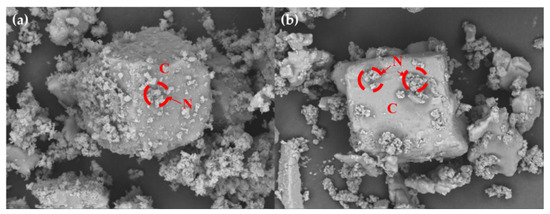
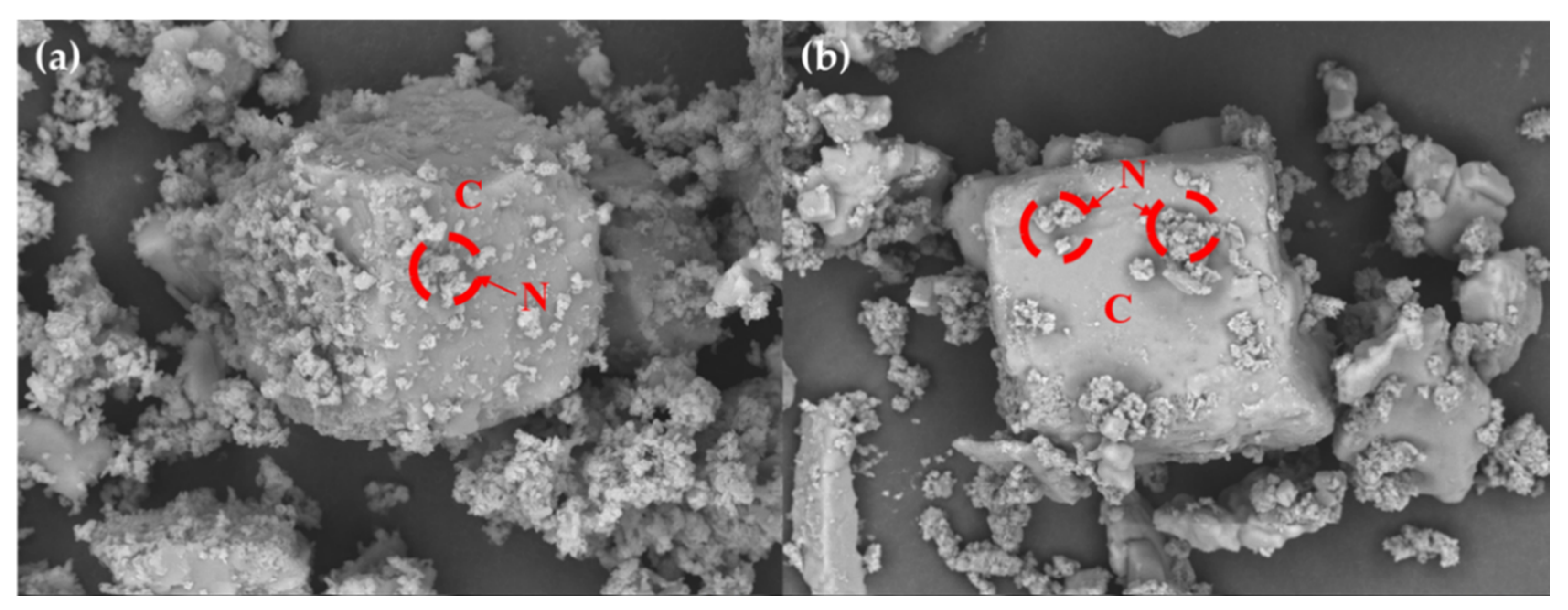
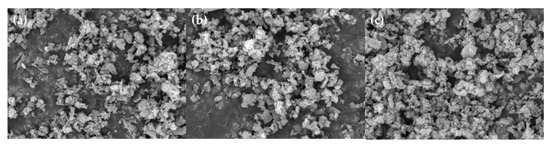
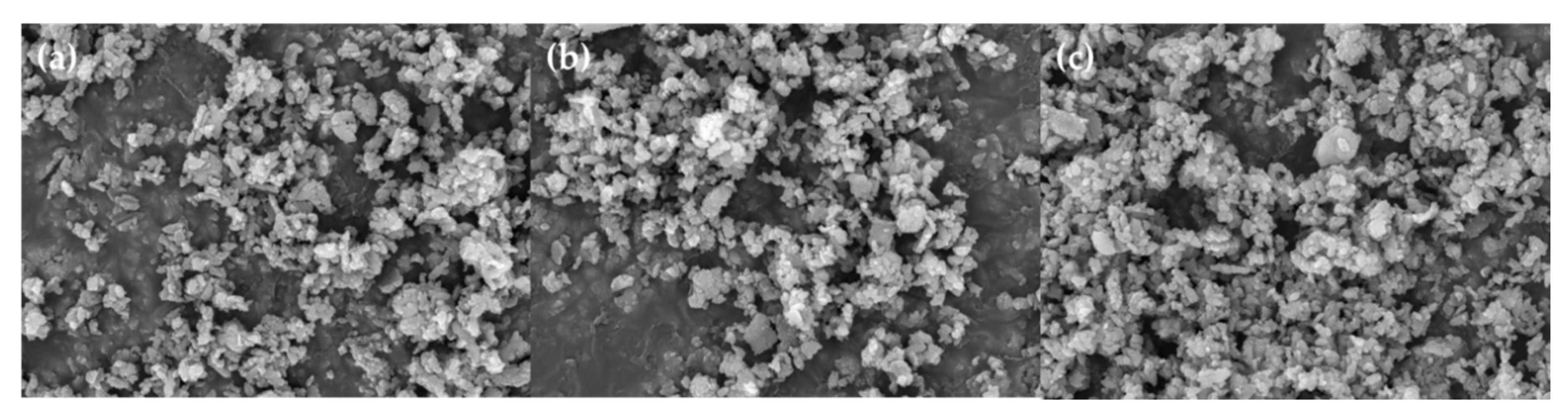
In this study, we explored the possibility of recovering useful materials and reducing CO2 using concentrated seawater. Figure 5, Figure 6 and Figure 7 present the results of scanning electron microscopy (FE-SEM). As depicted in Figure 5a,b, most of the formed NaCl was removed. Figure 6 shows the CaCO3 formed when DEA and MDEA solutions are used. The results obtained are close to those obtained in the MEA case. This means that soluble materials can easily be removed and reused in various industries. Although with concentrated seawater we did not use the NaCl dissolution step for the DEA and MDEA, we could assume that similar results would be obtained for NaCl dissolved in water. Consequently, we confirmed that the fixation of CO2 with seawater is possible. In addition, from an environmental point of view, concentrated seawater can be used after desalination. However, this phenomenon needs to be thoroughly investigated. The major limitation was the purity of the precipitate because the major components were CaCO3 and NaCl. Through the first precipitates (CaCO3, NaCl) formation, trace metal ions could remain in the solution, such as Li, Nd, and In. Moreover, the precipitate has potential value for reuse as a construction material or in DeSOx processes; this potential should be explored further [30,31]. However, the purity of the precipitate was too low for effective reuse and needs to be improved for use in other industries [13]. To improve the purity, additional research is needed.
Figure 6.
SEM image of carbonate in 5 wt % DEA and MDEA solution: (a) DEA solution and (b) MDEA solution. (N: NaCl, C: calcite).
Figure 7.
SEM image of first carbonate in 5 wt % MEA, DEA, and MDEA solutions: (a) formed precipitates in MEA solution, (b) formed precipitates DEA solution, and (c) formed precipitates MDEA solution.
4.4. Relation of Ionic Strength and Precipitates at Each Step
To analyze the mechanism of formation of precipitates, we assumed that pH changes and ionic strength (I) were significant factors. Therefore, we checked the pH changes when CO2 was dissolved in each amine solution. Table 4 presents the pH values at each step of the experiment. The initial pH values for the first absorption were: 11.48 for MEA, 10.92 for DEA, and 11.05 for MDEA. These values decreased to 7.84, 7.82, and 7.68, respectively, when each of the amine solutions was saturated by CO2. These values increased when concentrated seawater was added to each solution and desorption was carried out. Finally, the pH values measured in the second experiment were lower than those measured in the first step. Nevertheless, these values decreased, and the final pH values were close to those measured in the first conversion and desorption experiments. In our study, we assumed that the variation in pH did not have a significant effect because the amounts of CaCO3 measured in the first and second precipitates were similar. In our previous studies, pH values were not a significant factor for generating metal carbonate [16]. We used amine solutions to convert aqueous CO2 into metal ions earlier as well. Thus, the pH values varied continuously as the experimental conditions changed. Additionally, the amounts of precipitate obtained at each step were similar. Consequently, we attempted to identify the factors affecting the CO2 fixation with metal ions.
Table 4.
pH changes at each step of the experiment for each amine solution.
We expected that ionic strength would be a significant factor in determining the precipitate rather than the pH values. Nevertheless, pH values are related to ionic strength, and concentrated seawater has high ionic strength.
Ionic strength (I) = ,
where ci is the molar concentration of ion i (M, mol/L) and zi is the charge on that ion.
As presented in Table 4, the ionic strength of the first CO2 conversion and precipitation experiment was lower than that of the second experiment, in which the separated solution obtained from the first experiment was used. Thus, the second experiment yielded high ionic strength values. Therefore, the significant factor is the overall ionic strength value. In both experiments, the ionic strength was approximately doubled. However, the total of precipitates increased at least by a factor of six (Table 3). Generally, ionic strength is well-known to be related to ion activity. Furthermore, ion activity is affected by ionic strength. In general, ion activity is equal to 1, but it could decrease by more than 1 when the ionic strength increased. In this study, the ionic strength was found to be high in all experiments. Thus, we conclude that the ion activity is lower than 1. This implies that the degree of dissociation dramatically increases because the various metal ions are dissolved in concentrated seawater. For these reasons, the precipitates obtained in the second experiment decreased when compared with those in the first experiment. Table 3 indicates that the amount of CaCO3 formed in each solution in the first experiment was higher than that in the second step. According to Lee et al. [32], the temperature and ionic strength are closely related to the saturation. In their study, the precipitate formed faster and with a higher degree of saturation [33]. However, in our case, the amount of NaCl formed in the second experiment was larger than that in the first experiment. We assumed that this was caused by its solubility—1 g/2.8 mL in water [34]. Considering its solubility and degree of dissociation, it can be inferred that NaCl could not be formed under our experimental conditions. However, it was formed at each step and for each solution. In particular, a very large amount was formed in the second experiment. This implies that the solubility of NaCl is significantly predominant over the physicochemical reaction; nevertheless, the chemical reaction (degree of dissociation) is activated by increasing the general ion activity. Consequently, we conclude that solubility becomes significant when a multicomponent solution is used to generate a metal carbonate or to separate some target material.
5. Conclusions
The aim of this study was to convert the CO2 emitted from industries into metal carbonate using concentrated seawater by applying the rapid carbonate method. Using these processes, waste seawater can be recycled to recover metal carbonates and fix CO2. To accomplish our objective, we selected certain amines to rapidly convert CO2 into aqueous CO2, and concentrated seawater to supply the positive ions. The selected amines were sufficiently qualified for the purpose of improving the CO2 conversion rate. From our experiments we concluded that low-energy consumption methods (under mild conditions, 30 °C, 1 bar) demonstrated reasonable potential for CO2 removal, fixation, and utilization, with concurrent metal recovery from concentrated seawater. Consequently, in the future, we plan to improve the selectivity during separation considering real waste-concentrated seawater. We expect that future research will lead to the production of high-purity carbonates that can be used in chemical industries.
Author Contributions
S.P. suggested the idea for research and wrote this manuscript. C.W.J. performed the experiments. Y.-S.B. analyzed the formed materials. All authors have read and agreed to the published version of the manuscript.
Funding
This research received no external funding.
Institutional Review Board Statement
Not applicable.
Informed Consent Statement
Not applicable.
Acknowledgments
This research was supported by the Basic Research Project of the Korea Institute of Geoscience and Mineral Resources (KIGAM) funded by the Ministry of Science, ICT and future Planning.
Conflicts of Interest
The authors declare no conflict of interest.
References
- Edenhofer, O.; Pichs-Madruga, R.; Sokona, Y.; Seyboth, K.; Matschoss, P.; Kadner, S.; Zwickel, T.; Eickemeier, P.; Hansen, G.; Schlomer, S.; et al. Summary for Policymakers, IPCC Special Report on Renewable Energy Sources and Climate Change Mitigation; IPCC: New York, NY, USA, 2011. [Google Scholar]
- Metz, B.; Davidson, O.; de Coninck, H.C.; Loos, M. (Eds.) IPCC Special Report on Carbon Dioxide Capture and Storage; Cambridge University Press: Cambridge, UK; New York, NY, USA, 2005; p. 442. [Google Scholar]
- Gil, M.V.; Martínez, M.; García, S.; Rubiera, F.; Pis, J.J.; Pevida, C. Response surface methodology as an efficient tool for optimizing carbon adsorbents for CO2 capture. Fuel Process. Technol. 2013, 106, 55–61. [Google Scholar] [CrossRef] [Scilit]
- Park, S.; Min, J.; Lee, M.-G.; Jo, H.; Park, J. Characteristics of CO2 fixation by chemical conversion to carbonate salts. Chem. Eng. J. 2013, 231, 287–293. [Google Scholar] [CrossRef] [Scilit]
- Park, S.; Song, K.; Jeon, C.W. A study of mineral recovery from waste ashes at an incineration facility using the mineral carbonation method. Int. J. Miner. Process. 2016, 155, 1–5. [Google Scholar] [CrossRef] [Scilit]
- Park, S.; Jo, H.; Kang, D.; Park, J.-W. A study of CO2 precipitation method considering an ionic CO2 and Ca(OH)2 slurry. Energy 2014, 75, 624–629. [Google Scholar] [CrossRef] [Scilit]
- Hook, R.J. An Investigation of Some Sterically Hindered Amines as Potential Carbon Dioxide Scrubbing Compounds. Ind. Eng. Chem. Res. 1997, 36, 1779–1790. [Google Scholar] [CrossRef] [Scilit]
- IEA. Energy Technology Perspectives Scenarios and Strategies to 2050; IEA: Paris, France, 2008. [Google Scholar]
- Park, S.; Lee, M.-G.; Park, J. CO2 (carbon dioxide) fixation by applying new chemical absorption-precipitation methods. Energy 2013, 59, 737–742. [Google Scholar] [CrossRef] [Scilit]
- Yoo, Y.; Kang, D.; Park, S.; Park, J. Carbon utilization based on post-treatment of desalinated reject brine and effect of structural properties of amines for CaCO3 polymorphs control. Desalination 2020, 479, 114325. [Google Scholar] [CrossRef] [Scilit]
- Lackner, K.S.; Wendt, C.H.; Butt, D.P.; Joyce, E.L., Jr.; Sharp, D.H. Carbon dioxide disposal in carbonate minerals. Energy 1995, 20, 1153–1170. [Google Scholar] [CrossRef] [Scilit]
- Sanna, A.; Dri, M.; Hall, M.; Maroto-Valer, M.M. Waste materials for carbon capture and storage by mineralisation (CCSM)—A UK perspective. Appl. Energy 2012, 99, 545–554. [Google Scholar] [CrossRef] [Scilit]
- Bobicki, E.R.; Liu, Q.; Xu, Z.; Zeng, H. Carbon capture and storage using alkaline industrial wastes. Prog. Energy Combust. Sci. 2012, 38, 302–320. [Google Scholar] [CrossRef] [Scilit]
- Seifritz, W. CO2 disposal by means of silicates. Nat. Cell Biol. 1990, 345, 486. [Google Scholar] [CrossRef] [Scilit]
- Snoeyink, V.L.; Jenkins, D. Water Chemistry; Wiley: Hoboken, NJ, USA, 1980. [Google Scholar]
- Park, S.; Bang, J.-H.; Song, K.; Jeon, C.W.; Park, J. Barium carbonate precipitation as a method to fix and utilize carbon dioxide. Chem. Eng. J. 2016, 284, 1251–1258. [Google Scholar] [CrossRef] [Scilit]
- Lackner, K.; Butt, D.P.; Wendt, C.H. Magnesite Disposal of Carbon Dioxide; Coal & Slurry Technology Association: Washington, DC, USA, 1997. [Google Scholar]
- Dickson, A.G.; Goyet, C. Handbook of Methods for the Analysis of the Various Parameters of the Carbon Dioxide System in Sea Water; U.S. Department of Energy: Washington, DC, USA, 1994; Volume 2, p. 74. [CrossRef] [Scilit]
- Kang, D.; Park, S.; Jo, H.; Park, J. Carbon fixation using calcium oxide by an aqueous approach at moderate conditions. Chem. Eng. J. 2014, 248, 200–207. [Google Scholar] [CrossRef] [Scilit]
- Andrew, G.; Dickson, C.G. Handbook of Methods for the Analysis of the Various Parameters of the Carbon Dioxide System in Sea Water; U.S. Department of Energy: Washington, DC, USA, 1994.
- Wang, D.; Li, Z. Gas–Liquid Reactive Crystallization Kinetics of Hydromagnesite in the MgCl2–CO2–NH3–H2O System: Its Potential in CO2 Sequestration. Ind. Eng. Chem. Res. 2012, 51, 16299–16310. [Google Scholar] [CrossRef] [Scilit]
- Sun, B.; Zhou, H.; Arowo, M.; Chen, J.; Chen, J.; Shao, L. Preparation of basic magnesium carbonate by simultaneous absorption of NH3 and CO2 into MgCl2 solution in an RPB. Powder Technol. 2015, 284, 57–62. [Google Scholar] [CrossRef] [Scilit]
- Romão, I.; Nduagu, E.; Fagerlund, J.; Gando-Ferreira, L.M.; Zevenhoven, R. CO2 fixation using magnesium silicate minerals. Part 2: Energy efficiency and integration with iron-and steelmaking. Energy 2012, 41, 203–211. [Google Scholar] [CrossRef] [Scilit]
- Park, S.; Song, K.; Jo, H. Laboratory-scale experiment on a novel mineralization-based method of CO2 capture using alkaline solution. Energy 2017, 124, 589–598. [Google Scholar] [CrossRef] [Scilit]
- Fagerlund, J.; Zevenhoven, R. An experimental study of Mg(OH)2 carbonation. Int. J. Greenh. Gas Control. 2011, 5, 1406–1412. [Google Scholar] [CrossRef] [Scilit]
- Xiao, G.; Singh, R.; Chaffee, A.L.; Webley, P.A. Advanced adsorbents based on MgO and K2CO3 for capture of CO2 at elevated temperatures. Int. J. Greenh. Gas Control. 2011, 5, 634–639. [Google Scholar] [CrossRef] [Scilit]
- Duan, Y.; Sorescu, D.C. CO2 capture properties of alkaline earth metal oxides and hydroxides: A combined density functional theory and lattice phonon dynamics study. J. Chem. Phys. 2010, 133, 074508. [Google Scholar] [CrossRef] [Scilit]
- Fricker, K.J.; Park, A.-H.A. Effect of H2O on Mg(OH)2 carbonation pathways for combined CO2 capture and storage. Chem. Eng. Sci. 2013, 100, 332–341. [Google Scholar] [CrossRef] [Scilit]
- Mabry, J.C.; Mondal, K. Magnesian calcite sorbent for carbon dioxide capture. Environ. Technol. 2011, 32, 55–67. [Google Scholar] [CrossRef] [Scilit] [PubMed]
- Coto, B.; Martos, C.; Peña, J.; Rodriguez, R.; Pastor, G. Effects in the solubility of CaCO3: Experimental study and model description. Fluid Phase Equilibria 2012, 324, 1–7. [Google Scholar] [CrossRef] [Scilit]
- Bharadwaj, H.K.; Lee, J.-Y.; Li, X.; Liu, Z.; Keener, T.C. Dissolution kinetics of magnesium hydroxide for CO2 separation from coal-fired power plants. J. Hazard. Mater. 2013, 250, 292–297. [Google Scholar] [CrossRef] [Scilit]
- Lee, S.Y.; Lee, C.H.; Hur, H.; Seo, J.; Lee, Y.J. Characterization of Synthesized Strontianite: Effects of Ionic Strength, Temperature, and Aging Time on Crystal Morphology and Size. J. Miner. Soc. Korea 2015, 28, 195–207. [Google Scholar] [CrossRef] [Scilit]
- Stumm, W.; Morgan, J.J. Aquatic Chemistry: Chemical Equilibria and Rates in Natural Waters; John Wiley & Sons: Hoboken, NJ, USA, 2012; Volume 126. [Google Scholar]
- O’Neil, M.J. The Merck Index: An Encyclopedia of Chemicals, Drugs, and Biologicals; RSC Publishing: Cambridge, UK, 2013. [Google Scholar]

Publisher’s Note: MDPI stays neutral with regard to jurisdictional claims in published maps and institutional affiliations. |
© 2020 by the authors. Licensee MDPI, Basel, Switzerland. This article is an open access article distributed under the terms and conditions of the Creative Commons Attribution (CC BY) license (http://creativecommons.org/licenses/by/4.0/).