


Abstract
The underlying values and priorities that drive policy responses depend largely on the constructs that researchers and decision makers select to measure and the metrics used. Despite much recent attention being given to sustainable diets and food systems and to the importance of clearly measuring sustainability to meet targets, to achieve goals, and to appraise dietary and environmental policies, it is not commonly agreed how the different indicators of sustainable diets are assessed. The evidence base for assessment of these indicators are frequently weak, fragmented, and arbitrary. The aim of this paper was to compare a range of published methods and indicators for assessing sustainable diets and food systems in order to harmonise them. Keyword and reference searches were performed in PubMed, Scopus, CAB Abstracts, and Web of Knowledge. Fifty-two studies (21 proposed methods and 31 used methods) that combined environment, nutrition and health, and socioeconomic aspects of sustainable diets were reviewed. The majority (over 90%) of the studies focused on high-income countries. Twenty-eight studies assessed the environmental effects of different dietary practices, eight of the studies examined the nutrition and health indicators used for assessing sustainable food systems, and seven studies assessed the social and economic costs of diets. A classification of the elements was developed, and common elements are proposed for standardizing. These elements were categorized into nutrition and health indicators, environment indicators, and socioeconomic indicators. Standardized or harmonized indicators can be used for consistency and applicability purposes and to support, implement, and monitor relevant policies.
1. Introduction
The Food Agriculture Organization (FAO), World Health Organization (WHO), and United Nation University (UNU) [1] define diet as the set of food, beverages, and nutrients that are consumed by an individual or by a community of individuals during a certain period. A number of environmental, health-related, and socioeconomic factors can influence diets. The consideration of the interrelationships between these factors, particularly in the context of environmental resource limits, led to the concept of sustainable diets. According to FAO [2], sustainable diets are defined as those diets with low environmental impacts, which contribute to food and nutrition security and to a healthy life for present and future generations. Sustainable diets are protective and respectful of biodiversity and ecosystems, culturally acceptable, accessible, economically fair and affordable, nutritionally adequate, safe, and healthy while optimizing natural and human resources.
“All food systems are sustainable.” is the central policy objective of the UN’s Zero Hunger Challenge and an explicit feature of Sustainable Development Goal 2 (SDG 2) which seeks to “end hunger, achieve food security and improved nutrition, and promote sustainable agriculture.” Although they may appear straightforward, food systems and dietary patterns are in fact determined by a complex interplay of human, economic, social, environmental, and political factors. They can be difficult to define and characterise from any one perspective in terms of sustainability and may require multiple indicators for effective measurements.
In keeping with this, food systems have been defined and assessed in the literature from a range of perspectives [3,4]. At the same time, it is appreciated that a complete and encompassing definition should reflect the sum total of processes that link agricultural production to consumption, including food losses and waste, as well as the positive and negative impacts of these activities and processes on human and environmental health and wellbeing. The High Level Panel of Experts for the Committee on World Food Security states: A food system gathers all the elements (environment, people, inputs, processes, infrastructures, institutions, etc.); activities that relate to the production, processing, distribution, preparations, and consumption of food; and the outputs of these activities, including socioeconomic and environmental outcomes [5].
Globally, food security is threatened by the degradation of terrestrial, freshwater, and marine ecosystems and species used for medicine and food which are increasingly being neglected, underutilised, and ultimately lost. For example, according to FAO [6], approximately 200 million people are employed by the worlds’ fisheries, which contribute about 16 percent of the total protein eaten by the world. Nonetheless, approximately 80 percent of the world marine fish stocks, for which appraisal information is available, are overburdened, weakened, or recuperating from depletion. Bell and Taylor [7] reported that the Pacific Island Countries were facing many challenges to food security—accessibility, availability, and the utilization of nutritious foods. The authors outlined the causes of the challenges: fast population growth and urbanization; limited opportunities to acquire income; high levels of imported and processed foods high in salt, sugars, and fats; and the inability of communities to engage in small-scale agriculture production (SDG 2) due to a deficit of cultivable land.
Diets as drivers of sustainable food systems have been discussed across many inter-sectoral bodies and interdisciplinary perspectives, resulting in mounting information and analytical research and a range of methodologies [8]. Despite being agreed upon, methodologies for quantifying sustainable diets show considerable variation with each other and may or may not be generally applicable, and resolving this variation is the rationale of the study. The harmonization of these indicators will contribute to the global monitoring of SDGs in addition to reporting on targets related to food systems and diets. This will ensure that the interconnected issues represented by different assessment targets are bridged as well as that the total amount of indicators needed for creating an extensive monitoring indicators framework for assessing sustainable food system is reduced. For example, the harmonization of gender indicators in Kyrgzstan strengthened the gender monitoring of the Millennium Development Goals (MDGs) in their different regions [9]. Some of the indicators have been field-tested more than others. In our view, there are two interrelated needs. Firstly, and to the extent possible, it would be desirable for the various methodologies to be harmonised. Secondly, methodological approaches for characterising sustainable diets should be field-tested in different regions to determine their specificity, appropriateness, and applicability. The need to characterise pressures that drive the divergence between current dietary patterns and sustainable diets is particularly urgent for populations with extreme and immediate vulnerabilities such as Small Island Developing States (SIDS). The main challenge in this area is that there are several diverse ways to aggregate different methods and indices for the purpose of harmonisation. In this paper, the aim of the study was to compare the different methodological frameworks proposed for assessing sustainable diets and food systems and to harmonize the proposed indicators.
2. Materials and Methods
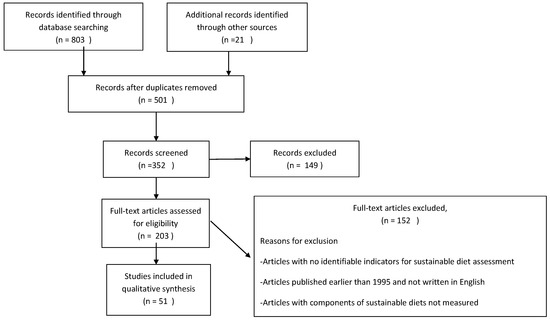
A literature search was performed in PubMed, Scopus, CAB Abstracts, and Web of Knowledge bibliographies between March 2017 and November 2018 using the search terms “sustainable food system” or “sustainable diet” and “assessment”, “health”, “environment”, “nutrition”, “social”, or “economics”. The search window was 1995–2018 with restriction to items published in English. Figure 1 shows the detailed process of the manuscripts included. Both peer-reviewed works and appropriate publications from the grey literature (such as conference proceedings and technical reports) were included, as long as they met all the following inclusion criteria: the quantification of environmental indicators linked to dietary intakes as greenhouse gas emissions, land use, or water use at a population level; the collection of dietary information to elucidate baseline diets at the national, household, or individual level; the estimation of the healthy aspects of sustainable diets; and the measurement of socioeconomic variables. Articles with no clearly identifiable indicators for assessing sustainable food systems, as well as review articles, were excluded. Potential papers meeting the inclusion criteria were accessed, and the details were extracted on the following variables: country of the study, main objective(s) of the paper, main findings, and main indicators identified. Only the full texts were included in the final analyses.
Figure 1.
A flow chart of how the articles were selected and included in the review.
The harmonisation of the indicators was undertaken using the “interoperability cube” approach introduced by Mulder [10], specifically designed to explore and enable the harmonisation of methods and tools used in “living labs” research, including among the European Network of Living Labs (ENoLL). The cube builds on the idea that the main focus is on synergies and the parts that living labs wish to exchange with one another and with other forms for the harmonization of methods and tools. The cube identifies these exchange prospects and expressly defines these parts from structural, technical and discourse views. The more elements that match, the better the harmonisation. Up to five clusters can be used in the harmonization process. In this research, three of the clusters were used: user involvement, innovation outcomes, and methods and framework because they were deemed to be of the most relevance or applicability to the topic under investigation.
The “user involvement” indicators were designed according to an iterative approach [11]. The questions asked about the indicators included: “How to organize user involvement?”, “Who are the right users?” and “What is the efficacy level?” Users are important to define context-aware services, e.g., cultural differences. User context includes experience in the use of the indicator for data collection, the ability to apply and interpret the data using acceptable standard measures, and developing a strong interest in translating the set data into beneficial policies. Under the “innovation outcomes” cluster, the factors considered were the degree of flexibility of the indicators, user knowledge ability and the frequency of usage among the international agencies in measuring sustainable food systems. For “availability of the framework and methods”, the existence of reference standard methods and cultural preferences were considered. The indicators were classified under three categories: environment, nutrition and health, and socioeconomic.
3. Results and Discussion
This review covered 51 empirical studies of which only eight were published more than 10 years ago. The reviewed articles were classified under the categories of environment, nutrition and health, and socioeconomic. An inventory of the environmental indicators used for assessing sustainable diets across the different studies is provided in Table 1. A tabulation of the nutrition and health indicators is provided in Table 2, and the compiled socioeconomic indicators are shown in Table 3. A short list of harmonised indicators across these three categories is given in Table 4.
Table 1.
The environmental indicators used for assessing a sustainable diet.
Table 2.
The nutrition and health indicators used for assessing a sustainable diet.
Table 3.
The socioeconomic indicators used for assessing a sustainable diet.
Table 4.
The harmonized indicators for assessing sustainable food system.
3.1. Potential for Geographic Bias
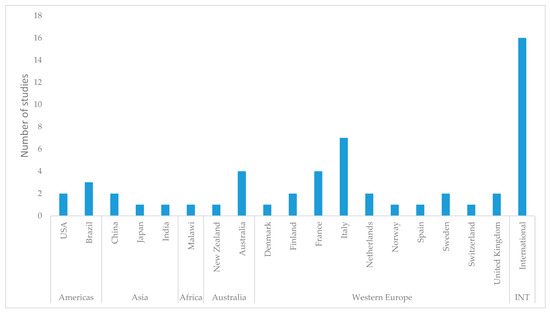
The majority (over 90%) of studies focused on high-income countries in western Europe and the USA (Figure 2). In spite of the fact that these high-income countries have substantially contributed to greenhouse gas emissions (GHGEs) related to food systems and agriculture, the detrimental effects of climate change and resource degradation shown in several of the measured segments of sustainability are likely to be felt most heavily in the low- and middle-income countries (LMICs) [12]. As evidence obtained from these high-income countries are being used by the governments of the LMICs to establish dietary guidelines, the problems and needs of these countries may not be effectively addressed.
Figure 2.
The distribution of the number of studies by countries and continents.
3.2. Environmental Indicators
Thirty-two studies assessed the environmental effects of different dietary practices. These studies analysed the varying attributes of diets affecting land use, water, energy, planetary boundaries and many ecosystem services that were based on all the processes along food chain. Some of the environmental data in the studies showed decreased environmental footprints from the replacement of animal-based foods with plant-based foods, while others showed that plants had a higher footprint [13,14,15,16]. Whereas most studies showed lower environmental impacts from plant-based diets, a few studies showed a higher water footprint, and GHG emissions were observed from the replacement of calories from meat-reduction scenarios with increased plant-based foods [17,18]. Studies have shown that the formulation of substitute dietary patterns was also a factor in instances of higher environmental effects. For example, in Vieux et al. [19], meat reduction supplemented isocalorically by fruits and vegetables reflected a rise in emissions, while a secondary scenario of a replacement with mixed foods saw a net decrease.
In the use of an estimated Life Cycle Assessment (LCA) of diets, GHGE and the water footprint were the most common indicators measured (n = 26 studies; 41.1% of sample). This is consistent with previous reviews in related areas [20,21] which also identified LCA indicators as the most common assessment of dietary patterns. In their systematic review on the estimation of the potential to reduce GHGE and land use demands by varying the composition of the diet, up to 50% of the reviewed papers used GHGE as the indicator for measuring the environmental effect of diets. Environmental management system performance (n = 11 studies; 18.7% of sample) and land use, especially total per capita land requirement (n = 6 studies; 10% of the sample), were the second and third most frequently mentioned environmental indicators. Energy use, use of planetary boundary framework metrics and water use linked with the production and processing of foods were also commonly cited but in <5% of the studies.
3.3. Nutrition and Health Indicators
Twelve of the studies examined the nutrition and health indicators used for assessing sustainable food systems. Dietary intake assessments which include dietary diversity and dietary quality were the most common nutrition indicators assessed (n = 9 studies; 56.3% of sample). The Dietary Diversity Index, which is defined as the ratio of those obtaining a diverse diet to the overall population, is known as a promising indicator of dietary quality in the field of development economics [22] and, therefore, a relevant tool that could be used in other categories for measuring sustainable food systems. The other common indicators included the outcomes of focus group discussion, diet-related morbidity and mortality statistics, the rate consumption of local/regional foods, and the seasonality and rate of eco-friendly foods.
3.4. Socioeconomic and Other Indicators
The remaining eight studies assessed the socioeconomic indicators of diets at varying micro and macro levels. They focused on the value effects of purchasing power, the socioeconomic and lifestyle determinants, and the consumers’ preferences. The Price Index, income, wealth and equity indices were the most common socioeconomic indicators/indices used for measuring sustainable food systems. Most of these indicators identified could be used to measure the poverty index of a population. Research has shown that a sustainable diet is impacted not only by poverty but also by inequality [23]. Although, not part of the review because it is a trade–industry paper, the Sustainability Consortium has used a wide multi-stakeholder process to carry out a comprehensive “hot spot” analysis within the food supply chain and has identified potential societal indicators as affecters of sustainable food systems [24]. Other indicators include the agricultural production on sustainable food systems and the production area index.
3.5. Development of the Harmonised Indicators
Existing assessment indicators for measuring sustainable food systems in different categories are shown in Table 1, Table 2 and Table 3. These indicators were categorized by the general process concepts. The development of the harmonized model represents the overall maturation of reasoning behind the internationally recognized assessment models. The predominant idea is that the harmonized indicators were to be based on user involvement, innovation outcomes and the availability of reference standards. The structures of the harmonized indicators regarded as similar have been unified. For example, under environmental indicators, LCA was the main methodological tool for assessing the environmental impact of a product in its life cycle. Carbon footprint, water footprint and ecological footprint are indicators for measuring LCA in any food system and were all selected. Environment management performance indicators and land use were selected because of its frequent use in measuring the environmental impact of food system. Elements missing from one indicator but could be found in the other indicators have been added to the first one. For example, under the socioeconomic indicators in the harmonized tool, income, wealth and equity indicators can be used to obtain all the other indicators in the same category. Fruit and vegetable biodiversity and the nutrient/non nutrient composition of foods were new indicators added in the harmonized indicators because of the lack of published data in their usage in measuring sustainable food systems. The role of these two new indicators in measuring sustainable diets has not been extensively discussed. Azzini et al. [25] emphasized the importance of nutritional quality as an element in dealing with local food sustainability. Barre et al. [26] proposed the need for integrating nutrient bioavailability when identifying sustainable diets.
An assessment and comparison of the sustainability of food production and dietary patterns in different countries could be facilitated by the widespread use of either a single harmonised system as developed in this paper or a standardised set of core indicators.
A tool of this type may be used in two ways: either retrospectively for a review and intercomparison of existing studies or prospectively as the basis for new research. In both cases, the use of a harmonized framework offers a solution to the problem of bridging methods and tools from research undertaken in varying settings.
The field-testing of the framework is recommended to identify any significant omissions or weaknesses. Thus, the limitation of the study was that some of the harmonized indicators have not been field-tested and that the review was limited to only studies that identified indicators that were specifically proposed or used. Further research is proposed to enhance the specificity of certain indicators, as well as to expand the purview of that harmonization efforts to include other methodological approaches.
Although the harmonised framework is intended for a wide application, the development of this tool was intended to investigate sustainable food systems among specific Pacific Island countries and Small Island Developing States. At the time of publication, the method has been deployed in the island state of Kiribati. Also, although the use of these harmonized indicators provides an overall impression of progress, it is not practicable or meaningful to combine all diverse indicator measures into a single index.
4. Conclusions
The review of the indicators for assessing sustainable food systems and sustainable diet reflects how much work has been done in measuring the environmental, nutritional/health and socioeconomic aspects of sustainable diet. Most of the indicators identified have been applied especially in the developed nations. Therefore, in the context of operationalizing these different aspects when designing sustainable diets, it is important to recognize that the concept of sustainable diets is not limited to food and nutrition but that it is used across multiple fields, which includes environment, agriculture, animal sciences, social and economic sciences. These harmonized indicators are principally intended to communicate and highlight progress in measuring a sustainable food system, to identify specific priority areas where action is required and to inform multi-sectoral policy development to achieve many of the Sustainable Development Goals.
Author Contributions
The coauthors had together contributed to the completion of this article. Specifically, their individual contribution are as follows: conceptualization, P.E.E. and B.B.; methodology, P.E.E., B.B., N.K., and J.D.; writing—original draft, P.E.E.; writing—review and editing, P.E.E., B.B., N.K., J.D., and S.F.
Funding
The research received no external funding.
Conflicts of Interest
The authors declared that they have no conflict of interest.
References
- FAO/WHO/UNU. Human Energy Requirements. Report of a Joint FAO/WHO/UNU Expert Consultation; Food and Nutrition Technical Report Series; FAO: Rome, Italy, 2001. [Google Scholar]
- FAO. 31st Regional Conference for the Near East; Report; FAO Publications: Rome, Italy, 2012; pp. 14–17. Available online: www.fao.org/docrep/meeting/025/md988e.pdf (accessed on 12 December 2017).
- Ericksen, P.J.; Bohle, H.G.; Stewart, B. Vulnerability and Resilience of Food Systems; Food Security and Global Environmental Change; Earthscan: London, UK; Washington, DC, USA, 2010; pp. 67–77. [Google Scholar]
- Ingram, J.S.I.; Wright, H.L.; Foster, L.; Aldred, T.; Barling, D.; Benton, T.; Berryman, P.M.; Bestwick, C.S.; Bows-Larkin, A.; Brocklehurst, T.F.; et al. Priority research questions for the UK food system. Food Secur. 2013, 5, 617. [Google Scholar] [CrossRef] [Scilit]
- HLPE. Food Losses and Waste in the Context of Sustainable Food Systems; High Level Panel of Experts on Food Security and Nutrition of the Committee on World Food Security: Rome, Italy, 2014. [Google Scholar]
- FAO Fisheries and Aquaculture Department. The State of the World Fisheries and Aquaculture; Food and Agriculture Organization of the United Nations: Rome, Italy, 2009. [Google Scholar]
- Bell, J.; Taylor, M. Building Climate-Resilient Food Systems for Pacific Islands; Program Report; WorldFish: Penang, Malaysia, 2015; p. 15. [Google Scholar]
- Donini, L.M.; Dernini, S.; Lairon, D.; Serra-Majem, L.; Amiot, M.J.; del Balzo, V. A Consensus Proposal for Nutritional Indicators to Assess the Sustainability of a Healthy Diet: The Mediterranean Diet as a Case Study. Front. Nutr. 2016, 3, 37. [Google Scholar] [CrossRef] [Scilit] [PubMed]
- UNIFEM. Strengthening of Gender Monitoring: Harmonization of Gender Indicators. 2006. Available online: www2.un.md/UNIFEM/programme_areas/statistics/harmonization/Best_Practices_Development_process_of_gender_sensitive_indicators_in_Kyrgyzatan_eng.pdf (accessed on 2 March 2018).
- Mulder, I.; Fahy, C.; Hribernik, K.; Velthausz, D.; Feurstein, K.; Garcia, M.; Schaffers, H.; Mirijamdotter, A.; Stahlbrost, A. Towards harmonized methods and tools for living labs. Conference Papers. PLoS ONE 2007, 11, e0165797. [Google Scholar] [CrossRef] [Scilit]
- Mulder, I. Understanding Designers, Designing for Understanding; Telematica Instituut: Enschede, The Netherlands, 2004. [Google Scholar]
- Jones, A.D.; Yosef, S. The implications of a changing climate on global nutrition security. In New Directions in the Fight against Hunger and Malnutrition; Sahn, D., Ed.; Oxford University Press: New York, NY, USA, 2015. [Google Scholar]
- Carlsson-Kanyama, A. Climate change and dietary choices—How can emissions of greenhouse gases from food consumption be reduced? Food Policy 1998, 23, 277–293. [Google Scholar] [CrossRef] [Scilit]
- Smedman, A.; Lindmark-Månsson, H.; Drewnowski, A.; Edman, A.K. Nutrient density of beverages in relation to climate impact. Food Nutr. Res. 2010, 54, 1–23. [Google Scholar] [CrossRef] [Scilit]
- Carvalho, A.M.D.; Cesar, C.L.G.; Fisberg, R.M.; Marchioni, D.M. Excessive meat consumption in Brazil: Diet quality and environmental impacts. Public Health Nutr. 2013, 16, 1893–1899. [Google Scholar] [CrossRef] [Scilit]
- Springmann, M.; Wiebe, K.; Mason-D’Croz, D.; Sulser, T.B.; Rayner, M.; Scarborough, P. Health and nutritional aspects of sustainable diet strategies and their association with environmental impacts: A global modelling analysis with country-level detail. Lancet Planet Health 2018, 2, e451–e461. [Google Scholar] [CrossRef] [Scilit]
- Ruini, L.F.; Gati, R.; Pratesi, C.A.; Marino, M.; Principato, L.; Vannuzi, E. Working toward healthy and sustainable diets: The ‘Double Pyramid Model’ developed by the Barilla Centre for Food and Nutrition to raise awareness about the environmental and nutritional impact of foods. Front. Nutr. 2015, 2, 1–6. [Google Scholar] [CrossRef] [Scilit]
- Kramer, G.F.H.; Martinez, E.V.; Espinoza-Orias, N.D.; Cooper, K.A.; Tyszler, M.; Blonk, H. Comparing the Performance of Bread and Breakfast Cereals, Dairy, and Meat in Nutritionally Balanced and Sustainable Diets. Front. Nutr. 2018, 5, 51. [Google Scholar] [CrossRef] [Scilit] [PubMed]
- Vieux, F.; Perignon, M.; Gazan, R.; Darmon, N. Dietary changes needed to improve diet sustainability: Are they similar across Europe? Eur. J. Clin. Nutr. 2012, 72, 951–960. [Google Scholar] [CrossRef] [Scilit]
- Hallstroem, E.; Carlsson-Kanyama, A.; BoÈrjesson, P. Environmental impact of dietary change: A systematic review. J. Clean. Prod. 2015, 91, 1–11. [Google Scholar] [CrossRef] [Scilit]
- Joyce, A.; Hallett, J.; Hannelly, T.; Carey, G. The impact of nutritional choices on global warming and policy implications: Examining the link between dietary choices and greenhouse gas emissions. Energy Emiss. Control Technol. 2014, 2, 33–43. [Google Scholar] [CrossRef] [Scilit]
- Villa, K.M.; Barrett, C.B.; Just, D.R. Whose Fast and Whose Feast? Intrahousehold Asymmetries in Dietary Diversity Response Among East African Pastoralists. Am. J. Agric. Econ. 2011, 93, 1062–1081. [Google Scholar] [CrossRef] [Scilit]
- Karmakar, S.; Sarkar, D. Income inequality, poverty and food security in West Bengal, India. J. Soc. Sci. Stud. 2014, 1, 31–43. [Google Scholar] [CrossRef] [Scilit]
- The Sustainability Consortium. Transforming the Consumer Goods Industry to Deliver More Sustainable Consumer Products; The Sustainability Consortium: Fayetteville, AR, USA, 2015. [Google Scholar]
- Azzini, E.; Durazzo, A.; Polito, A.; Veneria, E.; Foddai, M.S.; Zaccaria, M.; Mauro, B.; Intorre, F.; Maiani, G. Biodiversity and local food products in Italy. In Sustainable Diets and Bioversity: Directions and Solutions for Policy, Research and Action-Chapter 4; FAO and Bioversity International: Roma, Italy, 2015. [Google Scholar]
- Barré, T.; Perignon, M.; Gazan, R.; Vieux, F.; Micard, V.; Amiot, M.-J. Integrating nutrient bioavailability and co-production links when identifying sustainable diets: How low should we reduce meat consumption? PLoS ONE 2018, 13, e0191767. [Google Scholar] [CrossRef] [Scilit]
- Wratten, S.D.; Hofmans, M.; Thomsen, S.; Williams, P.; Groves, G.; Eason, C. Measuring Sustainability in agricultural systems. In Proceedings of the 50th New Zealand Plant Protection Conference, Lincoln, New Zealand, 18–21 August 1997; pp. 514–519. [Google Scholar]
- Jungbluth, N.; Tietje, O.; Scholz, R. Food purchases: Impacts from the consumers’ point of view investigated with a modular LCA. Int. J. Life Cycle Assess. 2000, 5, 134–142. [Google Scholar] [CrossRef] [Scilit]
- White, T. Diet and the distribution of environmental impact. Ecol. Econ. 2000, 34, 145–153. [Google Scholar] [CrossRef] [Scilit]
- Gerbens-Leenes, P.W.; Moll, H.C.; SchootUiterkamp, A.J.M. Design and development of a measuring method for environmental sustainability in food production systems. Ecol. Econ. 2003, 46, 231–245. [Google Scholar] [CrossRef] [Scilit]
- Moldan, B.; Hak, T.; Knvanda, J.; Havranek, M.; Kuskora, P. Composite indicators of environmental sustainability. In Proceedings of the Statistics, Knowledge and Policy, OECD World Forum on Key Indicators, Palermo, Italy, 10–13 November 2004. [Google Scholar]
- Gerbens-Leenes, W.; Nonhebel, S. Food and land use. The influence of consumption patterns on the use of agricultural resources. Appetite 2005, 45, 24–31. [Google Scholar] [CrossRef] [Scilit]
- Risku-Norja, H.; Kurppa, S.; Helenius, J. Dietary choices and greenhouse gas emissions—Assessment of impact of vegetarian and organic options at national scale. Programme Ind. Econ. 2009, 6, 340–354. [Google Scholar] [CrossRef] [Scilit]
- Stehfest, E.; Bouwman, L.; van Vuuren, D.; den Elzen, M.J.; Eickhout, B.; Kabat, P. Climate benefits of changing diet. Clim. Chang. 2009, 95, 83–102. [Google Scholar] [CrossRef] [Scilit]
- MacDiarmid, J.I.; Kyle, J.; Horgan, G.W.; Loe, J.; Fyfe, C.; Johnstone, A.; McNeill, G. Sustainable diets for the future: Can we contribute to reducing greenhouse gas emissions by eating a healthy diet? Am. J. Clin. Nutr. 2012, 96, 632–639. [Google Scholar] [CrossRef] [Scilit]
- Scarborough, P.; Allender, S.; Clarke, D.; Wickramasinghe, K.; Rayner, M. Modelling the health impact of environmentally sustainable dietary scenarios in the UK. Eur. J. Clin. Nutr. 2012, 66, 710–715. [Google Scholar] [CrossRef] [Scilit]
- Capone, R.; Iannetta, M.; El Bilali, H.; Nicola, C.; Debs, P.; Dernini, S.; Maiani, G.; Intorre, F.; Polito, A.; Turrini, A.; et al. A Preliminary Assessment of the Environmental Sustainability of the Current Italian Dietary Pattern: Water Footprint Related to Food Consumption. J. Food Nutr. Res. 2003, 1, 59–67. [Google Scholar]
- Liu, F.; Zhang, H. Novel methods to assess environmental, economic and social sustainability of main agricultural regions in China. Agrob. Sustain. Dev. 2013, 33, 621–633. [Google Scholar] [CrossRef] [Scilit]
- Masset, G.; Soler, L.G.; Vieux, F.; Darmon, N. Identifying sustainable foods: The relationship between environmental impact, nutritional quality and prices of foods representative of the French diet. J. Acad. Nutr. 2014, 114, 862–869. [Google Scholar] [CrossRef] [Scilit]
- Masset, G.; Vieux, F.; Verger, E.O.; Soler, L.G.; Touazi, D.; Darmon, N. Reducing energy intake and energy density for a sustainable diet: A study based on self-selected diets in French adults. Am. J. Clin. Nutr. 2014, 99, 1460–1469. [Google Scholar] [CrossRef] [Scilit]
- Peano, C.; Migliorini, P.; Sottile, F. A methodology for the sustainability assessment of agri-food systems: An application to the Slow Food Presidia project. Ecol. Soc. 2014, 19, 24. [Google Scholar] [CrossRef] [Scilit]
- Van Dooren, C.; Marinussen, M.; Blonk, H.; Aiking, H.; Vellinga, P. Exploring dietary guideline based on ecological and nutritional values: A comparison of six dietary patterns. Food Policy 2014, 44, 36–46. [Google Scholar] [CrossRef] [Scilit]
- EAT, SDDSN and CGIAR. Integrated Indicators for Sustainable Food Systems and Healthy Diets in the Post-2015 Development Agenda. Final Statement Prepared by the Working Group-A Partnership between EAT, SDDSN and CGIAR. 2015. Available online: https://cgspace.cgiar.org/handle/10947/4011 (accessed on 2 April 2019).
- Gill, M.; Feliciano, D.; Macdiarmid, J.; Smith, P. The environmental impact of nutrition transition in three case study countries. Food Secur. 2015, 7, 493–504. [Google Scholar] [CrossRef] [Scilit]
- Aleksandrowicz, L.; Green, R.; Joy, E.J.M.; Smith, P.; Haines, A. The Impacts of Dietary Change on Greenhouse Gas Emissions, Land Use, Water Use, and Health: A Systematic Review. PLoS ONE 2016, 11, e0165797. [Google Scholar] [CrossRef] [Scilit] [PubMed]
- Immacolata, V.; Augusto, M. Life Cycle Assessment and environmental sustainability in the food system. Agric. Agric. Sci. Procedia 2016, 8, 317–323. [Google Scholar]
- Mertens, E.; Veer, P.V.; Hiddink, G.J.; Steijns, J.; Kuijsten, A. Operationalising the health aspects of sustainable diets: A review. Public Health Nutr. 2016, 20, 739–757. [Google Scholar] [CrossRef] [Scilit]
- Pires, A.; Morato, J.; Peixoto, H.; Botero, V.; Zuluaga, L.; Figuero, A. Sustainability Assessment of indicators for integrated water resources management. Sci. Total Environ. 2017, 578, 139–147. [Google Scholar] [CrossRef] [Scilit]
- Pellicer-Martínez, F.; Martínez-Paz, J.M. Grey water footprint assessment at the river basin level: Accounting method and case study in the Segura River Basin, Spain. Ecol. Indices 2016, 60, 1173–1183. [Google Scholar] [CrossRef] [Scilit]
- Seconda, L.; Baudry, J.; Allès, B.; Hamza, O.; Boizot-Szantai, C.; Soler, L.-G.; Galan, P.; Hercberg, S.; Lairon, D.; Kesse-Guyot, E. Assessment of the sustainability of the Mediterranean Diet combined with organic food consumption: An individual Behaviour Approach. Nutrients 2017, 9, 61. [Google Scholar] [CrossRef] [Scilit] [PubMed]
- Dooren, C.V.; Aiking, H.; Vellinga, P. In search of indicators to assess the environmental impact of diets. Int. J. Life Cycle Asses. 2018, 23, 1297–1314. [Google Scholar] [CrossRef] [Scilit]
- Osita, A.; Nagano, I.; Matsuda, H. Food Nitrogen footprint reductions related to a balanced Japanese diet. Ambio 2018, 47, 318–326. [Google Scholar]
- Schacht, K.; Filho, W.L.; Koppe, W.; Struksnaes, G.; Busch-Stockfisch, M. Sustainability as a new paradigm regarding food consumption. Br. Food J. 2010, 112, 476–488. [Google Scholar] [CrossRef]
- Pearson, D.; Bailey, A. Exploring the Market Potential of ‘Local’ in Food Systems. Locale Australas. Pac. J. Reg. Food Stud. 2012, 2, 82–103. [Google Scholar]
- WHO. Health Indicators of Sustainable Agriculture, Food and Nutrition Security in the Context of the RIO +20 UN Conference on Sustainable Development; Initial Findings from a WHO Expert Consultation from 17–18 May 2012; WHO: Geneva, Switzerland, 2012. [Google Scholar]
- Dixon, J.; Isaacs, B. Why sustainable and ‘nutritionally correct’ food is not on the agenda: Western Sydney, the moral arts of everyday life and public policy. Food Policy 2013, 43, 67–76. [Google Scholar] [CrossRef] [Scilit]
- Luckett, B.G.; Declerck, F.A.J.; Fanzo, J.; Mundorf, A.R.; Rose, D. Application of the Nutrition Functional Diversity Indicator to assess food system contributions to dietary diversity and sustainable diets of Malawian Households. Public Health Nutr. 2015, 18, 2479–2487. [Google Scholar] [CrossRef] [Scilit]
- Harry, A.J.; Boushey, C.J.; Pollard, C.M.; Delp, E.J.; Ahmad, Z.; Dhaliwal, S.S.; Mukhtar, S.; Kerr, D. Novel Dietary assessment method to measure a healthy and sustainable diet using the mobile food record: Protocol and methodology. Nutrients 2015, 7, 5375–5395. [Google Scholar] [CrossRef] [Scilit]
- Benedetti, I.; Biggeri, L.; Laureti, T.; Secondi, L. Exploring the Italians’ food habits and tendency towards a sustainable diet: The Mediterranean eating pattern. Agric. Agric. Sci. Procedia 2016, 8, 433–440. [Google Scholar] [CrossRef] [Scilit]
- Dernini, S.; Meybeck, A.; Burlingame, B.; Gitz, G.; Lacirignola, C.; Debs, P.; Capone, R.; El Bilali, H. Developing a methodological approach for assessing the sustainability of diets: The Mediterranean diet as a case study. New Medit 2013, 12, 28–36. [Google Scholar]
- Benedetti, I.; Laureti, T.; Secondi, L. Choosing a healthy and sustainable diet: A three-level approach for understanding the drivers of the Italians’ dietary regime over time. Appetite 2018, 123, 357–366. [Google Scholar] [CrossRef] [Scilit] [PubMed]
- Lachat, C.; Raneri, J.E.; Smith, K.W.; Kolsteren, P.; Damme, P.V.; Penafiel, D.; Penafiel, D.; Vanhove, W.; Kennedy, G.; Hunter, D.; et al. Dietary species richness as a measure of food biodiversity and nutritional quality of diets. Proc. Natl. Acad. Sci. USA 2018, 115, 127–132. [Google Scholar] [CrossRef] [Scilit]
- FAO. Nutrition Indicators for Development; FAO Publications: Rome, Italy, 2003. [Google Scholar]
- Jensen, J.D.; Poulsen, S.K. The new nordic diet—Consumer expenditures and economic incentives estimated from a controlled intervention. BMC Public Health 2013, 13, 1–9. [Google Scholar] [CrossRef] [Scilit]
- Lombardini, C.; Lankoski, L. Forced choice restriction in promoting sustainable food consumption: Intended and unintended effects of the mandatory vegetarian day in Helsinki Schools. J. Consum. Policy 2013, 36, 159–178. [Google Scholar] [CrossRef] [Scilit]
- Barosh, L.; Friel, S.; Engelhardt, K.; Chan, L. The cost of a healthy and sustainable diet—Who can afford it? Aust. N. Z. J. Public Health 2014, 38, 7–12. [Google Scholar] [CrossRef] [Scilit] [PubMed]
- Institute of Medicine (IOM) and National Research Council (NRC). A Framework for Assessing Effects of the Food System; The National Academies Press: Washington, DC, USA, 2015. [Google Scholar]
- Gustafson, D.; Gutman, A.; Leet, W.; Drewnowski, A.; Fanzo, J.; Ingram, J. Seven Food System metrics of Sustainable Nutrition Security. Sustainablity 2016, 8, 196. [Google Scholar] [CrossRef] [Scilit]
- Barone, B.; Nogueira, R.M.; Guimaraes, K.R.L.; Behrens, J.H. Sustainable diet from the urban Brazilian consumer perspective. Food Res. Int. 2018. [Google Scholar] [CrossRef] [Scilit]

© 2019 by the authors. Licensee MDPI, Basel, Switzerland. This article is an open access article distributed under the terms and conditions of the Creative Commons Attribution (CC BY) license (http://creativecommons.org/licenses/by/4.0/).