


Abstract
Background and Objectives: The “friend or foe” debate in chronic hepatitis B (CHB) with steatotic liver disease (SLD) partly arises from treating hepatic fat, metabolic burden, and steatohepatitis as one exposure and interpreting different outcomes together. Materials and Methods: This narrative review applies an exposure–stage–context framework to literature identified in PubMed and Web of Science through 21 September 2026. We synthesized outcome evidence from 119 reports, including 14 detailed examples, using within-study comparisons of exposures, outcomes, and patient subgroups. Results: Within individual cohorts, associations with the same outcome could diverge: steatosis or an SLD diagnosis was associated with lower hepatocellular carcinoma (HCC) or mortality risk, whereas greater metabolic burden was associated with higher risk. Favorable antigen-related associations also coexisted with adverse fibrosis trajectories. Steatohepatitis was associated with more severe fibrosis and liver-related events, while metabolic abnormalities and prolonged glycemic exposure were associated with adverse hepatic outcomes. Studies of metabolic dysfunction-associated steatotic liver disease (MASLD) reported greater cardiovascular risk, and a study of hepatitis B virus-positive patients with nonalcoholic fatty liver disease (NAFLD) reported more prevalent kidney disease. Baseline fibrosis, patient selection, and antiviral treatment shape these associations; lower relative risks can coexist with a high absolute event burden. Conclusions: Current hepatic fat, cumulative metabolic exposure, and established injury therefore carry different prognostic meanings. Their separate assessment helps explain part of the apparent paradox, while adverse steatosis findings and discrepancies in similar settings remain unresolved. The evidence is predominantly observational.
1. Introduction
Chronic hepatitis B (CHB) remains a major cause of cirrhosis, hepatocellular carcinoma (HCC), and liver-related mortality [1,2]. Sustained viral suppression has expanded long-term care to encompass fibrosis, HCC risk, and metabolic comorbidities [3,4,5,6]. Concurrently, the global burden of steatotic liver disease (SLD) has increased alongside obesity and type 2 diabetes [7,8,9,10,11,12]. Hepatic steatosis is common in CHB, with prevalence estimates varying by diagnostic method, case definition, and population [13,14,15]. Understanding this coexistence is therefore relevant to both hepatic and systemic risk assessment.
Experimental and translational studies implicate hepatic fat, metabolic inflammation, and interferon pathways in hepatitis B virus (HBV) replication [16,17,18,19]. These mechanisms offer plausible explanations for antigen-related findings, but fibrosis, cancer, and systemic disease also reflect accumulated injury and metabolic exposure. The clinical question is therefore how these processes contribute to different outcomes over the course of CHB.
SLD is the umbrella term, and its diagnostic categories identify different patient groups [20,21,22,23]. Nonalcoholic fatty liver disease (NAFLD) historically required steatosis with exclusion of significant alcohol use and other causes of liver disease, although CHB studies used varying criteria. Metabolic dysfunction-associated fatty liver disease (MAFLD) requires steatosis plus overweight/obesity, type 2 diabetes, or at least two specified metabolic abnormalities and permits coexisting liver diseases [20,24,25]. Metabolic dysfunction-associated steatotic liver disease (MASLD) requires steatosis, at least one cardiometabolic risk factor, and alcohol intake within the MASLD range; CHB may coexist [22,23]. Metabolic dysfunction and alcohol-associated liver disease (MetALD) combines metabolic risk with higher alcohol intake within specified ranges [22,26]. Historical NAFLD findings inform fat-related and metabolic risk. Their applicability to MAFLD depends on the corresponding metabolic criteria; applicability to MASLD also requires compatible alcohol exposure. We retain each study’s original exposure label and HBV population definition.
Some cohorts associate SLD with favorable antigen-related findings [27,28,29], while others associate steatohepatitis or metabolic dysfunction with adverse hepatic outcomes [30,31,32,33]. HCC findings are particularly heterogeneous [34,35,36,37,38,39]. The “friend or foe” formulation captures this tension [40], but a single verdict on “fatty liver” conflates fat quantity, inflammatory injury, and metabolic disease. It also obscures the possibility that the same exposure has different associations with antigen clearance, fibrosis, and systemic outcomes.
Previous “friend or foe” reviews distinguish steatosis from metabolic dysfunction and discuss disease severity, treatment, and reverse causation [40,41,42,43,44]. This structured narrative review examines how exposure definitions, disease stage, patient selection, treatment context, and outcome assessment help explain divergent prognostic findings on SLD and metabolic dysfunction in CHB. We examine within-study comparisons that change the interpretation: hepatic fat and metabolic burden assessed against the same outcome, one exposure related to different outcomes, or associations compared by disease stage and treatment. Shared recruitment, measurements, or analytical methods make these contrasts more informative about the source of disagreement than juxtaposing estimates from unrelated cohorts. The exposure–stage–context framework (Figure 1) distinguishes apparent contradictions that these differences can explain from discrepancies that remain unresolved. Cross-cohort contrasts in evidence syntheses are examined separately. This analysis emphasizes the distinct prognostic meanings of current hepatic fat, accumulated metabolic exposure, and established injury, and identifies prospective tests of this interpretation.
Figure 1.
An exposure–stage–context framework for interpreting divergent outcomes in CHB with SLD. Abbreviations: CHB, chronic hepatitis B; HBV, hepatitis B virus; HBsAg, hepatitis B surface antigen; HCC, hepatocellular carcinoma; SLD, steatotic liver disease; MASLD, metabolic dysfunction-associated steatotic liver disease; NAFLD, nonalcoholic fatty liver disease; EHR, electronic health record. Arrows indicate interpretive relationships; the findings are primarily observational.
2. Methods
2.1. Literature Search and Handling of Duplicate and Overlapping Data
This structured narrative review used purposive evidence selection and qualitative synthesis rather than exhaustive study inclusion or quantitative pooling. PubMed and Web of Science Core Collection were searched through 21 September 2026, without language or publication-type restrictions. PubMed covered all available years; coverage in the selected Web of Science indexes began in 1992 for the Science Citation Index Expanded, 1985 for Current Chemical Reactions, and 1993 for Index Chemicus.
Hepatitis B, HBV, and CHB terms were combined using AND with terms for hepatic steatosis, NAFLD, MAFLD, MASLD, steatohepatitis, and cardiometabolic factors. A representative combination was (hepatitis B OR HBV OR CHB) AND (steatosis OR NAFLD OR MAFLD OR MASLD OR diabetes OR obesity). PubMed used Medical Subject Headings and title/abstract fields; Web of Science used Topic fields and truncation such as diabet* and obes*. Supplementary Methods S1 provides the complete search strategies.
We also checked the manuscript reference list, the bibliography assembled during revision, and all 46 references in the review by Huang and Tseng (2026) [40]. Duplicate records were consolidated using PubMed identifiers, digital object identifiers, and publication details. Population overlap was assessed from study centers, recruitment periods, participants, and follow-up. Different analyses from shared cohorts could be retained, with their relationships recorded to avoid treating them as independent replication. When a conference abstract and journal article reported the same analysis, we used the journal results. Conference records with unconfirmed links were not used as independent outcome evidence.
2.2. Screening and Use of Reports
PubMed yielded 7025 records and Web of Science 7399, totaling 14,424. Consolidation removed 5116 duplicate records, leaving 9308; 39 additional records brought the total assessed to 9347.
Candidates were identified from titles, available abstracts, and existing assessments. Unclear population, exposure, or comparison information prompted checks of the relevant methods, results, tables, or Supplementary Material. After assessment, 3926 records were excluded as outside scope, and two were retracted reports or associated notices; 4938 were classified as potential background, 223 remained of uncertain eligibility, and 258 reports met the comparison criteria.
Of the 258 qualifying reports, 119 contributed to outcome synthesis, 38 provided background, 11 lacked key information needed for interpretation, and 90 were not selected, for the reasons listed in Table S1E. Among the 119 outcome reports, 14 are presented in detail in Table 1, and the other 105 contribute through the text or thematic summaries.
Table 1.
Selected comparisons of exposures, outcomes and clinical settings in chronic hepatitis B with steatotic liver disease.
2.3. Eligibility Criteria for Comparisons
Original human studies had to provide extractable CHB or source-defined HBV-positive data on associations of hepatic steatosis, a study-defined SLD category, or steatohepatitis with relevant outcomes. Studies of cardiometabolic factors within CHB–SLD populations were also in scope. Reports required at least one comparison: (1) different steatotic or cardiometabolic exposures, diagnostic definitions or exposure changes evaluated against a common outcome; (2) a relevant exposure evaluated across different outcome domains, including virological, serological, biochemical, histological, hepatic, extrahepatic or mortality outcomes; or (3) associations compared across disease stages, treatment, viral status, diagnostic methods or recruitment settings. Evidence syntheses had to provide extractable CHB–SLD comparisons. Eligibility did not depend on result direction, statistical significance, or sample size. Baseline descriptions, covariate adjustment, and matching were treated as analytical features.
2.4. Outcome Synthesis and Selection of Illustrative Reports
Findings were synthesized by exposure, outcome, disease stage, and clinical setting, including conflicting and inconclusive results. We assessed study limitations qualitatively, considering selection bias, residual confounding, exposure and outcome misclassification, measurement timing, treatment context, follow-up duration, and potential cohort overlap. Tables S1A and S1B record the use of each report, Table S1D summarizes additional comparative studies [52,53,54,55,56,57,58,59,60,61,62,63,64,65,66,67,68,69,70,71,72,73,74,75,76,77,78,79,80,81,82,83,84,85,86,87,88,89,90,91,92,93,94,95,96,97,98,99,100,101,102,103,104,105,106,107,108,109], and Table S2 presents examples of supporting background studies [110,111,112,113,114].
The 14 reports in Table 1 were selected as illustrative examples because their comparisons addressed the review questions; exposure and reference groups, outcomes and analyses were clearly described; and the reports complemented one another across exposure definitions, metabolic burden, exposure changes, outcome domains, disease stage and treatment. Detailed presentation alone does not confer additional evidentiary weight. Table S1C gives the reason for each choice.
The authors used ChatGPT-5.5 (OpenAI; https://chatgpt.com/, accessed on 30 June 2026) for English language editing and grammatical revision. The authors reviewed and edited the output and take responsibility for the final content.
3. Comparisons Within Studies and Evidence Syntheses
3.1. Evidence and Illustrative Comparisons
Outcome findings were drawn from 119 reports, of which 14 are presented in detail in Table 1 and 105 contribute through the text or thematic summaries.
3.2. What the Comparisons Show
Current hepatic fat and metabolic burden can point in opposite prognostic directions within the same cohort. Huang et al. [35] associated steatosis with lower HCC risk and each additional metabolic risk factor with higher risk. For mortality, Huang et al. [32] similarly found an inverse SLD association in the matched population but higher risk with MASLD within the SLD group. A binary SLD label therefore obscures clinically relevant differences in metabolic severity. Lin et al. [36] associated MASLD with HCC but found an inconclusive risk-factor-count comparison within MASLD; Peleg et al. [45] associated steatosis itself with death or any cancer, and Li et al. [46] associated both diabetes and steatosis severity with fibrosis. Hepatic fat and metabolic burden warrant separate assessment: their associations may oppose one another, or both indicate adverse outcomes.
A favorable antigen-related association can coexist with structural injury. In Mak et al. [28], baseline steatosis defined by controlled attenuation parameter (CAP) was associated with hepatitis B surface antigen (HBsAg) clearance, while persistent severe steatosis accompanied more progression in liver-stiffness stage in an unadjusted comparison. Yang et al. [51] associated persistent steatosis during treatment with less improvement on paired biopsies. Chau et al. [48] found different response patterns for biochemical and virological endpoints. Antigen clearance and viral suppression describe one aspect of prognosis; overall assessment also requires structural, cardiovascular and renal outcomes [49,50].
Relative associations and absolute incidence answer different questions. Wong et al. [39] found lower adjusted hazards of HCC, cirrhosis and death with fatty liver in a weighted individual-patient-data analysis, yet biopsy-selected fatty-liver cohorts had high absolute HCC incidence. Lower relative risk can therefore coexist with a substantial absolute event burden. The higher pooled HCC odds reported by Mao et al. [37] also show that interpretation depends on the populations, effect measures, and adjustment used in a synthesis. These analyses include overlapping cohorts, and their diagnostic-method comparisons partly involve different populations.
3.3. Testable Propositions
First, cumulative metabolic exposure may add prognostic information beyond current hepatic fat, fibrosis stage, and established CHB predictors. The relevant exposure includes the number, duration, and control of metabolic abnormalities over time.
Second, inverse fat–HCC associations may partly reflect disease stage and prior exposure. If detectable fat declines during progression, the group without current steatosis may become enriched for patients with previous steatosis and established injury. This temporal explanation remains unconfirmed in CHB.
Third, under sustained viral suppression, fibrosis stage and metabolic trajectories may contribute more to residual risk prediction than current hepatic fat. Their relative prognostic contributions may therefore differ before and after viral control.
4. Steatotic and Metabolic Exposures
The prognostic meaning of “fatty liver” depends on what is measured. Fat quantity, metabolic disease and steatohepatitis capture different aspects of CHB–SLD [20,22,23]; alcohol history, diagnostic coding and measurement timing further determine who enters each category [29,115]. Table 2 sets out these distinctions.
Table 2.
Steatotic and metabolic exposures, assessment methods, and outcomes in studies of chronic hepatitis B.
4.1. Hepatic Fat Deposition
Ultrasonography, CAP, magnetic resonance imaging–proton density fat fraction (MRI-PDFF), and histology assess different aspects of hepatic fat [7,10,116,117,118,119]. Ultrasonography provides qualitative or semiquantitative assessment, CAP estimates steatosis, and MRI-PDFF quantifies liver fat fraction [117,119]. Histology additionally characterizes inflammation, ballooning, and fibrosis [116,118]. Thus, imaging-defined steatosis primarily represents fat deposition, whereas histological steatohepatitis represents fat-associated injury.
4.2. MAFLD/MASLD and Metabolic Abnormalities over Time
MAFLD and MASLD combine steatosis with metabolic criteria through different diagnostic algorithms [20,21,22,23]. A shared diagnosis can nevertheless encompass markedly different numbers, severity, and duration of metabolic abnormalities [7,22]. These differences matter when comparing prognosis within a MASLD population or between studies using the same label.
Risk-factor counts describe baseline burden; incident disease and repeated glycemic measurements capture subsequent exposure [32,33,122]. Body mass index alone misses part of this variation, including metabolic risk in non-obese patients with study-defined NAFLD [127].
4.3. Alcohol Exposure and MetALD
Alcohol thresholds distinguish NAFLD, MASLD and MetALD, whereas MAFLD permits coexisting alcohol-related liver disease [20,21,22,26]. Lam et al. [121] reported associations of measured alcohol exposure and metabolic syndrome with fibrosis in CHB, but did not classify patients using contemporary MetALD criteria. Direct prognostic evidence for CHB with MetALD remains limited; recommendations to record alcohol amount, pattern, and timing follow general classification guidance [26].
4.4. Histological Steatohepatitis
Histological steatohepatitis comprises steatosis, lobular inflammation, and hepatocellular ballooning; fibrosis is staged separately [116,118]. We use nonalcoholic steatohepatitis (NASH) for historical diagnoses and metabolic dysfunction-associated steatohepatitis (MASH) for studies applying the contemporary criteria [22]. In CHB, interpretation requires consideration of both viral and metabolic injury, fibrosis stage, and antiviral treatment [128].
4.5. SLD Identified from Electronic Health Records
SLD identified from electronic health record (EHR) codes reflects both the disease and how it is recorded in clinical practice. Imaging, metabolic assessment, testing frequency, and documentation all influence which patients receive a diagnosis [29]. Agreement with CAP-defined steatosis, MRI-PDFF, MASLD, or histological NASH/MASH depends on the coding algorithm and its validation. Interpretation therefore requires the code lists and methods used to identify outcomes.
4.6. Changes in Liver Fat in Advanced Disease
Fat loss with fibrosis progression remains a hypothesis in CHB. Supporting observations come from NASH/cryptogenic cirrhosis [115,125] and cross-sectional CHB comparisons showing lower MRI-PDFF with cirrhosis [126]. Serial measurements are needed to demonstrate within-person fat loss. Such loss could place patients with previous steatosis and advanced injury in the group without current fat, contributing to inverse associations through reverse causation.
5. Cohort Selection and Treatment Context
Diagnostic selection changes the baseline risk carried by a “fatty liver” group. Biopsy cohorts often recruit patients with abnormal aminotransferases, diagnostic uncertainty, or suspected advanced disease; community and EHR cohorts capture a broader clinical spectrum. Wong et al. [39] reported substantially higher 10-year HCC incidence in biopsy-based fatty-liver cohorts than in cohorts using non-invasive diagnosis. Within biopsy-based cohorts, patients with fatty liver were more likely to have cirrhosis at baseline than those without fatty liver. Patient selection and established injury help explain why inverse associations in a broader synthesis can coexist with high event rates in biopsy populations.
Antiviral treatment changes the viral contribution to prognosis, but treated cohorts still differ in baseline fibrosis, duration of suppression, and metabolic disease. Mao et al. [37] reported an imprecise HCC association in nucleos(t)ide analogue-treated studies (pooled odds ratio (OR) 1.05, 95% confidence interval (CI) 0.62–1.77), while individual treated cohorts reported varying fat-related and metabolic associations [34,38,48,129]. Comparisons between treated cohorts therefore need to distinguish baseline injury, duration of viral suppression, and metabolic burden.
6. Virologic and Serologic Outcomes
The interpretation of antigen-related findings depends on how clearance is established. Confirmed HBsAg seroclearance describes a longitudinal event; EHR records of antigen status also reflect testing and documentation. Virological suppression and biochemical response describe different aspects of treatment outcome.
Mak et al. [28] observed HBsAg seroclearance in 22 of 330 patients with virologically quiescent CHB; baseline CAP-defined steatosis was associated with clearance (Cox hazard ratio (HR) 3.246, 95% CI 1.278–8.243). Huang et al. [27] reported associations of MASLD with seroclearance and seroconversion in untreated hepatitis B e antigen (HBeAg)-negative CHB. Yendewa et al. [29] found lower recorded proportions of detectable HBsAg and HBeAg with EHR-defined SLD.
Chang et al. [130] studied 720 Korean patients with quiescent CHB. Associations of baseline steatosis with HBsAg loss, stiffness-stage progression, and HCC were inconclusive; the univariate HR for HBsAg loss was 1.440 (95% CI 0.908–2.285). HBsAg loss required one negative result, whereas Mak required repeated confirmation. The studies also differed in the timing of exposure assessment.
Treatment cohorts distinguish biochemical from virological response. In the matched Real-World Evidence from the Global Alliance for the Study of HBV (REAL-B) analysis, Chau et al. [48] reported adjusted subdistribution hazard ratios of 0.77 (95% CI 0.68–0.88) for biochemical response and 0.97 (0.86–1.11) for virological response with SLD. Li et al. [131] assessed antigen and biochemical outcomes during pegylated-interferon add-on therapy; Chen et al. [132] reported inconclusive differences in 48-week virological response across steatosis categories. In Li et al.’s Stanford cohort [133], the adjusted HRs comparing NAFLD with its absence were 1.13 (95% CI 0.86–1.49) for viral suppression and 1.02 (0.67–1.55) for biochemical response. Treatment regimens differed across reports, and the Stanford and REAL-B cohorts may include some of the same patients.
In a related REAL-B analysis, metabolic disease with or without steatosis was associated with lower biochemical response; the estimate for steatosis alone was inconclusive [134]. In a biopsy-selected cohort with normal alanine aminotransferase (ALT), MASLD was associated with higher one-year HBV DNA clearance and more histological injury at baseline [135]. Better virological response can coexist with greater pre-existing tissue injury; longer-term benefit should be assessed through viral control, fibrosis and metabolic disease together. Supplementary Table S1D summarizes other nucleos(t)ide analogue and pegylated-interferon findings by endpoint and follow-up.
7. Fibrosis and Liver Disease Progression
Fibrosis studies examine baseline injury and recovery during treatment. Baseline biopsies compare established injury in patients with and without steatosis, whereas paired biopsies and serial measurements assess persistent steatosis in relation to subsequent recovery. Liver stiffness also reflects inflammation and requires separate interpretation from histological change.
Cross-sectional biopsy findings vary. Yao et al. [120] reported an association of NAFLD with less severe fibrosis in treatment-naïve CHB, whereas Huang et al. [136] found an association of NASH with significant fibrosis. Li et al. [46] associated both diabetes and greater steatosis severity with significant fibrosis; another report by Li et al. [137] described greater inflammation and fibrosis with NAFLD despite normal ALT. In the smaller cohort of Yilmaz et al. [138], differences in histological activity and fibrosis across steatosis groups were inconclusive. In the North American Hepatitis B Research Network, steatohepatitis was associated with a higher prevalence of Ishak stage ≥3 than steatosis alone (adjusted relative risk 2.89, 95% CI 1.54–5.41), after adjustment for age, sex, ALT, and HBV DNA [123]. In a Thai biopsy cohort [139], steatohepatitis was associated with advanced fibrosis (adjusted odds ratio (aOR) 3.45, 95% CI 1.11–10.7; reference: absence of steatohepatitis). In its treated subset, combined viral and biochemical response at week 48 occurred in 6/14 patients with steatohepatitis and 52/98 without it (unadjusted p = 0.475).
Longitudinal studies assess changes in steatosis alongside changes in fibrosis. In an unadjusted comparison, Mak et al. [28] reported liver-stiffness-defined stage progression in 41.3% of patients with persistent severe steatosis and 23.0% with persistent absence of steatosis over three years (p = 0.05). Yang et al. [51] associated persistent steatosis during antiviral therapy with lower odds of histological improvement: aOR 0.244 (95% CI 0.090–0.665) for inflammation and 0.180 (0.064–0.507) for fibrosis, relative to persistent absence of steatosis.
Two other paired-biopsy studies examined changes in steatosis during treatment [140,141]. In the 104-week EFFORT subgroup, persistent and newly developed steatosis were associated with lower odds of fibrosis improvement than persistent absence of steatosis (aOR 0.247, 95% CI 0.077–0.800, and 0.185, 0.058–0.588, respectively), adjusting for baseline Ishak stage [140]. During 78 weeks of entecavir-based therapy, the corresponding estimates were 0.380 (0.145–0.996) for persistent steatosis and 0.936 (0.340–2.575) for newly developed steatosis [141]. Across these three treated biopsy reports, persistent steatosis was associated with less fibrosis improvement, whereas findings for newly developed steatosis differed. Treatment, adjustment, and regression definitions varied, and fat and fibrosis changes were assessed over the same interval.
Wong et al. [124] associated incident metabolic syndrome with a ≥30% increase in liver stiffness. Hong et al. [31] reported greater prevalence of biopsy-defined fibrosis with more cardiometabolic risk factors; Lv et al. [142] assessed diabetes and hypertension separately in patients with HBV-positive MAFLD. In the HBV subgroup studied by Huang et al. [143], differences in inflammation and fibrosis were inconclusive across the overlapping MAFLD, NAFLD and steatosis-without-metabolic-risk groups, as defined in that study. In Gezer et al. [144], Ishak stage ≥ 3 occurred in 11.6%, 17.1% and 17.5% of MASLD patients with one, two and at least three factors, respectively (unadjusted p = 0.349). The same MASLD diagnosis encompasses different exposure histories, some of which a risk-factor count captures. The prognostic contributions of individual disorders, their duration, and their accumulation require separate assessment.
Findings also depend on how fibrosis is measured [47,145]. In a CHB study with biopsy assessment, MRI-PDFF remained associated with liver stiffness within histological stages F1 and F2; the area under the receiver operating characteristic curve for identifying stage ≥ 2 was 0.789 in both MRI-PDFF groups (<5% versus ≥5%; p = 0.990) [146]. Con et al. [47] associated steatosis with an estimated 9.4% decrease in liver stiffness at eight years (95% CI 1.3–16.8% decrease); the corresponding estimate for the metabolic composite was +0.8% (−6.1% to +8.4%). Other reports examine fibrosis measures and diagnostic performance in specific patient groups [46,147,148,149].
Patmore et al. [145] associated MASLD with less frequent decreases and more frequent increases in stiffness stage, including after antiviral initiation. In another five-year cohort, differences in aspartate aminotransferase-to-platelet ratio index trajectories were accompanied by imprecise clinical-event estimates, with only eight cirrhosis events [150]. Baseline fibrosis and subsequent recovery require separate assessment: less injury at entry can coexist with limited improvement during follow-up. The paired-biopsy findings support persistent steatosis as a marker of incomplete structural recovery. Establishing its contribution requires separating fat changes from concurrent changes in fibrosis and metabolic disease. Table S1D provides the remaining biopsy and serial-marker findings.
Choi et al. [30] examined clinical events in groups defined jointly by NASH and advanced fibrosis. Relative to the NASH−/advanced-fibrosis− group, the adjusted hazard ratio (aHR) was 4.81 (95% CI 2.59–8.95) in patients with both conditions and 2.30 (1.31–4.05) in those with advanced fibrosis alone. The MAFLD report [24] analyzed 1076 participants from the same 1089-person cohort after excluding 13 with insufficient metabolic information. Wu et al. [17] provide cross-sectional human tissue findings in CHB with MASLD, together with experimental evidence on viral mechanisms.
Brouwer et al. [151] assessed steatohepatitis, as defined in the original study, in a Rotterdam biopsy cohort. Age-adjusted associations were imprecise for death (HR 1.9, 95% CI 0.8–4.5) and HCC (1.6, 0.5–5.4); few events limited further adjustment. The study permitted alcohol exposure. Recruitment periods overlapped with the Rotterdam component of the Choi and van Kleef studies, so these reports may include some of the same patients.
In a separate treated biopsy cohort, steatohepatitis was associated with mortality/transplantation and liver-related events, whereas estimates for simple steatosis were imprecise. The steatohepatitis–mortality estimate was also imprecise in early fibrosis [152]. These findings place inflammatory injury and established fibrosis at the center of prognosis, beyond the presence of fat alone.
8. Hepatocellular Carcinoma Risk and Prognosis
HCC risk assessment requires examining whether the fat–HCC association persists after accounting for metabolic burden and fibrosis in the same population. Established CHB determinants—viral factors, cirrhosis, treatment and surveillance—remain central [3,4,5,6,153].
The opposing pooled HCC findings [37,39] illustrate the limits of assigning one effect to SLD across populations. Individual studies provide more specific comparisons of fat, metabolic burden, and disease stage.
Adalı et al. [34] reported higher HCC incidence with ≥3 cardiometabolic risk factors in a univariable analysis; the confidence intervals for MASLD and steatosis included 1. In treated CHB, Wang et al. [38] found an inverse SLD–HCC association alongside higher risk with ≥2 cardiometabolic factors. Patients without SLD who had ≥2 factors had the highest observed incidence. Lin et al. [36] associated MASLD with HCC in the overall cohort; among patients with MASLD, the comparison of ≥3 versus <3 factors yielded a log-rank p value of 0.066, with 36 HCC events overall. The populations and reference groups differed across these studies. In virologically suppressed CHB, Oh et al. reported lower HCC incidence with higher CAP among patients with advanced chronic liver disease, defined using a 10-kPa liver-stiffness cutoff; the corresponding comparison below that stiffness threshold was inconclusive [154].
Yun et al. [155] studied 197,346 Korean participants with CHB in a nationwide claims-based cohort. MAFLD, defined using a fatty liver index and metabolic criteria, was associated with HCC (aHR 1.36, 95% CI 1.31–1.41) and all-cause mortality (1.23, 1.18–1.29), each relative to non-MAFLD, after adjustment for age, sex, cirrhosis, antiviral therapy and lifestyle variables.
Yu et al. reported an association of MAFLD with greater HBsAg seroclearance and an HCC estimate close to 1. Diabetes, obesity and higher metabolic-abnormality counts were associated with greater HCC risk [156]. Toh et al. found a positive adjusted association between obesity and HCC, whereas the adjusted confidence intervals for diabetes, hypertension and steatosis included 1 [157]. During sustained HBV suppression, Cho et al. associated radiologic NAFLD with incomplete biochemical response and higher subsequent HCC risk [158]. Tan et al. [159] assessed cirrhosis and HCC in separate groups at risk; ten HCC events and wide confidence intervals limited precision. Peleg et al. [45] evaluated the broader composite of mortality or any cancer.
Wu et al. [160] associated code-defined SLD with lower HCC incidence in men and higher incidence in women, with sex–SLD interaction tests supporting this difference in antiviral-treated and untreated cohorts (both p < 0.0001). In the treated cohort, adjusted subdistribution HRs were 0.85 (95% CI 0.74–0.96) in men and 1.42 (1.17–1.73) in women, each relative to patients of the same sex without SLD. The models accounted for competing mortality. The opposing sex-specific estimates show how an overall SLD association can conceal heterogeneity within a shared study design.
Lam et al. [121] used structural equation models to examine relationships among metabolic syndrome, alcohol, fibrosis, and HCC. The estimated direct metabolic–HCC association differed between the full cohort and the advanced-fibrosis subset. These findings suggest that the relationship may vary with disease stage; causal mediation remains to be established. The high HCC incidence in patients without SLD but with multiple metabolic risk factors [38] also highlights the importance of the reference group. Absence of current fat can coexist with substantial metabolic burden and established injury. An inverse fat association can therefore accompany clinically important HCC risk; fat status, metabolic history, and fibrosis give complementary information.
Outcomes after HCC treatment address a different clinical question from HCC incidence. After resection of HBV-related HCC, Yoon et al. observed an unadjusted survival advantage with NAFLD that attenuated after adjustment (aHR 0.94, 95% CI 0.51–1.73); comparisons of recurrence-free and overall survival by NASH status were also inconclusive [161]. Among 1115 patients receiving immune checkpoint inhibitors for HBV-related HCC, survival comparisons between HBV alone and HBV with MASLD were inconclusive after weighting; within the HBV-alone group, low levels of high-density lipoprotein cholesterol were associated with poorer survival and overweight with better overall survival [162]. After liver transplantation for HBV-related HCC, pre-transplant NASH was associated with more HBV reactivation; the NASH–recurrence-free-survival comparison was adverse among patients with reactivation and inconclusive among those without it [163]. The attenuation after adjustment in the resection cohort suggests that baseline patient differences contributed to the apparent survival advantage. Once HCC is established, tumor burden, liver reserve, and treatment selection may change the prognostic meaning of metabolic characteristics.
9. Clinical Events, Mortality, and Extrahepatic Outcomes
Mortality and extrahepatic outcomes can differ in direction from hepatic outcomes. Within-cohort comparisons further distinguish the risks associated with an SLD diagnosis from those associated with metabolic disease and its duration [32,33,122].
Huang et al. [32] reported a lower mortality hazard for SLD versus its absence in a matched sample (HR 0.62, 95% CI 0.53–0.74). Within the SLD population, MASLD was associated with higher mortality than SLD without the cardiometabolic criteria required for MASLD (aHR 1.79, 1.24–2.58). Related National Taiwan University Hospital reports examined antigen outcomes, HCC, and cirrhosis in cohorts with overlapping recruitment settings [27,33,35].
Huang et al. [33] associated metabolic dysfunction with cirrhosis-related outcomes alongside inverse steatosis associations. van Kleef et al. [24] associated MAFLD with a composite of decompensation, HCC, transplantation, or death (aHR 2.00, 95% CI 1.26–3.19). Peleg et al. [45] instead associated steatosis itself with a mortality-or-cancer composite. In a cohort of 439 patients with HBV-related cirrhosis, including 332 with decompensation, MAFLD was associated with greater mortality and further decompensation before and after propensity-score matching [164].
Metabolic history also distinguishes patients who share the same diagnosis. In CHB with diabetes, Mak et al. [122] associated diabetes duration and repeated glycemic exposure with HCC and fibrosis progression. In treated CHB, Huang R et al. [129] associated ≥2 metabolic diseases with cirrhosis, all-cause mortality and non-liver mortality; diabetes was also associated with HCC. The REAL-B treatment-response and clinical-event reports drew from overlapping recruitment settings [48,129]. Duration, control, and incident metabolic disease [33,122] add exposure history beyond a baseline diagnosis, suggesting that cumulative burden may provide additional prognostic information. Whether trajectories of weight, blood pressure, and lipids contribute similarly requires prospective study.
Yendewa et al. [29] associated EHR-defined SLD with greater observed fibrosis risk but lower risks of mortality, HCC, and end-stage liver disease. These associations may be influenced by broad diagnostic coding, testing and documentation patterns, baseline disease severity, and residual confounding.
In CAP-based cohorts, Wong et al. linked steatosis to advanced fibrosis at baseline [165]. In an analysis with 17 liver-related events, Uman et al. reported a positive association with fibrosis and an imprecise association with steatosis [166].
Huang R et al. [129] examined cause-specific mortality during antiviral treatment. Zhang et al. [49] associated MASLD with coronary heart disease (aHR 1.913, 95% CI 1.338–2.736); the corresponding estimate for overall cardiovascular disease was 1.160 (0.957–1.406). Their CHB population, as defined in the study, included HBsAg-negative participants. Yu et al. associated steatosis with incident type 2 diabetes in CHB and reported differences in glucose-metabolism associations according to previous viral-load trajectories and HBsAg seroclearance [167].
In the population-based HBsAg-positive Kailuan cohort, MASLD was associated with higher hazards of extrahepatic cancer and cardiovascular events. The estimate for primary liver cancer was imprecise and below 1 [168]. The number of eligible participants differed by outcome. Additional renal studies examined urinary tubular markers and preoperative comorbidity in patients selected for HCC care (Table S1D).
In the cross-sectional HBV-positive population studied by Lin et al. [50], NAFLD was associated with prevalent kidney disease as defined in the study (aOR 1.651, 95% CI 1.146–2.378; reference: HBV alone), after adjustment for age, sex, body mass index, diabetes and hypertension. HBV infection was defined by HBsAg positivity, with persistence unspecified. The kidney disease definition did not require abnormalities to persist for >3 months. Bogdan et al. [169] describe metabolic and inflammatory liver–kidney interactions in broader NAFLD populations, providing biological context. These processes differ from hepatorenal syndrome in advanced liver disease. The renal result concerns coexisting disease, whereas the cardiovascular cohorts assess subsequent events [49,168]. Hepatic outcomes and systemic disease can diverge: an apparent benefit at one endpoint can coexist with disease burden in other organs.
10. Clinical Implications and Cohort Design
10.1. Clinical Implications
Clinically, fibrosis and metabolic disease warrant assessment even when steatosis accompanies a favorable antigen-related or hepatic association. Antiviral treatment and HCC surveillance continue to follow established CHB guidance [3,4,5,6,153]; cardiovascular, renal, and alcohol-related assessment should reflect the patient’s risk profile.
10.2. Priorities for Cohort Design
To test the propositions in Section 3.3, prospective cohorts should measure hepatic fat, metabolic factors, and fibrosis in the same patients at comparable intervals. Repeated assessments should capture the duration and control of individual metabolic abnormalities, together with alcohol exposure, nutritional status, antiviral treatment, and surveillance; steatohepatitis should be characterized when available. Serial measurements are needed to establish whether fat loss precedes, accompanies, or follows fibrosis progression.
Common models should assess the incremental predictive value of metabolic history beyond current fat, fibrosis, and established CHB factors using calibration and discrimination. Prespecified comparisons by disease stage and viral suppression should account for baseline severity and treatment selection and report both relative associations and absolute risks. Antigen, fibrosis, HCC, decompensation, mortality, cardiovascular and renal outcomes should be followed together but defined separately. Diagnostic thresholds, analysis populations, reference groups and follow-up should be reported explicitly to make treatment studies comparable [25,48,170]. Table 3 summarizes the outcome-specific evidence.
Table 3.
Steatotic liver disease, metabolic factors and clinical outcomes in chronic hepatitis B.
11. Limitations
Evidence selection was purposive, and unavailable information left some potentially relevant comparisons unassessed (Supplementary Methods S1). Shared cohorts, including the Rotterdam and REAL-B series, and overlapping evidence syntheses limit independent replication.
Studies used different definitions of steatosis and metabolic disease and varied in the timing of measurements. Outcomes, reference groups and analyzed populations sometimes differed even within a report, complicating comparisons.
The evidence is predominantly observational and remains susceptible to selection bias, residual confounding, measurement error, changing exposures and differences in surveillance.
12. Conclusions
The CHB–SLD “friend or foe” debate combines questions with different prognostic meanings. Within-study comparisons show that inverse associations with current hepatic fat can coexist with adverse metabolic associations, and that favorable antigen-related findings can accompany fibrosis progression. Selected cohorts may also carry high absolute HCC risk despite inverse relative associations in a broader synthesis. Exposure definition, disease stage, patient selection, and outcome differences explain part of the apparent paradox; adverse steatosis findings and discrepancies in similar settings remain to be explained.
Observational evidence suggests that metabolic history and fibrosis stage may explain risk obscured by a current SLD label. Prospective cohorts should measure metabolic factors and hepatic fat repeatedly at comparable intervals to test whether metabolic factors add predictive value beyond hepatic fat and established CHB factors, and whether this contribution differs with viral suppression.
Supplementary Materials
The following supporting information can be downloaded at: https://www.mdpi.com/article/10.3390/medicina62101992/s1. Supplementary Methods S1: Literature Search and Selection; Figure S1: Literature identification, assessment and use; Table S1: Report Uses, Main Findings and Selection Reasons; Table S2: Five Examples of Supporting Literature and Their Uses. References [171,172,173,174,175,176,177,178,179,180,181,182,183,184,185,186,187,188,189,190,191,192,193,194,195,196,197,198,199,200,201,202,203,204,205,206,207,208,209,210,211,212,213,214,215,216,217,218,219,220,221,222,223,224,225,226,227,228,229,230,231,232,233,234,235,236,237,238,239,240,241,242,243,244,245,246,247,248,249,250,251,252,253,254,255,256,257,258,259,260,261,262,263,264,265,266,267,268,269,270,271,272,273,274,275,276,277,278,279,280,281,282,283,284,285,286,287,288,289,290,291,292,293,294,295,296,297,298,299,300,301,302] are cited in the Supplementary Materials.
Author Contributions
Conceptualization, X.Y., Z.W. and H.W.; writing—original draft preparation, X.Y. and Z.W.; writing—review and editing, X.Y., Z.W. and H.W.; supervision, H.W. All authors have read and agreed to the published version of the manuscript.
Funding
This research received no external funding.
Institutional Review Board Statement
Not applicable. This article is a narrative review and did not involve new studies of human participants, human material, or identifiable human data.
Informed Consent Statement
Not applicable.
Data Availability Statement
This review generated no new primary research data. The source literature and evidence summaries are provided in the references and Supplementary Methods S1, Figure S1 and Tables S1 and S2.
Acknowledgments
The authors used ChatGPT-5.5 (OpenAI; https://chatgpt.com/, accessed on 30 June 2026) for English language editing and grammatical revision. The authors reviewed and edited the output and take responsibility for the final content.
Conflicts of Interest
The authors declare no conflicts of interest.
References
- World Health Organization. Global Hepatitis Report 2026; World Health Organization: Geneva, Switzerland, 2026; Available online: https://www.who.int/publications/i/item/9789240122383 (accessed on 30 June 2026).
- World Health Organization. Hepatitis B. Available online: https://www.who.int/news-room/fact-sheets/detail/hepatitis-b (accessed on 28 August 2026).
- European Association for the Study of the Liver. EASL clinical practice guidelines on the management of hepatitis B virus infection. J. Hepatol. 2025, 83, 502–583. [Google Scholar] [CrossRef] [Scilit]
- Terrault, N.A.; Lok, A.S.F.; McMahon, B.J.; Chang, K.M.; Hwang, J.P.; Jonas, M.M.; Brown, R.S.; Bzowej, N.H.; Wong, J.B. Update on prevention, diagnosis, and treatment of chronic hepatitis B: AASLD 2018 hepatitis B guidance. Hepatology 2018, 67, 1560–1599. [Google Scholar] [CrossRef] [Scilit]
- World Health Organization. Guidelines for the Prevention, Diagnosis, Care and Treatment for People with Chronic Hepatitis B Infection; World Health Organization: Geneva, Switzerland, 2024; Available online: https://www.who.int/publications/i/item/9789240090903 (accessed on 15 June 2026).
- You, H.; Wang, F.; Li, T.; Xu, X.; Sun, Y.; Nan, Y.; Wang, G.; Hou, J.; Duan, Z.; Wei, L.; et al. Guidelines for the prevention and treatment of chronic hepatitis B (version 2022). J. Clin. Transl. Hepatol. 2023, 11, 1425–1442. [Google Scholar] [CrossRef]
- European Association for the Study of the Liver (EASL); European Association for the Study of Diabetes (EASD); European Association for the Study of Obesity (EASO). EASL-EASD-EASO clinical practice guidelines on the management of metabolic dysfunction-associated steatotic liver disease (MASLD). J. Hepatol. 2024, 81, 492–542. [Google Scholar] [CrossRef] [Scilit]
- Estes, C.; Anstee, Q.M.; Arias-Loste, M.T.; Bantel, H.; Bellentani, S.; Caballeria, J.; Colombo, M.; Craxi, A.; Crespo, J.; Day, C.P.; et al. Modeling NAFLD disease burden in China, France, Germany, Italy, Japan, Spain, United Kingdom, and United States for the period 2016–2030. J. Hepatol. 2018, 69, 896–904. [Google Scholar] [CrossRef] [Scilit]
- Riazi, K.; Azhari, H.; Charette, J.H.; Underwood, F.E.; King, J.A.; Afshar, E.E.; Swain, M.G.; Congly, S.E.; Kaplan, G.G.; Shaheen, A.A. The prevalence and incidence of NAFLD worldwide: A systematic review and meta-analysis. Lancet Gastroenterol. Hepatol. 2022, 7, 851–861. [Google Scholar] [CrossRef] [Scilit]
- Rinella, M.E.; Neuschwander-Tetri, B.A.; Siddiqui, M.S.; Abdelmalek, M.F.; Caldwell, S.; Barb, D.; Kleiner, D.E.; Loomba, R. AASLD practice guidance on the clinical assessment and management of nonalcoholic fatty liver disease. Hepatology 2023, 77, 1797–1835. [Google Scholar] [CrossRef] [Scilit]
- Younossi, Z.M.; Koenig, A.B.; Abdelatif, D.; Fazel, Y.; Henry, L.; Wymer, M. Global epidemiology of nonalcoholic fatty liver disease-meta-analytic assessment of prevalence, incidence, and outcomes. Hepatology 2016, 64, 73–84. [Google Scholar] [CrossRef] [Scilit]
- GBD 2023 MASLD Collaborators. Global burden of metabolic dysfunction-associated steatotic liver disease, 1990–2023, and projections to 2050: A systematic analysis for the Global Burden of Disease Study 2023. Lancet Gastroenterol. Hepatol. 2026, 11, 463–494. [Google Scholar] [CrossRef] [Scilit]
- Huang, J.; Zhou, S.; Guo, C.; Zhang, X.; Zhao, S.; Dai, L.; Liu, Z.; Zhang, T. Prevalence and clinical characteristics of concurrent chronic hepatitis B and fatty liver disease in China: A systematic review and meta-analysis. BMC Public Health 2026, 26, 251. [Google Scholar] [CrossRef] [Scilit]
- Martyn, E.; Arenas-Pinto, A.; Gilson, R.; Chandiwana, N.; Flanagan, S.; MacDonald, D.; Tsochatzis, E.A.; Venter, W.D.F.; Manne-Goehler, J.; Matthews, P.C. Diagnosing and defining MASLD in people living with chronic hepatitis B. Commun. Med. 2026, 6, 273. [Google Scholar] [CrossRef] [Scilit]
- Zhang, L.; Wu, H.D.; Qian, Y.F.; Xu, H.Y. Prevalence of nonalcoholic fatty liver disease in patients with hepatitis B: A meta-analysis. World J. Clin. Cases 2024, 12, 5749–5760. [Google Scholar] [CrossRef] [Scilit]
- Han, Y.; Tang, J.; Hu, P.; Ren, H.; Chen, Z. Metabolic dysfunction-associated steatotic liver disease may increase intrahepatic interferon gene signatures in patients with chronic hepatitis B. J. Hepatol. 2025, 83, e114–e116. [Google Scholar] [CrossRef] [Scilit]
- Wu, W.; Gao, Q.; Hai, S.; Li, X.; Yu, B.; Hu, J.; Xu, F.; Zheng, X.; Wang, Y.; Danzeng, A.; et al. Impairment of Rab7-dependent STING degradation hampers HBV replication but accelerates disease progression in chronic hepatitis B comorbid with MASLD. Gut 2026. advance online publication. [Google Scholar] [CrossRef] [Scilit]
- Tong, X.; Wan, Y.; Yin, S.; Shao, L.; Yao, R.; Ma, X.; Rui, F.; Shi, J.; Wu, C.; Li, J. Comprehensive analysis of chronic hepatitis B concurrent with non-alcoholic fatty liver disease: A proteomics report based on clinical liver samples. Clin. Proteom. 2025, 22, 19. [Google Scholar] [CrossRef] [Scilit]
- Zhang, S.; Mak, L.Y.; Yuen, M.F.; Seto, W.K. Mechanisms of hepatocellular carcinoma and cirrhosis development in concurrent steatotic liver disease and chronic hepatitis B. Clin. Mol. Hepatol. 2025, 31, S182–S195. [Google Scholar] [CrossRef] [Scilit]
- Eslam, M.; Newsome, P.N.; Sarin, S.K.; Anstee, Q.M.; Targher, G.; Romero-Gomez, M.; Zelber-Sagi, S.; Wai-Sun Wong, V.; Dufour, J.F.; Schattenberg, J.M.; et al. A new definition for metabolic dysfunction-associated fatty liver disease: An international expert consensus statement. J. Hepatol. 2020, 73, 202–209. [Google Scholar] [CrossRef] [Scilit]
- Loomba, R.; Wong, V.W.S. Implications of the new nomenclature of steatotic liver disease and definition of metabolic dysfunction-associated steatotic liver disease. Aliment. Pharmacol. Ther. 2024, 59, 150–156. [Google Scholar] [CrossRef] [Scilit]
- Rinella, M.E.; Lazarus, J.V.; Ratziu, V.; Francque, S.M.; Sanyal, A.J.; Kanwal, F.; Romero, D.; Abdelmalek, M.F.; Anstee, Q.M.; Arab, J.P.; et al. A multisociety Delphi consensus statement on new fatty liver disease nomenclature. J. Hepatol. 2023, 79, 1542–1556. [Google Scholar] [CrossRef]
- Song, S.J.; Lai, J.C.T.; Wong, G.L.H.; Wong, V.W.S.; Yip, T.C.F. Can we use old NAFLD data under the new MASLD definition? J. Hepatol. 2024, 80, e54–e56. [Google Scholar] [CrossRef] [Scilit]
- van Kleef, L.A.; Choi, H.S.J.; Brouwer, W.P.; Hansen, B.E.; Patel, K.; de Man, R.A.; Janssen, H.L.A.; de Knegt, R.J.; Sonneveld, M.J. Metabolic dysfunction-associated fatty liver disease increases risk of adverse outcomes in patients with chronic hepatitis B. JHEP Rep. 2021, 3, 100350. [Google Scholar] [CrossRef] [Scilit]
- Zhu, Q.; Su, C.; Li, M.; Xu, Y.; Liu, Q.; Zhang, Y.; Zhang, X.; Li, Q.; Wang, H.; Luo, Y.; et al. Impact of metabolic dysfunction-associated fatty liver disease of varying severity on antiviral treatment outcomes and clinical prognosis in patients with chronic hepatitis B: A systematic review and meta-analysis. Infect. Dis. Ther. 2025, 14, 1599–1617. [Google Scholar] [CrossRef] [Scilit]
- Arab, J.P.; Díaz, L.A.; Rehm, J.; Im, G.; Arrese, M.; Kamath, P.S.; Lucey, M.R.; Mellinger, J.; Thiele, M.; Thursz, M.; et al. Metabolic dysfunction and alcohol-related liver disease (MetALD): Position statement by an expert panel on alcohol-related liver disease. J. Hepatol. 2025, 82, 744–756. [Google Scholar] [CrossRef] [Scilit]
- Huang, S.C.; Su, T.H.; Tseng, T.C.; Chen, C.L.; Hsu, S.J.; Liu, C.H.; Liao, S.H.; Hong, C.M.; Lan, T.Y.; Yang, H.C.; et al. Metabolic dysfunction-associated steatotic liver disease facilitates hepatitis B surface antigen seroclearance and seroconversion. Clin. Gastroenterol. Hepatol. 2024, 22, 581–590.e6. [Google Scholar] [CrossRef] [Scilit]
- Mak, L.Y.; Hui, R.W.H.; Fung, J.; Liu, F.; Wong, D.K.H.; Cheung, K.S.; Yuen, M.F.; Seto, W.K. Diverse effects of hepatic steatosis on fibrosis progression and functional cure in virologically quiescent chronic hepatitis B. J. Hepatol. 2020, 73, 800–806. [Google Scholar] [CrossRef] [Scilit]
- Yendewa, G.A.; Elangovan, A.; Olasehinde, T.; Mulindwa, F.; Cater, M.G.; Salata, R.A.; Jacobson, J.M. Impact of hepatic steatosis on mortality, hepatocellular carcinoma, end-stage liver disease and HBsAg seroclearance in chronic hepatitis B: A United States cohort study. Front. Immunol. 2025, 16, 1566925. [Google Scholar] [CrossRef] [Scilit]
- Choi, H.S.J.; Brouwer, W.P.; Zanjir, W.M.R.; de Man, R.A.; Feld, J.J.; Hansen, B.E.; Janssen, H.L.A.; Patel, K. Nonalcoholic steatohepatitis is associated with liver-related outcomes and all-cause mortality in chronic hepatitis B. Hepatology 2020, 71, 539–548. [Google Scholar] [CrossRef] [Scilit]
- Hong, S.; Hao, Y.; Sun, L.; Li, P.; Yang, J.; Zhang, F.; He, L.; Zhang, J.; Wei, H. Prevalence and risk factors of significant fibrosis in chronic hepatitis B patients with concurrent metabolic dysfunction-associated steatotic liver disease. Ann. Hepatol. 2025, 30, 101589. [Google Scholar] [CrossRef] [Scilit]
- Huang, S.C.; Su, T.H.; Tseng, T.C.; Hsu, S.J.; Hong, C.M.; Lan, T.Y.; Liu, C.H.; Yang, H.C.; Liu, C.J.; Kao, J.H. All-cause and cause-specific mortality in patients with chronic hepatitis B and concurrent steatotic liver disease. J. Hepatol. 2025, 83, 43–51. [Google Scholar] [CrossRef] [Scilit]
- Huang, S.C.; Su, T.H.; Tseng, T.C.; Liao, S.H.; Hsu, S.J.; Hong, C.M.; Lan, T.Y.; Liu, C.H.; Yang, H.C.; Liu, C.J.; et al. Pre-existing and new-onset metabolic dysfunctions increase cirrhosis and its complication risks in chronic hepatitis B. Am. J. Gastroenterol. 2025, 120, 401–409. [Google Scholar] [CrossRef] [Scilit]
- Adali, G.; Aykut, H.; Bilgic, N.M.; Yilmaz, Y. Chronic hepatitis B and metabolic dysfunction-associated steatotic liver disease: Metabolic risk factors are key drivers of hepatocellular carcinoma. Heliyon 2024, 10, e37990. [Google Scholar] [CrossRef] [Scilit]
- Huang, S.C.; Su, T.H.; Tseng, T.C.; Chen, C.L.; Hsu, S.J.; Liao, S.H.; Hong, C.M.; Liu, C.H.; Lan, T.Y.; Yang, H.C.; et al. Distinct effects of hepatic steatosis and metabolic dysfunction on the risk of hepatocellular carcinoma in chronic hepatitis B. Hepatol. Int. 2023, 17, 1139–1149. [Google Scholar] [CrossRef] [Scilit]
- Lin, M.; Gao, B.; Peng, M.; Chen, X.; Xiao, H.; Shi, M.; Zhang, X.; Zeng, F.; Chi, X. Metabolic dysfunction-associated steatotic liver disease increases hepatocellular carcinoma risk in chronic hepatitis B patients: A retrospective cohort study. Front. Physiol. 2024, 15, 1347459. [Google Scholar] [CrossRef] [Scilit]
- Mao, X.; Cheung, K.S.; Peng, C.; Mak, L.Y.; Cheng, H.M.; Fung, J.; Peleg, N.; Leung, H.H.W.; Kumar, R.; Lee, J.H.; et al. Steatosis, HBV-related HCC, cirrhosis, and HBsAg seroclearance: A systematic review and meta-analysis. Hepatology 2023, 77, 1735–1745. [Google Scholar] [CrossRef] [Scilit]
- Wang, H.W.; Lai, H.C.; Hsu, W.F.; Chen, S.H.; Kuo, Y.C.; Peng, C.Y. Absence of steatosis combined with cardiometabolic risk factors confers the highest hepatocellular carcinoma risk in treated chronic hepatitis B. Ann. Med. 2026, 58, 2658921. [Google Scholar] [CrossRef] [Scilit]
- Wong, Y.J.; Nguyen, V.H.; Yang, H.I.; Li, J.; Le, M.H.; Wu, W.J.; Han, N.X.; Fong, K.Y.; Chen, E.; Wong, C.; et al. Impact of fatty liver on long-term outcomes in chronic hepatitis B: A systematic review and matched analysis of individual patient data meta-analysis. Clin. Mol. Hepatol. 2023, 29, 705–720. [Google Scholar] [CrossRef] [Scilit]
- Huang, S.C.; Tseng, T.C. The chronic hepatitis B and metabolic dysfunction-associated steatotic liver disease paradox: Friend or foe? Gut Liver 2026, 20, 350–356. [Google Scholar] [CrossRef] [Scilit]
- Huang, S.C.; Liu, C.J. Chronic hepatitis B with concurrent metabolic dysfunction-associated fatty liver disease: Challenges and perspectives. Clin. Mol. Hepatol. 2023, 29, 320–331. [Google Scholar] [CrossRef] [Scilit]
- Janczura, J.; Mangia, A.; Dobrowolska, K.; Brzdęk, M.; Brzdęk, K.; Wajdowicz, M.; Gorczyca-Głowacka, I.; Stępień, P.M.; Zarębska-Michaluk, D. Steatotic liver disease and chronic viral hepatitis. Clin. Exp. Hepatol. 2025, 11, 219–227. [Google Scholar] [CrossRef] [Scilit]
- Li, M.P.; Luo, K.Z. The outcomes and mechanisms of chronic hepatitis B complicated by metabolic dysfunction-associated steatotic liver disease. Hepatobiliary Pancreat. Dis. Int. 2025, 24, 476–483. [Google Scholar] [CrossRef] [Scilit]
- Wang, X.; Xie, Q. Metabolic dysfunction-associated fatty liver disease (MAFLD) and viral hepatitis. J. Clin. Transl. Hepatol. 2022, 10, 128–133. [Google Scholar] [CrossRef] [Scilit]
- Peleg, N.; Issachar, A.; Sneh Arbib, O.; Cohen-Naftaly, M.; Braun, M.; Leshno, M.; Barsheshet, A.; Shlomai, A. Liver steatosis is a strong predictor of mortality and cancer in chronic hepatitis B regardless of viral load. JHEP Rep. 2019, 1, 9–16. [Google Scholar] [CrossRef] [Scilit]
- Li, J.; Xu, L.; Rui, F.; Tran, S.; Tsai, P.C.; Tan, Y.; Toyoda, H.; Zeng, Q.L.; Trinh, H.; Hsu, Y.C.; et al. Type 2 diabetes mellitus as an independent predictor of significant fibrosis in treatment-naïve chronic hepatitis B patients with concurrent hepatic steatosis. Hepatology 2026, 83, 1273–1286. [Google Scholar] [CrossRef] [Scilit]
- Con, D.; Tu, S.; Clayton-Chubb, D.; Lubel, J.S.; Nicoll, A.J.; Sawhney, R.; Bloom, S. Effect of concurrent metabolic dysfunction-associated steatotic liver disease on serial non-invasive fibrosis markers in chronic hepatitis B. Dig. Dis. Sci. 2024, 69, 1496–1506. [Google Scholar] [CrossRef] [Scilit]
- Chau, A.; Li, J.; Jun, D.W.; Hsu, Y.C.; Toyoda, H.; Yeh, M.L.; Watanabe, T.; Honda, T.; Trinh, H.; Nozaki, A.; et al. Impact of concurrent steatotic liver disease and chronic hepatitis B on treatment response to nucleos(t)ide analogs. J. Viral Hepat. 2025, 32, e70081. [Google Scholar] [CrossRef] [Scilit]
- Zhang, N.; Xu, Z.; Lin, F.; Fan, H.; Zhou, D.; Zheng, S.; Jin, P.; Gu, H.; Yu, C.; Jiang, L. Metabolic dysfunction-associated steatotic liver disease in chronic hepatitis B patients: Risks of severe liver disease and cardiovascular disease. Front. Cell. Infect. Microbiol. 2026, 16, 1806927, Correction in Front. Cell. Infect. Microbiol. 2026, 16, 1907033. https://doi.org/10.3389/fcimb.2026.1907033. [Google Scholar] [CrossRef] [Scilit]
- Lin, S.; Wang, M.; Liu, Y.; Huang, J.; Wu, Y.; Zhu, Y.; Wang, X. Concurrence of HBV infection and non-alcoholic fatty liver disease is associated with higher prevalence of chronic kidney disease. Clin. Res. Hepatol. Gastroenterol. 2021, 45, 101483. [Google Scholar] [CrossRef] [Scilit]
- Yang, B.; Yang, T.; Hou, C.; Li, Y.; Wang, Q. Patients with chronic hepatitis B exhibiting significant inflammation and fibrosis should pay particular attention to the status of hepatic steatosis during antiviral therapy. Virol. J. 2025, 22, 164. [Google Scholar] [CrossRef] [Scilit]
- Zheng, R.D.; Chen, J.N.; Zhuang, Q.Y.; Lu, Y.H.; Chen, J.; Chen, B.F. Clinical and virological characteristics of chronic hepatitis B patients with hepatic steatosis. Int. J. Med. Sci. 2013, 10, 641–646. [Google Scholar] [CrossRef] [Scilit]
- Rastogi, A.; Sakhuja, P.; Kumar, A.; Hissar, S.; Jain, A.; Gondal, R.; Sarin, S.K. Steatosis in chronic hepatitis B: Prevalence and correlation with biochemical, histologic, viral, and metabolic parameters. Indian J. Pathol. Microbiol. 2011, 54, 454–459. [Google Scholar] [CrossRef] [Scilit]
- Wu, D.; Li, H.; Xiang, G.; Zhang, L.; Li, L.; Cao, Y.; Zhang, J. Adiponectin and its receptors in chronic hepatitis B patients with steatosis in China. Hepat. Mon. 2013, 13, e6065. [Google Scholar] [CrossRef] [Scilit]
- Nascimento, A.C.M.; Maia, D.R.; Neto, S.M.; Lima, E.M.; Twycross, M.; Baquette, R.F.; Lobato, C.M.O. Nonalcoholic Fatty liver disease in chronic hepatitis B and C patients from Western Amazon. Int. J. Hepatol. 2012, 2012, 695950. [Google Scholar] [CrossRef] [Scilit]
- Dai, Y.N.; Xu, C.F.; Pan, H.Y.; Chen, M.J.; Yu, C.H. Fatty liver is associated with significant liver inflammation and increases the burden of advanced fibrosis in chronic HBV infection. BMC Infect. Dis. 2023, 23, 637. [Google Scholar] [CrossRef] [Scilit]
- Chen, X.; Zhou, J.; Wu, L.; Zhu, X.; Deng, H. MAFLD is Associated with the Risk of Liver Fibrosis and Inflammatory Activity in HBeAg-Negative CHB Patients. Diabetes Metab. Syndr. Obes. 2022, 15, 673–683. [Google Scholar] [CrossRef] [Scilit]
- Zheng, R.D.; Xu, C.R.; Jiang, L.; Dou, A.X.; Zhou, K.; Lu, L.G. Predictors of hepatic steatosis in HBeAg-negative chronic hepatitis B patients and their diagnostic values in hepatic fibrosis. Int. J. Med. Sci. 2010, 7, 272–277. [Google Scholar] [CrossRef] [Scilit]
- Xu, L.H.; He, R.Y.; Kang, Y.N.; Lin, H.H.; Yang, J.E.; Chen, H.X.; Huang, X.T.; Wu, X.L.; Pei, B.H.; Zhou, C.; et al. Retrospective analysis of predictors for significant hepatic inflammation in metabolic-associated fatty liver disease with chronic hepatitis B. PeerJ 2026, 14, e21186. [Google Scholar] [CrossRef] [Scilit]
- Chang, C.Y.; Kam, L.; Dang, N.; Cheung, R.; Nguyen, M.H. ALT Levels in Treatment-Naive, Chronic Hepatitis B Patients with Concurrent Fatty Liver Disease: A US Nationwide Study. Dig. Dis. 2022, 40, 497–505. [Google Scholar] [CrossRef] [Scilit]
- Sun, J.; Li, Y.; Sun, X.; Liu, Y.; Zheng, D.; Fan, L. Association between abdominal obesity and liver steatosis and fibrosis among patients with chronic hepatitis B measured by Fibroscan. Exp. Ther. Med. 2019, 18, 1891–1898. [Google Scholar] [CrossRef] [Scilit]
- Seto, W.K.; Hui, R.W.H.; Mak, L.Y.; Fung, J.; Cheung, K.S.; Liu, K.S.H.; Wong, D.K.; Lai, C.L.; Yuen, M.F. Association Between Hepatic Steatosis, Measured by Controlled Attenuation Parameter, and Fibrosis Burden in Chronic Hepatitis B. Clin. Gastroenterol. Hepatol. 2018, 16, 575–583.e2. [Google Scholar] [CrossRef] [Scilit]
- Ko, H.H.; Patel, N.H.; Haylock-Jacobs, S.; Doucette, K.; Ma, M.M.; Cooper, C.; Kelly, E.; Elkhashab, M.; Tam, E.; Bailey, R.; et al. Severe Hepatic Steatosis Is Associated With Low-Level Viremia and Advanced Fibrosis in Patients With Chronic Hepatitis B in North America. Gastro Hep Adv. 2022, 1, 106–116. [Google Scholar] [CrossRef] [Scilit]
- Diao, Y.; Hu, D.; Hu, X.; Wang, P.; Wang, X.; Luo, X.; Wang, H.; Ning, Q. The Role of Metabolic Factors and Steatosis in Treatment-Naïve Patients with Chronic Hepatitis B and Normal Alanine Aminotransferase. Infect. Dis. Ther. 2022, 11, 1133–1148. [Google Scholar] [CrossRef] [Scilit]
- Al-Shuaili, H.H.; Al Mashikhi, B.; Al Sinani, A.; Alwassief, A.; Al-Busafi, S.A. Prevalence and Risk Factors of Significant Hepatic Fibrosis in Omani Patients with HBeAg-negative Chronic Hepatitis B Virus Infection: A Retrospective Study. Oman Med. J. 2024, 39, e693. [Google Scholar] [CrossRef] [Scilit]
- Xu, N.; Xie, Q.; Li, J.; Gao, Y.; Li, X. Improvement in liver stiffness measurement for diagnosis of liver fibrosis in patients with concurrent chronic hepatitis B and nonalcoholic fatty liver disease. J. Int. Med. Res. 2020, 48, 0300060520903667. [Google Scholar] [CrossRef] [Scilit]
- Wang, A.; Wang, Q.; Liu, H. Diagnostic value of transient elastography in assessing the degree of liver fibrosis in chronic hepatitis B patients with low alanine aminotransferase levels and concomitant hepatic steatosis. Saudi J. Gastroenterol. 2026, 32, 214–221. [Google Scholar] [CrossRef] [Scilit]
- Dong, D.R.; Hao, M.N.; Li, C.; Peng, Z.; Liu, X.; Wang, G.P.; Ma, A.L. Acoustic radiation force impulse elastography, FibroScan®, Forns’ index and their combination in the assessment of liver fibrosis in patients with chronic hepatitis B, and the impact of inflammatory activity and steatosis on these diagnostic methods. Mol. Med. Rep. 2015, 11, 4174–4182. [Google Scholar] [CrossRef] [Scilit]
- Lak, E.; Jasemi Zergani, F.; Shokati Eshkiki, Z.; Hajiani, E.; Talebi, V.; Mohamadi, S. Studying the Effect of Hepatic Steatosis on Liver Stiffness Measurement (LSM) in HBV Patients With and Without Therapy. Int. J. Hepatol. 2025, 2025, 5574421. [Google Scholar] [CrossRef] [Scilit]
- Fang, X.; Yin, Y.; Zhao, H.; Wang, C.; Li, H.; Shang, Y.; Li, J.; Gao, Y.; Méndez-Sánchez, N.; Qi, X. Effect of fatty liver disease on liver function and fibrosis in patients with chronic hepatitis B: A cross-sectional study. Front. Med. 2024, 11, 1481051. [Google Scholar] [CrossRef] [Scilit]
- Van Iderstine, M.G.; Uhanova, J.; Minuk, G.Y. Liver enzymes and fibrosis markers in patients with non-alcoholic fatty liver disease and concomitant chronic viral hepatitis. Can. Liver J. 2021, 4, 317–321. [Google Scholar] [CrossRef] [Scilit]
- Sharif, A.; Abbas, Z.; Ahmed, S.; Ali Samjo, S.; Baqai, K. Effect of Non-alcoholic Fatty Liver Disease on Transaminase Levels and Transient Elastography in Patients with Chronic Hepatitis B. Cureus 2019, 11, e5995. [Google Scholar] [CrossRef] [Scilit]
- Hu, D.; Wang, P.; Wang, X.; Hu, X.; Huang, D.; Yan, W.; Xi, D.; Han, M.; Ning, Q.; Wang, H. The efficacy of antiviral treatment in chronic hepatitis B patients with hepatic steatosis. Heliyon 2024, 10, e28653. [Google Scholar] [CrossRef] [Scilit]
- Luo, J.; Liu, Z.; Wang, Q.; Tan, S. Liver iron overload and fat content analyzed by magnetic resonance contribute to evaluating the progression of chronic hepatitis B. Biomed. Rep. 2024, 20, 23. [Google Scholar] [CrossRef] [Scilit]
- Patmore, L.A.; Carey, I.; Feld, J.J.; Brouwer, W.P.; Patel, K.; Buti, M.; Honkoop, P.; Postma, D.F.; Blokzijl, H.; Koc, Ö.M.; et al. Prediction of Hepatocellular Carcinoma and Other Liver-Related Events in Chronic Hepatitis B Patients With Metabolic Dysfunction or Metabolic Dysfunction-Associated Steatotic Liver Disease. Aliment. Pharmacol. Ther. 2026, 63, 374–382. [Google Scholar] [CrossRef] [Scilit]
- Amano, K.; Sano, T.; Ide, T.; Nakano, D.; Tsutsumi, T.; Arinaga-Hino, T.; Kawaguchi, M.; Hirai, S.; Miyajima, I.; Torimura, T.; et al. The Effect of MAFLD on Hepatocarcinogenesis in HBeAg-negative Patients with Undetectable HBV-DNA under NA Therapy: A Multicenter Study. Intern. Med. 2025, 64, 1133–1141. [Google Scholar] [CrossRef] [Scilit]
- Hsueh, R.C.; Wu, W.J.; Lin, C.L.; Liu, C.J.; Huang, Y.W.; Hu, J.T.; Wu, C.F.; Sung, F.Y.; Liu, W.J.; Yu, M.W. Impact of PNPLA3 p.I148M and Hepatic Steatosis on Long-Term Outcomes for Hepatocellular Carcinoma and HBsAg Seroclearance in Chronic Hepatitis B. J. Hepatocell. Carcinoma. 2022, 9, 301–313. [Google Scholar] [CrossRef] [Scilit]
- Lee, Y.B.; Ha, Y.; Chon, Y.E.; Kim, M.N.; Lee, J.H.; Park, H.; Kim, K.I.; Kim, S.H.; Rim, K.S.; Hwang, S.G. Association between hepatic steatosis and the development of hepatocellular carcinoma in patients with chronic hepatitis B. Clin. Mol. Hepatol. 2019, 25, 52–64. [Google Scholar] [CrossRef] [Scilit]
- Lee, J.; Yoo, S.H.; Sohn, W.; Kim, H.W.; Choi, Y.S.; Won, J.H.; Heo, J.Y.; Park, S.J.; Park, Y.M. Obesity and hepatocellular carcinoma in patients receiving entecavir for chronic hepatitis B. Clin. Mol. Hepatol. 2016, 22, 339–349. [Google Scholar] [CrossRef] [Scilit]
- Lim, C.T.; Goh, G.B.B.; Li, H.; Lim, T.K.; Leow, W.Q.; Wan, W.K.; Azhar, R.; Chow, W.C.; Kumar, R. Presence of Hepatic Steatosis Does Not Increase the Risk of Hepatocellular Carcinoma in Patients With Chronic Hepatitis B Over Long Follow-Up. Microbiol. Insights 2020, 13, 1178636120918878. [Google Scholar] [CrossRef] [Scilit]
- Mak, L.Y.; Hui, R.W.; Fung, J.; Liu, F.; Wong, D.K.; Li, B.; Cheung, K.S.; Yuen, M.F.; Seto, W.K. Reduced hepatic steatosis is associated with higher risk of hepatocellular carcinoma in chronic hepatitis B infection. Hepatol. Int. 2021, 15, 901–911. [Google Scholar] [CrossRef] [Scilit]
- Li, J.; Yang, H.I.; Yeh, M.L.; Le, M.H.; Le, A.K.; Yeo, Y.H.; Dai, C.Y.; Barnett, S.; Zhang, J.Q.; Huang, J.F.; et al. Association Between Fatty Liver and Cirrhosis, Hepatocellular Carcinoma, and Hepatitis B Surface Antigen Seroclearance in Chronic Hepatitis B. J. Infect. Dis. 2021, 224, 294–302. [Google Scholar] [CrossRef] [Scilit]
- Wang, Q.X.; Xue, J.; Shi, M.J.; Xie, Y.B.; Xiao, H.M.; Li, S.; Lin, M.; Chi, X.L. Association Between Metabolic Dysfunction-Associated Fatty Liver Disease and the Risk of Cirrhosis in Patients with Chronic Hepatitis B-A Retrospective Cohort Study. Diabetes Metab. Syndr. Obes. 2022, 15, 2311–2322. [Google Scholar] [CrossRef] [Scilit]
- Abu Baker, F.; Zeina, A.R.; Taher, R.; Abu Mouch, S.; Israel, A. Characterizing Unique Clinical and Virological Profiles in Concurrent Chronic Hepatitis B and Metabolic Dysfunction-Associated Liver Disease: Insights from a Population-Based Cohort Study. J. Clin. Med. 2024, 13, 5608. [Google Scholar] [CrossRef] [Scilit]
- Li, J.; Zhou, J.; Li, P.; Wang, Y.; Ridderhof, N.; Al-Tawfiq, J.A.; Brouwer, W.P.; Chen, K.; de Knegt, R.J.; Peppelenbosch, M.P.; et al. The global prevalence and impact of steatotic liver disease and viral infections: A systematic review and meta-analysis. Hepatol. Commun. 2025, 9, e0689. [Google Scholar] [CrossRef] [Scilit]
- Shen, S.; Pan, L. Effect of metabolic dysfunction-associated fatty liver disease on the risk of hepatocellular carcinoma in patients with chronic hepatitis B: A systematic review and meta-analysis. Exp. Ther. Med. 2024, 27, 99. [Google Scholar] [CrossRef] [Scilit]
- Jin, X.; Chen, Y.P.; Yang, Y.D.; Li, Y.M.; Zheng, L.; Xu, C.Q. Association between hepatic steatosis and entecavir treatment failure in Chinese patients with chronic hepatitis B. PLoS ONE 2012, 7, e34198. [Google Scholar] [CrossRef] [Scilit]
- Kim, D.S.; Jeon, M.Y.; Lee, H.W.; Kim, B.K.; Park, J.Y.; Kim, D.Y.; Ahn, S.H.; Han, K.H.; Kim, S.U. Influence of hepatic steatosis on the outcomes of patients with chronic hepatitis B treated with entecavir and tenofovir. Clin. Mol. Hepatol. 2019, 25, 283–293. [Google Scholar] [CrossRef] [Scilit]
- Zhang, S.; Zhang, X.; Jin, H.; Dou, Y.; Li, L.; Yuan, X.; Dong, C.; Hou, M.; Nan, Y.M.; Shang, J. Adverse Effect of Nonalcoholic Fatty Liver Disease on the Therapeutic Response in Patients with Chronic Hepatitis B. J. Clin. Transl. Hepatol. 2023, 11, 67–75. [Google Scholar] [CrossRef] [Scilit]
- Li, H.D.; Liu, Y.N.; Wu, S.; Quan, X.F.; Wang, X.Y.; Xiang, T.D.; Li, S.M.; Xu, L.; Wang, T.; Wang, H.; et al. Influence of nonalcoholic fatty liver disease on the therapeutic effect of nucleoside (acid) analogs for hepatitis B virus. World J. Hepatol. 2024, 16, 1395–1406. [Google Scholar] [CrossRef] [Scilit]
- Janczura, J.; Brzdęk, M.; Dobrowolska, K.; Flisiak, R.; Martonik, D.; Brzdęk, K.; Pleśniak, R.; Kukla-Woźnica, D.; Wajdowicz, M.; Zarębska-Michaluk, D. Steatotic liver disease in patients treated for chronic hepatitis B. Pol. Arch. Intern. Med. 2025, 135, 16942. [Google Scholar] [CrossRef] [Scilit]
- Ceylan, B.; Arslan, F.; Batırel, A.; Fincancı, M.; Yardımcı, C.; Fersan, E.; Paşaoğlu, E.; Yılmaz, M.; Mert, A. Impact of fatty liver on hepatitis B virus replication and virologic response to tenofovir and entecavir. Turk. J. Gastroenterol. 2016, 27, 42–46. [Google Scholar] [CrossRef] [Scilit]
- Atalay, R.; Sayar, S.; Ayrancı, F.G.; Çakmak, Ş.; Tanboğa, İ.H.; Doğanay, L.; Özdil, K. Does Hepatic Steatosis Influence the Virological Response with Chronic Hepatitis B Patients Treated with Entecavir or Tenofovir Disoproxil Fumarate? Turk. J. Gastroenterol. 2022, 33, 587–595. [Google Scholar] [CrossRef] [Scilit]
- Gu, X.; Yang, W.; Hu, Y.; Li, Y.; Zheng, L.; Jiang, B. Effects of Non-Alcoholic Fatty Liver Disease on Baseline Histology and 96-Week Entecavir Response in Treatment-Naïve Chronic Hepatitis B. Infect. Drug Resist. 2025, 18, 6817–6824. [Google Scholar] [CrossRef] [Scilit]
- Zhu, L.Y.; Wang, Y.G.; Wei, L.Q.; Zhou, J.; Dai, W.J.; Zhang, X.Y. The effects of the insulin resistance index on the virologic response to entecavir in patients with HBeAg-positive chronic hepatitis B and nonalcoholic fatty liver disease. Drug Des. Devel. Ther. 2016, 10, 2739–2744. [Google Scholar] [CrossRef] [Scilit]
- Zhu, Y.; Yang, Q.; Lv, F.; Yu, Y. The Effect of Hepatosteatosis on Response to Antiviral Treatment in Patients with Chronic Hepatitis B: A Meta-Analysis. Gastroenterol. Res. Pract. 2017, 2017, 1096406. [Google Scholar] [CrossRef] [Scilit]
- Jiang, D.; Chen, C.; Liu, X.; Huang, C.; Yan, D.; Zhang, X.; Zhou, Y.; Lin, Y.; Zhou, Y.; Guan, Z.; et al. Concurrence and impact of hepatic steatosis on chronic hepatitis B patients: A systematic review and meta-analysis. Ann. Transl. Med. 2021, 9, 1718. [Google Scholar] [CrossRef] [Scilit]
- Zeng, G.; Holmes, B.R.; Alqahtani, S.A.; Gill, U.S.; Kennedy, P.T.F. The co-existence of NAFLD and CHB is associated with suboptimal viral and biochemical response to CHB antiviral therapy: A systematic review and meta-analysis. Front. Gastroenterol. 2024, 3, 1333988. [Google Scholar] [CrossRef] [Scilit]
- Enomoto, H.; Aizawa, N.; Nishikawa, H.; Ikeda, N.; Sakai, Y.; Takata, R.; Hasegawa, K.; Nakano, C.; Nishimura, T.; Yoh, K.; et al. Relationship Between Hepatic Steatosis and the Elevation of Aminotransferases in HBV-Infected Patients With HBe-Antigen Negativity and a Low Viral Load. Medicine 2016, 95, e3565. [Google Scholar] [CrossRef] [Scilit]
- Xie, W.; Cao, L.; Dang, S.; Zhu, L.; Yang, D.; Zhu, Y.; Dou, X.; Gao, Z.; Chen, B.; Zhang, X.; et al. Non-alcohol fatty liver disease in a prospective national cohort of hepatitis B patients with suboptimal response to antiviral therapy. Hepatology 2023, 78, S478–S479, Abstract 1371-C, The Liver Meeting, Boston, MA, USA, 10–14 November 2023. Available online: https://www.aasld.org/sites/default/files/2023-10/the_liver_meeting_boston_massachusetts_nov1_0.pdf (accessed on 25 September 2026).
- Han, J.; Xu, L.; Li, Y.; Wang, Z.; Zeng, M.; Gao, J.; Mi, Y.; Kuai, W.; Xiang, H.; Xu, L. The impact of metabolic dysfunction-associated steatotic liver disease on the efficacy of pegylated interferon-based therapy in patients with chronic hepatitis B. Front. Immunol. 2026, 16, 1708909. [Google Scholar] [CrossRef] [Scilit]
- Liang, H.; Liu, Y.; Jiang, X.; Zheng, X.; Tang, J.; Yang, J.; Zhuang, H.; Lai, P.; Peng, L.; Guo, Z.; et al. Impact of Hepatic Steatosis on the Antiviral Effects of PEG-IFNα-2a in Patients with Chronic Hepatitis B and the Associated Mechanism. Gastroenterol. Res. Pract. 2020, 2020, 1794769. [Google Scholar] [CrossRef] [Scilit]
- Enomoto, H.; Aizawa, N.; Hasegawa, K.; Ikeda, N.; Sakai, Y.; Yoh, K.; Takata, R.; Yuri, Y.; Kishino, K.; Shimono, Y.; et al. Possible Relevance of PNPLA3 and TLL1 Gene Polymorphisms to the Efficacy of PEG-IFN Therapy for HBV-Infected Patients. Int. J. Mol. Sci. 2020, 21, 3089. [Google Scholar] [CrossRef] [Scilit]
- Liang, H.; Xie, Y.; Dai, Y.; Yang, X.; Zheng, X.; Yang, J.; Liu, Y.; Wu, C.; Chen, S.; Zhang, M.; et al. Impact of nonalcoholic fatty liver disease on the response to pegylated interferon-α therapy in patients with chronic hepatitis B. Microbiol. Spectr. 2026, 14, e03424-25. [Google Scholar] [CrossRef] [Scilit]
- Bodakci, E.; Kiremitci, S.; Ellik, Z.M.; Koc, O.; Gumussoy, M.; Yilmaz, V.; Gokcan, H.; Erhan, A.H.; Guvenir, S.T.; Er, R.E.; et al. Hepatic steatosis is associated with HBsAg seroclearance in patients with chronic hepatitis B virus infection but it is also associated with disease progression. Hepatol. Forum 2026, 7, 14–20. [Google Scholar] [CrossRef] [Scilit]
- Lin, T.C.; Liu, W.C.; Hsu, Y.H.; Lin, J.J.; Chiu, Y.C.; Chiu, H.C.; Cheng, P.N.; Chen, C.Y.; Chang, T.T.; Wu, I.C. Insulin Resistance Associated Disorders Pivoting Long-Term Hepatitis B Surface Antigen Decline During Entecavir Therapy. J. Clin. Med. 2019, 8, 1892. [Google Scholar] [CrossRef] [Scilit]
- Wu, L.; Li, Z.; Gao, N.; Deng, H.; Zhao, Q.; Hu, Z.; Chen, J.; Lei, Z.; Zhao, J.; Lin, B.; et al. Interferon-α could induce liver steatosis to promote HBsAg loss by increasing triglyceride level. Heliyon 2024, 10, e32730. [Google Scholar] [CrossRef] [Scilit]
- Gao, G.F.; Wang, X.Y.; Yu, J. Rate of abnormal renal function index and related risk factors in patients with chronic hepatitis B. World J. Gastroenterol. 2025, 31, 105207. [Google Scholar] [CrossRef] [Scilit]
- Yang, D.L.; Liu, S.P.; Wang, H.L.; Li, J.R.; Su, J.Y.; Li, M.J.; Teng, Y.X.; Deng, Z.J.; Li, Z.H.; Huang, J.L.; et al. Prevalence of metabolic syndrome among patients with hepatocellular carcinoma of different etiologies: A retrospective study. Infect. Agents Cancer 2024, 19, 21. [Google Scholar] [CrossRef] [Scilit]
- Xu, Q.; Chen, J.; Yao, B.; Zhang, X.; Han, Y. Steatosis and Interferon Associated with HBsAg Immune Control in Chronic Hepatitis B: A Real-World Propensity Score-Matched Study. Biomedicines 2025, 13, 1538. [Google Scholar] [CrossRef] [Scilit]
- Dogan, Z.; Filik, L.; Ergül, B.; Sarıkaya, M. Comparison of first-year results of tenofovir and entecavir treatments of nucleos(t)ide-naive chronic hepatitis B patients with hepatosteatosis. Saudi J. Gastroenterol. 2015, 21, 396–399. [Google Scholar] [CrossRef] [Scilit]
- Zhu, Y.F.; Wang, J.; Fang, J.Z.; Yang, Q.; Lv, F.F. Interface Hepatitis over Grade 2 May Differentiate Chronic Inflammation Associated with CHB from NAFLD in the Early Stage. Gastroenterol. Res. Pract. 2020, 2020, 3584568. [Google Scholar] [CrossRef] [Scilit]
- Park, H.J.; Kang, H.J.; Kim, S.Y.; Yoon, S.; Baek, S.; Song, I.H.; Jang, H.J.; Jang, J.K. Effects of hepatic fibrosis on the quantification of hepatic steatosis using the controlled attenuation parameter in patients with chronic hepatitis B. Ultrasonography 2025, 44, 83–91. [Google Scholar] [CrossRef] [Scilit]
- Ni, W.; Shi, J.; Li, J. Epidemiology, natural history, and management of patients with CHB concurrent with MASLD. Clin. Liver Dis. 2024, 23, e0171. [Google Scholar] [CrossRef] [Scilit]
- Caldwell, S.H.; Crespo, D.M. The spectrum expanded: Cryptogenic cirrhosis and the natural history of non-alcoholic fatty liver disease. J. Hepatol. 2004, 40, 578–584. [Google Scholar] [CrossRef] [Scilit]
- Bedossa, P.; Poitou, C.; Veyrie, N.; Bouillot, J.L.; Basdevant, A.; Paradis, V.; Tordjman, J.; Clement, K. Histopathological algorithm and scoring system for evaluation of liver lesions in morbidly obese patients. Hepatology 2012, 56, 1751–1759. [Google Scholar] [CrossRef] [Scilit]
- Eddowes, P.J.; Sasso, M.; Allison, M.; Tsochatzis, E.; Anstee, Q.M.; Sheridan, D.; Guha, I.N.; Cobbold, J.F.; Deeks, J.J.; Paradis, V.; et al. Accuracy of FibroScan controlled attenuation parameter and liver stiffness measurement in assessing steatosis and fibrosis in patients with nonalcoholic fatty liver disease. Gastroenterology 2019, 156, 1717–1730. [Google Scholar] [CrossRef] [Scilit]
- Kleiner, D.E.; Brunt, E.M.; Van Natta, M.; Behling, C.; Contos, M.J.; Cummings, O.W.; Ferrell, L.D.; Liu, Y.C.; Torbenson, M.S.; Unalp-Arida, A.; et al. Design and validation of a histological scoring system for nonalcoholic fatty liver disease. Hepatology 2005, 41, 1313–1321. [Google Scholar] [CrossRef] [Scilit]
- Tang, A.; Desai, A.; Hamilton, G.; Wolfson, T.; Gamst, A.; Lam, J.; Clark, L.; Hooker, J.; Chavez, T.; Ang, B.D.; et al. Accuracy of MR imaging-estimated proton density fat fraction for classification of dichotomized histologic steatosis grades in nonalcoholic fatty liver disease. Radiology 2015, 274, 416–425. [Google Scholar] [CrossRef] [Scilit]
- Yao, R.; Lu, S.; Xue, R.; Wang, J.; Qiu, Y.; Chen, Y.; Liu, J.; Zhu, L.; Zhan, J.; Jiang, S.; et al. NAFLD is associated with less severe liver fibrosis in chronic hepatitis B: A multi-center, retrospective study. Ann. Hepatol. 2024, 29, 101155. [Google Scholar] [CrossRef] [Scilit]
- Lam, L.; Fontaine, H.; Bourliere, M.; Lusivika-Nzinga, C.; Dorival, C.; Thabut, D.; Zoulim, F.; Habersetzer, F.; Asselah, T.; Duclos-Vallee, J.C.; et al. Predictive factors for hepatocellular carcinoma in chronic hepatitis B using structural equation modeling: A prospective cohort study. Clin. Res. Hepatol. Gastroenterol. 2021, 45, 101713. [Google Scholar] [CrossRef] [Scilit]
- Mak, L.Y.; Hui, R.W.H.; Lee, C.H.; Mao, X.; Cheung, K.S.; Wong, D.K.H.; Lui, D.T.W.; Fung, J.; Yuen, M.F.; Seto, W.K. Glycemic burden and the risk of adverse hepatic outcomes in patients with chronic hepatitis B with type 2 diabetes. Hepatology 2023, 77, 606–618. [Google Scholar] [CrossRef] [Scilit]
- Khalili, M.; Kleiner, D.E.; King, W.C.; Sterling, R.K.; Ghany, M.G.; Chung, R.T.; Bhan, A.K.; Rosenthal, P.; Lisker-Melman, M.; Ramachandran, R.; et al. Hepatic Steatosis and Steatohepatitis in a Large North American Cohort of Adults With Chronic Hepatitis B. Am. J. Gastroenterol. 2021, 116, 1686–1697. [Google Scholar] [CrossRef] [Scilit]
- Wong, G.L.H.; Chan, H.L.Y.; Yu, Z.; Chan, A.W.H.; Choi, P.C.L.; Chim, A.M.L.; Chan, H.Y.; Tse, C.H.; Wong, V.W.S. Coincidental metabolic syndrome increases the risk of liver fibrosis progression in patients with chronic hepatitis B—A prospective cohort study with paired transient elastography examinations. Aliment. Pharmacol. Ther. 2014, 39, 883–893. [Google Scholar] [CrossRef] [Scilit]
- Caldwell, S.H.; Lee, V.D.; Kleiner, D.E.; Al-Osaimi, A.M.S.; Argo, C.K.; Northup, P.G.; Berg, C.L. NASH and cryptogenic cirrhosis: A histological analysis. Ann. Hepatol. 2009, 8, 346–352. [Google Scholar] [CrossRef] [Scilit]
- Wang, Y.C.; Wong, Y.J.; Jackson, E.; Dennis, A.; Riddell, S.; Chong, O.F.; Choo, J.W.S.; Ithnin, S.B.; Chang, P.E.J.; Lee, G.H.; et al. Characterisation of liver disease using quantitative MRI: Report of the imaging arm of the ELEGANCE study. BMC Gastroenterol. 2026, 26, 576. [Google Scholar] [CrossRef] [Scilit]
- Hu, D.; Wang, P.; Wang, X.; Hu, X.; Huang, D.; Yan, W.; Xi, D.; Han, M.; Ning, Q.; Wang, H. Disease severity and antiviral response in patients with chronic hepatitis B with non-obese NAFLD. J. Formos. Med. Assoc. 2024, 123, 773–780. [Google Scholar] [CrossRef] [Scilit]
- Bhatti, T.K.; Lim, J.K. Diagnosis and management of metabolic dysfunction-associated steatohepatitis in patients with chronic hepatitis B infection. World J. Gastroenterol. 2026, 32, 115544. [Google Scholar] [CrossRef] [Scilit]
- Huang, R.; Jun, D.W.; Toyoda, H.; Hsu, Y.C.; Trinh, H.; Nozaki, A.; Ishikawa, T.; Watanabe, T.; Uojima, H.; Huang, D.Q.; et al. Impacts of metabolic syndrome diseases on long-term outcomes of chronic hepatitis B patients treated with nucleos(t)ide analogues. Clin. Mol. Hepatol. 2025, 31, 1003–1017. [Google Scholar] [CrossRef] [Scilit]
- Chang, J.W.; Lee, J.S.; Lee, H.W.; Kim, B.K.; Park, J.Y.; Kim, D.Y.; Ahn, S.H.; Kim, S.U. No influence of hepatic steatosis on the 3-year outcomes of patients with quiescent chronic hepatitis B. J. Viral Hepat. 2021, 28, 1545–1553. [Google Scholar] [CrossRef] [Scilit]
- Li, H.; Li, L.; Zhao, Y.; Yang, G.; Wang, X.; Fu, J.; Li, L.; Pan, X. Impact of nonalcoholic fatty liver disease on the functional cure of nucleos(t)ide analogues-treated chronic hepatitis B patients add-on pegylated interferon therapy: A retrospective study. PeerJ 2025, 13, e19972. [Google Scholar] [CrossRef] [Scilit]
- Chen, M.-Y.; Li, S.-X.; Du, Z.-X.; Xiong, Q.-F.; Zhong, Y.-D.; Liu, D.-X.; Yang, Y.-F. Liver biopsy-proven non-alcoholic fatty liver disease predicts no impact on antiviral response in patients with chronic hepatitis B. Clinics 2024, 79, 100493. [Google Scholar] [CrossRef] [Scilit]
- Li, J.; Le, A.K.; Chaung, K.T.; Henry, L.; Hoang, J.K.; Cheung, R.; Nguyen, M.H. Fatty liver is not independently associated with the rates of complete response to oral antiviral therapy in chronic hepatitis B patients. Liver Int. 2020, 40, 1052–1061. [Google Scholar] [CrossRef] [Scilit]
- Huang, R.; Jun, D.W.; Toyoda, H.; Hsu, Y.C.; Trinh, H.; Nozaki, A.; Ishikawa, T.; Watanabe, T.; Uojima, H.; Huang, D.Q.; et al. Impact of metabolic dysfunction on treatment responses to nucleos(t)ide analogues in chronic hepatitis B: A retrospective multi-center REAL-B cohort study. eClinicalMedicine 2025, 87, 103407. [Google Scholar] [CrossRef] [Scilit]
- Cai, C.; Shang, W.X.; Zheng, S.J.; Chen, C.; Xu, K.; Chen, L.; Wang, Y.J.; Wang, Y.Q.; Chen, R.C.; Cai, Y.J.; et al. Tissue-resident memory CD8+ T cells might enhance HBV DNA clearance in CHB patients with MASLD complication and normal ALT via the CCL-CCR pathways. Front. Cell. Infect. Microbiol. 2025, 15, 1653566. [Google Scholar] [CrossRef] [Scilit]
- Huang, Y.; Gan, Q.; Lai, R.; Wang, W.; Guo, S.; Sheng, Z.; Chen, L.; Guo, Q.; Cai, W.; Wang, H.; et al. Application of Fatty Liver Inhibition of Progression Algorithm and Steatosis, Activity, and Fibrosis Score to Assess the Impact of Non-Alcoholic Fatty Liver on Untreated Chronic Hepatitis B Patients. Front. Cell. Infect. Microbiol. 2022, 11, 733348. [Google Scholar] [CrossRef] [Scilit]
- Li, W.; Liu, S.; Ren, W.; Zhang, X.; Liu, L.; Han, F.; Zhang, Y.; Nan, Y.; Zhao, S. Clinical and histopathological features of chronic hepatitis B with normal alanine aminotransferase levels with or without concomitant non-alcoholic fatty liver disease. Front. Med. 2026, 13, 1626154. [Google Scholar] [CrossRef] [Scilit]
- Yilmaz, B.; Koklu, S.; Buyukbayram, H.; Yalçin, K.; Korkmaz, U.; Posul, E.; Can, G.; Kurt, M. Chronic hepatitis B associated with hepatic steatosis, insulin resistance, necroinflammation and fibrosis. Afr. Health Sci. 2015, 15, 714–718. [Google Scholar] [CrossRef] [Scilit]
- Charatcharoenwitthaya, P.; Pongpaibul, A.; Kaosombatwattana, U.; Bhanthumkomol, P.; Bandidniyamanon, W.; Pausawasdi, N.; Tanwandee, T. The prevalence of steatohepatitis in chronic hepatitis B patients and its impact on disease severity and treatment response. Liver Int. 2017, 37, 542–551. [Google Scholar] [CrossRef] [Scilit]
- Tang, Y.; Fan, R.; Lan, Z.; Xie, Q.; Zhang, J.; Liang, X.; Wang, H.; Tan, D.; Cheng, J.; Chen, S.; et al. Impact of nonalcoholic fatty liver disease status change on antiviral efficacy of nucleos(t)ide analogues in HBeAg-positive chronic hepatitis B. J. Med. Virol. 2023, 95, e28501. [Google Scholar] [CrossRef] [Scilit]
- Zhang, M.; Chen, S.; Wu, X.; Zhou, J.; Wang, T.; Liu, H.; Zhao, X.; Wang, B.; Zhao, X.; Kong, Y.; et al. Persistent steatosis correlates with decreased fibrosis regression during anti-HBV treatment in patients with chronic HBV infection. J. Med. Virol. 2023, 95, e29156. [Google Scholar] [CrossRef] [Scilit]
- Lv, H.; Jiang, Y.; Zhu, G.; Liu, S.; Wang, D.; Wang, J.; Zhao, K.; Liu, J. Liver fibrosis is closely related to metabolic factors in metabolic associated fatty liver disease with hepatitis B virus infection. Sci. Rep. 2023, 13, 1388. [Google Scholar] [CrossRef] [Scilit]
- Huang, J.; Xue, W.; Wang, M.; Wu, Y.; Singh, M.; Zhu, Y.; Kumar, R.; Lin, S. MAFLD Criteria May Overlook a Subtype of Patient with Steatohepatitis and Significant Fibrosis. Diabetes Metab. Syndr. Obes. 2021, 14, 3417–3425. [Google Scholar] [CrossRef] [Scilit]
- Gezer, Y.; Tayşi, M.R.; Tarakçı, A.; Alkan, S.; Kaya, S.; Çelik, Z.; Alan Doğan, S.; Bayhan, E.; Özer Kökkızıl, S.; Tumer, D.; et al. The impact of metabolic dysfunction-associated steatotic liver disease on non-invasive fibrosis scores in patients with chronic hepatitis B: A multicenter retrospective study. BMC Gastroenterol. 2026, 26, 400. [Google Scholar] [CrossRef] [Scilit]
- Patmore, L.A.; van Eekhout, K.; Koc, Ö.M.; de Knegt, R.J.; Janssen, H.L.A.; Brouwer, W.P.; Kramer, M.; Honkoop, P.; de Bruijne, J.; Boland, G.J.; et al. The association between metabolic dysfunction-associated steatotic liver disease and change in liver stiffness in patients with chronic hepatitis B. Liver Int. 2025, 45, e70042. [Google Scholar] [CrossRef] [Scilit]
- Chen, Z.; Huang, Y.; Zhang, Y.; Zhou, D.; Yang, Y.; Zhang, S.; Xiao, H.; Li, H.; Liu, Y. Impact of hepatic steatosis on liver stiffness measurement by vibration-controlled transient elastography and its diagnostic performance for identifying liver fibrosis in patients with chronic hepatitis B. Insights Imaging 2024, 15, 283. [Google Scholar] [CrossRef] [Scilit]
- Al-Busafi, S.A.; Al Balushi, A.S.; Al Shuaili, H.H.; Mahmood, D.A.; Al Alawi, A.M. Prevalence of non-alcoholic fatty liver disease and its impact on fibrosis risk in inactive chronic hepatitis B patients: Insights from a cross-sectional study. J. Clin. Med. 2024, 13, 4738. [Google Scholar] [CrossRef] [Scilit]
- Kalafateli, M.; Forlano, R.; Barnes, E.; Martinez-Gili, L.; Lacey, M.; Sigon, G.; Mullish, B.H.; Mallet, V.; Parlati, L.; Richardson, P.; et al. Risk factors of metabolic dysfunction-associated steatotic liver disease in a cohort of patients with chronic hepatitis B. Clin. Gastroenterol. Hepatol. 2026, 24, 701–712.e8. [Google Scholar] [CrossRef] [Scilit]
- Rui, F.; Ni, W.; Yeo, Y.H.; Tan, Y.; Xu, L.; Shi, J.; Li, J. The reduced accuracy of non-invasive tests for significant fibrosis in chronic hepatitis B patients with metabolic dysfunction-associated steatotic liver disease. J. Clin. Transl. Hepatol. 2024, 12, 827–829. [Google Scholar] [CrossRef] [Scilit]
- Chen, Y.; Fan, C.; Chen, Y.; Liu, H.; Wang, S.; Dong, P.; Li, L.; Ding, H. Effect of hepatic steatosis on the progression of chronic hepatitis B: A prospective cohort and in vitro study. Oncotarget 2017, 8, 58601–58610. [Google Scholar] [CrossRef] [Scilit]
- Brouwer, W.P.; van der Meer, A.J.; Boonstra, A.; Pas, S.D.; de Knegt, R.J.; de Man, R.A.; Hansen, B.E.; ten Kate, F.J.W.; Janssen, H.L.A. The impact of PNPLA3 (rs738409 C>G) polymorphisms on liver histology and long-term clinical outcome in chronic hepatitis B patients. Liver Int. 2015, 35, 438–447. [Google Scholar] [CrossRef] [Scilit]
- Rugivarodom, M.; Pongpaibul, A.; Chainuvati, S.; Nimanong, S.; Chotiyaputta, W.; Tanwandee, T.; Charatcharoenwitthaya, P. Prognostic Relevance of Metabolic Dysfunction-associated Steatohepatitis for Patients with Chronic Hepatitis B. J. Clin. Transl. Hepatol. 2023, 11, 76–87. [Google Scholar] [CrossRef] [Scilit]
- Singal, A.G.; Llovet, J.M.; Yarchoan, M.; Mehta, N.; Heimbach, J.K.; Dawson, L.A.; Jou, J.H.; Kulik, L.M.; Agopian, V.G.; Marrero, J.A.; et al. AASLD practice guidance on prevention, diagnosis, and treatment of hepatocellular carcinoma. Hepatology 2023, 78, 1922–1965, Erratum in Hepatology 2023, 78, E105. https://doi.org/10.1097/HEP.0000000000000621. [Google Scholar] [CrossRef] [Scilit]
- Oh, J.H.; Lee, H.W.; Sinn, D.H.; Park, J.Y.; Kim, B.K.; Kim, S.U.; Kim, D.Y.; Ahn, S.H.; Kang, W.; Gwak, G.Y.; et al. Controlled attenuation parameter value and the risk of hepatocellular carcinoma in chronic hepatitis B patients under antiviral therapy. Hepatol. Int. 2021, 15, 892–900. [Google Scholar] [CrossRef] [Scilit]
- Yun, B.; Ahn, S.H.; Oh, J.; Yoon, J.-H.; Kim, B.K. Effect of metabolic dysfunction-associated fatty liver disease on liver cancer risk in a population with chronic hepatitis B virus infection: A nationwide study. Hepatol. Res. 2022, 52, 975–984. [Google Scholar] [CrossRef] [Scilit]
- Yu, M.W.; Lin, C.L.; Liu, C.J.; Wu, W.J.; Hu, J.T.; Huang, Y.W. Metabolic-Associated Fatty Liver Disease, Hepatitis B Surface Antigen Seroclearance, and Long-Term Risk of Hepatocellular Carcinoma in Chronic Hepatitis B. Cancers 2022, 14, 6012. [Google Scholar] [CrossRef] [Scilit]
- Toh, C.; Sanit, K.; Sripongpun, P.; Chamroonkul, N.; Liangpunsakul, S.; Piratvisuth, T.; Kaewdech, A. Impact of cardiometabolic risk factors on hepatocellular carcinoma incidence in patients with chronic hepatitis B: A retrospective cohort study. PLoS ONE 2026, 21, e0341366. [Google Scholar] [CrossRef] [Scilit]
- Cho, H.; Chang, Y.; Lee, J.H.; Cho, Y.Y.; Nam, J.Y.; Lee, Y.B.; Lee, D.H.; Cho, E.J.; Yu, S.J.; Kim, Y.J.; et al. Radiologic Nonalcoholic Fatty Liver Disease Increases the Risk of Hepatocellular Carcinoma in Patients With Suppressed Chronic Hepatitis B. J. Clin. Gastroenterol. 2020, 54, 633–641. [Google Scholar] [CrossRef] [Scilit]
- Tan, Y.-W.; Wang, J.-M.; Zhou, X.-B. Baseline hepatocyte ballooning is a risk factor for adverse events in patients with chronic hepatitis B complicated with nonalcoholic fatty liver disease. World J. Hepatol. 2023, 15, 237–254. [Google Scholar] [CrossRef] [Scilit]
- Wu, W.-J.; Tien, C.-H.; Lin, C.-L.; Liu, C.-J.; Hu, J.-T.; Liou, J.-M.; Yu, M.-W. Sex Difference in the Impact of Steatotic Liver Disease on Incident Hepatocellular Carcinoma in Patients with Chronic Hepatitis B. Cancers 2026, 18, 2880. [Google Scholar] [CrossRef] [Scilit]
- Yoon, J.S.; Lee, H.Y.; Chung, S.W.; Kim, S.W.; Chang, Y.; Lee, Y.B.; Cho, E.J.; Lee, J.H.; Yu, S.J.; Kim, H.; et al. Prognostic impact of concurrent nonalcoholic fatty liver disease in patients with chronic hepatitis B-related hepatocellular carcinoma. J. Gastroenterol. Hepatol. 2020, 35, 1960–1968. [Google Scholar] [CrossRef] [Scilit]
- Wu, X.T.; Yi, J.Z.; Zhang, Y.M.; Wang, J.L.; Li, L.; Zeng, J.Z.; Ding, K.; Fan, Y.W.; Liu, X.; Zhu, Z.J.; et al. Influence of metabolic dysfunction-associated steatotic liver disease and metabolic risk factors on immunotherapy outcomes in hepatocellular carcinoma with chronic hepatitis B. HepatoBiliary Surg. Nutr. 2025. advance online publication. [Google Scholar] [CrossRef] [Scilit]
- Chen, J.; Chen, L.; Li, H.; Hu, Z.; Zhuo, J.; Chen, X.; Zhao, R.; He, C.; Wu, X.; Lin, Z.; et al. HBV reactivation and its metabolomic profile after liver transplantation for hepatocellular carcinoma in non-alcoholic steatohepatitis. Chin. J. Cancer Res. 2025, 37, 865–878. [Google Scholar] [CrossRef] [Scilit]
- Wang, X.; Wei, S.; Wei, Y.; Wang, X.; Xiao, F.; Feng, Y.; Zhu, Q. The impact of concomitant metabolic dysfunction-associated fatty liver disease on adverse outcomes in patients with hepatitis B cirrhosis: A propensity score matching study. Eur. J. Gastroenterol. Hepatol. 2023, 35, 889–898. [Google Scholar] [CrossRef] [Scilit]
- Wong, S.W.; Chan, W.K.; Mohamed, R. Fatty liver is associated with advanced fibrosis but does not predict adverse outcomes in patients with chronic hepatitis B. J. Viral Hepat. 2020, 27, 1297–1305. [Google Scholar] [CrossRef] [Scilit]
- Uman, N.; Kaewdech, A.; Sripongpun, P.; Chamroonkul, N.; Piratvisuth, T. Coexisting steatotic liver disease is not associated with long-term liver-related events in patients with chronic hepatitis B. Gastroenterol. Rep. 2025, 13, goaf013. [Google Scholar] [CrossRef] [Scilit]
- Yu, M.W.; Lin, C.L.; Liu, C.J.; Huang, Y.W.; Hu, J.T.; Wu, W.J.; Wu, C.F. Hepatic steatosis and development of type 2 diabetes: Impact of chronic hepatitis B and viral specific factors. J. Formos. Med. Assoc. 2022, 121, 1478–1487. [Google Scholar] [CrossRef] [Scilit]
- Wang, X.; Wu, S.; Yang, C.; Zhou, D.; Chen, S.; Feng, B.; Zhao, X.; Wu, S.; Wang, L. Concurrent MASLD and long-term outcomes in HBV-infected individuals: A population-based cohort study. Biomed. Environ. Sci. 2026, 39, 785–798. [Google Scholar] [CrossRef]
- Bogdan, R.G.; Boicean, A.; Anderco, P.; Ichim, C.; Iliescu-Glaja, M.; Todor, S.B.; Leonte, E.; Bloanca, V.A.; Crainiceanu, Z.P.; Popa, M.L. From Liver to Kidney: The Overlooked Burden of Nonalcoholic Fatty Liver Disease in Chronic Kidney Disease. J. Clin. Med. 2025, 14, 2486. [Google Scholar] [CrossRef] [Scilit]
- Shiue, S.J.; Ho, T.H.; Lin, H.Y.; Cheng, S.W.; Wu, L.W.; Chan, T.S.; Chen, C.N.; Cheng, C.L.; Lee, Y.K.; Yang, H.Y.; et al. Impact of metabolic associated steatotic liver disease on antiviral therapy outcomes on chronic hepatitis B patients receiving antiviral therapy. J. Med. Virol. 2026, 98, e70864. [Google Scholar] [CrossRef] [Scilit]
- Xiong, Q.F.; Zou, L.; Chen, Z.J.; Liu, H.L.; Lu, Y.J.; Liu, D.X.; Yang, Y.F. Etiologies of Persistent Aminotransferase Elevations in Chronic Hepatitis B Patients Treated with Nucleos(t)ide Analogs. Turk. J. Gastroenterol. 2024, 35, 497–504. [Google Scholar] [CrossRef] [Scilit]
- Tsai, K.Z.; Liu, P.Y.; Lin, Y.C.; Huang, C.M.; Wang, H.S.; Lin, G.M. Associations of Chronic Hepatitis B and Nonalcoholic Fatty Liver Diseases with New-Onset Metabolic Syndrome in Military Personnel before Midlife: A Cohort Study. Endocr. Metab. Immune Disord. Drug Targets 2025, 25, 1073–1081. [Google Scholar] [CrossRef] [Scilit]
- Xiong, K.G.; Lin, T.S.; Kong, J.F.; Lin, Q.B.; Chen, L.F.; Ke, K.Y. Impact of MAFLD on the complications after hepatectomy in patients with HBV-related hepatocellular carcinoma. Medicine 2023, 102, e33062. [Google Scholar] [CrossRef] [Scilit]
- Pokorska-Śpiewak, M.; Kowalik-Mikołajewska, B.; Aniszewska, M.; Pluta, M.; Walewska-Zielecka, B.; Marczyńska, M. Liver steatosis in children with chronic hepatitis B and C: Prevalence, predictors, and impact on disease progression. Medicine 2017, 96, e5832. [Google Scholar] [CrossRef] [Scilit]
- Lv, D.D.; Wang, Y.J.; Wang, M.L.; Chen, E.Q.; Tao, Y.C.; Zhang, D.M.; Tang, H. Effect of silibinin capsules combined with lifestyle modification on hepatic steatosis in patients with chronic hepatitis B. Sci. Rep. 2021, 11, 655. [Google Scholar] [CrossRef] [Scilit]
- Ren, G.; Jia, K.; Yin, S.; Guan, Y.; Cong, Q.; Zhu, Y. Impact of hepatic steatosis on the efficacy of antiviral treatment for chronic hepatitis B and the establishment of predictive model: A cohort study. Virol. J. 2025, 22, 30. [Google Scholar] [CrossRef] [Scilit]
- Ma, L.; Zheng, W.W.; Zhang, Y.; Wei, W.; Zhao, Y.; Zhang, X.J.; Pan, P.Y.; Li, J.Z.; Li, Z.H.; Wang, Q.P.; et al. Analysis of the incidence and risk factors of colorectal polyps in patients with chronic hepatitis B complicated by non—Alcoholic fatty liver disease. BMC Gastroenterol. 2026, 26, 77. [Google Scholar] [CrossRef] [Scilit]
- Gu, J.; Chai, J. An interpretable machine learning model for prediction of significant liver fibrosis in comorbid chronic hepatitis B and nonalcoholic fatty liver disease: A retrospective development and validation study. BMC Gastroenterol. 2026, 26, 116. [Google Scholar] [CrossRef] [Scilit]
- Shen, Y.; Zhang, J.; Cai, H.; Shao, J.G.; Zhang, Y.Y.; Liu, Y.M.; Qin, G.; Qin, Y. Identifying patients with chronic hepatitis B at high risk of type 2 diabetes mellitus: A cross-sectional study with pair-matched controls. BMC Gastroenterol. 2015, 15, 32. [Google Scholar] [CrossRef] [Scilit]
- Makuza, J.D.; Jeong, D.; Binka, M.; Adu, P.A.; Cua, G.; Yu, A.; Velásquez García, H.A.; Alvarez, M.; Wong, S.; Bartlett, S.; et al. Impact of Hepatitis B Virus Infection, Non-alcoholic Fatty Liver Disease, and Hepatitis C Virus Co-infection on Liver-Related Death among People Tested for Hepatitis B Virus in British Columbia: Results from a Large Longitudinal Population-Based Cohort Study. Viruses 2022, 14, 2579. [Google Scholar] [CrossRef] [Scilit]
- Chen, Y.C.; Jeng, W.J.; Hsu, C.W.; Lin, C.Y. Impact of hepatic steatosis on treatment response in nuclesos(t)ide analogue-treated HBeAg-positive chronic hepatitis B: A retrospective study. BMC Gastroenterol. 2020, 20, 146. [Google Scholar] [CrossRef] [Scilit]
- Cheng, Y.L.; Wang, Y.J.; Kao, W.Y.; Chen, P.H.; Huo, T.I.; Huang, Y.H.; Lan, K.H.; Su, C.W.; Chan, W.L.; Lin, H.C.; et al. Inverse association between hepatitis B virus infection and fatty liver disease: A large-scale study in populations seeking for check-up. PLoS ONE 2013, 8, e72049. [Google Scholar] [CrossRef] [Scilit]
- Yi, S.; Ren, G.; Zhu, Y.; Cong, Q. Correlation analysis of hepatic steatosis and hepatitis B virus: A cross-sectional study. Virol. J. 2024, 21, 22. [Google Scholar] [CrossRef] [Scilit]
- Natour, R.T.; Haimi, M.; Hazzan, R.; Saadi, T.; Baker, F.A. Reduced Predictive Performance of the FIB-4 Index in Chronic Hepatitis B Patients With Concurrent Metabolic Dysfunction-Associated Liver Disease. J. Viral Hepat. 2025, 32, e70071. [Google Scholar] [CrossRef] [Scilit]
- Xiong, K.G.; Lin, T.S.; Lin, Q.B.; Kong, J.F.; Ke, K.Y. Impact of metabolic dysfunction-associated fatty liver disease on survival outcomes in patients undergoing radical resection for hepatitis B virus-related hepatocellular carcinoma. Sci. Rep. 2025, 15, 18027. [Google Scholar] [CrossRef] [Scilit]
- Xiong, K.G.; Ke, K.Y.; Kong, J.F.; Lin, T.S.; Lin, Q.B.; Lin, S.; Zhu, Y.Y. Metabolic dysfunction-associated fatty liver disease increases the risk of complications after radical resection in patients with hepatocellular carcinoma. World J. Surg. Oncol. 2024, 22, 117. [Google Scholar] [CrossRef] [Scilit]
- Jang, T.Y.; Ho, C.C.; Liang, P.C.; Wu, C.D.; Wei, Y.J.; Tsai, P.C.; Hsu, P.Y.; Hsieh, M.Y.; Lin, Y.H.; Hsieh, M.H.; et al. Air pollution associate with advanced hepatic fibrosis among patients with chronic liver disease. Kaohsiung J. Med. Sci. 2024, 40, 304–314. [Google Scholar] [CrossRef] [Scilit]
- Jiang, W.; Liu, C.H.; Wu, D.; Wang, Y.J.; Tang, H. Abnormal transaminase and lipid profiles in coexisting diseases in patients with fatty liver: A population study in Sichuan. Biosci. Rep. 2021, 41, BSR20211769. [Google Scholar] [CrossRef] [Scilit]
- Cao, M.; Zeng, J.; Wang, J.; Jiang, J. A comprehensive analysis of percutaneous liver biopsy characteristics and pathological manifestations in a large patient cohort (2009-2024). BMC Gastroenterol. 2025, 25, 67. [Google Scholar] [CrossRef] [Scilit]
- Villa, G.; Owusu, D.; Smith, C.; Azumah, M.; Abdullahi, A.; Phillips, S.; Sayeed, L.; Austin, H.; Chadwick, D.; Phillips, R.O.; et al. Liver steatosis and fibrosis in people with human immunodeficiency virus in West Africa and the relationship with hepatitis B virus coinfection. Hepatol. Commun. 2022, 6, 3036–3051. [Google Scholar] [CrossRef] [Scilit]
- Alshuwaykh, O.; Daugherty, T.; Cheung, A.; Goel, A.; Dhanasekaran, R.; Ghaziani, T.T.; Ahmed, A.; Dronamraju, D.; Kumari, R.; Kwong, A.; et al. Incidence of hepatocellular carcinoma in chronic hepatitis B virus infection in those not meeting criteria for antiviral therapy. Hepatol. Commun. 2022, 6, 3052–3061. [Google Scholar] [CrossRef] [Scilit]
- Liu, L.; Ye, P.; Gu, Q.; Zeng, L.; Liang, L.; Wei, Y. Development of a simple metabolic score to predict liver fibrosis risk in chronic hepatitis B patients: A retrospective cross-sectional study. J. Int. Med. Res. 2025, 53, 03000605251379253. [Google Scholar] [CrossRef] [Scilit]
- Wang, S.W.; Chang, Y.W.; Wang, C.; Cheng, Y.M.; Hsieh, T.H.; Wang, C.C.; Kao, J.H. Clinical profiles and their interaction of concurrent metabolic associated steatotic liver disease and hepatitis B virus infection. World J. Hepatol. 2024, 16, 1429–1440. [Google Scholar] [CrossRef] [Scilit]
- Ye, J.; Hu, X.; Wu, T.; Wu, Y.; Shao, C.; Li, F.; Lin, Y.; Feng, S.; Wang, W.; Zhong, B. Insulin resistance exhibits varied metabolic abnormalities in nonalcoholic fatty liver disease, chronic hepatitis B and the combination of the two: A cross-sectional study. Diabetol. Metab. Syndr. 2019, 11, 45. [Google Scholar] [CrossRef] [Scilit]
- Cheng, Y.M.; Hsieh, T.H.; Wang, C.C.; Kao, J.H. Impact of HBV infection on clinical outcomes in patients with metabolic dysfunction-associated fatty liver disease. JHEP Rep. 2023, 5, 100836, Erratum in JHEP Rep. 2023, 5, 100899. https://doi.org/10.1016/j.jhepr.2023.100899. [Google Scholar] [CrossRef] [Scilit]
- Huynh, C.N.; Tsai, Y.C.; Tsai, M.J.; Tsai, C.J.; Wang, C.C.; Lin, C.C.; Yen, Y.H.; Hung, C.H.; Kuo, Y.H.; Tai, W.C.; et al. Impact of concurrent MASLD on early-stage HCC following curative resection in chronic hepatitis B. Am. J. Cancer Res. 2024, 14, 4567–4579. [Google Scholar] [CrossRef] [Scilit]
- Ko, C.J.; Lin, H.Y.; Hsieh, P.M.; Wang, W.L.; Chen, S.Y.; Chou, L.W.; Chen, Y.S.; Huang, Y.W.; Ho, W.C.; Lin, C.W. Association of concomitant MASLD and hepatitis B virus with clinical prognosis in hepatocellular carcinoma after curative resection. Am. J. Cancer Res. 2025, 15, 737–748. [Google Scholar] [CrossRef] [Scilit]
- Liu, L.; Xie, S.; Teng, Y.X.; Deng, Z.J.; Chen, K.; Liu, H.T.; Huo, R.R.; Liang, X.M.; Guo, P.P.; Yang, D.L.; et al. Outcomes of Liver Resection for Metabolic Dysfunction-Associated Fatty Liver Disease or Chronic Hepatitis B-Related HCC. Front. Oncol. 2022, 11, 783339. [Google Scholar] [CrossRef] [Scilit]
- Lin, Y.P.; Lin, S.H.; Wang, C.C.; Lin, C.C.; Chen, D.W.; Chuang, C.H.; Huang, P.Y.; Hung, C.H.; Yang, S.Y.; Cho, W.R.; et al. Impact of MAFLD on HBV-Related Stage 0/A Hepatocellular Carcinoma after Curative Resection. J. Pers. Med. 2021, 11, 684. [Google Scholar] [CrossRef] [Scilit]
- Wang, B.; Mo, X.; Wu, X.; Huang, Y.; Deng, K.; Liang, Y.; Lu, Z.; Wei, H.; Liang, J.; Huang, Z. Entecavir provides favorable virological control but minimal metabolic benefit in patients with Chronic Hepatitis B and MAFLD. Am. J. Transl. Res. 2025, 17, 9667–9676. [Google Scholar] [CrossRef] [Scilit]
- Liu, Y.W.; Wang, C.C.; Liu, Y.W.; Li, W.F.; Yen, Y.H.; Kuo, Y.H.; Wang, H.M.; Tsai, M.C. Concurrent Steatotic Liver Disease and Prognosis After Curative Resection of Hepatocellular Carcinoma. J. Hepatocell. Carcinoma 2026, 13, 577506. [Google Scholar] [CrossRef] [Scilit]
- Xue, J.; Wang, Q.X.; Xiao, H.M.; Shi, M.J.; Xie, Y.B.; Li, S.; Lin, M.; Chi, X.L. Impact of Metabolic Dysfunction Associated Fatty Liver Disease on the Prognosis of Patients with Hepatitis B Virus-Related Hepatocellular Carcinoma Based on Propensity Score Matching Analysis. Cancer Manag. Res. 2022, 14, 2193–2202. [Google Scholar] [CrossRef] [Scilit]
- Zhang, L.; Li, A.; Xu, K.; Tao, S.; Zheng, M. Hippuric acid contributes to NK-cell activation with dependence on TLR2 in chronic hepatitis B complicated by MASLD. iScience 2026, 29, 117362. [Google Scholar] [CrossRef] [Scilit]
- Yun, B.; Ahn, S.H.; Oh, J.; Yoon, J.H.; Kim, B.K. Prognostic Impact of MAFLD Following Surgical Resection of Hepatitis B Virus-Related Hepatocellular Carcinoma: A Nationwide Cohort Study. Cancers 2022, 14, 5002. [Google Scholar] [CrossRef] [Scilit]
- Santos, C.M.L.; Brito, M.D.; de Castro, P.A.S.V.; de Vries, T.P.; Viana, N.L.; Coelho, M.P.P.; Malheiro, O.B.; Bering, T.; Gonzalez, M.C.; Teixeira, R.; et al. Metabolic-associated fatty liver disease is associated with low muscle mass and strength in patients with chronic hepatitis B. World J. Hepatol. 2022, 14, 1652–1666. [Google Scholar] [CrossRef] [Scilit]
- Hao, A.; Li, C.; Sun, R.; Tan, B.; Shao, G.; Li, K.; Li, N.; Hu, W.; Qu, C.; Cao, J. Predictive Value of Hepatic Steatosis for Postoperative Recurrence in Hepatitis B-Related Hepatocellular Carcinoma: Development of a Machine Learning-Based Prognostic Model. J. Hepatocell. Carcinoma 2025, 12, 2459–2475. [Google Scholar] [CrossRef] [Scilit]
- You, Y.; Yang, T.; Wei, S.; Liu, Z.; Liu, C.; Shen, Z.; Yang, Y.; Feng, Y.; Yao, P.; Zhu, Q. Survival of Patients with Hepatitis B-Related Hepatocellular Carcinoma with Concomitant Metabolic Associated Fatty Liver Disease. Diabetes Metab. Syndr. Obes. 2023, 16, 2283–2293. [Google Scholar] [CrossRef] [Scilit]
- He, T.; Li, J.; Ouyang, Y.; Lv, G.; Ceng, X.; Zhang, Z.; Ding, J. FibroScan Detection of Fatty Liver/Liver Fibrosis in 2266 Cases of Chronic Hepatitis B. J. Clin. Transl. Hepatol. 2020, 8, 113–119. [Google Scholar] [CrossRef] [Scilit]
- Dai, J.; Zhu, X.; Shen, J.; Zhang, Y.; Xie, F.; Yu, Y.; Jiang, K.; Wen, T.; Li, C. The Effect of Metabolic Syndrome on the Outcome of Hepatitis B-Associated Hepatocellular Carcinoma Patients After Hepatectomy: A Multicenter Study. Front. Oncol. 2022, 12, 811084. [Google Scholar] [CrossRef] [Scilit]
- Li, H.; Chen, J.; Cao, C.; Zheng, S.; Xu, X.; Lu, D. Comparison of patients with HBV-related HCC with and without MASLD after liver transplantation. JHEP Rep. 2026, 8, 101877. [Google Scholar] [CrossRef] [Scilit]
- Ren, X.; Xia, S.; Zhang, L.; Li, R.; Zhou, W.; Ji, R.; Zhou, J.; Tian, J.; Zhan, W. Analysis of liver steatosis analysis and controlled attenuation parameter for grading liver steatosis in patients with chronic hepatitis B. Quant. Imaging Med. Surg. 2021, 11, 571–578. [Google Scholar] [CrossRef] [Scilit]
- Liu, S.Y.; Wang, D.; Liu, J.; Yang, L.P.; Chen, G.Y. Influence of nonalcoholic fatty liver disease on response to antiviral treatment in patients with chronic hepatitis B: A meta-analysis. World J. Hepatol. 2024, 16, 465–476. [Google Scholar] [CrossRef] [Scilit]
- Papatheodoridis, G.; Buti, M.; Yilmaz, Y.; Yu, M.L.; El-Kassas, M.; Alswat, K.; Fernandez, M.I.C.; Eguchi, Y.; Duseja, A.; Keklikkiran, C.; et al. Chronic Viral Hepatitis With MASLD: Implications for Clinical and Patient-Reported Outcomes. J. Gastroenterol. Hepatol. 2026, 41, 2440–2447. [Google Scholar] [CrossRef] [Scilit]
- Sefa Sayar, M.; Bulut, D.; Acar, A. Evaluation of hepatosteatosis in patients with chronic hepatitis B virus infection. Arab J. Gastroenterol. 2023, 24, 11–15. [Google Scholar] [CrossRef] [Scilit]
- Hui, R.W.H.; Seto, W.K.; Cheung, K.S.; Mak, L.Y.; Liu, K.S.H.; Fung, J.; Wong, D.K.; Lai, C.L.; Yuen, M.F. Inverse relationship between hepatic steatosis and hepatitis B viremia: Results of a large case-control study. J. Viral Hepat. 2018, 25, 97–104. [Google Scholar] [CrossRef] [Scilit]
- Poortahmasebi, V.; Alavian, S.M.; Keyvani, H.; Norouzi, M.; Mahmoodi, M.; Jazayeri, S.M. Hepatic steatosis: Prevalence and host/viral risk factors in Iranian patients with chronic hepatitis B infection. Asian Pac. J. Cancer Prev. 2014, 15, 3879–3884. [Google Scholar] [CrossRef] [Scilit]
- Leow, Y.W.; Chan, W.K.; Goh, G.B.; Wong, V.W.; Fan, J.G.; Kim, Y.S.; Kim, S.U.; Nakajima, A.; Seto, W.K.; Lee, I.C.; et al. Hepatic steatosis and metabolic risk factors among patients with chronic hepatitis B: The multicentre, prospective CAP-Asia study. J. Viral Hepat. 2023, 30, 319–326. [Google Scholar] [CrossRef] [Scilit]
- Minakari, M.; Molaei, M.; Shalmani, H.M.; Mohammad Alizadeh, A.H.; Jazi, A.H.; Naderi, N.; Shavakhi, A.; Mashayekhi, R.; Zali, M.R. Liver steatosis in patients with chronic hepatitis B infection: Host and viral risk factors. Eur. J. Gastroenterol. Hepatol. 2009, 21, 512–516. [Google Scholar] [CrossRef] [Scilit]
- Hui, R.W.; Chiu, K.W.; Mak, L.Y.; Chang, H.C.; Cheung, K.S.; Fung, J.; Yuen, M.F.; Seto, W.K. Magnetic resonance imaging metrics and the predictability of adverse outcomes in on-treatment Asian chronic hepatitis B. J. Gastroenterol. Hepatol. 2022, 37, 1139–1147. [Google Scholar] [CrossRef] [Scilit]
- Wu, X.; Li, P.; Mi, Y.Q. Analysis of advanced fibrosis in metabolic dysfunction-associated fatty liver disease patients with chronic hepatitis B. Zhonghua Nei Ke Za Zhi 2024, 63, 53–58. [Google Scholar] [CrossRef]
- Lai, R.M.; Yao, L.X.; Lin, S.; Zhou, J.H.; Liu, B.P.; Liang, Z.Y.; Chen, T.; Jiang, J.J.; Zheng, Q.; Zhu, Y. Influence of metabolic dysfunction-associated fatty liver disease on the prognosis of patients with HBV-related acute-on-chronic liver failure. Expert Rev. Gastroenterol. Hepatol. 2024, 18, 103–112, Correction in Expert Rev. Gastroenterol. Hepatol. 2024, 18, i. https://doi.org/10.1080/17474124.2024.2314810. [Google Scholar] [CrossRef] [Scilit]
- Liu, J.; Ma, Y.; Han, P.; Wang, J.; Liu, Y.G.; Shi, R.F.; Li, J. Hepatic steatosis leads to overestimation of liver stiffness measurement in both chronic hepatitis B and metabolic-associated fatty liver disease patients. Clin. Res. Hepatol. Gastroenterol. 2022, 46, 101957. [Google Scholar] [CrossRef] [Scilit]
- Shi, J.P.; Fan, J.G.; Wu, R.; Gao, X.Q.; Zhang, L.; Wang, H. Prevalence and risk factors of hepatic steatosis in patients with chronic hepatitis B. Zhonghua Gan Zang Bing Za Zhi 2008, 16, 519–523. [Google Scholar]
- Chang, X.J.; Shi, Y.W.; Wang, J.; Liu, H.B.; Chen, Y.; Zhu, X.N.; Chen, Y.P.; Yu, Z.J.; Shang, Q.H.; Tan, L.; et al. Influence of weight management on the prognosis of steatohepatitis in chronic hepatitis B patients during antiviral treatment. Hepatobiliary Pancreat. Dis. Int. 2021, 20, 416–425. [Google Scholar] [CrossRef] [Scilit]
- Pîrvulescu, I.; Suciu, S.; Andrei, M.; Lupu, A.; Diculescu, M. The influence and prevalence of nonalcoholic steatohepatitis in chronic hepatitis B. Rev. Med. Chir. Soc. Med. Nat. Iasi 2011, 115, 91–96. [Google Scholar]
- Mi, Y.Q.; Liu, Y.G.; Xu, L.; Fan, J.G.; Zhang, H.; Ping, L.; Shi, R.F. Analysis of clinical and pathological features of chronic hepatitis B with hepatic steatosis. Zhonghua Gan Zang Bing Za Zhi 2009, 17, 817–820. [Google Scholar]
- Worland, T.; Apostolov, R.; Asadi, K.; Leung, C. Hepatitis B virus activity is not associated with degree of liver steatosis in patients with hepatitis B-related chronic liver disease. Liver Int. 2020, 40, 1500–1502. [Google Scholar] [CrossRef] [Scilit]
- Shang, M.Y.; Chen, Y.Z.; Bao, J.; Tong, Y.L. Analysis of clinical and pathological features of chronic hepatitis B combined with metabolic-associated fatty liver disease. Zhonghua Gan Zang Bing Za Zhi 2023, 31, 126–132. [Google Scholar] [CrossRef] [Scilit]
- Peng, D.; Han, Y.; Ding, H.; Wei, L. Hepatic steatosis in chronic hepatitis B patients is associated with metabolic factors more than viral factors. J. Gastroenterol. Hepatol. 2008, 23, 1082–1088. [Google Scholar] [CrossRef] [Scilit]
- Cindoruk, M.; Karakan, T.; Unal, S. Hepatic steatosis has no impact on the outcome of treatment in patients with chronic hepatitis B infection. J. Clin. Gastroenterol. 2007, 41, 513–517. [Google Scholar] [CrossRef] [Scilit]
- Chen, L.; Tao, X.; Zeng, M.; Li, Y.; Han, J.; Wang, Y.; Liu, Y.; Shi, R.; Su, R.; Xu, L.; et al. Noninvasive tests maintain high accuracy for advanced fibrosis in chronic hepatitis B patients with different nomenclatures of steatotic liver disease. J. Med. Virol. 2024, 96, e29613. [Google Scholar] [CrossRef] [Scilit]
- Zheng, Q.; Zou, B.; Wu, Y.; Yeo, Y.; Wu, H.; Stave, C.D.; Cheung, R.C.; Nguyen, M.H. Systematic review with meta-analysis: Prevalence of hepatic steatosis, fibrosis and associated factors in chronic hepatitis B. Aliment. Pharmacol. Ther. 2021, 54, 1100–1109. [Google Scholar] [CrossRef] [Scilit]
- Wen, Q.P.; Qian, H.; Ba, S.; Lu, M.J.; Silang, L.D.J.; Shi, L. Exploring the effects of entecavir treatment on the degree of liver fibrosis in patients with non-alcoholic fatty liver combined with chronic hepatitis B in Tibet region. Zhonghua Gan Zang Bing Za Zhi 2022, 30, 304–308. [Google Scholar] [CrossRef] [Scilit]
- Liu, X.; Shen, Z.; Zhang, H.; Liang, J.; Lin, H. Interleukin-21 Is Associated with Early Antiviral Response in Patients with Hepatitis B e Antigen-Positive Chronic Hepatitis B and Nonalcoholic Fatty Liver Disease. J. Interferon Cytokine Res. 2016, 36, 367–373. [Google Scholar] [CrossRef] [Scilit]
- Shen, F.; Mi, Y.Q.; Xu, L.; Liu, Y.G.; Wang, X.Y.; Pan, Q.; Zhang, R.N.; Hu, X.Q.; Xu, L.M.; Fan, J.G. Moderate to severe hepatic steatosis leads to overestimation of liver stiffness measurement in chronic hepatitis B patients without significant fibrosis. Aliment. Pharmacol. Ther. 2019, 50, 93–102. [Google Scholar] [CrossRef] [Scilit]
- Li, W.; Jiang, L.N.; Zhao, B.K.; Liu, H.Y.; Zhao, J.M. Analysis of clinical characteristics and risk factors of hepatic fibrosis in children with chronic hepatitis B combined with metabolic-related fatty liver disease. Zhonghua Gan Zang Bing Za Zhi 2023, 31, 601–607. [Google Scholar] [CrossRef] [Scilit]
- Liang, C.G.; Wang, X.; Liu, S.H.; Shi, X.F. Evaluation of the efficacy of tenofovir disoproxil fumarate in the treatment of chronic hepatitis B combined with nonalcoholic fatty liver disease by high-sensitivity detection of HBV DNA levels. Zhonghua Gan Zang Bing Za Zhi 2023, 31, 113–117. [Google Scholar] [CrossRef] [Scilit]
- Han, E.; Lee, Y.H.; Kim, B.K.; Park, J.Y.; Kim, D.Y.; Ahn, S.H.; Lee, B.W.; Kang, E.S.; Cha, B.S.; Han, K.H.; et al. Sarcopenia is associated with the risk of significant liver fibrosis in metabolically unhealthy subjects with chronic hepatitis B. Aliment. Pharmacol. Ther. 2018, 48, 300–312. [Google Scholar] [CrossRef] [Scilit]
- Clarke, W.T.; Miranda, J.; Neidich, E.; Hudock, R.; Peters, M.G.; Kelly, E.M. Metabolic syndrome and liver steatosis occur at lower body mass index in US Asian patients with chronic hepatitis B. J. Viral Hepat. 2019, 26, 1164–1169. [Google Scholar] [CrossRef] [Scilit]
- Chen, J.; Wang, M.L.; Long, Q.; Bai, L.; Tang, H. High value of controlled attenuation parameter predicts a poor antiviral response in patients with chronic hepatits B. Hepatobiliary Pancreat. Dis. Int. 2017, 16, 370–374. [Google Scholar] [CrossRef] [Scilit]
- Shi, J.P.; Fan, J.G.; Lou, G.Q.; Zhang, L.; Hu, C.B.; Wu, R.; Xun, Y.H. Hepatic steatosis: A common reason for elevated alanine aminotransferase levels in HBsAg-positive chronic hepatitis B patients with low HBV DNA loads. Zhonghua Gan Zang Bing Za Zhi 2008, 16, 818–822. [Google Scholar]
- Shi, J.P.; Lu, L.; Qian, J.C.; Ang, J.; Xun, Y.H.; Guo, J.C.; Shi, W.L.; Wang, Y.F.; Fan, J.G. Impact of liver steatosis on antiviral effects of pegylated interferon-alpha in patients with chronic hepatitis B. Zhonghua Gan Zang Bing Za Zhi 2012, 20, 285–288. [Google Scholar] [CrossRef] [Scilit]
- Kong, Q.; Kong, D.; Li, B.; Peng, W.; Chen, Z. Impact of Metabolic Dysfunction-Associated Fatty/Steatotic Liver Disease on Hepatocellular Carcinoma Incidence and Long-Term Prognosis Post-Liver Resection: A Systematic Review and Meta-Analysis. Acad. Radiol. 2025, 32, 6514–6527. [Google Scholar] [CrossRef] [Scilit]
- Karacaer, Z.; Okur, G.; Cermik, H.; Altun, D. Is there an influence of hepatic steatosis on fibrosis and necroinflammation in young patients with chronic viral hepatitis B? Postgrad. Med. 2016, 128, 697–700. [Google Scholar] [CrossRef] [Scilit]
- Lesmana, L.A.; Lesmana, C.R.; Pakasi, L.S.; Krisnuhoni, E. Prevalence of hepatic steatosis in chronic hepatitis B patients and its association with disease severity. Acta Med. Indones. 2012, 44, 35–39. [Google Scholar]
- Nan, S.; Liang, Y.; Qu, Y.; Liu, F.; Wang, L.; Li, T. Hepatic Steatosis in Chronic Hepatitis B as Measured by Controlled Attenuation Parameter: Frequency and Distribution. J. Coll. Physicians Surg. Pak. 2019, 29, 937–941. [Google Scholar] [CrossRef] [Scilit]
- Zhou, R.; Yang, L.; Zhang, B.; Gu, Y.; Kong, T.; Zhang, W.; Sun, L.; Liu, C.; Kong, N.; Li, J.; et al. Clinical impact of hepatic steatosis on chronic hepatitis B patients in Asia: A systematic review and meta-analysis. J. Viral Hepat. 2023, 30, 793–802. [Google Scholar] [CrossRef] [Scilit]
- Zhang, Y.; Peng, L.; Cao, Y.; Zeng, Z.; Wu, Y.; Shi, H.; Chen, S.; Guo, J. Analysis of the risk factors of hepatocellular carcinoma in cirrhotic patients with chronic hepatitis B. Zhonghua Gan Zang Bing Za Zhi 2015, 23, 512–516. [Google Scholar] [CrossRef] [Scilit]
- Lee, J.; Chang, J.I.; Jin, Y.J.; Lee, J.H.; Kim, J.Y.; Sinn, D.H.; Kim, S.S.; Lee, H.W.; Yoo, S.H.; Yu, J.H.; et al. Recurrence of hepatocellular carcinoma in noncirrhotic patients with nonalcoholic fatty liver disease versus hepatitis B infection. Eur. J. Gastroenterol. Hepatol. 2023, 35, 431–439. [Google Scholar] [CrossRef] [Scilit]
- Chu, C.M.; Lin, D.Y.; Liaw, Y.F. Does increased body mass index with hepatic steatosis contribute to seroclearance of hepatitis B virus (HBV) surface antigen in chronic HBV infection? Int. J. Obes. 2007, 31, 871–875. [Google Scholar] [CrossRef] [Scilit]
- Enomoto, H.; Aizawa, N.; Ikeda, N.; Takashima, T.; Yuri, Y.; Okamoto, M.; Yoshioka, R.; Kawata, S.; Yoshihara, K.; Ota, S.; et al. Association of PNPLA3 SNP With the Development of HBV-related Hepatocellular Carcinoma. In Vivo 2023, 37, 763–770. [Google Scholar] [CrossRef] [Scilit]
- Shi, J.P.; Fan, J.G.; Wu, R.; Gao, X.Q.; Zhang, L.; Wang, H.; Farrell, G.C. Prevalence and risk factors of hepatic steatosis and its impact on liver injury in Chinese patients with chronic hepatitis B infection. J. Gastroenterol. Hepatol. 2008, 23, 1419–1425. [Google Scholar] [CrossRef] [Scilit]
- Rui, F.; Garcia, E.; Hu, X.; Ni, W.; Xue, Q.; Xu, Y.; Xu, X.; Shi, J.; Nguyen, M.H.; Cheung, R.C.; et al. Antiviral therapy response in patients with chronic hepatitis B and fatty liver: A systematic review and meta-analysis. J. Viral Hepat. 2024, 31, 372–382. [Google Scholar] [CrossRef] [Scilit]
- Wang, X.D.; Pan, C.W.; Zhou, G.Y.; Gao, F.; Wang, F.L.; Fu, R.Q.; Xiao, E.H.; Li, P.; Zhang, H.; Zheng, M.H. Effect of liver steatosis on liver stiffness measurement in chronic hepatitis B patients with normal serum alanine aminotransferase levels: A multicentre cohort study. J. Viral Hepat. 2022, 29, 196–204. [Google Scholar] [CrossRef] [Scilit]
- Xie, X.; Feng, Y.; Lyu, Z.; Wang, L.; Yang, Y.; Bai, Y.; Liu, C.; Wu, H.; Ren, W.; Zhu, Q. Liver stiffness as measured by two-dimensional shear wave elastography overestimates the stage of fibrosis in patients with chronic hepatitis B and hepatic steatosis. Clin. Res. Hepatol. Gastroenterol. 2021, 45, 101421. [Google Scholar] [CrossRef] [Scilit]
- Machado, M.V.; Oliveira, A.G.; Cortez-Pinto, H. Hepatic steatosis in hepatitis B virus infected patients: Meta-analysis of risk factors and comparison with hepatitis C infected patients. J. Gastroenterol. Hepatol. 2011, 26, 1361–1367. [Google Scholar] [CrossRef] [Scilit]
- Chen, Y.C.; Hsu, C.W.; Jeng, W.J.; Lin, C.Y. Advanced Liver Fibrosis Is Associated with Necroinflammatory Grade but Not Hepatic Steatosis in Chronic Hepatitis B Patients. Dig. Dis. Sci. 2021, 66, 4492–4500. [Google Scholar] [CrossRef] [Scilit]
- Chu, C.M.; Lin, D.Y.; Liaw, Y.F. Clinical and virological characteristics post HBsAg seroclearance in hepatitis B virus carriers with hepatic steatosis versus those without. Dig. Dis. Sci. 2013, 58, 275–281. [Google Scholar] [CrossRef] [Scilit]
- Altlparmak, E.; Koklu, S.; Yalinkilic, M.; Yuksel, O.; Cicek, B.; Kayacetin, E.; Sahin, T. Viral and host causes of fatty liver in chronic hepatitis B. World J. Gastroenterol. 2005, 11, 3056–3059. [Google Scholar] [CrossRef] [Scilit]
- Thomopoulos, K.C.; Arvaniti, V.; Tsamantas, A.C.; Dimitropoulou, D.; Gogos, C.A.; Siagris, D.; Theocharis, G.J.; Labropoulou-Karatza, C. Prevalence of liver steatosis in patients with chronic hepatitis B: A study of associated factors and of relationship with fibrosis. Eur. J. Gastroenterol. Hepatol. 2006, 18, 233–237. [Google Scholar] [CrossRef] [Scilit]
- Ben Slama Trabelsi, A.; Ksiaa, M.; Souguir, A.; Issaoui, D.; Sriha, B.; Ajmi, S. Hepatic steatosis in chronic hepatitis B: Prevalence, risk factors, and impact on fibrosis and therapeutic response. Tunis. Med. 2013, 91, 431–434. [Google Scholar]
- Ayada, I.; Li, J.; Brouwer, W.P.; de Knegt, R.J.; Pan, Q. Impact of chronic hepatitis B and concurrent steatosis on the risk of hepatocellular carcinoma. Hepatol. Int. 2024, 18, 1053–1055. [Google Scholar] [CrossRef] [Scilit]
- Elloumi, H.; Hefaiedh, R.; Gargouri, D.; Chedly-Debbiche, A.; Khayat, O.; Bel Hadj, N.; Kharrat, J.; Ghorbel, A. Hepatic steatosis in chronic hepatitis B: Contributing factors and effect on fibrosis. Tunis. Med. 2008, 86, 1000–1003. [Google Scholar]
- Chen, X.L.; Han, Y.D.; Wang, H. Relations of hepatic steatosis with liver functions, inflammations, glucolipid metabolism in chronic hepatitis B patients. Eur. Rev. Med. Pharmacol. Sci. 2018, 22, 5640–5646. [Google Scholar] [CrossRef]
- Zhu, J.Q.; Ye, X.Y.; Yang, S.W.; Liu, J.Z.; Ren, Z.Y.; Jia, Y.N.; Liu, Z.; Ding, C.; Kou, J.T.; Li, X.L.; et al. Impact of metabolic dysfunction-associated fatty liver disease on liver transplant recipients with hepatitis B virus-related hepatocellular carcinoma. Eur. J. Clin. Nutr. 2024, 78, 107–113. [Google Scholar] [CrossRef] [Scilit]
- Persico, M.; Masarone, M.; La Mura, V.; Persico, E.; Moschella, F.; Svelto, M.; Bruno, S.; Torella, R. Clinical expression of insulin resistance in hepatitis C and B virus-related chronic hepatitis: Differences and similarities. World J. Gastroenterol. 2009, 15, 462–466. [Google Scholar] [CrossRef] [Scilit]
- Kim, S.H.; Cho, E.J.; Jang, B.O.; Lee, K.; Choi, J.K.; Choi, G.H.; Lee, J.H.; Yu, S.J.; Kim, Y.J.; Lee, Y.B.; et al. Comparison of biochemical response during antiviral treatment in patients with chronic hepatitis B infection. Liver Int. 2022, 42, 320–329. [Google Scholar] [CrossRef] [Scilit]
- Mak, L.Y.; Seto, W.K.; Hui, R.W.; Fung, J.; Wong, D.K.; Lai, C.L.; Yuen, M.F. Fibrosis evolution in chronic hepatitis B e antigen-negative patients across a 10-year interval. J. Viral Hepat. 2019, 26, 818–827. [Google Scholar] [CrossRef] [Scilit]
- Seto, W.K.; Fung, J.; Cheung, K.S.; Mak, L.Y.; Hui, R.W.; Liu, K.S.; Lai, C.L.; Yuen, M.F. Body-mass index is associated with fibrosis regression during long-term nucleoside analogue therapy in chronic hepatitis B. Aliment. Pharmacol. Ther. 2016, 44, 1071–1079. [Google Scholar] [CrossRef] [Scilit]
- Petta, S.; Cammà, C.; Di Marco, V.; Macaluso, F.S.; Maida, M.; Pizzolanti, G.; Belmonte, B.; Cabibi, D.; Di Stefano, R.; Ferraro, D.; et al. Hepatic steatosis and insulin resistance are associated with severe fibrosis in patients with chronic hepatitis caused by HBV or HCV infection. Liver Int. 2011, 31, 507–515. [Google Scholar] [CrossRef] [Scilit]
- Abu Baker, F.; Abu Mouch, S.; Nicola, D.; Taher Natour, R.; Shibolet, O. Predictors for significant hepatic fibrosis in chronic HBV patients in daily clinical practice: A prospective study. J. Investig. Med. 2025, 73, 401–408. [Google Scholar] [CrossRef] [Scilit]
- Martyn, E.; Mullender, C.; Ogunnaike, S.; Kemper, A.; Ghosh, I.; Peppa, D.; Tsochatzis, E.; Gilson, R.; Flanagan, S.; Copas, A.; et al. The interaction between chronic hepatitis B (CHB) and Metabolic dysfunction-associated steatotic liver disease (MASLD) in a diverse central London population. medRxiv 2026. [Google Scholar] [CrossRef] [Scilit]
- Ye, J.; Wang, W.; Feng, S.; Huang, Y.; Liao, X.; Kuang, M.; Xie, X.; Liao, B.; Zhong, B. Precise fibrosis staging with shear wave elastography in chronic hepatitis B depends on liver inflammation and steatosis. Hepatol. Int. 2020, 14, 190–201. [Google Scholar] [CrossRef] [Scilit]
- Liu, D.F.; Chen, Z.; Zeng, Y.L.; Zhao, B.N.; Lan, L.J.; Liu, Y.L.; Wang, Y.; Bao, L.; Xin, Y.; Hu, X.H.; et al. Difference of Liver Enzymes in Different Metabolism States of Chronic Hepatitis B. Sichuan Da Xue Xue Bao Yi Xue Ban 2017, 48, 570–574. [Google Scholar]
- Moroşan, E.; Mihailovici, M.S.; Giuşcă, S.E.; Cojocaru, E.; Avădănei, E.R.; Căruntu, I.D.; Teleman, S. Hepatic steatosis background in chronic hepatitis B and C—significance of similarities and differences. Rom. J. Morphol. Embryol. 2014, 55, 1041–1047. [Google Scholar]
- Bacaksız, F.; Gökcan, H.; Akdoğan, M.; Gökçe, D.T.; Arı, D.; Gökbulut, V.; Ergün, Y.; Öztürk, Ö.; Kacar, S. Role of hepatosteatosis in HBsAg seroconversion in HBeAg-negative chronic hepatitis B patients. Int. J. Clin. Pract. 2021, 75, e14899. [Google Scholar] [CrossRef] [Scilit]
- Han, C.L.; Tian, B.W.; Yang, C.C.; Yang, Y.F.; Ma, Y.L.; Ding, Z.N.; Yan, L.J.; Liu, H.; Dong, Z.R.; Chen, Z.Q.; et al. The association of fatty liver and risk of hepatocellular carcinoma in HBV or HCV infected individuals: A systematic review and meta-analysis. Expert Rev. Gastroenterol. Hepatol. 2023, 17, 189–198. [Google Scholar] [CrossRef] [Scilit]
- Lin, Y.C.; Hsiao, S.T.; Chen, J.D. Sonographic fatty liver and hepatitis B virus carrier status: Synergistic effect on liver damage in Taiwanese adults. World J. Gastroenterol. 2007, 13, 1805–1810. [Google Scholar] [CrossRef] [Scilit]
- Mendler, M.; Mena, E.; Gunawan, M.; Wong, M.; Xu, B.; Fong, T.L. Clinical Characteristics of Metabolic Dysfunction Steatotic Liver Disease in Asian-American Patients with Chronic Hepatitis B. J. Immigr. Minor. Health 2026. advance online publication. [Google Scholar] [CrossRef] [Scilit]
- Khalili, M.; King, W.C.; Kleiner, D.E.; Jain, M.K.; Chung, R.T.; Sulkowski, M.; Lisker-Melman, M.; Wong, D.K.; Ghany, M.; Sanyal, A.; et al. Fatty Liver Disease in a Prospective North American Cohort of Adults With Human Immunodeficiency Virus and Hepatitis B Virus Coinfection. Clin. Infect. Dis. 2021, 73, e3275–e3285. [Google Scholar] [CrossRef] [Scilit]
- Wang, J.; Liu, J.; Liu, Y.; Xue, R.; Zhan, J.; Jiang, S.; Wang, L.; Yan, X.; Xiong, Y.; Xia, J.; et al. Clinical features of chronic hepatitis B patients with lean nonalcoholic fatty liver disease. Hepatol. Res. 2023, 53, 184–195. [Google Scholar] [CrossRef] [Scilit]
- Baclig, M.O.; Reyes, K.G.; Liles, V.R.; Mapua, C.A.; Dimamay, M.P.S.; Gopez-Cervantes, J. Hepatic steatosis in chronic hepatitis B: A study of metabolic and genetic factors. Int. J. Mol. Epidemiol. Genet. 2018, 9, 13–19. [Google Scholar]
- Xiong, K.G.; Ke, K.Y.; Chen, L.F.; Kong, J.F.; Lin, T.S.; Lin, Q.B.; Lin, S.; Zhu, Y.Y. The impact of metabolic dysfunction-associated fatty liver disease on the prognosis of patients with hepatocellular carcinoma after radical resection. Hepatobiliary Pancreat. Dis. Int. 2023, 22, 366–372. [Google Scholar] [CrossRef] [Scilit]
- Zhang, S.; Xu, H.; Li, M.; Yuan, G.; Nie, J.; Zhang, Q.; Shi, J.; Liu, D.; Meng, H.; Dong, W.; et al. An etiology-stratified single-cell atlas identifies FABP4 as a prognostic marker for MASLD-related HCC. J. Hepatol. 2026, 84, 920–932. [Google Scholar] [CrossRef] [Scilit]
- Zampino, R.; Coppola, N.; Cirillo, G.; Boemio, A.; Minichini, C.; Marrone, A.; Stanzione, M.; Starace, M.; Durante-Mangoni, E.; Sagnelli, E.; et al. Insulin resistance and steatosis in HBV-HCV co-infected patients: Role of PNPLA3 polymorphisms and impact on liver fibrosis progression. World J. Hepatol. 2014, 6, 677–684. [Google Scholar] [CrossRef] [Scilit]
- John, K.; Voss, M.L.; Al Aoua, S.; Franck, M.; Falk, C.S.; Wedemeyer, H.; Schulze-Osthoff, K.; Bantel, H. Concomitant Liver Steatosis in Chronic Hepatitis B Virus Infection Is Linked to a Distinct Cytokine Profile and Reduced Viral Load. J. Infect. Dis. 2026, jiag281. [Google Scholar] [CrossRef] [Scilit]
- Wang, J.; Zhang, S.; Zhu, C.; Wu, C.; Huang, R. Increased HBsAg loss in HBeAg-negative patients with chronic hepatitis B and concurrent MASLD. J. Hepatol. 2025, 83, e32–e33. [Google Scholar] [CrossRef] [Scilit]
- Wu, L.L.; Zhou, J.; Cai, Q.X.; Huang, Y.X.; Xie, D.Y.; Gao, Z.L.; Deng, H. Liver Fibrosis is Associated with NAFLD Activity Score in Chronic Hepatitis B Patients with Liver Steatosis. Hepat. Mon. 2018, 18, e84182. [Google Scholar] [CrossRef] [Scilit]
- Karaman, A.; Gürsoy, Ş.; Soyuer, I.; Karaman, H.; Torun, M.E.; Yurci, M.A.; Başkol, M.; Güven, K.; Özbakir, Ö.; Yücesoy, M. Effect of hepatic steatosis on virological response to nucleos(t)ide analogs therapy in patients with chronic hepatitis B. Turk. J. Med. Sci. 2013, 43, 70–74. [Google Scholar] [CrossRef] [Scilit]
- Chen, C.J.; Tsay, P.K.; Huang, S.F.; Tsui, P.H.; Yu, W.T.; Hsu, T.H.; Tai, J.; Tai, D.I. Effects of Hepatic Steatosis on Non-Invasive Liver Fibrosis Measurements Between Hepatitis B and Other Etiologies. Appl. Sci. 2019, 9, 1961. [Google Scholar] [CrossRef] [Scilit]
- Tuna, N.; Çalıca Utku, A.; Vatan, A.; Ogutlu, A.; Guclu, E.; Karabay, O. The Association Between Weight Loss and Hepatitis B Surface Antigen Seroclearence in Chronic Hepatitis B Patients. Hepat. Mon. 2024, 24, e142264. [Google Scholar] [CrossRef] [Scilit]
- Chon, Y.E.; Jung, K.S.; Ha, Y.; Kim, M.N.; Lee, J.H.; Hwang, S.G.; Ahn, S.H.; Kim, D.Y.; Han, K.H.; Park, J.Y. High body mass index hinders fibrosis improvement in patients receiving long-term tenofovir therapy in hepatitis B virus-related cirrhosis. J. Viral Hepat. 2020, 27, 1119–1126. [Google Scholar] [CrossRef] [Scilit]
- Patmore, L.A.; Van Eekhout, K.; Koc, O.M.; De Knegt, R.J.; Janssen, H.L.A.; Kramer, M.; Brouwer, W.P.; Honkoop, P.; De Bruijne, J.; Boland, G.; et al. Relationship between presence of metabolic dysfunction associated fatty liver disease and change in liver stiffness in individuals with chronic hepatitis B. Hepatology 2023, 78, S490–S491. [Google Scholar]
- Huang, S.C.; Su, T.H.; Tseng, T.C.; Chen, C.L.; Hsu, S.J.; Liu, C.H.; Liao, S.H.; Hong, C.M.; Lan, T.Y.; Yang, H.C.; et al. Pre-existing and newly-developed metabolic dysfunctions increase the risks of cirrhosis and its complications in chronic hepatitis B patients. Hepatology 2023, 78, S482–S483. [Google Scholar]
- Law, N.M. Concurrent nonalcoholic fatty liver disease (NAFLD) in chronic hepatitis B (CHB) has no additive effect on fibrosis progression and hepatocellular carcinoma (HCC) development. Hepatology 2023, 78, S456. [Google Scholar]
- Chau, A.; Yeh, M.L.; Tsai, P.C.; Trinh, H.N.; Tseng, C.H.; Hsu, Y.C.; Ito, T.; Kawashima, K.; Suzuki, T.; Ishikawa, T.; et al. Impact of fatty liver (FL) on virologic (VR), biochemical (BR), and complete response (CR) among patients with chronic hepatitis B (CHB) treated with nucleos(t)ide analogs (NA): A REAL-B study. Hepatology 2023, 78, S471–S472. [Google Scholar]
- Con, D.; Clayton-Chubb, D.; Lubel, J.; Nicoll, A.; Sawhney, R.; Bloom, S. Epidemiology and outcomes of a chronic hepatitis B cohort with concurrent non-alcoholic fatty liver disease. J. Gastroenterol. Hepatol. 2020, 35, 80–81. [Google Scholar]
- Choi, H.S.J.; Brouwer, W.P.; Zanjir, W.M.R.; De Man, R.A.; Feld, J.J.; Janssen, H.L.A.; Hansen, B.E.; Patel, K. Non-Alcoholic Steatohepatitis Predicts Adverse Liver-Related Outcomes and Death in Chronic Hepatitis B Patients. Hepatology 2018, 68, 22A. [Google Scholar]
- Li, J.; Rui, F.J.; Nguyen, B.; Zheng, Q.; Zeng, Q.L.; He, Z.B.; Shi, J.P.; Wu, C.; Nguyen, M.H. Diabetes mellitus is an independent predictor of significant inflammation and fibrosis in chronic hepatitis B patients concurrent with hepatic steatosis. Hepatology 2023, 78, S424–S425. [Google Scholar]
- Liu, L.L.; Li, H.; Zhou, D.Q.; Du, X.F.; Qiu, L.X.; Liang, S.; Liu, X.H.; Ma, L.X.; Wei, X.H.; Guo, H.Q.; et al. The impact of hepatic steatosis on response of antiviral therapy in CHB patients: A meta-analysis. Hepatology 2023, 78, S498. [Google Scholar]
- Jeon, M.Y.; Kim, S.U.; Kim, D.S.; Lee, H.W.; Kim, B.K.; Park, J.Y.; Kim, D.Y.; Ahn, S.H. Influence of hepatic steatosis on the treatment outcomes of entecavir and tenofovir in patients with chronic hepatitis B. Gut 2018, 67, A90. [Google Scholar] [CrossRef] [Scilit]
- Peleg, N.; Issachar, A.; Cohen-Naftaly, M.; Arbib, O.S.; Braun, M.; Leshno, M.; Barsheshet, A.; Shlomai, A. Liver steatosis is a strong predictor of mortality and cancer in chronic hepatitis B regardless of viral load. J. Hepatol. 2019, 70, E310. [Google Scholar] [CrossRef] [Scilit]
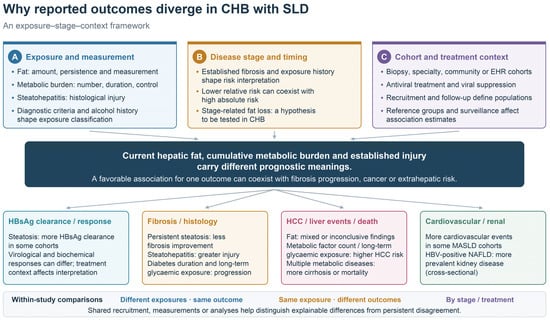
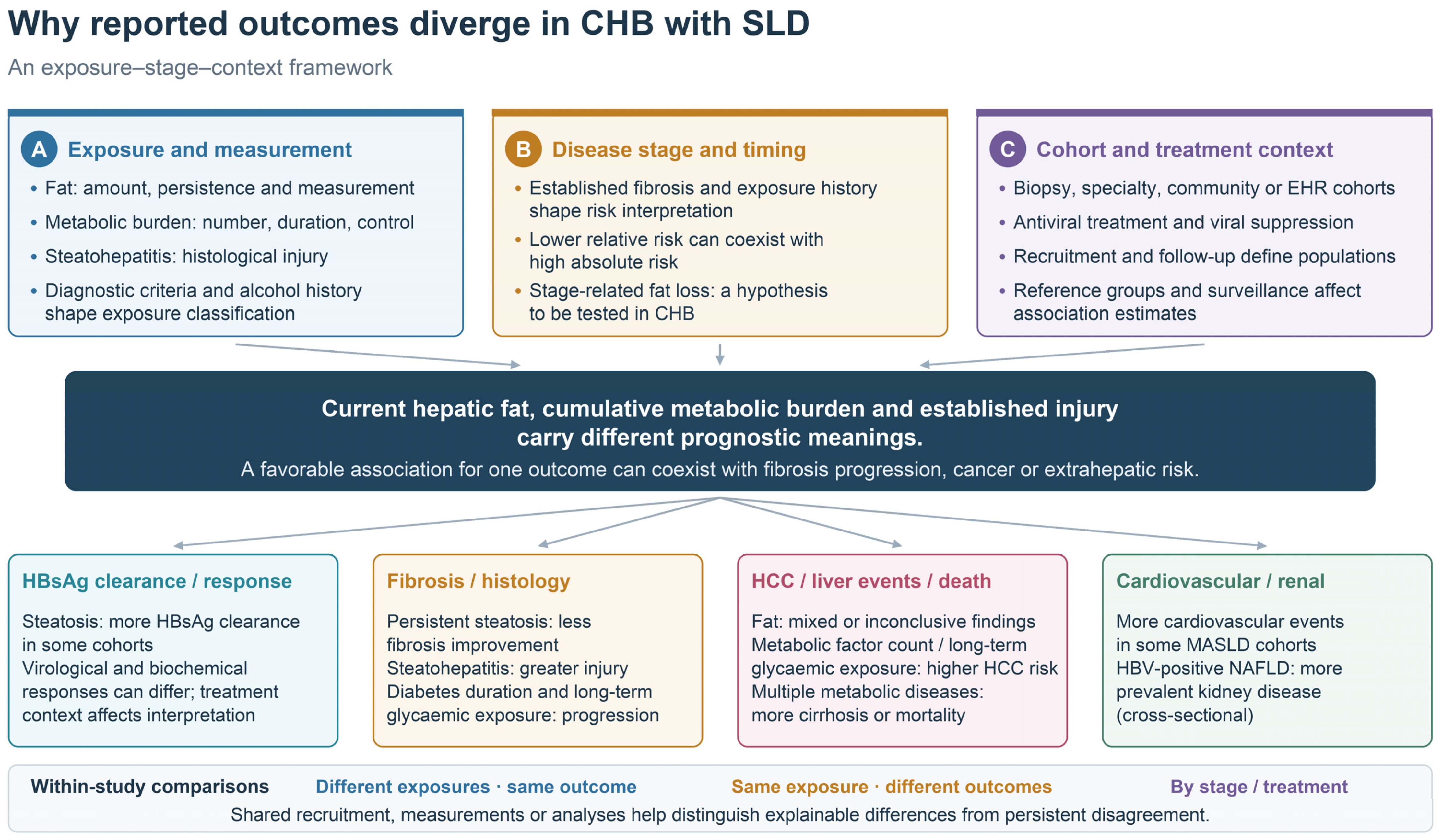

Disclaimer/Publisher’s Note: The statements, opinions and data contained in all publications are solely those of the individual author(s) and contributor(s) and not of MDPI and/or the editor(s). MDPI and/or the editor(s) disclaim responsibility for any injury to people or property resulting from any ideas, methods, instructions or products referred to in the content. |
© 2026 by the authors. Published by MDPI on behalf of the Lithuanian University of Health Sciences. Licensee MDPI, Basel, Switzerland. This article is an open access article distributed under the terms and conditions of the Creative Commons Attribution (CC BY) license.