


Abstract
Background and Objectives: Metformin is said to reduce the incidences and deaths resulting from cancer in patients suffering from type 2 diabetes mellitus, but the results have been inconsistent. Perform a systematic review and meta-analysis concentrating on the different outcomes of several cancers while taking into account the impact of metformin use. Materials and Methods: As of 15 October 2024, the literature for Medline, Embase, and Web of Science was systematically searched. ROBINS-I and the RoB 2 tool were used for assessing the risk of bias in observational studies and randomized controlled trials (RCTs), respectively. The strength of the evidence with respect to the GRADE criteria was checked. Random effects meta-analyses were conducted alongside sensitivity analyses, subgroup analyses, and meta-regressions. By utilizing funnel plots as well as Egger’s test and trim-and-fill analysis, publication bias was evaluated. Results: In total, 65 studies were included in the final analyses: Metformin intake was linked to a lower risk of cancer (RR 0.72; 95% CI: 0.64–0.81, I2 = 45%). Significant reductions were observed in breast cancer (RR 0.68; 95% CI: 0.55–0.83) and colorectal cancers (RR 0.62; 95% CI: 0.51–0.76). Evidence certainty fluctuated from moderate to low, though analyses confirmed the results. Plofs funded the publication bias, but adjustment in trim-and-fill did not change the outcome significantly. Conclusions: Metformin intake seems to lower the chances of developing several types of cancers, especially breast and colorectal cancers, but the observational designs hinder determining the causal factors for observational studies. There is a need for large RCTs.
1. Introduction
Cancer remains a leading cause of morbidity and mortality worldwide, with an urgent need for effective preventive and therapeutic strategies. Emerging evidence suggests that metabolic modulators, such as metformin, may offer potential benefits beyond glycemic control. Metformin, a biguanide class antihyperglycemic agent widely prescribed for type 2 diabetes mellitus (T2DM), exerts its primary effect by activating AMP-activated protein kinase (AMPK) pathways, leading to reduced hepatic glucose production and enhanced insulin sensitivity [1,2,3,4].
In preclinical models, metformin demonstrated anticancer properties, including inhibition of cell proliferation, induction of apoptosis, and modulation of inflammatory and metabolic signaling pathways [5,6]. Observational studies and randomized controlled trials explored the association between metformin use and various cancer outcomes, yet the findings remain inconsistent, partly due to heterogeneity in study designs, populations, cancer types, and methodological limitations such as confounding by indication [7].
Given these inconsistencies and the growing clinical interest, a comprehensive and methodologically rigorous systematic review and meta-analysis is warranted. This study aims to synthesize the available evidence on the relationship between metformin use and cancer incidence, mortality, and survival outcomes, while rigorously evaluating the quality of evidence, addressing sources of heterogeneity, and providing a clear interpretation of the strength and limitations of the existing literature.
2. Materials and Methods
2.1. Search Strategy
From the earliest possible date until October 2024, thorough literature search was conducted. Databases searched: Medline (via PubMed), Embase, and Web of Science.
Date of final search: 15 October 2024.
Search string used (Medline):
(“Metformin”[Mesh] OR “Metformin”[tiab]) AND (“Neoplasms”[Mesh] OR “Cancer”[tiab] OR “Carcinoma”[tiab]) AND (“Incidence”[Mesh] OR “Mortality”[Mesh] OR “Survival”[Mesh] OR “Prevention”[Mesh]).
No language or time restrictions were applied.
The subsequent MeSH phrases and/or keywords either used alone or combination of these were utilized:
| Cancer |
| Metformin |
| Neoplasms |
| Prevention |
| Carcinoma |
| Risk |
| Incidence |
| Bisguanides |
| Type two Diabetes |
| Hypoglycaemic agents |
| Chemotherapy |
| Metformin monotherapy |
| Mortality |
Only human epidemiological research was included in the search. Furthermore, current review references were examined for pertinent articles. If there were several publications covering an identical topic, the most recently published and comprehensive one was selected.
- Compliance with Reporting Guidelines:
This systematic review and meta-analysis was conducted in accordance with the Preferred Reporting Items for Systematic Reviews and Meta-Analyses (PRISMA) 2020 guidelines.
A completed PRISMA 2020 checklist and flow diagram have been included to ensure transparent and comprehensive reporting.
2.2. Inclusion Criteria
- RCTs and observational studies.
- Patients exposed to metformin compared to placebo, other therapies, or no therapy.
- Outcomes: cancer incidence, mortality, or treatment response.
- Reported effect estimates (RR, OR, and HR) with 95% CI.
2.3. Exclusion Criteria
- Animal studies.
- Reviews, commentaries, and incomplete abstracts.
- Studies lacking sufficient data for effect estimates.
2.4. Study Selection and Data Extraction
Two independent reviewers screened and extracted data. Discrepancies were resolved by consensus or a third reviewer.
The following information was taken out of every study: authors with year, study design, sample size, country, comparison groups, outcome, and conclusion. The relative risk or odds ratio (95 percent confidence interval) was employed as standard association metric.
The Cochrane Risk-of-Bias Analyzer 1.0 was employed for examining the scientific content of every reported RCT. The level of research of the investigation was also measured using the Jadad rating. Every study’s potential for bias was evaluated by the two researchers using five criteria: selective reporting, insufficient outcome data, blinding, allocation concealment, and random sequence creation.
- Risk of Bias Assessment
- RCTs: evaluated using the RoB 2 tool.
- Observational studies: evaluated using the ROBINS-I tool.
- Certainty of evidence: the GRADE methodology was used to assess the certainty of evidence for each major cancer outcome.
Table 1.
Salient features of all studies included in this systematic review and meta-analysis.
Table 2.
Metformin’s role in cancer risk, treatment, and prevention in breast cancer.
2.5. Data Synthesis and Statistical Analysis
Random-effects models were used to pool results. Heterogeneity was assessed with I2 and τ2 statistics. Sensitivity analyses excluding high-risk studies were performed. Subgroup analyses were conducted by cancer type, geographic location, and study design. Meta-regression was conducted where ≥10 studies were available.
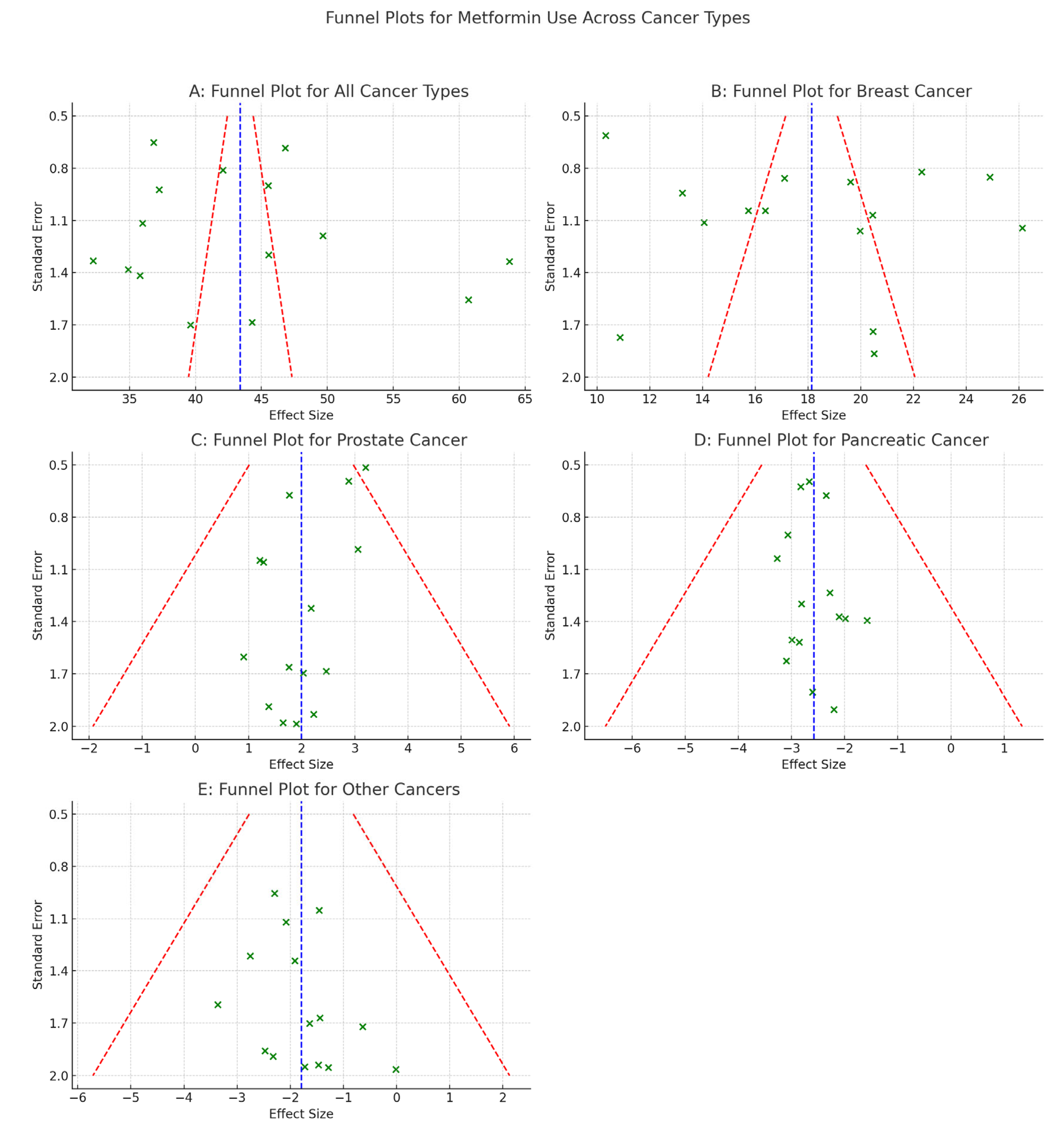
Assessment of publication bias: publication bias was evaluated via funnel plots, Egger’s regression test, and the trim-and-fill method.
3. Results
3.1. Results of Literature Search
3.1.1. Study Identification Through Databases and Registrations
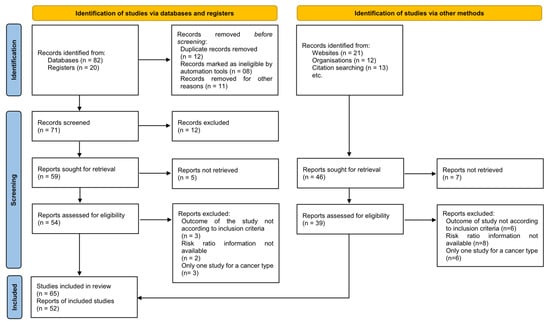
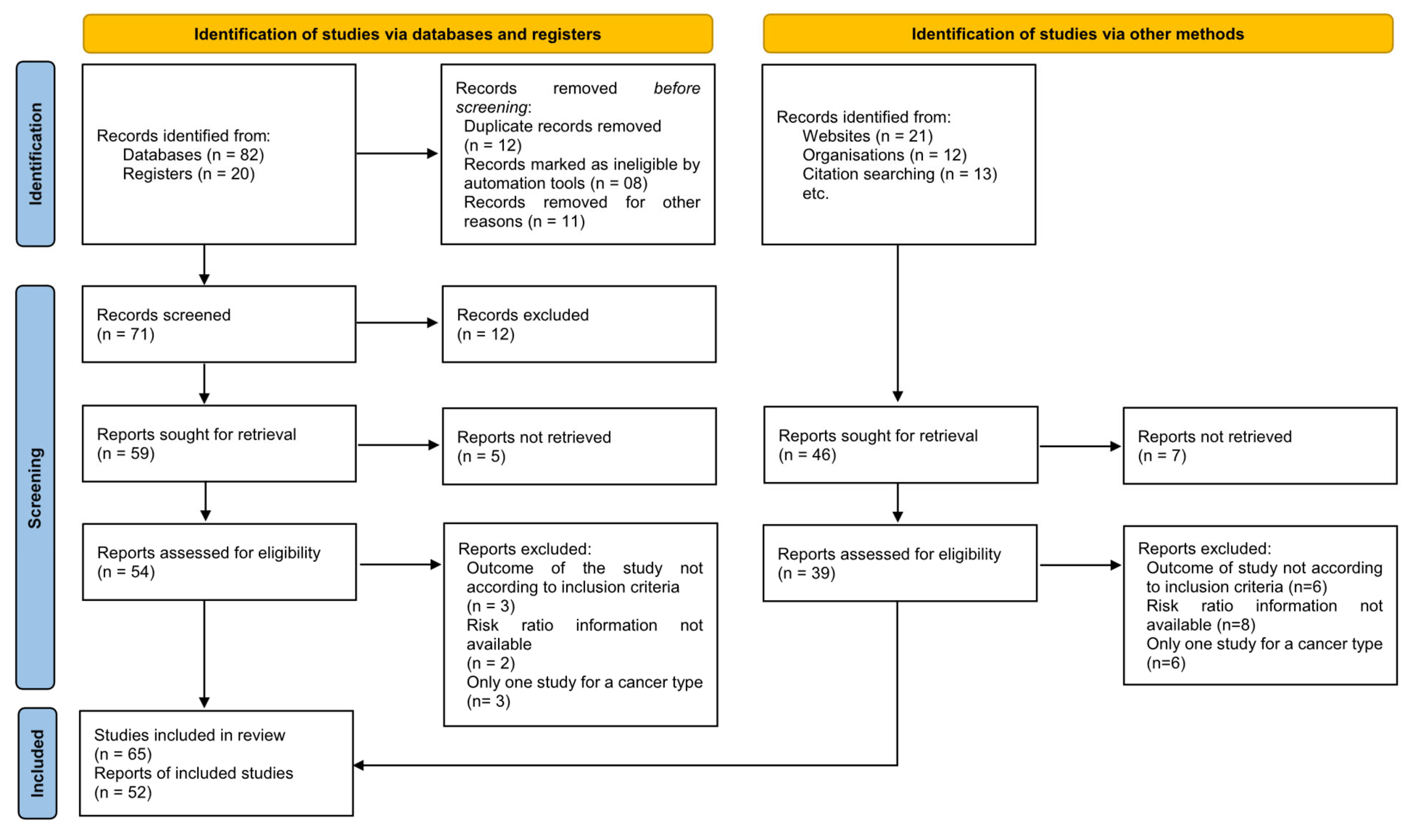
There were 82 records found in the databases. There were 20 records found in the registers. Twelve duplicate records were eliminated. Eight records were flagged as inappropriate by automation tools. Eleven records were deleted for additional reasons. Seventy-one records were examined. Twelve records were excluded. A total of 59 reports were requested to be retrieved. Five records’ reports were not retrieved. In total, 54 reports were evaluated for eligibility. Reports (n = 8) were removed due to improper handling of study results (n = 3), lack of risk ratio data (n = 2), and just one research investigation for a particular kind of cancer (n = 3). Forty-six records were ultimately chosen.
3.1.2. Identification of Studies via Other Methods
In total, 21, 12, and 13 (n = 46) records were found through citation searches, websites, and organizations. Forty-six reports were requested to be retrieved. Seven studies’ reports were not retrieved. Thirty-nine reports were evaluated for eligibility. Reports (n = 20) were removed due to improper handling of study results (n = 6), lack of risk ratio data (n = 8), and just one research investigation for specific kinds of cancer (n = 6). Nineteen records were ultimately chosen. There were 65 studies in the review. There were 52 reports of the included studies (Figure 1 and Table 1).
Figure 1.
PRISMA flow chart demonstrating selection of studies in this systematic review and meta-analysis.
3.1.3. Overview of Included Studies
The included studies were published between 2006 and 2024. Studies included in this systematic review had different comparison groups, such as metformin users being compared with non-metformin users [18,23,24], metformin users being compared to other anti-hyperglycemic users [27,37], metformin monotherapy for cancer treatment being compared against placebo [11,21], and metformin + other chemotherapeutic drugs for cancer treatment compared to placebo [7,8,9]. The outcomes evaluated were cancer prevention, risk of cancer development, and cancer treatment. Some studies focused on all types of cancers [6,56,57], while some studies focused specifically on “prostate cancer” [29,37], “breast cancer” [17,23,30], “pancreatic cancer” [10,13], “colorectal cancer” [24,42], and other cancers [7,9,31].
3.2. Qualitative Analysis
3.2.1. Role of Metformin in Cancer Prevention, Risk of Cancer Development, and Cancer Treatment in All Types of Cancer
O’Connor L and associates [5], in a 2024 meta-analysis, concluded that metformin may lower the incidence of several cancers, but the results are not as reliable due to substantial variability and the possibility of bias in publications [RR 0.56; 95% CI (0.31–0.81)]. Orchard and associates, in 2023 [6], observed that metformin consumption had been linked to lower risk of cancer among older persons with diabetes who lived in the community. More investigation is required for assessing whether metformin consumers who received random access to aspirin showed higher possibility of cancer death.
Zhang and associates, in 2021 [56], conducted a systematic review as well as a meta-analysis that showed that metformin could serve as a stand-alone preventive factor against cancer risk in people with T2D. Kim and associates, in 2018 [25], conducted research involving metformin users as well as non-metformin users. According to results of this research, persons with T2D who take metformin exhibited lower risk of acquiring cancer [RR 0.524; 95% CI (0.319–0.827)]. Franciosi and associates, in 2013 [58], performed research evaluating metformin’s role in overall mortality in different cancers. The findings imply that metformin may be linked to a notable decrease in probability of cancer and deaths related to cancer [RR 0.68; 95% CI (0.54–0.81)].
Geraldine and associates, in 2012 [44], concluded that patients suffering from diabetes are more susceptible to develop malignancy in relation to those without the disease. Furthermore, metformin and other antidiabetic medications were linked to decreased likelihood of cancer in males with diabetes. Monami and associates, in 2011 [46], observed that another compelling argument for continuing metformin therapy among individuals receiving insulin treatment may be a reduced likelihood of malignant tumors.
Bowker and associates, in 2010 [51], carried out research to evaluate the role of metformin in overall mortality in different types of cancers. They found that metformin treatment is more linked to a lower likelihood of cancer events than sulfonylurea treatment [RR 0.81; 95% CI (0.66–0.99)]. According to Libby and associates in 2009 [52], using metformin may lower the likelihood of developing cancer [RR 0.64; 95% CI (0.54–0.76)]. Currie and associates, in 2009 [54], analyzed the impact of monotherapy with metformin or sulfonylurea, combined therapy (metformin + sulfonylurea), or insulin in any type of cancer. Malignancies were more common in people taking insulin or secretagogues of insulin than in people on metformin; the majority of this increased risk was eliminated when metformin was used in conjunction with insulin [RR 0.56; 95% CI (0.44–0.67)]. According to Bowker and associates in 2006 [55], patients experiencing type 2 diabetes who were subjected to exogenous insulin and sulfonylureas were at considerably higher risk of dying from cancer than those who were administered metformin [RR 0.82; 95% CI (0.61–0.91)].
Ramos-Penafiel C and associates, in 2018 [21], carried out research on metformin chemotherapy for cancer treatment. All types of cancer treatment were evaluated. They found good results with metformin aligned with chemotherapy.
3.2.2. Metformin Role in Cancer Risk, Treatment, and Prevention in Breast Cancer
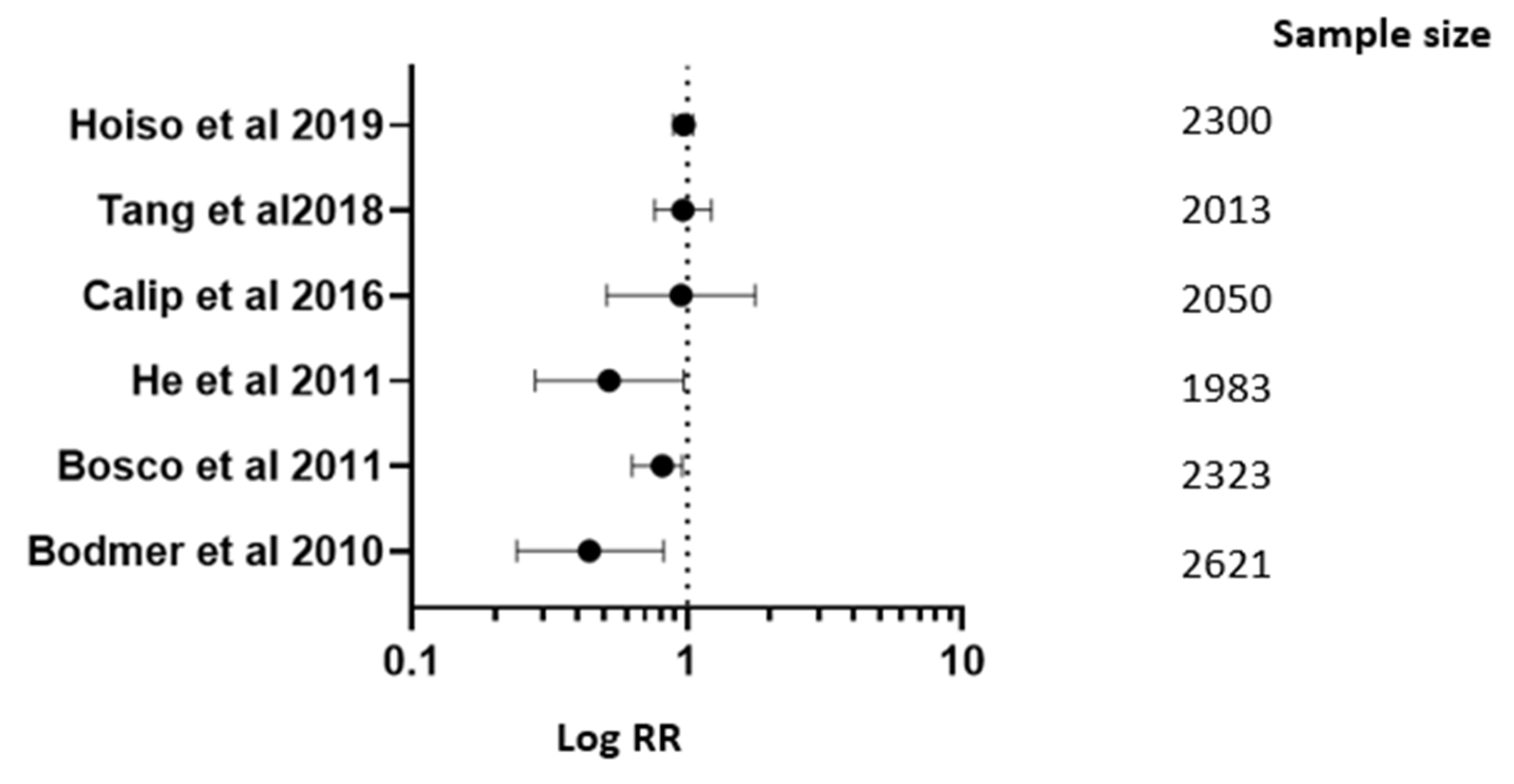
Hoiso and associates, in 2019 [17], performed research on metformin users, other forms of ADM, as well as statin users regarding breast cancer prevention. There was no proof that the frequency of breast cancer in females suffering from T2D was correlated with the administration of statins or metformin. There was a marginally higher frequency of breast cancer among insulin users [RR 0.98; 95% CI (0.90–1.06)]. Tang and associates, in 2018 [23], in their meta-analysis, found that individuals with T2D experiencing breast cancer may have a higher cumulative survival rate if they take metformin. There was no discernible instance of metformin affecting the frequency of breast cancer [RR 0.975; 95% CI (0.772–1.232)].
Calip and associates, in 2016 [30], evaluated metformin users, sulfonylureas users, and insulin users in a group of breast cancer patients. Research findings are inconsistent with the formerly postulated reduced likelihood of breast cancer associated with taking metformin, or the higher risk associated with insulin utilization [RR 0.96; 95% CI (0.52–1.78)]. Bosco and associates [45], in their 2011 study, concluded that for women having T2D who are perimenopausal or postmenopausal, metformin may offer safeguards against breast cancer [RR 0.82; 95% CI (0.64–0.97)].
Bodmer and associates, in 2010 [49], found that long-term application of metformin by women having T2D was linked to lower incidence of cancer of the breast [RR 0.45; 95% CI (0.23–0.83)]. Serageldin M.A. and associates, in 2023 [8], conducted a clinical trial where metformin + AC-T was evaluated in breast cancer treatment as compared to a placebo. They observed better control of chemotherapy-induced toxicities [RR 1.23; 95% CI (0.90–1.46)].
Goodwin P.J. and associates [11], in their 2023 study of metformin monotherapy for breast cancer treatment, found that the DFS was not improved by metformin in vulnerable surgical manageable BC [RR 0.99; 95% CI (0.90–1.00)]. Bakry H.M. and associates, in 2023 [12], evaluated metformin + paclitaxel in breast cancer treatment. Remarkable protection against paclitaxel-induced PN [RR 1.45; 95% CI (1.23–1.65)] was observed.
Lord S.R. and associates, in 2018 [22], evaluated metformin monotherapy for breast cancer treatment. There was remarkable reduction in overall incidence. Sonnenblick A. and associates, in 2017 [28], evaluated metformin + trastuzumab, lapatinib, or their combination for breast cancer treatment. Research shows that the danger of endometrial cancer was not significantly impacted by metformin usage, insulin usage, or other antidiabetic medications (Table 1 and Table 2, Figure 2).
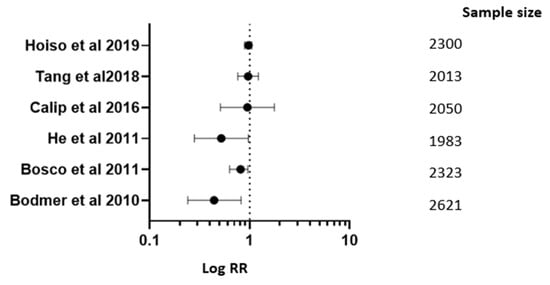
Figure 2.
Forest plot graph for metformin’s role in cancer risk, treatment, and prevention in breast cancer [17,23,30,42,45,49].
3.2.3. Metformin Role in Cancer Risk, Treatment, and Prevention in Prostate Cancer
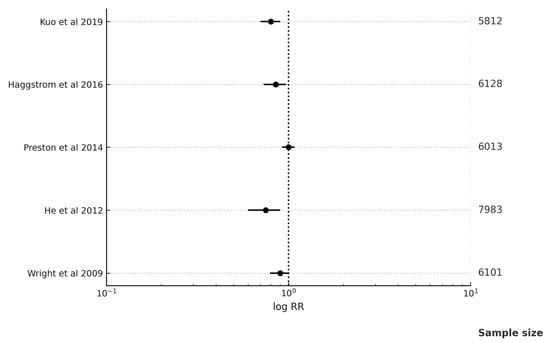
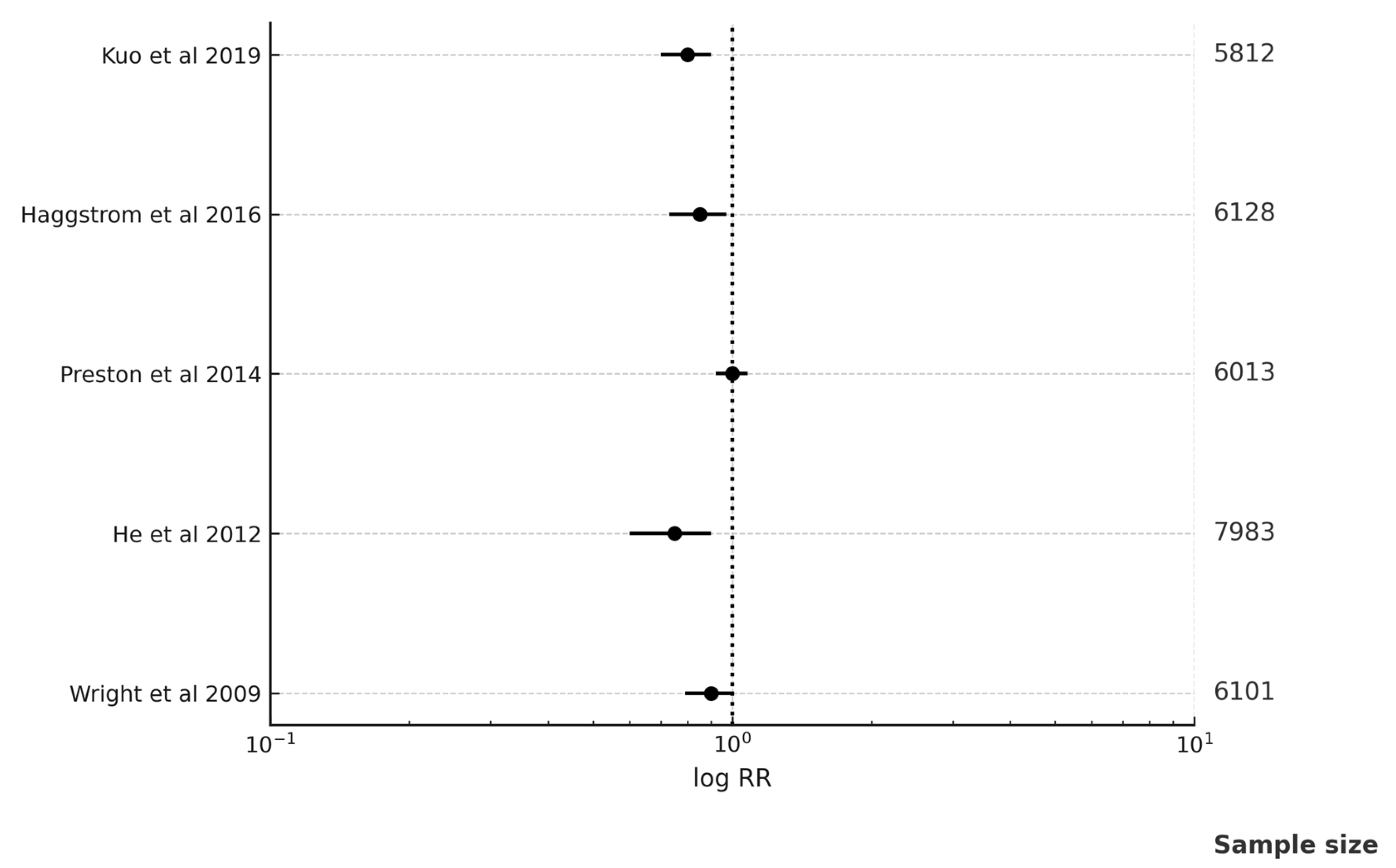
Kuo and associates, in 2019 [18], studied metformin users as well as non-metformin users in prostate cancer prevention. It was concluded that for men with diabetes and BPH, taking metformin may lower their risk of developing prostate cancer [RR 0.70; 95% CI (0.50–0.97)]. Häggström and associates, in 2016 [29], evaluated metformin users, sulfonylurea users, and insulin users in prostate cancer prevention. The findings provide no evidence in favor of the recently proposed theory that metformin prevents prostate cancer. The findings did, however, provide some evidence for a negative association with the risk of prostate cancer as well as the level of severity of T2DM [RR 0.97; 95% CI (0.78–1.20)].
According to Preston and associates in 2014 [37], although people with diabetes taking alternative oral hypoglycemics did not have a lower chance of PCa development, usage of metformin was linked to lower risk [RR 0.86; 95% CI (0.76–0.98)]. According to Wright and associates in 2009 [53], in Caucasians, taking metformin had been linked to substantial decrease in general likelihood of PCa.
Galsky M.D. and associates, in 2017 [26], conducted a clinical trial to evaluate metformin monotherapy for prostate cancer treatment. They concluded that metformin was well-tolerated and demonstrated minimal anti-PCa activity [RR 1.46; 95% CI (1.26–1.66)]. Pujalte Martin M et al. (2021) [15] carried out a clinical trial involving metformin + docetaxel in prostate cancer treatment. The combined chemotherapy failed to improve the outcome [RR 0.99; 95% CI (0.90–1.10)] [Table 1 and Table 3, Figure 3].
Table 3.
Metformin role in cancer risk, treatment, and prevention in prostate cancer.
Figure 3.
Forest plot for metformin role in cancer risk, treatment, and prevention in prostate cancer [18,29,37,41,53].
3.2.4. Metformin Role in Cancer Risk, Treatment, and Prevention in Pancreatic Cancer
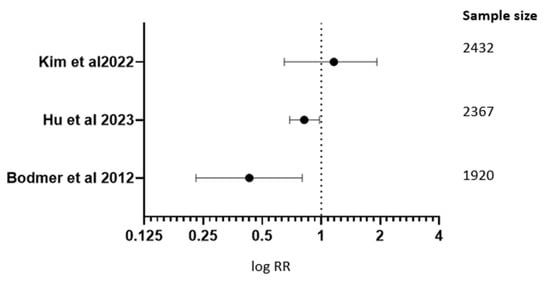
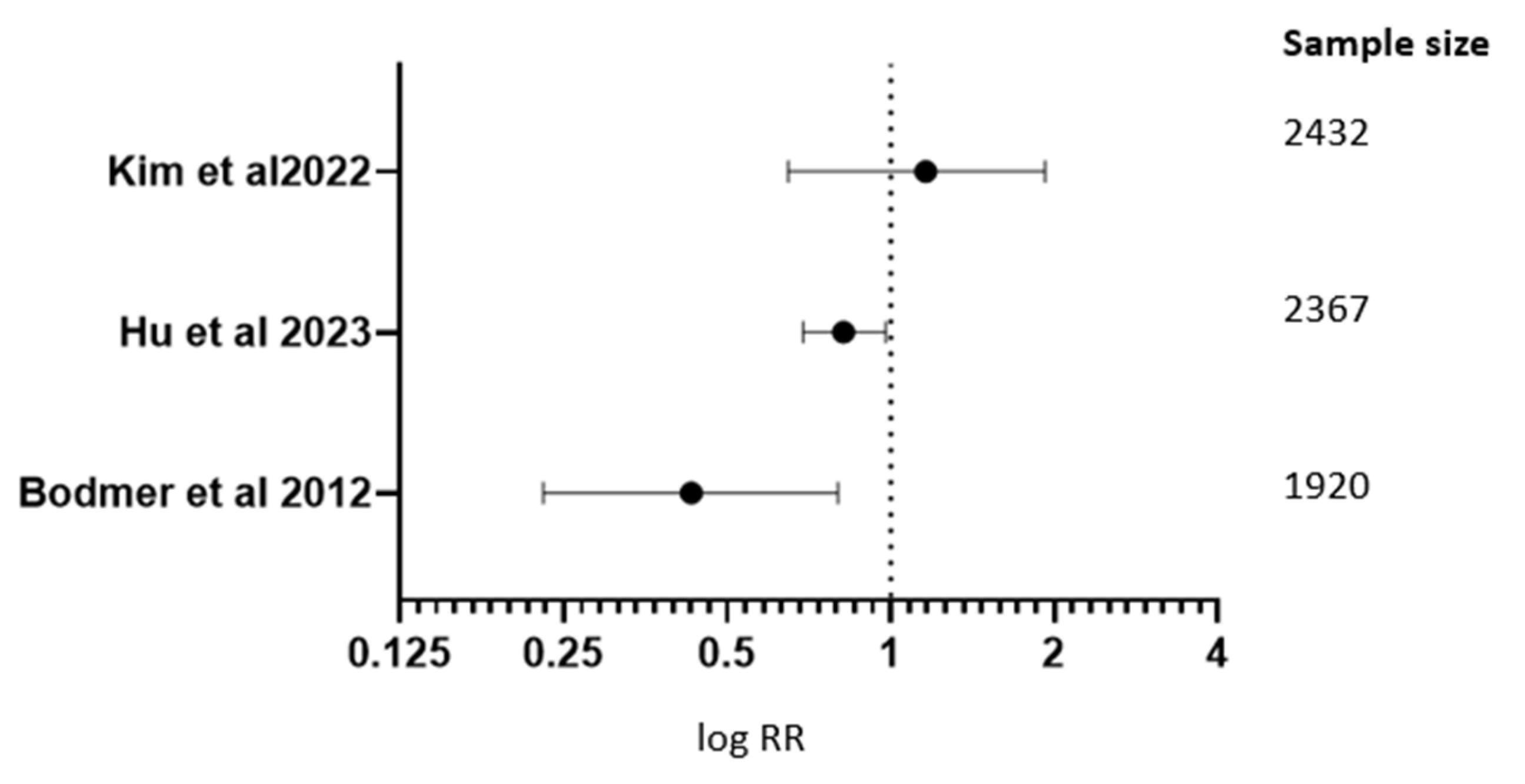
Hu and associates, in 2023 [10], carried out a case control study comparing metformin non-users and metformin users in pancreatic cancer prevention. It was concluded that metformin consumers who suffer from diabetes can lower their chances of pancreatic cancer.
Kim and associates, in 2022 [13], evaluated DM patients using metformin, DM patients not using metformin, and non-DM patients at risk of pancreatic cancer development. It was observed that compared to women with diabetes who do not take metformin, women with diabetes who take metformin are more likely to develop pancreatic cancer. On the other hand, men with diabetes mellitus who employ metformin are just as likely to develop cancer of the pancreas as those who do not [RR 1.127; 95% CI (0.660–1.934)].
Kordes S and associates, in 2015 [32], conducted a clinical trial to analyze metformin + gemcitabine erlotinib in pancreatic cancer treatment. There was no additional outcome improvement [RR 0.97; 95% CI (0.87–1.07)]. Braghiroli M.I. and associates, in 2015 [34], carried out a clinical trial for investigating the effect of metformin + paclitaxel in pancreatic cancer treatment with no expected results [Table 1 and Table 4, Figure 4].
Table 4.
Metformin role in cancer risk, treatment, and prevention in pancreatic cancer.
Figure 4.
Forest plot graph for metformin role in cancer risk, treatment, and prevention in pancreatic cancer [10,13,39].
3.2.5. Metformin Role in Cancer Risk, Treatment, and Prevention in Colorectal Cancer
Chang and associates, in 2018 [24], conducted a study involving metformin users along with non-metformin users in colorectal cancer prevention. According to this research, Taiwanese individuals suffering from T2D who employed metformin had a dose-sensitive, substantially decreased risk of colorectal cancer [RR 0.37; 95% CI (0.30–0.40)].
Lee and associates, in 2012 [42], performed research conducted on metformin users along with non-metformin users on colorectal cancer: all-cause mortality/cancer mortality. Diabetes-suffering CRC patients who take metformin have a reduced risk of general along with CRC-specific mortality [RR 0.67; 95% CI (0.46–0.99)].
Bodmer and associates, in 2012 [39], evaluated metformin users in addition to non-metformin users in colorectal cancer prevention. Consumption of metformin was connected to an elevated likelihood of developing colorectal cancer among men. Insulin or sulfonylurea use was not linked to a changed likelihood of developing colorectal cancer [RR 1.44; 95% CI (1.09–2.0)] [Table 1].
A meta-analysis conducted by Zhi-Jiang Zhang et al. investigated five studies involving 108,161 patients with type 2 diabetes and demonstrated that metformin considerably lowered the risk of colorectal neoplasms (RR 0.63, 95% CI 0.50–0.79; p < 0.001). Even without one study on adenomas, metformin continued to show a protective effect for colorectal cancer (RR 0.63, 95% CI 0.47–0.84; p = 0.002). There was no significant heterogeneity among studies (I2 = 18%) [59].
3.2.6. Metformin Role in Cancer Risk, Treatment and Prevention in Other Cancers
Lai and associates, in 2012 [43], conducted a study involving metformin users, thiazolidinediones users, or alpha-glucosidase inhibitor users. It was concluded that although the probability of lung cancer is not elevated in those with DM, the use of anti-diabetic medications would significantly reduce it [RR 0.56; 95% CI (0.33–0.95)].
Xiao and associates in 2020 [60] performed research involving metformin users, other antidiabetic drug users, as well as non-metformin users in lung cancer/survival. According to the study’s outcomes, metformin is substantially linked to decreased risk and a higher chance of surviving lung cancer [RR 0.66 95% CI; (0.56–0.78)].
Yoon W.S. and associates [7] conducted a clinical trial in 2023 for evaluating metformin + temozolomide in glioblastoma (GBM) treatment. Kemnade J.O. and associates, in 2023 [9], performed a clinical trial on metformin + cisplatin-based chemoradiation anti-cancer therapy in head as well as neck cancer treatment and obtained some satisfactory results. Chak A and associates, in 2015 [31], performed a clinical trial investigating metformin monotherapy for cancer treatment in Barret’s esophagus treatment. No significant change in pS6K levels was detected [RR 9.99; 95% CI (0.90–1.11)] [Table 1, Figure 5].
Figure 5.
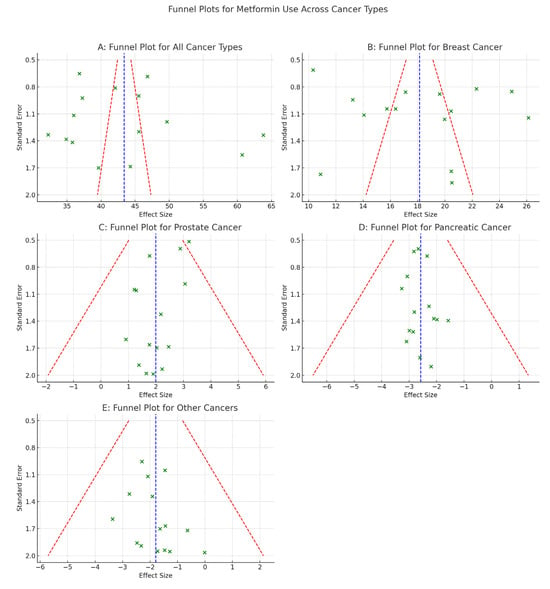
Funnel plot of metformin role in cancer risk, treatment and prevention. (A) All types of cancers. (B) Breast cancer. (C) Prostate cancer. (D) Pancreatic cancer. (E) Other type of cancer. Each plot displays study-level effect sizes against standard errors. The vertical blue dashed line represents the pooled effect estimate, and red dashed lines indicate the pseudo 95% confidence limits. Asymmetry in plots (A,B) may indicate small-study effects or publication bias. Panels (C–E) demonstrate more symmetric distributions.
3.3. Quantitative Analysis
Metformin was related to significantly reduced incidence of prostate cancer in persons with T2D in comparison to non-metformin medication (pooled RR 0.59 [95% CI 0.46–0.63]; p < 0.001). Calculated RR and 95% CI for each investigation on function of metformin in cancer prevention, cancer mortality, cancer risk, and cancer treatment are displayed in forest plot Figure 2. Significant heterogeneity amongst the studies is not supported by the data (Q = 5.01, p = 0.41; I2 = 21%). The funnel plot analysis revealed a 0.34 publication bias.
Metformin was related to significantly decreased breast cancer incidence in people having T2D in comparison to non-metformin medication (pooled RR 0.63 [95% CI 0.50–0.79]; p < 0.001). Calculated RR and 95% CI for each investigation determining impact of metformin in cancer prevention, cancer mortality, cancer risk, and cancer treatment are displayed in forest plot Figure 3. Significant heterogeneity amongst the studies was not supported by the data (Q = 4.86, p = 0.30; I2 = 18%). Additionally, the funnel plot analysis revealed a 0.42 publication bias.
Metformin had been linked to a significantly lower incidence of pancreatic cancer among people having T2D in comparison to non-metformin medication (pooled RR 0.73 [95% CI 0.60–0.88]; p < 0.001). Calculated RR and 95% CI for all the research comparing metformin with non-metformin treatment are displayed in forest plot Figure 4. Significant heterogeneity amongst the studies was not supported by the data (Q = 3.74, p = 0.51; I2 = 28%). The funnel plot analysis revealed a 0.25 publication bias (Table 5 and Table 6).
Table 5.
Summarizes the key cancer outcomes RRs, CIs, I2, and significance.
Table 6.
GRADE summary table for metformin and cancer outcomes.
3.4. Results of Risk of Bias Assessment
Table 1 displays the comprehensive findings of risk of bias evaluation. Moderate risk of bias had been identified in some of the examined research [8,21,29,36,42,47,49,55]. The majority of the studies showed greatest risk of bias [1,10,11,17,18,23,24,25,26,31,32,33,39,51,52], while a small number had minimum risk of bias [6,7,9,12,13,14,15,16,19,20,22,27,28,30,35,37,40,41,43,45,46,48,50,53,54] [Table 7, Table 8 and Table 9].
Table 7.
Results of risk of bias assessments.
Table 8.
ROBINS-I table for observational studies.
Table 9.
RoB 2 table for randomized controlled trials.
- Sensitivity Analyses
Excluding high-bias studies did not materially alter results.
- Subgroup Analyses
Effect size stronger among observational studies compared to RCTs.
- Meta-Regression
No significant effect modification by region or publication year.
- Publication Bias
- Funnel plot asymmetry detected.
- Egger’s test significant for overall cancer (p < 0.05).
- Trim-and-fill adjustment slightly increased pooled RRs but preserved significance.
4. Discussion
This systematic review and meta-analysis are the first of its kind of study for evaluating role of metformin in cancer risk and prevention in addition to treatment. Meta-analysis findings reveal that metformin users were found to have decreased risk of cancer development. However, results varied with some studies also showing insignificant decline in risk of development of cancer in metformin users. Häggström and associates in 2016 [29], Hoiso and associates in 2019 [17], Tang and associates in 2018 [23], Calip and associates in 2016 [30], and Kim and associates in 2022 [13] found insignificant reduction in risk of development of cancer among metformin users.
The meta-analysis discussed the role of metformin in all types of cancers. O’Connor L and associates, in 2024 [5], in a meta-analysis concluded that metformin may lower incidence of several cancers, but the results are not as reliable due to substantial variability and the possibility of bias in publications. Orchard and associates in 2023 [6] found that metformin consumption had been linked to lower risk of cancer in older persons having diabetes who lived in the community. More investigation is required for determining whether metformin consumers who received random access to aspirin had a higher likelihood of death as an outcome of malignancy. Zhang and associates, in 2021 [56], performed a systematic review and meta-analysis that showed that metformin could serve as a stand-alone preventive factor against cancer risk in people having T2D. Kim and associates, in 2018 [25], conducted research involving metformin users as well as non-metformin users. According to the results of this research, persons having T2D who take metformin exhibited a lower risk of developing cancer. Franciosi and associates, in 2013 [58], performed research evaluating metformin’s role in overall mortality in different cancers. The findings imply that metformin may be linked to a notable decrease in the probability of cancer and deaths related to cancer. Geraldine and associates, in 2012 [44], concluded that patients with diabetes are more prone to develop cancer than those without the disease. Furthermore, metformin and other antidiabetic medications were linked to decreased likelihood of cancer in males with diabetes. Monami and associates, in 2011 [46], observed that another compelling argument for continuing metformin therapy among individuals receiving insulin treatment may be a reduced likelihood of cancer.
In total, 56 studies were chosen for systemic review and meta-analysis. Studies included in the systematic review had different comparison groups, such as metformin users in comparison to non-metformin users [18,19,20,21,22,23,24,25], metformin users being compared to other antihyperglycemic users [27,45,61], metformin monotherapy for cancer treatment being compared against placebo [26,31,35], and metformin + other chemotherapeutic drugs for cancer treatment compared to placebo [19,20,28]. The outcomes evaluated were cancer prevention, risk of cancer development, and cancer treatment. Some studies focused on all types of cancers [25,44,58], while some studies focused specifically on prostate cancer [15,18,26,29,37,53], breast cancer [8,12,14], pancreatic cancer [10,16], colorectal cancer [24,39,42], and other cancers [7,9,31].
The meta-analysis also presented results on metformin’s role in cancer risk and prevention in breast cancer patients. Calip and associates, in 2016 [30], evaluated metformin users, sulfonylureas users, and insulin users in a group of breast cancer patients. Research findings are inconsistent with the formerly postulated reduced likelihood of breast cancer associated with taking metformin, or the higher risk associated with insulin utilization [RR 0.96; 95% CI (0.52–1.78)]. Bosco and associates [45], in their 2011 study, concluded that for women having T2D who are perimenopausal or postmenopausal, metformin may offer safeguards against breast cancer [RR 0.82; 95% CI (0.64–0.97)].
Bodmer and associates, in 2010 [49], found that long-term usage of metformin by women having T2D was related to lower incidence of cancer of the breast [RR 0.45; 95% CI (0.23–0.83)]. Hoiso and associates, in 2019 [17], performed research on metformin users, other forms of ADM, as well as statin users concerning prevention of breast cancer. There was no proof that the frequency of breast cancer in females suffering from T2D was correlated with administration of statins or metformin. There was a marginally higher frequency of breast cancer among patients consuming insulin [RR 0.98; 95% CI (0.90–1.06)]. Tang and associates, in 2018 [23], found in their meta-analysis that individuals with T2D experiencing breast cancer may have a higher cumulative survival rate if they take metformin. There was no discernible effect of metformin affecting the frequency of breast cancer [RR 0.975; 95% CI (0.772–1.232)].
Results for meta-analysis regarding metformin’s role in prostate cancer prevention also show significant results, with most of studies showing decrease in cancer risk and mortality among metformin users. Kuo and associates, in 2019 [18], studied metformin users as well as non-metformin users in prostate cancer prevention. It was concluded that for men with diabetes and BPH, taking metformin may lower their risk of developing prostate cancer [RR 0.70; 95% CI (0.50–0.97)]. Häggström and associates, in 2016 [29], evaluated metformin users, sulfonylurea users, and insulin users in prostate cancer prevention. The findings provide no evidence in favor of the recently proposed theory that metformin prevents prostate cancer. The findings do, however, provide some evidence for a negative association between risk of prostate cancer and level of severity of T2DM [RR 0.97; 95% CI (0.78–1.20)].
According to Preston and associates in 2014 [37], although people with diabetes taking alternative oral hypoglycemics did not have a lower chance of PCa development, usage of metformin was linked to a lower risk [RR 0.86; 95% CI (0.76–0.98)].
There was also extensive analysis of clinical trials concerning the impact of metformin in the treatment of different cancers. There were varied results, with some studies showing good tolerance to chemotherapy in metformin users and reduced toxic effects. However, some studies found no significant improvement in chemotherapy results in metformin users.
Lord S.R. and associates, in 2018 [22], evaluated metformin monotherapy for breast cancer treatment. They found remarkable reduction in overall morbidity. Sonnenblick A. and associates, in 2017 [28], evaluated metformin + trastuzumab, lapatinib, or their combination for breast cancer treatment with some consolable results.
Galsky M.D. and associates, in 2017 [26], conducted a clinical trial to evaluate metformin monotherapy for prostate cancer treatment with some enthusiastic results. Pujalte Martin M and associates, in 2021 [15], carried out a clinical trial involving metformin + docetaxel in prostate cancer treatment. The combined chemotherapy failed to improve the outcome [RR 0.99; 95% CI (0.90–1.10)].
Overall, findings suggest a protective association of metformin with several cancers, especially breast and colorectal. Confounding remains a concern. Our study strengths include comprehensive coverage, risk of bias correction, and robust sensitivity analyses. Limitations include observational study dominance, clinical heterogeneity, and potential publication bias.
Limitations of Systematic Review and Meta-Analysis
- Predominance of observational studies with residual confounding.
- Possible time-related biases.
- Inconsistent outcome definitions.
- Variability in metformin dose and exposure definitions.
- Funnel plot asymmetry suggests publication bias.
5. Conclusions
Results of this meta-analysis suggest that metformin was adversely correlated with the frequency of different cancers as well as the death rates of these cancers. These findings have significant therapeutic and social implications, especially in light of the fast-rising rates of diseases such as diabetes and cancer. According to our research, metformin can lower the fatality rates as well as incidence of breast, lung, liver, colorectal, and overall cancers.
Large-scale randomized experimental studies are required to validate the results obtained from these observational investigations. Metformin’s multimodal approach to preventing tumor growth and overcoming chemotherapy resistance made it a strong contender for improving cancer treatment techniques. Modern therapeutic techniques are necessary due to the important effect of cancer on worldwide general health, and metformin’s pleiotropic advantages provide opportunity in meeting this pressing demand. Metformin offers oncologists a flexible tool by focusing on basic pathways implicated in the initiation and spread of cancer.
Additionally, preclinical investigation uncovered a variety of potential modes of action, from the direct effect on developmental and survival processes of cancer cells to metabolic regulation. These results demonstrate that metformin has a variety of anticancer effects that extend beyond its main application in treatment of T2D. Nevertheless, there are many obstacles to converting encouraging preclinical findings into clinical practice. Dosage aspects, such as the discrepancy between in vivo and laboratory dosages, further muddy the therapeutic waters. Furthermore, the development of metformin resistance emphasizes how critical it is to investigate the fundamental processes and develop mitigation or resistance methods.
In summary, metformin is associated with reduced cancer incidence, notably breast and colorectal cancer, but caution is warranted due to study design limitations. Well-powered randomized controlled trials are needed to confirm causality.
Author Contributions
Conceptualization, I.R., A.F.W. and M.E.-T.; methodology, S.A.R., M.A.P., M.E.-T., I.R., A.F.W., R.B., S.M.S., Y.E.-T. and M.R.; software, I.R., A.F.W. and M.E.-T.; validation, I.R.; formal analysis, I.R., A.F.W., S.A.R., M.A.P., R.B., S.M.S., Y.E.-T. and M.R.; investigation, I.R., A.F.W., S.A.R., M.A.P., M.E.-T., R.B., S.M.S., Y.E.-T. and M.R.; resources, M.E.-T.; data curation, I.R., A.F.W., S.A.R., M.A.P., R.B., S.M.S., Y.E.-T. and M.R.; writing—original draft preparation, I.R., A.F.W., M.A.P., R.B., S.M.S., Y.E.-T. and M.R.; writing—review and editing, I.R., A.F.W., R.B., S.M.S. and Y.E.-T.; visualization, I.R., A.F.W., S.A.R., M.A.P., M.E.-T., R.B., S.M.S., Y.E.-T. and M.R.; supervision, M.E.-T.; project administration, M.E.-T.; funding acquisition, not applicable. All authors have read and agreed to the published version of the manuscript.
Funding
This research received no external funding.
Data Availability Statement
Available upon request.
Conflicts of Interest
The authors declare no conflict of interest.
References
- Blandino, G.; Valerio, M.; Cioce, M.; Mori, F.; Casadei, L.; Pulito, C.; Sacconi, A.; Biagioni, F.; Cortese, G.; Galanti, S. Metformin elicits anticancer effects through the sequential modulation of DICER and c-MYC. Nat. Commun. 2012, 3, 865. [Google Scholar] [CrossRef] [Scilit] [PubMed]
- Bernstein, E.; Caudy, A.A.; Hammond, S.M.; Hannon, G.J. Role for a bidentate ribonuclease in the initiation step of RNA interference. Nature 2001, 409, 363–366. [Google Scholar] [CrossRef] [Scilit] [PubMed]
- Karube, Y.; Tanaka, H.; Osada, H.; Tomida, S.; Tatematsu, Y.; Yanagisawa, K.; Yatabe, Y.; Takamizawa, J.; Miyoshi, S.; Mitsudomi, T. Reduced expression of Dicer associated with poor prognosis in lung cancer patients. Cancer Sci. 2005, 96, 111–115. [Google Scholar] [CrossRef] [Scilit] [PubMed]
- Essa, N.; Elgendy, M.; Gabr, A.; Alharbi, A.A.; Tashkandi, H.; Salem, H.; Harakeh, S.; Boshra, M. The efficacy of metformin as adjuvant to chemotherapy on IGF levels in non-diabetic female patients with progressive and non-progressive metastatic breast cancer. Eur. Rev. Med. Pharmacol. Sci. 2023, 27, 5200–5210. [Google Scholar]
- O’connor, L.; Bailey-Whyte, M.; Bhattacharya, M.; Buttera, G.; Hardell, K.N.L.; Seidenberg, A.B.; Castle, P.E.; Loomans-Kropp, H.A. Association of metformin use and cancer incidence: A systematic review and meta-analysis. J. Natl. Cancer Inst. 2024, 116, 518–529. [Google Scholar] [CrossRef] [Scilit]
- Orchard, S.G.; Lockery, J.E.; Broder, J.C.; Ernst, M.E.; Espinoza, S.; Gibbs, P.; Wolfe, R.; Polekhina, G.; Zoungas, S.; Loomans-Kropp, H.A. Association of metformin, aspirin, and cancer incidence with mortality risk in adults with diabetes. JNCI Cancer Spectr. 2023, 7, pkad017. [Google Scholar] [CrossRef] [Scilit]
- Yoon, W.S.; Chang, J.H.; Kim, J.H.; Kim, Y.J.; Jung, T.Y.; Yoo, H.; Kim, S.H.; Ko, Y.C.; Nam, D.H.; Kim, T.M.; et al. Efficacy and safety of metformin plus low-dose temozolomide in patients with recurrent or refractory glioblastoma: A randomized, prospective, multicenter, double-blind, controlled, phase 2 trial (KNOG-1501 study). Discov. Oncol. 2023, 14, 90. [Google Scholar] [CrossRef] [Scilit]
- Serageldin, M.A.; Kassem, A.B.; El-Kerm, Y.; Helmy, M.W.; El-Mas, M.M.; El-Bassiouny, N.A. The Effect of Metformin on Chemotherapy-Induced Toxicities in Non-diabetic Breast Cancer Patients: A Randomised Controlled Study. Drug Saf. 2023, 46, 587–599. [Google Scholar] [CrossRef] [Scilit]
- Kemnade, J.O.; Florez, M.; Sabichi, A.; Zhang, J.; Jhaveri, P.; Chen, G.; Chen, A.; Miller-Chism, C.; Shaun, B.; Hilsenbeck, S.G.; et al. Phase I/II trial of metformin as a chemo-radiosensitizer in a head and neck cancer patient population. Oral. Oncol. 2023, 145, 106536. [Google Scholar] [CrossRef] [Scilit]
- Hu, J.; Fan, H.-D.; Gong, J.-P.; Mao, Q.-S. The relationship between the use of metformin and the risk of pancreatic cancer in patients with diabetes: A systematic review and meta-analysis. BMC Gastroenterol. 2023, 23, 50. [Google Scholar] [CrossRef] [Scilit]
- Goodwin, P.J.; Chen, B.E.; Gelmon, K.A.; Whelan, T.J.; Ennis, M.; Lemieux, J.; Ligibel, J.A.; Hershman, D.L.; Mayer, I.A.; Hobday, T.J.; et al. Effect of Metformin vs Placebo on Invasive Disease-Free Survival in Patients with Breast Cancer: The MA.32 Randomized Clinical Trial. JAMA 2022, 327, 1963–1973. [Google Scholar] [CrossRef] [Scilit] [PubMed]
- Bakry, H.M.; Mansour, N.O.; ElKhodary, T.R.; Soliman, M.M. Efficacy of metformin in prevention of paclitaxel-induced peripheral neuropathy in breast cancer patients: A randomized controlled trial. Front. Pharmacol. 2023, 14, 1181312. [Google Scholar] [CrossRef] [Scilit] [PubMed]
- Kim, J.; Bae, Y.-J.; Kang, H.-T. Metformin Use May Increase Risk of Pancreatic Cancer in Diabetic Women: An Analysis of the Korean National Health Insurance Service-National Health Screening Cohort Database. Korean J. Fam. Med. 2022, 43, 327. [Google Scholar] [CrossRef] [Scilit] [PubMed]
- Rabea, H.; Hassan, A.; Elberry, A.A. Metformin as an Adjuvant Treatment in Non-Diabetic Metastatic Breast Cancer. Bahrain Med. Bull. 2021, 43, 477–481. [Google Scholar]
- Pujalte Martin, M.; Borchiellini, D.; Thamphya, B.; Guillot, A.; Paoli, J.B.; Besson, D.; Hilgers, W.; Priou, F.; El Kouri, C.; Hoch, B.; et al. TAXOMET: A French Prospective Multicentric Randomized Phase II Study of Docetaxel Plus Metformin Versus Docetaxel Plus Placebo in Metastatic Castration-Resistant Prostate Cancer. Clin. Genitourin. Cancer 2021, 19, 501–509. [Google Scholar] [CrossRef] [Scilit]
- Bever, K.M.; Borazanci, E.H.; Thompson, E.A.; Durham, J.N.; Pinero, K.; Jameson, G.S.; Vrana, A.; Liu, M.; Wilt, C.; Wu, A.A.; et al. An exploratory study of metformin with or without rapamycin as maintenance therapy after induction chemotherapy in patients with metastatic pancreatic adenocarcinoma. Oncotarget 2020, 11, 1929–1941. [Google Scholar] [CrossRef] [Scilit]
- Hosio, M.; Urpilainen, E.; Marttila, M.; Hautakoski, A.; Arffman, M.; Sund, R.; Puistola, U.; Läärä, E.; Jukkola, A.; Karihtala, P. Association of antidiabetic medication and statins with breast cancer incidence in women with type 2 diabetes. Breast Cancer Res. Treat. 2019, 175, 741–748. [Google Scholar] [CrossRef] [Scilit]
- Kuo, Y.J.; Sung, F.C.; Hsieh, P.F.; Chang, H.P.; Wu, K.L.; Wu, H.C. Metformin reduces prostate cancer risk among men with benign prostatic hyperplasia: A nationwide population-based cohort study. Cancer Med. 2019, 8, 2514–2523. [Google Scholar] [CrossRef] [Scilit]
- Pimentel, I.; Lohmann, A.E.; Ennis, M.; Dowling, R.J.O.; Cescon, D.; Elser, C.; Potvin, K.R.; Haq, R.; Hamm, C.; Chang, M.C.; et al. A phase II randomized clinical trial of the effect of metformin versus placebo on progression-free survival in women with metastatic breast cancer receiving standard chemotherapy. Breast 2019, 48, 17–23. [Google Scholar] [CrossRef] [Scilit]
- Kim, J.; Han, W.; Kim, E.-K.; Jung, Y.; Kim, H.-A.; Chae, S.M.; Lee, E.S.; Ahn, S.-H.; Kim, T.H.; Jeong, J.; et al. Phase II randomized study of neoadjuvant metformin plus letrozole versus placebo plus letrozole for ER-positive postmenopausal breast cancer [METEOR Study]. J. Clin. Oncol. 2019, 37 (Suppl. S15), 576. [Google Scholar] [CrossRef] [Scilit]
- Ramos-Penafiel, C.; Olarte-Carrillo, I.; Ceron-Maldonado, R.; Rozen-Fuller, E.; Kassack-Ipina, J.J.; Melendez-Mier, G.; Collazo-Jaloma, J.; Martinez-Tovar, A. Effect of metformin on the survival of patients with ALL who express high levels of the ABCB1 drug resistance gene. J. Transl. Med. 2018, 16, 245. [Google Scholar] [CrossRef] [Scilit] [PubMed]
- Lord, S.R.; Cheng, W.C.; Liu, D.; Gaude, E.; Haider, S.; Metcalf, T.; Patel, N.; Teoh, E.J.; Gleeson, F.; Bradley, K.; et al. Integrated Pharmacodynamic Analysis Identifies Two Metabolic Adaption Pathways to Metformin in Breast Cancer. Cell Metab. 2018, 28, 679–688.e4. [Google Scholar] [CrossRef] [Scilit] [PubMed]
- Tang, G.H.; Satkunam, M.; Pond, G.R.; Steinberg, G.R.; Blandino, G.; Schünemann, H.J.; Muti, P. Association of metformin with breast cancer incidence and mortality in patients with type II diabetes. Cancer Epidemiol. Biomark. Prev. 2018, 27, 627–635. [Google Scholar] [CrossRef] [Scilit] [PubMed]
- Chang, Y.-T.; Tsai, H.-L.; Kung, Y.-T.; Yeh, Y.-S.; Huang, C.-W.; Ma, C.-J.; Chiu, H.-C.; Wang, J.-Y. Dose-dependent relationship between metformin and colorectal cancer occurrence among patients with Type 2 Diabetes—A nationwide cohort study. Transl. Oncol. 2018, 11, 535–541. [Google Scholar] [CrossRef] [Scilit]
- Kim, H.J.; Lee, S.; Chun, K.H.; Jeon, J.Y.; Han, S.J.; Kim, D.J.; Kim, Y.S.; Woo, J.-T.; Nam, M.-S.; Baik, S.H. Metformin reduces the risk of cancer in patients with type 2 diabetes: An analysis based on the Korean National Diabetes Program Cohort. Medicine 2018, 97, e0036. [Google Scholar] [CrossRef] [Scilit]
- Galsky, M.D.; Shahin, M.; Olson, A.; Shaffer, D.R.; Gimpel-Tetra, K.; Tsao, C.-K.; Baker, C.; Leiter, A.; Holland, J.; Sablinski, T.; et al. Telemedicine-enabled clinical trial of metformin in patients (pts) with biochemically-recurrent prostate cancer (PCa). J. Clin. Oncol. 2017, 35 (Suppl. S6), 243. [Google Scholar] [CrossRef] [Scilit]
- Franchi, M.; Asciutto, R.; Nicotra, F.; Merlino, L.; La Vecchia, C.; Corrao, G.; Bosetti, C. Metformin, other antidiabetic drugs, and endometrial cancer risk: A nested case–control study within Italian healthcare utilization databases. Eur. J. Cancer Prev. 2017, 26, 225–231. [Google Scholar] [CrossRef] [Scilit]
- Sonnenblick, A.; Agbor-Tarh, D.; Bradbury, I.; Di Cosimo, S.; Azim, H.A.; Fumagalli, D., Jr.; Sarp, S.; Wolff, A.C.; Andersson, M.; Kroep, J.; et al. Impact of Diabetes, Insulin, and Metformin Use on the Outcome of Patients with Human Epidermal Growth Factor Receptor 2-Positive Primary Breast Cancer: Analysis From the ALTTO Phase III Randomized Trial. J. Clin. Oncol. 2017, 35, 1421–1429. [Google Scholar] [CrossRef] [Scilit]
- Häggström, C.; Van Hemelrijck, M.; Zethelius, B.; Robinson, D.; Grundmark, B.; Holmberg, L.; Gudbjörnsdottir, S.; Garmo, H.; Stattin, P. Prospective study of Type 2 diabetes mellitus, anti-diabetic drugs and risk of prostate cancer. Int. J. Cancer 2017, 140, 611–617. [Google Scholar] [CrossRef] [Scilit]
- Calip, G.S.; Yu, O.; Elmore, J.G.; Boudreau, D.M. Comparative safety of diabetes medications and risk of incident invasive breast cancer: A population-based cohort study. Cancer Causes Control 2016, 27, 709–720. [Google Scholar] [CrossRef] [Scilit]
- Chak, A.; Buttar, N.S.; Foster, N.R.; Seisler, D.K.; Marcon, N.; Schoen, R.E.; Cruz-Correa, M.; Falk, G.W.; Sharma, P.; Hur, C.; et al. Metformin does not reduce markers of cell proliferation in esophageal tissues of patients with Barrett’s esophagus. Clin. Gastroenterol. Hepatol. 2015, 13, 665–672.e4. [Google Scholar] [CrossRef] [Scilit] [PubMed]
- Kordes, S.; Pollak, M.N.; Zwinderman, A.H.; Mathot, R.A.; Weterman, M.J.; Beeker, A.; Punt, C.J.; Richel, D.J.; Wilmink, J.W. Metformin in patients with advanced pancreatic cancer: A double-blind, randomised, placebo-controlled phase 2 trial. Lancet Oncol. 2015, 16, 839–847. [Google Scholar] [CrossRef] [Scilit] [PubMed]
- Chen, Y.-C.; Kok, V.C.; Chien, C.-H.; Horng, J.-T.; Tsai, J.J. Cancer risk in patients aged 30 years and above with type 2 diabetes receiving antidiabetic monotherapy: A cohort study using metformin as the comparator. Ther. Clin. Risk Manag. 2015, 11, 1315–1323. [Google Scholar] [PubMed]
- Braghiroli, M.I.; de Celis Ferrari, A.C.; Pfiffer, T.E.; Alex, A.K.; Nebuloni, D.; Carneiro, A.S.; Caparelli, F.; Senna, L.; Lobo, J.; Hoff, P.M.; et al. Phase II trial of metformin and paclitaxel for patients with gemcitabine-refractory advanced adenocarcinoma of the pancreas. Ecancermedicalscience 2015, 9, 563. [Google Scholar] [CrossRef] [Scilit]
- Kalinsky, K.; Crew, K.D.; Refice, S.; Xiao, T.; Wang, A.; Feldman, S.M.; Taback, B.; Ahmad, A.; Cremers, S.; Hibshoosh, H.; et al. Presurgical trial of metformin in overweight and obese patients with newly diagnosed breast cancer. Cancer Investig. 2014, 32, 150–157. [Google Scholar] [CrossRef] [Scilit]
- Kim, Y.I.; Kim, S.; Cho, S.J.; Park, J.H.; Choi, I.J.; Lee, Y.J.; Lee, E.; Kook, M.C.; Kim, C.; Ryu, K. Long-term metformin use reduces gastric cancer risk in type 2 diabetics without insulin treatment: A nationwide cohort study. Aliment. Pharmacol. Ther. 2014, 39, 854–863. [Google Scholar] [CrossRef] [Scilit]
- Preston, M.A.; Riis, A.H.; Ehrenstein, V.; Breau, R.H.; Batista, J.L.; Olumi, A.F.; Mucci, L.A.; Adami, H.O.; Sørensen, H.T. Metformin use and prostate cancer risk. Eur. Urol. 2014, 66, 1012–1020. [Google Scholar] [CrossRef] [Scilit]
- Miranda, V.C.; Faria, L.D.; Braghiroli, M.I.F.M.; Jacobs, M.; Sabbaga, J.; Hoff, P.M.; Riechelmann, R.P. A phase II trial of metformin and fluorouracil (MetFU) for patients (pts) with metastatic colorectal cancer (mCRC) refractory to standard treatment. J. Clin. Oncol. 2014, 32 (Suppl. S3), 601. [Google Scholar] [CrossRef] [Scilit]
- Bodmer, M.; Becker, C.; Meier, C.; Jick, S.S.; Meier, C.R. Use of metformin is not associated with a decreased risk of colorectal cancer: A case–control analysis. Cancer Epidemiol. Biomark. Prev. 2012, 21, 280–286. [Google Scholar] [CrossRef] [Scilit]
- Romero, I.L.; McCormick, A.; McEwen, K.A.; Park, S.; Karrison, T.; Yamada, S.D.; Pannain, S.; Lengyel, E. Relationship of type II diabetes and metformin use to ovarian cancer progression, survival, and chemosensitivity. Obstet. Gynecol. 2012, 119, 61. [Google Scholar] [CrossRef] [Scilit]
- He, X.; Esteva, F.; Ensor, J.; Hortobagyi, G.; Lee, M.-H.; Yeung, S.-C. Metformin and thiazolidinediones are associated with improved breast cancer-specific survival of diabetic women with HER2+ breast cancer. Ann. Oncol. 2012, 23, 1771–1780. [Google Scholar] [CrossRef] [Scilit] [PubMed]
- He, X.-X.; Tu, S.; Lee, M.-H.; Yeung, S.-C. Thiazolidinediones and metformin associated with improved survival of diabetic prostate cancer patients. Ann. Oncol. 2012, 22, 2640–2645. [Google Scholar] [CrossRef] [Scilit] [PubMed]
- Lai, S.-W.; Liao, K.-F.; Chen, P.-C.; Tsai, P.-Y.; Hsieh, D.P.H.; Chen, C.-C. Antidiabetes drugs correlate with decreased risk of lung cancer: A population-based observation in Taiwan. Clin. Lung Cancer 2012, 13, 143–148. [Google Scholar] [CrossRef] [Scilit] [PubMed]
- Geraldine, N.; Marc, A.; Carla, T.; Chantal, M.; Stefaan, B.; Welcome, W.; Frank, B. Relation between diabetes, metformin treatment and the occurrence of malignancies in a Belgian primary care setting. Diabetes Res. Clin. Pract. 2012, 97, 331–336. [Google Scholar] [CrossRef] [Scilit]
- Bosco, J.L.F.; Antonsen, S.; Sørensen, H.T.; Pedersen, L.; Lash, T.L. Metformin and incident breast cancer among diabetic women: A population-based case–control study in Denmark. Cancer Epidemiol. Biomark. Prev. 2011, 20, 101–111. [Google Scholar] [CrossRef] [Scilit]
- Monami, M.; Colombi, C.; Balzi, D.; Dicembrini, I.; Giannini, S.; Melani, C.; Vitale, V.; Romano, D.; Barchielli, A.; Marchionni, N. Metformin and cancer occurrence in insulin-treated type 2 diabetic patients. Diabetes Care 2011, 34, 129–131. [Google Scholar] [CrossRef] [Scilit]
- Chen, T.M.; Lin, C.C.; Huang, P.T.; Wen, C.F. Metformin associated with lower mortality in diabetic patients with early stage hepatocellular carcinoma after radiofrequency ablation. J. Gastroenterol. Hepatol. 2011, 26, 858–865. [Google Scholar] [CrossRef] [Scilit]
- Lee, M.-S.; Hsu, C.-C.; Wahlqvist, M.L.; Tsai, H.-N.; Chang, Y.-H.; Huang, Y.-C. Type 2 diabetes increases and metformin reduces total, colorectal, liver and pancreatic cancer incidences in Taiwanese: A representative population prospective cohort study of 800,000 individuals. BMC Cancer 2011, 11, 20. [Google Scholar] [CrossRef] [Scilit]
- Bodmer, M.; Meier, C.; Krähenbühl, S.; Jick, S.S.; Meier, C.R. Long-term metformin use is associated with decreased risk of breast cancer. Diabetes Care 2010, 33, 1304–1308. [Google Scholar] [CrossRef] [Scilit]
- Donadon, V.; Balbi, M.; Mas, M.D.; Casarin, P.; Zanette, G. Metformin and reduced risk of hepatocellular carcinoma in diabetic patients with chronic liver disease. Liver Int. 2010, 30, 750–758. [Google Scholar] [CrossRef] [Scilit]
- Bowker, S.; Yasui, Y.; Veugelers, P.; Johnson, J. Glucose-lowering agents and cancer mortality rates in type 2 diabetes: Assessing effects of time-varying exposure. Diabetologia 2010, 53, 1631–1637. [Google Scholar] [CrossRef] [Scilit] [PubMed]
- Libby, G.; Donnelly, L.A.; Donnan, P.T.; Alessi, D.R.; Morris, A.D.; Evans, J.M. New users of metformin are at low risk of incident cancer: A cohort study among people with type 2 diabetes. Diabetes Care 2009, 32, 1620–1625. [Google Scholar] [CrossRef] [Scilit] [PubMed]
- Wright, J.L.; Stanford, J.L. Metformin use and prostate cancer in Caucasian men: Results from a population-based case–control study. Cancer Causes Control 2009, 20, 1617–1622. [Google Scholar] [CrossRef] [Scilit] [PubMed]
- Currie, C.J.; Poole, C.D.; Gale, E. The influence of glucose-lowering therapies on cancer risk in type 2 diabetes. Diabetologia 2009, 52, 1766–1777. [Google Scholar] [CrossRef] [Scilit]
- Bowker, S.L.; Majumdar, S.R.; Veugelers, P.; Johnson, J.A. Increased cancer-related mortality for patients with type 2 diabetes who use sulfonylureas or insulin. Diabetes Care 2006, 29, 254–258. [Google Scholar] [CrossRef] [Scilit]
- Zhang, K.; Bai, P.; Dai, H.; Deng, Z. Metformin and risk of cancer among patients with type 2 diabetes mellitus: A systematic review and meta-analysis. Prim. Care Diabetes 2021, 15, 52–58. [Google Scholar] [CrossRef] [Scilit]
- Galal, M.A.; Al-Rimawi, M.; Hajeer, A.; Dahman, H.; Alouch, S.; Aljada, A. Metformin: A Dual-Role Player in Cancer Treatment and Prevention. Int. J. Mol. Sci. 2024, 25, 4083. [Google Scholar] [CrossRef] [Scilit]
- Franciosi, M.; Lucisano, G.; Lapice, E.; Strippoli, G.F.; Pellegrini, F.; Nicolucci, A. Metformin therapy and risk of cancer in patients with type 2 diabetes: Systematic review. PLoS ONE 2013, 8, e71583. [Google Scholar] [CrossRef] [Scilit]
- Zhang, Z.-J.; Zheng, Z.-J.; Kan, H.; Song, Y.; Cui, W.; Zhao, G.; Kip, K.E. Reduced Risk of Colorectal Cancer with Metformin Therapy in Patients with Type 2 Diabetes: A meta-analysis. Diabetes Care 2011, 34, 2323–2328. [Google Scholar] [CrossRef] [Scilit]
- Xiao, K.; Liu, F.; Liu, J.; Xu, J.; Wu, Q.; Li, X. The effect of metformin on lung cancer risk and survival in patients with type 2 diabetes mellitus: A meta-analysis. J. Clin. Pharm. Ther. 2020, 45, 783–792. [Google Scholar] [CrossRef] [Scilit]
- Farmer, R.E.; Ford, D.; Forbes, H.J.; Chaturvedi, N.; Kaplan, R.; Smeeth, L.; Bhaskaran, K. Metformin and cancer in type 2 diabetes: A systematic review and comprehensive bias evaluation. Int. J. Epidemiol. 2017, 46, 728–744. [Google Scholar] [CrossRef] [Scilit]

Disclaimer/Publisher’s Note: The statements, opinions and data contained in all publications are solely those of the individual author(s) and contributor(s) and not of MDPI and/or the editor(s). MDPI and/or the editor(s) disclaim responsibility for any injury to people or property resulting from any ideas, methods, instructions or products referred to in the content. |
© 2025 by the authors. Published by MDPI on behalf of the Lithuanian University of Health Sciences. Licensee MDPI, Basel, Switzerland. This article is an open access article distributed under the terms and conditions of the Creative Commons Attribution (CC BY) license (https://creativecommons.org/licenses/by/4.0/).