
The Effect of ARTP Mutation on the Degradation Capacity of Citrobacter sp. D03




Abstract
1. Introduction
2. Materials and Methods
2.1. Experimental Strain
2.2. Main Culture Media
2.3. Isolation and Purification of Microcystin-Degrading Bacterium D03
2.4. Gram Staining and Morphological Characteristics of Strain D03
2.5. Molecular Biological Characterization of Strain D03
2.6. ARTP-Induced Lethality Curve for Strain D03
2.7. Screening of Mutant Strains
2.8. Genetic Stability Assay
2.9. Genomic Sample Preparation
2.10. Genome Resequencing and Assembly
2.11. SNP Detection
2.12. qRT-PCR Analysis of Gene Expression at Mutated Loci
2.12.1. RNA Extraction
2.12.2. cDNA Synthesis
2.12.3. Validation of Transcriptomic Data by qRT-PCR
3. Results
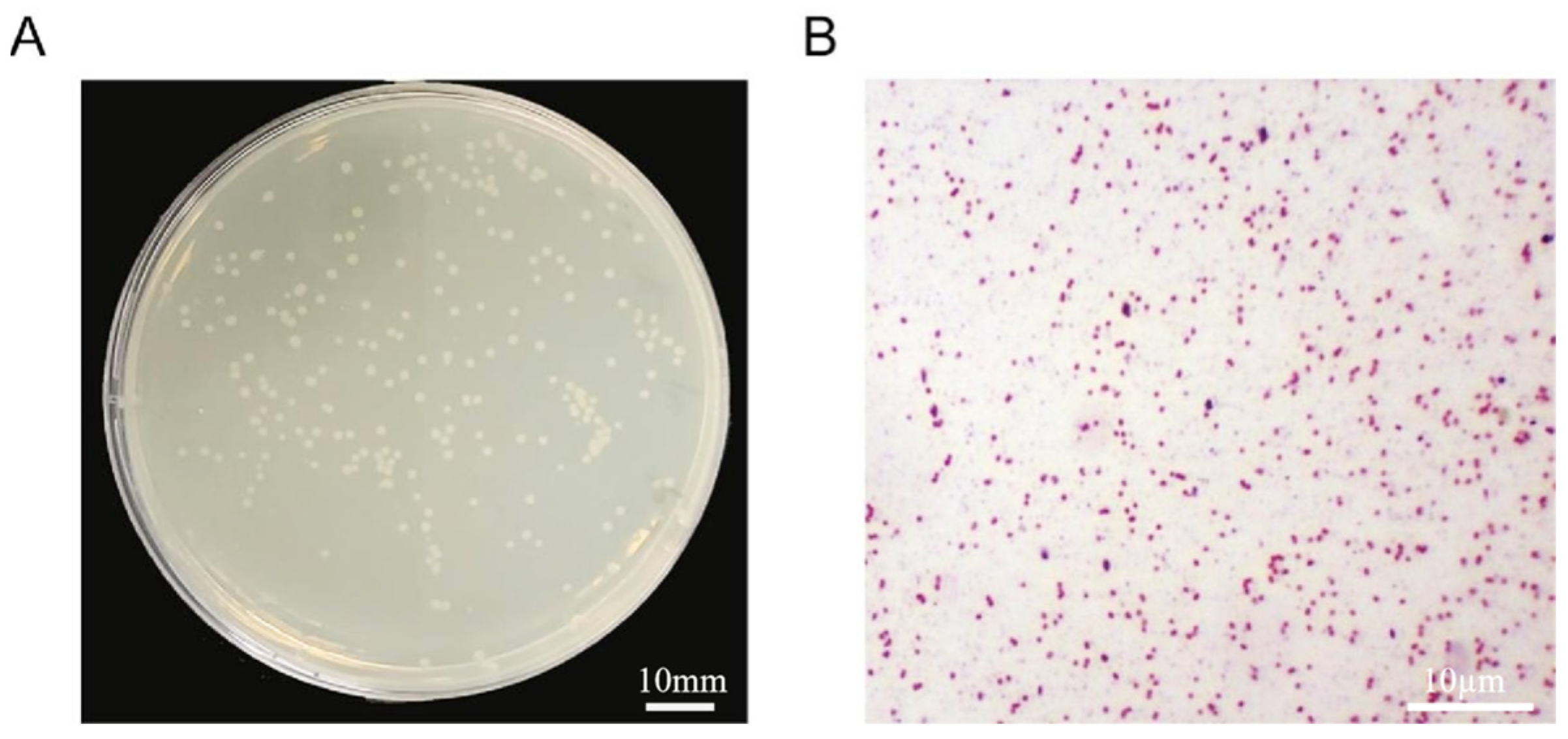
3.1. Morphology and Characteristics of Microcystin-Degrading Strain D03
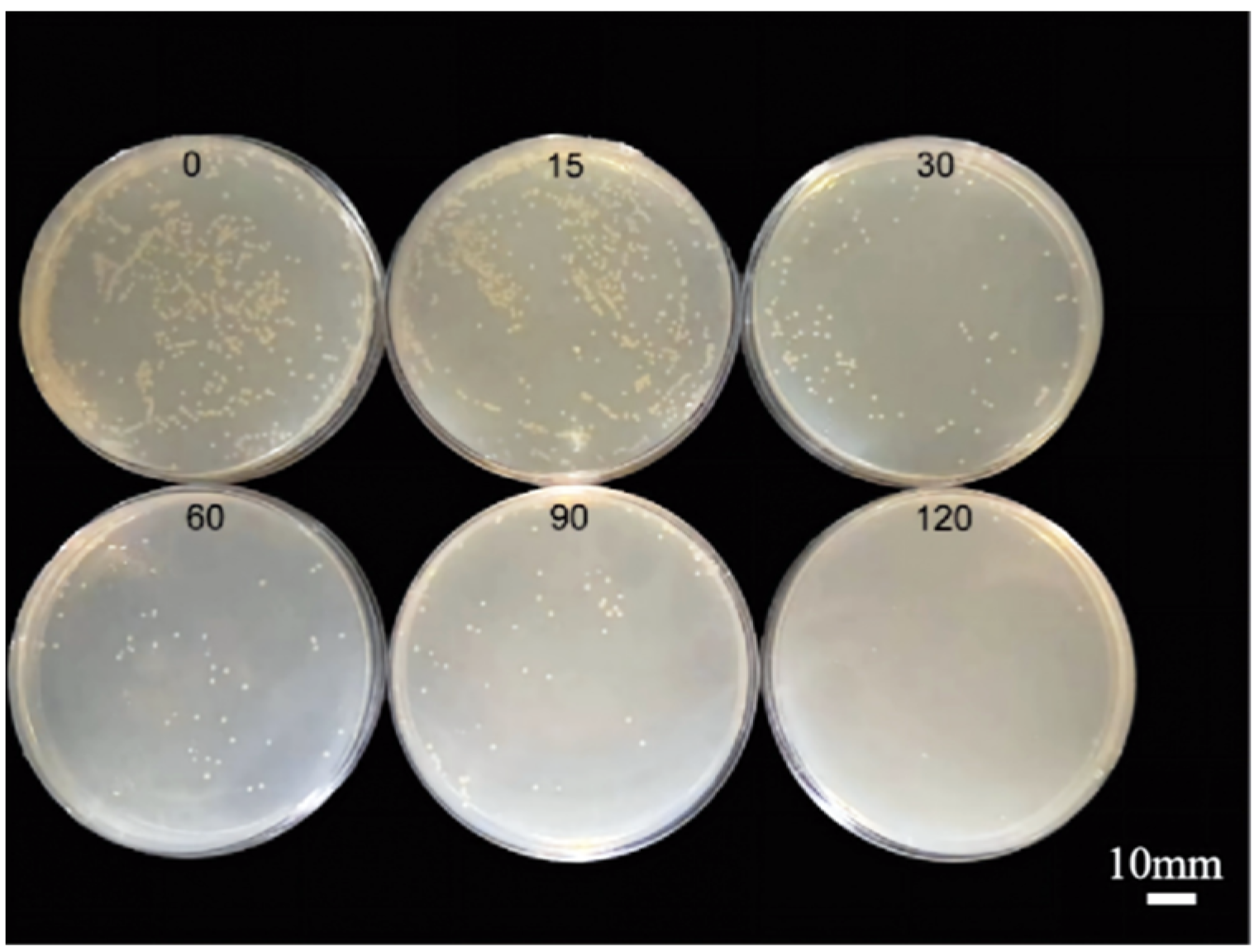
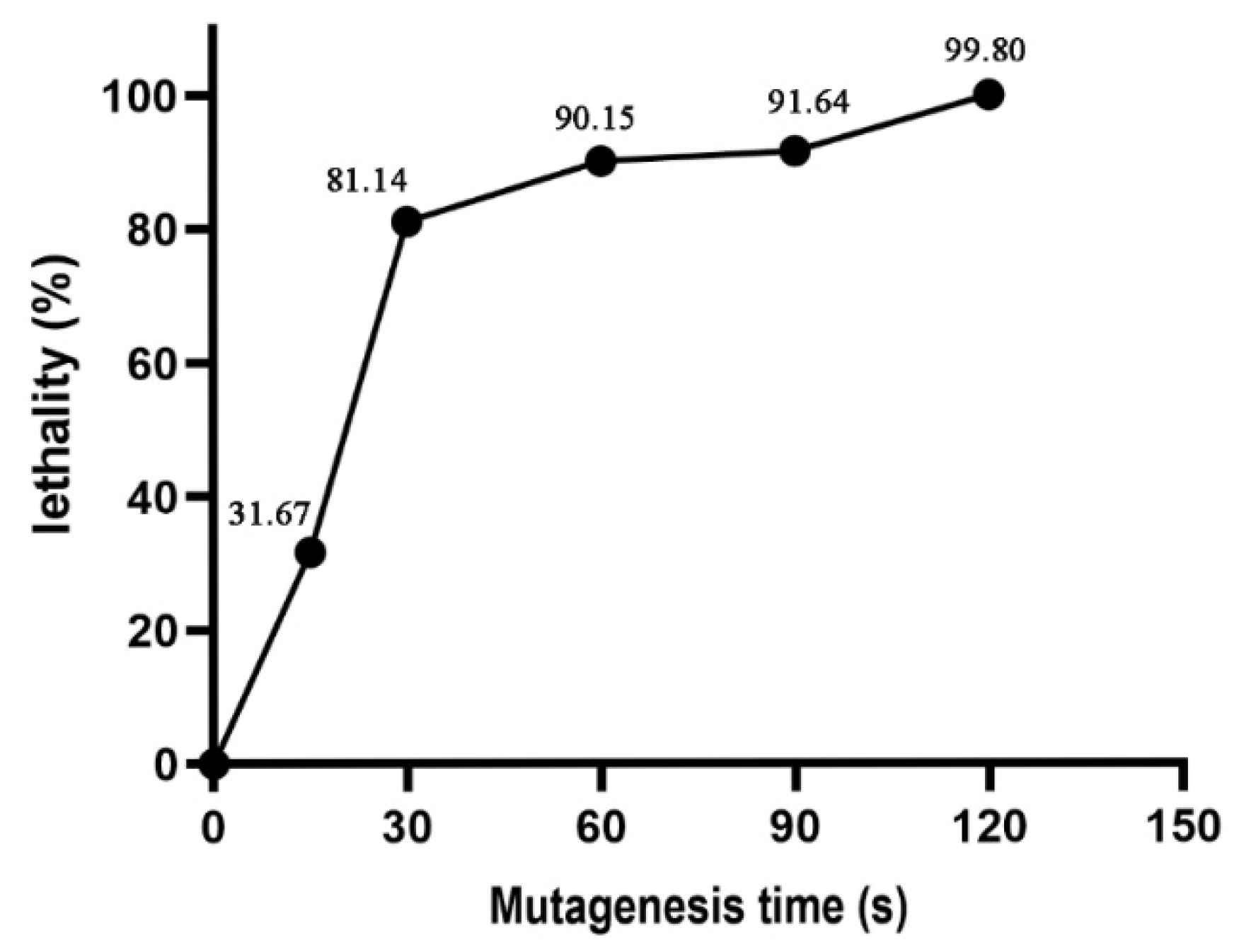
3.2. ARTP Lethality Rate Curve of Strain D03
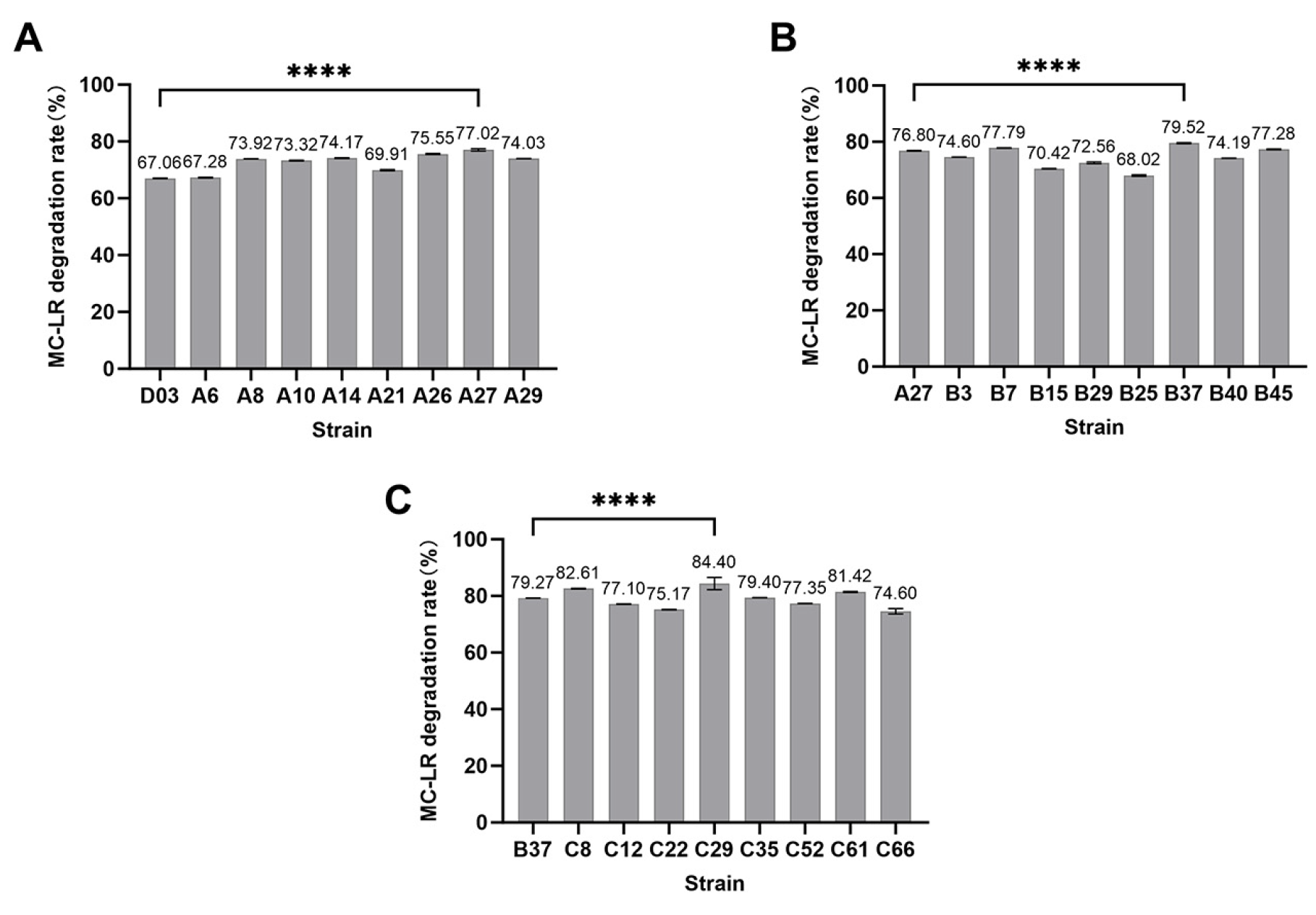
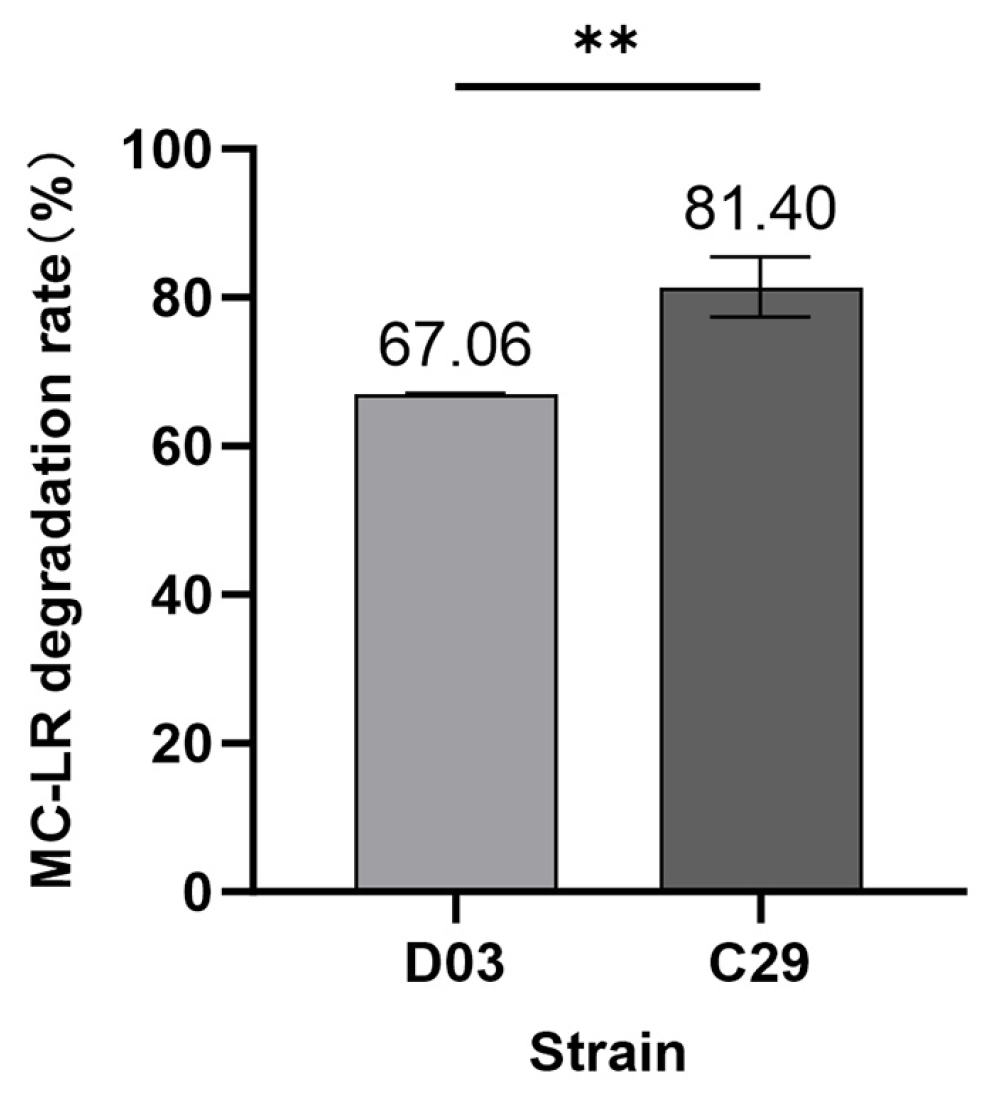
3.3. Screening of Mutant Strains
3.4. Resequencing of the Mutant Strain
3.5. SNP Detection and Annotation Analysis of the Genome
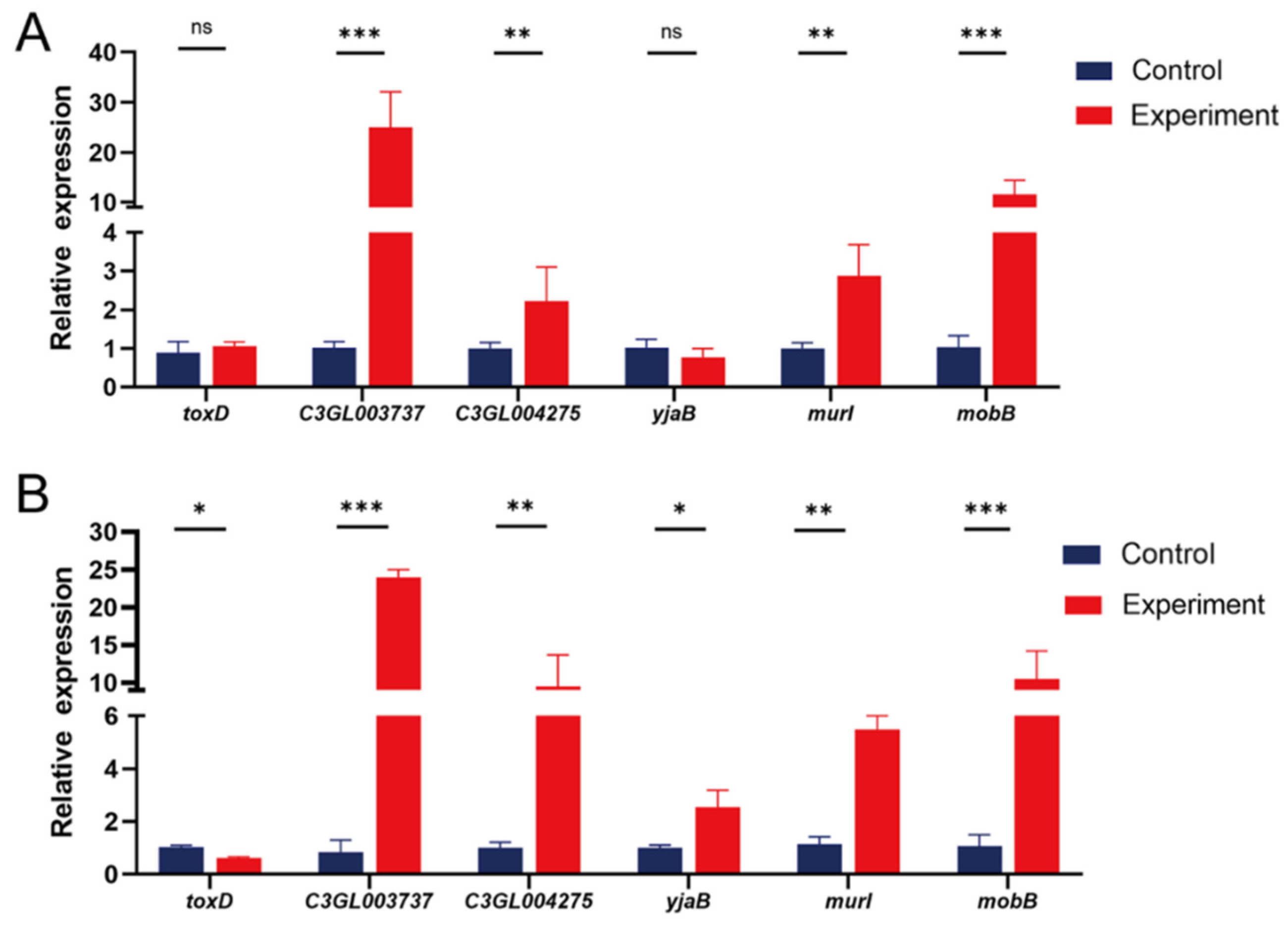
3.6. qRT-PCR Validation of Genes at Mutated Loci
4. Discussion
5. Conclusions
Supplementary Materials
Author Contributions
Funding
Institutional Review Board Statement
Informed Consent Statement
Data Availability Statement
Conflicts of Interest
References
- Santos, A.A.; Garrute, F.; Magalhaes, V.F.; Pacheco, A.B.F. Microcystin removal by microbial communities from a coastal lagoon: Influence of abiotic factors, bacterioplankton composition and estimated functions. Harmful Algae 2024, 135, 102646. [Google Scholar] [CrossRef] [Scilit] [PubMed]
- Silva, F.G.; Lopes, D.D.; Hector, R.E.; Nascimento, M.T.D.; Miguel, T.; Kuroda, E.K.; Nóbrega, G.M.A.; Harada, K.I.; Hirooka, E.Y. Microcystin-detoxifying recombinant Saccharomyces cerevisiae expressing the mlrA gene from Sphingosinicella microcystinivorans B9. Microorganisms 2023, 11, 575. [Google Scholar] [CrossRef] [Scilit] [PubMed]
- Wang, L.; Yi, Z.; Zhang, P.; Xiong, Z.; Zhang, G.; Zhang, W. Comprehensive strategies for microcystin degradation: A review of the physical, chemical, and biological methods and genetic engineering. J. Environ. Manag. 2024, 365, 121707. [Google Scholar] [CrossRef] [Scilit] [PubMed]
- Dexter, J.; Dziga, D.; Lv, J.; Zhu, J.; Strzalka, W.; Maksylewicz, A.; Maroszek, M.; Marek, S.; Fu, P. Heterologous expression of mlrA in a photoautotrophic host-Engineering cyanobacteria to degrade microcystins. Environ. Pollut. 2018, 237, 926–935. [Google Scholar] [CrossRef] [Scilit] [PubMed]
- Wang, R.; Li, J.; Jiang, Y.; Lu, Z.; Li, R.; Li, J. Heterologous expression of mlrA gene originated from Novosphingobium sp. THN1 to degrade microcystin-RR and identify the first step involved in degradation pathway. Chemosphere 2017, 184, 159–167. [Google Scholar] [CrossRef] [Scilit] [PubMed]
- Ottenheim, C.; Nawrath, M.; Wu, J.C. Microbial mutagenesis by atmospheric and room-temperature plasma (ARTP): The latest development. Bioresour. Bioprocess. 2018, 5, 12. [Google Scholar] [CrossRef] [Scilit]
- Ishaq, R.; Zafar, M.; Anwar, Z.; Dildar, I.; Mustafa, G.; Tariq, T.; Ghorbanpour, M.; Hassan, M. Hyper-production and characterization of exoglucanase through physical, chemical, and combined mutagenesis in indigenous strain of thermophilic Aspergillus fumigatus. Appl. Biochem. Biotechnol. 2025, 197, 4002–4024. [Google Scholar] [CrossRef] [Scilit] [PubMed]
- Rezaei, M.; Azin, M.; Zare, D. Enhanced bacterial cellulose production by indigenous isolates: Insights from mutagenesis and evolutionary techniques. Int. J. Biol. Macromol. 2025, 293, 139934. [Google Scholar] [CrossRef] [Scilit] [PubMed]
- Yu, Q.; Li, Y.; Wu, B.; Hu, W.; He, M.; Hu, G. Novel mutagenesis and screening technologies for food microorganisms: Advances and prospects. Appl. Microbiol. Biotechnol. 2020, 104, 1517–1531. [Google Scholar] [CrossRef] [Scilit] [PubMed]
- Zhu, Z.R.; Ding, X.Z.; Rang, J.; Xia, L.Q. Application and research progress of ARTP mutagenesis in actinomycetes breeding. Gene 2024, 929, 148837. [Google Scholar] [CrossRef] [Scilit] [PubMed]
- Zhu, Z.; Chen, W.; Cao, L.; Xia, Z.; Rang, J.; Hu, S.; Xia, L. ARTP/NTG compound mutagenesis improved the spinosad production and the insecticidal virulence of Saccharopolyspora spinosa. Int. J. Mol. Sci. 2024, 25, 12308. [Google Scholar] [CrossRef] [Scilit] [PubMed]
- Sun, J.J.; Zhang, Z.; Liu, J.S.; Zhang, S.L. UV-ARTP combined mutagenesis selection of lignin-degrading strain and enzymatic characterization of the resultant organisms. Food Biosci. 2024, 60, 104478. [Google Scholar] [CrossRef] [Scilit]
- Zhang, R.; Yang, L.; Long, S.; Zhang, S.; Wei, J.; Yang, F. Isolation and identification of a native bacterium Citrobacter farmeri against microcystin-LR in anaerobic environments. J. Toxicol. Environ. Health A 2025, 88, 329–338. [Google Scholar] [CrossRef] [Scilit] [PubMed]
- Huang, F.; Feng, H.; Li, X.; Yi, X.; Guo, J.; Clara, T.; Yang, F. Anaerobic degradation of microcystin-LR by an indigenous bacterial Enterobacter sp. YF3. J. Toxicol. Environ. Health A 2019, 82, 1120–1128. [Google Scholar] [CrossRef] [Scilit] [PubMed]
- Bergey, D.H. Bergey’s Manual of Determinative Bacteriology; Lippincott Williams & Wilkins: Philadelphia, PA, USA, 1994. [Google Scholar]
- Zhang, K.; Mohsin, A.; Dai, Y.; Chen, Z.; Zhuang, Y.; Chu, J.; Guo, M. Combinatorial effect of ARTP mutagenesis and ribosome engineering on an industrial strain of Streptomyces albus S12 for enhanced biosynthesis of salinomycin. Front. Bioeng. Biotechnol. 2019, 7, 212. [Google Scholar] [CrossRef] [Scilit] [PubMed]
- Huang, J.; Liang, X.; Xuan, Y.; Geng, C.; Li, Y.; Lu, H.; Qu, S.; Mei, X.; Chen, H.; Yu, T.; et al. A reference human genome dataset of the BGISEQ-500 sequencer. Gigascience 2017, 6, gix024, Erratum in Gigascience 2018, 7, giy144. [Google Scholar] [CrossRef] [Scilit] [PubMed]
- Li, H.; Durbin, R. Fast and accurate short read alignment with Burrows-Wheeler transform. Bioinformatics 2009, 25, 1754–1760. [Google Scholar] [CrossRef] [Scilit] [PubMed]
- Li, H.; Durbin, R. Fast and accurate long-read alignment with Burrows-Wheeler transform. Bioinformatics 2010, 26, 589–595. [Google Scholar] [CrossRef] [Scilit] [PubMed]
- Broad Institute. Picard Tools; Broad Institute: Cambridge, MA, USA, 2019; Available online: http://broadinstitute.github.io/picard/ (accessed on 20 November 2024).
- DePristo, M.A.; Banks, E.; Poplin, R.; Garimella, K.V.; Maguire, J.R.; Hartl, C.; Philippakis, A.A.; del Angel, G.; Rivas, M.A.; Hanna, M.; et al. A framework for variation discovery and genotyping using next-generation DNA sequencing data. Nat. Genet. 2011, 43, 491–498. [Google Scholar] [CrossRef] [Scilit] [PubMed]
- McKenna, A.; Hanna, M.; Banks, E.; Sivachenko, A.; Cibulskis, K.; Kernytsky, A.; Garimella, K.; Altshuler, D.; Gabriel, S.; Daly, M.; et al. The Genome Analysis Toolkit: A MapReduce framework for analyzing next-generation DNA sequencing data. Genome Res. 2010, 20, 1297–1303. [Google Scholar] [CrossRef] [Scilit] [PubMed]
- Chomczynski, P.; Sacchi, N. Single-step method of RNA isolation by acid guanidinium thiocyanate-phenol-chloroform extraction. Anal. Biochem. 1987, 162, 156–159. [Google Scholar] [CrossRef] [Scilit]
- Livak, K.J.; Schmittgen, T.D. Analysis of relative gene expression data using real-time quantitative PCR and the 2−ΔΔCT method. Methods 2001, 25, 402–408. [Google Scholar] [CrossRef] [Scilit] [PubMed]
- Pallant, J. SPSS Survival Manual: A Step by Step Guide to Data Analysis Using IBM SPSS; Routledge: Oxfordshire, UK, 2020. [Google Scholar] [CrossRef] [Scilit]
- Guo, J.; Wei, J.; Huang, F.; Massey, I.Y.; Luo, J.; Yang, F. Optimization of microcystin biodegradation by bacterial community YFMCD4 using response surface method. Chemosphere 2021, 274, 129897. [Google Scholar] [CrossRef] [Scilit] [PubMed]
- Wang, J.; Wang, C.; Li, Q.; Shen, M.; Bai, P.; Li, J.; Lin, Y.; Gan, N.; Li, T.; Zhao, J. Microcystin-LR degradation and gene regulation of microcystin-degrading Novosphingobium sp. THN1 at different carbon concentrations. Front. Microbiol. 2019, 10, 1750. [Google Scholar] [CrossRef] [Scilit] [PubMed]
- Liu, H.; Guo, X.; Liu, L.; Yan, M.; Li, J.; Hou, S.; Wan, J.; Feng, L. Simultaneous microcystin degradation and Microcystis aeruginosa inhibition with the single enzyme microcystinase A. Environ. Sci. Technol. 2020, 54, 8811–8820. [Google Scholar] [CrossRef] [Scilit] [PubMed]
- Ding, Q.; Song, X.; Yuan, M.; Sun, R.; Zhang, J.; Yin, L.; Pu, Y. Multiple pathways for the anaerobic biodegradation of microcystin-LR in the enriched microbial communities from Lake Taihu. Environ. Pollut. 2022, 297, 118787. [Google Scholar] [CrossRef] [Scilit] [PubMed]
- Zhang, Q.; Miao, R.; Feng, R.; Yan, J.; Wang, T.; Gan, Y.; Zhao, J.; Lin, J.; Gan, B. Application of atmospheric and room-temperature plasma (ARTP) to microbial breeding. Curr. Issues Mol. Biol. 2023, 45, 6466–6484. [Google Scholar] [CrossRef] [Scilit] [PubMed]
- Wang, Y.; Wu, S.; Wang, H.; Dong, Y.; Li, X.; Wang, S.; Fan, H.; Zhuang, X. Optimization of conditions for a surfactant-producing strain and application to petroleum hydrocarbon-contaminated soil bioremediation. Colloids Surf. B Biointerfaces 2022, 213, 112428. [Google Scholar] [CrossRef] [Scilit] [PubMed]
- Sun, X.; Zhang, Q.Q.; Li, H.W.; Ye, L.; Yang, J.; Sun, Y.R. Enhancing efficiency and sustainability in wastewater treatment via non-aerated ARTP-mutagenized Chlorella-Acinetobacter symbiosis. Chem. Eng. J. 2025, 519, 165112. [Google Scholar] [CrossRef] [Scilit]
- Xiong, Z.; Chen, X.; Zou, Z.; Peng, L.; Zou, L.; Liu, B.; Li, Q. Improving efficiency of bacterial degradation of polyethylene microplastics using atmospheric and room temperature plasma mutagenesis. Bioresour. Technol. 2024, 418, 131930. [Google Scholar] [CrossRef] [Scilit] [PubMed]
- Likun, C.; Jing, W.; Xiubao, Z.; Huanuan, Y.; Haitian, F.; Chuwen, L.; Shasha, Z.; Zhiqiang, S.; Chunguang, Z. An antiphage Escherichia coli mutant for higher production of L-threonine obtained by atmospheric and room temperature plasma (ARTP) mutagenesis. Biotechnol. Prog. 2020, 36, e3058. [Google Scholar] [CrossRef] [Scilit] [PubMed]
- Andong, Z.; Yudong, M.; Yue, D.; Zhiwei, Z.; Yue, C.; Bin, Y.; Jing, B.; Qun, S. Enhancing protease and amylase activities in Bacillus licheniformis XS-4 for traditional soy sauce fermentation using ARTP mutagenesis. Foods 2023, 12, 2381. [Google Scholar] [CrossRef] [Scilit] [PubMed]
- Cao, S.; Zhou, X.; Jin, W.; Wang, F.; Tu, R.; Han, S.; Chen, H.; Chen, C.; Xie, G.J.; Ma, F. Improving of lipid productivity of the oleaginous microalgae Chlorella pyrenoidosa via atmospheric and room temperature plasma (ARTP). Bioresour. Technol. 2017, 244, 1400–1406. [Google Scholar] [CrossRef] [Scilit] [PubMed]
- Li, C.; Xia, Y.; Li, M.L.; Zhang, T. ARTP mutagenesis of phospholipase D-producing strain Streptomyces hiroshimensis SK43.001, and its enzymatic properties. Heliyon 2022, 8, e12587. [Google Scholar] [CrossRef] [Scilit] [PubMed]
- Zhang, N.; Jiang, Y.; Sun, Y.J.; Jiang, J.C.; Tong, Y.J. Breeding of a thermostable xylanase-producing strain of Myceliophthora thermophila by atmospheric room temperature plasma (ARTP) mutagenesis. Front. Bioeng. Biotechnol. 2023, 10, 1095323. [Google Scholar] [CrossRef] [Scilit] [PubMed]
- Bao, Z.J.; Wang, X.M.; Wang, Q.F.; Zou, L.; Peng, L.X.; Li, L.J.; Tu, W.Y.; Li, Q. A novel method of domestication combined with ARTP to improve the reduction ability of Bacillus velezensis to Cr (VI). J. Environ. Chem. Eng. 2023, 11, 109091. [Google Scholar] [CrossRef] [Scilit]
- Dalcin Martins, P.; Echeveste Medrano, M.J.; Arshad, A.; Kurth, J.M.; Ouboter, H.T.; Op den Camp, H.J.M.; Jetten, M.S.M.; Welte, C.U. Unraveling nitrogen, sulfur, and carbon metabolic pathways and microbial community transcriptional responses to substrate deprivation and toxicity stresses in a bioreactor mimicking anoxic brackish coastal sediment conditions. Front. Microbiol. 2022, 13, 798906. [Google Scholar] [CrossRef] [Scilit] [PubMed]
- Sim, H.S.; Kwon, Y.K.; Song, H.; Hwang, G.S.; Yeom, J. Regulation of antibiotic persistence and pathogenesis in Acinetobacter baumannii by glutamate and histidine metabolic pathways. BMC Microbiol. 2025, 25, 74. [Google Scholar] [CrossRef] [Scilit] [PubMed]
- Facey, J.A.; Steele, J.R.; Violi, J.P.; Mitrovic, S.M.; Cranfield, C. An examination of microcystin-LR accumulation and toxicity using tethered bilayer lipid membranes (tBLMs). Toxicon 2019, 158, 51–56. [Google Scholar] [CrossRef] [Scilit]
- Magalon, A.; Frixon, C.; Pommier, J.; Giordano, G.; Blasco, F. In Vivo interactions between gene products involved in the final stages of molybdenum cofactor biosynthesis in Escherichia coli. J. Biol. Chem. 2002, 277, 48199–48204. [Google Scholar] [CrossRef] [Scilit] [PubMed]
- Hung, J.H.; Zhang, S.M.; Huang, S.L. Nitrate promotes the growth and the production of short-chain fatty acids and tryptophan from commensal anaerobe Veillonella dispar in the lactate-deficient environment by facilitating the catabolism of glutamate and aspartate. Appl. Environ. Microbiol. 2024, 90, e01148-24. [Google Scholar] [CrossRef] [Scilit] [PubMed]
- Ganusova, E.E.; Vo, L.T.; Abraham, P.E.; Yoder, L.O.; Hettich, R.L.; Alexandre, G. The Azospirillum brasilense core chemotaxis proteins CheA1 and CheA4 link chemotaxis signaling with nitrogen metabolism. Msystems 2021, 6, e01354-20. [Google Scholar] [CrossRef] [Scilit] [PubMed]
- English, M.A.; Alcantar, M.A.; Collins, J.J. A self-propagating, barcoded transposon system for the dynamic rewiring of genomic networks. Mol. Syst. Biol. 2023, 19, e11398. [Google Scholar] [CrossRef] [Scilit] [PubMed]
- Muleya, V.; Lois, L.M.; Chahtane, H.; Thomas, L.; Chiapello, M.; Marondedze, C. (De)activation (ir)reversibly or degradation: Dynamics of post-translational protein modifications in plants. Life 2022, 12, 324. [Google Scholar] [CrossRef] [Scilit] [PubMed]




| Reagent | Volume |
|---|---|
| 2 × ChamQ Universal SYBR qPCR Master Mix | 10.0 µL |
| Forward primer (10 µM) | 0.4 µL |
| Reverse primer (10 µM) | 0.4 µL |
| cDNA | 2 µL |
| ddH2O | To 20.0 µL |
| Primers | Sequences (5′ to 3′) |
|---|---|
| 16S rRNA | F: AGAGTTTGATCCTGGCTCAG R: TACGACTTAACCCCAATCGC |
| toxD | F: CGAAGAGCGGCGACAGGAA R: ACGCAGCGAAGGCCAAAA |
| C3GL003737 | F: CCACAGCCGCTTCATTAT R: ATTCGGTTTGGGCACTTT |
| C3GL004275 | F: CCACAGCCGCTTCATTAT R: TGGTGGCGGTGAGTAAAT |
| yjaB | F: TCGCCTTTATGCTTCTGA R: TCCACTTCTGTCCGTTCC |
| murI | F: TTCTGTCGTCATTGCCATAC R: GGGTGTACTCATTTCCCTCTA |
| mobB | F: ACCCGAACTGGATTTAGC R: TCACTGGCAACTGCGATA |
| Sample Name | Reference Name | Clean Reads | Clean Bases (bp) | Mapping Rate | Coverage | Average Sequencing Depth |
|---|---|---|---|---|---|---|
| C29 | Citrobacter sp. D03 | 3,344,202 | 501,630,300 | 99.49 | 100.00% | 99.36 |
| Mutation Site | Sequence Change | Gene Name | Position | Mutation Type | Functional Description |
|---|---|---|---|---|---|
| 836763 | G > A | toxD | genic | nonsynonymous mutation | formylglycine-generating enzyme (FGE) |
| 4466918 | T > G | C3GL004277 | genic | nonsynonymous mutation | hypothetical protein |
| 2852311 | G > T | cheA | genic | nonsynonymous mutation | chemotaxis protein CheA |
| 829171 | T > G | C3GL000802 | intergenic | / | hypothetical protein |
| 829186 | G > T | C3GL000802 | intergenic | / | hypothetical protein |
| 3894667 | A > G | C3GL003737 | intergenic | / | aldehyde/ketone reductase |
| 4461615 | T > C | C3GL004275 | intergenic | / | transposase |
| 4665367 | T > C | yjaB | intergenic | / | lysine acetyltransferase (KAT) |
| 4712720 | C > A | murI | intergenic | / | glutamate racemase |
| 4851550 | T > C | mobB | intergenic | / | molybdopterin-guanine dinucleotide biosynthesis protein B |
Disclaimer/Publisher’s Note: The statements, opinions and data contained in all publications are solely those of the individual author(s) and contributor(s) and not of MDPI and/or the editor(s). MDPI and/or the editor(s) disclaim responsibility for any injury to people or property resulting from any ideas, methods, instructions or products referred to in the content. |
© 2026 by the authors. Licensee MDPI, Basel, Switzerland. This article is an open access article distributed under the terms and conditions of the Creative Commons Attribution (CC BY) license.
Share and Cite
Zhou, P.; Liu, X.; Li, B.; Yang, L.; Wu, X.; Long, X.; Yang, F. The Effect of ARTP Mutation on the Degradation Capacity of Citrobacter sp. D03. Curr. Issues Mol. Biol. 2026, 48, 765. https://doi.org/10.3390/cimb48080765
Zhou P, Liu X, Li B, Yang L, Wu X, Long X, Yang F. The Effect of ARTP Mutation on the Degradation Capacity of Citrobacter sp. D03. Current Issues in Molecular Biology. 2026; 48(8):765. https://doi.org/10.3390/cimb48080765
Chicago/Turabian StyleZhou, Pengji, Xingyu Liu, Bingqi Li, Lili Yang, Xianya Wu, Xizi Long, and Fei Yang. 2026. "The Effect of ARTP Mutation on the Degradation Capacity of Citrobacter sp. D03" Current Issues in Molecular Biology 48, no. 8: 765. https://doi.org/10.3390/cimb48080765
APA StyleZhou, P., Liu, X., Li, B., Yang, L., Wu, X., Long, X., & Yang, F. (2026). The Effect of ARTP Mutation on the Degradation Capacity of Citrobacter sp. D03. Current Issues in Molecular Biology, 48(8), 765. https://doi.org/10.3390/cimb48080765