


Abstract
Japonica soft rice varieties possess excellent eating quality, and their cultivation area has been steadily expanding in recent years. This study aimed to analyze japonica soft rice varieties cultivated in the Yangtze River Delta region of China at the genome level and to provide a theoretical basis for optimizing disease resistance and other important traits. Genotypic characterization and evaluation of ten major japonica soft rice varieties from the Yangtze River Delta region were conducted using a genome-wide single nucleotide polymorphism (SNP) chip. The experimental results indicated that the soft rice varieties in the Yangtze River Delta region had a relatively high japonica component and were all classified as typical japonica rice varieties. Specifically, the highest (95.6%) and lowest (91.5%) proportions of japonica genomic segments were detected in Tai’an 1 and Zhehexiang 2, respectively. Japonica soft rice varieties from Shanghai exhibited a closer genetic distance to those from Jiangsu Province than to those from Zhejiang Province. Genomic identity was highest between Tai’an 1 and Nanjing 46 (87.9%) and lowest between Tai’an 1 and Jia 67 (74.4%). Based on the results of the chip assay, a total of twenty-six functional genes controlling key traits, such as yield, quality, and resistance to biotic and abiotic stresses, were identified in the ten analyzed varieties. Among them, Zhehexiang 2 carried the broad-spectrum blast resistance genes Pi2 and Pita, which is useful for improving the blast resistance of japonica soft rice varieties. The findings of this study provide genetic resources and carrier materials for the efficient molecular improvement of japonica soft rice varieties.
1. Introduction
Rice (Oryza sativa L.) is the staple food for more than half of the global population, serving as a major source of nutrients and calories for humans. It is also the largest grain crop in China, accounting for 32% of the country’s total grain production [1]. Steady improvements in living standards have been accompanied by increasing demands for higher quality rice. Rice quality mainly encompasses milling quality, appearance quality, cooking and eating quality, and nutritional quality, of which cooking and eating quality is the most critical indicator. Eating quality is primarily influenced by the amylose content [2]. Generally, rice grains with excessive amounts of amylose (≥17%) absorb relatively large amounts of water during cooking, elongate poorly, and have a relatively high gelatinization temperature, resulting in a hard texture and poor taste. Conversely, rice with relatively little amylose (≤8%) yields incompletely expanded cooked grains that are too soft and sticky, bland in flavor, and generally unpalatable. By contrast, after cooking, japonica rice grains with an amylose content of 8–13% (i.e., japonica soft rice) are glossy, soft, elastic, and do not harden upon cooling, resulting in superior eating quality. Hence, their popularity among consumers has been increasing in recent years.
Since the 1980s, the premium-tasting rice market has grown rapidly worldwide, with many high-quality varieties bred internationally, among which varieties from Thailand and Japan represent a significant share of the global market. In China, soft rice varieties began to receive attention from breeders and researchers in the 21st century. The southwestern region of China, especially Yunnan, has long been used for the cultivation of soft rice varieties. The low amylose content of Yunnan soft rice grains is primarily due to Wxhp [3]. Over time, soft rice cultivation has gradually expanded to other regions, including Hunan and Hubei [4]. In the past decade, the breeding and subsequent cultivation of japonica soft rice varieties in the Yangtze River Delta region, including Jiangsu and Shanghai, has been vigorously and successfully promoted. The Institute of Food Crops, Jiangsu Academy of Agricultural Sciences, pioneered the use of Wxmp in molecular marker-assisted selection breeding, leading to the development of the Nanjing series of japonica soft rice varieties, including Nanjing 46, Nanjing 9108, and Nanjing 5055. In Shanghai, using Nanjing 46 as a soft rice parent, japonica soft rice varieties with different maturity periods, including Songzaoxiang 1, Huruan 1212, Songxiangjing 1018, and Tai’an 1, have been successively developed since 2014. From 2017 to 2023, a total of 86 rice varieties were approved in Shanghai, including 37 japonica soft rice varieties (43.0% of the approved rice varieties) [5]. Today, japonica soft rice is the dominant rice type produced in Shanghai.
While japonica soft rice varieties widely grown in the Yangtze River Delta region are characterized by superior palatability, they often display significant defects in appearance and disease resistance. Notably, weak disease resistance has become a key constraint hindering their broader adoption. Understanding the genetic information of rice varieties at the genomic level is crucial for advancing molecular improvement and germplasm innovation, particularly in terms of enhanced disease resistance. Low-throughput molecular markers represented by SSR have drawbacks such as a limited number of markers, low genome-wide coverage density, and time-consuming and labor-intensive detection, which imposes certain limitations in genomic breeding. The whole-genome single nucleotide polymorphism (SNP) chip for rice was developed on the basis of functional genomic research involving whole-genome sequencing and the subsequent screening for SNP markers closely associated with important agronomic traits, including disease resistance, insect resistance, grain quality and yield. The SNP chip is characterized by high marker density and uniform genome-wide coverage, making it important for gene identification and molecular breeding [6,7]. Ding et al. [8] effectively identified functional genes related to breeding in the Jiahe series varieties using the rice high-density chip GSR40K and clarified the characteristics and existing problems of Jiahe series varieties. Nevertheless, comprehensive genomic characterizations of japonica soft rice varieties cultivated in the Yangtze River Delta region are currently lacking. In this study, a high-density, genome-wide SNP array was employed to genotype and evaluate ten major japonica soft rice varieties from the Yangtze River Delta region, with the aim of providing a theoretical basis for the future molecular improvement and germplasm innovation of japonica soft rice.
2. Materials and Methods
2.1. Experimental Materials
The following ten major japonica soft rice varieties cultivated in the Yangtze River Delta region were selected as experimental materials: Songxiangjing 1018, Meigu 2, Huruan 1212, Tai’an 1, Nanjing 46, Nanjing 9108, Nanjing 5055, Zhehexiang 2, Jia 58, and Jia 67. Songxiangjing 1018, Meigu 2, and Tai’an 1 are the leading rice varieties grown in Shanghai. Huruan 1212 is the dominant rice variety in multiple districts of Shanghai, including Pudong New Area and Qingpu District, and was selected by several local rice brands as a dedicated variety for developing premium-tasting rice. Nanjing 46, Nanjing 9108, and Nanjing 5055 are the main promoted japonica soft rice varieties in Jiangsu Province, whereas Zhehexiang 2, Jia 58 and Jia 67 are the key japonica soft rice varieties promoted in Zhejiang Province. Experimental materials were grown at the Zhuanghang Comprehensive Experimental Station of Shanghai Academy of Agricultural Sciences (121.4° E, 30.9° N). Conventional water and fertilizer management practices were applied.
2.2. Analysis of Genetic Backgrounds
2.2.1. Gene Chip-Based SNP Detection
SNPs were detected using the SLYm1R high-density rice whole-genome SNP chip by Wuhan Double Green Source Innovation Technology Research Institute Co., Ltd. (Wuhan, China). The chip, which was designed using Illumina chip manufacturing technology, contains 31,753 sites, with coordinate location information available for 31,704 of these sites; the remaining 49 sites were other probes. Filtering criteria for SNP markers included: (1) GenTrain score > 0.6; (2) Genotypes for parental lines were required to be homozygous (minimal heterozygosity < 5%); (3) call rate > 80%; (4) minor allele frequency(MAF) > 5%. The chip-based detection of SNPs involved the following two steps:
- (1)
- Sample preparation
Genomic DNA was extracted from leaves collected at the rice tillering stage. After assessing DNA quality and determining that the DNA concentration exceeded 50 ng/µL, agarose gel electrophoresis was performed to ensure that the main DNA band was significantly larger than 5 kb. Finally, the DNA concentration was diluted to 50–100 ng/µL.
- (2)
- Sample testing
DNA templates were denatured into single strands using NaOH, which was followed by whole-genome amplification. The amplified whole-genome DNA was then fragmented, after which DNA fragments were purified, resuspended, and denatured. The resulting DNA was applied to the designated positions on the chip, then the chip was placed in a hybridization oven at 48 °C for 16–24 h to complete the hybridization of DNA to the chip. Single base extension and staining were carried out on chip after hybridization. Finally, the chip was analyzed using the Illumina iScan® system (San Diego, CA, USA), with the generated raw data analyzed and genotyped using the Illumina GenomeStudio® software v2.0 (San Diego, CA, USA).
2.2.2. Homozygosity Analysis
A rice chromosomal framework was constructed on the basis of the Nipponbare reference genome (version MSU7.0). High-quality loci revealed by the SLYm1R high-density rice whole-genome SNP chip were used along with the following formula to determine the homozygosity_ratio of test samples: homozygosity_ratio (%) = (number of homozygous loci/number of effective loci) × 100%.
2.2.3. Analysis of Indica–Japonica Fragments
According to the genotyping results of the SLYm1R high-density rice whole-genome SNP chip, the rice genome was partitioned into bins of 200 kb each, with the remaining fragments < 200 kb at the 3′ ends of each chromosome counted as individual bins. A total of 1874 bins were generated, among which 1798 were suitable for indica–japonica genotyping. Typical indica varieties (Nanjing 11 and Nante) and japonica varieties (Balilla, Nipponbare, Youmangzaojing, and Nongken 58) were used as reference cultivars. Genome-wide markers in typical japonica varieties, but not in typical indica varieties, were extracted. Each bin was classified as either indica or japonica. The frequency of indica and japonica type genes was used to identify indica and japonica rice types. Classification criteria are presented in Table 1.
Table 1.
Classification standards for distinguishing indica and japonica rice types according to the frequency of indica and japonica type genes [9].
2.2.4. Cluster Analysis
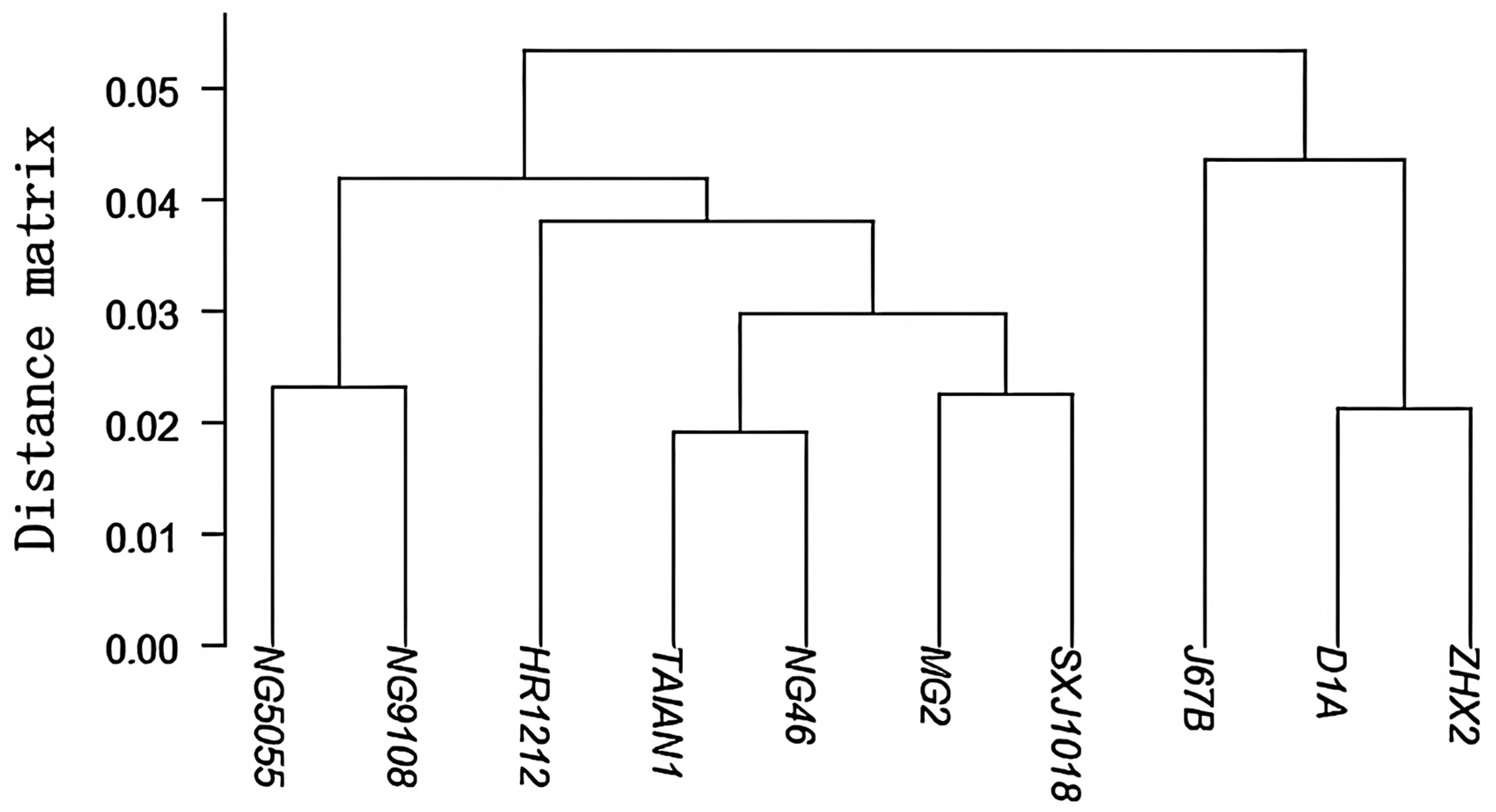
Pairwise SNP divergence was calculated across all samples to generate a divergence matrix. Divergence was defined as the proportion of mismatched genotypes at all loci between any two samples, with missing data excluded from the calculation. The resulting matrix was converted into a distance structure suitable for cluster analysis using the as.dist function in R (version 4.5.0). Hierarchical clustering was then performed on this distance matrix using the hclust function with the default complete-linkage method. Finally, the clustering result was transformed into a phylogenetic tree format using the ape package (version 5.8-1), and a downward-facing dendrogram was plotted using the plot function.
2.2.5. Genomic Identity Analysis
Genomic identity was analyzed by dividing the rice genome into 378 bins (1 Mb each). If a SNP difference between samples was detected in a bin, the two samples were considered to differ in terms of that bin. The formula for calculating genomic identity was as follows: genomic identity = (total number of bins − number of divergent bins)/total number of bins × 100%.
2.3. Functional Gene Analysis
The SLYm1R high-density rice whole-genome SNP chip was used to rapidly detect important functional genes in ten japonica soft rice varieties from the Yangtze River Delta region. This chip enabled the detection of approximately 140 genes controlling key rice traits, including grain quality, yield, biotic and abiotic stress resistance, growth period, fertility, and plant architecture, and all the ten varieties were included in every functional gene analysis. Functional gene analysis included the following: SNP/INDEL analysis, haplotype analysis, and Waxy gene analysis. SNP/INDEL analysis revealed the existence or absence of functional genes by detecting genetic variations at their specific loci [10]. Haplotype analysis determined whether a sample contains a specific resistance gene according to a group of polymorphic markers within the target gene and its flanking 100 kb regions. Waxy gene analysis was performed to accurately analyze Waxy genotypes according to established methods [11].
3. Results
3.1. Genomic Homozygosity and Indica–Japonica Fragments in Major Japonica Soft Rice Varieties from the Yangtze River Delta Region
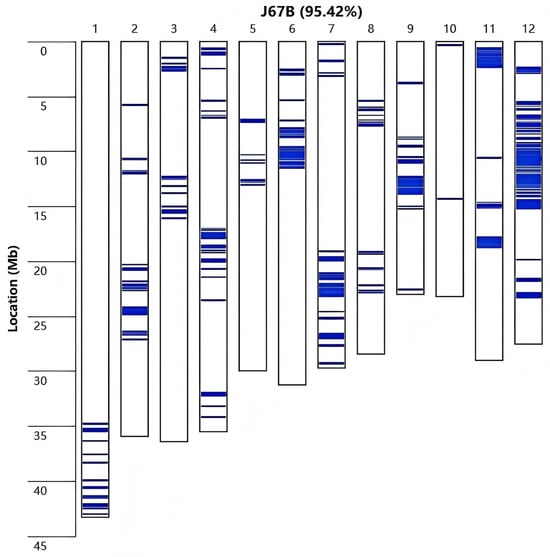
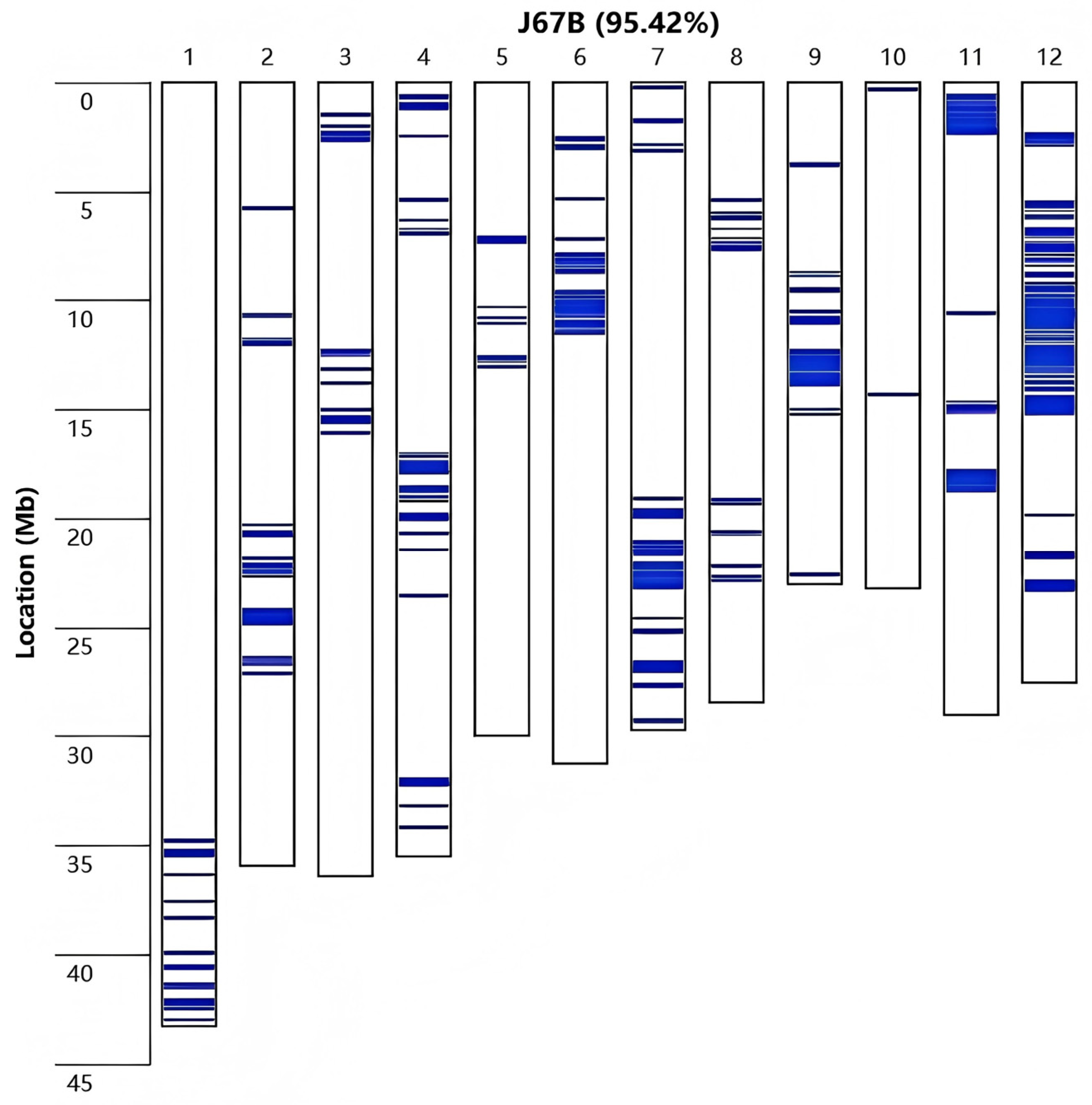
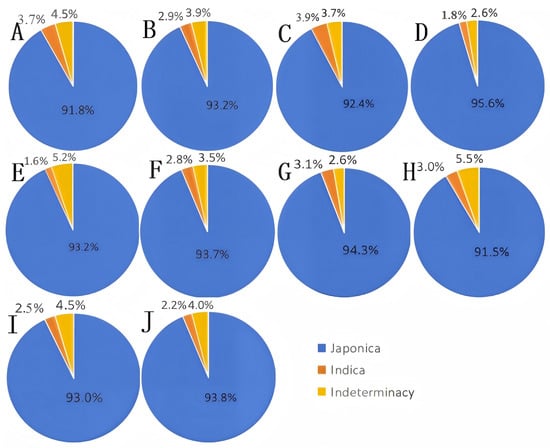
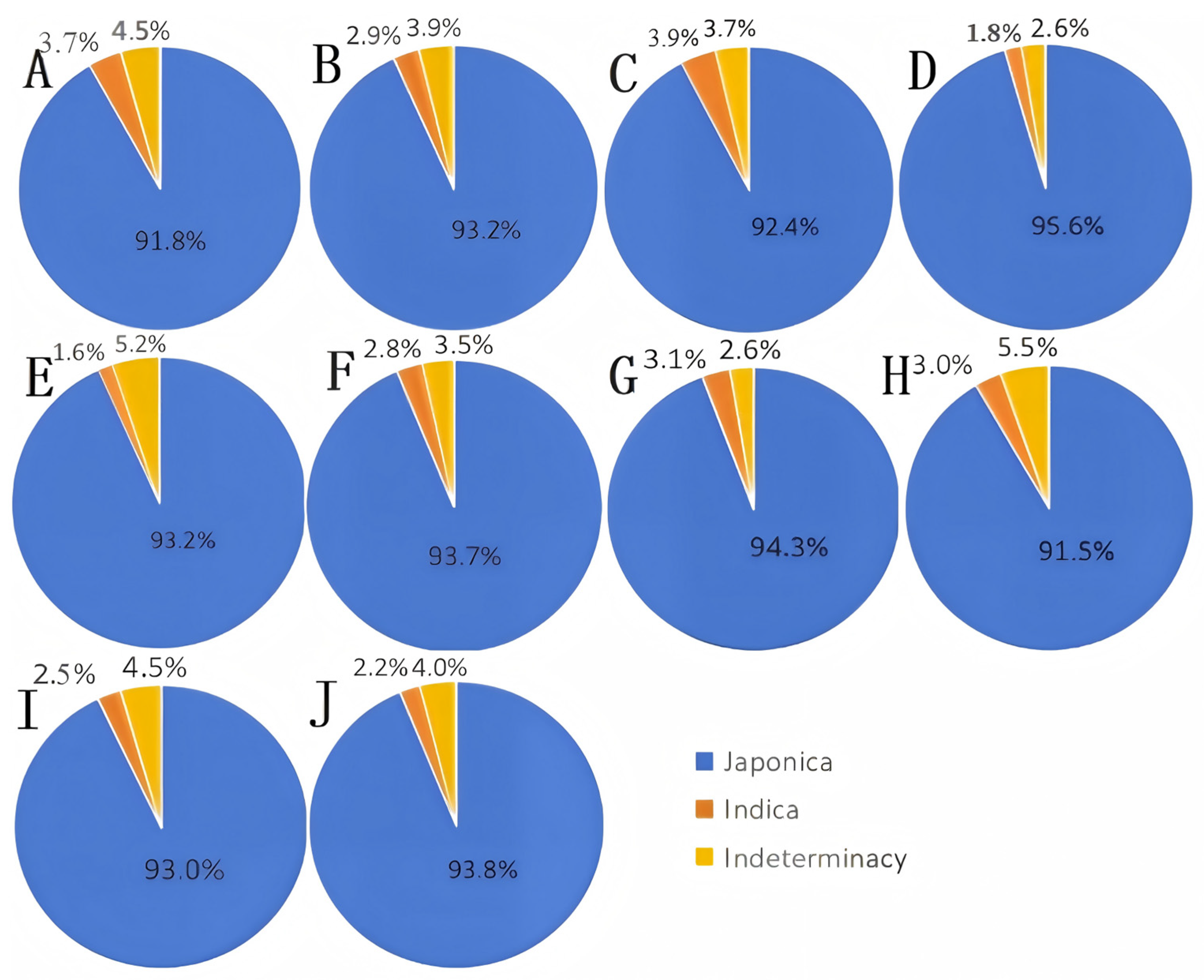
Quality control analysis of the SLYm1R SNP chip across the ten japonica soft rice varieties revealed a low average missing_ratio of 0.7% and a high call rate exceeding 90%, demonstrating robust reliability and accuracy of the chip-based genotyping (Table 2). To genetically confirm whether the sample population has achieved a high degree of genotypic uniformity, sample homozygosity was determined using high-quality loci obtained by screening whole-genome SNP chip data. The genomic homozygosity_ratio of Jia 67 was 95.4% (Figure 1), whereas nine japonica soft rice varieties, including Songxiangjing 1018, Meigu 2, Huruan 1212, Tai’an 1, Nanjing 46, Nanjing 9108, Nanjing 5055, Zhehexing 2, and Jia 58, all exhibited genomic homozygosity_ratio exceeding 99.9% (Supplementary Figure S1, Table 2). Gene chip fragment typing technology was used to analyze genomic segment origins, which revealed that 91.8%, 93.2%, 92.4%, 95.6%, 93.2%, 93.7%, 94.3%, 91.5%, 93.0%, and 93.8% of the genomic segments in Huruan 1212, Meigu 2, Songxiangjing 1018, Tai’an 1, Nanjing 46, Nanjing 9108, Nanjing 5055, Zhehexiang 2, Jia 58 and Jia 67, respectively, were from japonica rice (Figure 2A–I). This indicates that the soft rice varieties from the Yangtze River Delta region in China have a high proportion of japonica genomic components, all of which belong to typical japonica rice varieties. Among them, Tai’an 1 has the highest proportion of japonica components, while Zhehexiang 2 has the lowest.
Table 2.
Genotyping quality control data for the SLYm1R SNP chip.
Figure 1.
Genomic homozygosity of Jia 67. The y-axis represents chromosome position, and the x-axis shows chromosome names. Heterozygous loci are marked in blue on the plot.
Figure 2.
Analysis of indica–japonica genomic fragments in ten japonica varieties. Composition of indica–japonica genomic fragments in (A) Huruan 1212, (B) Meigu 2, (C) Songxiangjing 1018, (D) Tai’an 1, (E) Nanjing 46, (F) Nanjing 9108, (G) Nanjing 5055, (H) Zhehexiang 2, (I) Jia 58, and (J) Jia 67.
Missing refers to the number of markers that failed genotyping. Missing_ratio denotes the percentage of markers that failed genotyping relative to the total number of markers. Marker_valid represents the number of valid markers. Heterozygosity indicates the number of heterozygous genotype markers. MG2: Meigu 2; SXJ1018: Songxiangjing 1018; TAIAN1: Tai’an 1; NG46: Nanjing 46; HR1212: Huruan 1212; NG5055: Nanjing 5055; NG9108: Nanjing 9108; D1A: Jia 58; ZHX2: Zhehexiang 2; J67B: Jia 67.
3.2. Clustering and Genomic Identity of Major Japonica Soft Rice Varieties in the Yangtze River Delta Region
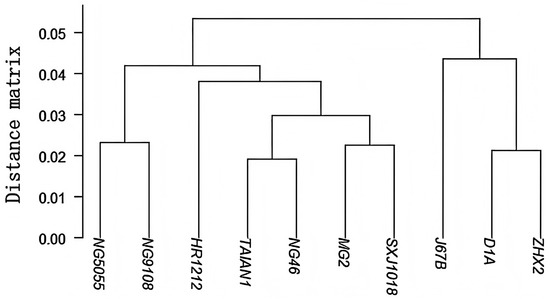
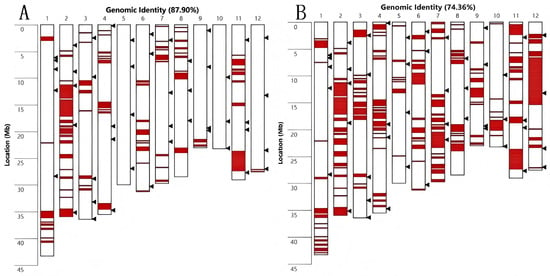
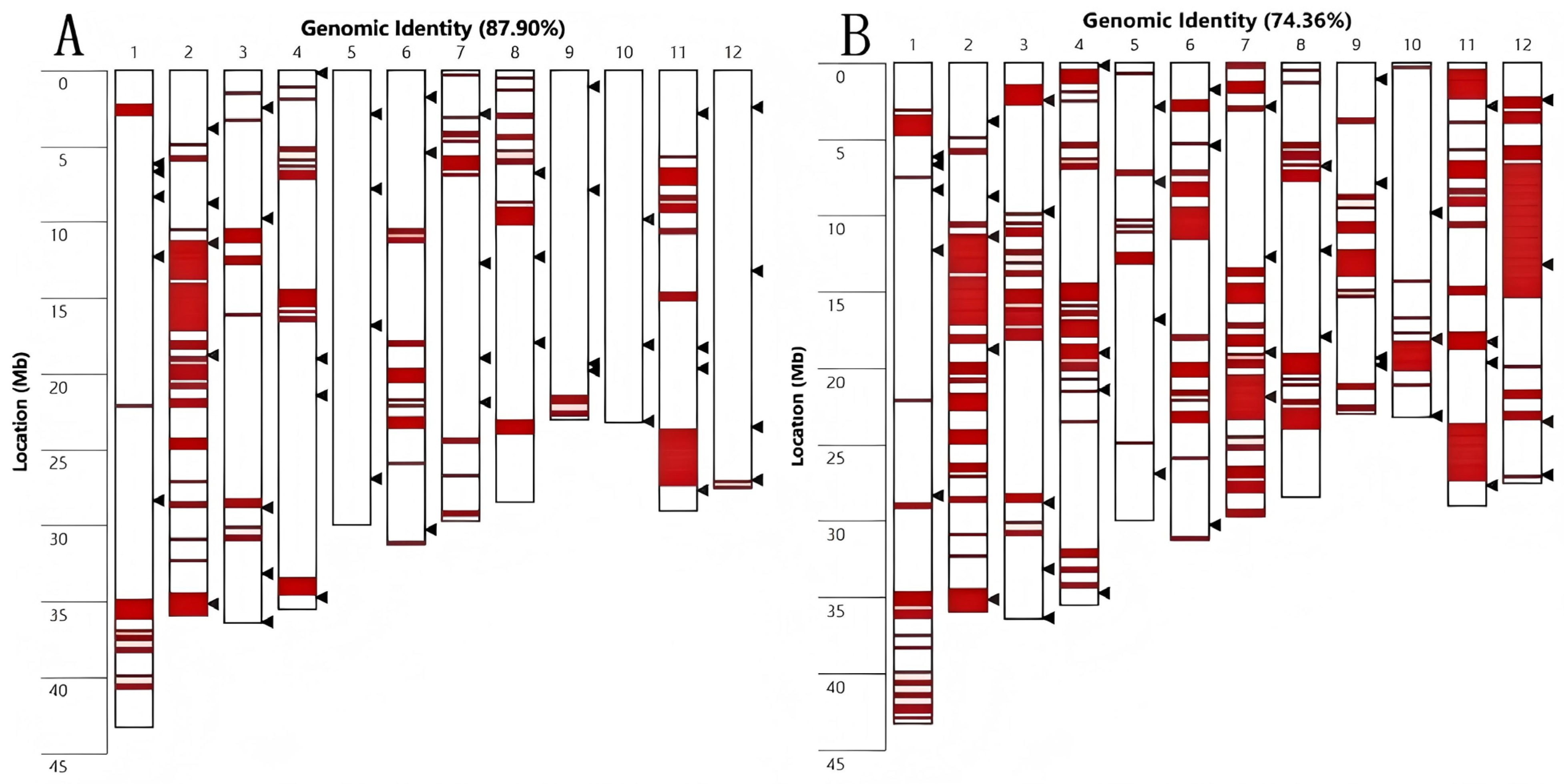
A cluster analysis was conducted on the ten japonica soft rice varieties from the Yangtze River Delta region. As shown in Figure 3, when the aggregation level was set to 0.045, the ten varieties could be divided into two major groups. Seven rice varieties sourced from Jiangsu Province and Shanghai were classified into Group I, which covered Nanjing 5055, Nanjing 9108, Nanjing 46, Huruan 1212, Tai’an 1, Meigu 2 and Songxiangjing 1018. Group II consisted of three varieties from Zhejiang Province, including Jia 67, Jia 58 and Zhehexiang 2. Analysis of genomic identity indicated that Tai’an 1 and Nanjing 46 had the highest genomic identity (87.9% similar; Figure 4A), while Tai’an 1 and Jia 67 had the lowest genomic identity (74.4% similar; Figure 4B). Combined results of cluster analysis and genomic identity analysis revealed that japonica soft rice varieties from Shanghai shared a closer genetic relationship with Jiangsu varieties than with those from Zhejiang Province.
Figure 3.
Cluster analysis of major japonica soft rice varieties in the Yangtze River Delta region.
Figure 4.
Genomic identity analysis of japonica soft rice varieties in the Yangtze River Delta region. (A) Genomic identity between Tai’an 1 and Nanjing 46. (B) Genomic identity between Tai’an 1 and Jia 67. The y-axis represents chromosome position, and the x-axis shows chromosome names. Red regions in the figure represent differential loci, and triangles indicate the positions of the 48 SSR markers specified in the Chinese National Standard (NY/T 1433-2014 technical specification for rice variety identification—SSR marker method).
3.3. Functional Genes Associated with Important Agronomic Traits, Such as Grain Yield and Quality, in Japonica Soft Rice Varieties from the Yangtze River Delta Region
Based on the results of the chip assay, thirteen functional genes controlling key traits, such as yield, quality, and growth period, were identified in the ten analyzed varieties (Table 3). Among the identified yield-related genes, two were associated with increased grain width. More specifically, GS5 [12] was detected in Songxiangjing 1018, Tai’an 1, Zhehexiang 2, Huruan 1212, Nanjing 46, Meigu 2, and Jia 67, whereas GW5 [13] was detected in Nanjing 5055, Nanjing 9108, and Jia 58. All ten varieties carried HESO1, which is associated with late maturation [14]. The other identified late maturation-related genes were Hd3b [15], which was detected in all varieties except for Zhehexiang 2 and Jia 67, and OsGATA28 [14], which was detected in Tai’an 1, Zhehexiang 2, and Jia 58. Interestingly, Hd3a, which is related to early maturation, was detected in Nanjing 5055, Nanjing 9108, and Jia 58. The diversity in heading dates among the examined varieties may be partly explained by differences in heading date-related gene combinations among genomes. In terms of quality-related genes, except for the three varieties, Huruan 1212, Meigu 2, and Jia 67, which showed no signal, Wxmp (associated with low amylose contents) [16] was detected in all other varieties, which is in accordance with their classification as soft rice varieties. With the exception of Huruan 1212 and Jia 67, the analyzed varieties carried the fragrance-related gene Badh2 [17], implying that they are fragrant rice varieties.
Table 3.
Functional genes related to important agronomic traits of ten japonica soft rice varieties.
3.4. Functional Genes Associated with the Biotic and Abiotic Stress Resistance of Japonica Soft Rice Varieties from the Yangtze River Delta Region
The SLYm1R high-density rice whole-genome SNP chip was also used to rapidly screen for genes conferring resistance to biotic and abiotic stresses in ten japonica soft rice varieties. thirteen functional genes associated with biotic and abiotic stress resistance were detected in the examined varieties (Table 4). In terms of biotic stress resistance genes, the broad-spectrum blast resistance gene Pi2 [18] was detected in Zhehexiang 2 and Jia 58. The major broad-spectrum blast resistance gene Pita [19] was detected in Songxiangjing 1018, Zhehexiang 2, and Meigu 2. Another major blast resistance gene, Pid3 [20], was detected in Huruan 1212. The bacterial blight resistance gene Xa26/Xa3 was detected in Zhehexiang 2, Jia 58, and Huruan 1212. STV11, which confers durable resistance to the rice stripe virus, was detected in Nanjing 5055 and Nanjing 9108 [21]. Overall, there is an urgent need to improve the disease resistance of japonica soft rice in the Yangtze River Delta, especially regarding rice blast, as few current varieties carry multiple major resistance genes simultaneously. Of the identified abiotic stress resistance genes, BET1, OsPP15, qUVR-10 [22], and DRO1 were widely distributed among the analyzed varieties. Intriguingly, several abiotic stress resistance genes were detected in Nanjing 46 and Meigu 2, including qLTG3-1 (cold tolerance) [23], BET1 (boron tolerance), OsPP15 (drought tolerance), bZIP73 (cold tolerance) [24], and NRAT1 (aluminum tolerance) [25].
Table 4.
Functional genes related to the biotic and abiotic stress resistance of ten japonica soft rice varieties.
3.5. Comparison of Main Agronomic Traits of Japonica Soft Rice Varieties in the Yangtze River Delta Region
The Wx gene exhibits pleiotropic effects, influencing not only amylose content but also significantly affecting gel consistency [26]. Rice varieties carrying the Wxmp allele typically exhibit an amylose content of approximately 10% [16] and relatively high gel consistency. The japonica soft rice varieties grown in the Yangtze River Delta region predominantly carry the Wxmp gene (Table 3), characterized by relatively low amylose content ranging from 8% to 14.5% and high gel consistency ranging from 69 mm to 90 mm (Table 5). Thus, most japonica soft rice varieties in this region produce grains ideal for eating (i.e., soft and elastic cooked rice with non-retrograded starch). Aroma, as one of the important sensory characteristics of rice, has a significant impact on the eating and cooking quality. The BADH2 gene, located on chromosome eight, is the primary genetic regulator of rice aroma [27]. Badh2 was detected in almost all of these varieties; the expression of this gene results in a pleasant aroma. Among the analyzed varieties, Songxiangjing 1018, Huruan 1212, Nanjing 46, Nanjing 9108, and Zhehexiang 2 were awarded gold prizes in the National High-Quality Rice Taste Quality Evaluation (Japonica Rice), making them excellent germplasm resources for improving the taste quality of premium rice varieties. Specifically, Tai’an 1 stands out for its early maturity, short stature, low chalkiness, and high gel consistency, demonstrating exceptional performance across growth duration, appearance, and taste. Nanjing 5055 exhibited the best appearance quality among the tested varieties, with a chalkiness degree of only 0.8. In contrast, Jia 67 presented the poorest appearance quality, recording the highest chalkiness degree. Zhehexiang 2 and Jia 58 were revealed to carry the broad-spectrum blast resistance gene Pi2. Notably, Zhehexiang 2 is a blast-resistant variety that produces grains with excellent eating quality, suggesting that it is a valuable germplasm resource for enhancing the blast resistance of high-quality rice varieties.
Table 5.
Performance of main agronomic traits of ten major japonica soft rice varieties in the Yangtze River Delta region.
4. Discussion
Similarity assessments were categorized into genetic similarity and genomic identity. Genetic similarity only considered the ratio of differential markers to total detected markers. In contrast, the genomic identity analysis adopted in this study divided the rice genome into 378 bins of 1 Mb. If a SNP difference existed within a bin, the two samples were considered different in that bin. This avoided the error where discrete differences across the genome led to a misleadingly high genetic similarity, making genomic identity a better indicator of actual sample resemblance. In this study, japonica soft rice varieties grown in the Yangtze River Delta region of China were characterized by a high proportion of japonica genomic segments. Moreover, genomic identity analysis reveals that the genomes of the analyzed varieties were highly similar, especially the genomes of the japonica soft rice varieties from Shanghai and Jiangsu Province. The limited availability of genetic donors for soft rice may be the primary reason for this similarity. The soft rice gene Wxmp, which was detected in Nanjing 46, Nanjing 9108, and Nanjing 5055, was derived from the Japanese germplasm resource Kanto 194. Furthermore, high-quality japonica soft rice varieties from Shanghai, including Tai’an 1, were developed using Nanjing 46 as one of the parental lines [28]. Japonica soft rice varieties from Zhejiang exhibited a relatively more distant genetic relationship with those from Jiangsu and Shanghai. This is attributed to the fact that, although varieties from Zhejiang Province, such as Zhehexiang 2 and Jia 58, also carry the Wxmp allele, they trace their origin to Jia 06-64, which is an improved progeny of the American variety Rico No. 1 (low amylose content), resulting in a relatively diverse genetic background [29]. The relatively narrow genetic diversity of soft rice varieties has, to some extent, increased the vulnerability of rice to disease resistance and stress tolerance [30]. Under climate anomalies and emerging pests and diseases, this poses a threat to yield stability and food security. Therefore, it is imperative to explore novel soft rice genes and develop genetically diverse soft rice germplasms to broaden the genetic foundation of varieties. Genome-wide association studies (GWAS) could strengthen the identification and screening of diverse disease-resistant germplasm resources. Meanwhile, the integration of molecular marker-assisted selection (MAS) and genomic selection (GS) technologies will accelerate the breeding process of diverse japonica soft rice varieties.
Although japonica soft rice varieties produce high-quality grains suitable for eating, those that are widely promoted for large-scale cultivation are often highly susceptible to diseases, particularly rice blast, which has prevented the widespread cultivation of high-quality soft rice varieties [31]. Rice blast, which is one of the most devastating rice diseases, is caused by the ascomycetous fungus Magnaporthe grisea (Hebert) Barr. It is a common disease in all major rice-growing regions worldwide, leading to annual yield losses of 10–20%, with the associated economic losses amounting to billions of dollars [32]. In China, rice blast is prevalent in rice-growing regions in South China, Southwest China, Northeast China, and the middle and lower reaches of the Yangtze River, with an annual affected area ranging from 3.3 to 5.7 million hectares [33]. Among rice blast control measures, breeding and promoting blast-resistant varieties is considered to be the most economical and effective approach. The Jiangsu Lixiahe Institute of Agricultural Sciences used molecular breeding techniques to introduce the broad-spectrum blast resistance gene Pigm into the elite soft rice variety Nanjing 9108, thereby developing the blast-resistant japonica soft rice variety Jinxiangyu 1. Additionally, Nanjing Agricultural University combined multiple blast resistance genes, including Pita and Pi54, to breed the moderately blast-resistant japonica soft rice variety Ningjing 8. However, there are relatively few commercially cultivated blast-resistant japonica soft rice varieties. Aggregating major resistance genes to develop new blast-resistant japonica soft rice varieties remains a critical challenge for researchers. Pi2 on rice chromosome 6 belongs to the NBS-LRR gene class and encodes a protein that confers broad-spectrum resistance to most of the 792 rice blast pathogen races collected in China. Interestingly, only 7.55% of these races can infect the parental line C101A51 carrying Pi2 [34]. In addition, Pita, located near the centromeric region of rice chromosome 12, consists of two exons and one intron (1463 bp). It encodes a plasma membrane receptor protein comprising 928 amino acids. To exert its protective effects, it interacts with the effector protein encoded by the avirulence gene AVR-Pita in the rice blast fungus, thereby triggering a defense response [19]. Combining Pi2 and Pita reportedly confers effective resistance to rice blast [35]. In the current study, genetic analyses of major japonica soft rice varieties grown in the Yangtze River Delta region indicated that Zhehexiang 2 carries the blast resistance genes Pi2 and Pita, the low-amylose content gene Wxmp, and multiple biotic and abiotic stress resistance genes, including Xa26/Xa3, BET1, and OsPP15. Furthermore, the grains of this variety are considered excellent for eating. The findings of this study provide valuable insights into genetic resources and carrier materials potentially useful for precisely and efficiently improving and innovating japonica soft rice germplasm resources via whole-genome selection.
Rice bacterial blight, caused by the Gram-negative bacterium Xanthomonas oryzae pv. oryzae, is another critical disease affecting rice yield. This pathogen can infect rice plants at all growth stages and attack various organs. Typically, bacterial blight leads to yield losses of 10–20%, with severe cases decreasing yield by 70–80% or even 100%, posing a serious threat to agricultural and food security [36]. In China, bacterial blight primarily affects major rice-producing regions in East and Central China. Although japonica rice is typically more resistant to bacterial blight than indica rice, the prevalence of this disease has recently increased in japonica-growing areas of the lower Yangtze River region largely because of frequent typhoons and heavy rainfall, pathogen buildup, widespread cultivation of susceptible varieties, and considerable pathogen diversity. Breeding resistant varieties using major bacterial blight resistance genes remains the most economical and effective approach to control this disease. To date, approximately 49 bacterial blight resistance genes have been identified in rice, of which the following 18 have been cloned: Xa1, Xa2/Xa31, Xa4, xa5, Xa7, Xa10, xa13, Xa14, Xa21, Xa23, Xa3/Xa26, Xa27, xa25, Xa27, xa41, xa44, xa45, and Xa48 [37]. These genes may be exploited by breeding programs to develop bacterial blight-resistant rice varieties. Xa3/Xa26, derived from the indica restorer line Minghui 63, encodes an LRR-RLK-type receptor kinase. It provides resistance to the Chinese bacterial blight pathotype JL691 and is widely used in Chinese rice breeding materials [38]. The resistance conferred by Xa3/Xa26 exhibits a significant dose effect and is influenced by the rice genetic background, with stronger resistance in plants with a japonica genetic background than in plants with an indica genetic background [39]. This study revealed that the japonica soft rice varieties from the Yangtze River Delta region carried relatively few resistance genes to bacterial leaf blight, and only Xa3/Xa26 was detected in Zhehexiang 2, Jia 58, and Huruan 1212. Moreover, due to factors such as the degradation of resistance conferred by the Xa3 gene or the influence of the genetic background of the varieties, the bacterial blight resistance of varieties carrying this gene, such as Jia 58, has not been significantly enhanced. There is an urgent need to strengthen the molecular improvement of resistance to bacterial leaf blight in japonica soft rice varieties in the Yangtze River Delta region, especially by enhancing the molecular aggregation of Xa3/Xa26 and other major-effect bacterial blight resistance genes.
Although the high-density SLYm1R SNP array provides a high-throughput, efficient, and cost-effective platform for genome-wide genotyping, its reliance on predefined probe sets imposes inherent limitations in capturing novel alleles, structural variations in unprobed regions, and rare mutations [40]. This constraint restricts the comprehensive identification and fine-mapping of functional loci in rice. Given this limitation, with the continuous decrease in whole-genome sequencing costs, future studies should integrate whole-genome resequencing (WGS) and multi-omics analyses to refine genotyping resolution for japonica soft rice.
5. Conclusions
Soft rice varieties cultivated in the Yangtze River Delta region had a high proportion of japonica genomic components and were all classified as typical japonica rice varieties. The Tai’an 1 genome was most similar and dissimilar to the genomes of Nanjing 46 (87.9% genomic identity) and Jia 67 (74.4% genomic identity), respectively. Japonica soft rice varieties in the Yangtze River Delta region were characterized by amylose contents ranging from 8% to 14.5%, primarily governed by the low-amylose gene Wxmp, coupled with high gel consistency. Most varieties carried the fragrance gene Badh2 and exhibited superior eating quality. However, varieties pyramiding multiple major resistance genes for rice blast and bacterial blight were scarce. In the future breeding of japonica soft rice, it is necessary to strategically introduce genes related to disease resistance so as to achieve coordinated integration of quality and resistance.
Supplementary Materials
The following supporting information can be downloaded at: https://www.mdpi.com/article/10.3390/cimb48070738/s1.
Author Contributions
Conceptualization, F.N. and L.C.; Data Curation, F.N., C.C., A.Z., J.Z., K.X., X.Z. (Xueqing Zhang), B.H., Y.Q., X.Z. (Xinyue Zhao) and W.T.; writing—original draft preparation, F.N. and Y.D.; writing—review and editing, F.N., L.C., Y.D., B.S., H.W. and F.S.; Methodology, F.N., H.C. and X.G.; Funding Acquisition, L.C. All authors have read and agreed to the published version of the manuscript.
Funding
This study was funded by the Shanghai Agricultural Science and Technology Innovation Program (Grant No. K2024-02-08-00-12-F00050) and the Shanghai Grassroots Science Popularization Action Plan-Science and Technology Backyard Project (Grant No. JCKP2024-23).
Institutional Review Board Statement
Not applicable.
Informed Consent Statement
Not applicable.
Data Availability Statement
The original contributions presented in this study are included in the article and Supplementary Materials. Further inquiries can be directed to the corresponding author.
Acknowledgments
We thank Liwen Bianji (Edanz) (www.liwenbianji.cn, accessed on 19 May 2026) for editing the English text of a draft of this manuscript.
Conflicts of Interest
Xiao Gu was employed by the Songjiang District Agricultural Technology Extension Center; Hua Wang was employed by Shanghai Municipal Agriculture Science and Technology Service Center. The remaining authors declare that the research was conducted in the absence of any commercial or financial relationships that could be construed as a potential conflict of interest.
References
- Wu, H.; Jing, W.J.; Zhang, Y.J.; Zhang, Y.; Wang, W.L.; Zhu, K.Y.; Zhang, W.Y.; Gu, J.F.; Liu, L.J.; Zhang, J.H.; et al. Optimized application of controlled-release nitrogen improves grain yield, nitrogen use efficiency, and lodging resistance in rice. J. Integr. Agric. 2026, 25, 903–917. [Google Scholar] [CrossRef] [Scilit]
- Zhang, C.Q.; Yang, Y.; Chen, S.J.; Liu, X.J.; Zhu, J.H.; Zhou, L.H.; Lu, Y.; Li, Q.F.; Fan, X.L.; Tang, S.Z.; et al. A rare Waxy allele coordinately improves rice eating and cooking quality and grain transparency. J. Integr. Plant Biol. 2020, 63, 889–901. [Google Scholar] [CrossRef] [Scilit] [PubMed]
- Liu, L.L.; Ma, X.D.; Liu, S.J.; Zhu, C.L.; Jiang, L.; Wang, Y.H.; Shen, Y.; Ren, Y.L.; Dong, H.; Chen, L.M.; et al. Identification and characterization of a novel Waxy allele from a Yunnan rice landrace. Plant Mol. Biol. 2009, 71, 609–626. [Google Scholar] [CrossRef] [Scilit] [PubMed]
- Zhu, D.W.; Zhang, H.C.; Guo, B.W.; Dai, Q.G.; Huo, Z.Y.; Xu, K.; Wei, H.Y.; Gao, H. The development and outlook of Chinese soft rice. J. Yangzhou Univ. (Agric. Life Sci. Ed.) 2015, 36, 47–52. [Google Scholar]
- Li, M.B.; Cao, L.M.; Wang, Q.Y.; Liu, K.; Song, Z.M.; Yao, D.Q.; Gu, Q.Q.; Liu, J.; Lou, J.F. Development status and countermeasures of high quality japonica rice industry in Shanghai. China Rice 2023, 29, 120–122. [Google Scholar]
- Chen, H.D.; Xie, W.B.; He, H.; Yu, H.H.; Chen, W.; Li, J.; Yu, R.B.; Yao, Y.; Zhang, W.H.; He, Y.Q.; et al. A high-density SNP genotyping array for rice biology and molecular breeding. Mol. Plant 2014, 7, 541–553. [Google Scholar] [CrossRef] [Scilit] [PubMed]
- Qiu, S.Q.; Lu, Q.; Yu, H.H.; Ni, X.M.; Zhang, G.Y.; He, H.; Xie, W.B.; Zhou, F.S. The development and application of rice whole genome selection breeding platform. Chin. Bull. Life Sci. 2018, 30, 1120–1128. [Google Scholar]
- Ding, Z.Q.; Pan, Y.Y.; Shi, Y.; Huang, H.X. Comprehensive evaluation and comparative analysis of Jiahe series long-grain japonica with high eating quality based on gene chip technology. Chin. J. Rice Sci. 2024, 38, 397–408. [Google Scholar]
- Lu, B.R.; Meng, X.Z.; Cai, X.X.; Jin, X. Efficient molecular identification methods for indica and japonica and their significance in rice breeding and evolution research. Prog. Nat. Sci. 2009, 19, 628–638. [Google Scholar] [CrossRef] [Scilit]
- Wei, X.; Qiu, J.; Yong, K.C.; Fan, J.J.; Zhang, Q.; Hua, H.; Liu, J.; Wang, Q.; Olsen, K.M.; Han, B.; et al. A quantitative genomics map of rice provides genetic insights and guides breeding. Nat. Genet. 2021, 53, 243–253. [Google Scholar] [CrossRef] [Scilit] [PubMed]
- Zhou, H.; Xia, D.; Zhao, D.; Li, Y.H.; Li, P.B.; Wu, B.; Gao, G.J.; Zhang, Q.L.; Wang, G.W.; Xiao, J.H.; et al. The origin of Wx (la) provides new insights into the improvement of grain quality in rice. J. Integr. Plant Biol. 2021, 63, 878–888. [Google Scholar] [CrossRef] [Scilit] [PubMed]
- Xu, C.J.; Liu, Y.; Li, Y.B.; Xu, X.D.; Xu, C.G.; Li, X.H.; Xiao, J.H.; Zhang, Q.F. Differential expression of GS5 regulates grain size in rice. J. Exp. Bot. 2015, 66, 2611–2623. [Google Scholar] [CrossRef] [Scilit] [PubMed]
- Liu, J.F.; Chen, J.; Zheng, X.M.; Wu, F.Q.; Lin, Q.B.; Heng, Y.Q.; Tian, P.; Cheng, Z.J.; Yu, X.W.; Zhou, K.N.; et al. GW5 acts in the brassinosteroid signalling pathway to regulate grain width and weight in rice. Nat. Plants 2017, 3, 17043. [Google Scholar] [CrossRef] [Scilit] [PubMed]
- Yano, K.; Yamamoto, E.; Aya, K.; Takeuchi, H.; Lo, P.C.; Hu, L.; Yamasaki, M.; Yoshida, S.; Kitano, H.; Hirano, K.; et al. Genome-wide association study using whole-genome sequencing rapidly identifies new genes influencing agronomic traits in rice. Nat. Genet. 2016, 48, 927–934. [Google Scholar] [CrossRef] [Scilit] [PubMed]
- Monna, L.; Lin, H.; Kojima, S.; Sasaki, T.; Yano, M. Genetic dissection of a genomic region for a quantitative trait locus, Hd3, into two loci, Hd3a and Hd3b, controlling heading date in rice. Theor. Appl. Genet. 2002, 104, 772–778. [Google Scholar] [CrossRef] [Scilit] [PubMed]
- Yang, J.; Wang, J.; Fan, F.J.; Zhu, J.Y.; Chen, T.; Wang, C.L.; Zheng, T.Q.; Zhang, J.; Zhong, G.W.; Xu, J.L. Development of AS-PCR marker based on a key mutation confirmed by resequencing of Wx-mp in Milky Princess and its application in japonica soft rice (Oryza sativa L.) breeding. Plant Breed. 2013, 132, 595–603. [Google Scholar] [CrossRef] [Scilit]
- Kovach, M.J.; Calingacion, M.N.; Fitzgerald, M.A.; McCouch, S.R. The origin and evolution of fragrance in rice (Oryza sativa L.). Proc. Natl. Acad. Sci. USA 2009, 106, 14444–14449. [Google Scholar] [CrossRef] [Scilit] [PubMed]
- Zhou, B.; Qu, S.H.; Liu, G.F.; Dolan, M.; Sakai, H.; Lu, G.D.; Bellizzi, M.; Wang, G.L. The eight amino-acid differences within three leucine-rich repeats between pi2 and piz-t resistance proteins determine the resistance specificity to magnaporthe grisea. Mol. Plant-Microbe Interact. 2006, 19, 1216–1228. [Google Scholar] [CrossRef] [Scilit] [PubMed]
- Bryan, G.T.; Wu, K.S.; Farrall, L.; Jia, Y.L.; Hershey, H.P.; McAdams, S.A.; Faulk, K.N.; Donaldson, G.K.; Tarchini, R.; Valent, B. A single amino acid difference distinguishes resistant and susceptible alleles of the rice blast resistance gene Pi-ta. Plant Cell 2000, 12, 2033–2046. [Google Scholar] [CrossRef] [PubMed]
- Lv, Q.M.; Huang, Z.Y.; Xu, X.; Tang, L.; Liu, H.; Wang, C.C.; Zhou, Z.Z.; Xin, Y.Y.; Xing, J.J.; Peng, Z.R.; et al. Allelic variation of the rice blast resistance gene Pid3 in cultivated rice worldwide. Sci. Rep. 2017, 7, 10362. [Google Scholar] [CrossRef] [Scilit] [PubMed]
- Wang, Q.; Liu, Y.Q.; He, J.; Zheng, X.M.; Hu, J.L.; Liu, Y.L.; Dai, H.M.; Zhang, Y.X.; Wang, B.X.; Wu, W.X.; et al. STV11 encodes a sulphotransferase and confers durable resistance to rice stripe virus. Nat. Commun. 2014, 5, 4768. [Google Scholar] [CrossRef] [Scilit]
- Ueda, T.; Sato, T.; Hidema, J.; Hirouchi, T.; Yamamoto, K.; Kumagai, T.; Yano, M. qUVR-10, a major quantitative trait locus for Ultraviolet-B resistance in rice, Encodes Cyclobutane Pyrimidine Dimer Photolyase. Genetics 2005, 171, 1941–1950. [Google Scholar] [CrossRef] [Scilit] [PubMed]
- Hori, K.; Sugimoto, K.; Nonoue, Y.; Ono, N.; Matsubara, K.; Yamanouchi, U.; Abe, A.; Takeuchi, Y.; Yano, M. Detection of quantitative trait loci controlling pre-harvest sprouting resistance by using backcrossed populations of japonica rice cultivars. Theor. Appl. Genet. 2010, 120, 1547–1557. [Google Scholar] [CrossRef] [Scilit] [PubMed]
- Liu, C.T.; Schläppi, M.R.; Mao, B.G.; Wang, W.; Wang, A.J.; Chu, C.C. The bZIP73 transcription factor controls rice cold tolerance at the reproductive stage. Plant Biotechnol. J. 2019, 17, 1834–1849. [Google Scholar] [CrossRef] [Scilit] [PubMed]
- Xia, J.X.; Yamaji, N.; Che, J.; Shen, R.F.; Ma, J.F. Differential expression of Nrat1 is responsible for Al-tolerance QTL on chromosome 2 in rice. J. Exp. Bot. 2014, 65, 4297–4304. [Google Scholar] [CrossRef] [Scilit] [PubMed]
- Tian, Z.X.; Qian, Q.; Liu, Q.Q.; Yan, M.X.; Liu, X.F.; Yan, C.J.; Liu, G.F.; Gao, Z.Y.; Tang, S.C.; Zeng, D.L.; et al. Allelic diversities in rice starch biosynthesis lead to a diverse array of rice eating and cooking qualities. Proc. Natl. Acad. Sci. USA 2009, 106, 21760–21765. [Google Scholar] [CrossRef] [Scilit] [PubMed]
- Ren, D.Y.; Ding, C.Q.; Qian, Q. Molecular bases of rice grain size and quality for optimized productivity. Sci. Bull. 2023, 68, 314–350. [Google Scholar] [CrossRef] [Scilit]
- Li, M.B.; Lou, J.F.; Cao, L.M.; Wu, S.J.; Zhao, Z.P. Breeding, application and development of japonica soft rice varieties in Shanghai. Chin. Seed Ind. 2024, 7, 23–27. [Google Scholar]
- Lu, J.G.; Gao, R.C.; Li, P.; Xu, M.L.; Li, J.J. Breeding of Low-amylose Content Late Japonica Rice and its Taste Quality Analysis. China Rice 2014, 20, 41–45. [Google Scholar]
- Yu, H.; Xu, Y.X.; Gu, Z.L.; Wang, K.J.; Zhang, T.; Qian, Q.; Li, J.Y. Rice2035: A decadal vision for rice research and breeding. Mol. Plant 2026, 19, 456–469. [Google Scholar] [CrossRef] [Scilit] [PubMed]
- Wang, C.L. Development and enlightenment of japonica rice breeding with good eating quality in Jiangsu province. China Rice 2022, 28, 82–91+106. [Google Scholar]
- Huang, X.L.; Yao, W.; Chen, Q.R.; Lin, J.J.; Huang, J.; Zou, Y.Y.; Guo, C.L.; He, B.; Yuan, X.; Xu, C.Y.; et al. A century of advances in molecular genetics and breeding for sustainable resistance to rice blast disease. Theor. Appl. Genet. 2025, 138, 174. [Google Scholar] [CrossRef] [Scilit] [PubMed]
- Zhu, Y.S.; Cai, Q.H.; Guan, H.Z.; Wei, Y.D.; Chen, L.P.; Xie, H.A.; Chen, Z.W.; Zhang, J.F. Blast resistance improvement of hybrid rice restorer line Fuhui676 by polygene polymerization. Chin. Sci. Bull. 2023, 68, 2812–2823. [Google Scholar] [CrossRef] [Scilit]
- Chen, H.L.; Chen, B.T.; Zhang, D.P.; Xie, Y.F.; Zhang, Q. Pathotypes of pyricularia grisea in rice fields of central and southern China. Plant Dis. 2001, 85, 843–850. [Google Scholar] [CrossRef] [Scilit] [PubMed]
- Niu, F.A.; Chu, H.W.; Sun, B.; Zhou, J.H.; Zhang, A.P.; Huang, Y.W.; Li, Y.; Yao, Y.; Cheng, C.; Cao, L.M. Molecular marker assisted breeding of a new japonica hybrid rice ‘shenyou28’ with good quality and disease resistance. Mol. Plant Breed. 2023, 21, 198–204. [Google Scholar]
- Busungu, C.; Taura, S.; Sakagami, J.I.; Ichitani, K. Identification and linkage analysis of a new rice bacterial blight resistance gene from XM14, a mutant line from IR24. Breed. Sci. 2016, 66, 636–645. [Google Scholar] [CrossRef] [Scilit] [PubMed]
- Chen, X.F.; Liu, P.C.; Mei, L.; He, X.L.; Chen, L.; Liu, H.; Shen, S.R.; Ji, Z.D.; Zheng, X.X.; Zhang, Y.C.; et al. Xa7, a new executor R gene that confers durable and broad-spectrum resistance to bacterial blight disease in rice. Plant Commun. 2021, 2, 100143. [Google Scholar] [CrossRef] [Scilit] [PubMed]
- Cao, Y.L.; Duan, L.; Li, H.J.; Sun, X.L.; Zhao, Y.; Xu, C.G.; Li, X.H.; Wang, S.P. Functional analysis of Xa3/Xa26 family members in rice resistance to Xanthomonas oryzae pv. Oryzae. Theor. Appl. Genet. 2007, 115, 887–895. [Google Scholar] [CrossRef] [Scilit] [PubMed]
- Cao, Y.L.; Ding, X.H.; Cai, M.; Zhao, J.; Lin, Y.J.; Li, X.H.; Xu, C.G.; Wang, S.P. The expression pattern of a rice disease resistance gene Xa3/Xa26 is differentially regulated by the genetic backgrounds and developmental stages that influence its function. Genetics 2007, 177, 523–533. [Google Scholar] [CrossRef] [Scilit] [PubMed]
- Nielsen, R.; Paul, J.S.; Albrechtsen, A.; Song, Y.S. Genotype and SNP calling from next-generation sequencing data. Nat. Rev. Genet. 2011, 12, 443–451. [Google Scholar] [CrossRef] [Scilit] [PubMed]

Disclaimer/Publisher’s Note: The statements, opinions and data contained in all publications are solely those of the individual author(s) and contributor(s) and not of MDPI and/or the editor(s). MDPI and/or the editor(s) disclaim responsibility for any injury to people or property resulting from any ideas, methods, instructions or products referred to in the content. |
© 2026 by the authors. Licensee MDPI, Basel, Switzerland. This article is an open access article distributed under the terms and conditions of the Creative Commons Attribution (CC BY) license.