


Abstract
Rice grain quality is strongly influenced by starch composition and structure, which differ between the two major cultivated Oryza sativa subspecies, indica and japonica. Although allelic variation in several key genes has been linked to these differences, it remains unclear whether subspecies divergence in starch metabolism is more strongly reflected in gene repertoire, structural organization, promoter composition, or transcriptional regulation. Here, we identified 52 starch metabolism-related genes representing 26 orthologous gene pairs in indica and japonica rice and compared their gene structures, predicted promoter cis-regulatory elements, and grain-filling expression patterns. The analyzed gene set was largely conserved between the two subspecies, with limited structural variation among orthologs. Although promoter analysis revealed differences in predicted cis-regulatory element composition, the strongest divergence was observed at the transcriptional level during grain filling. At 10 days after flowering (DAFs), RNA-seq profiling revealed relatively higher expression of several starch biosynthesis genes, including SSI, SSIIa, and BEI, in japonica than in indica. qRT-PCR further confirmed higher expression of SSI, SSIIa, BEIIb, and GBSSI in japonica, whereas AGPS2b was more highly expressed in indica during early grain filling. By 30 DAFs, expression of most tested genes had declined markedly in both subspecies. These findings indicate that divergence between indica and japonica is more clearly associated with transcriptional regulation during grain filling than with major differences in core starch metabolism gene content or structural organization.
1. Introduction
Rice (Oryza sativa L.) is one of the most important staple crops worldwide, and grain quality is a major determinant of consumer preference, market value, and industrial utilization. Among the biochemical components of rice grain, starch accounts for the largest proportion of endosperm dry weight and is the principal factor influencing cooking and eating quality. Variations in starch composition, particularly the relative proportions of amylose and amylopectin and the fine structure of amylopectin chains, strongly affect key physicochemical properties such as gelatinization behavior, grain hardness, pasting characteristics, and the texture of cooked rice [1,2,3]. Accordingly, understanding the molecular basis of starch metabolism is essential for clarifying how grain quality is established in rice. Starch biosynthesis in rice endosperm is controlled by a coordinated set of enzymes involved in ADP-glucose production, glucan chain elongation, branch formation, and debranching during grain filling. ADP-glucose pyrophosphorylase catalyzes the formation of ADP-glucose, the principal glucosyl donor for starch synthesis, whereas granule-bound starch synthase I, encoded by the Wx locus, plays a central role in amylose synthesis [4,5,6,7,8]. In contrast, amylopectin biosynthesis is mainly governed by soluble starch synthases, branching enzymes, and debranching enzymes, whose coordinated activities determine amylopectin architecture and starch granule properties [4,7,8]. Because starch accumulation depends on the integrated action of multiple enzymes rather than on a single gene, comparative analysis of the broader starch metabolism-related gene set may provide a more informative view of subspecies differences than analyses restricted to individual loci alone.
The two major cultivated Oryza sativa subspecies, indica and japonica, differ substantially in grain characteristics, starch physicochemical properties, and eating quality [4,5]. In particular, allelic variation in key genes such as Wx/GBSSI and SSIIa has long been associated with differences in amylose content, amylopectin chain-length distribution, and gelatinization behavior between the two subspecies [6,9,10]. The high-amylose Wxa allele is predominantly distributed in indica, whereas the Wxb allele associated with reduced amylose synthesis is common in japonica [9]. Likewise, variation in SSIIa has been linked to subspecies differences in amylopectin structure and thermal properties [10]. These findings indicate that starch-related divergence between indica and japonica is associated not only with starch quantity, but also with differences in the molecular regulation of starch biosynthesis. Despite these well-characterized differences in a small number of major genes, most genes involved in starch metabolism are shared between indica and japonica. This raises an important question as to whether subspecies divergence in starch metabolism is more clearly reflected in gene repertoire, structural organization, promoter composition, or transcriptional regulation. Previous transcriptomic studies have shown that many starch biosynthetic genes display strong tissue specificity and developmental regulation in rice, particularly during grain filling [11,12,13,14]. Moreover, functional studies of individual enzymes have demonstrated that genes such as SSI, SSIIa, BEIIb, and GBSSI make distinct contributions to amylopectin and amylose biosynthesis and thereby influence starch physicochemical properties [7,10,15,16]. These observations suggest that comparative analysis of starch metabolism-related genes at multiple levels may provide useful insight into how a conserved biosynthetic pathway is differentially regulated in indica and japonica. However, comparative transcriptomic studies specifically addressing starch metabolism-related genes between indica and japonica remain limited, particularly those integrating orthologous relationships, structural conservation, predicted promoter composition, and grain-filling expression patterns within a single comparative framework. In particular, it remains unclear which level of variation most clearly distinguishes indica and japonica within a conserved starch metabolism-related gene set.
Therefore, in this study, we performed a comparative analysis of starch metabolism-related genes in indica and japonica rice. We identified orthologous gene pairs associated with major starch metabolic processes and examined their structural features, conserved motifs, and predicted cis-regulatory elements. We further analyzed their expression patterns across tissues and grain-filling stages using transcriptome data and validated representative genes by qRT-PCR. Through this approach, we aimed to determine whether differences between indica and japonica are more clearly reflected in gene repertoire, structural organization, promoter composition, or transcriptional behavior during grain filling.
2. Materials and Methods
2.1. Identification of Starch Metabolism-Related Genes in Oryza sativa
Genome sequence and annotation data for Oryza sativa subsp. japonica cv. Nipponbare and O. sativa subsp. indica cv. Shuhui498 (R498) were obtained from RAP-DB and MBKbase, respectively (accessed on 1 April 2026). Starch metabolism-related genes were identified based on functional annotation and sequence homology to previously reported rice starch biosynthesis- and starch metabolism-associated genes. The identified genes were classified into major functional groups, including ADP-glucose pyrophosphorylase (AGPase), soluble starch synthases (SSs), granule-bound starch synthases (GBSSs), branching enzymes (BEs), debranching enzymes (DBEs), starch phosphorylase-related proteins, and glucose-6-phosphate transporter 1 (OsGPT1). Orthologous gene pairs between the two subspecies were assigned from a defined set of previously characterized rice starch metabolism-related genes based on conserved functional annotation, locus correspondence in the reference genome annotations, and the closest sequence homolog relationship between the two genomes. Because the aim of this study was to comparatively characterize known starch metabolism-related genes in indica and japonica rice, ortholog assignment was performed using curated functional equivalence and annotation consistency within this targeted gene set.
2.2. Structural and Sequence Analyses of Starch Metabolism-Related Genes
Chromosomal positions of the identified genes were visualized using MapGene2Chromosome v2.0 (http://mg2c.iask.in/mg2c_v2.0/, accessed on 1 April 2026). Exon–intron structures were analyzed using the Gene Structure Display Server (GSDS) by comparing full-length coding sequences with their corresponding genomic DNA sequences (GSDS; http://gsds.gao-lab.org/ accessed on 1 April 2026). Conserved protein motifs were identified using MEME Suite, with the maximum number of motifs set to 10 and all other parameters kept at their default settings (https://meme-suite.org/meme/ accessed on 1 April 2026). The relative positions of the predicted motifs in each protein were visualized based on the MEME output, and the consensus motif sequences are summarized in Supplementary Table S1. Sequence logos representing motif conservation were also generated from the MEME results (Supplementary Figure S1).
2.3. Cis-Acting Regulatory Element Analysis
Promoter regions were defined as the 3000 bp upstream sequences from the translation start site of each starch metabolism-related gene. Promoter sequences were retrieved from RAP-DB (https://rapdb.dna.affrc.go.jp/, accessed on 1 April 2026). Cis-acting regulatory elements within these promoter regions were identified and annotated using PlantCARE (http://bioinformatics.psb.ugent.be/webtools/plantcare/html, accessed on 1 April 2026). Predicted cis-elements were subsequently classified according to their annotated regulatory functions, including light responsiveness, phytohormone signaling, growth and development, and stress responsiveness.
2.4. Transcriptome Analysis During Grain Filling
Temporal and spatial expression profiles of starch metabolism-related genes were analyzed using publicly available normalized transcriptome data obtained from RiceXPro v3.0 (http://ricexpro.dna.affrc.go.jp/, accessed on 1 April 2026). Expression profiles across tissues and developmental stages were examined to compare relative transcriptional patterns between indica and japonica, with particular emphasis on grain-filling stages. Among the identified starch metabolism-related genes, 24 orthologous gene pairs with available and comparable expression profiles were selected for analysis. Heatmaps were generated from normalized expression values provided by the database and subsequently transformed to row Z-scores to enable comparison of relative expression patterns across samples. Genes were clustered based on expression similarity. The transcriptome dataset was used for exploratory comparison of relative transcript accumulation patterns across tissues, developmental stages, and subspecies.
2.5. Plant Materials and RNA Preparation for qRT-PCR
Rice plants representing the indica and japonica subspecies were grown in a greenhouse under a 14 h light/10 h dark photoperiod, with temperatures maintained at 28–30 °C during the day and 22–24 °C at night. Developing grains were harvested at 10, 20, and 30 days after flowering (DAFs) to represent key stages of grain filling. Grain tissues were immediately frozen in liquid nitrogen and stored at −80 °C until use. Total RNA was extracted using the RNeasy Plant Mini Kit (QIAGEN, Hilden, Germany) according to the manufacturer’s instructions. RNA concentration and purity were assessed using a NanoDrop One spectrophotometer (Thermo Fisher Scientific, Waltham, MA, USA). Only RNA samples with acceptable purity were used for subsequent analyses.
2.6. qRT-PCR Analysis
First-strand cDNA was synthesized from total RNA using Oligo(dT) primers and ReverTra Ace™ qPCR RT Master Mix (TOYOBO, Osaka, Japan). qRT-PCR was performed using iQ™ SYBR Green Supermix (Bio-Rad, Hercules, CA, USA) on a CFX96 Real-Time PCR Detection System (Bio-Rad Laboratories, Hercules, CA, USA), following the manufacturers’ instructions. Gene-specific primers were used for representative starch metabolism-related genes, including OsAGPL1, OsAGPS2b, OsSSI, OsSSIIa, OsBEIIb, and OsGBSSI, and the primer sequences are listed in Supplementary Table S2. OsACTIN (LOC_Os03g50885.1) was used as the internal control. Relative expression levels were calculated using the 2−ΔΔCt method. Three independent biological replicates were analyzed for each sample. Differences in gene expression between indica and japonica at each sampling stage were evaluated using Student’s t-test for pairwise comparison. Because the qRT-PCR analysis was designed as targeted validation of expression patterns in two groups at each time point, the statistical analysis was used to support comparative interpretation of the observed trends.
3. Results
3.1. Identification of Orthologous Genes in Indica and Japonica Rice
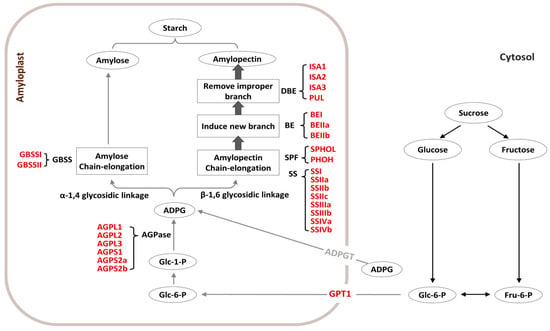
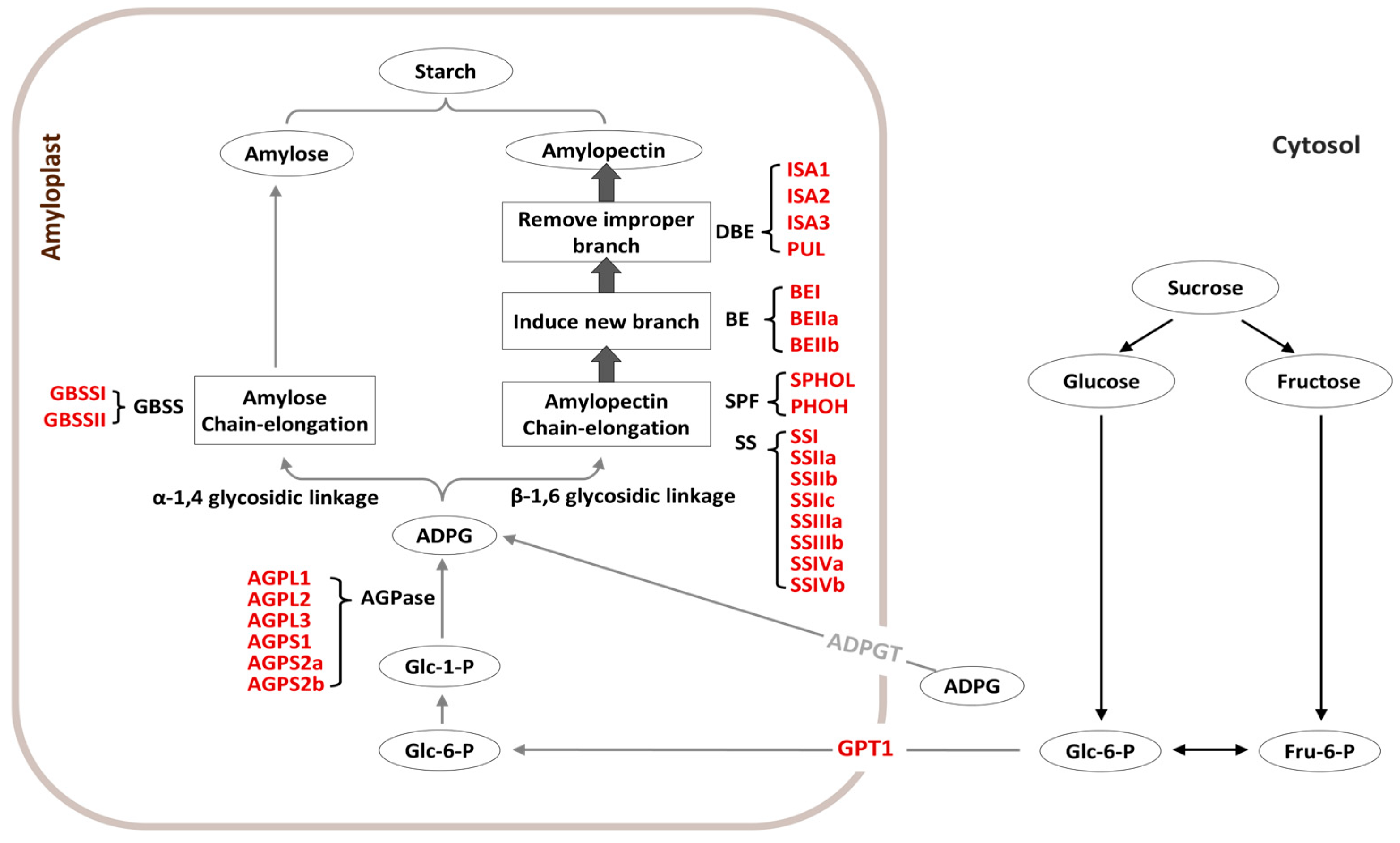
To examine whether differences in starch-related traits between indica and japonica are associated with differences in major starch metabolism-related genes, we first identified orthologous genes in the two subspecies. A total of 52 starch metabolism-related genes, representing 26 orthologous gene pairs, were identified in the two major Oryza sativa subspecies (Table 1; Supplementary Tables S3 and S4). These genes were assigned to the major functional groups associated with rice starch metabolism, including AGPase, SSs, GBSSs, BEs, DBEs, starch phosphorylase family members, and GPT1. Together, these orthologous pairs covered the principal enzymatic steps of starch metabolism in rice endosperm, including ADP-glucose production, amylose synthesis, amylopectin elongation, branch formation, and debranching (Figure 1). Importantly, each gene identified in one subspecies had a clear orthologous counterpart in the other, and no lineage-specific gene gain or loss was detected within the analyzed gene set. The corresponding gene family sizes were also identical between the two genomes. These results indicate that the major starch metabolism-related genes are conserved between indica and japonica and that differences in starch-related traits are unlikely to be explained simply by the presence or absence of core pathway genes.
Table 1.
Orthologous starch metabolism-related genes identified in indica and japonica rice. Orthologous pairs were assigned based on annotation correspondence and sequence similarity. Genes were classified according to their functional roles in rice starch metabolism.
Figure 1.
Schematic overview of starch metabolism in rice endosperm and the major gene groups analyzed in this study. Circles indicate major metabolites, and rectangles indicate the principal enzymatic steps involved in ADP-glucose production, amylose synthesis, amylopectin elongation, branching, and debranching. The starch metabolism-related genes analyzed in this study are grouped according to their functional classes, including AGPase, SS, GBSS, BE, DBE, starch phosphorylase family members, and GPT1.
3.2. Structural Comparison of Orthologous Genes in Indica and Japonica
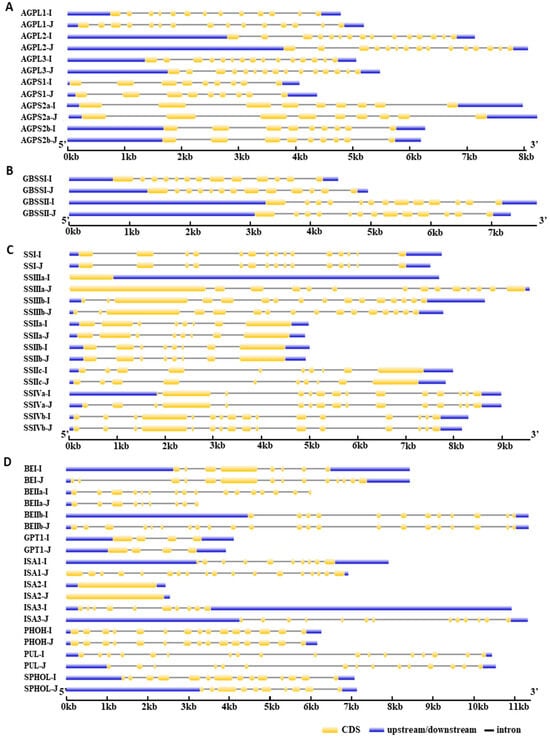
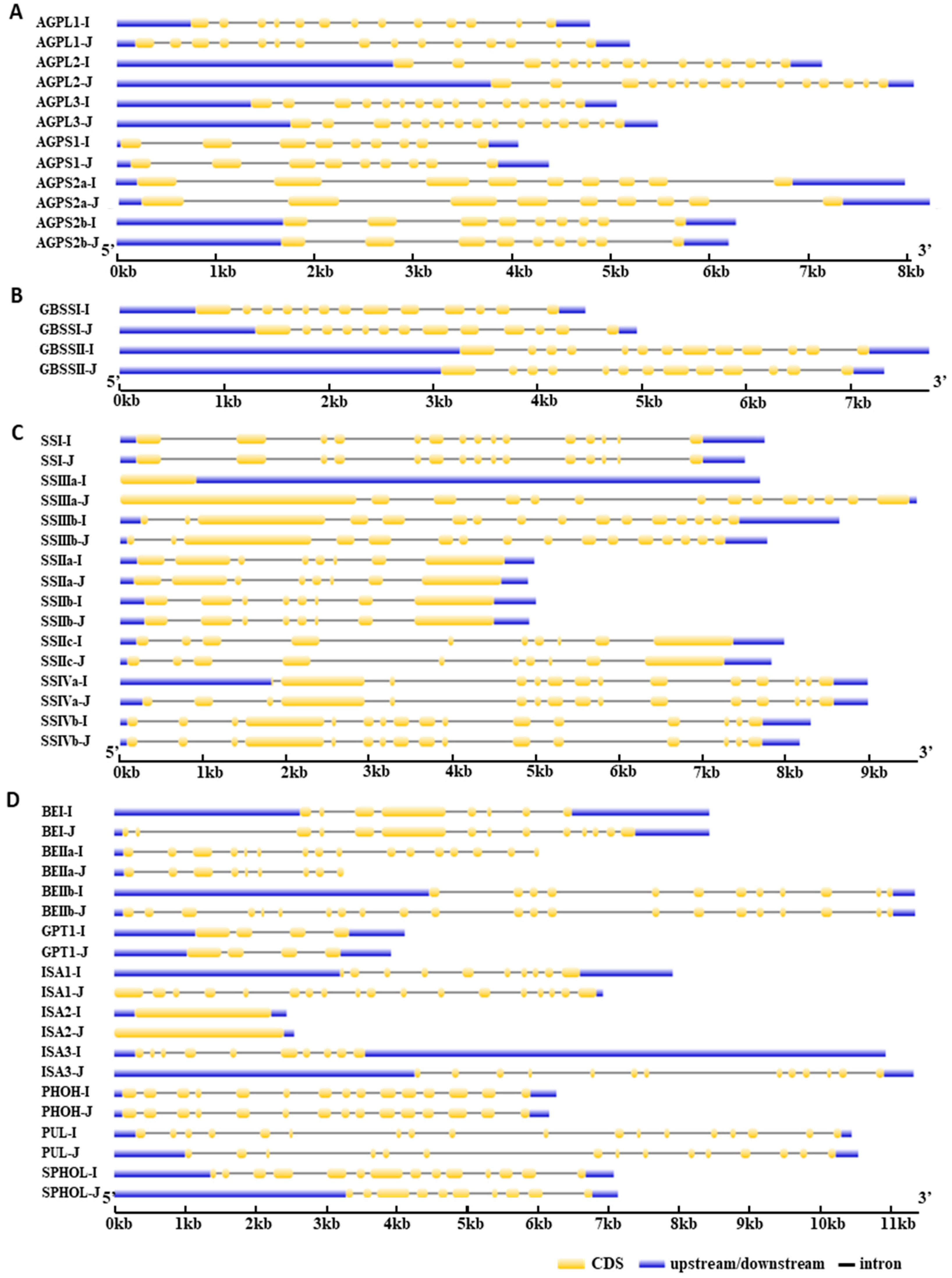
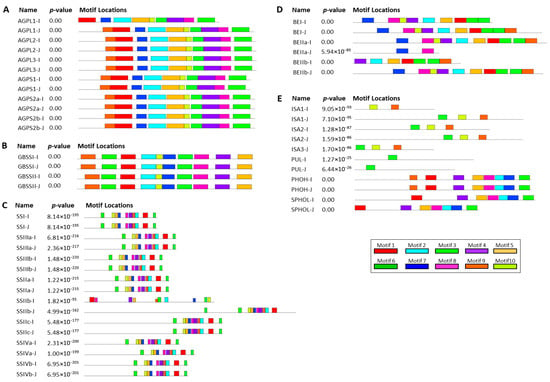
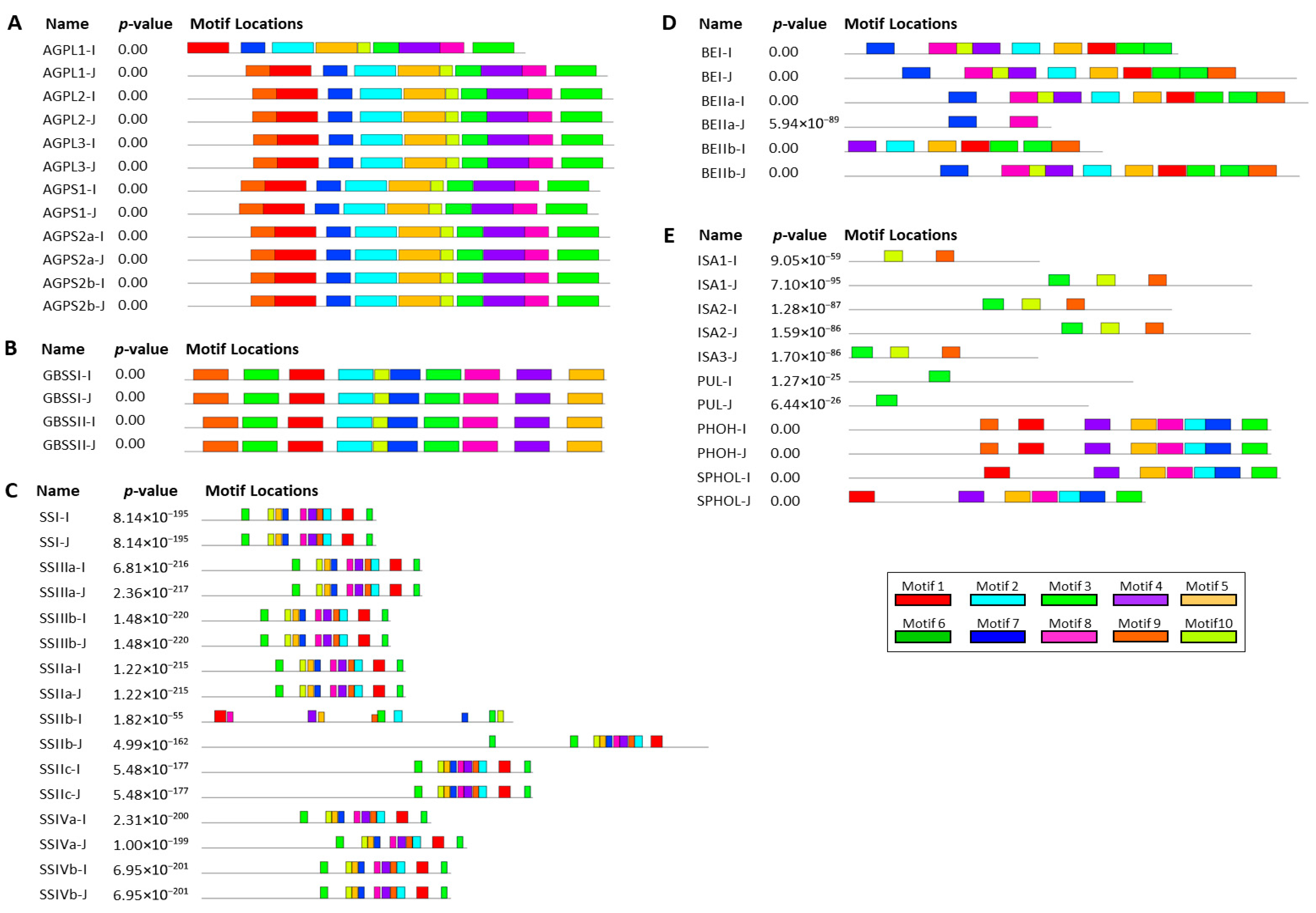
To examine whether structural variation in starch metabolism-related genes distinguishes indica and japonica, we compared the phylogenetic relationships, chromosomal distribution, exon–intron organization, and conserved motif composition of orthologous genes in the two subspecies (Figure 2 and Figure 3; Supplementary Figures S2 and S3; Supplementary Table S1). Most orthologous genes were mapped to corresponding chromosomal positions in indica and japonica, and no apparent gain-or-loss pattern was detected at the genomic distribution level (Supplementary Figure S3). Phylogenetic analysis further showed that most proteins clustered according to their annotated functional classes in both separate and combined trees (Supplementary Figure S2). Comparison of exon–intron organization showed that gene structures were largely similar between orthologous pairs (Figure 2). This pattern was most evident in AGPase- and GBSS-related genes. Within the soluble starch synthase family, SSI, SSIIa, and SSIV-related genes also showed similar exon organization, whereas SSIIIa displayed clearer differences in exon number and exon length between indica and japonica. Branching and debranching enzyme-related genes showed a similar trend: most orthologs were structurally comparable, whereas selected genes, including BEIIa, PUL, and several ISA-related genes, showed moderate differences in exon arrangement. A comparable pattern was observed at the protein level (Figure 3; Supplementary Table S1). Proteins within the same functional groups generally shared similar motif composition and motif order in the two subspecies, although limited motif variation was detected in a small number of proteins, most clearly in SSIIIa and several branching and debranching enzyme-related members. These results indicate that the overall structural organization of starch metabolism-related genes is largely conserved between indica and japonica, with detectable variation restricted to a limited subset of genes.
Figure 2.
Exon–intron structures of starch metabolism-related genes in the two Oryza sativa subspecies, indica and japonica. Gene structures were visualized using GSDS by aligning coding sequences with their corresponding genomic sequences. Yellow boxes indicate coding sequences (CDSs), blue boxes indicate untranslated regions (UTRs), and black lines indicate introns. (A) ADP-glucose pyrophosphorylase (AGPase) genes. (B) Granule-bound starch synthase (GBSS) genes. (C) Soluble starch synthase (SS) genes. (D) Starch branching and debranching enzyme genes.
Figure 3.
Distribution of conserved motifs in starch metabolism-related proteins from indica and japonica rice. Conserved motifs were identified using MEME, and each colored box represents a distinct motif. The relative positions and arrangement of motifs within each protein are shown. (A) ADP-glucose pyrophosphorylase-related proteins. (B) Granule-bound starch synthase-related proteins. (C) Soluble starch synthase-related proteins. (D) Starch branching enzyme-related proteins. (E) Starch debranching enzyme-related proteins.
3.3. Comparison of Predicted Cis-Regulatory Elements in Promoter Regions
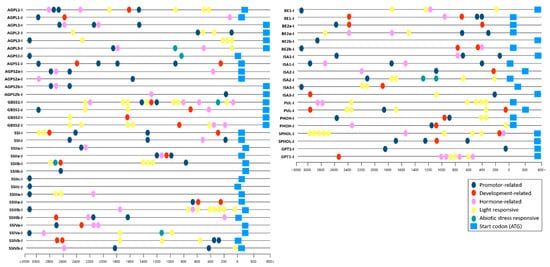
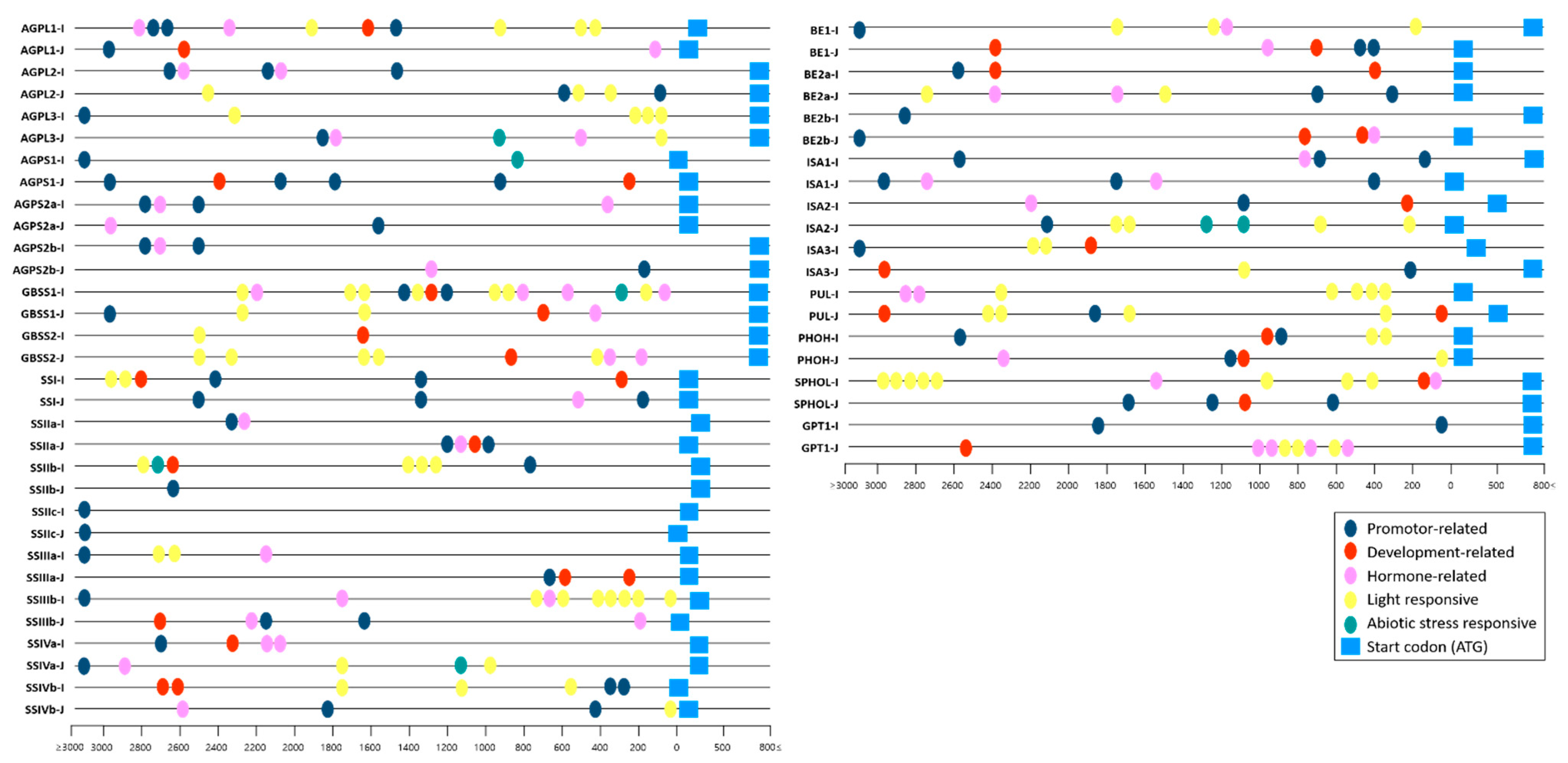
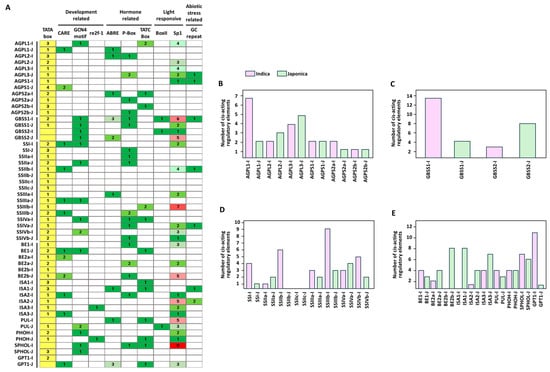
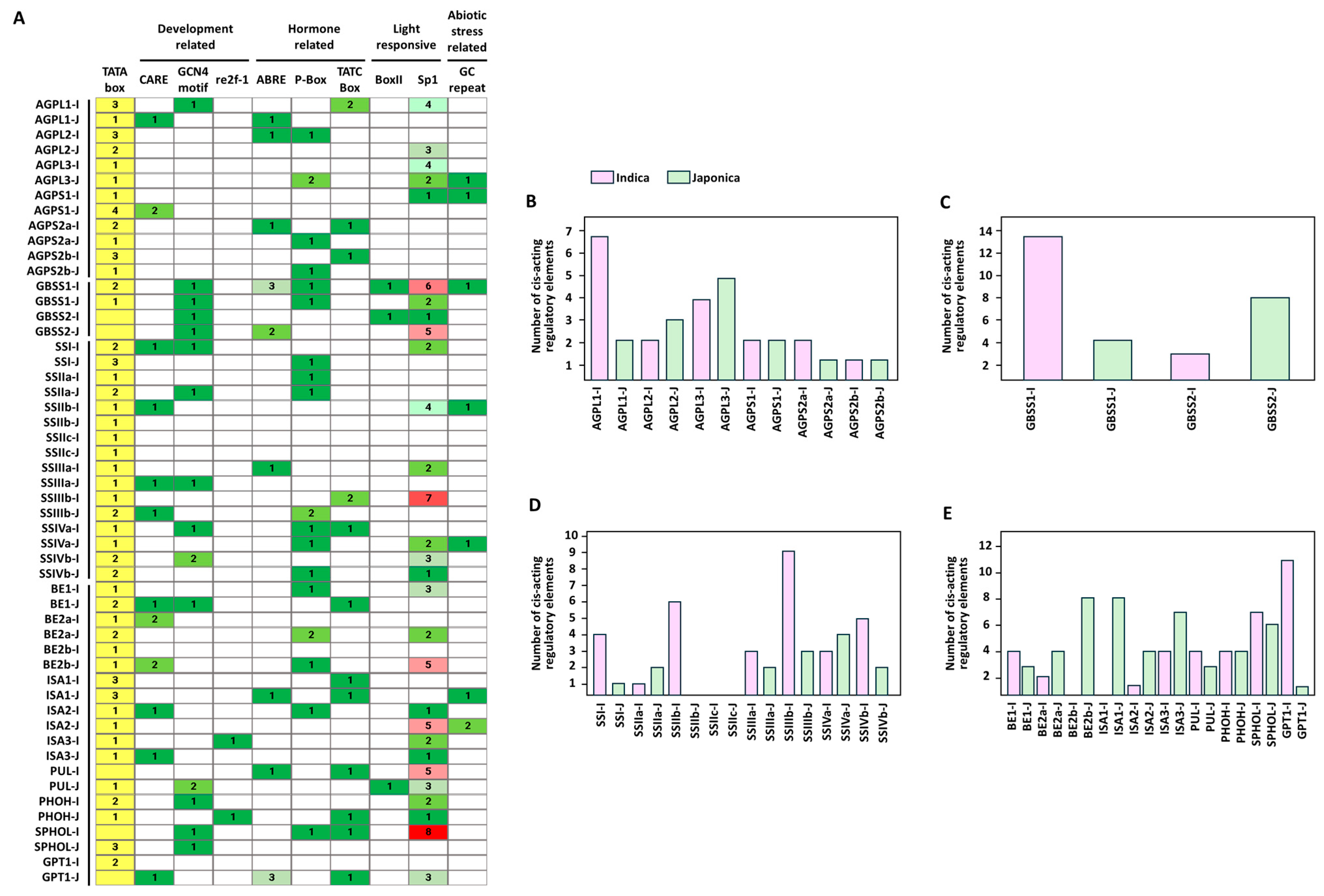
To examine potential regulatory divergence between indica and japonica, we analyzed predicted cis-regulatory elements within the 3 kb upstream promoter regions of starch metabolism-related genes (Figure 4 and Figure 5). In both subspecies, most promoters contained multiple putative cis-elements associated with light responsiveness, phytohormone signaling, growth and development, and stress responses, indicating that these genes are likely subject to complex transcriptional regulation. Comparison of element distribution patterns showed that the overall promoter architectures were broadly conserved between the two subspecies, although differences in the relative abundance of specific cis-element categories were observed (Figure 4 and Figure 5A). Notably, light-responsive elements were more prevalent in indica promoters, whereas japonica promoters showed relatively higher proportions of growth- and development-related as well as hormone-responsive elements. When genes were further grouped by enzyme class, indica promoters tended to harbor larger numbers of predicted cis-elements in AGPase, GBSS, and soluble starch synthase-related genes, whereas japonica promoters showed relatively greater cis-element abundance in branching enzyme- and debranching enzyme-related genes (Figure 5B–E). Together, these results indicate that, despite the overall conservation of promoter architecture in orthologous starch metabolism-related genes, subspecies-specific differences in predicted cis-regulatory element composition are present between indica and japonica.
Figure 4.
Distribution of predicted cis-acting regulatory elements in the promoter regions of starch metabolism-related genes in indica and japonica rice. Promoter sequences 3000 bp upstream of each gene were analyzed using PlantCARE, and the locations of predicted cis-acting elements are shown for individual genes.
Figure 5.
Analysis of cis-acting regulatory elements in the promoter regions of starch metabolism-related genes in indica and japonica rice. Promoter sequences 3000 bp upstream of the translation start site were analyzed using PlantCARE. (A) Functional classification of predicted cis-acting elements identified in starch metabolism-related gene promoters. (B–E) Total numbers of predicted cis-acting elements in the promoter regions of starch metabolism-related genes from indica and japonica, grouped according to functional category.
3.4. Expression Profiles During Grain Filling in Indica and Japonica
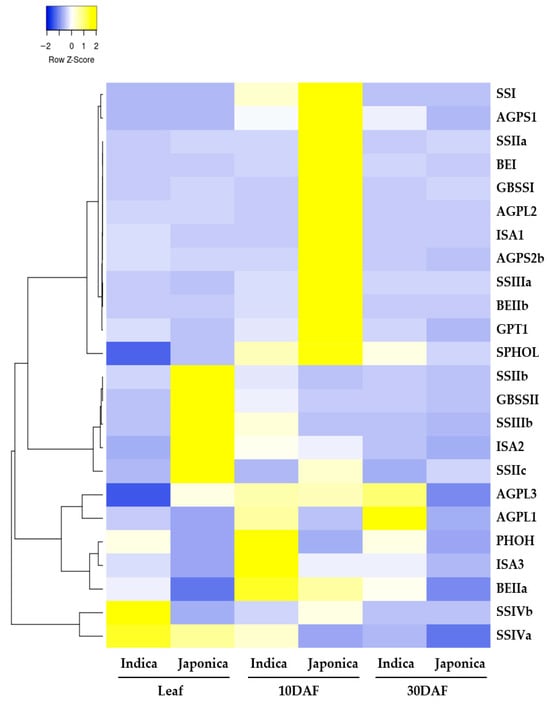
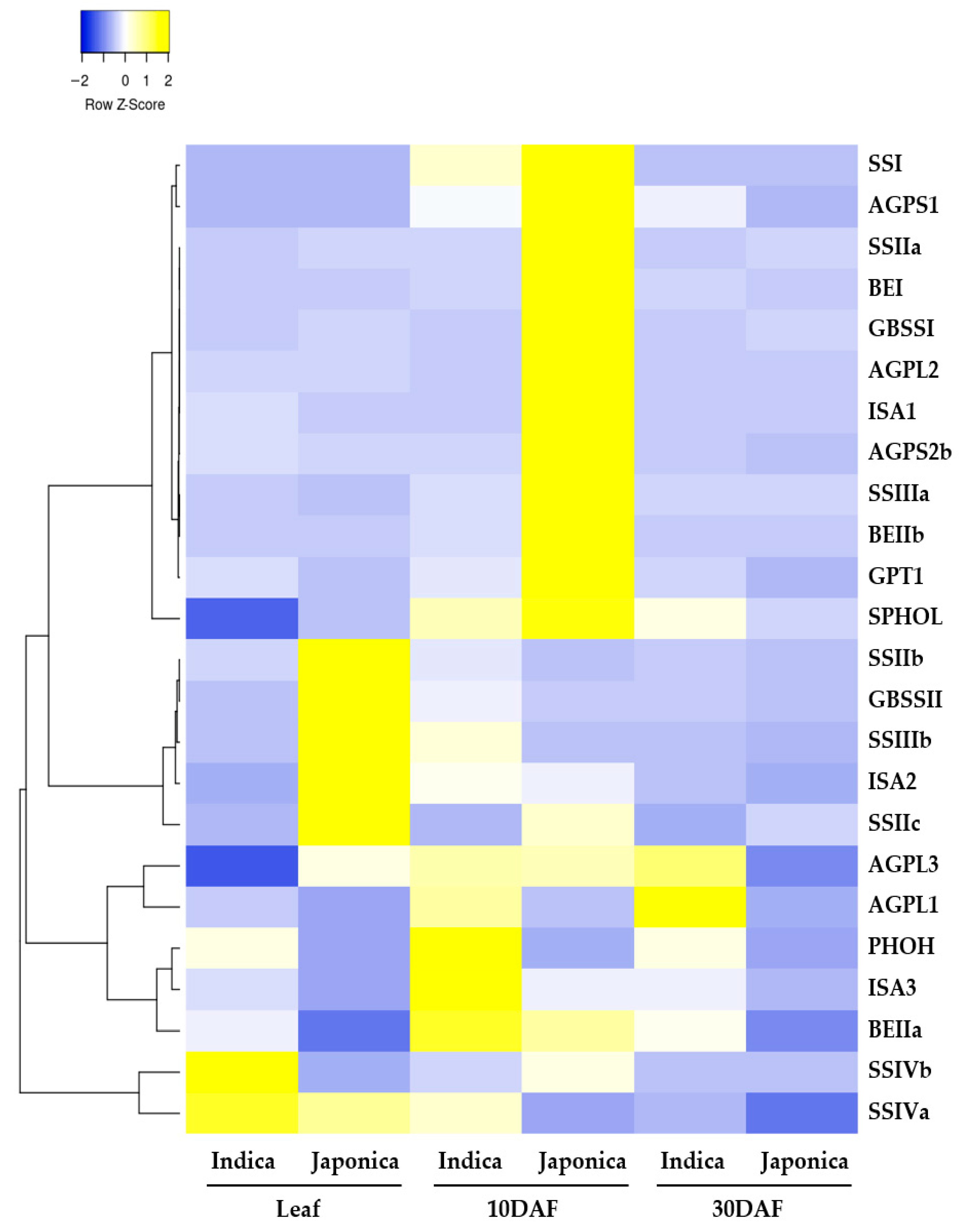
To explore transcriptional patterns during grain filling, transcriptome expression profiles were compared across tissues and developmental stages in indica and japonica using publicly available transcriptome data (Figure 6). Hierarchical clustering of normalized transcript levels revealed clear tissue- and stage-dependent expression patterns among the analyzed genes. In leaf tissues, genes associated with transient starch metabolism showed subspecies-associated differences in relative transcript accumulation: OsSSIVa and OsSSIVb showed relatively higher transcript accumulation in indica, whereas OsGBSSII, together with OsSSIIb, OsSSIIc, OsSSIIIb, and OsISA2, showed relatively higher transcript accumulation in japonica. During early grain filling (10 DAFs), several core endosperm starch biosynthesis genes, including OsSSI, OsSSIIa, and OsBEI, showed relatively higher transcript accumulation in japonica than in indica. In contrast, OsAGPL1 and OsPHOH showed relatively higher transcript accumulation in indica at the same stage. By 30 DAFs, transcript levels of most genes had declined markedly in both subspecies and approached basal levels. Overall, these transcriptome profiles provide an exploratory view of subspecies-associated expression patterns during grain filling.
Figure 6.
Transcriptomic expression profiles of 24 orthologous starch metabolism-related gene pairs during grain filling in indica and japonica rice. The heatmap shows relative expression patterns across tissues and developmental stages based on normalized expression values obtained from RiceXPro. For visualization, expression values for each gene were transformed to row-wise Z-scores, so that color intensity reflects relative transcript accumulation within each gene across samples. Genes were clustered according to expression similarity.
3.5. qRT-PCR Validation of Grain-Filling Expression Patterns
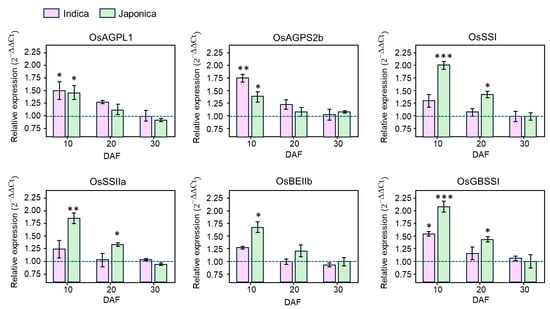
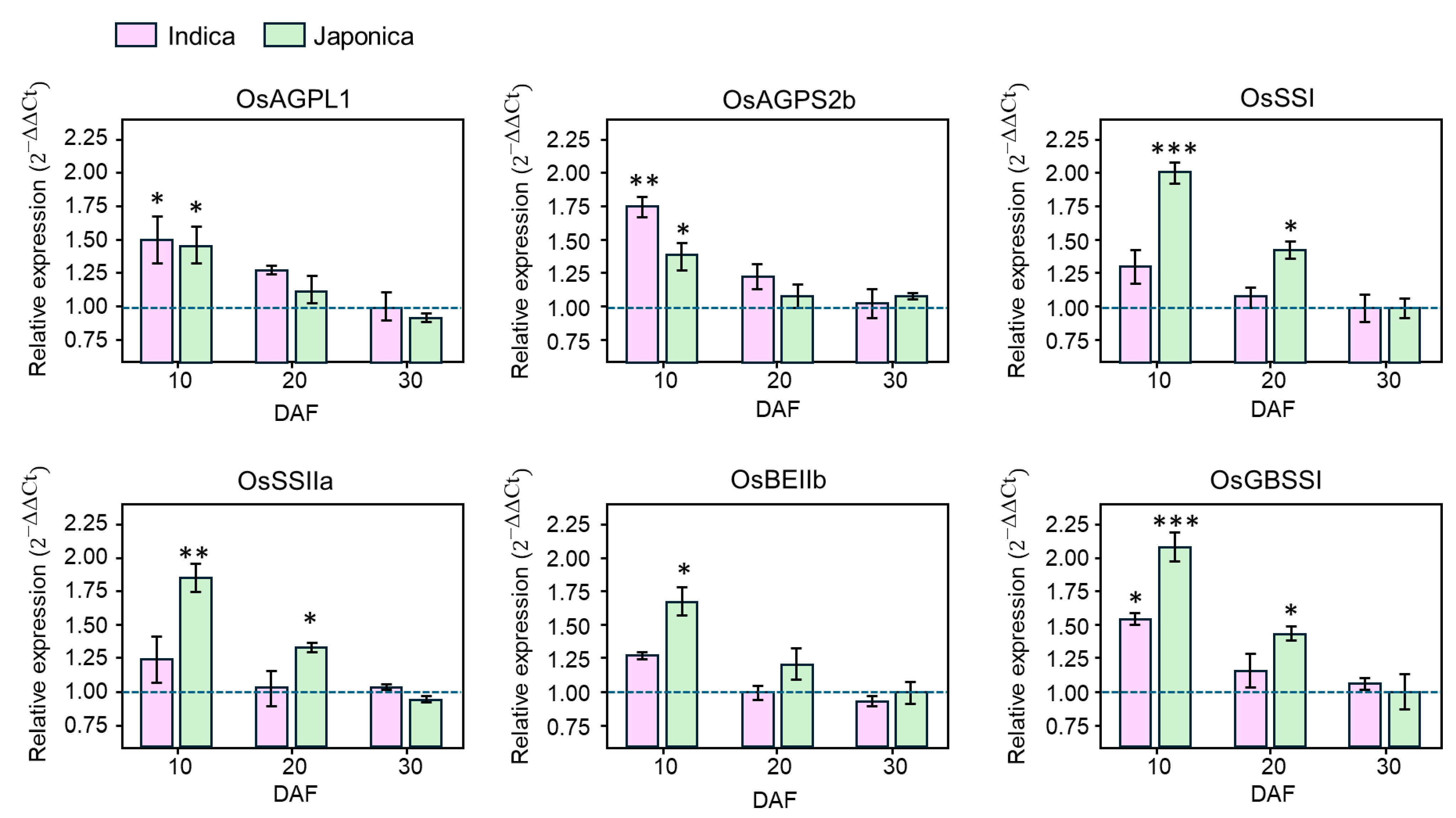
To validate the expression patterns observed in the RNA-seq profiles during grain filling, qRT-PCR was performed for representative genes involved in major steps of starch biosynthesis (Figure 7). The selected genes included OsAGPL1 and OsAGPS2b, associated with ADP-glucose production, OsSSI and OsSSIIa, involved in glucan chain elongation, OsBEIIb, associated with branch formation, and OsGBSSI, which plays a central role in amylose synthesis. Overall, the qRT-PCR results were generally consistent with the RNA-seq expression patterns and supported subspecies-biased expression during early grain filling. At 10 DAFs, SSI and SSIIa showed higher expression in japonica than in indica, with relative expression values of approximately 2.0 vs. 1.3 and 1.8 vs. 1.2, respectively. BEIIb and GBSSI also showed higher expression in japonica, with values of approximately 1.7 vs. 1.3 and 2.1 vs. 1.5, respectively. By contrast, AGPS2b showed higher expression in indica than in japonica at the same stage, with values of approximately 1.7 and 1.4, respectively, whereas AGPL1 showed only a modest subspecies difference. As grain filling progressed, expression levels of most tested genes declined toward 30 DAFs in both subspecies, approaching basal levels. Taken together, these results support the view that transcriptional divergence between indica and japonica is most evident during early grain filling.
Figure 7.
qRT-PCR validation of representative starch metabolism-related genes during grain filling in indica and japonica rice. Quantitative real-time PCR was performed for representative genes involved in ADP-glucose production (OsAGPL1 and OsAGPS2b), glucan chain elongation (OsSSI and OsSSIIa), branching (OsBEIIb), and amylose synthesis (OsGBSSI). Relative expression levels were calculated using the 2−ΔΔCt method with OsActin as the internal control. Bars represent mean ± SD of three biological replicates. Asterisks indicate significant differences between indica and japonica (* p < 0.05, ** p < 0.01, *** p < 0.001).
4. Discussion
Rice grain quality is strongly influenced by starch composition and structure, particularly the relative proportions of amylose and amylopectin and the fine structure of amylopectin chains [15,16,17]. In the present study, we compared orthologous starch metabolism-related genes between indica and japonica at the levels of gene identity, structural organization, promoter composition, and grain-filling expression. Integrating these layers of evidence, our results indicate that the clearest distinction between the two subspecies lies not in major differences in gene repertoire, but in the developmental regulation of conserved starch metabolism-related genes during grain filling (Table 1; Figure 1, Figure 2, Figure 3, Figure 4, Figure 5, Figure 6 and Figure 7; Supplementary Figures S1–S3; Supplementary Tables S1–S4). This conclusion is consistent with current views that grain-filling behavior and endosperm starch properties are shaped by coordinated regulatory control of shared biosynthetic components rather than by simple gain or loss of pathway genes [11].
Our first major inference is that the core starch metabolism-related framework is broadly conserved between indica and japonica. The identification of 26 orthologous gene pairs spanning the principal enzymatic steps of endosperm starch metabolism, together with the absence of lineage-specific gain or loss within the analyzed gene set, argues against large-scale pathway differentiation at the gene-content level (Table 1; Figure 1). This conclusion is further supported by the largely similar exon–intron organizations and conserved motif compositions observed for most orthologous pairs (Figure 2 and Figure 3; Supplementary Figures S2 and S3; Supplementary Table S1). Although a subset of genes, including SSIIIa, BEIIa, PUL, and several ISA-related members, showed detectable structural variation, these differences were limited relative to the overall conservation pattern. Thus, the present data support the interpretation that subspecies divergence in starch-related traits is unlikely to be explained primarily by broad restructuring of the core starch metabolic pathway.
A second inference is that regulatory divergence is more plausibly reflected in promoter composition and expression behavior than in gene presence or gross structure. Promoter analysis revealed differences in the relative abundance of predicted cis-regulatory categories between the two subspecies, with light-responsive elements more frequently represented in indica and growth/development- and hormone-related elements more prominent in japonica (Figure 4 and Figure 5). These differences suggest that orthologous starch metabolism-related genes may be embedded in partially distinct regulatory contexts. However, the cis-element analysis in the present study was based on in silico prediction alone and should therefore be interpreted cautiously. Predicted promoter composition can indicate possible regulatory divergence, but it does not by itself demonstrate that specific cis-elements are functionally responsible for the observed expression outcomes [18,19]. Accordingly, the promoter comparisons reported here are best regarded as a framework for generating regulatory hypotheses rather than as direct evidence of causal promoter function. This interpretation is in line with recent work emphasizing that mechanistic inference about cis-regulatory control requires functional assays such as promoter–reporter analyses, transcription factor binding tests, or chromatin-level measurements.
The strongest support for subspecies divergence in the present dataset emerged from the expression layer. RNA-seq profiling revealed clear tissue- and developmental stage-dependent differences in transcript accumulation, with the most evident contrast observed during early grain filling at 10 DAFs (Figure 6). This trend was further supported by qRT-PCR analysis of representative genes involved in ADP-glucose production, glucan chain elongation, branch formation, and amylose synthesis (Figure 7; Supplementary Table S2). Considered together, these results suggest that indica and japonica differ most clearly in the temporal deployment of conserved starch metabolism-related genes during a critical phase of endosperm development. This interpretation is biologically plausible because early grain filling corresponds to an active stage of starch deposition, when coordinated regulation of AGPase, starch synthases, branching enzymes, and associated factors is expected to influence final starch architecture and grain-quality traits [11,20,21,22,23,24]. The known functional importance of GBSSI, SSIIa, SSI, and BEIIb for amylose synthesis, amylopectin chain-length distribution, and starch physicochemical properties further supports the idea that developmental differences in transcript accumulation may contribute to subspecies-specific starch behavior [6,8,15,17,22,23,24]. At the same time, the present data do not support a simple interpretation in which one subspecies uniformly exhibits stronger pathway activity than the other. Rather, the overall pattern is more consistent with differences in timing, coordination, and relative balance across multiple functional modules within a shared starch metabolic network.
Several limitations of this study should be acknowledged. First, the comparative framework was defined at the orthologous gene level and therefore did not resolve allele-level or allele-specific transcriptional behavior within individual loci, an issue that is particularly relevant for genes such as Wx and SSIIa that are already known to harbor functionally important allelic variation [6,10]. Second, although the promoter analysis identified differences in predicted cis-regulatory composition, direct functional validation of promoter activity and regulatory interactions was not performed. Third, the expression comparisons were based on public transcriptome profiles together with targeted qRT-PCR validation and thus do not fully capture the environmental variation that may influence grain filling and starch metabolism in different genetic backgrounds [5,11]. These limitations indicate that the present study should be viewed as establishing a comparative regulatory framework rather than a complete mechanistic model. Future studies incorporating allele-specific expression analysis, promoter–reporter assays, transcription factor binding analysis, and chromatin or epigenetic profiling will be important for testing whether the putative regulatory differences identified here are functionally linked to subspecies-specific starch metabolism [18,19,20]. Even with these limitations, the present work provides a useful synthesis of orthology, structural conservation, promoter architecture, and developmental expression, and it highlights transcriptional regulation during grain filling as a key level at which grain-quality divergence between indica and japonica may emerge.
5. Conclusions
In this study, we performed a comparative analysis of starch metabolism-related genes in the two major Oryza sativa subspecies, indica and japonica. The analyzed gene set was broadly conserved between the two subspecies at the levels of gene identity and overall structural organization, whereas more evident differences were observed in predicted promoter composition and, most prominently, in transcript accumulation during grain filling. In particular, several key starch biosynthesis genes showed higher expression in japonica during early grain filling, whereas a subset of genes showed relatively higher expression in indica. These results indicate that subspecies variation in rice grain quality is more likely to be associated with differential regulation of conserved starch metabolism genes during grain filling than with major differences in pathway composition itself.
Supplementary Materials
The following supporting information can be downloaded at https://www.mdpi.com/article/10.3390/cimb48050436/s1.
Author Contributions
Validation, M.-S.K. and J.-Y.K.; formal analysis, M.-S.K., J.-Y.K. and D.S.; writing—original draft, M.-S.K. and J.-Y.K.; writing—review and editing, K.-K.K. and Y.-G.C.; supervision, Y.-G.C. All authors have read and agreed to the published version of the manuscript.
Funding
This research was supported by the Basic Science Research Program through the National Research Foundation of Korea (NRF, 2022R1I1A3071999), the research fund of Chungnam National University, and a grant from the New Breeding Technologies Development Program (Project No. RS-2024-00322378), Republic of Korea.
Institutional Review Board Statement
Not applicable.
Informed Consent Statement
Not applicable.
Data Availability Statement
The original contributions presented in this study are included in the article/Supplementary Material. Further inquiries can be directed to the corresponding authors.
Conflicts of Interest
The authors have no conflicts of interest relevant to this study to disclose.
References
- Yin, X.; Chen, X.; Hu, J.; Zhu, L.; Zhang, H.; Hong, Y. Effects of distribution, structure and interactions of starch, protein and cell walls on textural formation of cooked rice: A review. Int. J. Biol. Macromol. 2023, 253, 127403. [Google Scholar] [CrossRef] [Scilit]
- Bao, J.; Deng, B.; Zhang, L. Molecular and genetic bases of rice cooking and eating quality: An updated review. Cereal Chem. 2023, 100, 1220–1233. [Google Scholar] [CrossRef] [Scilit]
- Jiang, J.; Song, S.; Hu, C.; Jing, C.; Xu, Q.; Li, X.; Zhang, M.; Hai, M.; Shen, J.; Zhang, Y.; et al. QTL Detection and Candidate Gene Identification for Eating and Cooking Quality Traits in Rice (Oryza sativa L.) via a Genome-Wide Association Study. Int. J. Mol. Sci. 2024, 25, 630. [Google Scholar] [CrossRef] [Scilit]
- Jeon, J.; Ryoo, N.; Hahn, T.; Walia, H.; Nakamura, Y. Starch biosynthesis in cereal endosperm. Plant Physiol. Biochem. 2010, 48, 383–392. [Google Scholar] [CrossRef] [Scilit]
- Lu, F.; Jiao, G.; Qiu, J.; Zhao, S.; Zhao, F.; Wang, P.; Chen, L.; Chen, P.; Li, X.; Dong, N.; et al. A molecular module improves rice grain quality and yield at high temperature. Natl. Sci. Rev. 2025, 12, nwae416. [Google Scholar] [CrossRef] [Scilit]
- Umemoto, T.; Yano, M.; Satoh, H.; Shomura, A.; Nakamura, Y. Mapping of a gene responsible for the difference in amylopectin structure between japonica-type and indica-type rice varieties. Theor. Appl. Genet. 2002, 104, 1–8. [Google Scholar] [CrossRef] [Scilit]
- Huang, L.; Tan, H.; Zhang, C.; Li, Q.; Liu, Q. Starch biosynthesis in cereal endosperms: An updated review over the last decade. Plant Commun. 2021, 2, 100237. [Google Scholar] [CrossRef] [Scilit] [PubMed]
- Wang, Z.; Zheng, F.; Shen, G.; Gao, J.; Snustad, D.P.; Li, M.; Zhang, J.; Hong, M. The amylose content in rice endosperm is related to the post-transcriptional regulation of the waxy gene. Plant J. 1995, 7, 613–622. [Google Scholar] [CrossRef] [Scilit] [PubMed]
- Bligh, H.F.; Larkin, P.D.; Roach, P.S.; Jones, C.A.; Fu, H.; Park, W.D. Use of alternate splice sites in granule-bound starch synthase mRNA from low-amylose rice varieties. Plant Mol. Biol. 1998, 38, 407–415. [Google Scholar] [CrossRef] [Scilit] [PubMed]
- Hirano, H.Y.; Eiguchi, M.; Sano, Y. A single base change altered the regulation of the Waxy gene at the posttranscriptional level during the domestication of rice. Mol. Biol. Evol. 1998, 15, 978–987. [Google Scholar] [CrossRef] [Scilit]
- Zhao, S.; Cao, R.; Sun, L.; Zhuang, D.; Zhong, M.; Zhao, F.; Jiao, G.; Chen, P.; Li, X.; Shao, G.; et al. An integrative analysis of the transcriptome and proteome of rice grain chalkiness formation under high temperature. Plants 2024, 13, 3309. [Google Scholar] [CrossRef] [Scilit]
- Hu, Y.; Zhang, X.; Li, C.; Wang, Y.; Liu, Q. Functional analysis of SSIIa alleles reveals their roles in starch structure and grain quality in rice. Int. J. Biol. Macromol. 2023, 242, 125021. [Google Scholar]
- Tanaka, N.; Fujita, N.; Nishi, A.; Satoh, H.; Hosaka, Y.; Ugaki, M.; Kawasaki, S.; Nakamura, Y. The structure of starch can be manipulated by changing the expression levels of starch branching enzyme IIb in rice endosperm. Plant Biotechnol. J. 2004, 2, 507–516. [Google Scholar] [CrossRef] [Scilit] [PubMed]
- Li, M.; Fu, D.; Wu, W.; Lü, S.; Yang, P. Mechanistic insights into hybrid rice Liangyou 287’s superior performance: Transcriptomic and metabolic evidence for rapid starch biosynthesis during grain filling. Seed Biol. 2025, 4, e026. [Google Scholar] [CrossRef] [Scilit]
- Fitzgerald, M.A.; McCouch, S.R.; Hall, R.D. Not just a grain of rice: The quest for quality. Trends Plant Sci. 2009, 14, 133–139. [Google Scholar] [CrossRef] [Scilit]
- Nakamura, Y. Towards a better understanding of the metabolic system for amylopectin biosynthesis in plants: Rice endosperm as a model tissue. Plant Cell Physiol. 2002, 43, 718–725. [Google Scholar] [CrossRef] [Scilit]
- Pandey, M.K.; Rani, N.S.; Madhav, M.S.; Sundaram, R.M.; Varaprasad, G.S.; Sivaranjani, A.K.P.; Bohra, A.; Kumar, G.R.; Kumar, A. Different isoforms of starch-synthesizing enzymes controlling amylose and amylopectin content in rice (Oryza sativa L.). Biotechnol. Adv. 2012, 30, 1697–1706. [Google Scholar] [CrossRef] [Scilit]
- Marand, A.P. cis-Regulatory Elements in Plant Development, Adaptation, and Agricultural Improvement. Annu. Rev. Plant Biol. 2023, 74, 465–493. [Google Scholar] [CrossRef] [Scilit]
- Xu, X.; Mo, Q.; Cai, Z.; Jiang, Q.; Zhou, D.; Yi, J. Promoters, key cis-regulatory elements, and their potential applications in regulation of cadmium (Cd) in rice. Int. J. Mol. Sci. 2024, 25, 13237. [Google Scholar] [CrossRef] [Scilit] [PubMed]
- Huang, K.Y.; Lu, F.F.; Chen, P.F.; Jiao, G.A.; Lin, H.Y.; Zhang, J.; Zhao, S.L.; Cao, R.J.; Shao, G.N.; Sheng, Z.H.; et al. A large-scale gene regulatory network for rice endosperm starch biosynthesis and its application in genetic improvement of rice quality. Plant Biotechnol. J. 2025. online ahead of print. [Google Scholar] [CrossRef] [Scilit] [PubMed]
- Li, R.; Zheng, W.; Jiang, M.; Zhang, H. A review of starch biosynthesis in cereal crops and its potential breeding applications in rice (Oryza sativa L.). PeerJ 2021, 9, e12678. [Google Scholar] [CrossRef] [Scilit]
- Crofts, N.; Sugimoto, K.; Oitome, N.F.; Nakamura, Y.; Fujita, N. Differences in specificity and compensatory functions among three major starch synthases determine the structure of amylopectin in rice endosperm. Plant Mol. Biol. 2017, 94, 399–417. [Google Scholar] [CrossRef] [Scilit] [PubMed]
- Sawada, T.; Itoh, M.; Nakamura, Y. Contributions of three starch branching enzyme isozymes to the fine structure of amylopectin in rice endosperm. Front. Plant Sci. 2018, 9, 1536. [Google Scholar] [CrossRef] [Scilit] [PubMed]
- Butardo, V.M., Jr.; Fitzgerald, M.A.; Bird, A.R.; Gidley, M.J.; Flanagan, B.M.; Larroque, O.; Resurreccion, A.P.; Laidlaw, H.K.C.; Jobling, S.A.; Morell, M.K.; et al. Impact of down-regulation of starch branching enzyme IIb in rice by artificial microRNA- and hairpin RNA-mediated RNA silencing. J. Exp. Bot. 2011, 62, 4927–4941. [Google Scholar] [CrossRef] [Scilit] [PubMed]

Disclaimer/Publisher’s Note: The statements, opinions and data contained in all publications are solely those of the individual author(s) and contributor(s) and not of MDPI and/or the editor(s). MDPI and/or the editor(s) disclaim responsibility for any injury to people or property resulting from any ideas, methods, instructions or products referred to in the content. |
© 2026 by the authors. Licensee MDPI, Basel, Switzerland. This article is an open access article distributed under the terms and conditions of the Creative Commons Attribution (CC BY) license.