


Abstract
Background: α-Aminophosphonates, a representative class of phosphonates, are important due to their potential and real biological activity as pharmaceutical agents. The effect results from their enzyme-inhibitory properties. Objectives: We planned to complete the family of the earlier-prepared symmetric bis(α-aryl-methylphosphonoyl)amines and the unsymmetric variations derived from the Kabachnik–Fields reaction of α-amino-α-aryl-methylphosphonates, arylaldehydes, and diethyl phosphite, including four new derivatives in order to test them on human multiple myeloma cells U266. Methods: The new bis(P-functionalized methyl)amines were prepared by varying the reagents: using formaldehyde instead of the benzaldehyde derivatives, or applying dimethyl phosphite or diphenylphosphine oxide instead of diethyl phosphite in the Kabachnik–Fields reaction of α-amino-α-phenyl-methylphosphonate. The starting α-aminophosphonate was also reacted with formaldehyde and ethyl phenyl-H-phosphinate. Cell viability was assessed using the CellTiter-Glo assay after 72 h of treatment with the compounds at 10 and 100 µM. Computational analyses included logP prediction using SwissADME and target prediction using SwissTargetPrediction. Results: Except for one case, the members of the molecule library comprised (SS/RR and SR/RS diastereoisomeric mixtures, confirmed by detailed 1D and 2D NMR investigations. The members of the 11-member compound library were tested against human myeloma cells U266. It was found that, except for a few cases, the bis(P-functionalized) species affected cell viability only to a small extent. In three cases, the viability fell in the range of 60–70%. The symmetric product with two P(O)(OEt)2 functions and with two chlorophenyl rings exhibited an outstanding effect marked by a viability of 3%. The IC50 value of this compound was determined to be 72.67 ± 3.53 µM (95% CI: 60.59–80.18 µM). The greater activity was generally associated with the increased predicted lipophilicity. The in silico target analysis revealed a possible contribution of carbonic anhydrases to the cytotoxic effects. Conclusions: The pronounced cytotoxic activity on multiple myeloma cell line U266 may be related to the chlorophenyl substituents, which may increase lipophilicity and facilitate cellular uptake. Overall, both the aryl substitution pattern and the nature of the phosphorus-containing moieties appear to influence cytotoxic activity. The encouraging results justify further research in the field.
1. Introduction
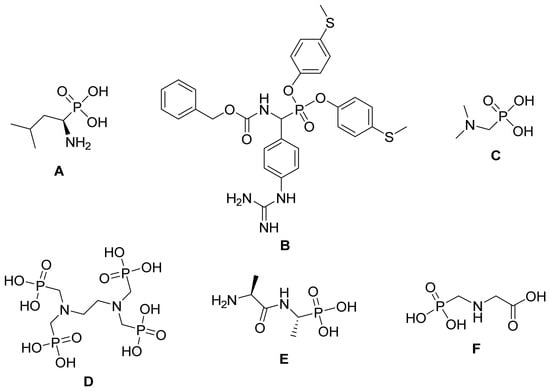
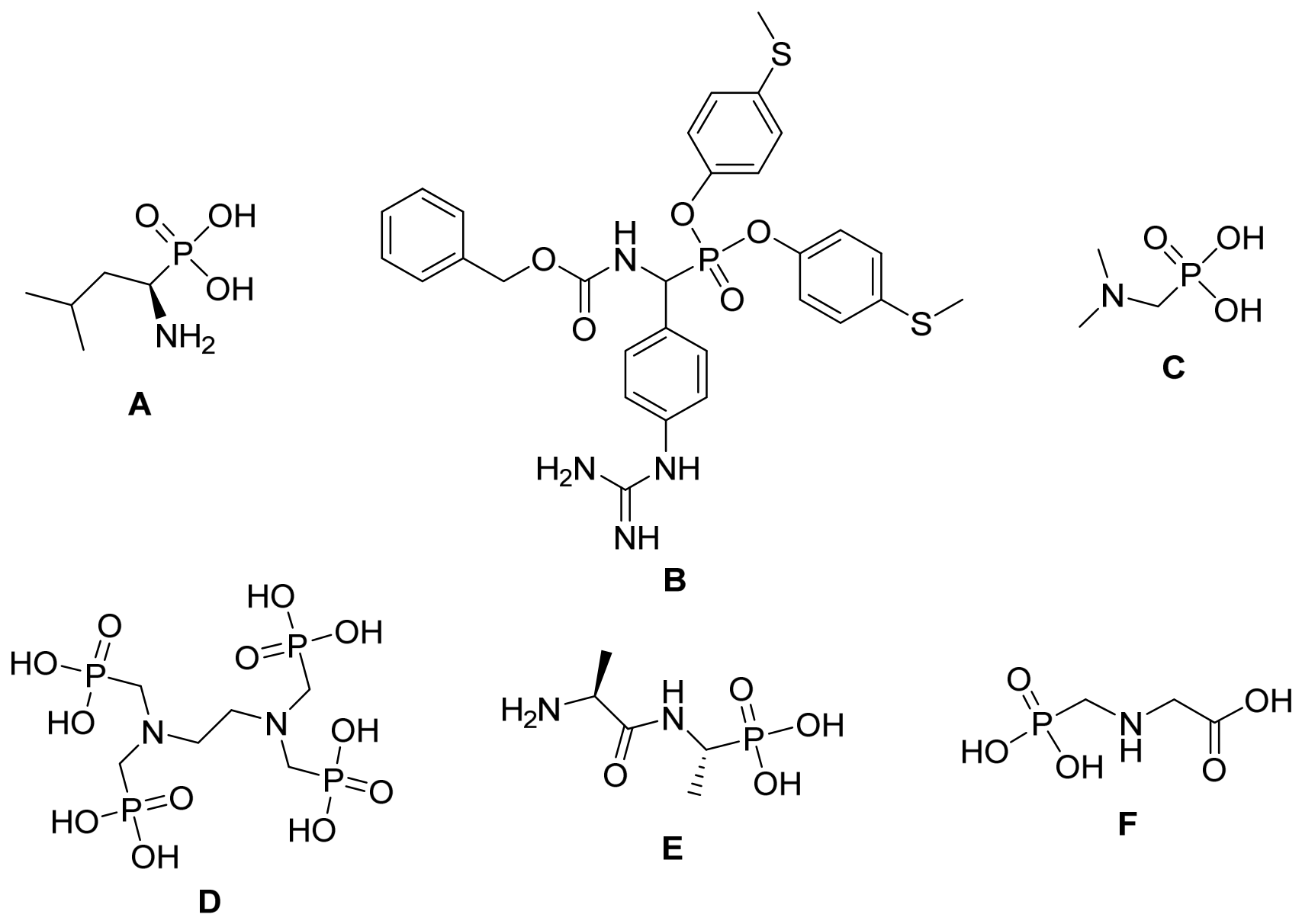
Phosphonates constitute an important and evergreen group within organophosphorus compounds, as they may serve as starting materials/intermediates in syntheses [1,2,3,4]. Phosphonates are also at the forefront due to their biological activity [5,6,7,8]. In this respect, the α-hydroxy- and α-aminophosphonates are the most prominent representatives [9,10]. A number of variations of the Kabachnik–Fields condensation of dialkyl phosphites, aldehydes, and amines were developed to synthesize α-aminophosphonate derivatives [10,11,12,13]. The biological activity of α-aminophosphonates attracted much attention [14,15,16]. As a matter of fact, the α-aminophosphonic acids are the structural analogues of α-aminocarboxylic acids [17,18,19]. The biological activity encompasses a wide range of effects that ultimately result from the inhibition of various enzymes and receptors [20,21,22]. The α-aminophosphonates may be antimetabolites [23]. Typically, antibiotic [23], antiviral and HIV [24], anti-inflammatory [25], antihypertensive [26], antiasthma [27], antimalarial [28], and antidiabetic [29] effects were described. The real agents are α-aminophosphonic acids formed from the corresponding aminophosphonates by enzymatic hydrolysis in living organisms. A few selected α-aminophosphonic derivatives with significant bioactivity are shown in Figure 1. P-containing derivatives of methionine and norleucine (e.g., A) were described as leucine aminopeptidase inhibitors [30]. Cbz-amino (4-guanidinophenyl) methanephosphonate aromatic esters represented by B inhibited trypsin and urokinase [31]. N-substituted aminomethanephosphonic and aminomethane-P-methylphosphinic acids (e.g., C) behaved as inhibitors of ureases [32]. Bis(bisphosphonomethyl) derivative D influenced bone mineral density and was used in the treatment of postmenopausal osteoporosis [33]. Alafosfalin (E), a phosphonopeptide, was used as an antibacterial agent [34]. Last but not least, a typical representative of aminophosphonates is glyphosate (F), used as a herbicide [35].
Figure 1.
α-Aminophosphonic derivatives (A–F) with significant biological activity [30,31,32,33,34,35].
These days, the search for compounds with anticancer activity is a great challenge. Well, α-aminophosphonic derivatives with cytotoxic activity are also known [36]. The tandem Kabachnik–Fields (phospho-Mannich) reaction is a useful method for the preparation of novel aminophosphonate derivatives [37]. We applied this protocol to make additional aminophosphonic derivatives available for cytostatic testing.
2. Results and Discussion
2.1. Synthesis
2.1.1. Preparation of Symmetric Bis(α-aryl-methylphosphonoyl)amines (2a–d)
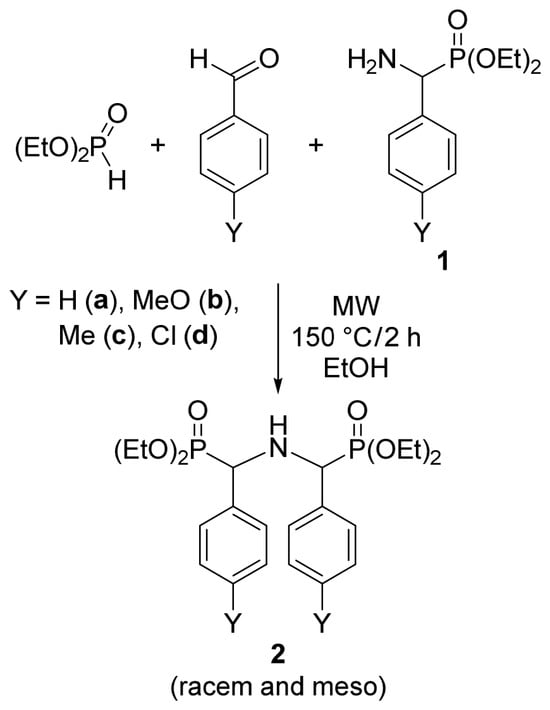
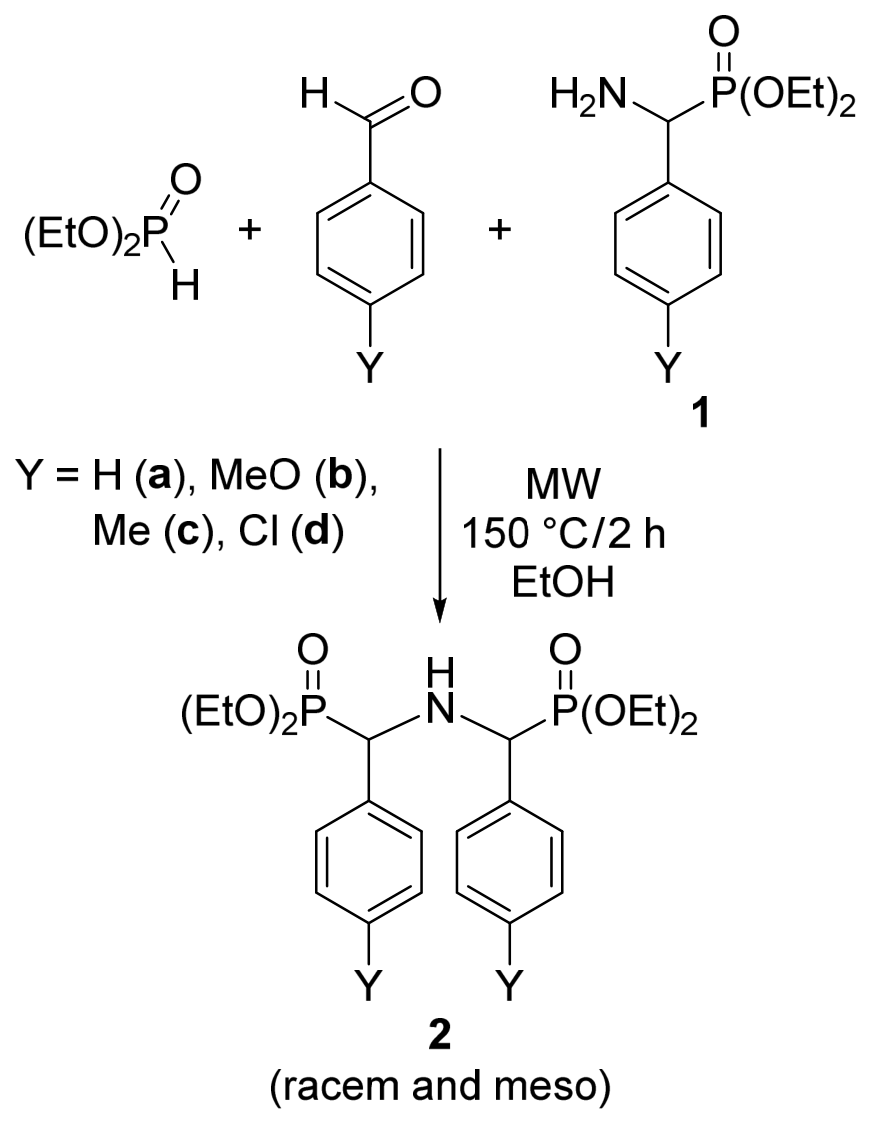
The starting diethyl α-amino-benzylphosphonates (1a–d) bearing substituents in the aromatic ring were synthesized as previously reported [38,39]. The microwave (MW)-assisted condensation of aminophosphonate 1a, 1b, 1c and 1d at 150 °C in ethanol with the suitable unsubstituted-, 4-methoxy-, 4-methyl-, and 4-chloro-benzalddehyde, respectively, using diethyl phosphite as the P-reagent furnished bis(phosphonoyl-benzyl)amines 2a–d as a mixture of racemic (RR/SS)- and meso (RS/SR) isomers in a 1:1 ratio (Scheme 1) [40].
Scheme 1.
Phospha-Mannich reaction of α-amino-benzylphosphonates (1) and substituted benzaldehydes with identical aryl groups, applying diethyl phosphite as the P-reagent.
2.1.2. Preparation of Unsymmetric (α-Aryl-methylphosphonoyl)-(α-aryl′-methylphosphonoyl)amines (3b–d)
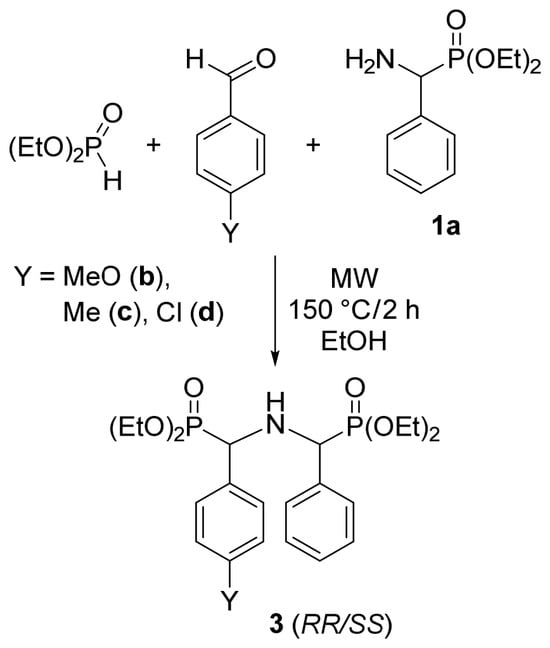
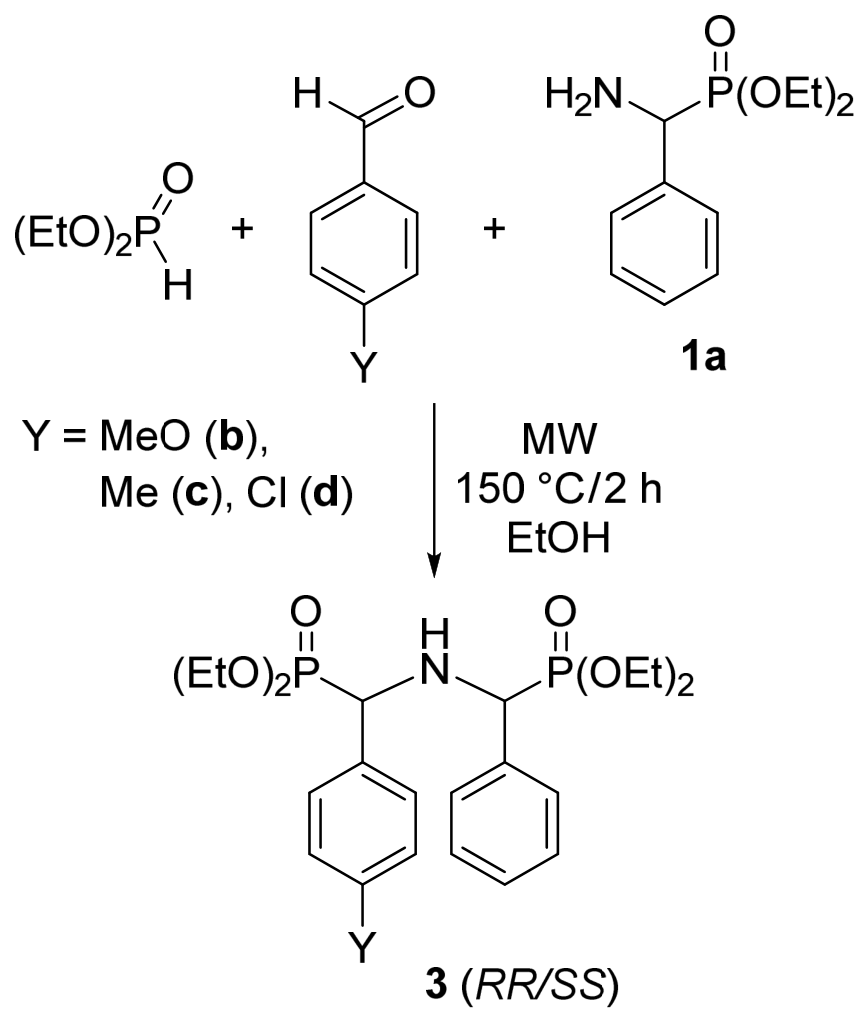
The next series of model compounds, (α-aryl-methylphosphonoyl)-(α-aryl′-methylphosphonoyl)amines (3b–d), was prepared similarly by reacting α-amino-benzylphosphonate 1a with 4-substituted benzaldehydes and diethyl phosphite. The reaction mixtures comprised the products (3b–d) as a mixture of two diastereoisomers (Scheme 2) [40].
Scheme 2.
Phospha-Mannich condensation of α-amino-benzylphosphonate (1a) with substituted benzaldehydes and diethyl phosphite.
2.1.3. Synthesis of (Diethylphosphonoyl-benzyl)-(diethylphosphonoyl-methyl)amine 4
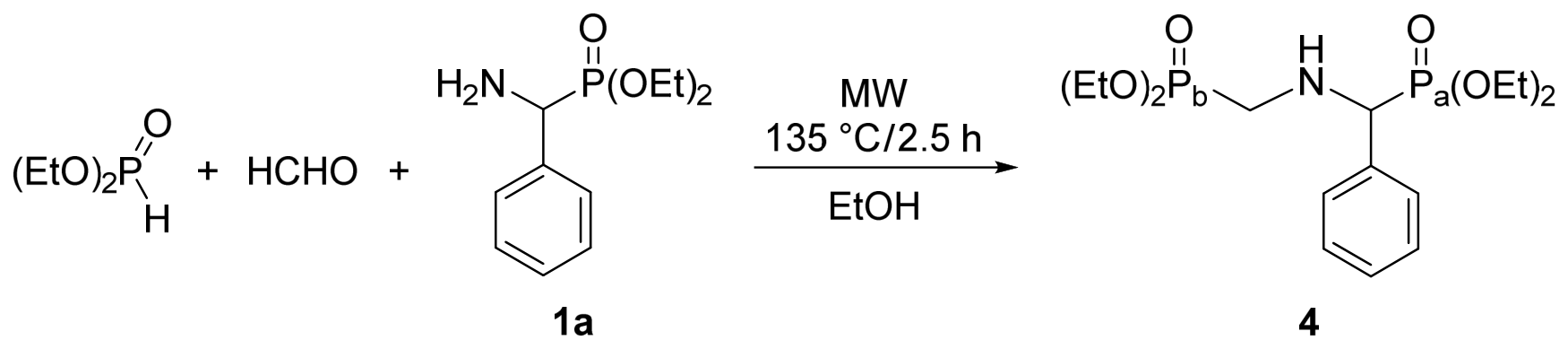
We planned to expand the scope of unsymmetric bis(P-functionalized) amines. α-Amino-benzylphosphonate 1a was condensed with formaldehyde and diethyl phosphite in ethanol. In this case, MW irradiation at 135 °C for 2.5 h was enough. After purification by flash column chromatography, product 4 was obtained in a 62% yield as a single isomer (Scheme 3).
Scheme 3.
Kabachnik–Fields reaction of α-aminophosphonate (1a) with formaldehyde and diethyl phosphite.
2.1.4. Synthesis of (Diethylphosphonoyl-benzyl)-(dimethylphosphonoyl-benzyl)amine 5
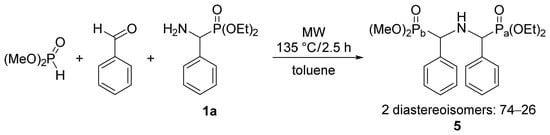
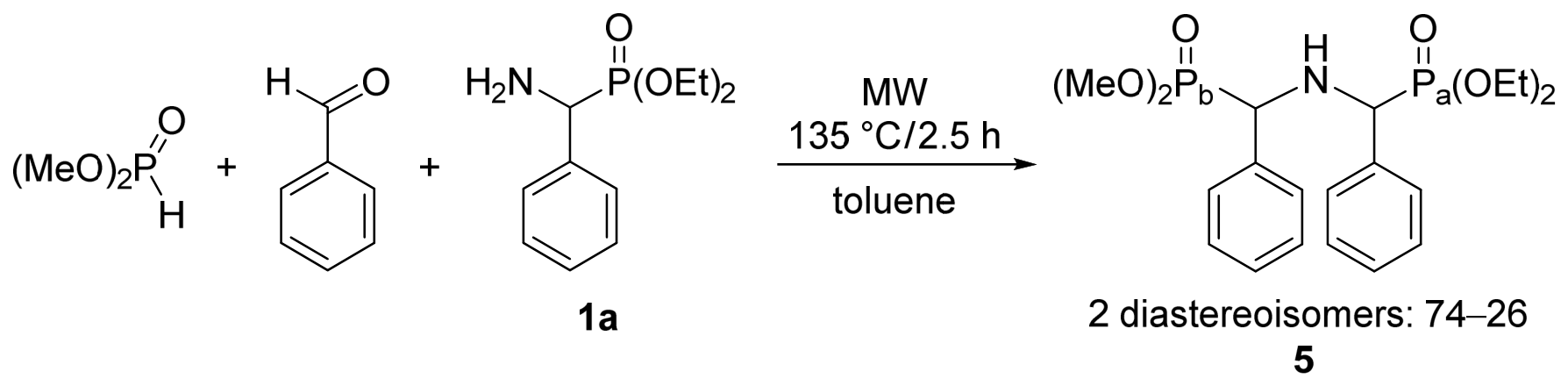
The next target molecule was the species with a diethylphosphonoyl and a dimethylphosphonoyl function prepared by the MW-promoted condensation of α-aminophosphonate 1a with benzaldehyde and dimethyl phosphite at 135 °C for 2.5 h. To avoid alcoholysis of the P(O)(OMe)2-function, in this case, toluene was used as the solvent. The work-up as above afforded product 5 in a 51% yield as a 74–26% mixture of two diastereoisomers (Scheme 4).
Scheme 4.
Kabachnik–Fields reaction of α-aminophosphonate (1a) with benzaldehyde and dimethyl phosphite.
2.1.5. Synthesis of (Diethylphosphonoyl-benzyl)-(diphenylphosphinoyl-benzyl)amine 6
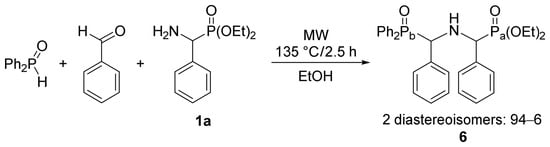
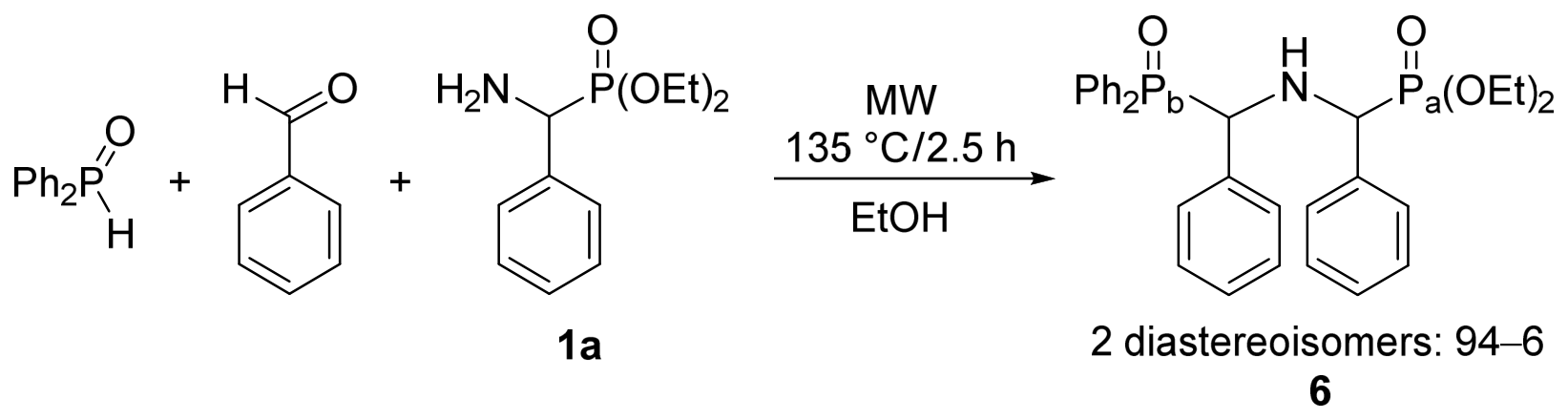
Another derivative with two different P-functions was synthesized by the phospha-Mannich reaction of α-aminophosphonate 1a, benzaldehyde, and diphenylphosphine oxide as a secondary phosphine oxide under MW irradiation at 135 °C for 2.5 h in ethanol. Flash chromatography of the crude product afforded phosphine oxide-phosphinate 6 in 61% yield. The diastereoisomeric composition was 94:6 (Scheme 5).
Scheme 5.
Kabachnik–Fields reaction of α-aminophosphonate (1a) with benzaldehyde and diphenylphosphine oxide.
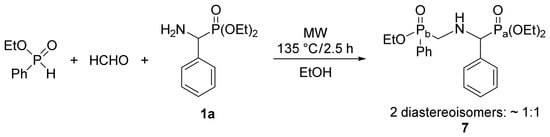
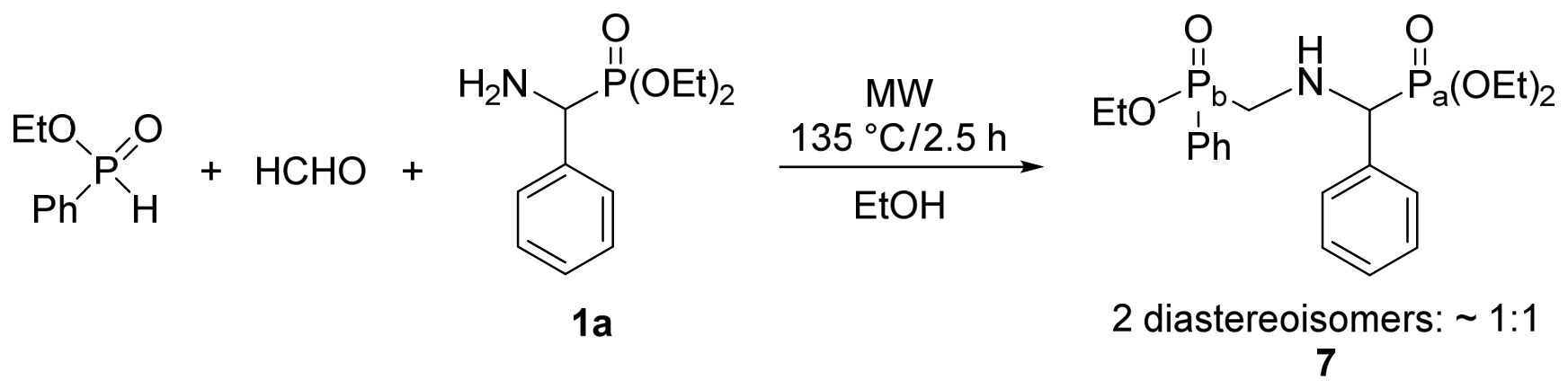
2.1.6. Synthesis of (Diethylphosphonoyl-benzyl)-(ethyl phenylphosphinoyl-methyl)amine 7
Last but not least, α-aminophosphonate 1a was used in a three-component reaction with formaldehyde and ethyl phenyl-H-phosphinate, exactly as in the previously discussed transformation. The phosphonate–phosphinate 7 has a P- and a C-asymmetric center. The work-up and purification led to a 1:1 mixture of the diastereomers of 7, isolated in 46% yield (Scheme 6).
Scheme 6.
Kabachnik–Fields reaction of α-aminophosphonate (1a) with formaldehyde and ethyl-phenyl-H-phosphinate.
2.1.7. NMR Identification and Characterization of Products 4–7
Products 4–7 were characterized by multinuclear (1H, 13C, and 31P) NMR spectroscopy, including a range of 2D NMR techniques (1H–1H COSY, 1H–13C HSQC, 1H–13C HMBC, 1H–13C HSQC-TOCSY, 1H–31P HMBC, and 1H J-resolved spectroscopy). These studies unequivocally confirmed the identities of the isolated compounds. The 31P NMR data for compounds 4–7 are summarized in Table 1, while selected 1H and 13C NMR data are presented in Table 2 and Table 3, respectively. In the case of compounds 5–7, the presence of two chiral centers gives rise to the formation of diastereomers. For compounds 5 and 7, both diastereomers could be fully characterized by NMR spectroscopy, whereas for 6, only the signals of the major diastereomer could be assigned. As expected, compound 4, which contains only one chiral center, displays a single set of NMR signals. All NMR spectra of compounds 4–7, together with clearly annotated signal assignments, are provided in the Supporting Information.
Table 1.
31P NMR chemical shifts of compounds 4–7 (in CDCl3, coupling constants J in Hz).
Table 2.
Selected 1H NMR data of compounds 4–7 (in CDCl3, coupling constants J in Hz).
Table 3.
Selected 13C NMR data of compounds 4–7 (in CDCl3, coupling constants J in Hz).
The assignment of the 31P NMR signals to individual phosphorus nuclei was based on the 1H–31P HMBC NMR spectra and was made unequivocally (see Figures S1 and S25–S28 for 4; Figures S31 and S52–S55 for 5; Figures S58 and S82–S86 for 6, and Figures S91 and S118–S122 for 7). The 31P NMR chemical shifts of compounds 4–7 fall within the expected range (Table 1). Of particular interest is the clearly resolved four-bond 31P–31P coupling, with coupling constants ranging from 1.0 Hz for isomer 2 of compound 5 to 6.8 Hz for isomer 1 of the same compound.
Characteristics of the compounds 4–7 are the signals of the P-CH< protons in the 1H-NMR spectra. They are found in the range of 3.7-4.1 ppm and are split into doublets by 2JPH coupling to phosphorus. The coupling constants range between 10 and 21 Hz. (Table 2). The P-CH2- protons in compounds 4 and 7 clearly show the expected diastereotopy, forming the AB-part of the ABX spectra (X = 31P). The 2JPH coupling constants are around 10 Hz, and the 2JHH coupling constants are with values around 15 Hz, as expected (see Figures S2–S6 for 4, Figures S32–S34 for 5, Figures S59–S62 for 6, and Figures S92–S96 for 7).
A particular challenge in resolving and assigning the 1H and 13C NMR signals of the -P(O)(OEt)2 groups is represented by the fact that, due to the proximity to a chiral center, the two ethoxy groups are diastereotopic, as are the two methylene protons on each ethoxy group. This results in four different signals for the four anisochronous methylene protons, split by coupling to each other, to phosphorus, and to the neighboring methyl protons. In addition, the signals of the P-CH< protons appear in the same range. In addition to the 1H,1H-COSY spectra (see Figures S12–S14 for 4, Figures S42–S45 for 5, Figures S67–S69 for 6, and Figures S103–S105 for 7), particularly helpful to resolve this complicated situation were the 1H-J-resolved NMR spectra, which separate H,H-coupling from δ1H and P,H-coupling (see Figures S29–S30 for 4, Figures S56–S57 for 5, Figures S87–S90 for 6 and Figures S123–S127 for 7).
The assignment of the signals in the 13C NMR spectra of compounds 4–7 results clearly from the 1H,13C-HSQC and 1H,13C-HMBC NMR spectra and is further confirmed by 1H,13C-HSCQ-TOCSY NMR experiments (see Figures S7–S11 and S15–S24 for 4, Figures S35–S41 and S46–S51 for 5, Figures S63–S66 and S70–S81 for 6, and Figures S97–S102 and S106–S117 for 7). The characteristic structural motif of compounds 4–7 is the P-C-N-C-P chain, which is present in all new compounds. Characteristics of this structural motif include the 13C NMR signals of the two carbon atoms, which can be clearly identified, and all show two P,C coupling constants over one and over three bonds. The values of 1JPC range between 153 and 155 Hz except for compound 7 (112–113 Hz) and compound 6 (79 Hz), which is in accord with the differing substitution at phosphorus in these compounds. The values of 3JPC cover the range from 10 to 18 Hz.
Remarkable are the long-range P,C coupling constants over up to 5 bonds to the carbon atoms of the phenyl rings (see Experimental and Supporting Information).
2.2. Evaluation of the Cytotoxic Effect of the Bis(P=O-functionalized Methyl)amines 2–7
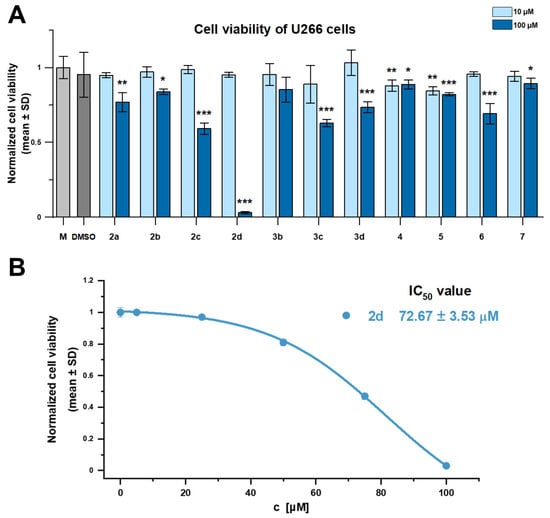
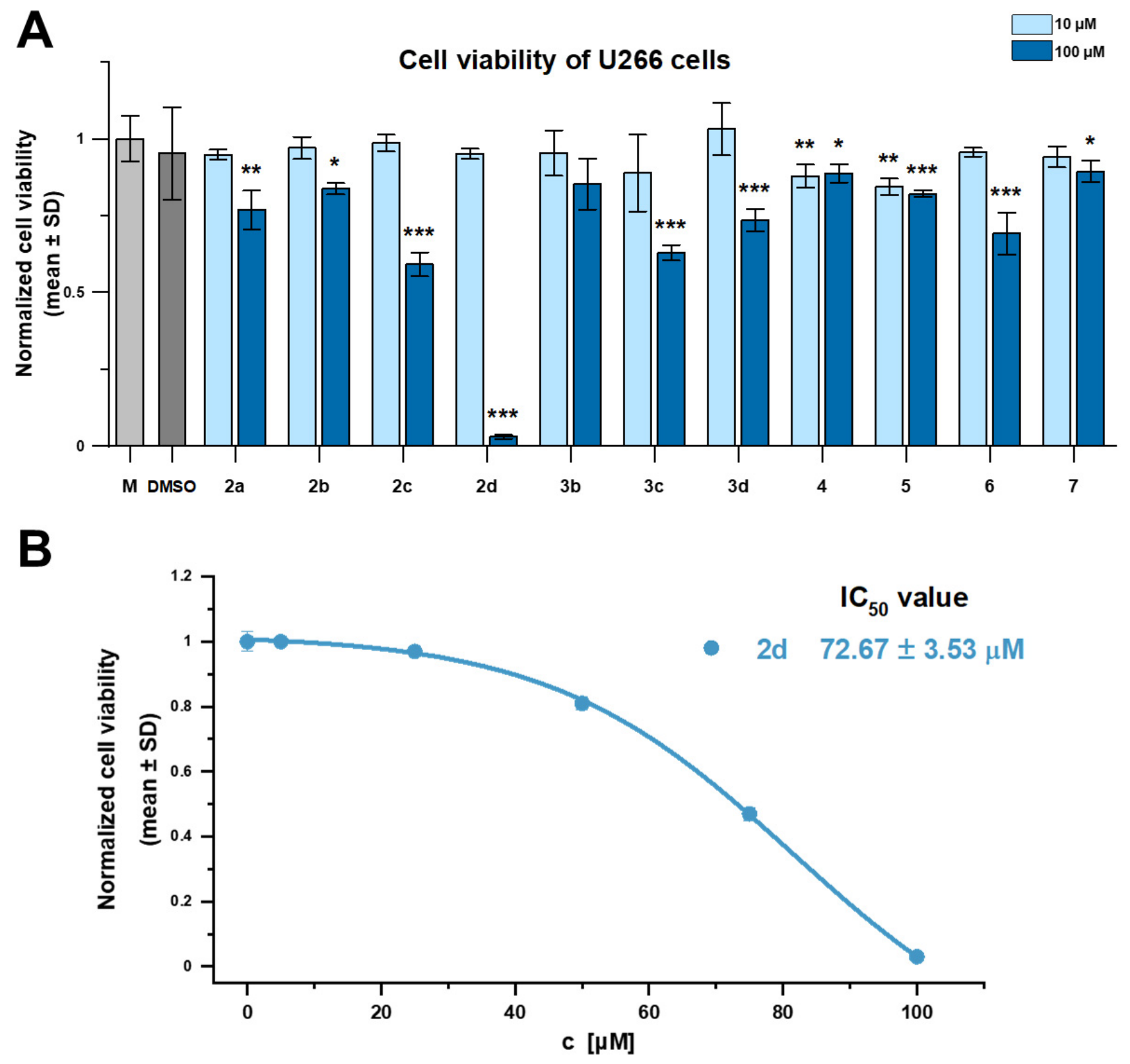
In our previous studies, phosphorus-containing compounds were shown to exert significant cytotoxic effects against multiple myeloma cells [41,42], a malignant neoplasm of terminally differentiated B lymphocytes, with activity reaching the micromolar range. This observation is consistent with earlier findings on the antimyeloma activity of bisphosphonates [43], suggesting that phosphorus-containing structural motifs may contribute to cytotoxic activity against multiple myeloma cells. Therefore, the cytotoxic activity of compounds 2a–d, 3b–d, and 4–7 was evaluated in U266 multiple myeloma cells following 72 h exposure to 10 and 100 µM concentrations (Figure 2A).
Figure 2.
In vitro cytotoxic effects of the tested compounds on U266 multiple myeloma cells after 72 h of treatment. (A) Cell viability following treatment with the compounds at 10 and 100 µM. Data were normalized to the control and are presented as mean ± SD (n = 3). Statistical significance was determined by one-way ANOVA followed by Fisher’s LSD post hoc test: * p < 0.05, ** p < 0.01, and *** p < 0.001. (B) Concentration–response curve of compound 2d in U266 cells after 72 h of treatment. The IC50 value (72.67 ± 3.53 µM (95% CI: 60.59–80.18 µM)). was determined by fitting a sigmoidal dose–response curve using OriginPro 2018. Data were normalized to the control and are presented as mean ± SD (n = 3). M: Medium; DMSO: dimethyl sulfoxide.
At 10 µM, most compounds had only a minor effect on cell viability, with small but statistically significant reductions observed for compounds 4 and 5.
At 100 µM, several compounds showed increased cytotoxic activity. Compounds 2a, 2b, 4, 5, and 7 induced moderate but significant reductions in cell viability, whereas more pronounced effects were observed for 2c, 3c, 3d, and 6. Interestingly, compounds 4 and 5 produced comparable reductions in cell viability at both 10 and 100 µM, suggesting that increasing the concentration did not further enhance their cytotoxic effects. Compound 2c reduced cell viability to approximately 60%, while viability following treatment with 3c, 3d, and 6 ranged between approximately 60 and 70%. In contrast, 3b did not significantly affect cell viability at either concentration tested. All in all, compound 2d exhibited remarkably high cytotoxicity, causing an almost complete loss of viable cells already at this concentration; therefore, its IC50 value was determined in a subsequent dose–response experiment and was found to be 72.67 ± 3.53 µM (95% CI: 60.59–80.18 µM) (Figure 2B). The remaining compounds, which did not reduce cell viability by at least 50% at the highest concentration tested, were excluded from further IC50 determination.
The observed differences indicate a relationship between chemical structure and cytotoxic activity. Within the symmetric bis(α-aryl-methylphosphonoyl)amine series (2a–d), 2d was by far the most potent derivative, whereas the unsymmetric compounds (3b–d) were generally less active. Among compounds 4–7, 6, containing a diphenylphosphinoyl moiety, exerted the strongest cytotoxic effect, suggesting that increased aromatic substitution at the phosphorus atom may contribute to enhanced activity; however, compound 6 remained less potent than compound 2d. The high activity of 2d could potentially be attributed to the presence of chlorine atoms in its structure, as halogen substitution, particularly chlorination, may increase molecular lipophilicity and thereby facilitate penetration across the plasma membrane.
Among the investigated compounds, 2c, 2d, 3c, 3d, and 6 exhibited the highest predicted logP values, indicating relatively high lipophilicity (4.49, 4.74, 3.88, 4.33, and 4.93, respectively). Interestingly, compound 6 showed the highest predicted logP, whereas compound 2d, which exhibited the greatest effect on cell viability, had the second-highest logP value (4.74).
The five compounds exhibiting the strongest effects on U266 cell viability and the highest predicted logP values (2c, 2d, 3c, 3d, and 6) were selected for in silico target prediction. Interestingly, four of the five compounds (2c, 2d, 3c, and 3d) showed highly similar predicted target profiles, with the same three proteins ranking as their top predicted targets: carbonic anhydrase IX (CA9; UniProt: Q16790), carbonic anhydrase II (CA2; UniProt: P00918), and carbonic anhydrase I (CA1; UniProt: P00915), all belonging to the lyase target class. In contrast, compound 6 displayed a distinct target profile, with potassium voltage-gated channel subfamily A member 5 (KCNA5; UniProt: P22460), intermediate conductance calcium-activated potassium channel protein 4 (KCNN4; UniProt: O15554), and bifunctional epoxide hydrolase 2 (EPHX2; UniProt: P34913) as its three highest-ranked predicted targets.
Overall, both the aryl substitution pattern and the nature of the phosphorus-containing moieties appear to influence the cytotoxic activity of these compounds in U266 cells. The in silico results suggested that carbonic anhydrases may represent potential molecular targets contributing to the observed cytotoxic effects. However, further studies assessing cell viability in additional malignant and non-malignant cell lines, including healthy fibroblasts or a white blood cell line, together with a precise characterization of the compounds’ physicochemical properties, are required to establish a more comprehensive structure–activity relationship.
3. Materials and Methods
3.1. General
The NMR spectra of compounds 4–7 were obtained from solutions in CDCl3, which were carefully degassed by holding the open NMR tubes in an ultrasonic bath for about 20 s. The NMR experiments were performed at 25 °C. The NMR spectra were obtained with a Bruker Avance NEO 500 instrument (Bruker BioSpin GmbH, Ettlingen, Germany) operating at 500.13 MHz for 1H, 202.46 MHz for 31P, and 125.76 MHz for 13C. Chemical shifts are reported relative to TMS (1H, 13C) and 85% H3PO4 (31P) as external standards. All NMR experiments were performed using the corresponding pulse sequences provided by Bruker. For processing of the NMR spectra, the MestReNova software, version 15.1.0-38027, 2024, was used.
3.2. (Diethylphosphonoyl-benzyl)-(diethylphosphonoyl-methyl)amine 4
A mixture of 1.0 mmol (0.24 g) α-amino- α-phenyl-methylphosphonate, 1.0 mmol (0.03 g) of paraformaldehyde, and 1.0 mmol (0.13 mL) of diethyl phosphite in 2 mL of ethanol was irradiated in a sealed tube in a CEM microwave reactor (CEM Corporation, Matthews, NC, USA) equipped with a pressure controller at 135 °C for 2 h. The volatile components were removed under reduced pressure. The residue obtained was purified by column chromatography (silica gel, dichloromethane-methanol 97:3) to afford the products as dense colorless oils.
Yield: 62%; M+H = 416; [M+Na]+found = 416.1377, C16H29NO6P2Na requires 416.1368.
31P NMR (CDCl3) δ 22.4 (4JPP = 4.5 Hz, Pa), 25.2 (4JPP = 4.5 Hz, Pb); 13C NMR (CDCl3) δ 16.2 (d, 3JPC = 5.8 Hz, CH3 at Pa), 16.39 (d, 3JPC = 5.9 Hz, CH3 at Pa), 16.44 (d, 3JPC = 5.9 Hz, CH3 at Pb), 16.5 (d, 3JPC = 5.9 Hz, CH3 at Pb), 42.8 (dd, 1JPC = 155.4 Hz, 3JPC = 17.4 Hz, PbCH2), 61.4 (dd, 1JPC = 153.3 Hz, 3JPC = 14.3 Hz, PaCH), 62.1 (d, 2JPC = 6.6 Hz, CH3CH2O at Pb), 62.3 (d, 2JPC = 6.7 Hz, CH3CH2O at Pb), 62.97 (d, 2JPC = 6.5 Hz, CH3CH2O at Pa), 63.03 (d, 2JPC = 6.6 Hz, CH3CH2O at Pa), 128.2 (d, 5JPC = 3.1 Hz, C-p), 128.6 (d, 4JPC = 2.5 Hz, C-m), 128.7 (d, 3JPC = 6.0 Hz, C-o), 134.7 (d, 2JPC = 4.6 Hz, C-i); 1H NMR (CDCl3) δ 1.08 (td, 3JHH = 7.0 Hz, 4JPH = 0.5 Hz, 3H, CH3 at Pa), 1.21 (td, 3JHH = 7.1 Hz, 4JPH = 0.5 Hz, 3H, CH3 at Pa), 1.24 (td, 3JHH = 7.1 Hz, 4JPH = 0.3 Hz, 3H, CH3 at Pb), 1.26 (td, 3JHH = 7.0 Hz, 4JPH = 0.3 Hz, 3H, CH3 at Pb), 2.6 (broad, NH), 2.75 (dd, 2JPH = 11.6 Hz, 2JHH = 14.9 Hz, 1H, PbCH2), 2.87 (dd, 2JPH = 13.2 Hz, 2JHH = 14.9 Hz, 1H, PbCH2), 3.78 (ddq, 3JPH = 8.2 Hz, 2JHH = 10.2 Hz, 3JHH = 7.1 Hz, 1H, CH3CH2O at Pa), 3.91 (ddq, 3JPH = 7.3 Hz, 2JHH = 10.2 Hz, 3JHH = 7.1 Hz, 1H, CH3CH2O at Pa), 4.00 (ddq, 3JPH = 7.8 Hz, 2JHH = 10.1 Hz, 3JHH = 7.1 Hz, 1H, CH3CH2O at Pa), 4.01 (ddq, 3JPH = 7.9 Hz, 2JHH = 10.1 Hz, 3JHH = 7.1 Hz, 1H, CH3CH2O at Pa), 4.040 (ddq, 3JPH = 7.9 Hz, 2JHH = 10.2 Hz, 3JHH = 7.1 Hz, 1H, CH3CH2O at Pb), 4.043 (ddq, 3JPH = 7.8 Hz, 2JHH = 10.2 Hz, 3JHH = 7.1 Hz, 1H, CH3CH2O at Pb), 4.071 (ddq, 3JPH = 8.0 Hz, 2JHH = 10.2 Hz, 3JHH = 7.1 Hz, 1H, CH3CH2O at Pb), 4.074 (ddq, 3JPH = 7.9 Hz, 2JHH = 10.2 Hz, 3JHH = 7.1 Hz, 1H, CH3CH2O at Pb), 4.11 (d, 2JPH = 19.0 Hz, 1H, CH at Pa), 7.23 (C-part of AA′BB′CX, 6JPH = 2.3 Hz, 1H, p-H), 7.29 (B-part of AA′BB′CX, 2H, m-H), 7.35 (A-part of AA′BB′CX, 4JPH = 2.7 Hz, 2H, o-H).
3.3. (Diethylphosphonoyl-benzyl)-(dimethylphosphonoyl-benzyl)amine 5
A mixture of 1.0 mmol (0.24 g) α-amino- α-phenyl-methylphosphonate, 1.0 mmol (0.1 mL) of benzaldehyde, and 1.0 mmol (0.09 mL) of dimethyl phosphite in 2 mL of toluene was irradiated in a sealed tube in a CEM microwave reactor equipped with a pressure controller at 135 °C for 2 h. The volatile components were removed under reduced pressure. The residue obtained was purified by column chromatography (silica gel, dichloromethane-methanol 97:3) to afford the products as dense colorless oils.
Yield: 51%; M+H = 464; [M+Na]+found = 464.1367, C20H29NO6P2Na requires 464.1368.
5/isomer 1 (74%) 31P NMR (CDCl3) δ 22.7 (Pa), 25.2 (Pb), 4JPP = 6.8 Hz; 13C NMR (CDCl3) δ 16.2 (d, 3JPC = 5.9 Hz, CH3CH2O at Pa), 16.4 (d, 3JPC = 6.0 Hz, CH3CH2O at Pa, overlapping), 53.47 (d, 2JPC = 6.8 Hz, CH3O at Pb), 53.84 (d, 2JPC = 7.0 Hz, CH3O at Pb), 57.3 (dd, 1JPC = 155.2 Hz, 3JPC = 18.4 Hz, PbCH), 57.5 (dd, 1JPC = 154.8 Hz, 3JPC = 18.3 Hz, PaCH), 62.9 (d, 2JPC = 6.9 Hz, CH3CH2O at Pa), 63.0 (d, 2JPC = 7.1 Hz, CH3CH2O at Pa), 128.3 (d, 5JPC = 3.1 Hz, C-p at Pb), 128.37 (d, 5JPC = 3.1 Hz, C-p at Pa), 128.63 (d, 4JPC = 2.5 Hz, C-m at Pb), 128.7 (d, 4JPC = 2.4 Hz, C-m at Pa), 128.88 (d, 3JPC = 6.2 Hz, C-o at Pb), 128.94 (d, 3JPC = 6.1 Hz, C-o at Pa), 134.1 (d, 2JPC = 4.2 Hz, C-i at Pb), 134.2 (d, 2JPC = 4.5 Hz, C-i at Pa); 1H NMR (CDCl3) δ 1.05 (t, 3JHH = 7.1 Hz, 3H, CH3 at Pa), 1.211 (t, 3JHH = 7.1 Hz, 3H, CH3 at Pa), 2.75 (broad, overlapping, NH), 3.45 (d, 3JPH = 10.5 Hz, 3H, CH3 at Pb), 3.67 (d, 3JPH = 10.6 Hz, 3H, CH3 at Pb), 3.72 (ddq, 3JPH = 8.2 Hz, 2JHH = 10.2 Hz, 3JHH = 7.1 Hz, 1H, CH2CH3 at Pa) 3.746 (d, 2JPH = 20.6 Hz, 1H, PaCH), 3.78 (d, 2JPH = 21.1 Hz, 1H, PbCH), 3.87 (ddq, 3JPH = 7.3 Hz, 2JHH = 10.2 Hz, 3JHH =7.1 Hz, 1H, CH2CH3 at Pa), 3.98 (ddq, 3JPH = 7.3 Hz, 2JHH = 10.2 Hz, 3JHH = 7.1 Hz, 1H, CH2CH3 at Pa), 4.01 (ddq, 3JPH = 7.3 Hz, 2JHH = 10.2 Hz, 3JHH = 7.1 Hz, 1H, CH2CH3 at Pa), 7.18-7.31 (overlapping, arom-H).
5/isomer 2 (26%) 31P NMR (CDCl3) δ 23.1 (Pa), 25.3 (Pb), 4JPP = 1.0 Hz; 13C NMR (CDCl3) δ 16.3 (d, 3JPC = 5.7 Hz, CH3CH2O at Pa), 16.4 (d, 3JPC = 6.0 Hz, CH3CH2O at Pa, overlapping), 53.46 (d, 2JPC = 7.3 Hz, CH3O at Pb), 53.76 (d, 2JPC = 7.0 Hz, CH3O at Pb), 58.5 (dd, 1JPC = 154.3 Hz, 3JPC = 10.0 Hz, PbCH), 58.7 (dd, 1JPC = 154.1 Hz, 3JPC = 10.8 Hz, PaCH), 62.7 (d, 2JPC = 7.3 Hz, CH3CH2O at Pa), 63.1 (d, 2JPC = 7.0 Hz, CH3CH2O at Pa), 128.1 (d, 5JPC = 3.0 Hz, C-p at Pb), 128.2 (d, 5JPC = 3.0 Hz, C-p at Pa), 128.4 (d, 4JPC = 2.3 Hz, C-m at Pb), 128.50 (d, 3JPC = 6.2 Hz, C-o at Pb), 128.54 (d, 3JPC = 6.1 Hz, C-o at Pa), 128.55 (d, 4JPC = 2.3 Hz, C-m at Pa), 135.6 (dd, 2JPC = 3.5 Hz, 4JPC = 0.7 Hz, C-i at Pb), 135.8 (dd, 2JPC = 3.4 Hz, 4JPC = 0.7 Hz, C-i at Pa); 1H NMR (CDCl3) δ 1.02 (t, 3JHH = 7.1 Hz, 3H, CH3 at Pa), 1.211 (t, 3JHH = 7.1 Hz, 3H, CH3 at Pa), 2.75 (broad, overlapping, NH), 3.52 (d, 3JPH = 10.4 Hz, 3H, CH3 at Pb), 3.665 (d, 3JPH = 10.6 Hz, 3H, CH3 at Pb), 3.77 (ddq, 3JPH = 8.2 Hz, 2JHH = 10.2 Hz, 3JHH = 7.1 Hz, 1H, CH2CH3 at Pa) 4.18 (d, 2JPH = 16.7 Hz, 1H, PaCH), 3.92 (ddq, 3JPH = 9.6 Hz, 2JHH = 10.2 Hz, 3JHH =7.1 Hz, 1H, CH2CH3 at Pa), 4.01 (ddq, 3JPH = 9.1 Hz, 2JHH = 10.2 Hz, 3JHH = 7.1 Hz, 1H, CH2CH3 at Pa), 4.03 (ddq, 3JPH = 7.4 Hz, 2JHH = 10.2 Hz, 3JHH = 7.1 Hz, 1H, CH2CH3 at Pa), 4.27 (d, 2JPH = 17.0 Hz, 1H, PbCH), 7.18-7.31 (overlapping, arom-H).
3.4. (Diethylphosphonoyl-benzyl)-(diphenylphosphinoyl-benzyl)amine 6
A mixture of 1.0 mmol (0.24 g) α-amino- α-phenyl-methylphosphonate, 1.0 mmol (0.1 mL) of benzaldehyde, and 1.0 mmol (0.202 g) of diphenylphosphine oxide in 2 mL of ethanol was irradiated in a sealed tube in a CEM microwave reactor equipped with a pressure controller at 135 °C for 2 h. The volatile components were removed under reduced pressure. The residue obtained was purified by column chromatography (silica gel, dichloromethane-methanol 98:2) to afford the products as dense colorless oils.
Yield: 61%; M+H = 556; [M+Na]+found = 556.1794, C30H33NO4P2Na requires 556.1783.
6/isomer 1 (94%) 31P NMR (CDCl3) δ 22.4 (Pa), 31.2 (Pb), 4JPP = 3.2 Hz; 13C NMR (CDCl3) δ 16.2 (d, 3JPC = 5.9 Hz, CH3CH2), 16.3 (d, 3JPC = 6.1 Hz, CH3CH2), 57.9 (dd, 1JPC = 153.3 Hz, 3JPC = 14.2 Hz, PaCH), 60.1 (dd, 1JPC = 79.1 Hz, 3JPC = 17.5 Hz, PbCH), 62.88 (d, 2JPC= 7.2 Hz, CH3CH2O), 62.90 (d, 2JPC = 7.7 Hz, CH3CH2O), 128.097 (d, 5JPC = 2.4 Hz, C-p Pb), 128.099 (d, 3JPC = 11.6 Hz, C-m PbPh), 128.22 (d, 5JPC = 2.96, C-p Pa), 128.29 (d, 3JPC = 11.7 Hz, C-m PbPh), 128.39 (d, 4JPC = 1.9 Hz, C-m Pa), 128.4 (d, 4JPC = 2.5 Hz, C-m Pb), 129.39 (d, 3JPC = 6.2 Hz, C-o Pa), 129.42 (d, 3JPC = 5.1 Hz, C-o Pb), 130.4 (d, 1JPC = 97.8 Hz, C-i PbPh), 130.8 (d, 1JPC = 98.2 Hz, C-i PbPh), 131.5 (d, 2JPC = 8.9 Hz, C-o PbPh), 131.7 (d, 4JPC = 2.8 Hz, C-p PbPh), 132.0 (d, 4JPC = 2.8 Hz, C-p PbPh), 132.09 (d, 2JPC = 8.8 Hz, C-o, PbPh), 133.9 (d, 2JPC = 2.2 Hz, C-i Pb), 134.3 (d, 2JPC = 5.5 Hz, C-i Pa); 1H NMR (CDCl3) δ 1.02 (d, 3JHH = 7.1 Hz, 3H, CH3), 1.12 (d, 3JHH = 7.1 Hz, 3H, CH3), 2.7 (broad, NH), 3.70 (ddq, 3JPH = 8.1 Hz, 2JHH = 10.2 Hz, 3JHH = 7.1 Hz, 1H, CH2), 3.77 (d, 2JPH = 19.5 Hz, 1H, CH at Pa), 3.84 (ddq, 3JPH = 7.2 Hz, 2JHH = 10.1 Hz, 3JHH = 7.1 Hz, 1H, CH2), 3.880 (ddq, 3JPH = 7.7 Hz, 2JHH = 10.2 Hz, 3JHH = 7.1 Hz, 1H, CH2), 3.883 (ddq, 3JPH = 7.7 Hz, 2JHH = 10.2 Hz, 3JHH = 7.1 Hz, 1H, CH2), 4.08 (d, 2JPH = 10.0 Hz, 1H, CH at Pb), 6.99 (A-part of AA′BB′CX, 4JPH = 3.0 Hz, 2H, H-o at Pa), 7.04 (A-part of AA′BB′CX, 4JPH = 2.6 Hz, 2H, H-o at Pb), 7.12 (C-part of AA′BB′CX, 1H, H-p at Pb), 7.13 (B-part of AA′BB′CX, 2H, H-m at Pb), 7.17 (B-part of AA′BB′CX, 4JPH = 3.5 Hz, 2H, H-m at PbPh), 7.19 (B-part of AA′BB′CX, 2H, H-m at Pa), 7.24 (C-part of AA′BB′CX, 6JPH = 2.7 Hz, 3JHH = 7.2 Hz, 4JHH = 1.4 Hz, 1H, H-p at Pa), 7.29 (C-part of AA′BB′CX, 5JPH = 2.4 Hz, 1H, H-p at PbPh), 7.34 (A-part of AA′BB′CX, 3JPH = 11.1 Hz, 2H, H-o at PbPh), 7.42 (B-part of AA′BB′CX, 4JPH = 3.8 Hz, 2H, H-m at PbPh), 7.52 (C-part of AA′BB′CX, 5JPH = 2.4 Hz, 3JHH = 7.5 Hz, 4JHH = 1.3 Hz, 1H, H-p at PbPh), 7.75 (A-part of AA′BB′CX, 3JPH = 11.1 Hz, 2H, H-o at PbPh).
6/minor isomer (6%) 31P NMR (CDCl3) δ 22.2 (Pa), 31.6 (Pb), 4JPP = 1.5 Hz.
3.5. (Diethylphosphonoyl-benzyl)-(ethyl phenylphosphinoyl-methyl)amine 7
A mixture of 1.0 mmol (0.24 g) α-amino- α-phenyl-methylphosphonate, 1.0 mmol (0.03 g) of paraformaldehyde, and 1.0 mmol (0.15 mL) of ethyl phenyl-H-phosphinate in 2 mL of ethanol was irradiated in a sealed tube in a CEM microwave reactor equipped with a pressure controller at 135 °C for 2 h. The volatile components were removed under reduced pressure. The residue obtained was purified by column chromatography (silica gel, dichloromethane-methanol 97:3) to afford the products as dense colorless oils.
Yield: 46%; M+H = 448; [M+Na]+found = 448.1425, C20H29NO5P2Na requires 448.1419.
7/isomer 1: (50%); 31P NMR (CDCl3) δ 22.1 (Pa), 39.2 (Pb), 4JPP = 3.5 Hz; 13C NMR (CDCl3) δ 16.19 (d, 3JPC = 5.8 Hz, CH3CH2O at Pa), 16.34 (d, 3JPC = 5.9 Hz, CH3CH2O at Pa), 16.52 (d, 3JPC = 6.2 Hz, CH3CH2O at Pb), 46.4 (dd, 1JPC = 112.2 Hz, 3JPC = 16.7 Hz, CH2Pb), 61.1 (d, 2JPC = 6.6 Hz, CH3CH2O at Pb), 61.7 (dd, 1JPC = 153.0 Hz, 3JPC = 13.8 Hz, CHPa), 62.9 (d, 2JPC = 6.9 Hz, CH3CH2O at Pa), 63.0 (d, 2JPC = 6.8 Hz, CH3CH2O at Pa), 128.08 (d, 5JPC = 2.6 Hz, C-p at Pa), 128.472 (d, 4JPC = 2.5 Hz, C-m at Pa), 128.48 (d, 3JPC = 12.5 Hz, C-m at Pb), 128.58 (d, 3JPC = 6.0 Hz, C-o at Pa), 129.8 (d, 1JPC = 124.6 Hz, C-i at Pb), 132.1 (d, 2JPC = 9.8 Hz, C-o at Pb), 132.483 (d, 4JPC = 2.8 Hz, C-p at Pb), 134.6 (d, 2JPC = 4.8 Hz, C-i at Pa); 1H NMR (CDCl3) δ 1.027 (d, 3JHH = 7.1 Hz, 3H, CH3 at Pa), 1.125 (d, 3JHH = 7.1 Hz, 3H, CH3 at Pa), 1.24 (d, 3JHH = 7.1 Hz, 3H, CH3 at Pb), 2.49 (broad, NH), AB-part of ABX (δA 2.98 (2JPH = 10.7 Hz), δB 2.92 (2JPH = 9.8 Hz, 2JHH = 14.8 Hz), 2H, CH2Pb), 3.706 (ddq, 3JPH = 8.2 Hz, 2JHH = 10.2 Hz, 3JHH = 7.1 Hz, 1H, CH3CH2O, at Pa), 3.84 (ddq, 3JPH = 9.7 Hz, 2JHH = 10.2 Hz, 3JHH = 7.1 Hz, 1H, CH3CH2O, at Pa), 3.876 (ddq, 3JPH = 7.4 Hz, 2JHH = 10.0 Hz, 3JHH = 7.1 Hz, 1H, CH3CH2O, at Pa), 3.876 (ddq, 3JPH = 7.4 Hz, 2JHH = 10.1 Hz, 3JHH = 7.1 Hz, 1H, CH3CH2O, at Pb), 3.920 (ddq, 3JPH = 7.4 Hz, 2JHH = 10.0 Hz, 3JHH = 7.1 Hz, 1H, CH3CH2O, at Pa), 3.99 (d, 2JPH = 18.9 Hz, 1H, CHPa), 4.05 (ddq, 3JPH = 7.4 Hz, 2JHH = 10.1 Hz, 3JHH = 7.1 Hz, 1H, CH3CH2O at Pb), 7.16-7.23 (overlapping, H-p, H-m, H-o at Pa), 7.405 (B-part of AA′BB′CX, 4JPH = 4.0 Hz, 2H, H-m Pb), 7.503 (C-part of AA′BB′CX, 5JPH = 2.2 Hz, 1H, H-p Pb), 7.75 (A-part of AA′BB′CX, 3JPH = 11.6 Hz, 2H, H-o Pb).
7/isomer 2: (50%); 31P NMR (CDCl3) δ 22.2 (Pa), 38.9 (Pb), 4JPP = 3.8 Hz; 13C NMR (CDCl3) δ 16.21 (d, 3JPC = 5.8 Hz, CH3CH2O at Pa), 16.35 (d, 3JPC = 6.0 Hz, CH3CH2O at Pa), 16.48 (d, 3JPC = 6.2 Hz, CH3CH2O at Pb), 46.1 (dd, 1JPC = 113.2 Hz, 3JPC = 17.1 Hz, CH2Pb), 61.0 (d, 2JPC = 6.6 Hz, CH3CH2O at Pb), 61.5 (dd, 1JPC = 153.3 Hz, 3JPC = 13.9 Hz, CHPa), 63.00 (d, 2JPC = 7.0 Hz, CH3CH2O at Pa), 63.01 (d, 2JPC = 6.9 Hz, CH3CH2O at Pa), 128.11 (d, 5JPC = 2.5 Hz, C-p at Pa), 128.469 (d, 3JPC = 12.5 Hz, C-m at Pb), 128.50 (d, 4JPC = 2.4 Hz, C-m at Pa), 128.64 (d, 3JPC = 6.1 Hz, C-o at Pa), 129.7 (d, 1JPC = 125.1 Hz, C-i at Pb), 132.0 (d, 2JPC = 9.8 Hz, C-o at Pb), 132.483 (d, 4JPC = 2.8 Hz, C-p at Pb), 134.7 (d, 2JPC = 4.3 Hz, C-i at Pa); 1H NMR (CDCl3) δ 1.027 (d, 3JHH = 7.1 Hz, 3H, CH3 at Pa), 1.125 (d, 3JHH = 7.1 Hz, 3H, CH3 at Pa), 1.21 (d, 3JHH = 7.1 Hz, 3H, CH3 at Pb), 2.49 (broad, NH), AB-part of ABX (δA 2.98 (2JPH = 10.7 Hz), δB 2.87 (2JPH = 10.9 Hz, 2JHH = 14.8 Hz), 2H, CH2Pb), 3.711 (ddq, 3JPH = 8.2 Hz, 2JHH = 10.1 Hz, 3JHH = 7.1 Hz, 1H, CH3CH2O, at Pa), 3.840 (ddq, 3JPH = 8.1 Hz, 2JHH = 10.1 Hz, 3JHH = 7.1 Hz, 1H, CH3CH2O, at Pb), 3.85 (ddq, 3JPH = 9.9 Hz, 2JHH = 10.2 Hz, 3JHH = 7.1 Hz, 1H, CH3CH2O, at Pa), 3.876 (ddq, 3JPH = 7.4 Hz, 2JHH = 10.1 Hz, 3JHH = 7.1 Hz, 1H, CH3CH2O, at Pa), 3.920 (ddq, 3JPH = 7.4 Hz, 2JHH = 10.1 Hz, 3JHH = 7.1 Hz, 1H, CH3CH2O, at Pa), 4.02 (ddq, 3JPH = 7.4 Hz, 2JHH = 10.1 Hz, 3JHH = 7.1 Hz, 1H, CH3CH2O, at Pb), 4.04 (d, 2JPH = 19.3 Hz, 1H, CHPa), 7.16-7.23 (overlapping, H-p, H-m, H-o at Pa), 7.405 (B-part of AA′BB′CX, 4JPH = 4.0 Hz, 2H, H-m Pb), 7.498 (C-part of AA′BB′CX, 5JPH = 2.1 Hz, 1H, H-p Pb), 7.74 (A-part of AA′BB′CX, 3JPH = 11.6 Hz, 2H, H-o Pb).
3.6. Bioactivity Experimental
3.6.1. Cell Culturing
A total of 11 bis(α-aryl-methylphosphonoyl)amines and derivatives were initially prepared in dimethyl sulfoxide (DMSO; AppliChem GmbH, Darmstadt, Germany) at a stock concentration of 10−1 M and were tested on U266 cells. The U266 cell line was obtained from the European Collection of Authenticated Cell Cultures (ECACC; U266: 85051003, Salisbury, UK). Cells were cultured in RPMI medium containing 10% fetal bovine serum (Biosera, Kansas, MO, USA), 1% penicillin/streptomycin, and 1% L-glutamine (both from Invitrogen Corporation, New York, NY, USA).
3.6.2. Biological Activity and In Silico Characterization
Test compounds were dissolved in dimethyl sulfoxide (DMSO; AppliChem GmbH, Darmstadt, Germany) to obtain 10−1 M stock solutions. To exclude solvent-related effects on cell viability, the final DMSO concentration in the assay medium was kept below 1% (v/v), as U266 cells were found to be sensitive to higher DMSO concentrations. Stock solutions were stored at −80 °C, while working solutions were prepared freshly before each experiment. Due to the limited aqueous solubility of the compounds, the concentration range used for IC50 determination was restricted. Therefore, a five-point dilution series covering concentrations from 5 to 100 µM was prepared from the stock solution. The viability of U266 cells was assessed using the CellTiter-Glo Luminescent Cell Viability Assay (Promega, Madison, WI, USA) according to the procedure detailed in our previous publications [41,42,44]. LogP values were predicted using SwissADME (SIB Swiss Institute of Bioinformatics, Lausanne, Switzerland; https://www.swissadme.ch; accessed 29 October 2026), while computational target prediction was performed using SwissTargetPrediction (SIB Swiss Institute of Bioinformatics, Lausanne, Switzerland; https://www.swisstargetprediction.ch; accessed 29 October 2026) [45,46].
3.6.3. Statistical Analysis
All experimental results are expressed as mean ± standard deviation (SD) and were normalized to the corresponding control. All measurements were carried out in triplicate within a single experiment (n = 3). Differences among groups were analyzed by one-way analysis of variance (ANOVA), followed by Fisher’s least significant difference (LSD) post hoc test. Unless otherwise indicated, significance symbols shown above the bars represent comparisons with the control. Statistical significance was considered at p < 0.05, with significance levels indicated as follows: * p < 0.05, ** p < 0.01, and *** p < 0.001.
4. Conclusions
The library of molecules of the earlier-synthesized symmetric bis(α-aryl-methylphosphonoyl)amines and the unymmetric analogues derived from the microwave-assisted Kabachnik–Fields reaction of α-amino-α-aryl-methylphosphonates, arylaldehydes and diethyl phosphite has now been completed with four additional derivatives. The new bis(P-functionalized methyl)amines were prepared by varying the reagents. In the first experiment, formaldehyde was used instead of benzaldehyde derivatives in condensation with α-amino-α-phenyl-methylphosphonates and diethyl phosphite. Then, dimethyl phosphite or diphenylphosphine oxide was applied instead of diethyl phosphite in the three-component reaction with α-amino-α-phenyl-methylphosphonate and benzaldehyde. The α-aminophosphonate was also reacted with formaldehyde and ethyl phenyl-H-phosphinate. With one exception, the members of the new family included SS/RR and SR/RS diastereoisomeric mixtures. The structure of the products was confirmed by 1D and 2D NMR investigations. Taken together, most of the tested compounds showed limited cytotoxicity in U266 multiple myeloma cells, while 2d, bearing two chlorophenyl groups and two P(O)(OEt)2 moieties, emerged as the most active derivative (IC50 = 72.67 ± 3.53 µM; 95% CI: 60.59–80.18 µM). The more active compounds generally exhibited higher predicted lipophilicity, and carbonic anhydrases (CA9, CA2, and CA1) were identified as common predicted targets of 2c, 2d, 3c, and 3d. These findings suggest that both structural features and physicochemical properties may contribute to the observed biological activity. Further studies in malignant and non-malignant cell models, together with mechanistic investigations, are required to clarify their structure–activity relationships.
Supplementary Materials
The following supporting information can be downloaded at https://www.mdpi.com/article/10.3390/ph19111748/s1, 1D 31P, 13C, and 1H NMR spectra as well as 1H−1H COSY, 1H−13C-HSQC, 1H−13C-HMBC, 1H,13C-HSQC-TOCSY, 1H−31P-HMBC, and 1H-J-resolved 2D spectra for the diastereoisomers of compounds 4–7.
Author Contributions
Conceptualization, G.K., L.K. and A.T.; methodology, B.B., K.K. and A.T.; investigation, B.B., K.K. and A.T.; resources, G.K. and L.K.; data curation, K.K. and A.T.; writing—original draft preparation, G.K., A.T., L.K. and B.B.; writing—review and editing, G.K., K.K., A.T. and L.K.; supervision, G.K., L.K.; project administration, G.K.; funding acquisition, G.K. All authors have read and agreed to the published version of the manuscript.
Funding
The project was supported by a grant from the National Research, Development and Innovation Office (NKKP ADVANCED-149447).
Institutional Review Board Statement
Not applicable.
Informed Consent Statement
Not applicable.
Data Availability Statement
The original contributions presented in this study are included in the article/Supplementary Material. Further inquiries can be directed to the corresponding authors.
Acknowledgments
G.K. is grateful to László Drahos for the four HRMS measurements.
Conflicts of Interest
The authors declare no conflicts of interest.
References
- Quin, L.D. A Guide to Organophosphorus Chemistry; Wiley & Sons: New York, NY, USA, 2000; ISBN 978-0-471-31824-8. [Google Scholar]
- Demadis, K.D.; Adla, S.K.; Timonen, J.; Turhanen, P.A. Green Phosphonate Chemistry—Does it Exist? Green Chem. 2025, 27, 863–914. [Google Scholar] [CrossRef] [Scilit]
- Hajinasiri, R. Synthesis of Phosphonate-containing Compounds. Tetrahedron 2023, 149, 133708. [Google Scholar] [CrossRef] [Scilit]
- Babu, B.H.; Prasad, G.S.; Raju, C.N.; Rao, M.V.B. Synthesis of Phosphonates via Michaelis-Arbuzov Reaction. Curr. Org. Synth. 2017, 14, 883–903. [Google Scholar] [CrossRef] [Scilit]
- Owsianik, K.; Romaniuk, A.; Turek, M.; Bałczewski, P. Comprehensive Review of Synthesis, Optical Properties and Applications of Heteroarylphosphonates and Their Derivatives. Molecules 2024, 29, 3691. [Google Scholar] [CrossRef] [Scilit] [PubMed]
- Horsman, G.P.; Zechel, D.L. Phosphonate Biochemistry. Chem. Rev. 2017, 117, 5704–5783. [Google Scholar] [CrossRef] [Scilit] [PubMed]
- Krečmerová, M.; Majer, P.; Rais, R.; Slusher, B.S. Phosphonates and Phosphonate Prodrugs in Medicinal Chemistry: Past Successes and Future Prospects. Front. Chem. 2022, 10, 889737. [Google Scholar] [CrossRef] [Scilit] [PubMed]
- Zhong, X.; Song, B.; Zhang, L.; Hsiang, T.; Ouyang, L.; Zhang, J. From Discovery to Manufacturing: A Quantitative Review of Phosphonates and Strategies for High-Titer Production. Microorganisms 2026, 14, 1170. [Google Scholar] [CrossRef] [Scilit] [PubMed]
- Rádai, Z.; Keglevich, G. Synthesis and Reactions of α-Hydroxyphosphonates. Molecules 2018, 23, 1493. [Google Scholar] [CrossRef] [Scilit] [PubMed]
- Varga, P.R.; Keglevich, G. Synthesis of α-Aminophosphonates and Related Derivatives; the Last Decade of the Kabachnik–Fields Reaction. Molecules 2021, 26, 2511. [Google Scholar] [CrossRef] [Scilit] [PubMed]
- Bhagat, S.; Chakraborti, A.K. An Extremely Efficient Three-Component Reaction of Aldehydes/Ketones, Amines, and Phosphites (Kabachnik-Fields Reaction) for the Synthesis of α-Aminophosphonates Catalyzed by Magnesium Perchlorate. J. Org. Chem. 2007, 72, 1263–1270, Erratum in J. Org. Chem. 2007, 72, 3158. https://doi.org/10.1021/jo0703348. [Google Scholar] [CrossRef] [Scilit] [PubMed]
- Matveeva, E.D.; Podrugina, T.A.; Tishkovskaya, E.V.; Tomilova, L.G.; Zefirov, N.S. A Novel Catalytic Three-Component Synthesis (Kabachnick-Fields Reaction) of α-Aminophosphonates from Ketones. Synlett 2003, 2321–2324. [Google Scholar] [CrossRef] [Scilit]
- Ranu, B.C.; Hajra, A.; Jana, U. General Procedure for the Synthesis of α-Amino Phosphonates from Aldehydes and Ketones Using Indium(III) Chloride as a Catalyst. Org. Lett. 1999, 1, 1141–1143. [Google Scholar] [CrossRef] [Scilit]
- Kukhar, V.P.; Hudson, H.R. (Eds.) Aminophosphonic and Aminophosphinic Acids: Chemistry and Biological Activity; Wiley: Chichester, UK, 2000. [Google Scholar]
- Lejczak, B.; Kafarski, P. Biological Activity of Aminophosphonic Acids and their Short Peptides. In Topics in Heterocyclic Chemistry—Phosphorous Heterocycles I; Gupta, R.P., Bansal, R.K., Eds.; Springer: Berlin/Heidelberg, Germany, 2009; Volume 20, pp. 31–63. [Google Scholar] [CrossRef] [Scilit]
- Kafarski, P.; Lejczak, B. Biological Activity of Aminophosphonic Acids. Phosphorus Sulfur Silicon Relat. Elem. 1991, 63, 193–215. [Google Scholar] [CrossRef] [Scilit]
- Abdou, M.M. Synopsis of Recent Synthetic Methods and Biological Applications of Phosphinic Acid Derivatives. Tetrahedron 2020, 76, 131251. [Google Scholar] [CrossRef] [Scilit]
- Rodríguez, J.B.; Gallo-Rodríguez, C. The Role of the Phosphorus Atom in Drug Design. ChemMedChem 2019, 14, 190–216. [Google Scholar] [CrossRef] [Scilit] [PubMed]
- Sevrain, C.M.; Berchel, M.; Couthon, H.; Jaffres, P.-A. Phosphonic Acid: Preparation and Applications. Beilstein J. Org. Chem. 2017, 13, 2186–2213. [Google Scholar] [CrossRef] [Scilit] [PubMed]
- Liu, W.; Royers, C.J.; Fisher, A.J.; Toney, M. Aminophosphonate Inhibitors of Dialkylglycine Decarboxylase: Structural Basis for Slow Binding Inhibition. Biochemistry 2002, 41, 12320–12328. [Google Scholar] [CrossRef] [Scilit] [PubMed]
- Grembecka, J.; Mucha, A.; Cierpicki, T.; Kafarski, P. The Most Potent Organophosphorus Inhibitors of Leucine Aminopeptidase. Structure-based Design, Chemistry, and Activity. J. Med. Chem. 2003, 46, 2641–2655. [Google Scholar] [CrossRef] [Scilit] [PubMed]
- Berlicki, L.; Kafarski, P. Computer-aided Analysis and Design of Phosphonic and Phosphinic Enzyme Inhibitors as Potential Drugs and Agrochemicals. Curr. Org. Chem. 2005, 9, 1829–1850. [Google Scholar] [CrossRef] [Scilit]
- Mucha, A.; Kafarski, P.; Berlicki, L. Remarkable Potential of the α-Aminophosphonate/phosphinate Structural Motif in Medicinal Chemistry. J. Med. Chem. 2011, 54, 5955–5980. [Google Scholar] [CrossRef] [Scilit] [PubMed]
- Kang, S.-U.; Shi, Z.-D.; Worthy, K.M.; Bindu, L.K.; Dharmawardana, P.G.; Choyke, S.J.; Bottaro, D.P.; Fisher, R.J.; Burke, T.R., Jr. Examination of Phosphoryl-Mimicking Functionalities within a Macrocyclic Grb2 SH2 Domain-Binding Platform. J. Med. Chem. 2005, 48, 3945–3948. [Google Scholar] [CrossRef] [Scilit] [PubMed]
- Robbins, B.L.; Srinivas, R.V.; Kim, C.; Bischofberger, N.; Fridland, A. Anti-Human Immunodeficiency Virus Activity and Cellular 372 Metabolism of a Potential Prodrug of the Acyclic Nucleoside Phosphonate 9-R-(2-phosphonomethoxypropyl)adenine (PMPA), Bis(isopropyloxymethylcarbonyl)PMPA. Antimicrob. Agents Chemother. 1998, 42, 612–617. [Google Scholar] [CrossRef] [Scilit] [PubMed]
- Sienczyk, M.; Oleksyszyn, J. Irreversible Inhibition of Serine Proteases—Design and In Vivo Activity of Diaryl α-Aminophosphonate Derivatives. Curr. Med. Chem. 2009, 16, 1673–1687. [Google Scholar] [CrossRef] [Scilit] [PubMed]
- Haemers, T.; Wiesner, J.; Van Poecke, S.; Goeman, J.; Henschker, D.; Beck, E.; Jomaa, H.; Van Calenbergh, S. Synthesis of α-Substituted Fosmidomycin Analogues as Highly Potent Plasmodium falciparum growth inhibitors. Bioorg. Med. Chem. Lett. 2006, 16, 1888–1891. [Google Scholar] [CrossRef] [Scilit] [PubMed]
- Lassaux, P.; Hamel, M.; Gulea, M.; Delbruck, H.; Mercuri, P.S.; Horsfall, L.; Dehareng, D.; Kupper, M.; Frere, J.-M.; Hoffmann, K.; et al. Mercaptophosphonate Compounds as Broad-Spectrum Inhibitors of the Metallo-β-lactamases. J. Med. Chem. 2010, 53, 4862–4876. [Google Scholar] [CrossRef] [Scilit] [PubMed]
- Maryanoff, B.E. Inhibitors of Serine Proteases as Potential Therapeutic Agents: The Road from Thrombin to Tryptase to Cathepsin G. J. Med. Chem. 2004, 47, 769–787. [Google Scholar] [CrossRef] [Scilit] [PubMed]
- Pícha, J.; Liboska, R.; Buděšínský, M.; Jiráček, J.; Pawełczak, M.; Mucha, A. Unusual activity pattern of leucine aminopeptidase inhibitors based on phosphorus containing derivatives of methionine and norleucine. J. Enzym. Inhib. Med. Chem. 2011, 26, 155–161. [Google Scholar] [CrossRef] [Scilit] [PubMed]
- Sieńczyk, M.; Oleksyszyn, J. Inhibition of trypsin and urokinase by Cbz-amino (4-guanidinophenyl) methanephosphonate aromatic ester derivatives: The influence of the ester group on their biological activity. Bioorg. Med. Chem. Lett. 2006, 16, 2886–2890. [Google Scholar] [CrossRef] [Scilit] [PubMed]
- Berlicki, Ł.; Bochno, M.; Grabowiecka, A.; Białas, A.; Kosikowska, P.; Kafarski, P. N-substituted aminomethanephosphonic and aminomethane-P-methylphosphinic acids as inhibitors of ureases. Amino Acids 2012, 42, 1937–1945. [Google Scholar] [CrossRef] [Scilit] [PubMed]
- Liberman, U.A.; Weiss, S.R.; Bröll, J.; Minne, H.W.; Quan, H.; Bell, N.H.; Rodriguez-Portales, J.; Downs, R.W., Jr.; Dequeker, J.; Favus, M.; et al. Effect of oral alendronate on bone mineral density and the incidence of fractures in postmenopausal osteoporosis. N. Engl. J. Med. 1995, 333, 1437–1444. [Google Scholar] [CrossRef] [Scilit] [PubMed]
- Allen, J.G.; Havas, L.; Leicht, E.; Lenox-Smith, I.; Nisbet, L.J. Phosphonopeptides as antibacterial agents: Metabolism and pharmacokinetics of alafosfalin in animals and humans. Antimicrob. Agents Chemother. 1979, 16, 306–313. [Google Scholar] [CrossRef] [Scilit] [PubMed]
- Van Bruggen, A.H.; He, M.M.; Shin, K.; Mai, V.; Jeong, K.C.; Finckh, M.R.; Morris, J.G., Jr. Environmental and health effects of the herbicide glyphosate. Sci. Total Environ. 2018, 616–617, 255–268. [Google Scholar] [CrossRef] [Scilit] [PubMed]
- Kafarski, P.; Lejczak, B. Aminophosphonic Acids of Potential Medical Importance. Curr. Med. Chem. Anticancer Agents 2001, 1, 301–312. [Google Scholar] [CrossRef] [Scilit] [PubMed]
- Varga, P.R.; Oláhné Szabó, R.; Dormán, G.; Bősze, S.; Keglevich, G. Cytotoxyc Activity of α-Aminophosphonic Derivatives Coming from the Tandem Kabachnik–Fields Reaction and Acylation. Pharmaceuticals 2023, 16, 506. [Google Scholar] [CrossRef] [Scilit] [PubMed]
- Li, Y.-J.; Ye, M.-Y.; Huang, R.-Z.; Yao, G.-Y.; Pan, Y.-M.; Liao, Z.-X.; Wang, H.-S. Coumarin-Containing Aminophosphonates Bridged with Chiral Side Chain: Synthesis and Influence of Chirality on Cytotoxicity and DNA Binding. Med. Chem. Res. 2014, 23, 3144–3156. [Google Scholar] [CrossRef] [Scilit]
- Li, Y.-J.; Wang, C.-Y.; Ye, M.-Y.; Yao, G.-Y.; Wang, H.-S. Novel Coumarin-Containing Aminophosphonatesas Antitumor Agent: Synthesis, Cytotoxicity, DNA-binding and apoptosis Evaluation. Molecules 2015, 20, 14791–14809. [Google Scholar] [CrossRef] [Scilit] [PubMed]
- Bajusz, B.; Karaghiosoff, K.; Drahos, L.; Gömöry, A.; Keglevich, G. The Synthesis of Bis(α-aryl-methylphosphonoyl)amines by the Microwave-Assisted Catalyst-Free Tandem Kabachnik–Fields Reaction. Catalysts 2026, 16, 148. [Google Scholar] [CrossRef] [Scilit]
- Szalai, Z.; Szloboda, K.; Karaghiosoff, K.; Czugler, M.; Takács, A.; Kőhidai, L.; Gömöry, Á.; Drahos, L.; Keglevich, G. Cytotoxic Agents by the Phosphinoylation and Thiophosphinoylation of 3-Hydroxy-1,2,3,6-tetrahydrophosphinine 1-Oxides as β-Hydroxyphosphonates and -Phosphine Oxides. ACS Omega 2026, 11, 14964–14975. [Google Scholar] [CrossRef] [Scilit] [PubMed]
- Szalai, Z.; Facskó, R.; Gömöry, Á.; Drahos, L.; Tekula, S.; Takács, A.; Kőhidai, L.; Keglevich, G. The Synthesis of α-Hydroxy-Alkylphosphonate Derivatives and Evaluation of Their Cytotoxic Activity. Pharmaceuticals 2026, 19, 396. [Google Scholar] [CrossRef] [Scilit] [PubMed]
- Modi, N.D.; Lentzsch, S. Bisphosphonates as Antimyeloma Drugs. Leukemia 2012, 26, 589–594. [Google Scholar] [CrossRef] [Scilit] [PubMed]
- Milen, M.; John, T.M.; Kis, A.S.; Garádi, Z.; Szalai, Z.; Takács, A.; Kőhidai, L.; Karaghiosoff, K.; Keglevich, G. Synthesis and Cytotoxic Activity of a New Family of α-Hydroxyphosphonates with the Benzothiophene Scaffold. Pharmaceuticals 2025, 18, 949. [Google Scholar] [CrossRef] [Scilit] [PubMed]
- Daina, A.; Michielin, O.; Zoete, V. SwissADME: A free web tool to evaluate pharmacokinetics, drug-likeness and medicinal chemistry friendliness of small molecules. Sci. Rep. 2017, 7, 42717. [Google Scholar] [CrossRef] [Scilit] [PubMed]
- Daina, A.; Michielin, O.; Zoete, V. SwissTargetPrediction: Updated data and new features for efficient prediction of protein targets of small molecules. Nucleic Acids Res. 2019, 47, 357–364. [Google Scholar] [CrossRef] [Scilit] [PubMed]

Disclaimer/Publisher’s Note: The statements, opinions and data contained in all publications are solely those of the individual author(s) and contributor(s) and not of MDPI and/or the editor(s). MDPI and/or the editor(s) disclaim responsibility for any injury to people or property resulting from any ideas, methods, instructions or products referred to in the content. |
© 2026 by the authors. Licensee MDPI, Basel, Switzerland. This article is an open access article distributed under the terms and conditions of the Creative Commons Attribution (CC BY) license.