


Abstract
Background/Objectives: Statins are the first-line lipid-lowering therapy, but their use is limited by interindividual variability in efficacy and safety, particularly statin-associated muscle symptoms. This systematic review aimed to identify pharmacogenetic biomarkers related to statin response, compare them with regulatory recommendations, and propose a candidate pharmacogenetic panel for future clinical validation and implementation studies. Methods: A PRISMA-based systematic review identified 78 eligible studies. A novel composite consistency index integrated the frequency and direction of reported associations across studies, weighted by the methodological quality of the evidence. Identified pharmacogenetic biomarkers were compared with international pharmacogenetic guidelines and Spanish regulatory recommendations to support prioritization. Results: SLCO1B1 showed the strongest and most consistent evidence, particularly for simvastatin-induced myotoxicity, whereas ABCG2 demonstrated the most consistent evidence for rosuvastatin. Evidence linking genetic biomarkers to atorvastatin-related adverse reactions was heterogeneous, while CYP2C9 was associated with fluvastatin response. Other biomarkers were positively associated with statin-related adverse reactions; however, the available evidence remains limited. Conclusions: International guidelines and Spanish regulatory resources revealed substantial concordance despite differences in biomarker inclusion and therapeutic recommendations. Based on the available evidence, a candidate pharmacogenetic biomarker panel is proposed for future implementation studies in personalized statin therapy. SLCO1B1 and ABCG2 emerged as the biomarkers with the strongest and most consistent support across published evidence, regulatory recommendations, and established statin transport pathways. CYP2C9 was also identified as a potentially relevant implementation biomarker; however, the supporting evidence was more limited. Additional biomarkers showed positive associations with statin-related adverse reactions; however, further validation is required.
1. Introduction
Cardiovascular diseases (CVDs) are the leading cause of mortality worldwide. Elevated low-density lipoprotein (LDL) cholesterol is a major modifiable cardiovascular risk factor, affecting nearly 40% of the global population and contributing to more than 19.8 million deaths annually [1,2]. 3-hydroxy-3-methylglutaryl-coenzyme A (HMG-CoA) reductase inhibitors, commonly known as statins, are the cornerstone of lipid-lowering therapy to prevent CVDs and are among the most widely prescribed pharmacological treatments worldwide [3]. In Spain, statin use has increased steadily, with atorvastatin, rosuvastatin, and simvastatin being the most frequently dispensed statins, according to official data from the Spanish Agency for Medicines and Medical Devices (AEMPS) [4].
Statins competitively inhibit HMG-CoA reductase, thereby reducing LDL cholesterol levels and cardiovascular risk [5]. Despite their overall favourable safety profile, a subset of patients experiences adverse drug reactions (ADRs) during therapy. The most common ADRs are statin-associated muscle symptoms (SAMS), which range from myalgia to myopathy and, in rare cases, rhabdomyolysis [6]. Multiple factors can influence interindividual variability in statin response, including genetic and clinical factors such as age, renal or hepatic impairment, and environmental and lifestyle determinants, as well as statin dose or drug–drug interactions [7]. Among these determinants, genetic variability plays a significant role in modulating drug pharmacokinetics (PK) and pharmacodynamics. Genetic polymorphisms affecting drug response and disposition contribute to substantial variability in systemic exposure and therapeutic outcomes, affecting both efficacy and safety [8]. Therefore, although pharmacogenetic biomarkers represent an important determinant of statin response, they should be considered within the broader multifactorial context of treatment effectiveness and ADRs. Characterizing these genetic determinants is essential for advancing personalized medicine, as it enables improved therapeutic outcomes while minimizing ADR risk [9].
In this context, numerous pharmacogenetic studies have investigated genetic variants to strengthen the evidence base for integrating genetic testing into routine clinical care [10,11]. Among these, variants in SLCO1B1, ABCG2, and CYP2C9 are among the most consistently associated biomarkers with altered statin disposition, variability in treatment response, and increased risk of myotoxicity [12,13,14].
This evidence has led to international pharmacogenetic guidelines, most notably by the Clinical Pharmacogenetics Implementation Consortium (CPIC) [7], to provide phenotype-based recommendations for statin therapy. The Dutch Pharmacogenetics Working Group (DPWG) has likewise developed clinical guidance to support genotype-guided statin prescribing [15]. In parallel, Spain has advanced pharmacogenetics integration through national initiatives, including the AEMPS Pharmacogenomic Biomarker Database [16] and the National Health System (NHS) Common Portfolio of Genetic and Genomic Tests [17], approved in 2023. Complementary initiatives such as MedeA [11] and BioFRAM [18] further support translating pharmacogenetic evidence into clinical practice and underscore the need for evidence-based approaches to biomarker prioritization. Although these frameworks are broadly aligned, important discrepancies remain in biomarker inclusion and therapeutic recommendations, highlighting the need for harmonized implementation strategies. To date, no study has systematically evaluated the concordance between pharmacogenetic evidence, international clinical guidelines, and national regulatory frameworks within the Spanish NHS.
Unlike previous narrative reviews or guideline-focused analyses, the present study combines a systematic review of pharmacogenetic associations with a structured assessment of evidence consistency and a comparison against both international pharmacogenetic recommendations and the Spanish regulatory and implementation framework. This review adds value by integrating three complementary evidence domains: published pharmacogenetic studies, international guideline recommendations, and Spanish regulatory implementation resources. By integrating these sources, the study enables prioritization of pharmacogenetic biomarkers from both evidence-generation and healthcare implementation perspectives while facilitating structured comparison across heterogeneous studies for which conventional meta-analysis is not feasible. Furthermore, this approach provides a Spain-specific perspective on translating pharmacogenetic evidence into clinical practice and helps identify potential gaps between scientific evidence, international recommendations, and real-world implementation within the Spanish healthcare system.
Accordingly, this study aimed to systematically identify pharmacogenetic biomarkers associated with statin-related ADRs and to develop a composite consistency index integrating association strength, reproducibility, and methodological quality. As a secondary objective, the study evaluated the alignment between research evidence, international guidelines, and the Spanish NHS regulatory framework to prioritize biomarkers for a pharmacogenetic implementation panel to be validated in future studies.
2. Methodology
2.1. Literature Review
2.1.1. Search Strategy
A systematic literature review was conducted in accordance with the PRISMA guidelines [19], and the PRISMA checklist is available in the Supplementary files (Supplementary File S5). The PubMed and Scopus databases were searched, as they provide broad coverage of the biomedical, pharmacological, clinical, and pharmacogenetic literature. Relevant studies published between January 1994 and November 2025 were identified through these databases. The search strategy combined terms related to statins, pharmacogenetics, and ADRs (Supplementary File S1). Eligible studies included (1) original research conducted in human populations with a (2) sample size > 10 human participants, (3) published in English or Spanish, and (4) evaluating associations between genetic polymorphisms and statin-related ADRs, PK outcomes, or treatment efficacy. Animal or in vitro studies, reviews, meta-analyses, editorials, letters, conference abstracts, and studies not involving statins or statin pharmacogenetic aspects were excluded. Treatment efficacy was defined as a lipid-lowering response, as reported in the original studies. ADRs included statin-associated muscle symptoms, CK elevation, myopathy, rhabdomyolysis, hepatotoxicity, or treatment modification attributable to statin intolerance. Automatic database filters were applied to restrict results to studies conducted in humans and published in English or Spanish. No additional automated screening or artificial intelligence tools were used. Records excluded before screening were those removed by applying these predefined database filters.
The search and screening process included all statins identified in the literature, including cerivastatin, to ensure a comprehensive assessment of the available pharmacogenetic evidence. However, because cerivastatin has been withdrawn from the market, it was excluded from the expert panel evaluation and from the final clinical prioritization process.
2.1.2. Study Selection
Two reviewers (A.S.-R. and F.A.-A.) independently screened titles and abstracts and subsequently assessed full texts. Disagreements were resolved by consensus.
2.1.3. Data Extraction
Data extraction was performed independently by two reviewers (A.S.-R. and F.A.-A.). Discrepancies were resolved through discussion and consensus, with a consultation of a third reviewer (C.M.-M.) when necessary. The following data were extracted from each included study: year of publication, authors, country or population ethnicity, sample size, statin, gene investigated, single-nucleotide polymorphism (SNP) identifier(s), clinical or PK outcome and its definition, genotyping methods, and Hardy–Weinberg equilibrium status of each study group. When necessary, publications were re-evaluated to clarify inconsistencies, thereby minimizing the risk of extraction errors and subjective interpretation bias.
2.1.4. Data Quality Assessment
Two independent investigators (A.S.-R. and F.A.-A.) assessed the methodological quality and risk of bias of the included studies. The investigators resolved any discrepancies through discussion and consensus.
For observational studies, including those measuring plasma concentrations, we assessed quality using the Newcastle–Ottawa Scale (NOS) [20], which evaluates three domains: Selection (maximum 4 stars), Comparability (maximum 2 stars), and Exposure/Outcome (maximum 3 stars). According to standard criteria, a NOS score >7 indicated low risk of bias, scores between 5 and 7 indicated moderate risk, and scores <5 indicated high risk of bias. The NOS assessed the methodological quality of individual studies and should not be interpreted as a measure of the strength, reproducibility, or certainty of the reported biomarker–PK associations. Accordingly, high NOS scores indicate higher methodological quality under the assessed criteria but do not necessarily imply that an association is robust or independently replicated.
For formal PK studies, the NOS was not applicable due to the study design; therefore, a PK quality checklist modified from [21] was applied. The original checklist was modified by excluding items that were specifically designed for conventional clinical PK or bioavailability studies and were not applicable to the PK studies included in this review. A complete description of the excluded items is provided in Supplementary Table S3. This checklist assessed reporting completeness and key methodological features of PK studies, including sampling strategy, analytical methodology, model structure, handling of variability, and reporting transparency, but reporting compliance does not establish association magnitude, certainty, or replication. Methodological quality was evaluated using the percentage compliance score, with higher percentages indicating greater adherence to predefined quality criteria. Scores >80% were considered indicative of high methodological quality. Each item received 1 point when the corresponding information was clearly reported and 0 points when the criterion was not met or was insufficiently described. A partial score of 0.5 was assigned when the criterion was only partially met. For each PK study, a global score was obtained by calculating a compliance rate based on the number of fulfilled items in the evaluation table. This rate was expressed as a percentage to facilitate cross-study comparison.
2.2. Evidence Synthesis and Consistency Assessment
In addition to the qualitative synthesis, appendix tables (Table A1 and Table A2, Appendix A) were generated to capture all reported positive and negative associations between genetic biomarkers and statin-related ADRs. For each statin-biomarker–phenotype association, studies reporting statistically significant associations and those reporting no association were recorded separately, together with their corresponding NOS quality scores. Consistency indices were calculated separately for each statin-biomarker-phenotype combination, thereby preventing direct aggregation of efficacy, safety, treatment modification, and PK outcomes within the same score. To assess the consistency and robustness of reported associations, a composite consistency index was developed for observational studies. Because studies varied substantially in statin type and dose, patient populations, study design, outcome definitions, and analytical approaches, conventional meta-analysis was not considered appropriate for most biomarker–statin–phenotype combinations. In addition, the number of studies available for individual biomarker–statin–phenotype combinations was often limited, limiting the ability to identify sufficiently comparable studies for quantitative pooling. These considerations supported a structured qualitative synthesis and consistency-based assessment approach. The proposed index instead provides a descriptive, comparative metric rather than a formal statistical estimator. It integrates three key dimensions of the evidence base: (i) the frequency of reported positive versus negative associations, (ii) the directionality of findings across studies, and (iii) the methodological quality of the contributing studies according to their NOS quality scores. By combining these elements, the index provides a structured summary across heterogeneous studies. A natural logarithmic transformation was applied to the study counts to reduce the disproportionate influence of associations supported by a large number of studies. Given the substantial heterogeneity across the included studies in populations, statins, evaluated outcomes, analytical approaches, and reporting practices, the composite consistency index was designed to characterize the reproducibility and direction of reported associations rather than their magnitude or statistical precision. Accordingly, statistically significant findings were considered according to their reported significance and direction, without weighing them directly by effect estimates, confidence intervals, or sample size. PK studies were not included in the index calculation because their quality was assessed using a different tool.
This approach enables transparent comparison and ranking of biomarkers according to the overall consistency of the available evidence, facilitating clinical and regulatory prioritization. However, the index does not estimate effect size, does not assess statistical heterogeneity, and is sensitive to variability in outcome definitions and unequal study representation across statins. Consequently, index values should be interpreted alongside qualitative evidence synthesis rather than as definitive measures of clinical effect. The index was calculated as follows:
where npos represents the number of studies reporting a significant positive association between a given biomarker and an ADR or phenotype, nneg represents the number of studies reporting no significant association, and mean NOSpos and mean NOSneg correspond to the average methodological quality scores of the studies reporting positive and non-significant associations, respectively. The mean NOSpos and mean NOSneg were normalized by the maximum possible NOS score. Thus, the first term represents the quality-weighted contribution of studies supporting the association, whereas the second term represents the quality-weighted contribution of studies reporting no significant association. The final index is obtained by subtracting the latter from the former. Consequently, positive values indicate that the weighted evidence is predominantly supportive of the association, whereas negative values indicate a predominance of non-significant evidence; values closer to zero reflect a more balanced evidence profile.
For interpretative purposes, index values >1 were considered indicative of strong consistency, values between 0.1 and 1 moderate consistency, values between 0 and 0.1 inconclusive evidence, and negative values inconsistent findings or absence of consistent statistically significant associations, which should not be interpreted as evidence of no association. These interpretation categories and the associated thresholds were defined a priori by the authors for descriptive and comparative purposes, in the absence of externally validated criteria. In particular, the >0.1 cutoff was adopted as a study-specific operational threshold and was not derived from an empirical validation procedure or an established clinical criterion; therefore, it should be interpreted as a comparative framework rather than as a quantitative measure of clinical relevance.
2.3. Regulatory Framework Comparison
The genetic biomarkers identified through the systematic literature review were compared with clinical recommendations issued by the CPIC and the DPWG. In parallel, their alignment with the national regulatory resources, namely the AEMPS Pharmacogenomic Biomarker Database [16] and the Spanish NHS Common Portfolio of Genetic and Genomic Tests [17], was evaluated. For each statin–biomarker association, information was extracted regarding the availability of pharmacogenetic recommendations, regulatory annotations, and implementation status. In addition, the status of each biomarker in the Spanish NHS Common Portfolio was recorded as currently included or proposed for future incorporation. The findings were summarized in a comparative table to assess concordance and discrepancies between the pharmacogenetic evidence identified through the systematic review, international clinical recommendations, and Spanish regulatory and implementation resources.
This comparative analysis assessed concordance among published evidence, clinical guidelines, and regulatory implementation resources to evaluate each biomarker’s suitability for inclusion in a pharmacogenetic recommendation panel.
3. Results
3.1. Systematic Literature Review
The systematic search identified 553 records. After removal of records excluded by automatic filters and duplicates, 387 records were screened, yielding 113 reports for retrieval. 103 reports were selected for full-text assessment, and finally, 78 publications were included in the final qualitative analysis (Figure 1).
Figure 1.
PRISMA flow diagram of the literature search and study-selection process.
A total of 78 studies met the inclusion criteria and were included in the qualitative synthesis. Supplementary Table S1 summarizes the main study characteristics, including statin type, investigated biomarkers, and outcomes. The overall quality assessment results are presented in Supplementary Tables S2 and S3.
Table A1 and Table A2 (Appendix A) present all evaluated biomarker-statin-phenotype combinations and their corresponding composite consistency index values. Consistency index values were intended for relative comparison within specific statin–biomarker–phenotype combinations, rather than for absolute comparison across different genes or statins with unequal evidence volume.
Different genetic biomarkers have been associated with various statin-related treatment outcomes (22–40). Table 1 summarizes genetic biomarkers significantly associated with statin-related phenotypes or ADRs with composite consistency index values >0.1, indicating a net positive balance of supporting evidence. This threshold was defined a priori to identify biomarker-phenotype associations with an overall positive balance of evidence while excluding associations with essentially neutral consistency scores. The absence of an association in this table does not imply a lack of evidence but reflects the focus on reported positive findings. Biomarkers identified in studies where the specific statin treatment was not reported are presented under the category “unspecified statin therapy”. Table 2 reports genetic determinants associated with elevated statin exposure and their corresponding PK quality scores. Among statins, atorvastatin, simvastatin, and rosuvastatin were reported most frequently. Similarly, among the identified genetic biomarkers, SLCO1B1 was the most frequently investigated biomarker in studies of statin intolerance. Of the 41 studies evaluating SLCO1B1, 27 reported at least one statistically significant association between SLCO1B1 genetic polymorphisms and an increased risk of statin-related ADRs. The most frequently reported ADRs were SAMS, defined as myalgia with or without elevated serum creatine kinase (CK), myopathy, myotoxicity, or rhabdomyolysis. Statin intolerance phenotypes also included treatment modification, defined as treatment discontinuation, switching to another statin, or dose reduction. The coding variant rs4149056 in SLCO1B1 (c.521T>C) showed the most consistent evidence, with multiple studies supporting its association with SAMS, particularly among patients treated with simvastatin (composite consistency index = 1.08). In contrast, evidence linking SLCO1B1 to atorvastatin-associated ADRs was inconclusive. Among the 25 studies specifically evaluating atorvastatin, reported associations were divided between statistically significant and null findings, except for reduced lipid-lowering response (composite consistency index = 0.22). Consequently, consistency index values for SAMS and hepatotoxicity ranged from −0.46 to −0.38, indicating inconsistent to inconclusive evidence. Several additional studies evaluated statin users without specifying the prescribed statin and were therefore considered separately. However, a positive association was observed between atorvastatin, ABCB1, and ADRs, including SAMS, hepatotoxicity, and reduced lipid-lowering response. Additionally, SLCO1B1, ABCG2, CYP3A5, UGT1A1, and CYP3A7 were associated with elevated atorvastatin plasma exposure (Table 2). Similarly, associations of atorvastatin with cytochrome P450 enzymes (CYP3A4, CYP3A5, CYP2C9) generally yielded negative composite consistency index values, indicating limited or inconsistent evidence, although a positive association between CYP2D6 and SAMS was found (composite consistency index = 0.46).
Table 1.
Genetic biomarkers associated with statin-related adverse reactions, treatment modification, lipid-lowering response, or systemic exposure and composite consistency index value.
Table 2.
Genetic biomarkers positive associated with elevated statin exposure.
For rosuvastatin, ABCG2 showed positive composite consistency index values for hepatotoxicity (index = 1.19) and elevated drug exposure (index = 0.69) but not for SAMS (index = −0.18) or treatment modification (index = −0.62), supporting its role as an important determinant of rosuvastatin response. SLCO1B1 showed positive composite consistency index values for SAMS (index = 0.31), hepatotoxicity (index = 0.62), reduced lipid-lowering response (index = 0.39), and elevated drug exposure (index = 0.85). Nevertheless, treatment modification was not supported by positive composite consistency index values (index = −0.62). Positive index values were also obtained for several SLCO1B1-associated statin ADR phenotypes involving pravastatin, lovastatin, cerivastatin, and studies evaluating statins collectively (index range: 0.18–0.69).
Fluvastatin associations of SLCO1B1, ABCG2 and CYP2C9 showed consistently negative index values for statin intolerance phenotypes (index range: −0.69 to −0.08). However, CYP2C9 showed a positive association with hepatotoxicity (index: 0.62).
Additional candidate genes, including COQ2, HTR7, RYR2, GATM and LILRB5, were investigated in a limited number of studies. These biomarkers generally showed low or near-zero index values, reflecting heterogeneous or insufficient evidence, largely because of the limited number of available studies. Nevertheless, the reported associations suggest potential biological relevance and warrant further investigation and validation (Table A1, Appendix A).
3.2. Clinical Recommendations and Regulatory Framework Comparison
Comparison with international pharmacogenetic guidelines further supported the potential clinical relevance of SLCO1B1, ABCG2, and CYP2C9 in statin response. The CPIC guideline provides phenotype-based recommendations derived from genotypes affecting drug transport and metabolism, thereby influencing systemic exposure, therapeutic response, and ADR risk. According to the CPIC guideline, decreased or poor SLCO1B1 function is associated with reduced hepatic uptake and increased plasma concentrations of most statins, prompting recommendations for dose adjustment or alternative statins. Reduced ABCG2 activity is associated with increased rosuvastatin exposure, for which dose reduction or an alternative therapy may be recommended. Similarly, CYP2C9 poor metabolizer phenotypes are associated with increased fluvastatin exposure, supporting recommendations for dose reduction or alternative treatment strategies (Table 3).
Table 3.
Comparative overview of CPIC, DPWG, the AEMPS database, and the Spanish NHS Common Portfolio of Genetic and Genomic Tests for statin pharmacogenetics.
CPIC provides specific dosing thresholds for rosuvastatin (≤20 mg for poor function phenotypes and ≤10 mg for combined SLCO1B1/ABCG2 poor function) and fluvastatin (avoid doses >20 mg in SLCO1B1 decreased function combined with CYP2C9 intermediate metabolism; avoid higher doses in poor metabolizers). The DPWG also offers genotype-based recommendations for atorvastatin, rosuvastatin, and simvastatin, primarily focusing on SLCO1B1 and providing guidance on dose adjustment or alternative therapy based on patient-specific risk factors (Table 3).
These resources represent complementary layers of pharmacogenetic implementation, including clinical prescribing recommendations, regulatory annotations, and national implementation priorities. Review of Spanish pharmacogenetic resources highlights ongoing progress toward clinical integration. Both the AEMPS Pharmacogenomic Biomarker Database and the Spanish NHS Common Portfolio of Genetic and Genomic Tests reflect coordinated regulatory efforts to translate pharmacogenetic evidence into clinical practice. Within this framework, SLCO1B1 (c.521T>C) is recognized as the principal biomarker for all statins, with strong evidence linking this variant to increased systemic exposure and risk of statin-induced myotoxicity. Atorvastatin and simvastatin are currently included in the NHS Common portfolio, while pitavastatin and rosuvastatin are proposed for future incorporation. For rosuvastatin, ABCG2 has also been identified as a relevant biomarker and is under evaluation for inclusion. In contrast, fluvastatin is already represented in the NHS Common portfolio, with CYP2C9 as the key biomarker (Table 3).
Collectively, CPIC and DPWG guidelines, along with Spanish regulatory resources, underscore the central importance of SLCO1B1, ABCG2, and CYP2C9 as the genetic determinants most consistently associated with variability in statin response and toxicity (Table 3). Despite this overall concordance, differences remain regarding biomarker inclusion and implementation priorities, particularly for ABCG2–rosuvastatin and CYP2C9–fluvastatin associations.
4. Discussion
Pharmacogenetic testing represents an increasingly important tool in precision medicine and has been progressively incorporated into routine clinical practice, with demonstrated potential to prevent or reduce ADRs, treatment failure, and healthcare costs [11]. In the context of statin therapy, SAMS remain a leading cause of treatment discontinuation and reduced adherence, affecting up to 30% of statin-treated patients. Myotoxicity, a frequent cause of treatment discontinuation, is an important concern in this context [71,72]. This systematic review integrates heterogeneous pharmacogenetic evidence to evaluate genetic determinants of statin response and statin-associated ADRs, highlighting SLCO1B1 as the most consistently supported biomarker across statins. By combining research evidence synthesis with a composite consistency index and regulatory comparison, this study provides an updated overview of the current status of pharmacogenetic biomarkers and establishes a structured framework for biomarker prioritization in statin pharmacogenetics. Despite broad alignment between international guidelines and regulatory frameworks, pharmacogenetics remains a dynamic field, and discrepancies persist between primary evidence, clinical recommendations, and real-world implementation.
4.1. SLCO1B1
The SLCO1B1 gene encodes the organic anion transporting polypeptide 1B1 (OATP1B1), a key determinant of hepatic statin PK. The association between SLCO1B1 polymorphisms and statin intolerance is well established, particularly for the c.521T>C (rs4149056) variant, which defines the decreased-function *5 and *15 alleles and is associated with reduced transporter activity, increased systemic statin exposure, and a higher risk of muscle-related toxicity [73,74]. In the present study, SLCO1B1 yielded the highest consistency index values, most notably for simvastatin-associated SAMS, suggesting reproducible evidence across heterogeneous study designs and populations (Table A1, Appendix A). The stronger, more consistent evidence for SLCO1B1 likely reflects both its central role in hepatic statin uptake and the larger volume of available clinical studies than for other candidate biomarkers, which should be considered when interpreting comparative consistency index values. The literature consistently reported associations between SLCO1B1 and intolerance to simvastatin, rosuvastatin, pravastatin, and lovastatin, including SAMS, increased drug exposure, or treatment modification (Table A1, Appendix A). However, the consistency of evidence was strongest for simvastatin, whereas findings for atorvastatin were less conclusive. These findings are in partial agreement with both international clinical guidelines, CPIC and DPWG and the Spanish regulatory framework, which recognizes SLCO1B1 as a key biomarker for these agents, as well as with the Spanish NHS Common Portfolio of Genetic and Genomic Tests, where SLCO1B1 is currently included for atorvastatin and simvastatin, and proposed for rosuvastatin and pitavastatin, although it is not included for pravastatin or lovastatin. Beyond CPIC and DPWG, review of drug label annotations available in ClinPGx [75] shows that regulatory agencies such as Swissmedic also recommend SLCO1B1 genotype testing for simvastatin therapy, both alone and in combination with ezetimibe, and that SLCO1B1-simvastatin is the only statin-related recommendation currently issued by the French pharmacogenetics guideline. This convergence across independent regulatory and guideline sources further reinforces the robustness of the SLCO1B1-simvastatin association. Nevertheless, some inconsistencies remain for other statins. These discrepancies likely reflect differences in study populations, including ethnic variability, study-design heterogeneity, and statin dosage (Table A1, Appendix A). For example, Brunham et al. (2012) did not observe a significant association between rs4149056 and myopathy among statin users overall; however, a significant association emerged when the analysis was restricted to simvastatin-treated patients [24]. By contrast, Ferrari et al. (2014) reported an increased risk of statin-induced CK elevation in carriers of the c.521T>C variant (rs4149056) [47]. Similarly, studies on rosuvastatin have reported discordant findings, partly due to limited statistical power related to small sample sizes [76] or to fixed-dose designs that precluded dose–response analyses [77]. However, other studies have identified significant associations, like Zakria et al. (2023) reporting higher rosuvastatin plasma levels and an increased risk of SAMS in heterozygous and homozygous carriers of the SLCO1B1 c.521T>C variant [39]; and Merćep et al. (2022) linking SLCO1B1 c.521T>C and ABCG2 c.421C>A variants to rosuvastatin-related toxicity [36]. Similar inconsistencies have been reported for atorvastatin. Voora et al. (2022) observed that SLCO1B1*5 was associated with a higher likelihood of atorvastatin discontinuation and an increased risk of statin-associated musculoskeletal symptoms [78], whereas Ramakumari et al. (2018) found no association with either atorvastatin or rosuvastatin [79].
4.2. ABCG2
The evidence for breast cancer resistance protein (BCRP), the efflux transporter encoded by ABCG2, was particularly consistent for rosuvastatin [80]. The c.421C>A variant, in which the A allele is associated with a 30–40% reduction in BCRP expression, has been linked to altered statin disposition and potentially modified treatment response [81]. The c.421C>A variant has been repeatedly associated with increased rosuvastatin plasma concentrations (Table A1), consistent with ABCG2’s role as an intestinal and hepatic efflux transporter that influences statin absorption and biliary excretion. This is reflected in moderate-to-high composite consistency index values for outcomes related to both elevated systemic exposure and hepatotoxicity (Table A1).
Notably, studies by Mirošević et al. (2013, 2015) reported associations between the ABCG2 c.421C>A variant and an increased risk of ADRs in patients treated with atorvastatin and fluvastatin, suggesting that the clinical impact of ABCG2 may extend beyond rosuvastatin, although the current evidence remains limited [43,82]. The limited number of available studies outside rosuvastatin should be considered when interpreting these findings. CPIC guidelines and national regulatory resources recognize ABCG2 as a clinically relevant biomarker; in particular, the CPIC guideline provides rosuvastatin dosing recommendations based on ABCG2 phenotype, including combined SLCO1B1-ABCG2 phenotypes. Despite this evidence, ABCG2 has not yet been incorporated into the Spanish NHS Common Portfolio of Genetic and Genomic Tests, highlighting a translational gap between emerging evidence and clinical implementation. In addition, the DPWG does not currently provide rosuvastatin-specific recommendations based on this biomarker, in contrast to the CPIC guideline, underscoring differences in how emerging evidence is translated into guideline recommendations. This heterogeneity extends beyond CPIC and DPWG guidelines, as a review of additional pharmacogenomic resources in ClinPGx [83] shows that ABCG2-rosuvastatin is also recognized by the Swissmedic and HCSC (Health Canada) regulatory agencies, further supporting its role as a promising candidate biomarker despite its absence from current DPWG recommendations. Despite this evidence, ABCG2 has not yet been incorporated into the Spanish NHS Common Portfolio of Genetic and Genomic Tests. This highlights a difference between the available pharmacogenetic evidence and its current inclusion in the NHS Common portfolio, although portfolio inclusion may depend on factors beyond the strength of association evidence alone. In addition, the DPWG does not currently provide rosuvastatin-specific recommendations based on this biomarker, in contrast to CPIC, illustrating differences in how pharmacogenetic evidence is translated into clinical recommendations.
4.3. CYP2C9
The third biomarker incorporated into regulatory frameworks is CYP2C9, which plays a central role in fluvastatin phase I metabolism [14]. CYP2C9 polymorphisms lead to reduced enzyme activity and can consequently elevate plasma concentrations of fluvastatin, increasing the risk of ADRs [84]. Compared with SLCO1B1 and ABCG2, CYP2C9 showed lower composite consistency index values and fewer available studies, reflecting a more limited evidence base (Table A1). Unlike SLCO1B1, CYP2C9’s prioritization relies on a smaller body of clinical evidence but is strongly supported by its well-established role in fluvastatin metabolism and consistent PK data. Therefore, its prioritization reflects the combined consideration of mechanistic plausibility, PK evidence, and regulatory support rather than the volume of clinical association studies alone. Mirošević et al. (2013) reported associations between the CYP2C9*2 and *3 alleles and an increased risk of ADRs with fluvastatin [43]. However, Lönnberg et al. (2023) found no significant association between CYP2C9 and fluvastatin, but the sample size for this drug was relatively small [22]. Both the AEMPS Pharmacogenomic Biomarker Database and the CPIC guideline identify CYP2C9 as a key biomarker for fluvastatin. Specifically, CPIC recommends dose adjustments based on CYP2C9 metabolizer status, particularly when combined with SLCO1B1 phenotypes given the increased risk of myopathy in patients with a poor metabolizer phenotype. However, as previously described for the ABCG2-rosuvastatin association, the DPWG does not currently provide therapeutic recommendations for fluvastatin based on CYP2C9 genotype. Similarly, no other guideline or regulatory agency reviewed in ClinPGx [85] currently provides CYP2C9-fluvastatin recommendations, reinforcing the comparatively limited regulatory evidence of this biomarker relative to SLCO1B1 and ABCG2.
4.4. Other Candidate Biomarkers
Emerging evidence suggests the potential role of ABCC2, ABCB1, CYP3A5, HLA-DRB1, the VDR, rs116561224, EYS, TMEM9, and LILRB5 as biomarkers of statin intolerance, although most have been evaluated in only a limited number of studies. These variants have been linked to clinically relevant outcomes, including SAMS, hepatotoxicity, altered drug exposure, or treatment modification, with a positive index range (Table A1). However, despite these encouraging findings, the overall evidence base remains limited, with relatively few studies and insufficient replication, and no clinical recommendations for this group of biomarkers and statin treatment.
Beyond the composite consistency index, biomarker prioritization was further supported through comparison with PGx guidelines, regulatory resources, and statin PK pathways. For this study, core implementation biomarkers were defined as biomarkers supported simultaneously by three evidence levels: clinical evidence, pharmacogenetic recommendations and regulatory resources, and established statin transport or metabolic pathways. Interestingly, SLCO1B1, ABCG2, and CYP2C9 were the only biomarkers consistently represented across all three evidence levels: published clinical studies, clinical pharmacogenetic recommendations, and established statin transport or metabolic pathways. Their prioritization therefore reflects the integration of clinical, mechanistic, and regulatory evidence rather than the composite consistency index alone. This convergence of clinical, regulatory, and mechanistic evidence further supports their prioritization as candidate core implementation biomarkers. This prioritization is evidence-based and does not establish clinical utility; it reflects a proposed framework for prioritizing pharmacogenetic biomarkers for future implementation. Prospective studies are needed to evaluate the clinical impact, feasibility, and potential benefits of implementing this framework in routine care.
In contrast, several biomarkers identified in the literature, including ABCB1, ABCC2, CYP3A5, LILRB5, EYS, TMEM9, VDR, and rs116561224, showed positive associations with statin-related outcomes but lacked either regulatory endorsement or representation within established implementation frameworks. Although these biomarkers remain promising candidates for future investigation, the current evidence is insufficient to support routine clinical implementation. Therefore, a pharmacogenetic panel that stratifies biomarkers according to their level of evidence, distinguishing core implementation biomarkers (SLCO1B1, ABCG2 and CYP2C9) from emerging biomarkers requiring further validation, may provide a pragmatic framework for future clinical implementation and prospective validation studies.
5. Conclusions
5.1. General Conclusions
Despite the substantial overall alignment between clinical guideline recommendations and regulatory frameworks, pharmacogenetics remains a rapidly evolving field, and important discrepancies persist between primary and secondary evidence. By integrating a systematic literature review with methodological quality assessment, this study provides a structured framework for prioritizing clinically actionable pharmacogenetic biomarkers in statin therapy. SLCO1B1 and ABCG2 emerged as the most robust and consistently supported determinants of variability in statin response and statin-related ADRs, whereas evidence supporting CYP2C9 was more limited and largely statin-specific yet reinforced by its established role in fluvastatin metabolism and its recognition in current pharmacogenetic recommendations. Importantly, SLCO1B1, ABCG2, and CYP2C9 were the only biomarkers supported simultaneously by clinical evidence, regulatory guidance, and curated statin PK pathways, supporting their prioritization as core implementation biomarkers. Additional biomarkers have been explored, although current evidence is insufficient to support clinical implementation; nevertheless, the emerging biomarkers remain promising candidates for future investigation. Based on this systematic review and the developed consistency index, a statin-specific pharmacogenetic panel is proposed for future validation (Table 4). Biomarkers identified in studies where the specific statin treatment was not reported are presented separately under the category “unspecified statin therapy”.
Table 4.
Proposed statin pharmacogenetic panel for clinical implementation and future validation.
5.2. Strengths and Limitations
A major strength of this study is integrating heterogeneous pharmacogenetic evidence through a composite consistency index that prioritizes biomarkers by reproducibility, methodological quality, and alignment with clinical guidelines and regulatory frameworks. However, substantial heterogeneity in statin type, dosage, ethnicity, SAMS definitions, and study design prevented quantitative meta-analysis. Although grouping muscle-related outcomes reflects real-world pharmacogenetic reporting, it combines phenotypes with potentially distinct biological mechanisms. Therefore, the conclusions are based on a structured qualitative synthesis and should be interpreted with variability across studies; index values should be interpreted as indicators of evidence robustness rather than phenotype-specific risk. The index is descriptive, does not quantify effect size or clinical risk, and publication bias cannot be excluded. In addition, the index does not account for differences in study sample size or the overall volume of evidence available for each biomarker. Consequently, studies with different sample sizes and levels of statistical precision may contribute similarly to the index if their findings and methodological quality scores are comparable. Furthermore, the composite consistency index is a novel metric that has not been externally validated. The weighting strategy and interpretation thresholds were defined specifically for this study and may have influenced biomarker prioritization. Alternative weighting approaches or cutoff values could potentially lead to different classifications and prioritization outcomes. Therefore, the index should be interpreted in conjunction with the broader clinical, mechanistic, and regulatory context.
In addition, the literature search was restricted to PubMed and Scopus. Although these databases provide extensive coverage of biomedical and pharmacogenetic research, they may not capture relevant studies indexed exclusively in other sources such as Embase and Web of Science.
5.3. Clinical Implications and Future Directions
From a clinical perspective, pharmacogenetic testing may be particularly valuable in patients with prior statin intolerance, unexplained muscle symptoms during therapy, or those requiring high-dose statin treatment. Beyond mitigating adverse drug reactions, pharmacogenetic-guided statin therapy may also support preventive treatment optimization by informing statin selection before treatment initiation in high-risk individuals. However, evidence of biomarker–outcome associations does not, in itself, establish the clinical utility of routine pharmacogenetic testing. The present study did not directly assess whether pharmacogenetic-guided prescribing improves patient outcomes or is cost-effective; therefore, these potential benefits require further evaluation.
From an implementation standpoint, using a limited, evidence-based pharmacogenetic panel may facilitate cost-conscious integration into routine clinical care, particularly within publicly funded healthcare systems. Future research should prioritize prospective, statin-specific study designs with standardized phenotype definitions and ethnically diverse populations to strengthen the evidence base and support broader clinical and regulatory adoption of pharmacogenetic-guided statin prescribing.
Supplementary Materials
The following supporting information can be downloaded at https://www.mdpi.com/article/10.3390/ph19111701/s1, Supplementary File S1: Searching queries; Supplementary File S2: Study characteristics of the articles included in the study; Supplementary File S3: Newcastle-Ottawa Scale scores of the included articles in the study; Supplementary File S4: Pharmacokinetics scores of the included articles in the study; Supplementary File S5: PRISMA checklist.
Author Contributions
Conceptualization, A.L.; Methodology, A.S.-R. and F.A.-A.; Software, A.S.-R.; Validation, A.L., A.S.-R., C.M.-M., L.T. and F.A.-A.; Formal Analysis, A.S.-R. and F.A.-A.; Investigation, A.L., A.S.-R., C.M.-M., L.T. and F.A.-A.; Resources, A.L.; Data Curation, A.S.-R. and F.A.-A.; Writing—Original Draft Preparation, A.S.-R.; Writing—Review & Editing, A.L., A.S.-R., C.M.-M., L.T., F.A.-A., E.J.G.-d.-L. and J.M.R.-L.; Visualization, A.L., A.S.-R., C.M.-M., L.T. and F.A.-A.; Supervision, A.L., C.M.-M. and L.T.; Project Administration, A.L.; Funding Acquisition, A.L. All authors have read and agreed to the published version of the manuscript.
Funding
Support partly from Instituto de Salud Carlos III and the European Union Next Generation EU/Plan de Recuperación, Transformación y Resiliencia (PMP24/00026, SMARTomicS and PMP22/00099, BIOFRAM22), and co-funded at 85% by the Unión Europea, Fondo Europeo de Desarrollo Regional (FEDER), and the Junta de Extremadura, through the Autoridad de Gestión of the Ministerio de Hacienda (IB24137).
Institutional Review Board Statement
Not applicable.
Informed Consent Statement
Not applicable.
Data Availability Statement
No new data were created or analyzed in this study. Data sharing is not applicable to this article.
Acknowledgments
We thank Carla González de-la-Cruz for her comments and contributions.
Conflicts of Interest
The authors declare no conflicts of interest.
Abbreviations
The following abbreviations are used in this manuscript:
| ADR | Adverse Drug Reaction |
| AEMPS | Spanish Agency for Medicines and Medical Devices |
| CPIC | Clinical Pharmacogenetics Implementation Consortium |
| CK | Creatine Kinase |
| CVDs | Cardiovascular diseases |
| DPWG | Dutch Pharmacogenetics Working Group |
| HMG-CoA | HMG Coenzyme A |
| LDL | Low-density lipoprotein |
| NHS | Spanish National Health System |
| NOS | Newcastle–Ottawa Scale |
| PK | Pharmacokinetics |
| SAMS | Statin-associated muscle symptoms |
Appendix A
Table A1.
Reported positive and negative associations between genetic biomarkers and statin-related ADRs, with the mean Newcastle–Ottawa Scale score and composite consistency index values.
Table A2.
Reported positive and negative associations between genetic biomarkers and elevated statin exposure.
References
- Roth, G.A.; Mensah, G.A.; Johnson, C.O.; Addolorato, G.; Ammirati, E.; Baddour, L.M.; Barengo, N.C.; Beaton, A.; Benjamin, E.J.; Benziger, C.P.; et al. Global Burden of Cardiovascular Diseases and Risk Factors, 1990–2019: Update From the GBD 2019 Study. J. Am. Coll. Cardiol. 2020, 76, 2982–3021, Erratum in J. Am. Coll. Cardiol. 2021, 77, 1958–1959. [Google Scholar] [PubMed]
- World Health Organization. Cardiovascular Diseases (CVDs). Available online: https://www.who.int/news-room/fact-sheets/detail/cardiovascular-diseases-(cvds) (accessed on 11 August 2026).
- Turner, R.M.; Pirmohamed, M. Statin-Related Myotoxicity: A Comprehensive Review of Pharmacokinetic, Pharmacogenomic and Muscle Components. J. Clin. Med. 2020, 9, 22. [Google Scholar] [CrossRef] [Scilit] [PubMed]
- Agencia Española de Medicamentos y Productos Sanitarios. Utilización de Medicamentos Hipolipemiantes En España. Available online: https://www.aemps.gob.es/medicamentos-de-uso-humano/observatorio-de-uso-de-medicamentos/informes/# (accessed on 11 August 2026).
- Toth, P.P.; Banach, M. Statins: Then and Now. Methodist Debakey Cardiovasc. J. 2019, 15, 23–31. [Google Scholar] [CrossRef] [Scilit] [PubMed]
- Alfirevic, A.; Neely, D.; Armitage, J.; Chinoy, H.; Cooper, R.G.; Laaksonen, R.; Carr, D.F.; Bloch, K.M.; Fahy, J.; Hanson, A.; et al. Phenotype Standardization for Statin-Induced Myotoxicity. Clin. Pharmacol. Ther. 2014, 96, 470–476. [Google Scholar] [CrossRef] [Scilit] [PubMed]
- Cooper-DeHoff, R.M.; Niemi, M.; Ramsey, L.B.; Luzum, J.A.; Tarkiainen, E.K.; Straka, R.J.; Gong, L.; Tuteja, S.; Wilke, R.A.; Wadelius, M.; et al. The Clinical Pharmacogenetics Implementation Consortium Guideline for SLCO1B1, ABCG2, and CYP2C9 Genotypes and Statin-Associated Musculoskeletal Symptoms. Clin. Pharmacol. Ther. 2022, 111, 1007–1021. [Google Scholar] [CrossRef] [Scilit] [PubMed]
- Daly, A.K. Pharmacogenetics: A General Review on Progress to Date. Br. Med. Bull. 2017, 124, 65–79. [Google Scholar] [CrossRef] [Scilit] [PubMed]
- Hassan, R.; Allali, I.; Agamah, F.E.; Elsheikh, S.S.M.; Thomford, N.E.; Dandara, C.; Chimusa, E.R. Drug Response in Association with Pharmacogenomics and Pharmacomicrobiomics: Towards a Better Personalized Medicine. Brief. Bioinform. 2021, 22, bbaa292. [Google Scholar] [CrossRef] [Scilit] [PubMed]
- van der Wouden, C.H.; Cambon-Thomsen, A.; Cecchin, E.; Cheung, K.C.; Dávila-Fajardo, C.L.; Deneer, V.H.; Dolžan, V.; Ingelman-Sundberg, M.; Jönsson, S.; Karlsson, M.O.; et al. Implementing Pharmacogenomics in Europe: Design and Implementation Strategy of the Ubiquitous Pharmacogenomics Consortium. Clin. Pharmacol. Ther. 2017, 101, 341–358, Erratum in Clin. Pharmacol. Ther. 2017, 102, 152. https://doi.org/10.1002/cpt.602. [Google Scholar] [CrossRef] [Scilit] [PubMed]
- LLerena, A.; Peñas-LLedó, E.; de Andrés, F.; Mata-Martín, C.; Sánchez, C.L.; Pijierro, A.; Cobaleda, J. Clinical Implementation of Pharmacogenetics and Personalized Drug Prescription Based on E-Health: The MedeA Initiative. Drug Metabol. Drug Interact. 2020, 35, 20200143. [Google Scholar] [CrossRef] [Scilit] [PubMed]
- Niemi, M.; Pasanen, M.K.; Neuvonen, P.J. Organic Anion Transporting Polypeptide 1B1: A Genetically Polymorphic Transporter of Major Importance for Hepatic Drug Uptake. Pharmacol. Rev. 2011, 63, 157–181. [Google Scholar] [CrossRef] [Scilit] [PubMed]
- Heyes, N.; Kapoor, P.; Kerr, I.D. Polymorphisms of the Multidrug Pump ABCG2: A Systematic Review of Their Effect on Protein Expression, Function, and Drug Pharmacokinetics. Drug Metab. Dispos. 2018, 46, 1886–1899. [Google Scholar] [CrossRef] [Scilit] [PubMed]
- Kirchheiner, J.; Kudlicz, D.; Meisel, C.; Bauer, S.; Meineke, I.; Roots, I.; Brockmöller, J. Influence of CYP2C9 Polymorphisms on the Pharmacokinetics and Cholesterol-Lowering Activity of (-)-3S, 5R-Fluvastatin and (+)-3R, 5S-Fluvastatin in Healthy Volunteers. Clin. Pharmacol. Ther. 2003, 74, 186–194. [Google Scholar] [CrossRef] [Scilit] [PubMed]
- Wolthuis, D.F.G.J.; Nijenhuis, M.; Soree, B.; de Boer-Veger, N.J.; Buunk, A.M.; Guchelaar, H.J.; Risselada, A.; Rongen, G.A.P.J.M.; van Schaik, R.H.N.; Swen, J.J.; et al. Dutch Pharmacogenetics Working Group (DPWG) Guideline for the Gene-Drug Interaction between SLCO1B1 and Statins and CYP2C9 and Sulfonylureas. Eur. J. Hum. Genet. 2025, 33, 413–420. [Google Scholar] [CrossRef] [Scilit] [PubMed]
- Agencia Española de Medicamentos y Productos Sanitarios [AEMPS] Base de Datos de Biomarcadores Farmacogenómicos. Available online: https://www.aemps.gob.es/medicamentos-de-uso-humano/base-de-datos-de-biomarcadores-farmacogenomicos/ (accessed on 11 August 2026).
- Ministerio de Sanidad. Catálogo Común de Pruebas Genéticas y Genómicas Del SNS. Available online: https://cgen.sanidad.gob.es/cgen_fe/#/ (accessed on 11 August 2026).
- Arias-Aragón, F.; Mata-Martín, C.; Sánchez-Redondo, A.; Novalbos, J.; Seguido, M.Á.; Abad-Santos, F.; Hernaez, M.; Brunet, M.; Heredero-Jung, D.H.; Sota-Pérez, A.d.l.; et al. BioFRAM PGx, an Implementation Proposal for Pharmacogenetics in the Spanish National Health System. Pharmaceuticals 2026, 19, 1305. [Google Scholar] [CrossRef] [Scilit] [PubMed]
- Page, M.J.; McKenzie, J.E.; Bossuyt, P.M.; Boutron, I.; Hoffmann, T.C.; Mulrow, C.D.; Shamseer, L.; Tetzlaff, J.M.; Akl, E.A.; Brennan, S.E.; et al. The PRISMA 2020 Statement: An Updated Guideline for Reporting Systematic Reviews. BMJ 2021, 372, n71, Correction in Rev. Esp. Cardiol. 2021, 74, 790–799. https://doi.org/10.1016/j.rec.2021.07.010. [Google Scholar] [CrossRef] [Scilit] [PubMed]
- Stang, A. Critical Evaluation of the Newcastle-Ottawa Scale for the Assessment of the Quality of Nonrandomized Studies in Meta-Analyses. Eur. J. Epidemiol. 2010, 25, 603–605. [Google Scholar] [CrossRef] [Scilit] [PubMed]
- Kanji, S.; Hayes, M.; Ling, A.; Shamseer, L.; Chant, C.; Edwards, D.J.; Edwards, S.; Ensom, M.H.H.; Foster, D.R.; Hardy, B.; et al. Reporting Guidelines for Clinical Pharmacokinetic Studies: The ClinPK Statement. Clin. Pharmacokinet. 2015, 54, 783–795. [Google Scholar] [CrossRef] [Scilit] [PubMed]
- Lönnberg, K.I.; Tornio, A.; Hirvensalo, P.; Keskitalo, J.; Mustaniemi, A.L.; Kiiski, J.I.; Filppula, A.M.; Niemi, M. Real-World Pharmacogenetics of Statin Intolerance: Effects of SLCO1B1, ABCG2, and CYP2C9 Variants. Pharmacogenet. Genom. 2023, 33, 153–160. [Google Scholar] [CrossRef] [Scilit] [PubMed]
- Lu, B.; Sun, L.; Seraydarian, M.; Hoffmann, T.J.; Medina, M.W.; Risch, N.; Iribarren, C.; Krauss, R.M.; Oni-Orisan, A. Effect of SLCO1B1 T521C on Statin-Related Myotoxicity With Use of Lovastatin and Atorvastatin. Clin. Pharmacol. Ther. 2021, 110, 733–740, Erratum in Clin. Pharmacol. Ther. 2023, 113, 932. https://doi.org/10.1002/cpt.2337. [Google Scholar] [CrossRef] [Scilit] [PubMed]
- Brunham, L.R.; Lansberg, P.J.; Zhang, L.; Miao, F.; Carter, C.; Hovingh, G.K.; Visscher, H.; Jukema, J.W.; Stalenhoef, A.F.; Ross, C.J.D.; et al. Differential Effect of the Rs4149056 Variant in SLCO1B1 on Myopathy Associated with Simvastatin and Atorvastatin. Pharmacogenom. J. 2012, 12, 233–237. [Google Scholar] [CrossRef] [Scilit] [PubMed]
- SEARCH Collaborative Group; Link, E.; Parish, S.; Armitage, J.; Bowman, L.; Heath, S.; Matsuda, F.; Gut, I.; Lathrop, M.; Collins, R. SLCO1B1 Variants and Statin-Induced Myopathy—A Genomewide Study. N. Engl. J. Med. 2008, 359, 789–799. [Google Scholar] [CrossRef] [Scilit] [PubMed]
- Türkmen, D.; Bowden, J.; Masoli, J.A.H.; Melzer, D.; Pilling, L.C. SLCO1B1 Exome Sequencing and Statin Treatment Response in 64,000 UK Biobank Patients. Int. J. Mol. Sci. 2024, 25, 4426. [Google Scholar] [CrossRef] [Scilit] [PubMed]
- Bakar, N.S.; Neely, D.; Avery, P.; Brown, C.; Daly, A.K.; Kamali, F. Genetic and Clinical Factors Are Associated With Statin-Related Myotoxicity of Moderate Severity: A Case–Control Study. Clin. Pharmacol. Ther. 2018, 104, 178–187. [Google Scholar] [CrossRef] [Scilit] [PubMed]
- Becker, M.L.; Elens, L.L.F.S.; Visser, L.E.; Hofman, A.; Uitterlinden, A.G.; Van Schaik, R.H.N.; Stricker, B.H. Genetic Variation in the ABCC2 Gene Is Associated with Dose Decreases or Switches to Other Cholesterol-Lowering Drugs during Simvastatin and Atorvastatin Therapy. Pharmacogenom. J. 2013, 13, 251–256. [Google Scholar] [CrossRef] [Scilit] [PubMed]
- Aziz, N.D.; Abbood, S.H.; Al-Mayali, A.H.; Hadi, N.R. Association of solute carrier organic anion transporter 1b1 gene polymorphism with response to atorvastatin and associated myopathy in iraqi dyslipidemia patients. Pol. Merkur. Lek. 2023, 51, 496–503. [Google Scholar] [CrossRef] [Scilit] [PubMed]
- Lalatović, N.; Ždralević, M.; Antunović, T.; Pantović, S. Genetic Polymorphisms in ABCB1 Are Correlated with the Increased Risk of Atorvastatin-Induced Muscle Side Effects: A Cross-Sectional Study. Sci. Rep. 2023, 13, 17895. [Google Scholar] [CrossRef] [Scilit] [PubMed]
- Zhang, L.; Lv, H.; Zhang, Q.; Wang, D.; Kang, X.; Zhang, G.; Li, X. Association of SLCO1B1 and ABCB1 Genetic Variants with Atorvastatin-Induced Myopathy in Patients with Acute Ischemic Stroke. Curr. Pharm. Des. 2019, 25, 1663–1670. [Google Scholar] [CrossRef] [Scilit] [PubMed]
- Hoenig, M.R.; Walker, P.J.; Gurnsey, C.; Beadle, K.; Johnson, L. The C3435T Polymorphism in ABCB1 Influences Atorvastatin Efficacy and Muscle Symptoms in a High-Risk Vascular Cohort. J. Clin. Lipidol. 2011, 5, 91–96. [Google Scholar] [CrossRef] [Scilit] [PubMed]
- Fukunaga, K.; Nakagawa, H.; Ishikawa, T.; Kubo, M.; Mushiroda, T. ABCB1 Polymorphism Is Associated with Atorvastatin-Induced Liver Injury in Japanese Population. BMC Genet. 2016, 17, 79. [Google Scholar] [CrossRef] [Scilit] [PubMed]
- Poduri, A.; Khullar, M.; Bahl, A.; Sehrawat, B.S.; Sharma, Y.; Talwar, K.K. Common Variants of HMGCR, CETP, APOAI, ABCB1, CYP3A4, and CYP7A1 Genes as Predictors of Lipid-Lowering Response to Atorvastatin Therapy. DNA Cell Biol. 2010, 29, 629–637. [Google Scholar] [CrossRef] [Scilit] [PubMed]
- Frudakis, T.N.; Thomas, M.J.; Ginjupalli, S.N.; Handelin, B.; Gabriel, R.; Gomez, H.J. CYP2D6*4 Polymorphism Is Associated with Statin-Induced Muscle Effects. Pharmacogenet. Genom. 2007, 17, 695–707. [Google Scholar] [CrossRef] [Scilit] [PubMed]
- Merćep, I.; Radman, I.; Trkulja, V.; Božina, T.; Šimičević, L.; Budimir, E.; Ganoci, L.; Božina, N. Loss of Function Polymorphisms in SLCO1B1 (c.521T>C, Rs4149056) and ABCG2 (c.421C>A, Rs2231142) Genes Are Associated with Adverse Events of Rosuvastatin: A Case–Control Study. Eur. J. Clin. Pharmacol. 2022, 78, 227–236. [Google Scholar] [CrossRef] [Scilit] [PubMed]
- Liu, J.E.; Liu, X.Y.; Chen, S.; Zhang, Y.; Cai, L.Y.; Yang, M.; Lai, W.H.; Ren, B.; Zhong, S.L. SLCO1B1 521T > C Polymorphism Associated with Rosuvastatin-Induced Myotoxicity in Chinese Coronary Artery Disease Patients: A Nested Case–Control Study. Eur. J. Clin. Pharmacol. 2017, 73, 1409–1416. [Google Scholar] [CrossRef] [Scilit] [PubMed]
- Bai, X.; Zhang, B.; Wang, P.; Wang, G.-L.; Li, J.-L.; Wen, D.S.; Long, X.Z.; Sun, H.S.; Liu, Y.B.; Huang, M.; et al. Effects of SLCO1B1 and GATM Gene Variants on Rosuvastatin-Induced Myopathy Are Unrelated to High Plasma Exposure of Rosuvastatin and Its Metabolites. Acta Pharmacol. Sin. 2019, 40, 492–499. [Google Scholar] [CrossRef] [Scilit] [PubMed]
- Zakria, M.; Hussain, A.; Ahmad, N.; Ahmed, N.; Rauf, M.A.; Siraj, S. The Lipid-Lowering Efficacy of Rosuvastatin Is Associated with Variations in SLCO1B1: A 12-Month Prospective Cohort Study. Eur. Rev. Med. Pharmacol. Sci. 2023, 27, 4708–4717. [Google Scholar] [CrossRef] [Scilit] [PubMed]
- Sharif, M.; Farhat, K.; Noor, M.; Ahmad, A.M.; Khan, D.A.; Afzal, R.K.; Siddique, M.B. Association of ABCG2 421G>T (Rs2231142) Polymorphism with Rosuvastatin Induced Adverse Effects in Dyslipidemic Patients: Implication for Per-sonalized Medicine. PLoS ONE 2025, 20, e0334600. [Google Scholar] [CrossRef] [Scilit] [PubMed]
- Alqasrawi, M.N.; Al Mahayri, Z.N.; AlBawa’neh, A.S.; Khasawneh, L.Q.; Dabaghie, L.; Altoum, S.M.; Hamza, D.; Misra, V.; Ouda, H.; Aburuz, S.; et al. Pharmacogenomic Insights into Atorvastatin and Rosuvastatin Adverse Effects: A Prospective Observational Study in the UAE’s Multiethnic Population. Hum. Genom. 2025, 19, 44. [Google Scholar] [CrossRef] [Scilit] [PubMed]
- Zhang, W.; Chen, B.L.; Ozdemir, V.; He, Y.J.; Zhou, G.; Peng, D.; Deng, S.; Xie, Q.Y.; Xie, W.; Xu, L.Y.; et al. SLCO1B1 521T→C Functional Genetic Polymorphism and Lipid-Lowering Efficacy of Multiple-Dose Pravastatin in Chinese Coronary Heart Disease Patients. Br. J. Clin. Pharmacol. 2007, 64, 346–352. [Google Scholar] [CrossRef] [Scilit] [PubMed]
- Mirošević Skvrce, N.; Božina, N.; Zibar, L.; Barišic, I.; Pejnovic, L.; Macolic Šarinic, V. CYP2C9 and ABCG2 Polymorphisms as Risk Factors for Developing Adverse Drug Reactions in Renal Transplant Patients Taking Fluvastatin: A Case-Control Study. Pharmacogenomics 2013, 14, 1419–1431. [Google Scholar] [CrossRef] [Scilit] [PubMed]
- Marciante, K.D.; Durda, J.P.; Heckbert, S.R.; Lumley, T.; Rice, K.; McKnight, B.; Totah, R.A.; Tamraz, B.; Kroetz, D.L.; Fukushima, H.; et al. Cerivastatin, Genetic Variants, and the Risk of Rhabdomyolysis. Pharmacogenet. Genom. 2011, 21, 280–288. [Google Scholar] [CrossRef] [Scilit] [PubMed]
- Voora, D.; Shah, S.H.; Spasojevic, I.; Ali, S.; Reed, C.R.; Salisbury, B.A.; Ginsburg, G.S. The SLCO1B1*5 Genetic Variant Is Associated With Statin-Induced Side Effects. J. Am. Coll. Cardiol. 2009, 54, 1609–1616. [Google Scholar] [CrossRef] [Scilit] [PubMed]
- Neřoldová, M.; Stránecký, V.; Hodaňová, K.; Hartmannová, H.; Piherová, L.; Přistoupilová, A.; Mrázová, L.; Vrablík, M.; Adámková, V.; Hubáček, J.A.; et al. Rare Variants in Known and Novel Candidate Genes Predisposing to Statin-Associated Myopathy. Pharmacogenomics 2016, 17, 1405–1414. [Google Scholar] [CrossRef] [Scilit] [PubMed]
- Ferrari, M.; Guasti, L.; Maresca, A.; Mirabile, M.; Contini, S.; Grandi, A.M.; Marino, F.; Cosentino, M. Association between Statin-Induced Creatine Kinase Elevation and Genetic Polymorphisms in SLCO1B1, ABCB1 and ABCG2. Eur. J. Clin. Pharmacol. 2014, 70, 539–547. [Google Scholar] [CrossRef] [Scilit] [PubMed]
- Haldar, T.; Kvale, M.; Yang, J.; Douglas, M.P.; Coyote-Maetas, W.; Kachuri, L.; Witte, J.S.; Iribarren, C.; Medina, M.W.; Krauss, R.M.; et al. SLCO1B1 Functional Variants, Bilirubin, Statin-Induced Myotoxicity, and Recent Sub-Saharan African Ancestry: A Precision Medicine Health Equity Study. Clin. Pharmacol. Ther. 2025, 117, 1696–1705. [Google Scholar] [CrossRef] [Scilit] [PubMed]
- Elam, M.B.; Majumdar, G.; Mozhui, K.; Gerling, I.C.; Vera, S.R.; Fish-Trotter, H.; Williams, R.W.; Childress, R.D.; Raghow, R. Patients Experiencing Statin-Induced Myalgia Exhibit a Unique Program of Skeletal Muscle Gene Expression Following Statin Re-Challenge. PLoS ONE 2017, 12, e0181308. [Google Scholar] [CrossRef] [Scilit] [PubMed]
- Shahrure, Z.M.; Irshaid, Y.M.; Mustafa, K.N.; Abujbara, M.A.; Al Shhab, M.; El-Khateeb, M.S.; Ajlouni, K.M. Slco1b1 Gene Polymorphisms (Rs2306283 and Rs4149056) and Statin-Induced Myopathy in Jordanian Diabetics. Curr. Rev. Clin. Exp. Pharmacol. 2021, 16, 281–288. [Google Scholar] [CrossRef] [Scilit] [PubMed]
- Dirjal, A.H.; Hussain, D.A.; Sahib, A.S. The Frequency of the SLCO1B1 Gene SNP521T < C and Myopathy in a Sample of Arab Iraqi Patients. Biochem. Cell. Arch. 2019, 19, 1063–1067. [Google Scholar]
- Carr, D.F.; O’Meara, H.; Jorgensen, A.L.; Campbell, J.; Hobbs, M.; McCann, G.; Van Staa, T.; Pirmohamed, M. SLCO1B1 Genetic Variant Associated with Statin-Induced Myopathy: A Proof-of-Concept Study Using the Clinical Practice Research Datalink. Clin. Pharmacol. Ther. 2013, 94, 695–701. [Google Scholar] [CrossRef] [Scilit] [PubMed]
- Donnelly, L.A.; Doney, A.S.F.; Tavendale, R.; Lang, C.C.; Pearson, E.R.; Colhoun, H.M.; McCarthy, M.I.; Hattersley, A.T.; Morris, A.D.; Palmer, C.N.A. Common Nonsynonymous Substitutions in SLCO1B1 Predispose to Statin Intolerance in Routinely Treated Individuals with Type 2 Diabetes: A Go-DARTS Study. Clin. Pharmacol. Ther. 2011, 89, 210–216. [Google Scholar] [CrossRef] [Scilit] [PubMed]
- Prieto-Peña, D.; Urriago-Gil, J.D.; Ocejo-Vinyals, G.; García-Ibarbia, C.; Salmon-González, Z.; Martin-Millán, M.; Corrales-Selaya, C.; Pulito-Cueto, V.; López-Mejías, R.; Blanco, R.; et al. Genetic Biomarkers for Statin-Induced Myopathy. Int. J. Mol. Sci. 2025, 26, 11144. [Google Scholar] [CrossRef] [Scilit] [PubMed]
- Ovesjö, M.L.; Skilving, I.; Bergman, P.; Rane, A.; Ekström, L.; Björkhem-Bergman, L. Low Vitamin D Levels and Genetic Polymorphism in the Vitamin D Receptor Are Associated with Increased Risk of Statin-Induced Myopathy. Basic Clin. Pharmacol. Toxicol. 2016, 118, 214–218. [Google Scholar] [CrossRef] [Scilit] [PubMed]
- Nicoletti, P.; Aithal, G.P.; Bjornsson, E.S.; Andrade, R.J.; Sawle, A.; Arrese, M.; Barnhart, H.X.; Bondon-Guitton, E.; Hayashi, P.H.; Bessone, F.; et al. Association of Liver Injury From Specific Drugs, or Groups of Drugs, With Polymorphisms in HLA and Other Genes in a Genome-Wide Association Study. Gastroenterology 2017, 152, 1078–1089. [Google Scholar] [CrossRef] [Scilit] [PubMed]
- Isackson, P.J.; Ochs-Balcom, H.M.; Ma, C.; Harley, J.B.; Peltier, W.; Tarnopolsky, M.; Sripathi, N.; Wortmann, R.L.; Simmons, Z.; Wilson, J.D.; et al. Association of Common Variants in the Human Eyes Shut Ortholog (EYS) with Statin-Induced Myopathy: Evidence for Additional Functions of EYS. Muscle Nerve 2011, 44, 531–538. [Google Scholar] [CrossRef] [Scilit] [PubMed]
- Murphy, W.A.; Lin, N.; Damask, A.; Schwartz, G.G.; Steg, P.G.; Szarek, M.; Banerjee, P.; Fazio, S.; Manvelian, G.; Pordy, R.; et al. Pharmacogenomic Study of Statin-Associated Muscle Symptoms in the ODYSSEY OUTCOMES Trial. Circ. Genom. Precis. Med. 2022, 15, e003503. [Google Scholar] [CrossRef] [Scilit] [PubMed]
- Siddiqui, M.K.; Maroteau, C.; Veluchamy, A.; Tornio, A.; Tavendale, R.; Carr, F.; Abelega, N.U.; Carr, D.; Bloch, K.; Hallberg, P.; et al. A Common Missense Variant of LILRB5 Is Associated with Statin Intolerance and Myalgia. Eur. Heart J. 2017, 38, 3569–3575. [Google Scholar] [CrossRef] [Scilit] [PubMed]
- DeGorter, M.K.; Tirona, R.G.; Schwarz, U.I.; Choi, Y.H.; Dresser, G.K.; Suskin, N.; Myers, K.; Zou, G.Y.; Iwuchukwu, O.; Wei, W.Q.; et al. Clinical and Pharmacogenetic Predictors of Circulating Atorvastatin and Rosuvastatin Concentrations in Routine Clinical Care. Circ. Cardiovasc. Genet. 2013, 6, 400–408. [Google Scholar] [CrossRef] [Scilit] [PubMed]
- Wang, Y.; Tian, Y.; Lv, P.; Chen, L.; Luo, W.; Jing, X.; Li, H.; Tan, Z.; Wang, Y.; Zhou, H.; et al. The Effect of SLCO1B1 Polymorphism on the Pharmacokinetics of Atorvastatin and 2-Hydroxyatorvastatin in Healthy Chinese People. Pharmazie 2017, 72, 365–368. [Google Scholar] [CrossRef] [Scilit] [PubMed]
- Wagner, J.B.; Abdel-Rahman, S.; Raghuveer, G.; Gaedigk, A.; Boone, E.C.; Gaedigk, R.; Staggs, V.S.; Reed, G.A.; Zhang, N.; Leeder, J.S. SLCO1B1 Genetic Variation Influence on Atorvastatin Systemic Exposure in Pediatric Hypercholesterolemia. Genes 2024, 15, 99. [Google Scholar] [CrossRef] [Scilit] [PubMed]
- Zubiaur, P.; Benedicto, M.D.; Villapalos-García, G.; Navares-Gómez, M.; Mejía-Abril, G.; Román, M.; Martín-Vílchez, S.; Ochoa, D.; Abad-Santos, F. SLCO1B1 Phenotype and CYP3A5 Polymorphism Significantly Affect Atorvastatin Bioavailability. J. Pers. Med. 2021, 11, 204. [Google Scholar] [CrossRef] [Scilit] [PubMed]
- Keskitalo, J.E.; Zolk, O.; Fromm, M.F.; Kurkinen, K.J.; Neuvonen, P.J.; Niemi, M. ABCG2 Polymorphism Markedly Affects the Pharmacokinetics of Atorvastatin and Rosuvastatin. Clin. Pharmacol. Ther. 2009, 86, 197–203. [Google Scholar] [CrossRef] [Scilit] [PubMed]
- Turner, R.M.; Fontana, V.; Zhang, J.E.; Carr, D.; Yin, P.; FitzGerald, R.; Morris, A.P.; Pirmohamed, M. A Genome-Wide Association Study of Circulating Levels of Atorvastatin and Its Major Metabolites. Clin. Pharmacol. Ther. 2020, 108, 287–297. [Google Scholar] [CrossRef] [Scilit] [PubMed]
- Tipnoppanon, S.; Udomnilobol, U.; Siwamogsatham, S.; Vorasettakarnkij, Y.; Sukasem, C.; Prueksaritanont, T.; Chariyavilaskul, P.; Yodsurang, V.; Srimatimanon, T.; Chamnanphon, M.; et al. Impacts of Pharmacokinetic Gene Polymorphisms on Steady-State Plasma Concentrations of Simvastatin in Thai Population. Clin. Transl. Sci. 2025, 18, e70225. [Google Scholar] [CrossRef] [Scilit] [PubMed]
- McLean, C.C.; Teft, W.A.; Morse, B.L.; Gryn, S.E.; Hegele, R.A.; Kim, R.B. Food Effect on Rosuvastatin Disposition and Low-Density Lipoprotein Cholesterol. Clin. Pharmacol. Ther. 2018, 104, 525–533. [Google Scholar] [CrossRef] [Scilit] [PubMed]
- Willis, B.A.; Andersen, S.W.; Ayan-Oshodi, M.; James, D.E.; Liffick, E.; Hillgren, K.; Guo, Y.; Monk, S.A. Assessment of Transporter Polymorphisms as a Factor in a BCRP Drug Interaction Study With Lanabecestat. J. Clin. Pharmacol. 2020, 60, 107–116. [Google Scholar] [CrossRef] [Scilit] [PubMed]
- Sharif, M.; Farhat, K.; Noor, M.; Siddique, M.B.; Tariq, A.; Afzal, R.K. Effect of Genetic Polymorphism of Rosuvastatin Transporter Gene Rs2231137 on Its Clinical Efficacy and Safety. Sci. Rep. 2025, 15, 38811. [Google Scholar] [CrossRef] [Scilit] [PubMed]
- Tornio, A.; Vakkilainen, J.; Neuvonen, M.; Backman, J.T.; Neuvonen, P.J.; Niemi, M. SLCO1B1 Polymorphism Markedly Affects the Pharmacokinetics of Lovastatin Acid. Pharmacogenet. Genom. 2015, 25, 382–387. [Google Scholar] [CrossRef] [Scilit] [PubMed]
- Pergolizzi, J.V.; Coluzzi, F.; Colucci, R.D.; Olsson, H.; LeQuang, J.A.; Al-Saadi, J.; Magnusson, P. Statins and Muscle Pain. Expert Rev. Clin. Pharmacol. 2020, 13, 299–310. [Google Scholar] [CrossRef] [Scilit] [PubMed]
- Sainz de Medrano Sainz, J.I.; Serra, M.B. Influence of Pharmacogenetics on the Diversity of Response to Statins Associated with Adverse Drug Reactions. Adv. Lab. Med. 2023, 4, 341–352. [Google Scholar] [CrossRef] [Scilit] [PubMed]
- Tuteja, S.; Rader, D.J. SLCO1B1 and Statin Therapy. Circ. Genom. Precis. Med. 2018, 11, e002320. [Google Scholar] [CrossRef] [Scilit] [PubMed]
- Giorgi, M.A.; Caroli, C.; Arazi, H.C.; Di Girolamo, G. Pharmacogenomics and Adverse Drug Reactions: The Case of Statins. Expert Opin. Pharmacother. 2011, 12, 1499–1509. [Google Scholar] [CrossRef] [Scilit] [PubMed]
- SLCO1B1. Available online: https://www.clinpgx.org/gene/PA134865839/overview (accessed on 11 August 2026).
- Lenuzza, N.; Duval, X.; Nicolas, G.; Thévenot, E.; Job, S.; Videau, O.; Narjoz, C.; Loriot, M.A.; Beaune, P.; Becquemont, L.; et al. Safety and Pharmacokinetics of the CIME Combination of Drugs and Their Metabolites after a Single Oral Dosing in Healthy Volunteers. Eur. J. Drug Metab. Pharmacokinet. 2016, 41, 125–138. [Google Scholar] [CrossRef] [Scilit] [PubMed]
- Danik, J.S.; Chasman, D.I.; MacFadyen, J.G.; Nyberg, F.; Barratt, B.J.; Ridker, P.M. Genetics: Lack of Association between Slco1b1 Polymorphisms and Clinical Myalgia Following Rosuvastatin Therapy. Am. Heart J. 2013, 165, 1008–1014. [Google Scholar] [CrossRef] [Scilit] [PubMed]
- Voora, D.; Baye, J.; McDermaid, A.; Narayana Gowda, S.; Wilke, R.A.; Nicole Myrmoe, A.; Hajek, C.; Larson, E.A. SLCO1B1*5 Allele Is Associated With Atorvastatin Discontinuation and Adverse Muscle Symptoms in the Context of Routine Care. Clin. Pharmacol. Ther. 2022, 111, 1075–1083. [Google Scholar] [CrossRef] [Scilit] [PubMed]
- Ramakumari, N.; Indumathi, B.; Katkam, S.K.; Kutala, V.K. Impact of Pharmacogenetics on Statin-Induced Myopathy in South-Indian Subjects. Indian Heart J. 2018, 70, S120–S125. [Google Scholar] [CrossRef] [Scilit] [PubMed]
- Song, Y.; Lim, H.-H.; Yee, J.; Yoon, H.-Y.; Gwak, H.-S. The Association between ABCG2 421C>A (Rs2231142) Polymorphism and Rosuvastatin Pharmacokinetics: A Systematic Review and Meta-Analysis. Pharmaceutics 2022, 14, 501. [Google Scholar] [CrossRef] [Scilit] [PubMed]
- Liu, L.; Deng, Y.; Li, P.; Zhang, Z.; Li, H.; Yang, X.; Yin, Z.; Lai, Y. Effect of ABCG2 c.421 C> A (Rs2231142) Single Nucleotide Polymorphisms on the Lipid-Modulating Efficacy of Rosuvastatin: A Meta-Analysis. BMC Cardiovasc. Disord. 2025, 25, 179. [Google Scholar] [CrossRef] [Scilit] [PubMed]
- Mirošević Skvrce, N.; Macolić Šarinić, V.; Šimić, I.; Ganoci, L.; Muačević Katanec, D.; Božina, N. ABCG2 Gene Polymorphisms as Risk Factors for Atorvastatin Adverse Reactions: A Case-Control Study. Pharmacogenomics 2015, 16, 803–815. [Google Scholar] [CrossRef] [Scilit] [PubMed]
- Rosuvastatin. Available online: https://www.clinpgx.org/drug/PA134308647/overview (accessed on 11 August 2026).
- Hirvensalo, P.; Tornio, A.; Neuvonen, M.; Kiander, W.; Kidron, H.; Paile-Hyvärinen, M.; Tapaninen, T.; Backman, J.T.; Niemi, M. Enantiospecific Pharmacogenomics of Fluvastatin. Clin. Pharmacol. Ther. 2019, 106, 668–680. [Google Scholar] [CrossRef] [Scilit] [PubMed]
- CYP2C9. Available online: https://www.clinpgx.org/gene/PA126/overview (accessed on 11 August 2026).
- Jansen, M.E.; Rigter, T.; Fleur, T.M.C.; Souverein, P.C.; Verschuren, W.M.M.; Vijverberg, S.J.; Swen, J.J.; Rodenburg, W.; Cornel, M.C. Predictive Value of SLCO1B1 c.521T>C Polymorphism on Observed Changes in the Treatment of 1136 Statin-Users. Genes 2023, 14, 456. [Google Scholar] [CrossRef] [Scilit] [PubMed]
- Giannakopoulou, E.; Ragia, G.; Kolovou, V.; Tavridou, A.; Tselepis, A.D.; Elisaf, M.; Kolovou, G.; Manolopoulos, V.G. No Impact of SLCO1B1 521T>C, 388A>G and 411G>A Polymorphisms on Response to Statin Therapy in the Greek Population. Mol. Biol. Rep. 2014, 41, 4631–4638. [Google Scholar] [CrossRef] [Scilit] [PubMed]
- Farooq, T.; Naeem, U.; Siddique, A.; Kausar, S.; Waheed, A.; Mumal, S. Impact of SLCO1B1 (Rs2306283) Polymorphism on Personalized Atorvastatin Dosing in a Genetically Distinct South Asian Cohort. BMC Pharmacol. Toxicol. 2025, 26, 189. [Google Scholar] [CrossRef] [Scilit] [PubMed]
- Linskey, D.W.; English, J.D.; Perry, D.A.; Ochs-Balcom, H.M.; Ma, C.; Isackson, P.J.; Vladutiu, G.D.; Luzum, J.A. Association of SLCO1B1 c.521T>C (Rs4149056) with Discontinuation of Atorvastatin Due to Statin-Associated Muscle Symptoms. Pharmacogenet. Genom. 2020, 30, 208–211. [Google Scholar] [CrossRef] [Scilit] [PubMed]
- Santos, P.C.J.L.; Gagliardi, A.C.M.; Miname, M.H.; Chacra, A.P.; Santos, R.D.; Krieger, J.E.; Pereira, A.C. SLCO1B1 Haplotypes Are Not Associated with Atorvastatin-Induced Myalgia in Brazilian Patients with Familial Hypercholesterolemia. Eur. J. Clin. Pharmacol. 2012, 68, 273–279. [Google Scholar] [CrossRef] [Scilit] [PubMed]
- Wilke, R.A.; Moore, J.H.; Burmester, J.K. Relative Impact of CYP3A Genotype and Concomitant Medication on the Severity of Atorvastatin-Induced Muscle Damage. Pharmacogenet. Genom. 2005, 15, 415–421. [Google Scholar] [CrossRef] [Scilit] [PubMed]
- Khine, H.; Yuet, W.C.; Adams-Huet, B.; Ahmad, Z. Statin-Associated Muscle Symptoms and SLCO1B1 Rs4149056 Genotype in Patients with Familial Hypercholesterolemia. Am. Heart J. 2016, 179, 1–9. [Google Scholar] [CrossRef] [Scilit] [PubMed]
- Ahmed Feldman, M.; Billman, K.; Sennoun, M.; Ng, G.; Hussain, M.; Schlosser, E.G.; Hincapie, A.L.; Allen, J.D. Retrospective Evaluation of the Impact of SLCO1B1 Variation on Statin Effectiveness. J. Pers. Med. 2025, 15, 511. [Google Scholar] [CrossRef] [Scilit] [PubMed]
- Sai, K.; Kajinami, K.; Akao, H.; Iwadare, M.; Sato-Ishida, R.; Kawai, Y.; Takeda, K.; Tanimoto, T.; Yamano, T.; Akasaka, T.; et al. A Possible Role for HLA-DRB1*04:06 in Statin-Related Myopathy in Japanese Patients. Drug Metab. Pharmacokinet. 2016, 31, 467–470. [Google Scholar] [CrossRef] [Scilit] [PubMed]
- Alghalyini, B.; El Shamieh, S.; Salami, A.; Visvikis Siest, S.; Fakhoury, H.M.; Fakhoury, R. Effect of SLCO1B1 Gene Polymorphisms and Vitamin D on Statin-Induced Myopathy. Drug Metab. Pers. Ther. 2018, 33, 41–47. [Google Scholar] [CrossRef] [Scilit] [PubMed]
- Ruaño, G.; Windemuth, A.; Wu, A.H.B.; Kane, J.P.; Malloy, M.J.; Pullinger, C.R.; Kocherla, M.; Bogaard, K.; Gordon, B.R.; Holford, T.R.; et al. Mechanisms of Statin-Induced Myalgia Assessed by Physiogenomic Associations. Atherosclerosis 2011, 218, 451–456. [Google Scholar] [CrossRef] [Scilit] [PubMed][Green Version]
- Chowdhury, F.A.; Baker, S.M.E.A.; Islam, M.S.; Nahid, N.A.; Al Mamun, M.A.; Islam, R.; Apu, M.N.H.; Nahar, Z.; Ahmed, M.U.; Hasnat, A. Association between Variants of COQ2 and TNF-α Genes and Statin-Induced Toxicities in Bangladeshi Hyperlipidemic Patients. Drugs Ther. Perspect. 2019, 35, 621–626. [Google Scholar] [CrossRef] [Scilit]
- Oh, J.; Ban, M.R.; Miskie, B.A.; Pollex, R.L.; Hegele, R.A. Genetic Determinants of Statin Intolerance. Lipids Health Dis. 2007, 6, 7. [Google Scholar] [CrossRef] [Scilit] [PubMed]
- Park, Y.-A.; Chang, Y.; Lee, D.H.; Kim, J.S.; Park, M.; Choi, S.-A.; Song, T.-J.; Gwak, H.S. Association between Coenzyme Q 10-Related Genetic Polymorphisms and Statin-Associated Myotoxicity in Korean Stroke Patients. Front. Pharmacol. 2024, 15, 1358567. [Google Scholar] [CrossRef] [Scilit] [PubMed]
- Hubacek, J.A.; Adamkova, V.; Zlatohlavek, L.; Steiner-Mrazova, L.; Vrablik, M. COQ2 Polymorphisms Are Not Associated with Increased Risk of Statin-Induced Myalgia/Myopathy in the Czech Population. Drug Metab. Pers. Ther. 2017, 32, 177–182. [Google Scholar] [CrossRef] [Scilit] [PubMed]
- Ruaño, G.; Thompson, P.D.; Windemuth, A.; Seip, R.L.; Dande, A.; Sorokin, A.; Kocherla, M.; Smith, A.; Holford, T.R.; Wu, A.H.B. Physiogenomic Association of Statin-Related Myalgia to Serotonin Receptors. Muscle Nerve 2007, 36, 329–335. [Google Scholar] [CrossRef] [Scilit] [PubMed]
- Isackson, P.J.; Wang, J.; Zia, M.; Spurgeon, P.; Levesque, A.; Bard, J.; James, S.; Nowak, N.; Lee, T.K.; Vladutiu, G.D. RYR1 and CACNA1S Genetic Variants Identified with Statin-Associated Muscle Symptoms. Pharmacogenomics 2018, 19, 1235–1249. [Google Scholar] [CrossRef] [Scilit] [PubMed]
- Luzum, J.A.; Kitzmiller, J.P.; Isackson, P.J.; Ma, C.; Medina, M.W.; Dauki, A.M.; Mikulik, E.B.; Ochs-Balcom, H.M.; Vladutiu, G.D. GATM Polymorphism Associated with the Risk for Statin-Induced Myopathy Does Not Replicate in Case-Control Analysis of 715 Dyslipidemic Individuals. Cell Metab. 2015, 21, 622–627. [Google Scholar] [CrossRef] [Scilit] [PubMed]
- Zuccaro, P.; Mombelli, G.; Calabresi, L.; Baldassarre, D.; Palmi, I.; Sirtori, C.R. Tolerability of Statins Is Not Linked to CYP450 Polymorphisms, but Reduced CYP2D6 Metabolism Improves Cholesteraemic Response to Simvastatin and Fluvastatin. Pharmacol. Res. 2007, 55, 310–317. [Google Scholar] [CrossRef] [Scilit] [PubMed]
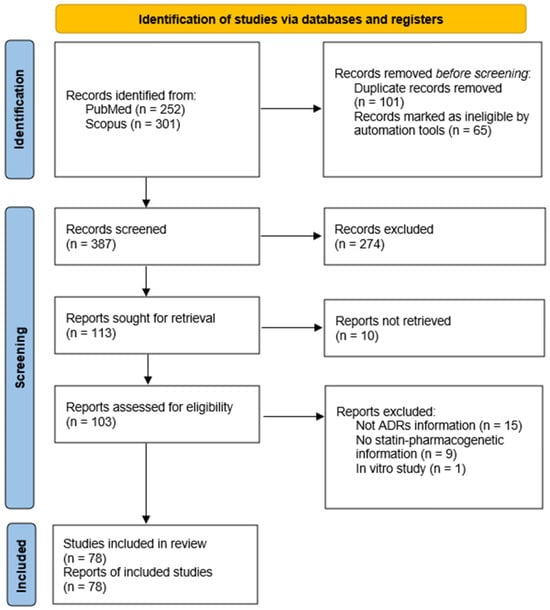
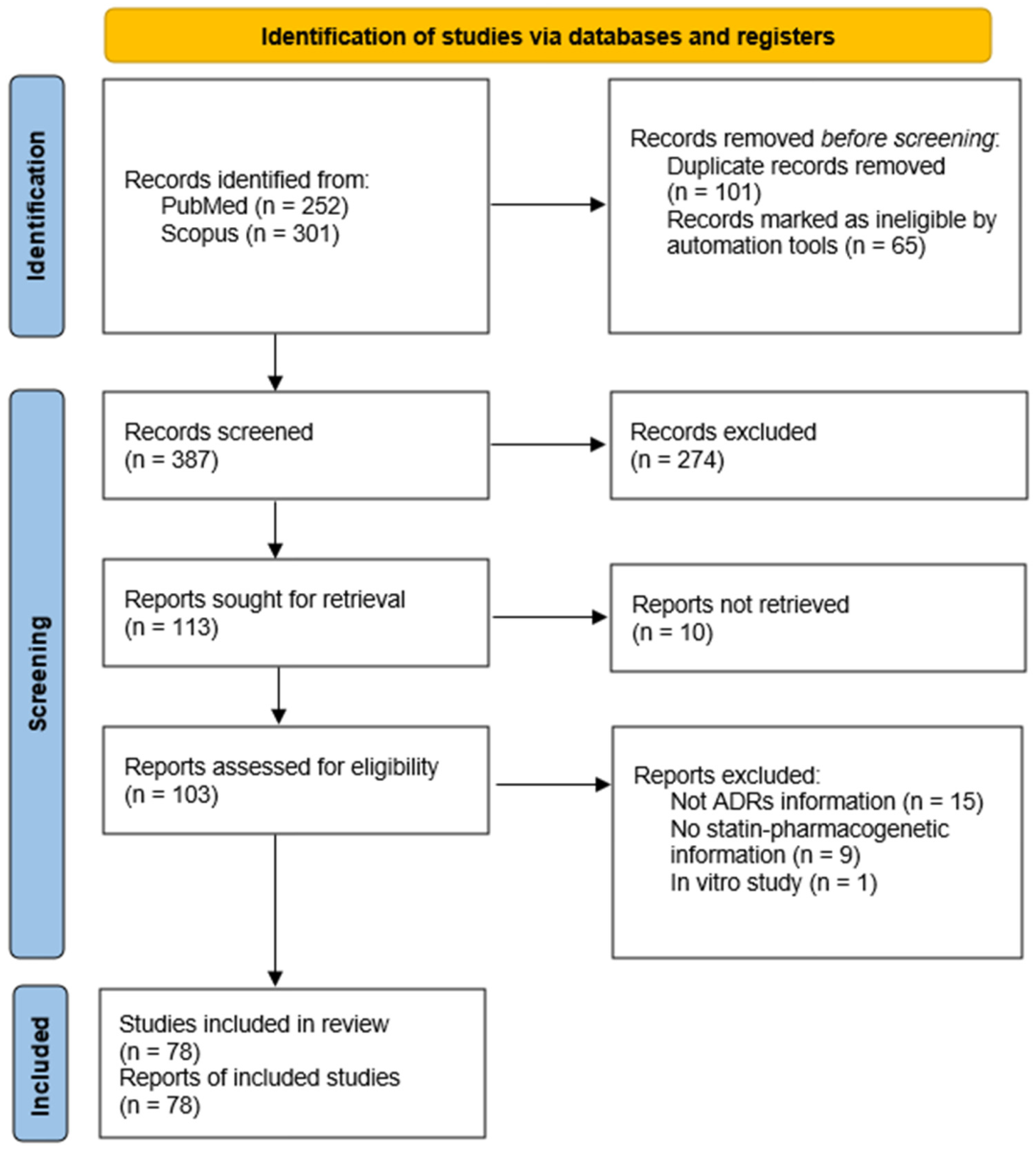

Disclaimer/Publisher’s Note: The statements, opinions and data contained in all publications are solely those of the individual author(s) and contributor(s) and not of MDPI and/or the editor(s). MDPI and/or the editor(s) disclaim responsibility for any injury to people or property resulting from any ideas, methods, instructions or products referred to in the content. |
© 2026 by the authors. Licensee MDPI, Basel, Switzerland. This article is an open access article distributed under the terms and conditions of the Creative Commons Attribution (CC BY) license.