


Abstract
Background: Data on outcomes of follicular lymphoma grade 3B (FL gr.3B) and composite lymphoma (FL/large B-cell lymphoma (B-LCL)) are scarce and the effect of obinutuzumab is unknown. Patients and methods: We analyzed outcomes of patients with FL gr.3B & FL/B-LCL receiving front-line treatment with obinutuzumab-chemotherapy combinations and compared them to previously published cohorts with FL gr.1–3A and diffuse large B-cell lymphoma (DLBCL). Results: Twenty-six patients were included; nine had FL gr.3B and 17 had FL/B-LCL. Response rate was 92%, and 60% achieved complete remission. OS and PFS rates at 3 years were 76% and 67%, respectively. Outcomes of patients with FL gr.3B and FL/B-LCL were similar. PFS and OS rates at 3 years were both 100% in patients with FLIPI 0–2 vs. 42% and 61% in those with FLIPI 3–4 (p = 0.005 and p = 0.031). PFS and OS rates at 3 years were both 100% in patients with IPI 0–2 vs. 29% and 55%, respectively, in those with IPI 3–5 (p = 0.004 and p = 0.014). Low-risk patients with FL gr.3B & FL/B-LCL, FL gr.1–3A and DLBCL all had 3-year OS and PFS rates above 80%. High-risk patients with FL gr.3B & FL/B-LCL had outcomes inferior to those with FL gr. 1–3A and similar to those with DLBCL. Conclusions: Our results suggest that front-line therapy with obinutuzumab-chemotherapy combinations has excellent outcomes in patients with low-risk FL gr.3B & FL/B-LCL, that both FLIPI and IPI are of prognostic value and that the clinical course of FL gr.3B & FL/B-LCL is more similar to DLBCL than FL gr.1–3A.
1. Introduction
Follicular lymphoma grade 3B (FL gr.3B) is a rare subtype of FL characterized by a more aggressive clinical course, genetically resembling diffuse large B-cell lymphoma (DLBCL) more than indolent FL (gr.1–3A) [1,2,3,4,5,6,7,8]. It is usually excluded from clinical trials of FL [9,10,11], but sometimes included in those of DLBCL [12]. In the fifth edition of the World Health Organization classification, the name of this entity was changed to follicular large B-cell lymphoma, while the International Consensus Classification kept the standard nomenclature of FL [13,14]. Composite FLs are lymphomas with both FL and DLBCL components coexisting synchronously in biopsy samples (FL/B-LCL) [1,15]. There is no consensus regarding optimal treatment of these entities. Published data are scarce and generally retrospective. Guidelines recommend using more aggressive chemotherapy regimens, designed for DLBCL, with the addition of the anti-CD20 antibody rituximab (R) [16,17]. However, some published reports of patients treated with rituximab-based therapies suggest that the clinical outcomes are more similar to those of indolent FL than DLBCL [18,19]. The optimal choice of anti-CD20 antibody for FL gr.3B & FL/B-LCL also remains unresolved. The large multicenter randomized study GALLIUM demonstrated that, in patients with FL gr.1–3A receiving front-line treatment, combinations of obinutuzumab (G) with chemotherapy improve response rates (RRs) and progression-free survival (PFS) in comparison to combinations of R with chemotherapy [11]. In contrast, GOYA, a similar study performed in previously untreated DLBCL patients, showed no advantage of G over R [20]. However, detailed analysis suggested that a subgroup of DLBCLs with molecular characteristics very similar to FL had a better RR if treated with obinutuzumab, but due to the nature of the subgroup analysis and difficulties in defining these patients in routine clinical practice, this finding was not further pursued [21]. There are no data on the effect of obinutuzumab-based regimens in FL gr.3B or FL/B-LCL.
In Croatia, obinutuzumab is reimbursed for first-line therapy of all FL types. Some centers use it also for treatment of FL gr.3B and FL/B-LCL. In order to describe the outcomes of these patients and elucidate the possible role of obinutuzumab in the therapy of FL gr. 3B and FL/B-LCL, KroHem, the Croatian Cooperative Group for Hematologic Diseases, collected data on outcomes of all such patients treated between 2019, when G became reimbursable, and 2023.
2. Results
We identified 26 patients fulfilling entry criteria, 15 male (58%) and 11 female (42%). Patient characteristics are presented in Table 1. Median age was 62 years, ranging from 22 to 85. Nine patients (35%) had FL gr.3B and 17 (65%) had FL/B-LCL. Twelve patients were hospitalized for the first administration of G, and 14 were not. The median number of both G and chemotherapy cycles was 6, ranging from 1 to 6. Five patients (19%) stopped treatment prematurely, four due to toxicity (three infections, one hyperglycemia) and one due to progressive disease. The overall RR was 92%; 15 patients (60%) achieved complete remission, one had progressive disease, and one died of infection prior to response evaluation. Most common side effects were hematologic and infectious. Anemia gr. 3–4 occurred in 6 patients (23%), thrombocytopenia gr. 3–4 in 6 (23%), and neutropenia grade 3–4 in 11 (42%). Additionally, 35% of patients (n = 9) experienced grade 3–5 infections, primarily driven by Severe Acute Respiratory Syndrome Coronavirus 2 (SARS-CoV-2). A more detailed list of adverse events was not provided because safety reporting during the COVID-19 pandemic was limited. After induction, 20 patients continued with G maintenance.
Table 1.
Patient characteristics.
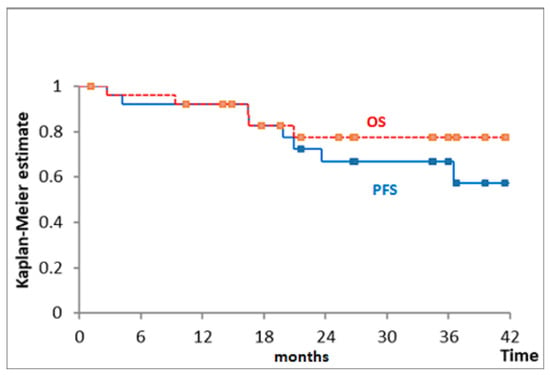
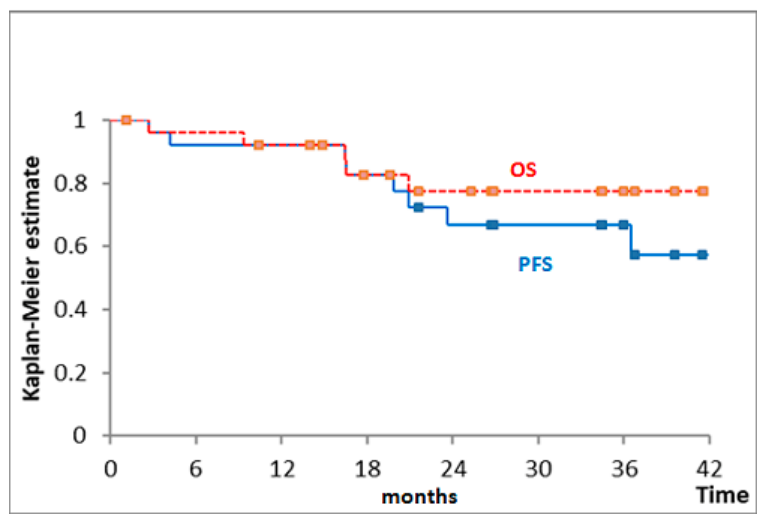
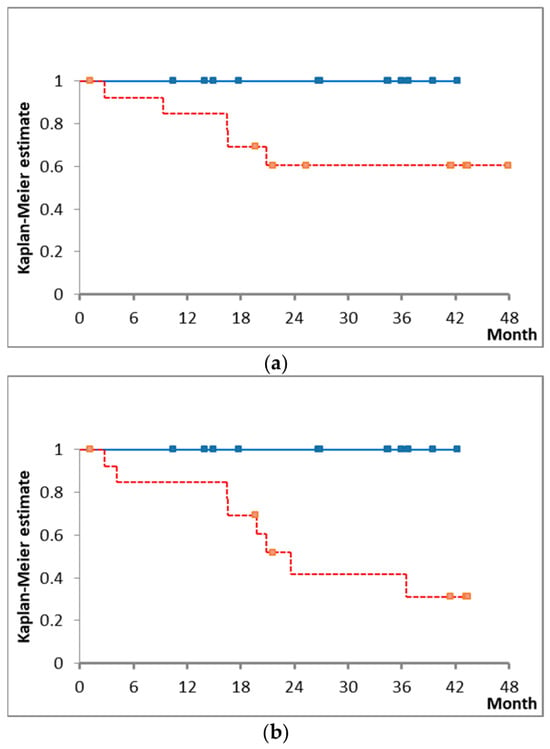
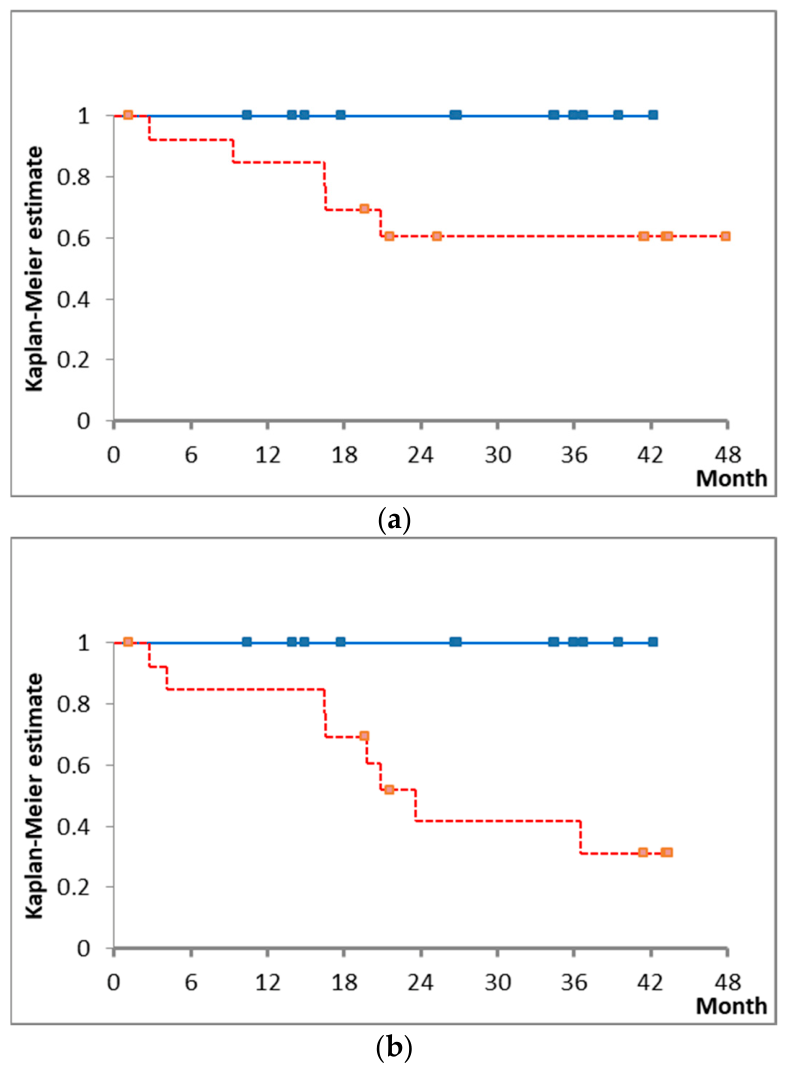
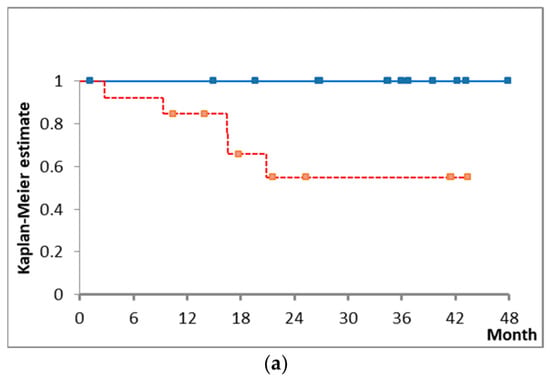
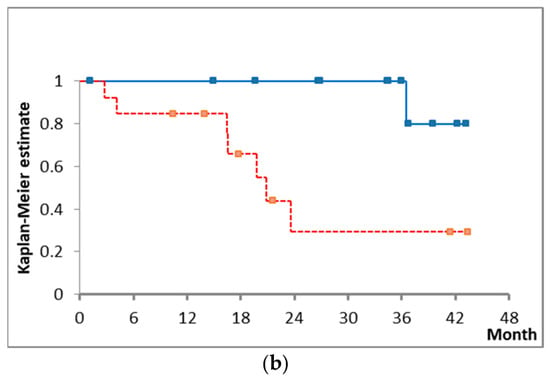
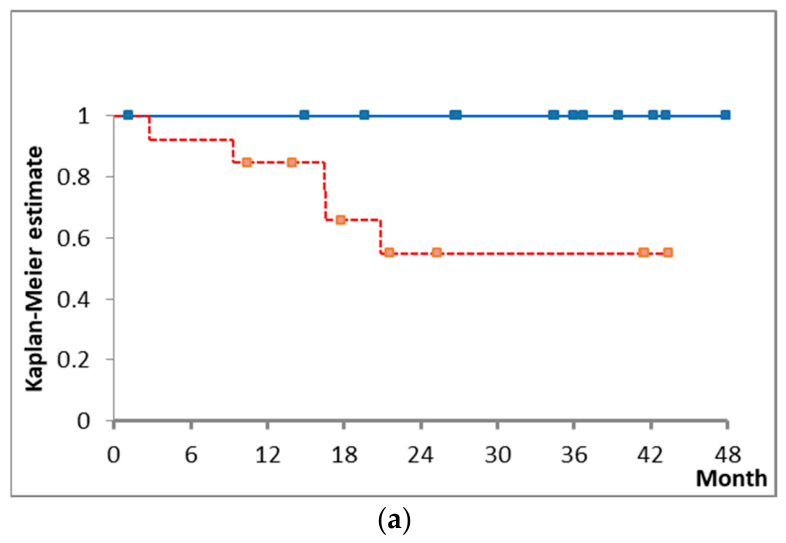
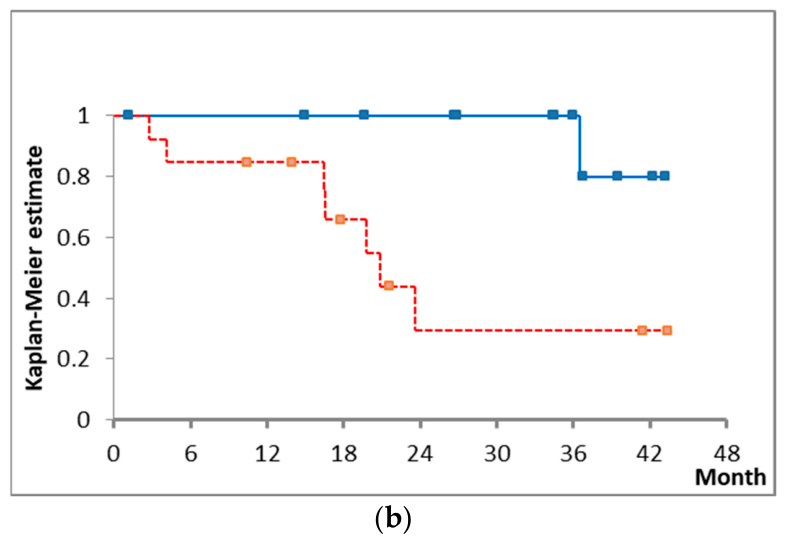
After a median follow-up of 34 months with the survivors, 4 patients progressed and 5 died. OS and PFS rates at 3 years were 76% and 67% (95% confidence interval (CI) 60–95% and 46–87%), respectively (Figure 1). Outcomes of patients with FL gr.3B and FL/B-LCL were similar. Age and sex did not influence outcomes. Patients with lower FLIPI and IPI had significantly better outcomes. PFS and OS rates at 3 years were both 100% in patients with FLIPI 0–2 vs. 42% and 61% (95% CI 13–70% and 33–88%), respectively, in those with FLIPI 3–5 (p = 0.005 (HR 7.49) and p = 0.031 (HR 6.88), respectively) (Figure 2). PFS and OS rates at 3 years were both 100% in patients with IPI 0–2 vs. 29% and 55% (95% CI 0–60% and 25–85%), respectively, in those with IPI 3–5 (p = 0.004 (HR 10.97) and p = 0.014 (HR 9.31), respectively) (Figure 3).
Figure 1.
OS and PFS of the whole cohort.
Figure 2.
(a) OS according to FLIPI (p = 0.031). Blue line: FLIPI 0–2, red line: FLIPI 3–4. (b) PFS according to FLIPI (p = 0.005). Blue line: FLIPI 0–2, red line: FLIPI 3–4.
Figure 3.
(a) OS according to IPI (p = 0.014). Blue line: IPI 0–2, red line: IPI 3–5. (b) PFS according to IPI (p = 0.004). Blue line: IPI 0–2, red line: IPI 3–5.
Details of the comparator groups with indolent FL and DLBCL were published previously [22,23]. From the former group, the cohort of indolent FL patients treated with G-CHOP or G-CVP, but not G-bendamustine, was used for comparison. From the latter group, the cohort consisting of all DLBCL patients treated with R-CHOP-like regimens was used for comparison. Low-risk patients in all three groups had excellent outcomes with 3-year PFS and OS rates above 80% (Table 2).
Table 2.
Comparison of outcomes of patients with FL gr.3B & FL/B-LCL, FL gr.1–3A and DLBCL.
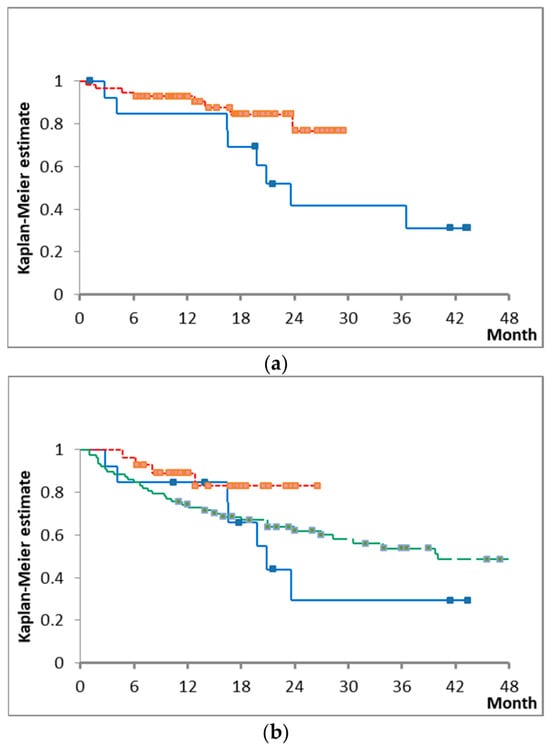
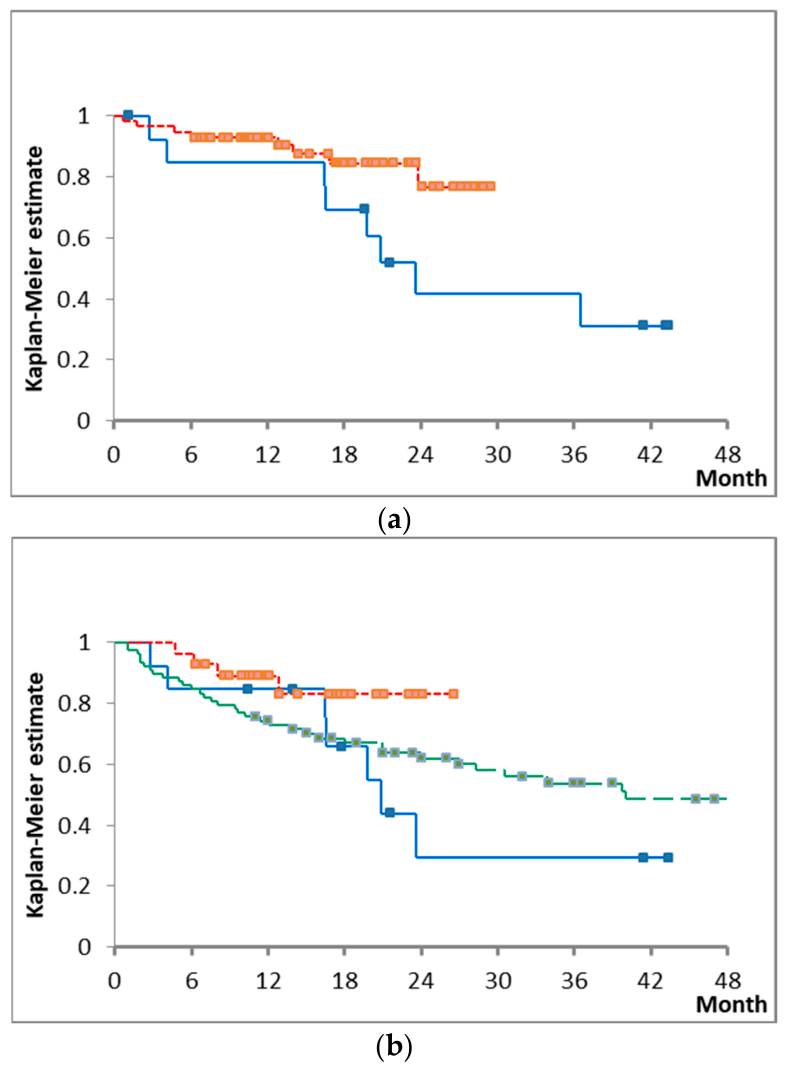
In contrast, those with FL gr.3B & FL/B-LCL and FLIPI 3–5 had a significantly inferior PFS in comparison to the similar group of patients with FL gr.1–3A (p = 0.034) (Figure 4a). PFS of patients with FL gr.3B & FL/B-LCL and IPI 3–5 was similar to that of DLBCL patients with IPI 3–5 (p = 0.416). There was a trend towards inferior PFS of FL gr.3B & FL/B-LCL patients with IPI 3–5 in comparison to that of FL gr. 1–3A and IPI 3–5 (p = 0.075) (Figure 4b). Differences in OS of high-risk patients from the three groups were less pronounced and failed to reach statistical significance. Details regarding indolent and aggressive lymphoma comparator groups were provided in Supplemental Tables S1 and S2.
Figure 4.
(a) PFS of FL grade 1–3A (red line), and FL gr.3B & FL/B-LCL (blue line) with FLIPI 3–4 (p = 0.034). (b) PFS of FL grade 1–3A (red line), FL gr.3B & FL/B-LCL (blue line), and DLBCL (green line) with IPI 3–5 (p = 0.075).
3. Discussion
Our results suggest that combinations of G and chemotherapy, followed by G maintenance, produce excellent outcomes in patients with low-risk FL gr.3B & FL/B-LCL. The outcome of high-risk patients is far less favorable.
There are very few published reports on the outcomes of FL gr.3B or FL/B-LCL in the anti-CD20 monoclonal antibody era. We were unable to find any specifically describing the effect of G-chemo combinations in these patients. The most comprehensive report on front-line therapy of FL gr.3B & FL/B-LCL is a study from Australia, Canada and the United Kingdom, which included patients who received either G or R in combination with CHOP-like chemotherapy, but it did not report outcomes separately according to the anti-CD20 monoclonal antibody type [18]. The study included 157 patients with FL gr.3B or FL/B-LCL who started treatment between 2002 and 2019 and compared their outcomes to those of contemporary diagnosed FL gr.3A patients from all participating centers and Australian DLBCL patients. They found that FL gr.3A and FL gr.3B & FL/B-LCL patients had similar outcomes, superior to those of DLBCL. However, the FL gr.3B & FL/B-LCL group had the lowest FLIPI and IPI scores and, despite the fact that the difference in OS between different FLIPI-risk groups did not reach statistical significance (p = 0.16), there was a clear separation of curves between those with FLIPI 0–2 and FLIPI 3–5, much like in our series. Several other retrospective studies compared FL gr.3B & FL/B-LCL to FL gr.3A and had conflicting results. One, including 17 FL gr.3B patients, showed that they have outcomes similar to DLBCL and worse than FL gr.3A patients treated with R-CHOP-like regimens [17]. In this series, both IPI and FLIPI scores were of prognostic value, similar to our results. Two other studies yielded opposite results. In one, including 22 FL gr.3B patients, their outcome was the same as that of FL gr3A, despite the fact that the former had more high-risk disease (IPI 3–5) [24]. However, it should be noted that FL gr.3B patients more frequently received anthracycline-based chemotherapy. In the other study, 21 FL gr.3B & FL/B-LCL patients had outcomes similar to FL gr.3A patients and FLIPI was not of prognostic significance in either of the groups [19]. The reasons for these discrepancies remain unclear. Possible explanations include differences in pathological grading assignment or induction and post-induction therapy. In comparison to cohorts from two major clinical trials of G-chemotherapy combinations (GALLIUM and GOYA), our results are more similar to those of the GOYA study, additionally supporting the notion that FL gr.3B & FL/B-LCL share greater similarities with DLBCL than with FL gr.3A [11,20].
The main limitation of this study is the small sample size, which reduces statistical power and compromises the stability of survival estimates. The lack of central pathological review is also an important source of bias. Furthermore, in the absence of a rituximab-treated arm, our study cannot determine the real benefit of obinutuzumab over rituximab in this “borderline” setting. The comparisons with indolent and aggressive lymphoma cohorts, treated with very similar obinutuzumab- and rituximab-based therapy, were intended primarily to provide clinical context for this therapeutically challenging transitional entity, rather than statistically compare these uncontrolled heterogeneous cohorts. The chemotherapy regimens used by different centers were not uniformly consistent and were based on the clinical decision of the hematologist. Treatment choice, heterogeneity of cohorts and timing of these studies might seem confounding, but it reflects real-world clinical practice. Only a very small proportion of our patients with FL gr.3B did not receive G maintenance therapy; therefore, the independent impact of maintenance therapy on PFS and OS could not be evaluated.
4. Materials and Methods
Patients with FL gr.3B and FL/B-LCL, diagnosed at reference hematopathological centers, receiving front-line treatment with G in combination with any chemotherapy regimen, were included in this analysis. Data were collected retrospectively by chart review from hospital electronic databases in the period between January 2019 and December 2023. These included pretreatment patient and disease characteristics (age, sex, performance status, blood counts, lactate dehydrogenase (LDH) level, disease stage, number of involved nodal areas and extranodal localizations), treatment regimen, side effects, RR, PFS and overall survival (OS). Diagnostic procedures, treatment, response assessment and follow-up were performed according to national clinical practice guidelines [25]. Pretreatment staging was performed by PET-CT or CT scans and bone marrow biopsy. Response assessment after induction therapy was performed by PET-CT; bone marrow biopsies were repeated if they were initially positive. Imaging studies were not repeated during follow-up unless clinically indicated. Response to therapy was evaluated according to the Lugano and/or RECIL criteria [26,27]. OS was defined as the period from treatment start to death irrespective of cause. PFS was defined as the period from treatment start to treatment failure (including insufficient response and progression) or death. Descriptive statistics, available within the Microsoft Excel 2016® program, were used to summarize baseline characteristics. Survival curves were plotted using the Kaplan–Meier method and their differences were compared with the log-rank test using a freely available statistical program [28]. Toxicity was graded retrospectively by chart review according to CTCAE v.5 criteria [29]. The study was approved by the Ethics Committee of the University Hospital Centre Split, number 2181-147/01/06/M.S.-22-02. Since this was a retrospective study of anonymized patient data, a waiver of the requirement for informed consent was obtained, and the identity of patients was never disclosed. The outcomes of the FL gr.3B & FL/B-LCL group were compared to those of contemporary patients with indolent FL treated with G-CHOP/CVP and DLBCL treated with R-chemotherapy combinations between 2011 and 2019. The characteristics and outcomes of these patients were described in detail previously [22,23].
5. Conclusions
It is impossible to draw firm conclusions on the value of G and anti-CD20 maintenance therapy in FL gr.3B & FL/B-LCL from this small study. Still, our results suggest that patients with low-risk disease (i.e., IPI 0–2 or FLIPI 0–2) receiving G-chemotherapy combinations followed by G maintenance have excellent outcomes. Additional studies are needed to define optimal therapeutic approaches for those with high-risk disease.
Our data suggest that FL gr.3B & FL/B-LCL is clinically more similar to DLBCL than to indolent FL. However, due to discrepant results of different studies, in order to elucidate the clinical importance of the distinction between FL gr.3A and 3B and define optimal therapeutic approaches for the latter group, larger, international efforts are needed. Due to the scarcity of the entity, prospective clinical studies are probably unrealistic. Establishing an international registry seems to be the best approach, but it would have to be coupled with a comprehensive pathological review of biopsy samples.
Supplementary Materials
The following supporting information can be downloaded at: https://www.mdpi.com/article/10.3390/ph19101640/s1, Table S1: patient characteristics of indolent lymphoma comparator group. Table S2: patient characteristics of aggressive lymphoma comparator group.
Author Contributions
I.A., D.G., and N.Z.: Conceptualization, Methodology, Investigation, Data Curation, Resources, Formal Analysis, Validation, Writing—Original Draft, and Writing—Review and Editing; S.B.-K., B.D., M.I., D.G., D.D., M.M.-P., H.H., N.F., J.S.-P., and I.H.-D.—Investigation, Validation, and Writing—Review and Editing. All authors have read and agreed to the published version of the manuscript.
Funding
This research received no external funding.
Institutional Review Board Statement
The study was conducted in accordance with the Declaration of Helsinki and approved by the Ethical Committee of the University Hospital Centre Split, number 2181-147/01/06/M.S.-22-02, approval date 11 February 2022.
Informed Consent Statement
Due to the retrospective, non-interventional and anonymized nature of data collection, an informed consent waiver was obtained.
Data Availability Statement
The original contributions presented in this study are included in the article/Supplementary Material. Further inquiries can be directed to the corresponding author.
Acknowledgments
This paper was presented in part at the 29th European Hematology Association Congress, Madrid, Spain, 13–16 June 2024.
Conflicts of Interest
I.A., S.B.K., B.D., D.G., D.D., M.M.P., H.H., N.F., J.S.P. and I.H.D. received honoraria and/or consultancy fees from Roche. N.Ž. and M.I. have no conflicts of interest related to this study. The funders had no role in the design of the study; in the collection, analysis, or interpretation of data; in the writing of the manuscript; or in the decision to publish the results.
References
- Barraclough, A.; Bishton, M.; Cheah, C.Y.; Villa, D.; Hawkes, E.A. The diagnostic and therapeutic challenges of Grade 3B follicular lymphoma. Br. J. Haematol. 2021, 195, 15–24. [Google Scholar] [CrossRef] [Scilit] [PubMed]
- Glas, A.M.; Kersten, M.J.; Delahaye, L.J.; Witteveen, A.T.; Kibbelaar, R.E.; Velds, A. Gene expression profiling in follicular lymphoma to assess clinical aggressiveness and to guide the choice of treatment. Blood 2005, 105, 301–307. [Google Scholar] [CrossRef] [Scilit] [PubMed]
- Katzenberger, T.; Ott, G.; Klein, T.; Kalla, J.; M€uller-Hermelink, H.K.; Ott, M.M. Cytogenetic alterations affecting BCL6 are predominantly found in follicular lymphomas grade 3B with a diffuse large B-cell component. Am. J. Pathol. 2004, 165, 481–490. [Google Scholar] [CrossRef] [Scilit] [PubMed]
- Bosga-Bouwer, A.G.; van den Berg, A.; Haralambieva, E.; de Jong, D.; Boonstra, R.; Kluin, P.; Berg, E.v.D.; Poppema, S. Molecular, cytogenetic, and immunophenotypic characterization of follicular lymphoma grade 3B; a separate entity or part of the spectrum of diffuse large B-cell lymphoma or follicular lymphoma? Hum. Pathol. 2006, 37, 528–533. [Google Scholar] [CrossRef] [Scilit] [PubMed]
- Harris, N.L.; Kluin, P. Follicular lymphoma grade 3B: Is it a real disease? Haematologica 2011, 96, 1244–1246. [Google Scholar] [CrossRef] [Scilit] [PubMed]
- Horn, H.; Schmelter, C.; Leich, E.; Salaverria, I.; Katzenberger, T.; Ott, M.M. Follicular lymphoma grade 3B is a distinct neoplasm according to cytogenetic and immunohistochemical profiles. Haematologica 2011, 96, 1327–1334. [Google Scholar] [CrossRef] [Scilit] [PubMed]
- Guo, Y.; Karube, K.; Kawano, R.; Yamaguchi, T.; Suzumiya, J.; Huang, G.S.; Ohshima, K. Low-grade follicular lymphoma with t(14;18) presents a homogeneous disease entity; otherwise the rest comprises minor groups of heterogeneous disease entities with Bcl2 amplification, Bcl6 translocation or other gene aberrances. Leukemia 2005, 19, 1058–1063. [Google Scholar] [CrossRef] [Scilit] [PubMed]
- Karube, K.; Guo, Y.; Suzumiya, J.; Sugita, Y.; Nomura, Y.; Yamamoto, K.; Shimizu, K.; Yoshida, S.; Komatani, H.; Takeshita, M.; et al. CD10- MUM1+ follicular lymphoma lacks BCL2 gene translocation and shows characteristic biologic and clinical features. Blood 2006, 109, 3076–3079. [Google Scholar] [CrossRef] [Scilit] [PubMed]
- Salles, G.; Seymour, J.F.; Offner, F.; López-Guillermo, A.; Belada, D.; Xerri, L.; Feugier, P.; Bouabdallah, R.; Catalano, J.V.; Brice, P.; et al. Rituximab maintenance for 2 years in patients with high tumour burden follicular lymphoma responding to rituximab plus chemotherapy (PRIMA): A phase 3, randomised controlled trial. Lancet 2011, 377, 42–51. [Google Scholar] [CrossRef] [Scilit] [PubMed]
- Morschhauser, F.; Fowler, N.H.; Feugier, P.; Bouabdallah, R.; Tilly, H.; Palomba, M.L.; Fruchart, C.; Libby, E.N.; Casasnovas, R.O.; Flinn, I.W.; et al. RELEVANCE Trial Investigators. Rituximab plus Lenalidomide in Advanced Untreated Follicular Lymphoma. N. Engl. J. Med. 2018, 379, 934–947. [Google Scholar] [CrossRef] [Scilit] [PubMed]
- Marcus, R.; Davies, A.; Ando, K.; Klapper, W.; Opat, S.; Owen, C.; Phillips, E.; Sangha, R.; Schlag, R.; Seymour, J.F.; et al. Obinutuzumab for the first-line treatment of follicular lymphoma. N. Engl. J. Med. 2017, 377, 1331–1344. [Google Scholar] [CrossRef] [Scilit] [PubMed]
- Kamdar, M.; Solomon, S.; Arnason, J.; Johnston, P.B.; Glass, B.; Bachanova, V.; Ibrahimi, S.; Mielke, S.; Mutsaers, P.; Hernandez-Ilizaliturri, F.; et al. Lisocabtagene maraleucel versus standard of care with salvage chemotherapy followed by autologous stem cell transplantation as second-line treatment in patients with relapsed or refractory large B-cell lymphoma (TRANSFORM): Results from an interim analysis of an open-label, randomised, phase 3 trial. Lancet 2022, 399, 2294–2308. [Google Scholar] [CrossRef] [Scilit] [PubMed]
- Alaggio, R.; Amador, C.; Anagnostopoulos, I.; Attygalle, A.D.; Araujo, I.B.O.; Berti, E.; Bhagat, G.; Borges, A.M.; Boyer, D.; Calaminici, M.; et al. The 5th edition of the World Health Organization Classification of Haematolymphoid Tumours: Lymphoid Neoplasms. Leukemia 2022, 36, 1720–1748. [Google Scholar] [CrossRef] [Scilit] [PubMed]
- Campo, E.; Jaffe, E.S.; Cook, J.R.; Quintanilla-Martinez, L.; Swerdlow, S.H.; Anderson, K.C.; Brousset, P.; Cerroni, L.; de Leval, L.; Dirnhofer, S.; et al. The International Consensus Classification of Mature Lymphoid Neoplasms: A report from the Clinical Advisory Committee. Blood 2022, 140, 1229–1253. [Google Scholar] [CrossRef] [Scilit] [PubMed]
- Magnano, L.; Balagué, O.; Dlouhy, I.; Rovira, J.; Karube, K.; Pinyol, M.; Rivas-Delgado, A.; Costa, D.; Martínez-Trillos, A.; González-Farre, B.; et al. Clini-cobiological features and prognostic impact of diffuse large B-cell lymphoma component in the outcome of patients with previously untreated follicular lymphoma. Ann. Oncol. 2017, 28, 2799–2805. [Google Scholar] [CrossRef] [Scilit] [PubMed]
- Wahlin, B.E.; Yri, O.E.; Kimby, E.; Holte, H.; Delabie, J.; Smeland, E.B.; Sundström, C.; Christensson, B.; Sander, B. Clinical significance of the WHO grades of follicular lymphoma in a population-based cohort of 505 patients with long follow-up times. Br. J. Haematol. 2012, 156, 225–233. [Google Scholar] [CrossRef] [Scilit] [PubMed]
- Yuan, J.; Greiner, T.C.; Fu, K.; Smith, L.M.; Aoun, P.; Chan, W.C.; Bierman, P.J.; Bociek, R.G.; Vose, J.M.; Armitage, J.O.; et al. Rituximab improves the outcome of patients with grade 3 follicular lymphoma receiving anthracycline-based therapy. Clin. Lymphoma Myeloma Leuk. 2017, 17, 488–497.e2. [Google Scholar] [CrossRef] [Scilit] [PubMed]
- Barraclough, A.; England, J.T.; Villa, D.; Wight, J.; Hapgood, G.; Conn, J.; Doo, N.W.; Li, E.W.; Gilbertson, M.; Shaw, B.; et al. Outcomes in grade 3B follicular lymphoma: An international study led by the Australasian Lymphoma Alliance. Haematologica 2023, 108, 2444–2453. [Google Scholar] [CrossRef] [Scilit] [PubMed]
- Mustafa Ali, M.; Rybicki, L.; Nomani, L.; Rouphail, B.; Dean, R.M.; Hill, B.T.; Jagadeesh, D.; Pohlman, B.; Hsi, E.D.; Smith, M.R. Grade 3 Follicular Lymphoma: Outcomes in the Rituximab Era. Clin. Lymphoma Myeloma Leuk. 2017, 17, 797–803. [Google Scholar] [CrossRef] [Scilit] [PubMed]
- Vitolo, U.; Trněný, M.; Belada, D.; Burke, J.M.; Carella, A.M.; Chua, N.; Abrisqueta, P.; Demeter, J.; Flinn, I.; Hong, X.; et al. Obinutuzumab or Rituximab Plus Cyclophosphamide, Doxorubicin, Vincristine, and Prednisone in Previously Un-treated Diffuse Large B-Cell Lymphoma. J. Clin. Oncol. 2017, 35, 3529–3537. [Google Scholar] [CrossRef] [Scilit] [PubMed]
- Oestergaard, M.Z.; Bolen, C.R.; Mattiello, F.; Martelli, M.; Sehn, L.H.; Trněný, M.; Tzankov, A.; Vitolo, U.; Nielsen, T.; Morariu-Zamfir, R.; et al. Superiority of Obinutuzumab over Rituximab in a New Molecular Follicular Lymphoma-like Subgroup of DLBCL: Results from an Exploratory Analysis of the Phase 3 GOYA Trial. Blood 2017, 130, 1543. [Google Scholar]
- Galusic, D.; Basic-Kinda, S.; Pijuk, A.; Milunovic, V.; Dreta, B.; Franjic, N.; Coha, B.; Sincic-Petricevic, J.; Gacina, P.; Pejsa, V.; et al. Efficacy and Safety of Obinutuzumab-chemotherapy Combinations in Front-line Treatment of Follicular Non-Hodgkin Lymphoma During the COVID-19 Pandemic: A Study of KROHEM, the Croatian Cooperative Group for Hematologic Diseases. Hemasphere 2022, 6, e807. [Google Scholar] [CrossRef] [Scilit] [PubMed]
- Premužić, V.; Bašić-Kinda, S.; Radman, I.; Dujmović, D.; Ilić, I.; Živković, N.; Maleta, L.; Kralik, M.; Dobrenić, M.; Galunić-Bilić, L.; et al. Glomerular filtration rate is an independent prognostic factor in patients with B-large cell lymphoma. Medicine 2023, 102, e33675. [Google Scholar] [CrossRef] [Scilit] [PubMed]
- Shustik, J.; Quinn, M.; Connors, J.M.; Gascoyne, R.D.; Skinnider, B.; Sehn, L.H. Follicular non-Hodgkin lymphoma grades 3A and 3B have a similar outcome and appear incurable with anthracycline-based therapy. Ann. Oncol. 2011, 22, 1164–1169. [Google Scholar] [CrossRef] [Scilit] [PubMed]
- Aurer, I.; Dreta, B.; Mitrović, Z.; Hude Dragičević, I.; Milunović, V.; Ivić, M.; Međugorac, M.; Miljak, A.; Dujmović, D.; Mišura Jakobac, K.; et al. Recommendations for Systemic Treatment of Lymphoma—V4. 2022. Available online: https://www.krohem.hr/dijagnosticko-terapijske-smjernice/ (accessed on 3 February 2026). (In Croatian)
- Cheson, B.D.; Fisher, R.I.; Barrington, S.F.; Cavalli, F.; Schwartz, L.H.; Zucca, E.; Lister, T.A. Recommendations for initial evaluation, staging, and response assessment of Hodgkin and non-Hodgkin lymphoma: The Lugano classification. J. Clin. Oncol. 2014, 32, 3059–3068. [Google Scholar] [CrossRef] [Scilit] [PubMed]
- Younes, A.; Hilden, P.; Coiffier, B.; Hagenbeek, A.; Salles, G.; Wilson, W.; Seymour, J.F.; Kelly, K.; Gribben, J.; Pfreunschuh, M.; et al. International Working Group consensus response evaluation criteria in lymphoma (RECIL 2017). Ann. Oncol. 2017, 28, 1436–1447. [Google Scholar] [CrossRef] [Scilit] [PubMed]
- Lucijanić, M. An update to the custom-made MS Excel workbook performing the log-rank test with extended functionality and a new original COVID-19 training data set. Croat. Med. J. 2021, 62, 531–533. [Google Scholar] [CrossRef] [Scilit] [PubMed]
- Common Terminology Criteria for Adverse Events (CTCAE) Version 5.0 U.S. Department of Health and Human Services National Institutes of Health National Cancer Institute. 2017. Available online: https://ctep.cancer.gov/protocoldevelopment/electronic_applications/docs/ctcae_v5_quick_reference_5x7.pdf (accessed on 3 February 2025).

Disclaimer/Publisher’s Note: The statements, opinions and data contained in all publications are solely those of the individual author(s) and contributor(s) and not of MDPI and/or the editor(s). MDPI and/or the editor(s) disclaim responsibility for any injury to people or property resulting from any ideas, methods, instructions or products referred to in the content. |
© 2026 by the authors. Licensee MDPI, Basel, Switzerland. This article is an open access article distributed under the terms and conditions of the Creative Commons Attribution (CC BY) license.