


Abstract
Background/Objectives: Biological therapies have emerged as targeted treatments for chronic rhinosinusitis with nasal polyps (CRSwNP), yet direct comparisons between agents remain limited. This network meta-analysis (NMA) aimed to evaluate and rank the efficacy and safety of biological therapies for CRSwNP in adult patients. Methods: We conducted a systematic review and NMA of randomized controlled trials (RCTs) assessing biological therapies for CRSwNP. A literature search was conducted through July 2025. Eligible RCTs compared approved or investigational biologics with a placebo and reported clinical, functional, or safety outcomes in adults with CRSwNP. The mean differences (MDs) in the least-squares mean change from baseline were used for continuous outcomes, and odds ratios (ORs) were used for binary outcomes. A frequentist random-effects model was used to estimate pooled effects and treatment rankings. SUCRA values and rank probabilities were derived to determine the relative efficacy and safety. Results: A total of 22 RCTs (46 reports; 4068 patients) evaluating eight biologics were included. Dupilumab consistently ranked among the top three agents across most efficacy outcomes, including nasal polyp score (NPS), nasal congestion score (NCS), SNOT-22, UPSIT, and endoscopic scores. CM310 and Tezepelumab also demonstrated strong performance in objective and symptom-based outcomes. For responder outcomes, CM310 was ranked best in minimal clinically important differences across multiple domains. PF-06817024 ranked best in minimizing any adverse events and serious adverse events. The placebo ranked worst across nearly all endpoints. Conclusions: Dupilumab, CM31 0, and Tezepelumab exhibit the most favorable efficacy profiles across multiple CRSwNP domains, while all drugs show a nearly similar safety profile.
1. Introduction
Chronic rhinosinusitis with nasal polyps (CRSwNP) is a persistent inflammatory disease of the nasal and paranasal sinuses, characterized by bilateral polypoid growth that obstructs airflow and impairs mucociliary function [1]. Patients often experience substantial symptom burden, including nasal obstruction, facial pressure, hyposmia or anosmia, and decreased quality of life [2]. CRSwNP frequently coexists with asthma and allergic rhinitis, and is commonly associated with type 2 (Th2) inflammation [3].
The underlying immunopathogenesis involves the upregulation of interleukin (IL)-4, IL-5, and IL-13, leading to eosinophilic infiltration and persistent mucosal inflammation [4]. Traditional therapies—including intranasal corticosteroids (INCS), short courses of systemic corticosteroids (SCS), and endoscopic sinus surgery—are effective for many patients, yet relapse is common, and a subset remains refractory to conventional interventions [5].
Recent advances have introduced biological therapies that selectively target type 2 inflammatory pathways, offering a precision medicine approach to CRSwNP [6]. Multiple randomized controlled trials (RCTs) have demonstrated the efficacy of monoclonal antibodies such as dupilumab, omalizumab, and mepolizumab in improving polyp size, sinonasal symptoms, olfactory function, and health-related quality of life. However, head-to-head comparisons are lacking, and questions remain regarding the relative efficacy and safety of different biologics.
A prior network meta-analysis (NMA) by Oykhman et al. [7] provided a comparative synthesis of several biologics and aspirin desensitization (ASA-D) in CRSwNP, identifying dupilumab as one of the most effective therapies. However, that study did not include recently evaluated biologics such as CM310 and PF-06817024 and combined different therapeutic classes, potentially obscuring class-specific effects. Furthermore, it did not explore SNOT-22 subdomains or responder thresholds, nor did it apply ranking-based frameworks to aid clinical decision-making. Additionally, several trials have been published since then [8,9].
To address these limitations, we conducted an updated NMA of biologic therapies for CRSwNP. This analysis incorporates data from 22 RCTs, including two newly published trials, and applies a frequentist random-effects model to assess both continuous and binary outcomes. Our focus is limited to comparisons with the placebo, and treatment efficacy is evaluated using least-squares mean changes from baseline. Additionally, we provide SUCRA-based treatment rankings across a wide range of domains, including SNOT-22 subdomains, olfaction, imaging, and responder outcomes. This study aims to provide a more granular and up-to-date assessment of the comparative effectiveness and safety of biologics for CRSwNP.
2. Materials and Methods
2.1. Protocol Registration and Search Strategy
This study was a NMA of randomized controlled trials (RCTs) comparing the efficacy and safety of biological therapies for CRSwNP. We followed the PRISMA guidelines for systematic reviews and the PRISMA extension for NMAs [10]. The study protocol was registered with PROSPERO (CRD42024550348). A comprehensive literature search was conducted across PubMed, Web of Science, Scopus, Cochrane Library, and clinicaltrials.gov, as well as the first 200 records on Google Scholar, through May 2024. Additionally, manual searches of references and citation tracking were performed. Non-English trials were also included [11]. The detailed search criteria are provided in Table S1. An updated search was performed in July 2025, yielding two additional RCTs [8,9].
2.2. Inclusion and Exclusion Criteria
According to the PICOS framework [12], we included RCTs evaluating biological therapies (Dupilumab, Mepolizumab, Omalizumab, Reslizumab, Benralizumab, CM310, Tezepelumab, and PF-06817024) for CRSwNP. Trials were required to compare biological therapies with placebo or other biologics, and to report efficacy or safety outcomes in adult patients with CRSwNP, with or without comorbid asthma. Studies with non-randomized designs, abstract-only publications, conference presentations, and non-original research were excluded.
2.3. Study Selection and Data Extraction
Two independent reviewers screened titles and abstracts and assessed full-text articles for eligibility. Discrepancies were resolved by discussion or a third reviewer. Data were extracted using a standardized form, capturing study characteristics (author, year, country, design), patient characteristics (age, gender, CRSwNP duration), intervention details (biological agent, dose, duration), and outcomes.
Key outcomes spanned multiple domains, including symptom severity and quality of life [Nasal Polyp Score (NPS), Nasal Congestion Score (NCS), Lund–Mackay CT score, and the Total SNOT-22 score], responder analysis (Minimal Clinically Important Difference—MCID across used measures), and safety profile (all reported adverse events [AEs] and serious AEs (SAEs)).
2.4. Risk of Bias Assessment
Risk of bias was assessed using the Cochrane Risk of Bias tool (RoB 2, revised version, 2019) across multiple domains: random sequence generation, allocation concealment, blinding, incomplete data, selective reporting, and other biases.
2.5. Statistical Analysis
All statistical analyses were conducted using Stata (version 18, StataCorp LLC., College Station, TX, USA) and R software (version 4.0.3, R Foundation for Statistical Computing, Vienna, Austria). The NMA was performed using the network and mvmeta packages in Stata, adopting a frequentist framework with a multivariate random-effects model.
For continuous outcomes, the primary effect measure was the mean difference (MD) in least-square (LS) mean change from baseline, as reported in the trials [13]. This approach was selected to reflect treatment-specific change over time and ensure comparability across studies with different baseline scores and follow-up durations. For trials reporting multiple timepoints, the last observation carried forward (LOCF) method was applied to retain the longest available follow-up per outcome.
For binary outcomes, odds ratios (ORs) with 95% confidence intervals (CIs) were calculated. Network meta-analysis enabled both direct and indirect comparisons between all treatments using placebo as the reference group.
Treatment rankings were generated using the network rank command. For each outcome, treatments were ordered based on the observed rank position. SUCRA values were computed but only selectively reported to avoid misinterpretation when spread across multiple ranking levels.
Inconsistency between direct and indirect evidence was evaluated using the node-splitting approach. Statistical heterogeneity was assessed using the I2 statistic, with values greater than 50% considered substantial. Sensitivity analyses included the inspection of Galbraith plots to identify outliers, which were reviewed and excluded if they distorted the pooled effect estimates. Funnel plots, Egger’s test, and Begg’s test were used to assess the potential for publication bias in binary outcomes [14,15].
3. Results
3.1. Literature Review
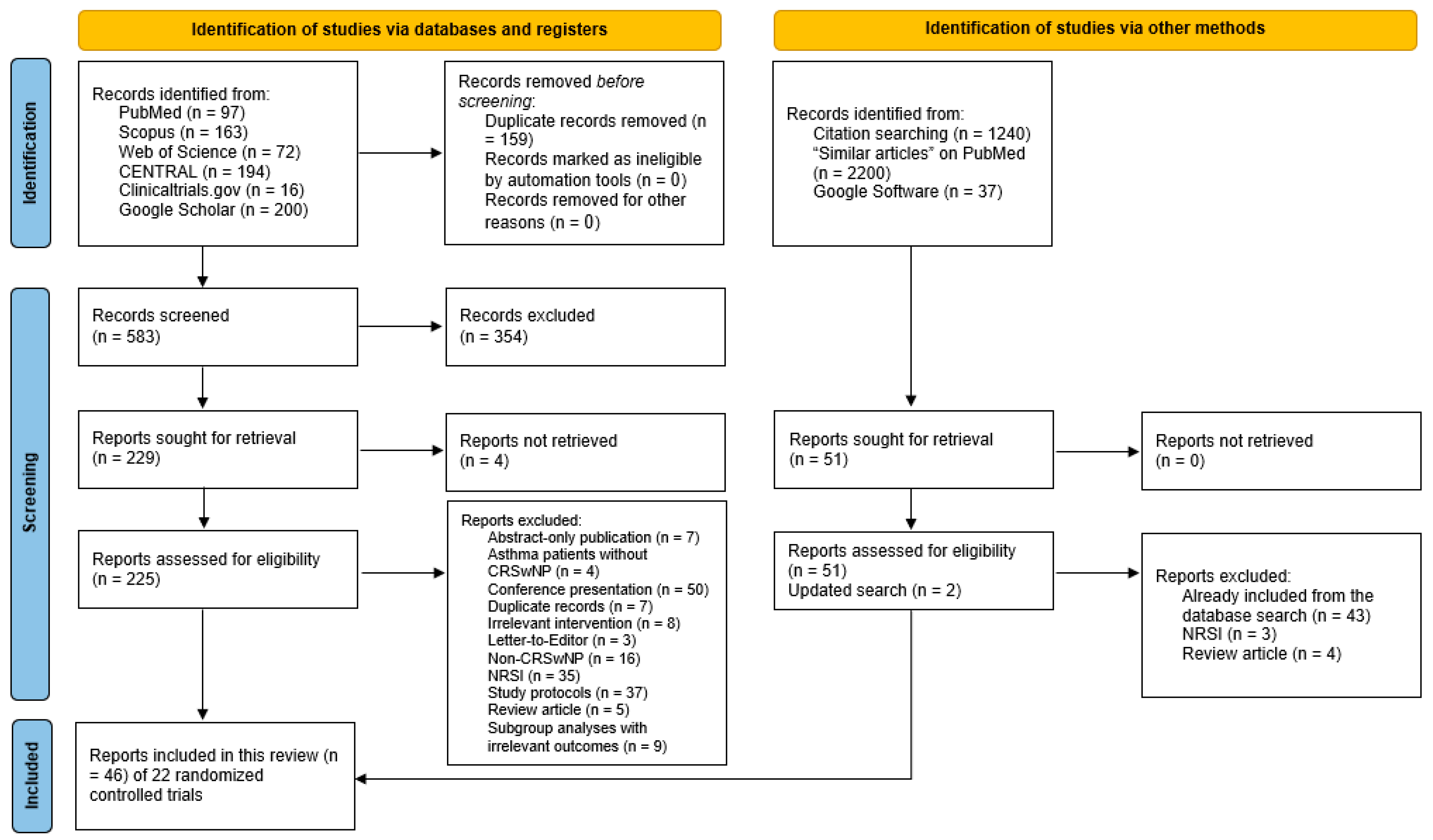
The literature search identified 742 citations (Figure 1). After removing 159 duplicates, 583 articles were screened, and 354 were excluded based on their title and abstract. Four articles could not be found, leaving 229 articles eligible for full-text screening. The reasons for exclusion are provided in Table S2. The updated search yielded two additional RCTs [8,9].
Figure 1.
A PRISMA flow diagram showing the results of the literature search.
A total of 46 reports [8,9,11,16,17,18,19,20,21,22,23,24,25,26,27,28,29,30,31,32,33,34,35,36,37,38,39,40,41,42,43,44,45,46,47,48,49,50,51,52,53,54,55,56] from 22 RCTs met the inclusion criteria, with 1 trial being identified manually [57]. These trials investigated the efficacy of various biological therapies for CRSwNP, including Dupilumab, Reslizumab, Benralizumab, CM310, Tezepelumab, Omalizumab, and Mepolizumab, with a total of 4068 patients analyzed. A complete description of the diagnostic criteria and interventions used is provided in Table 1.
Table 1.
Descriptive summary of randomized controlled trials assessing the efficacy of different biological therapy agents in patients with CRSwNP.
The baseline data on comorbid asthma, prior NP surgery, CRSwNP duration, and patient demographics are summarized in Table 2. A summary of all outcomes that were not eligible for meta-analysis are provided in Table S3. The number of patients analyzed in each outcome is presented in Table S4.
Table 2.
Descriptive summary of comorbid asthma, history of NPS surgery, disease duration, and patients’ characteristics at baseline among the included randomized trials of biological therapy in CRSwNP.
3.2. Risk of Bias Assessment
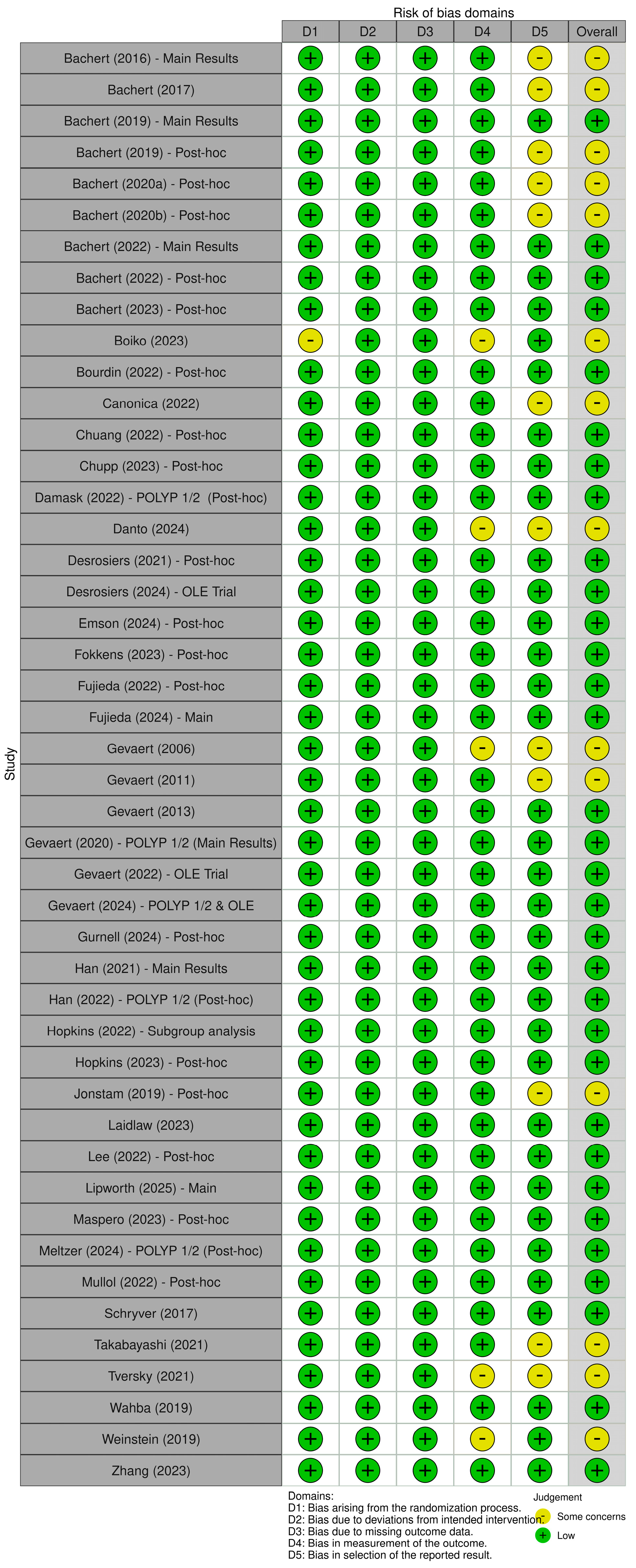
Figure 2 shows the risk of bias assessment, where 33 studies had a low risk, and 13 had some concerns [8,9,11,16,17,18,20,21,22,23,25,48,49,50,51,58], mainly due to unregistered protocols and small sample sizes. The questionable methodology included five trials with small sample sizes (i.e., post hoc, subgroup analyses) leading to unreliable outcome measurements [11,16,17,20,23].
Figure 2.
A summary graph of the risk of bias assessment of included randomized controlled trials [8,9,11,16,17,18,19,20,21,22,23,24,25,26,27,28,29,30,31,32,33,34,35,36,37,38,39,40,41,42,43,44,45,46,47,48,49,50,51,52,53,54,55,56,57].
3.3. Characteristics of Included Trials
The RCTs included reports from various trials such as MERIT [8], WAYPOINT [9], OSTRO Trial [27,41], POLYP 1-2 and OLE “open-label extension” Trials [28,29,30,31,32,43], QUEST Trial [34,35,36], SINUS 24 and SINUS 52 Trials [25,26,31,37,38,39,40,42,43], SYNAPSE and OLE Trial [44,45,46,47,57], and a Phase IIa Trial (NCT01920893) [25,48,49,50,51]. The remaining data were pooled from small-scale RCTs. The follow-up duration varied from 3 weeks to 76 weeks, with a total of 2225 patients receiving biological therapies and 1855 patients receiving placebo or standard care. These reports were included either because they reported additional outcomes not reported in the original trials or reported the same outcomes but in different timepoints. All, except for one study [11], had placebo as the control group (Figure S1).
3.4. Efficacy Measures
3.4.1. NPS
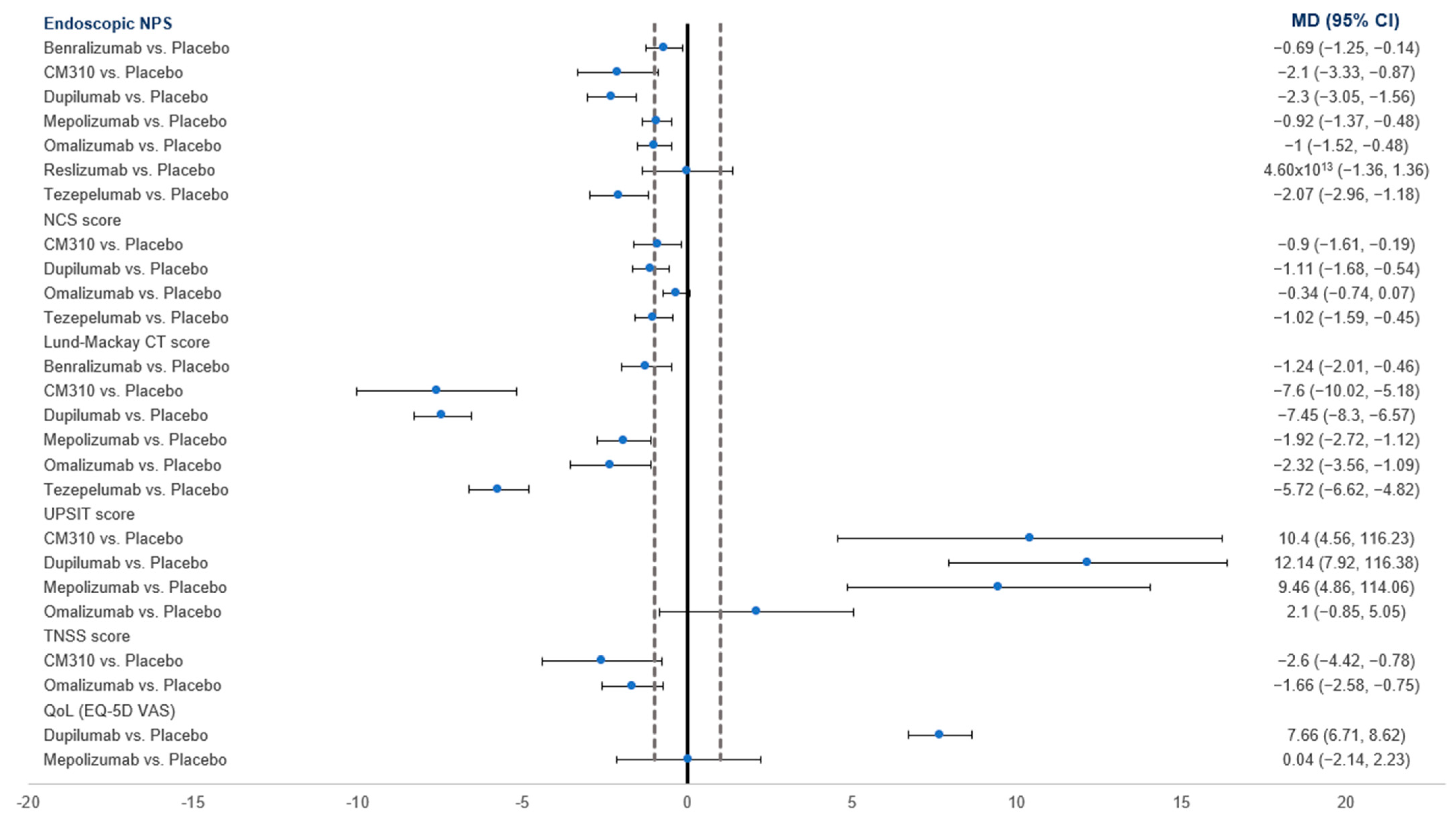
Compared to the placebo, all drugs showed a significantly greater reduction in NPS, except for reslizumab (Figure 3). Teszepelumab exhibited the greatest reduction (MD = −2.07; 95% CI: −2.96, −1.18).
Figure 3.
A forest plot showing the summary meta-analytic estimates (mean difference) from the placebo-focused comparisons with other biologic drugs regarding endoscopic NPS, NCS, Lund-Mackay CT score, UPSIT score, and TNSS score.
In the network analysis, dupilumab was ranked the best treatment (SUCRA = 46.8%), followed by Tezepelumab (SUCRA = 35.9%) and Omalizumab (SUCRA = 45.6%), respectively, while reslizumab showed the worst outcome (SUCRA = 52.3%) (Table 3).
Table 3.
A summary of the SUCRA-based rankings of biologic drugs in CRSwNP across all measured outcomes.
3.4.2. NCS
Compared to the placebo, CM310, dupilumab (MD = −1.11; 95%CI: −1.68, −0.54), and Tezepelumab showed a significantly greater reduction in NCS, while Omalizumab showed no difference (Figure 3). In the network analysis, dupilumab (SUCRA = 45.7%) was ranked the best, followed by Tezepelumab (SUCRA = 36.7%), while the placebo was the worst (SUCRA = 94%) (Table 3).
3.4.3. Lund–Mackay CT Score
Compared to the placebo, all drugs showed a significantly greater reduction in CT score, with dupilumab exhibiting the greatest reduction (MD = −7.45; 95%CI: −10.02, −5.18) (Figure 3). In the network analysis, CM310 (SUCRA = 54.5%) was ranked the best, followed by dupilumab (SUCRA = 54.1%) and Tezepelumab (SUCRA = 93%), respectively. The placebo was ranked the worst (SUCRA = 99.9%) (Table 3).
3.4.4. SNOT-22 Score
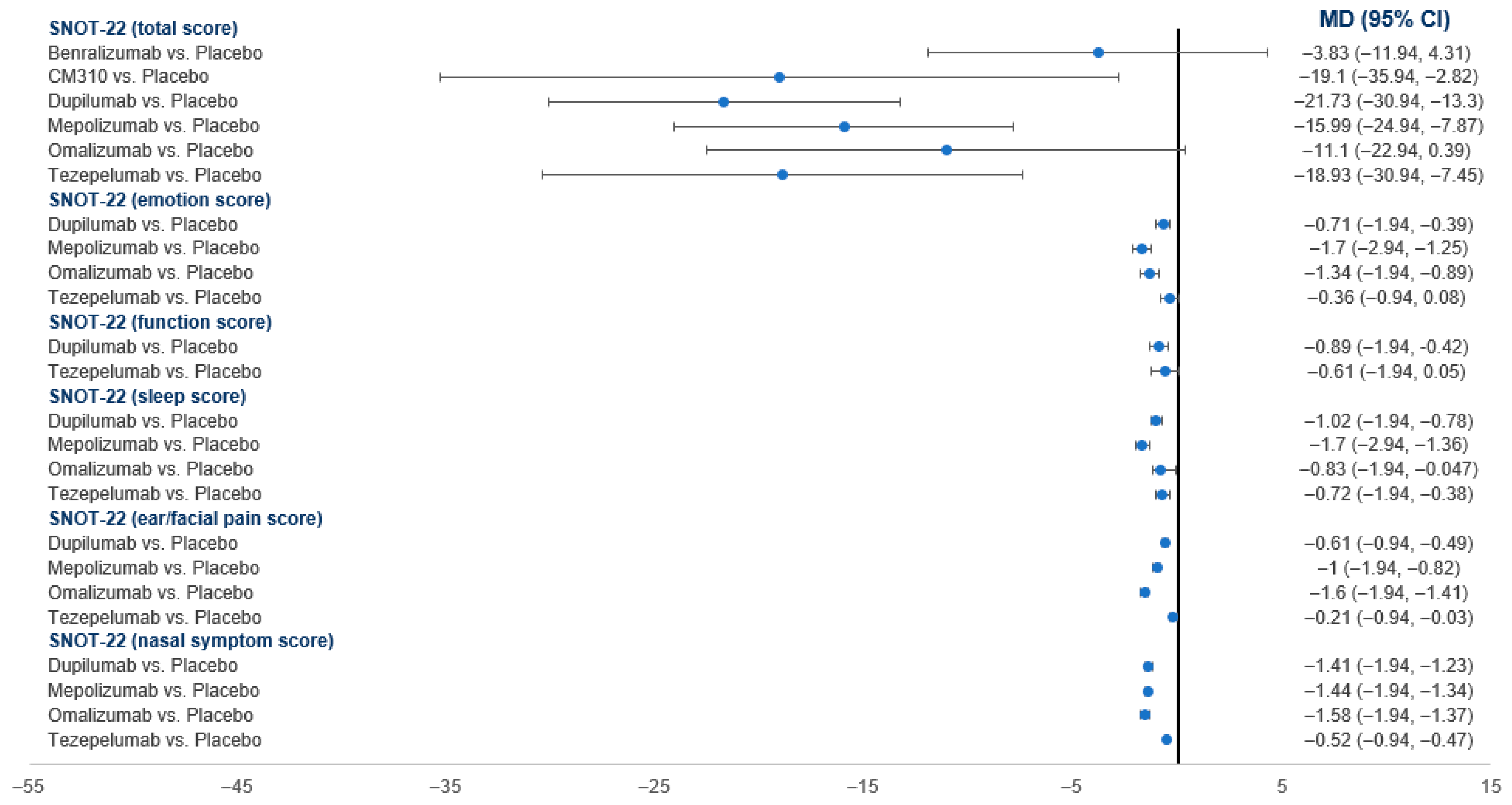
Regarding the total score, compared to the placebo, all drugs showed a significantly greater reduction except for Omalizumab, which showed no difference (Figure 4). Dupilumab showed the greatest reduction (MD = −21.73; 95% CI: −30.16, −13.3). In the network analysis, dupilumab (SUCRA = 38.1%) was ranked the best, followed by mepolizumab (SUCRA = 29.3%). Placebo was ranked the worst (SUCRA = 79.1%) (Table 3).
Figure 4.
A forest plot showing the summary meta-analytic estimates (mean difference) from the placebo-focused comparisons with other biologic drugs regarding the total SNOT-22 score and its subdomains.
In terms of SNOT-22 subdomains (Figure 4), Tezepelumab did not differ from the placebo in the emotion and function scores. Other drugs (dupilumab, mepolizumab, omalizumab) showed a significantly greater reduction instead. In the network analysis, Omalizumab was ranked the best in the ear/facial pain (SUCRA = 100%) and nasal symptom subdomains (SUCRA = 81.6%), while Mepolizumab was ranked the best in the emotion (SUCRA = 87.1%) and sleep subdomains (SUCRA = 99.9%), and dupilumab was ranked the best in the function subdomain (SUCRA = 76.1%). In all subdomains, placebo was ranked the worst (Table 3).
3.4.5. VAS Score
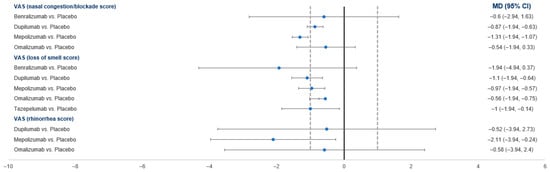
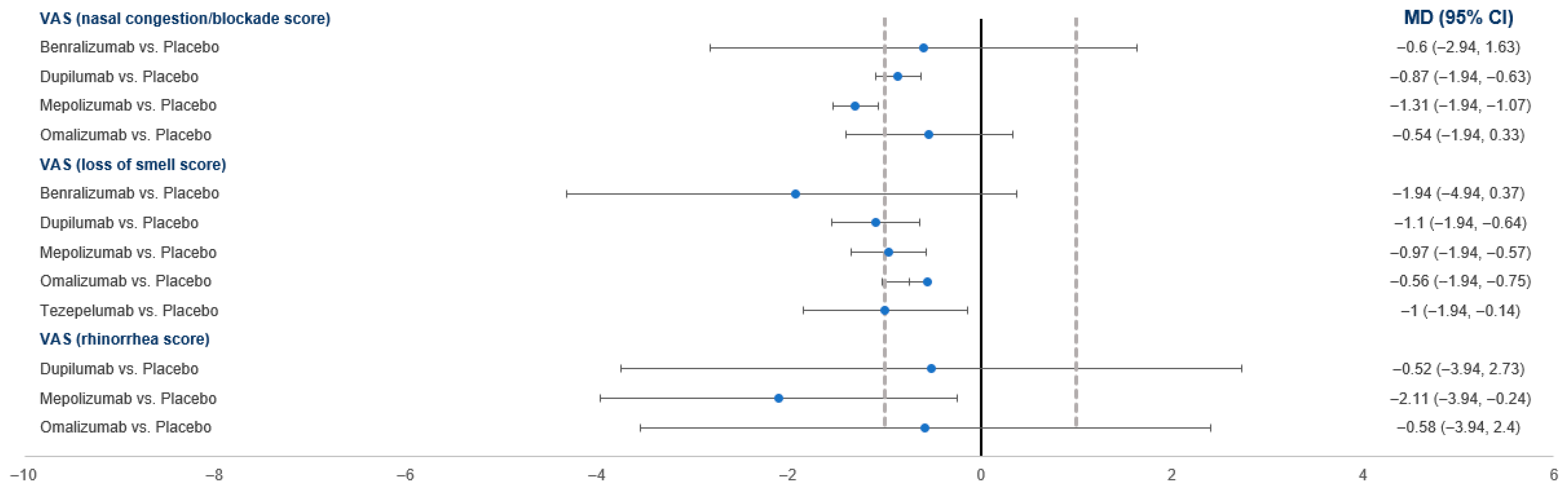
Compared to the placebo, Benralizumab, dupilumab, and mepolizumab were associated with a significantly greater improvement in the nasal congestion/blockade score, while omalizumab showed no effect (Figure 5). In the loss of smell domain, benralizumab showed no effect, while other drugs (dupilumab, mepolizumab, omalizumab, and Tezepelumab) showed a greater improvement compared to the placebo. Regarding the rhinorrhea score, only mepolizumab showed a greater benefit compared to the placebo (MD = −2.11; 95% CI: −3.98, −0.24).
Figure 5.
A forest plot showing the summary meta-analytic estimates (mean difference) from the placebo-focused comparisons with other biologic drugs regarding the visual analog scale (VAS) score across nasal congestion, loss of smell, and rhinorrhea domains.
In the network analysis, mepolizumab was ranked the best in the nasal congestion/blockade (SUCRA = 69.6%) and rhinorrhea (SUCRA = 67.3%) domains, while Benralizumab was ranked the best in the loss of smell domain (SUCRA = 69.2%). The placebo was ranked the worst in all domains (Table 3).
3.4.6. TNSS Score
3.4.7. UPSIT
Compared to the placebo, omalizumab showed no difference, while other drugs showed greater improvement, with dupilumab showing the highest benefit (MD = 12.14; 95% CI: 7.92, 16.38) (Figure 3). In the network analysis, dupilumab (SUCRA = 57%) was ranked the best followed by CM310 (SUCRA = 35.9%) and Mepolizumab (SUCRA = 54.6%), respectively. The placebo was ranked the worst (SUCRA = 90.3%) (Table 3).
3.4.8. Time to First NP Surgery
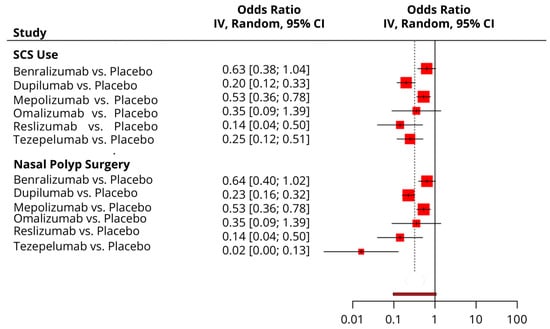
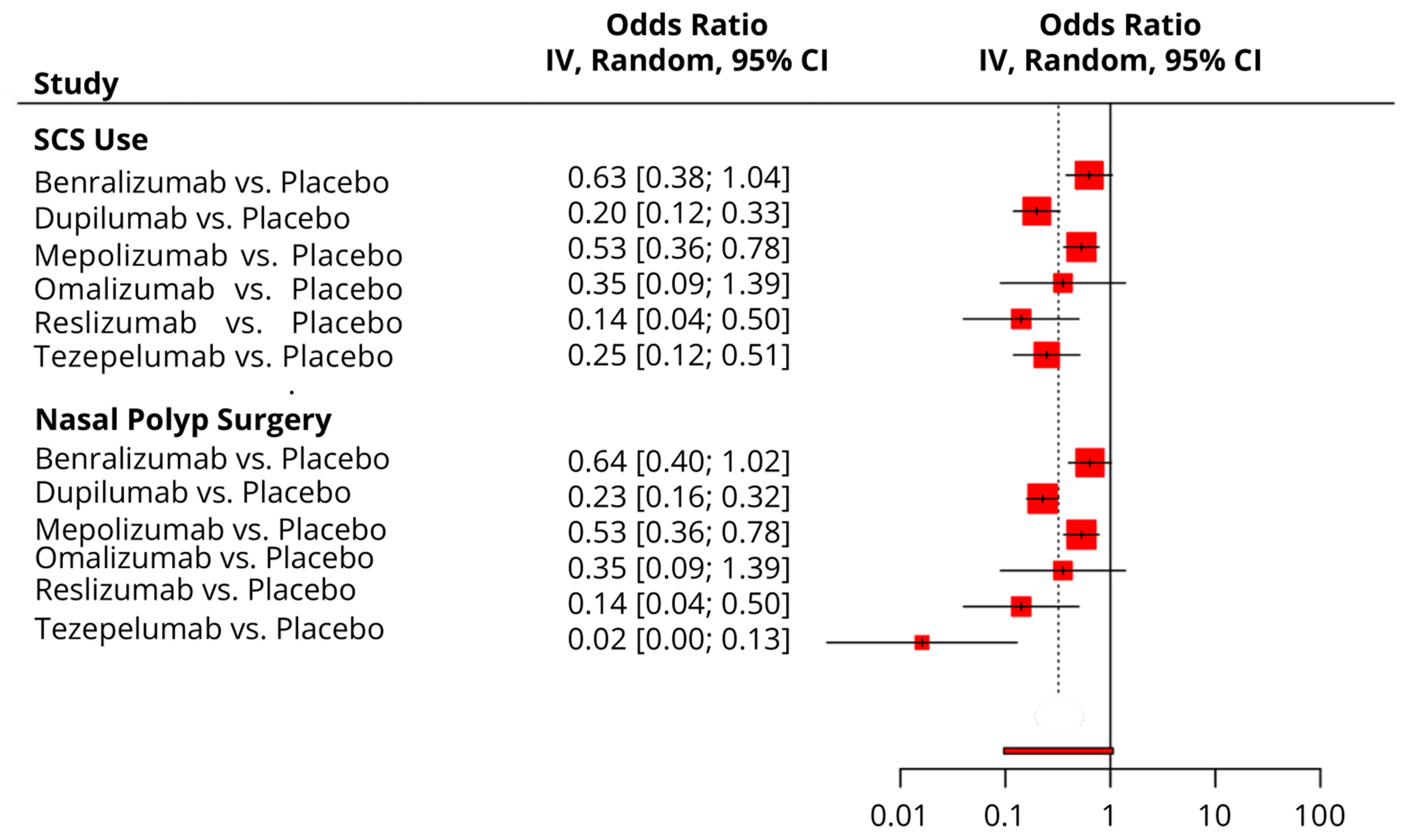
Compared to the placebo, Benralizumab and Omalizumab showed no difference, while other drugs exhibited a significantly lower risk of NP surgery, especially Tezepelumab (OR = 0.02; 95% CI: 0.001, 0.13) (Figure 6). In the network analysis, Tezepelumab was ranked the best (SUCRA = 95.7%), followed by Reslizumab (SUCRA = 66.2%) and dupilumab (SUCRA = 62.6%), respectively. The placebo was ranked the worst (SUCRA = 90.2%) (Table 3).
Figure 6.
A forest plot showing the summary meta-analytic estimates (odds ratio) from the placebo-focused comparisons with other biologic drugs regarding the risk of systemic corticosteroid use and nasal polyp surgery post-biologic therapy.
3.4.9. Time to First SCS Use
Compared to the placebo, Benralizumab and Omalizumab showed no difference, while other drugs exhibited a significantly lower risk of SCS use, especially Reslizumab (OR = 0.14; 95% CI: 0.04, 0.50) (Figure 6). In the network analysis, Reslizumab was ranked the best (SUCRA = 60.1%), followed by dupilumab (SUCRA = 45.7%) and Tezepelumab (SUCRA = 41.5%), respectively. The placebo was ranked the worst (SUCRA = 89.7%) (Table 3).
3.5. Responder Analysis
3.5.1. MCID (≥8.9 Points Reduction in SNOT-22)
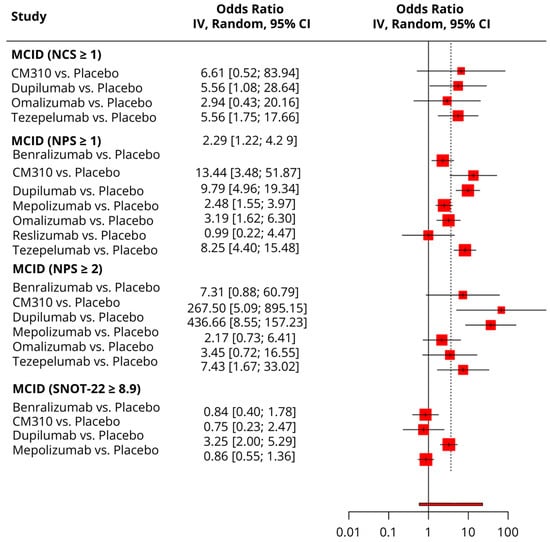
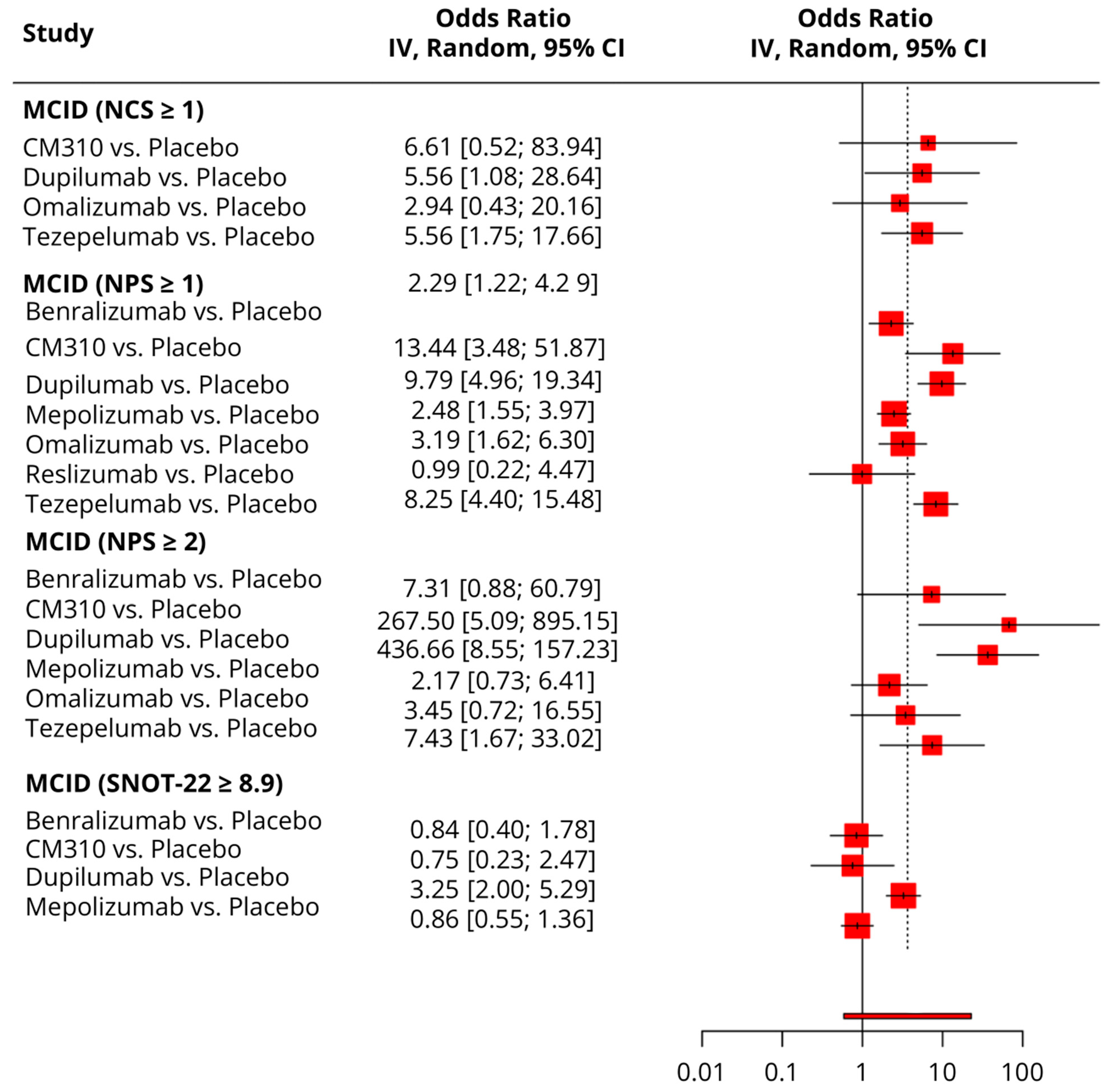
Compared to the placebo, dupilumab was the only drug to show a significantly greater odds of response (OR = 3.25; 95% CI: 2, 5.29). CM310, Benralizumab, and Mepolizumab showed no effect (Figure 7). In the network analysis, dupilumab was ranked the best (SUCRA = 98.4%), followed by Benralizumab (SUCRA = 29.1%) and Mepolizumab (SUCRA = 39.8%). The placebo was ranked the worst (SUCRA = 98.9%) (Table 3).
Figure 7.
A forest plot showing the summary meta-analytic estimates (odds ratio) from the placebo-focused comparisons with other biologic drugs regarding responder analysis (minimal clinically important difference—MCID). The nasal polyp score (NPS) was assessed endoscopically as 0–4 per nostril and 0–8 in total (sum of left and right), where lower scores indicate smaller polyps; we prespecified patient-level responder thresholds of ≥1-point and ≥2-point reduction from baseline, consistent with the thresholds used in phase 3 trial responder analyses and supporting psychometric work. The nasal congestion score (NCS) was recorded on a 0–3 severity scale (0 none, 1 mild, 2 moderate, 3 severe), with a ≥1-point improvement from baseline prespecified as the within-patient responder threshold.
3.5.2. MCID (≥1 Point Improvement in NCS)
Compared to the placebo, only dupilumab (OR = 5.56; 95% CI: 1.08, 28.64) and Tezepelumab (OR = 5.56; 95% CI: 1.75, 17.66) had significantly greater odds of response, while CM310 and Omalizumab showed no effect (Figure 7). In the network analysis, CM310 was ranked the best (SUCRA = 40.7%), followed by dupilumab (SUCRA = 26.7%) and Omalizumab (SUCRA = 33.2%), respectively. The placebo was ranked the worst (SUCRA = 77.3%) (Table 3).
3.5.3. MCDI (≥1 Point Improvement in NPS)
Compared to the placebo, all drugs showed a significantly greater odds of response, except for reslizumab. CM310 showed the greatest benefit (OR = 13.44; 95% CI: 3.48, 51.87) (Figure 7). In the network analysis, CM310 was ranked the best (SUCRA = 60.4%), followed by dupilumab (SUCRA = 45%) and Omalizumab (SUCRA = 55.1%), respectively. Placebo was ranked the worst (SUCRA = 50.6%) (Table 3).
3.5.4. MCID (≥2 Points Improvement in NPS)
Compared to the placebo, only CM310, dupilumab, and Tezepelumab showed a greater odd of response, while Benralizumab, Mepolizumab, and Omalizumab showed no effect (Figure 7). In the network analysis, CM310 was ranked the best (SUCRA = 64.7%), followed by dupilumab (SUCRA = 54.2%) and Tezepelumab (SUCRA = 36%), respectively. The placebo was ranked the worst (SUCRA = 85%) (Table 3).
3.6. Safety Analysis
Details regarding the safety profile and most common AEs by drug type can be found in Table 4.
Table 4.
A complete list of complications associated with biological therapy in patients with chronic rhinosinusitis with nasal polyps.
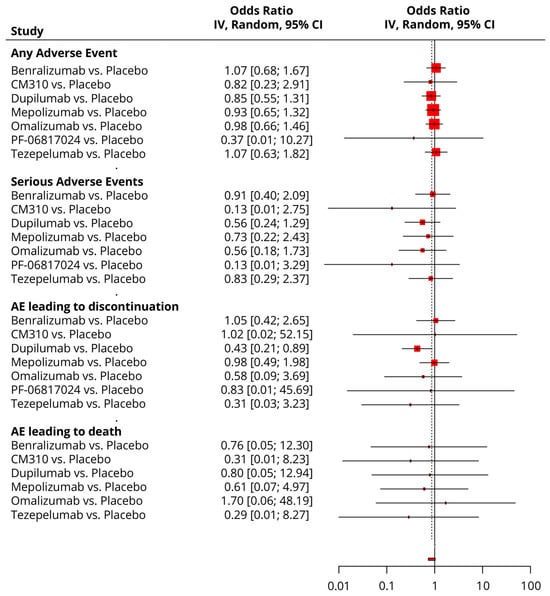
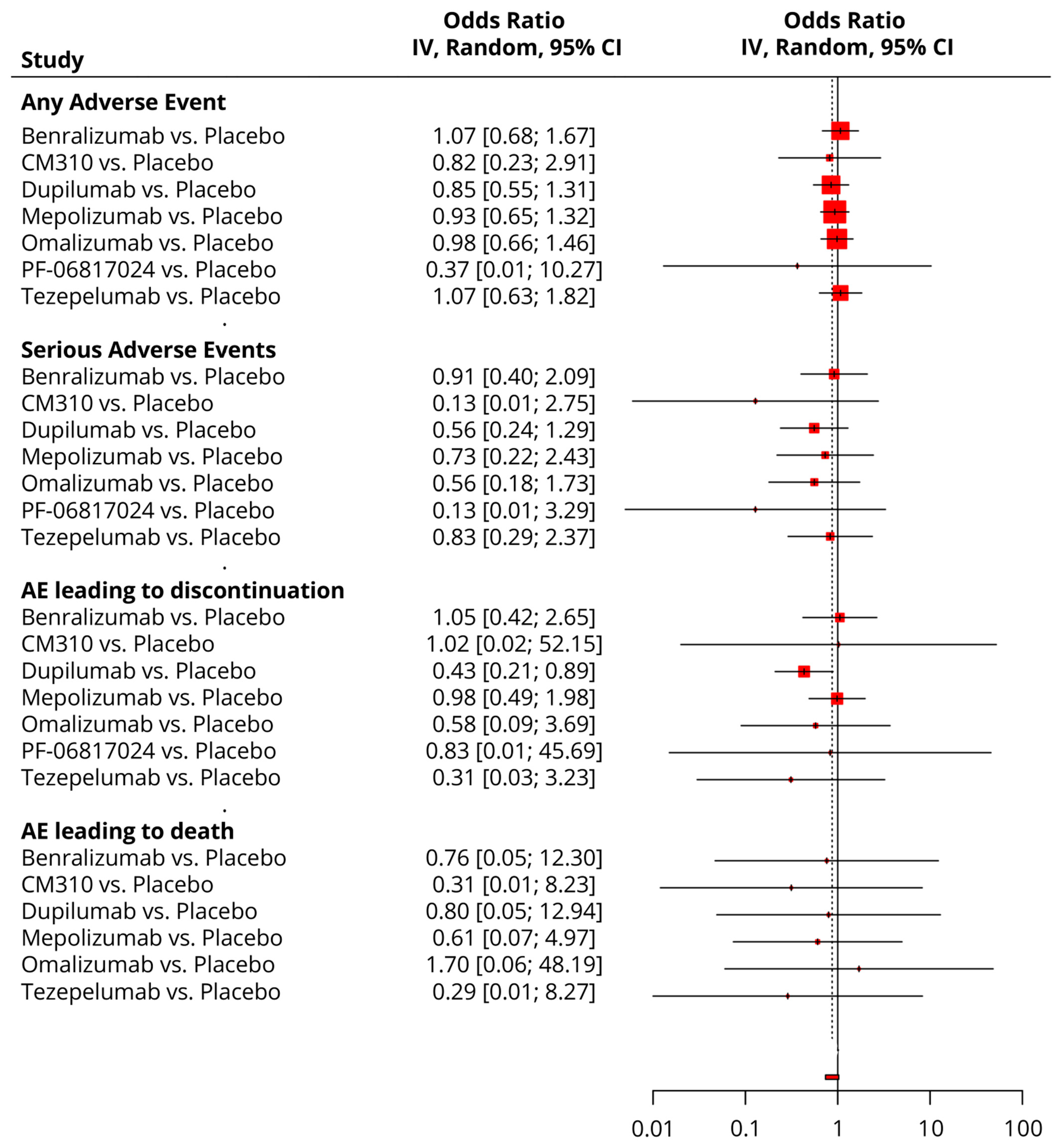
All drugs showed similar risk profiles to the placebo in terms of any or serious AEs, AEs leading to discontinuation, and AEs leading to death (Figure 8). In the network analysis, PF-06817024 was ranked the best in any AE (SUCRA = 58.5%) and SAE (SUCRA = 44.7%); Tezepelumab was ranked the best in AE leading to discontinuation (SUCRA = 33%); and CM310 was ranked the best in AE leading to death (SUCRA = 31.2%) (Table 3).
Figure 8.
A forest plot showing the summary meta-analytic estimates (odds ratio) from the placebo-focused comparisons with other biologic drugs regarding the safety profile.
4. Discussion
This updated network meta-analysis synthesizes the current body of randomized evidence on biologic therapies for CRSwNP, incorporating data from 22 placebo-controlled RCTs, including two newly published trials [8,9]. By analyzing outcomes across a broad spectrum of efficacy domains—ranging from objective endoscopic and radiologic measures to patient-reported symptoms and responder-based thresholds—this study offers a robust comparative framework grounded in both direct and indirect evidence. Moreover, the incorporation of SUCRA-based treatment hierarchies and the use of a harmonized timepoint approach (LOCF) lend methodological rigor and clinical relevance to our findings.
4.1. Principal Findings
Our findings reaffirm the superior and consistent performance of dupilumab across the majority of evaluated outcomes, including NPS, NCS, SNOT-22 total score, and UPSIT, echoing prior conclusions from both trial-based and real-world meta-analyses [61,62,63]. Dupilumab was the only agent to consistently rank among the top three treatments across most domains, and was the only biologic associated with significantly greater odds of achieving clinically meaningful improvements in both the SNOT-22 and NCS responder analyses.
CM310, a newer IL-4/IL-13 pathway inhibitor, also demonstrated promising efficacy, particularly in CT score reduction and TNSS improvement, ranking first or second in several outcome domains. These findings complement recent real-world evidence suggesting emerging roles for newer agents beyond dupilumab [52]. Tezepelumab, though less consistently ranked, showed notable performance in delaying time to NP surgery, outperforming all other agents on this outcome—a finding that may hold clinical value in reducing the surgical burden for high-risk patients.
While omalizumab showed modest efficacy in nasal polyp size and TNSS, its performance was less compelling in VAS and SNOT-22 responder thresholds, aligning with the relatively attenuated treatment effects reported in previous meta-analyses [53,54]. Mepolizumab and benralizumab exhibited domain-specific efficacy—particularly for nasal congestion and loss of smell—but were not among the top-ranked treatments in most global or composite outcomes.
Importantly, our network meta-analysis integrates responder thresholds—such as MCID-based definitions for SNOT-22 and NPS—that are rarely reported in earlier NMAs, yet highly relevant to clinical decision-making [55,56]. This allows for a more granular and patient-centered understanding of benefit, as opposed to relying solely on average mean differences. For example, although mepolizumab did not show superiority in global SNOT-22, it ranked highest in the emotion and sleep subdomains, suggesting selective benefit in specific quality-of-life dimensions.
CRSwNP is driven predominantly by type-2 inflammation in which epithelial “alarmins” (e.g., TSLP/IL-33) activate dendritic cells and type-2 lymphocytes, leading to downstream IL-4/IL-13/IL-5 signaling that promotes IgE class-switching, eosinophilia, edema, mucus hypersecretion, and olfactory epithelial dysfunction [61]. Dupilumab blocks IL-4Rα and thereby inhibits both IL-4 and IL-13, broadly modulating epithelial barrier/goblet cell activity, mucus and edema, and neural/olfactory pathways—consistent with large, cross-domain effects (NPS, NCS) and especially strong gains in olfaction, along with reductions in surgery/OCS use [62]. Omalizumab neutralizes free IgE and down-regulates FcεRI on mast cells/basophils, attenuating allergen and S. aureus superantigen–driven inflammation; clinically, it improves congestion/symptoms and NPS, though structural effects can be smaller than with IL-4/13 blockade [63]. Mepolizumab (anti-IL-5) and benralizumab (anti-IL-5Rα; ADCC-mediated eosinophil depletion) directly reduce eosinophil survival/abundance, yielding pronounced effects on polyp burden (NPS) and surgery/OCS sparing, with more modest improvements in smell when epithelial IL-13 signaling remains active [64]. Tezepelumab (anti-TSLP) acts upstream, dampening multiple T2 effector pathways and showing broad, emerging benefits across NPS, NCS, and healthcare use outcomes in phase 3 trials [65]. Investigational IL-4Rα agents (e.g., CM310) may reproduce a dupilumab-like profile, whereas reslizumab (anti-IL-5) has a smaller evidence base with short-term NPS improvements in selected populations [66]. Taken together, these mechanisms align with our network findings: IL-4/13 blockade delivers the broadest—and often olfaction-leading—benefits; eosinophil-targeted agents excel on polyp size and surgery outcomes; and IgE/TSLP targeting provides domain-dependent gains that vary with patient endotype and upstream drivers.
4.2. Comparison with Prior Reviews
The findings of this updated NMA are generally concordant with earlier syntheses showing the dominance of dupilumab in reducing polyp burden and improving symptoms [54,67,68]. However, this work expands upon prior reviews in several key respects. First, it incorporates two recent RCTs that were not included in past analyses, thereby enhancing statistical power and generalizability. Second, while earlier reviews often pooled biologics together or compared them narratively [60,69,70], our study uses a fully connected NMA model to enable formal ranking and SUCRA-based inferences.
Moreover, previous reviews have often been limited by the heterogeneity in outcome measures, variable follow-up durations, and inconsistent timepoints for reporting [71]. By using a LOCF strategy, we address this challenge and enhance the temporal comparability across trials. Our results also offer a more detailed exploration of domain-specific effects—for instance, identifying Omalizumab as the most effective agent in the ear/facial pain subdomain of SNOT-22, a nuance not captured in earlier syntheses [53,70].
Additionally, the current study provides an updated safety comparison, showing no significant differences in the risk of adverse events between any of the biologics and placebo, consistent with prior safety syntheses [52,67]. Of note, PF-06817024 ranked favorably in AE profiles, although efficacy data for this agent were sparse.
4.3. Clinical Implications
The collective evidence reinforces the role of dupilumab as the reference standard in biologic treatment for CRSwNP, particularly in patients with recalcitrant disease or those seeking improvements across multiple symptom dimensions. CM310 and tezepelumab may represent viable alternatives in patients with partial responses or contraindications to dupilumab, especially in settings where CT findings or the need for surgery are primary concerns. Notably, our findings suggest that no single biologic offers uniform superiority across all domains—underscoring the need for individualized, endotype-driven therapy selection, as previously emphasized in guideline-based and mechanistic reviews [54,67,69].
Furthermore, the differential performance in responder thresholds suggests that traditional metrics such as mean differences may underestimate the real-world relevance of biologic therapy, particularly in shared decision-making scenarios. Clinicians may consider prioritizing agents based not only on global efficacy but also on patient-specific goals (e.g., sleep quality, smell recovery), particularly when multiple options are available.
4.4. Clinical Selection and Access (Practical Considerations)
Our network quantifies comparative efficacy and safety, but the choice of biologic in practice also depends on patient priorities, endotype/phenotype, comorbid asthma, prior surgery/OCS exposure, dosing logistics, local reimbursement criteria, and patient preference. In general, IL-4Rα blockade (dupilumab; investigational CM310) offers broad, cross-domain benefits and particularly strong gains in olfaction, making it attractive when the restoration of smell and global symptom relief are priority outcomes. Anti-IL-5/IL-5R agents (mepolizumab, benralizumab) directly target eosinophilic inflammation and often excel for polyp burden and surgery/OCS sparing, which may suit patients with high eosinophil counts or recurrent post-surgical disease. Anti-IgE therapy (omalizumab) is most compelling in IgE-driven/atopic disease and improves congestion/symptoms with meaningful effects on NPS in appropriate candidates. Anti-TSLP (tezepelumab) acts upstream and shows a broadening efficacy profile; its role will likely expand as real-world experience accumulates. Importantly, reimbursement policies—which vary by health system and may specify biomarker thresholds, prior surgery, OCS exposure, or other criteria—can channel prescriptions toward certain agents despite overlapping efficacy. Accordingly, we recommend aligning the choice of biologic with (1) the dominant clinical goals (e.g., olfaction vs. polyp size vs. OCS/surgery reduction), (2) biologic plausibility/endotype (e.g., eosinophilia, IgE level, comorbid asthma), (3) safety/tolerability and dosing cadence, and (4) access and patient preference, recognizing that several agents can be effective and that switching may be appropriate when goals are unmet.
There is no universally agreed stopping date for biologics in CRSwNP. Expert guidance favors periodic response assessment to inform continuation or change rather than a fixed duration: an early review at ~16 weeks (to stop or switch in non-responders), a comprehensive reassessment at 6–12 months, and annual follow-up thereafter. In well-controlled patients, dose-spacing (e.g., extending dupilumab dosing to every 4 weeks) may sustain control, whereas abrupt discontinuation has been associated with recurrence in some reports; decisions should be individualized and revisited with shared decision-making. Given the heterogeneity of disease courses and payer policies, we advise aligning duration with the clinical goals achieved (polyp size, congestion, olfaction, OCS/surgery sparing), tolerability, and access, with a low threshold to de-escalate or switch if targets are not met.
4.5. Limitations
This analysis is not without limitations. Although we included the most recent RCTs, the lack of head-to-head trials remains a key barrier to definitive comparative claims—an issue highlighted in all prior reviews [53,68,70]. Additionally, while LOCF mitigates inconsistencies in follow-up timing, it may obscure dynamic changes over time and potentially underrepresent delayed treatment effects. Furthermore, subgroup effects (e.g., based on comorbid asthma or baseline eosinophil counts) could not be explored due to insufficient data granularity, limiting precision in endotype-specific recommendations—a gap similarly noted by others [52,71].
Additionally, our analysis cannot specify stopping rules; existing recommendations prioritize reassessment-based continuation rather than fixed durations, and evidence on de-escalation vs. discontinuation remains limited. Finally, while our focus on placebo-controlled comparisons enhances internal validity, it precludes conclusions about the relative superiority of one biologic over another—a tradeoff also observed in previous indirect comparisons [55,67].
4.6. Future Directions
Given the domain-specific benefits identified for certain agents, future research should focus on biomarker-based personalization and prospective head-to-head trials. Greater emphasis on harmonized outcome reporting, the standardization of MCID thresholds, and the integration of patient-centered domains will improve comparability and clinical applicability. In addition, the utility of combination strategies or stepwise switching protocols, particularly in patients with overlapping severe asthma, remains to be explored [56].
5. Conclusions
This updated network meta-analysis, encompassing 22 placebo-controlled RCTs and over 4000 patients with CRSwNP, provides a comprehensive comparative evaluation of biologic therapies across multiple efficacy and safety domains. Dupilumab consistently emerged as the most effective agent across global and domain-specific outcomes, including polyp size, symptom scores, and quality-of-life indices. CM310 and Tezepelumab also demonstrated notable efficacy in specific domains such as radiologic outcomes and surgical delay. Importantly, all biologics exhibited comparable safety profiles to placebo.
These findings reinforce the role of biologic therapies—particularly dupilumab—as an essential component in the treatment algorithm for patients with severe or refractory CRSwNP. However, no single agent showed uniform superiority across all outcomes, underscoring the need for personalized, endotype-driven treatment strategies. Future head-to-head trials, long-term follow-up studies, and standardized outcome reporting will be critical to optimizing therapeutic selection and improving patient-centered care in CRSwNP.
Supplementary Materials
The following supporting information can be downloaded at: https://www.mdpi.com/article/10.3390/ph18101455/s1, Table S1: A detailed description of the search query employed in the systematic literature search of randomized trials reporting biological therapy use in patients with CRSwN. Table S2: A list of excluded articles in the full-text screening phase with description of the reasons of their exclusion. Table S3: A list of outcomes reported by RCTs comparing various biological therapies in CRSwNP not eligible for meta-analysis. Table S4: The number of patients analyzed in each outcome analysis. Figure S1: A graph showing the network of comparisons between biological therapies for CRSwNP in the literature.
Author Contributions
Conceptualization, A.S. and M.K.; methodology, A.S.; software, A.S.; validation, A.S., A.K., and M.K.; formal analysis, A.S.; investigation, A.S.; resources, U.A.E. and S.M.; data curation, A.K. and U.A.E.; writing—original draft preparation, A.S.; writing—review and editing, A.K. and M.K.; visualization, A.S.; supervision, M.K.; project administration, M.K.; funding acquisition, not applicable. All authors have read and agreed to the published version of the manuscript.
Funding
This research received no external funding.
Institutional Review Board Statement
Not applicable.
Informed Consent Statement
Not applicable.
Data Availability Statement
No new data were created or analyzed in this study.
Acknowledgments
We would like to acknowledge Abdelaziz Abdelaal for his valuable guidance and expertise in the statistical analysis and planning of this study. His support was instrumental in ensuring the robustness of the data analysis and interpretation.
Conflicts of Interest
The authors declare no conflicts of interest.
Abbreviations
The following abbreviations are used in this manuscript:
| AE | Adverse event |
| CRSwNP | Chronic rhinosinusitis with nasal polyps |
| CT | Computed tomography |
| ESS | Endoscopic sinus surgery |
| LOCF | Last observation carried forward |
| MCID | Minimal clinically important difference |
| MD | Mean difference |
| NCS | Nasal congestion score |
| NMA | Network meta-analysis |
| NP | Nasal polyp |
| NPS | Nasal polyp score |
| OR | Odds ratio |
| QoL | Quality of life |
| RCT | Randomized controlled trial |
| SAE | Serious adverse event |
| SC | Subcutaneous |
| SCS | Systemic corticosteroid |
| SNOT-22 | Sino-Nasal outcome test-22 |
| SUCRA | Surface under the cumulative ranking curve |
| TNSS | Total nasal symptom score |
| UPSIT | University of Pennsylvania smell identification test |
| VAS | Visual analog scale |
References
- Ma, L.; Shi, J.; Wang, K.; Sun, Y.; Xu, R. Clinical characteristics of patients with CRSwNP with intensely high eosinophil level. Laryngoscope Investig. Otolaryngol. 2022, 7, 316–324. [Google Scholar] [CrossRef] [Scilit]
- Rodriguez-Van Strahlen, C.; Arancibia, C.; Calvo-Henriquez, C.; Mullol, J.; Alobid, I. Systematic Review of Long Term Sinonasal Outcomes in CRSwNP after Endoscopic Sinus Surgery: A call for Unified and Standardized Criteria and Terms. Curr. Allergy Asthma Rep. 2024, 24, 443–456. [Google Scholar] [CrossRef] [Scilit] [PubMed]
- Sella, G.C.P.; Tamashiro, E.; Sella, J.A.; Aragon, D.C.; de Mendonça, T.N.; de Paula Arruda, L.K.; Lima, W.T.A.; Valera, F.C.P. Asthma is the dominant factor for recurrence in chronic rhinosinusitis. J. Allergy Clin. Immunol. Pract. 2020, 8, 302–309. [Google Scholar] [CrossRef] [Scilit] [PubMed]
- Kato, A.; Schleimer, R.P.; Bleier, B.S. Mechanisms and pathogenesis of chronic rhinosinusitis. J. Allergy Clin. Immunol. 2022, 149, 1491–1503. [Google Scholar] [CrossRef] [Scilit]
- De Corso, E.; Bilò, M.B.; Matucci, A.; Seccia, V.; Braido, F.; Gelardi, M.; Heffler, E.; Latorre, M.; Malvezzi, L.; Pelaia, G. Personalized management of patients with chronic rhinosinusitis with nasal polyps in clinical practice: A multidisciplinary consensus statement. J. Pers. Med. 2022, 12, 846. [Google Scholar] [CrossRef] [Scilit]
- Scadding, G.K.; Scadding, G.W. Biologics for chronic rhinosinusitis with nasal polyps (CRSwNP). J. Allergy Clin. Immunol. 2022, 149, 895–897. [Google Scholar] [CrossRef] [Scilit]
- Oykhman, P.; Paramo, F.A.; Bousquet, J.; Kennedy, D.W.; Brignardello-Petersen, R.; Chu, D.K. Comparative efficacy and safety of monoclonal antibodies and aspirin desensitization for chronic rhinosinusitis with nasal polyposis: A systematic review and network meta-analysis. J. Allergy Clin. Immunol. 2022, 149, 1286–1295. [Google Scholar] [CrossRef] [Scilit]
- Fujieda, S.; Wang, C.; Yoshikawa, M.; Asako, M.; Suzaki, I.; Bachert, C.; Han, J.K.; Fuller, A.; Baylis, L.; Su, L. Mepolizumab in CRSwNP/ECRS and NP: The phase III randomised MERIT trial in Japan, China, and Russia. Rhinology 2024, 62, 576–589. [Google Scholar] [CrossRef] [Scilit]
- Lipworth, B.J.; Han, J.K.; Desrosiers, M.; Hopkins, C.; Lee, S.E.; Mullol, J.; Pfaar, O.; Li, T.; Chen, C.; Almqvist, G. Tezepelumab in adults with severe chronic rhinosinusitis with nasal polyps. N. Engl. J. Med. 2025, 392, 1178–1188. [Google Scholar] [CrossRef] [Scilit]
- Page, M.J.; McKenzie, J.E.; Bossuyt, P.M.; Boutron, I.; Hoffmann, T.C.; Mulrow, C.D.; Shamseer, L.; Tetzlaff, J.M.; Akl, E.A.; Brennan, S.E. The PRISMA 2020 statement: An updated guideline for reporting systematic reviews. BMJ 2021, 372, n71. [Google Scholar] [CrossRef] [Scilit]
- Boiko, N.V.; Stagnieva, I.V.; Lodochkina, O.E.; Kurbatova, N.V. Experience with dupilumab in the treatment of chronic rhinosinusitis with nasal polyps. Vestn. Otorinolaringol. 2023, 88, 46–53. [Google Scholar] [CrossRef] [Scilit]
- Amir-Behghadami, M.; Janati, A. Population, Intervention, Comparison, Outcomes and Study (PICOS) design as a framework to formulate eligibility criteria in systematic reviews. Emerg. Med. J. 2020, 37, 387. [Google Scholar] [CrossRef] [Scilit]
- Kim, J.H. Multicollinearity and misleading statistical results. Korean J. Anesthesiol. 2019, 72, 558. [Google Scholar] [CrossRef] [Scilit] [PubMed]
- Lin, L.; Chu, H. Quantifying publication bias in meta-analysis. Biometrics 2018, 74, 785–794. [Google Scholar] [CrossRef] [Scilit] [PubMed]
- Gevaert, P.; Calus, L.; Van Zele, T.; Blomme, K.; De Ruyck, N.; Bauters, W.; Hellings, P.; Brusselle, G.; De Bacquer, D.; van Cauwenberge, P.; et al. Omalizumab is effective in allergic and nonallergic patients with nasal polyps and asthma. J. Allergy Clin. Immunol. 2013, 131, 110–116.e111. [Google Scholar] [CrossRef] [Scilit] [PubMed]
- Weinstein, S.F.; Katial, R.K.; Bardin, P.; Korn, S.; McDonald, M.; Garin, M.; Bateman, E.D.; Hoyte, F.C.L.; Germinaro, M. Effects of Reslizumab on Asthma Outcomes in a Subgroup of Eosinophilic Asthma Patients with Self-Reported Chronic Rhinosinusitis with Nasal Polyps. J. Allergy Clin. Immunol. Pract. 2019, 7, 589–596.e583. [Google Scholar] [CrossRef] [Scilit]
- Gevaert, P.; Lang-Loidolt, D.; Lackner, A.; Stammberger, H.; Staudinger, H.; Van Zele, T.; Holtappels, G.; Tavernier, J.; van Cauwenberge, P.; Bachert, C. Nasal IL-5 levels determine the response to anti-IL-5 treatment in patients with nasal polyps. J. Allergy Clin. Immunol. 2006, 118, 1133–1141. [Google Scholar] [CrossRef] [Scilit]
- Takabayashi, T.; Asaka, D.; Okamoto, Y.; Himi, T.; Haruna, S.; Yoshida, N.; Kondo, K.; Yoshikawa, M.; Sakuma, Y.; Shibata, K.; et al. A Phase II, Multicenter, Randomized, Placebo-Controlled Study of Benralizumab, a Humanized Anti-IL-5R Alpha Monoclonal Antibody, in Patients with Eosinophilic Chronic Rhinosinusitis. Am. J. Rhinol. Allergy 2021, 35, 861–870. [Google Scholar] [CrossRef] [Scilit]
- Wahba, A.A.; Abdelfattah, A.M. Anti-immunoglobulin E therapy: Is it a valid option for the management of chronic rhinosinusitis with nasal polyposis? Egypt. J. Otolaryngol. 2019, 35, 269–277. [Google Scholar] [CrossRef] [Scilit]
- Tversky, J.; Lane, A.P.; Azar, A. Benralizumab effect on severe chronic rhinosinusitis with nasal polyps (CRSwNP): A randomized double-blind placebo-controlled trial. Clin. Exp. Allergy 2021, 51, 836–844. [Google Scholar] [CrossRef] [Scilit]
- Gevaert, P.; Van Bruaene, N.; Cattaert, T.; Van Steen, K.; Van Zele, T.; Acke, F.; De Ruyck, N.; Blomme, K.; Sousa, A.R.; Marshall, R.P.; et al. Mepolizumab, a humanized anti-IL-5 mAb, as a treatment option for severe nasal polyposis. J. Allergy Clin. Immunol. 2011, 128, e981–e988. [Google Scholar] [CrossRef] [Scilit]
- Bachert, C.; Sousa, A.R.; Lund, V.J.; Scadding, G.K.; Gevaert, P.; Nasser, S.; Durham, S.R.; Cornet, M.E.; Kariyawasam, H.H.; Gilbert, J.; et al. Reduced need for surgery in severe nasal polyposis with mepolizumab: Randomized trial. J. Allergy Clin. Immunol. 2017, 140, 1024–1031.e1014. [Google Scholar] [CrossRef] [Scilit]
- Danto, S.I.; Tsamandouras, N.; Reddy, P.; Gilbert, S.; Mancuso, J.; Page, K.; Peeva, E.; Vincent, M.S.; Beebe, J.S. Safety, Tolerability, Pharmacokinetics, and Pharmacodynamics of PF-06817024 in Healthy Participants, Participants with Chronic Rhinosinusitis with Nasal Polyps, and Participants with Atopic Dermatitis: A Phase 1, Randomized, Double-Blind, Placebo-Controlled Study. J. Clin. Pharmacol. 2024, 64, 529–543. [Google Scholar] [CrossRef] [Scilit]
- De Schryver, E.; Derycke, L.; Calus, L.; Holtappels, G.; Hellings, P.W.; Van Zele, T.; Bachert, C.; Gevaert, P. The effect of systemic treatments on periostin expression reflects their interference with the eosinophilic inflammation in chronic rhinosinusitis with nasal polyps. Rhinology 2017, 55, 152–160. [Google Scholar] [CrossRef]
- Bachert, C.; Hellings, P.W.; Mullol, J.; Naclerio, R.M.; Chao, J.; Amin, N.; Grabher, A.; Swanson, B.N.; Hamilton, J.D.; Guillonneau, S.; et al. Dupilumab improves patient-reported outcomes in patients with chronic rhinosinusitis with nasal polyps and comorbid asthma. J. Allergy Clin. Immunol. Pract. 2019, 7, 2447–2449.e2442. [Google Scholar] [CrossRef] [Scilit] [PubMed]
- Bachert, C.; Peters, A.T.; Heffler, E.; Han, J.K.; Olze, H.; Pfaar, O.; Chuang, C.C.; Rout, R.; Attre, R.; Goga, L.; et al. Responder analysis to demonstrate the effect of targeting type 2 inflammatory mechanisms with dupilumab across objective and patient-reported endpoints for patients with severe chronic rhinosinusitis with nasal polyps in the SINUS-24 and SINUS-52 studies. Clin. Exp. Allergy 2022, 52, 244–249. [Google Scholar] [CrossRef] [Scilit] [PubMed]
- Emson, C.; Han, J.K.; Hopkins, C.; Asimus, S.; Cann, J.A.; Chain, D.; Wu, Y.; Reddy, Y.; McCrae, C.; Cohen, D.; et al. Pharmacokinetics/pharmacodynamics of benralizumab in chronic rhinosinusitis with nasal polyps: Phase III, randomized, placebo-controlled OSTRO trial. Br. J. Clin. Pharmacol. 2024, 90, 1952–1963. [Google Scholar] [CrossRef] [Scilit]
- Gevaert, P.; Omachi, T.A.; Corren, J.; Mullol, J.; Han, J.; Lee, S.E.; Kaufman, D.; Ligueros-Saylan, M.; Howard, M.; Zhu, R.; et al. Efficacy and safety of omalizumab in nasal polyposis: 2 randomized phase 3 trials. J. Allergy Clin. Immunol. 2020, 146, 595–605. [Google Scholar] [CrossRef] [Scilit] [PubMed]
- Gevaert, P.; Saenz, R.; Corren, J.; Han, J.K.; Mullol, J.; Lee, S.E.; Ow, R.A.; Zhao, R.; Howard, M.; Wong, K.; et al. Long-term efficacy and safety of omalizumab for nasal polyposis in an open-label extension study. J. Allergy Clin. Immunol. 2022, 149, 957–965.e953. [Google Scholar] [CrossRef] [Scilit]
- Damask, C.; Chen, M.; Holweg, C.T.J.; Yoo, B.; Millette, L.A.; Franzese, C. Defining the Efficacy of Omalizumab in Nasal Polyposis: A POLYP 1 and POLYP 2 Subgroup Analysis. Am. J. Rhinol. Allergy 2022, 36, 135–141. [Google Scholar] [CrossRef] [Scilit]
- Chuang, C.C.; Guillemin, I.; Bachert, C.; Lee, S.E.; Hellings, P.W.; Fokkens, W.J.; Duverger, N.; Fan, C.; Daizadeh, N.; Amin, N.; et al. Dupilumab in CRSwNP: Responder Analysis Using Clinically Meaningful Efficacy Outcome Thresholds. Laryngoscope 2022, 132, 259–264. [Google Scholar] [CrossRef] [Scilit]
- Meltzer, E.O.; Mullol, J.; Ko, J.; Saenz, R.; Steinke, J.W.; Millette, L.A.; Gevaert, P. Omalizumab improves sleep and health status for patients with chronic rhinosinusitis with nasal polyps: An analysis of randomized clinical trials. Int. Forum Allergy Rhinol. 2024, 14, 1163–1172. [Google Scholar] [CrossRef] [Scilit]
- Gevaert, P.; Mullol, J.; Saenz, R.; Ko, J.; Steinke, J.W.; Millette, L.A.; Meltzer, E.O. Omalizumab improves sinonasal outcomes in patients with chronic rhinosinusitis with nasal polyps regardless of allergic status. Ann. Allergy Asthma Immunol. 2024, 132, 355–362.e351. [Google Scholar] [CrossRef] [Scilit]
- Hopkins, C.; Buchheit, K.M.; Heffler, E.; Cohen, N.A.; Olze, H.; Khan, A.H.; Msihid, J.; Siddiqui, S.; Nash, S.; Jacob-Nara, J.A.; et al. Improvement in Health-Related Quality of Life with Dupilumab in Patients with Moderate-to-Severe Asthma with Comorbid Chronic Rhinosinusitis with/without Nasal Polyps: An Analysis of the QUEST Study. J. Asthma Allergy 2022, 15, 767–773. [Google Scholar] [CrossRef] [Scilit] [PubMed]
- Bourdin, A.; Virchow, J.C.; Papi, A.; Lugogo, N.L.; Bardin, P.; Antila, M.; Halpin, D.M.G.; Daizadeh, N.; Djandji, M.; Ortiz, B.; et al. Dupilumab efficacy in subgroups of type 2 asthma with high-dose inhaled corticosteroids at baseline. Respir. Med. 2022, 202, 106938. [Google Scholar] [CrossRef] [Scilit] [PubMed]
- Maspero, J.F.; Shafazand, S.; Cole, J.; Pavord, I.D.; Busse, W.W.; Msihid, J.; Gall, R.; Soler, X.; Radwan, A.; Khan, A.H.; et al. Dupilumab efficacy in high sleep disturbance management among patients with type 2 asthma. Respir. Med. 2023, 218, 107344. [Google Scholar] [CrossRef] [Scilit] [PubMed]
- Desrosiers, M.; Mannent, L.P.; Amin, N.; Canonica, G.W.; Hellings, P.W.; Gevaert, P.; Mullol, J.; Lee, S.E.; Fujieda, S.; Han, J.K.; et al. Dupilumab reduces systemic corticosteroid use and sinonasal surgery rate in CRSwNP. Rhinology 2021, 59, 301–311. [Google Scholar] [CrossRef] [Scilit]
- Mullol, J.; Bachert, C.; Amin, N.; Desrosiers, M.; Hellings, P.W.; Han, J.K.; Jankowski, R.; Vodicka, J.; Gevaert, P.; Daizadeh, N.; et al. Olfactory Outcomes with Dupilumab in Chronic Rhinosinusitis with Nasal Polyps. J. Allergy Clin. Immunol. Pract. 2022, 10, 1086–1095.e1085. [Google Scholar] [CrossRef] [Scilit]
- Fujieda, S.; Matsune, S.; Takeno, S.; Ohta, N.; Asako, M.; Bachert, C.; Inoue, T.; Takahashi, Y.; Fujita, H.; Deniz, Y.; et al. Dupilumab efficacy in chronic rhinosinusitis with nasal polyps from SINUS-52 is unaffected by eosinophilic status. Allergy 2022, 77, 186–196. [Google Scholar] [CrossRef] [Scilit]
- Lee, S.E.; Hopkins, C.; Mullol, J.; Msihid, J.; Guillemin, I.; Amin, N.; Mannent, L.P.; Li, Y.; Siddiqui, S.; Chuang, C.C.; et al. Dupilumab improves health related quality of life: Results from the phase 3 SINUS studies. Allergy 2022, 77, 2211–2221. [Google Scholar] [CrossRef] [Scilit] [PubMed]
- Bachert, C.; Han, J.K.; Desrosiers, M.Y.; Gevaert, P.; Heffler, E.; Hopkins, C.; Tversky, J.R.; Barker, P.; Cohen, D.; Emson, C.; et al. Efficacy and safety of benralizumab in chronic rhinosinusitis with nasal polyps: A randomized, placebo-controlled trial. J. Allergy Clin. Immunol. 2022, 149, 1309–1317.e1312. [Google Scholar] [CrossRef] [Scilit]
- Bachert, C.; Laidlaw, T.M.; Cho, S.H.; Mullol, J.; Swanson, B.N.; Naimi, S.; Classe, M.; Harel, S.; Jagerschmidt, A.; Laws, E.; et al. Effect of Dupilumab on Type 2 Biomarkers in Chronic Rhinosinusitis with Nasal Polyps: SINUS-52 Study Results. Ann. Otol. Rhinol. Laryngol. 2023, 132, 1649–1661. [Google Scholar] [CrossRef] [Scilit]
- Gurnell, M.; Radwan, A.; Bachert, C.; Lugogo, N.; Cho, S.H.; Nash, S.; Zhang, H.; Khan, A.H.; Jacob-Nara, J.A.; Rowe, P.J.; et al. Dupilumab Reduces Asthma Disease Burden and Recurrent SCS Use in Patients with CRSwNP and Coexisting Asthma. J. Asthma Allergy 2024, 17, 1–8. [Google Scholar] [CrossRef] [Scilit]
- Saruhan, S.; Savran, A.; Yıldız, M.; Şener, M. Reconstruction of proximal pole scaphoid non-union with avascular necrosis using proximal hamate: A four-case series. Hand Surg Rehabil. 2021, 40, 744–748. [Google Scholar] [CrossRef] [Scilit] [PubMed]
- Hopkins, C.; Han, J.K.; Lund, V.J.; Bachert, C.; Fokkens, W.J.; Diamant, Z.; Mullol, J.; Sousa, A.R.; Smith, S.G.; Yang, S.; et al. Evaluating treatment response to mepolizumab in patients with severe CRSwNP. Rhinology 2023, 61, 108–117. [Google Scholar] [CrossRef] [Scilit]
- Chupp, G.; Alobid, I.; Lugogo, N.L.; Kariyawasam, H.H.; Bourdin, A.; Chaker, A.M.; Smith, S.G.; Sousa, A.R.; Mayer, B.; Chan, R.H.; et al. Mepolizumab Reduces Systemic Corticosteroid Use in Chronic Rhinosinusitis with Nasal Polyps. J. Allergy Clin. Immunol. Pract. 2023, 11, 3504–3512.e3502. [Google Scholar] [CrossRef] [Scilit] [PubMed]
- Desrosiers, M.; Diamant, Z.; Castelnuovo, P.; Hellings, P.W.; Han, J.K.; Peters, A.T.; Silver, J.; Smith, S.G.; Fuller, A.; Sousa, A.R.; et al. Sustained efficacy of mepolizumab in patients with severe chronic rhinosinusitis with nasal polyps: SYNAPSE 24-week treatment-free follow-up. Int. Forum Allergy Rhinol. 2024, 14, 18–31. [Google Scholar] [CrossRef] [Scilit]
- Bachert, C.; Mannent, L.; Naclerio, R.M.; Mullol, J.; Ferguson, B.J.; Gevaert, P.; Hellings, P.; Jiao, L.; Wang, L.; Evans, R.R.; et al. Effect of Subcutaneous Dupilumab on Nasal Polyp Burden in Patients with Chronic Sinusitis and Nasal Polyposis: A Randomized Clinical Trial. JAMA 2016, 315, 469–479. [Google Scholar] [CrossRef] [Scilit]
- Jonstam, K.; Swanson, B.N.; Mannent, L.P.; Cardell, L.O.; Tian, N.; Wang, Y.; Zhang, D.; Fan, C.; Holtappels, G.; Hamilton, J.D.; et al. Dupilumab reduces local type 2 pro-inflammatory biomarkers in chronic rhinosinusitis with nasal polyposis. Allergy 2019, 74, 743–752. [Google Scholar] [CrossRef] [Scilit]
- Bachert, C.; Zinreich, S.J.; Hellings, P.W.; Mullol, J.; Hamilos, D.L.; Gevaert, P.; Naclerio, R.M.; Amin, N.; Joish, V.N.; Fan, C.; et al. Dupilumab reduces opacification across all sinuses and related symptoms in patients with CRSwNP. Rhinology 2020, 58, 10–17. [Google Scholar] [CrossRef] [Scilit] [PubMed]
- Bachert, C.; Hellings, P.W.; Mullol, J.; Hamilos, D.L.; Gevaert, P.; Naclerio, R.M.; Joish, V.N.; Chao, J.; Mannent, L.P.; Amin, N.; et al. Dupilumab improves health-related quality of life in patients with chronic rhinosinusitis with nasal polyposis. Allergy 2020, 75, 148–157. [Google Scholar] [CrossRef] [Scilit]
- Cai, S.; Xu, S.; Zhao, Y.; Zhang, L. Efficacy and Safety of Biologics for Chronic Rhinosinusitis with Nasal Polyps: A Meta-Analysis of Real-World Evidence. Allergy 2025, 80, 1256–1270. [Google Scholar] [CrossRef] [Scilit]
- Iqbal, I.Z.; Kao, S.S.T.; Ooi, E.H. The role of biologics in chronic rhinosinusitis: A systematic review. Int. Forum Allergy Rhinol. 2020, 10, 165–174. [Google Scholar] [CrossRef] [Scilit]
- Kim, C.; Han, J.; Wu, T.; Bachert, C.; Fokkens, W.; Hellings, P.; Hopkins, C.; Lee, S.; Mullol, J.; Lee, J.T. Role of biologics in chronic rhinosinusitis with nasal polyposis: State of the art review. Otolaryngol.-Head Neck Surg. 2021, 164, 57–66. [Google Scholar] [CrossRef] [Scilit]
- Chen, J.; Wang, H.; Zhang, C.; Shi, L.; Zhang, Q.; Song, X.; Wang, D.; Hu, L.; Yu, H.; Sun, X. Comparative short-term efficacy of endoscopic sinus surgery and biological therapies in chronic rhinosinusitis with nasal polyps: A network meta-analysis. Clin. Transl. Allergy 2023, 13, e12269. [Google Scholar] [CrossRef] [Scilit] [PubMed]
- Otten, J.; van der Lans, R.; de Corso, E.; Dziadziulia, K.; Hilvering, B.; Weersink, E.; Bonini, M.; Hagemann, J.; Thaitrakool, W.; Montuori, C. Evaluation of switching or simultaneous use of biologic treatment in patients with severe chronic rhinosinusitis with nasal polyps and severe asthma. Considerations in clinical decision making. Expert Rev. Clin. Immunol. 2023, 19, 1041–1049. [Google Scholar] [CrossRef] [Scilit]
- Fokkens, W.; Trigg, A.; Lee, S.E.; Chan, R.H.; Diamant, Z.; Hopkins, C.; Howarth, P.; Lund, V.; Mayer, B.; Sousa, A.R.; et al. Mepolizumab improvements in health-related quality of life and disease symptoms in a patient population with very severe chronic rhinosinusitis with nasal polyps: Psychometric and efficacy analyses from the SYNAPSE study. J. Patient-Rep. Outcomes 2023, 7, 4. [Google Scholar] [CrossRef] [Scilit]
- Canonica, G.W.; Harrison, T.W.; Chanez, P.; Menzella, F.; Louis, R.; Cosio, B.G.; Lugogo, N.L.; Mohan, A.; Burden, A.; Garcia Gil, E. Benralizumab improves symptoms of patients with severe, eosinophilic asthma with a diagnosis of nasal polyposis. Allergy 2022, 77, 150–161. [Google Scholar] [CrossRef] [Scilit] [PubMed]
- Zhang, Y.; Yan, B.; Shen, S.; Song, X.; Jiang, Y.; Shi, L.; Zhao, C.; Yang, Y.; Jiang, L.; Li, J.; et al. Efficacy and safety of CM310 in severe eosinophilic chronic rhinosinusitis with nasal polyps (CROWNS-1): A multicentre, randomised, double-blind, placebo-controlled phase 2 clinical trial. EClinicalMedicine 2023, 61, 102076. [Google Scholar] [CrossRef] [Scilit]
- Laidlaw, T.M.; Menzies-Gow, A.; Caveney, S.; Han, J.K.; Martin, N.; Israel, E.; Lee, J.K.; Llanos, J.P.; Martin, N.; Megally, A.; et al. Tezepelumab Efficacy in Patients with Severe, Uncontrolled Asthma with Comorbid Nasal Polyps in NAVIGATOR. J. Asthma Allergy 2023, 16, 915–932. [Google Scholar] [CrossRef] [Scilit]
- Hong, H.; Liao, S.; Chen, F.; Yang, Q.; Wang, D.Y. Role of IL-25, IL-33, and TSLP in triggering united airway diseases toward type 2 inflammation. Allergy 2020, 75, 2794–2804. [Google Scholar] [CrossRef] [Scilit]
- Kariyawasam, H.H.; James, L.K.; Gane, S.B. Dupilumab: Clinical efficacy of blocking IL-4/IL-13 signalling in chronic rhinosinusitis with nasal polyps. Drug Des. Dev. Ther. 2020, 14, 1757–1769. [Google Scholar] [CrossRef] [Scilit] [PubMed]
- Beck, L.A.; Marcotte, G.V.; MacGlashan Jr, D.; Togias, A.; Saini, S. Omalizumab-induced reductions in mast cell FcεRI expression and function. J. Allergy Clin. Immunol. 2004, 114, 527–530. [Google Scholar] [CrossRef] [Scilit] [PubMed]
- Hamada, S.; Kobayashi, Y.; Yasuba, H. Role of eosinophilic chronic rhinosinusitis in switching to benralizumab treatment in mepolizumab responders. Int. J. Clin. Pharmacol. Ther. 2020, 58, 703–708. [Google Scholar] [CrossRef] [Scilit] [PubMed]
- Diver, S.; Khalfaoui, L.; Emson, C.; Wenzel, S.E.; Menzies-Gow, A.; Wechsler, M.E.; Johnston, J.; Molfino, N.; Parnes, J.R.; Megally, A.; et al. Effect of tezepelumab on airway inflammatory cells, remodelling, and hyperresponsiveness in patients with moderate-to-severe uncontrolled asthma (CASCADE): A double-blind, randomised, placebo-controlled, phase 2 trial. Lancet Respir. Med. 2021, 9, 1299–1312. [Google Scholar] [CrossRef] [Scilit]
- Liu, W.; Zhao, Y.; He, Y.; Yan, X.; Yu, J.; Song, Q.; Zhang, L.; Dong, B.; Xu, G.; Wang, C.; et al. Stapokibart (CM310) targets IL-4Rα for the treatment of type 2 inflammation. iScience 2024, 27, 110721. [Google Scholar] [CrossRef] [Scilit]
- Agache, I.; Song, Y.; Alonso-Coello, P.; Vogel, Y.; Rocha, C.; Solà, I.; Santero, M.; Akdis, C.A.; Akdis, M.; Canonica, G.W. Efficacy and safety of treatment with biologicals for severe chronic rhinosinusitis with nasal polyps: A systematic review for the EAACI guidelines. Allergy 2021, 76, 2337–2353. [Google Scholar] [CrossRef] [Scilit]
- Papacharalampous, G.X.; Constantinidis, J.; Fotiadis, G.; Zhang, N.; Bachert, C.; Katotomichelakis, M. Chronic rhinosinusitis with nasal polyps (CRSwNP) treated with omalizumab, dupilumab, or mepolizumab: A systematic review of the current knowledge towards an attempt to compare agents’ efficacy. Int. Forum Allergy Rhinol. 2024, 14, 96–109. [Google Scholar] [CrossRef] [Scilit]
- Laidlaw, T.M.; Buchheit, K.M. Biologics in chronic rhinosinusitis with nasal polyposis. Ann. Allergy Asthma Immunol. 2020, 124, 326–332. [Google Scholar] [CrossRef] [Scilit]
- Ren, L.; Zhang, N.; Zhang, L.; Bachert, C. Biologics for the treatment of chronic rhinosinusitis with nasal polyps-state of the art. World Allergy Organ. J. 2019, 12, 100050. [Google Scholar] [CrossRef] [Scilit]
- Kariyawasam, H.H.; Langan, D.; Rimmer, J. Chronic rhinosinusitis with nasal polyps and biologics: A call for better data standardisation and presentation in clinical studies. Ther. Clin. Risk Manag. 2025, 21, 27–34. [Google Scholar] [CrossRef] [Scilit] [PubMed]

Disclaimer/Publisher’s Note: The statements, opinions and data contained in all publications are solely those of the individual author(s) and contributor(s) and not of MDPI and/or the editor(s). MDPI and/or the editor(s) disclaim responsibility for any injury to people or property resulting from any ideas, methods, instructions or products referred to in the content. |
© 2025 by the authors. Licensee MDPI, Basel, Switzerland. This article is an open access article distributed under the terms and conditions of the Creative Commons Attribution (CC BY) license (https://creativecommons.org/licenses/by/4.0/).