


Abstract
The rapid growth of the Internet of Medical Things (IoMT) has increased the need to protect sensitive healthcare data while maintaining efficient and reliable storage. However, many existing approaches apply the same level of cryptographic protection to all data, despite differences in their sensitivity and security requirements. This paper presents FHEalth, a sensitivity-aware secure storage framework that integrates leveled Fully Homomorphic Encryption (FHE), the InterPlanetary File System (IPFS), and a permissioned Hyperledger Fabric blockchain. FHEalth adjusts encryption parameters according to data sensitivity using a hybrid optimization approach that combines deterministic policy mapping with adaptive analytic refinement. Encrypted healthcare data are stored off-chain in IPFS, while their content identifiers and integrity metadata are recorded on-chain for verification. The framework is evaluated using IoMT healthcare datasets, achieving a Privacy-Weighted Security (PWS) score of 0.942. Compared with a representative homomorphic encryption benchmark, FHEalth reduces encryption latency by approximately 21%, decryption latency by 88%, and computational energy consumption by 89%. Overall, the results show that sensitivity-aware encryption can reduce computational overhead while providing secure and verifiable storage for IoMT healthcare data.
1. Introduction
The increasing integration of connected medical devices into healthcare systems has reshaped how patient data are generated, collected, and exchanged. Sensors, wearable devices, and medical monitoring systems now support continuous patient monitoring, remote diagnosis, and data-driven clinical decision-making. At the same time, these systems generate and transmit large amounts of sensitive health information, raising important concerns about privacy, security, data integrity, and reliable storage. Unauthorized access, modification, or disclosure of such information can have serious clinical, legal, and ethical consequences.
Conventional encryption protects data during transmission and storage, but in most cases, the data must be decrypted before they can be processed. This creates a potential point of exposure, particularly when healthcare data are processed in cloud-based environments [1]. Fully Homomorphic Encryption (FHE) addresses this limitation by allowing computations to be performed directly on encrypted data without revealing the underlying plaintext [2]. This property makes FHE particularly suitable for privacy-preserving healthcare applications, where sensitive information needs to remain protected not only during storage and transmission but also during computation. As a result, FHE has received increasing attention as a means of supporting secure healthcare data processing and analytics [3].
The benefits of FHE, however, come with considerable computational cost. Homomorphic operations are typically more expensive than operations on plaintext and can produce large ciphertexts, increasing processing time, storage requirements, and energy consumption [4]. These costs are particularly relevant in IoMT environments, where devices and supporting systems may operate with limited processing power, memory, communication bandwidth, and energy resources [5]. Reducing this overhead while maintaining an appropriate level of cryptographic protection therefore remains an important challenge for the practical use of FHE in healthcare applications [6].
Several studies have explored ways to improve the efficiency of FHE. Common approaches include parameter tuning [7], noise management [8], key-switching optimization [9], and entropy-based key optimization [10]. Although these techniques improve different aspects of FHE performance, they generally optimize the cryptographic process without considering the sensitivity of the data being protected. This distinction is particularly important in healthcare, where different types of information may have different privacy and security requirements. Applying the same cryptographic configuration to all healthcare data can impose unnecessary computational overhead on less sensitive information, while highly sensitive data may require stronger protection.
Privacy alone, however, is not sufficient for secure healthcare data management. Data integrity, traceability, and verifiability are also important when information is exchanged across multiple devices, services, and healthcare entities. Blockchain technology provides a tamper-resistant distributed ledger that can maintain verifiable records of healthcare transactions and data-related events [11]. Permissioned blockchain platforms such as Hyperledger Fabric are particularly suitable for healthcare environments because they support controlled participation, fine-grained access management, and auditable transactions [12]. Nevertheless, storing large volumes of encrypted healthcare data directly on-chain is impractical because of the associated storage requirements and transaction overhead.
Distributed storage systems such as the InterPlanetary File System (IPFS) provide an alternative by allowing large, encrypted data objects to be stored off-chain, thereby reducing the amount of information maintained on the blockchain [13]. A hybrid architecture can therefore use IPFS for encrypted data storage while retaining blockchain records for integrity verification. However, existing solutions often address FHE optimization, blockchain-based integrity, and distributed storage as separate problems. More importantly, limited attention has been given to adapting the cryptographic configuration itself to the sensitivity of healthcare data while integrating these mechanisms within a single IoMT storage framework.
To address this gap, this paper proposes FHEalth, a sensitivity-aware framework for secure IoMT healthcare data storage. FHEalth integrates leveled FHE with IPFS and a permissioned Hyperledger Fabric blockchain. Rather than applying a uniform cryptographic configuration to all healthcare data, the framework uses data sensitivity to guide encryption parameter selection. Its optimization process combines deterministic policy mapping with adaptive analytic refinement to select cryptographic parameters that reflect the protection requirements of different sensitivity levels while considering computational efficiency. The resulting ciphertexts are stored off-chain in IPFS, while their content identifiers and associated integrity metadata are anchored on-chain for verification. In this way, FHEalth combines sensitivity-aware encryption optimization, distributed encrypted storage, and blockchain-based integrity verification within a unified architecture.
The main contributions of this work are as follows:
- The development of FHEalth, a sensitivity-aware secure storage framework that integrates leveled FHE, IPFS, and Hyperledger Fabric to support privacy-preserving and verifiable storage of IoMT healthcare data.
- A hybrid encryption optimization approach that combines deterministic policy mapping with adaptive analytic refinement, allowing cryptographic parameters to be selected according to data sensitivity rather than applying a uniform configuration across heterogeneous healthcare data.
- The implementation and experimental evaluation of the proposed framework using healthcare datasets, considering encryption and decryption latency, computational energy consumption, and Privacy-Weighted Security (PWS), together with a comparative evaluation against a representative homomorphic encryption benchmark.
The remainder of this paper is organized as follows. Section 2 reviews related work on IoMT security, homomorphic encryption, and blockchain-based healthcare systems. Section 3 presents the proposed FHEalth framework and its architecture. Section 4 describes the experimental methodology and implementation environment. Section 5 presents and discusses the experimental results. Finally, Section 6 concludes the paper and outlines directions for future research.
2. Related Work
Recent research on privacy preservation in Internet of Medical Things (IoMT) environments has increasingly combined blockchain with cryptographic, decentralized storage, and intelligent security mechanisms. Permissioned blockchain architectures are particularly relevant to healthcare because they restrict participation and provide controlled access to sensitive medical information. Recent studies have therefore explored Hyperledger Fabric, hybrid blockchain models, off-chain storage, homomorphic encryption, post-quantum cryptography, and adaptive security mechanisms to improve privacy, integrity, authentication, and scalability in IoMT systems.
Hai et al. [14] proposed a hybrid blockchain model in which metadata storage is selected according to access requirements and data sensitivity. Public blockchain was considered for non-sensitive information, whereas private blockchain was used for sensitive medical information. Al-Qathrady et al. [15] subsequently introduced an IoMT trust-evaluation mechanism based on time-based and event-driven data collection, dynamic thresholds, and permissioned blockchain storage. Although these approaches recognize the importance of sensitivity and trust in healthcare environments, they do not provide a sensitivity-driven FHE parameter-selection mechanism for encrypted medical data.
Alzahrani [10] investigated a hybrid SDAIPA-based classification approach combined with optimized homomorphic encryption for IoMT data. The work demonstrates the relevance of connecting healthcare-data sensitivity with homomorphic encryption and represents the closest direction to the proposed framework among the reviewed studies. However, the optimization strategy follows an entropy-oriented design, whereas FHEalth focuses on controlled sensitivity-aware selection and refinement of leveled BFV parameters and integrates this encryption process with a decentralized secure-storage architecture.
Several recent studies have concentrated on strengthening blockchain-based IoMT security through intelligent and advanced cryptographic mechanisms. Sharma et al. [16] combined blockchain with explainable AI and optimized XGBoost for anomaly detection, using off-chain storage to reduce blockchain overhead. Sharma and Shambharkar [17] proposed a multi-layered framework integrating Hyperledger Fabric, IPFS, deep reinforcement learning, adaptive key generation, and intrusion detection. Louassef et al. [12] addressed post-quantum healthcare security through lattice-based cryptography, Hyperledger Fabric, and IPFS, storing encrypted medical data off-chain while recording content identifiers on-chain. These studies improve attack detection, access control, or post-quantum protection; however, their cryptographic mechanisms are not dynamically selected according to multiple healthcare-data sensitivity levels using optimized leveled FHE parameters.
Other recent work has focused on secure authentication, storage, and decentralized healthcare management. Pavithran [18] employed Ethereum and elliptic-curve cryptography to provide immutable healthcare-data management. Lin et al. [19] proposed a blockchain-based privacy-preserving framework using authentication and specialized cryptographic mechanisms, including a Deltoid curve-based Paillier cryptosystem. El Airaj et al. [13] combined ECC-based encryption, blockchain, and IPFS, storing encrypted healthcare data off-chain and recording only the corresponding content identifier on the blockchain. More recently, Escorcia-Gutierrez et al. [20] integrated blockchain with deep-learning components for decentralized smart healthcare and optimized disease detection. While these solutions contribute to privacy, integrity, authentication, scalability, or intelligent healthcare analytics, they primarily rely on fixed or task-specific security mechanisms rather than sensitivity-aware FHE parameter optimization.
Overall, the recent literature demonstrates substantial progress in blockchain-enabled IoMT privacy preservation, particularly through off-chain storage, intelligent security mechanisms, and advanced cryptography. Nevertheless, the reviewed approaches address the problem only partially: sensitivity classification, homomorphic encryption optimization, permissioned blockchain, and decentralized off-chain storage are generally treated as separate design concerns. This motivates an integrated framework in which the sensitivity of healthcare information directly influences the cryptographic configuration applied before secure decentralized storage.
The comparison in Table 1 reveals three principal gaps in the recent literature. First, although several studies employ blockchain and off-chain storage to improve healthcare-data integrity and scalability, most rely on conventional or fixed cryptographic configurations. Second, studies that consider data sensitivity generally use it for classification, access, or storage decisions rather than to control the cryptographic parameters of fully homomorphic encryption. Third, approaches incorporating advanced cryptography, optimization, or intelligent security mechanisms do not simultaneously integrate sensitivity-aware leveled FHE parameter selection with permissioned blockchain anchoring and decentralized IPFS storage. Consequently, there remains a need for a unified IoMT framework that connects healthcare-data sensitivity directly to cryptographic configuration while maintaining verifiable and scalable storage. FHEalth addresses this gap by using SDAIPA-derived sensitivity metadata to guide deterministic policy mapping and adaptive analytic refinement of leveled BFV parameters, storing ciphertexts off-chain in IPFS, and anchoring the resulting CIDs and associated metadata through FireFly on a permissioned Hyperledger Fabric blockchain.
Table 1.
Comparison of recent privacy-preserving IoMT studies and the proposed FHEalth framework.
3. Optimized FHEalth Secure Storage Model
The proposed FHEalth model is designed as a sensitivity-aware secure storage framework that enhances the confidentiality, integrity, and computational efficiency of healthcare data protection within the Internet of Medical Things (IoMT) ecosystem. The framework combines Fully Homomorphic Encryption (FHE), decentralized storage, and blockchain technologies to provide a unified solution for secure healthcare data management while addressing the computational challenges associated with homomorphic encryption. Unlike conventional encryption approaches that apply identical cryptographic configurations to all data, FHEalth adopts a sensitivity-aware strategy that allocates cryptographic resources according to the confidentiality requirements of different healthcare data categories.
The proposed framework operates on sensitivity classifications generated by the SDAIPA (SDAIA-HIPAA) module [21], which identifies the confidentiality level of healthcare information and produces the corresponding security policies. Based on these policies, FHEalth determines the most appropriate cryptographic configuration for each data category by selecting suitable encryption parameters, including the plaintext modulus, multiplicative depth, and security level. This adaptive strategy enables the framework to provide stronger protection for highly sensitive healthcare information while avoiding unnecessary computational overhead for less sensitive data.
To achieve this objective, FHEalth employs a hybrid parameter optimization strategy that combines deterministic policy-driven parameter selection with adaptive analytical refinement. The deterministic component establishes secure baseline encryption configurations according to predefined security policies, whereas the adaptive component refines these configurations in response to computational workload, latency requirements, and cryptographic performance. Consequently, the framework balances security strength, ciphertext expansion, and computational efficiency while preserving the privacy-preserving capabilities of Fully Homomorphic Encryption.
Beyond cryptographic optimization, FHEalth incorporates a secure storage integration layer that combines decentralized IPFS storage with Hyperledger Fabric blockchain anchoring to provide scalable storage, immutable integrity verification, and trustworthy management of encrypted healthcare data. Collectively, these components establish a unified framework capable of supporting secure storage and privacy-preserving computation for heterogeneous IoMT healthcare data. The overall architecture of the proposed FHEalth framework is illustrated in Figure 1, while the following subsections describe its architectural components in detail.
Figure 1.
Three-layer FHEalth Encryption Model Architecture.
3.1. FHEalth Architecture
The architecture of the FHEalth Encryption Optimization Model is designed as a multi-layered framework that interoperates with SDAIPA external sensitivity assessment module. SDAIPA functions as a pre-processing model responsible for classifying medical data streams according to sensitivity level and assigning corresponding encryption policies. The classified data and associated policy metadata are then transmitted to the FHEalth core, which consists of three tightly coupled layers.
The first internal layer, the Parameter Profiling and Constraint Layer, defines the analytic boundaries for encryption configuration by referencing the required security level, multiplicative depth, plaintext modulus, and performance thresholds specified by the SDAIPA output. The second layer, the Hybrid Parameter Tuning Engine, serves as the optimization nucleus of the model. It integrates deterministic policy constraints with adaptive analytic feedback mechanisms to iteratively refine the FHE parameter set in accordance with system workload, latency objectives, and device capabilities. The final layer, the Encryption Context Selector and Deployment Layer, materializes these tuned parameters into executable leveled BFV encryption contexts, ensuring that each data category is processed under its selected feasible configuration. Through this modular integration, the FHEalth model and SDAIPA operate symbiotically—where SDAIPA governs what level of protection is required, and FHEalth determines how that protection is optimally realized within the cryptographic domain. Figure 1 Illustrates the model layers.
3.1.1. Parameter Profiling and Constraint Layer
The Parameter Profiling and Constraint Layer serves as the foundational analytical component of the FHEalth model. It receives as input the data sensitivity classification and policy directives generated by SDAIPA, translating them into explicit encryption requirements. These requirements include target security level, multiplicative depth, plaintext modulus, and performance tolerance thresholds.
Within this layer, formal analytic models and mathematical constraints are used to define the permissible ranges of homomorphic parameters that satisfy both security and efficiency goals. For instance, the layer evaluates the relationship between ring dimension, ciphertext modulus, and noise budget to ensure compliance with the selected HE standard (e.g., HEStd_128, HEStd_192, or HEStd_256). It also incorporates theoretical cost functions that estimate the expected ciphertext size, decryption latency, and operation count per data class. The output of this layer is a parameter feasibility profile, which specifies the configuration boundaries within which the subsequent hybrid tuning engine operates. By establishing these constraints analytically, this layer guarantees that all generated configurations remain cryptographically sound and computationally viable.
3.1.2. Hybrid Parameter Tuning Engine
The Hybrid Parameter Tuning Engine constitutes the optimization core of the FHEalth model. Its primary function is to determine the most efficient and secure parameter combination within the feasibility profile established by the previous layer. Unlike conventional static parameter assignment, this engine employs a hybrid tuning strategy that integrates deterministic policy rules with adaptive analytical feedback.
Deterministic policies provide baseline mappings between sensitivity classes and encryption settings (e.g., Top Secret → high depth, HEStd_256; Confidential → moderate depth, HEStd_192). These serve as the model’s initial configuration guidelines. The adaptive component, in contrast, monitors operational conditions such as computation latency, resource availability, and the observed efficiency of homomorphic operations. Using a constrained Hill Climbing procedure, the engine evaluates feasible multiplicative-depth configurations while keeping the plaintext modulus and sensitivity-specific target security level fixed. Candidate configurations are assessed according to the predefined fitness objective, and only sufficiently improving configurations are accepted.
This hybrid mechanism allows the FHEalth model to achieve performance–security co-optimization, dynamically refining encryption parameters in response to changing system constraints while maintaining deterministic compliance with policy standards. The result is a set of optimized, context-specific FHE parameters that minimize computational overhead without compromising security integrity.
3.1.3. Encryption Context Selector and Deployment Layer
The final stage of the architecture, the Encryption Context Selector and Deployment Layer, operationalizes the parameter sets produced by the hybrid tuning engine into executable leveled BFV encryption contexts. This layer acts as the bridge between theoretical parameter optimization and practical cryptographic execution.
It generates the necessary FHE keys and context objects—such as the crypto context, public/private keys, and evaluation keys (for addition, multiplication, and rotation operations)—based on the selected configuration. The layer validates the generated context to ensure consistency with both the mathematical constraints defined in the first layer and the optimization outcomes of the second.
Once validated, the encryption context is deployed to the target IoMT device or analytics node, where it governs the secure computation process. The architecture is designed to support context reconfiguration when sensitivity requirements or operational constraints change. In the current implementation, parameter selection and context generation are evaluated under predefined experimental conditions; continuous runtime reconfiguration is not experimentally assessed. Therefore, dynamic context adaptation is treated as an architectural capability of the proposed framework rather than a validated real-time feature in the present evaluation. Such reconfiguration could allow the Encryption Context Selector to update the active encryption context based on newly selected parameters when changes in sensitivity requirements or operational constraints are detected.
These three layers form a hierarchical yet interdependent pipeline. The Parameter Profiling and Constraint Layer defines the feasible security–performance landscape, the Hybrid Parameter Tuning Engine explores and refines the optimal point within that space, and the Encryption Context Selector and Deployment Layer translates that optimization into operational encryption The interaction among these layers provides an architectural basis for context reconfiguration, making the FHEalth model extensible to changing security and performance requirements in resource-constrained IoMT environments.
3.2. Methodology
The methodology of the proposed FHEalth framework describes the operational workflow through which sensitivity-aware healthcare data are transformed into optimized homomorphic encryption contexts for secure storage and privacy-preserving computation. The proposed methodology is organized into a sequence of interconnected stages, beginning with sensitivity-aware policy generation and progressing through parameter profiling, hybrid parameter optimization, encryption context generation, and secure storage integration. Each stage performs a specific function while collectively contributing to the adaptive selection and deployment of cryptographic configurations that satisfy both security requirements and computational efficiency. The following subsections describe each stage of the proposed methodology in detail.
3.2.1. Input and Sensitivity Classification
The methodological process begins with raw IoMT data acquisition from various medical sensors, wearable devices, and clinical databases. These data streams are first processed by the SDAIPA module [21]. SDAIPA analyzes metadata and contextual attributes to determine the appropriate sensitivity class—Public, Confidential, Secret, or Top Secret—and generates a corresponding encryption policy profile. This profile specifies the target security level, permissible depth of homomorphic operations, and tolerance for performance overhead. The classified data and their policy metadata are then forwarded to the FHEalth Encryption Optimization Model for parameter selection and cryptographic deployment.
3.2.2. Parameter Profiling and Constraint Definition
Upon receiving the sensitivity profiles, the Parameter Profiling and Constraint Layer of FHEalth defines the feasible encryption space. Using analytic cost functions and mathematical constraints derived from the leveled BFV scheme, this stage identifies the permissible range for plaintext modulus (t), multiplicative depth (D), and security level (λ) that meet the desired homomorphic functionality while remaining computationally practical. This process yields a Parameter Feasibility Profile—a structured boundary set that ensures compliance with both security standards (e.g., HEStd_128, HEStd_192, HEStd_256) and system performance requirements. Formally, this layer evaluates:
where:
- F(t, D, λ): Represents the feasibility function that evaluates whether a specific combination of encryption parameters (plaintext modulus (t), multiplicative depth (D), and security level (λ)) satisfies both the security and performance constraints of the system.
- t (Plaintext Modulus): Defines the numeric space in which plaintext messages are represented. A larger t allows for higher precision and range in computations but also increases ciphertext size and noise growth during homomorphic operations.
- D (Multiplicative Depth): Indicates the maximum number of consecutive multiplications that can be performed on ciphertexts before decryption becomes unreliable due to accumulated noise. It directly reflects the computational complexity supported by the encryption context.
- λ (Security Level): Expressed in bits (e.g., 128, 192, 256), this parameter quantifies the cryptographic strength of the scheme against adversarial attacks. Higher values of λ correspond to stronger but more computationally expensive encryption.
- C_sec(t, D, λ): The security cost function that measures the achieved level of security (in bits) based on the selected parameters. It increases with greater ring dimension or higher λ, reflecting resistance to lattice-based attacks.
- C_perf(t, D, λ): The performance cost function that quantifies computational overhead, including encryption time, latency, and memory usage. Lower values of C_perf correspond to more efficient configurations.
- T_sec: The security threshold representing the minimum acceptable level of cryptographic strength for the corresponding data sensitivity class (for example, 128-bit for Confidential, 256-bit for Top Secret).
- T_perf: The performance threshold defining the maximum allowable latency or resource consumption that maintains system responsiveness for IoMT applications.
3.2.3. Hybrid Parameter Tuning Process
The Hybrid Parameter Tuning Engine refines the feasible parameters into an optimal configuration by integrating deterministic policy rules with adaptive analytical feedback. The deterministic component ensures that baseline mappings such as (Top Secret → HEStd_256 with higher depth) are strictly respected, while the adaptive component dynamically adjusts parameters in response to system constraints such as latency, power usage, or device load.
- Stage 1: Deterministic Policy Mapping
The first stage of the Hybrid Parameter Tuning Engine is the Deterministic Policy Mapping stage, which generates a secure and compliance-aligned baseline configuration for the BFV encryption scheme. This stage exclusively relies on fixed rule-based parameter selection, linking sensitivity levels such as Public, Confidential, Secret, and Top Secret to predefined cryptographic security standards such as HEStd_128, HEStd_192, and HEStd_256. The rule-driven nature of this stage guarantees consistent output, eliminates randomness, and ensures that every encryption configuration starts from a verifiably secure state The first stage of the Hybrid Parameter Tuning Engine is the Deterministic Policy Mapping stage, which establishes a security-oriented and compliance-aligned baseline configuration for the BFV encryption scheme. This stage employs fixed rule-based parameter selection to associate the four sensitivity levels—Public, Confidential, Secret, and Top Secret—with predefined cryptographic security profiles, including HEStd_128, HEStd_192, and HEStd_256. Its deterministic nature ensures consistent and reproducible parameter assignments, eliminating randomness from the initial selection process while providing a structured basis for subsequent optimization.
It should be noted that the regulatory frameworks considered by SDAIPA define privacy and protection requirements but do not prescribe specific BFV parameter values or HE security standards. Accordingly, the mapping from sensitivity classes to HEStd security levels represents a system-design policy rather than a direct numerical requirement imposed by HIPAA or SDAIA. This mapping translates the relative protection requirements identified by SDAIPA into progressively stronger cryptographic security profiles supported by OpenFHE, while considering computational practicality.
In addition to the security-level assignments, the initial multiplicative depths were configured as 1, 1, 2, and 2 for the Public, Confidential, Secret, and Top Secret classes, respectively. These values were adopted as predefined baseline configurations to limit unnecessary computational depth while providing bounded capacity for potential homomorphic operations. A depth of 1 was assigned to the Public and Confidential classes as a lightweight starting configuration, whereas a depth of 2 was assigned to the Secret and Top Secret classes to accommodate potentially more demanding homomorphic computations. The plaintext modulus was consistently fixed at 65,537 across all sensitivity classes to maintain a uniform plaintext configuration during parameter evaluation.
Importantly, cryptographic security strength and multiplicative depth serve distinct purposes within this mapping. The security level (λ) specifies the target cryptographic security associated with each sensitivity class, whereas the multiplicative depth (D) determines the supported depth of homomorphic computation and does not independently establish confidentiality strength. Therefore, increasing D should not be interpreted as directly increasing cryptographic security. The selected depth values are design-defined initial configurations rather than standardized requirements or theoretically optimal settings. They provide the starting points for the subsequent Hill Climbing optimization stage, in which alternative depth configurations are evaluated according to the predefined performance objective and security constraints. The deterministic mapping of data sensitivity levels to the corresponding homomorphic encryption parameters is presented in Algorithm 1.
| Algorithm 1. Deterministic Policy Mapping |
| Input: sensitivity_class |
| Output: baseline_parameters (t, D, λ) |
| BEGIN IF sensitivity_class = “Public” THEN λ ← HEStd_128_classic D ← 1 t ← 65,537 ELSE IF sensitivity_class = “Confidential” THEN λ ← HEStd_192_classic D ← 1 t ← 65,537 ELSE IF sensitivity_class = “Secret” THEN λ ← HEStd_256_classic D ← 2 t ← 65,537 ELSE IF sensitivity_class = “Top Secret” THEN λ ← HEStd_256_classic D ← 2 t ← 65,537 END IF RETURN (t, D, λ) END |
It is important to distinguish between cryptographic security strength and computational depth in this mapping. The security level (λ) represents the minimum cryptographic protection associated with each sensitivity class, whereas the multiplicative depth (D) represents the supported homomorphic computational requirement rather than an independent measure of confidentiality. Therefore, increasing D should not be interpreted as directly increasing cryptographic security. The depth values adopted in the experimental profiles represent bounded computational configurations selected for the evaluated workloads, while the sensitivity classification primarily determines the minimum acceptable security level.
- Stage 2: Adaptive Analytic Refinement
The second stage, Adaptive Analytic Refinement, extends the deterministic baseline through a constrained hill-climbing local search [22]. For each sensitivity class, the search begins with the baseline BFV configuration and evaluates feasible alternative multiplicative depths while keeping the plaintext modulus (t0 = 65,537) and the sensitivity-specific target security level (λ0) fixed. Candidate depths are assessed using a weighted fitness objective incorporating ciphertext size, computational latency, and the defined security-related term. The feasible candidate with the lowest fitness is accepted only when it satisfies the predefined minimum improvement threshold; otherwise, the search terminates. This procedure produces a locally refined configuration within the tested depth search space and does not guarantee a globally optimal BFV parameter set. Candidate depth ranges, fitness weights, normalization, and acceptance thresholds are specified as part of the experimental configuration.
The Hill-Climbing refinement was performed independently for each sensitivity class. The plaintext modulus (t = 65,537) and the class-specific security level (λ) remained fixed, while the multiplicative depth (D) was the only parameter adjusted during optimization. The candidate depth values were {1, 2, 3} for Public and Confidential data and {2, 3, 4} for Secret and Top Secret data. At each iteration, neighboring configurations were generated by increasing or decreasing the current depth by one, subject to the predefined search boundaries.
subject to feasibility constraints from the profiling layer where:
minimize EC(D | t0, λ0) over D ∈ D_set
- min over D ∈ D_set: Denotes minimization over feasible multiplicative-depth candidates (D), with the plaintext modulus (t = t0) and target security level (λ = λ0) fixed for each sensitivity class. The optimization does not independently tune t or λ.
- Wsize, Wlat, Wsec: Non-negative weighting coefficients for ciphertext size, latency, and the security-related term, respectively, with Wsize + Wlat + Wsec = 1. Costs measured in different units must be normalized consistently before aggregation. The numerical weights and normalization procedure should match those used in the implementation.
- Csize: The normalized ciphertext-size cost measured for a feasible depth configuration. Ciphertext size may depend on the BFV context generated for that configuration; no monotonic relationship with depth is assumed.
- Clat: The normalized computational-latency cost associated with the candidate configuration, based on the timing components defined in the experimental fitness implementation.
- Csec: The security-related quantity used in the stated fitness objective. Since the target security level λ0 remains fixed during depth refinement, a term defined solely as 1/λ0 is constant across candidates and cannot by itself drive depth selection. It must not be interpreted as evidence that increasing depth increases cryptographic security.
The fitness function assigns a weight of 0.30 to ciphertext size, 0.30 to encryption time, 0.30 to decryption time, and 0.10 to the security-related component. Accordingly, the combined latency contribution accounts for 0.60 of the total objective. Each cost component is normalized relative to its corresponding baseline measurement. During the refinement process, the plaintext modulus and target security level remain fixed, while multiplicative depth is the only optimization variable.
Each candidate configuration was evaluated using three measurement batches, with 50 repetitions per batch. The median of the three batch averages was used to determine encryption and decryption latency. Candidate validity was verified through successful encryption, decryption, exact plaintext recovery, and ciphertext serialization. A neighboring configuration was accepted only if its fitness was at least 2% lower than the current fitness. The refinement process terminated when no feasible neighboring configuration satisfied this improvement criterion.
The output of this stage is a refined BFV parameter configuration (t0, D*, λ0) selected for its lower measured fitness within the feasible depth search space, while preserving the predefined plaintext representation and target security profile for each sensitivity level. The adaptive analytic refinement procedure, which iteratively explores feasible neighboring configurations to improve the selection of homomorphic encryption parameters, is presented in Algorithm 2.
| Algorithm 2. Adaptive Analytic Refinement | |
| Input: baseline_parameters (t0, D0, λ0), feasible depth set D_set, feasibility_constraints, Fitness, minimum improvement threshold ε | |
| Output: refined_parameters (t*, D*, λ*) | |
| BEGIN Set t_current ← t0 and λ_current ← λ0. Set D_current ← D0. Compute F_current ← Fitness(t_current, D_current, λ_current). REPEAT | |
| Generate neighboring candidates by changing D_current to an adjacent feasible depth in D_set, while keeping t_current and λ_current fixed. Remove candidates that violate the feasibility constraints. IF no feasible neighbors exist, THEN BREAK. Initialize F_best ← F_current and D_best ← D_current. Evaluate feasible neighbors sequentially, updating D_best and F_best whenever a neighbor satisfies F_neighbor < (1 − ε) × F_best. | |
| IF F_best < (1 − ε) × F_current THEN D_current ← D_best. F_current ← F_best. ELSE BREAK END IF UNTIL no neighboring candidate satisfies the minimum improvement criterion. Set (t*, D*, λ*) ← (t_current, D_current, λ_current). RETURN (t*, D*, λ*). END | |
3.2.4. Encryption Context Generation and Deployment
The final stage, executed by the Encryption Context Selector and Deployment Layer, converts the optimized parameters into a fully functional leveled BFV encryption context. This includes the initialization of cryptographic keys (public, private, and evaluation keys) and the setup of the operational environment for homomorphic computation. The context is validated against the analytic constraints before deployment. The leveled BFV encryption procedure, which encrypts IoMT healthcare data using the security parameters determined by the corresponding sensitivity levels, is presented in Algorithm 3.
| Algorithm 3. Leveled BFV Encryption |
| Input: cc (pre-initialized leveled BFV CryptoContext), values[] (IoMT data values to be encrypted) |
| Output: ct (encrypted ciphertext) |
| BEGIN PROCEDURE KEYGEN_AND_ENCRYPT(cc, values[]) // Step 1: Cryptographic key initialization (pk, sk) ← KeyGen(cc) // Step 2: Plaintext encoding and batching pt ← Encode(values[]) // Converts raw IoMT data into BFV-compatible plaintext // Step 3: Encryption ct ← Encrypt(pk, pt) // Applies BFV encryption using the public key RETURN ct END PROCEDURE END |
In the current implementation, the selected BFV configurations are used to generate encryption contexts under predefined experimental conditions. Although the proposed architecture is designed to accommodate future context reconfiguration, continuous runtime monitoring and automatic re-optimization were not implemented or experimentally evaluated. Accordingly, dynamic adaptation is considered a potential architectural extension rather than a validated feature of the present system, feeding new parameters from the Hybrid Tuning Engine back into the context generator. The final deliverable is an Active Encryption Context, producing Encrypted IoMT Data ready for privacy-preserving storage or analysis.
3.3. Secure Storage Integration
This section describes the secure storage integration layer of the proposed framework, which is responsible for persisting encrypted IoMT data while preserving confidentiality, integrity, and traceability. Rather than relying on a single storage paradigm, the framework adopts a hybrid approach that combines off-chain decentralized storage with on-chain anchoring. Encrypted data are stored externally to avoid blockchain scalability limitations, while cryptographic references and metadata are anchored on the blockchain to ensure immutability and auditability. This design enables secure, scalable, and verifiable storage of homomorphically encrypted IoMT data. Figure 2 illustrates the storage architecture.
Figure 2.
IoMT Secure Storage Architecture.
3.3.1. Encrypted Data Packaging
In this step, encrypted outputs are serialized into a portable and storage-friendly representation without exposing any plaintext information. The packaging process ensures that ciphertexts remain intact and self-contained, allowing them to be transferred, stored, and retrieved independently of the encryption environment.
Each encrypted data unit is packaged together with minimal contextual identifiers, such as sensitivity tags or row indices, to support later retrieval and verification. Importantly, no cryptographic keys or sensitive metadata are included in the packaged ciphertexts. This design ensures that the stored artifacts are safe to distribute across untrusted storage infrastructures while maintaining strict data confidentiality.
3.3.2. IPFS-Based Storage Mechanism
To achieve scalable and decentralized off-chain storage, the proposed framework employs the InterPlanetary File System (IPFS) as the primary storage layer for encrypted data. Once ciphertexts are packaged, they are uploaded to IPFS, where each file is addressed using a content-based identifier (CID). The CID is cryptographically derived from the content itself, ensuring data integrity and enabling the detection of unauthorized modifications [23].
Storing encrypted data on IPFS provides several advantages. First, it eliminates reliance on centralized storage providers, improving resilience and availability. Second, content-addressable storage ensures that any modification to the encrypted data results in a different CID, enabling straightforward integrity verification. Since only encrypted ciphertexts are stored, the use of IPFS does not introduce additional privacy risks.
As illustrated in Figure 3, the Kaleido IPFS gateway provides a view of encrypted data objects managed through content-addressable storage, where each stored object is associated with a unique CID and corresponding object links. This demonstrates the practical implementation of decentralized encrypted data storage within the proposed framework and highlights how IPFS supports secure retrieval and integrity-preserving storage of encrypted IoMT data. Thus, it serves as a secure and scalable repository for encrypted IoMT data, providing decentralized storage efficiency while maintaining data integrity guarantees prior to blockchain anchoring.
Figure 3.
Kaleido IPFS gateway illustrating content-addressed encrypted data objects stored through unique content identifiers (CIDs).
3.3.3. Blockchain Anchoring and Metadata Management
While encrypted data are stored off-chain, cryptographic references and essential metadata are anchored on a permissioned blockchain to provide immutability and traceability. Specifically, the IPFS content identifiers (CIDs) associated with encrypted data are recorded on the blockchain, together with lightweight metadata such as sensitivity labels, data partitions, or logical identifiers. This approach establishes a secure linkage between the distributed storage layer and the blockchain ledger without exposing sensitive plaintext information.
As illustrated in Figure 4, Hyperledger FireFly manages the anchored metadata associated with off-chain encrypted records, including data hashes and logical references generated after anchoring. This metadata layer enables secure referencing and integrity verification while preserving the scalability advantages of off-chain IPFS storage.
Figure 4.
Hyperledger FireFly showing blockchain-anchored metadata for encrypted data stored in IPFS.
This anchoring process creates an immutable connection between encrypted data stored in IPFS and the blockchain ledger. Any attempt to alter or replace stored ciphertexts can be detected by comparing the retrieved CID with the corresponding on-chain reference. Beyond integrity verification, the blockchain layer supports auditable tracking of data submissions without revealing sensitive content, reinforcing compliance and accountability requirements in healthcare environments.
To further validate the immutability properties of the proposed architecture, Figure 5 presents the Hyperledger Fabric ledger through Hyperledger Explorer, showing committed blocks and transaction records generated during the anchoring process. The linked block hashes and transaction records demonstrate how anchoring operations are permanently recorded in the permissioned blockchain, providing tamper-evidence, provenance, and traceability.
Figure 5.
Hyperledger Explorer showing immutable blockchain blocks and transaction records generated during anchoring.
Together, IPFS-based storage, FireFly Metadata Anchoring, and Hyperledger Fabric ledger recording form a cohesive secure storage integration layer that balances scalability, security, and transparency. This layered integration ensures that encrypted IoMT data benefit from efficient off-chain storage while preserving blockchain-backed integrity guarantees and auditable trust.
4. Experimental Evaluation
The proposed FHEalth framework was evaluated using consistent hardware, software, and blockchain environment to ensure reproducibility and fair performance assessment. All experiments were conducted on a 64-bit Windows platform with an Intel® Core™ i7 processor and 16 GB RAM. The implementation was developed in C++17 using the GCC (MinGW64) compiler and the OpenFHE 1.4.0 library configured with the leveled BFV homomorphic encryption scheme. All components were compiled in Release mode, while cryptographic contexts and ciphertexts were serialized in JSON format to facilitate storage and interoperability.
To support secure decentralized storage, the framework utilizes Kaleido-managed infrastructure. Encrypted ciphertexts are stored off-chain in IPFS, whereas the corresponding content identifiers (CIDs) and auxiliary metadata are anchored on a permissioned Hyperledger Fabric blockchain through the FireFly middleware. This architecture combines local cryptographic processing with managed blockchain services, reflecting a practical deployment scenario for secure IoMT healthcare applications. The detailed experimental configuration is summarized in Table 2, Table 3 and Table 4.
Table 2.
Hardware Configuration.
Table 3.
Software Configuration.
Table 4.
Blockchain and Decentralized Storage Infrastructure.
Two types of datasets were employed in this study to support both the evaluation and comparative analysis of the proposed FHEalth framework. First, a structured synthetic IoMT dataset was developed to evaluate the complete secure storage pipeline under controlled and reproducible conditions. The dataset comprises heterogeneous physiological, contextual, and device-related attributes, with each attribute assigned a predefined sensitivity level through a policy-driven mapping mechanism to enable adaptive BFV parameter selection. The records were generated using a hybrid methodology that combines rule-based domain constraints with statistical distribution modeling to produce realistic encryption workloads while avoiding privacy and ethical concerns associated with real patient data.
Second, two publicly available IoMT healthcare benchmark datasets were adopted for comparative evaluation against existing privacy-preserving approaches. Using widely recognized benchmark datasets ensures fair and reproducible comparisons by minimizing the influence of dataset-specific characteristics. The synthetic dataset was therefore used to validate the proposed framework, whereas the public datasets were employed exclusively for performance benchmarking against related work. The characteristics of all datasets are summarized in Table 5.
Table 5.
Comparative Benchmark IoMT datasets.
4.1. Scope of Evaluation
Building on the architectural model presented in Section 5, this section defines the scope of the experimental evaluation conducted in this study. The evaluation is deliberately focused on the cryptographic optimization and secure storage components of the proposed FHEalth secure storage model.
Within this scope, the IoMT device layer is abstracted and represented using publicly available real-world medical datasets. These datasets are used as a logical proxy for data generated by IoMT sensing devices, enabling a reproducible and implementation-independent evaluation. This abstraction allows the evaluation to concentrate on post-acquisition security mechanisms rather than hardware-specific characteristics.
The scope of the evaluation includes the analysis of sensitivity-aware cryptographic configurations, encrypted data storage overhead, and computational resource utilization associated with the proposed model. In particular, the evaluation considers how optimized encryption configurations affect performance and storage behavior within the secure storage layer.
Conversely, physical device-level characteristics such as sensor behavior, battery consumption, signal acquisition, and communication reliability are explicitly excluded from the evaluation scope. These aspects are outside the focus of this work, as the proposed model targets cryptographic optimization and secure storage rather than IoMT device design.
The evaluation is intended to characterize cryptographic and storage behavior under controlled IoMT workloads rather than to establish large-scale deployment capacity. Consequently, scalability claims in this study refer primarily to the architectural use of off-chain ciphertext storage and lightweight on-chain metadata anchoring, rather than experimentally validated throughput at large population scale. Large-scale stress testing is left for future evaluation.
The storage integration is functionally validated by successful ciphertext storage in IPFS, CID generation, metadata anchoring through FireFly, and ledger commitment in Hyperledger Fabric. However, network-level performance metrics such as IPFS upload/retrieval latency, Fabric transaction throughput, and blockchain anchoring latency are outside the quantitative evaluation scope of this study. Accordingly, the presented evidence validates functional integration and integrity-preserving storage rather than network-level performance optimization. Furthermore, Integrity is validated at the architectural and functional level through CID-based content addressing and immutable blockchain anchoring. A dedicated adversarial tampering experiment is not included in the current evaluation.
4.2. Evaluation Objectives
The primary objective of this evaluation is to characterize the performance behavior of the proposed FHEalth secure storage model under sensitivity-aware cryptographic configurations. The evaluation aims to provide a detailed and quantitative understanding of the costs associated with fully homomorphic encryption and secure storage within the defined evaluation scope.
Specifically, the evaluation seeks to quantify encryption time and supported homomorphic computation time in order to analyze the latency introduced by different security configurations. In addition, the evaluation aims to measure ciphertext size and associated storage overhead to assess the scalability of the encrypted storage layer.
Another objective of the evaluation is to analyze computational resource utilization, including CPU usage and memory consumption, during encryption and secure data handling. These measurements provide insight into the feasibility of deploying the proposed model in realistic IoMT-oriented environments.
Finally, the evaluation aims to verify that all sensitivity-aware configurations preserve their intended cryptographic security guarantees. By ensuring that each configuration satisfies its required security level, the evaluation confirms that efficiency improvements are achieved without compromising data confidentiality or protection requirements.
4.3. Evaluation Metrics
The proposed FHEalth framework was evaluated using five performance metrics that are commonly employed to assess the computational and storage overhead of homomorphic encryption systems [26,27]. Encryption Time measures the computational latency introduced by the leveled BFV encryption, while Decryption Time measures the Time required to decrypt data ciphertext into plaintext. Ciphertext Size evaluates the storage expansion resulting from homomorphic encryption. CPU Utilization and Memory Consumption quantify the computational resources required during the encryption process. Collectively, these metrics provide an assessment of the computational efficiency, storage overhead, and resource requirements of the proposed sensitivity-aware secure storage framework. A summary of the evaluation metrics is presented in Table 6.
Table 6.
Evaluation Metrics.
4.4. Experimental Results Before Optimization (Baseline)
This section characterizes the baseline behavior of the FHEalth secure storage model under deterministic sensitivity-aware BFV parameter mapping, before application of Adaptive Analytic Refinement (Hill Climbing)., as presented in Figure 6a–d.
Figure 6.
Experimental performance of FHEalth: (a) average encryption time across sensitivity levels; (b) average encryption time per patient record; (c) total encrypted storage size per patient record; (d) CPU utilization during encryption.
As shown in Figure 6a, the average encryption time increases from approximately 5–6 ms for Public and Confidential data to 11–13 ms for Secret and Top-Secret data. This increase is attributed to the stronger security parameters and greater multiplicative depth assigned to higher sensitivity levels, reflecting the expected trade-off between security and computational cost.
Figure 6b shows that the average encryption time per patient record ranges from approximately 58 to 80 ms across five randomly selected records. The limited variation indicates relatively stable encryption performance across different patient data instances.
As illustrated in Figure 6c, the encrypted storage size ranges from approximately 15.5 to 17.1 MB per patient record. This limited variation is expected because ciphertext expansion in BFV is primarily determined by the cryptographic parameters rather than the plaintext values.
Finally, Figure 6d shows CPU utilization ranging from approximately 5% to 11% during encryption, indicating that the evaluated encryption process does not continuously saturate the available CPU resources.
Overall, the results demonstrate that FHEalth applies stronger cryptographic protection to higher-sensitivity data while avoiding unnecessary computational overhead for lower-sensitivity data. Although FHE introduces considerable ciphertext expansion, the results show predictable computational and storage behavior, supporting the effectiveness of the proposed sensitivity-aware approach.
4.5. Evaluation of Adaptive Analytic Refinement (Before vs. After Optimization)
This section evaluates the Adaptive Analytic Refinement mechanism described in Algorithm 2 by comparing the deterministic baseline configurations with those selected through constrained Hill Climbing. The evaluation examines parameter-selection outcomes, changes in the weighted fitness objective, and observed differences in computational performance under the reported experimental conditions.
- Controlled Experimental Design
The baseline and optimized configurations were evaluated using the same synthetic IoMT dataset and a consistent experimental environment, including the hardware platform, OpenFHE version, compiler configuration, plaintext encoding, and measurement procedure. For each sensitivity class, the Hill Climbing procedure started from the deterministic baseline configuration and evaluated feasible multiplicative-depth candidates according to the predefined fitness function. The search retained the plaintext modulus and target security level while recording the selected depth, fitness value, and accepted search steps.
The baseline configurations were Public (65,537, 1, 128), Confidential (65,537, 1, 192), Secret (65,537, 2, 256), and Top Secret (65,537, 2, 256). These configurations were compared with the parameter profiles selected by the refinement procedure. The reported performance differences are interpreted descriptively, since the available measurements do not establish statistical significance or isolate every possible source of runtime variation.
- Hill-Climbing Search Configuration
The constrained Hill Climbing search was configured with a fixed plaintext modulus of (t = 65,537). The candidate multiplicative depths were (DSET = {1,2,3}) for the Public and Confidential classes and (DSET = {2,3,4}) for the Secret and Top Secret classes. The supported security levels were (λ = {128,192,256}) bits, with fixed minimum security requirements of 128, 192, 256, and 256 bits, respectively. Feasible candidates were required to satisfy the class-specific security and depth constraints, successfully complete encryption and decryption, and recover the original plaintext exactly. No explicit latency or ciphertext-size thresholds were imposed.
The fitness function used a ciphertext-size weight of 0.30, an encryption-time weight of 0.30, a decryption-time weight of 0.30, and a security-related weight of 0.10. Thus, the combined latency contribution was 0.60. Each component was normalized relative to its corresponding baseline value. Each cost component was normalized relative to its corresponding baseline measurement. Candidate performance was evaluated using the median of three measurement batches, each comprising 50 repetitions. The search terminated when no feasible neighboring candidate achieved at least a 2% fitness improvement. One independent optimization run was performed.
- Parameter Selection Results After Optimization
This section reports the BFV parameter configurations obtained after applying the proposed Hill Climbing (HC) procedure to the deterministic baseline profiles. The initial configurations were established by the Deterministic Policy Mapping stage, which assigned a fixed plaintext modulus (t = 65,537), class-specific target security levels, and initial multiplicative depths of 1, 1, 2, and 2 for Public, Confidential, Secret, and Top Secret data, respectively. The HC procedure subsequently evaluated alternative multiplicative depths while keeping the plaintext modulus and the assigned security level fixed for each sensitivity class.
The fitness function used a ciphertext-size weight of 0.30, an encryption-time weight of 0.30, a decryption-time weight of 0.30, and a security-related weight of 0.10. Thus, the combined latency contribution was 0.60. Each component was normalized relative to its corresponding baseline value. Candidate measurements were based on three batches of 50 repetitions, and a candidate was accepted only when the fitness reduction met the predefined minimum improvement threshold of 2%, subject to the applicable feasibility and correctness constraints. A lower fitness value indicates a more favorable result under this experimental objective. These weights and acceptance criteria are design choices of the proposed evaluation procedure, rather than cryptographic standards.
Table 7 summarizes the baseline and selected BFV parameter profiles recorded in the verified optimization run. The search retained the initial depths for Public (D = 1) and Confidential (D = 1). For Secret and Top Secret data, the selected depth increased from D = 2 to D = 3. The recorded fitness for Secret class decreased from 1.000000 to 0.979570, corresponding to an approximately 2.04% reduction, and the optimization log recorded one accepted search step for this class. On the other hand, the recorded fitness for Top Secret class decreased from 1.000000 to 0.969520, corresponding to an approximately 3.05% reduction, and the optimization log recorded one accepted search step for this class. No accepted improvement was recorded for the Public and Confidential classes.
Table 7.
Baseline and HC-selected BFV parameter configurations.
The observed change in the Secret and Top Secret profiles is a parameter-selection result under the specified search objective; it does not, by itself, demonstrate that a greater multiplicative depth provides stronger confidentiality. In leveled BFV, depth represents the capacity for successive homomorphic multiplications, whereas the target security level is configured separately. Therefore, the increase to D = 3 should be interpreted as an experimentally selected configuration rather than an increase in the security level of Secret and Top Secret data.
Overall, the results show that the proposed hybrid tuning procedure can preserve predefined baseline configurations when no candidate satisfies the acceptance criterion and selectively adjust a parameter when the measured objective improves sufficiently. In this run, the resulting BFV depth profile was (1, 1, 3, 3) for Public, Confidential, Secret, and Top Secret, respectively. The subsequent performance evaluation should assess the implications of these selected profiles using the encryption, decryption, ciphertext-size, and resource-consumption measurements.
- Performance Evaluation and Effectiveness of the Proposed Optimization
To evaluate the observed effect of the selected parameters, aggregate performance measurements from the baseline and optimized configurations were compared under the reported experimental setting. Table 8 and Figure 7 summarize the results. Percentage change is calculated relative to the baseline; negative values indicate reductions, which are favorable for time and memory but not necessarily for every possible metric.
Table 8.
Baseline and after-optimization performance comparison.
Figure 7.
Comparison of performance metrics before and after optimization.
The percentage change for each metric was calculated as ((After Optimization − Baseline)/Baseline) × 100. Negative values therefore indicate reductions, while positive values indicate increases. As shown in Table 8, encryption and decryption times decreased, ciphertext size remained unchanged, memory consumption decreased, and CPU utilization increased slightly. These results describe the observed performance differences under the evaluated conditions.
The experimental findings provide insight into the effectiveness of the proposed Adaptive Analytic Refinement mechanism in optimizing sensitivity-aware BFV parameter configurations. As demonstrated in the preceding section, the Hill Climbing procedure identified lower-fitness configurations for the Secret and Top Secret sensitivity classes, while the Public and Confidential classes retained their baseline parameters. This selective adjustment indicates that the refinement mechanism evaluates candidate configurations according to their contribution to the predefined fitness objective rather than imposing uniform parameter changes.
To further investigate the performance differences across sensitivity levels, a class-wise comparison of encryption time was conducted before and after optimization. Unlike the preceding aggregate performance analysis, this comparison provides a more detailed view of the observed latency changes for each sensitivity class. Figure 7 illustrates the average encryption time for the Public, Confidential, Secret, and Top Secret levels under both configurations, allowing the performance differences to be examined in relation to the parameter-selection outcomes.
As illustrated in Figure 8, encryption time decreased across all four sensitivity levels following optimization. The Public class recorded a reduction from 5.5 ms to 5.2 ms (5.45%), while the Confidential class decreased from 5.7 ms to 5.5 ms (3.51%). Similarly, encryption time for the Secret class decreased from 11.7 ms to 11.4 ms (2.56%), whereas the Top Secret class showed a reduction from 12.7 ms to 12.5 ms (1.57%).
Figure 8.
Comparison of Average Encryption Time Before and After Optimization Across Sensitivity Levels.
These results indicate modest reductions in encryption latency across the evaluated sensitivity levels. However, the observed differences should be interpreted in relation to the parameter-selection results. Since not all sensitivity classes underwent parameter modifications, the reductions cannot be attributed solely to the Hill Climbing procedure. Runtime variability and other experimental factors may also have influenced the measured execution time. Nevertheless, the comparison provides a more detailed characterization of the framework’s encryption performance across different sensitivity-aware configurations.
The reductions in fitness values for the Secret and Top Secret classes demonstrate that the proposed refinement mechanism identified more favorable parameter configurations within the explored search space. However, this improvement should be interpreted as an enhancement of the weighted optimization objective rather than an indication of increased cryptographic security. The selected multiplicative depth determines the supported homomorphic computational capacity, whereas the target security level remains independently constrained by the sensitivity-aware mapping policy.
The performance results presented above further indicate modest reductions in encryption and decryption latency, accompanied by stable ciphertext size. These findings suggest that the evaluated configuration maintained its storage requirements while exhibiting lower observed processing times. Nevertheless, the resource-utilization results reveal a trade-off, as the reduction in memory consumption was accompanied by a slight increase in CPU utilization. Therefore, the optimization outcomes should be assessed collectively rather than interpreted as uniform improvements across all performance indicators.
Additionally, it is important to distinguish between the effectiveness of parameter selection and the causal contribution of optimization to overall system performance. Although the Hill Climbing procedure selected a lower-fitness configuration, the observed aggregate performance differences cannot be attributed exclusively to this adjustment, particularly because several sensitivity classes retained unchanged parameters. Runtime variability and system-level factors may also contribute to the measured differences. Accordingly, the findings support the effectiveness of the refinement mechanism in identifying a favorable candidate under the specified objective, while broader claims of performance superiority require further controlled evaluation.
Overall, the results suggest that the proposed Adaptive Analytic Refinement mechanism provides a feasible approach to sensitivity-aware BFV parameter tuning by selectively refining computational parameters while preserving predefined security constraints. Its effectiveness is demonstrated primarily through the improvement in the fitness objective, together with favorable but nonuniform changes in the observed performance metrics. These findings highlight the importance of balancing computational latency, ciphertext size, resource consumption, and security requirements when evaluating optimized encryption configurations. The conclusions remain specific to the evaluated workloads, experimental environment, and parameter search space.
4.6. Comparative Evaluation
To rigorously evaluate the performance of the proposed FHEalth secure storage model, a comparative analysis was conducted against baseline encryption frameworks adopted in prior IoMT privacy-preserving research. This comparative evaluation serves as a foundational step in quantifying the effectiveness of the proposed sensitivity-driven homomorphic encryption optimization and decentralized storage integration.
The comparison provides complementary reference points across different cryptographic paradigms. Accordingly, the comparative evaluation uses literature-reported results for AES, RSA, and OHE-WOA as contextual reference points. Since these values were obtained from independently conducted experiments, identical datasets, hardware conditions, and measurement procedures cannot be assumed. Accordingly, the comparison is descriptive and is not intended to isolate the causal contribution of the proposed optimization mechanism.
Specifically, the proposed model is benchmarked against three representative encryption paradigms widely utilized in healthcare data protection systems: Advanced Encryption Standard (AES-128), Rivest–Shamir–Adleman (RSA-2048), and the hybrid Optimized Homomorphic Encryption enhanced with the Whale Optimization Algorithm (OHE-WOA) framework [10]. These encryption models collectively represent symmetric, asymmetric, and optimized homomorphic cryptographic architectures, enabling multidimensional performance comparison across privacy preservation strength, encryption efficiency, and computational overhead.
AES-128 serves as a lightweight symmetric encryption baseline commonly employed for low-sensitivity healthcare data due to its computational efficiency and minimal resource consumption. RSA-2048 represents asymmetric encryption widely adopted for secure key exchange and access control in distributed healthcare environments. In contrast, the OHE-WOA framework integrates fully homomorphic encryption with bio-inspired optimization to enhance entropy, strengthen privacy preservation, and enable secure computation over encrypted healthcare dataset [10].
AES-128 and RSA-2048 are included as conventional cryptographic reference points rather than functionally equivalent baselines to BFV. Their inclusion illustrates the performance–functionality trade-off between conventional encryption and homomorphic encryption. Since AES and RSA do not support general homomorphic computation, direct latency comparisons should not be interpreted as evidence of cryptographic superiority. The OHE-WOA approach provides the closer homomorphic comparison within the reported benchmark set.
By establishing this comparative foundation, the subsequent evaluation subsections present empirical benchmarking results measuring encryption latency, ciphertext expansion, computational cost, and secure storage performance. These comparisons provide contextual evidence of the reported performance characteristics of FHEalth relative to existing encryption approaches, while the within-system before-and-after evaluation provides the more relevant basis for discussing the observed effects of the proposed refinement mechanism.
- Quantitative Performance Analysis
Table 9 summarizes the quantitative performance comparison. The proposed FHEalth framework achieved an encryption time of 0.012 s, a decryption time of 0.002 s, and a computational energy consumption of 0.0003 J, outperforming the optimization-based OHE-WOA approach while maintaining the advantages of homomorphic encryption. Although AES exhibited the lowest execution time because of its lightweight symmetric design, it cannot perform computations on encrypted data, limiting its applicability to privacy-preserving IoMT analytics. Similarly, RSA provides secure key exchange but incurs higher computational cost without supporting homomorphic computation. These results demonstrate that the proposed sensitivity-aware design effectively reduces unnecessary cryptographic overhead while preserving the functional advantages of fully homomorphic encryption.
Table 9.
Quantitative performance results.
- Privacy-Weighted Score (PWS) Evaluation
To provide a comprehensive assessment beyond conventional performance metrics, this study adopts the Privacy-Weighted Score (PWS) [10], which jointly evaluates privacy preservation, cryptographic strength, and computational efficiency. Unlike single-metric evaluations, PWS captures the inherent trade-off between security and performance in IoMT healthcare systems. The Sensitivity Privacy Index (SPI) is first calculated as
where Ha denotes the cryptographic strength, ws represents the sensitivity weight assigned by the SDAIPA classification model, and ε is a small positive constant. Computational efficiency is represented by
where Tenc and Tdec denote the encryption and decryption times, respectively. The normalized privacy, security, and efficiency components are then combined as
where wppi, wsec, and weff denote the privacy, security, and efficiency weights, respectively, such that wppi + wsec + weff = 1. In this study, the weights are set to 0.70, 0.20, and 0.10, respectively, to prioritize privacy preservation.
SPI = log2(Ha + ε) ws
α = 1/(Tenc + Tdec)
PWS = wppi(SPI/max(SPI)) + wsec(Ha/max(Ha)) + weff(α/max(α))
Figure 9a,b present the PWS comparison using two public benchmark datasets. The proposed FHEalth framework consistently achieved the highest PWS value (0.942) across both datasets, outperforming AES, RSA, and OHE-WOA. While AES and RSA offer either computational efficiency or cryptographic robustness, neither provides an optimal balance between privacy and performance. OHE-WOA substantially improves privacy through optimized homomorphic encryption; however, its computational overhead remains higher due to uniformly applying optimization across all data. In contrast, the proposed sensitivity-aware framework selectively assigns stronger encryption only to highly sensitive healthcare information, thereby maximizing privacy while minimizing unnecessary computational cost.
Figure 9.
Privacy-Weighted Score comparison [10] across encryption approaches: (a) Dataset 1 [24] and (b) Dataset 2 [25].
Overall, the comparative evaluation confirms that FHEalth provides a superior balance between security, computational efficiency, and privacy preservation. The consistent performance across multiple benchmark datasets further demonstrates the robustness and practical applicability of the proposed framework for secure IoMT healthcare environments.
5. Discussion
The experimental results demonstrate that the proposed FHEalth framework effectively balances security, computational efficiency, and storage requirements for privacy-preserving IoMT environments. The sensitivity-aware encryption strategy enables stronger cryptographic protection to be applied to highly sensitive healthcare data while assigning less computationally demanding configurations to lower-sensitivity information. Consequently, the framework avoids the unnecessary cryptographic overhead associated with uniformly applying high-security homomorphic encryption to all data. This behavior is particularly relevant to IoMT environments, where computational resources and processing efficiency are important design considerations.
The proposed storage architecture further complements the encryption framework by combining fully homomorphic encryption with decentralized storage. Encrypted ciphertexts are stored off-chain in IPFS, while their content identifiers and associated metadata are anchored on a permissioned Hyperledger Fabric blockchain through FireFly. This separation avoids storing large FHE ciphertexts directly on-chain while preserving verifiability and traceability of the stored data. Moreover, keeping the encrypted healthcare data off-chain reduces blockchain storage requirements while maintaining tamper-evident references to the corresponding ciphertexts.
Beyond conventional performance metrics, the Privacy-Weighted Score (PWS) provides an integrated assessment of privacy preservation, cryptographic strength, and computational efficiency. FHEalth achieved a PWS of 0.942 across both evaluated datasets, exceeding the comparative encryption approaches under the adopted evaluation metric. This result indicates that sensitivity-aware parameter selection can improve the balance between stronger privacy protection and computational efficiency rather than optimizing either objective independently. Overall, the findings support the feasibility of FHEalth as a sensitivity-aware privacy-preserving framework for IoMT healthcare data, while further evaluation on resource-constrained IoMT hardware and larger-scale deployments remains an important direction for future work.
6. Conclusions
This paper presented FHEalth, a sensitivity-aware secure storage framework for Internet of Medical Things (IoMT) environments that integrates leveled BFV fully homomorphic encryption with decentralized storage and permissioned blockchain technologies. Unlike conventional approaches that apply identical cryptographic configurations to all healthcare data, the proposed framework adapts encryption parameters according to data sensitivity, thereby improving the balance between privacy protection and computational efficiency.
To support secure and scalable storage, encrypted ciphertexts are stored off-chain in IPFS, while content identifiers and associated metadata are immutably anchored on a Hyperledger Fabric blockchain through the FireFly middleware. This hybrid architecture enhances confidentiality, integrity, traceability, and scalability while minimizing blockchain storage overhead.
Experimental evaluation demonstrated that the proposed framework maintains practical encryption latency, predictable ciphertext expansion, and moderate computational resource consumption across different sensitivity levels. Furthermore, the sensitivity-aware parameter selection strategy reduces unnecessary cryptographic overhead by applying stronger protection only to highly sensitive healthcare data. The proposed Privacy Weighted Score (PWS) further confirmed the effectiveness of the framework by jointly evaluating privacy preservation, cryptographic security, and computational efficiency within a unified assessment metric.
Overall, the results demonstrate that FHEalth provides a practical, efficient, and scalable solution for privacy-preserving IoMT healthcare systems. By combining adaptive homomorphic encryption with decentralized storage and permissioned blockchain technology, the framework addresses key limitations of existing secure storage approaches and offers a promising foundation for next-generation healthcare data management.
Future work will focus on extending the framework to support dynamic sensitivity classification using intelligent decision models, evaluating larger real-world healthcare datasets, and investigating additional homomorphic encryption schemes and optimization strategies to further improve scalability and computational performance in large-scale IoMT deployments.
Author Contributions
Formal analysis, A.F.A.; methodology, A.F.A.; validation A.F.A.; writing—review and editing, A.F.A., A.A.A. and H.A.A.; supervision, A.A.A. and H.A.A. funding acquisition, A.F.A. All authors have read and agreed to the published version of the manuscript.
Funding
This work was funded through the Ongoing Research Funding Program, (ORF-2026-1206), King Saud University, Riyadh, Saudi Arabia.
Data Availability Statement
The original contributions presented in the study are included in the article; further inquiries can be directed to the corresponding author.
Acknowledgments
The authors would like to thank Ongoing Research Funding Program, (ORF-2026-1206), King Saud University, Riyadh, Saudi Arabia for financial support.
Conflicts of Interest
The authors declare no conflicts of interest.
Abbreviations
The following abbreviations are used in this manuscript:
| HIPAA | The Health Insurance Portability and Accountability Act |
| FHE | Fully Homomorphic Encryption |
| IOMT | Internet of Medical Things |
| IPFS | InterPlanetary |
| PWS | Privacy-Weighted Score |
| SDAIA | The Saudi Data and AI Authority |
| SPI | Sensitivity Privacy Index |
References
- Munjal, K.; Bhatia, R. A systematic review of homomorphic encryption and its contributions in healthcare industry. Complex Intell. Syst. 2022, 9, 3759–3786. [Google Scholar] [CrossRef] [Scilit] [PubMed]
- Salim, M.M.; Kim, I.; Doniyor, U.; Lee, C.; Park, J.H. Homomorphic Encryption Based Privacy-Preservation for IOMT. Appl. Sci. 2021, 11, 8757. [Google Scholar] [CrossRef] [Scilit]
- Williamson, S.M.; Prybutok, V. Balancing Privacy and Progress: A review of privacy challenges, systemic oversight, and patient perceptions in AI-Driven healthcare. Appl. Sci. 2024, 14, 675. [Google Scholar] [CrossRef] [Scilit]
- Reddy, H.M.; Sajimon, P.C.; Sankaran, S. On the Feasibility of Homomorphic Encryption for Internet of Things. In Proceedings of the 2022 IEEE 8th World Forum on Internet of Things (WF-IoT), Yokohama, Japan, 26 October–11 November 2022; pp. 1–6. [Google Scholar] [CrossRef] [Scilit]
- Natarajan, D.; Dai, W. SEAL-Embedded: A Homomorphic Encryption Library for the Internet of Things. IACR Trans. Cryptogr. Hardw. Embed. Syst. 2021, 2021, 756–779. [Google Scholar] [CrossRef] [Scilit]
- Olaymi, S.E.Z. Performance and security analysis of fully homomorphic encryption in cloud-based healthcare blockchain. Health Inform. J. 2025, 31, 14604582251394616. [Google Scholar] [CrossRef] [Scilit] [PubMed]
- Yakupoğlu Karaağaç, C.; Rohloff, K. Optimizing parameters for efficient computation with fully homomorphic encryption schemes. Turk. J. Electr. Eng. Comput. Sci. 2025, 33, 106–126. [Google Scholar] [CrossRef] [Scilit]
- Bai, L.; Bai, L.; Li, Y.; Li, Z. Research on noise management technology for fully homomorphic encryption. IEEE Access 2024, 12, 135564–135576. [Google Scholar] [CrossRef] [Scilit]
- Neda, N.; Ebel, A.; Reynwar, B.; Reagen, B. CiFlow: Dataflow Analysis and Optimization of Key Switching for Homomorphic Encryption. In Proceedings of the 2024 IEEE International Symposium on Performance Analysis of Systems and Software (ISPASS), Indianapolis, IN, USA, 5–7 May 2024. [Google Scholar] [CrossRef] [Scilit]
- Alzahrani, M.A.R. A theoretical model for Privacy-Preserving IOMT based on hybrid SDAIPA classification approach and optimized homomorphic encryption. Computers 2025, 14, 549. [Google Scholar] [CrossRef] [Scilit]
- Mani, V.; Manickam, P.; Alotaibi, Y.; Alghamdi, S.; Khalaf, O.I. Hyperledger Healthchain: Patient-Centric IPFS-Based storage of health records. Electronics 2021, 10, 3003. [Google Scholar] [CrossRef] [Scilit]
- Louassef, B.R.; Chikouche, N.; Mrabet, H.; Belguith, S. A privacy-preserving scheme for IoT healthcare systems using blockchain and lattice-based cryptography. J. Supercomput. 2026, 82, 295. [Google Scholar] [CrossRef] [Scilit]
- Airaj, S.E.; Bendaoud, S.; Amounas, F.; Azrour, M.; Badiy, M.; Alnajim, A.M.; Alabdulatif, A.; Khan, S. Securing Healthcare Data in IoMT Using Hybrid Cryptosystem and Decentralized Storage Based Blockchain with IPFS. J. Adv. Inf. Technol. 2025, 16, 1194–1209. [Google Scholar] [CrossRef] [Scilit]
- Hai, T.; Sarkar, A.; Aksoy, M.; Karmakar, R.; Manna, S.; Prasad, A. Elevating security and disease forecasting in smart healthcare through artificial neural synchronized federated learning. Clust. Comput. 2024, 27, 7889–7914. [Google Scholar] [CrossRef] [Scilit]
- Qathrady, M.A.; Saeed, M.; Amin, R.; Alshehri, M.S.; Alshehri, A.; Alqhtani, S.M. Smart Healthcare: A dynamic Blockchain-Based trust Management model using Subarray Algorithm. IEEE Access 2024, 12, 49449–49463. [Google Scholar] [CrossRef] [Scilit]
- Sharma, A.; Sharma, S.; Kaur, S. Enhancing IoMT security: A novel blockchain-based anomaly detection framework leveraging explainable AI. Clust. Comput. 2026, 29, 87. [Google Scholar] [CrossRef] [Scilit]
- Sharma, N.; Shambharkar, P.G. Enhancing internet of medical things security: A multi-layered approach using dynamic adaptive deep reinforcement learning and blockchain. Comput. Electr. Eng. 2025, 129, 110808. [Google Scholar] [CrossRef] [Scilit]
- Pavithran, D.; Shibu, C.; Madathiparambil, S. Enhancing Trust between Patient and Hospital using Blockchain based architecture with IoMT. Int. J. Comput. Digit. Syst. 2024, 15, 295–303. [Google Scholar] [CrossRef] [Scilit] [PubMed]
- Lin, Q.; Li, X.; Cai, K.; Prakash, M.; Paulraj, D. Secure Internet of medical Things (IoMT) based on ECMQV-MAC authentication protocol and EKMC-SCP blockchain networking. Inf. Sci. 2023, 654, 119783. [Google Scholar] [CrossRef] [Scilit]
- Escorcia-Gutierrez, J.; Torres-Torres, M.; Soto-Diaz, R.; Soto, C. Blockchain-based decentralized smart healthcare using improved wild horse optimizer with Graph Convolutional Autoencoder in IoT environment. Int. J. Cogn. Comput. Eng. 2025, 7, 199–212. [Google Scholar] [CrossRef] [Scilit]
- Alsadhan, A.; Alhogail, A.; Alsalamah, H.A. Toward efficient health data identification and classification in IOMT-Based systems. Sensors 2025, 25, 5966. [Google Scholar] [CrossRef] [Scilit] [PubMed]
- Russell, S.J.; Norvig, P. Artificial Intelligence: A Modern Approach, 4th ed.; Pearson: Hoboken, NJ, USA, 2021. [Google Scholar]
- Benet, J. IPFS—Content Addressed, Versioned, P2P File System. arXiv 2014, arXiv:1407.3561. [Google Scholar] [CrossRef] [Scilit]
- Maternal Health Risk Data. Kaggle, 2021. Available online: https://www.kaggle.com/datasets/csafrit2/maternal-health-risk-data (accessed on 18 April 2026).
- Human Stress Detection in and through Sleep. Kaggle, 2022. Available online: https://www.kaggle.com/datasets/laavanya/human-stress-detection-in-and-through-sleep (accessed on 18 April 2026).
- Valera-Rodriguez, F.-J.; Manzanares-Lopez, P.; Cano, M.-D. Empirical study of fully homomorphic encryption using Microsoft SEAL. Appl. Sci. 2024, 14, 4047. [Google Scholar] [CrossRef] [Scilit]
- Kupcova, E.; Pleva, M.; Khavan, V.; Drutarovsky, M. A comparative study of partially, somewhat, and fully homomorphic encryption in modern cryptographic libraries. Electronics 2025, 14, 4753. [Google Scholar] [CrossRef] [Scilit]
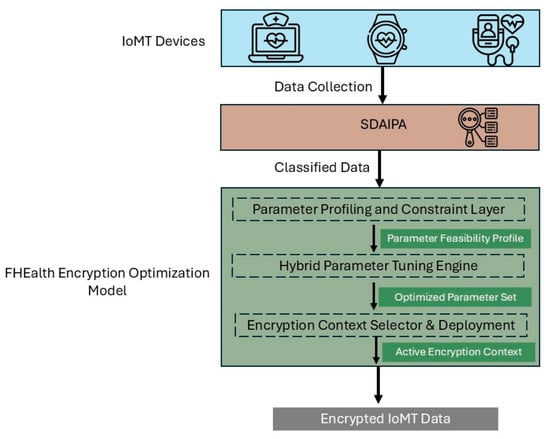
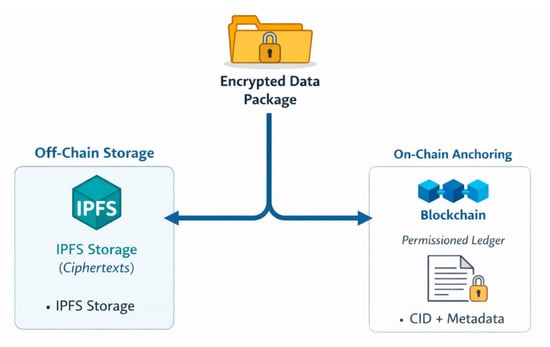
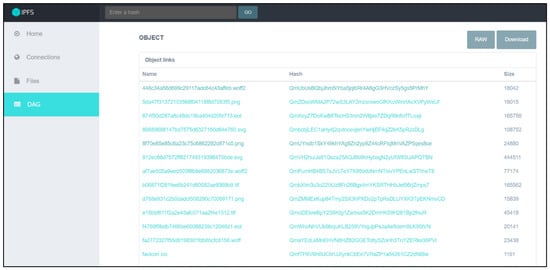
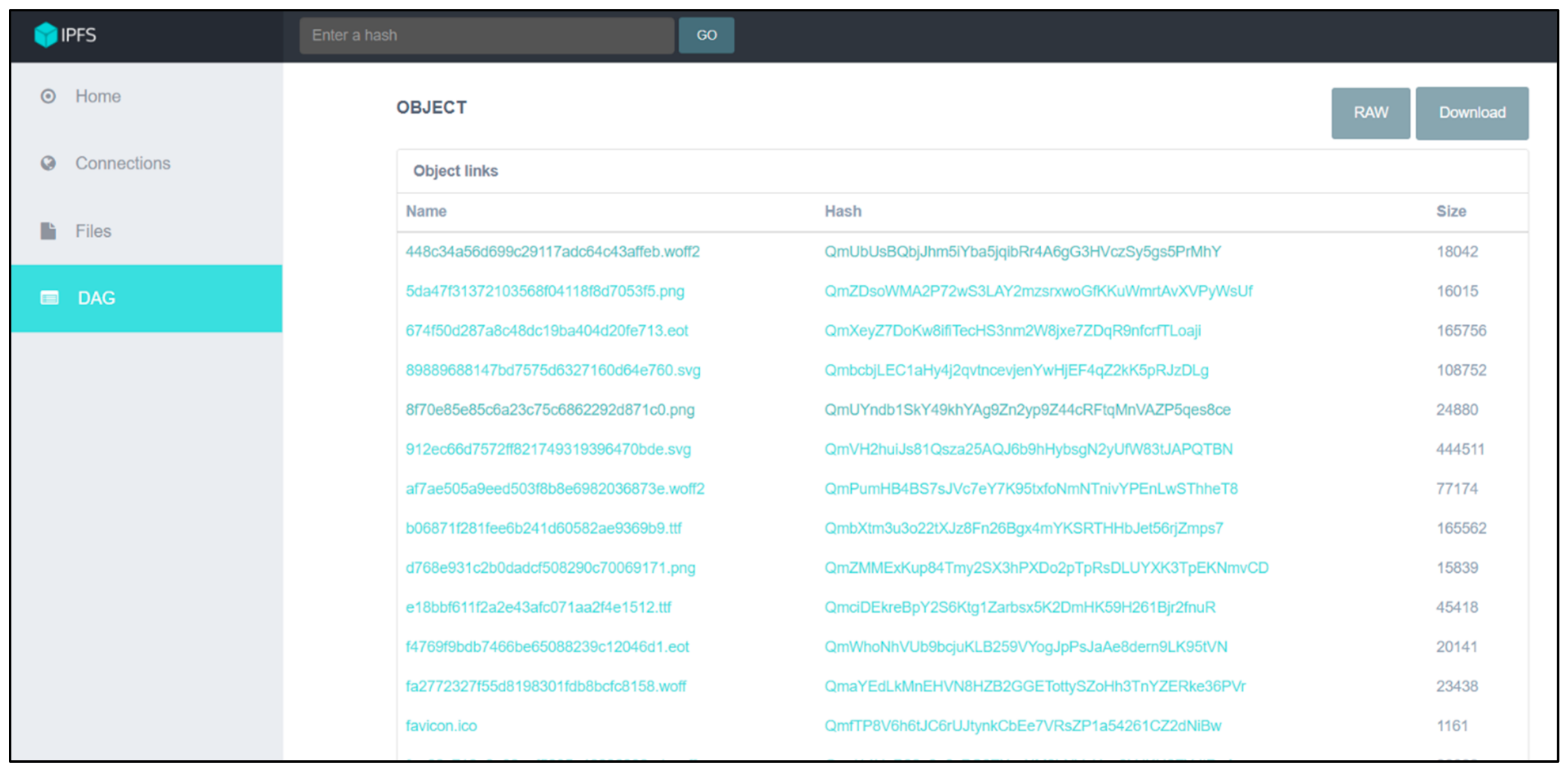
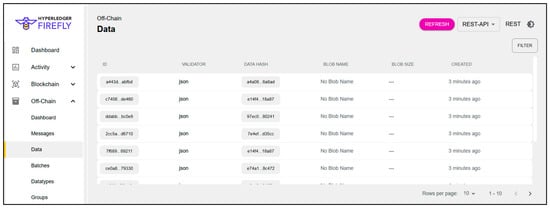
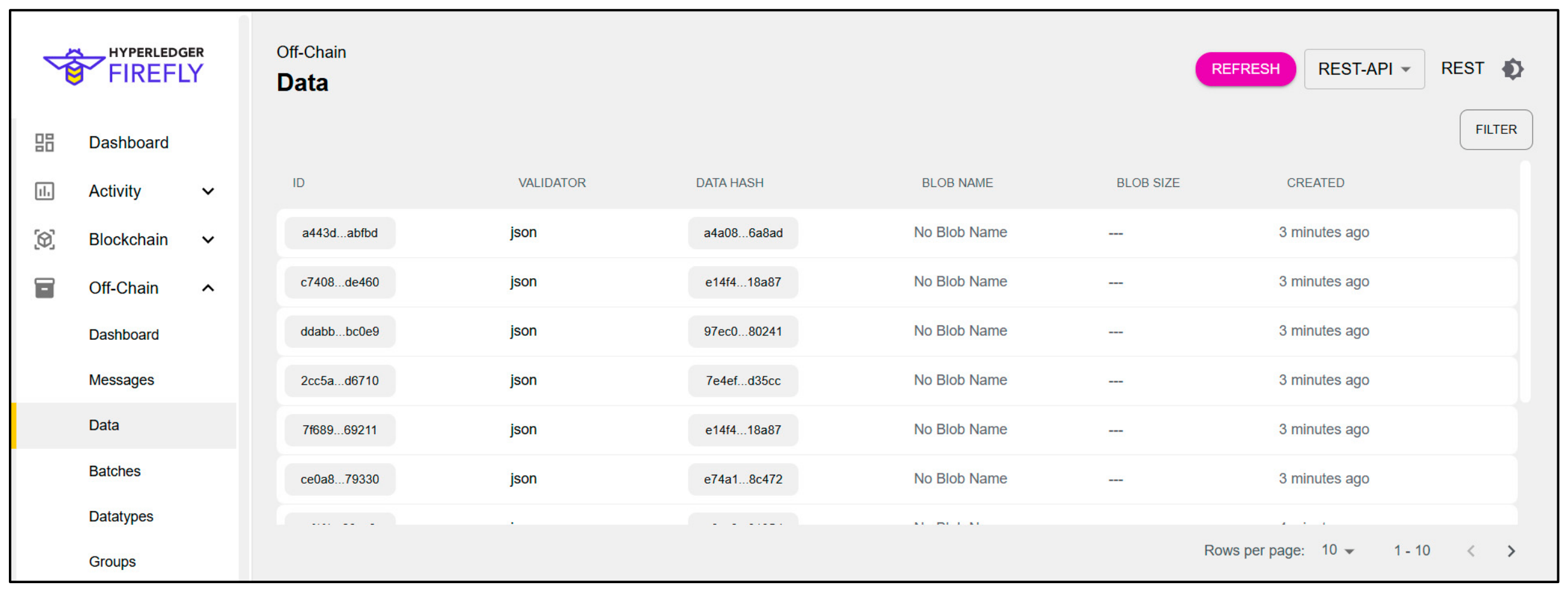
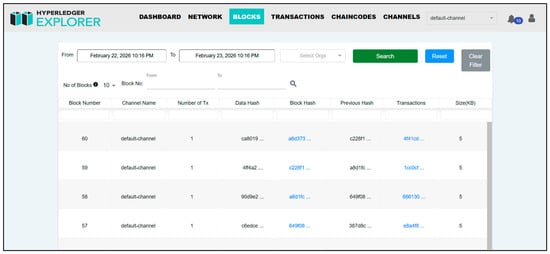
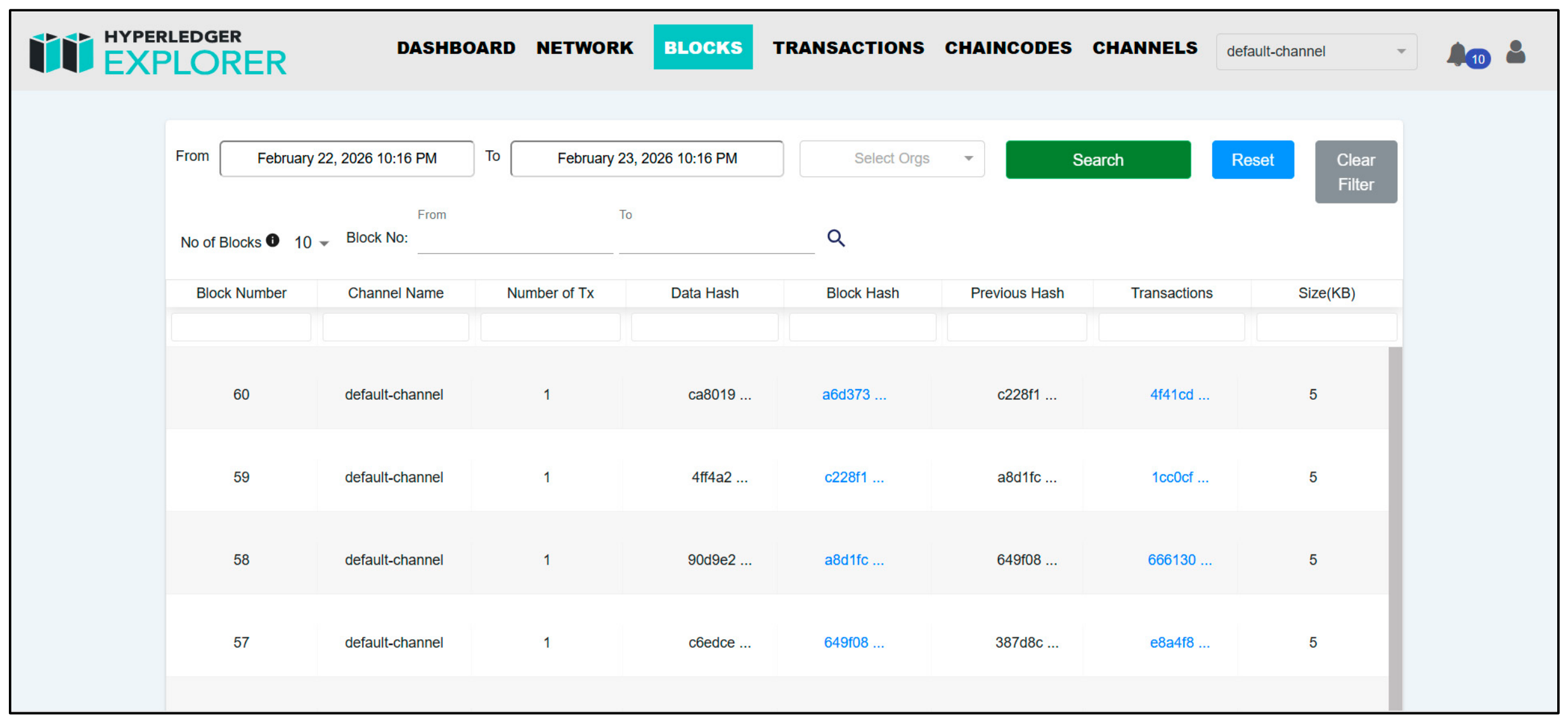
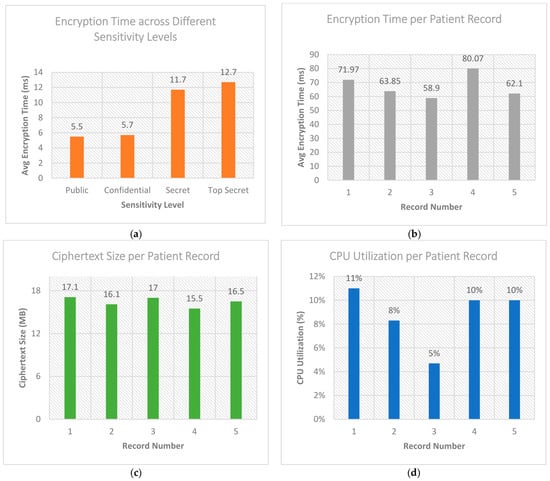
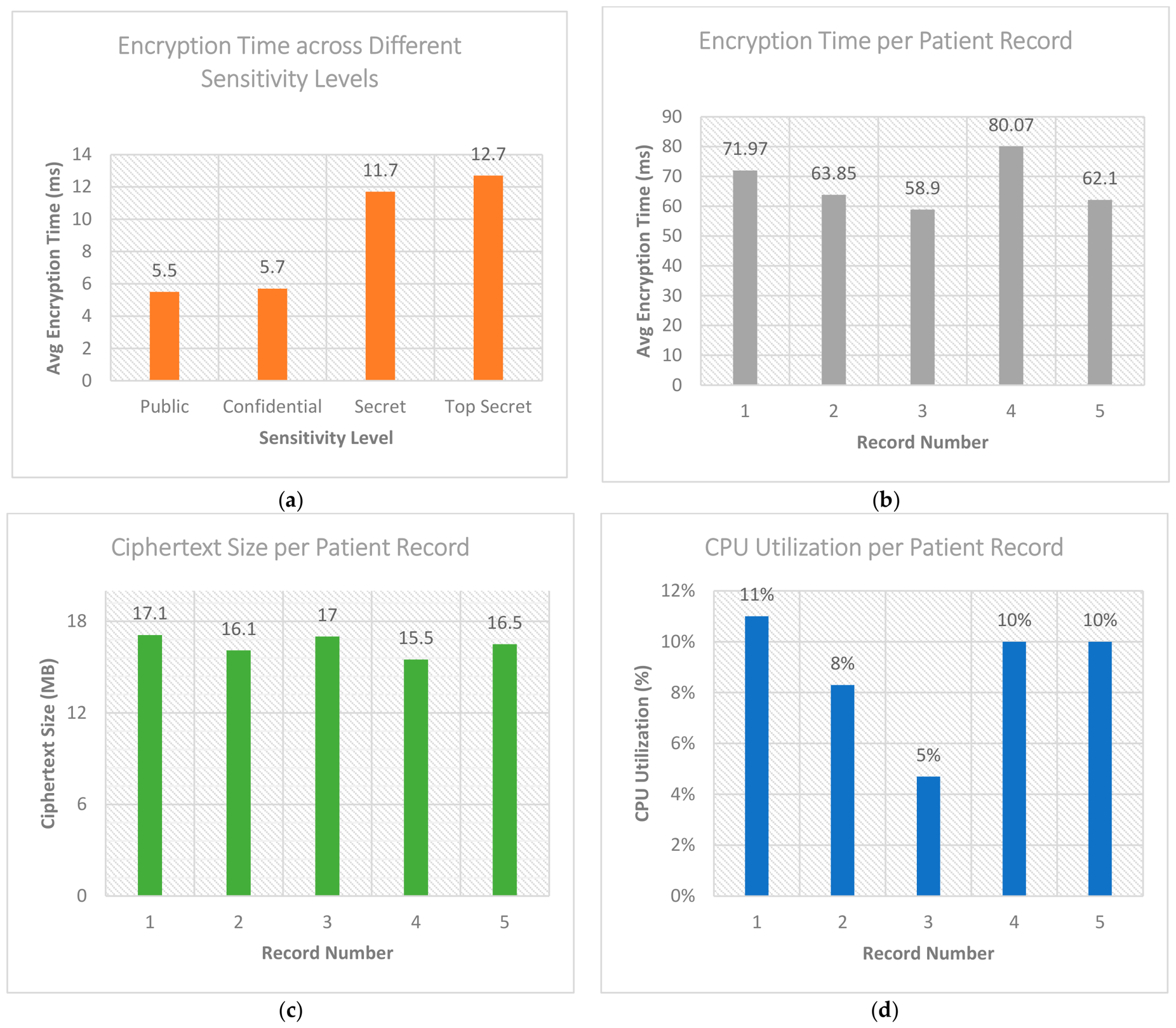
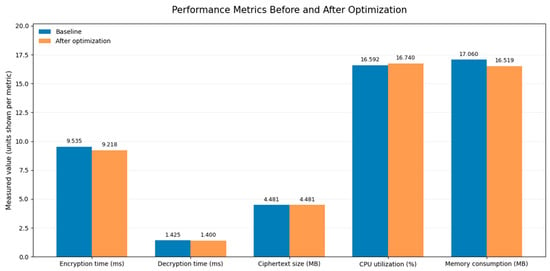
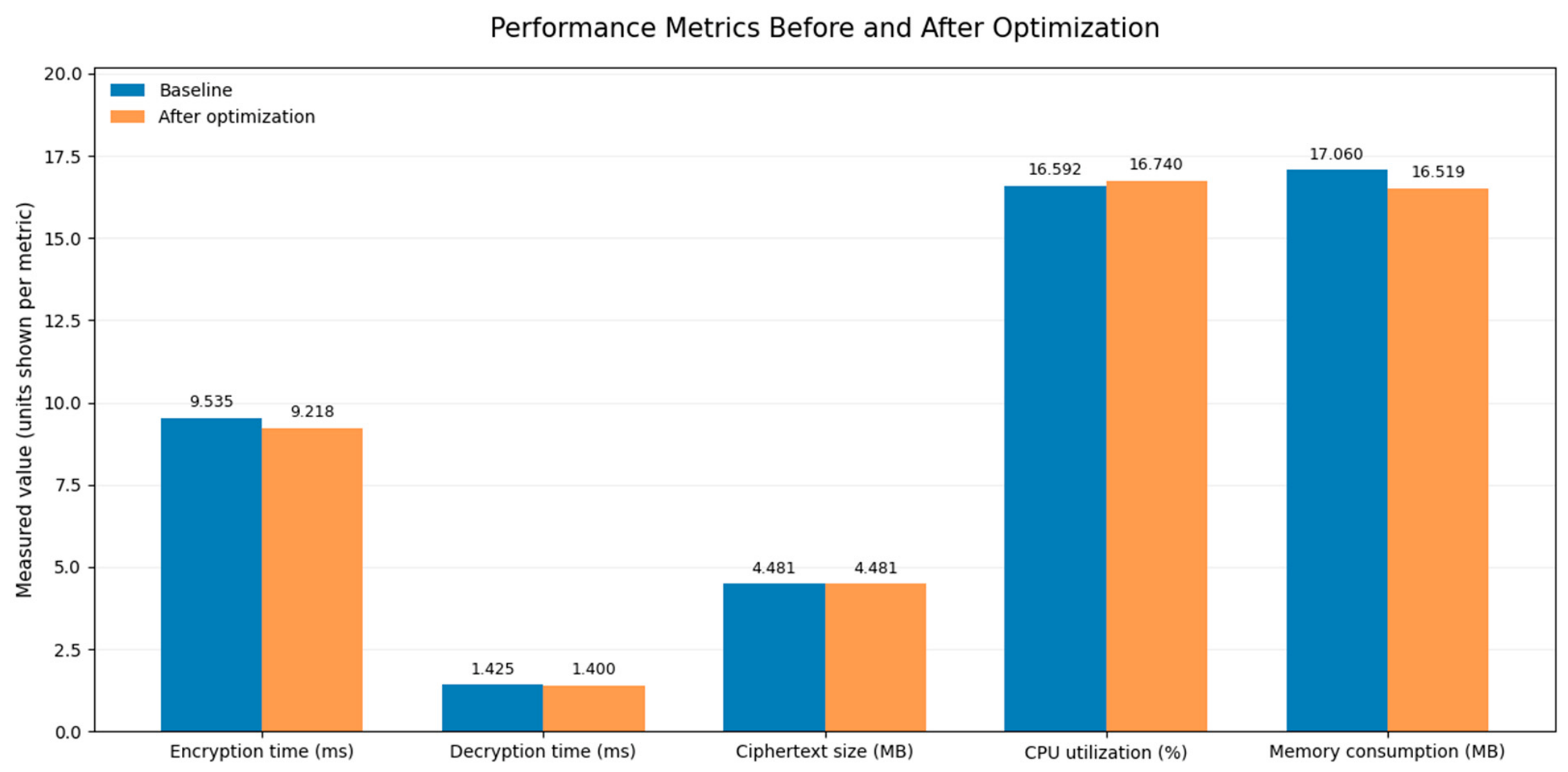
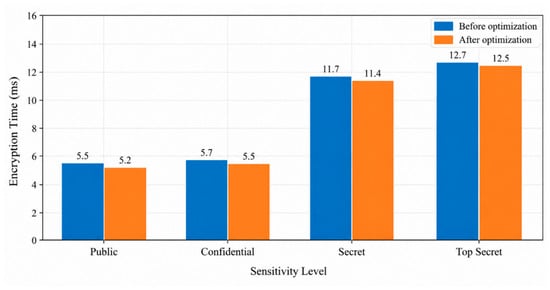
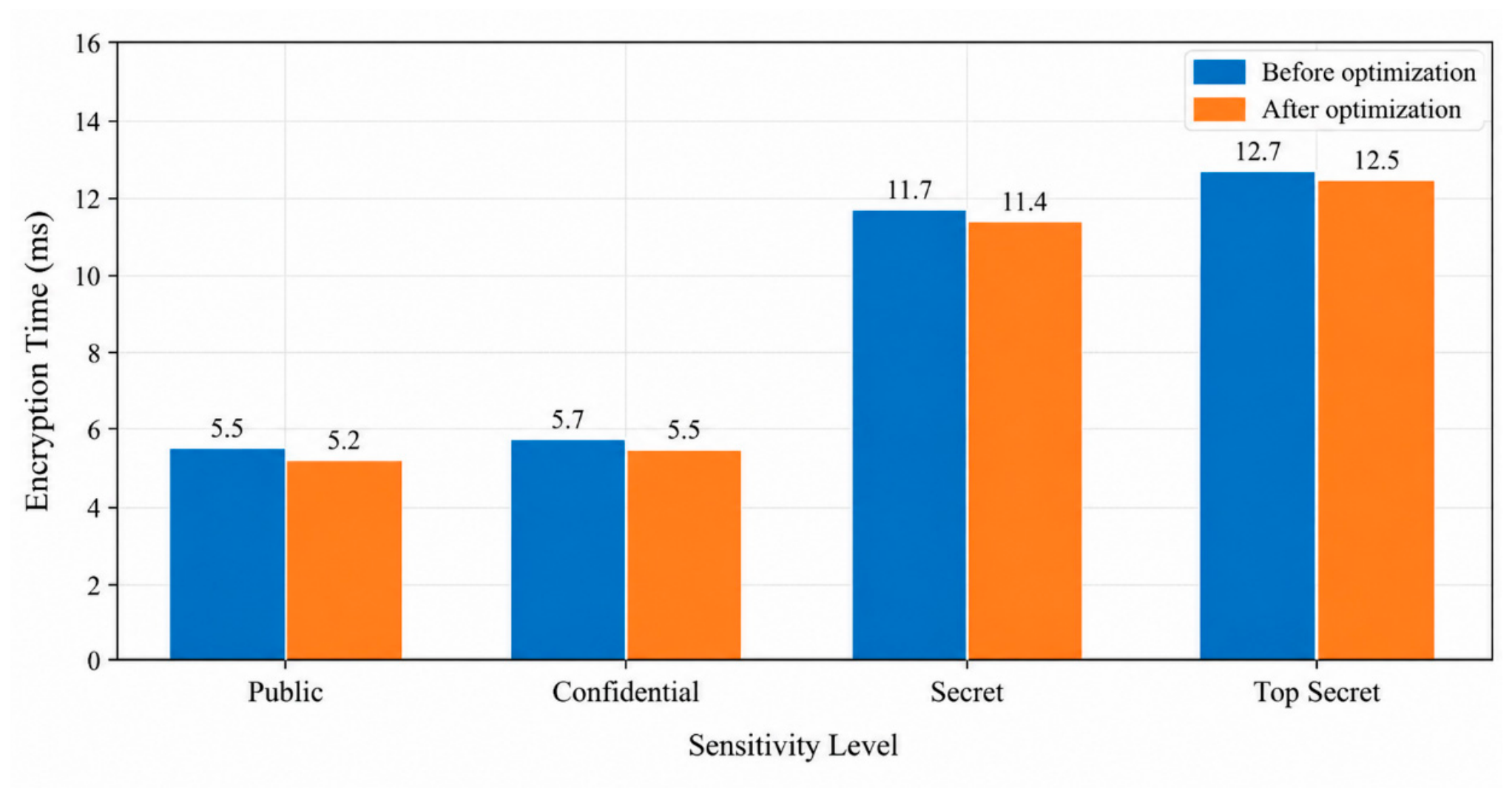
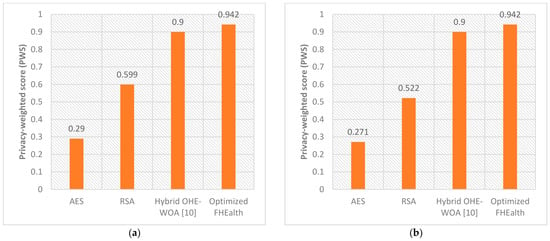
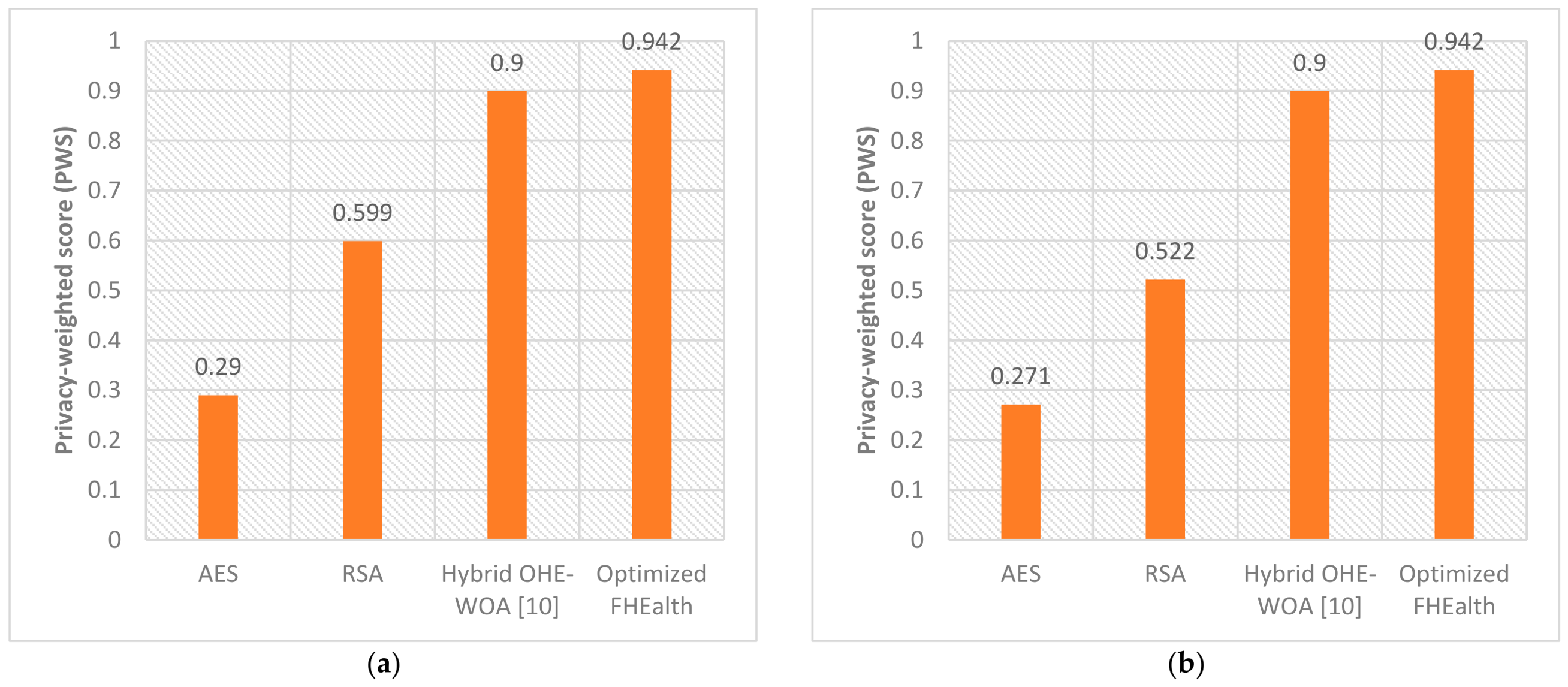

Disclaimer/Publisher’s Note: The statements, opinions and data contained in all publications are solely those of the individual author(s) and contributor(s) and not of MDPI and/or the editor(s). MDPI and/or the editor(s) disclaim responsibility for any injury to people or property resulting from any ideas, methods, instructions or products referred to in the content. |
© 2026 by the authors. Licensee MDPI, Basel, Switzerland. This article is an open access article distributed under the terms and conditions of the Creative Commons Attribution (CC BY) license.