


Abstract
The Internet of Medical Things (IoMT) is transforming healthcare through continuous patient monitoring, telemedicine, cloud–edge services, and Healthcare 5.0. However, the rapid growth of interconnected medical devices has expanded the healthcare cyberattack surface, making intelligent intrusion detection essential for protecting sensitive medical data and ensuring resilient clinical operations. Existing reviews examine specific aspects of AI-powered intrusion detection but rarely provide a deployment-oriented synthesis linking technical performance with operational and clinical requirements. This review critically examines Artificial Intelligence (AI)-powered Intrusion Detection Systems (IDSs) for IoMT across six analytical dimensions: detection performance, explainability, privacy preservation, computational efficiency, benchmarking practices, and cross-dataset generalization. This structured narrative review adopted the PRISMA 2020 framework to ensure transparent record identification, screening, and reporting, with evidence synthesized qualitatively rather than through quantitative meta-analysis. A total of 5127 records published between 2021 and 2026 were screened, resulting in 24 primary studies supported by 115 complementary studies. The findings show that machine learning, deep learning, hybrid AI, Explainable Artificial Intelligence (XAI), Federated Learning (FL), blockchain-assisted security, and edge intelligence have significantly advanced IoMT intrusion detection. However, despite benchmark accuracies often exceeding 95%, deployment remains constrained by dataset dependency, weak cross-dataset generalization, computational overhead, limited explainability, fragmented benchmarking, and insufficient operational validation. This review identifies deployment readiness, rather than predictive accuracy alone, as the principal challenge for next-generation healthcare cybersecurity and provides a practical framework for developing trustworthy, interoperable, privacy-preserving, and deployment-ready IoMT cybersecurity architectures supported by standardized evaluation protocols.
1. Introduction
The rapid digital transformation of healthcare has been driven by the convergence of the Internet of Medical Things (IoMT), Artificial Intelligence (AI), cloud–edge computing, and Healthcare 5.0, enabling intelligent, interconnected, and data-driven healthcare services. Through wearable sensors, implantable medical devices, Electronic Health Records (EHRs), and Remote Patient Monitoring (RPM) platforms, these technologies support continuous patient monitoring, personalized healthcare, telemedicine, and real-time clinical decision-making beyond traditional hospital settings [1,2,3,4,5,6,7,8,9,10,11,12,13,14,15,16]. However, the increasing interconnection of medical devices, communication networks, and cloud–edge infrastructures has substantially expanded the healthcare cyberattack surface, making resilient cybersecurity essential for protecting sensitive patient data, maintaining service continuity, and supporting trustworthy digital healthcare ecosystems [10,17].
Unlike conventional enterprise networks, IoMT environments combine resource-constrained medical devices, heterogeneous communication protocols, distributed healthcare infrastructures, and safety-critical clinical applications, creating cybersecurity challenges that cannot be adequately addressed using traditional security mechanisms [4,6]. Consequently, healthcare systems are increasingly exposed to ransomware, malware, denial-of-service attacks, spoofing, unauthorized access, data manipulation, and attacks targeting AI-enabled services, threatening patient privacy, operational continuity, and clinical safety [17,18,19,20,21,22,23,24,25]. These threats have accelerated the evolution of Intrusion Detection Systems (IDSs) from conventional signature-based approaches toward intelligent, adaptive, and deployment-oriented AI-powered architectures capable of identifying sophisticated and previously unseen attacks.
Recent advances in machine learning, deep learning, hybrid AI, Explainable Artificial Intelligence (XAI), Federated Learning (FL), blockchain-assisted security, and edge intelligence have substantially improved intrusion detection performance in IoMT environments [26,27,28,29,30,31,32,33,34,35]. Nevertheless, the literature consistently demonstrates that high benchmark performance—often exceeding 95% detection accuracy—does not necessarily translate into successful deployment within real healthcare environments. Persistent challenges related to cross-dataset generalization, computational efficiency, explainability, interoperability, scalability, and long-term operational robustness continue to limit practical adoption, indicating that deployment readiness has become the defining challenge for next-generation AI-powered IoMT cybersecurity [20,23,24,36,37,38,39,40,41].
Although numerous surveys have examined AI-powered intrusion detection and related IoMT security technologies, comparatively few provide an integrated assessment of the technical, operational, and deployment factors governing real-world Healthcare 5.0 adoption. Table 1 positions the present review within the existing literature.
Table 1.
Coverage comparison of analytical dimensions across representative IoMT intrusion detection review papers.
As summarized in Table 1, existing reviews have made significant contributions to AI-powered intrusion detection, Explainable Artificial Intelligence (XAI), Federated Learning (FL), blockchain-assisted security, Healthcare 5.0, and Remote Patient Monitoring (RPM). However, most examine these topics independently or emphasize specific technologies rather than providing an integrated assessment of the factors governing real-world deployment. In particular, deployment-oriented challenges—including cross-dataset generalization, benchmarking consistency, computational efficiency, explainability, interoperability, scalability, and long-term operational validation—remain fragmented across the existing literature.
Motivated by these limitations, this review provides a comprehensive and deployment-oriented synthesis of AI-powered intrusion detection systems for the Internet of Medical Things. Unlike previous reviews that primarily focus on individual technologies, this study integrates detection performance, explainability, privacy preservation, collaborative intelligence, benchmarking practices, computational efficiency, cross-dataset generalization, and deployment readiness within a unified analytical framework. By combining technical analysis with operational and Healthcare 5.0 perspectives, the review identifies the principal barriers preventing the translation of AI-powered IDSs from laboratory research into real-world healthcare deployment and establishes strategic priorities for next-generation trustworthy, scalable, and deployment-ready IoMT cybersecurity systems.
The principal contributions of this review are summarized as follows:
- 1.
- A unified analytical framework for evaluating AI-powered IoMT intrusion detection systems across six complementary dimensions: detection performance, explainability, privacy preservation, computational efficiency, benchmarking practices, and cross-dataset generalization.
- 2.
- A deployment-oriented synthesis integrating Explainable Artificial Intelligence (XAI), Federated Learning (FL), blockchain-assisted security, edge intelligence, Healthcare 5.0, and Remote Patient Monitoring (RPM) to assess trustworthy and scalable healthcare cybersecurity.
- 3.
- A critical analysis of 24 primary studies identifying the principal barriers to real-world deployment, including dataset dependency, limited cross-dataset validation, inconsistent benchmarking, insufficient explainability, and inadequate deployment-oriented evaluation.
- 4.
- A transparent and reproducible PRISMA 2020-guided review comprising 24 primary studies supported by 115 complementary studies that provide conceptual, methodological, and technological context.
- 5.
- A future research roadmap outlining priorities for trustworthy, explainable, privacy-preserving, standardized, and deployment-ready AI-powered IoMT intrusion detection systems.
Accordingly, this review shifts the focus from accuracy-centred IDS comparison toward trustworthy, deployment-ready IoMT cybersecurity.
The remainder of this paper is organized as follows. Section 2 presents the review methodology. Section 3 synthesizes the characteristics and findings of the included studies. Section 4 discusses the principal insights and their implications for deployment-ready IoMT cybersecurity. Section 5 outlines future research directions, and Section 6 concludes the paper.
2. Review Methodology
2.1. Search and Selection Strategy
This structured narrative review was guided by the Preferred Reporting Items for Reviews and Meta-Analyses (PRISMA 2020) framework to support transparent identification, screening, selection, and reporting of literature investigating Artificial Intelligence (AI)-powered Intrusion Detection Systems (IDSs) for the Internet of Medical Things (IoMT) [42]. PRISMA 2020 was used as a reporting and transparency framework; the evidence was synthesized through structured qualitative comparison rather than quantitative meta-analysis. The review synthesized the literature across six analytical dimensions: detection performance, explainability, privacy preservation, computational efficiency, benchmarking practices, and cross-dataset generalization. In addition, deployment-oriented considerations relevant to Remote Patient Monitoring (RPM) and Healthcare 5.0 environments were incorporated to evaluate the practical applicability of AI-powered IDSs beyond benchmark performance.
A comprehensive literature search was conducted across eight electronic databases: IEEE Xplore, Google Scholar, Scopus, Web of Science, ACM Digital Library, ScienceDirect, SpringerLink, and PubMed. These databases were selected to provide complementary coverage of engineering, cybersecurity, artificial intelligence, networking, healthcare technologies, digital health, and biomedical research. The search covered studies published between 2021 and 2026 using a common Boolean search strategy with minor syntax adaptations for individual database interfaces. Database-specific search dates, filters, search methods, and retrieval statistics are summarized in Table 2.
Table 2.
Detailed database search strategy and retrieval records. The literature search covered publications published between 2021 and 2026.
The search strategy combined keywords related to IoMT, intrusion detection, artificial intelligence, machine learning, deep learning, explainable AI, federated learning, blockchain, healthcare cybersecurity, medical device security, and Remote Patient Monitoring. The core Boolean search string was as follows:
(“Internet of Medical Things” OR “IoMT”) AND (“Intrusion Detection System” OR “IDS” OR “Anomaly Detection”) AND (“Artificial Intelligence” OR “Machine Learning” OR “Deep Learning” OR “Explainable Artificial Intelligence” OR “Explainable AI” OR “XAI” OR “Federated Learning” OR “Blockchain”) AND (“Healthcare Cybersecurity” OR “Medical Device Security” OR “Remote Patient Monitoring” OR “RPM” OR “Healthcare 5.0”).
Because Google Scholar returns relevance-ranked results and indexes records of varying quality, searches were conducted using publication-year intervals (2021–2022, 2022–2023, 2023–2024, 2024–2025, and 2025–2026). This process retrieved 798, 810, 817, 813, and 807 records, respectively, yielding 4045 records in total. Approximately 800 records were screened within each interval according to title relevance, abstract relevance, keyword alignment, source quality, and relevance to AI-powered IoMT intrusion detection before duplicate removal and eligibility assessment.
All retrieved records were imported into Zotero for reference management, duplicate detection, and screening. Title and abstract screening was initially performed by the first author, whereas full-text eligibility assessment and methodological quality evaluation were independently verified by the co-authors. Studies with uncertain eligibility were resolved through discussion using the predefined inclusion criteria, methodological quality, relevance to AI-powered IoMT intrusion detection, and contribution to the analytical objectives of the review.
The literature search identified 5127 records before screening. Following duplicate removal, language filtering, title and abstract screening, full-text eligibility assessment, and methodological quality evaluation, 24 studies satisfied all predefined eligibility criteria and were retained as the primary evidence base for formal comparative synthesis. The complete PRISMA-guided study selection process is presented in Figure 1.
Figure 1.
PRISMA-guided study selection process illustrating identification, duplicate removal, language filtering, title screening, abstract screening, full-text eligibility assessment, quality assessment, and final study inclusion.
The screening process comprised four sequential stages. First, duplicate records identified across the eight databases were removed using Zotero’s duplicate detection function. Second, title and abstract screening excluded studies outside the scope of AI-powered IoMT intrusion detection. Third, potentially eligible studies underwent full-text assessment against the predefined eligibility criteria. Finally, the remaining studies were evaluated using a structured quality assessment framework to determine their suitability for formal comparative synthesis.
Although the final bibliography contains 139 cited references, only 24 studies satisfied all predefined eligibility and methodological quality criteria and therefore constituted the primary evidence base for the review. The remaining 115 studies were incorporated as supporting literature to provide theoretical background, methodological justification, Healthcare 5.0 perspectives, Remote Patient Monitoring (RPM) context, and discussion of emerging technologies. These supporting studies were intentionally excluded from the formal comparative analysis because their role was to contextualize and strengthen the interpretation of the primary evidence rather than contribute directly to the structured synthesis.
Study selection was guided by predefined inclusion and exclusion criteria to ensure methodological consistency, transparency, reproducibility, and direct relevance to AI-powered IoMT intrusion detection. The detailed database search strategy is summarized in Table 2, while the predefined eligibility criteria are presented in Table 3.
Table 3.
Inclusion and exclusion criteria used for study selection.
2.2. Quality Assessment
A structured methodological quality assessment was conducted to ensure that the primary evidence included in this review was scientifically reliable, methodologically transparent, and directly relevant to AI-powered intrusion detection for the Internet of Medical Things (IoMT). Quality assessment was performed after the PRISMA-guided full-text eligibility screening of the 34 candidate studies and served as the final stage for determining inclusion in the comparative synthesis.
Each study was evaluated using five predefined quality criteria: (i) relevance to IoMT intrusion detection and healthcare cybersecurity, (ii) methodological transparency and reproducibility, (iii) adequacy of dataset description and evaluation reporting, (iv) experimental or comparative validation, and (v) contribution to explainability, privacy preservation, deployment readiness, or broader healthcare cybersecurity. Each criterion was scored on a three-point scale (0–2), where 0 indicated insufficient evidence, 1 indicated partial fulfilment, and 2 indicated strong fulfilment, resulting in a maximum quality score of 10.
Studies scoring below 5 were excluded because they demonstrated insufficient methodological rigor, limited technical relevance, or inadequate experimental reporting. Studies achieving a score of 5 or above were retained for the primary comparative synthesis. This threshold ensured that the evidence base maintained methodological quality while preserving representative coverage of experimental studies, reviews, and framework papers within the multidisciplinary IoMT cybersecurity domain.
Table 4 summarizes the overall quality assessment outcomes. Of the 34 full-text candidate studies, 24 achieved the predefined inclusion threshold (score ≥ 5) and were retained as the primary evidence base, whereas 10 studies were excluded because they did not satisfy the minimum quality requirements. The detailed study-level quality assessment for the 24 included studies is presented in Table 5.
Table 4.
Distribution of studies according to quality assessment scores.
Table 5.
Quality assessment scores for the 24 studies included in the primary synthesis.
The predominance of higher quality scores among the included studies should be interpreted in the context of the sequential study selection process rather than as evidence of limited discriminating power of the quality assessment framework. Methodological quality assessment was conducted only after the 34 candidate studies had successfully passed the PRISMA-guided title screening, abstract screening, and full-text eligibility assessment. Consequently, the remaining candidate pool already consisted of studies that satisfied the predefined relevance and eligibility criteria before formal methodological quality assessment was undertaken. The primary purpose of the quality assessment was therefore to determine whether each eligible study met the minimum methodological standard required for inclusion in the comparative synthesis rather than to generate a broad distribution of quality scores across the entire literature. Accordingly, 10 of the 34 eligible studies (29.4%) did not satisfy the predefined inclusion criterion and were excluded, whereas the remaining 24 studies demonstrated generally strong methodological quality, resulting in the concentration of higher scores presented in Table 5.
2.3. Characteristics of Included Studies
Following quality assessment, 24 primary studies were retained as the evidence base for comparative analysis and thematic synthesis. Because the objective of this review extends beyond algorithmic IDS performance to deployment readiness, the evidence base intentionally includes both direct IoMT intrusion detection studies and closely related deployment-enabling studies, including federated learning, blockchain-assisted trust, explainable AI, Remote Patient Monitoring (RPM) security, Healthcare 5.0, and broader IoMT cybersecurity frameworks. Because many studies address multiple challenges simultaneously, thematic categories were treated as overlapping rather than mutually exclusive.
Table 6 summarizes the thematic distribution of the included studies. The evidence shows that AI-powered intrusion detection remains the dominant research focus, while federated learning, blockchain-assisted trust, explainability, Healthcare 5.0, and RPM security are increasingly integrated into broader deployment-oriented IoMT cybersecurity frameworks.
Table 6.
Thematic classification of the 24 primary studies included in the review.
The thematic classification provides a high-level overview of the evidence base, while Table 7 presents the detailed study-level extraction, including study type, datasets, AI/IDS methods, explainability mechanisms, privacy-preserving technologies, evaluation metrics, principal findings, limitations, and quality scores.
Table 7.
Detailed characteristics of the 24 primary studies included in the review.
Table 7 demonstrates substantial methodological diversity across the 24 primary studies. Traditional machine learning remains widely used, but recent studies increasingly employ deep learning, federated learning, blockchain-assisted security, edge intelligence, and explainable AI. Despite strong reported detection performance, recurring limitations include limited cross-dataset validation, dependence on a small number of benchmark datasets, weak real-world healthcare evaluation, inconsistent computational-efficiency reporting, and limited explainability.
Figure 2 illustrates the distribution of benchmark datasets used across the reviewed studies. The concentration of evaluations on datasets such as WUSTL-EHMS-2020, CIC-IoMT-2024, ToN-IoT, BoT-IoT, Edge-IIoTset, and CIC-IDS2017 highlights both the value of shared benchmarks and the risk of dataset dependency. This reinforces the need for healthcare-specific datasets, standardized evaluation protocols, and rigorous cross-dataset validation.
Figure 2.
Distribution of benchmark datasets used across the reviewed AI-powered IoMT intrusion detection studies.
Collectively, the thematic classification, detailed study extraction, and dataset distribution analysis establish the evidence base for the comparative synthesis presented in Section 3.
2.4. Data Extraction and Synthesis
A standardized data extraction framework was used to ensure consistency, transparency, and comparability across the 24 primary studies retained after eligibility screening and quality assessment. Using a predefined comparative synthesis matrix, data were extracted on benchmark datasets, AI and IDS methods, intrusion detection objectives, architectural characteristics, explainability mechanisms, privacy-preserving approaches, evaluation metrics, principal findings, limitations, and future research directions.
Only the 24 primary studies were included in the formal methodological comparison and evidence synthesis. The remaining 115 supporting studies were used to strengthen the conceptual background, methodological justification, Healthcare 5.0 and Remote Patient Monitoring (RPM) context, and interpretation of emerging research trends, but were not included in the formal comparative synthesis or quality assessment.
The extracted evidence was synthesized across six analytical dimensions: detection performance, explainability, privacy preservation, computational efficiency, benchmarking practices, and cross-dataset generalization. These dimensions enabled comparison across heterogeneous study designs while supporting the identification of recurring strengths, limitations, trends, and research gaps.
Consistent with the structured narrative and qualitative character of this review, a quantitative meta-analysis was not conducted because the included studies differed substantially in datasets, attack categories, AI architectures, evaluation metrics, experimental settings, and validation protocols. Instead, a structured qualitative comparative synthesis was adopted to preserve methodological context while enabling critical comparison across studies. This synthesis framework provides the methodological foundation for the thematic analysis in Section 3, the critical discussion in Section 4, and the future research directions in Section 5.
Although only 24 studies were retained as the primary evidence base, this number is appropriate for the objectives of the present review and should be interpreted within the context of the study selection process. The reduction from 5127 initially identified records to 24 included studies primarily reflects scope refinement and relevance-based screening rather than widespread exclusion due to methodological quality. The majority of excluded records addressed general Internet of Things security, clinical artificial intelligence applications without a cybersecurity focus, or healthcare technologies beyond the scope of AI-powered IoMT intrusion detection, and therefore were not suitable for the comparative synthesis. Among the 34 studies that reached full-text eligibility—i.e., studies already confirmed to be on-topic—24 (71%) met the quality threshold. The six analytical dimensions adopted in this review were used as a common analytical framework to evaluate the same carefully selected body of evidence rather than as independent evidence syntheses. Furthermore, the additional 115 supporting studies were incorporated to provide conceptual, methodological, and technological context, while the formal comparative synthesis remained intentionally restricted to the most relevant and methodologically robust primary studies. Collectively, the included studies encompass diverse AI techniques, benchmark datasets, explainability methods, privacy-preserving approaches, deployment scenarios, and Healthcare 5.0 applications, providing sufficient thematic breadth to identify consistent research trends, recurring limitations, and common deployment challenges across the literature. Accordingly, the objective of this review was to achieve analytical depth and methodological rigor through a focused qualitative synthesis rather than maximize the number of included studies.
3. Literature Review and Thematic Analysis
3.1. Evolution of AI-Powered Intrusion Detection Systems for IoMT
The evolution of Intrusion Detection Systems (IDSs) for the Internet of Medical Things (IoMT) reflects a fundamental transformation from static attack detection toward intelligent, trustworthy, and deployment-oriented cybersecurity. This transformation has been driven by the rapid expansion of interconnected healthcare ecosystems, where wearable sensors, implantable medical devices, Remote Patient Monitoring (RPM) platforms, cloud–edge infrastructures, and Healthcare 5.0 services have simultaneously enhanced clinical capabilities and enlarged the healthcare cyberattack surface [4,6,10,11,12,53]. Consequently, IDSs have evolved from auxiliary security mechanisms into essential components of resilient healthcare infrastructures responsible for safeguarding data confidentiality, system integrity, service availability, and patient safety across increasingly distributed clinical environments [17,22,23,33,48,54,55,56].
Rather than representing a simple progression of increasingly sophisticated algorithms, the evolution of IoMT intrusion detection has been driven by successive attempts to overcome the limitations of preceding security paradigms. As illustrated in Figure 3, this evolution can be understood through three major transitions. The first relied on signature- and rule-based IDSs, which effectively detected known attacks using predefined signatures and handcrafted rules but were inherently unable to adapt to zero-day attacks, polymorphic malware, insider threats, or rapidly evolving attack behaviours. These shortcomings became increasingly pronounced in heterogeneous IoMT environments, where constrained devices, diverse communication protocols, continuous medical data streams, and dynamic network conditions reduced scalability while increasing false-positive rates [11,17,21,48,57,58,59].
Figure 3.
Conceptual evolution of AI-powered intrusion detection systems for the Internet of Medical Things (IoMT). The progression extends beyond algorithmic advancement, illustrating the transformation from signature-based detection toward intelligent, trustworthy, privacy-preserving, explainable, and deployment-ready cybersecurity architectures. The figure highlights how research priorities have evolved from maximizing detection accuracy to balancing behavioural intelligence, operational scalability, computational efficiency, privacy preservation, trust management, and real-world deployment requirements within Healthcare 5.0 ecosystems.
The inability of static detection mechanisms to address emerging cyber threats accelerated the adoption of Artificial Intelligence (AI), marking the second major stage in IoMT IDS evolution [20,36]. Classical machine learning (ML) algorithms—including Decision Trees (DT), Random Forests (RF), Support Vector Machines (SVMs), Logistic Regression (LR), and Extreme Gradient Boosting (XGBoost)—enabled IDSs to learn behavioural patterns directly from heterogeneous network traffic, substantially improving the detection of previously unseen attacks without relying on manually defined rules [24,25,37,38,39,47,60,61,62]. However, evidence across the reviewed literature consistently indicates that the dependence of conventional ML on handcrafted feature engineering and dataset-specific representations limited cross-dataset generalization and robustness in heterogeneous healthcare environments, motivating the transition toward deep learning (DL) approaches [40,41,59,63].
The third stage of this evolution was characterized by the widespread adoption of DL architectures capable of automatically learning hierarchical spatial, temporal, and behavioural representations from complex IoMT traffic [60,64,65]. Architectures such as Convolutional Neural Networks (CNNs), Long Short-Term Memory (LSTM) networks, Autoencoders, Deep Belief Networks (DBNs), Transformers, and more recently hybrid and ensemble models consistently demonstrated superior detection performance across benchmark datasets by reducing dependence on manual feature engineering and capturing increasingly sophisticated attack patterns [29,30,61,65,66,67,68,69,70]. Nevertheless, the reviewed evidence also demonstrates that improved predictive performance has not fully resolved challenges related to computational complexity, model interpretability, cross-dataset robustness, and deployment under realistic healthcare conditions. These limitations have stimulated growing interest in hybrid AI architectures that combine complementary learning paradigms to improve operational reliability while supporting more practical deployment scenarios [71,72,73,74,75,76,77,78].
Importantly, the contemporary evolution of IoMT intrusion detection extends beyond algorithmic innovation. The literature demonstrates a clear shift from maximizing detection accuracy toward developing trustworthy, scalable, and clinically deployable security frameworks that simultaneously address explainability, privacy preservation, interoperability, computational efficiency, and operational resilience [15,16,77]. This transition has accelerated the integration of complementary technologies—including Explainable Artificial Intelligence (XAI), Federated Learning (FL), blockchain-assisted trust management, edge intelligence, and collaborative learning—which collectively seek to balance predictive capability with transparency, secure knowledge sharing, regulatory compliance, and deployment readiness in distributed healthcare ecosystems [1,23,31,32,34,35,79,80,81,82,83,84,85,86,87]. Rather than representing independent technological advances, these developments collectively reflect a broader transition from algorithm-centred intrusion detection toward deployment-oriented cybersecurity capable of supporting the operational requirements of Healthcare 5.0.
Overall, the reviewed literature indicates that the evolution of IoMT IDSs has been shaped by three interconnected paradigm shifts: from static signature matching to adaptive AI-driven behavioural intelligence, from centralized detection to collaborative and privacy-preserving security architectures, and from benchmark-oriented evaluation to deployment-oriented assessment emphasizing robustness, explainability, scalability, computational efficiency, and cross-dataset generalization [24,36,40,41,56,62,88,89,90]. These shifts demonstrate that future progress will depend less on developing increasingly complex prediction models than on integrating trustworthy AI, collaborative intelligence, and deployment-aware system design into unified cybersecurity frameworks capable of supporting secure, resilient, and clinically applicable IoMT ecosystems.
Figure 3 summarizes this evolutionary trajectory and establishes the conceptual foundation for the thematic analysis presented in the following subsections, where the major AI paradigms, enabling technologies, and remaining deployment challenges are examined in greater depth.
3.2. Detection Performance: From Machine Learning to Hybrid AI
Building on the evolutionary trends discussed in Section 3.1, advances in detection performance have been the principal catalyst driving successive generations of AI-powered intrusion detection systems (IDSs) for the Internet of Medical Things (IoMT). As healthcare environments have become increasingly heterogeneous, distributed, and data-intensive, conventional signature-based mechanisms proved inadequate for detecting sophisticated and evolving cyberattacks, accelerating the transition toward Artificial Intelligence (AI)-driven IDSs [12]. However, the reviewed literature demonstrates that the evolution of detection performance has not been driven solely by the pursuit of higher predictive accuracy. Instead, each generation of AI techniques emerged to overcome limitations of its predecessor while introducing new trade-offs that shaped subsequent research directions [20,22,23,29,36,55,62,91].
The first generation of AI-powered IoMT IDSs was dominated by traditional machine learning (ML), where supervised algorithms learned behavioural patterns directly from network traffic rather than relying on predefined attack signatures. Algorithms such as Decision Trees (DT), Random Forests (RF), Support Vector Machines (SVMs), Logistic Regression (LR), and Extreme Gradient Boosting (XGBoost) consistently improved the detection of previously unseen attacks while maintaining relatively low computational overhead, making them attractive for resource-constrained healthcare environments [25,47,48,60,61]. Among these approaches, tree-based ensemble models, particularly Random Forest and XGBoost, achieved a favourable balance between detection performance, computational efficiency, robustness, and interpretability [26,27,73]. Nevertheless, their dependence on handcrafted feature engineering and dataset-specific representations constrained their ability to generalize across heterogeneous healthcare environments, motivating the transition toward deep learning architectures [24,40,41,59].
Deep learning (DL) addressed many of these limitations by replacing manual feature engineering with automated hierarchical representation learning, enabling IDSs to capture complex spatial, temporal, and behavioural characteristics of healthcare network traffic [64,65,92]. Architectures including Convolutional Neural Networks (CNNs), Long Short-Term Memory (LSTM) networks, Autoencoders, Deep Belief Networks (DBNs), and Transformer-based models consistently demonstrated superior detection capability across widely used benchmark datasets by modelling increasingly sophisticated attack patterns [29,30,66,67,68,69,93]. Numerous studies reported detection accuracies exceeding 95% on benchmark datasets such as CIC-IoMT-2024 and WUSTL-EHMS-2020 using CNN-LSTM, Transformer-enhanced, and deep stacking architectures [28,61,68,70,75,76,91,94,95]. However, the reviewed evidence indicates that these improvements were frequently accompanied by increased computational complexity, reduced model transparency, and greater implementation overhead, highlighting that higher predictive performance alone does not necessarily translate into more practical intrusion detection systems [29,40,41,96,97].
To balance the complementary strengths and weaknesses of individual learning paradigms, recent research has increasingly adopted hybrid and ensemble AI architectures that integrate multiple modelling techniques within a unified detection framework. Rather than seeking incremental improvements from individual algorithms, these approaches combine complementary capabilities such as automated feature extraction, temporal dependency modelling, ensemble decision making, and adaptive learning to improve robustness, predictive stability, and attack coverage across diverse cyber-threat scenarios. Representative architectures—including CNN-LSTM, Transformer-enhanced, Autoencoder-based, graph-enhanced, stacking, and hybrid ensemble frameworks—consistently outperform individual ML or DL models by exploiting synergistic learning strategies instead of relying on a single classifier [70,71,73,74,75,76,77,78,95,97,98,99]. Collectively, these findings indicate that recent advances in IoMT intrusion detection are increasingly driven by architectural integration rather than the development of entirely new learning algorithms.
Table 8 and Figure 4 synthesize the principal characteristics of the major AI paradigms identified across the reviewed literature. Figure 4 is intended as an illustrative qualitative synthesis of the recurring patterns identified across the reviewed studies and should be interpreted as a conceptual visual summary rather than a quantitative evaluation or formal scoring system. Rather than identifying a universally superior approach, the evidence demonstrates that each paradigm emerged to address shortcomings of the previous generation while introducing new technical and operational trade-offs. Traditional ML offers computational efficiency and relatively high interpretability but remains dependent on handcrafted features; DL substantially improves feature learning and detection capability at the cost of increased computational demand and reduced transparency; hybrid and ensemble architectures seek to balance these competing objectives through complementary learning strategies, whereas adaptive learning extends this progression by addressing concept drift and evolving attack behaviours despite limited large-scale validation [89]. Consequently, selecting an AI paradigm should be regarded as a deployment-driven engineering decision that balances detection capability with computational resources, latency requirements, scalability, and operational constraints rather than maximizing benchmark accuracy alone.
Table 8.
Evolution of AI paradigms for IoMT intrusion detection and their deployment characteristics.
Figure 4.
Conceptual comparison of major AI paradigms across deployment-oriented dimensions for IoMT intrusion detection systems. The figure presents an illustrative qualitative synthesis of the reviewed literature and summarizes the relative trade-offs among detection capability, interpretability, computational efficiency, scalability, generalization, and deployment readiness. It is intended as a conceptual visual summary rather than a quantitative evaluation or formal scoring system.
Overall, the reviewed evidence demonstrates that improvements in detection performance have been achieved through progressively richer feature representations and increasingly integrated learning architectures rather than through isolated algorithmic innovation. Nevertheless, no individual paradigm simultaneously satisfies the competing requirements of predictive accuracy, computational efficiency, interpretability, scalability, and operational robustness. This observation suggests that future advances in IoMT intrusion detection will depend less on developing more complex detection algorithms than on designing balanced AI architectures capable of supporting trustworthy and practical healthcare cybersecurity. These trade-offs naturally motivate the following discussion on Explainable Artificial Intelligence (XAI), where model transparency and stakeholder trust become essential for translating high-performing AI models into clinically acceptable intrusion detection systems.
3.3. Explainable and Trustworthy AI for IoMT Intrusion Detection
Although Artificial Intelligence (AI) has substantially improved intrusion detection performance in the Internet of Medical Things (IoMT), predictive accuracy alone is insufficient for safe and reliable deployment in healthcare environments. Contemporary machine learning, deep learning, and hybrid AI models frequently report detection accuracies exceeding 95% on benchmark datasets; however, these metrics provide limited assurance that clinicians, cybersecurity analysts, and healthcare administrators can understand, validate, and confidently act upon AI-generated security decisions [15,19,22,23,24,29]. Consequently, the literature demonstrates a clear shift from maximizing detection capability toward developing explainable and trustworthy AI systems that combine accurate threat detection with transparency, accountability, human oversight, and regulatory compliance.
This transition is particularly important in healthcare because intrusion detection decisions may directly influence clinical workflows, connected medical devices, Remote Patient Monitoring (RPM) services, and ultimately patient safety. False-positive alerts can disrupt healthcare operations and increase alert fatigue, whereas false negatives may expose sensitive medical information or compromise life-critical systems. Accordingly, explainability has evolved from a desirable model characteristic into a prerequisite for trustworthy cybersecurity by enabling stakeholders to understand why alerts are generated and whether they should be trusted in operational environments [2,5,13,14,16,48,55,100,101,102,103].
Figure 5 illustrates this conceptual evolution. Rather than representing independent objectives, detection performance, explainability, stakeholder trust, accountability, governance, and human oversight form complementary components of a unified deployment framework. Within this framework, predictive performance provides the technical foundation, whereas explainability enables transparent decision-making that strengthens stakeholder confidence and supports the broader objectives of trustworthy AI. The dotted arrow represents an operational feedback loop from real-world deployment back to detection performance. This feedback includes new attack patterns, user feedback, clinical validation, and deployment observations.
Figure 5.
Integrated framework for trustworthy AI-powered IoMT intrusion detection. Detection performance forms the technical foundation, while explainability enables transparency, stakeholder trust, human oversight, regulatory compliance, and ultimately deployment-ready Healthcare 5.0 cybersecurity.
Explainable Artificial Intelligence (XAI) provides the practical mechanisms through which AI-generated security decisions become interpretable. Rather than functioning solely as post-processing tools, XAI techniques enable analysts to identify the factors influencing model predictions, distinguish genuine cyber threats from spurious detections, and improve confidence in AI-assisted decision making [77,104]. Across the reviewed literature, five principal explainability paradigms dominate IoMT intrusion detection: SHapley Additive exPlanations (SHAP), Local Interpretable Model-Agnostic Explanations (LIME), attention mechanisms, intrinsically interpretable models, and explainable ensemble approaches [26,77,105,106,107,108]. Although these methods differ in implementation, they illustrate a common progression from explaining model outputs after prediction toward embedding transparency directly within model design. SHAP and LIME provide global and local post-hoc explanations with different trade-offs between explanation fidelity and computational cost, whereas attention mechanisms and intrinsically interpretable models integrate transparency into the learning process itself. Explainable ensemble approaches further seek to balance predictive performance with interpretable decision making [93,99]. Consequently, the reviewed evidence indicates that selecting an XAI technique is fundamentally a deployment-oriented design decision that must consider computational efficiency, scalability, regulatory requirements, and analyst usability alongside predictive performance.
Table 9 summarizes the principal explainability techniques and their complementary strengths and limitations. Collectively, these studies demonstrate that explainability is no longer an optional enhancement but an essential requirement for AI-powered IoMT intrusion detection.
Table 9.
Comparison of explainability approaches for AI-powered IoMT intrusion detection systems.
While explainability substantially improves transparency, the reviewed literature consistently demonstrates that it alone cannot guarantee safe clinical deployment. Post-hoc explanations may clarify why individual predictions are made, but they provide limited assurance regarding model reliability, robustness, fairness, privacy preservation, governance, or resilience against evolving cyber threats [22,23,24,77]. As a result, contemporary IoMT cybersecurity research increasingly positions explainability as the foundation of a broader trustworthy AI framework rather than the final objective of intelligent intrusion detection.
Trustworthy AI extends explainability by integrating complementary technical, operational, and human-centred properties—including reliability, robustness, fairness, privacy preservation, accountability, governance, and meaningful human oversight—into a unified deployment paradigm [2,34,69,86,87,100,101,109]. Rather than representing independent evaluation criteria, these dimensions collectively determine whether AI-powered IDSs can maintain dependable performance under evolving attack scenarios while providing transparent and clinically defensible security recommendations.
Despite substantial progress, important challenges remain. Most existing studies continue to emphasize benchmark detection performance while providing comparatively limited evaluation of long-term reliability, adversarial robustness, fairness across heterogeneous healthcare environments, AI governance, and human-centred usability. Likewise, standardized methodologies for evaluating trustworthy AI remain underdeveloped, making it difficult to compare competing approaches or assess their readiness for operational healthcare deployment [1,24,100,101,109,110,111,112,113,114].
Table 10 synthesizes the principal dimensions of trustworthy AI identified across the reviewed literature.
Table 10.
Core dimensions of trustworthy AI for deployment-ready IoMT intrusion detection systems.
The reviewed literature demonstrates a clear conceptual progression from explainable AI toward comprehensive trustworthy AI frameworks. Whereas early research primarily focused on improving model interpretability, contemporary studies increasingly recognize that transparent decision making represents only one component of clinically deployable intrusion detection. Effective IoMT cybersecurity requires integrating explainability with reliability, robustness, privacy preservation, fairness, governance, accountability, and meaningful human oversight to establish confidence in AI-assisted security decisions.
Collectively, these findings indicate that explainability should be regarded as the enabling mechanism through which trustworthy AI is achieved rather than as an independent research objective. This evolution naturally extends the focus of IoMT intrusion detection from transparent decision support toward collaborative and privacy-preserving intelligence, motivating the following discussion on Federated Learning (FL), blockchain-assisted security, and distributed AI for healthcare cybersecurity.
3.4. Collaborative and Privacy-Preserving AI for IoMT Intrusion Detection
The rapid adoption of AI-powered intrusion detection systems (IDSs) in the Internet of Medical Things (IoMT) has fundamentally changed the requirements for healthcare cybersecurity. Beyond achieving high detection performance, contemporary IDSs must enable secure collaboration among hospitals, wearable devices, Remote Patient Monitoring (RPM) platforms, cloud services, and edge infrastructures while preserving patient privacy, institutional autonomy, and regulatory compliance. Because centralized learning requires sensitive healthcare data to be aggregated into shared repositories, recent research has increasingly shifted toward collaborative AI architectures that support distributed model development without exposing raw patient information [21,31,32,34,35,79,81,83,84]. This transition represents a broader evolution from centralized intelligence toward privacy-preserving and trust-enabled cybersecurity capable of supporting Healthcare 5.0 ecosystems.
Figure 6 illustrates the integrated architecture emerging from the reviewed literature. Rather than functioning as independent technologies, Federated Learning (FL), blockchain, and Explainable Artificial Intelligence (XAI) operate as complementary architectural layers. Federated Learning enables collaborative model training while retaining sensitive healthcare data within local institutions, blockchain establishes decentralized trust and secure collaboration, and XAI provides transparent decision support for human stakeholders. Together, these technologies balance privacy preservation, accountability, transparency, and operational resilience within distributed healthcare environments. The dotted arrow represents an operational feedback loop from real-world deployment to the federated learning layer. The feedback includes new attacks, drift indicators, user feedback, and compliance-related information.
Figure 6.
Integrated privacy-preserving and trust-enabling architecture for AI-powered IoMT intrusion detection systems. Federated Learning enables collaborative model training without sharing raw patient data, blockchain establishes decentralized trust and secure aggregation, while Explainable AI provides transparency and human oversight. Together, these complementary technologies support deployment-ready Healthcare 5.0 cybersecurity.
Federated Learning has emerged as the dominant collaborative learning paradigm because it enables multiple healthcare organizations to train shared intrusion detection models while keeping patient data within local institutions. This decentralized learning strategy improves regulatory compliance, preserves data sovereignty, and exposes AI models to more diverse operational environments than isolated institutional datasets, thereby increasing their potential robustness and generalizability [31,32,79,83,84,115]. Nevertheless, the reviewed literature consistently identifies several obstacles to large-scale deployment. Highly heterogeneous (Non-IID) healthcare data reduce aggregation effectiveness, repeated communication introduces latency and computational overhead, and collaborative training remains vulnerable to poisoning attacks, membership inference, model inversion, and malicious participants [32,110,111,112,116,117,118,119,120,121,122,123]. Consequently, current research increasingly focuses on personalized federated learning, adaptive aggregation, communication-efficient optimization, secure aggregation, adversarial resilience, and AI-enhanced cyber threat intelligence to improve both scalability and trustworthiness [88,124,125].
While Federated Learning protects data privacy, it does not by itself establish trustworthy collaboration among autonomous healthcare organizations. Blockchain therefore complements FL by providing immutable audit trails, decentralized identity management, secure provenance tracking, participant authentication, and transparent verification of collaborative model updates rather than functioning as an independent intrusion detection mechanism [34,35,44,45,80,85]. Together, FL and blockchain address complementary challenges: FL preserves data confidentiality through decentralized learning, whereas blockchain strengthens accountability, secure coordination, and resilience against collaborative attacks [34,44,79,126]. Despite these advantages, practical deployment remains constrained by consensus latency, communication overhead, interoperability across heterogeneous IoMT infrastructures, and resource limitations, motivating lightweight consensus mechanisms and hybrid on-chain/off-chain architectures that store only cryptographic verification data on-chain while retaining sensitive healthcare information locally [53,56,81,85,127,128,129].
Table 11 summarizes the complementary roles of Federated Learning, blockchain, secure aggregation, and Explainable AI within collaborative IoMT intrusion detection. Rather than representing competing technologies, these approaches collectively demonstrate that deployment-ready Healthcare 5.0 cybersecurity depends on integrating privacy preservation, decentralized trust, transparent decision support, and efficient collaborative learning within a unified architectural framework.
Table 11.
Comparison of privacy-preserving and trust-enabling technologies for IoMT intrusion detection systems.
The reviewed literature demonstrates a clear transition from isolated AI techniques toward integrated collaborative cybersecurity architectures. Rather than relying on Federated Learning, blockchain, or Explainable AI independently, contemporary IoMT IDSs increasingly combine these complementary technologies to address privacy preservation, decentralized trust, transparency, and secure collaboration simultaneously. Nevertheless, challenges associated with Non-IID data, adversarial robustness, communication efficiency, interoperability, and standardized evaluation remain unresolved. These findings indicate that future advances will depend less on developing individual collaborative technologies than on designing unified architectures capable of balancing privacy, trust, scalability, and operational efficiency, providing the foundation for the following discussion on deployment readiness, benchmarking practices, computational efficiency, and cross-dataset generalization.
3.5. Deployment Readiness and Real-World Implementation Challenges
Although recent advances in machine learning, deep learning, explainable AI, and collaborative intelligence have substantially improved IoMT intrusion detection, the reviewed literature consistently demonstrates that operational deployment continues to lag behind algorithmic progress. This gap reflects not a lack of detection capability but the complexity of deploying AI-powered IDSs across heterogeneous healthcare ecosystems comprising wearable devices, Remote Patient Monitoring (RPM) platforms, cloud–edge infrastructures, diverse medical devices, and regulatory environments [1,2,13,14,16,22,23,24,29,52,102,103,130]. Collectively, the reviewed evidence indicates that deployment readiness has become the defining criterion for translating laboratory success into clinically applicable cybersecurity.
A consistent finding across the literature is the growing disconnect between benchmark performance and operational effectiveness. Although contemporary AI-powered IDSs frequently report detection accuracies exceeding 95% on benchmark datasets such as CIC-IoMT-2024, WUSTL-EHMS-2020, ToN-IoT, MQTT-based healthcare datasets, and Edge-IIoTset [26,27,28,73,74,75,76,94,95], reviews consistently caution that these results often overestimate real-world performance because evaluation protocols remain dominated by single datasets, static train–test partitions, balanced attack distributions, and synthetic traffic [22,23,24,40,41,59]. Consequently, benchmark accuracy should be interpreted as evidence of algorithmic capability rather than operational readiness.
Rather than representing isolated limitations, the reviewed studies identify four interrelated barriers that collectively constrain real-world deployment: limited cross-dataset generalization, computational constraints, dynamic operating environments, and insufficient integration with clinical workflows.
Cross-dataset generalization remains the most widely reported challenge. Models trained on individual benchmark datasets frequently experience substantial performance degradation when evaluated across different healthcare environments, indicating that many AI models learn dataset-specific characteristics rather than generalized representations of malicious behaviour [22,24,40,41,59]. These limitations arise from differences in medical devices, communication protocols, traffic characteristics, feature engineering pipelines, and attack distributions across healthcare infrastructures, highlighting the need for external validation, domain adaptation, transfer learning, and multi-centre benchmarking rather than continued optimization for single datasets [1,2,5,7,8,13,16,131,132].
Computational efficiency represents a second major barrier. While deep learning and hybrid architectures consistently improve detection capability, they also introduce greater processing, memory, latency, and energy requirements that remain difficult to satisfy on wearable devices, implantable sensors, edge gateways, and battery-powered RPM platforms [21,29,75,81,94,95,96]. Consequently, lightweight deep learning, TinyML, model compression, pruning, knowledge distillation, and edge intelligence have emerged as promising directions for balancing detection capability with resource efficiency [1,29,133,134].
The reviewed literature further indicates that most existing IDSs remain optimized for static offline learning despite operating within continuously evolving healthcare environments. Concept drift, software updates, changing communication patterns, and emerging cyber threats gradually reduce detection performance, motivating increasing interest in continual learning, incremental learning, adaptive intelligence, and transfer learning to support long-term operational reliability [52,62,135,136,137].
Finally, successful deployment depends on effective integration with clinical workflows and deployment-oriented evaluation. Current benchmarking practices continue to emphasize accuracy-based metrics while providing comparatively limited evidence regarding latency, energy consumption, explainability, interoperability, adversarial robustness, usability, regulatory compliance, and long-term operational reliability [22,23,24,40,52]. Consequently, AI-powered IDSs should be evaluated as clinical decision-support systems rather than standalone classification models, emphasizing transparent recommendations that complement clinicians and cybersecurity analysts instead of replacing them [1,2,5,15,23,48,138].
Table 12 synthesizes the principal deployment barriers and corresponding research priorities identified across the reviewed literature, while Table 13 summarizes the practical criteria required to evaluate deployment readiness under realistic Healthcare 5.0 conditions.
Table 12.
Critical deployment barriers and research priorities for real-world AI-powered IoMT intrusion detection systems.
Table 13.
Deployment-readiness checklist for evaluating AI-powered IoMT intrusion detection systems in real healthcare environments.
The reviewed evidence demonstrates that deployment readiness has become the principal challenge for AI-powered IoMT intrusion detection. Rather than requiring fundamentally new detection algorithms, future progress depends on demonstrating that existing AI models can generalize across heterogeneous healthcare environments, operate efficiently on resource-constrained platforms, adapt to evolving cyber threats, integrate seamlessly with clinical workflows, and satisfy multidimensional deployment requirements extending beyond predictive accuracy. Collectively, these findings establish deployment-oriented validation as the critical bridge between laboratory performance and trustworthy real-world healthcare cybersecurity, providing the foundation for the future research directions presented in the following section.
3.6. Critical Research Gaps in AI-Powered IoMT Intrusion Detection
The preceding synthesis demonstrates that AI-powered intrusion detection systems (IDSs) for the Internet of Medical Things (IoMT) have advanced substantially in detection capability, explainability, privacy preservation, collaborative learning, and deployment-oriented design. However, the reviewed literature indicates that these advances remain fragmented and have not yet converged into mature cybersecurity solutions suitable for routine healthcare deployment. Rather than reflecting isolated technical limitations, the remaining challenges are interconnected and require system-level solutions that integrate robust AI, trustworthy decision-making, privacy-preserving collaboration, and operational validation within modern healthcare ecosystems [1,2,18,19,22,23,24,52,86,87].
Across the reviewed studies, five major research gaps consistently emerge. First, many IDSs remain dependent on benchmark-specific learning, resulting in limited generalization across unseen datasets, institutions, devices, and communication environments [24,40,41,59,135,137]. Second, computationally intensive deep learning and hybrid architectures remain difficult to deploy on wearable sensors, implantable devices, edge gateways, and Remote Patient Monitoring platforms, where memory, latency, and energy constraints are critical [1,29,81,96,130,131,132,133,134]. Third, collaborative intelligence remains constrained by Non-IID data, communication overhead, poisoning attacks, trust management, and scalability limitations despite growing interest in Federated Learning, blockchain, secure aggregation, and privacy-preserving optimization [31,32,34,44,46,88,115,124,125,126].
Fourth, trustworthy AI remains insufficiently integrated into IoMT IDS design. Although recent studies increasingly adopt explainability methods such as SHAP, LIME, attention mechanisms, and interpretable ensemble models, many systems still provide limited evidence of robustness, fairness, governance, regulatory compliance, and meaningful human oversight [2,26,27,105,106,113,114]. Fifth, current evaluation methodologies remain overly focused on accuracy, precision, recall, F1-score, and ROC–AUC, while providing limited assessment of latency, energy consumption, interoperability, scalability, adversarial resilience, clinical usability, and long-term operational reliability under realistic healthcare conditions [22,23,52].
Collectively, these gaps demonstrate that the central limitation of current IoMT IDS research is not the absence of high-performing AI models, but the lack of integrated, validated, and deployment-ready cybersecurity systems. Improvements in model generalization have limited practical value without resource-efficient implementation; collaborative intelligence remains incomplete without trustworthy governance; and benchmark performance remains insufficient without external validation under realistic healthcare conditions. Therefore, the reviewed evidence indicates that future progress depends on moving from isolated algorithmic innovation toward integrated system design that jointly addresses generalization, efficiency, privacy preservation, trustworthiness, interoperability, and operational evaluation.
The evidence synthesized in this section shows that AI-powered IoMT intrusion detection is approaching a transition point. The field has produced increasingly accurate, explainable, privacy-preserving, and collaborative models, yet these capabilities remain insufficiently connected to real-world healthcare requirements. The next stage of research must therefore focus on closing the gap between laboratory performance and operational deployment by validating IDSs across heterogeneous healthcare environments, resource-constrained devices, evolving threat conditions, and clinically meaningful workflows. These gaps provide the foundation for the future research directions presented in Section 5.
4. Discussion
4.1. From Algorithm-Centred to System-Centred IoMT Intrusion Detection
The evidence synthesized throughout this review demonstrates that the evolution of Artificial Intelligence (AI)-powered intrusion detection for the Internet of Medical Things (IoMT) extends well beyond improvements in predictive accuracy. Earlier research primarily focused on developing increasingly sophisticated machine learning and deep learning models capable of detecting complex cyberattacks. However, contemporary studies consistently indicate that successful healthcare cybersecurity depends equally on explainability, privacy preservation, trustworthiness, scalability, computational efficiency, interoperability, and operational deployment. Collectively, these findings reveal a fundamental transition from algorithm-centred IDS development toward integrated cybersecurity systems capable of supporting Remote Patient Monitoring (RPM), digital healthcare services, and Healthcare 5.0 ecosystems [2,13,15,16,22,23,24,29,52,103].
Figure 7 summarizes this transition by illustrating the complementary strengths of successive AI paradigms. As with the previous conceptual comparison, this figure provides an illustrative qualitative synthesis of the recurring patterns identified across the reviewed literature and is intended as a conceptual visual summary rather than a quantitative evaluation or formal scoring system. Rather than identifying a universally superior solution, the reviewed evidence indicates that each paradigm addresses different dimensions of deployment readiness. Traditional machine learning emphasizes efficiency and interpretability, deep learning strengthens feature representation and detection capability, whereas explainable AI, Federated Learning, and blockchain progressively extend IDS functionality toward transparency, collaborative intelligence, privacy preservation, and decentralized trust. Consequently, the maturity of IoMT intrusion detection should be understood as the progressive integration of complementary capabilities rather than continual replacement of existing approaches. Beyond AI-powered intrusion detection itself, deployment-ready IoMT cybersecurity also depends on the security and resilience of the underlying communication infrastructure. IoMT devices increasingly rely on mobile and wireless communication technologies to support continuous patient monitoring, telemedicine, and real-time clinical decision-making. Consequently, secure wireless communication, authenticated network access, and electromagnetic compatibility should be considered complementary deployment requirements alongside AI-powered IDSs. Although these aspects were not a primary focus of the present review, they represent important practical considerations for real-world IoMT deployment and future research toward trustworthy end-to-end Healthcare 5.0 ecosystems.
Figure 7.
Illustrative qualitative synthesis of the maturity of major AI-powered IDS paradigms across detection performance, explainability, privacy preservation, computational efficiency, and cross-dataset generalization. The figure provides a conceptual visual summary of the reviewed literature and does not represent quantitative measurements or a formal scoring system.
Perhaps the most important finding emerging from this review is the persistent disconnect between benchmark success and operational deployment. Although many AI-powered IDSs achieve excellent performance under controlled laboratory conditions, comparatively few studies demonstrate robust generalization across heterogeneous healthcare environments or evaluate long-term deployment characteristics. This observation suggests that benchmark accuracy should no longer be regarded as the principal indicator of IDS maturity. Instead, deployment readiness has emerged as the defining measure of practical effectiveness, requiring AI systems to balance predictive capability with robustness, transparency, efficiency, scalability, and clinical usability.
4.2. Fundamental Trade-Offs in AI-Powered IoMT Intrusion Detection
The reviewed literature demonstrates that advances in AI-powered IoMT intrusion detection are increasingly governed by a series of interconnected trade-offs rather than improvements in individual performance metrics. As AI models become more sophisticated, gains in one dimension frequently introduce constraints in another, making deployment readiness an optimization problem involving multiple competing objectives rather than a single measure of detection performance.
Figure 8 illustrates these relationships by highlighting that detection capability, explainability, privacy preservation, computational efficiency, scalability, and operational trust should be considered complementary design objectives rather than independent optimization targets.
Figure 8.
Trade-off framework for AI-powered IoMT intrusion detection systems. Although advanced AI architectures improve detection capability, they simultaneously introduce challenges related to explainability, computational efficiency, privacy, scalability, and deployment.
Three trade-offs consistently emerge across the reviewed literature. First, improvements in predictive capability are frequently accompanied by reduced interpretability, increasing the importance of explainable and trustworthy AI in healthcare environments where transparency and accountability remain essential [2,29,105,106]. Second, collaborative intelligence through Federated Learning and blockchain improves privacy preservation and decentralized trust but introduces communication overhead, heterogeneous data distributions, synchronization complexity, and adversarial risks [31,32,34,44,46,88,124,125]. Third, increasingly sophisticated AI architectures generally require greater computational resources, motivating lightweight AI, TinyML, edge intelligence, and resource-aware model optimization for deployment on constrained IoMT devices [1,29,81,96].
These observations demonstrate that deployment readiness cannot be achieved by maximizing individual performance metrics. Instead, successful IDS architectures must balance detection capability, explainability, privacy preservation, computational efficiency, scalability, and operational trust according to the requirements of specific healthcare environments. These major trade-offs are summarized in Table 14.
Table 14.
Major trade-offs identified in AI-powered IoMT intrusion detection systems.
4.3. Implications for Healthcare 5.0
The findings synthesized throughout this review indicate that IoMT intrusion detection is entering a new stage of maturity in which cybersecurity should be viewed as an integrated healthcare capability rather than an isolated detection function. AI-powered IDSs are increasingly expected to support intelligent clinical services, protect distributed healthcare infrastructures, facilitate secure collaboration across institutions, and provide transparent decision support for clinicians and cybersecurity professionals. Consequently, future healthcare cybersecurity will depend less on identifying a single optimal AI algorithm than on integrating complementary technologies capable of operating reliably within heterogeneous Healthcare 5.0 environments.
This systems-oriented perspective also changes how IDS effectiveness should be evaluated. Rather than emphasizing predictive accuracy alone, deployment-ready systems should demonstrate robust generalization, computational efficiency, explainability, interoperability, resilience, privacy preservation, and long-term operational reliability. Collectively, these characteristics indicate that the future of IoMT intrusion detection lies in system integration rather than algorithmic competition.
Overall, the reviewed evidence demonstrates that AI-powered IoMT intrusion detection has evolved from isolated machine learning models into intelligent, collaborative, and deployment-oriented cybersecurity ecosystems. This conceptual transition provides the foundation for the future research directions presented in the following section.
5. Future Research Directions
The evidence synthesized throughout this review indicates that AI-powered intrusion detection for the Internet of Medical Things (IoMT) is entering a new stage of maturity in which future progress will depend less on developing increasingly sophisticated detection algorithms than on engineering intelligent, trustworthy, and deployment-ready cybersecurity ecosystems. The reviewed literature consistently demonstrates that benchmark accuracy alone is no longer sufficient for clinical adoption. Instead, next-generation intrusion detection systems (IDSs) must balance generalization, explainability, privacy preservation, computational efficiency, interoperability, and operational validation to support Healthcare 5.0 services and Remote Patient Monitoring (RPM) infrastructures [1,2,13,15,22,23,24,52,102].
Figure 9 summarizes the strategic research roadmap synthesized from this review. Rather than proposing isolated research directions, the framework highlights complementary priorities that collectively support the development of trustworthy, scalable, resource-efficient, and deployment-ready AI-powered IoMT intrusion detection systems.
Figure 9.
Strategic research roadmap for next-generation AI-powered IoMT intrusion detection systems. Future progress depends on integrating generalizable AI, resource-aware intelligence, collaborative learning, trustworthy AI, deployment-oriented validation, and Healthcare 5.0 integration within unified cybersecurity architectures.
5.1. Strategic Research Priorities
The reviewed literature identifies five strategic priorities that should guide future research, as summarized in Table 15.
Table 15.
Strategic research priorities for next-generation AI-powered IoMT intrusion detection systems.
First, improving model generalization remains essential. Future IDSs should move beyond benchmark-specific learning by emphasizing cross-dataset validation, multicentre benchmarking, continual learning, transfer learning, domain adaptation, and foundation models capable of learning generalized behavioural representations rather than dataset-specific attack characteristics [24,40,41,59,135,137,139].
Second, resource-aware intelligence will become increasingly important as AI-powered IDSs are deployed on wearable sensors, implantable devices, edge gateways, and battery-powered RPM platforms. Lightweight deep learning, TinyML, model compression, pruning, knowledge distillation, and edge-native AI should therefore be prioritized to balance predictive capability with latency, memory consumption, and energy efficiency [1,29,81,96,130,131,132,133,134].
Third, collaborative intelligence should evolve beyond privacy-preserving learning toward secure multi-institutional healthcare cybersecurity. Future research should strengthen Federated Learning through personalized aggregation, resilient collaborative optimization, secure aggregation, adaptive cyber threat intelligence, and lightweight blockchain-assisted trust management capable of supporting geographically distributed healthcare infrastructures [31,32,34,44,46,88,115,124,125].
Fourth, trustworthy AI should become an integral design principle rather than a post-deployment enhancement. Explainability, robustness, fairness, governance, accountability, privacy preservation, and meaningful human oversight should be incorporated throughout the IDS lifecycle to support transparent, reliable, and clinically acceptable cybersecurity decision making [2,26,105,106,113,114].
Finally, future evaluation methodologies should extend beyond predictive performance by incorporating standardized deployment-oriented metrics, including cross-dataset robustness, computational efficiency, interoperability, explainability, scalability, resilience, energy consumption, clinical usability, and long-term operational reliability. Such multidimensional evaluation will provide stronger evidence of real-world deployment readiness than conventional accuracy-based benchmarking alone [22,23,24,52].
Figure 10 illustrates how these strategic priorities converge within an integrated Healthcare 5.0 cybersecurity ecosystem. Rather than functioning as independent technologies, AI-powered intrusion detection, Explainable AI, Federated Learning, blockchain-assisted trust management, continual learning, cyber threat intelligence, and edge–cloud computing should operate as complementary components of a unified security architecture capable of protecting increasingly interconnected healthcare environments. The red, green, and blue dashed boxes group cybersecurity threats, RPM architecture components, and defensive technologies, respectively, while the arrows indicate the threat pathways and defensive relationships associated with the individual RPM components.
Figure 10.
Integrated Healthcare 5.0 cybersecurity ecosystem combining AI-powered intrusion detection, explainable AI, collaborative intelligence, blockchain-assisted trust management, continual learning, and edge-cloud computing for deployment-ready healthcare security.
5.2. Strategic Outlook
Collectively, the reviewed evidence indicates that the future of IoMT intrusion detection will be defined by system integration rather than algorithmic competition. Next-generation IDSs should combine generalizable AI, resource-aware intelligence, collaborative learning, trustworthy AI, and deployment-oriented validation within interoperable Healthcare 5.0 cybersecurity ecosystems capable of operating reliably across heterogeneous healthcare infrastructures. Achieving this transition will require closer integration between AI research, cybersecurity engineering, healthcare practice, and regulatory governance to ensure that intelligent intrusion detection systems are not only accurate, but also trustworthy, scalable, resilient, and clinically deployable.
5.3. Limitations of This Review
Although this review provides a comprehensive synthesis of recent advances in AI-powered intrusion detection systems for the Internet of Medical Things (IoMT), several limitations should be considered when interpreting the findings.
First, the review was restricted to English-language publications published between 2021 and 2026 and searched across eight major electronic databases. Although this strategy provided broad coverage, relevant studies published outside the selected period, in other languages, or indexed exclusively in alternative databases may not have been captured.
Second, Google Scholar accounted for 4045 of the 5127 records identified (79%) and was searched using relevance-ranked, publication-year intervals rather than the structured database querying used for the other seven sources. This disproportionate contribution introduces a potential selection-bias risk because retrieval from Google Scholar depends partly on ranking and screening position rather than complete database-wide coverage. Consequently, some recent, less-visible, or narrowly indexed studies meeting the eligibility criteria may not have been identified. This risk was partially mitigated by applying the same predefined eligibility criteria, full-text assessment, and methodological quality evaluation to records retrieved from all databases. Nevertheless, the dominance of Google Scholar remains a limitation of the search strategy and should be considered when interpreting the completeness and representativeness of the evidence base.
Third, a quantitative meta-analysis was not performed because the included studies differed substantially in datasets, attack scenarios, AI methodologies, evaluation metrics, and validation protocols. Accordingly, a structured qualitative synthesis was considered more appropriate than statistically combining highly heterogeneous evidence.
Finally, the formal structured synthesis was limited to the 24 primary studies that satisfied all predefined eligibility and quality assessment criteria. Additional supporting studies were incorporated to provide conceptual context, methodological background, Healthcare 5.0 perspectives, and discussion of emerging research directions, but they were not included in the formal comparative analysis.
Despite these limitations, this review provides a transparent and comprehensive synthesis of current AI-powered IoMT intrusion detection research while identifying the principal scientific and operational challenges that must be addressed to achieve trustworthy, deployment-ready healthcare cybersecurity.
6. Conclusions
This review synthesized evidence from 24 primary studies, supported by 115 complementary studies published between 2021 and 2026, to critically examine the evolution of Artificial Intelligence (AI)-powered Intrusion Detection Systems (IDSs) for the Internet of Medical Things (IoMT). The findings demonstrate that AI has substantially advanced intrusion detection by enabling intelligent behavioural analysis, adaptive threat detection, and automated cybersecurity decision support. However, the review also shows that improvements in benchmark performance alone are insufficient to support real-world healthcare deployment.
Across the six analytical dimensions examined in this review—detection performance, explainability, privacy preservation, computational efficiency, benchmarking practices, and cross-dataset generalization—the evidence consistently indicates that advances in detection capability have outpaced progress in explainability, privacy-preserving collaboration, computational efficiency, benchmarking consistency, and model generalization. This imbalance helps explain why many AI-powered IDSs achieve excellent benchmark results while remaining insufficiently mature for routine deployment in Healthcare 5.0 environments.
A central finding of this review is that IoMT intrusion detection is undergoing a fundamental transition from algorithm-centred research toward deployment-oriented cybersecurity. Although machine learning, deep learning, hybrid AI, Explainable Artificial Intelligence (XAI), Federated Learning (FL), blockchain-assisted security, and edge intelligence have significantly improved detection capability, their practical value ultimately depends on achieving robust cross-dataset generalization, explainability, privacy preservation, computational efficiency, scalability, interoperability, and long-term operational reliability. Collectively, the evidence indicates that deployment readiness, rather than benchmark accuracy, has become the defining challenge for next-generation AI-powered IoMT cybersecurity.
This review further demonstrates that future progress will depend less on developing increasingly sophisticated detection algorithms than on integrating complementary technologies within unified, trustworthy, and deployment-aware cybersecurity architectures. Explainability, collaborative intelligence, adaptive learning, standardized benchmarking, and rigorous real-world validation should therefore be regarded as essential design requirements rather than optional enhancements for clinically deployable intrusion detection systems.
Overall, this review provides a comprehensive synthesis of the current evidence, identifies the principal barriers limiting operational adoption, and establishes a deployment-oriented framework for future research. By consolidating advances in AI-powered intrusion detection within a unified analytical perspective, it offers researchers, healthcare practitioners, industry stakeholders, and policymakers a practical foundation for developing trustworthy, interoperable, scalable, and clinically deployable cybersecurity systems capable of supporting the next generation of Healthcare 5.0.
Author Contributions
Conceptualization, D.D.; methodology, J.I. and D.D.; literature search and screening, J.I. and D.D.; formal analysis, J.I. and D.D.; investigation, J.I. and D.D.; resources, F.A.; data curation, J.I. and D.D.; writing—original draft preparation, J.I. and D.D.; writing—review and editing, J.I., D.D. and F.A.; visualization, J.I. and D.D.; supervision, D.D.; project administration, F.A. All authors have read and agreed to the published version of the manuscript.
Funding
This research received no external funding.
Institutional Review Board Statement
Not applicable.
Informed Consent Statement
Not applicable.
Data Availability Statement
No new datasets were generated or analyzed in this review. All literature, datasets, and benchmark resources discussed in this article are available from the original publications and public sources cited in the manuscript.
Acknowledgments
The authors gratefully acknowledge the support of the Sydney Metropolitan Institute of Technology (SydneyMet) for providing an academic and research environment that supported this work. Declaration of Generative AI and AI-Assisted Technologies in the Writing Process During the preparation of this work, the authors used Grammarly (https://www.grammarly.com/) to proofread the manuscript and improve the clarity of the English writing. After using this tool, the authors reviewed and edited the content as needed and take full responsibility for the content of the published article.
Conflicts of Interest
The authors declare no conflicts of interest.
References
- Matthew, P.; Mchale, S.; Deng, X.; Nakhla, G.; Trovati, M.; Nnamoko, N.; Pereira, E.; Zhang, H.; Raza, M. A review of the state of the art for the internet of medical things. Sci 2025, 7, 36. [Google Scholar] [CrossRef] [Scilit]
- Singhal, V.; Shyam, R.; Singhal, S.; Tiwari, A.; Mangal, D. Healthcare and cutting-edge technology: Advancements, challenges, and future prospects. Comput. Biol. Med. 2025, 196, 110861. [Google Scholar] [CrossRef] [Scilit] [PubMed]
- Ahmed, S.F.; Alam, M.S.B.; Afrin, S.; Rafa, S.J.; Rafa, N.; Gandomi, A.H. Insights into Internet of Medical Things (IoMT): Data fusion, security issues and potential solutions. Inf. Fusion 2024, 102, 102060. [Google Scholar] [CrossRef] [Scilit]
- Mishra, P.; Singh, G. Internet of medical things healthcare for sustainable smart cities: Current status and future prospects. Appl. Sci. 2023, 13, 8869. [Google Scholar] [CrossRef] [Scilit]
- Trivedi, J.; Tahir, M.; Isoaho, J. AI-Enhanced Threat Intelligence in Remote Patient Monitoring Systems: A Survey on Recent Advances, Challenges and Future Research Directions. IEEE Access 2025, 13, 106465–106488. [Google Scholar] [CrossRef] [Scilit]
- Ara, G.; Ahmed, M.M.; Kumar, R.; Sattar, A.M.; Ranjan, M.K. Deciphering the digital healthscape: Unveiling the intricacies of the Internet of Medical Things (IoMT). Technoarete Trans. Adv. Data Sci. Anal. 2024, 3, 1–8. [Google Scholar] [CrossRef] [Scilit]
- Shaik, T.; Tao, X.; Higgins, N.; Li, L.; Gururajan, R.; Zhou, X.; Acharya, U.R. Remote patient monitoring using artificial intelligence: Current state, applications, and challenges. Wiley Interdiscip. Rev. Data Min. Knowl. Discov. 2023, 13, e1485. [Google Scholar] [CrossRef] [Scilit]
- Boikanyo, K.; Zungeru, A.M.; Sigweni, B.; Yahya, A.; Lebekwe, C. Remote patient monitoring systems: Applications, architecture, and challenges. Sci. Afr. 2023, 20, e01638. [Google Scholar] [CrossRef] [Scilit]
- Claggett, J.; Petter, S.; Joshi, A.; Ponzio, T.; Kirkendall, E. An infrastructure framework for remote patient monitoring interventions and research. J. Med. Internet Res. 2024, 26, e51234. [Google Scholar] [CrossRef] [Scilit] [PubMed]
- Rejeb, A.; Rejeb, K.; Treiblmaier, H.; Appolloni, A.; Alghamdi, S.; Alhasawi, Y.; Iranmanesh, M. The Internet of Things (IoT) in healthcare: Taking stock and moving forward. Internet Things 2023, 22, 100721. [Google Scholar] [CrossRef] [Scilit]
- Sindhuja, R.; Kapse Arvind, S.; Kapse Avinash, S. A survey of Internet of Medical Things (IoMT) applications, architectures and challenges in smart healthcare systems. In Proceedings of the ITM Web of Conferences; EDP Sciences: Les Ulis, France, 2023; Volume 56, p. 05013. [Google Scholar]
- Alharbe, N.; Almalki, M. IoT-enabled healthcare transformation leveraging deep learning for advanced patient monitoring and diagnosis. Multimed. Tools Appl. 2025, 84, 21331–21344. [Google Scholar] [CrossRef] [Scilit]
- Dubey, A.; Tiwari, A. Artificial intelligence and remote patient monitoring in US healthcare market: A literature review. J. Mark. Access Health Policy 2023, 11, 2205618. [Google Scholar] [CrossRef] [Scilit] [PubMed]
- Serrano, L.P.; Maita, K.C.; Avila, F.R.; Torres-Guzman, R.A.; Garcia, J.P.; Eldaly, A.S.; Haider, C.R.; Felton, C.L.; Paulson, M.R.; Maniaci, M.J.; et al. Benefits and challenges of remote patient monitoring as perceived by health care practitioners: A systematic review. Perm. J. 2023, 27, 100. [Google Scholar] [CrossRef] [Scilit] [PubMed]
- Udegbe, F.C.; Ebulue, O.R.; Ebulue, C.C.; Ekesiobi, C.S. The role of artificial intelligence in healthcare: A systematic review of applications and challenges. Int. Med. Sci. Res. J. 2024, 4, 500–508. [Google Scholar] [CrossRef] [Scilit]
- Leung, R. Using AI–ML to augment the capabilities of social media for telehealth and remote patient monitoring. Healthcare 2023, 11, 1704. [Google Scholar] [CrossRef] [Scilit] [PubMed]
- Alhaj, T.A.; Abdulla, S.M.; Iderss, M.A.E.; Ali, A.A.A.; Elhaj, F.A.; Remli, M.A.; Gabralla, L.A. A survey: To govern, protect, and detect security principles on internet of medical things (iomt). IEEE Access 2022, 10, 124777–124791. [Google Scholar] [CrossRef] [Scilit]
- Akshay Kumaar, M.; Samiayya, D.; Vincent, P.D.R.; Srinivasan, K.; Chang, C.Y.; Ganesh, H. A hybrid framework for intrusion detection in healthcare systems using deep learning. Front. Public Health 2022, 9, 824898. [Google Scholar] [CrossRef] [Scilit] [PubMed]
- Osama, M.; Ateya, A.A.; Sayed, M.S.; Hammad, M.; Pławiak, P.; Abd El-Latif, A.A.; Elsayed, R.A. Internet of medical things and healthcare 4.0: Trends, requirements, challenges, and research directions. Sensors 2023, 23, 7435. [Google Scholar] [CrossRef] [Scilit] [PubMed]
- Vijayakumar, K.P.; Pradeep, K.; Balasundaram, A.; Prusty, M.R. Enhanced cyber attack detection process for internet of health things (IoHT) devices using deep neural network. Processes 2023, 11, 1072. [Google Scholar] [CrossRef] [Scilit]
- Rana, P.; Batra, I.; Malik, A.; Imoize, A.L.; Kim, Y.; Pani, S.K.; Goyal, N.; Kumar, A.; Rho, S. Intrusion detection systems in cloud computing paradigm: Analysis and overview. Complexity 2022, 2022, 3999039. [Google Scholar] [CrossRef] [Scilit]
- Naghib, A.; Gharehchopogh, F.S.; Zamanifar, A. A comprehensive and systematic literature review on intrusion detection systems in the internet of medical things: Current status, challenges, and opportunities. Artif. Intell. Rev. 2025, 58, 114. [Google Scholar] [CrossRef] [Scilit]
- Siqueira, L.P.; Batista, C.L.; Lui, P.H.; Kazienko, J.F.; Quincozes, S.E.; Quincozes, V.E.; Welfer, D.; Nomura, S. A Comprehensive Survey on Intrusion Detection Systems for Healthcare 5.0: Concepts, Challenges, and Practical Applications. Sensors 2025, 25, 6261. [Google Scholar] [CrossRef] [Scilit] [PubMed]
- Adohinzin, O.; Harrath, Y. A Systematic Review of Intrusion Detection Systems for Internet of Medical Things: Performance, Efficiency, Explainability, and Generalization. Digit. Threat. Res. Pract. 2026, 7, 1–38. [Google Scholar] [CrossRef] [Scilit]
- Mohammadi, A.; Ghahramani, H.; Asghari, S.A.; Aminian, M. Securing healthcare with deep learning: A CNN-based model for medical IoT threat detection. In Proceedings of the 2024 19th Iranian Conference on Intelligent Systems (ICIS); IEEE: New York, NY, USA, 2024; pp. 168–173. [Google Scholar]
- Alani, M.M.; Mashatan, A.; Miri, A. Explainable ensemble-based detection of cyber attacks on internet of medical things. In Proceedings of the 2023 IEEE Intl Conf on Dependable, Autonomic and Secure Computing, Intl Conf on Pervasive Intelligence and Computing, Intl Conf on Cloud and Big Data Computing, Intl Conf on Cyber Science and Technology Congress (DASC/PiCom/CBDCom/CyberSciTech); IEEE: New York, NY, USA, 2023; pp. 609–614. [Google Scholar]
- Aljuhani, A.; Alamri, A.; Kumar, P.; Jolfaei, A. An intelligent and explainable SaaS-based intrusion detection system for resource-constrained IoMT. IEEE Internet Things J. 2023, 11, 25454–25463. [Google Scholar] [CrossRef] [Scilit]
- Akar, G.; Sahmoud, S.; Onat, M.; Cavusoglu, Ü.; Malondo, E. L2D2: A novel LSTM model for multi-class intrusion detection systems in the era of IoMT. IEEE Access 2025, 13, 7002–7013. [Google Scholar] [CrossRef] [Scilit]
- Mulo, J.; Liang, H.; Qian, M.; Biswas, M.; Rawal, B.; Guo, Y.; Yu, W. Navigating challenges and harnessing opportunities: Deep learning applications in internet of medical things. Future Internet 2025, 17, 107. [Google Scholar] [CrossRef] [Scilit]
- Almotiri, S.H. AI driven IOMT security framework for advanced malware and ransomware detection in SDN. J. Cloud Comput. 2025, 14, 19. [Google Scholar] [CrossRef] [Scilit]
- Pinto, R.P.; Silva, B.M.; Inácio, P.R. Federated learning for anomaly detection on Internet of Medical Things: A survey. Internet Things 2025, 33, 101677. [Google Scholar] [CrossRef] [Scilit]
- Makris, I.; Karampasi, A.; Radoglou-Grammatikis, P.; Episkopos, N.; Iturbe, E.; Rios, E.; Piperigkos, N.; Lalos, A.; Xenakis, C.; Lagkas, T.; et al. A comprehensive survey of Federated Intrusion Detection Systems: Techniques, challenges and solutions. Comput. Sci. Rev. 2025, 56, 100717. [Google Scholar] [CrossRef] [Scilit]
- Padala, V.; Sundar, A. AI-Enabled Intrusion Detection Systems for Connected Healthcare Systems: Challenges, Models, and Future Directions. Int. J. Adv. Res. Sci. Commun. Technol. 2025, 342–346. [Google Scholar] [CrossRef] [Scilit]
- Myrzashova, R.; Alsamhi, S.H.; Shvetsov, A.V.; Hawbani, A.; Wei, X. Blockchain meets federated learning in healthcare: A systematic review with challenges and opportunities. IEEE Internet Things J. 2023, 10, 14418–14437. [Google Scholar] [CrossRef] [Scilit]
- Szczepaniuk, H.; Szczepaniuk, E.K. Cryptographic evidence-based cybersecurity for smart healthcare systems. Inf. Sci. 2023, 649, 119633. [Google Scholar] [CrossRef] [Scilit]
- Onih, V.A.; Sevidzem, Y.S.; Adeniji, S. The role of ai in enhancing threat detection and response in cybersecurity infrastructures. Int. J. Sci. Manag. Res. 2024, 7, 64–96. [Google Scholar] [CrossRef] [Scilit]
- Mamadaliev, R. Artificial intelligence in cybersecurity: Enhancing threat detection and mitigation. Sci. Collect. «InterConf» 2023, 157, 360–366. [Google Scholar]
- Sankaram, M.; Roopesh, M.; Rasetti, S.; Nishat, N. A comprehensive review of artificial intelligence applications in enhancing cybersecurity threat detection and response mechanisms. Management 2024, 3, 1–14. [Google Scholar] [CrossRef] [Scilit]
- Rizvi, M. Enhancing cybersecurity: The power of artificial intelligence in threat detection and prevention. Int. J. Adv. Eng. Res. Sci. 2023, 10, 055–060. [Google Scholar] [CrossRef] [Scilit]
- Cantone, M.; Marrocco, C.; Bria, A. Machine learning in network intrusion detection: A cross-dataset generalization study. IEEE Access 2024, 12, 144489–144508. [Google Scholar] [CrossRef] [Scilit]
- Doménech, J.; León, O.; Siddiqui, M.S.; Pegueroles, J. Evaluating and enhancing intrusion detection systems in IoMT: The importance of domain-specific datasets. Internet Things 2025, 32, 101631. [Google Scholar] [CrossRef] [Scilit]
- Page, M.J.; McKenzie, J.E.; Bossuyt, P.M.; Boutron, I.; Hoffmann, T.C.; Mulrow, C.D.; Shamseer, L.; Tetzlaff, J.M.; Akl, E.A.; Brennan, S.E.; et al. The PRISMA 2020 statement: An updated guideline for reporting systematic reviews. BMJ 2021, 372, n71. [Google Scholar] [CrossRef] [Scilit] [PubMed]
- Islam, A.; Seth, S.; Bhadra, T.; Mallik, S.; Roy, A.; Li, A.; Sarkar, M. Feature selection, clustering, and iomt on biomedical engineering for covid-19 pandemic: A comprehensive review. J. Data Sci. Intell. Syst. 2024, 2, 191–204. [Google Scholar] [CrossRef] [Scilit]
- Harshith, M.; Ansari, Z.A.; Fatima, S.; Siddiqui, S.; Swarna, S.; Reddy, D.N.; Mohsin, S.W. Federated microservices architecture with blockchain for privacy-preserving and scalable healthcare analytics. Sci. Rep. 2026, 16, 9023. [Google Scholar] [CrossRef] [Scilit] [PubMed]
- El Khatib, M.; Alzoubi, H.M.; Hamidi, S.; Alshurideh, M.; Baydoun, A.; Al-Nakeeb, A. Impact of using the internet of medical things on e-healthcare performance: Blockchain assist in improving smart contract. ClinicoEcon. Outcomes Res. 2023, 15, 397–411. [Google Scholar] [CrossRef] [Scilit] [PubMed]
- Bensaid, R.; Labraoui, N.; Ari, A.A.A.; Saidi, H.; Emati, J.H.M.; Maglaras, L. SA-FLIDS: Secure and authenticated federated learning-based intelligent network intrusion detection system for smart healthcare. PeerJ Comput. Sci. 2024, 10, e2414. [Google Scholar] [CrossRef] [Scilit] [PubMed]
- Zubair, M.; Ghubaish, A.; Unal, D.; Al-Ali, A.; Reimann, T.; Alinier, G.; Hammoudeh, M.; Qadir, J. Secure Bluetooth communication in smart healthcare systems: A novel community dataset and intrusion detection system. Sensors 2022, 22, 8280. [Google Scholar] [CrossRef] [Scilit] [PubMed]
- Akram, F.; Liu, D.; Zhao, P.; Kryvinska, N.; Abbas, S.; Rizwan, M. Trustworthy intrusion detection in e-healthcare systems. Front. Public Health 2021, 9, 788347. [Google Scholar] [CrossRef] [Scilit] [PubMed]
- Khurana, M.; Thakur, A.; Kantha, P.; Shieh, C.S.; Shukla, R.K. Machine Learning Algorithms: First International Conference, ICMLA 2024, Himachal Pradesh, India, 23–24 February 2024, Proceedings; Springer Nature: Berlin/Heidelberg, Germany, 2024. [Google Scholar]
- Areia, J.; Bispo, I.A.; Santos, L.; Costa, R.L.d.C. IoMT-TrafficData: Dataset and tools for benchmarking intrusion detection in internet of medical things. IEEE Access 2024, 12, 115370–115385. [Google Scholar] [CrossRef] [Scilit]
- Abreu, R.; Simão, E.; Serôdio, C.; Branco, F.; Valente, A. Enhancing IoT security in vehicles: A comprehensive review of AI-driven solutions for cyber-threat detection. AI 2024, 5, 2279–2299. [Google Scholar] [CrossRef] [Scilit]
- Villafranca, A.; Thant, K.M.; Tasic, I.; Cano, M.D. AI-Enabled IoT Intrusion Detection: Unified Conceptual Framework and Research Roadmap. Mach. Learn. Knowl. Extr. 2025, 7, 115. [Google Scholar] [CrossRef] [Scilit]
- He, P.; Huang, D.; Wu, D.; He, H.; Wei, Y.; Cui, Y.; Wang, R.; Peng, L. A survey of internet of medical things: Technology, application and future directions. Digit. Commun. Netw. 2024, 12, 717–742. [Google Scholar] [CrossRef] [Scilit]
- Saxena, A.; Mittal, S. Internet of Medical Things (IoMT) security and privacy: A survey of recent advances and enabling technologies. In Proceedings of the 2022 fourteenth International Conference on Contemporary Computing; ACM: New York, NY, USA, 2022; pp. 550–559. [Google Scholar]
- Adil, M.; Khan, M.K.; Kumar, N.; Attique, M.; Farouk, A.; Guizani, M.; Jin, Z. Healthcare Internet of Things: Security threats, challenges, and future research directions. IEEE Internet Things J. 2024, 11, 19046–19069. [Google Scholar] [CrossRef] [Scilit]
- Bhushan, B.; Kumar, A.; Agarwal, A.K.; Kumar, A.; Bhattacharya, P.; Kumar, A. Towards a secure and sustainable internet of medical things (iomt): Requirements, design challenges, security techniques, and future trends. Sustainability 2023, 15, 6177. [Google Scholar] [CrossRef] [Scilit]
- Thamilarasu, G.; Odesile, A.; Hoang, A. An intrusion detection system for internet of medical things. IEEE Access 2020, 8, 181560–181576. [Google Scholar] [CrossRef] [Scilit]
- Khatun, M.A.; Memon, S.F.; Eising, C.; Dhirani, L.L. Machine learning for healthcare-IoT security: A review and risk mitigation. IEEE Access 2023, 11, 145869–145896. [Google Scholar] [CrossRef] [Scilit]
- Hernandez-Jaimes, M.L.; Martinez-Cruz, A.; Ramírez-Gutiérrez, K.A.; Feregrino-Uribe, C. Artificial intelligence for IoMT security: A review of intrusion detection systems, attacks, datasets and Cloud–Fog–Edge architectures. Internet Things 2023, 23, 100887. [Google Scholar] [CrossRef] [Scilit]
- Alferaidi, A.; Yadav, K.; Alharbi, Y.; Alreshidi, E.J.; Alreshidi, A.; Aboshosha, B.W.; Sharma, R.; Alkhayyat, A.; Aray, D.G. A novel hybrid, BERT and deep learning model network intrusion detection system for healthcare electronics. IEEE Trans. Consum. Electron. 2024, 71, 1322–1331. [Google Scholar] [CrossRef] [Scilit]
- Manoharan, A.; Thathan, M. Enhanced IoMT security framework using group teaching optimized auto-encoder for intrusion detection. Sci. Rep. 2024, 14, 30360. [Google Scholar] [CrossRef] [Scilit] [PubMed]
- Messinis, S.; Temenos, N.; Protonotarios, N.E.; Rallis, I.; Kalogeras, D.; Doulamis, N. Enhancing Internet of Medical Things security with artificial intelligence: A comprehensive review. Comput. Biol. Med. 2024, 170, 108036. [Google Scholar] [CrossRef] [Scilit] [PubMed]
- Bundele, V.; Sarıtaş, K.; Kargi, B.; Çal, O.A.; Tezören, K.; Ghaderi, Z.; Lensch, H. Evaluating self-supervised learning in medical imaging: A benchmark for robustness, generalizability, and multi-domain impact. arXiv 2024, arXiv:2412.19124. [Google Scholar]
- Zhu, Y.; Wang, M.; Yin, X.; Zhang, J.; Meijering, E.; Hu, J. Deep learning in diverse intelligent sensor based systems. Sensors 2022, 23, 62. [Google Scholar] [CrossRef] [Scilit] [PubMed]
- Musikawan, P.; Kongsorot, Y.; Aimtongkham, P.; So-In, C. Enhanced multigrained scanning-based deep stacking network for intrusion detection in IoMT networks. IEEE Access 2024, 12, 152482–152497. [Google Scholar] [CrossRef] [Scilit]
- Manimurugan, S.; Al-Mutairi, S.; Aborokbah, M.M.; Chilamkurti, N.; Ganesan, S.; Patan, R. Effective attack detection in internet of medical things smart environment using a deep belief neural network. IEEE Access 2020, 8, 77396–77404. [Google Scholar] [CrossRef] [Scilit]
- Saheed, Y.K.; Arowolo, M.O. Efficient cyber attack detection on the internet of medical things-smart environment based on deep recurrent neural network and machine learning algorithms. IEEE Access 2021, 9, 161546–161554. [Google Scholar] [CrossRef] [Scilit]
- Saidani, M.; Tabo, A.B. Securing Smart Healthcare: Intrusion Detection in IoMT Networks Using Deep Learning. Innov. Appl. AI 2025, 2, 1–10. [Google Scholar] [CrossRef] [Scilit]
- Pakrooh, R.; Jabbari, A.; Fung, C. Deep learning-assisted security and privacy provisioning in the internet of medical things systems: A survey on recent advances. IEEE Access 2024, 12, 40610–40621. [Google Scholar] [CrossRef] [Scilit]
- Alalwany, E.; Alsharif, B.; Alotaibi, Y.; Alfahaid, A.; Mahgoub, I.; Ilyas, M. Stacking ensemble deep learning for real-time intrusion detection in iomt environments. Sensors 2025, 25, 624. [Google Scholar] [CrossRef] [Scilit] [PubMed]
- Ghourabi, A. A Security Model Based on LightGBM and Transformer to Protect Healthcare Systems From Cyberattacks. IEEE Access 2022, 10, 48890–48903. [Google Scholar] [CrossRef] [Scilit]
- Javeed, D.; Gao, T.; Saeed, M.S.; Kumar, P.; Kumar, R.; Jolfaei, A. A softwarized intrusion detection system for iot-enabled smart healthcare system. ACM Trans. Internet Technol. 2023. [Google Scholar] [CrossRef] [Scilit]
- Goumidi, H.; Pierre, S. Real-Time Anomaly Detection in IoMT Networks Using Stacking Model and a Healthcare- Specific Dataset. IEEE Access 2025, 13, 70352–70365. [Google Scholar] [CrossRef] [Scilit]
- Verma, N.; Kumar, N.; Kumar, G.; Singh, K. A hybrid ensemble framework with particle swarm optimization for network anomaly detection. Discov. Appl. Sci. 2025, 7, 921. [Google Scholar] [CrossRef] [Scilit]
- Wu, W.; Fouzi, H.; Sidi-Mohammed, S.; Ying, S. Improving cyber-attack detection in Internet of Medical Things using ensemble deep learning methods. Clust. Comput. 2025, 28, 891. [Google Scholar] [CrossRef] [Scilit]
- Mezina, A.; Nurmi, J.; Ometov, A. Novel hybrid UNet++ and LSTM model for enhanced attack detection and classification in IoMT traffic. IEEE Access 2025, 13, 57589–57603. [Google Scholar] [CrossRef] [Scilit]
- Nugraha, B.; Jnanashree, A.V.; Bauschert, T. A versatile XAI-based framework for efficient and explainable intrusion detection systems. Ann. Telecommun. 2025, 80, 1095–1120. [Google Scholar] [CrossRef] [Scilit]
- Nagamani, G.M.; Kumar, C.K. Design of an improved graph-based model for real-time anomaly detection in healthcare using hybrid CNN-LSTM and federated learning. Heliyon 2024, 10, e41071. [Google Scholar] [CrossRef] [Scilit] [PubMed]
- Li, Q.; Thapa, C.; Ong, L.; Zheng, Y.; Ma, H.; Camtepe, S.A.; Fu, A.; Gao, Y. Vertical federated learning: Taxonomies, threats, and prospects. arXiv 2023, arXiv:2302.01550. [Google Scholar]
- El Jaouhari, S.; Etiabi, Y. FedCTI: Federated learning and cyber threat intelligence on the edge for secure IoT networks. In Proceedings of the 13th International Conference on the Internet of Things; ACM: New York, NY, USA, 2023; pp. 98–104. [Google Scholar]
- Alsolami, T.; Alsharif, B.; Ilyas, M. Enhancing cybersecurity in healthcare: Evaluating ensemble learning models for intrusion detection in the internet of medical things. Sensors 2024, 24, 5937. [Google Scholar] [CrossRef] [Scilit] [PubMed]
- Alamleh, A.; Albahri, O.S.; Zaidan, A.; Albahri, A.S.; Alamoodi, A.H.; Zaidan, B.; Qahtan, S.; Alsatar, H.; Al-Samarraay, M.S.; Jasim, A.N. Federated learning for IoMT applications: A standardization and benchmarking framework of intrusion detection systems. IEEE J. Biomed. Health Inform. 2022, 27, 878–887. [Google Scholar] [CrossRef] [Scilit] [PubMed]
- Nguyen, D.C.; Pham, Q.V.; Pathirana, P.N.; Ding, M.; Seneviratne, A.; Lin, Z.; Dobre, O.; Hwang, W.J. Federated learning for smart healthcare: A survey. ACM Comput. Surv. (Csur) 2022, 55, 1–37. [Google Scholar] [CrossRef] [Scilit]
- Rani, S.; Kataria, A.; Kumar, S.; Tiwari, P. Federated learning for secure IoMT-applications in smart healthcare systems: A comprehensive review. Knowl.-Based Syst. 2023, 274, 110658. [Google Scholar] [CrossRef] [Scilit]
- Issa, W.; Moustafa, N.; Turnbull, B.; Sohrabi, N.; Tari, Z. Blockchain-based federated learning for securing internet of things: A comprehensive survey. ACM Comput. Surv. 2023, 55, 1–43. [Google Scholar] [CrossRef] [Scilit]
- Caldwell, A. Novel cybersecurity challenges within Artificial Intelligence. J. Internet Technol. Secur. Trans. 2023, 11, 796–801. [Google Scholar] [CrossRef] [Scilit]
- Hu, Y.; Kuang, W.; Qin, Z.; Li, K.; Zhang, J.; Gao, Y.; Li, W.; Li, K. Artificial intelligence security: Threats and countermeasures. ACM Comput. Surv. (CSUR) 2021, 55, 1–36. [Google Scholar] [CrossRef] [Scilit]
- Alevizos, L.; Dekker, M. Towards an AI-enhanced cyber threat intelligence processing pipeline. Electronics 2024, 13, 2021. [Google Scholar] [CrossRef] [Scilit]
- Kheddar, H.; Dawoud, D.W.; Awad, A.I.; Himeur, Y.; Khan, M.K. Reinforcement-learning-based intrusion detection in communication networks: A review. IEEE Commun. Surv. Tutor. 2024, 27, 2420–2469. [Google Scholar] [CrossRef] [Scilit]
- Pradyumna, G.; Hegde, R.B.; Bommegowda, K.; Jan, T.; Naik, G.R. Empowering healthcare with IoMT: Evolution, machine learning integration, security, and interoperability challenges. IEEE Access 2024, 12, 20603–20623. [Google Scholar] [CrossRef] [Scilit]
- Göcs, L.; Johanyák, Z.C. Identifying relevant features of CSE-CIC-IDS2018 dataset for the development of an intrusion detection system. Intell. Data Anal. 2024, 28, 1527–1553. [Google Scholar] [CrossRef] [Scilit]
- Aman, A.H.M.; Hassan, W.H.; Sameen, S.; Attarbashi, Z.S.; Alizadeh, M.; Latiff, L.A. IoMT amid COVID-19 pandemic: Application, architecture, technology, and security. J. Netw. Comput. Appl. 2021, 174, 102886. [Google Scholar] [CrossRef] [Scilit] [PubMed]
- Al-Hawawreh, M.; Hossain, M.S. A privacy-aware framework for detecting cyber attacks on internet of medical things systems using data fusion and quantum deep learning. Inf. Fusion 2023, 99, 101889. [Google Scholar] [CrossRef] [Scilit]
- Berguiga, A.; Harchay, A.; Massaoudi, A. HIDS-IoMT: A deep Learning-Based intelligent intrusion detection system for the internet of medical things. IEEE Access 2025, 13, 32863–32882. [Google Scholar] [CrossRef] [Scilit]
- Berguiga, A.; Harchay, A.; Massaoudi, A. Hids-rpl: A hybrid deep learning-based intrusion detection system for rpl in internet of medical thing networks. IEEE Access 2025, 13, 38404–38429. [Google Scholar] [CrossRef] [Scilit]
- Saleh, H.M.; Marouane, H.; Fakhfakh, A. A Comprehensive Analysis of Security Challenges and Countermeasures in Wireless Sensor Networks Enhanced by Machine Learning and Deep Learning Technologies. Int. J. Saf. Secur. Eng. 2024, 14, 373. [Google Scholar] [CrossRef] [Scilit]
- Ashraf, E.; Areed, N.F.; Salem, H.; Abdelhay, E.H.; Farouk, A. FIDChain: Federated intrusion detection system for blockchain-enabled IoT healthcare applications. Healthcare 2022, 10, 1110. [Google Scholar] [CrossRef] [Scilit] [PubMed]
- Shaikh, J.A.; Wang, C.; Muhammad, W.U.S.; Arshad, M.; Owais, M.; Alnashwan, R.O.; Chelloug, S.A.; Muthanna, M.S.A. RCLNet: An effective anomaly-based intrusion detection for securing the IoMT system. Front. Digit. Health 2024, 6, 1467241. [Google Scholar] [CrossRef] [Scilit] [PubMed]
- Bansal, K.; Singhrova, A. Review on intrusion detection system for IoT/IIoT-brief study. Multimed. Tools Appl. 2024, 83, 23083–23108. [Google Scholar] [CrossRef] [Scilit]
- Freeman, S.; Wang, A.; Saraf, S.; Potts, E.; McKimm, A.; Coiera, E.; Magrabi, F. Developing an AI governance framework for safe and responsible AI in health care organizations: Protocol for a multimethod study. JMIR Res. Protoc. 2025, 14, e75702. [Google Scholar] [CrossRef] [Scilit] [PubMed]
- Adabara, I.; Sadiq, B.O.; Shuaibu, A.N.; Danjuma, Y.I.; Maninti, V.; Joe, M. Trustworthy and ethical intrusion detection for healthcare internet of medical things using reinforcement learning and governance rules. Sci. Rep. 2026. online ahead of print. [Google Scholar] [CrossRef] [Scilit] [PubMed]
- Albahar, A. How AI Improves Telemedicine through Improving Data Management in Healthcare. J. Knowl. Learn. Sci. Technol. 2023, 2, 242–250. [Google Scholar] [CrossRef] [Scilit]
- Sharma, S.; Rawal, R.; Shah, D. Addressing the challenges of AI-based telemedicine: Best practices and lessons learned. J. Educ. Health Promot. 2023, 12, 338. [Google Scholar] [CrossRef] [Scilit] [PubMed]
- Ismail, W.S. Threat Detection and Response Using AI and NLP in Cybersecurity. J. Internet Serv. Inf. Secur. 2024, 14, 195–205. [Google Scholar] [CrossRef] [Scilit]
- Abououf, M.; Singh, S.; Mizouni, R.; Otrok, H. Explainable AI for event and anomaly detection and classification in healthcare monitoring systems. IEEE Internet Things J. 2023, 11, 3446–3457. [Google Scholar] [CrossRef] [Scilit]
- Hosain, Y.; Çakmak, M. XAI-XGBoost: An innovative explainable intrusion detection approach for securing internet of medical things systems. Sci. Rep. 2025, 15, 22278. [Google Scholar] [CrossRef] [Scilit] [PubMed]
- Di Martino, F.; Delmastro, F. Explainable AI for clinical and remote health applications: A survey on tabular and time series data. Artif. Intell. Rev. 2022, 56, 5261. [Google Scholar] [CrossRef] [Scilit] [PubMed]
- Musa, A.A.; Hussaini, A.; Liao, W.; Liang, F.; Yu, W. Deep neural networks for spatial-temporal cyber-physical systems: A survey. Future Internet 2023, 15, 199. [Google Scholar] [CrossRef] [Scilit]
- Camilleri, M.A. Artificial intelligence governance: Ethical considerations and implications for social responsibility. Expert Syst. 2024, 41, e13406. [Google Scholar] [CrossRef] [Scilit]
- Ali, H.; Chen, D.; Harrington, M.; Salazar, N.; Al Ameedi, M.; Khan, A.F.; Butt, A.R.; Cho, J.H. A survey on attacks and their countermeasures in deep learning: Applications in deep neural networks, federated, transfer, and deep reinforcement learning. IEEE Access 2023, 11, 120095–120130. [Google Scholar] [CrossRef] [Scilit]
- Hu, H.; Salcic, Z.; Sun, L.; Dobbie, G.; Yu, P.S.; Zhang, X. Membership inference attacks on machine learning: A survey. ACM Comput. Surv. (CSUR) 2022, 54, 1–37. [Google Scholar] [CrossRef] [Scilit]
- Aristodemou, M.; Liu, X.; Lambotharan, S.; AsSadhan, B. Bayesian optimization-driven adversarial poisoning attacks against distributed learning. IEEE Access 2023, 11, 86214–86226. [Google Scholar] [CrossRef] [Scilit]
- Groh, M.; Badri, O.; Daneshjou, R.; Koochek, A.; Harris, C.; Soenksen, L.R.; Doraiswamy, P.M.; Picard, R. Deep learning-aided decision support for diagnosis of skin disease across skin tones. Nat. Med. 2024, 30, 573–583. [Google Scholar] [CrossRef] [Scilit] [PubMed]
- Blanchard, A.; Taddeo, M. The ethics of artificial intelligence for intelligence analysis: A review of the key challenges with recommendations. Digit. Soc. 2023, 2, 12. [Google Scholar] [CrossRef] [Scilit] [PubMed]
- Buyuktanir, B.; Altinkaya, Ş.; Karatas Baydogmus, G.; Yildiz, K. Federated learning in intrusion detection: Advancements, applications, and future directions. Clust. Comput. 2025, 28, 473. [Google Scholar] [CrossRef] [Scilit]
- Mengistu, T.M.; Kim, T.; Lin, J.W. A survey on heterogeneity taxonomy, security and privacy preservation in the integration of IoT, wireless sensor networks and federated learning. Sensors 2024, 24, 968. [Google Scholar] [CrossRef] [Scilit] [PubMed]
- Alharbi, A.A. Federated transfer learning for attack detection for Internet of Medical Things. Int. J. Inf. Secur. 2024, 23, 81–100. [Google Scholar] [CrossRef] [Scilit]
- Meng, F.; Zhang, L.; Wang, Y. Fedemb: A vertical and hybrid federated learning algorithm using network and feature embedding aggregation. Proc. Eng. 2024, 6, 601–612. [Google Scholar] [CrossRef] [Scilit]
- Fahim-Ul-Islam, M.; Chakrabarty, A.; Alam, M.G.R.; Maidin, S.S.B. A resource-efficient federated learning framework for intrusion detection in IoMT networks. IEEE Trans. Consum. Electron. 2025, 71, 4508–4521. [Google Scholar] [CrossRef] [Scilit]
- Fedorchenko, E.; Novikova, E.; Shulepov, A. Comparative review of the intrusion detection systems based on federated learning: Advantages and open challenges. Algorithms 2022, 15, 247. [Google Scholar] [CrossRef] [Scilit]
- Liu, Z.; Guo, C.; Liu, D.; Yin, X. An asynchronous federated learning arbitration model for low-rate ddos attack detection. IEEE Access 2023, 11, 18448–18460. [Google Scholar] [CrossRef] [Scilit]
- Moon, J.; Yang, S.; Lee, K. FedOps: A platform of federated learning operations with heterogeneity management. IEEE Access 2024, 12, 4301–4314. [Google Scholar] [CrossRef] [Scilit]
- Neto, H.N.C.; Hribar, J.; Dusparic, I.; Mattos, D.M.F.; Fernandes, N.C. A survey on securing federated learning: Analysis of applications, attacks, challenges, and trends. IEEE Access 2023, 11, 41928–41953. [Google Scholar] [CrossRef] [Scilit]
- Faruqui, N.; Yousuf, M.A.; Whaiduzzaman, M.; Azad, A.; Alyami, S.A.; Liò, P.; Kabir, M.A.; Moni, M.A. SafetyMed: A novel IoMT intrusion detection system using CNN-LSTM hybridization. Electronics 2023, 12, 3541. [Google Scholar] [CrossRef] [Scilit]
- Sindiramutty, S.R. Autonomous threat hunting: A future paradigm for AI-driven threat intelligence. arXiv 2023, arXiv:2401.00286. [Google Scholar]
- García-Márquez, M.; Rodríguez-Barroso, N.; Luzón, M.; Herrera, F. Krum federated chain (KFC): Using blockchain to defend against adversarial attacks in federated learning. arXiv 2025, arXiv:2502.06917. [Google Scholar]
- Dwivedi, R.; Mehrotra, D.; Chandra, S. Potential of Internet of Medical Things (IoMT) applications in building a smart healthcare system: A systematic review. J. Oral Biol. Craniofacial Res. 2022, 12, 302–318. [Google Scholar] [CrossRef] [Scilit] [PubMed]
- Kongsen, J.; Chantaradsuwan, D.; Koad, P.; Thu, M.; Jandaeng, C. A secure blockchain-enabled remote healthcare monitoring system for home isolation. J. Sens. Actuator Netw. 2024, 13, 13. [Google Scholar] [CrossRef] [Scilit]
- Srivastava, G.; Dwivedi, A.D.; Singh, R. Automated remote patient monitoring: Data sharing and privacy using blockchain. arXiv 2018, arXiv:1811.03417. [Google Scholar]
- Tsvetanov, F. Integrating AI technologies into remote monitoring patient systems. Eng. Proc. 2024, 70, 54. [Google Scholar] [CrossRef] [Scilit]
- Rassam, M.A.; Al-Shargabi, A.A. Monitoring Critical Health Conditions in the Elderly: A Deep Learning-Based Abnormal Vital Sign Detection Model. Technologies 2024, 12, 258. [Google Scholar] [CrossRef] [Scilit]
- Islam, J.; Datta, D.; Akhter, F. Leakage-Safe Precision-Aware Dual-Branch FT-Transformer for Population-Scale Heart Disease Risk Prediction. Sensors 2026, 26, 3417. [Google Scholar] [CrossRef] [Scilit] [PubMed]
- Tan, L.; Yu, K.; Bashir, A.K.; Cheng, X.; Ming, F.; Zhao, L.; Zhou, X. Toward real-time and efficient cardiovascular monitoring for COVID-19 patients by 5G-enabled wearable medical devices: A deep learning approach. Neural Comput. Appl. 2023, 35, 13921–13934. [Google Scholar] [CrossRef] [Scilit] [PubMed]
- Ali, Z.; Mahmood, S.; Hassan, K.M.U.; Daud, A.; Alharbey, R.; Bukhari, A. A lightweight and secure authentication scheme for remote monitoring of patients in IoMT. IEEE Access 2024, 12, 73004–73020. [Google Scholar] [CrossRef] [Scilit]
- Li, C.H.; Jha, N.K. DOCTOR: A multi-disease detection continual learning framework based on wearable medical sensors. ACM Trans. Embed. Comput. Syst. 2024, 23, 1–33. [Google Scholar] [CrossRef] [Scilit]
- Chakraborty, C.; Nagarajan, S.M.; Devarajan, G.G.; Ramana, T.; Mohanty, R. Intelligent AI-based healthcare cyber security system using multi-source transfer learning method. ACM Trans. Sens. Netw. 2023. [Google Scholar] [CrossRef] [Scilit]
- Ji, X.; Choi, H.; Sokolsky, O.; Lee, I. Incremental anomaly detection with guarantee in the internet of medical things. In Proceedings of the 8th ACM/IEEE Conference on Internet of Things Design and Implementation; ACM: New York, NY, USA, 2023; pp. 327–339. [Google Scholar]
- Rani, S.; Jining, D.; Shah, D.; Xaba, S.; Singh, P.R. The potential application of artificial intelligence in healthcare and hospitals. In Proceedings of the ITM Web of Conferences; EDP Sciences: Les Ulis, France, 2023; Volume 53, p. 01005. [Google Scholar]
- Zachos, G.; Mantas, G.; Porfyrakis, K.; De Bastos, J.M.C.S.; Rodriguez, J. Anomaly-based intrusion detection for IoMT networks: Design, implementation, dataset generation, and ML algorithms evaluation. IEEE Access 2025, 13, 41994–42028. [Google Scholar] [CrossRef] [Scilit]
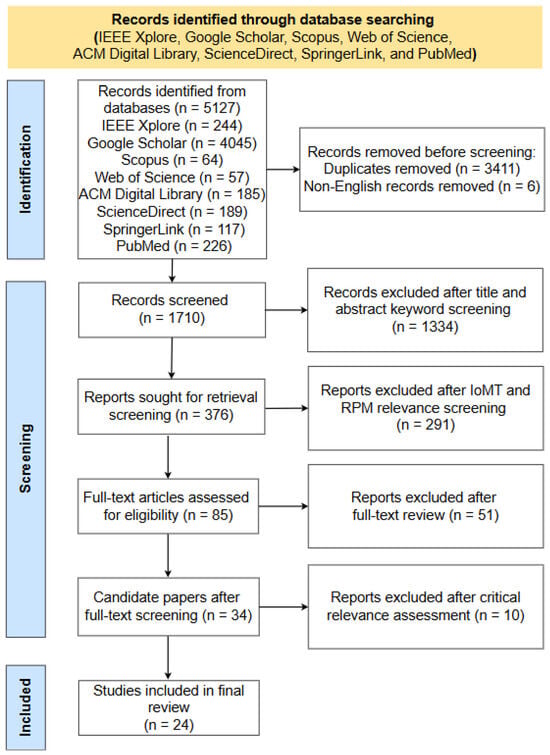
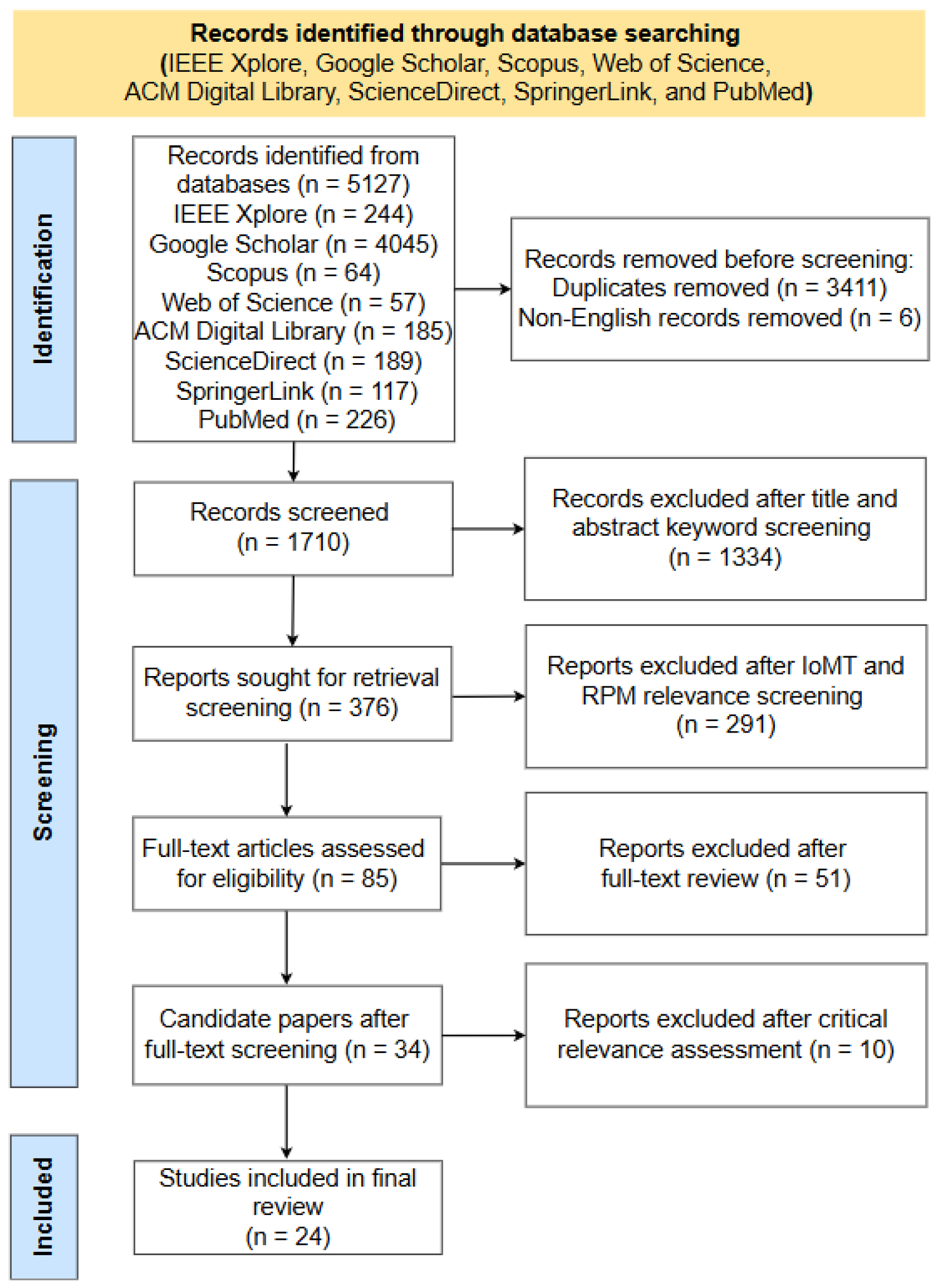
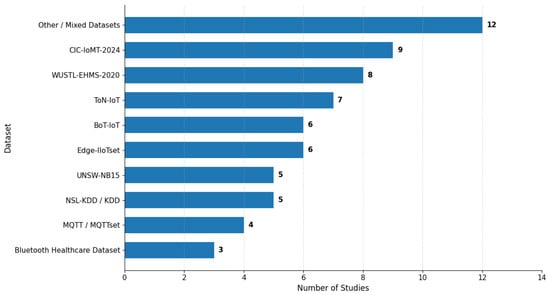
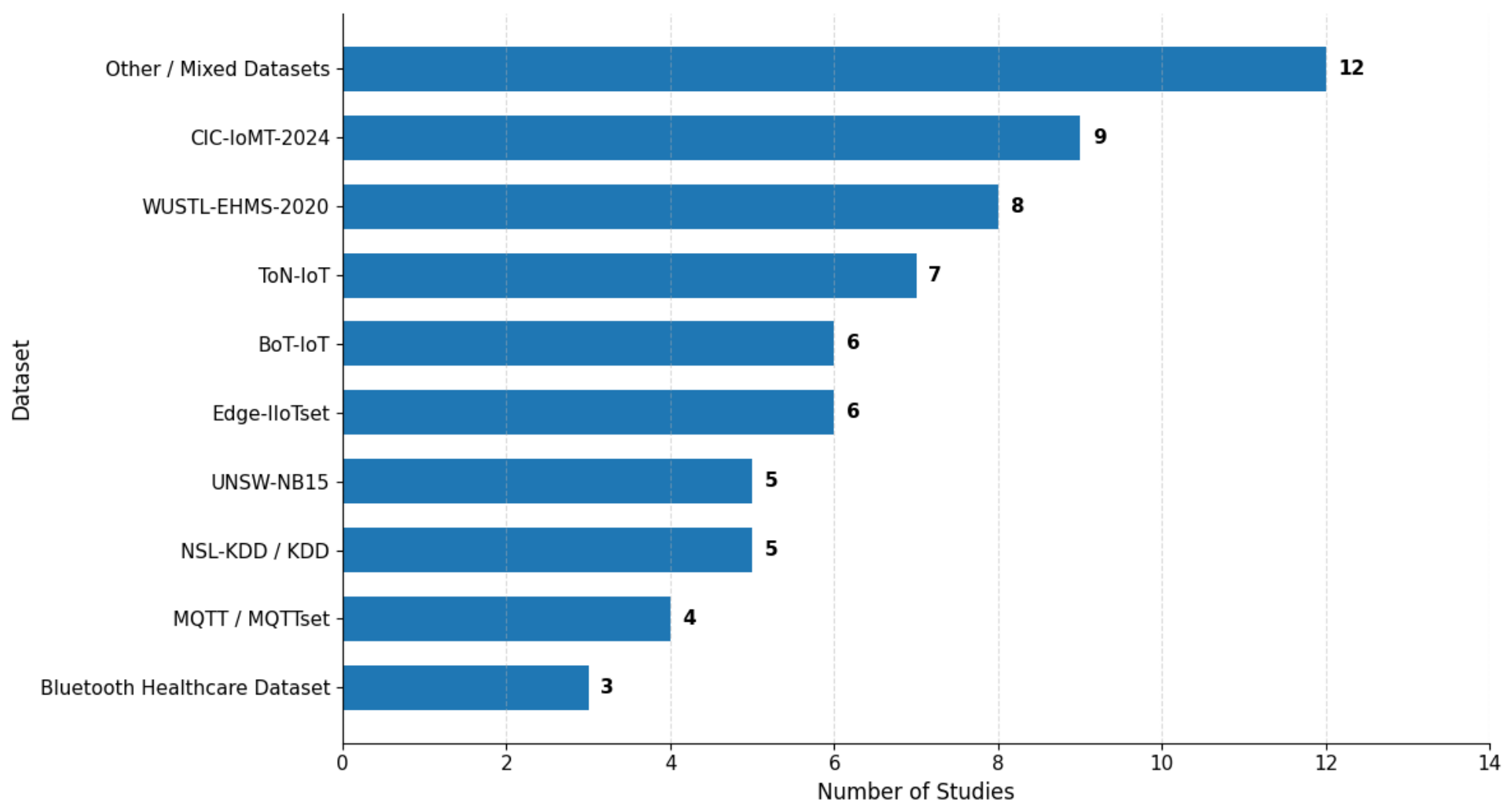
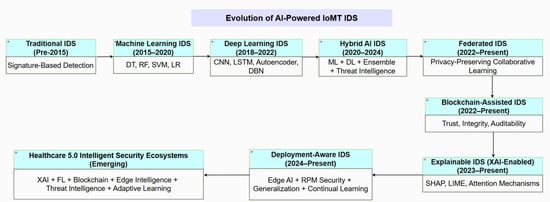
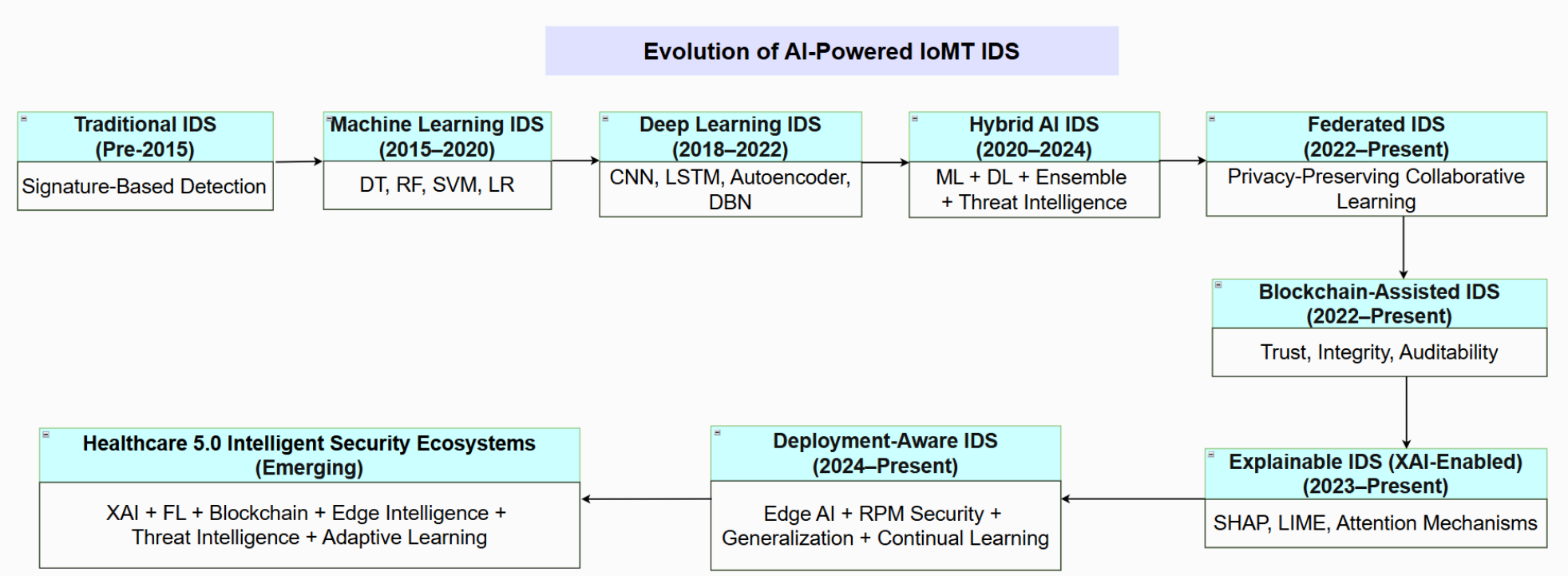
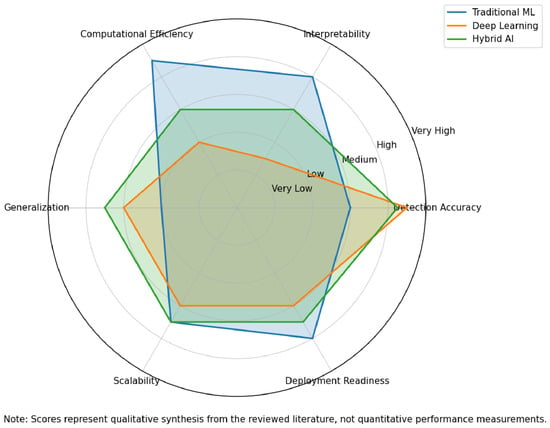
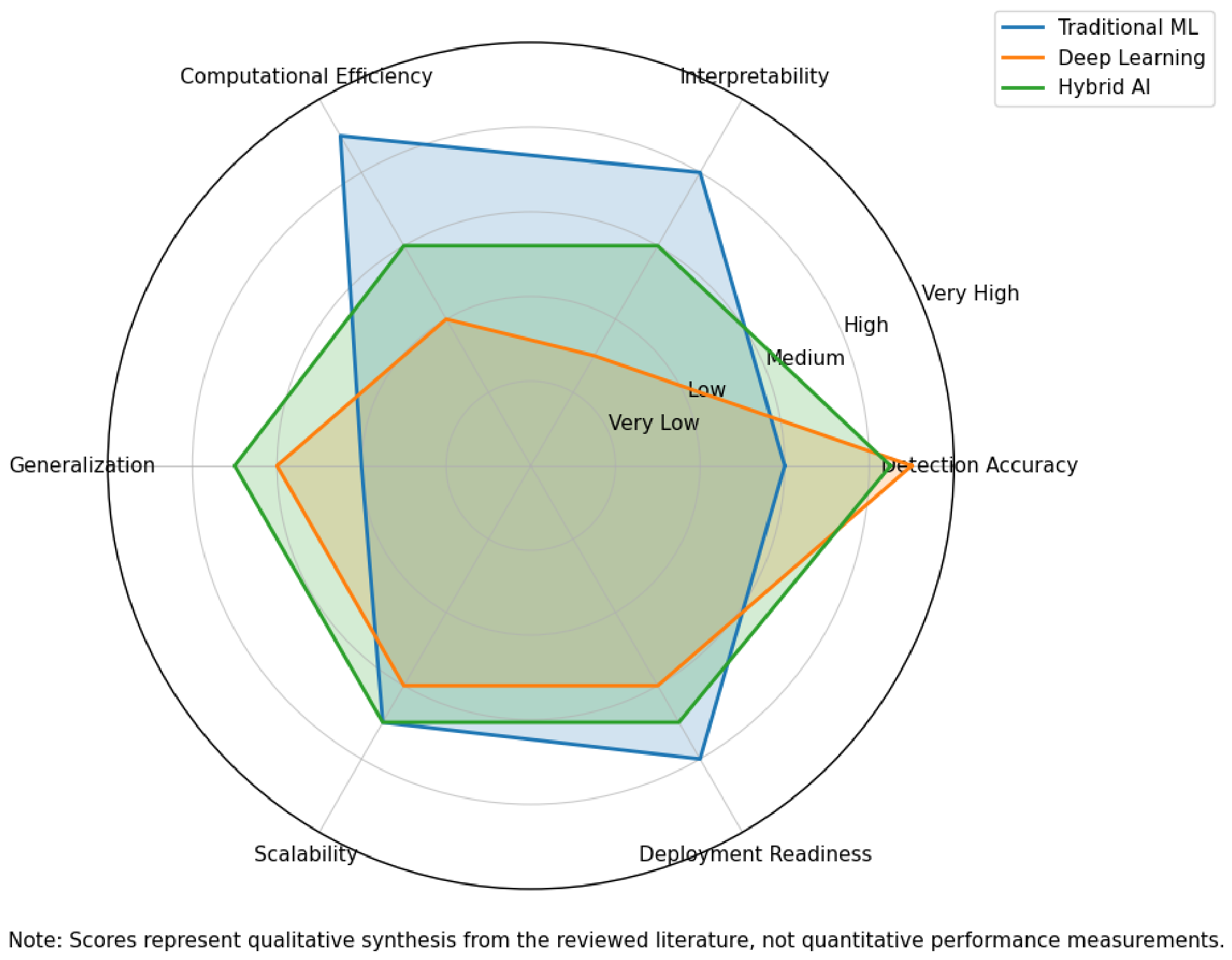
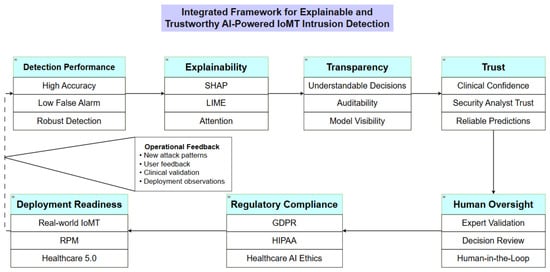
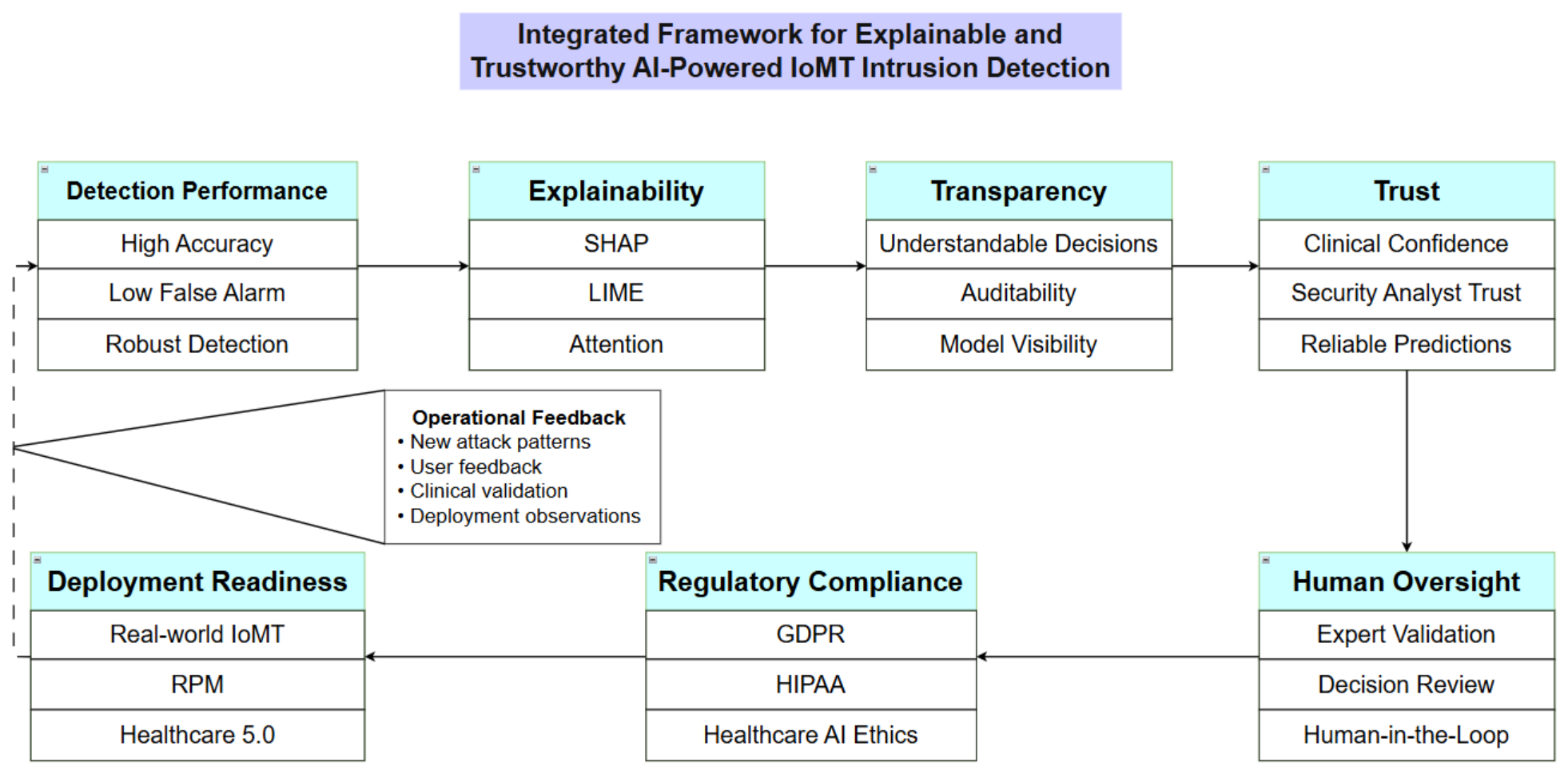
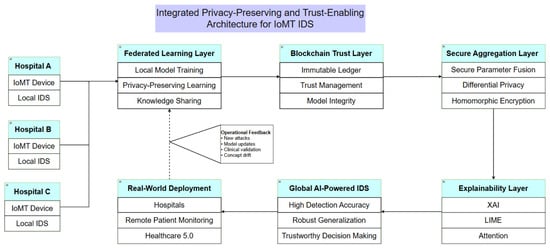
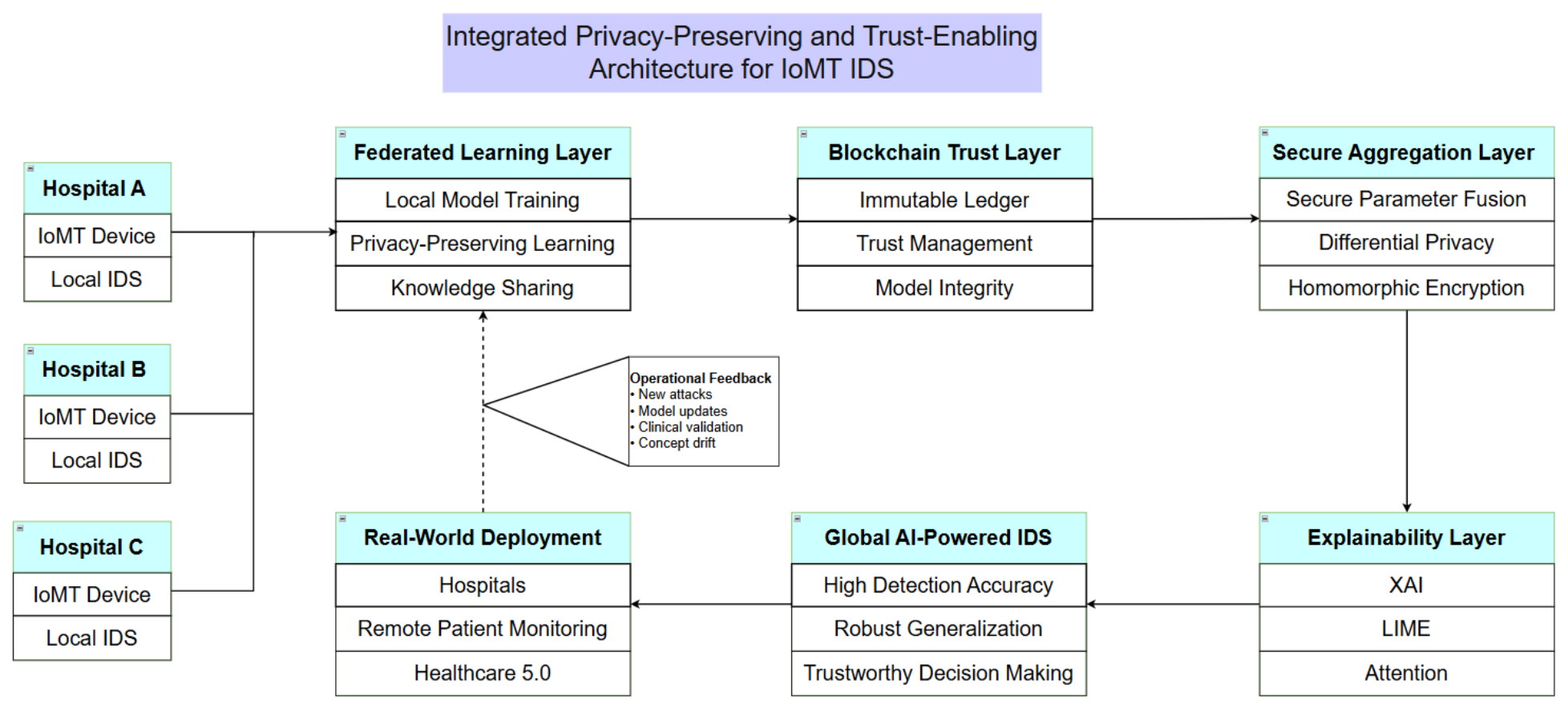
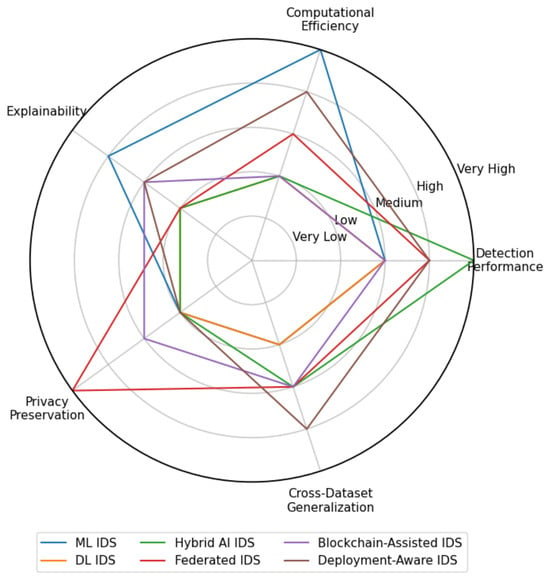
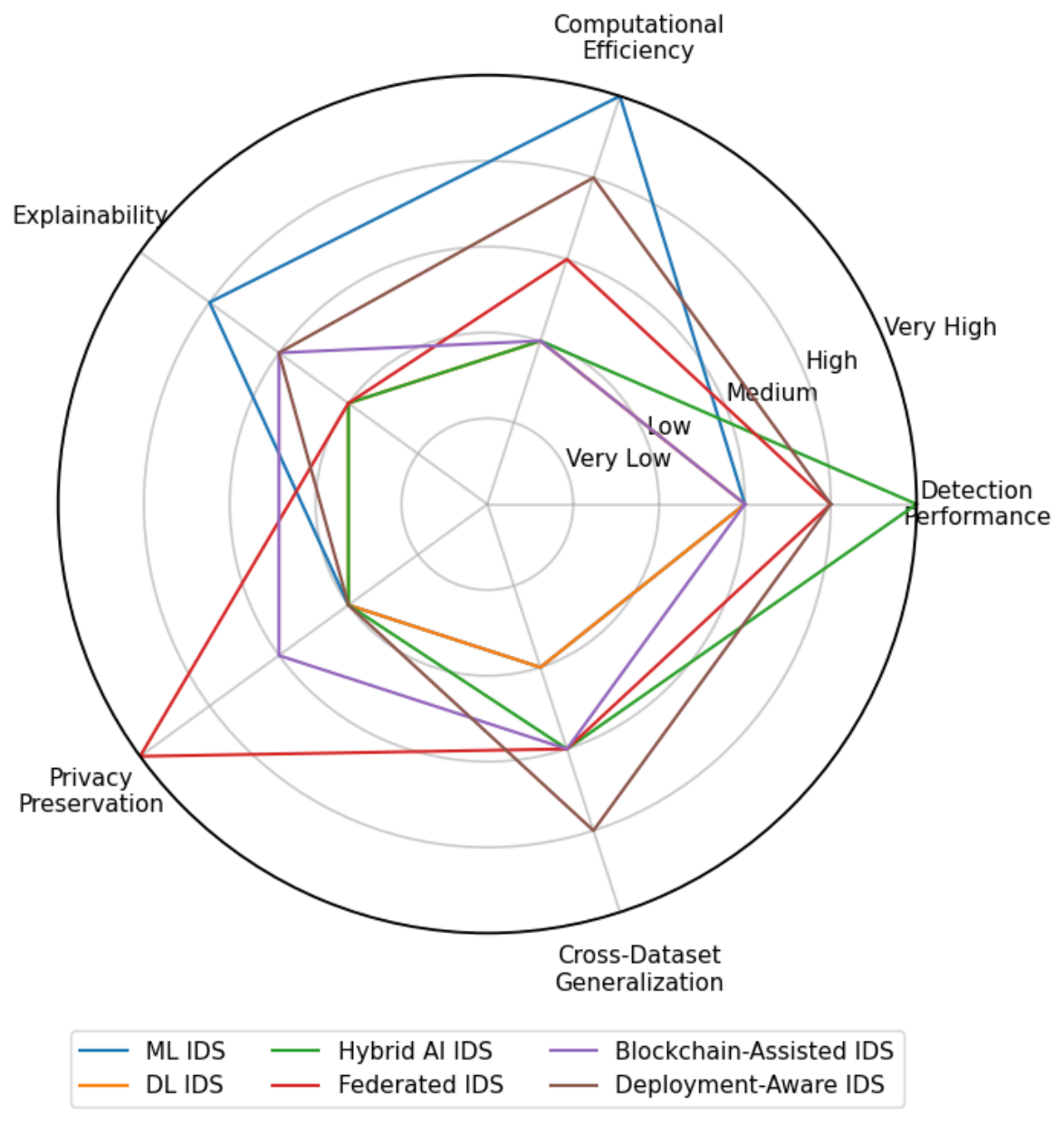
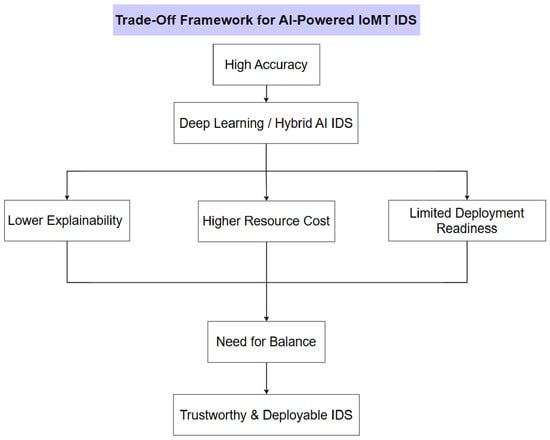
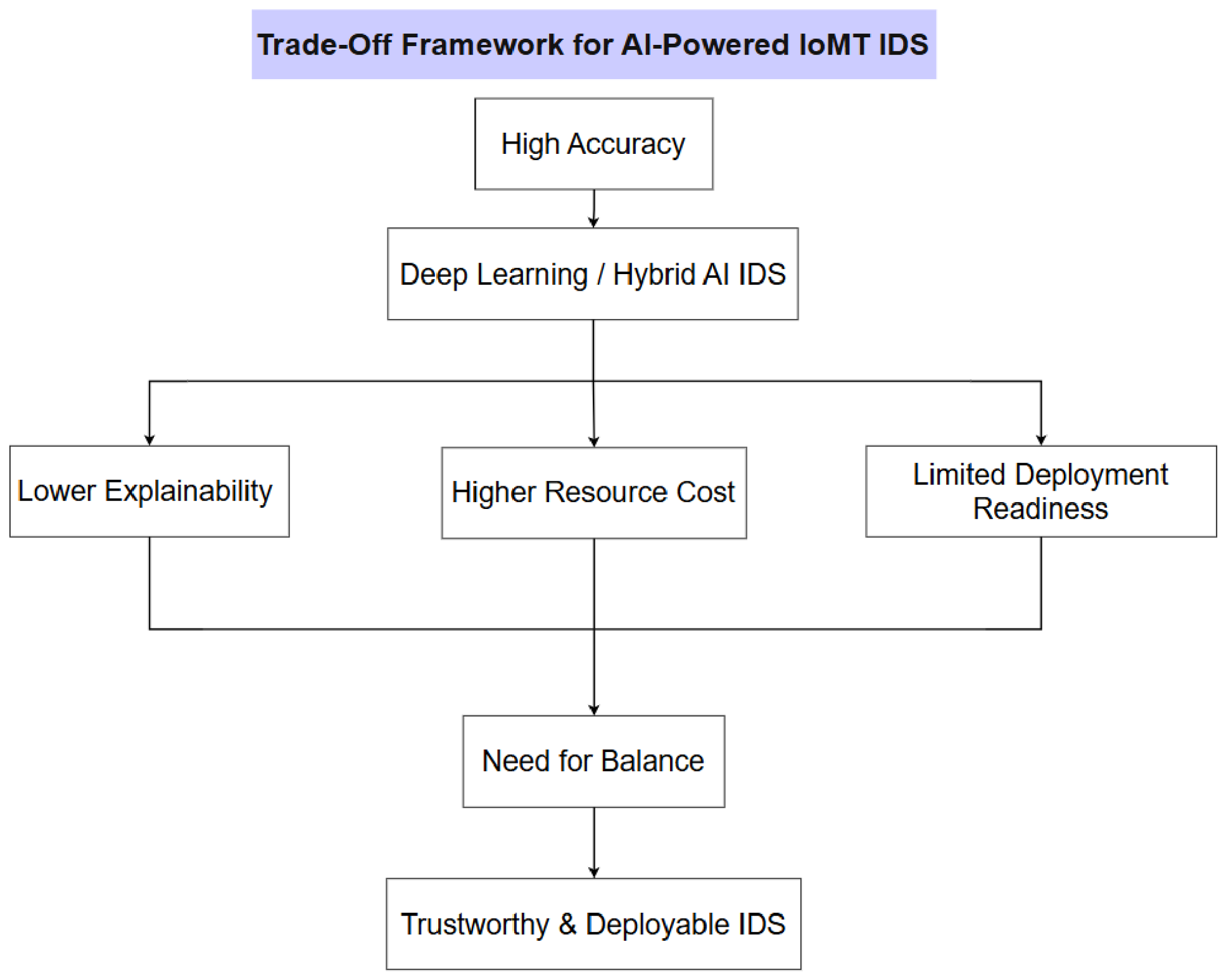
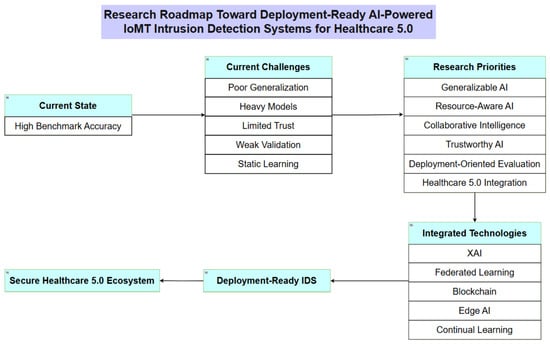
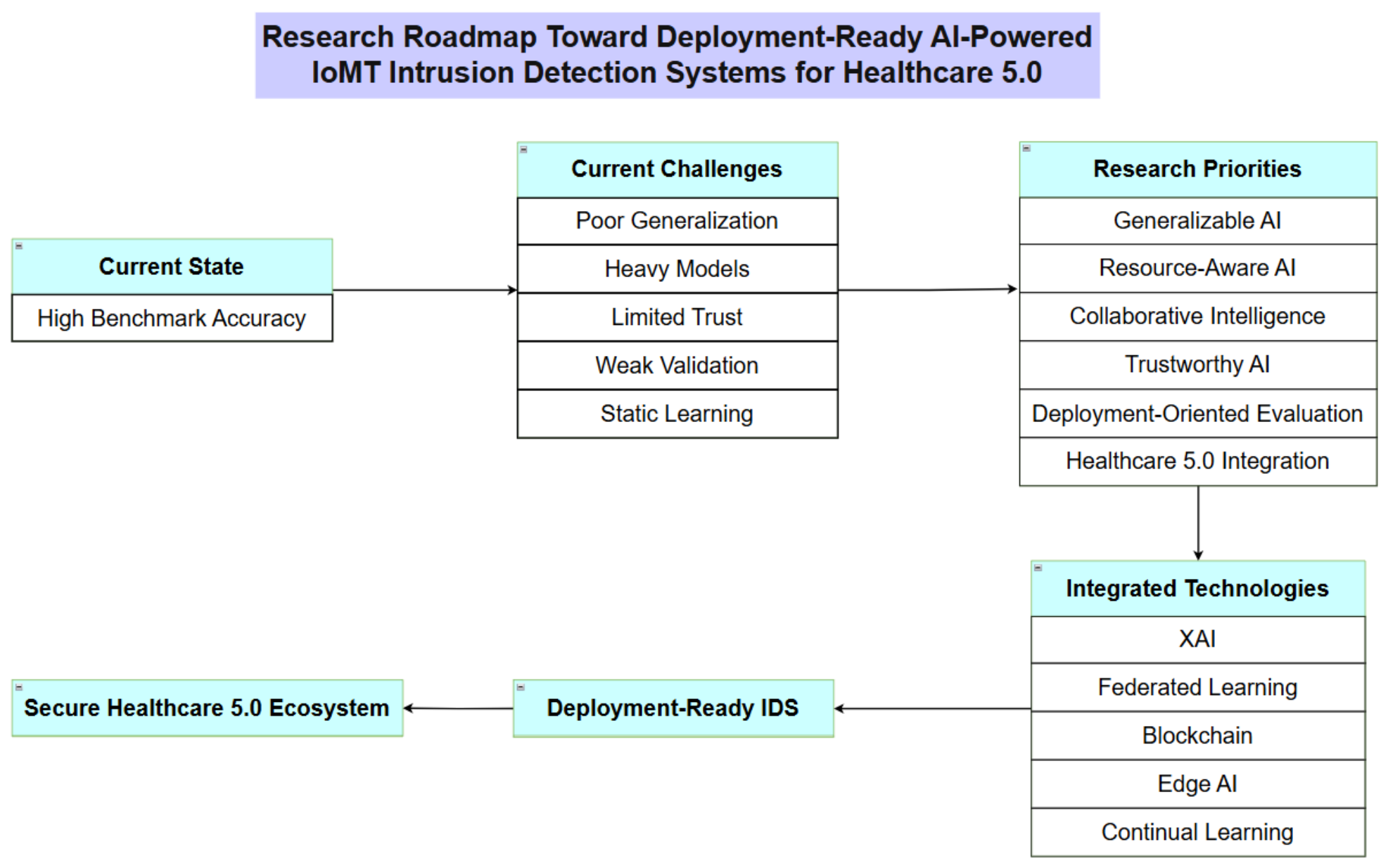
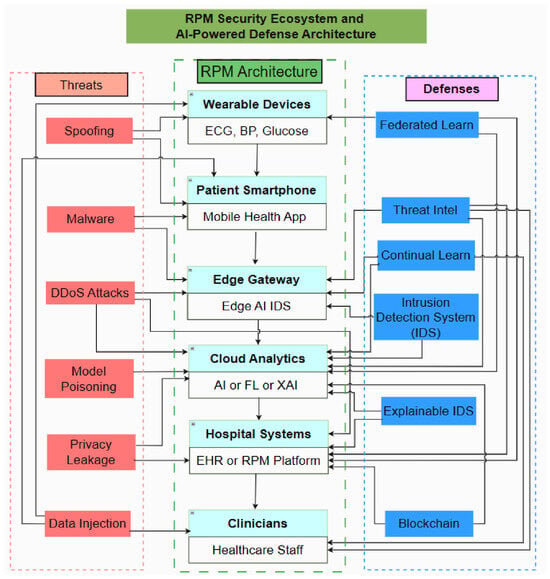
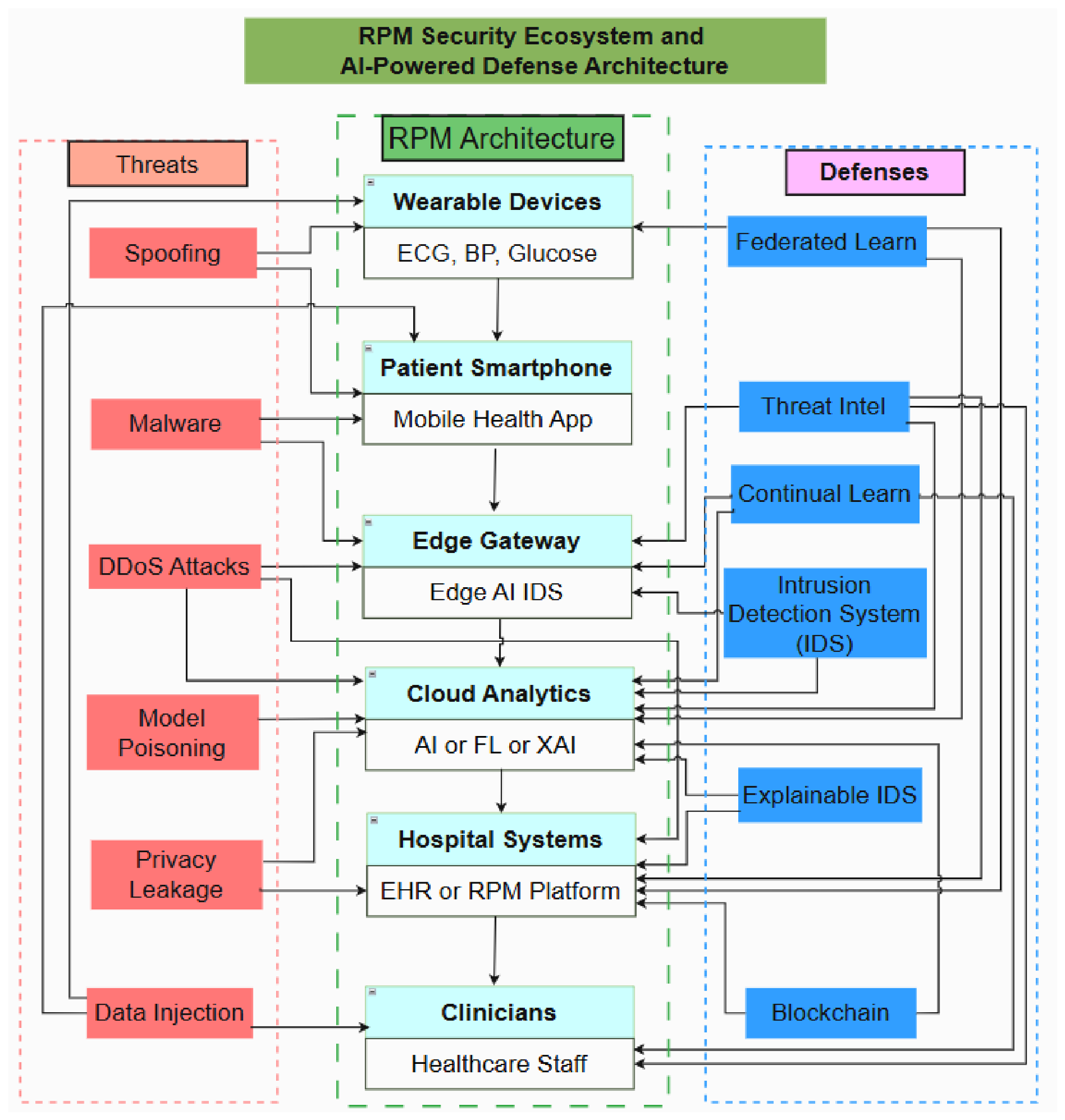

Disclaimer/Publisher’s Note: The statements, opinions and data contained in all publications are solely those of the individual author(s) and contributor(s) and not of MDPI and/or the editor(s). MDPI and/or the editor(s) disclaim responsibility for any injury to people or property resulting from any ideas, methods, instructions or products referred to in the content. |
© 2026 by the authors. Licensee MDPI, Basel, Switzerland. This article is an open access article distributed under the terms and conditions of the Creative Commons Attribution (CC BY) license.