Article

Anomaly Detection in a Smart Industrial Machinery Plant Using IoT and Machine Learning

by
Angel Jaramillo-Alcazar
,
Jaime Govea
and
William Villegas-Ch
*
Escuela de Ingeniería en Ciberseguridad, Facultad de Ingenierías Ciencias Aplicadas, Universidad de Las Américas, Quito 170125, Ecuador
*
Author to whom correspondence should be addressed.
Sensors 2023, 23(19), 8286; https://doi.org/10.3390/s23198286
Submission received: 5 September 2023 / Revised: 25 September 2023 / Accepted: 2 October 2023 / Published: 7 October 2023
(This article belongs to the Special Issue AI and Big Data Analytics in Sensors and Applications)

Abstract

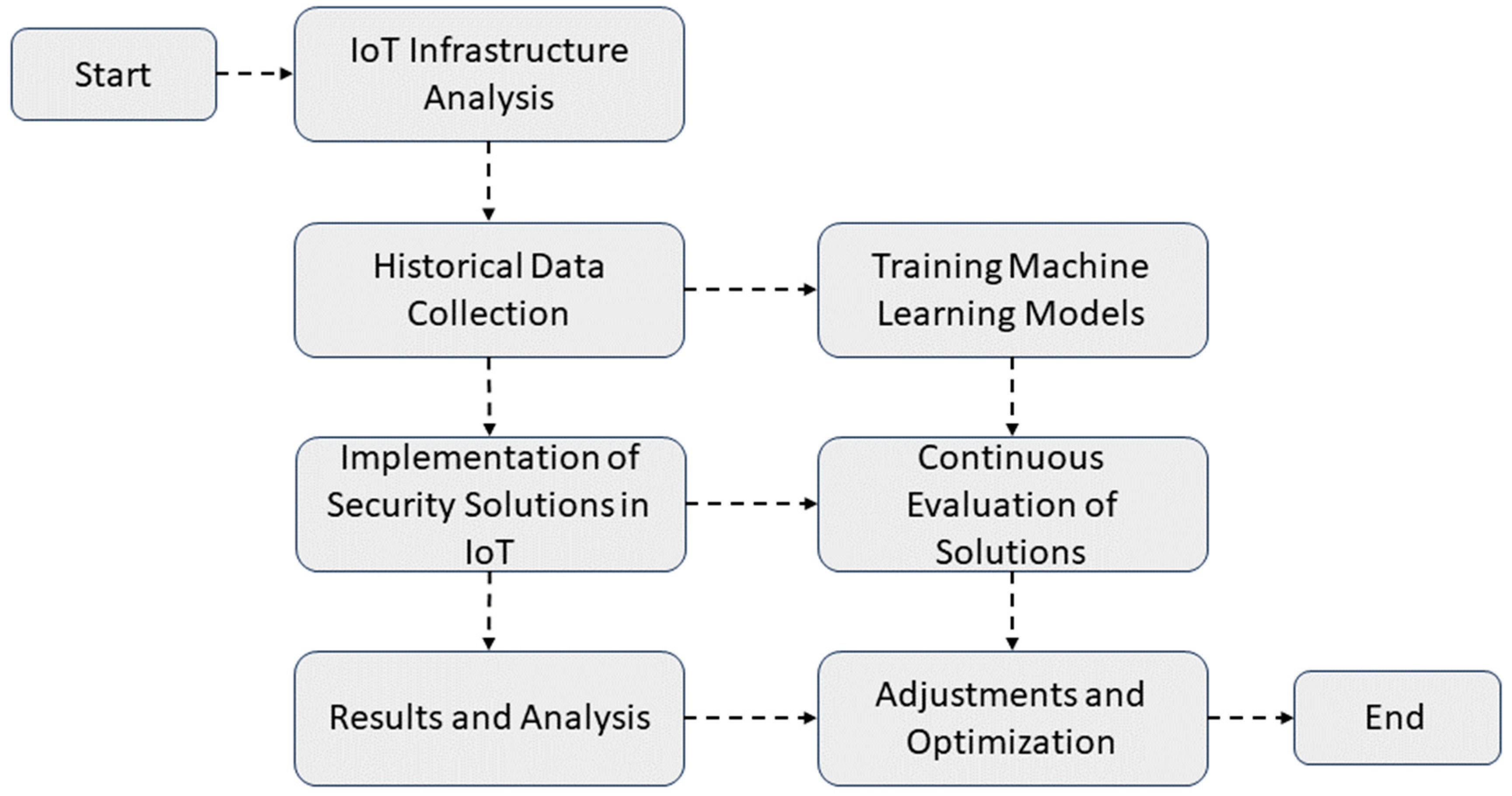
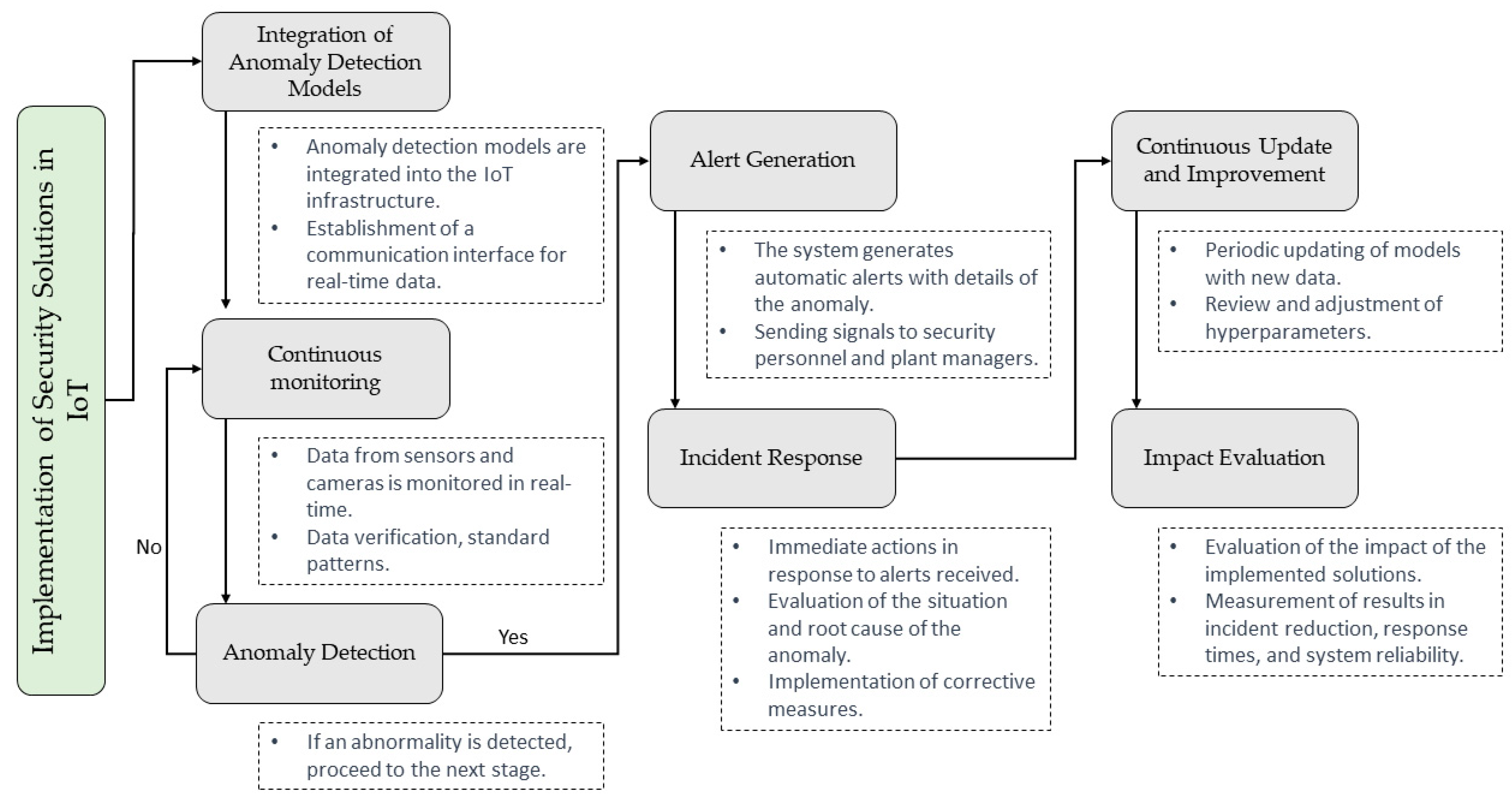
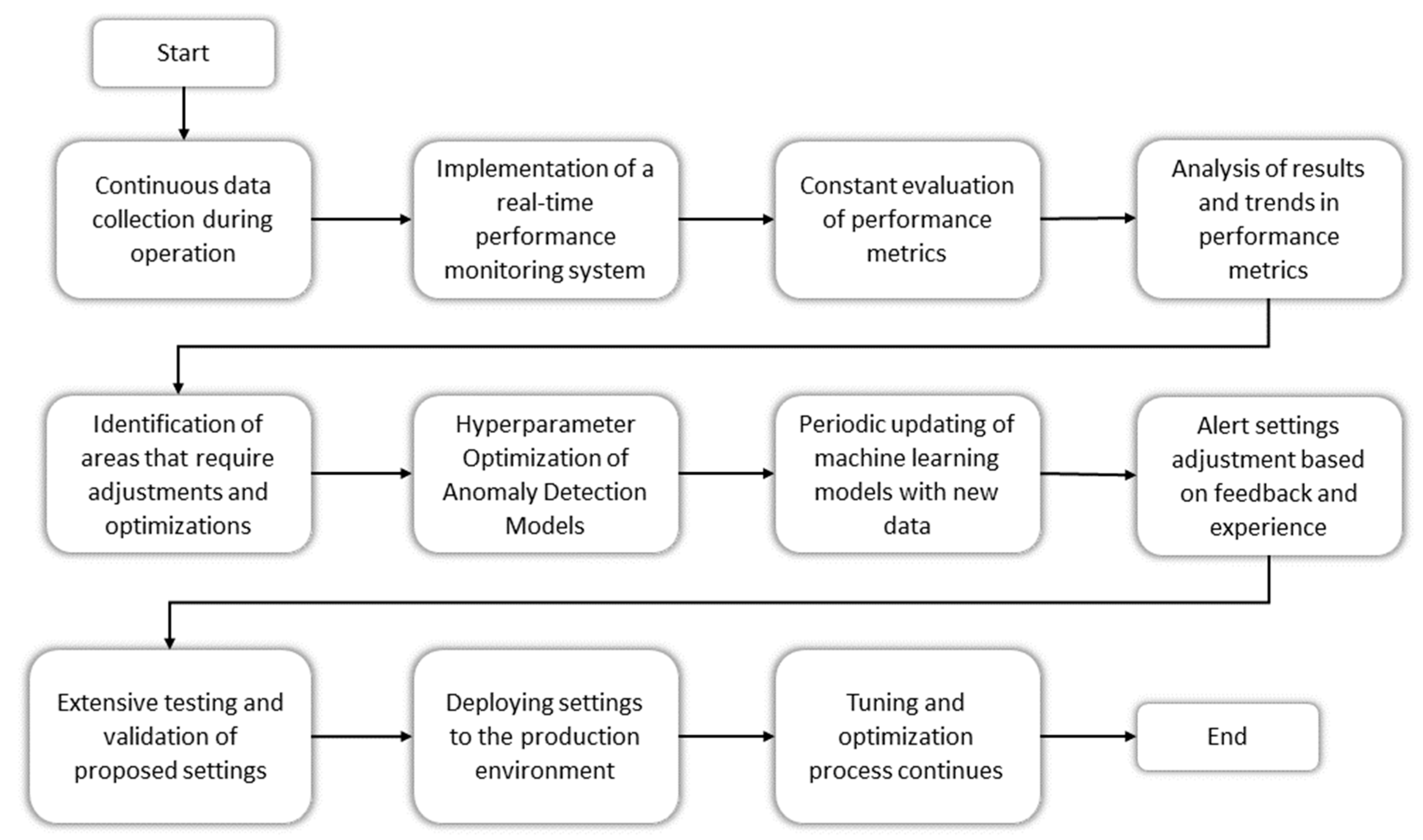
In an increasingly technology-driven world, the security of Internet-of-Things systems has become a top priority. This article presents a study on the implementation of security solutions in an innovative manufacturing plant using IoT and machine learning. The research was based on collecting historical data from telemetry sensors, IoT cameras, and control devices in a smart manufacturing plant. The data provided the basis for training machine learning models, which were used for real-time anomaly detection. After training the machine learning models, we achieved a 13% improvement in the anomaly detection rate and a 3% decrease in the false positive rate. These results significantly impacted plant efficiency and safety, with faster and more effective responses seen to unusual events. The results showed that there was a significant impact on the efficiency and safety of the smart manufacturing plant. Improved anomaly detection enabled faster and more effective responses to unusual events, decreasing critical incidents and improving overall security. Additionally, algorithm optimization and IoT infrastructure improved operational efficiency by reducing unscheduled downtime and increasing resource utilization. This study highlights the effectiveness of machine learning-based security solutions by comparing the results with those of previous research on IoT security and anomaly detection in industrial environments. The adaptability of these solutions makes them applicable in various industrial and commercial environments.
Keywords: IoT; machine learning; anomaly detection; operating efficiency IoT; machine learning; anomaly detection; operating efficiency