Article

Cloaking of Equilateral Triangle Patch Antennas and Antenna Arrays with Planar Coated Metasurfaces

1
Department of Electrical and Computer Engineering, University of Mississippi, Oxford, MS 38677-1848, USA
2
Intel Corporation, Hillsboro, OR 97124, USA
*
Authors to whom correspondence should be addressed.
Sensors 2023, 23(12), 5517; https://doi.org/10.3390/s23125517
Submission received: 10 May 2023 / Revised: 7 June 2023 / Accepted: 10 June 2023 / Published: 12 June 2023
(This article belongs to the Special Issue 5G Antennas)

Abstract

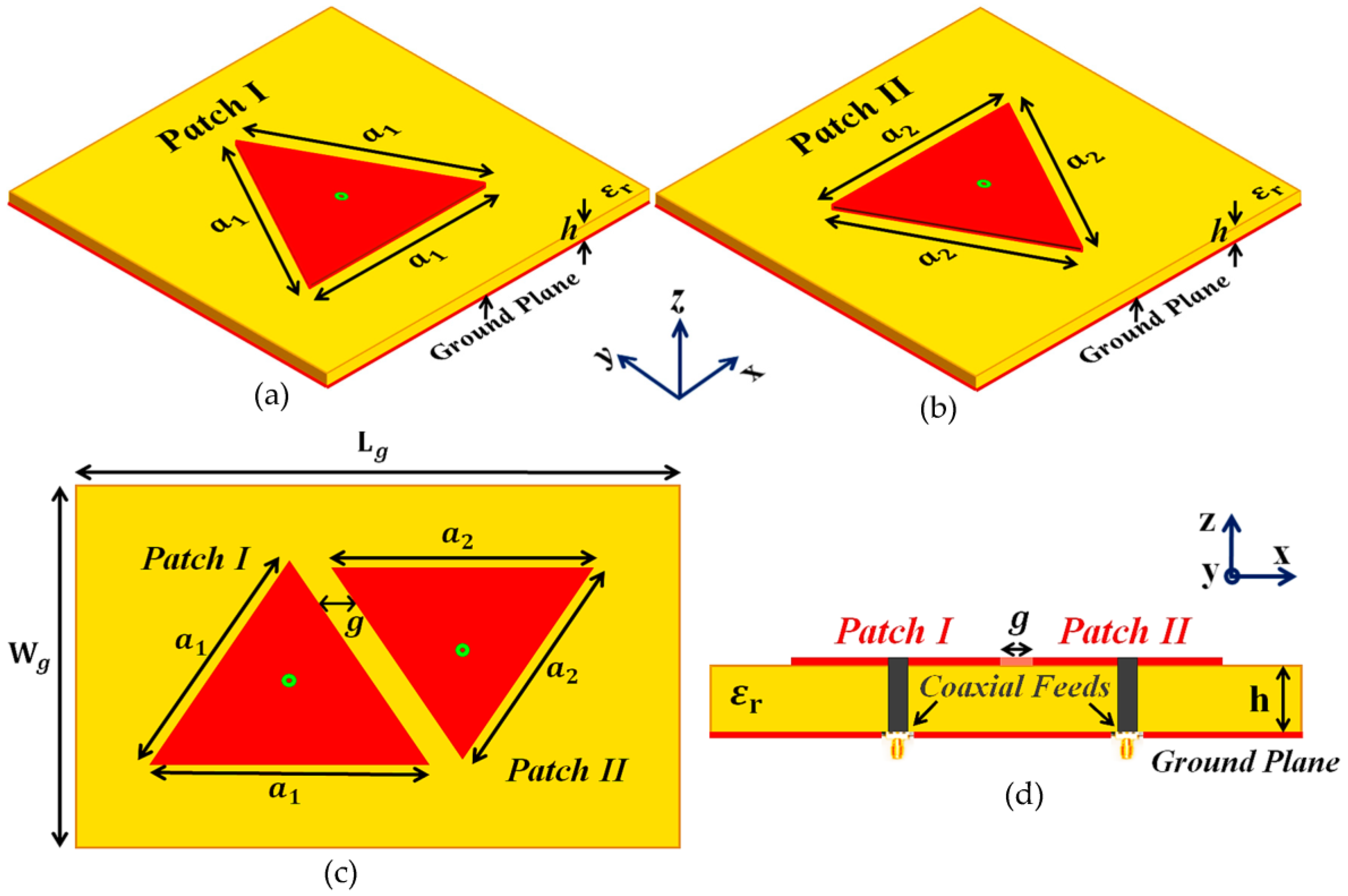
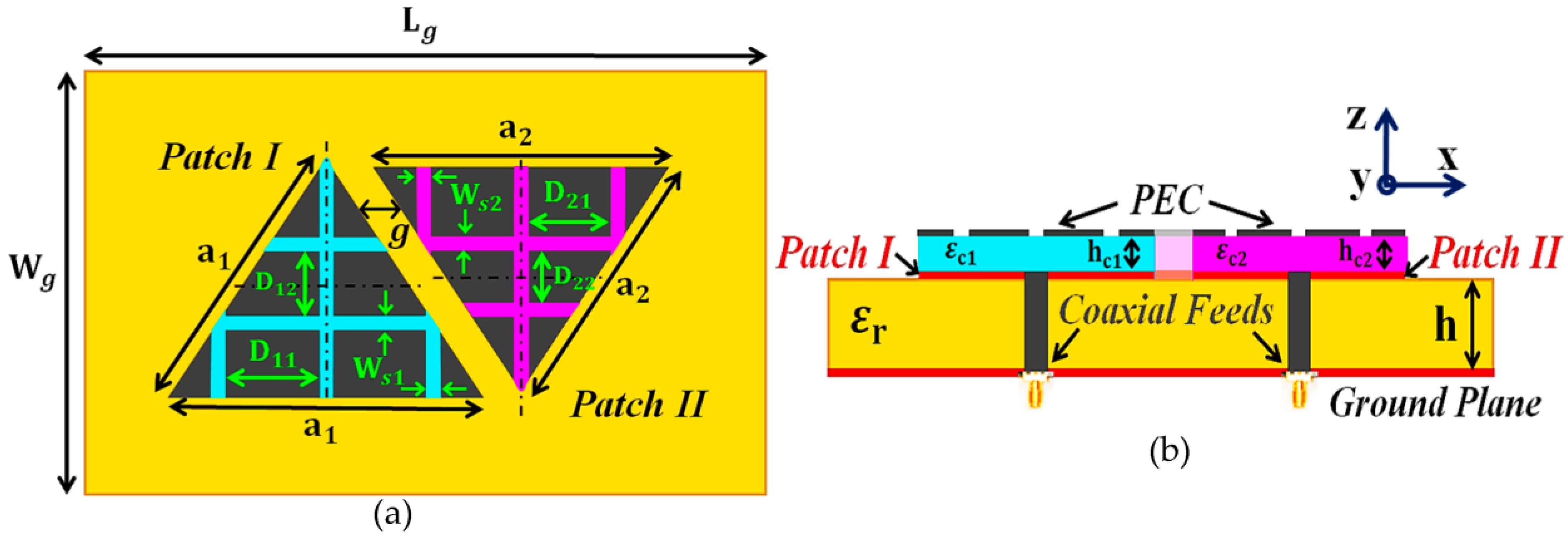
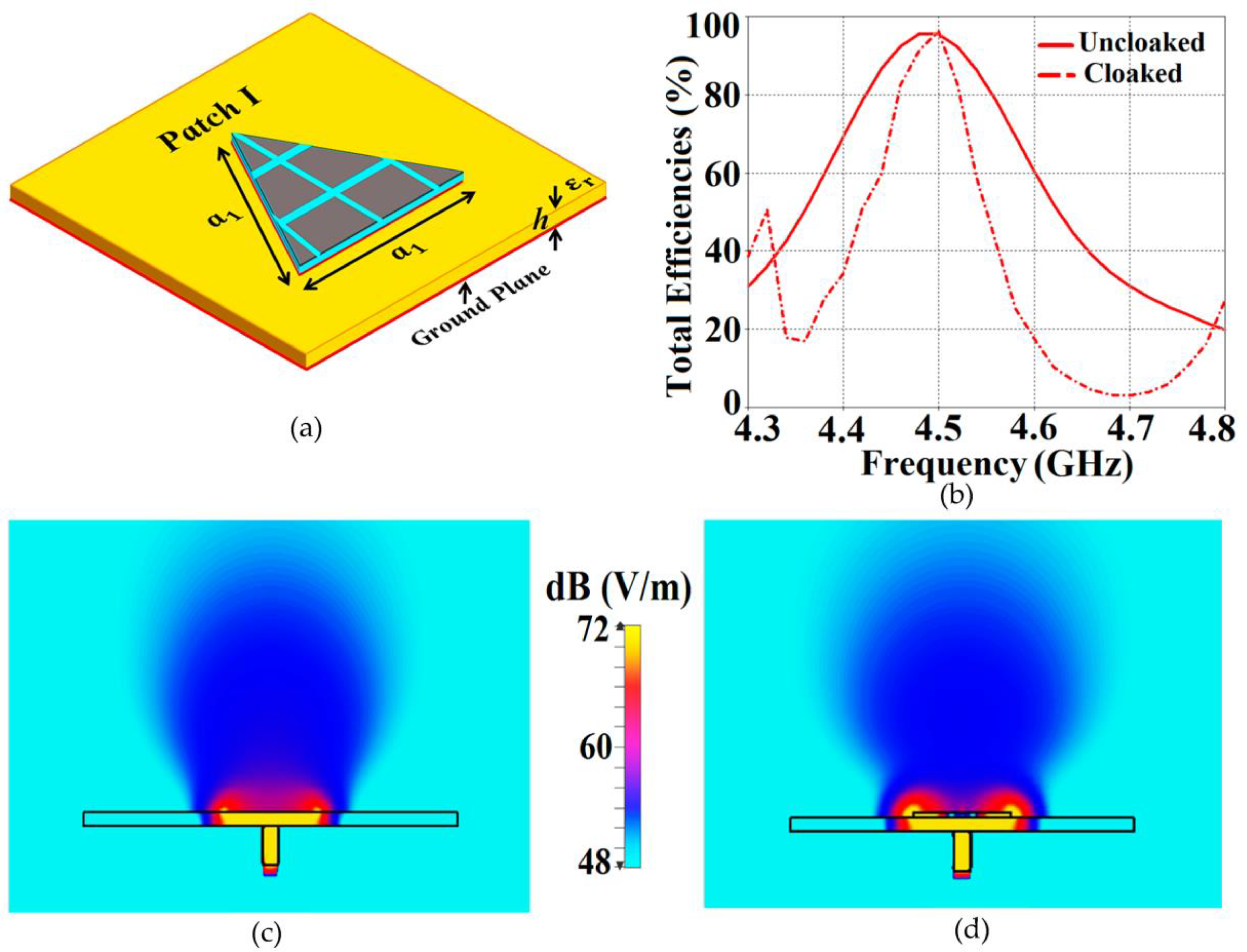
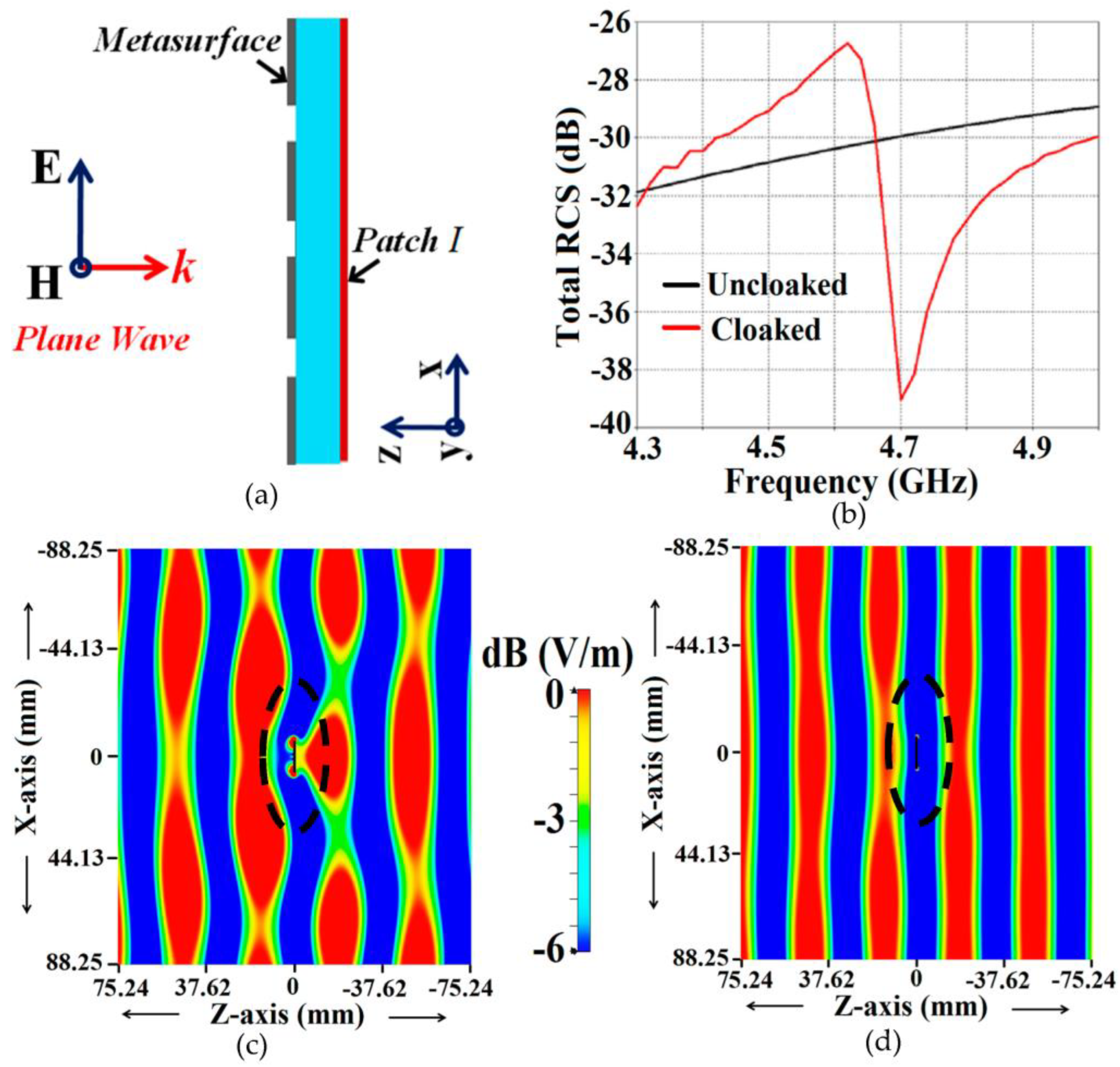
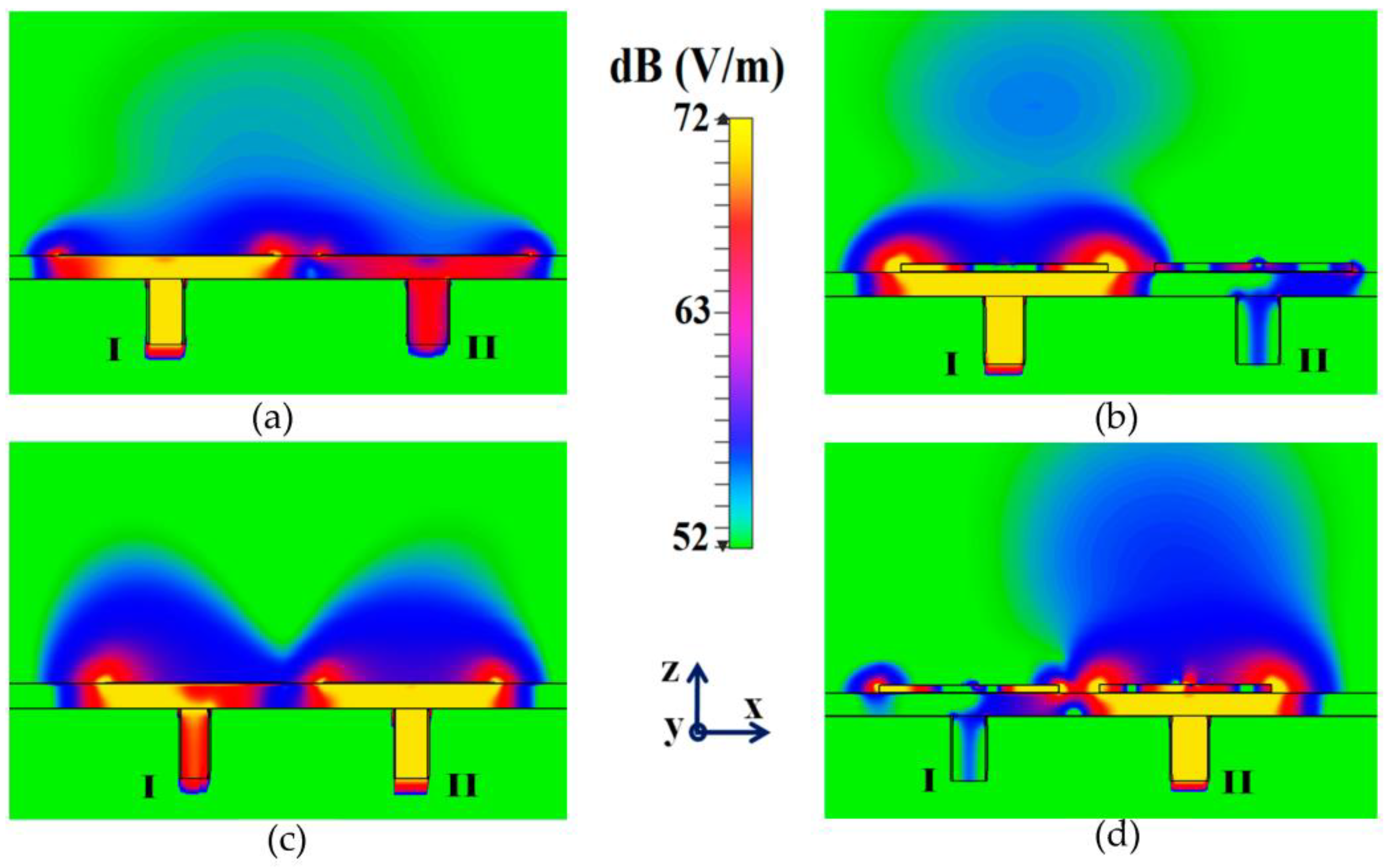
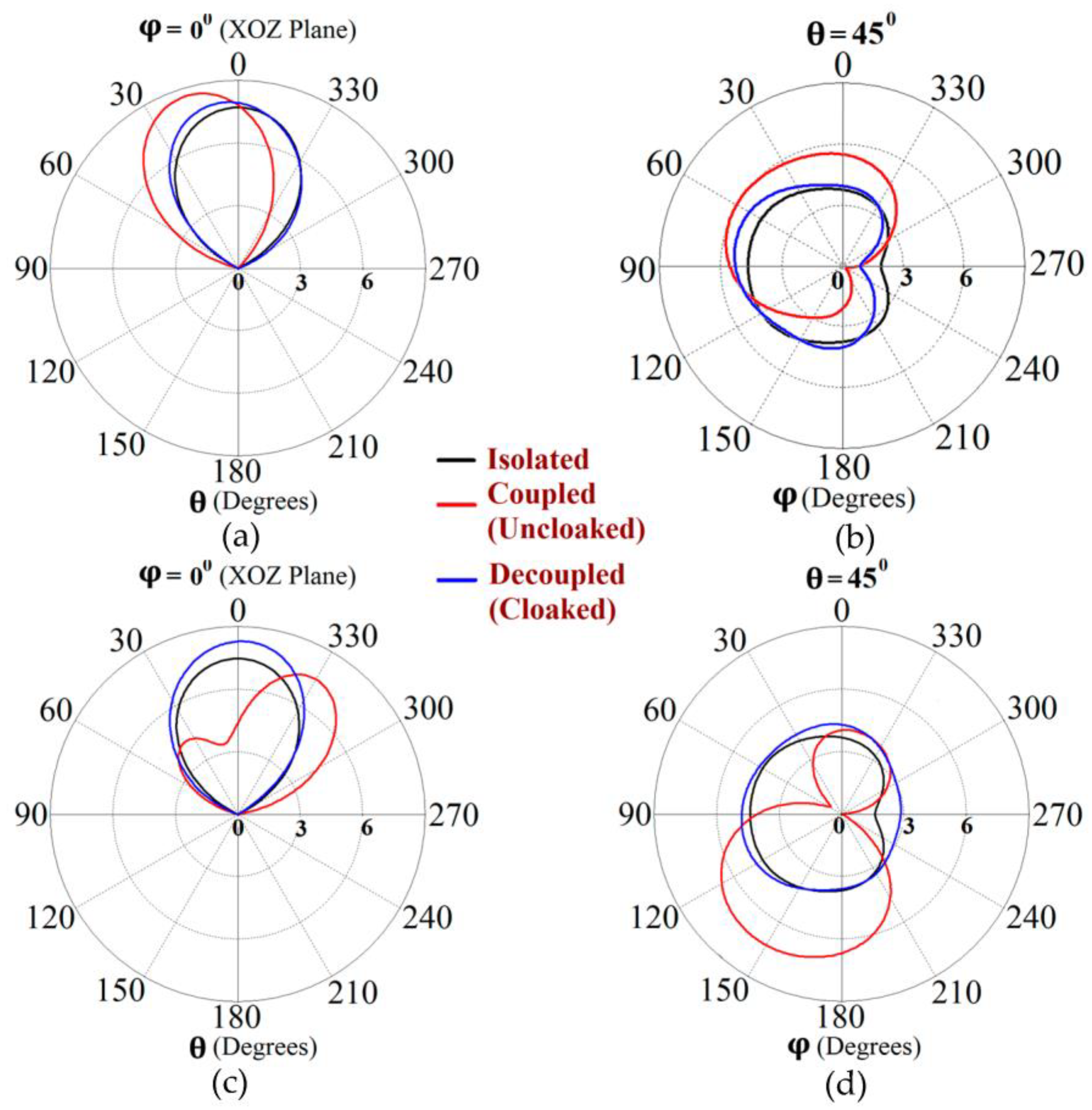
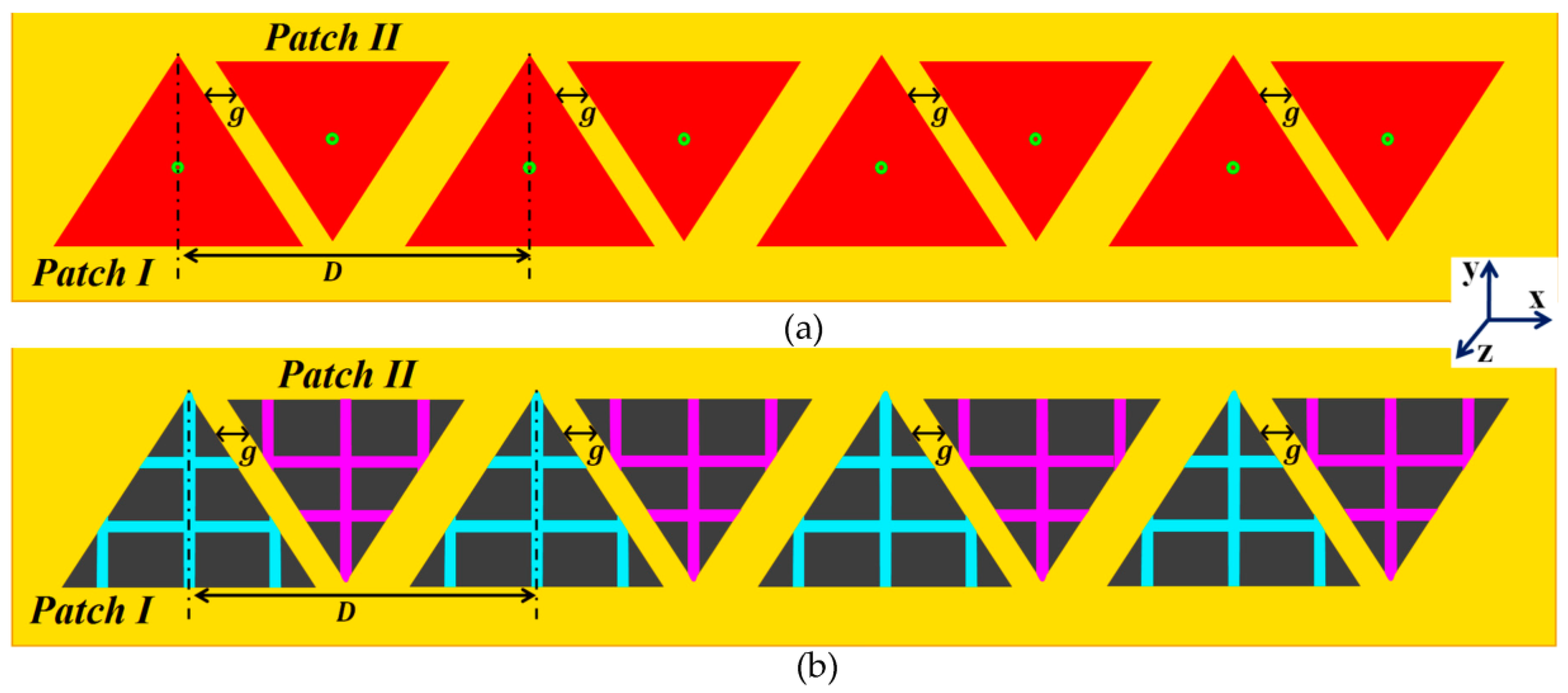
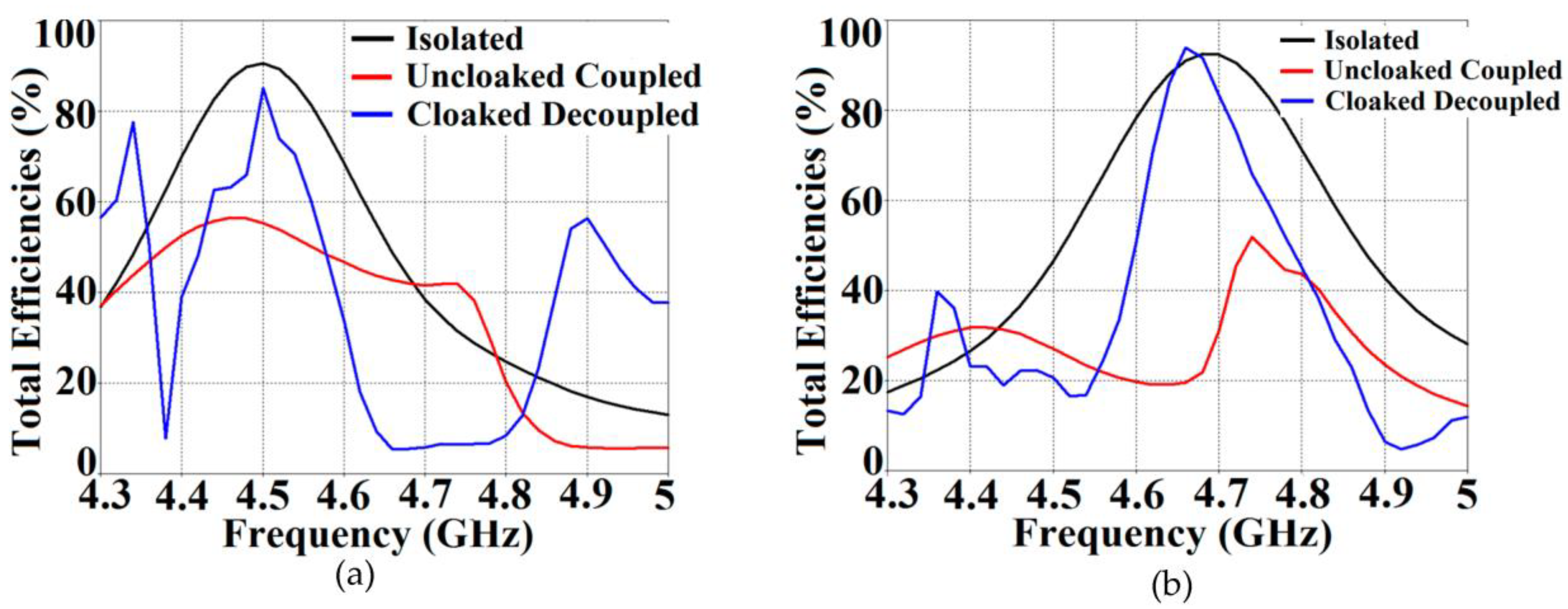
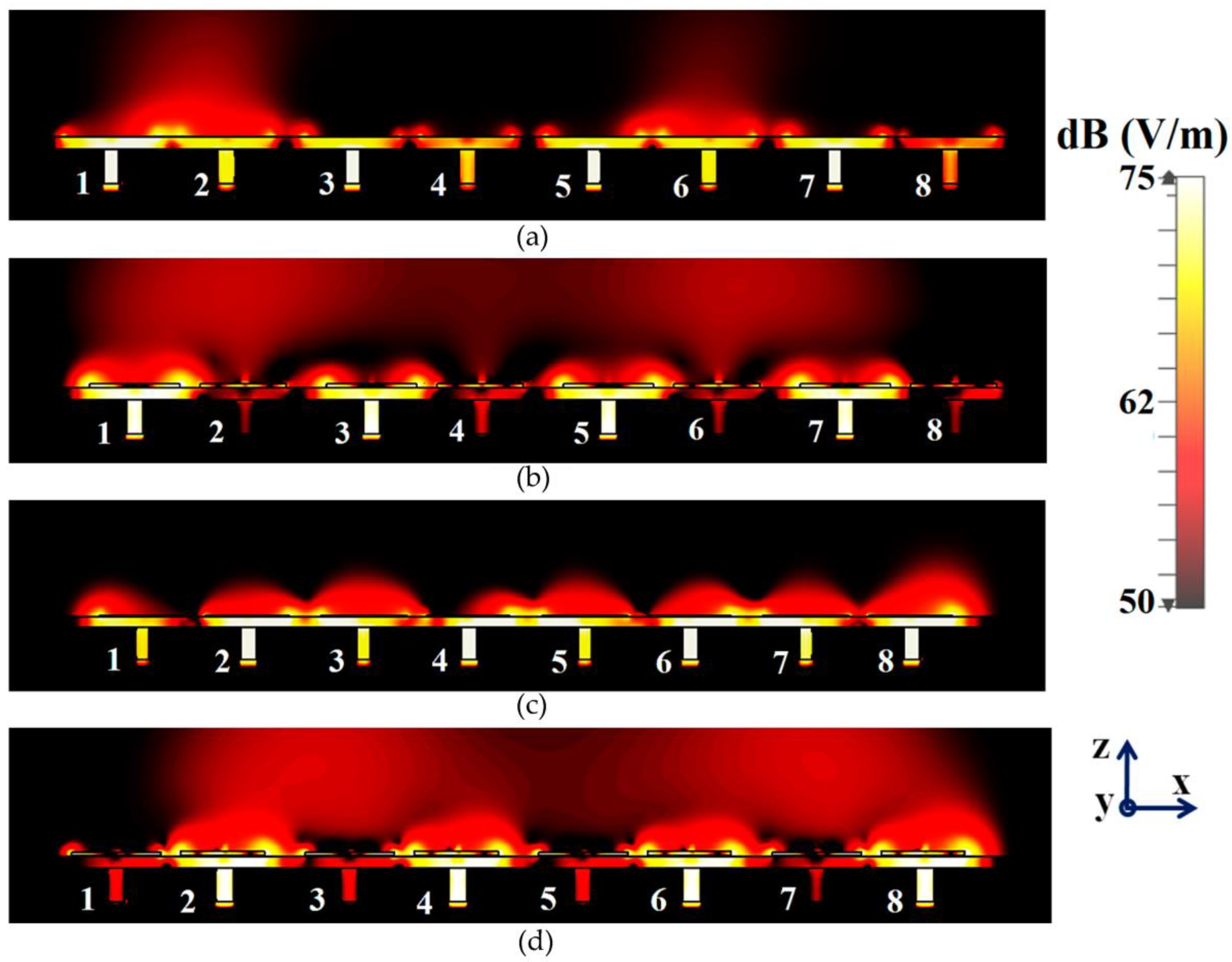
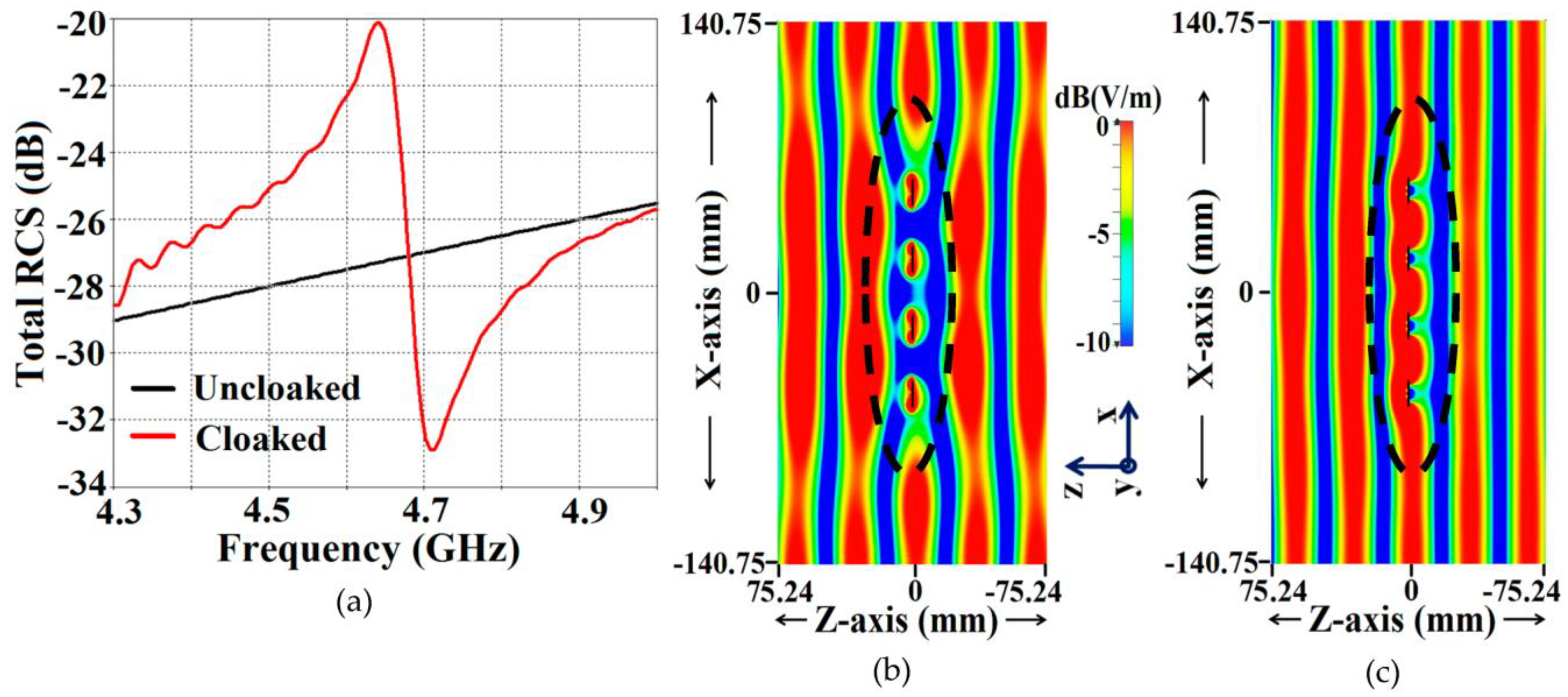
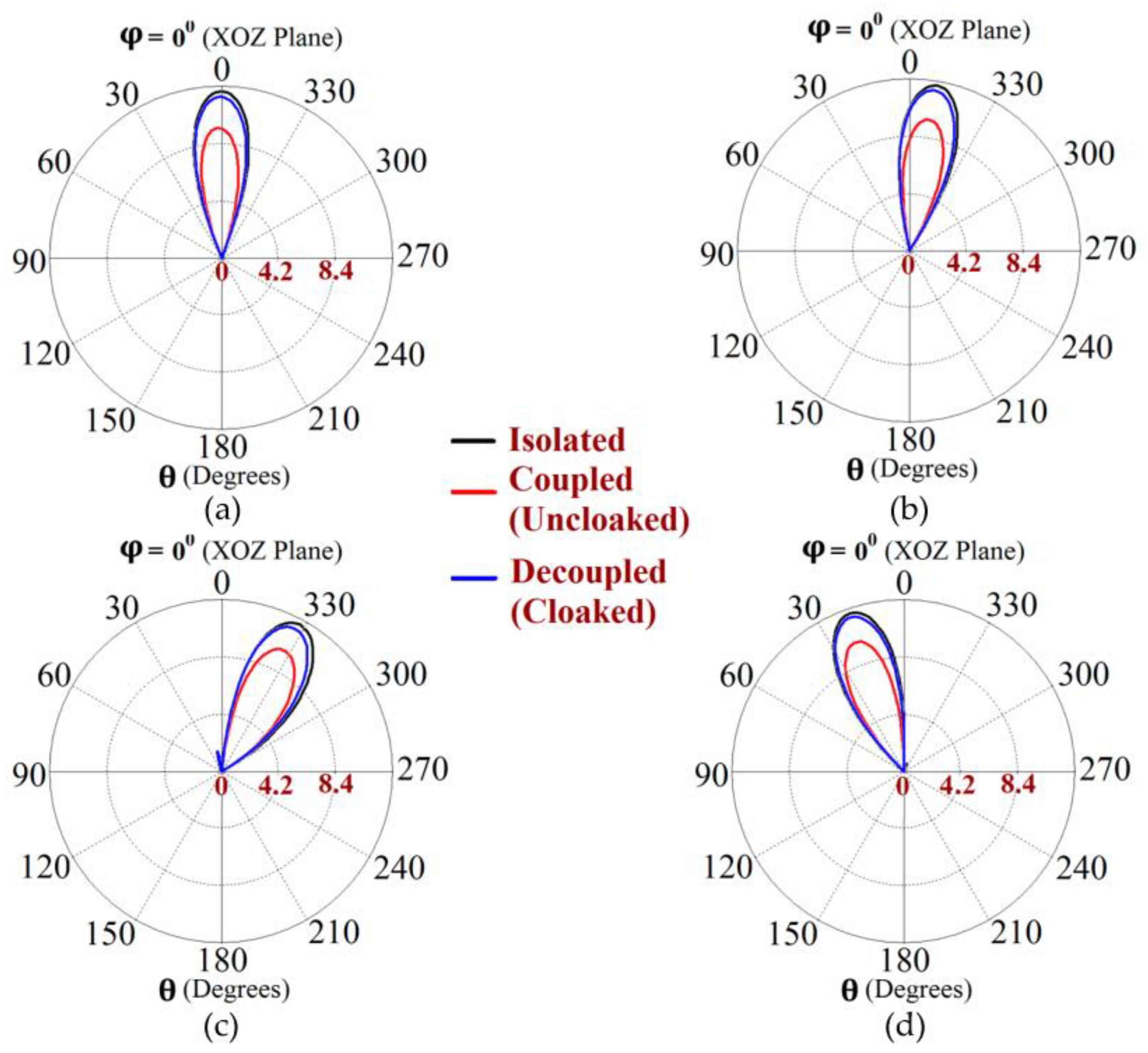
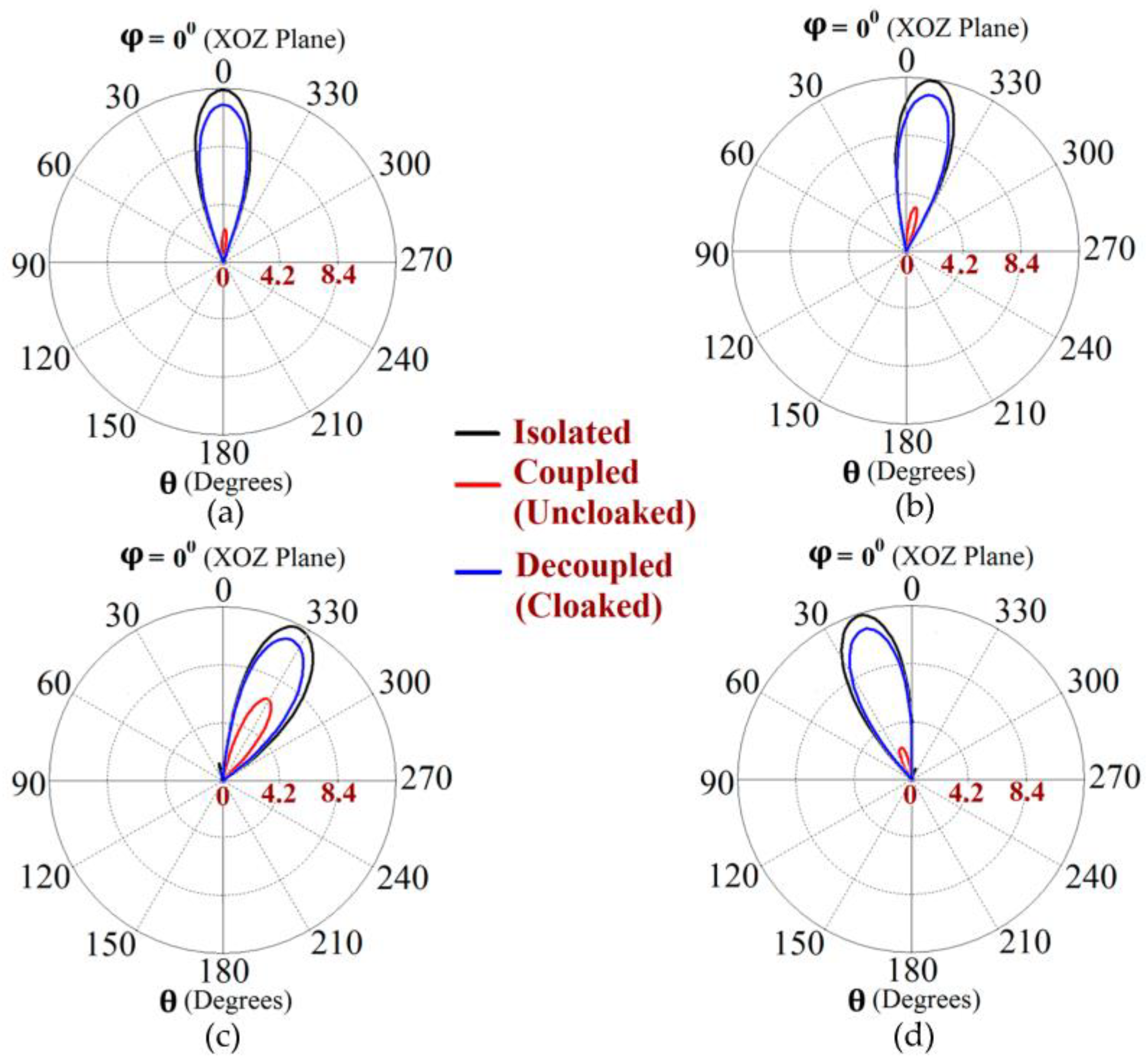
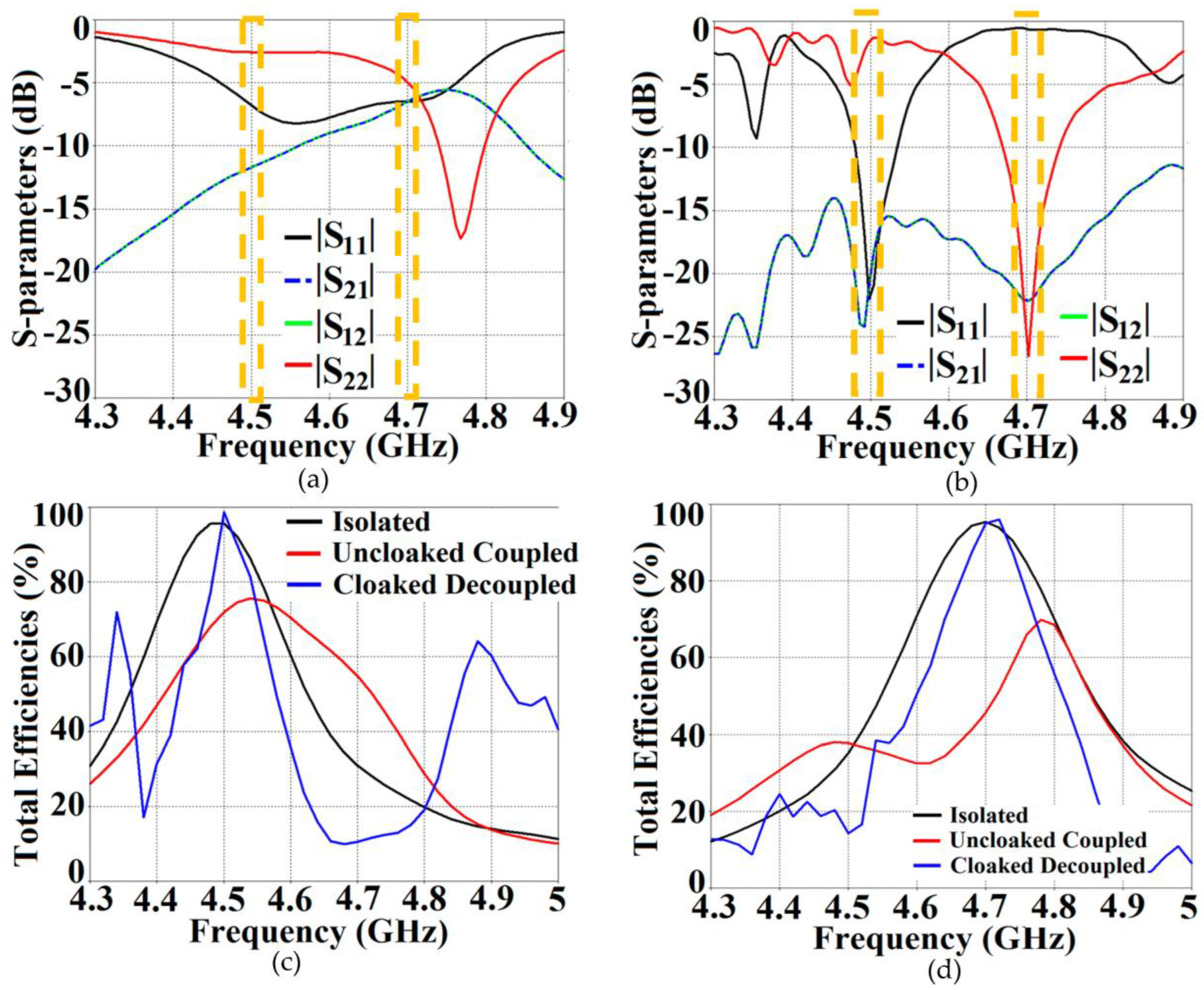
We have proposed an effective metasurface design to accomplish the cloaking of equilateral patch antennas and their array configuration. As such, we have exploited the concept of electromagnetic invisibility, employing the mantle cloaking technique with the intention to eliminate the destructive interference ensuing between two distinct triangular patches situated in a very congested arrangement (sub-wavelength separation is maintained between the patch elements). Based on the numerous simulation results, we demonstrate that the implementation of the planar coated metasurface cloaks onto the patch antenna surfaces compels them to become invisible to each other, at the intended frequencies. In effect, an individual antenna element does not sense the presence of the other, in spite of being in a rather close vicinity. We also exhibit that the cloaks successfully reinstate the radiation attributes of each antenna in such a way that it emulates its respective performance in an isolated environment. Moreover, we have extended the cloak design to an interleaved one-dimensional array of the two patch antennas, and it is shown that the coated metasurfaces assure the efficient performance of each array in terms of their matching as well as radiation characteristics, which in turn, enables them to radiate independently for various beam-scanning angles.
Keywords: cloaking; decoupling; metasurfaces; mutual interference; patch antennas cloaking; decoupling; metasurfaces; mutual interference; patch antennas