Article

Flaw Detection in Highly Scattering Materials Using a Simple Ultrasonic Sensor Employing Adaptive Template Matching

1
College of Civil Engineering, Nanjing Tech University, Nanjing 211816, China
2
Key Lab of Structures Dynamic Behavior and Control of the Ministry of Education, School of Civil Engineering, Harbin Institute of Technology, Harbin 150090, China
3
Key Lab of Smart Prevention and Mitigation of Civil Engineering Disasters of the Ministry of Industry and Information Technology, Harbin Institute of Technology, Harbin 150090, China
*
Author to whom correspondence should be addressed.
Sensors 2022, 22(1), 268; https://doi.org/10.3390/s22010268
Submission received: 4 December 2021 / Revised: 26 December 2021 / Accepted: 29 December 2021 / Published: 30 December 2021
(This article belongs to the Special Issue Smart Sensor Networks for Civil Infrastructure Monitoring)

Abstract

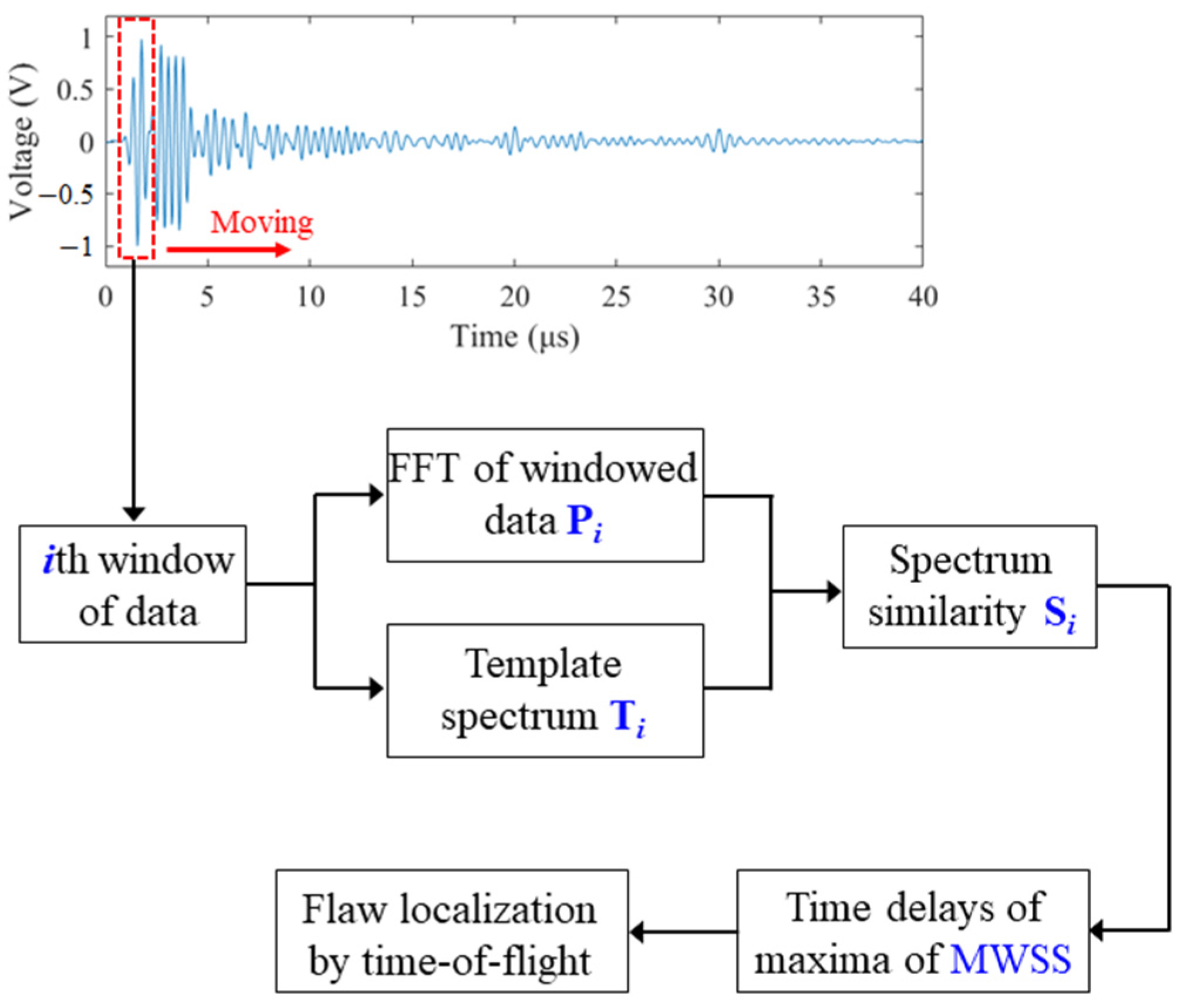
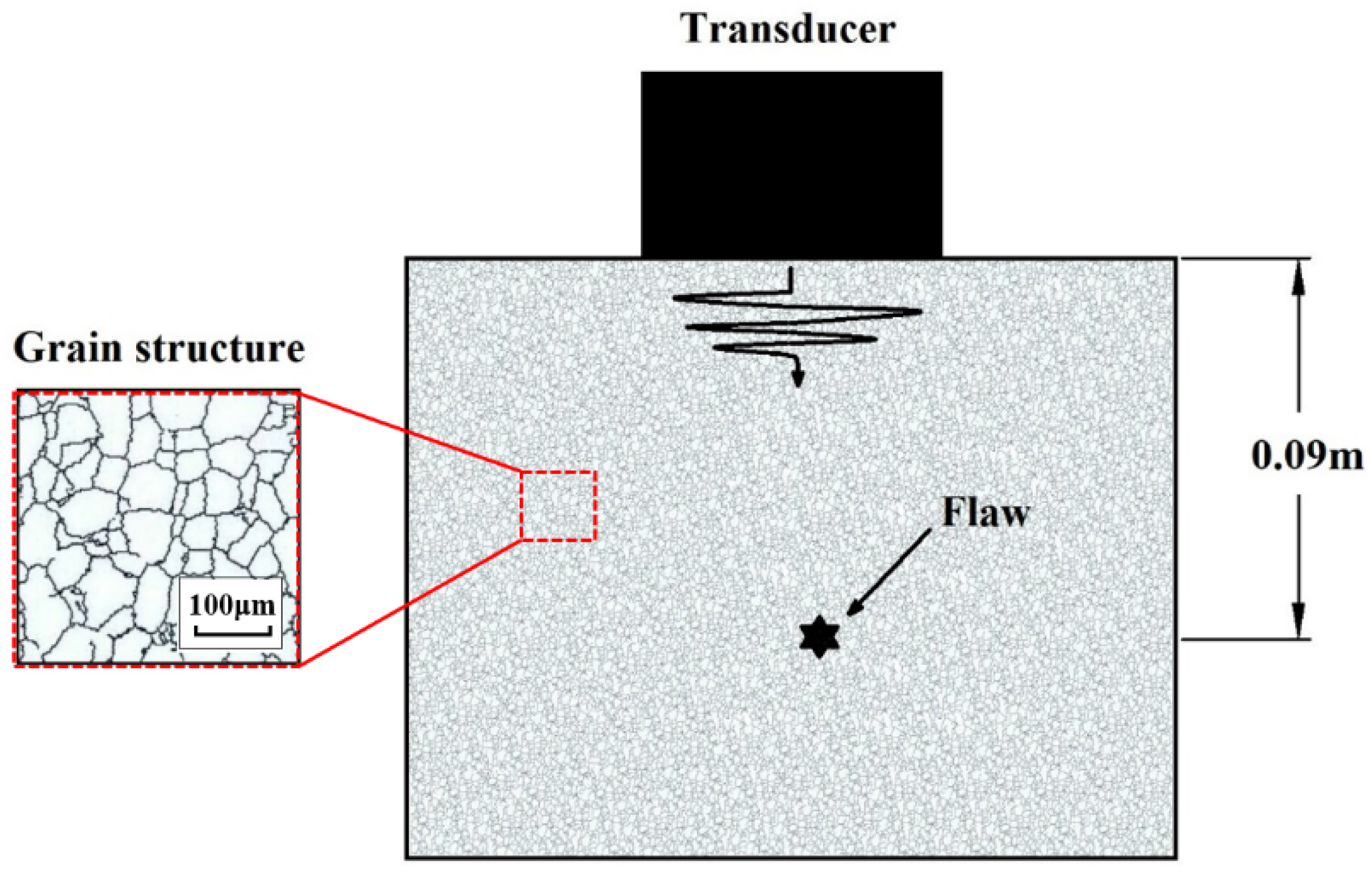
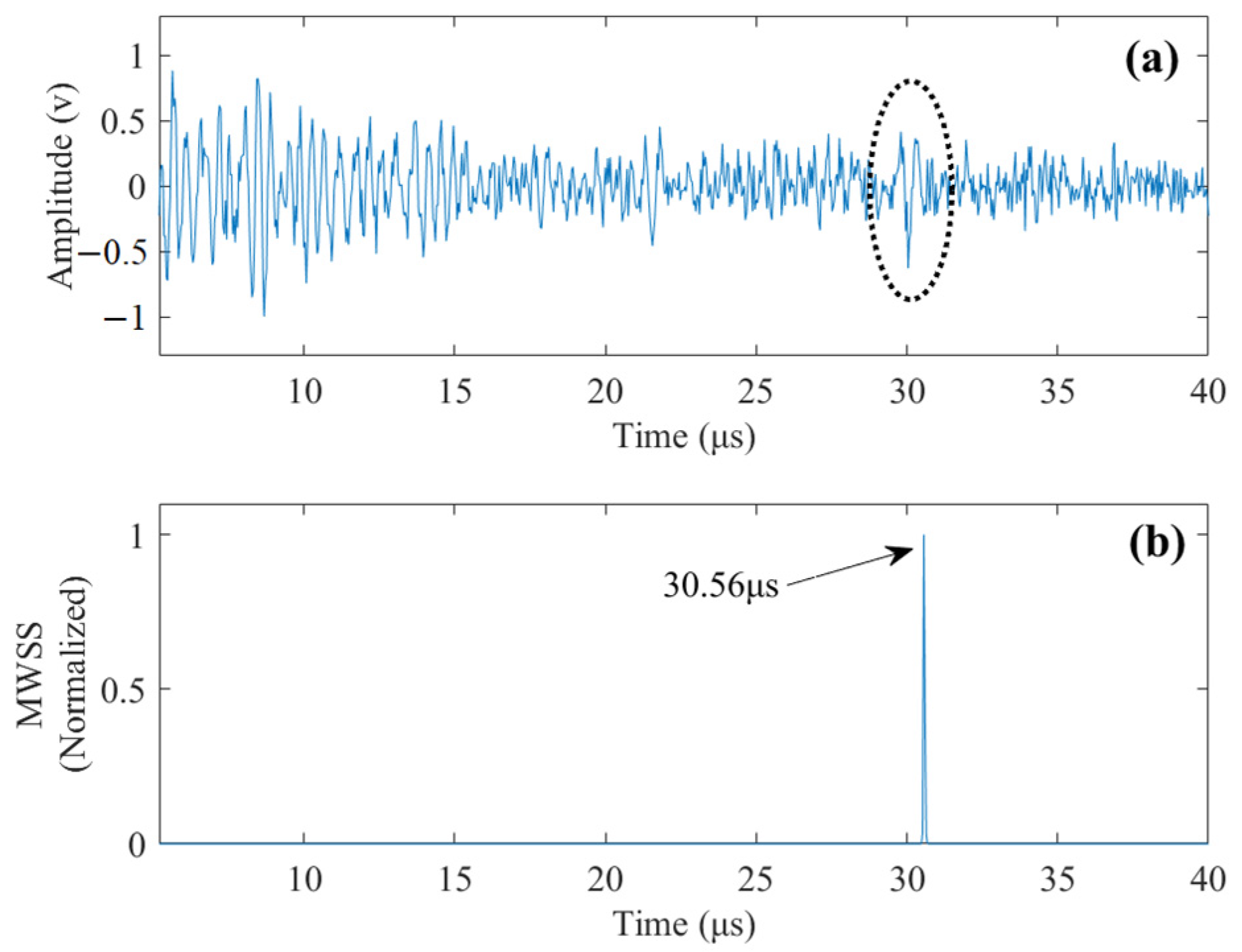
Ultrasonic sensors have been extensively used in the nondestructive testing of materials for flaw detection. For polycrystalline materials, however, due to the scattering nature of the material, which results in strong grain noise and attenuation of the ultrasonic signal, accurate detection of flaws is particularly difficult. In this paper, a novel flaw-detection method using a simple ultrasonic sensor is proposed by exploiting time-frequency features of an ultrasonic signal. Since grain scattering mostly happens in the Rayleigh scattering region, it is possible to separate grain-scattered noise from flaw echoes in the frequency domain employing their spectral difference. We start with the spectral modeling of grain noise and flaw echo, and how the two spectra evolve with time is established. Then, a time-adaptive spectrum model for flaw echo is proposed, which serves as a template for the flaw-detection procedure. Next, a specially designed similarity measure is proposed, based on which the similarity between the template spectrum and the spectrum of the signal at each time point is evaluated sequentially, producing a series of matching coefficients termed moving window spectrum similarity (MWSS). The time-delay information of flaws is directly indicated by the peaks of MWSSs. Finally, the performance of the proposed method is validated by both simulated and experimental signals, showing satisfactory accuracy and efficiency.
Keywords: ultrasonic sensor; nondestructive testing; flaw detection; grain noise; adaptive template matching ultrasonic sensor; nondestructive testing; flaw detection; grain noise; adaptive template matching