Article

High Precision Outdoor and Indoor Reference State Estimation for Testing Autonomous Vehicles †
by
Eduardo Sánchez Morales
1,*,
Julian Dauth
1,
Bertold Huber
2,
Andrés García Higuera
3 and
Michael Botsch
1
1
Technische Hochschule Ingolstadt, Esplanade 10, 85049 Ingolstadt, Germany
2
GeneSys Elektronik GmbH, In der Spöck 10, 77656 Offenburg, Germany
3
European Parliamentary Research Service, Rue Wiertz 60, B-1047 Brussels, Belgium
*
Author to whom correspondence should be addressed.
This paper is an extended version of our paper published in: Sánchez Morales, E.; Botsch, M.; Huber, B.; García Higuera, A. High precision indoor positioning by means of LiDAR. In Proceedings of the 2019 DGON Inertial Sensors and Systems (ISS), Braunschweig, Germany, 10–11 September 2019.
Sensors 2021, 21(4), 1131; https://doi.org/10.3390/s21041131
Submission received: 5 January 2021 / Revised: 1 February 2021 / Accepted: 3 February 2021 / Published: 6 February 2021
(This article belongs to the Section Remote Sensors)

Abstract

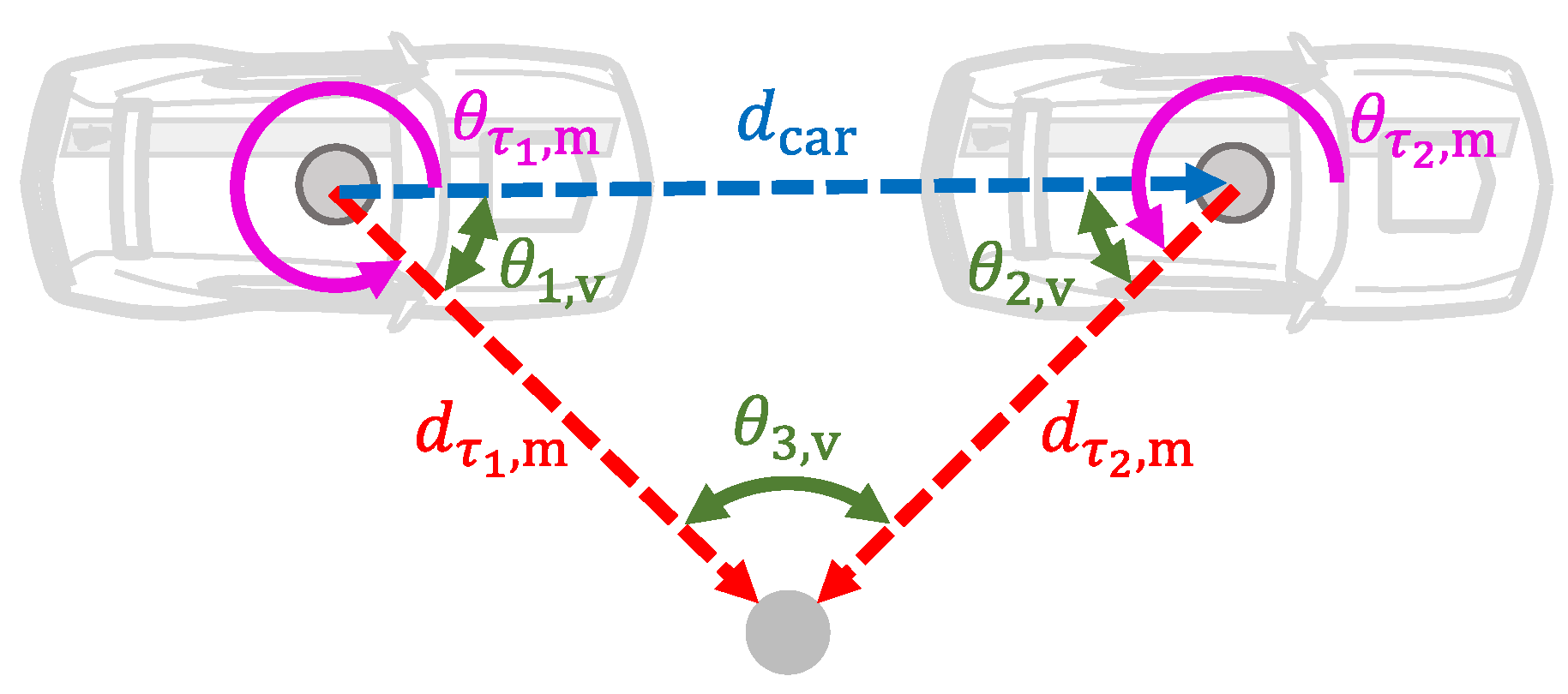
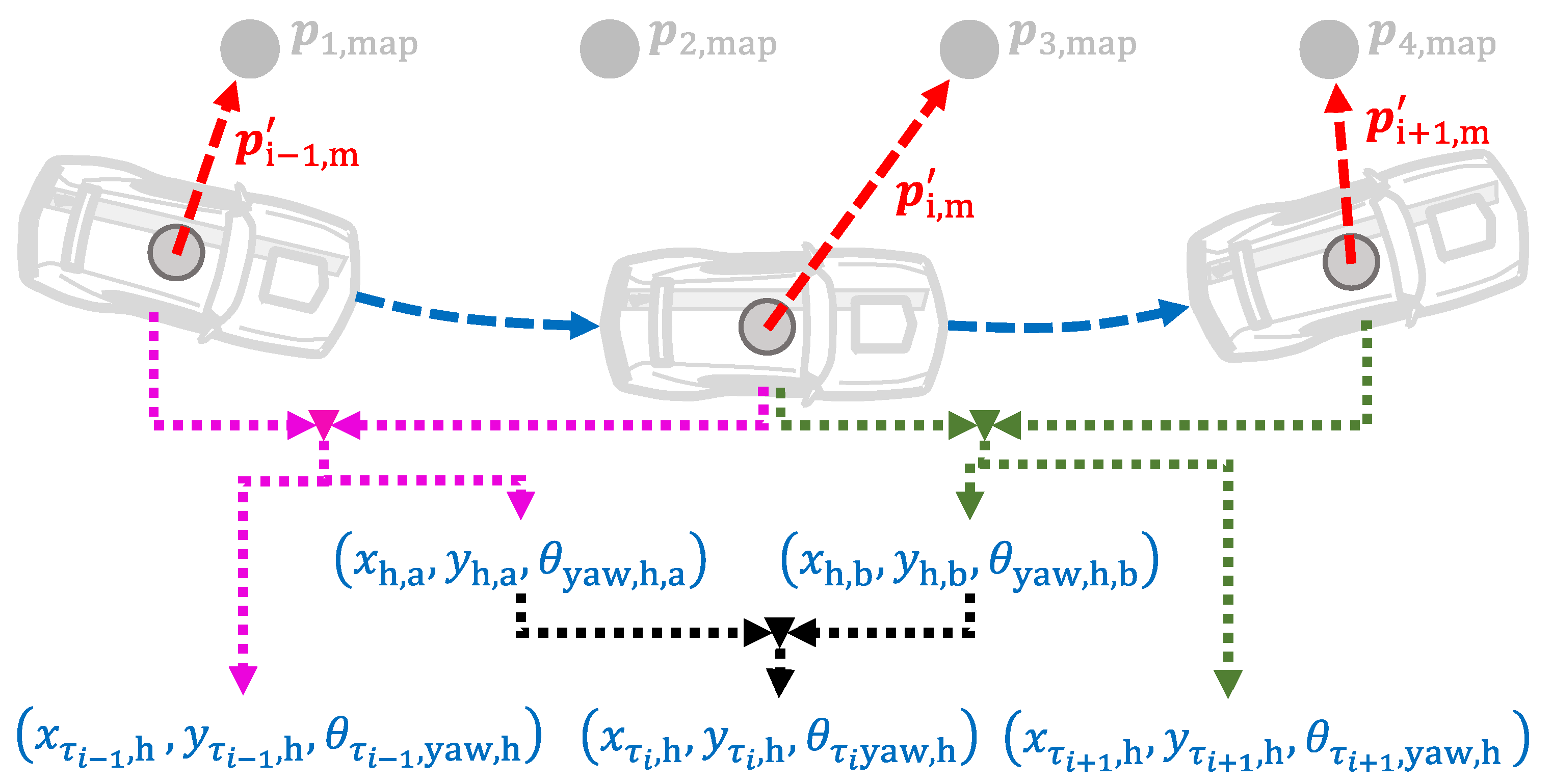
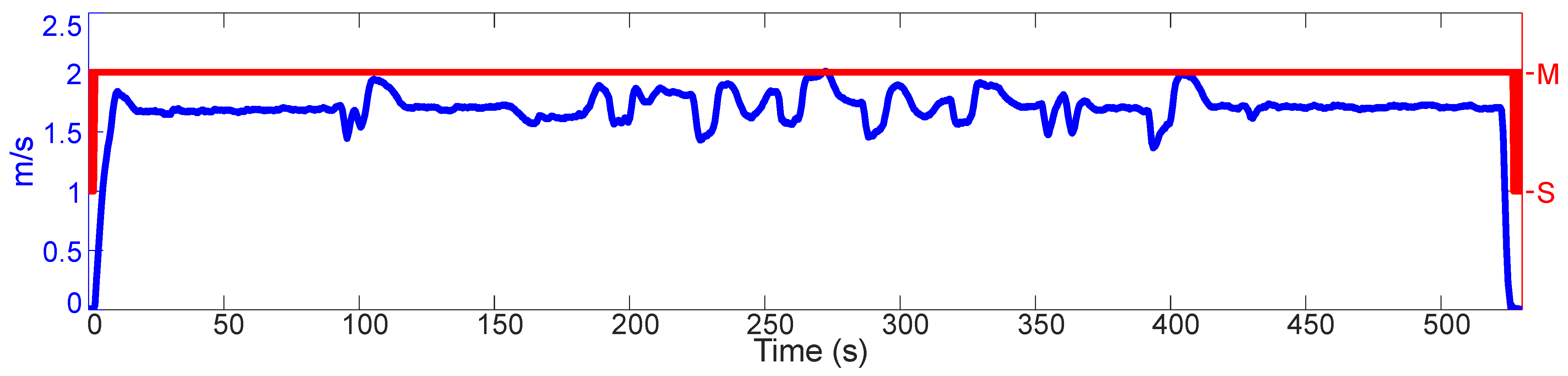
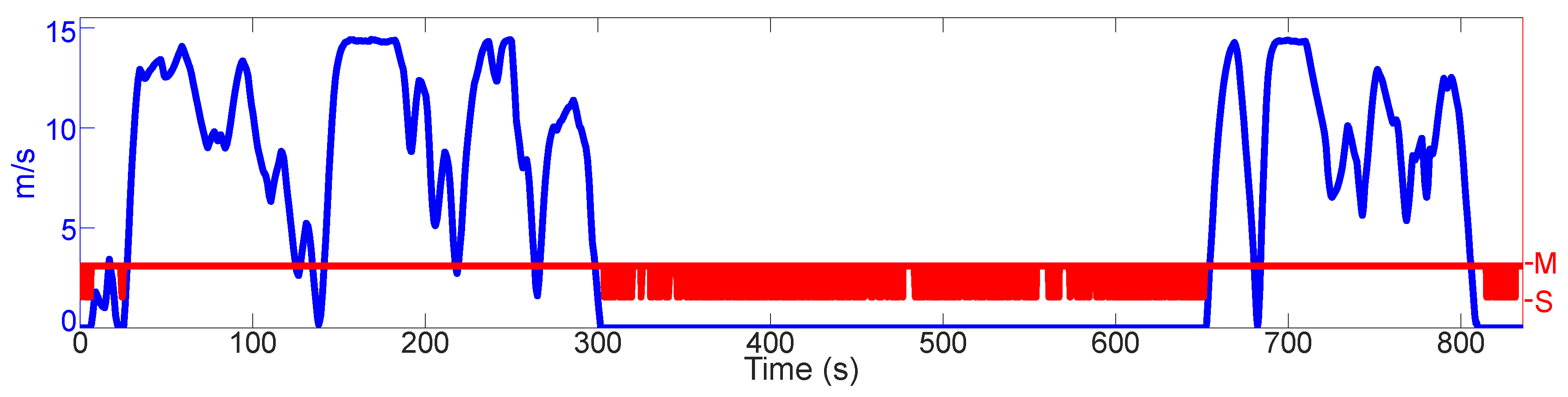
A current trend in automotive research is autonomous driving. For the proper testing and validation of automated driving functions a reference vehicle state is required. Global Navigation Satellite Systems (GNSS) are useful in the automation of the vehicles because of their practicality and accuracy. However, there are situations where the satellite signal is absent or unusable. This research work presents a methodology that addresses those situations, thus largely reducing the dependency of Inertial Navigation Systems (INSs) on the SatNav. The proposed methodology includes (1) a standstill recognition based on machine learning, (2) a detailed mathematical description of the horizontation of inertial measurements, (3) sensor fusion by means of statistical filtering, (4) an outlier detection for correction data, (5) a drift detector, and (6) a novel LiDAR-based Positioning Method (LbPM) for indoor navigation. The robustness and accuracy of the methodology are validated with a state-of-the-art INS with Real-Time Kinematic (RTK) correction data. The results obtained show a great improvement in the accuracy of vehicle state estimation under adverse driving conditions, such as when the correction data is corrupted, when there are extended periods with no correction data and in the case of drifting. The proposed LbPM method achieves an accuracy closely resembling that of a system with RTK.
Keywords: machine learning; autonomous vehicles; Inertial Navigation System; Satellite Navigation; Real-Time Kinematic; indoor navigation; reference state machine learning; autonomous vehicles; Inertial Navigation System; Satellite Navigation; Real-Time Kinematic; indoor navigation; reference state
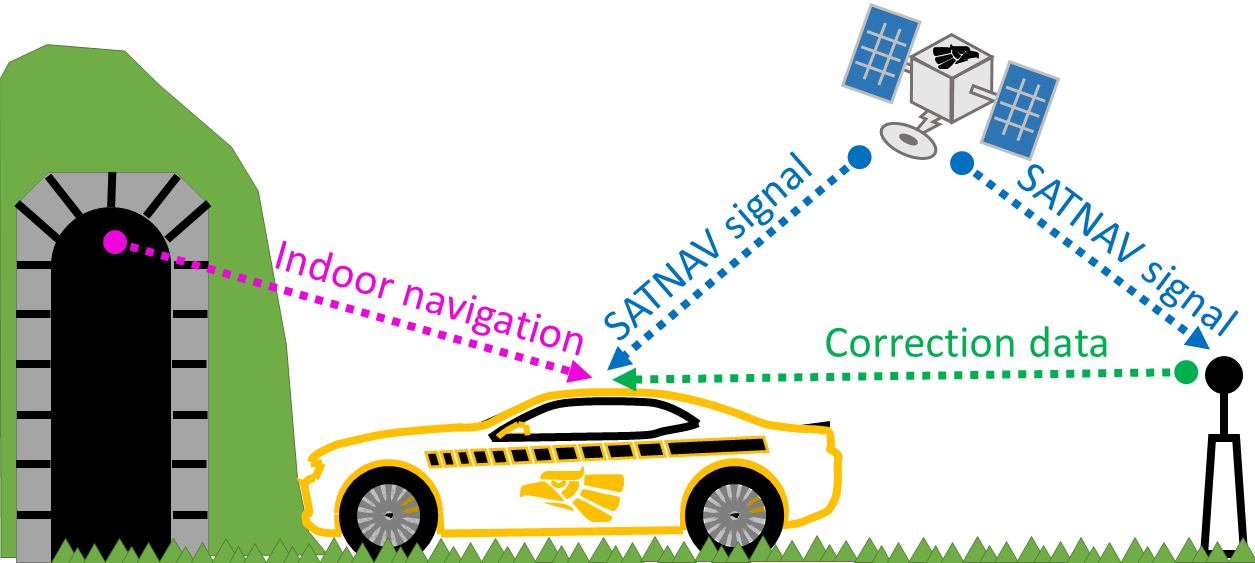
Graphical Abstract