


Prediction of Driver’s Intention of Lane Change by Augmenting Sensor Information Using Machine Learning Techniques
Abstract
1. Introduction
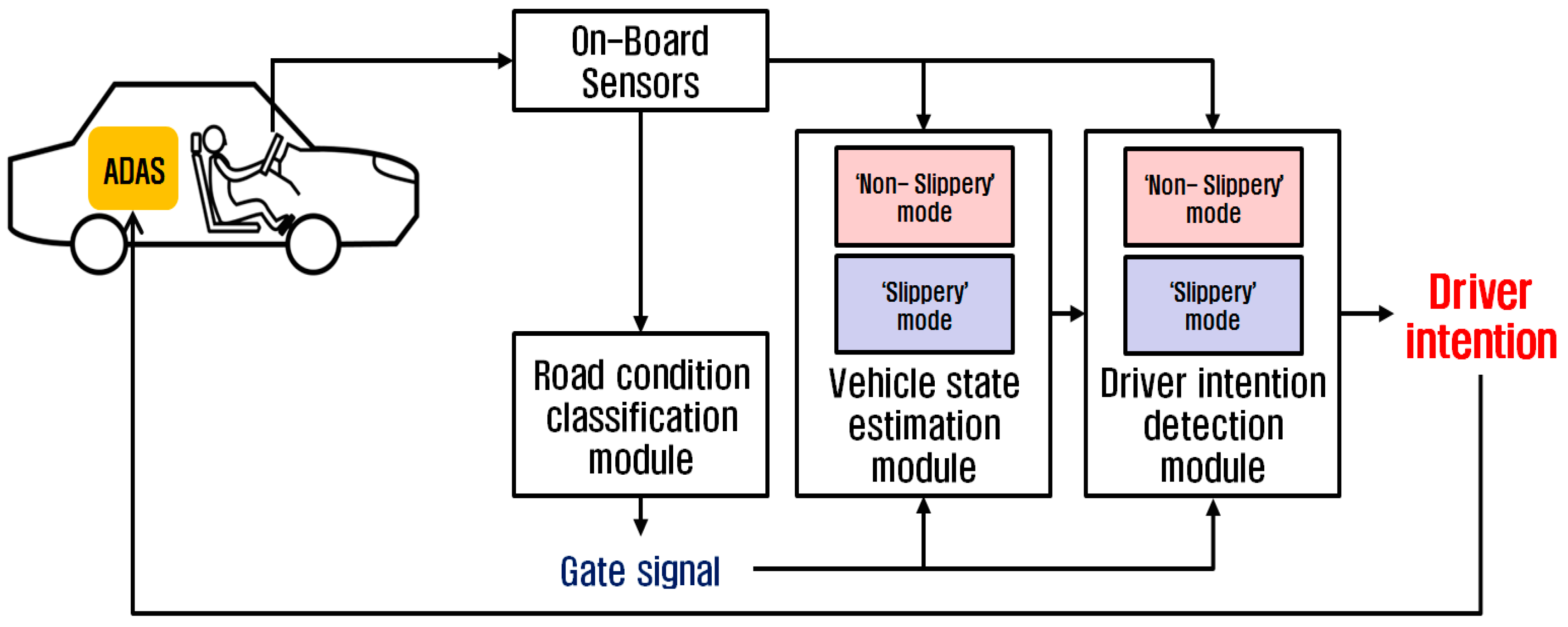
2. Classification of Driver’s Intention for Lane Change Using Augmented Sensor Information
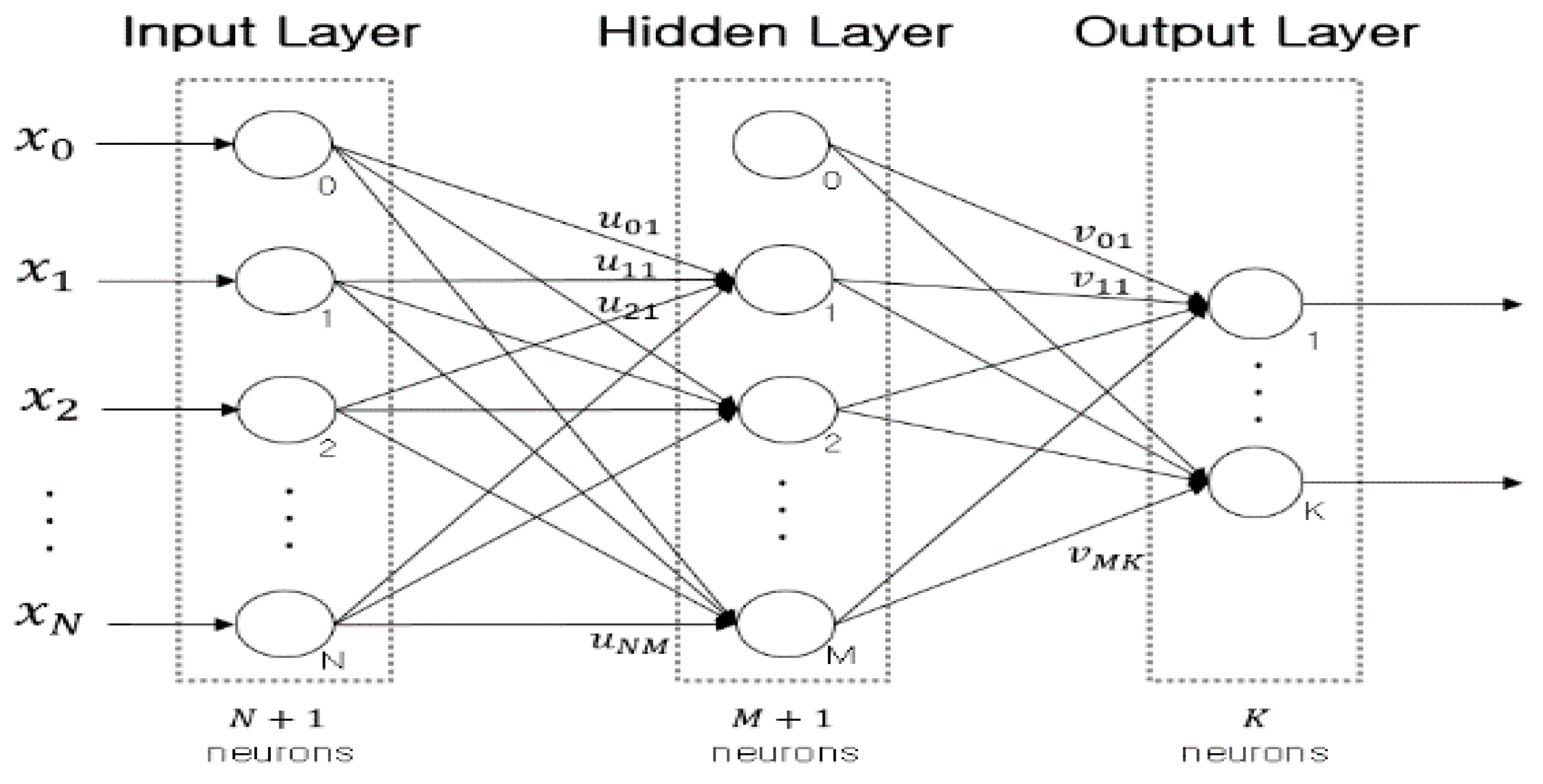
2.1. ANN Models for Road Condition Classification and Vehicle State Estimation
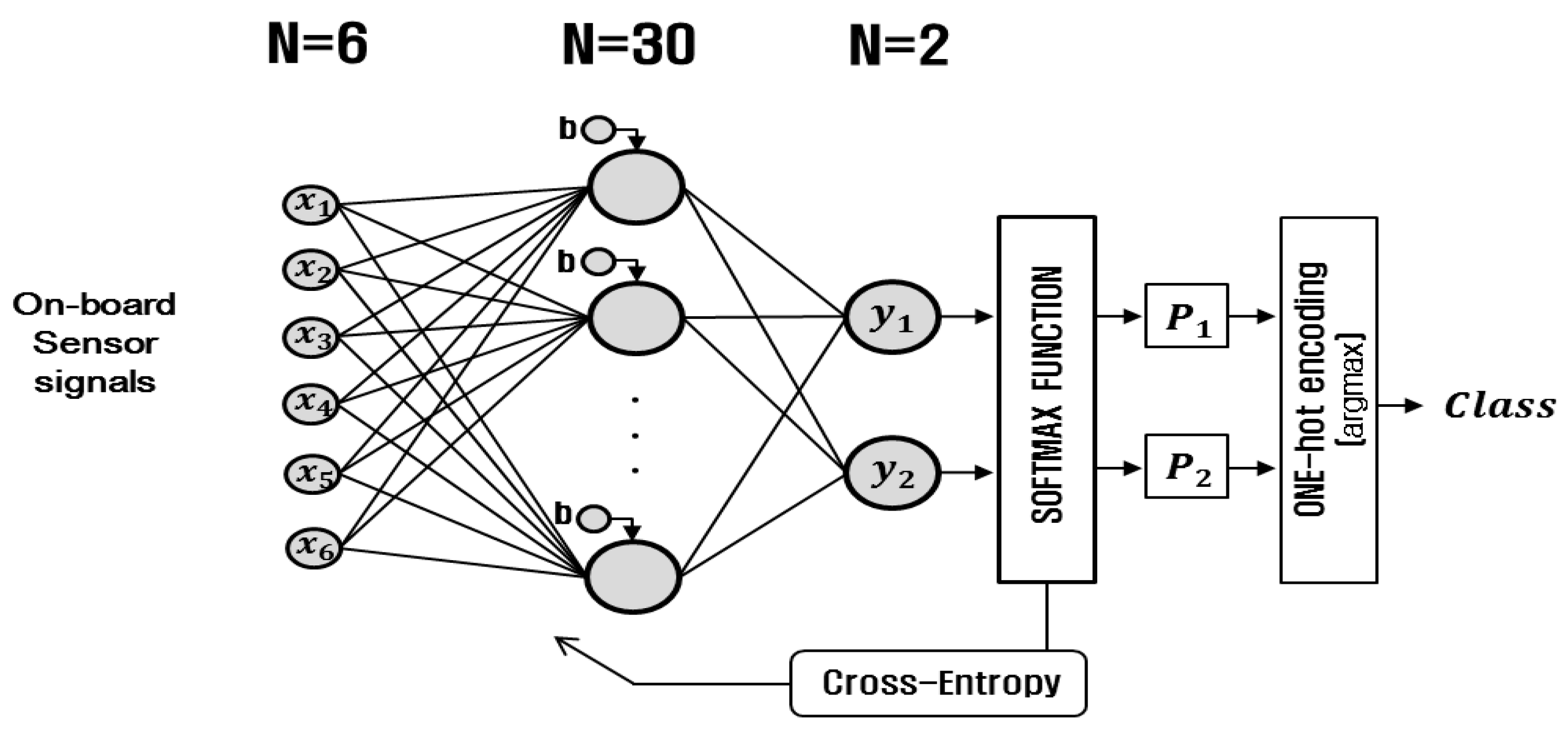
2.1.1. Road Condition Classification Module
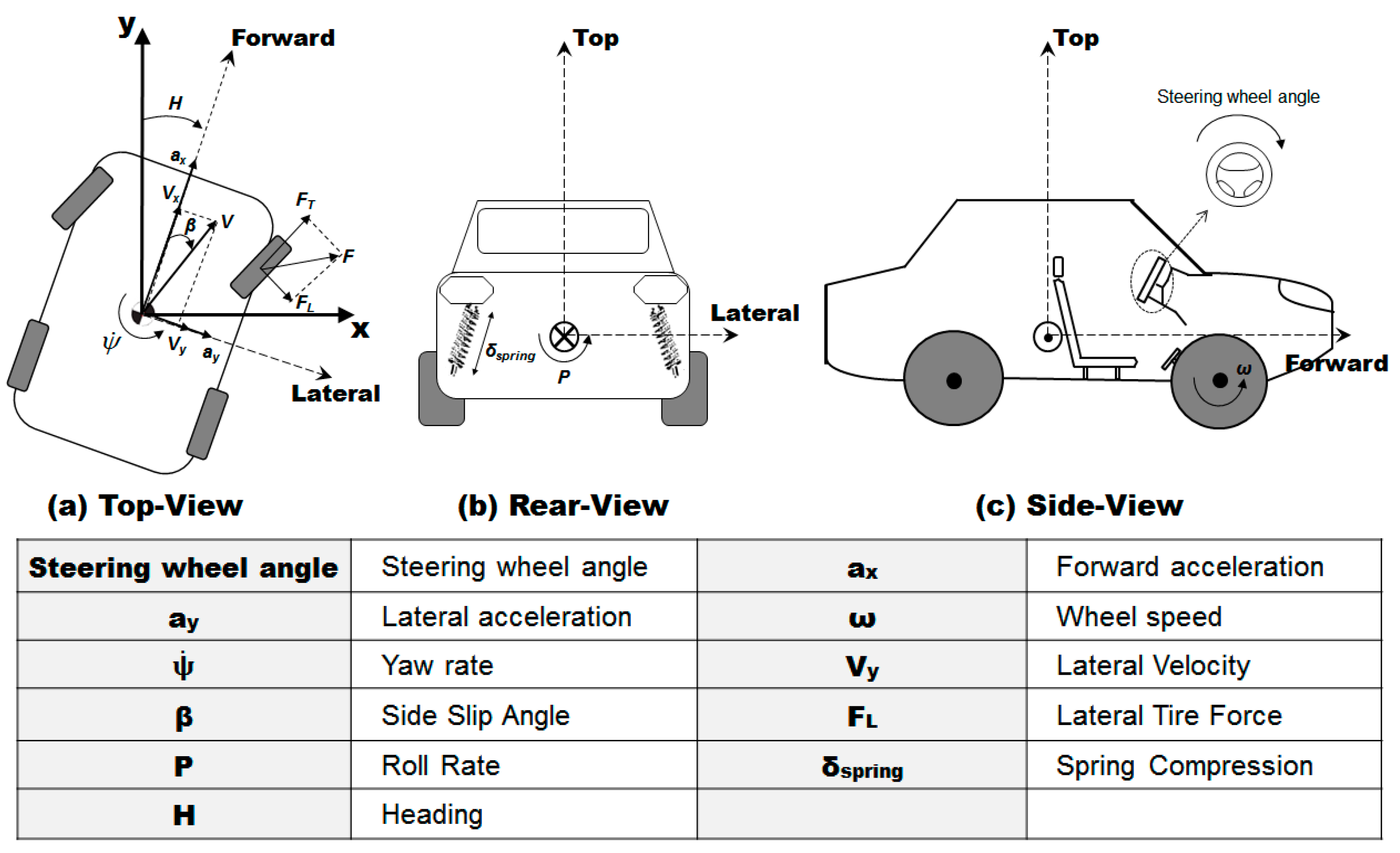
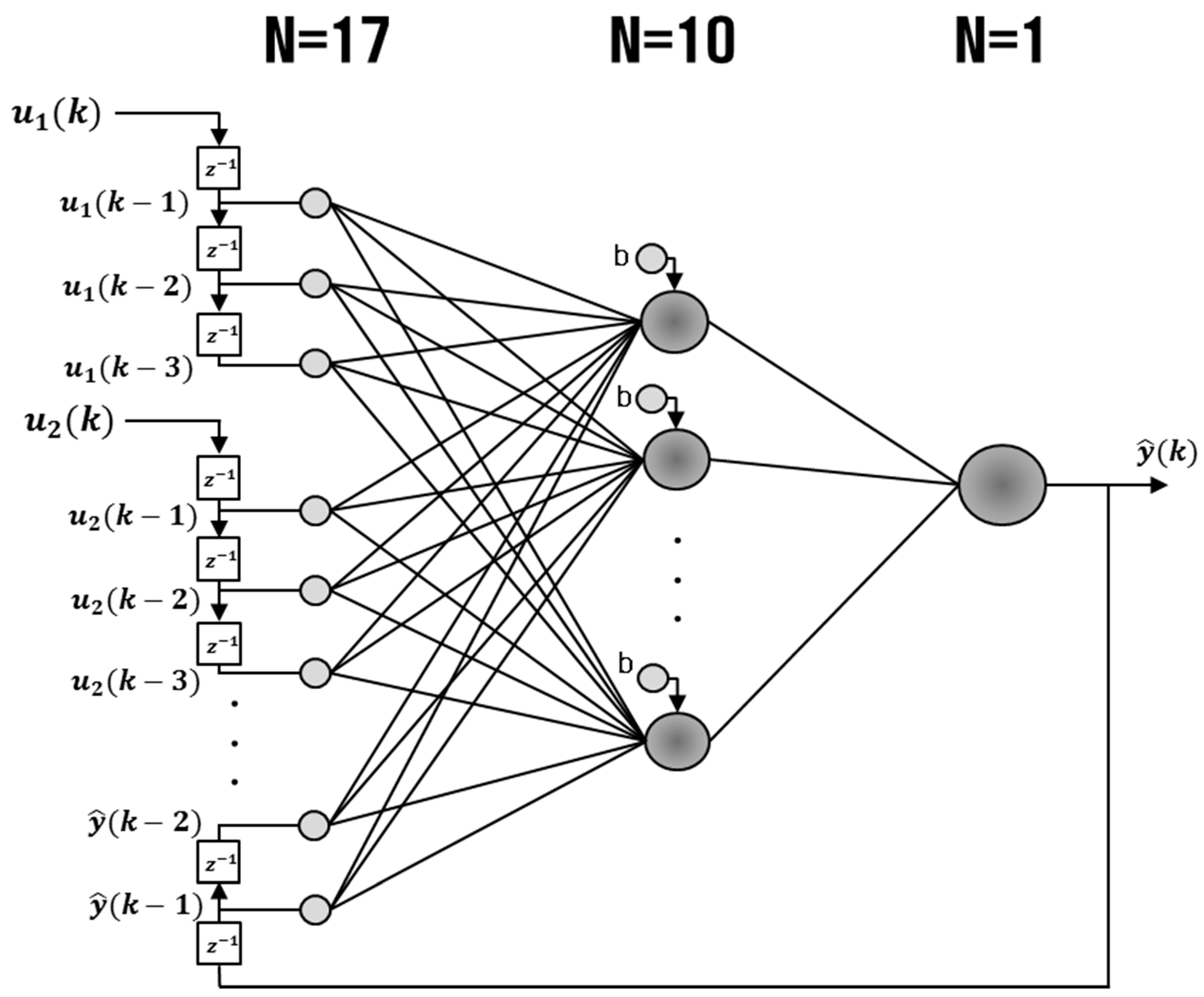
2.1.2. Vehicle State Estimation Module
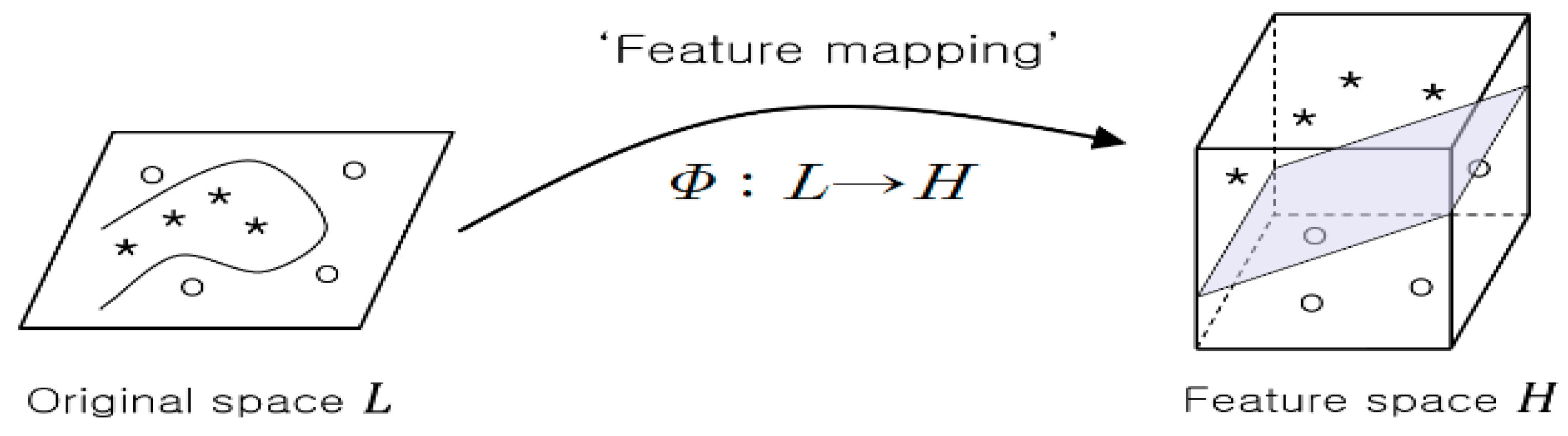
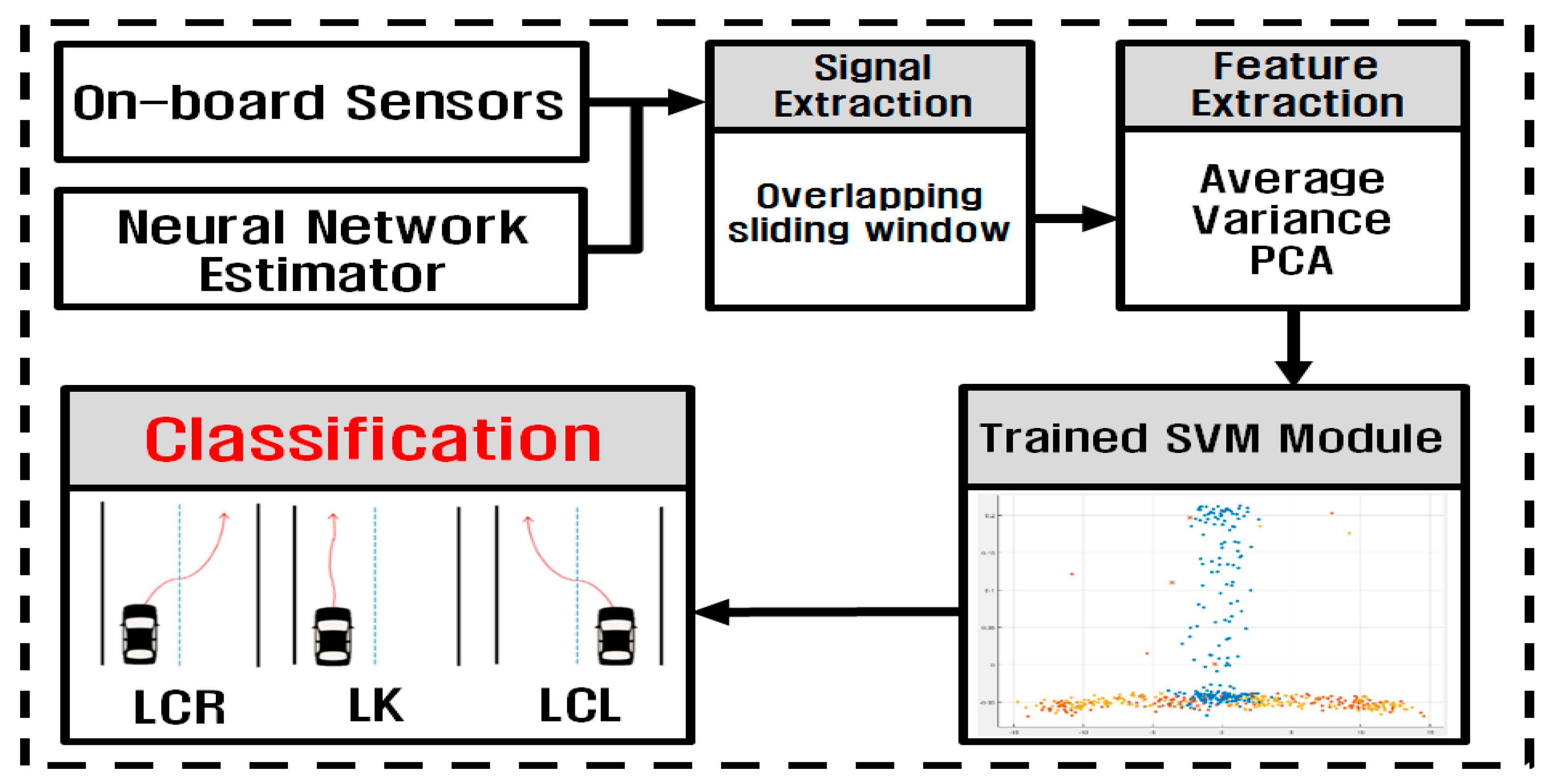
2.2. Driver Intention Detection Module
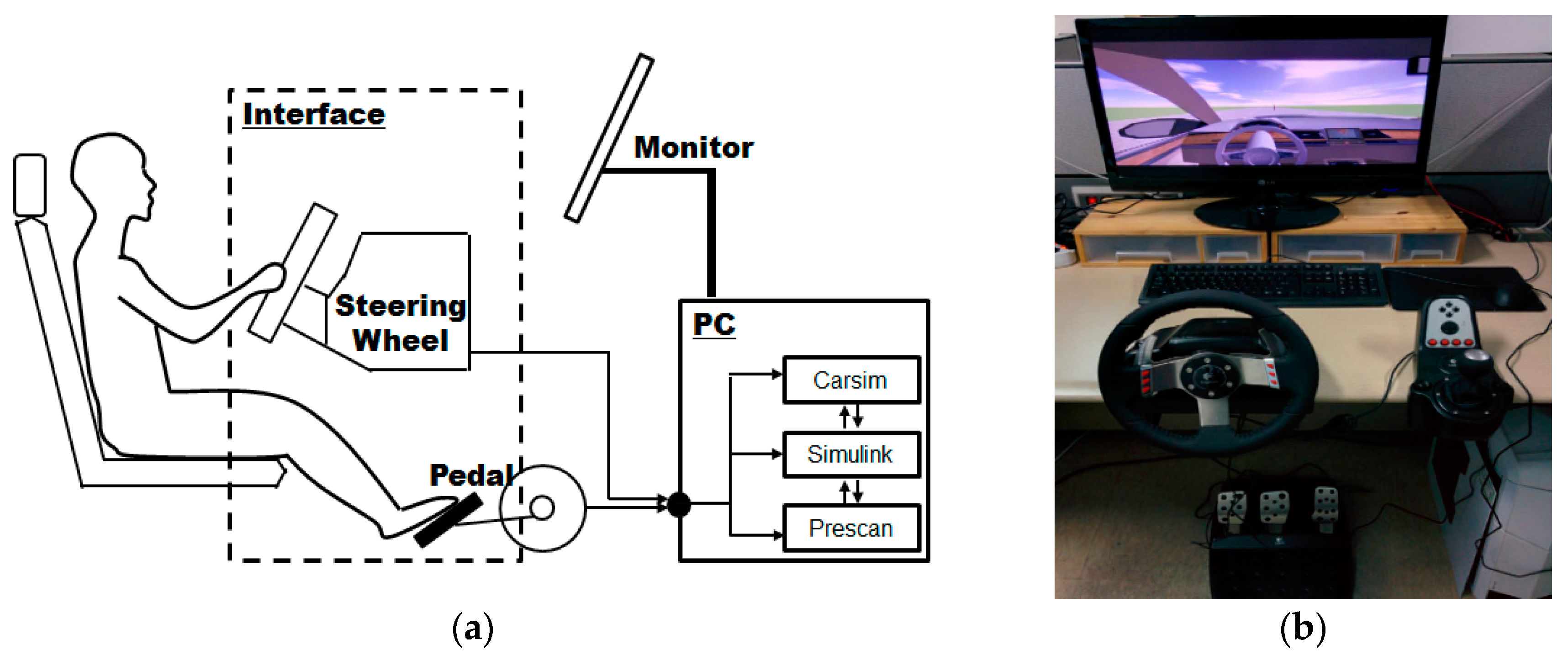
3. Driving Simulation Experiments
3.1. Training of Road Condition Classification Module
3.2. Training of Vehicle State Estimation Module
3.3. Training of Driver Intention Detection Module
4. Experimental Results
4.1. Classification of Road Condition
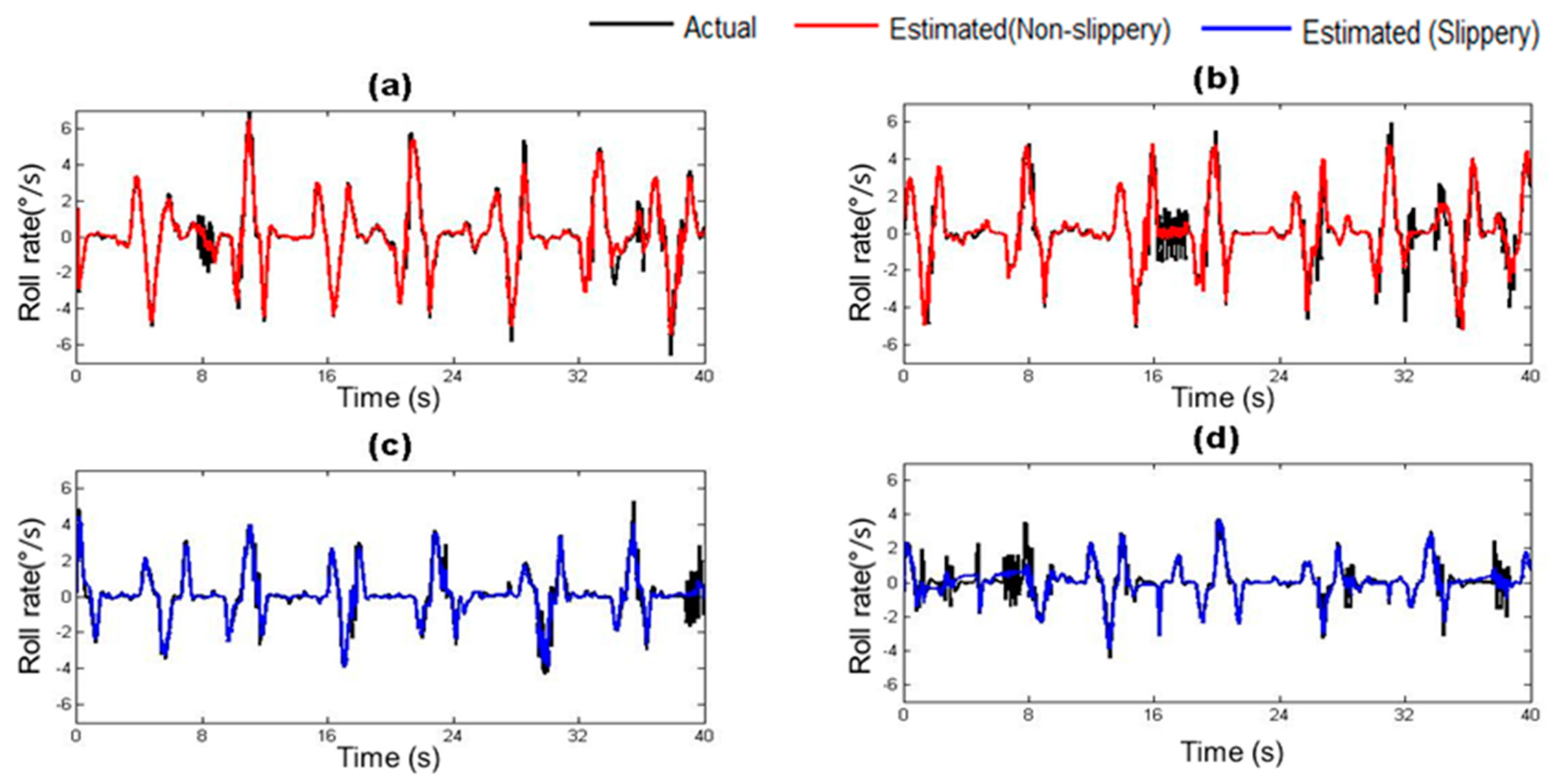
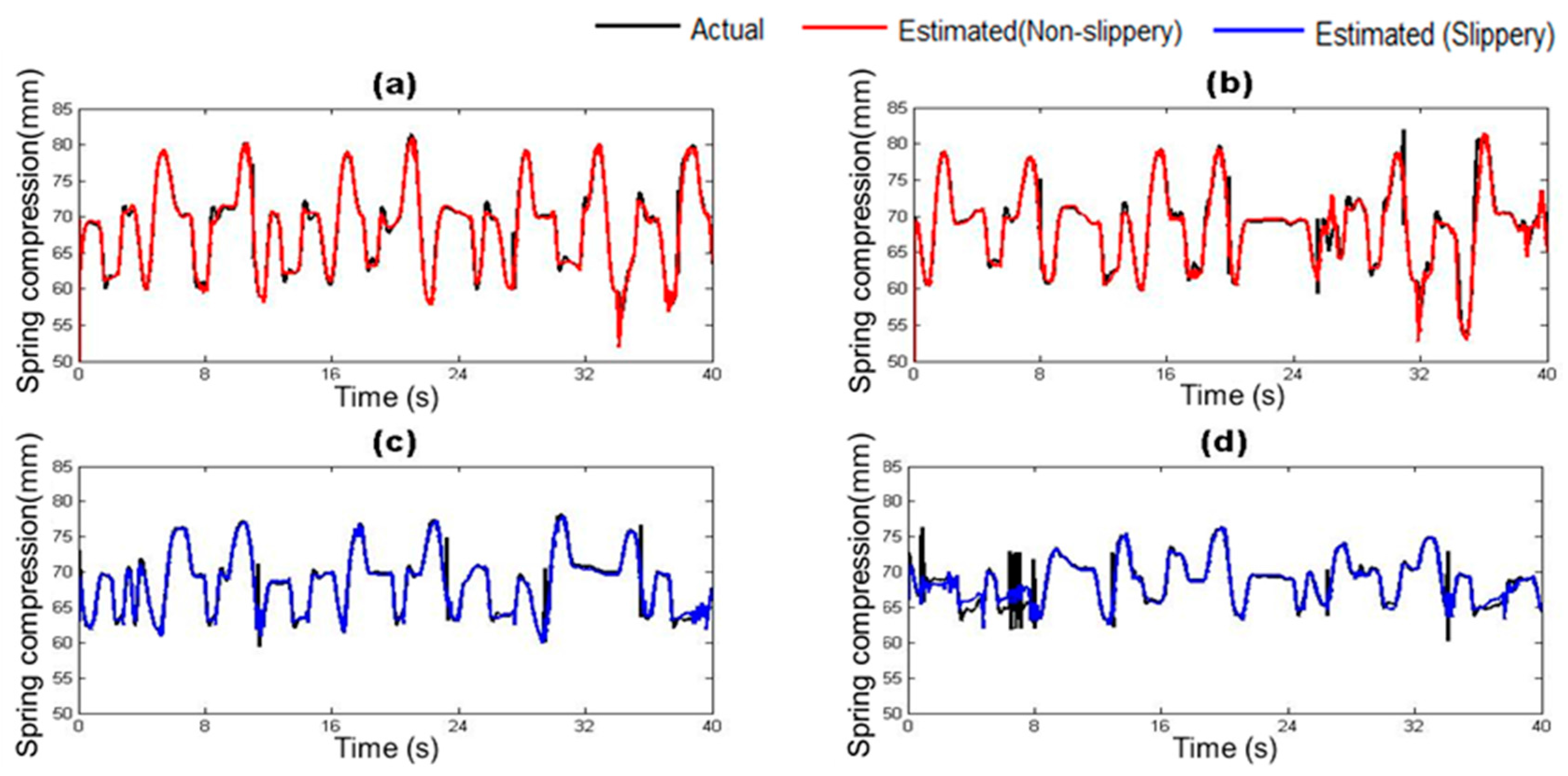
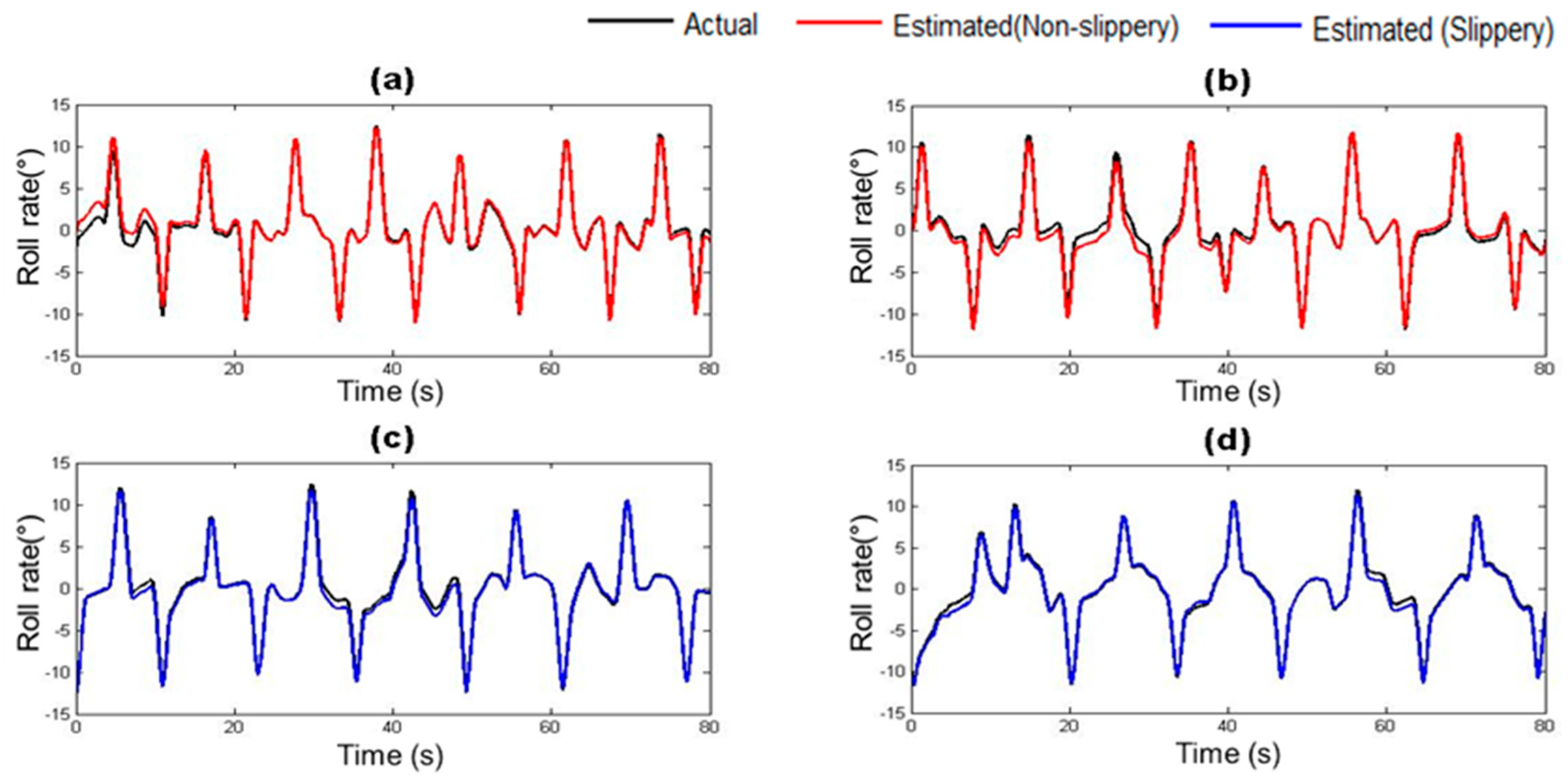
4.2. Estimation of Vehicle State Parameters
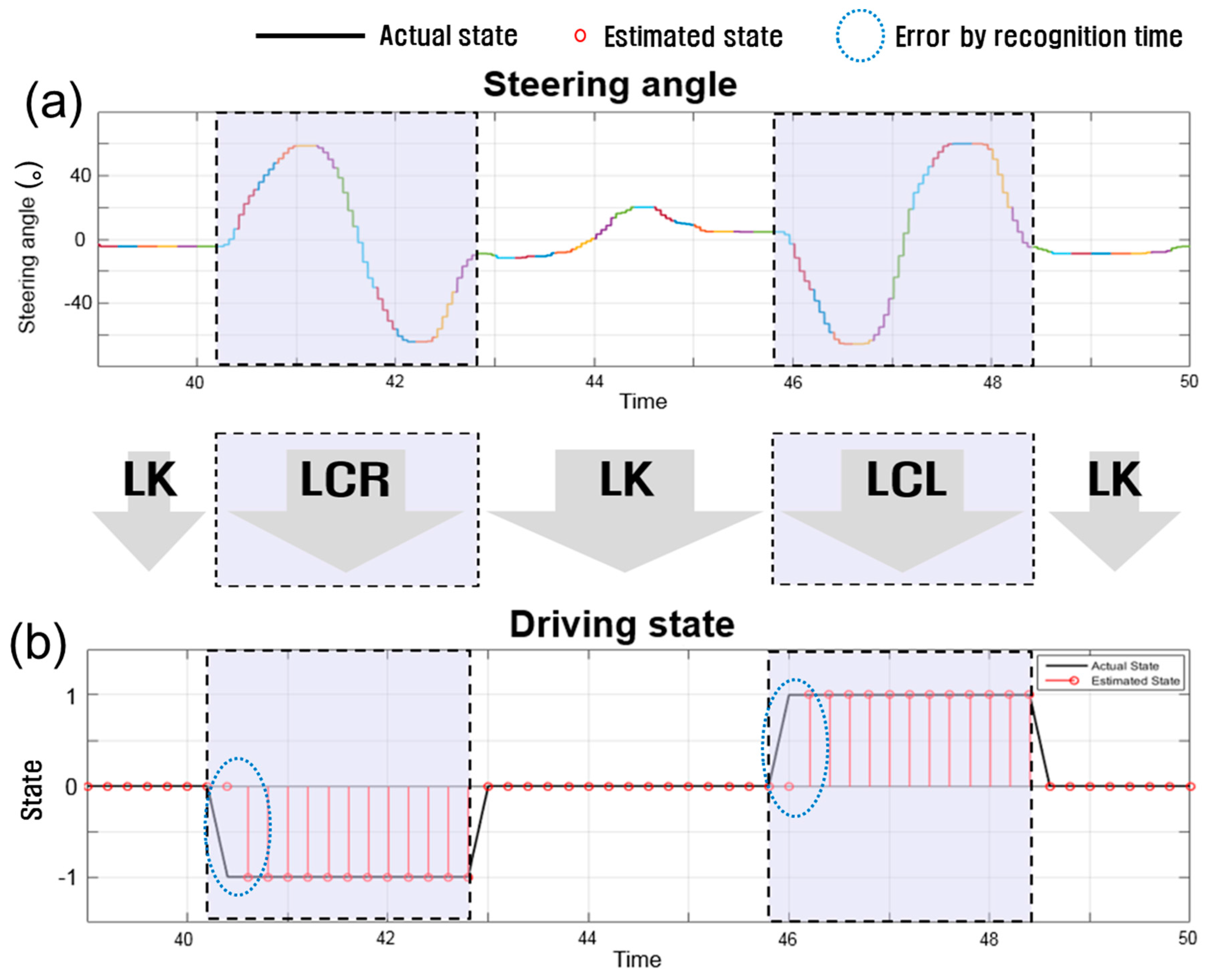
4.3. Detection of Driver Intention
5. Conclusions
Acknowledgments
Author Contributions
Conflicts of Interest
References
- Hou, H.; Jin, L.; Niu, Q.; Sun, Y.; Lu, M. Driver intention recognition method using continuous hidden markov model. Int. J. Comput. Intell. Syst. 2011, 4, 386–393. [Google Scholar] [CrossRef] [Scilit]
- Tomar, R.S.; Verma, S.; Tomar, G.S. Prediction of lane change trajectories through neural network. In Proceedings of the 2010 International Conference on Computational Intelligence and Communication Networks, Bhopal, India, 26–28 November 2010; pp. 249–253. [Google Scholar]
- FARS Encyclopedia. Vehicles Involved in Single- and Two-Vehicle Fatal Crashes by Vehicle Maneuver. National Highway Traffic Safety Administration. Available online: http://www-fars. nhtsa.dot.gov/Vehicles/ VehiclesAllVehicles.aspx (accessed on 15 September 2016).
- Kuge, N.; Yamamura, T.; Shimoyama, O.; Liu, A. A Driver Behavior Recognition Method Based on a Driver Model Framework; Delphi Automotive Systems: Gillingham, UK, March 2000. [Google Scholar]
- Jin, L.S.; Hou, H.J.; Jiang, Y.Y. Driver intention recognition based on continuous hidden markov model. In Proceedings of the International Conference on Transportation, Mechanical, and Electrical Engineering (TMEE), Changchun, China, 16–18 December 2011. [Google Scholar]
- Tran, D.; Sheng, W.; Liu, L.; Liu, M. A Hidden Markov Model based driver intention prediction system. In Proceedings of the 2015 IEEE International Conference on Cyber Technology in Automation, Control, and Intelligent Systems (CYBER), Shenyang, China, 8–12 June 2015; pp. 115–120. [Google Scholar]
- Mandalia, H.M.; Salvucci, M.D.D. Using support vector machines for lane-change detection. In Proceedings of the Human Factors and Ergonomics Society Annual Meeting, Los Angeles, CA, USA, 26–30 October 2015; Volume 49, pp. 1965–1969. [Google Scholar]
- Aoude, G.S.; Desaraju, V.R.; Stephens, L.H.; How, J.P. Behavior classification algorithms at intersections and validation using naturalistic data. In Proceedings of the IEEE Intelligent Vehicles Symposium (IV), Baden-Baden, Germany, 5–9 June 2011; pp. 601–606. [Google Scholar]
- Kumar, P.; Perrollaz, M.; Lefevre, S.; Laugier, C. Learning-based approach for online lane change intention prediction. In Proceedings of the IEEE Intelligent Vehicles Symposium (IV), Gold Coast City, Australia, 23–26 June 2013; pp. 797–802. [Google Scholar]
- Morris, B.; Doshi, A.; Trivedi, M. Lane change intent prediction for driver assistance: On-road design and evaluation. In Proceedings of the IEEE Intelligent Vehicles Symposium (IV), Baden-Baden, Germany, 5–9 June 2011; pp. 895–901. [Google Scholar]
- Liu, L.; Xu, G.Q.; Song, Z. Driver lane changing behavior analysis based on parallel bayesian networks. In Proceedings of the 2010 Sixth International Conference on Natural Computation, Yantai, China, 10–12 August 2010; Volume 3, pp. 1232–1237. [Google Scholar]
- Schubert, R.; Schulze, K.; Wanielik, G. Situation assessment for automatic lane-change maneuvers. IEEE Trans. Intell. Trans. Syst. 2010, 11, 607–616. [Google Scholar] [CrossRef] [Scilit]
- Lefèvre, S.; Laugier, C.; Ibañez-Guzmán, J. Exploiting map information for driver intention estimation at road intersections. In Proceedings of the Intelligent Vehicles Symposium (IV), Baden-Baden, Germany, 5–9 June 2011; pp. 583–588. [Google Scholar]
- Kumagai, T.; Akamatsu, M. Prediction of human driving behavior using dynamic bayesian networks. IEICE Trans. Inf. Syst. 2006, 89, 857–860. [Google Scholar] [CrossRef] [Scilit]
- McCall, J.C.; Trivedi, M.M.; Wipf, D.; Rao, B. Lane change intent analysis using robust operators and sparse bayesian learning. IEEE Trans. Intell. Transp. Syst. 2007, 8, 431–440. [Google Scholar] [CrossRef] [Scilit]
- Gindele, T.; Brechtel, S.; Dillmann, R. A probabilistic model for estimating driver behaviors and vehicle trajectories in traffic environments. In Proceedings of the 13th International IEEE Conference on Intelligent Transportation Systems (ITSC), Funchal, Portugal, 19–22 September 2013; pp. 1066–1071. [Google Scholar]
- Lefèvre, S.; Laugier, C.; Ibañez-Guzmán, J. Risk assessment at road intersections: Comparing intention and expectation. In Proceedings of the 2012 IEEE Intelligent Vehicles Symposium (IV), Madrid, Spain, 3–7 June 2012; pp. 165–171. [Google Scholar]
- Turnip, A.; Fakhrurroja, H. Estimation of the wheel-ground contact tire forces using extended Kalman filter. Int. J. Instrum. Sci. 2013, 2, 34–40. [Google Scholar]
- Castillo Aguilar, J.J.; Cabrera Carrillo, J.A.; Guerra Fernández, A.J.; Carabias Acosta, E. Robust road condition detection system using in-vehicle standard sensors. Sensors 2015, 15, 32056–32078. [Google Scholar] [CrossRef] [Scilit] [PubMed]
- Zareian, A.; Azadi, S.; Kazemi, R. Estimation of road frictio coefficient using extended Kalman filter, recursive least square, and neural network. Proc. Inst. Mech. Eng. Part K 2016, 230, 52–68. [Google Scholar]
- Mikelsons, L.; Brandt, T.; Schramm, D. Real-time vehicle dynamics using equation-based reduction techniques. In IUTAM Symposium on Dynamics Modeling and Interaction Control in Virtual and Real Environments; Springer: Dordrecht, The Netherlands, 2011; pp. 91–98. [Google Scholar]
- Doumiati, M.; Victorino, A.; Charara, A.; Lechner, D. A method to estimate the lateral tire force and the sideslip angle of a vehicle: Experimental validation. In Proceedings of the 2010 American Control Conference, Baltimore, MD, USA, 30 June–2 July 2010; pp. 6936–6942. [Google Scholar]
- Guarneri, P.; Rocca, G.; Gobbi, M. A neural-network-based model for the dynamic simulation of the tire/suspension system while traversing road irregularities. IEEE Trans. Neural Netw. 2008, 19, 1549–1563. [Google Scholar] [CrossRef] [Scilit] [PubMed]
- Elvik, R.; Vaa, T.; Erke, A.; Sorensen, M. The Handbook of Road Safety Measures; Emerald Group Publishing: Bingley, UK, 2009; pp. 363–368. [Google Scholar]
- Engineering Dynamics Corporation. EDVAP Program Manual; Engineering Dynamics Corporation: Beaverton, OR, USA, 1994. [Google Scholar]
- Panchal, G.; Ganatra, A.; Kosta, Y.P.; Panchal, D. Behaviour analysis of multilayer perceptrons with multiple hidden neurons and hidden layers. Int. J. Comput. Theory Eng. 2011, 3, 332–337. [Google Scholar] [CrossRef] [Scilit]
- Diaconescu, E. The use of NARX neural networks to predict chaotic time series. WSEAS Trans. Comput. Res. 2008, 3, 182–191. [Google Scholar]
- Hagan, M.T.; Demuth, H.B.; Beale, M.H.; De Jesús, O. Neural Network Design; PWS Publishing Company: Boston, MA, USA, 1996; Volume 20. [Google Scholar]
- Kargar, M.J.; Charsoghi, D.K. Predicting annual electricity consumption in Iran using artificial neural networks (NARX). Indian J. Sci. Res. 2014, 5, 231–242. [Google Scholar]
- Lin, T.N.; Giles, C.L.; Horne, B.G.; Kung, S.Y. A delay damage model selection algorithm for NARX neural networks. IEEE Trans. Signal Process. 1997, 45, 2719–2730. [Google Scholar]
- Jiang, C.; Song, F. Sunspot forecasting by using chaotic time-series analysis and NARX network. J. Comput. 2011, 6, 1424–1429. [Google Scholar] [CrossRef] [Scilit]
- Choudhary, I.; Assaleh, K.; AlHamaydeh, M. Nonlinear AutoRegressive eXogenous Artificial Neural Networks for predicting buckling restrained braces force. In Proceedings of the 2012 8th International Symposium on Mechatronics and Its Applications (ISMA), Sharjah, UAE, 10–12 April 2012; pp. 1–5. [Google Scholar]
- Xie, H.; Tang, H.; Liao, Y.H. Time series prediction based on NARX neural networks: An advanced approach. In Proceedings of the 2009 International Conference on Machine Learning and Cybernetics, Baoding, China, 12–15 July 2009; pp. 1275–1279. [Google Scholar]
- Abdulkadir, S.J.; Yong, S.P. Empirical analysis of parallel-NARX recurrent network for long-term chaotic financial forecasting. In Proceedings of the 2014 International Conference on Computer and Information Sciences (ICCOINS), Kuala Lumpur, Malaysia, 3–5 June 2014; pp. 1–6. [Google Scholar]
- Menezes, J.M.P.; Barreto, G.A. Long-term time series prediction with the NARX network: An empirical evaluation. Neurocomputing 2008, 71, 3335–3343. [Google Scholar] [CrossRef] [Scilit]
- Myung, I.J.; Pitt, M.A. Applying Occam’s razor in modeling cognition: A Bayesian approach. Psychonol. Bull. Rev. 1997, 4, 79–95. [Google Scholar] [CrossRef] [Scilit]
- Berndt, H.; Emmert, J.; Dietmayer, K. Continuous driver intention recognition with hidden markov models. In Proceedings of the 2008 11th International IEEE Conference on Intelligent Transportation Systems, Beijing, China, 12–15 October 2008; pp. 1189–1194. [Google Scholar]
- Ardalani-Farsa, M.; Zolfaghari, S. Chaotic time series prediction with residual analysis method using hybrid Elman–NARX neural networks. Neurocomputing 2010, 73, 2540–2553. [Google Scholar] [CrossRef] [Scilit]
- AlertDriving Magazine. Human Error Accounts for 90% of Road Accidents. Available online: http://channel.alertdriving.com/home/fleet-alertmagazine/international/human-error-accounts-90-road-accidents (accessed on 30 September 2016).
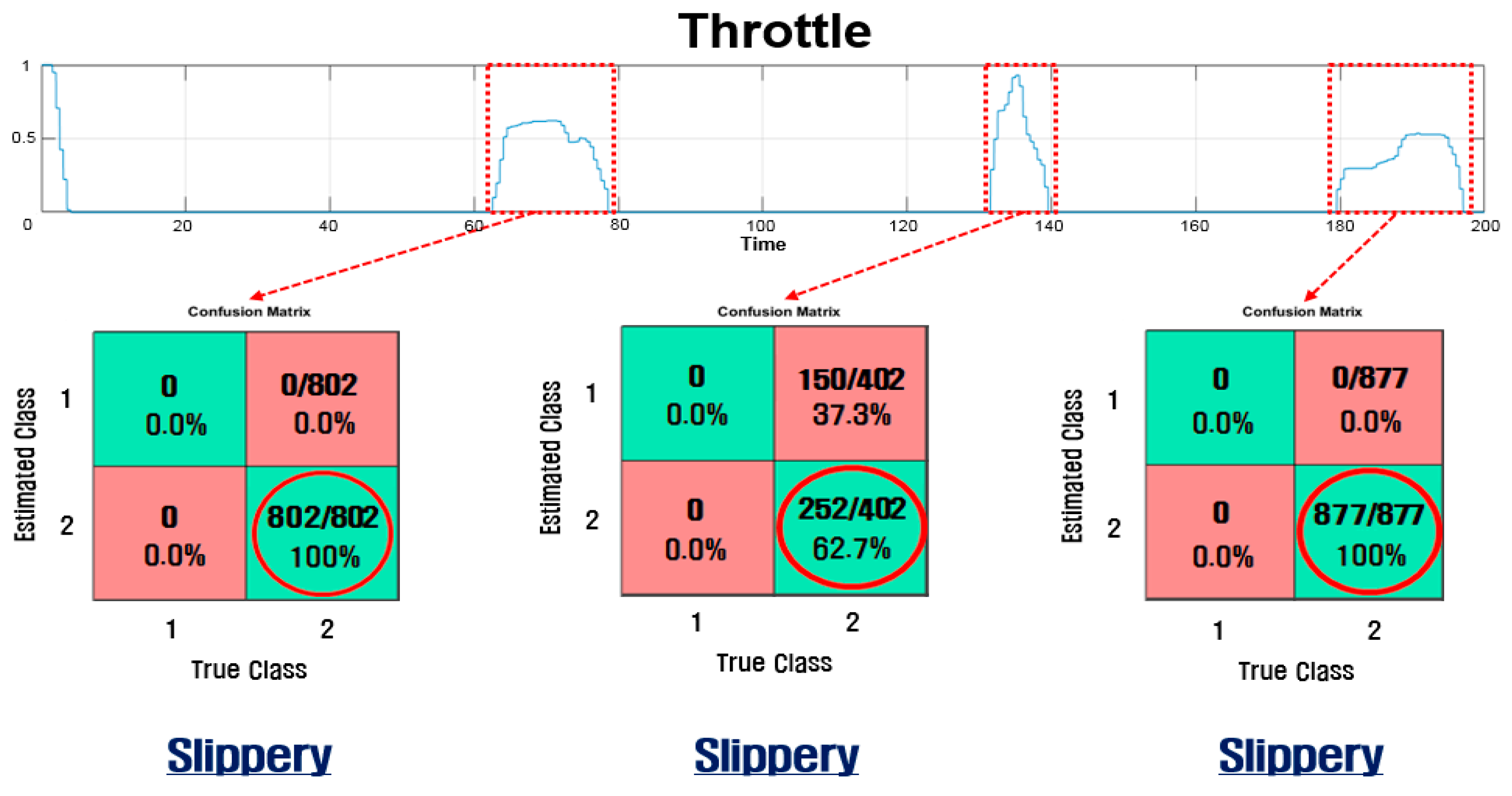
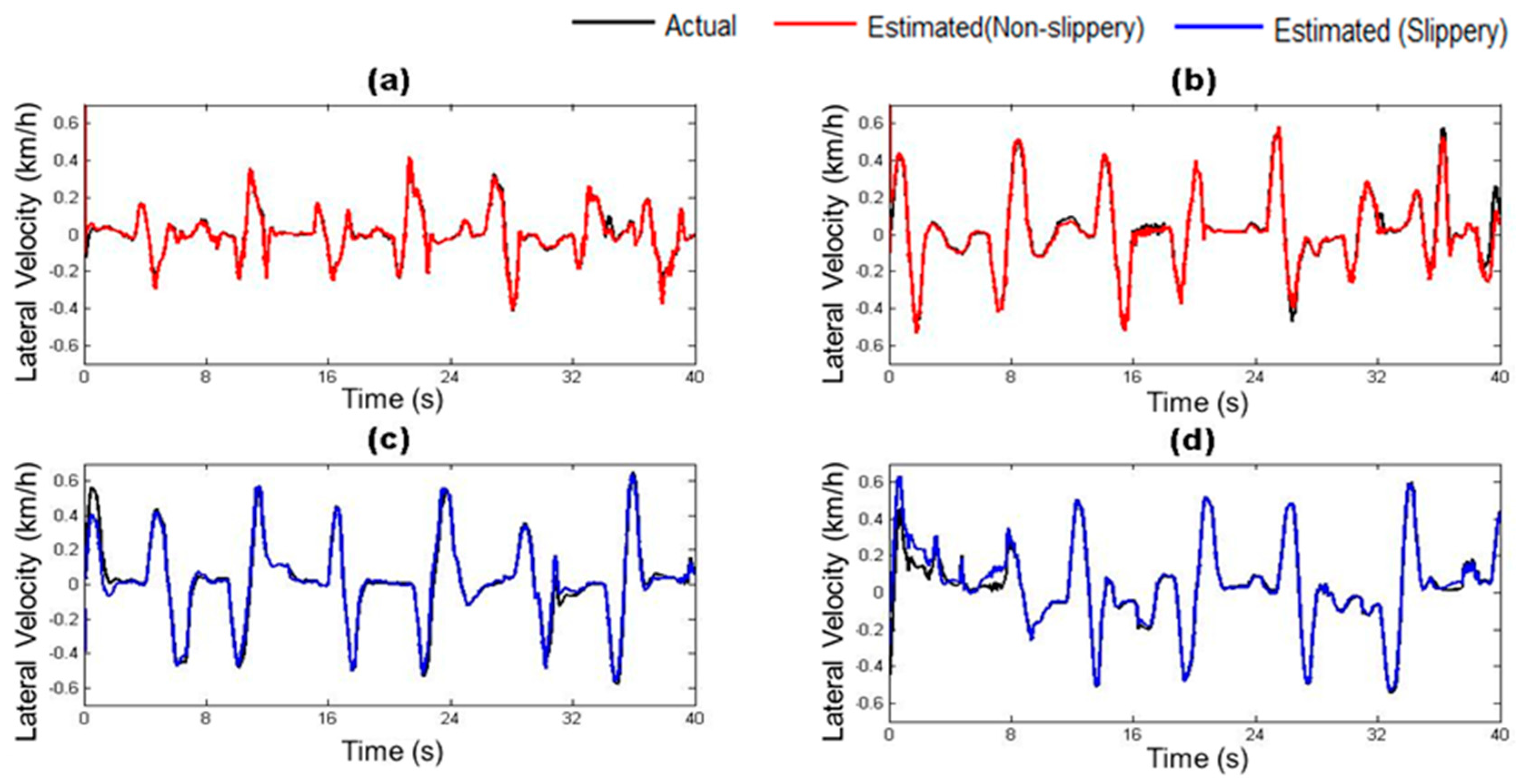
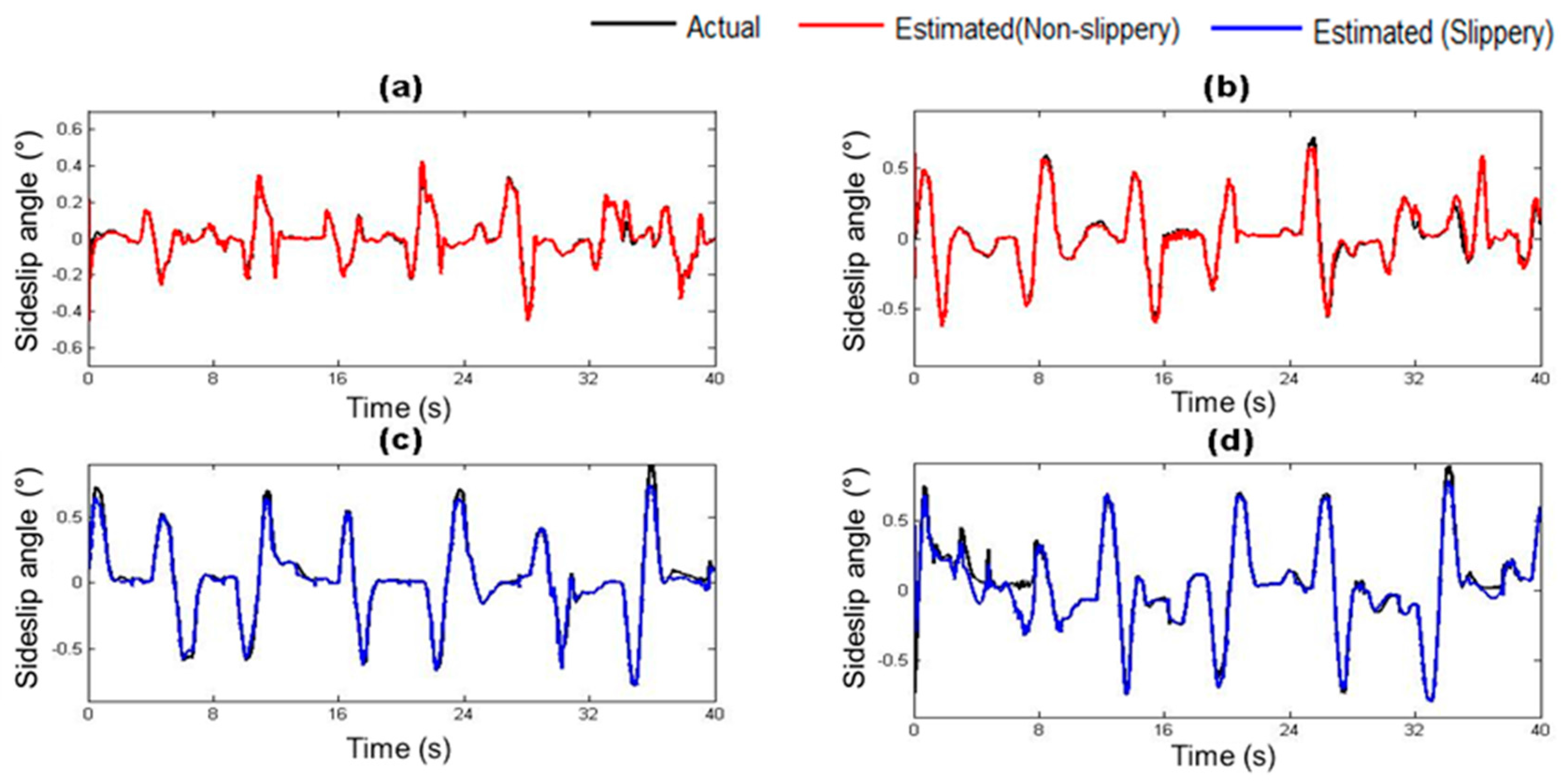
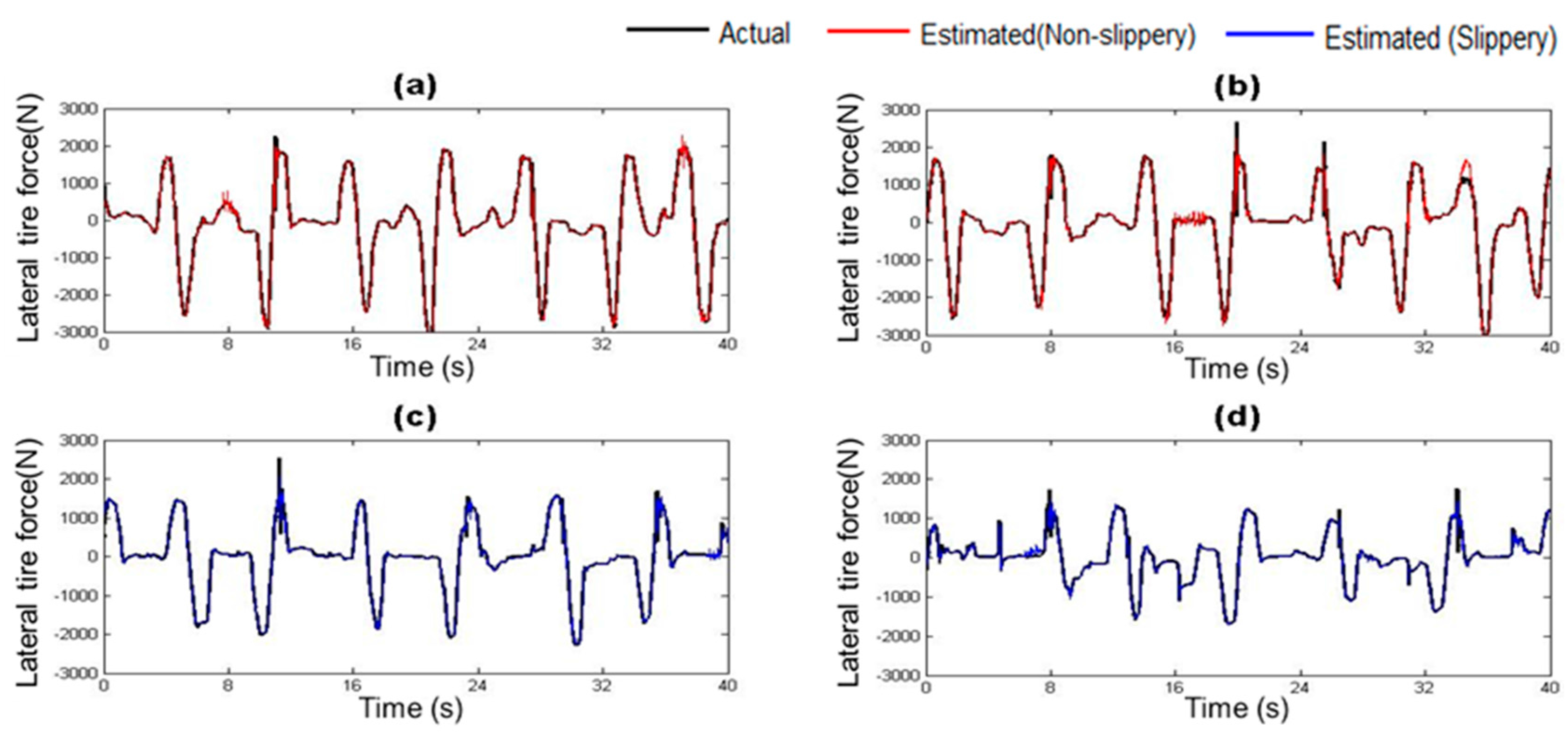

| Road Surface Conditions | Friction Coefficients |
|---|---|
| Dry Asphalt | 0.8 |
| Gravel | 0.6 |
| Wet | 0.4 |
| Snowy | 0.3 |
| Feature Set | Combinations of Input Signals |
|---|---|
| 1 | Yaw rate, Longitudinal acceleration, Lateral acceleration, Steering wheel angle, Wheel speed |
| 2 | Yaw rate, Longitudinal acceleration, Lateral acceleration, Steering wheel angle, Wheel speed, Lateral velocity, Roll rate |
| 3 | Yaw rate, Longitudinal acceleration, Lateral acceleration, Steering wheel angle, Wheel speed, sideslip angle, Lateral tire force, Spring compression |
| 4 | Yaw rate, Longitudinal acceleration, Lateral acceleration, Steering wheel angle, Wheel speed, Lateral velocity, Roll rate, sideslip angle, Lateral tire force, Spring compression, Heading |
| 5 | Yaw rate, Lateral acceleration, Steering wheel angle, Lateral velocity, Roll rate, sideslip angle, Lateral tire force, Spring compression, Heading |
| 6 | Yaw rate, Lateral acceleration, Steering wheel angle, Lateral velocity, Roll rate, Heading |
| 1 | 2 | 3 | 4 | 5 | 6 | 7 | 8 | 9 | 10 | 11 | 12 | 13 | Rate | |
|---|---|---|---|---|---|---|---|---|---|---|---|---|---|---|
| Dry Asphalt (NS) | NS 87.9% | NS 69.6% | NS 79.8% | NS 75.9% | NS 96.0% | NS 83.2% | NS 57.9% | NS 77.5% | NS 94.2% | NS 77.1% | NS 63.9% | NS 96.7% | NS 96.5% | 13/13 |
| Gravel (NS) | NS 92.5% | NS 70.5% | NS 93.0% | NS 71.0% | NS 67.0% | NS 53.3% | NS 53.6% | NS 75.7% | NS 88.4% | NS 75.9% | NS 79.9% | NS 94.7% | NS 100% | 13/13 |
| Wet (S) | S 58.1% | S 93.4% | S 91.5% | S 53.6% | S 82.3% | S 100% | S 87.8% | S 100% | S 92.9% | S 95.6% | S 96.2% | S 95.7% | S 65.4% | 13/13 |
| Snowy (S) | S 100% | S 62.7% | S 100% | S 76.0% | S 80.8% | S 100% | S 72.8% | NS 56.1% | S 73.4% | S 77.0% | S 95.0% | S 100% | S 100% | 12/13 |
| Road Condition | Data | RMSE | NMSE | Order (NMSE) | |
|---|---|---|---|---|---|
| Lateral Velocity | Dry asphalt | −0.6~0.6 | 0.0148 | 0.0139 | 10−2 |
| Gravel | −0.6~0.6 | 0.0229 | 0.0195 | ||
| Wet | −0.6~0.6 | 0.0218 | 0.0082 | ||
| Snowy | −0.6~0.6 | 0.0236 | 0.0077 | ||
| Side Slip Angle | Dry asphalt | −0.6~0.6 | 0.0133 | 0.0123 | 10−2 |
| Gravel | −0.6~0.6 | 0.0233 | 0.0167 | ||
| Wet | −0.9~0.9 | 0.0374 | 0.0142 | ||
| Snowy | −0.9~0.9 | 0.0403 | 0.0097 | ||
| Lateral Tire Force | Dry asphalt | −3000~2000 | 34.6 | 0.00089 | 10−3 |
| Gravel | −3000~2000 | 84.6 | 0.0066 | ||
| Wet | −2500~2000 | 38.2 | 0.0021 | ||
| Snowy | −2000~2000 | 27.5 | 0.0021 | ||
| Roll rate | Dry asphalt | −8~8 | 0.332 | 0.0304 | 10−1 |
| Gravel | −6~6 | 0.363 | 0.0475 | ||
| Wet | −5~5 | 0.353 | 0.0774 | ||
| Snowy | −4~4 | 0.304 | 0.1096 | ||
| Spring Compression | Dry asphalt | 50~85 | 0.708 | 0.0145 | 10−2 |
| Gravel | 50~85 | 0.962 | 0.0303 | ||
| Wet | 60~80 | 0.594 | 0.0192 | ||
| Snowy | 60~80 | 0.698 | 0.0479 | ||
| Heading | Dry asphalt | −15~15 | 1.05 | 0.0226 | 10−2 |
| Gravel | −15~15 | 0.962 | 0.0154 | ||
| Wet | −15~15 | 0.551 | 0.008 | ||
| Snowy | −15~15 | 0.545 | 0.0166 |
| Set 1 (%) | Set 2 (%) | Set 3 (%) | Set 4 (%) | Set 5 (%) | Set 6 (%) | |
|---|---|---|---|---|---|---|
| (a) Dry Asphalt | ||||||
| LCL | 70.51 | 71.79 | 65.38 | 88.46 | 91.03 | 91.03 |
| LK | 96.30 | 95.06 | 95.68 | 96.91 | 96.91 | 96.91 |
| LCR | 67.14 | 74.29 | 75.71 | 91.43 | 90.00 | 91.43 |
| (b) Gravel | ||||||
| LCL | 66.15 | 72.31 | 56.92 | 90.77 | 92.30 | 92.30 |
| LK | 95.57 | 96.20 | 95.57 | 96.20 | 96.84 | 96.84 |
| LCR | 56.96 | 68.35 | 64.56 | 89.87 | 89.87 | 91.14 |
| (c) Wet | ||||||
| LCL | 54.29 | 67.14 | 60.00 | 92.86 | 92.86 | 92.86 |
| LK | 97.14 | 97.71 | 97.71 | 97.71 | 97.71 | 97.14 |
| LCR | 60.66 | 73.77 | 70.49 | 90.16 | 90.16 | 90.16 |
| (d) Snowy | ||||||
| LCL | 62.26 | 62.26 | 52.83 | 90.57 | 90.57 | 90.57 |
| LK | 97.84 | 97.84 | 97.84 | 97.30 | 97.30 | 97.30 |
| LCR | 71.43 | 73.21 | 75.00 | 89.29 | 89.29 | 91.07 |
| Driver Maneuver | Dry Asphalt | Gravel | Wet | Snowy |
|---|---|---|---|---|
| LCL | 0.45 s | 0.4 s | 0.4 s | 0.4 s |
| LK | 0.15 s | 0.222 s | 0.182 s | 0.146 s |
| LCR | 0.45 s | 0.433 s | 0.433 s | 0.4 s |
© 2017 by the authors. Licensee MDPI, Basel, Switzerland. This article is an open access article distributed under the terms and conditions of the Creative Commons Attribution (CC BY) license (http://creativecommons.org/licenses/by/4.0/).
Share and Cite
Kim, I.-H.; Bong, J.-H.; Park, J.; Park, S. Prediction of Driver’s Intention of Lane Change by Augmenting Sensor Information Using Machine Learning Techniques. Sensors 2017, 17, 1350. https://doi.org/10.3390/s17061350
Kim I-H, Bong J-H, Park J, Park S. Prediction of Driver’s Intention of Lane Change by Augmenting Sensor Information Using Machine Learning Techniques. Sensors. 2017; 17(6):1350. https://doi.org/10.3390/s17061350
Chicago/Turabian StyleKim, Il-Hwan, Jae-Hwan Bong, Jooyoung Park, and Shinsuk Park. 2017. "Prediction of Driver’s Intention of Lane Change by Augmenting Sensor Information Using Machine Learning Techniques" Sensors 17, no. 6: 1350. https://doi.org/10.3390/s17061350
APA StyleKim, I.-H., Bong, J.-H., Park, J., & Park, S. (2017). Prediction of Driver’s Intention of Lane Change by Augmenting Sensor Information Using Machine Learning Techniques. Sensors, 17(6), 1350. https://doi.org/10.3390/s17061350

